US and Canada lock up blacks, Indians

Canadian prison

By Matt Moir, The Tyee

Idle No More is forcing many Canadians to be Willfully Blind No More.

Ostensibly, the movement spearheaded by Attawapiskat Chief Theresa Spence is about the protection of First Nations’ treaty rights. At its core, though, might be something more profound, perhaps best described as a demand for all of us in this country to re-think the relationship between Aboriginal and non-Aboriginal Canadians. The relationship is, of course, an uneven one, though it might be far more uneven than most of us in this country care to acknowledge.

Against this backdrop, policy makers and average Canadians alike would be well advised to ring in the New Year by considering the lessons Michelle Alexander highlights in her important book, The New Jim Crow: Mass Incarceration in the Age of Colorblindedness. The context is American, but the lessons may hit closer to home. In the book, Alexander writes the following in regards to African-Americans and the United States’ criminal justice system:

“It is fair to say that we have witnessed an evolution in the United States from a racial caste system based entirely on exploitation (slavery), to one based largely on subordination (Jim Crow), to one defined by marginalization (mass incarceration). While marginalization may sound far preferable to exploitation, it may prove to be even more dangerous. Extreme marginalization, as we have seen throughout world history, poses the risk of extermination.”

It’s a narrative equally provocative and compelling. Alexander argues that Americans’ obsession with ‘law and order’ began as a conservative attempt to breed white opposition to the burgeoning civil rights movement. Politicians on the right labeled civil disobedience a precursor to criminality, and branded supporters of civil rights legislation as promoters of lawlessness. Exploiting the fears of poor and rural whites, Republican politicians invented and propagated the ‘War on Crime’ and, more specifically, the ‘War on Drugs’ as a means to incarcerate, and thus control, the black population.

The scheme was so successful that any politician that questioned the effectiveness or morality behind the supposedly colour-blind ‘War on Drugs’ was accused of being ‘soft on crime’ — the death knell for one seeking public office. In 1992, Bill Clinton recognized that Democrats could peel off right leaning white voters by outflanking the Republicans on issues like crime and welfare reform, and promptly advocated for a number of policies that resulted in the largest increases in federal and state prison inmates of any president in the history of the United States, the overwhelming majority of which were people of colour. The normalization of racial marginalization, according to Alexander, was finally, quietly complete.

The book is more than a lament; it’s a warning. Alexander paints a bleak portrait of a future in which the majority of African Americans — increasingly economically vulnerable in a nation of skyrocketing inequality — being under the control of the criminal justice system is not entirely inconceivable. It’s an ugly commentary on contemporary American society. Canadians should pay attention.

One in five Canadian prisoners are Aboriginal

Troublingly, there are significant parallels between the plight of African Americans in the United States, and the Aboriginal population in Canada.

As American history is steeped in institutional savagery toward African Americans, Canada’s history, too, is pockmarked by the white majority’s mistreatment of Indigenous peoples. Most notable among a litany of gross violations of justice are the permanent occupation of ancestral lands beginning in the 18th century, the noxious attempt to ‘civilize’ Aboriginal people in residential schools in the early 1900s, and the refusal to recognize Aboriginal Canadians as legal ‘persons’ until the middle of the 20th century. And the similarities, unfortunately, are not only historical.

Though Canada doesn’t yet lock up the same percentage of its citizenry as its southern neighbor — the most heavily incarcerated society in the world — measures passed by Prime Minister Harper’s Conservative government have resulted in a steady increase in the number of Canadians behind bars. Canadians of Aboriginal ancestries have borne the brunt of the surge of prisoners.

The proportion of African Americans and Aboriginal Canadians in prison far exceed their representation in the U.S. and Canada, respectively. In the U.S., black Americans account for 12 per cent of the total population, but represent nearly 40 per cent of the prison population. In Canada, Aboriginal peoples make up four per cent of the total population, but 20 per cent of the prison population.

These significant discrepancies are not shrinking. In the U.S., over 40 per cent of new offenders to state and federal prisons are African American. In Canada, more than one in five new admissions to men’s prisons are of Aboriginal descent. Among women offenders, over one in three are Aboriginal. In the U.S., one in three black men can expect to be incarcerated at some point in their lives. In Canada, young Aboriginal men are more likely to go to prison than complete a high school diploma. And once in custody, a significantly larger proportion of African American and Aboriginal Canadian prisoners are recommended for maximum levels of security than white prisoners charged with similar crimes.

Structural discrimination

While it might be unfair to claim that Canadian politicians and the Canadian criminal justice system have joined forces to consciously ensure that our Aboriginal communities remain repressed and disenfranchised, it cannot be denied that Aboriginals across the country suffer from poverty, injustice and lack of opportunity more than other type of Canadian. One in four Aboriginal children live in poverty.

The life expectancy for Indigenous people in Canada is eight to 20 years less than non-Aboriginal Canadians. On First Nations reserves, 60 per cent of children do not graduate high school, and the lack of suitable housing and access to clean water is endemic. To be Aboriginal in Canada today is to be a second-class citizen.

As a new year begins, we should take this opportunity to look closely at the society that we have created, and address the appalling inequalities of our criminal justice system. There is still time to prevent the prison state of our southern neighbors, but only if we hurry.

No Canadian should be idle.

Follower of Charles Manson recommended for parole

Charles Manson

US authorities recommended parole Thursday for a follower of infamous US mass murderer Charles Manson, more than four decades after he killed two people who were tortured and mutilated.

Bruce Davis, 70 on Friday, was already recommended for parole once in 2010, but then-California governor Arnold Schwarzenegger rejected the recommendation, saying Davis would pose a danger to society.

Davis won a new release recommendation Thursday at his 27th California Parole Board meeting since his conviction over the 1969 deaths of musician Gary Hinman, who was stabbed, and stuntman Donald “Shorty” Shea.

Six months after the January 2010 parole green light, Schwarzenegger rejected it, saying in an eight-page review that releasing Davis would pose an “unreasonable risk of danger to society at this time.”

The killings for which Davis was convicted were “especially heinous because both victims were abused, tortured and mutilated,” wrote the former Hollywood film star, who is returning to the big screen after leaving office last year.

“Indeed, some murders are so atrocious that the gravity of the murder, by itself, evidences current dangerousness. I believe this is such a case.”

Sandi Gibbons, spokeswoman for the Los Angeles County District Attorney’s Office, said prosecutors will evaluate the parole panel’s recommendation before deciding how to proceed.

Manson himself was refused parole in April, in what could be the 77-year-old’s last review for release after more than 40 years behind bars, since he will not be eligible for parole again for another 15 years.

Manson headed an apocalyptic cult and hatched a plot to commit murders in upscale, mostly white neighborhoods of Los Angeles and then blame the crimes on African Americans, in hopes of sparking a race war.

He was sentenced to death with four of his disciples for having led the 1969 killing of seven people, including Sharon Tate, the wife of filmmaker Roman Polanski. Tate was eight and a half months pregnant. – AFP

Romney-Obama debate aggressive

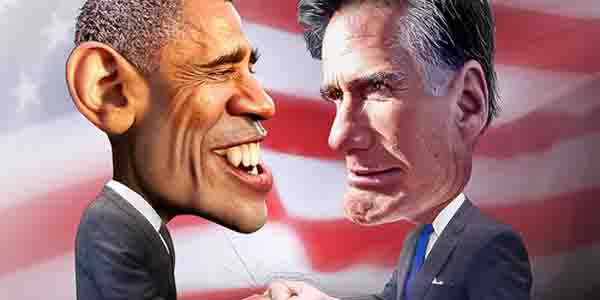
DENVER (AP) — In a showdown at close quarters, an aggressive Mitt Romney sparred with President Barack Obama in their first campaign debate Wednesday night over taxes, deficits and strong steps needed to create jobs in a sputtering national economy. “The status quo is not going to cut it,” declared the Republican challenger.

Democrat Obama in turn accused his rival of seeking to “double down” on economic policies that actually led to the devastating national downturn four years ago — and of evasiveness when it came to prescriptions for tax changes, health care, Wall Street regulation and more.

With early voting already under way in dozens of states, Romney was particularly assertive in the 90-minute event that drew a television audience likely to be counted in the tens of millions — like a man intent on shaking up the campaign with a little less than five weeks to run.

He seemed at ease in debate with the man who has been in the White House for four years. “It’s fun, isn’t it?” Romney said. In a rare post-debate concession, some Democratic strategists not involved in the campaign conceded the president was not at his best and missed opportunities to challenge his rival.

The former Massachusetts governor virtually lectured Obama at one point after the president accused him of seeking to cut education funds. “Mr. President, you’re entitled to your own airplane and your own house, but not your own facts,” he said.

The economy dominated the evening, as it has the race for the White House all year. Pre-debate opinion polls showed Obama with a slight advantage in key battleground states and nationally.

Romney said he had plans to fix the economy, overhaul the tax code, repeal Obama’s health care plan and replace with a better alternative, remake Medicare, pass a substitute for the legislation designed to prevent another financial crash and reduce deficits — but he provided no new specifics despite Obama’s prodding.

Said Obama: “At some point the American people have to ask themselves: Is the reason Governor Romney is keeping all these plans secret, is it because they’re going to be too good? Because middle class families benefit too much? No.”

The two men debate twice more this month, but they were first going their separate ways on Thursday. Obama had campaign stops in Colorado and then Madison, Wis., while Romney was booked into Virginia. All three states are among the nine battlegrounds likely to settle the race.

At times the debate turned into rapid-fire charges and retorts that drew on dense facts and figures that were difficult to follow. The men argued over oil industry subsidies, federal spending as a percentage of the GDP, Medicare cuts, taxes and small businesses and the size of the federal deficit and how it grew.

Obama sometimes seemed somewhat professorial. Romney was more assertive and didn’t hesitate to interrupt the president or moderator Jim Lehrer, who seemed to struggle to maintain control.

The wonky tone of the debate was a stark contrast to the harsh, broad-brush and sometimes personal attacks the two men make in person and in multimillion-dollar television advertising.

At the same time, Romney managed to make some points by personalizing his comments with recollections of people he said he had met on the campaign trail. In another folksy reference, Romney told Lehrer, a veteran of the Public Broadcasting Service, that he would stop the federal subsidy to PBS even though “I love Big Bird.”

Generally polite but pointed, the two men agreed about little if anything.

Obama said his opponent’s plan to reduce all tax rates by 20 percent would cost $5 trillion and benefit the wealthy at the expense of middle income taxpayers.

Shot back Romney: “Virtually everything he just said about my tax plan is inaccurate.”

The former Massachusetts governor and businessman added that Obama’s proposal to allow the expiration of tax cuts on upper-level income would mean tax increases on small businesses that create jobs by the hundreds of thousands.

The two campaign rivals clasped hands and smiled as they strode onto the debate stage at the University of Denver, then waved to the audience before taking their places behind identical lecterns.

There was a quick moment of laughter, when Obama referred to first lady Michelle Obama as “sweetie” and noted it was their 20th anniversary.

Romney added best wishes, and said to the first couple, “I’m sure this is the most romantic place you could imagine, here with me.”

Both candidates’ wives were in the audience.

Without saying so, the two rivals quickly got to the crux of their race — Romney’s eagerness to turn the contest into a referendum on the past four years while the incumbent desires for voters to choose between his plan for the next four years and the one his rival backs.

Romney ticked off the dreary economic facts of life — a sharp spike in food stamps, economic growth “lower this year than last” and “23 million people out of work or stropped looking for work.”

But Obama criticized Romney’s prescriptions and his refusal to raise taxes and said, “if you take such an unbalanced approach then that means you are going to be gutting our investment in schools and education … health care for seniors in nursing homes (and) for kids with disabilities.”

Not surprisingly, the two men disagreed over Medicare, a flash point since Romney placed Wisconsin Rep. Paul Ryan on his ticket.

The president repeatedly described Romney’s plan as a “voucher program” that would raise out-of-pocket costs on seniors.

He continued, directly addressing the voters at home: “If you’re 54 or 55 you might want to listen because this will affect you.”

Romney said he doesn’t support any changes for current retirees or those close to retirement.

“If you’re 60 or 60 and older you don’t need to listen further,” he said, but he contended that fundamental changes are needed to prevent the system from becoming insolvent as millions of baby boom generation Americans become eligible.

Romney also made a detailed case for repealing Obamacare, the name attached to the health care plan that Obama pushed through Congress in 2010. “It has killed jobs,” he said, and argued that the best approach is to “do what we did in my state.”

Though he didn’t say so, when he was governor Massachusetts passed legislation that required residents to purchase coverage — the so-called individual mandate that conservatives and he oppose on a national level.

Romney also said that Obamacare would cut $716 billion from Medicare over the next decade.

The president said the changes were part of a plan to lengthen the program’s life, and he added that AARP, the seniors lobby, supports it.

With a two-minute closing statement, Obama said he had spent his first four years in office fighting for those in the middle class and those seeking to make it there. “If you’ll vote for me, I’ll fight just as hard in my second term,” he said.

Romney was as critical of Obama’s tenure as he was the moment the two men walked onto the stage.

If the president is re-elected, he predicted continued economic trouble for the middle class, chronic unemployment, higher costs for health insurance and “dramatic cuts to the military.”

Obama took office in the shadow of an economic crisis but promised a turnaround that hasn’t materialized. Economic growth has been sluggish throughout his term, with unemployment above 8 percent since before he took office.

The two presidential rivals also are scheduled to debate on Oct. 16 in Hempstead, N.Y., and Oct. 22 in Boca Raton, Fla.

Vice President Joe Biden and Republican Rep. Paul Ryan of Wisconsin have one debate, Oct. 11 in Danville, Ky. Both men have already begun holding practice sessions.

Race dominates US election debate

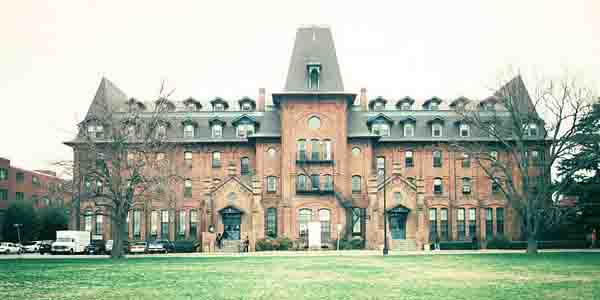
Hampton University, a historically black institution

WASHINGTON (AP) — Conservatives on Tuesday used a speech President Barack Obama delivered as a candidate in 2007 to accuse him of using racially charged rhetoric.

“There’s no way you can listen to this speech and not hear it as a deliberately divisive speech that pits Americans against each other and does so largely with racial innuendoes that are very, very clear when you hear the speech,” former Republican presidential candidate Newt Gingrich said on Fox News, which aired segments of the videotaped speech.

At issue Tuesday, one day before the first presidential debate and as Republican presidential candidate Mitt Romney trails in polls, was a speech then-candidate Obama made to black clergy at Hampton University, a historically black institution in Virginia. Media outlets including The Associated Press and Fox News covered the remarks at the time.

Obama – now the nation’s first black president – said in the speech that the Bush administration did nothing to defuse a “quiet riot” among blacks that threatened to erupt in the aftermath of Hurricane Katrina. Then a U.S. senator from Illinois, Obama also said the Bush administration “was colorblind in its incompetence.”

Fox News host Sean Hannity said the speech “contains some of the most divisive class warfare and racially charged rhetoric ever used by Barack Obama.”

Conservative pundit Tucker Carlson of The Daily Caller, which posted video of the speech online, argued that the speech features “racial rhetoric designed to make people fearful.” And The Drudge Report, a regular Obama critic, predicted the video would “ignite accusations of racism – in both directions!”

Obama campaign spokesman Ben LaBolt quickly dismissed the criticism, accusing “Mitt Romney’s allies” of recirculating video of a widely covered speech in “a transparent attempt to change the subject” from Romney’s comments about 47 percent of Americans who don’t pay federal income taxes.

Romney’s campaign did not immediately respond to a request seeking comment. The Republican previously distanced himself from a conservative group considering an advertising campaign featuring Obama’s former spiritual adviser, the Rev. Jeremiah A. Wright Jr., whose race-related sermons stirred controversy in Obama’s first campaign.

New York criminals prefer Apple devices

New York

The New York Police Department is deploying a surge of detectives to patrol an increasingly mean new beat: Facebook and other social networks.

Police Commissioner Raymond Kelly said Tuesday that he’s doubling the number of detectives assigned to combating local teen gangs and that increased surveillance of social networks will be a major part of the strategy.

The gangs under scrutiny are not the big, established outfits like the Bloods and Crips, which are well known around the United States, but neighborhood groups fighting over loyalties often to just one part of a housing project or other limited turf.

“Under a program we’ve named Operation Crew Cut, the Department intends to double the size of its Gang Division from approximately 150 detectives to 300 phased in over a period of time,” Kelly said in prepared remarks to a police conference in San Diego, California.

The propensity of the social media addicted youths to use Facebook and other networks to “brag about their murderous exploits” means detectives will be watching their screens, as much as the streets.

“In addition to tracking the admissions of criminal conduct and plans of future crimes by crew members on Facebook, You Tube and elsewhere, the division will be responsible for maintaining a dictionary of sorts with a continually updated lexicon employed by crews as a kind of code,” Kelly said.

Officers will infiltrate gangs under online aliases registered with their superiors. They will also be allowed to use untraceable Internet cards on their laptops.

Kelly, who runs one of the world’s most technologically advanced police departments, with a rapidly growing surveillance capability, said measures were being taken to ensure that monitoring the networks does not go too far.

“Recently, we issued new guidelines for officers using social media as part of criminal investigations. We did this to instill the proper balance between the investigative potential of social network sites and privacy expectations,” he said.

The initiative reflects a shift in crime away from murder, which is down 18 percent so far this year, Kelly said.

However, overall crime is up four percent, largely due to a wave of teen-on-teen thefts, especially involving iPods and other Apple products.

“Like the impact on the economy itself, the allure of Apple devices has affected New York City’s crime rate,” Kelly said. “In 2002, we recorded a total of 86 thefts of Apple products in all of New York City. Last year that number was 13,233.” – AFP

Obama has steady lead over Romney

Five weeks to Election Day, President Barack Obama is within reach of the 270 electoral votes needed to win a second term. Republican Mitt Romney’s path to victory is narrowing.

To overtake Obama, Romney would need to quickly gain the upper hand in nearly all of the nine states where he and Obama are competing the hardest.

Polls show the president with a steady lead in many of them as Romney looks to shift the dynamics of the race, starting with their first debate Wednesday night in Denver.

Obama headed to Las Vegas for an evening rally and planned to stay in Nevada as he prepared for the debate. Romney remained in Boston on Sunday, going through preparations of his own for Wednesday’s event.

Romney’s running mate Paul Ryan says there’s time for the Republican ticket to win. “In these kinds of races people focus near the end, and that’s what’s happening now,” he told “Fox News Sunday.”

A prominent Romney supporter, New Jersey Gov. Chris Christie said he expected Romney’s debate performance in Denver to shake up the campaign after a “tough couple of weeks.” Christie predicted Romney would do “extraordinarily well,” and that come Thursday morning, “this whole race is going to be turned upside down.”

But a top Obama adviser, David Plouffe, cast doubt on how much the debate would turn around the race.

“They expect to come out of this with the race fundamentally changed. Now, what does that mean?” asked Plouffe. “If it’s going to fundamentally change, that means in seven or 10 days from now you’ll see states like Ohio tied, the state of Iowa tied because that’s what really matters here. So they have set the bar quite high.”

If the election were held today, an Associated Press analysis shows Obama would win at least 271 electoral votes, with likely victories in crucial Ohio and Iowa along with 19 other states and the District of Columbia. Romney would win 23 states for a total of 206.

To oust the Democratic incumbent, Romney would need to take up-for-grabs Florida, Colorado, Nevada, North Carolina, New Hampshire and Virginia, which would put him at 267 votes, and upend Obama in either Ohio or Iowa.

U.S. presidents are elected not by national popular vote but in state-by-state contests. Each state gets one electoral vote for each of its representatives in the House and Senate. There are 538 votes in the Electoral College, and a candidate must have at least 270 to win. Except for Maine and Nebraska, states award all their electoral votes to the candidate who wins the state.

The AP analysis isn’t meant to be predictive. Rather, it is intended to provide a snapshot of a race that until recently has been stubbornly close in the small number of the most contested states.

It is based on a review of public and private polls, television advertising and numerous interviews with campaign and party officials as well as Republican and Democratic strategists in the competitive states and in Washington.

In the final weeks before the Nov. 6 vote, Obama is enjoying a burst of momentum and has benefited from growing optimism about the economy as well as a series of Romney stumbles. Most notably, a secret video surfaced recently showing the Republican nominee telling a group of wealthy donors that 47 percent of Americans pay no federal income taxes and consider themselves victims dependent on the government.

To be sure, much could change in the coming weeks, which will feature three presidential and one vice presidential debate. A host of unknowns, both foreign and domestic, could rock the campaign, knocking Obama off course and giving Romney a boost in the homestretch.

Barring that, Romney’s challenge is formidable.

Obama started the campaign with a slew of electoral vote-rich coastal states like New York and California already in his win column. From the outset, Romney faced fewer paths to cobbling together the state-by-state victories needed to reach the magic number.

It’s grown even narrower in recent weeks, as Romney has seen his standing slip in polls in Ohio, with 18 electoral votes, and Iowa, with six. That forced him to abandon plans to try to challenge Obama on traditionally Democratic turf so he could redouble his efforts in Ohio and Iowa, as well as Colorado, Florida, New Hampshire, North Carolina, Nevada and Virginia.

Romney is hoping that come Election Day, on-the-fence voters tip his way. But there are hurdles there, too.

Early voting is under way in dozens of states, and national and key state surveys show undecided voters feel more favorably toward Obama than Romney.

Ohio’s shifting landscape illustrates Romney’s troubles over the past few weeks. No Republican has won the presidency without taking Ohio.

[ad 1]

Republicans and Democrats agree that Obama’s solid lead in public and private polling in the state is for real. Over the past month, the president has benefited from an improving economic situation in the state; its 7.2 percent unemployment rate is below the 8.1 percent national average. Obama’s team also attributes his Ohio edge to the auto industry bailout and General Motors plant expansions in eastern Ohio.

Obama and his campaign have hammered Romney on his tax policies, arguing that the former Massachusetts governor favors the rich while the president is a defender of everyone else.

Underscoring his challenges, Romney also has been forced to spend millions of dollars a week defending himself in North Carolina, a Republican-leaning state that’s more conservative than most of the states that will decide the election.

Polls now show a competitive race there. Democrats boast of having registered 250,000 new voters in the state since April 2011. It’s an eye-popping total in a state that Obama won by just 14,000 votes four years ago. A flood of new voters, presumably a chunk of them Democrats, could help keep that state within Obama’s reach this year.

Romney now faces an extraordinarily tight path and few options but to bear down in the states where he is competing aggressively. Time, though, is running out.

Plouffe appeared on NBC’s “Meet the Press” and ABC’s “This Week.” Christie spoke on NBC, ABC and CBS’ “Face the Nation.” – AP

‘Regional Equity’ – Obama’s coming war on whitopias

by Jesse Mossman

Paul Kersey recently reported on VDARE.com an emerging trend: for white suburbs to secede from larger urban jurisdictions and so form, in effect, whitopian enclaves.

But he did not mention that there are powerful forces on the other side pushing back hard—using a concept called “Regional Equity.”

Americans can be forgiven for not being familiar with Regional Equity. I had not heard the term myself until just a few weeks ago, when I caught Stanley Kurtz on the radio talking about his new book: Spreading the Wealth: How Obama is Robbing the Suburbs to Pay for the Cities.

Put Regional Equity into a search engine and the language of the collectivists surfaces: transportation equity, environmental equity, healthcare equity, social justice, smart growth, and especially, sustainable communities.

The essence of Regional Equity is the use of centralized political power make things equal over regions—disregarding jurisdictions.

President Obama is very much on board with the Regional Equity movement. The White House website  says:

“President Obama will also take a regional approach that disregards traditional jurisdictional boundaries [my emphasis—JM], setting policy that takes into account how cities, suburbs, and exurbs interact. President Obama’s urban policy agenda will use this integrated approach to enhance economic competitiveness, sustainability, and equity in our cities and metropolitan areas.”

[ad 1]

Furthermore, PolicyLink (a pro-minority think tank run by a woman graduate of Howard university who describes herself as “national leader for social justice and equity”)  states:

Under the Obama administration, a framework of regional equity has been a driving force behind the larger federal partnership for Sustainable Communities made up of HUD, the Department of Transportation (DOT), and the Environmental Protection Agency (EPA). The partnership has now issued a Notice of Funding Availability (NOFA) for a new Sustainable Communities Regional Planning Grant Program (SCRPG) that will formalize as federal policy the very strategies that equity advocates have been seeking to advance at the community level for years. [The Sustainable Communities Regional Planning Grant Guide | How to Link Equity to Each Rating Factor PDF]

In the past, secession could work—boundaries meant independence from the predatory desires of larger neighbors hungry for the resources and lifestyles of more prosperous suburbs.

But now, like a Black Hole whose irresistible gravity swallows nearby stars, central cities, the doctrine of Regional Equity could suck the cash from prosperous suburban cities, impose onerous laws, and even force them to become more diverse—negating the very reasons for moving to these former enclaves of sanity and safety.

Read the rest of this article on Vdare.com.

Theresa Reel sexually harassed by black, Hispanic boys

Theresa Reel, who received a settlement of $450 000 from the City of New York for suffering years of sexual harassmant from black and Hispanic students

A white high school teacher who said she was sexually tormented by her students and then punished for complaining has scored a $450,000 settlement from the city, reports the New York Daily News.

Theresa Reel, 52, who quit her job when she signed the deal, said the knowledge that she never has to set foot in the High School for Legal Studies again is just as sweet.

“I wasted six years of my life being treated like dirt — less than dirt,” Reel told the Daily News on Thursday. “I can’t put into words how happy I am.”

The Mississippi native started working at the Williamsburg, Brooklyn, school in 2005 and within a month, her job was a nightmare. The High School for Legal Studies is 62% black and 35% Latino.

In a lawsuit she filed three years later, she described how students called her filthy names, flung condoms at each other and even touched her breast.

Her pleas to school bosses were met with accusations that she showed too much cleavage, she charged.

When she told then-Principal Denise Morgan that she made a student leave the class for sexual comments, the official’s response was: “And how does that threaten you?”

Denise Morgan

Morgan defended her handling of Reel’s complaints.

“I am very comfortable with the professional manner in which I responded to this teacher’s concerns,” she told The New York Daily News.

After Morgan was replaced at the troubled school, the new principal, Monica Ortiz, gave Reel unsatisfactory ratings.

And a 2008 letter from the Department of Education chastised the social studies educator for “inappropriate attire,” described as a “low-cut, V-neck lace top.”

“It made me feel like I was worthless, like my own supervisors believed that I deserved to be treated like this,” Reel said at the Woodside, Queens, home she shares with her cat.

Reel’s court papers detail the barrage of X-rated insults she faced in the classroom and corridors.

One boy allegedly told her: “I’ve got rubbers — want to party?” Another student accused a classmate of performing a sex act on Reel for good grades, she said.

She recalled one male student crossing a hallway so he could graze her breast with his elbow and then “smirk” at her.

“I was screaming,” Reel said.

She said the harassment made it impossible to function some days.

“Sometimes I’d break down on the subway,” she said. “I would go home, sit in front of the TV and cry.”

At one point, she said, she was suicidal.

“I had a plan in mind,” she said, without elaborating. “It got so black and bleak I couldn’t see it getting any better.”

The city tried to get the federal discrimination suit tossed out, arguing Reel did not prove the school was a hostile environment, that she was singled out for her gender, or that she faced retaliation.

On each count, the judge ruled there was enough evidence to let a jury decide and set a trial date for Sept. 10.

On Aug. 31, the city agreed to pay Reel $450,000 and remove the poor ratings from her record if she resigned.

“We think she had a very strong case,” said lawyer Joshua Parkhurst of Cary Kane LLP. “We ultimately agreed to settle because it allows our client to get on with her life.”

Reel has been on an unpaid leave of absence for a year, spending down her pensions savings. She’s been looking for a new job, but was even turned down for a cleaning gig.

DOE had no comment on the case.

Morgan, the former principal, is now an assistant principal at the High School for Violin and Dance in the Bronx. Ortiz is still the head of Legal Studies, a D-rated school which had less than 60% of its students graduate in 2009.

Legal Studies made headlines in 2010 when teachers were caught taking a lavish, taxpayer-funded junket and students were busted for using cell phones to film brawls and sex acts.

Reel wasn’t the only person at the school who thought pupils were out of line. In a 2010 city survey, only 49% of the students said learners treated teachers with respect.

American ‘research war’ over affirmative action

by Scott Jaschik, Inside Higher Ed

With the U.S. Supreme Court about to hear arguments in the Fisher v. University of Texas case that could decide the fate of affirmative action in admissions, a research war has broken out. Defenders and critics of the consideration of race are releasing new studies (some of which were submitted in briefs to the court) on the impact of affirmative action.

Several studies presented Friday at the Brookings Institution suggested that eliminating the consideration of race would not have as dramatic an effect on minority students as some believe, and that the beneficiaries of affirmative action may in fact achieve less academic success than they would otherwise. The studies were criticized by some present for being one-sided.

Yield Rates After a Ban

One of the studies explored the impact on the yield rate — the proportion of admitted students who enroll — of black, Latino and Native American students to the University of California after the state barred the consideration of race in admissions. Minority enrollments fell after voters adopted the ban, in part because greater proportions of white and Asian applicants, on average, have the academic and other credentials required for admission.

But the paper focused on a subset of minority students: those who gained admission after the ban on affirmative action. Many observers at the time predicted that these students would be less likely to enroll, as they would perceive the system to be hostile, and news articles quoted minority students to this effect.

But a paper by Kate Antonovics, an economist at the University of California at San Diego, and Richard Sander, a law professor at the University of California at Los Angeles, found that the ban on affirmative action didn’t produce “chilling effects,” but actually produced “warming effects” on the likelihood of minority students’ accepting offers of admission.

The paper examined the yield rates by students in the three years after Proposition 209 (the ban) took effect. Across the system, the yield rate increased by about 10 percent. The increase was the greatest at Berkeley and UCLA. At Berkeley, the pre-Proposition 209 yield rate for underrepresented minority groups was 37.9 percent, and that increased by 5.7 percentage points after affirmative action considerations were barred from the admissions process. At UCLA, a 38.8 percent yield rate increased by 3.9 percentage points.

Antonovics, who presented the paper, said that the findings were important. She said that critics of affirmative action might expect (and accept) that the end of the consideration of race would lead to an overall decline in minority enrollment rates, but that there would be “a layer of concern” if some of that drop could be attributed to students who met race-neutral admissions standards opting not to enroll. She said that she and Sander expected to find this “chilling effect,” and were surprised to find “no evidence for it” and instead see evidence showing the opposite impact.

[ad 1]

‘Mismatch’ Theory

The fear Antonovics expressed is that minority students might not be enrolling at highly competitive institutions at which they would be a good academic match. Another kind of “mismatch” has also been the focus of much research on affirmative action in recent years — and that idea (hotly debated) is that minority students who are admitted to better institutions because of affirmative action may end up with lower academic achievement as a result. (Sander, who helped organize the Brookings program, has been a leading proponent of the idea.)

On Friday, Doug Williams, chair of economics at the University of the South, presented a paper arguing that law schools provide solid evidence for the existence of mismatch. He said that because of the requirement that lawyers pass a bar exam, there is an independent measure of successful learning in law school. Because some minority students with similar academic credentials (judged by undergraduate grads and LSAT scores) enroll at more or less competitive law schools, he said it is possible to see whether there is a mismatch.

There has long been a gap between black and white law graduates on bar passage rates, he noted. Currently, about 97 percent of white law school graduates pass the bar, with 92 percent passing on the first try. For black law graduates, the figures are 78 and 61 percent, respectively. But Williams said that these gaps are partly explained by the differing academic credentials of black and white law students, and so by themselves don’t back mismatch theory.

But in comparing minority law graduates of comparable academic preparation who enroll in more or less competitive law schools, Williams said that those (from among those with comparable academic credentials) who enroll in the bottom two tiers of law schools pass the bar at a rate that is 14 percentage points higher than that of those who enroll at the top law schools. And he said that suggested a statistically significant mismatch.

Williams said that he would like more detailed information about law students — including the law schools that they apply to and are admitted to — but based on the information he does have, he said that he had “strong evidence” to back mismatch.

Sander said that panelists at the program were “ideologically diverse” and that there was no attempt to include only scholars of one point of view.

The debate will likely continue Thursday when a coalition of social science groups — the American Educational Research Association, the American Sociological Association, the American Statistical Association, the Association for the Study of Higher Education, the Law and Society Association and the Linguistic Society of America — hold a briefing on research those organizations cited in their brief to the Supreme Court encouraging the justices to uphold the legality of the consideration of race and ethnicity in admissions.

US drone kills 5 militants in northwest Pakistan

ISLAMABAD — Pakistani intelligence officials say a U.S. drone strike has killed five militants in northwest Pakistan.

Two intelligence officials said at least seven missiles were fired from U.S. drones Saturday at a vehicle and a house in the village of Degan in the Pakistani tribal region of North Waziristan near the Afghan border.

The officials spoke on condition of anonymity because they are not authorized to talk to the media.

They said the area is dominated by anti-American militant commander Hafiz Gul Bahadur. They did not know whether the killed men belong to his group.

The CIA-run drone program is controversial in Pakistan where many call it an infringement on the nation’s sovereignty. The U.S. maintains it is necessary tool to combat militants. – AP

‘No child behind’ failing in the USA

No child left behind
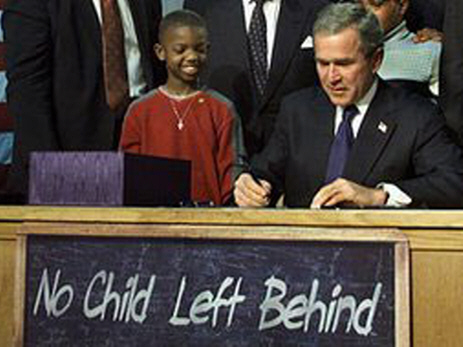
President Bush signing 'No Child Left Behind' into law

It could be the beginning of the end for No Child Left Behind.

The goal was lofty: Get all children up to par in math and reading by 2014. But the nation isn’t getting there, and now some states are getting out.

In a sign of what’s to come, President Barack Obama on Thursday freed 10 states from some of the landmark law’s toughest requirements. Those states, which had to commit to their own, federally approved plans, will now be free, for example, to judge students with methods other than test scores. They also will be able to factor in subjects beyond reading and math.

“We can combine greater freedom with greater accountability,” Obama said from the White House. Plenty more states are bound to take him up on the offer.

While many educators and many governors celebrated, congressional Republicans accused Obama of executive overreach, and education and civil rights groups questioned if schools would be getting a pass on aggressively helping poor and minority children – the kids the 2002 law was primarily designed to help.

The first 10 states to be declared free from the education law are Colorado, Florida, Georgia, Indiana, Kentucky, Massachusetts, Minnesota, New Jersey, Oklahoma and Tennessee. The only state that applied for the flexibility and did not get it, New Mexico, is working with the administration to get approval.

Twenty-eight other states, the District of Columbia and Puerto Rico have signaled that they, too, plan to flee the law in favor of their own plans.

The government’s action on Thursday was a tacit acknowledgement that the law’s main goal, getting all students up to speed in reading and math by 2014, is not within reach.

The states excused from following the law no longer have to meet that deadline. Instead, they had to put forward plans showing they will prepare children for college and careers, set new targets for improving achievement among all students, reward the best performing schools and focus help on the ones doing the worst.

Obama said he was acting because Congress had failed to update the law despite widespread agreement it needed to be fixed.

“We’ve offered every state the same deal,” Obama said. “If you’re willing to set higher, more honest standards than the ones that were set by No Child Left Behind, then we’re going to give you the flexibility to meet those standards.”

The executive action by Obama is one of his most prominent in an ongoing campaign to act on his own where Congress is rebuffing him.

No Child Left Behind was one of President George W. Bush’s most touted domestic accomplishments, and was passed with widespread bipartisan support in Congress. It has been up for renewal since 2007. But lawmakers have been stymied for years by competing priorities, disagreements over how much of a federal role there should be in schools and, in the recent Congress, partisan gridlock.

The law requires annual testing, and districts were forced to keep a closer eye on how students of all races were performing – not just relying on collective averages. Schools that didn’t meet requirements for two years or longer faced increasingly harsher consequences, including busing children to higher-performing schools, offering tutoring and replacing staff.

Over the years, the law became increasingly unpopular, itself blamed for many ills in schools. Teachers and parents complained it led to “teaching to the test.” Parents didn’t like the stigma of sending their kids to a school labeled a failure when requirements weren’t met. States, districts and schools said the law was too rigid and that they could do a better job coming up with strategies to turn around poor performance.

A common complaint was that the 2014 deadline was simply unrealistic.

As the deadline approaches, more schools are failing to meet requirements under the law, with nearly half not doing so last year, according to the Center on Education Policy. Center officials said that’s because some states today have harder tests or have high numbers of immigrant and low-income children, but it’s also because the law requires states to raise the bar each year for how many children must pass.

The current law requires schools to use standardized tests in math and reading to determine student progress. The waivers announced Thursday do not excuse states from those requirements but instead give them the freedom to use science, social studies and other subjects in their measures of student progress.

The 10 states also now can include scores on college admission exams and other tests in their calculation of how schools are performing. They can be excused from penalties included in the federal law but had to come up with their own set of sanctions for low-performing schools.

For example, Georgia will replace the law’s pass-or-fail with a five-star rating system and will use end-of-course tests and Advanced Placement performance in its measure of students.

In Oklahoma, schools are to be taken over by the state if they consistently fail to meet standards.

Kentucky – the first state to formally ask the federal government to be excused from some requirements when Gov. Steve Beshear sent a letter to Washington last summer – will use ACT college-entrance exams and other assessments by that company in its measures.

The schools still have to focus on the subgroups of students outlined in the federal law, such as English language learners and students with disabilities.

Not everyone applauded Thursday’s announcement.

While No Child Left Behind isn’t perfect, said Jeanne Allen, president of the Center for Education Reform, it’s thrown a valuable spotlight on problem schools. She said giving districts and states more flexibility “without firm consequence” is not reform.

“If school district power were the answer to our education woes, our nation would be soaring high above the rest of the world in achievement. It is not, and it will not, until our leaders – just as the people they serve – face both rewards and sanctions for the education systems they govern,” Allen said.

Nancy Zirkin, executive vice president of the Leadership Conference on Civil and Human Rights, said, “Our coalition will continue to play an active role in holding all 10 of these states and the Department of Education accountable for our children.”

But some educators also said Obama’s plan gives states flexibility with more clear and attainable goals.

Gene Wilhoit, executive director of the Council of Chief State School Officers, said under the waiver plan states essentially have a contractual relationship with the federal government to deliver on the approved plan.

“I think there is a legitimate concern or fear out there on the part of people that by giving these waivers, states might be `let off the hook’ in terms of accountability, and I think what you’ll find is just the opposite,” Wilhoit said. “They have raised the standards. They have put in place much more focused attention to the lowest performing, they have put in place professional development activities that didn’t exist prior, and they are holding those schools much more accountable.”

In Colorado, Bridget Cole, a 4th grade teacher who was eating an egg salad sandwich with a group of student on a field trip to the Colorado state Capitol, said she was relieved to hear the news out of the White House.

“No Child Left Behind never changed how I taught. I know what my kids need. It’s easier for me to see where my kids need to be rather than pay attention to what the federal government tells me my kids need to be,” Cole said.

While the president’s action marks a change in education policy in America, the reach is limited. The populous states of Pennsylvania, Texas and California are among those that have not said they will seek waivers, although they could still do so.

Some states might wait to see if Obama wins re-election November, said Jeffrey Henig, professor of political science and education at Teachers College, Columbia University. Others might bet the administration “won’t be in a position to strongly clamp down on them for failure to meet progress goals that the administration has indirectly indicated it admits are unrealistic,” Henig said.

Education Secretary Arne Duncan said states without waivers will be held to the standards of No Child Left Behind because “it’s the law of the land.”

Until now, the issue of education has stayed largely out of the presidential race.

But Sen. Mike Enzi, R-Wyo., ranking member of the Senate committee with jurisdiction over education, said Obama was using education as a “political poker chip.”

“This action clearly politicizes education policy, which historically has been a bipartisan issue,” Enzi said. “It is time for the president to work with Congress on important issues like this instead of acting unilaterally.”

And when Rep. John Kline, R-Minn., the chairman of the House Education and the Workforce Committee, released new legislation Thursday that would rewrite No Child Left Behind, it included a provision that prohibits the education secretary from coercing states into adopting specific academic standards in exchange for a waiver.

Duncan maintained this week that the administration “desperately” wants Congress to fix the law.

In an election year in a divided Congress, action on Capitol Hill appears unlikely.