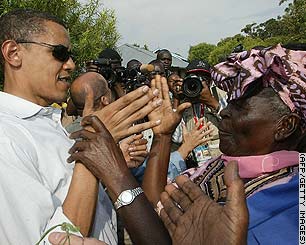
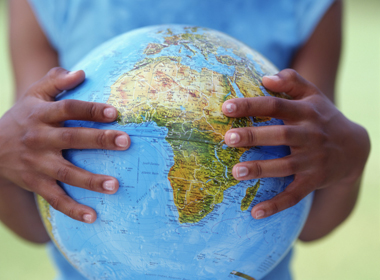
The White House has insisted President Barack Obama’s looming trip to Africa is long overdue and it will be a great ‘bang for the buck’.
The White House was, on Friday pushing back at concerns over the journey’s cost.
Ben Rhodes, a top foreign policy aide to Obama, admitted that the president, despite his Kenyan heritage, had focused far more on other regions, including Asia and Europe, than Africa, despite crucial US interests there.
“For the United States to say we’re a world leader except in this continent doesn’t make any sense,” said Rhodes, a deputy national security advisor.
“The US would be ceding its leadership position in the world if the president of the United States was not deeply engaged in Africa,” Rhodes said.
Obama is due to travel to Senegal, South Africa and Tanzania on a trip beginning at the end of this month for his first prolonged stay on the continent since taking office.
He has previously visited sub-Saharan Africa only once as president, with a short stay in Ghana in 2009.
Rebalancing
Rhodes noted that Obama had travelled multiple times to the Asia-Pacific region, as part of a rebalancing of US foreign policy there and had made many trips to Europe, so Africa needed some attention.
“Africa’s a critically important region of the world. We have huge interests there. You’ve got some of the fastest growing economies in Africa. You’ve got a massively growing youth population.
“You’ve got key security and counterterrorism issues that we work on with African countries,” he said, adding that key US interests in combating HIV/AIDS, and in supporting global health were also rooted in the continent.
“This is a deeply substantive trip and one that has been highly anticipated on the continent. Frankly, there’s been great disappointment that the president hasn’t travelled to Africa until this point other than a brief stop in Ghana.”
“The president is not going to retreat from an entire continent.”
The Washington Post reported on Thursday that plans for Obama to take a safari with his family in Tanzania had been cancelled due to budgetary concerns.
The newspaper, citing a Secret Service planning document, said the excursion would have required Obama’s counter-assault team to carry sniper rifles with high-caliber rounds that could neutralise cheetahs, lions or other animals.
Budget cuts
The paper said Obama’s Africa tour, his first since taking office in January 2009, could cost the US government between $60-million and $100-million, based on cost of similar trips in recent years.
The report comes as many government agencies struggle with mandatory budget cuts that took effect in March because US lawmakers failed to strike a wider budget deal.
Hundreds of Secret Service agents are dispatched for the president’s overseas visits along with dozens of vehicles, planes and other military and security assets.
The White House said that it was up to the Secret Service to determine costs and security needs for the US leader abroad – as was the case under former presidents George W. Bush and Clinton for instance.
Both Bush and Clinton undertook significant tours of Africa as president, requiring the vast security and logistical infrastructure that follows the US leader wherever he goes.
Rhodes, noting that other powers, including China, were seeking to increase their influence in Africa, portrayed Obama’s upcoming visit as a smart investment.
“There will be a great bang for our buck for being in Africa.
“When you travel to regions like Africa that don’t get a lot of presidential attention, you tend to have very long-standing and long-running impact from the visit.” – Sapa-AFP
THE World Economic Forum on Africa is one fabulous talk shop. Recurring themes are the need for investment, transparency, regulatory reform and infrastructure development.
Much is being made of the fact that on average African country growth is among the fastest in the world. Africa’s time, it is said, has arrived.
Yet one wonders, why after fifteen years, are African governments still marvelling at the possibilities for tele-medicine and tele- education? Meanwhile in Kenya, where young IT entrepreneurs are not waiting for government, functional tools are being developed. One group developed a mobile application that was used to monitor the recent election.
The tool was so successful it was immediately exported to Pakistan, which held its own election this past weekend.
Mobile you see, is not dependant on fixed-line, government-installed networks.
The lack of cheap access to broadband is one reason tele- medicine and tele-schooling have yet to reach their potential across the continent. Africa’s development, it appears, is destined to move at African speed.
Infrastructure, or rather the lack of it, is cited as one of the biggest constraints to African trade, economic growth and job creation.
“Why is it that we are importing from China, when our friends across the border are making the same product; or why are we driving four hours to reach an airport to fly to a town that is a mere 100km away,” said Donald Kaberuka, president of the African Development Bank.
Tired of talk, a group of business leaders and non-governmental organisations decided to actively intervene. At last year’s WEF on Africa, 27 African and global companies, including Sasol, Old Mutual, African Rainbow Minerals, the IDC and Transnet partnered with the WEF and the African Development Bank to form a business working group that aimed to unblock the bottlenecks constraining infrastructure development.
After a year of work ,the project team has identified 51 projects which span sectors from power generation and transportation to water and telecommunications with an overall capital cost of $68bn between now and 2020.
Power generation alone accounts for 15 projects and transportation for 24 projects. One of the problems bedevilling these type of ‘transformational’ projects which typically cross country borders, and are typically beyond the scope of private finance, is the inability of governments to agree on common priorities.
Work in the past year by the Business Working Group and supported by the Boston Consulting Group presents a framework for governments to assess a project based on clear economic, technical, social and regional criteria.
The development of a common framework is designed to accelerate project development and implementation.
“The classic PPP model has not worked well,” said South African finance minister Pravin Gordhan, at the launch of the framework. “On average it takes seven years to get a project off the ground. This effort aims to reduce the amount of time it takes to bring a project to the bankability stage.
This provides African governments with a better basis for co-operation within regions and between regions.”
At this point none of the 51 projects – which extend from building an 8 000km power line from Egypt to South Africa to supplying water to Gauteng via a water transfer programme – have been given the go-ahead.
However, several are on the table. “We have moved beyond the discussion of what is bankable to a discussion on what is to be implemented first,” Gordhan said.
The projects will be financed in different ways, but Kaberuka, made it clear that all forms of finance would be considered.
“There is a role for PPP’s as well as the private sector. But this is also about those projects where business finance will not be enough. We are working to see these initiatives through as well. The time for talking has passed.” – sasha@moneyweb.co.za
A 13-year-old girl has become the youngest South African to win the world chess federation title of Woman International Master, it was reported on Monday.
Charlize van Zyl, of Collegiate Girls High School in Port Elizabeth, won the women’s division of the FIDE (Fédération Internationale des Échecs) Africa zone’s 4.3 championships in Gaborone, Botswana, last week, Beeld reported.
The title of FIDE Master was won by South Africans Dr Deon Solomons and Calvin Klaasen, according to Chess SA’s website.
Players from Angola, Botswana, Mozambique, Namibia, Malawi, Madagascar, Mauritius, Zimbabwe, Lesotho, Swaziland, the Democratic Republic of Congo and the Comores competed.
In 1734, Anton Wilhelm Amo, a West African student and former chamber slave of Duke Anton Ulrich of Braunschweig-Wolfenbüttel, defended a philosophy dissertation at the University of Halle in Saxony, written in Latin and entitled “On the Impassivity of the Human Mind.” A dedicatory letter was appended from the rector of the University of Wittenberg, Johannes Gottfried Kraus, who praised “the natural genius” of Africa, its “appreciation for learning,” and its “inestimable contribution to the knowledge of human affairs” and of “divine things.” Kraus placed Amo in a lineage that includes many North African Latin authors of antiquity, such as Terence, Tertullian and St. Augustine.
Why have we chosen to go with Hume and Kant, rather than with the pre-racial conception of humanity?
In the following decade, the Scottish philosopher David Hume would write: “I am apt to suspect the Negroes, and in general all other species of men to be naturally inferior to the whites. There never was any civilized nation of any other complection than white, nor even any individual eminent in action or speculation.”
Hume had not heard of Amo, that much is clear. But we can also detect a tremendous difference between Hume’s understanding of human capacities and that of Kraus: the author of Amo’s dedicatory letter doesn’t even consider the possibility of anchoring what individual human beings are capable of doing to something as arbitrary as “complection.” For Kraus, Amo represents a continent and its long and distinguished history; he does not represent a “race.”
Another two decades on, Immanuel Kant, considered by many to be the greatest philosopher of the modern period, would manage to let slip what is surely the greatest non-sequitur in the history of philosophy: describing a report of something seemingly intelligent that had once been said by an African, Kant dismisses it on the grounds that “this fellow was quite black from head to toe, a clear proof that what he said was stupid.”
Kraus, the rector of Wittenberg, had been expressing an understanding of the nature of human diversity that was, in 1734, already in decline, soon to be thoroughly drowned out by the fundamentally racist view of human populations as dividing into a fixed set of supposedly natural, species-like kinds. This is the view lazily echoed by Hume, Kant, and so many of their contemporaries.
In his lifetime, Amo was principally known as a legal theorist. His first publication, in 1729, which has since been lost (or, one might suspect, intentionally purged), was a jurisprudential treatise, “On the Right of Moors in Europe.” Here he argues, on the basis of a reading of Roman history and law, that in antiquity “the kings of the Moors were enfeoffed by the Roman Emperor” Justinian, and that “every one of them had to obtain a royal patent from him.” This meant, in Amo’s view, that African kingdoms were all recognized under Roman law, and therefore all Africans in Europe have the status of visiting royal subjects with a legal protection that precludes their enslavement.
Historically, this is highly implausible, since much of the continent of Africa was unknown to Europeans at the time of Justinian. Still, Amo’s understanding is remarkably different from, say, Kant’s account of global history, on which black Africans stood, from the very beginning and as if by definition, beyond the pale of history, and therefore led lives of no intrinsic value, lives that could only be given value through absorption into a global system dominated by Europe.
Scholars have been aware for a long time of the curious paradox of Enlightenment thought, that the supposedly universal aspiration to liberty, equality and fraternity in fact only operated within a very circumscribed universe. Equality was only ever conceived as equality among people presumed in advance to be equal, and if some person or group fell by definition outside of the circle of equality, then it was no failure to live up to this political ideal to treat them as unequal.
It would take explicitly counter-Enlightenment thinkers in the 18th century, such as Johann Gottfried Herder, to formulate anti-racist views of human diversity. In response to Kant and other contemporaries who were positively obsessed with finding a scientific explanation for the causes of black skin, Herder pointed out that there is nothing inherently more in need of explanation here than in the case of white skin: it is an analytic mistake to presume that whiteness amounts to the default setting, so to speak, of the human species.
The category of race continues to be deployed, not just by racists, but by anti-racists as well.
The question for us today is why we have chosen to stick with categories inherited from the 18th century, the century of the so-called Enlightenment, which witnessed the development of the slave trade into the very foundation of the global economy, and at the same time saw racial classifications congeal into pseudo-biological kinds, piggy-backing on the divisions folk science had always made across the natural world of plants and animals. Why, that is, have we chosen to go with Hume and Kant, rather than with the pre-racial conception of humanity espoused by Kraus, or the anti-racial picture that Herder offered in opposition to his contemporaries?
Many who are fully prepared to acknowledge that there are no significant natural differences between races nonetheless argue that there are certain respects in which it is worth retaining the concept of race: for instance in talking about issues like social inequality or access to health care. There is, they argue, a certain pragmatic utility in retaining it, even if they acknowledge that racial categories result from social and historical legacies, rather than being dictated by nature. In this respect “race” has turned out to be a very different sort of social construction than, say, “witch” or “lunatic.” While generally there is a presumption that to catch out some entity or category as socially constructed is at the same time to condemn it, many thinkers are prepared to simultaneously acknowledge both the non-naturalness of race as well as a certain pragmatic utility in retaining it.
Since the mid-20th century no mainstream scientist has considered race a biologically significant category; no scientist believes any longer that “negroid,” “caucasoid” and so on represent real natural kinds or categories. [1] For several decades it has been well established that there is as much genetic variation between two members of any supposed race, as between two members of supposedly distinct races. This is not to say that there are no real differences, some of which are externally observable, between different human populations. It is only to say, as Lawrence Hirschfeld wrote in his 1996 book, “Race in the Making: Cognition, Culture, and the Child’s Construction of Human Kinds,” that “races as socially defined do not (even loosely) capture interesting clusters of these differences.”
Yet the category of race continues to be deployed in a vast number of contexts, and certainly not just by racists, but by ardent anti-racists as well, and by everyone in between. The history of race, then, is not like the history of, say, witches: a group that is shown not to exist and that accordingly proceeds to go away. Why is this?
Philosophers disagree. Anthony Appiah identifies himself as a racial skeptic to the extent that the biological categories to which racial terms refer have been shown not to exist. Yet at the same time he acknowledges that the adoption of “racial identities” may often be socially expedient, and even unavoidable, for members of perceived racial minorities. Ron Mallon has in turn distinguished between metaphysical views of race on the one hand, which make it out to describe really existent kinds, and normative views on the other, which take race to be useful in some way or other, but not real. Malon divides the latter into “eliminativist” and “conservationist” camps, supposing, variously, that the concept can only be put to bad uses, and must be got rid of, or that some of its uses are worth holding onto. On his scheme, one may very well coherently remain metaphysically anti-realist about race but still defend the conservation of the concept on normative grounds.
But given that we now know that the identity groups in modern multicultural states are plainly constituted on ethno-linguistic and cultural grounds, rather than on biological-essential grounds, it remains unclear why we should not allow a concept such as “culture” or “ethnie” to do the semantic work for us that until now we have allowed the historically tainted and misleading concept of “race” to do. We have alternative ways of speaking of human diversity available to us, some of which are on vivid display in Amo’s early life and work, and which focus on rather more interesting features of different human groups than their superficial phenotypic traits.
It is American culture that is principally responsible for the perpetuation of the concept of race well after its loss of scientific respectability by the mid-20th century. Even the most well-meaning attempts to grapple with the persistence of inequality between “blacks” and “whites” in American society take it for granted at the outset that racial categories adequately capture the relevant differences under investigation (see, for example: Thomas B. Edsall’s recent column, “The Persistence of Racial Resentment“) . This may have something to do with the fact that the two broad cultural-historical groupings of people in this country, which we call “white” and “black” and which have been constituted through the complicated histories of slavery, immigration, assimilation, and exclusion, tend at their extremes to correlate with noticeably different phenotypic traits.
An African-American is likely to look more different from an American of exclusively European descent than, say, an Orthodox Serb is likely to look from a Bosnian Muslim. This creates the illusion that it is the phenotypic difference that is causing the perception of cultural-historical distinctness, along with the injustice and inequality that has gone along with this distinctness. This also creates the illusion of American uniqueness: that our history of ethnic conflict cannot be understood comparatively or in a global context, because it, unlike conflict between Serbs and Bosnian Muslims or between Tutsi and Hutu, is supposedly based on “race” rather than history, politics, and culture. But where people are living with a different historical legacy, as in much of European history prior to the high modern period hailed in by Hume and Kant, the supposedly manifest phenotypic differences between “blacks” and “whites” can easily recede into the background as irrelevant.
Amo did not meet a happy end in Germany. His original manumission and education appear to have been a strategy on the part of Duke Anton Ulrich to impress Tsar Peter the Great of Russia, who had recently adopted his own chamber slave, Abram Petrovich Gannibal, as his own son. Gannibal would go on to a career as a brilliant engineer, military strategist, and politician; Amo, for his part, would be largely abandoned by his sponsors when the geopolitical winds shifted, and Russia fell off the duke’s list of priorities.
For a while the African philosopher eked out a living as a tutor in Jena and Wittenberg, and in 1747, after being made the butt of a libelous broadside accusing him of falling in love with a woman beyond his station, he returned to West Africa in disgrace. A French seafarer, David-Henri Gallandat, finds him there a few years later, and writes of meeting a man who “was very learned in astrology and astronomy, and was a great philosopher. At that time he was around 50 years old… He had a brother who was a slave in the colony of Suriname.”
The hopefulness of the 1734 dissertation was now long behind him. It is not known when Amo died, or under what circumstances. What we can say for certain is that he would not spend his final years as a successor to Augustine and Terence, but rather in the degraded position where someone like Kant supposed he belonged: outside of history, philosophically disenfranchised and entirely defined by something as trivial as skin color.
As long as we go on speaking as if racial categories captured something real about human diversity, we are allowing the 18th-century legacy of Kant and Hume, which was never really anything more than an ad hoc rationalization of slavery, to define our terms for us. We are turning our back on the legacy of Anton Wilhelm Amo, and of his European contemporaries who were prepared to judge him on his merits.
FOOTNOTES
[1] This is not to deny that there are limited contexts in which self-reporting of “racial” identity may be informative in a local or regional context. It is indeed helpful for a doctor to know, within the context of the American health-care system, the “race” of a patient. What it does mean to say that race is no longer a legitimate scientific category is that this limited, contextual helpfulness tells us nothing about a natural kind or real subdivision of the human species. The category of “race” can be useful in a local, medical context to the extent that it often correlates with other, useful information about tendencies within a given population. But this population need not be conceptualized in terms of race. Race is a dummy variable here, but not of interest as such.
Justin E. H. Smith teaches philosophy at Concordia University in Montreal.This piece appeared in the New York Times
Canada is investigating an allegation by the Algerian Prime Minister that one of its citizens co-ordinated the terror raid at the Saharan gas plant in which dozens of hostages were killed.
Westerners, including a man with blond hair and blue eyes, are believed to have been among the Islamist militants who launched last week’s attack on the Tigantourine complex near Algeria’s border with Libya.
A French jihadist, previously unknown to authorities, and two Canadians are suspected to have been involved in the hostage-taking, and reports also claim that a man with a Western accent was among the extremists who lured terrified gas workers from their rooms during the hostage crisis.
Prime Minister Abdelmalek Sellal told reporters that a man, judged “by his English accent” to have been Canadian, was among the 32 Islamists whose raid on the Algerian refinery prompted a global crisis. One of the Canadians, identified only as “Shaddad”, is alleged to have played a leading role in the attack which left 58 hostages – including 37 Westerners – dead after a four-day battle with Algerian forces. Five further Western workers are still unaccounted for. “A Canadian was among the militants,” Mr Sellal said. “He was co-ordinating the attack.”
The militant group also included men from Tunisia, Egypt, Mauritania and Niger, Mr Sellal said. At least 29 Islamists from eight nationalities were killed in the operation to end the siege, with the remaining three captured alive. The make up of the attacking group – an al-Qa’ida splinter brigade who call themselves “Those Who Signed in Blood” – will be carefully examined as security experts try to assess the scale of the terror threat across North and West Africa.
Concern at the international composition of the Algerian kidnap brigade will be compounded by reports from residents in Diabaly, Mali, that Islamists who overran the town last week contained English-speakers and militants of European appearance. Speaking to The Independent yesterday after French and Malian forces had retaken the town, student Amadu Dumbia said: “I definitely heard them and there’s no chance that I made a mistake with another language. They spoke like they were from England, but had darker skins.”
Mokhtar Belmokhtar, the leader of the group who is suspected of masterminding the gas plant attack from outside Algeria, yesterday warned that there would be more attacks on those participating in the military campaign in neighbouring Mali. In a statement to a radio station in Mauritania, which received regular communications from the militants during the In Amenas plant siege, the Algerian-born militant said: “We warn all the states who took part in the Crusader campaign against the Azwad region [northern Mali] that if they do not retreat from their decision there will be more operations.”
He also insisted that the brigade which undertook the attack was not local, saying “only five Algerians” took part in the attack and “none of them were locals from the city”.
Prime Minister David Cameron today told the Commons that the West faced a “generational struggle” in combating the “poisonous ideology” of Islamic extremists in the Sahel. Mr Cameron said that Britain would join the manhunt for Belmokhtar and promised extra support for the French campaign in Mali. Echoing the language used by Tony Blair in the aftermath of the September 11 attacks on the World Trade Centre, he said: “This is the work our generation faces and we must demonstrate the same resolve and sense of purpose as previous generations have with the challenges that they faced in this House and in this country.”
A spokeswoman for Canada’s Foreign Affairs Ministry yesterday said that they were still seeking clarity on a possible Canadian connection to the raid. “We are in close contact with Algerian authorities, but nothing [has been] confirmed yet,” Chrystiane Roy told Canada’s Globe and Mail newspaper.
The Algerian authorities have declined to confirm whether the alleged Canadian co-ordinator was among the 29 militants who died.
One of the hostage takers was a North American who took part in the killing of numerous Japanese workers, the AFP agency reported. An Algerian employee of a Japanese engineering firm working at the site, identified as Riad said the Islamist attackers shot three Japanese who were in a bus, then went straight to the rooms occupied by the Japanese.
“One terrorist shouted ‘Open the door’ with a North American accent, then fired,” he told AFP. “Two other Japanese died and we found four other Japanese bodies inside the base.”
One of the kidnappers was tall, blond with blue or green eyes and spoke English, an Algerian military source told the Norwegian daily Aftenposten. Norway’s Statoil energy company was one of the two foreign firms operating at the gas complex. – The Independent
The British charity Oxfam recently released an updated version of the Book of Lamentations. Something about how “the relentless focus on ongoing problems at the expense of a more nuanced portrait of [Africa], is obscuring the progress that is being made towards a more secure and prosperous future.”
That’s chief executive Barbara Stocking, as quoted by the BBC. Apparently the charity’s been doing some polling recently (in the UK), and coming up with interesting results. In one poll half of the respondents confessed that Africa conjured for them images of hunger, famine and poverty. In another poll, almost half of the 2,000 respondents thought Africa’s biggest challenge was hunger. Three out of four were suffering from ‘Africa-fatigue’ – that debilitating condition that afflicts well-meaning foreign philanthropists exposed to an endless stream of images of suffering and torment originating from the dark continent.
A distressed Oxfam has since gone ahead to launch its latest Africa campaign, in a desperate bid to shift the world’s attention from African Hunger, to African-Hunger-Backdropped-By-Stunning-African-Landscapes.
That’s, in a nutshell, the story. It left me a tad puzzled. A w-t-f puzzlement. As in: is Oxfam for real? Let’s even forget, for a moment, that Oxfam has probably done far more than any other organisation in propagating these images. Let’s focus on something else that struck me about the story: the way blame is being placed squarely on the shoulders of the Images.
Oxfam appears to be saying: Put All The Blame On The Images. Not the people hanging on stubbornly to those images in the face of alternative evidence. Am I alone in thinking Oxfam’s lamentations suggest a British public that is at the mercy of what they are fed. Helpless Brits who somehow cannot – despite all their efforts – rise beyond the bombardment of pity-evoking images of Africa,
One might as well rephrase Dame Stocking as follows: “Oh poor helpless people of Britain, all they’re being fed is harrowing, unhelpful images of Africa. We need to stop that. We need to feed them something different. We need to change their diet.”
In whose interest?
The whole set-up suggests that Britain is now guilty of the sort of intellectual laziness once associated (almost solely) with America (er, sorry). Clearly the surveys say far more about the British mind than they do about the African condition. Now we know, courtesy of Oxfam, that all along we’ve been depending on a bunch of wallet-opening puppets to deliver us from ourselves.
Now the puppets are growing weary, the strings fraying, the wallet-opening mechanisms aging. Now we have to refurbish the puppets, oil the creaking joints with a new, more positive type of ‘communication’. Landscapes, not Hunger!
A mindset that elevates what the British public thinks of Africa, over and above contemporary reality, and that suggests it is in Africa’s interest for that thinking to change, is not only faulty but dangerous as well.
To put it less mildly, who – apart from Oxfam, obviously – really cares, in 2013, what the British public thinks about a continent from which they fled in varying stages of undress? What’s that proverb about crying more than the bereaved? In the 21st century are people still allowed to be zombies gobbling up everything they’re fed by a collaboration of powerful media and NGOs?
I seriously doubt that it is in Africa’s interest for Brits to change their perception of Africa. Instead I think it is totally in Britain’s interests to change its perceptions of Africa. That problem, is Britain’s, and no one else’s. If the Brits insists on seeing Africa primarily through the lens of philanthropic intervention, good for them.
Let them stay thinking that way; let Oxfam, with its its Africa-emblazoned super-hero capes, stay convincing itself that it has a duty to alter global perceptions of Africa, while the Russians and Chinese – and diaspora Africans, who must have once assumed they’d left the continent for good – boldly head out to the continent to engage in potentially more useful ways.
Alternative images
Granted that those starving-children-and-dying-mothers images form a sizable part of African exports to the west. There may be little we can do about that, as long as we have a west obsessed with delivering Africa from itself. But what about the the tens of thousands of kwashiorkor-free, English-speaking, pocket-money-receiving African students who flock to the UK annually, to study (with a good number actually returning, to continue with the lives they left behind in Lagos and Nairobi and Accra and Freetown and Johannesburg etc).
How the British public fails to permit these alternative images to displace some of the “old stereotypes” (quoting Dame Stocking) should alarm many right-thinking people, and perhaps inspire an industry of academic theses on national delusions and epidemics of ostrich-in-sand-syndromes. If those flesh-and-blood representations of contemporary Africa somehow don’t succeed in serving as a useful counterbalance to the stereotypes, then nothing will.
“We want to make sure people have a really better balanced picture of what’s happening in Africa. Of course we have to show what the reality is in the situations in those countries. But we also need to show the other places where things are actually changing, where things are different,” Dame Stocking says.
I wish her and Oxfam the very best. Must be awful to have to take on that job of saving people from self-inflicted ignorance. In an age in which Google, Twitter and the news media lie at most fingertips, delivering, alongside stories of African suffering, narratives of determined recovery from tragedy and technology-driven change and emboldened youth and rising political awareness and growing intolerance for tyranny – is there still room for getting way with blaming with fixating on photos of begging bowls and the oxfamished children attached to them?
Stories also abound of the startling stupidities and failures of aid projects whose origins lie in a mentality belonging to a world that appears to have vanished. Misguided messiahs and their T-shirt donation and Shoe donation schemes, money-grabbing consultants, corrupt practices, high-profile-nil-value baby adoptions, etc etc.
It’s important that the Oxfams of this world do not allow themselves to get overly caught up in the myth of their impact. In the larger scheme of things, perhaps they’ve been over-estimating their messianic abilities. Consider this: In his posthumously published collection of essays pan-Africanist Tajudeen Abdul-Raheem says, of Nigeria’s 2006 debt relief deal: “What kind of success is debt relief that sees Nigeria paying back over three billion dollars to Britain alone, a figure more than the total aid budget of Britain in the same year?”
You could of course argue that that is oil-rich Nigeria, and choose instead to focus on the Rwandas and Malawis, where close to half the national budgets are donor-funded. And I could remind you of what the late Malawian president did with chunks of his country’s money. Or the mystery of the vanishing dollars in the Ugandan prime minister’s office.
I’m also somewhat surprised we’re still having this ‘African aid’ argument at the beginning of 2013, after the eloquent arguments of books like Dead Aid and The Fastest Billion. And after the Economist already publicly regretted its silliness.
Tolu Ogunlesi is black, lives in Lagos, Nigeria, where he works as Features Editor for NEXT, a daily newspaper. In 2009 he was awarded the Arts and Culture prize in the annual CNN Multichoice African Journalism Awards, as well as shortlisted for the inaugural PEN/Studzinski literary prize. He’s not part of Oxfam’s target market. Very few black poets press on the “donate now” button on the Oxfam website.
Codrin Arsene writes from a black man’s perspective. About one hundred Algerian and Chinese residents clashed in Algeria’s capital a couple of years ago. Unfortunately, this is not an isolated phenomenon. Violent clashes between Chinese immigrants and Ten reasons why Chinese are despised in Africa discontented Africans have occurred all over the continent from South Africa, Namibia, Zambia, my research site in Tanzania, to Ethiopia and Egypt. The situation is getting worse by the day since various factors are provoking these unforeseen acts of xenophobia. In the light of the latest attacks against Chinese in Algeria, I’m piling up a list of the top ten reasons why Chinese are despised in Africa. I am basing my list on the most common answers I received from Africans I interacted with in South Africa, Zambia and Tanzania. I believe these causes might be similar in other countries as well. The top is not made from the most significant to the less significant factor as this is irrelevant since all these causes act together and can only be seen as a whole!
Disclaimer: This article is more about perceptions than facts. These perceptions are the ones that cause xenophobia even if there is a loose connection to facts. This article is not meant to suggest that Chinese people are hated all over the continent. In fact, many Africans I talk to every day praise the Chinese for being hardworking, honest and direct people. The only reason why this article was written was to contextualize the attacks against the Chinese people in Africa, not to draw conclusions about the Chinese Diaspora itself.
High unemployment in urban centers (where most Chinese immigrants work) fuels tensions over migrant workers. In Dar es Salaam, I met Chinese citizens working on less than 60,000 Shillings a month (45 dollars) which is unacceptable even for the average person working in the city.
Chinese workers in Africa, most of which happen to be uneducated, have no respect for local customs. I witnessed one Chinese getting brutally beaten in Zanzibar last August because he refused to stop drinking beer in front of his shops and listen to loud music. It goes without saying that this type of behavior is offensive during a religious holiday, especially one as important as the Ramadan.
Chinese traders sell extremely cheap products which break easily. This causes tensions between buyers and sellers.
More than half of the uneducated Chinese that I interacted with are very aggressive in their behavior and use curse words loosely. This is another cause of frustration among the local people.
Various Chinese living in Africa are not only aggressive but racist in their attitudes and behavior. Instead of trying to see other Africans as their equals, they claim to be superior in front of the ones they interact with. This brings back old memories from the colonial period. Moreover, the actions of a few (not every Chinese I met in Africa is racist) affect the perception of the whole community.
Many Chinese do not speak the local language at all which makes communication even harder.
Various Chinese run enterprises throughout Africa have failed to pay their employers, something that is seen by many Africans as another form of direct exploitation. While the Chinese government has taken concrete measures against some of these companies, these instances are still prevalent in much of Africa.
At least in East Africa, Chinese citizens have been incarcerated for illegal fishing, illegal activities or even prostitution (I myself and currently into the businesses of two Chinese run brothels in Tanzania.) Illegal fishing in Tanzania made a lot of Tanzanians who depend of the fish trawled out of Lake Victoria and the Indian Ocean think that “the Chinese” are stealing their food. Such generalizations are harmful but the local authorities have not put any effort into addressing them. Not all Chinese are illegal fishermen or crooks but if people take some isolated incidents out of context they are more likely to form negative opinions about them.
There are more and more biased media accounts in East Africa that portrait the Chinese community in less than favorable terms. It took me a lot of time to find out why this is the case. My findings point to the fact that the businesses of some of the most important businessmen in Tanzania and Kenya are affected by the Chinese firms operating in this part of Africa. These owners have many political connections and are now pressing of the local mass media to write about the Chinese community in negative terms. Two businessmen told me they actually ordered inflammatory articles against the Chinese community.
There is almost no effort to control Chinese immigration in East Africa. More and more Chinese people come here every year which creates anxieties among the local people. And why shouldn’t that be the case? In one month since I came to Dar es Salaam I interacted with Chinese who, to come to the first reason why Chinese I despised in Africa, are plumbers, electricians, instructors, engineers, agriculturalists, babysitters, carpenters, miners, machine operators, street sellers or even baggers. Again, I don’t think this is a problem on its own but uncontrolled migration causes much of the anxieties to begin with. – african-politics.com
Without as much as a whisper the South African government allowed at least 400 000 Chinese to swamp the country during the past six years. Chinese migrants, mainly from the overpopulated Fujian province in China, have been shipped off to South Africa at an alarming rate. Spreading all over the country…
Even in the remotest parts, between 6000 and 12000 “Chinese shops” sprang up – indicating that the phenomenon is well-orchestrated by both China and South Africa.
Prof Colin McCarthy, retired from the University of Stellenbosch, first noted the “Chinese colonization”. Says Prof McCarthy: “All the evidence indicates that the project to set up such an extensive network of Chinese shops, all following the same pattern and targeting the same market, was well researched, well planned, well organized and well financed”.
The young, unemployed couples from Fujian province settled into the network – pushing up cheap Chinese plastics, products and clothing into a lucrative retail chain far bigger than Pick n Pay, Pep Stores
or Edgars. And to make matters worse: most of the Chinese shops are not registered and do not pay any taxes in South Africa; not even import or export duties – in fact, China put its clothing exports to South Africa to R11,3 billion in 2010; while South Africa’s failing statistics put the Chinese clothing imports at only R6,7 billion! It means that in one single year R4,6 billion worth of Chinese clothing entered South Africa illegally.
A South African Revenue Services employee spilled the beans on a small Chinese shop in a rural area where, when raided by SARS, R1,2 million was found under the counter.
Janet Wilhelm of the HSRC observes: “It is amazing how so many people can enter a country seemingly unnoticed!” She quotes the SAPS Aliens Investigation Unit as saying “many Chinese travel to South Africa via Mbabane, Maputo and Maseru from where they enter South Africa with false identity documents by road”.
Patrick Chong, chairman of the Chinese Association of South Africa, says: “Many would enter on tourist or student visas then simply stay”.
Researchers of Noseweek followed the Chen family where one pioneer settled illegally in South Africa, spreading within four years to 172 members of the family scattered across Lesotho trading Chinese
products.
What is even more mind-boggling and sinister is that the South African ANC government officially proclaimed Chinese as “honorary blacks”, making them exempt from affirmative action, quotas and Black Economic
Empowerment.
The whole “Chinese” experiment has been carefully planned, criminally enhanced, and no doubt. vast sums of money are involved, lining the pockets of very influential South African politicians.
It is ironic that while populists like Malema and Shivangu walk about claiming “land and minerals for the South African people”, the ANC government has allowed at least 400 000 additional Indians and
Pakistanis, at least 400 000 Chinese and at least 10 million illegals from Zimbabwe, Nigeria, Mozambique, Angola and now also Zambia into the country.
Over the next four years the U.S. will face a number of foreign policy problems, most of them regional, some of them global. Dispatches From The Edge will try to outline and analyze some of the key issues for Africa.
Africa is probably the single most complex region of the world and arguably its most troubled. While the world concerns itself with the Syrian civil war and the dangers it poses for the Middle East, little notice is taken of the war in the Congo, a tragedy that has taken five million lives and next to which the crisis in Syria pales.
Africa represents 15 percent of the world’s population, yet only 2.7 percent of its GDP, which is largely concentrated in only five of 49 sub-Saharan countries. Just two countries—South Africa and Nigeria—account for over 33 percent of the continent’s economic output. Life expectancy is 50 years, and considerably less in those countries ravaged by AIDS. Hunger and malnutrition are worse than they were a decade ago.
At the same time, Africa is wealthy in oil, gas, iron, aluminum and rare metals. By 2015, countries in the Gulf of Guinea will provide the US with 25 percent of its energy needs, and Africa has at least 10 percent of the world’s known oil reserves. South Africa alone has 40 percent of the earth’s gold supply. The continent contains over one-third of the earth’s cobalt and supplies China—the world’s second largest economy—with 50 percent of that country’s copper, aluminum and iron ore.
But history has stacked the deck against Africa. The slave trade and colonialism inflicted deep and lasting wounds on the region, wounds that continue to bleed out in today’s world. France, Britain, Germany, Italy, Spain and Portugal sliced up the continent without the slightest regard for its past or its people. Most of the wars that have—and are—ravaging Africa today are a direct outcome of maps drawn up in European foreign offices to delineate where and what to plunder.
But over the past decade, the world has turned upside down. Formerly the captive of the European colonial powers, China is now Africa’s largest economic partner, followed closely by India and Brazil. Consumer spending is up, and the World Bank predicts that by 2015 the number of new African consumers will match Brazil’s.
In short, the continent is filled with vibrant economies and enormous potential that is not going unnoticed in capitols throughout the world. “The question for executives at consumer packaged goods companies is no longer whether their firms should enter the region, but where and how” says a report by the management consultant agency A.T. Kearney. How Africa negotiates its new status in the world will not only have a profound impact on its people, but on the global community as well. For investors it is the last frontier.
The U.S. track record in Africa is a shameful one. Washington was a long-time supporter of the apartheid regime in South Africa and backed the most corrupt and reactionary leaders on the continent, including the despicable Mobutu Sese Seko in the Congo. As part its Cold War strategy, the U.S. aided and abetted civil wars in Mozambique, Angola, and Namibia. Americans have much to answer for in the region.
Militarization
If there is a single characterization of US policy vis-à-vis Africa, it is the increasingly militarization of American diplomacy on the continent. For the first time since WW II, Washington has significant military forces in Africa, overseen by a freshly minted organization, Africom.
The US has anywhere from 12,000 to 15,000 Marines and Special Forces in Djibouti, a former French colony bordering the Red Sea. It has 100 Special Forces soldiers deployed in Uganda, supposedly tracking down the Lord’s Resistance Army. It actively aided Ethiopia’s 2007 invasion of Somalia, including using its navy to shell a town in the country’s south. It is currently recruiting and training African forces to fight the extremist Islamic organization, the Shabab, in Somalia, and conducting “counter-terrorism” training in Mali, Chad, Niger, Benin, Cameroon, the Central African Republic, Ethiopia, Gabon, Zambia, Malawi, Burkina Faso, and Mauretania.
Since much of the US military activities involves Special Forces and the CIA, it is difficult to track how widespread the involvement is. “I think it is far larger than anyone imagines,” says John Pike of GlobalSecurity.org.
As a whole, US military adventures in Africa have turned out badly. The Ethiopian invasion overthrew the moderate Islamic Courts Union, elevating the Shabab from a minor player to a major headache. NATO’s war on Libya—Africom’s coming out party—is directly responsible for the current crisis in Mali, where Local Tuaregs and Islamic groups have seized the northern part of the country, armed with the plundered weapons’ caches of Muammar el-Qaddafi. Africom’s support of Uganda’s attack on the Lord’s Resistance Army in the Democratic Republic of the Congo resulted in the death of thousands of civilians.
While the Obama administration has put soldiers and weapons into Africa, it has largely dropped the ball on reducing poverty. In spite of the UN’s Millennium Development plan adopted in 2000, sub-Saharan Africa will not reach the program’s goals for reducing poverty and hunger, and improving child and maternal healthcare. Rather than increasing aid, as the plan requires, the US has either cut aid or used debt relief as a way of fulfilling its obligations.
At the same time, Washington has increased military aid, including arms sales. One thing Africa does not need is any more guns and soldiers.
There are a number of initiatives that the Obama administration could take that would make a material difference in the lives of hundreds of millions of Africans.
First, it could fulfill the UN’s Millennium goals by increasing its aid to 0.7 percent of its GDP, and not using debt forgiveness as part of that formula. Canceling debt is a very good idea, and allows countries to re-deploy the money they would use for debt payment to improve health and infrastructure, but as part of an overall aid package it is mixing apples and oranges.
Second, it must de-militarize its diplomacy in the region. Indeed, as Somalia and Libya illustrate, military solutions many times make bad situations worse. Behind the rubric of the “war on terror,” the US is training soldiers throughout the continent. History shows, however, that those soldiers are just as likely to overthrow their civilian governments as they are to battle “terrorists.” Amadou Sanogo, the captain who overthrew the Mali government this past March and initiated the current crisis, was trained in the U.S.
There is also the problem of who are the” terrorists.” Virtually all of the groups so designated are focused on local issues. Nigeria’s Boko Haram is certainly a lethal organization, but it is the brutality of the Nigerian Army and police that fuel its rage, not al-Qaeda. The continent’s bug-a-boo, al-Qaeda in the Islamic Meghreb, is small and scattered, and represents more a point of view than an organization. Getting involved in chasing “terrorists” in Africa could end up pitting the US against local insurgents in the Niger Delta, Berbers in the Western Sahara, and Tuaregs in Niger and Mali.
What Africa needs is aid and trade directed at creating infrastructure and jobs. Selling oil, cobalt, and gold brings in money, but not permanent jobs. That requires creating a consumption economy with an export dimension. But the US’s adherence to “free trade” torpedoes countries from constructing such modern economies.
Africans cannot currently compete with the huge—and many times subsidized industries—of the First World. Nor can they build up an agricultural infrastructure when their local farmers cannot match the subsidized prices of American corn and wheat. Because of those subsidies, US wheat sells for 40 percent below production cost, and corn for 20 percent below. In short, African needs to “protect” their industries—much as the US did in its early industrial stage—until they can establish themselves. This was the successful formula followed by Japan and South Korea.
The Carnegie Endowment and the European Commission found that “free trade” would end up destroying small scale agriculture in Africa, much as it did for corn farmers in Mexico. Since 50 percent of Africa’s GNP is in agriculture, the impact would be disastrous, driving small farmers off the land and into overcrowded cities where social services are already inadequate.
The Obama administration should also not make Africa a battleground in its competition with China. Last year US Secretary of State Hillary Clinton described China’s trading practices with Africa as a “new colonialism,” a sentiment that is not widely shared on the continent. A Pew Research Center study found that Africans were consistently more positive about China’s involvement in the region than they were about the US’s.
Jacob Zuma, president of South Africa, recently praised the continent’s “relationship with China,” but also said that the “current trade pattern” is unsustainable because it was not building up Africa’s industrial base. China recently pledged $20 billion in aid for infrastructure and agriculture.
One disturbing development is a “land rush” by countries ranging from the US to Saudi Arabia to acquire agricultural land in Africa. With climate change and population growth, food, as Der Spiegel puts it, “is the new oil.” Land is plentiful in Africa, and at about one-tenth the cost in the US. Most production by foreign investors would be on an industrial scale, with its consequent depletion of the soil and degradation of the environment from pesticides and fertilizers. The Obama administration should adopt the successful “contract farming” model, where investors supply capital and technology to small farmers, who keep ownership of their land and are guaranteed a set price for their products. This would not only elevate the efficiency of agriculture, it would provide employment for local people.
The Obama administration should also strengthen, not undermine, regional organizations. The African Union tried to find a peaceful resolution to the Libyan crisis because its members were worried that a war would spill over and destabilize countries surrounding the Sahara. The Obama administration and NATO pointedly ignored the AU’s efforts, and the organization’s predictions have proved prescient.
Lastly, the Obama administration should join with India and Brazil and lobby for permanent membership for an African country—either South Africa or Nigeria, or both— in the UN Security Council. India and Brazil should also be given permanent seats. Currently the permanent members of the Security Council are the victors of WW II: the US, Russia, China, France and Great Britain.
In 1619, a Dutch ship dropped anchor in Virginia and exchanged its cargo of Africans for food, thus initiating a trade that would rip the heart out of a continent. No one really knows how many Africans were forcibly transported to the New World, but it was certainly in the 10s of millions. To this day Africa mirrors the horror of the slave trade and the brutal colonial exploitation that followed in its wake. It is time to make amends. – http://dispatchesfromtheedgeblog.wordpress.com/
Rwanda – along with Australia, Argentina, Luxembourg and South Korea – won a seat on the U.N. Security Council on Thursday, despite accusations by a U.N. panel that Rwanda’s defense minister commands a rebellion in Democratic Republic of Congo.
Rwanda was unopposed in its bid for the African seat on the council that South Africa will vacate at the end of December, but still needed approval from two-thirds of the U.N. General Assembly members present to secure the two-year term. It won 148 votes in the 193-nation assembly.
Argentina also was elected to the council unopposed, winning 182 votes. Australia won a seat with 140 votes, Luxembourg with 131 votes and South Korea with 149.
Cambodia, Bhutan and Finland failed to secure two-year seats on the council.
There are five veto-holding permanent members of the council – the United States, Britain, France, Russia and China – and 10 temporary members without veto power. Thursday’s election was for the term from Jan. 1, 2013, to Dec. 31, 2014.
Rwanda’s government said that it would work with all members of the council to ensure “it is responsive and reflective of the views & aspirations of the developing world.”
“Rwanda’s troubling and tragic past allows it to bring to the UNSC a unique perspective on matters of war and peace,” it posted on a Twitter account created for its Security Council term (@RwandaUNSC).
Before the vote, the Congolese delegation told the General Assembly it objected to Rwanda joining the Security Council, accusing its neighbor of harboring “war criminals operating in the eastern part of the DRC and who are being sought by international justice.”
A confidential U.N. report, seen by Reuters on Tuesday, cast a shadow over Rwanda’s election to the 15-member U.N. power center – which has the ability to impose sanctions and authorize military interventions.
The Security Council’s “Group of Experts” said that Rwanda and Uganda – despite their strong denials – continued to support M23 rebels in their six-month fight against Congolese government troops in the east of the country.
BLATANT VIOLATIONS?
Rwandan President Paul Kagame posted a declaration on Twitter welcoming the result: “No matter what haters say … justice&truth will prevail!!! Sometimes it just requires a bit of good fight for all that…!!!”
Speaking to reporters in New York, Rwandan Foreign Minister Louise Mushikiwabo complained about the timing of the leak of the experts report to Reuters two days ahead of the Security Council vote, but added that the leak was “predictable.”
She also sought to assure Congo that Rwanda would be a responsible council member. “I believe the Democratic Republic of Congo should see Rwanda on the Security Council as value addition,” she said after the vote.
Philippe Bolopion of the advocacy group Human Rights Watch criticized the inclusion of Rwanda on the Security Council
“After blatantly violating the Security Council’s arms embargo and undermining the work of the U.N. by propping up the abusive M23 rebels, Rwanda is rewarded with a seat at the table,” he said.
“Kigali is now in a position to try to shield its own officials implicated in abuses from U.N. sanctions, which is a flagrant conflict of interest,” Bolopion said in a statement. “Other Security Council members now have an even greater responsibility to hold Rwanda to account.”
Britain’s Deputy U.N. Ambassador Philip Parham put a more positive spin on Rwanda’s election, saying: “We look forward to working with them on issues of international peace and security including the efforts to try to end the cycle of violence in the eastern DRC.”
Australian Foreign Minister Bob Carr described Australia’s election as a “big juicy, decisive win” that endorsed the country as a good global citizen.
“For us as a middle power a long way from the centers of clout in the world, the centers of power in the world, this is a lovely moment,” Carr told reporters after the vote.
South Africa, Colombia, Germany, India and Portugal are leaving the Security Council in December. Azerbaijan, Guatemala, Pakistan, Togo and Morocco will remain until the end of 2013.
The last time Rwanda was on the council was in 1994-95. That coincided with a genocide in which 800,000 people were killed when Rwanda’s Hutu-led government and ethnic militias went on a 100-day killing spree, massacring Tutsis and moderate Hutus.
The Congolese government on Wednesday demanded targeted sanctions against Rwandan and Ugandan officials named in the U.N. experts report.
According to the U.N. experts, who monitor compliance with sanctions and an arms embargo on the Congo, Rwandan Defense Minister General James Kabarebe was ultimately commanding the rebellion and both Rwanda and Uganda were providing weapons, troops and military and political aid to the insurgency. – Reuters
When we think of the world’s all-time richest people, names like Bill Gates, Warren Buffet and John D Rockefeller immediately come to mind.
But few would have thought, or even heard of, Mansa Musa I of Mali – the obscure 14th century African king who was today named the richest person in all history.
With an inflation adjusted fortune of $400 billion, Mansa Musa I would have been considerably richer than the world’s current richest man, Carlos Slim, who ranks in 22nd place with a relatively paltry $68 billion.
The list, compiled by the Celebrity Net Worth website, ranks the world’s 24 richest people of all time. The list advertises itself as the top 25, but only 24 names appear in the list.
Although the list spans 1000 years, some aspects of wealth appear consistent throughout history; there are no women on the list, only three members are alive today, and 14 of the top 25 are American.
The list uses the annual 2199.6 per cent rate of inflation to adjust historic fortunes – a formula that means $100 million in 1913 would be equal to £2.299.63 billion today.
Mansa Musa I ruled West Africa’s Malian Empire in the early 1300s, making his fortune by exploiting his country’s salt and gold production. Many mosques he built as a young man still stand today.
After Mansa Musa I death in 1331, however, his heirs were unable to hang on to the fortune, and it was substantially depleted by civil wars and invading armies.
Second on the list are the Rothschild family, whose descendants are still among the richest people on the planet. Starting out in banking in the late 18th Century, Mayer Amschel Rothschild’s finance house accumulated a total wealth of $350 billion. The money has since been divided between hundreds of descendants, many of whom are business leaders today.
Meanwhile John D. Rockefeller, third on the list, is the richest American to have ever lived, worth $340billion in today’s USD at the time of his death in 1937.
In comparison, the poorest man on the list is 82-year-old Warren Buffett, who at his peak net worth, before he started giving his fortune to charity, was $64billion.
Here’s the full list of the ‘24 richest people of all time’:
1. Mansa Musa I, (Ruler of Malian Empire, 1280-1331) $400 billion
2. Rothschild Family (banking dynasty, 1740- ) $350 billion
3. John D Rockefeller (industrialist, 1839-1937) $340 billion
4. Andrew Carnegie (industrialist, 1835-1919) $310 billion
5. Tsar Nicholas II of Russia (last Emperor of Russia, 1868-1918) $300 billion
6. Osman Ali Khan, Asaf Jah VII (last ruler of Hyderabad, 1886-1967) $236 billion
7. William the Conqueror (King of England, 1028-1087) $229.5 billion
The Wall Street Journal has published an article painting a bleak picture of South Africa’s economy, saying labour unrest has caused its economic growth to fall behind other African states.
“The unrest is exposing a stark reality – South Africa is falling behind, even in Africa,” read the Wall Street Journal article, published on its website on Friday.
The article said Rwanda, which had 800 000 people killed in the same year the ANC took power, had managed to achieve annual economic growth near 8% since 2004, more than double South Africa’s 3.7% growth rate during the same period.
It said that when Zambia held its democratic elections in 1991, it scrapped nationalisation, but South Africa “is debating nationalisation and other ways to intervene in the mining sector”.
Countrywide strikes coupled with unemployment and income disparity were posing a grave challenge to the ruling party, read the Wall Street Journal article.
Brazil’s economy had grown around the same pace as South Africa’s but its income disparity had diminished, it added. – Sapa
NEWS FLASH FROM 50 YEARS AGO
• Safmarine buys two refrigerated cargo ships of 10 000 tonnes each to transport export fruit to Europe for R2 million.
• South Africa takes the lead with 100 000 bales of cotton spun every year on 230 000 spindles and 3 500 looms, creating 10 000 jobs.
• South Africa is the largest exporter of fish in the southern hemisphere and sixth in the world with exports valued at R40 million.
• Great Britain report that on average 250 applications for emigration to South Africa are received daily, especially from skilled artisans.
• Maree, Minister for Education, establishes the Board for bantu Education, aimed at improving black education to the same level as education for whites.
• 2000 white refugees from Kenya’s uhuru uprising are relocated in Natal where they are helped to produce tea, coffee and sisal.
• Local governments for the coloured community in the Free State established by MEC Haveman.
• SA Railways and Harbours orders 100 new electric locomotives at a cost of R13 million and with the provision that 68% material from South Africa be used in the manufacturing process.
• A hand-spinning and weaving factory for fabrics erected in Umtata, Transkei to create jobs for blacks by the Bantu Investment Corporation.
• The cape Hospitals Department spend R23 million on new hospitals, including the new University of Stellenbosch Teaching Hospital.
• A two-storey hotel for blacks erected in Daveyton, Springs for use by black sportsmen and VIP’s handed over to black entrepreneurs by Benoni Town Council.
• Dr FW Quass says that of the 2060 welfare organisations in the country, 2000 are aimed at the black population.
• The Department of Statistics releases figures of an 18% increase in employment. Monthly income for the year rose to R111,4 million compared to the previous year’s R102 million.
• Some coloured townships, including Haarlem in the Langkloof, exempted from the Group Areas Act and put under own administration.
• Between 1959 and 1962 a total of 91 631 houses for blacks were built at a cost of R38 million in urban areas, while 474 sub-economic units were built for whites at a cost of R1 million.
• South Africa has 300 000 miners employed at gold mines and 250 000 in coal mines. The fatality figures stands at 1,29 per thousand workers.
• Foreign investment grew from R142 million in 1961 to R503,6 million according to Trust Bank.
• The government announces plans to make it possible for 35 000 Xhosas in Western Transvaal to bring out special votes during the Transkei elections.
• Chief Pilane of the Tswana says he foresees the establishment of an independent Tswana state where his people and whites “can live in peace as we have always done”.
• PW Botha, Minister of Housing, announces plans to build 2000 houses in Klerksdorp and 2000 in Port Elizabeth to make provision for new immigrant employees.
Three-quarters of African countries and several “Arab Spring” nations are at high or extreme risk of a food crisis, according to an analysis published on Wednesday.
In a survey of 197 countries, 59 are most at risk of food insecurity, the British consultancy Maplecroft said.
Thirty-nine of these are African, it said.
Out of the 11 countries that are in the “extreme risk” category, nine are in Africa.
They include Somalia and the Democratic Republic of Congo, which are ranked joint first, Burundi (4th), Chad (5th), Ethiopia (6th), Eritrea (7th), South Sudan (9th), the Comoros (10th) and Sierra Leone (11th).
Haiti (3rd) and Afghanistan (8th) are the other two countries in the extreme risk category.
“Although a food crisis has not emerged yet, there is potential for food-related upheaval across the most vulnerable regions,” including sub-Saharan African and Arab states, said Maplecroft’s Helen Hodge.
The 48 countries considered to be at “high” risk for food supplies include Yemen (15th), Syria (16th), Pakistan (27th), Papua New Guinea (33rd), North Korea (35th), Iraq (54th) and Libya (58th).
Egypt, ranked 71st of the 197 countries, and Tunisia, 100th, are among medium-risk countries.
Sources of food insecurity range from conflict and instability in the Sahel, DRC and eastern Africa to rising prices for corn, caused by the worst US drought in 50 years and declining production in former Soviet countries, Maplecroft said.
The report, called the Food Security Risk Index, is intended for governments, NGOs and businesses to identify countries that could be susceptible to hunger or unrest because of food shortages or price hikes.
“The drivers of the ‘Arab Awakening [Spring]’ were varied and complex and included long standing public anger at high levels of governmental corruption and oppressive tactics against populations and political opposition,” said Maplecroft.
“When these factors combine with food insecurity, sparked by rising global prices, it can create an environment for social unrest and regime change.”
Notable changes compared to last year’s rankings were North Korea (19th on the 2011 list); Egypt (88th) and Syria (89th). – AFP
This website uses cookies to improve your experience. We'll assume you're ok with this, but you can opt-out if you wish. Cookie settingsACCEPT
Privacy & Cookies Policy
Privacy Overview
This website uses cookies to improve your experience while you navigate through the website. Out of these cookies, the cookies that are categorized as necessary are stored on your browser as they are essential for the working of basic functionalities of the website. We also use third-party cookies that help us analyze and understand how you use this website. These cookies will be stored in your browser only with your consent. You also have the option to opt-out of these cookies. But opting out of some of these cookies may have an effect on your browsing experience.
Necessary cookies are absolutely essential for the website to function properly. This category only includes cookies that ensures basic functionalities and security features of the website. These cookies do not store any personal information.
Any cookies that may not be particularly necessary for the website to function and is used specifically to collect user personal data via analytics, ads, other embedded contents are termed as non-necessary cookies. It is mandatory to procure user consent prior to running these cookies on your website.