The US decision to arm the Syrian rebels fighting government troops has sparked feuds among various rebel factions dominated by radical Islamist fighters. As internal schisms among the rebels deepen, fighters from the Al-Qaeda-linked Al-Nusra Front have reportedly assassinated a large number of officers of the Free Syrian Army.
The Al-Qaeda-linked Al-Nusra Front is now said to be targeting Free Syrian Army (FSA), but these two share a common goal – to oust Syrian President Bashar Assad.
The rebel ranks met in Istanbul recently, where they could make no type of agreement between themselves. By all accounts this power struggle has been going on for months.
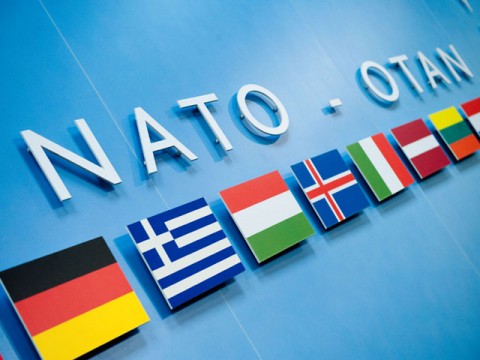
The decision by President Obama and the NATO powers that they will give weapons to the Free Syrian Army probably mean some of those arms will be used to attack Kurds in the northern part of Syria.
Reports say that many FSA fighters are leaving more modern brigades for hard-line groups.
In neighboring Iraq and Lebanon, the Al-Nusra Front has become the lead faction in the opposition. The so-called ‘moderate rebels’ has no clout against the hundreds or thousands, millions or billions – we don’t know – coming from Qatar and Saudi Arabia, the American allies in the Persian Gulf.
The Free Syrian army seems to have deposed some of the initial leaders, but rather like the pre-Iraq-War time, we don’t really know. It isn’t stopping the Americans. They seem to know exactly who the Free Syrian Army is, and they have 2,000 marines over the Jordanian border putting in Patriot missiles and getting ready for war. They were flying F-16s over the past 48 hours.
France does not seem to know who the FSA is either, as Paris is saying “no more arms, no more weapons, until we find out who the personnel really are in this rebel movement.”
The US should be bombing Syria not with weapons, but with airlifts of medicine and urgent medical care for all of these millions of refugees.
Syria already had a refugee crisis in the fallout of the Iraq war, and it has its own one now. have reportedly assassinated a large number of officers of the Free Syrian Army. – RT
Substantial military support for opposition Syrian forces remains necessary, urged advocates Saturday during a meeting of the Friends of Syria group, a day after rebels disclosed receipt of advanced weapons they said could change the course of the war.
In the meantime, the BBC has reported that “Foreign ministers of the Friends of Syria group, who are meeting in Qatar, have agreed to provide urgent support to rebels who are fighting President Bashar al-Assad.”
The British broadcaster quoted Qatar’s Prime Minister Sheikh Hamad bin Jassim bin Jaber al-Thani as saying that “providing arms may be the only means of achieving peace”.
US Secretary of State John Kerry told a meeting of the 11-country grouping in the Qatari capital Doha that support for Syrian rebels was not aimed at ensuring a military victory for them, but to strengthen them at proposed peace talks with Damascus.
He added that the Friends of Syria believe the talks, expected to be in Geneva this summer, represents an opportunity to negotiate an end to Syria’s 27-month conflict.
Kerry accused Syrian President Bashar al-Assad’s regime of “internationalizing” the conflict by seeking assistance from Iran and the Lebanese Shiite movement Hezbollah.
“The United States and other countries here … will increase the scope and scale of assistance to the political and military opposition.”
Qatar, a staunch backer of the Syrian opposition, called on other countries represented in the Doha gathering to offer military aid to rebels fighting to oust al-Assad.
“Moral backing is not enough. We have to offer support to help Syrians face the regime troops,” said Qatari Prime Minister and Foreign Minister Hamd bin Jassim.
“A balance must be achieved on the ground so that the regime can accept negotiations.”
Al-Assad’s troops have, in recent weeks, regained several rebel-held areas, raising concerns among the opposition’s allies.
The rebel Free Syrian Army (FSA) has said it would demand more sophisticated weapons at the Doha meeting.
“From our part, the meeting will highlight the importance of sending more weapons and ammunition to the revolutionaries to help them confront attacks by the Syrian regime and their Hezbollah allies,” Samir al-Nashar, a member of the Syrian opposition, told dpa.
Earlier this month, the US, citing the use of chemical weapons by the al-Assad regime, announced it would give arms directly to the opposition forces.
The European Union’s arms embargo on Syria is to be lifted, but not until August.
Russia, Syria’s key arms supplier, this week warned the West that arms to Syrian rebels could end up in extremists’ hands.
The Friends of Syria group comprises Britain, France, the US, Germany, Italy, Jordan, Qatar, Saudi Arabia, Turkey, Egypt and the United Arab Emirates.
Jordanian military officials, meanwhile, confirmed Saturday that Amman and Washington have expanded a year-old training programme for Syrian rebels.
The programme, once restricted to the detection and securing of chemical weapons, has been broadened to include the use of anti-aircraft and anti-tank missiles – the very arms the rebels say are needed to turn the tide of the conflict.
Washington dispatched some 2,000 additional military trainers and advisors to Jordan last week, military officials said, to train 5,000 FSA commanders and officers over the next month.
“Due to changes on the battlefield, a decision has been made on both sides to train more fighters, faster before it is too late,” a Jordanian military officer involved in the training said on condition of anonymity.
Abu Mohammed al-Darawi, an FSA commander, who sent 100 of his 800-strong battalion to take part in the training in the eastern Jordanian desert, claims the revamped drills included, for the first time, the use of heavy artillery such as anti-aircraft and anti-tank missiles.
“For the first time we are using the very weapons that can defend ourselves against the regime’s arsenal,” al-Darawi told dpa. In Syria, opposition activists said government forces Saturday intensified attacks on pro-rebel areas around the capital Damascus.
The Britain-based Syrian Observatory for Human Rights said several buildings were damaged or gutted in a shelling attack by regime troops on the area of al-Qaboon north-east of Damascus.
The Observatory added that four government soldiers were killed when a shell landed in the district of al-Qadam south of Damascus.
At least 93,000 people have been killed in Syria since March 2011, according to the United Nations.Authors: Weedah Hamzah, Taylor Luck, Ramadan Al-Fatash – dpa
Trying to tamp down concerns about government over-reach, President Barack Obama on Wednesday defended U.S. Internet and phone surveillance programs as narrowly targeted efforts that have saved lives and thwarted at least 50 terror threats.
“This is not a situation in which we are rifling through ordinary emails” of huge numbers of citizens in the United States or elsewhere, the president declared during a news conference with German Chancellor Angela Merkel. He called it as a “circumscribed, narrow” surveillance program.
“Lives have been saved,” Obama said, adding that the program has been closely supervised by the courts to ensure that any encroachment of privacy is strictly limited.
Merkel, for her part, said it was important to continue debate about how to strike “an equitable balance” between providing security and protecting personal freedoms.
“There has to be proportionality,” she said. She added that their discussion on the matter Wednesday was “an important first step” over striking a balance.
Merkel appeared to be looking to avoid a public rift with Washington over the surveillance program, particularly since Germans benefit from U.S. intelligence. Much of the German criticism of the program has come from her junior coalition partners, facing the prospect of losses in the September election and looking for an issue.
The two leaders spoke to the media after meeting privately on a range of issues confronting U.S. and European leaders, including the fragile effort to bring peace in Afghanistan, where peace talks with the Taliban are in the offing to find ways to end the nearly 12-year war. Earlier Wednesday, Afghan President Hamid Karzai suspended talks with the United States on a new security deal to protest the way his government was being left out of the initial peace negotiations with the Taliban.
Obama said the U.S. had anticipated “there were going to be some areas of friction, to put it mildly, in getting this thing off the ground. That’s not surprising. They’ve been fighting there for a long time” and mistrust is rampant.
Karzai said Wednesday that peace talks cannot begin amid “fighting and bloodshed.” But Obama said it was important to pursue a parallel track toward reconciliation even as the fighting continues, and it would up to the Afghan people whether that effort ultimately bears fruit.
On another world trouble spot, the 2-year-old Syrian civil war, the president declined to provide details on the type of military support the U.S. will provide to opposition forces. But he said the administration had been consistent in working toward the over-riding goal of a Syria that is “peaceful, non-sectarian, democratic, legitimate, tolerant.”
“I cannot and will not comment on specifics around our programs related to the Syrian opposition,” he said.
The president said while world leaders at the just-completed Group of 8 summit in Northern Ireland could not agree on whether Syrian President Bashar Assad must go, he believes Assad cannot regain legitimacy.
And the president offered reassurances on another issue of particular concern in Germany. In response to a question from a German reporter, Obama said the United States doesn’t use Germany as a launching point for unmanned drones to strike terrorist targets. He said he knows there have been some reports in Germany speculating that was the case, but it’s not so.
Later Wednesday, Obama planned to draw attention to his plan for a one-third reduction in U.S. and Russian arsenals, rekindling a goal that was a centerpiece of his early first-term national security agenda.
His 26-hour whirlwind visit to the German capital caps three days of international summitry for the president and marks his return to a place where he once summoned a throng of 200,000 to share his ambitious vision for American leadership.
Obama will make the case for his nuclear plan during a speech at Berlin’s iconic Brandenburg Gate. His address comes nearly 50 years after John F. Kennedy’s famous Cold War speech in this once-divided city, and five years after Obama spoke in the city during his 2008 run for president.
The president has previously called for reductions to the stockpiles and is not expected to outline a timeline for this renewed push. But by addressing the issue in a major foreign policy speech, Obama is signaling a desire to rekindle an issue that was a centerpiece of his early first-term national security agenda.
Five years later, Obama comes to deliver a highly anticipated speech to a country that’s a bit more sober about his aspirations and the extent of his successes, yet still eager to receive his attention at a time that many here feel that Europe, and Germany in particular, are no longer U.S. priorities. A Pew Research Center poll of Germans found that while their views of the U.S. have slipped since Obama’s first year in office, he has managed to retain his popularity, with 88 percent of those surveyed approving of his foreign policies.
Obama also has an arc of history to fulfill.
Fifty years ago next week, President Kennedy addressed a crowd of 450,000 in that then-divided city to repudiate communism and famously declare “Ich bin ein Berliner,” German for “I am a Berliner.” Since then, presidents from Ronald Reagan to Bill Clinton have used Berlin speeches to articulate broad themes about freedom and international alliances.
Obama, fresh from a two-day summit of the Group of Eight industrial economies, placed his hand over his heart outside the sunny presidential palace as a German military band played “The Star-Spangled Banner,” the American national anthem. He and German President Joachim Gauck inspected a lineup of German military troops before entering the palace, stopping to greet children who waved American and German flags.
The visit was attracting widespread attention in Germany. People waved and snapped photos as Obama sped by after his arrival and a thick cluster awaited the motorcade as it passed the Brandenburg Gate. An evening news show in Berlin devoted itself to the president’s visit, highlighting “Das Biest,” or “The Beast,” as the president’s armored limousine is called.
There have been a few small protests, including one directed against the National Security Agency’s surveillance of foreign communications, where about 50 people waved placards taunting, “Yes, we scan.”
Merkel has said she was surprised at the scope of the spying that was revealed and said the U.S. must clarify what information is monitored. But she also said U.S. intelligence was key to foiling a large-scale terror plot and acknowledged her country is “dependent” on cooperating with American spy services.
For Merkel, the visit presents an opportunity to bolster her domestic standing ahead of a general election in September.
The U.S. and the Germans have clashed on economic issues, with Obama pressing for Europe to prime the economy with government stimulus measures, while Merkel has insisted on pressing debt-ridden countries to stabilize their fiscal situations first.
But the two sides have found common ground on a trans-Atlantic trade pact between the European Union and the U.S. At the just-completed G-8 summit, the leaders agreed to hold the first talks next month in the U.S. – AP
Former French Foreign Minister Roland Dumas said that Britain had been preparing gunmen to invade Syria two years before the crisis there flared up in 2011
During a TV show, Dumas said ”I was in Britain two years ago, and I met British officials, some my friends…they admitted that they were up to something in Syria.”
”They even asked me to join them in my capacity as a foreign minister, but I declined,” he added.
He indicated that the plan of striking Syria had been prepared in advance long before the 2011 events, adding that the goal was to overthrow the Syrian government that considers Israel an enemy.
The TV show was dedicated to discussing the war in Syria.
French magazine: ‘Jihadists’ involvement in Syria much bigger than Afghanistan
The French magazine “Le Nouvel Observateur” quoted a senior French official as saying that the participation of French Jihadists in Syria is bigger that their involvement in Afghanistan war.
The French magazine said that the French intelligence verified the identities of 270 French nationals who are fighting in Syria, indicating that their return has become a major concern for the French interior ministry.
The magazine said that the number of European ‘Jihadists’ fighting in Syria ranges between 1,500 and 2,000, in addition to hundreds of Tunisians. – SANA
Britain said on Sunday it and other countries were “very reluctant” to arm rebels in Syria even as it warned that success on the battlefield by forces loyal to President Bashar al-Assad was undermining chances of a Geneva peace conference.
Britain and France worked together last month to lift a European Union embargo on arms shipments to Syrian rebels, giving them the flexibility to send weapons to forces who complain they are dramatically outgunned.
But Foreign Secretary William Hague said on Sunday that no such decision had yet been taken and promised for the first time to give MPs a vote in parliament if and when it was.
“There would be a vote one way or the other,” he told BBC TV, saying Britain and the world were faced with an agonising foreign policy and ethical dilemma.
“People have understandable concerns about the idea of sending arms to anybody in Syria and we’d all be very reluctant to do that,” he said.
“On the other hand, at the moment, people are being killed in huge numbers while the world denies them the right to defend themselves.”
Hague’s intervention comes as U.S.-Russian efforts to convene a peace conference in Geneva are faltering after the rebels lost control of the strategic border town of Qusair last week, weakening their negotiating hand.
One rebel commander has since been quoted as saying the opposition will boycott a peace conference unless it receives arms.
But Prime Minister David Cameron’s government is split on the issue with some ministers fearing such a move could worsen the bloodshed and drag Britain into a protracted conflict.
Hague said he was gloomy about the prospect of a Geneva peace conference.
“The regime has gained ground. That makes the Geneva conference harder to bring about and to make a success. It makes it less likely that the regime will make enough concessions in such negotiations, and it makes it harder to get the opposition to come to the negotiations.
“They’re not coming together in the next couple of weeks. I find that worrying and depressing,” he added.
The United Nations estimates at least 80,000 people have died in the Syrian conflict.
U.N. humanitarian agencies launched a $5 billion (3.2 billion pounds) appeal on Friday, the biggest in their history, to cope with the fallout from the fighting that has sent some 1.6 million refugees fleeing to neighbouring countries. – Reuters
(Reporting By Andrew Osborn; Editing by Andrew Heavens)
Russia has sent advanced antiship cruise missiles to Syria, a move that illustrates the depth of its support for the Syrian government led by President Bashar al-Assad, American officials said Thursday.
Russia has previously provided a version of the missiles, called Yakhonts, to Syria. But those delivered recently are outfitted with an advanced radar that makes them more effective, according to American officials who are familiar with classified intelligence reports and would only discuss the shipment on the basis of anonymity.
Unlike Scud and other longer-range surface-to-surface missiles that the Assad government has used against opposition forces, the Yakhont antiship missile system provides the Syrian military a formidable weapon to counter any effort by international forces to reinforce Syrian opposition fighters by imposing a naval embargo, establishing a no-fly zone or carrying out limited airstrikes.
“It enables the regime to deter foreign forces looking to supply the opposition from the sea, or from undertaking a more active role if a no-fly zone or shipping embargo were to be declared at some point,” said Nick Brown, editor in chief of IHS Jane’s International Defense Review. “It’s a real ship killer.”
Jeffrey White, a fellow at the Washington Institute for Near East Policy and a former senior American intelligence official, said Syria’s strengthened arsenal would “tend to push Western or allied naval activity further off the coast” and was also “a signal of the Russian commitment to the Syrian government.”
The disclosure of the delivery comes as Russia and the United States are planning to convene an international conference that is aimed at ending the brutal conflict in Syria, which has killed more than 70,000. That conference is expected to be held in early June and to include representatives of the Assad government and the Syrian opposition.
Secretary of State John Kerry has repeatedly said that it is the United States’ hope to change Mr. Assad’s “calculations” about his ability to hold on to power so that he will allow negotiations for a political solution to the conflict. Mr. Kerry indicated that he had raised the issue of Russian arms deliveries to Syria during his recent visit to Moscow, but declined to provide details.
“I think we’ve made it crystal clear we would prefer that Russia was not supplying assistance,” he said. “That hasn’t changed.”
American officials have been concerned that the flow of Russian and Iranian arms to Syria will buttress Mr. Assad’s apparent belief that he can prevail militarily.
“This weapons transfer is obviously disappointing and will set back efforts to promote the political transition that is in the best interests of the Syrian people and the region,” Senator Bob Corker of Tennessee, the senior Republican on the Foreign Relations Committee, said in a statement on Thursday night. “There is now greater urgency for the U.S. to step up assistance to the moderate opposition forces who can lead Syria after Assad.”
Senator Robert Menendez, Democrat of New Jersey and the committee chairman, added in a statement, “Russia is offering cover to a despotic ruler and defending a bankrupt regime.”
Syria ordered the coastal defense version of the Yakhont system from Russia in 2007 and received the first batteries in early 2011, according to Jane’s. The initial order covered 72 missiles, 36 launcher vehicles, and support equipment, and the systems have been displayed in the country.
The batteries are mobile, which makes them more difficult to attack. Each consists of missiles, a three-missile launcher and a command-and-control vehicle.
The missiles are about 22 feet long, carry either a high-explosive or armor-piercing warhead, and have a range of about 180 miles, according to Jane’s.
They can be steered to a target’s general location by longer-range radars, but each missile has its own radar to help evade a ship’s defenses and home in as it approaches its target.
Two senior American officials said that the most recent shipment contained missiles with a more advanced guidance system than earlier shipments.
Russia has longstanding interests in Syria, including a naval base at the Mediterranean port of Tartus.
As the Syria crisis has escalated, Russia has gradually augmented its naval presence in the region. In January, more than two dozen Russian warships sailed to the Black and Mediterranean Seas to take part in what the Defense Ministry said was to be the country’s largest naval exercise in decades, testing the ships’ ability to deploy outside Russian waters.
A month later, after the Black Sea exercises ended, the Russian Defense Ministry news agency said that four large landing vessels were on their way to operations off the coast of Syria.
“Based on the results of the navy exercises in the Black and Mediterranean seas,” the ministry said at the time, “the ministry leadership has taken a decision to continue combat duty by Russian warships in the Mediterranean.”
Two missiles were fired at a Russian passenger plane flying over Syrian territory with 200 people onboard, an informed source in Moscow told Interfax news agency. The source of the attack remains unknown.
“Syrian [officials] informed us that on Monday morning, unidentified forces launched two ground-to-air missiles which exploded in the air very close to a civilian aircraft belonging to a Russian airline,” the source told the Russian agency.
The pilots managed to maneuver the plane in time however, “saving the lives of passengers.”
It is believed the aircraft was intentionally targeted in the attempted strike, “but it remains unclear whether the attackers knew whether it was Russian or not,” the source added.
In January 1945, my mother, too young even for school, joined millions of other ethnic Germans fleeing westwards from Breslau as the Red Army advanced. My forefathers had lived in this region of Silesia (German since 1242) for at least nine generations that I know of. The forced repatriation – a process that might now be called ethnic cleansing – of my mother’s family and millions of other civilians from groups whose nationality would in future be inextricably linked to their ethnicity, was largely overlooked in the euphoria that swept the world at the end of World War II.
They never returned.
Now we are witnessing another wave of civilian displacement in the Middle East with hundreds of thousands of Christians being forced to flee as they are banished from their 2,000 year old homelands in today’s remarkable surge in Arabian people power.
Their fate has been largely forgotten as the global media attention has moved on from Egypt and Libya and encamped in Syria to watch the terrible bloodshed in Damascus, Houla, Aleppo and Homs. Innocent people on all sides are enduring awful hardship, death and torture; civil war does not discriminate between young and old, rich or poor. In the ghastly bloodletting we are now seeing, no one seems safe from the prospect of sudden death and destruction of property.
Desperation
Yet for the two million plus Syrian followers of Christ, whose lineage goes back 2000 years to St Paul’s proselytising in the first century AD, these are especially desperate times. Ethnic cleansing is an ugly phrase, but that’s just what is going on right now for Christians in Syria. The unspeakable truth now is that the sizeable Christian communities in war-torn Syria are at greater threat of ethnic cleansing from their ancestral homes than has been the case for generations – often at the hands of the self-styled freedom fighters so feted by the Western press.
These fighters, increasingly rent-a-mob Jihadists with no real stake in the affairs of Damascus, do not see the enclaves of Christians as genial neighbours who they have lived alongside for centuries, as many Syrian rebels do. It is true religious minorities often find their most assured protection under dictatorships. It pays not to rock the status quo.
But to use this as a reason to attack them, destroy ancient churches and hold them to ransom seems a convenient excuse. The Jihadists simply see them as representing an infidel faith and have turned their attentions on them in a way that was so much rarer for the Syrian-based rebels. Syria’s Christians, who make up less than 10 per cent of the estimated 23 million population, include Greek Orthodox, Syriac Orthodox, Maronite and Melkite Greek Catholic faithful.
Already thousands have left, part of a larger tide of displaced Syrians escaping the conflict in which opposition groups say 27,000 people have died. In the Homs area 80,000 have fled as churches and community centres have been targeted, defaced, and their religious icons stolen. Whilst it is true that some Christians have held prominent positions under Assad they have also taken leading roles in the political opposition to Assad’s rule, there are other Christians, like George Sabra, who ran for presidency of the opposition Syrian National Council, who have been staunchly anti-Assad.
The Iraqi example
These Christians are now abroad, staying with friends, in gardens or in churches in Lebanon, in Turkey, anywhere out of the firing line. Some have resorted to taking the Government’s side and bearing arms, a move anathema to them throughout history. What my Syrian Christian constituents fear is that once gone, there will be no coming back. A rebel victory and a harder Islamist regime, may very well not want the return of a pluralist society, with Christians living alongside Shiite and Sunni Muslims as they have since biblical times.
Events in Iraq provide us with a timely example. Amidst savage bloodletting between Sunnis and Shiites in the aftermath of the US-led invasion of Iraq in 2003, the story of Iraq’s Christian population is one that is rarely told. But since the invasion it is estimated that half their number has desperately been driven to exile outside the country.
Some 330,000 Iraqi Christians fled in the past decade to Syria alone – and are now fleeing again. Others have found safe haven in Jordan and naturally some have come to these shores, including to my constituency, the Cities of London and Westminster. Under Saddam Hussein, some Christians had risen to the top of politics, most notably Tariq Aziz, Hussein’s Deputy Prime Minister. Yet since the dictator’s fall, violence against the Christian minority, who were often associated with the “crusading invaders”, has included kidnappings, the beheading of a priest, the bombing of ancient churches and forced conversion to Islam.
This is the backdrop to the fate that I fear will within a decade or so befall the long established Christian population in this region.
The West must act now to protect the Christians of Syria, Egypt and Iraq and make sure religious freedoms for Christians are enshrined in the laws of any future new regimes if we wish to avoid a similar scale of civilian displacement. And we must ensure that the banishment from their homelands of Middle Eastern Christians over the years ahead is not a dark derivative of the Middle Eastern uprising. – Mark Field, The Independent
Turkey’s parliament has authorized cross-border military operations into Syria. The move follows a cross-border mortar-shelling into Turkey which Damascus has apologized for.
The Turkish parliament voted 320-129 in favor of the bill, though the government was quick to eliminate the perception they country preparing for a unilateral military assault.
Turkish Prime Minister Recep Tayyip Erdogan said Turkey “does not want to “start a war” with Syria while speaking at a press conference on Thursday evening .
“All we want in this region is peace and security. We have no intention of starting war. We are aware of the outcome, consequences, of war in Iraq and Afghanistan…we see the same in Syria,” Al Jazeera cites him as saying. But Errdogan warned the country was capable of defending itself against threats after he claimed that new shells coming from Syria had landed on Turkish soil on Thursday.
“An accident can be called ‘an accident’ once, twice, three times, but four, five six times,” Errdogan continued.
His statements regarding the bills follow those made by Deputy Prime Minister Besir Atalay following the vote on Thursday.
“The bill is not for war… It has deterrent qualities,” he said.
Atlay stressed that Turkey’s priority was to act in conjunction with “international institutions” on Syria. He further said the Syrian government “has admitted what it did and apologized. The deputy premier added that Syria had given its assurances “such an incident would not be repeated.”
Following an exchange of fire at the Syrian-Turkish border, the US and NATO have condemned Syria and pledged to support Turkey. The White House has called for more pressure to be exerted on Damascus.
NATO’s North Atlantic Council has convened tonight for an urgent meeting upon the request of Turkey, to discuss the shelling of the town of Akcakale.
“The most recent shelling on 3 October 2012, which caused the death of five Turkish citizens and injured many, constitutes a cause of greatest concern for, and is strongly condemned by, all Allies,” NATO said in a statement.
“In the spirit of indivisibility of security and solidarity deriving from the Washington Treaty, the Alliance continues to stand by Turkey and demands the immediate cessation of such aggressive acts against an Ally, and urges the Syrian regime to put an end to flagrant violations of international law.”
According to officials the meeting has been held under article 4 of NATO’s code, concerning consultations when a member state feels territorial integrity is under threat.
Syria’s UN envoy said on Thursday that “Syrian authorities confirmed that they are seriously investigating the source of the [attack] that lead to the death of Turkish citizens.”
Ambassador Bashar Ja’afari read out a letter which had been delivered to the UN Security Council expressing Syria’s “deepest condolences” to the families of the victims which killed five civilians in southeast Turkey.
He called for both sides to act “wisely” and “rationally”, saying that “undisciplined, armed terrorists” operating on the countries’ shared border posed a threat not only to Syria, but the greater region. He further claimed the long Turkish-Syrian border had been used as a conduit for terrorists to smuggle arms into Syria.
Ja’afari insinuated the Turkish response to the incident had been disproportionate, however, saying that Turkey had shelled southern Syria for nearly 12 hours straight following Wednesday’s attack.
A document posted online by an al-Qaeda affiliated group called the al-Nusra Front claimed responsibilty for the multiple bombings.
US Secretary of State Hillary Clinton in contrast was quick to condemn Syria for Wedensday’s mortar attack in Turkey. “We are outraged that the Syrians have been shooting across the border. We are very regretful about the loss of life that has occurred on the Turkish side. We are working with our Turkish friends.”
After the Turkish parliament approved military operations against Syria, thousands of anti-war protesters took to the streets of the biggest Turkish city, Istanbul. About 5,000 people joined an anti-war rally that finally turned into an anti-government demonstration against Turkey’s ruling Justice and Development Party, headed by Prime Minister Recep Tayyip Erdogan.
Anti-war protests near the parliament in the capital, Ankara, turned violent, with protesters clashing with police who tried to prevent demonstrators from moving around the capital.
After a heated debate an urgent parliamentary session has opted to apply the new law.
Originally the bill targeted militants of the Kurdistan Workers Party (PKK) fighting for independent Kurd state for the last three decades. The Kurds have bases in northern Iraq, de-facto not controlled by the government in Baghdad. The Turkish military has conducted a number of air and ground assaults on Kurdish positions in Iraq, most of them considered successful.
The Brics bloc has introduced a new dynamic to the world’s political and economic systems, International Relations Minister Maite Nkoana-Mashabane said on Monday.
“We [Brics] also envision and work to realise a more equitable global political and economic system,” she said at a business breakfast in Johannesburg hosted by The New Age newspaper.
Brics refers to the Brazil, Russia, India, China and South Africa group of large emerging market economies.
South Africa joined Brics to advance the country’s national interests, and promote regional integration and continental development.
Nkoana-Mashabane said Brics allowed South Africa to partner with key global players to advance international governance and reforms.
Brics, with 43 percent of the global population, contributed 20 to 25 percent of global GDP, and 11 percent of annual foreign direct investment in 2012.
Regarding petrol tariffs, the minister said South Africa was not insulated from the changes in the global oil price, controls and speculation that occurred in the market.
The government had taken steps since 1994 to diversify South Africa’s imported oil supply, importing from African countries such as Nigeria and Angola. Other African oil suppliers were also being considered as future import options.
The minister said South Africa’s national interests were intricately linked to the interests of the African continent.
“It’s important that we continue to think globally and act locally.”
South Africa had supported United Nations resolution 1973, allowing for the implementation of a no-fly zone over Libya, because the resolution was about protecting the human rights of Libya’s citizens.
Nkoana-Mashabane said the path to resolving the current conflict in Syria lay in a political solution, and not a military one.
For a political solution to be possible, hostilities within the country must be suspended, she said.
She agreed with the assessment, with disagreements over Syria being an example, that the United Nations Security Council needed to be reformed. – Sapa
US Secretary of State Hillary Clinton urged South Africa to build on icon Nelson Mandela’s legacy and flex its growing influence on the global sticking points of Syria, Iran and Zimbabwe.
“The man who did so much to shape the history of a free South Africa has never stopped thinking about the future of South Africa,” she said in a speech at a Cape Town university.
“Because of your history, South Africa has an obligation to be a constructive force in the international community,” she added.
Washington’s top diplomat said strong African partners were needed to tackle the world’s challenges and urged the continent’s biggest economy to do more.
“There cannot be a strong global network unless there are strong African partners. Now I’ve often heard it said that African problems need African solutions. Well I’m here to say that some of our global problems need African solutions too,” said Clinton.
“And few nations on this continent can carry as much weight or be as effective partners and leaders as South Africa. You are a democratic power with the opportunity to influence Africa and the world.”
On her sixth stop of a continent-crossing mission, Clinton noted differences between Washington and Pretoria, particularly on recent conflicts in the Ivory Coast and Libya, but said this should not obscure common goals.
“We welcome South Africa’s support last week with the resolution at the UN General Assembly condemning Syria and the Assad regime’s brutal reign of terror,” she said.
“I hope this vote can be the foundation for a new level of cooperation.”
Clinton called on South Africa to lead efforts at the United Nations human rights council to protect global human rights.
“When old friends in power become corrupt and repressive, a decision by South Africa to stand on the side of freedom is not a sign that you are giving up on old allies, it’s a reminder to yourselves and the world that your values don’t stop at your borders.”
Drawing out neighbouring Zimbabwe, she urged leaders in the region to push for progress for new polls that will end a troubled power-sharing deal that pulled the country out of election chaos five years ago.
“Now the same leaders can help accelerate progress for finalising and adopting that constitution through a credible referendum and holding a free and fair election monitored by the international community,” she said.
“And if Zimbabwe’s leaders meet these commitments, the United States is prepared to match action for action.”
The US has insisted that Zimbabwe take more steps to curb political violence before agreeing to ease sanctions against veteran President Robert Mugabe and his inner circle.
In a speech that blended praise and encouragement, Clinton called on South Africa to use its “rare authority” as the first country to have voluntarily given up its nuclear weapons to discourage armaments.
“You can help ensure that any country that pursues nuclear weapons programmes will invite only more pressure and isolation,” she said.
“This means South Africa can play an even greater role on issues like curbing Iran’s pursuit of nuclear weapons from preventing nuclear materials from falling into the hands of terrorists.”
Clinton reserved parts of her speech to pay homage to Mandela’s example of humanity by reaching out to his former apartheid jailers.
“That is the true legacy of president Mandela — calling all of us to complete the work he started. To overcome the obstacles, the injustices, the mistreatments that everyone, every one of us will encounter at some point in our lives.”
Earlier, she signed a new deal supporting efforts to fight AIDS in South Africa, which has the world’s biggest population of people with HIV.
(Reuters) – A Syrian rebel group said on Wednesday it had killed a Russian general working as an adviser to Syria’s ministry of defense in an operation in the western Ghouta region on the outskirts of the capital Damascus.
A video statement from a group calling itself the “Hawks Special Operations Battalion…a division of the Military Leadership of Damascus City and Province”, gave the name of the general as Vladimir Petrovich Kochyev. The video, sent to Reuters, showed what the rebels said was a copy of his ID, as issued by the Syrian military.
The same group claimed responsibility for the assassination of four of President Bashar al-Assad’s top lieutenants in Damascus last month.
There was no immediate comment from the Russian authorities.
Russia, which has an estimated several hundred military personnel in Syria, is one of the few countries still backing Assad diplomatically since a popular uprising against his rule erupted 17 months ago.
If you care about rebels the world over, as Sens. John McCain, Joseph Lieberman and Lindsey Graham think you ought to, consider the fate of one brave rebel. Stacked as they are with The Dictator’s judges, the courts in this rebel’s country want to place him behind bars for shooting a predator on his property. Ursus arctos horribilis is a wild and extremely dangerous carnivore that thrives in the northwestern parts of this dictator’s dominion.
The tribesman is guilty of no more than aggressively repelling from human habitat a creature that had become brazen, making itself at home near the man’s six young children, as they frolicked.
It used to be that the country’s tribesmen instilled fear in encroaching beasts, animal and human. But due to decades of cultural and legal emasculation, under a succession of like-minded dictators, the queered men folk are no longer licensed to protect home and hearth. If they do, they risk losing their liberty.
One man’s freedom fighter is another man’s terrorist. Our rebel’s plight would never be popularized by CNN’s Anderson Cooper or the rest of America’s journalistic priesthood. For he is an American, one among many.
“Jeremy M. Hill, 33, pleaded not guilty in U.S. District Court to killing a grizzly bear with a rifle on his 20-acre property near Porthill, Idaho, at the Canadian border.
At least five of Mr. Hill’s six young kids, ranging in age from 14 years to 10 months, were home when their dad killed a brown bear that had gone after penned pigs the kids had been raising.
I wonder how many Syrian rebels or regulars President Bashar al-Assad has arrested for shooting wild animals that had threatened their families.
If given the choice, this scribe would choose the absolute right to defend life and property over the democratic vote, any day.
Fighters for the family and the farm are never “rebels.” Or so McCain, Lieberman and Graham would impatiently insist. Wresting dominion from the distributive state: now that’s the defining battle of an “authentic” freedom fighter.
Speaking of our Syrian soul mates, the Free Syria Army, aka “The Rebels”: By now you’ve viewed their handiwork. Purity of arms is not exactly their military or moral motto. In footage uploaded to the Internet Aug. 2, members of the Free Syria Army were captured committing war crimes. They lined up pro-government militia against a wall in the city of Aleppo and mowed them down.
Where have we seen a similar scene before? Yes, yes, on YouTube. But YouTube is not a place, America; Libya is.
Backed by American drones and French fighter jets above, another bunch of rebels to whom the U.S. took a shine intercepted Col. Moammar Gadhafi as he fled his hometown of Sirte, dragged him from his vehicle and lynched him then and there.
To these rebels’ blood-curdling harangues of “Allahu Akbar,” Hillary Rodham Clinton added her own ululation. “We came, we saw, he died!” cackled the secretary of state in solidarity, when tidings arrived of the actions of her thugs of choice.
Political illiteracy being a precondition for political office, these “three blind mice,” naturally, don’t know Shia from Shinola. Grasping Syria’s ethnic and religious mix is clearly beyond the ken of one John McCain.
“To put it simply,” writes its Times Literary Supplement reviewer, “the Alawite sect, to which Bashar al-Assad belongs, is favored by the regime. The Christians are in a similar position. Therefore, both of these groups support the government. The Sunnis are a marginalized majority, so many turn to political Islam to find a voice. The Kurds are non-Arabs in an ‘Arab Republic.’ Many do not feel Syrian and even support Israel. Damascenes are isolated and care little for anything outside Damascus.”
The analysis in “Revolt in Syria” makes it clear that the divisions between the factions are in flux. “There are Sunnis who ‘would die for the president,’” as are there anti-government Christians.
The recent slaughter perpetrated by her preferred sect has yet to elicit Secretary Clinton’s familiar hee-haws.
Given her history in Libya, Hillary is likely postponing the hoedown for when her proxies eliminate Bashar al-Assad.
Russia and China again vetoed a Western-backed U.N. resolution Thursday aimed at pressuring President Bashar Assad’s government to end the escalating civil war in Syria, sparking dire warnings of even greater bloodshed and spillover to the wider region.
The 11-2 vote, with two abstentions from South Africa and Pakistan, was the third double veto of a resolution addressing the Syria crisis, now in its 17th month, by Damascus’ most important allies.
The key stumbling block was the West’s insistence that a new resolution include the threat of non-military sanctions to step up pressure against Assad’s regime. The sanctions are under Chapter 7 of the U.N. Charter, which also includes provisions authorizing the use of force, but no force was authorized in the British draft.
Russia’s U.N. Ambassador Vitaly Churkin said the resolution should never have been put to a vote because the sponsors knew it had no chance of adoption.
“We simply cannot accept a document under Chapter 7, one which would open the path for the pressure of sanctions and further to external military involvement in Syrian domestic affairs,” he said.
The defeat leaves in limbo the future of the 300-strong U.N. observer mission in Syria, which was forced to suspend operations because of the intensified fighting. Its mandate, to monitor a cease-fire and implementation of international envoy Kofi Annan’s six-point peace plan, expires Friday.
Britain’s U.N. Ambassador Mark Lyall Grant, who sponsored the Western-backed draft, said he had circulated a new draft resolution that would extend the mission of the unarmed observers one last time, for a final 30 days. A copy of the draft obtained by the AP showed the mission would continue only if the council confirmed that Assad’s government had pulled artillery and heavy weapons back from the cities and sent his troops back to barracks.
Pakistani circulated a rival draft that would extend the mission for 45 days, with the possibility of further renewals.
After closed council consultations late Thursday, Churkin emerged visibly upset and said the British draft was imposing political conditions on the mission’s continuation. He said Russia would oppose that and would support the Pakistani text.
Churkin said he expects the council to vote on both drafts Friday morning.
Lyall Grant said he was “appalled” at the third double veto of a resolution aimed at bringing an end to the violence in Syria and creating conditions for political talks. He called Russia’s argument that the resolution would allow for military intervention “irrational,” saying Article 41 deals only with non-military sanctions “and could not, therefore, be construed as a precursor to military intervention.”
“The consequence of their decision is obvious,” Lyall Grant said. “Further bloodshed, and the likelihood of descent into all-out civil war.”
U.S. Ambassador Susan Rice told reporters history will judge the Russians and Chinese “harshly,” saying their vetoes at a time when the conflict is deteriorating rapidly “threatens to engulf the region in a wider war.”
France’s U.N. Ambassador Gerard Araud said Russia and China must answer for the rise in casualties in Syria – 3,000 at their first veto last October, 7,000 at their second in February, and 17,000 at present. Activists say more than 17,000 people have been killed since the uprising began in March 2011, most of them civilians.
The latest veto was a blow to Annan, the joint U.N.-Arab League envoy to Syria, who had called for “consequences” for non-compliance with his peace plan, which has been flouted by the Assad government.
The vote on the resolution was originally scheduled for Wednesday, but Annan requested a delay and appealed to the council to unite behind a new resolution – but neither side would budge.
Annan expressed disappointment through his spokesman, as did U.N. Secretary-General Ban Ki-moon. Ban also accused the Syrian government of failing to protect its people and pledging that with Annan and the U.N., he will “spare no effort” in the search to end the violence and bring about a peaceful, democratic Syrian-led transition, U.N. spokesman Martin Nesirky said.
“The onus is also on the parties, and with the Syrian government in the first place, who must stop the killing and stop the use of heavy weapons against population centers,” Ban’s spokesman said.
The delay in Wednesday’s vote was announced shortly after the deadly bombing of a high-level security meeting in Damascus that has made Assad’s hold on power look increasingly tenuous.
Syrian Ambassador Bashar Ja’afari blamed elements from al-Qaida and Arab and non-Arab jihadist and terrorist groups for the attacks.
He reiterated the Syrian government’s support for Annan’s mission and a Syrian-led national dialogue.
“However, it also requires a sincere international commitment and political will from all – especially those parties that have influence on the armed groups and the armed opposition,” Ja’afari said. “Some countries are still bent on undermining any serious effort that seeks to solve the problem in Syria peacefully.”
Churkin told the council he would not put Moscow’s rival draft resolution to a vote to avoid continuing confrontation in the U.N.’s most powerful body. Moscow’s proposal called for the “immediate implementation” of Annan’s plan and guidelines for a political transition approved at a meeting in Geneva last month and would have extended the observer mission for 90 days but made no mention of sanctions. – AP
This website uses cookies to improve your experience. We'll assume you're ok with this, but you can opt-out if you wish. Cookie settingsACCEPT
Privacy & Cookies Policy
Privacy Overview
This website uses cookies to improve your experience while you navigate through the website. Out of these cookies, the cookies that are categorized as necessary are stored on your browser as they are essential for the working of basic functionalities of the website. We also use third-party cookies that help us analyze and understand how you use this website. These cookies will be stored in your browser only with your consent. You also have the option to opt-out of these cookies. But opting out of some of these cookies may have an effect on your browsing experience.
Necessary cookies are absolutely essential for the website to function properly. This category only includes cookies that ensures basic functionalities and security features of the website. These cookies do not store any personal information.
Any cookies that may not be particularly necessary for the website to function and is used specifically to collect user personal data via analytics, ads, other embedded contents are termed as non-necessary cookies. It is mandatory to procure user consent prior to running these cookies on your website.


 The US decision to arm the Syrian rebels fighting government troops has sparked feuds among various rebel factions dominated by radical Islamist fighters. As internal schisms among the rebels deepen, fighters from the Al-Qaeda-linked Al-Nusra Front have reportedly assassinated a large number of officers of the Free Syrian Army.