Second US spy busted in Germany

German authorities are investigating a second spy case reportedly involving the US, only a week after the arrest of a German intelligence employee cast a new shadow over relations between the two countries.

Federal prosecutors said Wednesday that police raided properties in the Berlin area on “initial suspicion of activity for an intelligence agency.” They did not elaborate or specify what intelligence agency was involved, but said they had not made an arrest.

The daily Sueddeutsche Zeitung reported, without naming sources, that the man being investigated worked in “the military field” and is suspected of spying for the United States.

SZ adds that the case is more serious than unrelated allegations against double agent at BND Federal Intelligence Service that emerged last week.

A 31-year-old German intelligence employee was arrested last week on suspicion of spying for foreign powers since 2012. German media have reported he spied for the United States and offered his services to Russia.

The U.S. ambassador to Berlin was summoned to the Foreign Ministry on Friday after news of that case broke. He was asked to help clarify the case.

Ambassador John B. Emerson was at the ministry again on Wednesday for a meeting with a senior official, said a German official who spoke on condition of anonymity.

Source: AP


British newspapers try to salvage melting pot after Brazilian defeat

There was a marked difference between the Brazilian and British coverage on the Brazilian soccer defeat of 1-7 against Germany.

The Brazilian sport daily Lance called the crushing loss of Brazil against Germany “The Biggest Shame in History.” “The Maracanazo becomes nothing and literally a thing of the past,” the newspaper said on its website.

Newspapers and TV commentators called the defeat the “Mineirazo,” an allusion to the Mineirao Stadium in Belo Horizonte and Brazil’s traumatic Word Cup defeat at home in 1950 known as the “Maracanazo.”

Brazil’s President Dilma Rousseff added to the gloom.
“Like every Brazilian, I am very, very sad about this defeat. I am immensely sorry for all of us. Fans and our players,” she wrote on Twitter.

Brazil’s national media dubbed the team’s record loss – equal to a 6-0 defeat by Uruguay in 1920 – the “Shame of Shames”.

Spanish sports paper Marca wrote: “The Germans … can lay claim that Tuesday night’s beat-down of Brazil is the most dominating performance in World Cup history. Adding to the indignity of it all, the crowd shouted ‘Ole!’ with each completed German pass to complete the darkest hour in the history of Brazilian football.”

The British nevertheless still tried very hard to sell their multicultural melting pot ideology to the losers by pretending to be heartbroken over their loss.

In the Daily Mirror, Martin Lipton, himself a wreck, “feared” for a football nation.

“In shame. In humiliation. In tears of utter shock, disbelief, disrepair, records rewritten for all the wrong reasons.

“The hearts of a nation of 200 million people were not just broken here in the Estadio Mineirao last night.

They were smashed into a billion tiny pieces. Irreparably.”

Other British commentators had similar pronouncements to make. “It was simply too much. Too brutal, Too excruciating. Too painful to watch,” cried Martin Samuel in the Daily Mail.

“Six minutes of football that would live in the memory — Brazil 0 Germany 1, to Brazil 0 Germany 5. In six minutes. Six minutes. It needed repeating, digesting. There has never been a World Cup semi-final like this.”

Brazil invested $11 billion to host this tournament.

US set to alienate Germany next

It appears that having pushed France forcefully into the Russia-China Eurasian, and anti-US camp, the US will now do the same with Germany. Because after infuriating the German population by first refusing to return their gold at the New York Fed, and then with scandal after spying scandal, most recently involving the CIA directly soliciting a German double agent, now the time has come to punish Germany’s largest banks the same way the BNP was ripped off.

As the NYT and Reuters report, the time has come to shift away from the BNP scandal and focus on what will soon be the Commerzbank and Deutsche Bank fallout.

According to the NYT, the US is bound for another European financial center: Germany. State and federal authorities have begun settlement talks with Commerzbank, Germany’s second-largest lender, over the bank’s dealings with Iran and other countries blacklisted by the United States, according to people briefed on the matter. The bank, which is suspected of transferring money through its American operations on behalf of companies in Iran and Sudan, could strike a settlement deal with the state and federal authorities as soon as this summer, said the people briefed on the matter, who were not authorized to speak publicly.

The contours of a settlement, which the authorities have only begun to sketch out, are expected to include at least $500 million in penalties for Commerzbank, the people added. Although prosecutors were still weighing punishments, the people briefed on the matter said that the bank would most likely face a so-called deferred prosecution agreement, which would suspend criminal charges in exchange for the financial penalty and other concessions.

It’s not just Commerzbank – a settlement with the smaller bank will merely pave the way for the punishment of the biggest bank of all (in terms of groiss derivative notional held): Deutsche Bank.

A potential deal with Commerzbank — which is expected to pave the way for a separate settlement with Deutsche Bank, Germany’s largest bank — would pale in comparison to the case announced last week against France’s biggest bank, BNP Paribas. The French bank agreed to pay a record $8.9 billion penalty and plead guilty to criminal charges for processing transactions on behalf of Sudan and other countries that America has hit with sanctions, a rare criminal action against a financial giant.

The Commerzbank investigation features an added twist: The bank is 17 percent owned by the German government. It is unclear whether — as in the BNP case, which led French authorities to intervene on the bank’s behalf — the settlement talks could inflame diplomatic tensions between Washington and Berlin.

Of course, since this is the ridiculous “scorched earth” diplomatic policy of the Obama administration, nobody is surprised any more that the US president is alienating one former ally after another.

As we first observed a few weeks ago when we revealed JPM’s involvement in all of this money laundering, “some critics have questioned why American authorities have set their eye on European banks. The answer, authorities say, is that American banks by and large avoided processing transactions for Iran and Sudan. But American banks are not immune from touching dirtier money.

Citigroup’s Banamex unit is under investigation for processing money linked to a drug cartel. And in January, JPMorgan Chase reached a roughly $2 billion deal with the authorities over ignoring signs of the Ponzi scheme orchestrated by Bernard L. Madoff, who held accounts at the bank for over two decades.”

JPM was “unwittingly” the bank that made French and German “money laundering” around the globe possible. Did we mention unwittingly?

Source: ZeroHedge

German agent arrested for spying raise fears of serious US rift

A suspected double agent has been arrested in Germany accused of spying for the United States, raising fears of a serious rift between the two allies.

The arrested man, who is a German citizen, is a member of the country’s own BND intelligence service, and German media warned that if the case against him is proved, “it will be the biggest scandal involving a German-American double agent since the war”.

“The matter is serious, that is very clear,” a government spokesman told journalists. It is evident that the German authorities are taking the matter seriously. An emergency meeting of a parliamentary oversight committee was convened at short notice, and briefed by the head of the BND, Gerhard Schindler.

The German government has not denied reports by Der Spiegel and the Sueddeutsche Zeitung that the suspected spy was a double agent and worked for Germany’s foreign intelligence service, the BND.

The newspapers said the man allegedly passed the US information about a German parliamentary committee’s investigation into the NSA’s activities.

He claimed to have worked with US intelligence since 2012, they reported. A spokesman for the German government, Steffen Seibert, told reporters that the Chancellor and members of the parliamentary panel had been informed of the arrest.

It appears from details leaked to the German media that the man has been passing highly classified intelligence documents to the Americans for the last two years, in exchange for tens of thousands of euros.

It was he who first initiated contact, in an email to the US embassy offering classified information in return for cash, according to reports in both Spiegel magazine and Bild newspaper.

Since then he has handed over between 200 and 300 documents. He had access to the classified material because of his work for the BND, and would travel to Austria to hand it to an American intelligence contact by USB stick.

There were at least three such meetings in Austria, and another meeting was planned for next week, this time in the Czech capital Prague.

He was paid €25,000 for the documents, according to Bild, which reported that he received his instructions directly from the US embassy in Berlin. Germany summoned the US ambassador in Berlin on Friday.

A statement from the foreign ministry said John B. Emerson was called in “in connection with an investigation by the federal prosecutor” and “was asked to help in the swift clarification” of the case.

The latest allegations of spying by the US, Germany’s supposed ally, have provoked outrage across the country, where memories of espionage by the Stasi secret police are still fresh for some residents.

A member of the opposition on the NSA inquiry panel, said the case indicated that anyone who examined Snowden’s revelations in detail was subject to scrutiny by US intelligence agencies. “If the media reports are confirmed then there can’t just be a legal response, there also has to be a political response,” she said.

Thomas Opperman, secretary of the Social Democratic Party group, said: “If the espionage allegations are proved, it is an outrageous attack on our parliamentary freedom.

“There is no justification for any power or country to enlist intelligence agents to spy on parliament.”

Another opposition parliamentarian told Spiegel Online: “All co-operation between German security services and allied agencies need to be reviewed.

“Should the suspected intelligence service spying on the parliamentary investigative committee be proved, it will be a huge fiasco for the BND and the government.”

The US National Security Council declined to comment.

Washington isolating itself says German analyst

Christoph R. Horstel, government consultant and publicist, based in Germany, discusses the situation in Ukraine.

On June, 20 Ukraine’s recently elected president, Petro Poroshenko, ordered a unilateral ceasefire between government-backed forces and independence supporters in the east until June, 27 to defuse the crisis in the country, promising amnesty for all independence defense forces not involved in grave crimes and willing to lay down their arms.

Pro-independence forces in the South East said they do not believe in the goodwill of the Kiev authorities, and that Poroshenko is not in control.

Russian Foreign Minister Sergei Lavrov has pointed out that Poroshenko’s peace plan bears no mention of a nationwide dialogue.

Says Christoph R. Horstel, government Consultant and publicist, Germany:

“In fact, if you offer a peace plan, that plan should address the problems which have lead into a violation of peace. But the Poroshenko’s plan has never addressed anything, except for one point – complete obedience, subordination of all the Ukrainian people under the rule in Kiev, which is the result of the coup d’état – the second in ten years – a strange kind of election where a majority was no longer necessary, and meanwhile we had rumors that there were frauds all over the place with the presidential election and the government is still in the interim regime.

I think Poroshenko is a deeply criminal person and that is a big trouble for Ukraine. He is just walking after Washington and that’s a very bad story now.

What now? What could be the implications for Poroshenko?

And if I were a citizen of that area, I would never drop my arms, of course, because that is the only chance I have. Otherwise these people would be just an easy prey for whoever comes and tries to destroy homes or take away the men, and what else has happened in the past – all these kinds of atrocities.

Could it be that the Western media eventually stops to overlook how things really are in Ukraine?

What we have is a general line. The general line is not friendly to Russia.

But what we also have is so much information on the Internet about things contradicting the Washington policies and so much unhappiness among the European politicians with the same Washington policies, that in fact the media are now in a very awkward point. If they continue publishing the official stuff coming from Washington via the Western capitals to the big media, then they will lose the credibility with the population to such an extent, that their economic survival would be endangered even more than now.

You know, we have a reduced circulation number of major papers. The interest in the Internet versions of these papers is so weak, in fact, that they cannot sell their content. This is another problem of this big media. And that is what would aggravate very quickly, if they continue lying in the same fashion and strength that they had in the past.

You’re also saying that politicians are getting increasingly unhappy with the current situation?

Yes, a huge scandal has broken open in Poland. [The scandal erupted last weekend, when a Polish news outlet Wprost released a transcript of an excerpt from secretly recorded conversations involving Foreign Minister Radoslaw Sikorski who was describing his country’s security relationship with the United States as “worth nothing.” ]

And that is in fact shaking Europe, because Poland was always considered to be the mainstay of the American interests, especially against Russia. And now the Foreign Minister, being married to an American national, he himself spoke out in such a brutal blunt way, that everybody is in fact shocked. And that makes waves in Facebook and all the alternative media in the Internet. People are crying “hoo” and “wow” and think that is very interesting, and they are very happy, and they are rejoicing it and things like that. So, in fact, they treat him as a hero. He is a hero, Mr. Sikorski.

In Germany we have a former member of the Foreign Committee of the German Bundestag, Mr. Gauweiler, who is an important person in the Conservative Party in southern Germany, saying that this is all going wrong regarding Russia and Ukraine and he is opposed to it. We have the former politicians speaking out in large numbers. And we know that the whole German Government is very uneasy. The economic circles are up in arms in an unprecedented way since the WW II. So, if that is not enough, I don’t know what is.

But does that imply that perhaps we are going to see a change of heart and a change of course in the West?

I think something is still missing. And I’m wondering myself what that could be. We have so terrible pictures from Ukraine. You cannot in this 21st century oppress people like we have see in the Middle Ages, that this is crazy.

In fact, if we look at the details, we see that the real terror operation by Kiev. We have heard that the professional killers trained by the CIA in Poland are used in Ukraine to kill their own people, their own brothers and sisters, so to say, in such a fashion. This is something terrible. The European people may be corrupt, there may be bad governments, but they are not stupid. And they have open eyes, they see these realities themselves, even if they push their media to publish otherwise. That is the situation. It is a complete hypocrisy phenomena we have there in politics today.

But, at the same time, if Russia actively intervenes, Russia would be there to blame.

Of course! And I’m quite sure, if that happens, if Russia takes out a big stick, that is something Washington is hoping for all the time. This is why they are going so hardcore and push Ukraine to execute these wishes. They hope that Russia would be unwise and come in with big troops, and take up the battle. And I don’t think Russia will do that.

It drives the Western politicians nuts. They get crazy over the fact that Russia is patient, very constructive, all the time talking to everybody explaining exactly what they are doing and the Western side is looking like a warmonger all the time. That cannot continue that way for a long time in the West.

And there is another aspect to that, as far as I understand, shares of leading Western companies are going down. And that is a brilliant chance for the Chinese.

Germany, yes, is doing quite well, but all the other countries in Europe are further and further down the road. These are huge inroads also on the technological advantage of the Western countries, which is diminishing day by day, because they have to simply sell their nuggets to the Chinese in such a bad situation.

So, in fact, one of the big winners keeping out of most of the trouble is China right now.

What we have is that all of these countries – Russia and China, and others – investing a lot of money into armament, and this comes only because of these Washington hegemonic terror policies.

Which means that Washington’s policy is reinforcing China, which Washington sees as its biggest adversary. Where is the logic?

There is no strategy anymore. There is no plan reaching beyond a few months. That is very bad. We have all kinds of plans, of course, of interference and scenarios by the military, and these things. But what we do not have is a real policy – policy planning, policy strategy to go ahead constructively. What Washington is doing, is isolating itself as if it was its own arch enemy.

Source: VoR


German aid for deadly US drone attacks

The BND offers ‘language assistance’ in African languages.

The filtering system the German spy agency, the BND reportedly uses does not reliably prevent German targets with .com and .org domain names from being monitored by the US.

In response to questioning about the close cooperation in Bad Aibling, the BND said that the Joint SIGINT Activity and the Joint Analytical Center were discontinued “in 2012 and 2011, respectively.” In addition, the BND noted in a statement, no joint surveillance took place prior to the facility’s discontinuation: “Even before, signals intelligence was performed exclusively by the BND.”

The NSA documents, though, tell a different tale.

A map from the spy program Boundless Informant, published by SPIEGEL in the summer of 2013, indicates that the NSA collects vast amounts of data in Germany.

One document, which explains the program, says that data is collected “against” a target country.

In the Wharpdrive program, BND specialists are even taking the lead. According to one document from the Edward Snowden archive, Germany’s cooperation with the NSA’s Special Source Operations is meant to provide “unconventional special access” to fiber-optic cables.

As far back as 2006, the BND was working in Schöningen on algorithms that could detect patterns or anomalies and thus enable it to exploit social networks for intelligence purposes.

BND surveillance could very well contribute to guiding the deadly drones to their targets. Indeed, the former head of NSA and CIA Michael Hayden recently confirmed, “We kill people based on metadata.”

Other documents state that the BND offers “language assistance” in African languages. It is also clear that the BND shares the results of its monitoring of two foreign ministries as well as Internet telephony originating from a crisis-plagued country in the Middle East.

These days, tensions between the upper echelons of government in Germany and the United States are at their highest in years, but these documents suggest a smooth relationship between the eager BND and the covetous NSA.

There was only one point on which the United States expressed reserve: A request by the Germans to use information from NSA surveillance in “open court.” The document, from April 2013, said there were concerns that the disclosure of surveillance capabilities in a German court could have ramifications and that the “desired and planned level of cooperation” could not be maintained.

In this instance, Germany’s adherence to its own constitution seems bothersome to the Americans.

Source: Der Spiegel

The euro will remain the world’s favourite tradeable currency

With the rise of Bitcoin and general hostility towards so-called fiat currencies, notwithstanding the euroskeptic animosity towards the euro, many people are speculating about the ultimate demise of the euro. However, as French politician Marine Le Pen recently intimated to Der Spiegel, the euro is something of a German creation.

In essence, the euro represents a reincarnated Deutschemark, with bits of Dutch guilders and Belgian francs thrown in. Ever since French Finance Minister Pierre Bérégovoy decided to start fighting inflation in the German style during the 1980s, France also acquired a hard currency hitched to the Deutschemark, leading to the equation Germany + Benelux + France = one European currency. The French almost succeeded in smuggling a very old Gallic monetary unit, the écu, in as the ECU (European Currency Unit) but somehow the ploy did not succeed and today we know it as the euro, officially known to fx traders as the EUR. The public at large have got used to the symbol €.

And let’s not forget about Austria which also joined the monetary Anschluss with aplomb, ditching the Austrian schilling on 1 January 2002 when the euro started to circulate officially in the so-called eurozone.

Even if all the countries in Southern Europe had to go back to trading in their national currencies, the biggest part of the European Union, economically speaking, would still be using a unitary currency. The combined GDP of Germany, Austria, France and the Benelux countries is $7,75 trillion, whereas the total eurozone GDP equals $12,7 trillion. So we see that the original European currency club whose currencies first started to converge in the 1980s constitutes 61 percent of the eurozone’s GDP. If Italy is thrown in, it goes up to almost 77%. Italy has a large economy worth just over $2 trillion of annual GDP. During the dying days of the lira, Italy too started to seriously converge toward hard-currency status, similar to its transalpine neighbours. Parts of Northern Italy are really no different to Germany, with medium-sized businesses being heavily oriented towards exports of specialised machinery and consumer goods, including gold jewellery.

Talk in the British financial press of the “Club Med” countries who are out of sync with Germany and neighbours to the north-west is therefore of no real consequence, as any currency trader knows. Betting against the euro has been, for the most part, like going short the old Deutschemark or Swissie against the dollar, a long-term losing trade if ever there was one.

There are only two really liquid currencies in the world today: the dollar (USD) and the euro (EUR). Traders at the major currency banks like Citi, Deutsche, HSBC, JP MorganChase, UBS and others usually make a market in the EUR-USD pair in “half a yard”, i.e. half a billion euros that may be traded in a split second.

The recent hostility of the USA towards French and Swiss banks like BNP Paribas or Crédit Suisse has probably not been lost on Europeans in general. If ever the world had to go back to a dollar-only system, America could dictate terms (and gargantuan fines!) to everyone else.

So, love it or hate it, the euro is here to stay. If there had been another strong currency in the world, perhaps its future would have been less certain, but given long-term dollar weakness, it is the US currency that may unravel some day in the not too distant future. America has simply accumulated too many huge deficits, including budget and trade deficits, for the dollar not to depreciate over the long haul.

Probably the most stable currency in the world is the Swiss franc (CHF). However, despite Switzerland’s economic prowess and major role in banking, a country of 7 million people will never provide us with a global, tradeable currency.

The size of the global foreign exchange or FX market is $5,3 trillion per day. That is according to the Bank for International Settlements and the global results from the 2013 Triennial Central Bank Survey of Foreign Exchange and OTC Derivatives Markets Activity.

The EUR/USD (about 33% of all trade by volume) is the most actively traded currency pair by far, followed by the GBP/USD (13%) and USD/JPY (12%). Together these pairs alone account for 58% of all forex trade by volume. In their other possible combinations, EUR/GBP (4%), EUR/JPY 2%, GBP/JPY (1%), they account for about 65% of all forex trade.

Taken individually and looking at all the estimated trading volume of all the pairs these typically trade in, the USD is involved in over 71% of all forex trade, the EUR in about 41%, the GBP in about 18%, and the JPY about 16%.

We see then that the euro, while not having the privileged position of the dollar as a reserve currency, is nonetheless the only currency that may rival the dollar in the global currency market. If ever US military adventures in the world could turn a sizeable number of nations against it, the dollar could start to suffer as the preferred medium for oil and other commodity transactions. The only other currency that could remotely replace it as the world’s leading currency would be the euro.

Long-term dollar weakness driven US deficits represent the prime reasons why investors and foreign central banks may eventually lose their appetite for the greenback.

Biden tells Germans they are xenophobic

Before remarking on Germany’s xenophobia, Joe Biden said the US needed to invest further in a skilled workforce and infrastructure.

US Vice President Joe Biden undoubtedly ruffled some feathers in Germany on Tuesday when he suggested the country was “xenophobic” and much less accommodating to immigrants compared to the United States.

Speaking at an event held by the National Association of Manufacturers in Washington, DC, Biden gave a speech in which he described three things the United States needs to do to “keep our edge” in the global economy. One of these priorities is passing comprehensive immigration reform, but the way Biden chose to frame the issue has made headlines and raised plenty of eyebrows.

“We have to pass an immigration bill,” Biden said, as quoted by the Washington Examiner, which also obtained a recording of the segment. “Look at Germany, look at the rest of the world. We’re the only non-xenophobic nation in the world that’s a major economy.”

In a tweet by Detroit News DC Bureau Chief David Shepardson, the journalist said Biden went even further than that and added other countries in the mix, claiming that Germany, Japan, and China are all “not nearly as welcoming of immigrants” as the US.

Biden reportedly did not expand on his analysis, leaving many to question just how truthful it was. As noted by the German edition of The Local, the notion that Germany is hostile to immigrants doesn’t fit in with the facts inside Europe’s largest economy.

According to a May report by the Organization for Economic Cooperation and Development (OECD), Germany has experienced a “boom” in immigration over the last few years, leapfrogging Canada and the United Kingdom to take second place as a top destination for migrants around the world, behind only the US. The OECD stated that between 2009 and 2012, permanent migration rose 38 percent as Germany moved up from eight place.

“Such a strong increase from one year to another has been rarely observed in any major OECD country,” Thomas Liebig, one of the study’s authors, said to Bloomberg. “We can clearly speak about a boom of migration to Germany without exaggeration.”

Meanwhile, The Local noted that new data from Germany’s Federal Statistics Office show more than 15.3 million people out of the country’s 81 million-strong population have a migrant background.

Before remarking on Germany’s xenophobia, Biden said the US needed to invest further in a skilled workforce and infrastructure, bemoaning the current lack of consensus on the issue.

“We have to invest in infrastructure,” he said. “That used to be an overwhelming bipartisan consensus in the united states of America. For the past 150 years it’s been a consensus; not at the moment.”

Notorious for making controversial statements or gaffes, Biden’s comments regarding Germany aren’t the first time he’s been scrutinized. The vice president made waves in the past for being caught on a hot mic telling President Obama the Affordable Care Act is a “big f**king deal,” announcing his support for gay marriage before the president himself, and making questionable comments like telling a politician in a wheelchair to stand up for an applause. – RT.COM

Ukraine crisis raises risk for nuclear reactors

chernobyl09Ukraine’s volatility exacerbates the risk for the country’s 15 Soviet-style nuclear reactors, warn German experts. They demand more attention for the country where the world’s worst nuclear accident took place.

The recent news of a water shortage due to a broken pipeline affecting thousands in strife ravaged Eastern Ukraine spells trouble for the safety of the country’s nuclear power plants.

That’s because the security and reliability of a country’s critical infrastructure like its electrical power and water grid is essential to safely run nuclear reactors.

“Once you have decided to operate a nuclear power plant or like in this case a nuclear reactor park, you must guarantee you don’t have unstable social situations and you definitely can’t have a war,” Michael Sailer, chairman of the German Nuclear Waste Management Commission and member of the German Reactor Safety Commission, told DW.

“We are talking about nuclear power plants that have a high risk even when they are constructed well and properly maintained,” Sailer who also heads Freiburg-based environmental think tank Öko-Institut added.

“And in the Ukraine we are talking about the additional problem that there is an increased potential for human error due to less motivated nuclear operators than elsewhere and the fact that the security features of these reactors are a lot weaker than those of modern reactors.”

Ukraine currently has four nuclear power plants with 15 reactors online providing roughly half of the country’s energy needs which makes it practically impossible to shut them down during the crisis. All of the reactors stem from the Soviet era, went on the grid in the 1980s and are similar to the Chernobyl reactor that blew in 1986 causing the worst nuclear accident in history. Ukraine’s largest plant in Zaporizhia is located about 200 kilometers from Donetsk, the epicenter of the clash between pro-Russian militants and the Kyiv government.

The older Soviet-style reactors are already less safe than those in Western Europe, Lothar Hahn, former director of the Gesellschaft für Anlagen- und Reaktorsicherheit (GRS), Germany’s leading nuclear safety research center, told DW. “But this is even overshadowed by the danger of sabotage or war. Then you would immediately have a dramatic situation on your hands.”

The experts did not want to describe possible sabotage or war scenarios on the record, but stressed that they consider this a real danger. “You don’t need an army, only 20 to 30 highly trained men,” said Hahn. “These things are totally incalculable.”

Nuclear experts usually don’t focus on such instable situations and the people who are concerned with instable situations like diplomats usually don’t realize how sensitive a nuclear power plant is.”

Source: DW

Russia needs Marine Le Pen

marine3A hundred years ago, France was one of major world powers. Today, this is a country, to which one can dictate their conditions, on how, for instance, to build relations with Russia. The French can not agree with it – they vote for Marine Le Pen. The leader of the National Front (NF) supports the actions of the Russian Federation in Ukraine, but her reputation in Europe is the one of a “fascist.”

Today, Europe is ruled by Angela Merkel and the man in charge of the euro printing press – ECB President Mario Draghi. They turned national governments into the “puppets manipulated by the ECB, acting on the basis of a strange mixture of ideological dogmatism and interests of creditors,” Spanish sociologist Ignacio Sánchez-Cuenca said. It is unlikely that the role of Merkel and Draghi would become different, the analyst said. In Europe, though, there are real forces that do not like the transformation of their countries into the Fourth Reich. One of such countries is France, where the population lives to see centrist governments – right and left ones – replacing each other, but nothing changes in their life.

Against this background, the right party National Front chaired by Marine Le Pen won the elections to the European Parliament, having gained 25 percent of the vote which was twice the vote of the ruling Socialist Party. Today, Le Pen attracts a lot of media attention in the world, because she speaks for millions of French and could only care less about the rules of tolerance and political correctness. In a Sunday interview with Der Spiegel, Marine Le Pen dared to warn German Chancellor Angela Merkel that her short-sighted policy could lead to an explosion in the European Union, which Le Pen calls “the European Soviet Union.”

The policy of the chancellor is “positive for Germany, but, unfortunately, it causes damage to other countries,” said Marine Le Pen. “I am warning you: be careful, Mrs. Merkel. If you do not notice the suffering of the peoples of Europe, soon they will hate Germany.” “The EU is a natural disaster, an anti-democratic monster. It is in a state of economic war, and hostilities between the countries grow.” From the point of view of Marine Le Pen, the introduction of the joint European currency put an end to the sovereignty of countries. “Germany is the economic heart of the EU, but Germany must never forget that France remains its political heart,” said the politician. Obviously, there is a warning message that the collapse of the EU, from within, so to speak, may come from France.

In the same interview, Marine Le Pen accused the United States and the European Union of being involved in the crisis and bloodshed in Ukraine. The EU, on American orders, paint Russia in very unpleasant colors. “I stand for the immediate federalization of Ukraine. The European Union added its own fuel to the fire, when it decided to offer closer economic partnership to the state, where about a half of the population still looks to the East.” The leader of the National Front noted that “European politicians need to realize that the United States primarily pursues its own interests in Europe to expand its own presence in the world.”

“Putin was right when, in his speech on the accession of the Crimean peninsula, he said that the land, in terms of culture and history, was closer to Russia. He was right when he called the Russians and the Ukrainians brothers. The history of Ukraine and Russia is closely intertwined, but Kiev is closer to Western Europe,” summarized the NF leader.

Western analysts were puzzled by Marine’s arrogance, they even began to analyze the prospect of her victory at the next presidential election in France. The forecasts are not in her favor yet, but the key word here is “yet.”

Le Pen said that she would try to form a eurosceptic faction at the European Parliament. It will be a faction once it collects parties from seven different countries. They can be the British UKIP of Nigel Farage, right-wing parties from the Netherlands, Denmark, Italy, Austria, Finland and Hungary. Center-left parties can join the bloc too, for example, the German party Alternative for Germany (AFD), which sensationally won seven percent of the German electorate.

Frightened by the prospect of losing control, European bureaucrats launched persecution against Marine Le Pen. Last week, German Finance Minister Wolfgang Schaeuble called the National Front a fascist party. The West accuses Le Pen of anti-Semitism and racial hatred for her remarks about Muslims. The invasion of Muslims in France reminds her of the Nazi occupation of Germany, she said.

Noteworthy, France does not have Muslim historical roots, and the country must somehow defend itself against the loss of Christian cultural values. This sentiment is strong among the youth. According to a survey by Ipsos-Steria, not less than 30 percent of voters under the age of 35 supported the NF in the European vote; 37 unemployed individuals voted for the NF; the percentage among workers was 45.

Criticism comes not only on the line of the renunciation of European values, but also on the line of support to “Putin’s corrupt regime.” Farage of the UK joined Le Pen in calling Putin one of the world leaders, whom he “admires most.” “They (Marin and Farage) try to impose something on Europe, from which Ukraine is trying to escape,” wrote, for example, Anne Applebaum. Namely, it goes about corruption, media manipulation, ignoring boundaries and order. “Those, who do not have democracy, stability and European values, they want them desperately. And those, who do not appreciate them and perhaps are unable to assess them, they start to reach out to arsenic. The question is whether the rest can prevent them from swallowing a deadly dose,” concludes the author.

The elections to the European Parliament are a court of higher instance. “The whole of Europe is taking a step to the right in connection with two events – the economic crisis and changes in the ethnic composition, – Nikolai Mezhevich, Professor at the Faculty of International Relations of the St. Petersburg State University told Pravda.Ru. – The right become ultra, centrist forces – center-right, leftist – center-left and so on, because the European project is not experiencing its best times from an economic point of view and from the point of view of the changing ethnic composition.”

France is rapidly losing its ethnic solidity, which creates grounds for the popularity of ultra-right movements to grow. The same happens in other countries. The victory of the National Front is a third call to European political elites. They should adjust their policies, the expert said.

According to him, “ascribing Marine Le Pen to fascists is an exaggeration and distortion.” Extreme right forces are political realists in Europe. Le Pen supports Putin because she makes French national interests her first priority, just like Putin makes Russian national interests his first priority. “They are not some abstract postmodern trends of global peace, prosperity and disarmament. Le Pen also reasonably believes that the strong France must have strong friends, among which there was the Russian Empire and the Soviet Union in the 20th century,” said the expert.

“The National Front of Marine Le Pen is neither a fascist, nor a far-right party. This is just a right party,” historian and publicist Andrei Fursov told Pravda.Ru. “In today’s world, it is rather left-wing socialists that could be referred to as Nazis – they became velvet supporters of the genocide of humanity, working for transnational corporations. Those, who are referred to as rightist forces, are realists. They do not want Europe to lay down under the United States or the EU bureaucrats. Marine Le Pen and others of rightist beliefs express the point of view of those who are fed up with the artificial creation of the European Union. Moreover, Le Pen clearly points at those, who can be her ally against the backdrop of weakening Europe. Russia needs this support, and the number of such leaders will grow as the Europeans continue to show more and more indignation about the American course,” Fursov said.

Lyuba Lulko
Pravda.Ru

German press demolishes ‘humanitarian’ US

Headshot
Headshot

In what is becoming a weekly ritual, the German press continues to demolish the US case of “idealistic humanitarian” Ukraine intervention.

A week ago the German tabloid Bild am Sonntag, reaching the broadest audience, reported that dozens of CIA and FBI agents were “advising the Ukraine government.”

This conclusion is hardly a stretch and certainly based on facts considering the recent semi-secret jaunt by CIA head Brennan to Kiev.

The same Bild has now reported that about 400 elite mercenary commandos of the private US security firm, Academi, f/k/a Xe Services, f/k/a Blackwater “are involved in a punitive operation mounted by Ukraine’s new government” against east Ukraine separatists.

Bild cites sources who report that on April 29, Germany’s Federal Intelligence Service (BND) informed the Angela Merkel government about Academi commandos’ involvement in Kiev’s military operations in eastern Ukraine.

Spiegel adds that “the information originates from U.S. intelligence services and was presented during a meeting chaired by the Chancellor’s Office chief Peter Altmaier (CDU). At the meeting were present the president of the intelligence agencies and the Federal Criminal Office, as well as the intelligence coordinator of the Chancellor’s Office and senior Ministry officials.”

Bild am Sontag did not have information about who was paying the Blackwater commandos: it is well-known they do not come cheap.

The German press is aware of the emerging China-Russia axis. The relationship between Russia and Germany is the most notable story in the entire Ukraine conflict.

German publisher warns against Google

Mathias Döpfner
Mathias Döpfner

The head of Europe’s biggest newspaper publisher by circulation has accused Google of seeking to establish a digital “superstate” free from the constraints of antitrust regulators and privacy concerns.

Google controls so much data, becoming the global equivalent of what Deutsche Post once was to mail or Deutsche Telekom to making phone calls in Germany, which is why it is so important for the American giant to be transparent and fair,

In a provocative open letter to Google chief Eric Schmidt, the chief executive of Axel Springer, says: “We are afraid of Google. I have to say so clearly and honestly because hardly any of my colleagues dares to do so publicly.”

Mathias Döpfner’s assault on Google begins on familiar terrain by lamenting the US tech company’s dominance of the search engine market, but shifts into broader anxiety about the extent of Google’s ambitions, including its development of driverless cars and purchase of dronemaker, Titan Aerospace.

He writes: “Google not only knows where we’re going in our cars but also what we do while we’re driving. Forget Big Brother – Google is better!”

The letter is published in Wednesday’s edition of the Frankfurter Allgemeine Zeitung, an upmarket conservative daily which is not part of the Springer stable, and responds to a guest column in the same newspaper by Mr Schmidt.

In his column, Google’s executive chairman welcomed an advertising partnership between the US company and Springer, which appeared to mark the end of a long confrontation between the two.

Springer is among the publishers that lobbied for ancillary copyright legislation that would give publishers the right to license their web content for use by others.

The changes to copyright law were passed by Germany’s parliament last year but watered down to enable news aggregators to continue to publish newspaper excerpts free of charge.

Mr Döpfner criticised the EU’s recent settlement with Google, which permitted the internet group to continue publishing paid-for links at the top of its pages ahead of algorithmically chosen results.

Google agreed with Brussels to allow rival search engines a showing alongside its own results, a concession Mr Döpfner described as “protection money”.

“As the saying goes: ‘if you don’t want us to kill you, you’ll have to pay,’” the Springer chief executive wrote.
The combative letter describes the US company as “Goliath” to Springer’s “David”.

In a passage speculating that Google may be planning to build offshore working environments to escape democratic accountability, Mr Döpfner writes: “Is Google planning to operate in a legal vacuum without the hassle of anti-trust regulators and data protection… does Google plan in all seriousness a digital superstate in which its citizens will naturally only do good and “won’t be evil”.”

Springer, publisher of the tabloid Bild, has long been reviled by German leftwingers for its ultraconservative views and political influence.

Mr Döpfner has reoriented the business away from print, selling regional newspapers including the Hamburger Abendblatt, the first daily newspaper created by company founder Axel Springer, and acquiring a 24 hour news channel that will be used to supply video for its digital platforms.

A Google spokesman declined to comment, but referred to Mr Schmidt’s column last week, in which he called for co-operation with publishers and warned against “heavy-handed regulation” such as copyright charges.

Mr Schmidt wrote that such regulation risked creating an “innovation desert” in Europe. “Some companies will leave and, worse still, others will never get off the ground – blocked by rules designed to protect incumbents.”

Source: FT

German High Court ruling would threaten Merkel, US influence

Angela Merkel
Angela Merkel, struggling

Much like the US Supreme Court, upon which Germany’s highest court was partially modeled after World War II, the German Federal Constitutional Court is the final interpreter of constitutional law. Accordingly, it has the last word on the legality of any treaties, agreements or actions undertaken by Germany at the European level.

The court already has challenged German involvement in some of the more creative legal acrobatics undertaken by the European Union. These include the establishment of the EU emergency bond-buying plan known as the Outright Monetary Transactions program. In that case, the German Federal Constitutional Court proceeded with caution and referred the case to the European Court of Justice. But there are strong indications that it could be more aggressive in future cases. A rejection of government moves in a landmark case, such as one involving potential German participation in a strengthened quantitative easing program, could derail the American project for Europe.

Economic policy is not the only issue on which the court has proven to be a thorn in German Chancellor Angela Merkel’s side. German electoral law currently requires a party to win a minimum of 5 percent of the national vote to enter the national parliament, a measure designed to keep small radical parties out of an already relatively fragmented parliament. Berlin used to apply a similar threshold to German parties seeking access to the European Parliament. The German constitutional court recently struck down this requirement, and some politicians fear it could soon do the same for German federal elections. The current surge in popularity of nationalist parties heretofore excluded from the legislature may jeopardize the existence of a pro-American government in Berlin, the only real decision-making body to take NATO forward.

The court’s current course of action poses an existential threat to Merkel’s political career and to Germany’s political affiliation. Should the court so rule, Germany could rapidly lose its place as the Continent’s strongman, being condemned instead to internal paralysis as it watches Europe slowly turn east.

As with most of the really important developments in Europe, the battle between the court and the German government will be drawn out and will remain out of the public eye for now. Still, the very existence of open discussions about reducing the power of one of the most trusted and impartial institutions in Germany testifies to how seriously the chancellor’s office takes the danger of the fallout from the court’s potential ruling.

The European Parliament approved Tuesday the last elements of a new regulatory system meant to prevent failing banks from ever again driving EU member states into bankruptcy.

With banking union draft passed by a very large majority, “we now have in place a true European system to supervise the eurozone banks and deal with any future failures,” EU Financial Markets Commissioner Michel Barnier said.

Source: Stratfor


The new silk road, from China’s factories to the heart of Europe

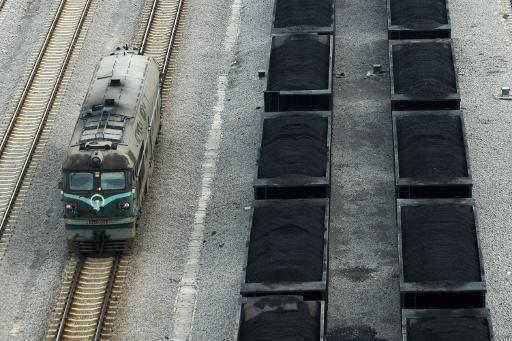
silkrailIt is one of the world’s longest railways — an approximately 11,000-kilometre “modern-day silk road” that traverses Russia and Kazakhstan to link a megacity in the heart of China with a key commercial hub in western Germany.

On Saturday, as part of his landmark visit to Germany, Chinese President Xi Jinping is set to visit the last stop on the “Yuxinou” rail line, an industrial feat that promises to revolutionise transport between Europe and Asia.

Duisburg is a steel-making town of around half a million on the confluence of the Rhine and Ruhr rivers that boasts the world’s biggest inland port and is one of Germany’s most important transport and commercial hubs.

Despite the vast distances between them, it takes just 16 days for trains crammed with laptops and electronics to travel to Duisburg from Chongqing, a sprawling metropolitan symbol of rising China with a population of more than 30 million.

Xi is scheduled to welcome a freight train on Saturday afternoon as it completes a journey that has taken it through Central Asia, Russia, Belarus and Poland.

Source: The Economic Times