While Obama carried the youth vote overall, his support declined from 2008 among all young voters and among key subgroups. In particular, Obama lost ground among young whites, men and independents.
Only 44% of white voters under 30 backed Obama, while 51% voted for Romney. This is a substantial change compared with 2008, when Obama carried the young white vote by 10 points (54% to 44%). Far more young blacks and Hispanics backed Obama than Romney, and there was little fall off in his support among these groups from 2008.
Obama also lost support among young men. Overall, 53% of men under 30 supported Obama, down from 62% in 2008. Fully 66% of young women voted for Obama, similar to the 69% who voted for him in 2008.
However, Obama lost support among both white men and women. Overall, 41% of white men supported Obama while 54% supported Romney. In 2008, Obama won the vote among white men, 52% to 46%. While white women voted for Obama over McCain by a 56% to 42% margin four years ago, they were divided this year (48% voted for Obama, 49% for Romney).
Surprisingly, Obama’s vote also declined among young black men, by 14 points, while holding steady among young black women. – Pew Reasearch
Over the next four years the U.S. will face a number of foreign policy problems, most of them regional, some of them global. Dispatches From The Edge will try to outline and analyze some of the key issues for Africa.
Africa is probably the single most complex region of the world and arguably its most troubled. While the world concerns itself with the Syrian civil war and the dangers it poses for the Middle East, little notice is taken of the war in the Congo, a tragedy that has taken five million lives and next to which the crisis in Syria pales.
Africa represents 15 percent of the world’s population, yet only 2.7 percent of its GDP, which is largely concentrated in only five of 49 sub-Saharan countries. Just two countries—South Africa and Nigeria—account for over 33 percent of the continent’s economic output. Life expectancy is 50 years, and considerably less in those countries ravaged by AIDS. Hunger and malnutrition are worse than they were a decade ago.
At the same time, Africa is wealthy in oil, gas, iron, aluminum and rare metals. By 2015, countries in the Gulf of Guinea will provide the US with 25 percent of its energy needs, and Africa has at least 10 percent of the world’s known oil reserves. South Africa alone has 40 percent of the earth’s gold supply. The continent contains over one-third of the earth’s cobalt and supplies China—the world’s second largest economy—with 50 percent of that country’s copper, aluminum and iron ore.
But history has stacked the deck against Africa. The slave trade and colonialism inflicted deep and lasting wounds on the region, wounds that continue to bleed out in today’s world. France, Britain, Germany, Italy, Spain and Portugal sliced up the continent without the slightest regard for its past or its people. Most of the wars that have—and are—ravaging Africa today are a direct outcome of maps drawn up in European foreign offices to delineate where and what to plunder.
But over the past decade, the world has turned upside down. Formerly the captive of the European colonial powers, China is now Africa’s largest economic partner, followed closely by India and Brazil. Consumer spending is up, and the World Bank predicts that by 2015 the number of new African consumers will match Brazil’s.
In short, the continent is filled with vibrant economies and enormous potential that is not going unnoticed in capitols throughout the world. “The question for executives at consumer packaged goods companies is no longer whether their firms should enter the region, but where and how” says a report by the management consultant agency A.T. Kearney. How Africa negotiates its new status in the world will not only have a profound impact on its people, but on the global community as well. For investors it is the last frontier.
The U.S. track record in Africa is a shameful one. Washington was a long-time supporter of the apartheid regime in South Africa and backed the most corrupt and reactionary leaders on the continent, including the despicable Mobutu Sese Seko in the Congo. As part its Cold War strategy, the U.S. aided and abetted civil wars in Mozambique, Angola, and Namibia. Americans have much to answer for in the region.
Militarization
If there is a single characterization of US policy vis-à-vis Africa, it is the increasingly militarization of American diplomacy on the continent. For the first time since WW II, Washington has significant military forces in Africa, overseen by a freshly minted organization, Africom.
The US has anywhere from 12,000 to 15,000 Marines and Special Forces in Djibouti, a former French colony bordering the Red Sea. It has 100 Special Forces soldiers deployed in Uganda, supposedly tracking down the Lord’s Resistance Army. It actively aided Ethiopia’s 2007 invasion of Somalia, including using its navy to shell a town in the country’s south. It is currently recruiting and training African forces to fight the extremist Islamic organization, the Shabab, in Somalia, and conducting “counter-terrorism” training in Mali, Chad, Niger, Benin, Cameroon, the Central African Republic, Ethiopia, Gabon, Zambia, Malawi, Burkina Faso, and Mauretania.
Since much of the US military activities involves Special Forces and the CIA, it is difficult to track how widespread the involvement is. “I think it is far larger than anyone imagines,” says John Pike of GlobalSecurity.org.
As a whole, US military adventures in Africa have turned out badly. The Ethiopian invasion overthrew the moderate Islamic Courts Union, elevating the Shabab from a minor player to a major headache. NATO’s war on Libya—Africom’s coming out party—is directly responsible for the current crisis in Mali, where Local Tuaregs and Islamic groups have seized the northern part of the country, armed with the plundered weapons’ caches of Muammar el-Qaddafi. Africom’s support of Uganda’s attack on the Lord’s Resistance Army in the Democratic Republic of the Congo resulted in the death of thousands of civilians.
While the Obama administration has put soldiers and weapons into Africa, it has largely dropped the ball on reducing poverty. In spite of the UN’s Millennium Development plan adopted in 2000, sub-Saharan Africa will not reach the program’s goals for reducing poverty and hunger, and improving child and maternal healthcare. Rather than increasing aid, as the plan requires, the US has either cut aid or used debt relief as a way of fulfilling its obligations.
At the same time, Washington has increased military aid, including arms sales. One thing Africa does not need is any more guns and soldiers.
There are a number of initiatives that the Obama administration could take that would make a material difference in the lives of hundreds of millions of Africans.
First, it could fulfill the UN’s Millennium goals by increasing its aid to 0.7 percent of its GDP, and not using debt forgiveness as part of that formula. Canceling debt is a very good idea, and allows countries to re-deploy the money they would use for debt payment to improve health and infrastructure, but as part of an overall aid package it is mixing apples and oranges.
Second, it must de-militarize its diplomacy in the region. Indeed, as Somalia and Libya illustrate, military solutions many times make bad situations worse. Behind the rubric of the “war on terror,” the US is training soldiers throughout the continent. History shows, however, that those soldiers are just as likely to overthrow their civilian governments as they are to battle “terrorists.” Amadou Sanogo, the captain who overthrew the Mali government this past March and initiated the current crisis, was trained in the U.S.
There is also the problem of who are the” terrorists.” Virtually all of the groups so designated are focused on local issues. Nigeria’s Boko Haram is certainly a lethal organization, but it is the brutality of the Nigerian Army and police that fuel its rage, not al-Qaeda. The continent’s bug-a-boo, al-Qaeda in the Islamic Meghreb, is small and scattered, and represents more a point of view than an organization. Getting involved in chasing “terrorists” in Africa could end up pitting the US against local insurgents in the Niger Delta, Berbers in the Western Sahara, and Tuaregs in Niger and Mali.
What Africa needs is aid and trade directed at creating infrastructure and jobs. Selling oil, cobalt, and gold brings in money, but not permanent jobs. That requires creating a consumption economy with an export dimension. But the US’s adherence to “free trade” torpedoes countries from constructing such modern economies.
Africans cannot currently compete with the huge—and many times subsidized industries—of the First World. Nor can they build up an agricultural infrastructure when their local farmers cannot match the subsidized prices of American corn and wheat. Because of those subsidies, US wheat sells for 40 percent below production cost, and corn for 20 percent below. In short, African needs to “protect” their industries—much as the US did in its early industrial stage—until they can establish themselves. This was the successful formula followed by Japan and South Korea.
The Carnegie Endowment and the European Commission found that “free trade” would end up destroying small scale agriculture in Africa, much as it did for corn farmers in Mexico. Since 50 percent of Africa’s GNP is in agriculture, the impact would be disastrous, driving small farmers off the land and into overcrowded cities where social services are already inadequate.
The Obama administration should also not make Africa a battleground in its competition with China. Last year US Secretary of State Hillary Clinton described China’s trading practices with Africa as a “new colonialism,” a sentiment that is not widely shared on the continent. A Pew Research Center study found that Africans were consistently more positive about China’s involvement in the region than they were about the US’s.
Jacob Zuma, president of South Africa, recently praised the continent’s “relationship with China,” but also said that the “current trade pattern” is unsustainable because it was not building up Africa’s industrial base. China recently pledged $20 billion in aid for infrastructure and agriculture.
One disturbing development is a “land rush” by countries ranging from the US to Saudi Arabia to acquire agricultural land in Africa. With climate change and population growth, food, as Der Spiegel puts it, “is the new oil.” Land is plentiful in Africa, and at about one-tenth the cost in the US. Most production by foreign investors would be on an industrial scale, with its consequent depletion of the soil and degradation of the environment from pesticides and fertilizers. The Obama administration should adopt the successful “contract farming” model, where investors supply capital and technology to small farmers, who keep ownership of their land and are guaranteed a set price for their products. This would not only elevate the efficiency of agriculture, it would provide employment for local people.
The Obama administration should also strengthen, not undermine, regional organizations. The African Union tried to find a peaceful resolution to the Libyan crisis because its members were worried that a war would spill over and destabilize countries surrounding the Sahara. The Obama administration and NATO pointedly ignored the AU’s efforts, and the organization’s predictions have proved prescient.
Lastly, the Obama administration should join with India and Brazil and lobby for permanent membership for an African country—either South Africa or Nigeria, or both— in the UN Security Council. India and Brazil should also be given permanent seats. Currently the permanent members of the Security Council are the victors of WW II: the US, Russia, China, France and Great Britain.
In 1619, a Dutch ship dropped anchor in Virginia and exchanged its cargo of Africans for food, thus initiating a trade that would rip the heart out of a continent. No one really knows how many Africans were forcibly transported to the New World, but it was certainly in the 10s of millions. To this day Africa mirrors the horror of the slave trade and the brutal colonial exploitation that followed in its wake. It is time to make amends. – http://dispatchesfromtheedgeblog.wordpress.com/
Putin in 2009 outlined his strategy for economic success. Alas, poor Obama did the opposite but nevertheless was re-elected. Bye, bye Miss American Pie. The Communists have won in America with Obama but failed miserably in Russia with Zyuganov who only received 17% of the vote. Vladimir Putin was re-elected as President keeping the NWO order out of Russia while America continues to repeat the Soviet mistake.
After Obama was elected in his first term as president the then Prime Minister of Russia, Vladimir Putin gave a speech at the World Economic Forum in Davos, Switzerland in January of 2009. Ignored by the West as usual, Putin gave insightful and helpful advice to help the world economy and saying the world should avoid the Soviet mistake.
Recently, Obama has been re-elected for a 2nd term by an illiterate society and he is ready to continue his lies of less taxes while he raises them. He gives speeches of peace and love in the world while he promotes wars as he did in Egypt, Libya and Syria. He plans his next war is with Iran as he fires or demotes his generals who get in the way.
Putin said regarding the military,
“…instead of solving the problem, militarization pushes it to a deeper level. It draws away from the economy immense financial and material resources, which could have been used much more efficiently elsewhere.”
Well, any normal individual understands that as true but liberalism is a psychosis . O’bomber even keeps the war going along the Mexican border with projects like “fast and furious” and there is still no sign of ending it. He is a Communist without question promoting the Communist Manifesto without calling it so. How shrewd he is in America. His cult of personality mesmerizes those who cannot go beyond their ignorance. They will continue to follow him like those fools who still praise Lenin and Stalin in Russia. Obama’s fools and Stalin’s fools share the same drink of illusion.
Reading Putin’s speech without knowing the author, one would think it was written by Reagan or another conservative in America. The speech promotes smaller government and less taxes. It comes as no surprise to those who know Putin as a conservative. Vladimir Putin went on to say:
“…we are reducing taxes on production, investing money in the economy. We are optimizing state expenses.
The second possible mistake would be excessive interference into the economic life of the country and the absolute faith into the all-mightiness of the state.
There are no grounds to suggest that by putting the responsibility over to the state, one can achieve better results.
Unreasonable expansion of the budget deficit, accumulation of the national debt – are as destructive as an adventurous stock market game.
During the time of the Soviet Union the role of the state in economy was made absolute, which eventually lead to the total non-competitiveness of the economy. That lesson cost us very dearly. I am sure no one would want history to repeat itself.”
President Vladimir Putin could never have imagined anyone so ignorant or so willing to destroy their people like Obama much less seeing millions vote for someone like Obama. They read history in America don’t they? Alas, the schools in the U.S. were conquered by the Communists long ago and history was revised thus paving the way for their Communist presidents. Obama has bailed out those businesses that voted for him and increased the debt to over 16 trillion with an ever increasing unemployment rate especially among blacks and other minorities. All the while promoting his agenda.
“We must seek support in the moral values that have ensured the progress of our civilization. Honesty and hard work, responsibility and faith in our strength are bound to bring us success.”- Vladimir Putin
The red, white and blue still flies happily but only in Russia. Russia still has St George defeating the Dragon with the symbol of the cross on its’ flag. The ACLU and other atheist groups in America would never allow the US flag with such religious symbols. Lawsuits a plenty against religious freedom and expression in the land of the free. Christianity in the U.S. is under attack as it was during the early period of the Soviet Union when religious symbols were against the law.
Let’s give American voters the benefit of the doubt and say it was all voter fraud and not ignorance or stupidity in electing a man who does not even know what to do and refuses help from Russia when there was an oil spill in the Gulf of Mexico. Instead we’ll say it’s true that the Communists usage of electronic voting was just a plan to manipulate the vote. Soros and his ownership of the company that counts the US votes in Spain helped put their puppet in power in the White House. According to the Huffington Post, residents in all 50 states have filed petitions to secede from the Unites States. We’ll say that these Americans are hostages to the Communists in power. How long will their government reign tyranny upon them?
Russia lost its’ civil war with the Reds and millions suffered torture and death for almost 75 years under the tyranny of the United Soviet Socialist Republic. Russians survived with a new and stronger faith in God and ever growing Christian Church. The question is how long will the once “Land of the Free” remain the United Socialist States of America? Their suffering has only begun. Bye bye Miss American Pie! You know the song you hippies. Sing it! Don’t you remember? The 1971 hit song by American song writer Don McLean:
“And, as I watched him on the stage my hands were clenched in fists of rage.
No angel born in Hell could break that Satan’s spell
And, as the flames climbed high into the night to light the sacrificial rite, I saw…
Satan laughing with delight the day the music died
He was singing, bye bye Miss American Pie
Drove my Chevy to the levee, but the levee was dry
Them good ol’ boys were drinking whiskey and rye, singing…
The United States used U.S.-Israeli spy software to hack into the French presidential office earlier this year, the French cyberwarfare agency has concluded, according to the newsmagazine l’Express.
The magazine reported late Tuesday that the computers of several close advisers to then-president Nicolas Sarkozy – including Chief of Staff Xavier Musca – were compromised in May by a computer virus that bears the hallmarks of Flame, which was allegedly created by a U.S.-Israeli team to target Iran’s nuclear program. Anonymous French officials pointed the finger at the United States.
“You can be on very good terms with a ‘friendly’ country and still want to guarantee their unwavering support – especially during a transition period,” an official told the magazine. The alleged spying attack took place a few days before the second round of the French presidential elections, which Sarkozy lost to Francois Hollande, a socialist.
Homeland Security Secretary Janet Napolitano reportedly did not deny the allegations when asked point-blank about them.
“We have no greater partner than France, we have no greater ally than France,” Napolitano reportedly answered, at the opening of an interview with l’Express. “We cooperate in many security-related areas. I am here to further reinforce those ties and create new ones.”
In the interview, Napolitano also said that the Flame and Stuxnet viruses had “never been linked to the U.S. government.”
The White House did not return a request for comment from The Hill.
Parts of this article have been translated from the French. Read the original here.
Rep. Ron Paul (R-Texas) said Monday that secession was a “deeply American principle,” amid a growing number of people petitioning the White House to let their states secede from the U.S.
“Secession is a deeply American principle. This country was born through secession. Some felt it was treasonous to secede from England, but those ‘traitors’ became our country’s greatest patriots,” the former presidential candidate wrote in a post on his House website. “There is nothing treasonous or unpatriotic about wanting a federal government that is more responsive to the people it represents.”
He continued: “If the possibility of secession is completely off the table there is nothing to stop the federal government from continuing to encroach on our liberties and no recourse for those who are sick and tired of it.”
Since President Barack Obama was reelected earlier this month, a flurry of secession petitions from states were created — most notably from Texas, which with more than 115,000 signatures far exceeds the 25,000 signatures needed for an official White House response. Critics have said it’s disgruntled voters upset that former GOP presidential nominee Mitt Romney lost.
Paul wrote that secession must still be an option to be used as leverage to make sure the government doesn’t “encroach” on Americans’ liberties.
“In fact, the recent election only further entrenched the status quo. If the possibility of secession is completely off the table there is nothing to stop the federal government from continuing to encroach on our liberties and no recourse for those who are sick and tired of it.”
Paul wrote that secession is a form of American freedom.
“At what point should the people dissolve the political bands which have connected them with an increasingly tyrannical and oppressive federal government?” Paul wrote.
He added: “And if people or states are not free to leave the United States as a last resort, can they really think of themselves as free? If a people cannot secede from an oppressive government, they cannot truly be considered free.” – politico.com
Democratic National Committee Chair Debbie Wasserman-Schultz said the Republican Party “got whiter and more male” while the Democratic caucus is “majority minority and female.”
“Take a good look when the House convenes after this next Congress is sworn in at what our side of the aisle looks like versus what the Republican side looks like. I mean they got whiter and more male, and we now have a majority minority and female Democratic caucus – first time in history,” Debbie Wasserman-Schultz said Wednesday at a discussion hosted by the Emily’s List, a group known for supporting pro-abortion female candidates.
She said when women run for office, “Democrats win.”
“We have to double down in 2014. We’ve got to make sure we recruit more women for office, because It’s not just a slogan that when women run, women win. They do, and when women run, Democrats win,” Wasserman-Schultz said.
The new Congress will consist of 20 women senators and 81 congresswomen – an accomplishment she credited to the efforts of the Emily’s List.
“There is no longer an all-male state legislature anywhere in the country,” she said, adding that “40 percent of the U.S. population now has at least one woman senator.” CNSNews.com
Less than a week after a New Orleans suburbanite petitioned the White House to allow Louisiana to secede from the United States, petitions from seven states have collected enough signatures to trigger a promised review from the Obama administration.
By 6:00 a.m. EST Wednesday, more than 675,000 digital signatures appeared on 69 separate secession petitions covering all 50 states, according to a Daily Caller analysis of requests lodged with the White House’s “We the People” online petition system.
A petition from Vermont, where talk of secession is a regular feature of political life, was the final entry.
Petitions from Alabama, Florida, Georgia, Louisiana, North Carolina, Tennessee and Texas residents have accrued at least 25,000 signatures, the number the Obama administration says it will reward with a staff review of online proposals.
The Texas petition leads all others by a wide margin. Shortly before 9:00 a.m. EST Wednesday, it had attracted 94,700 signatures. But a spokesperson for Gov. Rick Perry said Tuesday afternoon that he does not support the idea of his state striking out on its own.
“Gov. Perry believes in the greatness of our Union and nothing should be done to change it. But he also shares the frustrations many Americans have with our federal government,” according to a statement from the governor’s office.
A backlash Monday night saw requests filed with the White House to strip citizenship rights from Americans who signed petitions to help states secede.
And in a similar nose-thumbing aimed at Texas’ conservative majority, progressives from the liberal state capital of Austin responded Monday with a petition to secede from their state if Texas as a whole should decide to leave the Union.
Late Tuesday a second group of Texans, this one from Houston, lodged their own White House petition. Secession-minded Texans, they wrote, “are mentally deficient and [we] do not want them representing us. We would like more education in our state to eradicate their disease.”
Houstonian “Kimberly F” — The White House does not provide last names — submitted the petition. She told TheDC in an email that ”[w]e need both sides presented, or we all look like a bunch of fools.”
A group from El Paso, too, wants no part of an independent Texas. “Allow the city of El Paso to secede from the state of Texas,” their petition reads. “El Paso is tired of being a second class city within Texas.”
But smaller petitions like theirs are a political side show of a political side show. One effort, aimed at Missourians, called for a nationwide catered pizza party to celebrate when the Show Me State left the U.S.
States whose active petitions have not yet reached the 25,000 signature threshold include Alaska, Arkansas, Arizona, California, Colorado, Connecticut, Delaware, Hawaii, Idaho, Illinois, Indiana, Iowa, Kansas, Kentucky, Maine, Maryland, Massachusetts, Michigan, Minnesota, Mississippi, Missouri, Montana, Nebraska, Nevada, New Hampshire, New Jersey, New Mexico, New York, North Dakota, Ohio, Oklahoma, Oregon, Pennsylvania, Rhode Island, South Carolina, South Dakota, Utah, Vermont, Virginia, Washington, West Virginia, Wisconsin and Wyoming.
Owners of guns have been stocking up because they are concerned about a potential tightening of regulations on assault weapons in the president’s second term.
In October the number of background checks on people applying to buy guns, an indicator of future sales, increased by 18.4 per cent.
There was a similar jump when President Obama was first elected in 2008. A total of 12.7 million background checks were carried out that year, up from 11.2 million the year before, and the number has been rising since then.
Shares in weapons manufacturers like Smith & Wesson and Sturm, Ruger also surged after Mr Obama’s re-election.
During the election campaign Mr Obama mostly steered clear of discussing gun control, but in a presidential debate on Oct 16 he gave his clearest statement yet on the issue.
He said: “What I’m trying to do is to get a broader conversation about how do we reduce the violence generally. Part of it is seeing if we can get an assault weapons ban reintroduced.”
President Bill Clinton introduced had restrictions limiting the use of semi-automatic weapons in 1994, but the ban expired in 2004. Under the Clinton-era ban magazines with more than 10 rounds, and weapons with threaded barrels, pistol grips and bayonets were prohibited.
Mr Obama would still have to get any new restrictions past Republicans in Congress, but gun owners say they fear a limiting of their right to bear arms which is enshrined in the Second Amendment to the Constitution.
Mel Bernstein, owner of Dragonman Arms in Colorado Springs, told KOAA-TV that sales of semi-automatic weapons had boomed in recent days.
He said: “We’re going from normally six to eight guns a day, to 25. I stocked up, I got a stockpile of these AK-47s, we’re selling these like hot cakes. Luckily I had an idea of what was going on because it happened with Clinton.”
Mr Bernstein said he normally orders up to 7,000 rounds a week from distributors but could now only get hold of 3,000 because of demand.
John Kielbasa, owner of Fernwood Firearms in Hankins, New York, told CNN: “Sales are up. I had a guy waiting here first thing in the morning (the day after the election.) He came in, bought two AK-47s. It’s going to be good for me for business.” – The Telegraph
Before Election Day, there was widespread suspicion that enough white voters would balk at voting for an African-American candidate for president that the polls would be proved wrong.
It didn’t turn out that way.
Barack Obama won a convincing popular and electoral victory Tuesday. According to exit polls, the Illinois senator did better with white voters than the past two Democratic nominees, Massachusetts Sen. John Kerry and Vice President Al Gore, did in the 2004 and 2000 elections.
However, while Obama was improving on Kerry’s performance in most states — including such critical battlegrounds as Pennsylvania, Ohio, Michigan, Indiana and North Carolina — he did worse than Kerry among white voters in a handful of states — especially Alabama, Mississippi and Louisiana.
In Louisiana, Obama’s support among white voters was 10 percentage points below what Kerry received. That was the sharpest decline in white support for the Democratic ticket from 2004 to 2008 recorded in any state.
In other words, white voters in a select group of Deep South states proved especially resistant to Obama’s appeal, said David Bositis, an analyst at the Joint Center for Political and Economic Studies in Washington, who looked at the racial patterns in the 2008 exit polls. The exit polls, as in the past, were conducted by Edison/Mitofsky for a consortium of news agencies
“They are moving contrary to the rest of the country,” said Bositis, who said Obama’s race — and the historic pattern of racially polarized voting in these states — seemed the most obvious reason. How else, he said, to explain how Kerry, a quintessential East Coast liberal, did better than Obama with white voters in those states on his way to losing the presidency, than Obama did on his way to winning it?
Nationally, Obama won 43 percent of the white vote: 46 percent of white women and 41 percent of white men. He ran 12 percentage points behind Republican John McCain with white voters.
That’s the same percentage gap by which Gore trailed George W. Bush in the virtual dead-heat election of 2000, but it’s five points smaller than the Democrats’ deficit four years ago.
Obama built his margin by increasing the turnout and percentage of the African-American vote and dramatically improving the party’s performance with Hispanic voters. Obama also did especially well with younger and more-educated voters.
But according to demographer William Frey of the Brookings Institution in Washington, none of that diminishes how important it was for Obama to shave some points off the usual Republican advantage with white voters. And, Frey said, Obama’s big gains were among white men — usually the toughest constituency for Democrats — where he narrowed the Democratic deficit by nine percentage points.
“A lot of Obama’s demographic gains were among Hispanics, young people, the college-educated, but there is also this big chunk of white men who are almost always very reliably Republican,” Frey said. “To some degree they went to him this time — not because of any transformational change, but because of the economy.”
Charles Gallagher, a sociologist at La Salle University in Philadelphia who has studied white racial attitudes, seconded Frey’s assessment.
“What did it take for white America to want to vote for a black man? If there had not been this collapse of the economy, there would have been no Barack Obama mandate,” Gallagher said. “Class trumped race.”
White support in N.O.
Except perhaps, Frey said, in the Deep South states where Obama fared so poorly. Those states, Frey said, remain the most culturally Southern and demographically unchanged.
Frey said that 57 percent of all eligible voters in Louisiana and 60 percent in Alabama are Southern-born white people. In North Carolina, the percentage is only a little more than half, and in Virginia, Georgia and Florida, it’s well below half.
Obama won North Carolina with 35 percent of the white vote. He won Virginia with 39 percent of the white vote. And he won Florida with 42 percent of the white vote. He lost Georgia with 23 percent of the white vote.
Meanwhile, in every state with a large enough black population to create an adequate sample for exit polling, Obama’s black support was above 90 percent, often in the high 90s. In Alabama and Mississippi, Obama won 98 percent of the black vote; in Louisiana, he won 94 percent.
In Orleans Parish, according to a precinct analysis by University of New Orleans political scientist Edward Chervenak, white voters behaved very differently than white voters in the rest of the state.
According to the national exit polls, Obama won 14 percent of the white vote in Louisiana — 10 percentage points less than Kerry won in 2004 — and a lower percentage than in any state except Alabama, where Obama carried 10 percent of the white vote, and Mississippi, where he won 11 percent.
But Chervenak found that even though Kerry lost the whitest precincts in Orleans Parish in 2004 by three percentage points, Obama won those same precincts by a sliver of a percent.
Chervenak said the outcome comported with his own yard-sign observations.
Even in predominantly white neighborhoods, he said, “I saw far more Obama signs than McCain signs.”
Lower appeal elsewhere
Outside New Orleans, the white vote in Louisiana took on very different contours.
“Once you get above I-12, voters are just culturally conservative Christians who just have a natural affinity for the Republican Party,” Chervenak said. And, he said, “certainly race is a consideration. The fact is that a liberal African-American candidate is just not attractive to a large number of white voters in Louisiana.”
And unlike the results in many states, younger white voters in Louisiana, Mississippi and Alabama were hardly more likely to vote for Obama than older white voters.
By contrast, in North Carolina, Obama won 35 percent of the white vote overall, but 56 percent of white voters age 18 to 29. Similarly, in Indiana, he won 45 percent of the white vote and 57 percent of younger white voters.
Steve Suitts, vice president of the Atlanta-based Southern Education Foundation, said Tuesday’s results reveal again “how distinct the South is from the nation as a whole in racial voting.”
“We’re just maybe a few generations behind the rest of the country in understanding what (the Rev. Martin Luther) King told us about it’s not the color of your skin, but the content of your character,” said Suitts, who supported Obama.
Jonathan Tilove can be reached at jtilove@timespicayune.com or 202.383.7827.
For many voters this Election Day, it’s not a matter of who will be the next president that’s a pressing issue: in Puerto Rico, people are hitting the polls to decide if the US territory should petition Congress for statehood.
The Atlantic Ocean island of Puerto Rico is home to around 4 million people, but some say their relationship with the United States isn’t what it should be, even more than a century into a longstanding relationship. Currently, the US Commonwealth of Puerto Rico is subject to American jurisdiction and sovereignty, as well the rule of whatever president is elected by the rest of the country — voters on the island, however, can’t have a say in that contest.
Pending the results of a vote on Election Day, though, that could change. Puerto Ricans going to the polls on November 6 aren’t opting for a president, but rather whether or not they should ask to join the union as the fifty-first state. This year, voters are being asked to weigh in on a two-part referendum that has them answering if they want to change their relationship with the US, and to what.
When Puerto Ricans go to the polls this year, they have the option of answering if they want to stop being a commonwealth of the US and, if so, what would they prefer: statehood, independence or sovereign free association.
This is the fourth time voters in Puerto Rico have been asked such a question in just 45 years, but the outcome this election season might bring a surprise: as of this week, a poll conducted by Asisa Research Group suspects that 47.9 percent of voters will want statehood, as opposed to independence or sovereignty.
In the past, a majority of voters have always agreed to stay subject to US laws without the representation allowed in the 50 other united states. Some say citizens might be more obliged to vote differently this year, though, as the benefits from becoming a state could save the island from some of the worst crimes it’s experienced in ages. In 2011, Puerto Rico reported 1,117 killings on an island barely 3,000 square miles, and currently they’re seeing unemployment at above 13 percent — double what some counties in the mainland have in terms of jobless rates.
Should Puerto Ricans vote for statehood, the island will be allowed roughly $20 billion in additional federal funding from Washington, as well as representation in Congress that could help bring in even more money down the road. In an environment where that sort of investment could easily turn things around, some say it’s a no-brainer.
“Puerto Rico has to be a state. There is no other option,” 25-year-old Jerome Lefebre tells the Associated Press on his way to the polls on Tuesday. “We’re doing OK, but we could do better. We would receive more benefits, a lot more financial help.”
Fernando Martin, the executive president of the Puerto Rican Independence Party (PIP), tells BBC that right now things are fair for fellow residents nestled roughly 1,000 miles off the mainland. “In our case, the government of another country makes decisions every day without the participation of Puerto Ricans,” he notes.
Under American rule without equal representation, some say they have been practically colonized by American leaders who limit what say residents have on their own. That stripping of culture and heritage is evident in many, like another man interviewed by the AP: 42-year-old Ramon Lopez de Azua.
“Puerto Rico’s problem is not its political status,” he said. “I think that the United States is the best country in the world, but I am Puerto Rican first.”
“We don’t want to continue being a colony. We want the full rights that we’re entitled to as American citizens,” Thomas Rivera Schatz, president of the territory’s local Senate, adds to the Chicago Tribune. “Because we’re a colony, we have the misfortune of being first (in line) for federal cuts and last in line for handouts.”
Others, however, have come to the consensus that statehood could be all too inevitable.
“I believe the country should become a 51st State because the US has influenced our country completely and we are 100% Americanised,” one young woman tells the BBC.
On Election Day, voters in Puerto Rico will elect a governor, but no president. The Asisa Research Group has Gov. Luis Fortuño as the likely opponent this year over challenger Sen. Alejandro Garcia Padilla.
Fernando Martin, the executive president of the Puerto Rican Independence Party (PIP), tells BBC that right now things are fair for fellow residents nestled roughly 1,000 miles off the mainland. “In our case, the government of another country makes decisions every day without the participation of Puerto Ricans,” he notes.
Under American rule without equal representation, some say they have been practically colonized by American leaders who limit what say residents have on their own. That stripping of culture and heritage is evident in many, like another man interviewed by the AP: 42-year-old Ramon Lopez de Azua.
“Puerto Rico’s problem is not its political status,” he said. “I think that the United States is the best country in the world, but I am Puerto Rican first.”
“We don’t want to continue being a colony. We want the full rights that we’re entitled to as American citizens,” Thomas Rivera Schatz, president of the territory’s local Senate, adds to the Chicago Tribune. “Because we’re a colony, we have the misfortune of being first (in line) for federal cuts and last in line for handouts.”
Others, however, have come to the consensus that statehood could be all too inevitable.
“I believe the country should become a 51st State because the US has influenced our country completely and we are 100% Americanised,” one young woman tells the BBC.
On Election Day, voters in Puerto Rico will elect a governor, but no president. The Asisa Research Group has Gov. Luis Fortuño as the likely opponent this year over challenger Sen. Alejandro Garcia Padilla. – RT
Water that had risen six feet high hadn’t completely drained away from the streets of Coney Island in Brooklyn, N.Y., yet looters had already rifled through the remains of vulnerable shops on Mermaid Avenue.
At about 8 a.m. on Tuesday, workers arrived at Mega Aid Pharmacy to find that not only had Hurricane Sandy obliterated the building’s interior the night before, but thieves had broken in and gone through more than 10,000 pharmaceutical items. Most of the stolen goods were prescription meds.
“The water went away and these people started walking down the streets and just robbed stores,” a frustrated worker at the pharmacy, who wished to remain anonymous, told HuffPost Crime.
He and the pharmacy’s manager, 27-year-old Stan Gutkin, looked at their shop in disbelief that afternoon as workers carried out salvageable supplies.
“I don’t even know what it’s going to take until we’re operational,” Gutkin said. “This breaks the business. I don’t even know where to start.”
Their story was just one of many on Mermaid Avenue, one of only a few streets in Coney Island on Tuesday teeming with people — and officers. Locals said that the police presence in the neighborhood came after looters stole from banks, pharmacies and other shops with valuables.
It’s a crime that can almost be expected after a disaster. As Hurricane Irene pummeled the Atlantic Coast last year, looting was so prevalent that truTV put together a security footage slideshow of the crime. Shortly after Hurricane Katrina, New Orleans was plagued with looting and violent attacks, The New York Times reported.
Solid numbers aren’t yet available for New York City crimes connected to the superstorm. The 60th Precinct, which covers Coney Island, was evacuated and subsequently flooded on Monday night. Though several officers couldn’t say definitively whether there had been reports of looting or other crimes in the area, many were quick to tell onlookers to go home.
“It’s getting dark, and it’s real dangerous out here — that’s why there’s a cop on every block,” one NYPD officer told HuffPost Crime. “You could get your stuff stolen.”
Nearby, at a city housing project called Ocean Towers, a fight broke out in front of reporters and cops. Two women threw haymakers at one another as residents — all still without power — stared and yelled from their windows. Other people threw unidentified objects from their windows at officers, who swarmed in to break up the fistfight.
Dena Wells, 39, a resident of Ocean Towers, had had enough after watching the melee.
“People are turning on each other — they’re attacking each other,” she said, shaking her head. “Even when there’s no disaster, this building is disastrous. But after the hurricane, it just got crazy.
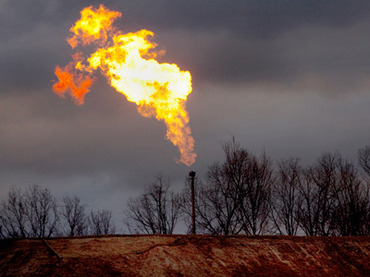
US residents living near gas fracking sites frequently develop health problems as chemicals used in the gas extraction have been tracked in water and air surrounding the sites, a new report has found.
The Marcellus Shale natural gas field, which stretches across several eastern states, is the biggest and cheapest natural gas field in the US and could contain “almost half of the current proven natural gas reserves in the US,” a Standard & Poor’s report said this week.
But the fracking report, titled “Gas Patch Roulette: How Shale Gas Development Risks Public Health in Pennsylvania,” details health impacts faced by residents near Marcellus Shale. The report, conducted by Earthworks’ Oil & Gas Accountability Project, shows that negative health impacts are not isolated incidents. Close to 70 percent of those living near a fracking site reported an increase in throat irritation and 80 percent suffered from sinus problems after drilling began.
Residents were found to have health complications resulting from Earthworks’ Oil & Gas Accountability Projec due to their proximity to fracking sites, shortly after gas development began. The closer a resident lived to a fracking site, the worse their health became. Half of all survey participants living near such a development site reported they had no problems before drilling began, but suffered from allergies, asthma, arthritis, cancer, high blood pressure, and heart, kidney, pulmonary and thyroid conditions.
Of survey participants, 81 percent also reported experiencing bad odors from the chemicals used in gas and oil development. Some of these chemicals include ammonia, chlorine, gas, propane, ozone, diesel, sulfur and kerosene.
“The clear association between gas development and public health impacts revealed by this research demands that states stop ignoring the problem and start developing the standards necessary to protect the public,” said President of Subra Company, Wilma Subra.
But people haven’t proven to be the only victims of fracking. The report described that 22 out of 108 interviewed residents had pets or livestock that showed health complications after gas development began, including hair loss and seizures.
The Earthworks’ Oil & Gas Accountability Projec has been struggling to properly oversee shale oil and gas development due to a lack of staff, resources, data and a high number of legal loopholes.
“For too long, the oil and gas industry and state regulators have dismissed community members’ health complaints as ‘false’ or ‘anecdotal,’” said project author Nadia Steinzor in a press release published by Earthworks. “With this research, they cannot credibly ignore communities any longer.”
The violent crime rate went up 17% last year, ending a general decline in violence that began nearly 20 years ago, according to a new federal survey of crime victims in the United States.
The Justice Department’s National Crime Victimization Survey also found an 11% increase in the rate of property crimes, including household burglaries and car theft.
The survey represents a sharp departure from recent years and a preliminary report produced earlier this year by the FBI, which found that violent crime had declined by 4% during the first six months of 2011.
The final FBI Uniform Crime Report, which collects data from police departments across the country, is expected out later this month.
The victimization survey attributed the entire increase in 2011 to a 22% jump in the number of serious and simple assaults, according to the review.
Criminal justice analysts, while noting a substantial increase in assaults, said it was too early to determine whether the 2011 jump represented an anomaly or signaled a turnaround in the sustained decline in violent crime.
“I wouldn’t make much out of it,” said University of Maryland criminologist Charles Wellford. “One year does not make a trend, and these institutional measures (the Justice survey and the FBI crime report) are best at measuring trends.”
Wellford said the methodological differences between the Justice survey and the FBI reports may have some bearing on the recent survey’s findings.
Specifically, the survey does not track the crimes of homicide and arson, while the FBI report does not track simple assaults (those not involving weapons or serious injury) in its annual reviews of major crimes.
Carnegie Mellon University criminologist Alfred Blumstein suggested that because there was little or no change in other violent crimes in the survey, the surge in assaults could be due to deeper probing by survey interviewers.
He said robbery, which is one of the most likely crimes to be reported by victims, declined by 2%, according to the survey.
“I think it is too early to say what is going on exactly,” Blumstein said. “I think we should wait for the results of the (FBI report later this month). If that tracks what the survey is showing, then I would it would represent a flag that we need to investigate.”
The Justice Department said in a statement that there was “no evidence to suggest” that changes in victim interviewing tactics prompted the sudden increase in assault reports.
“The data collection process and questionnaire has been generally the same since 1993, and no substantive changes occurred during the 2010-2011 period,” the Justice statement said. – USA Today
The movie industry really has me, Roschelle, second guessing this post racial era we’ve been living in since the last presidential election. Hollywood. The industry is viewed by many as the most progressively liberal set of folks (producers, directors, movie stars, etc.) you ever want to meet. But they are not post-racial enough.
What do Robert DeNiro, Ron Perlman, Tyne Daly, Cuba Gooding, Jr., Justin Chambers, George Lucas, Halle Berry, Sidney Poitier, James Earl Jones, and Alfre Woodard all have in common? All these Hollywood heavy hitters have husbands/wives/significant others to someone of a different race than their own.
I’ll use the black white dichotomy for this argument. Although, the same applies regarding other races and ethnic groups.
You see the thing is out of every actor or actress I mentioned with the exception of Halle Berry none of these stars have been in a role that would have their love interest, mate or spouse someone of another race.
Sure Sidney Poitier ruffled a few feathers in Guess Who’s Coming to Dinner. It was too much for many people to take in. Taboo. Unthinkable. And I guess that still applies today.
I certainly consider myself a movie buff. So, if my knowledge of movies is too limited and I’ve overlooked a blockbuster that depicted an interracial relationship worthy of mention please let me know. I hardly think Billy Bob banging Halle or Denzel with his part time lover in Training Day (oh, how I hated that movie) make the grade.
I’m not asking to be subjected to another typical racially charged plot. The interracial couple and all the challenges they face in a society that’s, for the most part, completely unaccepting of their relationship and spend the next 120 minutes of the movie making their lives miserable. That’s just more of the same. And with all due respect, we’re past all that stuff anyway. This is post racial America!
It’s as if Hollywood frowns on this reality as much as some of us. Harrison Ford, Brad Pitt, Anthony Hopkins could never come home to a woman of color and sit around the dinner table with their biracial children, get a good night’s sleep and wake the next morning to begin a family vacation that ends in disaster…or a wholesome made for TV movie about family life in the Midwest…or be the parents of the next guy who battles the Decepticons along with the Transformers.
Gabrielle Union, Lynn Whitfield, Thandie Newton, and Cicely Tyson would never be viewed as authentic as they kissed their white mate good bye as he went off to foil some terrorist plot, pull off a big jewelry heist, coach a bunch of misfits into the winniest team in high school football history or save the planet from aliens!
I understand that movies have to be seen and gross mega bucks to be considered blockbusters or worthy of the little gold statue by the Academy. Is that the problem? Are the execs fearful that releasing these types of movies might land them in the soup line?
Life isn’t cookie cutter. Love isn’t monochromatic nor are those we choose to love. Black people love white people and brown people love yellow people and yellow people love red people.
The entertainment industry owe it to us to be true to the ideology of mixing. Maybe even help make the idea of interracial relationships less foreign by changing the humdrum family dynamics found in just about every movie I’ve ever seen. Or am I being unrealistic?
This website uses cookies to improve your experience. We'll assume you're ok with this, but you can opt-out if you wish. Cookie settingsACCEPT
Privacy & Cookies Policy
Privacy Overview
This website uses cookies to improve your experience while you navigate through the website. Out of these cookies, the cookies that are categorized as necessary are stored on your browser as they are essential for the working of basic functionalities of the website. We also use third-party cookies that help us analyze and understand how you use this website. These cookies will be stored in your browser only with your consent. You also have the option to opt-out of these cookies. But opting out of some of these cookies may have an effect on your browsing experience.
Necessary cookies are absolutely essential for the website to function properly. This category only includes cookies that ensures basic functionalities and security features of the website. These cookies do not store any personal information.
Any cookies that may not be particularly necessary for the website to function and is used specifically to collect user personal data via analytics, ads, other embedded contents are termed as non-necessary cookies. It is mandatory to procure user consent prior to running these cookies on your website.

 independents.