Act now… or say goodbye to the Britain we know

By Frank Field and Nicholas Soames, Daily Mail (London), September 7, 2012

The public are fed up with mass immigration. That was the message of the public petition on the Downing Street website launched last autumn.

Only 11 of the 36,000 petitions on that site have reached the 100,000 signatures required to trigger a House of Commons debate.

This petition reached that 100,000 within a week, with the resulting debate in the House of Commons today taking place.  We will at last be giving voice to the widespread public concern.

The fact is that the public do not believe the claims of the immigration lobby and they are right. Nor do they think that enough attention has been paid to the impact of such huge numbers on the lives of ordinary people – particularly not by the BBC.

The reality is that we are experiencing by far the largest wave of immigration for nearly 1,000 years.

Certainly, there has been some limited immigration over the centuries and many immigrants and their children have made a positive contribution to this country. But mass immigration is entirely new.

This really is the last chance saloon. If the Government were to lose its nerve and fail to press on with reform we would be saying goodbye to the country we inherited.

The Office for National Statistics recently published the immigration figures back to 1964. It is very interesting to see that, until the early 1980s, more people left Britain than came here. From then until the mid 1990s net migration was never more than about 50,000 a year, and often much less. It took off in 1998 and by 2010 had risen to 250,000 a year – five times higher than in 1997.

There has never been a declared government policy. Nor any planning. And certainly no public support – quite the opposite. By 2008, about three quarters of us wanted to see immigration reduced; half the public wanted it reduced ‘by a lot’.

Their wishes are yet to be met.

The impact of these numbers is already being felt throughout the country and the big cuts to public expenditure are still to come.

Maternity units are struggling. Primary schools are running out  of places. And pressure on housing is getting worse, especially given that housing construction has plummeted.

This pressure on services is nothing when compared to what we will face if the government does  not succeed in reducing future net immigration.

For the last ten years net immigration has averaged about 200,000 a year.

If that is allowed to continue our population will climb from 62.3 million to 70 million in just 15 years time. About 2.5 million of that will be natural increase – more births than deaths. The other five million will be down to new immigrants and their children.

What that means in practice is that we will have to build the equivalent of our eight major cities outside the capital – that is to say a Birmingham plus a Leeds, a Glasgow, a Sheffield, a Bradford, a Manchester, a Liverpool and a Bristol.

All this in just 15 years! Where will the money come from when the Government is already borrowing £1 for every £4 that it spends?

This is obviously unsustainable. That is why the petition, launched by MigrationWatch UK, an independent think-tank, called for the Government to take all necessary measures to stabilise our population, below 70million.

Can they do it? They have promised to get the net immigration figure down to the tens of thousands by 2015. In later years they will need to get it down further to about 50,000 to stabilise our population.

It is proving slow going.

The latest figures, published last week, show a reduction from 252,000 in 2010 to 216,000 in 2011.

These numbers are not precise but they do show the scale of the challenge to the Government.

They will have to hold their nerve in the face of pressure from the immigration lobby.

Foreign students will be a test case. Of course they are valuable if they are genuine in the first place and don’t overstay their visas. But we are currently admitting a quarter of a million every year with no checks on their departure.

The Government must press on with face-to-face interviews before they come and creating some means of recording their departure. Otherwise the student route will remain a back door to Britain and the reputation of our colleges and universities will be dragged through the mud.

To be fair to the Government, they have taken up the proposals by the Cross Party Group on  Balanced Migration, and these are now policy.

With a new Immigration Minister, these policies must be vigorously implemented. We intend to see that they are.

The (white) elephant in the room

By Libratwin

Today I ask a question, because I do not know the answer.

I was born 10 years and 3 months before the end of Apartheid in the province we now call Limpopo. I was born one of twins to loving and caring parents.  I grew up in the midst of a changing landscape, albeit political, and saw a country grasp at the tenuous reins of a new future for all.  Unfortunately, the ANC lost the reins a while ago and the over-fed, under-qualified, over-paid and under-educated horses are running all over the show.

What should have been the start of a better, brighter and stronger South Africa has become the exact opposite. As a country, we live in fear of the dark, we are weaker than ever and even more divided. Apartheid might have visibly and purposely divided the masses, but nowadays, it is a feeling of discord and disharmony that divides us. It might not be as visible but it is much, much more obvious.

I believe I am a good person. Religion aside, I have never purposely hurt another living entity (my twin brother doesn’t count since he had it coming a few times), nor have I been purposely cruel towards someone else.

Crime in SA is a very big and very real problem which we all face on a daily basis. But it does seem that the crimes against whites are extremely brutal and overtly violent. Why was a 13-year old shot, and subsequently died, along with her sister and father for a few cell phones?

Why was a young woman raped, her foot cut off and used to sodomize her and then killed with boiling oil? Why was a man beaten to death with his own garden shovel? Why was a 92-year old woman raped and beaten for a few hundred rand?

This could have happened to anyone but it happened to white people and their attackers were reportedly black.

I know crime happens everywhere and not just to white people. But as I am constantly told, I am the minority, that I am one of the evil white devils, that I am responsible for the plight of every poor, unemployed and homeless person in this country.

Still waiting to hear how the hell I’m responsible for that. Why not blame the homos (I’m pro-gay btw), hippies and hoodlums on us while you’re at it?

The ANC Youth League Facebook page is riddled with hate speech (once you decipher the horrible spelling and grammar) against the whites. Lamola, Malema and their cadres have all said publicly that they will kill whites and have urged others to do so.  We’re told we should be “grateful” we’ve been “allowed” to stay in the land of our birth, we’ve been warned that there will be mass murder when Nelson Mandela dies.

Although the last statement may or may not be true, and with that in mind, is it any wonder that we feel persecuted?

So my question is, why are there so many (note that I used many and not all) people in my home country who want to kill me or are willing to kill me? Well, I have a theory but no answers. I think it is because I am white and I am still being blamed for the past.

U.S. groups also sponsor Geert Wilders of Dutch Freedom Party

Geert Wilders

(Reuters) – Anti-Islam groups in America have provided financial support to Dutch politician Geert Wilders, an anti-immigration campaigner who is seeking re-election to the Dutch parliament this week.

While this is not illegal in the Netherlands, it sheds light on the international connections of Wilders, whose Freedom Party is the least transparent Dutch parliamentary group and a rallying point for Europe’s far right.

Wilders’ party is self-funded, unlike other Dutch parties that are subsidized by the government. It does not, therefore, have to meet the same disclosure requirements.

Groups in America seeking to counter Islamic influence in the West say they funded police protection and paid legal costs for Wilders whose party is polling in fourth place before the Sept 12 election.

Wilders’ ideas – calling for a halt to non-Western immigration and bans on Muslim headscarfs and the construction of mosques – have struck a chord in mainstream politics beyond the Netherlands. France banned clothing that covers the face in April 2011 and Belgium followed suit in July of the same year. Switzerland barred the construction of new minarets following a referendum in 2009.

The Middle East Forum, a pro-Israeli think tank based in Philadelphia, funded Wilders’ legal defense in 2010 and 2011 against Dutch charges of inciting racial hatred, its director Daniel Pipes said.

The Middle East Forum has a stated goal, according to its website, of protecting the “freedom of public speech of anti-Islamist authors, promoting American interests in the Middle East and protecting the constitutional order from Middle Eastern threats”. It sent money directly to Wilders’ lawyer via its Legal Project, Pipes said.

Represented by Dutch criminal lawyer Bram Moscowitz, Wilders successfully defended himself against the charges, which were brought by prosecutors in Amsterdam on behalf of groups representing minorities from Turkey, Morocco and other countries with Muslim populations.

The case heard in October 2010 was filed in response to Wilders’ comments in the Dutch media about Muslims and his film “Fitna”, which interlays images of terrorist attacks with quotations from the Koran and prompted protests by Muslims in Islamic countries worldwide. The court found he had stayed within the limits of free speech.

Pipes declined to say how much his group paid for Wilders’ defense.

Moscowitz declined to discuss payments for Wilders’ defense, citing client confidentiality.

Wilders said in an emailed statement that his legal expenses were paid for with the help of voluntary donations from defenders of freedom of speech.

“I do not answer questions of who they are and what they have paid. This could jeopardize their safety,” Wilders said.

VISITS TO THE UNITED STATES

Wilders, 49, first became a member of the Dutch parliament for the pro-business Liberal Party before winning nine seats for his own Freedom Party in 2006, campaigning against Islam, which he calls a threat to Dutch culture and Western values.

He called Islam a violent political ideology and vowed never to enter a mosque, “not in 100,000 years”. His party won 24 seats in the 150-seat lower house in June 2010.

He has been under 24-hour security for eight years after receiving death threats from radical Muslim groups in the Netherlands and abroad. Norwegian mass killer Anders Breivik cited anti-Islamic comments by Wilders in an online manifesto that sought to justify his crimes. Wilders has denounced Breivik and his actions.

David Horowitz, who runs a network of Los Angeles-based conservative groups and a website called FrontPage magazine, said he paid Wilders fees for making two speeches, security costs during student protests and overnight accommodation for his Dutch bodyguards during a 2009 U.S. trip.

Horowitz said he paid Wilders for one speech in Los Angeles and one at Temple University in Philadelphia. He declined to specify the amounts, but said that Wilders had received “a good fee.”

When Wilders’ Philadelphia appearance sparked student protests, Horowitz said, he paid a special security fee of about $1,500 to the Philadelphia police department. Horowitz said he also paid for overnight accommodation for four or five Dutch government bodyguards accompanying Wilders on the trip.

Wilders said in response: “I am frequently asked to speak abroad. Whenever possible I accept these invitations. I never ask for a fee. However, sometimes the travel and accommodation expenses are paid. My personal security is always paid for by the Dutch government.”

Pipes and Horowitz denied funding Wilders’ political activities in Holland. Both run non-profit, tax exempt research and policy organizations which, under U.S. tax laws, are forbidden from giving direct financial backing to any political candidate or party. U.S. law does allow such groups to support policy debates financially.

During Wilders’ visit to Los Angeles, where Horowitz runs an organization called the David Horowitz Freedom Center, Horowitz said he organized an event at which Danish cartoons lampooning the Prophet Mohammed were auctioned. He said he did not remember how much money this event raised or what happened to the proceeds.

Horowitz agreed with the Dutchman’s repeated, public comparison of the Koran to Hitler’s Mein Kampf. Comparing the two works was a “fair analogy,” Horowitz said. He said Wilders was “fighting the good fight.”

Horowitz said U.S. backers helped Wilders raise money to pay legal fees to fight a ban from visiting Britain in 2009, where he planned to screen Fitna. The British government said at the time: “The Government opposes extremism in all its forms. The decision to refuse Wilders admission was taken on the basis that his presence could have inflamed tensions between our communities and have led to inter-faith violence.”

Wilders won an appeal in the British courts in October 2009 when the ban was overturned.

Wilders has other supporters in the United States, such as Pamela Geller, who runs Stop Islamization of America and has backed Wilders in public statements. Geller remains a supporter. She says she does not provide Wilders with financial assistance.

Wilders has not revealed how his political activities are paid for. Former Freedom Party officials have said he has no personal funds and almost entirely relies on foreign donations.

Like other Dutch political parties, members of parliament for the Freedom Party have been allocated 165,000 euros ($211,200) per year for expenses. Former Freedom Party officials speaking on condition of anonymity said the money, nearly 4 million euros per year, went to the party and has not been accounted for.

Wilders said in his emailed response that former Freedom Party officials making such allegations were bitter and spiteful. “These people have other motives than telling the truth,” he said.

“Our party has a sixty euro annual budget. The rumors about millions of euros in sponsoring are complete nonsense. A Freedom Party-related foundation receives donations from Dutch or foreign sources, but these are modest amounts of money and certainly never millions,” it continued.

The Dutch government turned down requests for additional information about Freedom Party finances.

“I do not possess relevant information or documents” about the Freedom party finances or campaign contributions because the party does not receive subsidies, Dutch Minister for Internal Affairs Liesbeth Spies said in a written response.

After Woolworths, Australians call for sanctions against SA

The new South African government’s racist policies and affirmative action has led to calls for sanctions against SA.

The National Chairman of the Australian Protectionist Party, Andrew Phillips called upon both the Federal Labor government and the Opposition to unanimously support the re-introduction of sanctions upon South Africa.

“It is becoming increasingly clear the situation in South Africa warrants international attention once again”, Phillips said. “Despite noble announcements by the African National Congress (ANC) of its intent to make South Africa an egalitarian society in which all people could live in harmony and have equal opportunity-the reality is quite different.”

His calls follow Woolworths SA asking that only “African Black candidates” apply for certain posts in job advertisements and South African Airways saying it will only appoint black pilots to its cadet pilot training programme.

Phillips said “Australia is dragging its feet in recognising the reality of the New South Africa. Euro MPs Barry Madlener and Lucas Hartong have already called for the EU to cease giving millions in aid to South Africa and have already raised the issue of what can only be described as cultural genocide in that country.” See our story “EU take on SAA in pilot racism”.

The Australian Protectionist Party recognises the right of all people, irrespective of racial, cultural or religious background to a safe homeland, self determination and the opportunity to control their national destiny in an increasingly globalised world.

“With the advent of so-called majority rule, minorities such as the Afrikaner communities are experiencing ever increasing disadvantage and persecution based on the colour of their skin” Phillips said.

“The South African government has done little to protect the lives of the nation’s farmers and their families, actively promotes the on-going Anglicisation of the nation’s government sector with the current debate of the “Languages Bill” and has reduced an estimated 10% of the nation’s Afrikaner community to the poverty line through the introduction of a race based Affirmative Action policy – a situation President Zuma described as both “shocking and surprising”, yet has done nothing to address”.

“Australia was quick to take the moral high-ground against South Africa decades ago, now is not the time to expose our hypocrisy by refusing to re-introduce sanctions and apply meaningful diplomatic pressure upon the ANC regime,” Phillips said.

Apartheid evil is hype

by Dan Roodt

South Africa is listed in Samuel Huntington’s book as a country prone to a “clash of civilisations”. Hence the acrimonious exchanges that characterise South African discussions of politics and history.

The South African left scored a major propaganda victory some time in the 1980s when reformist National Party policies were vilified as the “apartheid crime against humanity”. The Truth and Reconciliation Commission compared us to the Nazis. Hyperbole reigned supreme.

How many death camps did John Vorster open up and how many mass graves have the BBC shown to the world? The BBC would surely have loved to find even one mass grave as testimony to Afrikaner evil, yet it could only report on rugby player Geo Cronjé’s supposed refusal to share a room with a non-white player a few years ago.

Further investigation of Mr Cronjé’s “crime against humanity” revealed it to be a red herring.

On Wednesday, I reminded listeners of 702 that all history, including apartheid, was open to interpretation. One black SABC journalist responded by saying that I was “revising history and her pain”. However, there is far more pain to come as we witness the shambles our country is turning into. Inevitably, unflattering comparisons are being drawn between the old and the new SA, unflattering to the post-1994 dispensation.

Apartheid revisionism is in the air. Historian Hermann Giliomee recently delivered a hammer blow to the truism that “apartheid withheld education from blacks” by pointing out that “syllabi of schools in the higher standard were the same as those in white schools”.

It is also completely false that Hendrik Verwoerd discouraged the study of science and mathematics in black schools; the main problem was the lack of qualified teachers, as it remains to this day. According to an insider within the Gauteng education department, the maths average among black matriculants is currently a hopeless 20%.

A refined and cultured man like Dr Verwoerd would have been highly shocked by the Limpopo schoolbook affair. No doubt he is “spinning in his grave” as that educational buffoon, Kader Asmal, once put it, but for entirely different reasons. The tragic demise of his educational legacy should fill us all with sadness.

Within an Orwellian climate of hysteria and cries of “racism!” whenever the anti-apartheid myths are exposed, historians and commentators will need great courage to rehabilitate our history to anything resembling the truth.

This piece also appeared as a letter in the Johannesburg Business Day.

Woolworths responds with ads as boycott gains momentum

Posters displayed in Woolworths over the weekend, in which the company defended its anti-white employment policy

After PRAAG and other organisations had initiated a boycott against retailer Woolworths because of its discriminatory employment policy, the company responded with newspaper advertisements in major Sunday newspapers yesterday. Woolworths placed such advertisements in Rapport, the Sunday Times and City Press.

Woolworths also placed similar messages to the one published in the press in its shops all over the country. It claimed to be “setting the record straight”, stating: “Woolworths does employ white people… Diversity is important to us. It is not about numbers, but about people.”

However, consumers in the past week noted that there were almost no white employees to be seen in Woolworths shops all over the country. While a reputed 79% of consumers buying from Woolworths are white, they are being served by blacks and the company is also applying strict race preference in advertising for black personnel.

The campaign against Woolworths is also being waged on Facebook and Twitter where a large majority of participants have expressed their intention to boycott the upmarket supermarket chain.

Woolworths has for a long time refused to use the Afrikaans language in its shops and on packaging. Afrikaans is only to be found on medical and health products sold by Woolworths where legislation requires it. In previous discussions with PRAAG, Woolworths has refused to alter its language policy, stating that it abides by the ANC government’s legislation. Although the ANC does not prohibit Afrikaans, the regime is made up of previously exiled blacks, Indians and British people who are generally hostile to indigenous whites and the Afrikaans language.

According to Dr. Dan Roodt, “PRAAG and all other white consumers have two big reasons to boycott Woolworths. Firstly, because they are applying a form of apartheid within the international definition against the white minority and secondly because they are trying to marginalise the Afrikaans language which is spoken by the majority of South African whites and is also a second language to half of non-Afrikaans whites. We are looking into ways in which we can lay a criminal charge against Woolworths in terms of international law and will shortly proceed against them.”

PRAAG is also opposed to the use of Afrikaans terms on products in Woolworths. “Whereas Woolworths are anti-white and anti-Afrikaans, they are actually selling Afrikaner food in their shops and using our names for it, such as biltong, koesksisters, malvapoeding, sosaties and nartjies. This represents naked exploitatioin of our heritage, while attacking our culture,” said the leader of PRAAG.

Artist sentenced to two years’ probation and $1,6m for Obama poster

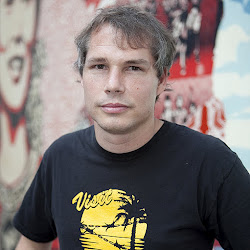
Shepard Fairey

Acclaimed street artist Shepard Fairey has been sentenced to two years’ probation and asked to pay a $25,000 fine after being found guilty of criminal contempt in a case involving his now iconic “HOPE” image adopted by Barack Obama’s 2008 campaign.

Fairey, 42, pleaded guilty back in February to one count of criminal contempt for destroying documents, manufacturing evidence and other misconduct, the Los Angeles Times reports. The artist had been in trouble with the Associated Press over the alleged misuse of a photograph taken of Mr. Obama by an AP staffer in 2006, only to admit after the fact that he attempted to present himself as innocent by fabricating elements in his case.

While Fairey initially received accolades for his “Hope” image used during President Obama’s first run for the White House, the AP insisted that the artist was guilty of copyright infringement, a claim he contested by saying the image was protected under fair-use laws. In return, Fairey turned around and filed a suit against the AP, but not before publically admitting in October 2009 that he lied about the photograph he used for his source, nearly one year after Fairey’s image helped elect President Obama.

“In an attempt to conceal my mistake, I submitted false images and deleted other images,” Mr. Fairey said at the time. “I sincerely apologize for my lapse in judgment, and I take full responsibility for my actions, which were mine alone.”

The prosecution in the case had argued to US Magistrate Judge Frank Maas that Fairey had “both an ideological and financial motive” to falsify his claims, calling his behavior actions that “cannot be dismissed as remotely impulsive or the product of a moment of bad judgment.”

“This was not a mere failure to preserve documents,” the prosecution claimed. “This was the intentional destruction of evidence and the intentional manufacture of false evidence. The defendant knew exactly what he was doing when he created the fake documents and sought to destroy the deleted documents.”

“In order to cover up the fact that the assertion in his complaint was untrue, Fairey created multiple false and fraudulent documents that attempted to show he had used the photograph of then-Senator Obama with George Clooney in it as his reference,” the Justice Department said. “Fairey also attempted to delete multiple electronically stored documents demonstrating that he had, in fact, used the tightly cropped image of then-Senator Obama as the reference. The false and fraudulent documents were produced to the AP during discovery, and the documents that Fairey attempted to delete were not initially produced to the AP.”

After the artist came clean, the AP released a statement from their general counsel, Srinandan R. Kasi, addressing Fairey’s admitted fabrication: “The A.P. intends to vigorously pursue its countersuit alleging that Fairey willfully infringed The AP’s copyright in the close-up photo of then-Senator Obama by using it without permission to create the Hope and Progress posters and related products, including T-shirts and sweatshirts that have led to substantial revenue.”

Now with the case settled in court, the AP says they hope the worst of the matter is over.

“After spending a great amount of time, energy and legal effort, all of us at The Associated Press are glad this matter is finally behind us,” AP President and CEO Gary Pruitt says in a statement released this week. “We hope this case will serve as a clear reminder to all of the importance of fair compensation for those who gather and produce original news content.”

Fairey had previously settled a civil case with the AP over the case, the agency reports, paying them $1.6 million in damages. – RT

Zimbabwe wants to borrow billions of rand from South Africa

When Zimbabwe nationalised land and evicted whites from the country, hyperinflation ensued. Now it wants to borrow from its neighbour where white taxpayers fund the state.

Zimbabwe will seek funds from southern Africa to help finance its budget as the country battles effects of a nearly decade-long downturn, Finance Minister Tendai Biti said Thursday.

“I am appealing to our colleagues in the SADC (Southern African Development Community) countries,” Biti said in an address on the state of the economy.

“I have secured an appointment two weeks from today, with South African Finance Minister Pravin Gordhan where we are going to ask for budgetary support to the tune of $100 million.

“Another thing we are doing is appealing to our friends in SADC. We are also in discussions with the Angolans for a $50-million credit facility.”

Zimbabwe’s powerhouse neighbour South Africa, the continent’s largest economy, will also be asked to make good on a line of credit promised in 2009 to the tune of 500 million rand ($60.4-million, 47.8-million euros), he said.

Biti said although the economy was stable since the hyperinflation-crippled local dollar was dropped in favour of foreign currencies, money was short in both the government and the private sector.

“I regret to announce that the economy still remains depressed with funding challenges for both private and public sectors, irrespective of the prevailing stable macroeconomic environment and some output improvements in sectors such as mining,” said Biti who in July cut the year’s growth forecast from to 5.6 percent from 9.4 percent.

He blamed low economic performance on lack of money to fund productive projects, low foreign investment, high unemployment, a high debt overhang and uncertainty and delays over the constitution-making process.

Zimbabwe’s economy has shown signs of recovery since veteran President Robert Mugabe and long-time rival Prime Minister Morgan Tsvangirai formed a unity government after 2008 poll chaos.

Biti said revenue collections were still falling short with $257.4 million collected in July against a $271.2 million target and $269.2 million in August against a target of $280.7 million.

The gold-mining sector was on course to attain the annual target of 15,000 kilogrammes, while inflation was on the slide due to the depreciation of the South African rand against the dollar.

He said payments for imports rose by 30 percent from the same period last year to reach $5.1 billion. – Sapa

FBI installs ‘Big Brother’ face recognition system all over America

Birthmarks, be damned: the FBI has officially started rolling out a state-of-the-art face recognition project that will assist in their effort to accumulate and archive information about each and every American at a cost of a billion dollars.

The Federal Bureau of Investigation has reached a milestone in the development of their Next Generation Identification (NGI) program and is now implementing the intelligence database in unidentified locales across the country, New Scientist reports in an article this week. The FBI first outlined the project back in 2005, explaining to the Justice Department in an August 2006 document (.pdf) that their new system will eventually serve as an upgrade to the current Integrated Automated Fingerprint Identification System (IAFIS) that keeps track of citizens with criminal records across America .

“The NGI Program is a compilation of initiatives that will either improve or expand existing biometric identification services,” its administrator explained to the Department of Justice at the time, adding that  the project, “will accommodate increased information processing and sharing demands in support of anti-terrorism.”

“The NGI Program Office mission is to reduce terrorist and criminal activities by improving and expanding biometric identification and criminal history information services through research, evaluation and implementation of advanced technology within the IAFIS environment.”

The agency insists, “As a result of the NGI initiatives, the FBI will be able to provide services to enhance interoperability between stakeholders at all levels of government, including local, state, federal, and international partners.” In doing as such, though, the government is now going ahead with linking a database of images and personally identifiable information of anyone in their records with departments around the world thanks to technology that makes fingerprint tracking seem like kids’ stuff.

According to their 2006 report, the NGI program utilizes “specialized requirements in the Latent Services, Facial Recognition and Multi-modal Biometrics areas” that “will allow the FnewBI to establish a terrorist fingerprint identification system that is compatible with other systems; increase the accessibility and number of the IAFIS terrorist fingerprint records; and provide latent palm print search capabilities.”

Is that just all, though? During a 2010 presentation (.pdf) made by the FBI’s Biometric Center of Intelligence, the agency identified why facial recognition technology needs to be embraced. Specifically, the FBI said that the technology could be used for “Identifying subjects in public datasets,” as well as “conducting automated surveillance at lookout locations” and “tracking subject movements,” meaning NGI is more than just a database of mug shots mixed up with fingerprints — the FBI has admitted that this their intent with the technology surpasses just searching for criminals but includes spectacular surveillance capabilities. Together, it’s a system unheard of outside of science fiction.

New Scientist reports that a 2010 study found technology used by NGI to be accurate in picking out suspects from a pool of 1.6 million mug shots 92 percent of the time. The system was tested on a trial basis in the state of Michigan earlier this year, and has already been cleared for pilot runs in Washington, Florida and North Carolina. Now according to this week’s New Scientist report, the full rollout of the program has begun and the FBI expects its intelligence infrastructure to be in place across the United States by 2014.

In 2008, the FBI announced that it awarded Lockheed Martin Transportation and Security Solutions, one of the Defense Department’s most favored contractors, with the authorization to design, develop, test and deploy the NGI System. Thomas E. Bush III, the former FBI agent who helped develop the NGI’s system requirements, tells NextGov.com, “The idea was to be able to plug and play with these identifiers and biometrics.” With those items being collected without much oversight being admitted, though, putting the personal facts pertaining to millions of Americans into the hands of some playful Pentagon staffers only begins to open up civil liberties issues.

Jim Harper, director of information policy at the Cato Institute, adds to NextGov that investigators pair facial recognition technology with publically available social networks in order to build bigger profiles. Facial recognition “is more accurate with a Google or a Facebook, because they will have anywhere from a half-dozen to a dozen pictures of an individual, whereas I imagine the FBI has one or two mug shots,” he says. When these files are then fed to law enforcement agencies on local, federal and international levels, intelligence databases that include everything from close-ups of eyeballs and irises to online interests could be shared among offices.

The FBI expects the NGI system to include as many as 14 million photographs by the time the project is in full swing in only two years, but the pace of technology and the new connections constantly created by law enforcement agencies could allow for a database that dwarfs that estimate. As RT reported earlier this week, the city of Los Angeles now considers photography in public space “suspicious,” and authorizes LAPD officers to file reports if they have reason to believe a suspect is up to no good. Those reports, which may not necessarily involve any arrests, crimes, charges or even interviews with the suspect, can then be filed, analyzed, stored and shared with federal and local agencies connected across the country to massive data fusion centers. Similarly, live video transmissions from thousands of surveillance cameras across the country are believed to be sent to the same fusion centers as part of TrapWire, a global eye-in-the-sky endeavor that RT first exposed earlier this year.

“Facial recognition creates acute privacy concerns that fingerprints do not,” US Senator Al Franken (D-Minnesota) told the Senate Judiciary Committee’s subcommittee on privacy, technology and the law earlier this year. “Once someone has your faceprint, they can get your name, they can find your social networking account and they can find and track you in the street, in the stores you visit, the government buildings you enter, and the photos your friends post online.”

In his own testimony, Carnegie Mellon University Professor Alessandro Acquisti said to Sen. Franken, “the convergence of face recognition, online social networks and data mining has made it possible to use publicly available data and inexpensive technologies to produce sensitive inferences merely starting from an anonymous face.”

“Face recognition, like other information technologies, can be source of both benefits and costs to society and its individual members,” Prof. Acquisti added. “However, the combination of face recognition, social networks data and data mining can significant undermine our current notions and expectations of privacy and anonymity.”

With the latest report suggesting the NGI program is now a reality in America, though, it might be too late to try and keep the FBI from interfering with seemingly every aspect of life in the US, both private and public. As of July 18, 2012, the FBI reports, “The NGI program … is on scope, on schedule, on cost, and 60 percent deployed.”

– RT

ANC minister praises Woolworths

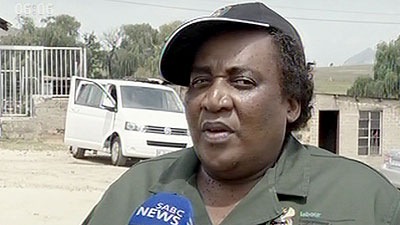
Mildred Oliphant, the ANC's Minister of Labour

Labour Minister Mildred Oliphant on Friday lauded retailer Woolworths’ stance on employment equity.

“As [the] government of South Africa and those that seek genuine transformation, we shall continue to encourage companies like Woolworths to continue with the transformation and integration of the society,” she said in a statement.

PRAAG, followed by labour union Solidarity this week started a campaign to boycott Woolworths after the company ignored its ultimatum to remove job advertisements from its website which the union said excluded whites.

Woolworths argued it had an obligation to meet its employment equity targets as an employer with more than 50 employees.

Oliphant said Woolworths was among listed companies that had been subjected to a review process in 2009 in terms of the Employment Equity Act.

“During this process, like any other employer that was reviewed, Woolworths committed itself to transforming their workplace by implementing their employment equity plan, as approved by the director general,” she said.

When a follow-up review was done in the 2011/2012 financial year, the company had progressed in meeting its employment equity targets, she said.

“However, there are those that hate to see integration in the workplace and society in general; they seek to find fault with those that genuinely implement employment equity as a means of addressing our painful past and imbalance,” she said. – Sapa

Aikona Woolworths! petition | petisie

I hereby express support for PRAAG’s WAR (Whites Against Racism) campaign to persuade Woolworths and other companies that they must stop discrimating against white South Africans. Hiermee ondersteun ek PRAAG se BTR (Blankes Teen Rassisme)-veldtog om Woolworths en ander maatskappye te oorreed om diskriminasie teen blanke Suid-Afrikaners te staak.

[emailpetition id=”2″]
[signaturelist id=”2″]

Do you like organic antiwhite coffee?

Dear PRAAG supporter,

Those of you who have not yet read my latest column written today, should do so, here:

The WAR on Woolworths and what it means

If you have been to South Africa, you will know that Woolworths is an upmarket chain store selling fairly good clothes and food under their own brand, very much like the Marks & Spencer chain in the United Kingdom. You can also buy all sorts of organically grown products there – at a price.

Over the past week, Woolworths has been in the news for publishing job advertisements saying “For blacks only”. That provided the spark for our current campaign against their affirmative action programme, with one or two other organisations and trade unions jumping on the bandwagon.

I am quite amazed by the good response on Facebook and Twitter. On Woolworths’s Facebook page there were more than 2 000 comments of irate white shoppers pledging to never support them again. Afterwards the company locked its Facebook wall. It is the first time that I have seen such a tremendous response and almost spontaneous boycott spirit taking shape.

The combination of the ANC government and Big Business colluding on excluding whites from jobs has almost succeeded in making second-class citizens and mere survivors of us all. I know of so many middle-class families who are struggling as a result with the husbands unable to find work as almost no-one wants to employ a white male anymore.

How this will all work out, we will find out. But what I find heartening is that there is such a tremendous sense of solidarity suddenly among white South Africans, as I mention at the start of my column. Also recently I was watching a French TV discussion with author Richard Millet talking about his two latest books, one of which is entitled “Antiracism, a literary terror”. His tremendous pessimism – he spoke of his “despair” – struck me, as well as the other more politically correct members of the panel who already considered themselves a minority in their own country!

Millet referred to being “the only white at six in the evening in the subway at Châtelet-Les-Halles”. To other members of the French talk show, that did not matter as “those people were Frenchmen too, even if they were black or Arab”. However, as we can see from our experience as a minority that has lost power in our own country, it does not work that way. As soon as one is outnumbered at the ballot box, so-called affirmative action becomes the national ideology and both the state and major corporations deem the employment of whites undesirable. For them it is not even about “filling quotas” according to demographic percentages, but about impoverishing us so that we should finally sink to their third-world level of income and social existence. Somehow, the slightest remaining pocket of white or Western excellence is seen as an affront to their own dignity and sense of “being in power”.

Although many people seem to have written us off, the four million white people here are increasingly showing a solidarity and a zest for meeting the challenge of creating something new, a new economy and lifestyle away from governmental and corporate strictures. People are talking about distributing produce directly from our farmers to consumers, to bypass the supermarket chains and of setting up small banks all over the country in order to regain control of our capital that is languishing in the big four banks, with more or less the same employment policies as Woolworths.

The big irony is that we are paying taxes, interest and banking fees so that we may be excluded from the job market and even from having our own businesses, thereby funding our own ultimate demise. This has to stop. Fortunately many people are starting to see it that way.

In many towns, people are protesting the corruption and profligacy of the ANC’s municipal officials and politicians by refusing to pay local taxes. The indefatigable Mr. Jaap Kelder, a good friend and comrade, is fighting the municipalities in the courts and through his national network of ratepayers’ associations, so we are giving them a good run for their money.

A few months ago I started being more active on Twitter and my account has now grown to 2 500 followers. On Facebook I have another 6 500 people or so and all our messages and links are distributed through other networks as well so that we do not really need the traditional media anymore, even though I still try to get articles and letters into the major newspapers. This week I published a critical letter in the daily Beeld in reply to the affirmative action principal of the University of the Free State, Jonathan Jansen, who is enforcing diversity on his campus and even made an ideological course on multiculturalism mandatory for all students. Our two websites in English and Afrikaans now get as much traffic as some of the second-tier newspapers so being in the mainstream media or on radio keeps us in the public eye, but we could well do without it too. I firmly believe that there will come a time in South Africa when there will be a clampdown on dissident voices and a lot of people will be banned from the mainstream media. By that time we will hopefully be so strong on the internet that we would not even notice being excluded from the traditional media.

I also serve on the so-called Strategy Committee for the Afrikaner people that we formed a year ago. Even though our work is more or less confidential, we are going to have an invitation-only conference for 200 people in November where we will finally decide on a strategy going forward and which will most probably include elements of self-determination.

All of this is very exciting but time-consuming, sometimes even exhausting. There are endless meetings, discussions and planning sessions. But we have no choice, we must keep up the good fight.

As so many people have argued, our fight will ultimately be the fight of the whole European and North American world. I must write to Monsieur Millet in Paris to tell him that he need not despair so much. There are four million white Africans down here and another million or so expats who are ready to show the way!

Thanks once again for your loyal support and interest in our cause.

With kind regards,

Dan Roodt

Director, Pro-Afrikaner Action Group (PRAAG)

PRAAG plans charging Woolworths with apartheid

PRAAG, the Pro-Afrikaans Action Group, has given Woolworths until midnight on 7 September 2012 to stop discrimination against Afrikaners, Afrikaans and the white race (see email underneath), otherwise the action group will lay a charge of apartheid against Woolworths.

Apartheid is a punishable offence in terms of several international conventions and therefore the management of Woolworths could be prosecuted both locally and internationally.

According to Dr. Dan Roodt of PRAAG “we are sick and tired of apartheid which is being applied to us according to the international definition and which is punishable. We are not going to allow Woolworths to get away with their criminal behaviour and violation of our human rights.”

Contact: Dan Roodt dan@praag.org 073 951 1467

———- Forwarded message ———-
From: Dan Roodt <dan@praag.org>
Date: 2012/9/7
Subject: Diskriminasie en apartheid teen Afrikaans, Afrikaners en die blanke ras
To: markvanbuuren@woolworths.co.za
Cc: PressOffice <mediarelations@woolworths.co.za>

Mnr. Mark van Buuren
Werknemersbestuurder
Woolworths
Langmarkstraat 93
Kaapstad

Geagte meneer Van Buuren,

U word hiermee in kennis gestel dat indien u nie teen middernag op 7 September 2012 alle diskriminasie teen Afrikaans, Afrikaners en lede van die blanke ras staak nie, ons nie sal huiwer om die nodige kriminele klagtes teen u maatskappy en sy werknemers sowel plaaslik as internasionaal in te dien nie.

Onder andere maak u u aan apartheid skuldig, wat ‘n internasionale misdaad is.

Ons is ook van plan om die Raad van Europa in kennis te stel dat u rassisties teenoor mense van Europese afkoms optree en sal versoek dat reisbeperkings op alle personeel van Woolworths ingestel word aangesien u u aan menseregteskendings teen Suid-Afrikaanse blankes skuldig maak.

Die uwe,

Dr. Dan Roodt

FW de Klerk pontificates on inequality and our ‘catastrophic education system’

FW de Klerk, former President of South Africa

The outcome of the ANC’s elective conference in Mangaung at the end of the year could have a big effect on South Africa’s future, former president FW de Klerk said on Thursday.

“I do think the choice of leadership in this December can positively or negatively effect our future in the short and the medium term,” he said, speaking at a Cape Town Press Club memorial dinner.

It was important that African National Congress members attending the conference acted in the interests of the country, and not individuals.

“Therefore I think it’s important that, in the context of a party structure, that the conference goers take good account of what is in the best interests not of person A or person B, but what is in the best interests of South Africa.”

De Klerk called for a return to the spirit of seeking reconciliation that prevailed in the country in the years immediately after 1994.

“How can we rise above grabbing and looking for positions and filling your pockets?”

South Africa needed political leaders who could serve communities and “put their hands and their heads together in ensuring we tackle the challenges we face”.

Responding to a question on whether South Africa should not be promoting itself with a massive international “road show”, De Klerk said investors had been frightened by what they had seen happening in South Africa over the past 18 months.

“What has happened at Marikana will make a joke of any road show,” he said, referring to the shooting dead of 34 striking mineworkers by police in North West on August 16.

They were also put off by reports of corruption.

“Investors are put off by factual accounts of the unbridled corruption that is taking place in South Africa. You can’t have a road show unless your house is in order.

“We need to sell ourselves, but we need to get the product right [first].”

Earlier, De Klerk, who turned 76 in March this year, said the main inequality divide in South Africa was no longer between blacks and whites, but between unionised and employed workers on the one hand, and unemployed on the other.

“It is a divide that lies at the heart of our inequality challenge.”

It was also a divide “that the Congress of SA Trade Unions is determined to defend by vigorously opposing any efforts to make the labour market more flexible”.

Another principal cause of inequality was the “catastrophic failure of our education system”.

A total of 60 percent of those who left school did so without a matric, and those who passed matric did so with an average mark of less than 40 percent.

De Klerk criticised the ruling party’s affirmative action and black economic empowerment policies.

“In the face of increasing national inequality, there is good reason to conclude that the government’s affirmative action and BEE policies have failed to address inequality, and might even have aggravated it.

“This is because most affirmative action and BEE occur in the top 10 to 15 percent of the income pyramid and have little or no impact on the bottom 85 percent of our society.

De Klerk, who served as South Africa’s last apartheid president from 1989 to 1994, called for these policies to be abandoned.

“Shift the accent in affirmative action programmes from race to relative disadvantage,” he said.

He also offered recommendations for the promotion of equality, including a more flexible labour dispensation, accelerated economic growth, and the rooting out of corruption, among others.

– Sapa