Florida jury finds George Zimmerman not guilty

George Zimmerman
George Zimmerman

A Florida jury on Saturday found George Zimmerman not guilty in the shooting death of unarmed black teenager Trayvon Martin, in a case that sparked a national debate on race and guns.

The panel of six women, which was sequestered, deliberated more than 16 hours over two days until nearly 10 p.m. on Saturday (0200 GMT Sunday).

Zimmerman appeared stoned-faced as the verdict was announced, but then showed a slight smile of relief. His parents embraced each other and his wife was tearful.

Zimmerman, 29, said Martin, 17, attacked him on the night of February 26, 2012, in the central Florida town of Sanford. Prosecutors contend the neighborhood watch coordinator in his gated community was a “wannabe cop” who tracked down the teenager and shot him without justification.

The jury could have convicted him of second-degree murder or manslaughter.

What happened in Sanford that February night may never have gone beyond the back pages of a local newspaper if police had immediately arrested Zimmerman.

But he walked free for more than six weeks after the shooting, because police believed his claim of self-defense, triggering protests and cries of injustice across America.

It also drew comment from President Barack Obama, forced the resignation of Sanford’s police chief, and brought U.S. Justice Department scrutiny to this town of 54,000 residents not far from Disney World in Orlando. – Reuters

Zimmerman acquitted of all charges in Trayvon Martin murder case

George Zimmerman
George Zimmerman

George Zimmerman was acquitted of all charges on Saturday for the fatal shooting of unarmed black teenager Trayvon Martin in this central Florida town in February of last year.

If he had been convicted, the 29-year-old former neighborhood watch volunteer, who claimed he acted in self-defense, could have been sentenced to life in prison for second-degree murder or up to 30 years for manslaughter.

A panel of six women jurors rendered its verdict in the case, which sparked a national debate on issues including race and profiling, after a trial that began in Seminole County court on June 10. Reuters

Stormers hungry for consolation win

A previous Bulls-Stormers game

Turning out in their final game of the 2013 Super Rugby season may seem like a formality, but departing winger Bryan Habana says the Stormers will play their hearts out against the title-chasing Bulls at Newlands on Saturday.

Habana, who leaves for big-spending French outfit Toulon at the end of the campaign, did not believe the Bulls’ log aspirations would weigh heavily on the Cape players’ minds.

“This Saturday is not about trying to spoil the Bulls’ party,” Habana said.

“It is about the (Stormers) players getting some pride back for the supporters.

“There is a lot of pride at stake for the Stormers and for me personally. I feel disappointed that I haven’t contributed enough to see us get into the playoff stages.”

The late kick-off slot means the Stormers, in seventh place and out of the running for the playoffs, could have a say in the final outcome of the log, with the Bulls eager to remain in top spot overall after the last game of the regular season.

Bulls coach Frans Ludeke knew his charges had a mountain to climb at Newlands.

“We are up against an opponent we know. It is always very physical and there are no easy metres to be gained,” Ludeke said. – Sapa

Govt. gives Terence Nombembe a R6 million back-dated pay rise!

Terence Nombembe
Terence Nombembe

Auditor General Terence Nombembe has received a salary increase of close to a million rand a year, backdated for more than six years.

Details of the increase are contained in a letter, dated May 23 this year, sent by President Jacob Zuma to Parliament. The letter was published this week in a parliamentary document.

“[The president has determined that] the annual salary package of the Auditor General Mr TM Nombembe be increased from R1,708,600 per annum to R2,650,000 per annum with effect from December 1, 2006.”

This meant Nombembe’s salary package would increase by R941,400 a year, backdated for six-and-a-half years, a windfall of well over R6 million.

The date of December 1, 2006 is the day on which Nombembe — who replaced Shauket Fakie, who retired — was appointed to the post.

The letter also announces a huge increase in Nombembe’s termination benefits.

“[The] Auditor General’s termination benefit [is to] be increased from 10 percent of the average term compensation for each year of service, to 50 percent of the average term compensation for each year of service… .”

According to the letter the payment of back pay would be done in accordance with the guidelines applicable to the AG’s office.

Zuma’s decision to increase Nombembe’s salary package was based on a recommendation of the parliamentary committee on the Auditor General. – Sapa

How should we respond to calls for white genocide?

roodt_fbfoto

by Dan Roodt

[followbutton username=’danroodt’ count=’true’ lang=’en’ theme=’light’]

Like Dan Roodt’s Facebook page

This week on Twitter a former UKZN student representative council member, Sfiso “Mabhiza” Mbatha, tweeted: “We gonna kill every white cockcroach that breath(es) SA’s air”, while adding, “Would rape every 13yr old white girl after Mandela finally kick that bucket. Just for control.”

These tweets caused a lot of reaction, but no official complaints were laid. If any such statement were made about blacks, it would have provoked a far larger furore. The tweeter would have been charged with hate speech at the SA Human Rights Commission and MSM journalists would have “shamed” him with negative publicity about his “racism”.

As Mbatha explained afterwards, he thought it was something of a joke: “It was just a joke at the end of the day. But now I realise that they were uncalled for, they went overboard and pushed the limit. I did say that I was joking, but people responded by insulting me, so I insulted them back.”

A large number of whites did not react at all. This is typical of so-called “advanced groups” all over the world who almost expect to be resented and even hated by the less successful groups. The well-known ethnic expert and author of the book, Ethnic goups in conflict, David Horowitz, distinguishes between “advanced groups” and “backward groups”. I think it would be fair to say that South African whites fit the definition of an “advanced group” and therefore typically react like one. Advanced groups are more educated, entrepreneurial and occupy the higher social classes in an ethnically divided society. As Horowitz explains:

“Where backward groups seek proportionality in government employment, advanced groups seek only assurances of nondiscrimination. Where backward groups attempt to keep ethnic strangers from government service in their region, advanced groups affirm the principle of unrestricted mobility.”

Advanced groups are reluctant to secede if they find themselves living in diaspora in a “backward territory”. Significantly, Horowitz notes that advanced groups are “disproportionately victims of ethnic violence”. South Africa’s brutal farm murders are a case in point, targeting a specific language and racial group that is perceived to be in a better socio-economic position than the surrounding “backward” population.

If we are honest, we should admit that some form of white genocide or anti-white violence has always been at the core of the ANC’s “liberation strategy”. The ANC is essentially composed of elites identifying with the less successful ethnic groups in South Africa. It is therefore normal that, according to the laws of ethnic conflict, it should heap opprobium onto whites which it perceives as “the enemy” and responsible for the relative deprivation of South African blacks. It is also telling that the principle of proportional employment has been implemented, not only in the public sector, but also in the private sector in a clear attempt to curtail white social and economic prowess.

However, it would be too simplistic to transpose Horowitz’s theory of ethnic conflict onto South Africa as one might onto Nigeria, Sri Lanka or Malaysia. In addition to the ethnic dynamic at work in the South African conflict, there is also the ideological dimension in the form of political correctness, Western decadence and generalised anti-white attitudes to be found in the global mainstream media.

Against this backdrop, calls for a white genocide in South Africa seem almost normal or normalised. Foreign correspondents in Johannesburg from the BBC, the New York Times and the London Guardian who have been casting whites in the role of evil racists for years, are likely to report on anti-white animus among blacks with “understanding”. In the light of the aforegoing narrative, these correspondents might suggest: who can blame them?

White South African liberals and leftists who are loyal to Britain and share left-wing Anglo-American perspectives on their own countrymen, take an equally sanguine view of such manifestations of anti-white “racism”. Liberal Britons are indifferent to the killing of whites in South Africa, if not supportive of any would-be black genocidaires. I once spoke to an official from a London NGO who explained to me that we should not complain about being killed by blacks as “they were only getting their own back”, as if white leaders in the past had proceeded to similar public appeals to “exterminate the kaffirs”!

As we saw during the court case around Julius Malema’s “hate speech” against Afrikaner farmers, there was little media sympathy for white victims of ethnic and racial violence. Even though Malema was prohibited from singing the song, “Kill a Boer, kill a farmer”, the song kept on being sung all over the country. In fact, the governing ANC opposed the legal prohibition of the song, with its advocate Gilbert Marcus, brother of Reserve Bank governor Gill Marcus, arguing for the party’s “freedom of speech”. Singing such songs were part of “black culture”.

It may be, therefore, that calls for white genocide in South Africa are examples of the “free speech” that Marcus and many other leftists and liberals would argue are “harmless” and “not to be taken literally”. In the words of the young black tweeter from Natal, Sfiso “Mabhiza” Mbatha, it is “just a joke at the end of the day”.

It is also true that black Africans often joke about killing. “I’m going to kill you,” is quite an everyday saying. Also, killing is invoked many a time as a universal method of meting out justice for all sorts of crimes and misdemeanours.

However, as the saying goes, “many a true word is spoken in jest”. Robert Mugabe is one of the most admired black leaders in South Africa and there is no doubt that his “final solution to the white problem” by simply confiscating their assets and expelling most of the white population, would also be wildly popular in this country. There not being another country south of South Africa towards which whites could flee, a broad desire “to get rid of whites once and for all” could lead to widespread killing, massacres or even systemic genocide of the kind hinted at in “jocular” black tweets.

How then should we answer my initial question in the title above: “How should we respond to calls for white genocide?” I think there would be at least two approaches. The one would be a kind of laissez faire approach in line with leftist white responses of “not taking it literally”. That would also constitute the most typical reaction of Horowitz’s “advanced group” that sees its salvation not in mass mobilisation and ethnic agitation, but in avoiding conflict – or at worst, moving away from it. The most common reaction of whites after escaping from an armed robbery, farm attack or other form of black-on-white violence is not to join the local chapter of the AWB’s Ystergarde (Iron Guard), but to call an Australian immigration consultant.

I have just had a visit from a friend who had recently emigrated to Australia. He misses South Africa, family and friends, especially the warmth and hospitality of Afrikaners. But he does not contemplate ever returning to South Africa, because, as he put it: “I feel safe in Australia. I would be scared to live in South Africa again.”

Many whites simply ignore ethnic slogans directed at them. I once listened to a talk show on the Afrikaans radio RSG where many of the callers stated quite frankly that they had adopted a kind of ostrich-like, head-in-the-sand approach. They would simply avoid reading newspapers and websites or even listening to the news on radio because it upsets them. They choose not to know. The average white professional woman or housewife shopping at Woolworths does not care either that the chain has an anti-white employment policy. She buys the fantasy of eating well, dressing well and decorating her home in the latest mix of white and earthy, African colours.

Ever since my Afrikaans high school days, I have often heard the typical injunction from teachers and many others: “Don’t be so negative!” Within the Afrikaner mind, every problem has a solution and “being negative” is a cardinal sin. In that sense, what can be more “negative” than imputing genocidal urges to South Africa’s black majority? Or even responding to a call for white genocide that is made every so often by some tweeter or black politician?

Among my many criticisms of the Afrikaans schooling system, although one of the best in the world for churning out straight-A students in maths and science, or good writers, artists, actors and so on, is that it does not teach one the art of critical thinking. Disagreeing with someone, especially publicly, is often seen as “bad manners” or even worse, as displaying that nefarious “negative” attitude. Often I have sat in meetings with especially elderly Afrikaners who used to occupy positions of authority in the old system and, upon voicing my disagreement on some point, they would simply ignore me as if they had not heard me!

Similarly, many Afrikaners out there, including the editors of newspapers, radio stations and pay-TV channels, are “simply not hearing” any call for white genocide. Call it denial or what you will, but just as their culture predisposes blacks to easily talking about killing, local white culture tends to make them hard of hearing.

We have been educated and programmed to be decent, cooperative, “positive” in Afrikaans parlance, so behave like a typical “advanced” ethnic group, eschewing ethnic solidarity in the face of danger.

However, there is one “advanced” group, probably due to past experience, that does not take calls for genocide lying down. Here I am referring, of course, to Jews. South African Jews enjoy arguably the highest standard of living of any ethnic group in the world and a perusal of the weekly South African Jewish Report will tell you about their huge socio-economic success, as well as media and political influence.

Unlike such dreadful appeals directed against Afrikaners and Boers, no-one in South Africa has ever called for the extermination of Jews. In fact, South Africa’s much-maligned National Party government was probably responsible for the good relations not only between Jews and the rest of the white population, but also between Jews and South African Muslims.

To my surprise, I recently discovered the construction site of Johannesburg’s Holocaust Centre, with another one having been in existence in Cape Town for some years already. These centres, apart from educating the public about the history of Jewish persecution, tend to preach tolerance towards Jews and between ethnic groups generally.

There is also the international Anti-Defamation League which, according to one of its own documents, “fights anti-Semitism and all forms of bigotry, defends democratic ideals and protects civil rights for all,” doing so through “information, education, legislation, and advocacy”.

I can only imagine the international outcry, notably from Germany, that would ensue if any South African black leader had to start singing “freedom songs” about “Kill a Jew, kill a plutocrat”. Charges of hate speech would immediately be laid against the offender and he would become persona non grata in many quarters. I doubt very much whether anyone at the Johannesburg Bar, least of all Gilbert Marcus SC, would defend his “freedom of speech” and colourful metaphors.

The so-called South African Human Rights Commission is a suspect body, in itself prone to anti-white sentiment. It was created to harass whites, not to uphold their rights. As far as I know, it has never responded to complaints about anti-white hate speech, apart from acknowledging the receipt of such a complaint. For that reason, many Afrikaner groups do not even comtemplate complaining to the SAHRC about calls for white genocide.

But if we are looking for models to deal with the growing chorus calling for a white genocide in South Africa, we could do worse than to imitate the Jewish community. Either one lets these comments and invocations to kill whites slide, like the ostriches that we are, or one should draw a line and respond to each and every one of them. Even if the SA Human Rights Commission will do nothing to stop hate speech against whites, the mere fact of documenting such complaints might come in handy at some later point when our struggle for survival gets even more intense than it already is.

The current mayor of Chicago, Rahm Emanuel, made a bizarre statement in 1992 when he said: “Gays are the next Jews of fundraising.” Many people have recently quoted this.phrase to point out the vast support for Obama’s Democrats among US gays.

But in a more fundamental sense, I think we could say that Afrikaners – and by extension white South Africans – are “the next Jews”. We are already subject to vicious propaganda campaigns, vilification, hostile media reports, legal and official discrimination, stereotyping and random ethnic attacks, even pogroms.

Our famous Afrikaner poet, N.P. van Wyk Louw, once wrote: “If the Afrikaner had to lose political power in South Africa, he would be as helpless as the Jew in Nazi Germany.”

Recent history has vindicated Louw. It is high time that, while we are being treated like Jews in Czarist Russia, we should respond like modern Jews who not only react vehemently against any suggestion of genocide, but also preempt it through, in the words of the Anti-Defamation League: “information, education, legislation, and advocacy”.

[followbutton username=’danroodt’ count=’true’ lang=’en’ theme=’light’]

Like Dan Roodt’s Facebook page

PRISM fears boost private search engine DuckDuckGo

duck-duck-goIf you want to know just how crazy fear over PRISM-like surveillance has made the Internet, take a look at DuckDuckGo.

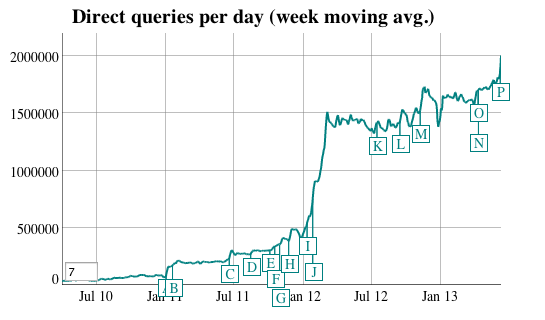
Thanks to the National Security Agency leaks and some well-timed media appearances, the private search engine is having its best traffic week ever. Visitors to the site made a record 2.35 million direct searches on Wednesday — a 26 percent increase over the previous week.

For DuckDuckGo founder Gabriel Weinberg, the numbers are proof yet again that people are eager to find and use viable alternatives to popular web services, which are prime targets for government snooping. “We offer that in web search, and there are others that offer it in other verticals. As people find out about these alternatives, they make that choice,” Weinberg said via email today.

DuckDuckGo was launched in 2008 and has since become the foremost search engine for those concerned about not just snooping by the government but Google as well. When visitors search via DuckDuckGo, the search engine doesn’t track them; it just gives them the search results they request. (Like Google, DuckDuckGo does serve contextual ads, which is how it makes its money.)

Traffic to DuckDuckGo tends to spike whenever new privacy fears pop up

While interest in the search engine has climbed over the past year, fears over PRISM surveillance have made DuckDuckGo look significantly more important and necessary seemingly overnight.

“I believe the surveillance story is paramount right now, and people are talking about it. DuckDuckGo users are telling their friends and family about the private alternatives,” Weinberg said.

On a similar note, this week designer Peng Zhong launched PRISM Break, a comprehensive site that lists private alternatives to popular web services. – Venturebeat.com

Calls for white genocide on Twitter, Facebook

Sfiso Mabhiza Mbatha's comments on Twitter
Sfiso Mabhiza Mbatha’s comments on Twitter

The South African Human Rights Commission is concerned about the increase in racist posts on social networking sites such as Faceook and Twitter.

A social media law consultant, Emma Sadleir, has also warned that a racist tweeter or facebooker could be charged with crimen injuria or hate speech.

She was reacting to a string of racist posts made this week on Twitter by a former member of the University of KwaZulu-Natal’s SRC.

Sfiso “Mabhiza” Mbatha, whose Twitter handle is @Cadre_General, sparked a furore on the site after he posted a message on Sunday that read: “#WhiteGenocide Would rape every 13yr old white girl after Mandela finally kick that bucket. Just for control”. Shortly after he wrote: “We gonna kill every white cockcroach that breath(es) SA’s air”.

SAHRC spokesman, Isaac Mangena, said no complaint had been received about Mbatha.

He said they had noted with concern the increase in such comment posts on social media sites and condemned it.

Mangena cited previous incidents of racism and intolerance such as Jessica Leandra Dos Santos’s offensive tweet last year which caused an outrage. The former FHM model tweeted “@JessicaLeandra: Just, well took on arrogant and disrespectful k***** inside Spar. Should have punched him, should have.”

He said such situations were dealt with to decrease intolerance in our communities.

Mangena said such behaviour should be a concern to everyone, not just the SAHRC, to guarantee that everyone lives in a harmonious society.

Mbatha’s posting drew a torrent of angry responses from across the country on Twitter and Facebook, which Mbatha replied to. Many of the exchanges included racist and obscene language.

Some said they would pray for Mbatha while others threatened his life.

Professor Pearl Sithole, of the faculty of community development at UKZN, yesterday said she was shocked to learn of the posts and questioned why they had not been reported to the police.

“This is beyond hate speech, it is a threat to people and to young girls in a country that is still struggling in terms of dealing with emotional and physical abuse of women,” said Sithole.

Reacting to the frenzy, an apologetic Mbatha on Tuesday said he meant no harm with his Twitter posts. “It was just a joke at the end of the day. But now I realise that they were uncalled for, they went overboard and pushed the limit. I did say that I was joking, but people responded by insulting me, so I insulted them back,” said Mbatha.

The former UKZN student representative council member said he was unaware his comments would ruffle feathers.

“It’s Twitter, it’s nothing personal, it’s just that people catch feelings. I think people need to learn that the moment you register on Twitter, you can tease people and they will tease you. I don’t have a problem with white people at all. I have white friends whom I love and they love me.”

Despite the apparent regret, Sithole maintained that Mbatha’s posts were immoral and has called for government to take action. “Mbatha is a pinnacle of moral disgrace, given that such statements are taking place while a Struggle icon of Mandela’s stature is fighting for his life,” she said.

Sadleir warned that Mbatha’s actions could have dire consequences.

“There are limits to the right to online freedom of expression – for example defamation, invasion of privacy, contempt of court, hate speech, intellectual property, harassment, etc. Comments posted on Facebook or Twitter are treated in exactly the same way as comments made in any other public forum, be it on television or radio, in a newspaper or in public discourse,” Sadleir said.

Sadleir said people posted things on social networks that they would be afraid to say in the real world, forgetting that they risked dismissal at work and criminal prosecution.

“The CCMA (Commission for Conciliation, Mediation and Arbitration) has held all these dismissals to be fair. In the South African context, a racist Tweeter or Facebooker could be charged with crimen injuria or hate speech.

“The other option is to lay a complaint at the South African Human Rights Commission (SAHRC) under the Promotion of Equality and Prevention of Unfair Discrimination Act 4 of 2000, also known as the Equality Act,” Sadleir said. – Daily News

3 Mozambicans jailed for rhino poaching

rhino-poachingThree men have been jailed for five years each for rhino poaching in Pietersburg, Limpopo police said on Thursday.

Mozambican nationals Augustus Nkuna, Foster Nyoni, and Manyanga Shiringa were sentenced on Wednesday by the Makhado Regional Court, Brigadier Hangwani Mulaudzi said.

“The trio were also handed a 12-month suspended sentence.”

They were arrested in May last year after police caught them poaching rhinos at the Nwandeni Resort.

Meanwhile, on Wednesday evening, five alleged rhino poachers were arrested in Gravelotte after police received a tip-off.

“The five were planning to invade a private game farm and poach rhinos,” said Mulaudzi.
Police confiscated a hunting rifle, two butcher knives and two vehicles.

The men were expected to appear in the Phalaborwa Magistrate’s Court on Friday. Mulaudzi said the arrest of the five brought the number of people arrested for rhino poaching to eight this week. On Sunday, three men were arrested while they were en route to allegedly poach rhinos in Hoedspruit.

Lions team to face Griquas in friendly rugby match

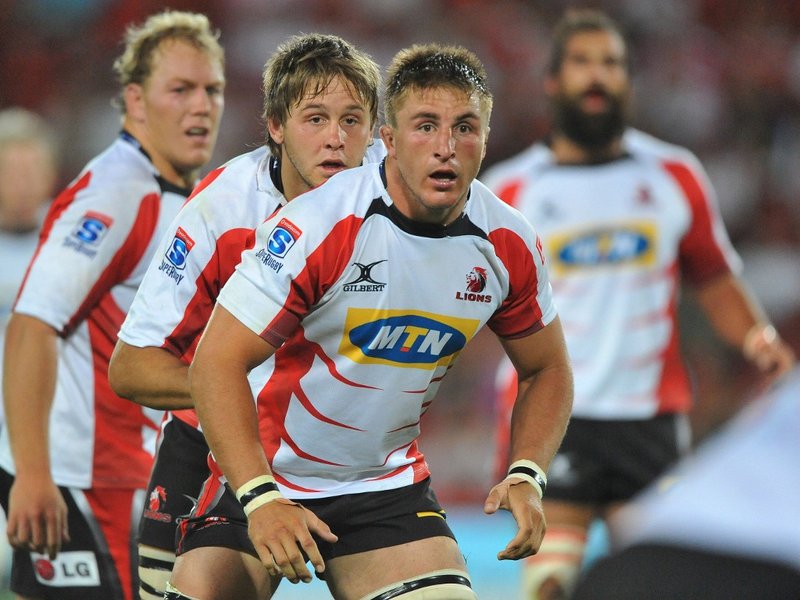
Derick Minnie of the Lions (centre)

Lions head coach Johan Ackermann named his side to face the Griquas at Ellis Park this Saturday. Kick-off is at 15h00.

The friendly match was being used by the Lions as part of their preparations for a two-leg Super Rugby promotion/relegation playoff against the Southern Kings. The matches take place on July 26 in Port Elizabeth and August 2 in Johannesburg.

Lions: Ruan Combrinck, Deon van Rensburg, Stokkies Hanekom, Dylan des Fountain, Anthony Volmink, Marnitz Boshoff, Guy Cronje, Lambert Groenewald, Derick Minnie, Warwick Tecklenburg, JJ Breet, Hendrik Roodt, Julian Redelinghuys, Francois du Toit, JC Janse van Rensburg (captain).

Replacements: Mark Pretorius, Jacques van Rooyen, Ruan Dreyer, Hugo Kloppers/Gavin Annandale, Willie Britz, Ross Cronje/Viaan van der Watt, Lionel Cronje, Chrysander Botha, Deon Helberg.

South Africa, USA in joint military exercise

US defence and Army attaché Colonel Daniel L Hampton (right) with Major General Luvuyo Nobanda of the SANDF

The South African and US armed forces will conduct a joint exercise in the Eastern Cape, the SA National Defence Force said on Thursday.

SA Navy Captain Jaco Theunissen said the militaries would share technical expertise during the exercise, which would start on July 24 and end on August 5, and would involve 5000 soldiers.

“We are exercising to do a human support intervention in an unstable country,” said Theunissen.

“What we simulate is what is currently happening in a lot of countries in the world, especially in the African continent.

“You’ve got warring factions destabilising the country…. We are exercising the war fight, where you will fight against rebel groups.”

Medical units would also practice giving basic medical healthcare to a local population in an unstable warring environment.

All branches of the SANDF — the army, air force, navy, and health –would participate. – Sapa

The drum beat on SA land grab quickens

by TAU Bulletin

During the South African Truth and Reconciliation Commission hearings in the late nineties, the  Commission declared in its findings that there were four different kinds of truth. The Commission “rejected the popular assumption” that there are only two options to be considered when talking about truth – subjective and objective information – but that there were other kinds of truth – “personal or narrative” truth, “social or dialogue” truth and “healing or restorative” truth. We wonder which kind of truth is being published in our media on the history of land ownership in South Africa, and specifically why the reasons for the codification behind the South African 1913 Land Acts are being pointedly ignored.

South African history is arguably one of the world’s most controversial chronicles, but it was chronicled by those who could and did: the first Europeans who landed at the Cape, the subsequent colonial government, the missionaries, and the Europeans who made South Africa their home as did their counterparts who made other new world countries their home. The present government can only refer to the 1913 Land Act as a point of reference because their forefathers did not have the written word. They have no proof of anything other than what someone else wrote about. It is thus ironic that these complainants refer to “historical theft”, “land grabbing”, “stolen dreams”, “structural inequalities” and “infamous laws” as if they had their own factual proof that these circumstances existed.

Facts are ignored in the surfeit of hyperbole and distortions carried by the South African media which is increasingly becoming a mouthpiece of the government’s fraudulent propaganda.

A rooibos tea farm in South Africa

TAU SA’s two previous Bulletins exposed this disinformation about the history of land in South Africa and the land devastation of Zimbabwe.  Nobody in the media published one word of these Bulletins. TAU SA requested the Johannesburg Sunday Times to publish the 1913 Land Act Bulletin as an advertisement. The cost of a half page is around R180 000. TAU SA was completely ignored. The paper was not prepared to publish anything other than the politically correct myths and false dissemination about the history of land in this country.

This should reveal something to readers of this Bulletin. If the facts are ignored, who is kidding whom about press freedom in South Africa?

The media

City Press, a publication within the largest Afrikaans press stable in South Africa, carried a full-page article “A century of stolen dreams” containing the opinions and historical fantasies of one Dr. Ruth Hall from the University of the Western Cape. On the adjoining page was an article by ANC national spokesman Jackson Mthembu entitled “A Call to Accelerate Restitution”.  His article was entirely predictable – land is a “ticking time bomb”.  At the bottom of the double page spread was a large piece  on the now discredited book by three British academics called “Zimbabwe Takes Back its Land” on which we wrote in a previous Bulletin. This double-page centre spread’s ideological humbug is served up as a true picture of the land question in South Africa.

Who is Dr. Ruth Hall and why does she have a say while not one word from commercial agriculture – the people who actually produce South Africa’s food –  is printed anywhere? Hall holds a Ph.D. from OxfordUniversity in the UK and is an Associate Professor at the University of the Western Cape. She joined in 2002 and has continually punted a leftist, ideological viewpoint which is a total disconnect from SA’s agricultural realities. Her SA history in the article was distorted and her sanctimony and bitter criticism of the twin plagues of colonialism and apartheid infect her pronouncements.  The “erasing of history, unjust laws, cheap migrant labour, the legacies of displacement, deprivation, dispossession, inequality and poverty” are alluded to as being the fault of whites. She laments the fact that there was not a Truth and Reconciliation Commission on Land.

South Africa’s largest circulation newspaper the Sunday Times gave prime space to one  Mtobeli Mxotwa , spokesman from the Ministry of Rural Development and Land Reform whose article was entitled ”Radical steps needed to right the 1913 wrong”, while leftist Gareth van Onselen’s article on the same centre page was headlined “Consequences of a cruel act linger on”.

The absolutely useless ANC Youth League was given top space in The Citizen to say that “Land reform is too slow” while a large colour picture of President Jacob Zuma and the Minister of Rural Development shows them at the opening of an exhibition entitled “Reversing the legacy of the Natives Land Act 1913” at the Cape Town Convention Centre. Some newspapers printed critiques of current legislation but not one paper printed theTAU SA bulletin or excerpts thereof containing the historical facts on the history of land in South Africa.

The Land Act bulletin was specifically sent to Business Day, asking that some of it be printed. TAU SA was ignored. To top it all, the Afrikaans Sunday newspaper Rapport(30.6.13)  carried an article by “political analyst” J.P. Landman who sees the government’s land reform program is a “political requirement for community and political stability”. In other words, hand over the farms to appease the (mostly violent) mob demands. Thus we are to continually appease each time there’s a riot, or a threat of violence. Feed the crocodile until it devours you! His Zimbabwe allegory is completely wrong – agriculture was destroyed by Robert Mugabe when he lost the 2000 election and grabbed farms to placate the so-called war veterans who demanded land, not because land was not handed over earlier. is Zimbabwe allegory is completely wrong – the land(Perhaps Mr. Landman would like to hand over some of his property as an appeasement gesture!)

Media

Instead of all of the above, when will the South African media explain the truth about land in South Africa? Whose viewpoints should be exposed to the population – those who produce the food or those who talk about expropriation, who draft parliamentary laws to further curb commercial farming, who are establishing a land valuer’s office to determine the price of land according to themselves, who urge giving in to the violence of the mobs, or the British university zealots with leftist agendas?

Getting the facts to the South African public is becoming as difficult as the course taken by samizdat activists during the worst years of the old Soviet Union.  From the Russian sam “self”, and izdatelstvo “publishing”, these activists’ literature was secretly written, copied and distributed  during the periods of Soviet repression. We haven’t reached this point yet, but when a national newspaper refuses to print undisputable facts about land in South Africa, and even refuses a paid advertisement containing these facts, then we can’t be too far behind. TAU SA’s bulletin and other news is disseminated via the internet, but the masses who vote for the ANC only read the inflammatory nonsense propagated by government-supporting academics and ANC spokesmen. These masses clamor for land based on this disinformation. They believe Jackson Mthembu’s ticking time bomb warning, and his statement that Africans can only build from the “ruins of the past” if they have a piece of land on which to do so. This is dangerous nonsense. Forty million black people each with a piece of land?

TAU SA tries to maintain the very best relationships with the media: there is also much appreciation of how the media has handled TAU SA’s viewpoints and how they have been presented in the media.  In this light it is thus strange that this important topic is met with almost absolute silence. It doesn’t make sense. TAU SA is of the opinion that the land question is of crucial importance, given the implications for food security in South Africaand the emotional way it is presented to the voting public. The other side of the story should be heard – especially when this “other side” consists of the very people who produce South Africa’s food. For the sake of justice we would like to see this happen.

What are the facts?

  • All the undisputable facts on the history of land in South Africa can be found in the book “Disputed Land” by Louis Changuion and Bertus Steenkamp. Almost a third of the book contains historical documentation to back up the contents of the book. (It can be bought at Kalahari.com). As far as we know, not one South African publication has reviewed this book.
  • Only 35 000 commercial farmers provide food for South Africa’s nearly 53 million people. If the emotive recommendations of Dr. Hall, and the ignorant demands of the ANC ever become realities, will Dr. Hall and the ANC suggest suitable food supply replacements for SA’s commercial farming sector’s production?  In a 25 June press release, TAU SA asks that the government “take active steps to prevent more farmers leaving the industry to avoid South Africa relying on unsustainable food imports”. The World Bank recently warned that food demand is growing, and that “disruptive weather events are increasing in frequency and amplitude. The variables that surround agriculture are increasingly volatile. Countries will not export food if they are themselves vulnerable.” The World Bank continues:  “About 50% of global grain supplies are in India and Chinaand they are not exporting them. Countries from India to Egypt to Vietnam to Indonesia banned exports of rice during the 2008 crisis, while sudden changes in trade policy also affect exports.”  Will the ANC turn South Africa into a country dependent on others for food?
  • The government’s land restitution policy is an abject failure. Hundreds of farms have been lost to production.
  • Black Economic Empowerment has not left agriculture alone. The current Broad-based Black Economic Empowerment Bill is due for amendment, and comment has been called for. It is a fact that profit after tax on average assets of a working farm in South Africa is 1,7%.  Farming enterprises are running on thin margins – 85% of livestock producers show a profit per annum of less than R40 000 per month, while 27% of general farmers run at a loss and 58% make a profit of between zero and R500 000. Most farmers cannot afford BEE. BEE scorecards have been presented to agriculture on which little research has been conducted. If this legislation is thrust upon commercial farmers, many will go out of business, further impinging upon food security in South Africa.
  • Agriculture throughout the world is increasingly less labour intensive. The US farm population today is only 1,5% of the total. Yet American farmers feed 320 million people and they export massive quantities of food around the world. Thus this “hunger for land” and “everyone must have a piece of land” punted by the ANC is clearly a sop to their electorate but a danger to food security. South Africa will simply relapse into one huge squatter camp if commercial farms are broken up and redistributed.

Indeed the agricultural warning drum has been beating but who is listening? The “free” press should ask itself whether honest information or politically correct propaganda is its mission, and whether it should be held responsible for a collapse of food security in South Africa.

Saudi princess charged with human trafficking in USA for holding Kenyan maid

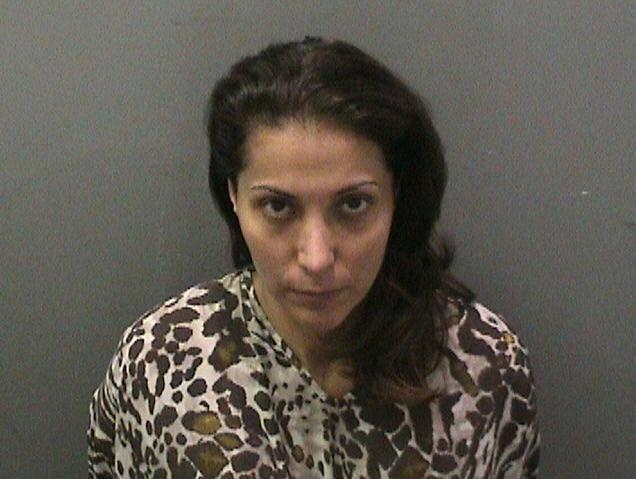
Meshael Alayban
Meshael Alayban

A Saudi princess has been charged with human trafficking for allegedly holding a Kenyan maid against her will in a luxury California apartment, news reports said late Wednesday.

Meshael Alayban, 42, was charged on Wednesday after being arrested at her home in a gated community in Irvine, California.

Prosecutors allege Alayban took the woman’s passport and forced her to work as a domestic servant for 16 hours a day, seven days a week for just 220 dollars a month, the Los Angeles Times reported.

A judge set bail of 5 million dollars for Alayban, and ordered her to wear a monitor if released from the women’s jail where she was being held.

“The law of our nation and California does not tolerate people who deprive or violate the liberty of another and obtain forced labour or services,” District Attorney Tony Rackauckas was quoted as saying.

The maid, whose identity was not released, began working for Alayban and her family in Saudi Arabia last year before moving to the US with them, the report said.

When police arrived at Alayban’s home they found four other women from the Philippines, who said their travel documents had also been taken by Alayban.

The Kenyan woman managed to escape from the apartment complex on Tuesday, before boarding a bus and contacting police.

Orange County prosecutors identified Alayban as one of the wives of Saudi Prince Abdulrahman bin Nasser bin Abdulaziz al Saud. She faces up to 12 years in prison if convicted of human trafficking. – dpa

Mandela’s Empire

by Albert Brenner

The simulacrum is never that which conceals the truth — it is the truth which conceals that there is none. The simulacrum is true. – Jean Baudrillard

Bearing an analogy derived from Jorge Luis Borges` On Exactitude in Science, Baudrillard endeavoured to colloquialize his conceptualisation of (Sophist) simulacra into the language of the layman.

In this specific analogy, he explained how a great empire was created whilst, simultaneously, a map was created to (cartographically) plot the former/original creation. As this real-world empire grew in size and might, so did its symbolic representaion, the map. Until it, the map, eventually assumed the exact same dimensions of the original.

Then this empire crumbled into dust…as do all empires. And all that was left of this once magnificent empire, was the map…minutely depicting its original splendour, on paper.

And this is exactly what the so-called New South Africa is all about. It is not real. It is a simulacrum. A virtual MSM and popular-culture representation…of a map, an abstract symbol, outlining an empire most magnificent in splendour…that never was!

21st-Century (moral) South Africa is simply an aggregate of (Western) narratives – linguistic symbols signifying an all-conflated signified that never was. In short; Nelson Mandela, the proverbial `Emperor without Clothes`.

Mandela, like his Noble Savage Empire (the Rainbow Nation), is not real. He is simply the feel-good projection of the Oediphusian `anger, forlornness and despair` (Sartre) postmodern Westerners have been experiencing ever since they slew their, ertswhile, Father (the Christian God) on the altar of Science.

Be that as it may; Mandela, the Wits-educated Xhosa goat-herder from Qunu, has wittingly (and hubristically) taken on the mantle of Emperor…..of a map-empire that was not even of his making.

Let us be frank here; Mandela basically sat in a locked room for 27 years whilst, occasionally, hitting stones into smaller stones. Apart from that, he only wrote one original text called How to be a good Communist.

Nothing more, nothing less.

That said; what exactly – in (the) physical reality – in/of South Africa still, remotely, inversely represents the map called Mandelatopia accurately?

Endemic corruption, nepotism, cronyism, rape, murder and mayhem is what the real is in South Africa. Not the map…not Mandelatopia!

Yet he has attained god-like status among the feeble-minded. How come? Well, being the integer of the (Western) narratives of de-colonialization, capitalism (neo-liberalism, now) versus communism and postmodern body/identity politics, Mandela just had to sit back (as he did in jail), bide his time – in order to let the precession of simulacra solidify – and await the outcome of these, aforementioned, great (moral) struggles of the West.

And that he did. Pax Americana won. The Berlin Wall fell. And seeing that the winner writes morality, the god-Man (conveniently) forgot about `how to be a good communist`…and assumed the Emperor`s neo-liberal clothes…and got rewarded with the Nobel Prize for Peace for all those stones he so painstakingly turned into smaller stones.

And now here we stand…in the real South Africa. It is a bloody mess. A typical post-colonial African failed-state in the making. And we only have the map, of an empire that never was and never will be.

But yet we persist, desperately holding onto the promise of paradise. As if this map is our only Salvation. For this map has become the (new) Bible. A holy script presaging and , retrospectively , validating, the new Messiah – a secular-humanist God, the Noble Savage goat-herder that will lead us to La La Land.The Alpha and the Omega.

And this will be our ultimate undoing, for forsaking the Future to placate the Present will only unleash that which had no place in History, in the first place…for “

…it is the map that engenders the territory and if we were to revive the fable today, it would be the territory whose shreds are slowly rotting across the map.“ (Jean Baudrillard)

Tablets to overtake PCs by 2015 as prices plummet

A tablet
A tablet

Tablet prices are plunging amid a flood of new devices and cutthroat competition for market share.

Amazon has slashed prices of its Kindle HD tablets to as low as $169 in the US and 139 pounds in Britain, while Barnes & Noble has cut the price of its Nook to as low as $129, and has announced plans to outsource production of its tablets.

“Since Hewlett-Packard launched its tablet, there has been a lot of pressure on prices,” said Rob Enderle, analyst with Enderle Group.

HP sells its Android-powered seven-inch Slate for as low as $139, helping make the paperback-size tablet computer an affordable commodity.

A Gartner survey suggests tablet sales globally will rise 67.9 percent to 202 million units this year, but analysts say the market is cooling after a couple of years of sizzling growth.

Gartner said the red-hot growth in tablets and smartphones will taper off as these devices gain longer life cycles. The report said many consumers are opting for “basic” tablets to cut costs.

“It looks like the market may be tiring of tablets and as makers get desperate, you may see more pressure on prices,” Enderle said.

Some retailers are selling tablets for less than $100, but Enderle said the flood of poor-quality devices may eventually backfire and turn off consumers.

Jitesh Ubrani, analyst at the research firm IDC, said many of the low-cost tablets come from small, sometimes unbranded “whitebox” vendors.

“The decline of the PC market makes it increasingly important for PC vendors to compete in the tablet space,” Ubrani said

“As more top-tier brands introduce low-cost products, we expect to see a reduction in the number of whitebox vendors.”

Even so, the analyst said, average prices for tablets is likely to drop further, and that tablet shipments are expected to overtake all PC shipments in 2015.”

The market leader, Apple, has so far kept above the fray, keeping prices steady on its iPad line of tablets, although it introduced the lower-cost iPad mini last year at $329, less than the $500 for its full-size iPad.

“Apple does not look at the competitive marketplace to determine its strategy,” said Jeff Orr, analyst with ABI Research. “They look at their buyers. Because of that I would expect their price points to remain consistent for the foreseeable future.”

Enderle said Apple is seeking to remain a “premium vendor” but faces a difficult choice — lowering prices, which can hurt its profits and worsen its share price declines, or giving up market share.

“Under Steve Jobs, when a product started to commoditize, they would come out with something new,” Enderle said. “Apple needs another premium product. It is overdue for whatever the next big thing is.”

Microsoft has also aimed at the high end of the market with its Surface, which debuted with a starting $500 price tag, but it has cut the price as low as $199 for education buyers.

Orr said some of the manufacturers may be forced out of the market if tablets are not part of their “core” business.

“Every brand believes it has an audience which will be interested in their device to connect to their ecosystem,” he said. “The reality is not every player can survive.”

Amazon sells its Kindles near the cost of production, in an effort to direct the buyers to Amazon content and apps. The others, including Apple, Google and Microsoft, also want to keep their customers tethered to an ecosystem for advertising and sales.

But Orr points out “there is none of that brand loyalty that some of these vendors had expected.” For example, an iPad user can still use Google, and Kindle users can buy from non-Amazon sellers.

Enderle noted that Google, which makes a $199 Nexus 7 tablet, “has a subsidized model in which advertising makes up the difference” of any lost profits from the device itself.

But he noted that Barnes & Noble faces an unusual predicament because it is primarily a brick-and-mortar bookseller, and needs to bring customers into its physical stores.

“Every Nook tablet sold causes them to lose a customer who might also go into the store,” he said. “They may need to go fully online and compete with Amazon.”

IDC’s Ubrani said it may be difficult for players like Barnes & Noble to compete with Amazon by subsidizing the tablets.

“Not every tablet vendor can afford to utilize this business model,” he said. “Yes, each can offer movies, music, apps, etc. to help subsidize the tablet, but none have the same scale and product selection that Amazon does.”

Enderle said that even though it seems to be a good time to buy a tablet, he advises people to wait.

“We are just short of a refresh” for many tablet makers, said Enderle. He expects new versions of the iPad, Surface and several Android models. Amazon is also reportedly working on new tablets.

“We will see a raft of new products in August and September,” he said. “Unless you find a really good buy. I would wait.” – AFP