As more information comes to light about the global snooping being conducted by the NSA and GCHQ, it is becoming clearer that much of it had little to do with combating terrorism, as a recent EFF article makes plain. But most damaging to the idea that massive surveillance was justified, because it was to protect people from extreme threats, is the revelation that commercial espionage was also being conducted. So far, the chief example of that is in Brazil, but The Sydney Morning Herald (SMH) now has information about large-scale industrial spying on Japanese companies carried out by Australian secret services:
BHP [BHP Billiton — the world’s largest mining company] was among the companies helped by Australian spy agencies as they negotiated trade deals with Japan, a former Australian Secret Intelligence Service officer says.
A former diplomat has also confirmed Australian intelligence agencies have long targeted Japanese companies. Writing in The Japan Times, Professor Gregory Clark said Australian companies were beneficiaries of intelligence operations.
“In Australia, favoured firms getting spy material on Japanese contract policies and other business negotiations used to joke how [it had] ‘fallen off the back of a truck’,” Professor Clark wrote.
The article has more details, but doesn’t reveal how the materials were obtained. However, since Australia is part of the “Five Eyes” inner circle of snooping countries that also includes the US, UK, Canada and New Zealand, it seems likely that information of interest from those partners also found its way to Australian companies. SMH quotes Clark as saying:
Business information is a main target for [intelligence] agencies
It will be interesting to see if later releases from Snowden’s hoard of documents show any evidence of this Australian use of NSA materials for industrial espionage. – techdirt.com
Two activists from the unregistered Other Russia party were arrested Saturday for yelling insults and throwing a tomato at the Dutch royal couple before a concert in Moscow.
The incident took place when Dutch King Willem-Alexander and Queen Maxima came out of their limousine and walked on a red carpet toward the entrance of the Moscow Conservatory building to attend the ceremonial closure of a year dedicated to celebrating Dutch-Russian ties.
Two young people from the crowd of onlookers reportedly started shouting “You have Dolmatov’s blood on your hands!” and threw a tomato at the royal couple. The tomato missed the intended target and the couple proceeded to the entrance without responding to the insults.
Police arrested the hooligans and escorted them to a patrol van parked nearby.
Spokesman for the Other Russia party, Alexander Averin, told RIA Novosti after the incident that the party activists staged a protest against the negligence of the Dutch government that led to the death of their fellow party member, Alexander Dolmatov, in a Dutch prison earlier this year.
Dolmatov, whom the Russian authorities wanted to question in connection with a violent opposition rally in Moscow in May 2012, killed himself in a Rotterdam deportation center on January 17 after being refused political asylum in the Netherlands.
The Dutch Justice Ministry has later acknowledged that agencies dealing with immigration issues “acted carelessly” in the treatment of Dolmatov.
The Other Russia was founded by Eduard Limonov in 2010 after his radical National Bolshevik party was banned in 2007. Limonov’s new party was denied registration by the Federal Registration Service in 2011 because “it did not have enough popular support among the Russian people.” – RIA Novosti
Palestinian leader Yasser Arafat was poisoned to death in 2004 with radioactive polonium, his widow Suha said on Wednesday after receiving the results of Swiss forensic tests on her husband’s corpse.
“We are revealing a real crime, a political assassination,” she told Reuters in Paris.
A team of experts, including from Lausanne University Hospital’s Institute of Radiation Physics, opened Arafat’s grave in the West Bank city of Ramallah last November, and took samples from his body to seek evidence of alleged poisoning.
“This has confirmed all our doubts,” said Suha Arafat after the Swiss forensic team handed over its report to her lawyers and Palestinian officials in Geneva on Tuesday. “It is scientifically proved that he didn’t die a natural death and we have scientific proof that this man was killed.”
She did not accuse any country or person, and acknowledged that the historic leader of the Palestine Liberation Organization had many enemies, although she noted that Israel had branded him an obstacle to peace.
Arafat signed the 1993 Oslo interim peace accords with Israel and led a subsequent uprising after the failure of talks in 2000 on a comprehensive agreement.
Allegations of foul play surfaced immediately. Arafat had foes among his own people, but many Palestinians pointed the finger at Israel, which had besieged him in his Ramallah headquarters for the final two and a half years of his life.
“President Arafat passed away as a victim of an organised terrorist assassination perpetrated by a state, that is Israel, which was looking to get rid of him,” Wasel Abu Yousef, member of the executive committee of the Palestine Liberation Organization, said in a statement on Wednesday.
“The publishing of the results by the Swiss institute confirms his poisoning by polonium and this means that Israel carried it out.”
The Israeli government has denied any role in his death, noting that he was 75 years old and had an unhealthy lifestyle.
“This is more soap opera than science, it is the latest episode in the soap in which Suha opposes Arafat’s successors,”
The investigation amounted to “a highly superficial attempt to determine a cause of death.”
An investigation by the Qatar-based Al Jazeera television news channel first reported last year that traces of polonium-210 were found on personal effects of Arafat given to his widow by the French military hospital where he died.
That led French prosecutors to open an investigation for suspected murder in August 2012 at the request of Suha Arafat. Forensic experts from Switzerland, Russia and France all took samples from his corpse for testing after the Palestinian Authority agreed to open his mausoleum.
“Smoking gun”
The head of the Russian forensics institute, Vladimir Uiba, was quoted by the Interfax news agency last month as saying no trace of polonium had been found on the body specimens examined in Moscow, but his Federal Medico-Biological Agency later denied he had made any official comment on its findings.
The French pathologists have not reported their conclusions publicly or shared any findings with Suha Arafat’s legal team. A spokeswoman for the French prosecutor’s office said the investigating magistrates had received no expert reports so far.
One of her lawyers said the Swiss institute’s report would be translated from English into French and handed over to the three magistrates who are investigating the case.
Professor David Barclay, a British forensic scientist retained by Al Jazeera to interpret the results of the Swiss tests, said the findings from Arafat’s body confirmed last year’s results from traces of bodily fluids on his underwear, toothbrush and clothing.
“In my opinion, it is absolutely certain that the cause of his illness was polonium poisoning,” Barclay told Reuters. “The levels present in him are sufficient to have caused death.
“What we have got is the smoking gun – the thing that caused his illness and was given to him with malice.”
The Swiss scientists’ report, posted in full on Al Jazeera’s website, was more cautious. It concluded: “Taking into account the analytical limitations aforementioned, mostly time lapse since death and the nature and quality of the specimens, the results moderately support the proposition that the death was the consequence of poisoning with polonium-210.”
Al Jazeera said the levels of polonium found in Arafat’s ribs, pelvis and in soil that absorbed his remains were at least 18 times higher than normal.
The same radioactive substance was slipped into a cup of tea in a London hotel to kill defecting Russian spy Alexander Litvinenko in 2006. From his deathbed, Litvinenko accused Russian President Vladimir Putin of ordering his murder.
The British government refused to hold a public inquiry into his death after ministers withheld some material which could have shed light on Russia’s suspected involvement.
Barclay said the type of polonium discovered in Arafat’s body must have been manufactured in a nuclear reactor.
While many countries could have been the source, someone in Arafat’s immediate entourage must have slipped a miniscule dose of the deadly isotope probably as a powder into his drink, food, eye drops or toothpaste, he said.
Brief recovery
Arafat fell ill in October 2004, displaying symptoms of acute gastroenteritis with diarrhoea and vomiting. At first Palestinian officials said he was suffering from influenza.
He was flown to Paris in a French government plane but fell into a coma shortly after his arrival at the Percy military hospital in the suburb of Clamart, where he died on Nov. 11.
The official cause of death was a massive stroke but French doctors said at the time they were unable to determine the origin of his illness. No autopsy was carried out.
Barclay said no one would have thought to look for polonium as a possible poison until the Litvinenko case, which occurred two years after Arafat’s death.
Some experts have questioned whether Arafat could have died of polonium poisoning, pointing to a brief recovery during his illness that they said was not consistent with radioactive exposure. They also noted he did not lose all his hair. But Barclay said neither fact was inconsistent with the findings.
Since polonium loses 50 percent of its radioactivity every four months, the traces in Arafat’s corpse would have faded so far as to have become untraceable if the tests had been conducted a couple of years later, the scientist said.
“A tiny amount of polonium the size of a flake of dandruff would be enough to kill 50 people if it was dissolved in water and they drank it,” he added.
The Al Jazeera investigation was spearheaded by investigative journalist Clayton Swisher, a former U.S. Secret Service bodyguard who became friendly with Arafat and was suspicious of the manner of his death.
Suha Arafat called for an investigation inside the Muqata Palestinian government headquarters and said she and her student daughter, Zahwa Arafat, would pursue the case through the courts in France and elsewhere until the perpetrators were brought to justice.
Hani al-Hassan, a former aide, said in 2003 that he had witnessed 13 assassination attempts on Arafat’s life, dating back to his years on the run as PLO leader. Arafat claimed to have survived 40 attempts on his life.
Canadian Crown attorneys on Tuesday defended key handwriting evidence that led to a decision to extradite a Canadian university professor accused of a deadly 1980 bombing of a Paris synagogue.
Hassan Diab is appealing the 2011 court decision and the Canadian government’s order to extradite the former University of Ottawa sociologist to France, despite the court’s concerns that the case was “weak.”
Diab denies any involvement in the first fatal attack against the French Jewish community since the Nazi occupation in World War II, which left four dead and many wounded.
A dozen or so Diab supporters returned for the second day of the hearing, where the Crown defended Justice Robert Maranger’s decision to allow the handwriting analysis report by Anne Bisotti in the original extradition hearing.
On Monday, defense lawyers worked to discredit Bisotti’s findings — that Diab likely signed a Paris hotel slip under a false identity (Alexander Panadriyu), which was also used to purchase a motorcycle used in the bombing — by saying she failed to use the proper methodology.
But Crown lawyer Janet Henchey said that it is not the job of the extradition judge to establish reliability of the evidence, and that French courts should be relied upon to do the due diligence on the report at a formal trial.
“It may not feel right at first, but that’s because you’re looking at it from the perspective of a Canadian trial. This is not a Canadian trial,” she said.
“There may be safeguards that do not look like ours, but… it’s arrogant for us as a country to think that only our trial process can provide safeguards that are required for due process.”
Henchey also said that the defense never questioned the samples of writing themselves, but rather focused only on whether the methodology was applied correctly, and added that in part, “expense and convenience” are considerations in an extradition case.
Crown attorney Jeffrey Johnston also defended then-justice minister’s Rob Nicholson’s decision not to seek assurances with regards to the origins of the unsourced foreign intelligence that helped link Diab to the bombing.
Johnston said that second-guessing the foreign intelligence would make it appear that Canada was defying the “reciprocity upon which extradition depends.”
Johnston compared Diab’s case to other much-publicized extradition cases, including that of Julian Assange, the founder of WikiLeaks, on allegations of sexual assault in Sweden.
Assange, who was living in Britain at the time, had to make a first appearance in court before any charges could be laid or a trial could be set, but Britain eventually ordered his extradition, deciding it was “consistent with the commencement of criminal prosecution,” said Johnston.
The Crown also targeted the defense’s suggestion that the unsourced intelligence was attained through torture and information-sharing deals with Syria. Johnston referred to it as “speculation” and said there were no “reasonable grounds” to suspect it.
At the close of the hearing, Diab lawyer Marlys Edwardh reiterated that there were inconsistencies with witness descriptions of the suspect –hair colour and height among them. She also reinforced the view that Nicholson had shirked his duty in not seeking out more information about the source of France’s intelligence.
“When the minister realizes that… (Diab) is going to be sent to stand trial on evidence from foreign intelligence agencies that will remain untouchable, and its sources will remain unknowable, we know that violates the principles of justice.” – AFP
Democratic Republic of Congo rebels said Tuesday they were laying down their arms after a crushing assault by the UN-backed army pushed them out of the country’s mineral-rich troubled east.
The M23 movement said in a statement that it had “decided from this day to end its rebellion” and instead to pursue its goals “through purely political means.”
The move ends the insurgency that for 18 months has wracked the region rich in natural resources and the scene of some of Africa’s deadliest conflicts over the past two centuries.
Earlier, Kinshasa claimed “total victory” over the M23 after capturing the last two hills held by the movement’s die-hard fighters.
“The last remnants of the M23 have just abandoned their positions,” said Lambert Mende, communications minister and government spokesman.
“It’s a total victory for the DRC,” he said, adding that the holdout insurgents fled to neighbouring Rwanda.
“We have finished the job,” said Lieutenant Colonel Olivier Amuli, an army spokesman in the North Kivu region that was the scene of the fighting.
The Congolese army launched a major offensive against the rebels on October 25, steadily claiming their strongholds until dozens of fighters were this weekend pushed onto three hilltops about 80 kilometres (50 miles) north of the regional capital Goma and near the border of Rwanda.
The beleaguered insurgents called for a truce, but the army pressed on with its assault, claiming one of the hilltops on Monday.
The UN special force in the region, which had been backing the Congolese forces with aerial reconnaissance, intelligence and planning, joined direct combat late Monday after getting the green light to bombard the remaining positions of the beleaguered rebels.
“We will continue to fire until everything is under control,” said a source at the UN brigade.
With the rebels on the backropes, M23 leader Bertrand Bisimwa had on Sunday called for a ceasefire to allow a resumption of peace talks.
But the fighting only appeared to intensify after the M23 leader’s appeal, despite a statement issued early Monday by envoys from the European Union, African Union and the United Nations that said they were “concerned about the renewed outbreak of violence” that followed the truce call.
The UN and African leaders had urged the M23 — ethnic Tutsi former rebels who were incorporated into the Congolese army under a 2009 peace deal — to declare an end to the rebellion they first launched in April 2012, claiming that the government had not kept up its end of the deal.
“It is important that the M23… declare the end of the rebellion. The fighting must stop,” the head of the UN mission in DR Congo, Martin Kobler, said in a statement on Monday.
Meeting in South Africa late on Monday African leaders echoed the sentiment, saying that a peace deal for DR Congo could be signed if the rebels declared an end to their insurgency.
“The parties would sign an agreement on condition that the M23 makes a public declaration renouncing rebellion,” said Stergomena Tax, executive secretary of the 15-country Southern African Development Community (SADC) in Pretoria.
Analysts say better preparation by the Congolese troops and the backing of the UN brigade with the unprecedented offensive mandate have helped changed the game in the restive east of the DR Congo.
The heavily-armed 3,000-strong UN intervention brigade joined 17,000 peacekeepers already deployed with a mission to carry out offensive operations against the rebel fighters, who are accused of human rights abuses including rape, murder and recruiting child soldiers.
The latest fighting to break out in the border region, rich in sought-after minerals, has sent thousands of people fleeing to neighbouring Uganda.
The UN refugee agency said on Monday it had moved another 3,000 Congolese refugees to its transit camp in Uganda’s town of Kisoro to escape the fighting, bringing the total number of refugees in the small town to 8,000.
The area of North and South Kivu in DR Congo has for decades been the centre of conflict because of its location — having borders with Rwanda, Uganda, Burundi and Tanzania — and the minerals that lie buried underneath its lush green hills.
The minerals include gold and coltan and tin, key component in electronic devices from cell phones to televisions and computers. – AFP
Concerns were raised tonight that Britain operates a top-secret listening post from its Berlin embassy to eavesdrop on the seat of German power.
Documents leaked by the US National Security Agency whistleblower Edward Snowden show that GCHQ is, together with the US and other key partners, operating a network of electronic spy posts from diplomatic buildings around the world, which intercept data in host nations.
An American intercept “nest” on top of its embassy in Berlin – less than 150 metres from Britain’s own diplomatic mission – is believed to have been shut down last week as the US scrambled to limit the damage from revelations that it listened to mobile phone calls made by Chancellor Angela Merkel.
But the NSA documents, in conjunction with aerial photographs and information about past spying activities in Germany, suggest that Britain is operating its own covert listening station within a stone’s throw of the Bundestag, Germany’s parliament, and Ms Merkel’s offices in the Chancellery, using hi-tech equipment housed on the embassy roof.
The potentially toxic allegation that Britain has a listening station in the capital of a close European Union ally will test relations between London and Berlin only days after the row between Germany and the US about its own clandestine activities. Jan Albrecht, an MEP for Germany’s Green Party and a leading campaigner on privacy and data protection, told The Independent: “If GCHQ runs a listening post on the top of the UK’s Berlin embassy, it is clearly targeting politicians and journalists. Do these people pose a threat?
“The EU has asked David Cameron’s Government to explain the activities of GCHQ in Europe but it has declined to do so, saying it does not comment on activities in the interest of national security. This is hardly in the spirit of European co-operation. We are not enemies.”
Asked to respond to the concerns last night, Mr Cameron’s official spokesman said: “We don’t comment on intelligence questions.”
Infrared images taken by a German television station, ARD, appear to show that the US embassy spying facility, housed in an anonymous rooftop building, has now been shut down after an incendiary clash in which Mrs Merkel told President Barack Obama it was “just not done” for friendly nations to spy on each other.
The heat signature from the structure dropped dramatically last week in the immediate aftermath of the conversation, and equipment inside has not been detected as having been turned on since.
The eavesdropping base, concealed in a box-like structure with special windows made of fibreglass which are opaque to light but allow radio signals to pass unhindered, was run jointly by CIA and NSA agents in a top-secret unit called the Special Collection Service (SCS). Despite the row the German authorities appear not to have noticed – or protested about – a potential parallel and linked surveillance unit on top of the British embassy.
According to one NSA document, Washington recently closed some of the 100 SCS locations it operates in embassies around the world and transferred some of the work to GCHQ, which is based in Cheltenham. In 2010, the SCS was known to operate 19 facilities in Europe, including stations in both Berlin and Frankfurt.
Documents shown to The Independent state that the operation uses equipment hidden within the fabric of diplomatic buildings and only a small number of personnel operating under diplomatic cover whose “true mission” is unknown even to the majority of their colleagues.
Aerial photographs of the British embassy in Berlin show a potential eavesdropping base enclosed inside a white, cylindrical tent-like structure which cannot be easily seen from the streets. The structure has been in place since the embassy, which was built following the reunification of Germany, opened in 2000.
The structure bears a striking resemblance to spying equipment used in GCHQ’s Cold War listening post in West Berlin at the now-abandoned Teufelsberg or “Devil’s Mountain” site, which was used to intercept East German and Soviet communications.
Equipment within the embassy unit would be capable of intercepting mobile phone calls, wi-fi data and long-distance communications across the German capital, including the adjacent government buildings such as the Reichstag and the Chancellery clustered around the Brandenburg Gate.
Last night GCHQ officials refused to discuss ongoing security matters.
Such is the critical importance of the network of embassy spying bases – the US version of which the NSA has codenamed “Stateroom” – that the NSA and the CIA have built a mock embassy-style site in woodland outside Washington DC to test their technology and train operatives.
Satellite images of the site in Maryland also show a white cylindrical structure in the grounds of the facility similar to the one on the roof of Britain’s Berlin embassy.
The NSA documents provided by Mr Snowden state that Stateroom-type operations are run by the US, Britain, Canada and Australia. Together with New Zealand, the countries form the “Five Eyes” at the core of an international eavesdropping coalition.The NSA document outlining Stateroom describes it as “covert SIGINT [signals intelligence] collection sites located in diplomatic facilities abroad… [including] SCS (at US diplomatic facilities) and government communications headquarters (at British diplomatic facilities)”.
The briefing underlines the clandestine nature of the operation, adding: “These sites are small in size and in the number of personnel staffing them. They are covert, and their true mission is not known by the majority of the diplomatic staff at the facility where they are assigned.”
The “concealed collection system” within the embassies utilises “sheds” or structures with fake windows. The document said: “Collection equipment on a building is concealed so as not to reveal SIGINT activity… antennas are sometimes hidden in false architectural features or roof maintenance sheds.”
German and US diplomatic relations have fallen to an unprecedented low since evidence emerged that the personal mobile of Mrs Merkel, who is known to conduct sensitive government business by phone and text message, was targeted by SCS. Intelligence officials from Germany are now in Washington negotiating an end to mass surveillance on German territory as well as a formal pact not to conduct spying operations on friendly nations. But any suggestion that Britain could also have intercepted the calls of German politicians or officials – even if only as part of a much wider sweep of the German capital – would prove damaging.
A separate leaked SCS document states that Stateroom and other facilities target mobile phones or wi-fi networks. The location of any equipment within the British embassy would make it unlikely that data from Mrs Merkel’s residence and offices would not have been collected.
Secret bugging operations similar to the British and American Berlin embassy operations have been making the news for more than 40 years.
In 1971, American news columnist Jack Anderson reported that NSA and GCHQ were successfully monitoring Soviet leaders’ radio links from Russian-made Zil limousines, producing streams of information about foreign policy and military intentions – but also revealing that the Soviet leaders “banter and bicker … and gossip”. “The leaders … complain about their ailments like old maids,” he wrote.
As with the Snowden leaks, at the time the NSA claimed that the Anderson leak caused the Russians to shut down their use of limo phones.
This was not true – the Soviets just went on chattering. On 26 May 1972, according to released US documents, the embassy suites produced information that was vital to securing the East-West agreement not to use anti-missile missiles.
The Russians’ real response to the revelation was to blast both embassies with high intensity radio signals, in a failed attempt to jam the receiving equipment. The radio onslaught provoked concerns for the health and safety of both diplomats and spies. – The Independent
The current conflict in the Kivu Region of the Democratic Republic of Congo (DRC) threatens to linger on despite an international effort to broker a truce between the M23 rebellion and the Congolese government. The 2012 version of this conflict is difficult to grasp, particularly because the M23 is a shifting armed movement, both geographically and politically. Its leadership is interchangeable among commanders, and the movement is supported by foreign influences with an eye on the geological riches of the region.
The evolution of the M23 Rebellion
Who exactly are the M23 rebels? This is the question the Rift Valley Institute’s Usamala Project tries to unpack in its recent report “From CNDP to M23: The evolution of an armed movement in Eastern Congo” (PDF). While the armed branch of the rebellion is easy to define, its political leadership is more elusive. The report explains further:
The M23 political leadership was made up mostly of former CNDP [National Congress for the Defence of the People] loyalists, with Jean-Marie Runiga Lugerero, the CNDP’s representative in Kinshasa, as political coordinator. However, there were also some new names, allegedly appointed after pressure by Rwanda (…) Between May and August 2012 the M23 also began to beef up its political wing. It named several new local chiefs, set up a tax collection network, and established a formal liaison office for humanitarians working in the area––structures reminiscent to those of the CNDP era. They also established two websites (www.soleildugraben.com and congodrcnews.com), a Facebook fan page and several Twitter accounts run by them or people close to them. On 20 October, in a move to further boost their legitimacy, they renamed their armed wing the Armée Révolutionaire du Congo (ARC, Congolese Revolutionary Army).
Indeed, while rudimentary at first, the public relations strategy of the M23 rebels has grown increasingly sophisticated in order to garner the public support. On Jeune Afrique, Trésor Kibungula illustrates the evolution of M23 on Facebook, from a timid start back in July, to a media platform sufficiently controversial that Facebook eventually had to shut it down.
An interview with the M23’s Bertrand Bisimwa on the Congo Siaisa blog helps to explain the genesis of the movement and its alleged overarching goals:
The M23 is made up of armed groups that signed the March 23 agreement. We started by asking for the implementation of that deal. The government fought us, saying we didn’t have the right to demand that [..] Today, in addition to the March 23 agreement we want good governance in the country and a legitimate government. You have to realize that not all ex-CNDP joined the M23. In fact, most didn’t. It was these others, those who didn’t join, who helped rig the elections in [Jospeh] Kabila’s favor in Masisi.
General Sultani Makenga, the military leader of the M23 also gave an interview recently where he speaks about the fluid leadership of the M23 movement, giving updates on the status of former CNDP leader Laurent Nkunda and arrested general Bosco Ntaganda within the movement.
Aside from its shifting leadership, Melanie Gouby in Newsweek Magazine explains that the movement does not seem to have a defined political ideology and seems mostly driven to protect the economic and political interests of neighboring nations.
Involving all players in the quest for peace
The two nations with most economic and political stakes in the conflict are Rwanda and Uganda. According to the United Nations, Rwanda has been tied to the conflict in Kivu for a long time, despite denials from President Paul Kagame’s administration. Yet, there is little uncertainty about the Rwandan support as the Usamala project report explains:
Rwandan support for M23 has now been well documented, in particular by the UN Group of Experts. Their conclusions have been confirmed by Human Rights Watch, by MONUSCO, and by at least three embassies in Kigali through internal investigations [..]
With regards to Rwanda’s role in the crisis, the U.S. policy to minimize sanctions against Kagame’s administration is perplexing to many observers.
The Ugandan government is also suspected of providing logistics support to the latest M23 offensive. In the following video, Ugandan lawmakers ask the president to explain the relation to the Congo M23 rebels:
With so many players involved in the crisis, what’s in store for the region is still very unclear. Is the Goma withdrawal definitive for the M23? Some M23 fighters seem to firmly believe they will soon be back in the city. Observers do not seem to expect much from peace talks.
Gérard Prunier, a French academic and author, argues that Congo and Rwanda are “just playing a waiting game until the situation on the ground gets sorted out.” He believes there could be an escalation of the crisis:
If tomorrow you could have the secession of Katanga (ed’s note: a Congo region rich in minerals) back on the books, I wouldn’t be surprised
Meanwhile, the local population bears the main burden of this never ending war. The World Food Programme reports that at least 80,000 people are displaced in the region. isnblog.ethz.ch
Avigdor Lieberman, former Israeli minister of foreign affairs
Former Israeli foreign minister says ‘pogrom’ against Jews is just a matter of time
A senior Israeli politician on Sunday urged South Africa’s Jews to leave their homes and emigrate to Israel in the wake of critical comments against Israel by the interior minister there.
The South African government is creating an ant-Israeli and anti-Semitic atmosphere, which means that a pogrom against the country’s Jews is just a matter of time,” former foreign minister and Yisrael Beiteinu party leader Avigdor Lieberman wrote on his Facebook page. “I call on all the Jews still living there to immigrate to Israel without delay, before it’s too late.”
Lieberman’s fiery comments followed an announcement by South Africa’s International Relations Minister Maite Nkoana-Mashabane that South African ministers will no longer visit Israel out of solidarity with the Palestinian cause.
“Ministers of South Africa do not visit Israel currently. Even the Jewish Board of Deputies that we engage with here, they know why our ministers are not going to Israel,” she said Friday at a trade union meeting.
“Our Palestinian friends have never asked us to disengage with Israel [through severing diplomatic relations]. They had asked us in formal meetings to not engage with the regime. We have agreed to slow down and curtail senior leadership contact with that regime until things begin to look better,” she said.
Nkoana-Mashabane said she felt solidarity with the Palestinians, saying, “The struggle of the people of Palestine is our struggle.”
South Africa also slammed Israel’s plans to build new settler homes in east Jerusalem, as pro-Palestinian activists launched an international campaign for the release of political prisoners.
“That arrangement there in Palestine keeps us awake,” Nkoana-Mashabane said.
“The last time I looked at the map of Palestine, I could not go to sleep. It’s dots, smaller than those of the homelands,” she said referring to the former homelands in South Africa — which were also known as bantustans — created under apartheid to give blacks a sense of autonomy.
South Africa was chosen by pro-Palestinian activists for the launch of an international lobby seeking the release of 5,000 Palestinian political prisoners, including veteran leader Marwan Barghouti, who is currently in Israeli detention.
The campaign kicked off on Oct. 25 at Robben Island, the former prison where anti-apartheid hero Nelson Mandela served 18 of his 27 years in jail.
“The Palestinian quest for self-determination remains unfulfilled,” said South Africa’s top diplomat.
Since the fall of the whites-only apartheid regime in 1994, South Africa has been an outspoken critic of Israel, although it maintains diplomatic ties with the Jewish state.
There is a Jewish population of rougly 75,000 people in South Africa, mosltly in the large cities of Johanesburg, Cape Town and Durban.
Last week, vandals desecrated 32 graves in the Jewish cemetery of Krugersdorp. – i24news
The controversy over Zapiro’s Lord Ganesha cartoon is causing outrage among the world’s 1 billion Hindu devotees, who are calling for an international apology and the removal of the cartoon from the internet.
As South African Hindus prepare to hold mass meetings and demonstrate at the Sunday Times offices in Durban, the Hindu community abroad has added its voice to the growing furore.
President of Universal Society of Hinduism, Rajan Zed, in a statement from Nevada in the US on Wednesday, said Zapiro’s cartoon of Ganesha was hurtful and a trivialisation of a highly revered deity.
Zed urged Sunday Times editor, Phylicia Oppelt, as well as cartoonist Jonathan Shapiro to issue a formal apology immediately and remove the cartoon from their websites. He also urged the Hindus on the Times Media Group board to resign if no apology was offered.
The Sunday Times and Zapiro said they would not apologise for the cartoon.
Shapiro said his cartoon was not about religion and the image of Lord Ganesha was used as a metaphor.
Phylicia Oppelt, editor of the Sunday Times, said the cartoon made no comment on Hinduism or on Ganesha, but rather on the issue of CSA’s decision to sacrifice Lorgat to secure a lucrative Indian tour to South Africa later this year.
The cartoon depicts Lord Ganesha – as the Board of Control for Cricket in India (BCCI) – offering money to Cricket SA (CSA) in return for the sacrifice of its chief executive, Haroon Lorgat.
Zed said unnecessarily tying Ganesha in with the BCCI, depicting human sacrifice at his feet, and him holding a cricket bat and wads of money in his hands, instead of usual objects, like conch shell, was “highly inappropriate”.
He said Hinduism was the oldest and third-largest religion of the world, and was rich in philosophical thought.
“Symbols of any faith, larger or smaller, should not be mishandled,” he said.
Ashwin Trikamjee, president of the South African Hindu Maha Sabha, agreed.
He said he had been interviewed by a number of Indian media houses, including The Times of India.
“I have also spoken to the president of the BCCI and sent him a copy of the article, so I’m expecting a reaction soon.”
Trikamjee said the Hindu community was insulted by the refusal to apologise.
“We’re looking at pursuing legal action. The reaction from the Hindu community has been that of outrage. I don’t know if Shapiro is just pig-headed or doesn’t realise the impact on the community, particularly a week before Diwali. Lord Ganesha is revered by Hindus and is the object of prayer during Diwali.”
President for the Hindu Dharma Sabha, Ram Maharaj, said a mass meeting would be held next Wednesday at the Durban Hindu Temple at 7pm.
He said Shapiro’s refusal to apologise was “fuelling the fire of fury”.
“We will not allow anyone to trample upon Hindu insensitivities with impunity. We will take this to the constitutional court if we have to,” he said.
On Thursday, the Hindu Youth Network plans to hold a peaceful demonstration outside the Sunday Times offices in Durban where it intends to hand over a memorandum of its concerns.
Pregasen Pillay of the youth network said he was not surprised by the international response to the cartoon.
“To us, Lord Ganesha is like your best friend and when someone says something bad about your best friend, you will get upset. We would like Zapiro and the Sunday Times to reflect on what they have done and hopefully apologise. Our peaceful demonstration will reflect the values of Hinduism and we hope the Sunday Times will see that,” he said.
The Freedom of Expression Institute said it was concerned by the outrage over the cartoon.
“In advancing rights we see as due to us by the constitution we must not be forgetful of other rights that are crucial to the functioning of our democracy, key to which the Right to Freedom of Expression is. Included in this right is artistic expression. The importance of artistic expression is the provocation and facilitation of crucial debate that is often ignored or ‘brushed under the table’, as it inspires engagement on subjects that would otherwise not be spoken widely of, yet they are of key public interest, the importance of this to democratic discourse cannot be emphasised enough,” the organisation said in a statement.
“It is therefore important that such manner of expression is not censored in favour of personal interests that are far outweighed by the public good. In a manner of speaking we cannot have topics being ‘out of bounds’.
“Further a continued sacrifice of artistic expression to the wishes of some sections of society at the expense of the public’s right to be informed and having informed conversation and debate, may set a crippling precedent to the right of freedom of expression and journalistic freedom as it may advance to shield issues of concern such as corrupt practices and political malfunction. – Daily News
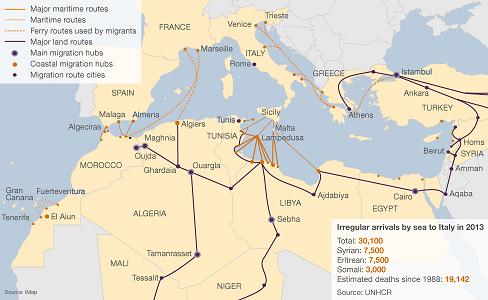
Rescue workers in Niger say they have found the bodies of 87 people who died of thirst after their vehicles broke down as they tried to cross the Sahara.
Rescue worker Almoustapha Alhacen said the corpses were in a severe state of decomposition and had been partly eaten, probably by jackals.
Those found are thought to be migrant workers and their families. Most were women and children.
Niger lies on a major migrant route between sub-Saharan Africa and Europe.
But among those who make it across the desert, many end up working in North African countries.
According to Mr Alhacen, one of the vehicles that the migrants were travelling in broke down some time after they left Arlit at the end of September or beginning of October.
Continue reading the main story
Analysis
image of Thomas Fessy
Thomas Fessy
BBC West Africa correspondent
Thousands attempt to cross this stretch of Sahara desert to reach the coasts of North Africa, and from there Europe. I remember the exhaustion of migrants whom I met in Agadez in 2011.
Most were in their 20s and determined to continue their journey – despite the war in Libya at the time. “In our country, our talent is useless,” one young Nigerian said. “But in Europe, we’ll be able to thrive on it,” he added.
Agadez is still several hundred kilometres from either Libya or Algeria. There is nothing in between but sand – a perilous desert where the extreme heat can kill. Traffickers extort large sums of money from migrants seeking a one-way ticket for a better life. They all know that death may be on the way, but they’re ready to risk it, clinging onto hope.
Security officials have said the second vehicle broke down as it was on its way back to Arlit to get spare parts.
It appears that some of the group set out on foot, including up to 10 people who made it back to Arlit and raised the alarm, he said.
It was reported on Monday that five bodies had been found.
On Wednesday, volunteers and soldiers working in searing heat found other corpses about 10km (six miles) from the Algerian border.
Speaking from Arlit, a centre for uranium mining north of Agadez, Mr Alhacen said he had experienced the worst day of his life when he found the bodies.
“The corpses were decomposed; it was horrible,” he said.
“We found them in different locations in a 20km (12mile) radius and in small groups, often under trees, or under the sun. Sometimes a mother and children, but some lone children too,” AFP news agency quoted him as saying.
They were given Muslim burials where they were found, he added.
Given that at least 48 of those found were children or teenagers, Mr Alhacen said it was possible they were on their way to low paid jobs in neighbouring Algeria.
It is not clear which countries the migrants came from.
About 80,000 migrants cross the Sahara desert through Niger, according to John Ging, director of the UN Office for the Coordination of Humanitarian Affairs.
“They are basically economic migrants. They are in search of work. They are so impoverished that they have to make these hazardous journeys,” he told the BBC’s Newsday programme.
Niger is one of the world’s poorest countries and frequently suffers from drought and food crises.
A Vietnamese activist received a 15 month suspended prison sentence Tuesday for “abusing democratic freedoms” through his Facebook posts –part of an escalating crackdown on dissent by the communist regime.
Dinh Nhat Uy, 30, was convicted at the end of a one-day trial in the southern province of Long An on charges related to an Internet campaign against his brother’s imprisonment for spreading anti-government propaganda, his lawyer said.
Uy’s case was apparently the first time a Vietnamese activist has gone on trial only for comments made on social media.
In Vietnam, convicts serving suspended sentences are effectively placed under house arrest, with severe restrictions on their movements and a requirement to check in regularly with police.
“Uy was given a 15 month suspended sentence,” his lawyer Ha Huy Son told AFP, adding that he would have to serve an additional year of house arrest after completing his probation.
“I told the court that Uy was innocent, that the charges against him were not objective,” he said, adding that he had called for Uy’s immediate release.
“He is the victim of an injustice,” he added.
Uy was sentenced for violations of article 258 of the penal code, which covers “abusing democratic freedoms against the interests of the state”.
The charges, regularly used by authoritarian Vietnam to silence dissidents and activists, carry a maximum sentence of seven years in prison.
A handful of supporters, wearing printed t-shirts and waving signs calling for his release, gathered near the Long An court but were met with a heavy security presence, photos posted online showed.
Vietnam, branded an “enemy of the Internet” by Reporters Without Borders, is a one-party state that bans private media and controls all newspapers and television channels.
According to Uy’s indictment — a copy of which was posted online on the banned but popular blog Dan Lam Bao — he was charged solely for Facebook postings. Usually charges for dissidents and activists relate to blog postings.
In June Uy’s brother Dinh Nguyen Kha, a computer technician, was sentenced to eight years in prison — reduced to four years on appeal –for anti-government propaganda.
His co-defendant, Nguyen Phuong Uyen, was sentenced to six years in jail but freed on appeal after widespread public disapproval over the harsh sentence for the 21-year-old, who was shown hugging a teddy bear in photographs posted online.
After his brother’s trial Uy began campaigning online for his release.
The indictment said Uy “posted bad and false information about the state, organisations and individuals”.
“Those above-mentioned images and articles were seen and read by many people. Many people shared, pressed ‘like’, and gave comments, of which many comments smeared and insulted the state, organisations and citizens,” it added.
New York-based Human Rights Watch — which had called for Uy’s immediate release — noted that at least 61 activists and dissidents have been jailed this year — up from roughly 40 in 2012.
“Vietnam has significantly intensified its repressive tactics against peaceful activists, pursuing what is essentially a scorched earth policy against prominent public dissidents,” HRW’s deputy Asia director Phil Robertson said.
Vietnam recently introduced a sweeping new Internet law that bans bloggers and social media users from sharing news stories online, in a move seen as a further crackdown on online freedom.
However, Uy has not been charged under the new legislation and it remains unclear how it will be implemented. – AFP
A former black South African government Minister has been detained in New York apparently because his name is on a terrorism watch list.
Tokyo Sexwale became a member of the Black Consciousness Movement in the late 1960s and a local leader of the radical South African Students’ Movement. In the early 1970s, he joined the African National Congress’s armed wing to wage a terror campaign against white civilians.
Sexwale, a former Robben Island prisoner turned billionaire businessman, was stopped for questioning at John F. Kennedy airport for a second time while attempting to enter the United States on a recent business trip. He was also stopped for the same reason in 2002.
Sexwale has become a major player in the diamond industry, with his company reportedly being the third biggest after De Beers and JFPI Corporation. He was praised by no less a figure than Harry Oppenheimer, the patriarch of the Anglo-American and De Beers corporations, as having an understanding of the South African and international diamond mining industry that few can equal.
In the 1970s and 80s, the African National Congress (ANC) and various other groups were officially designated terrorist organisations as a result of waging a racial terror campaign against unarmed civilians, as well as women and children.
Other countries, including the U.S., followed suit. After the end of apartheid in 1994, certain names remained on the U.S. terrorism watch list. Even Nelson Mandela was only removed in 2008.
Ebrahim Rasool, the South Africa Ambassador to the U.S., was forced to intervene this week with the U.S. State Department to secure Sexwale’s release, according to a tweet by the South African public broadcaster SABC’s US correspondent, Sherwin Bryce-Pease.
Sexwale now intends to take legal again action through the American courts, the national broadcaster SABC reported. In 2002, when he was refused a visa to enter the United States, for the first time, it later transpired that he, along with many prominent South African anti-apartheid figures such as Nelson Mandela and South African cabinet minister Sidney Mufamadi, were still on the global terror list.
After initiating legal action, going so far as to having papers served on the U.S. Department of State and following personal intervention by Condoleezza Rice, Sexwale and the others received ten-year waivers from the Immigration and Naturalization Service and the Department of Homeland Security, as the US felt that permanently delisting them would mean changing the law, which would be a “lengthy process”.
In April 2008 the waiver was lifted and the ANC members along with the ANC were removed from the terrorist list in the USA. However it seems that Sexwale remains on the terror list.
Soweto-born Sexwale is one of the country’s richest men, although he is a sworn Marxist. In 1975 he went into self-imposed exile to the then Soviet Union and received military training there to launch a terror campaign in South Africa.
A year later, on his return to South Africa, he was arrested, charged with conspiracy to overthrow the government and sentenced to 18 years in prison. After his release in 1990 he pursued careers in both politics and business.
The Church Street bombing, a car bomb attack on 20 May 1983 by Umkhonto we Sizwe, the terror group, in Pretoria, killed 19 and wounded 217, and was one of the largest attacks against whites.
A further black mark against Sexwale is the appearance of his name in a United Nations report on illegal transactions under the Oil-for-Food Programme. Sexwale’s Group 5 has received criticism for their involvement with corrupt tender contracts in South Africa.
The ANC reacted angrily to Mr. Sexwale’s treatment by U.S. authorities. “If indeed it is true, we think it is totally unacceptable,” said Jackson Mthembu, the party’s national spokesman.
“We would have thought the Americans would have taken all credible struggle heroes off the list. This is very disappointing. It makes us very worried. If Tokyo can be arrested, who will not be?
In 2008 Condoleezza Rice, the then U.S. Secretary of State, described it as “embarrassing” that Nobel peace laureate Mandela remained on the terrorist watch list and needed special permission to visit the country.
Later that year Mandela was removed under a bill signed by President George Bush but it is unclear if this applied to other ANC leaders.
A former US diplomat said on Sunday: “During the apartheid era the ANC and other organisations ended up being listed as terrorist organisations and it was difficult to get them removed because of various senatorial pressures. I was not aware there were still people whose names are specifically listed on such an index.”
Clayson Monyela, spokesman for South Africa’s international relations department, said it had been told that a resolution is needed in the U.S. Congress to remove all the names.
The Pentagon’s Africa Command will tell you there’s one military base on the entire continent. Don’t believe them.
They’re involved in Algeria and Angola, Benin and Botswana, Burkina Faso and Burundi, Cameroon and the Cape Verde Islands. And that’s just the ABCs of the situation. Skip to the end of the alphabet and the story remains the same: Senegal and the Seychelles, Togo and Tunisia, Uganda and Zambia. From north to south, east to west, the Horn of Africa to the Sahel, the heart of the continent to the islands off its coasts, the US military is at work. Base construction, security cooperation engagements, training exercises, advisory deployments, special operations missions, and a growing logistics network, all undeniable evidence of expansion—except at US Africa Command.
To hear AFRICOM tell it, US military involvement on the continent ranges from the miniscule to the microscopic. The command is adamant that it has only a single “military base” in all of Africa: Camp Lemonnier in Djibouti. The head of the command insists that the US military maintains a “small footprint” on the continent. AFRICOM’s chief spokesman has consistently minimized the scope of its operations and the number of facilities it maintains or shares with host nations, asserting that only “a small presence of personnel who conduct short-duration engagements” are operating from “several locations” on the continent at any given time.
With the war in Iraq over and the conflict in Afghanistan winding down, the US military is deploying its forces far beyond declared combat zones. In recent years, for example, Washington has very publicly proclaimed a “pivot to Asia,” a “rebalancing” of its military resources eastward, without actually carrying out wholesale policy changes. Elsewhere, however, from the Middle East to South America, the Pentagon is increasingly engaged in shadowy operations whose details emerge piecemeal and are rarely examined in a comprehensive way. Nowhere is this truer than in Africa. To the media and the American people, officials insist the US military is engaged in small-scale, innocuous operations there. Out of public earshot, officers running America’s secret wars say: “Africa is the battlefield of tomorrow, today.”
The proof is in the details—a seemingly ceaseless string of projects, operations, and engagements. Each mission, as AFRICOM insists, may be relatively limited and each footprint might be “small” on its own, but taken as a whole, US military operations are sweeping and expansive. Evidence of an American pivot to Africa is almost everywhere on the continent. Few, however, have paid much notice.
If the proverbial picture is worth a thousand words, then what’s a map worth? Take, for instance, the one created by TomDispatch that documents US military outposts, construction, security cooperation, and deployments in Africa. It looks like a field of mushrooms after a monsoon. US Africa Command recognizes 54 countries on the continent, but refuses to say in which ones (or even in how many) it now conducts operations. An investigation by TomDispatch has found recent US military involvement with no fewer than 49 African nations.
Despite what AFRICOM officials say, a careful reading of internal briefings, contracts, and other official documents, as well as open source information, including the command’s own press releases and news items, reveals that military operations in Africa are already vast and will be expanding for the foreseeable future.
A Base by Any Other Name…
What does the US military footprint in Africa look like? Colonel Tom Davis, AFRICOM’s Director of Public Affairs, is unequivocal: “Other than our base at Camp Lemonnier in Djibouti, we do not have military bases in Africa, nor do we have plans to establish any.” He admits only that the US has “temporary facilities elsewhere…that support much smaller numbers of personnel, usually for a specific activity.”
AFRICOM’s chief of media engagement Benjamin Benson echoes this, telling me that it’s almost impossible to offer a list of forward operating bases. “Places that [US forces] might be, the range of possible locations can get really big, but can provide a really skewed image of where we are…versus other places where we have ongoing operations. So, in terms of providing a number, I’d be at a loss of how to quantify this.”
The US maintains 10 marine gas and oil bunker locations in eight African nations, according to the Defense Logistics Agency. AFRICOM’s Benjamin Benson refuses to name the countries, but recent military contracting documents list key fuel bunker locations in Douala, Cameroon; Mindelo, Cape Verde; Abidjan, Cote D’Ivoire; Port Gentil, Gabon; Sekondi, Ghana; Mombasa, Kenya; Port Luis, Mauritius; Walvis Bay, Namibia; Lagos, Nigeria; Port Victoria, Seychelles; Durban, South Africa; and Dar Es Salaam, Tanzania.
The US also continues to maintain a long-time Naval Medical Research Unit, known as NAMRU-3, in Cairo, Egypt. Another little-noticed medical investigation component, the US Army Research Unit-Kenya, operates from facilities in Kisumu and Kericho. – Mother Jones
This website uses cookies to improve your experience. We'll assume you're ok with this, but you can opt-out if you wish. Cookie settingsACCEPT
Privacy & Cookies Policy
Privacy Overview
This website uses cookies to improve your experience while you navigate through the website. Out of these cookies, the cookies that are categorized as necessary are stored on your browser as they are essential for the working of basic functionalities of the website. We also use third-party cookies that help us analyze and understand how you use this website. These cookies will be stored in your browser only with your consent. You also have the option to opt-out of these cookies. But opting out of some of these cookies may have an effect on your browsing experience.
Necessary cookies are absolutely essential for the website to function properly. This category only includes cookies that ensures basic functionalities and security features of the website. These cookies do not store any personal information.
Any cookies that may not be particularly necessary for the website to function and is used specifically to collect user personal data via analytics, ads, other embedded contents are termed as non-necessary cookies. It is mandatory to procure user consent prior to running these cookies on your website.


 As more information comes to light about the global snooping being conducted by the NSA and GCHQ, it is becoming clearer that much of it had little to do with combating terrorism, as a recent EFF article makes plain. But most damaging to the idea that massive surveillance was justified, because it was to protect people from extreme threats, is the revelation that commercial espionage was also being conducted. So far, the chief example of that is in Brazil, but The Sydney Morning Herald (SMH) now has information about large-scale industrial spying on Japanese companies carried out by Australian secret services: