‘Frenzied bloody massacre made no sense’

pngA third man has died from injuries suffered during a bloody ambush on foreign trekkers in Papua New Guinea which has rocked the tourism industry, police said Monday.

The man, a porter for the group of Australian and New Zealand hikers on the remote Black Cat track, sustained machete wounds in last week’s violent assault and died in hospital in Lae, police spokesman Superintendent Dominic Kakas said.

Two other local guides were hacked to death with machetes in the harrowing attack in Morobe province on September 10, and several others were taken to hospital with serious wounds.

Four of the eight tourists were also hurt, including one who was speared in the leg.

PNG police arrested four men on Sunday — three in the town of Wau and a fourth in nearby Salamauan — in connection with the attack but two other suspects are still on the run.

“They are being interviewed now,” Kakas told AFP of the four, adding that no further arrests had yet been made.

PNG Prime Minister Peter O’Neill has warned that the crimes will attract the death penalty, and the family of one of the slain porters, Kerry Rarovu, told the Australian Broadcasting Corporation they felt “the criminals must die the same as Kerry died”.

Christie King, the Australian leader of the hiking group, has described the attack as a “frenzied bloody massacre which made no sense”.

“I am so sorry for these men to have received such terrible injuries,” she told the ABC, which reported that it was doubtful any of the injured porters would walk again.

“I’m worried about my future. I’m going to be paralysed maybe, I don’t know,” one of the wounded men told the broadcaster.

Crime in Papua New Guinea is rampant, including in the capital Port Moresby where in June four Chinese nationals were hacked to death, with one reportedly beheaded and the others dismembered.

Peter Vincent, chief of PNG’s Tourism Promotion Authority, has condemned the attack and told The Post Courier that the Black Cat trail was closed “until further notice”. – Sapa/AFP

US military confirms rebels had sarin

toxicobamaAs part of the Obama administration’s repeated insistence – though without offering proof – that the recent sarin gas attack near Damascus was the work of the Assad regime, the administration has downplayed or denied the possibility that al-Qaida-linked Syrian rebels could produce deadly chemical weapons.

However, in a classified document just obtained by WND, the U.S. military confirms that sarin was confiscated earlier this year from members of the Jabhat al-Nusra Front, the most influential of the rebel Islamists fighting in Syria.

The document says sarin from al-Qaida in Iraq made its way into Turkey and that while some was seized, more could have been used in an attack last March on civilians and Syrian military soldiers in Aleppo.

The document, classified Secret/Noforn – “Not for foreign distribution” – came from the U.S. intelligence community’s National Ground Intelligence Center, or NGIC, and was made available to WND Tuesday.

It revealed that AQI had produced a “bench-scale” form of sarin in Iraq and then transferred it to Turkey.

A U.S. military source said there were a number of interrogations as well as some clan reports as part of what the document said were “50 general indicators to monitor progress and characterize the state of the ANF/AQI-associated Sarin chemical warfare agent developing effort.”

“This (document) depicts our assessment of the status of effort at its peak – primarily research and procurement activities – when disrupted in late May 2013 with the arrest of several key individuals in Iraq and Turkey,” the document said.

“Future reporting of indicators not previously observed would suggest that the effort continues to advance despite the arrests,” the NGIC document said.

The May 2013 seizure occurred when Turkish security forces discovered a two-kilogram cylinder with sarin gas while searching homes of Syrian militants from the al-Qaida-linked Jabhat al-Nusra Front following their initial detention.

The sarin gas was found in the homes of suspected Syrian Islamic radicals detained in the southern provinces of Adana and Mersia.

Some 12 suspected members of the al-Nusra Front were arrested. At the time, they were described by Turkish special anti-terror forces as the “most aggressive and successful arm” of the Syrian rebels.

In the seizure, Turkish anti-terror police also found a cache of weapons, documents and digital data.

At the time of the arrest, the Russians called for a thorough investigation of the detained Syrian militants found in possession of sarin gas.

This seizure followed a chemical weapons attack in March on the Khan al-Assal area of rural Aleppo, Syria. In that attack, some 26 people and Syrian government forces were killed by what was determined to be sarin gas, delivered by a rocket attack.

The Syrian government called for an investigation by the United Nations. Damascus claimed al-Qaida fighters were behind the attack, also alleging that Turkey was involved.

“The rocket came from a place controlled by the terrorists and which is located close to the Turkish territory,” according to a statement from Damascus. “One can assume that the weapon came from Turkey.”

The report of the U.S. intelligence community’s NGIC reinforces a preliminary U.N. investigation of the attack in Aleppo which said the evidence pointed to Syrian rebels.

It also appears to bolster allegations in a 100-page report on an investigation turned over to the U.N. by Russia. The report concluded the Syrian rebels – not the Syrian government – had used the nerve agent sarin in the March chemical weapons attack in Aleppo.

While the contents of the report have yet to be released, sources tell WND the documentation indicates that deadly sarin poison gas was manufactured in a Sunni-controlled region of Iraq and then transported to Turkey for use by the Syrian opposition, whose ranks have swelled with members of al-Qaida and affiliated groups.

The NGIC depiction of the variety of sarin as “bench-scale” reinforces an analysis by terrorism experts that the recent findings on the chemical weapons attack of Aug. 21 on the outskirts of Damascus, Syria, was “indeed a self-inflicted attack” by the Syrian opposition to provoke U.S. and military intervention in Syria.

A former director of the U.S. Congressional Task Force on Terrorism and Unconventional Warfare, said a preliminary analysis of the sarin showed that it was of a “kitchen” variety and not military grade.

He questioned that the sarin was of a military variety, which accumulates around victims’ hair and loose clothing.

Because these molecules become detached and released with any movement, Bodansky said, “they would have thus killed or injured the first responders who touched the victims’ bodies without protective clothes … and masks.”

Various videos of the incident clearly show first responders going from patient to patient without protective clothing administering first aid to the victims. There were no reports of casualties among the first responders.

Meanwhile, an  Italian former journalist and a Belgian researcher who were recently freed from their al-Nusra captives say they overheard their captors talking about their involvement in a deadly chemical attack “last month,” which would have been the Aug. 21 chemical weapons attack.

The Italian, Domenico Quirico, and Belgian researcher Pierre Piccinin were released Monday after five months of captivity.

“The government of Bashar al-Assad did not use Sarin gas or other types of gas in the outskirts of Damascus,” Piccinin said.

He added that the militants said the rebels carried out the attack as a provocation to force the West to intervene militarily to oust the Assad regime.

Both men told a news conference they had no access to the outside world while they were held captive and knew nothing about the use of chemical weapons until they heard the discussion on Skype.

Now, a former analyst for the Central Intelligence Agency, Ray McGovern, similarly backs the claim that the Syrian rebels perpetrated the poison gas attack on Aug. 21

McGovern was one of a number of veteran intelligence professionals who recently signed a letter to Obama saying that Damascus wasn’t behind the Aug. 21 chemical attack.

The analysts, in an open letter to Obama, referred to a meeting a week before the Aug. 21 incident in which opposition military commanders ordered preparations for an “imminent escalation” due to a “war-changing development” that would be followed by the U.S.-led bombing of Syria. They said the growing body of evidence came mostly from sources affiliated with the Syrian opposition and its supporters.

Those reports, they said, revealed that canisters containing chemical agents were brought into a suburb of Damascus, where they were then opened. – WND


Islamophobia is a kind of racism: Turkish PM

Erdogan
Erdogan

Turkish Prime Minister Recep Tayyip Erdogan said on Thursday that Islamophobia was a kind of racism such as the other forms of discrimination by describing the term as a crime against humanity.

Releasing a message on International Conference on Islamophobia: Law and Media which is being held in Istanbul, Erdogan stated that the Islamic concepts were used as a negative way bringing defamatory, dismissive and alienating connotations in the western world.

“It must be known that Islamophobia is dangerous as much as racism, discrimination or anti-semitism. Because Islamophobia is a kind of racism such as the other forms of discrimination. It is a crime against humanity” Erdogan said.

Stating that Islamophobia was embittered via movies, soap operas, music, media, photographs even with unofficial articles and essays, Erdogan said 9/11 caused an enemy perception against “Islam” in the western world.

He added “No monotheistic religion adopts, supports, permits or leads terror.”

‘Hate ideology’

Turkish Deputy Prime Minister Bulent Arinc said, “Islamophobia as a hate ideology is also a tool of oppression.”

Speaking at the International Conference on Islamophobia: Law and Media in Istanbul on Thursday, Arinc said “The attitudes that cause cultures and civilizations confront each other build psychological barriers between people.”

The main aim of the pressure on Muslims was fed by “Islam and democracy are not compatible with each other” theory”, said Arinc and added, “I clearly express here in this meeting which Organization of Islamic Cooperation (OIC) co-organizes, Muslims are democrats in essence.”

He showed ruling Justice and Development (AK) Party as the most important example.

Arinc also said, “If Christianity and Judaism cannot be mentioned with terrorism, then our noble religion Islam cannot be deflamed this way either.”

“Islamophobia is also a version of racism and a crime against humanity like other kinds of discrimination,” said Arinc, adding that anyone with intelligence and conscience had to oppose this crime as a humanly duty.

Arinc called on the Islamic world to put effort for clearing the prejudices about Muslims, as well as adivising the west, especially the US and the EU to take measures against the fast and insidious spread of Islamophobia in their lands.

“Turkish government is ready to undertake its responsibility.”

The Conference is organized by the Directorate General of Press and Information (BYEGM) and the Organization of Islamic Cooperation (OIC) on September 12-13, 2013 with the participation of OIC Secretary General Ekmeleddin Ihsanoglu and several international scholars. – worldbulletin.net

Swedish students apologise for ‘racist’ blackface incident

Another Swede in blackface (file photo)

Two Swedish college students have apologized for showing up to a costume party in blackface in an attempt to impersonate reggae musicians.

The incident took place at a party thrown by the Lund University Technology Management student association, a group of about 80 masters students studying economics and technology, TheLocal.se reported Friday.

The incident raised eyebrows, particularly at Lund after students in 2011 staged a mock slave auction that drew international condemnation as being racist.

The students, whose names were not reported, said their intent was not to offend party-goers — one of whom snapped a picture and sent it to local media — but to pay tribute to reggae icon Bob Marley.

“We haven’t intentionally done something insulting or racist,” one of the students said. “But after the fact we’ve realized that painting our faces black offends some people.”

The group’s president said it was “unfortunate” that some people misinterpreted the students’ painted faces as racist.

“It was an innocent costume party,” Elin Wennerstroem, the group’s president said.

Other in attendance weren’t as forgiving.

Kalle Wigren, who lives near where the party took place, said he saw the incident and was offended.

“When a white person puts black makeup on their face to look like a black person and then proceeds to make fun of the situation, it can’t be anything other than racism,” he said. – UPI.COM

One dead, 21 injured in US consulate attack in Afghanistan

US consulate building in Herat, a former hotel

Taliban militants attacked a US consulate in western Afghanistan Friday, killing an Afghan guard and injuring 21 people including 16 civilians, police said.

“Two attackers detonated their explosives-laden truck at the first entrance of the US consulate at 5:30 am (0100 GMT) in Herat city, injuring four guards of a private security company and two policemen,” said Rahmatullah Safi, police chief of Herat province.

“Following the explosion, three others who were in another vehicle opened fire on the guards,” Safi told dpa.

“One of the injured guards died due to bleeding,” he said.

The three remaining assailants were killed when the police returned fire, he said.

At least 16 civilians were injured by flying glass, according to police.

“The people were sleeping in their houses around the consulate compound and were injured when the strong explosion broke their windows,” said Abdul Raouf Ahmadi, a spokesman for Herat province police.

US Ambassador to Kabul James B Cunningham condemned the attack.

“We are grateful for the quick response of the Afghan and ISAF security forces, who secured the facility and kept our personnel safe,” Cunningham was quoted by a statement, referring to the International Security Assistance Force or ISAF.

He also said that “many Afghan civilians were killed in the attack,” while police said that only one guard was killed.

“The ISAF helicopters were flying over the area to help security forces if needed,” Ahmadi said.

Another police officer said consulate staff were evacuated by helicopter, but Safi denied this, saying the diplomats were safe inside the compound.

Earlier news reports said three security personnel were killed.

The US State Department confirmed the attack, but not the casualties.

“There are no American casualties,” the department’s deputy spokeswoman Marie Harf said. “At this point there may be one wounded contract security member, and there are likely wounded Afghan police, though numbers are unknown.”

The Taliban claimed responsibility for the attack.

“A group of martyrdom-seeking mujahideen attacked the US consulate this morning, in which a large number of US troops and local security personnel were killed and parts of the consulate buildings were damaged,” the group’s spokesman Qari Yousuf Ahmad said. -dpa

Kerry talks tough in Syria meeting with Russia

John Kerry
John Kerry

by Matthew Lee and Nancy Benac

Striking a tough tone, U.S. Secretary of State John Kerry opened swiftly convened talks with Russia on Syria’s chemical weapons Thursday by bluntly rejecting a Syrian pledge to begin a “standard process” by turning over information rather than weapons – and nothing immediately.

That won’t do, Kerry declared at an opening news conference, a stone-faced Russian Foreign Minister Sergey Lavrov at his side. “The words of the Syrian regime in our judgment are simply not enough.”

“This is not a game,” Kerry said of the latest developments in a series that has rapidly gone from deadly chemical attacks to threats of retaliatory U.S. air strikes to Syrian agreement with a Russian plan to turn over the weapons and, finally, to the crucial matter of working out the difficult details.

“We believe there is nothing standard about this process at this moment because of the way the regime has behaved,” Kerry declared. And he kept alive the threat of U.S. military action, saying the turnover of weapons must be complete, verifiable and timely – “and finally, there ought to consequences if it doesn’t take place.”

Adding to the drama, Russian President Vladimir Putin weighed in from afar, raising eyebrows with an opinion piece in The New York Times that chided Americans for seeing themselves as “exceptional.” That was an apparent reference to a comment President Barack Obama made in his Syria speech Tuesday night, explaining why he felt the U.S. needed to take action. Congress has shown little inclination to authorize military action, and a vote on that has been put off.

Putin also warned that a U.S. strike against Syria because of chemical weapons use could unleash new terrorist attacks. And he still maintained there is “every reason to believe” the weapons were used by rebels and not by Assad’s military. In Washington, Obama’s spokesman said Russia was “isolated and alone” in that view.

Obama, for his part, said simply that he was hoping for “a concrete result” from the talks.

The back-and-forth was a stark indication of the challenging work ahead as Kerry, Lavrov and their teams of chemical weapons experts plunge into talks aimed at finding agreement on how to dismantle the chemical weapons amid the confusion and danger of Syria’s civil war.

Lavrov seemed to contradict Kerry’s negative view of Syrian President Bashar Assad’s offer to provide details on his country’s chemical arsenal beginning 30 days after it signs an international convention banning such weapons. Syria’s ambassador to the United Nations said that as of Thursday his country had become a full member of the treaty, which requires destruction of all chemical weapons. However, the United Nations said it will take at least another 30 days.

The Russian said the initiative must proceed “in strict compliance with the rules that are established by the Organization for the Prohibition of Chemical Weapons.” That suggests Russia does not agree with the U.S. that this is an exceptional case and that Syria should face tougher standards than other countries.

“We proceed from the fact that the solution to this problem will make unnecessary any strike on the Syrian Arab Republic, and I am convinced that our American colleagues, as President Obama stated, are firmly convinced that we should follow a peaceful way of resolution to the conflict in Syria.” Lavrov said.

The distrust in U.S.-Russia relations was on display even in an off-hand parting exchange at the news conference.

Just before it ended, Kerry asked the Russian translator to repeat part of Lavrov’s concluding remarks.

When it was clear that Kerry wasn’t going to get an immediate re-translation, Lavrov apparently tried to assure him that he hadn’t said anything controversial. “It was OK, John, don’t worry,” he said.

“You want me to take your word for it?” Kerry asked Lavrov. “It’s a little early for that.”

They were smiling at that point.

Shortly after making their opening statements, the two went into a private dinner. Talks were to resume Friday.

The meetings in Geneva got underway as Assad, in an interview with Russia’s Rossiya-24 TV, said his government would start submitting data on its chemical weapons stockpile a month after signing the convention. He also said the Russian proposal for securing the weapons could work only if the U.S. halted threats of military action.

But Kerry, who met earlier Thursday with Lakhdar Brahimi, the U.N.-Arab League envoy for Syria, made clear the threat remains.

“President Obama has been clear that should diplomacy fail, force might be necessary to deter and degrade Assad’s capacity to deliver these weapons,” he said. “It won’t get rid of them, but it could change his willingness to use them.”

Even as diplomacy took center stage, word surfaced that the CIA has been delivering light machine guns and other small arms to Syrian rebels for several weeks, following Obama’s statement in June that he would provide lethal aid to the rebels.

The U.S. is hoping that an acceptable agreement with the Russians can be part of a binding new U.N. Security Council resolution being negotiated that demands that Syria’s chemical weapons be put under international control and dismantled and condemns the Aug. 21 attack that led to the current crisis. Russia has long opposed U.N. action on Syria, has vetoed three earlier resolutions and has not indicated it is willing to go along with one now.

As for arming the Syrian rebels, White House National Security Council spokeswoman Bernadette Meehan said the administration could not “detail every single type of support that we are providing to the opposition or discuss timelines for delivery, but it’s important to note that both the political and the military opposition are and will be receiving this assistance.”

Current and former U.S. intelligence officials said the CIA has arranged for the Syrian opposition to receive anti-tank weaponry such as rocket-propelled grenades through a third party, presumably one of the Gulf countries that have been arming the rebels. They spoke on condition of anonymity because they were not authorized to discuss the classified program publicly.

Loay al-Mikdad, a spokesman for the Free Syrian Army, told The Associated Press that his group expected to receive weapons in the near future.

“We are cooperating with the American administration and have been receiving some logistical and technical assistance and there are commitments by the administration to arm us but until now we have not received any weapons,” al-Mikdad said by telephone.

The U.S. officials said the aid has been arriving for more than a month.

The U.S. team with Kerry in Geneva includes officials who worked on inspection and removal of unconventional weapons from Libya after 2003 and in Iraq after the first Gulf War. Officials with Kerry said the teams that eventually go into Syria would have to be an international mix.

The meetings are taking place in the same hotel where former Secretary of State Hillary Clinton in 2009 gave Lavrov a symbolic “reset button” as a goodwill gesture and a reminder of the Obama administration’s efforts to improve U.S.-Russian relations. – AP

Banished to Amsterdam’s ‘concentration camp’

Scumvillage
Scumvillage

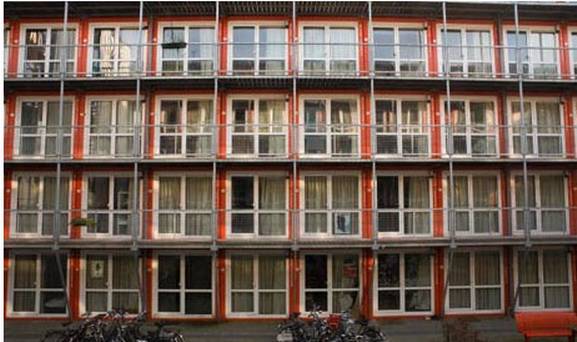
The Dimitrovs are the first nuisance neighbours to be moved forcibly to police-supervised accommodation as crowded Amsterdam steps up measures against anti-social behaviour.

Eberhard van der Laan, Amsterdam’s mayor, admitted that the removal of the family was a draconian measure but insisted that bullying and violent behaviour had left him with no choice.

“The family has been causing problems for years and has a history of vandalism, noise nuisance and threatening behaviour,” he said.

The eight members of the gypsy family have compared their container homes, numbers 48a and 48b, to a concentration camp and accused Amsterdam council of “pure racism”.

Francois Lonis, an ex-boyfriend of one of the Dimitrov daughters who still lives with the family, criticised Mr van der Laan for commemorating the Holocaust while “discriminating” against Roma. “The mayor talks about Auschwitz but sends us to this place,” he said.

“Where is my mother-in-law supposed to do the shopping. Our television does not fit inside.”

The housing camps have been nicknamed “scum villages” because their establishment follows a 2011 proposal from Geert Wilders, the leader of a populist Dutch right-wing party, for special units to deal with persistent troublemakers.

“Repeat offenders should be forcibly removed from their neighbourhood and sent to a village for scum,” he argued at the time. – Daily Telegraph

US shares raw intel with Israel

snowden3The NSA regularly shares raw US intelligence data with Israel without even removing information about American citizens, according to the latest revelation published by the Guardian. The report is based on a document leaked by Edward Snowden.

On Tuesday, September 11, the Guardian published a previously undisclosed document which revealed top-secret policies in place since 2009 that are used to share personal phone and Internet data pertaining to United States citizens with American ally Israel.

The document, a five-page memorandum authorized by the National Security Agency near the beginning of US President Barack Obama’s first administration, outlines a deal between the NSA and Israel’s SIGINT National Unit, or ISNU.

“This agreement,” the memo begins, “prescribes procedures and responsibilities for ensuring” privacy safeguards are implemented to protect the Fourth Amendment rights of US citizens with regards to the direct sharing of raw intelligence collected by the NSA with its Israeli counterpart.

That data, the document later explains, includes raw traffic picked up by the American spy office such as “unevaluated and unminimized transcripts, gists, facsimiles, telex, voice and Digital Network Intelligence (DNI) metadata and content” which is never necessarily scrutinized by US officials before sent to Israeli agents.

“Seems the only info actually being ‘minimized’ is the info #NSA shares with the American public,” American Civil Liberties Union Deputy Legal Director Jameel Jaffer tweeted following publication of the Guardian piece. “NSA is really good at minimizing that.”

But while the contents of emails and phone calls involving most US persons are fair game to be collected by Israeli intelligence, a select group of Americans are sparred from international surveillance: elected officials. The memo mandates that the Israelis must “destroy upon recognition” any communication “that is either to or from an official of the US government.” That pool of exempt persons is defined as “officials of the executive branch (including the White House, cabinet departments, and independent agencies), the US House of Representatives and Senate (member and staff) and the US federal court system (including, but not limited to, the Supreme Court).”

The Guardian notes, however, that other leaked documents uncovered as of late indicate that the US intelligence community may have reservations nonetheless with sharing info with even an ally as tried and true as Israel.

“On the one hand, the Israelis are extraordinarily good Sigint partners for us, but on the other, they target us to learn our positions on Middle East problems,” a senior NSA official says in a 2008 NSA document seen by the Guardian but not published in Wednesday’s piece. “A NIE [National Intelligence Estimate] ranked them as the third most aggressive intelligence service against the US.”

“One of NSA’s biggest threats is actually from friendly intelligence services, like Israel. There are parameters on what NSA shares with them, but the exchange is so robust, we sometimes share more than we intended,” the Guardian quotes from the ’08 document.

According to Guardian journalists Glenn Greenwald, Laura Poitras and Ewen MacAskill, a NSA spokesperson pressed for comment wouldn’t deny the validity of the leaked document’s contents, but assured the British newspaper that “Any US person information that is acquired as a result of NSA’s surveillance activities is handled under procedures that are designed to protect privacy rights.”

The latest leak comes on the 12-year anniversary of the September 11, 2001 terrorist attacks that many high-ranking US officials have used to justify the surveillance measures enacted in the decade-plus since. It also marks just more than three months since the Guardian first began published leaked NSA documents attributed to Snowden, a 30-year-old former intelligence contractor who has since relocated to Russia where he was granted asylum while avoiding espionage charges in the US. – RT

US weapons streaming into Syria

syria5The CIA has begun delivering weapons to rebels in Syria, ending months of delay in lethal aid that had been promised by the Obama administration, according to U.S. officials and Syrian figures. The shipments began streaming into the country over the past two weeks, along with separate deliveries by the State Department of vehicles and other gear — a flow of material that marks a major escalation of the U.S. role in Syria’s civil war.

The arms shipments, which are limited to light weapons and other munitions that can be tracked, began arriving in Syria at a moment of heightened tensions over threats by President Obama to order missile strikes to punish the regime of Bashar al-Assad for his alleged use of chemical weapons in a deadly attack near Damascus last month.

The arms are being delivered as the United States is also shipping new types of nonlethal gear to rebels. That aid includes vehicles, sophisticated communications equipment and advanced combat medical kits.

U.S. officials hope that, taken together, the weapons and gear will boost the profile and prowess of rebel fighters in a conflict that started about two and a half years ago.

Although the Obama administration signaled months ago that it would increase aid to Syrian rebels, the efforts have lagged because of the logistical challenges involved in delivering equipment in a war zone and officials’ fears that any assistance could wind up in the hands of jihadists. Secretary of State John F. Kerry had promised in April that the nonlethal aid would start flowing “in a matter of weeks.”

The delays prompted several senior U.S. lawmakers to chide the Obama administration for not moving more quickly to aid the Syrian opposition after promising lethal assistance in June. The criticism has grown louder amid the debate over whether Washington should use military force against the Syrian regime, with some lawmakers withholding support until the administration committed to providing the rebels with more assistance.

Sen. Bob Corker (R-Tenn.), who has pressed the Obama administration to do more to help the rebels, said he felt embarrassed when he met with Syrians along the Turkish border three weeks ago.

“It was humiliating,” he said in an interview Wednesday night. “The president had announced that we would be providing lethal aid, and not a drop of it had begun. They were very short on ammunition, and the weapons had not begun to flow.”

The latest effort to provide aid is aimed at supporting rebel fighters who are under the command of Gen. Salim Idriss, according to officials, some of whom spoke on the condition of anonymity because part of the initiative is covert. Idriss is the commander of the Supreme Military Council, a faction of the disjointed armed opposition.

U.S. officials, speaking about the provision of nonlethal aid, said they are determined to increase the cohesion and structure of the rebel fighting units.

“This doesn’t only lead to a more effective force, but it increases its ability to hold coalition groups together,” said Mark S. Ward, the State Department’s senior adviser on assistance to Syria, who coordinates nonlethal aid to rebels from southern Turkey. “They see their leadership is having some impact.”

The CIA shipments are to flow through a network of clandestine bases in Turkey and Jordan that were expanded over the past year as the agency sought to help Middle Eastern allies, including Saudi Arabia and Qatar, direct weapons to moderate Syrian rebel forces.

The CIA declined to comment. – Washington Post


Trekkers attacked by Papua New Guinean bandits tell of horror

Hikers on the Black Cat Track in Papua New Guinea

A group of Australian and New Zealand trekkers brutally attacked by bandits in Papua New Guinea told Thursday of their harrowing ordeal and horror as two porters were butchered.

The eight tourists were in their tents on the remote jungle-clad Black Cat Track in the lawless Pacific nation’s northern Morobe province when a mob of six armed men struck at dusk on Tuesday.

Two porters were hacked to death with machetes and four of the Australians were injured, including one who was speared through the leg.

“It started to rain and some of us were inside the tents when there was a whole lot of noise, shouting. I thought the boys had found a bush kangaroo, an animal or something like that,” one of the survivors, Nick Bennett, told Channel Nine after arriving in the capital Port Moresby.

“Next thing, I thought ‘what’s going on’, I put my head outside tent and smack — I thought I’d been shot actually,” he said of being hit with a rifle butt.

“Blood just erupted out of my head and I looked up and I saw this guy with a mask on standing over me, and then the whole thing unfolded.

“They were laying into the porter boys. I realised they were butchering the porters. It was just appalling and we’re very fortunate.”

Another survivor, Peter Stevens, told Australian Associated Press he and the rest of the group were forced to lie on the ground as the men ransacked their backpacks, stealing passports and other items.

“They then laid into us with bush knives, hitting us with the flats of the knives,” Stevens said.

“You can’t tell whether they’re going to hit you with the flat side. Some people were cut.”

Stevens said two of the attackers were clearly on drugs and “they did the most damage”.

The group managed to hike some four hours back to safety, reportedly carrying the porters’ bodies.

Papua Prime Minister Peter O’Neill vowed the tribesmen responsible will face the death penalty if caught and convicted.

“I make no apology whatsoever for the death penalty being the punishment available to be applied for such crimes,” he said in a statement.

While the attack was believed to be a robbery, some reports suggested it could also stem from growing resentment that the booming trekking industry is not giving back to local communities.

Crime in Papua New Guinea is rampant, including in Port Moresby where in June four Chinese nationals were hacked to death, with one reportedly beheaded and the others dismembered.

Brutality against women is particularly endemic, with high rates of domestic violence. In April, a US academic was gang-raped while she was trekking along a jungle trail with her husband and a guide.

The Black Cat Track runs between Wau and Salamaua in northern PNG through leech- and snake-infested jungle with precarious drops and potentially dangerous river crossings.

It was the scene of bitter fighting in 1943, pitting Australian and US troops against Japanese forces. – AFP

Israelis suspected in ‘Nigerian scam’ can be extradited to US

nigerianscamThe seven Israelis suspected of scamming tens of millions of dollars from U.S. pensioners in a so-called “Nigerian scam” can be extradited to the United States to face trial there, the Jerusalem District Court ruled on Wednesday.

The seven, arrested by Tel Aviv police in July 2009, have been charged by American prosecutors for a serious of legal violations, including conspiracy to commit fraud. Some of the defendants also face money laundering charges.

The defendants are suspected of building a sophisticated crime network to defraud elderly American pensioners. Over four years, the network netted tens of millions of dollars in ill-gotten gains.

The defendants, all in their 20s and 30s, allegedly phoned American pensioners, told them they had won the lottery and asked them for a fee of several thousand dollars for the transfer of the prize money, which in fact never existed.

The investigation that uncovered the network was conducted in conjunction between Israeli and U.S. law enforcement agencies.- Haaretz

Scraping the bottom of the barrel on Syria

Right behind the US on Syria
Albanians right behind the US on Syria

It’s not likely to ease Americans’ concerns about going to war, but the White House announced Monday that Albania is on board with the Obama administration’s plans to punish Syria.

Tiny Estonia, too, has agreed that Syria must be held accountable for using chemical weapons. The Coalition of the willing on Syria includes such superpowers as Albania, Estonia, Honduras.

Croatia, Denmark, Germany, Honduras, Hungary, Kosovo, Latvia, Lithuania and Morocco are the willing nations. And let’s not leave out Qatar, Romania and the United Arab Emirates.

They are the latest countries to sign on to a statement condemning the Syrian regime and calling for a “strong international response,” although not necessarily the missile strikes proposed by President Obama. A total of 25 nations support the statement, including the U.S. and Great Britain. – Washington Times

Nigerian held for ‘raping teenager to death’

Nigeria_BayelsaA Nigerian man has been arrested after he allegedly raped a teenage girl to death in Bayelsa, and tried to cast her remains into a nearby bush.

Otuoke, the university community, in Ogbia Local Government Area of Bayelsa, Nigeria was thrown into mourning

Members of the community woke up to hear reports that a 36-year old man raped an 18-year old teenage girl to death.

The man, who was said to have been driven by his libido, was identified as a close associate to a former Community Development Chairman.

Eyewitnesses said the man was apprehended with the naked remains of his victim, saying the suspect must have drugged the girl before raping her, The Nation reported.

Some sources, however, claimed the suspect was trying to assist the girl who apparently had drank poison and was rolling violently on the ground when he met her.

Kenya’s deputy president to ICC trial for crimes againts humanity

William Ruto
William Ruto

Kenyan Vice-President William Ruto left Nairobi to fly to The Hague Monday, a day before the start of his crimes against humanity trial at the International Criminal Court.

Ruto, 46, charged with masterminding deadly post-election violence five years ago, is the most senior politician to date to face ICC judges, and his trial will start just days after Kenyan MPs voted to abandon the court in a world first.

He waved to the small crowd at the airport as he left, but made no comment.

Ruto is accused by the ICC of masterminding some of the 2007-2008 post-election unrest that left at least 1,100 dead and more than 600,000 homeless.

Fellow accused Joshua arap Sang, a radio boss accused of inciting and helping coordinate attacks during the violence, is already in The Hague, after flying there over the weekend.

Both will plead not guilty.

On Sunday, Ruto prayed in church alongside President Uhuru Kenyatta, also accused of organising a campaign of murder, rape, persecution and deportation, whose ICC trial begins on November 12.

However, Kenyatta on Sunday said that he will not allow both leaders to be away from Kenya at the same time.

“We will work with ICC, and we have always promised to do this,” Kenyatta told a rally of supporters. “But it must understand that Kenya has a constitution, and Ruto and myself won’t be away at the same time.”

Kenyatta, who will also plead not guilty, said the “charges are false and will be dismissed”.

“The plotters of this scheme will be named and shamed. The victory won’t be Ruto’s, Sang’s or mine, but for Kenya,” he said to cheering crowds.

Kenya’s 2007 elections were marred by allegations of vote rigging, but what began as political riots quickly spiralled into a wave of ethnic killings and reprisal attacks, the worst violence in the country since independence in 1963.