Julia Gillard has committed to 25 far-reaching goals over the next 13 years designed to tighten links with Asia and ensure that Australians are able to exploit the region’s “staggering” growth.
The measures, outlined in a report by a government-appointed taskforce, include offering thousands of scholarships to Asian students, new diplomatic posts across the region and requiring that a third of all company directors and senior civil servants have a “deep knowledge” of Asia. In addition, every schoolchild will be able to learn one of four “priority” languages: Chinese, Hindi, Japanese and Indonesian.
Ms Gillard said the “unstoppable” rise of Asia and its massive new urban middle class was “a transformation as profound as any that have defined Australia throughout our history”.
“This is good news for Australia and it should drive a profound change in our thinking about our economic relationship with Asia,” she said.
Under the long-awaited plan all schools will be partnered with schools in Asia and television stations will be encouraged to present more Asian news and programs. “Children in kindergarten now will graduate from high school with a sound working knowledge of Asia,” Ms Gillard said.
Australia has greatly benefited from the past decade of growth across Asia, which has triggered a mining boom and helped to shield the nation from the impact of the global financial crisis.
But there are growing concerns that the mining boom may have peaked and that Australia needs to find other ways to benefit from Asia’s rising prosperity.
Ms Gillard said Australia should not seek to lower wages or working conditions to try to compete with the Asian workforce but instead should boost the country’s skills and promote tourism, education and agriculture to the growing middle class, particularly in China.
“Think of it this way: back in the 80s Fosters beer tried to get into China,” Ms Gillard said. “Today it is Grange [one of Australia’s most expensive wines] carrying the flag.”
Critics largely welcomed the push for closer links with Asia but said it came too late. “The Asian century is already well underway – shouldn’t we have been planning for that quite a while ago?” Adrian Vickers, Asian Studies director at the University of Sydney, told ABC Radio.
“I think we’ve got a lot of catching up to do… The rapid advances in technology, in social change, in political change in Asia are things that we are struggling to keep up with as a nation.”
Professor Andrew MacIntyre, from the Australian National University, said the plan was visionary and would help Australia to adjust to a “new phase we are going into”.
“The scale of the change and the momentum of the change now is so huge,” he told the Daily Telegraph. “Australia has to adapt. We need to lift because the pace of change is not slowing down.”
Many people are used to returning merchandise if they find that it doesn’t match their needs. But one Chinese man went a step further, and returned his wife – getting $120,000 in a court settlement.
Jian Feng, living in Northern China, has filed for divorce from his wife after he found their newborn child to be “incredibly ugly,” arguing that his wife tricked him into the union by appearing to be a beautiful woman when she was instead ugly.
“I married my wife out of love, but as soon as we had our first daughter, we began having marital issues. Our daughter was incredibly ugly, to the point where it horrified me,” reports gossipwelove.com
Feng, after first accusing his wife of cheating, since the child girl did not look like him, was later confronted by his wife with the bitter truth – cosmetic surgery.
It was an apparent case of false advertising, as it turned out that that his once-beloved had spent over $100,000 in plastic surgery to modify her appearance.
Appalled by the fruit of their loins and by the fact that his wife had never revealed that surgery had enhanced her looks, Feng took the matter to court and won $120,000 in a settlement.
The reaction in social media to the story has largely been in support of Feng.
“When you are in a true relationship, you tell your spouse everything. Past present and future – if not, then you don’t respect them” one male commented on Facebook.
The female audience has also largely sided with Feng. “Of course I would – if you start a relationship with a lie, where does it end?” one woman asked. – RT
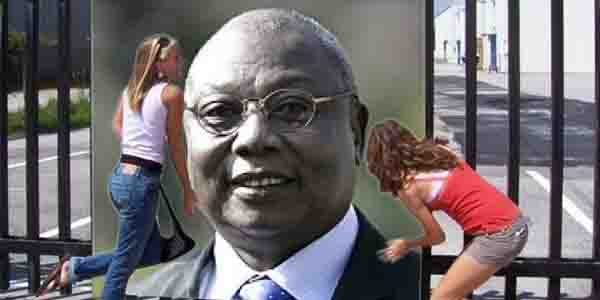
Poster of Martin Ziguele, connoisseur of monkey meat
French customs officials on Thursday fined former Central African prime minister Martin Ziguele after he was found carrying 11.8 kilograms (26 pounds) of bushmeat, mainly monkey, on his arrival at Paris’ Charles de Gaulle airport.
Investigators said the meat “mainly of a protected species”, was in his luggage when he arrived on an Air France flight from Bangui.
Customs inspectors found a total 600 kilograms of meat in passengers’ luggage on the Bangui flight, judicial officials said.
Ziguele, who was prime minister between 2001 and 2003 and who was defeated by Francois Bozize in presidential elections in 2005 and 2011, said the meat was for his personal consumption.
Rwanda – along with Australia, Argentina, Luxembourg and South Korea – won a seat on the U.N. Security Council on Thursday, despite accusations by a U.N. panel that Rwanda’s defense minister commands a rebellion in Democratic Republic of Congo.
Rwanda was unopposed in its bid for the African seat on the council that South Africa will vacate at the end of December, but still needed approval from two-thirds of the U.N. General Assembly members present to secure the two-year term. It won 148 votes in the 193-nation assembly.
Argentina also was elected to the council unopposed, winning 182 votes. Australia won a seat with 140 votes, Luxembourg with 131 votes and South Korea with 149.
Cambodia, Bhutan and Finland failed to secure two-year seats on the council.
There are five veto-holding permanent members of the council – the United States, Britain, France, Russia and China – and 10 temporary members without veto power. Thursday’s election was for the term from Jan. 1, 2013, to Dec. 31, 2014.
Rwanda’s government said that it would work with all members of the council to ensure “it is responsive and reflective of the views & aspirations of the developing world.”
“Rwanda’s troubling and tragic past allows it to bring to the UNSC a unique perspective on matters of war and peace,” it posted on a Twitter account created for its Security Council term (@RwandaUNSC).
Before the vote, the Congolese delegation told the General Assembly it objected to Rwanda joining the Security Council, accusing its neighbor of harboring “war criminals operating in the eastern part of the DRC and who are being sought by international justice.”
A confidential U.N. report, seen by Reuters on Tuesday, cast a shadow over Rwanda’s election to the 15-member U.N. power center – which has the ability to impose sanctions and authorize military interventions.
The Security Council’s “Group of Experts” said that Rwanda and Uganda – despite their strong denials – continued to support M23 rebels in their six-month fight against Congolese government troops in the east of the country.
BLATANT VIOLATIONS?
Rwandan President Paul Kagame posted a declaration on Twitter welcoming the result: “No matter what haters say … justice&truth will prevail!!! Sometimes it just requires a bit of good fight for all that…!!!”
Speaking to reporters in New York, Rwandan Foreign Minister Louise Mushikiwabo complained about the timing of the leak of the experts report to Reuters two days ahead of the Security Council vote, but added that the leak was “predictable.”
She also sought to assure Congo that Rwanda would be a responsible council member. “I believe the Democratic Republic of Congo should see Rwanda on the Security Council as value addition,” she said after the vote.
Philippe Bolopion of the advocacy group Human Rights Watch criticized the inclusion of Rwanda on the Security Council
“After blatantly violating the Security Council’s arms embargo and undermining the work of the U.N. by propping up the abusive M23 rebels, Rwanda is rewarded with a seat at the table,” he said.
“Kigali is now in a position to try to shield its own officials implicated in abuses from U.N. sanctions, which is a flagrant conflict of interest,” Bolopion said in a statement. “Other Security Council members now have an even greater responsibility to hold Rwanda to account.”
Britain’s Deputy U.N. Ambassador Philip Parham put a more positive spin on Rwanda’s election, saying: “We look forward to working with them on issues of international peace and security including the efforts to try to end the cycle of violence in the eastern DRC.”
Australian Foreign Minister Bob Carr described Australia’s election as a “big juicy, decisive win” that endorsed the country as a good global citizen.
“For us as a middle power a long way from the centers of clout in the world, the centers of power in the world, this is a lovely moment,” Carr told reporters after the vote.
South Africa, Colombia, Germany, India and Portugal are leaving the Security Council in December. Azerbaijan, Guatemala, Pakistan, Togo and Morocco will remain until the end of 2013.
The last time Rwanda was on the council was in 1994-95. That coincided with a genocide in which 800,000 people were killed when Rwanda’s Hutu-led government and ethnic militias went on a 100-day killing spree, massacring Tutsis and moderate Hutus.
The Congolese government on Wednesday demanded targeted sanctions against Rwandan and Ugandan officials named in the U.N. experts report.
According to the U.N. experts, who monitor compliance with sanctions and an arms embargo on the Congo, Rwandan Defense Minister General James Kabarebe was ultimately commanding the rebellion and both Rwanda and Uganda were providing weapons, troops and military and political aid to the insurgency. – Reuters
When we think of the world’s all-time richest people, names like Bill Gates, Warren Buffet and John D Rockefeller immediately come to mind.
But few would have thought, or even heard of, Mansa Musa I of Mali – the obscure 14th century African king who was today named the richest person in all history.
With an inflation adjusted fortune of $400 billion, Mansa Musa I would have been considerably richer than the world’s current richest man, Carlos Slim, who ranks in 22nd place with a relatively paltry $68 billion.
The list, compiled by the Celebrity Net Worth website, ranks the world’s 24 richest people of all time. The list advertises itself as the top 25, but only 24 names appear in the list.
Although the list spans 1000 years, some aspects of wealth appear consistent throughout history; there are no women on the list, only three members are alive today, and 14 of the top 25 are American.
The list uses the annual 2199.6 per cent rate of inflation to adjust historic fortunes – a formula that means $100 million in 1913 would be equal to £2.299.63 billion today.
Mansa Musa I ruled West Africa’s Malian Empire in the early 1300s, making his fortune by exploiting his country’s salt and gold production. Many mosques he built as a young man still stand today.
After Mansa Musa I death in 1331, however, his heirs were unable to hang on to the fortune, and it was substantially depleted by civil wars and invading armies.
Second on the list are the Rothschild family, whose descendants are still among the richest people on the planet. Starting out in banking in the late 18th Century, Mayer Amschel Rothschild’s finance house accumulated a total wealth of $350 billion. The money has since been divided between hundreds of descendants, many of whom are business leaders today.
Meanwhile John D. Rockefeller, third on the list, is the richest American to have ever lived, worth $340billion in today’s USD at the time of his death in 1937.
In comparison, the poorest man on the list is 82-year-old Warren Buffett, who at his peak net worth, before he started giving his fortune to charity, was $64billion.
Here’s the full list of the ‘24 richest people of all time’:
1. Mansa Musa I, (Ruler of Malian Empire, 1280-1331) $400 billion
2. Rothschild Family (banking dynasty, 1740- ) $350 billion
3. John D Rockefeller (industrialist, 1839-1937) $340 billion
4. Andrew Carnegie (industrialist, 1835-1919) $310 billion
5. Tsar Nicholas II of Russia (last Emperor of Russia, 1868-1918) $300 billion
6. Osman Ali Khan, Asaf Jah VII (last ruler of Hyderabad, 1886-1967) $236 billion
7. William the Conqueror (King of England, 1028-1087) $229.5 billion
A British comedian, Frankie Boyle is suing the Mirror newspaper for libel, over an article which labelled him racist.
He is complaining about a story published on 19 July 2011, saying he was in talks for a new Channel 4 show.
The first sentence read: “RACIST comedian Frankie Boyle could soon be returning to TV despite upsetting thousands of viewers”.
The Mirror said it will defend itself “on the basis of truth and fair comment”.
The trial, which is taking place at the High Court in London, is expected to last a week.
Boyle’s lawyer told the court that the newspaper had also defamed his client, by asserting he had been “forced to quit” the BBC comedy show Mock The Week.
His barrister, David Sherborne, said that to call someone “racist” was “obviously defamatory”.
Mr Sherborne said Boyle’s humour was “deliberately challenging”.
Controversial humour
He said the comic did not object to being criticised but did object to being described as racist.
“Saying ‘vile’ or ‘offensive’, or his material is ‘vile’ or ‘offensive’, is one thing,” Mr Sherborne told the jury.
“He realises that that goes with the territory, so to speak. But accusing him of being a racist is an entirely different matter.”
Mr Sherborne added: “You can call him ‘offensive’, you can call him ‘tasteless’. That’s fine. But he is not racist.”
The Glasgow-born comedian’s humour has often proved controversial with audiences.
Last year, broadcasting watchdog Ofcom upheld more than 500 complaints about his Channel 4 show Tramadol nights, during which he joked about Katie Price’s disabled son, Harvey.
Ofcom ruled that the joke appeared to “target and mock the mental and physical disabilities” of the then eight year-old.
In 2008, the BBC apologised when Boyle made a joke about Palestine on the Radio 4 comedy show Political Animal.
Break from Twitter
A year after that, BBC Two’s Mock The Week was criticised by the BBC Trust over comments Boyle made on the show about swimmer Rebecca Adlington’s appearance.
As yet, The Mirror has not removed the article about Boyle from its website.
A paragraph added to the top of the story reads: “Frankie Boyle is taking legal proceedings against us for the description of him as a ‘racist comedian’. He claims it is untrue and defamatory. We are defending this claim on the basis of truth and fair comment.
“We are also defending his claim that we libelled him by suggesting that ‘he was forced to quit Mock the Week’ in 2009.”
Boyle’s lawyer said any suggestion his client was forced to leave the show was “completely untrue”.
Boyle has taken a temporary respite from Twitter. “I’m afraid I must disappear from Twitter for a while. See you on the other side of this thing.” – BBC
In January 1945, my mother, too young even for school, joined millions of other ethnic Germans fleeing westwards from Breslau as the Red Army advanced. My forefathers had lived in this region of Silesia (German since 1242) for at least nine generations that I know of. The forced repatriation – a process that might now be called ethnic cleansing – of my mother’s family and millions of other civilians from groups whose nationality would in future be inextricably linked to their ethnicity, was largely overlooked in the euphoria that swept the world at the end of World War II.
They never returned.
Now we are witnessing another wave of civilian displacement in the Middle East with hundreds of thousands of Christians being forced to flee as they are banished from their 2,000 year old homelands in today’s remarkable surge in Arabian people power.
Their fate has been largely forgotten as the global media attention has moved on from Egypt and Libya and encamped in Syria to watch the terrible bloodshed in Damascus, Houla, Aleppo and Homs. Innocent people on all sides are enduring awful hardship, death and torture; civil war does not discriminate between young and old, rich or poor. In the ghastly bloodletting we are now seeing, no one seems safe from the prospect of sudden death and destruction of property.
Desperation
Yet for the two million plus Syrian followers of Christ, whose lineage goes back 2000 years to St Paul’s proselytising in the first century AD, these are especially desperate times. Ethnic cleansing is an ugly phrase, but that’s just what is going on right now for Christians in Syria. The unspeakable truth now is that the sizeable Christian communities in war-torn Syria are at greater threat of ethnic cleansing from their ancestral homes than has been the case for generations – often at the hands of the self-styled freedom fighters so feted by the Western press.
These fighters, increasingly rent-a-mob Jihadists with no real stake in the affairs of Damascus, do not see the enclaves of Christians as genial neighbours who they have lived alongside for centuries, as many Syrian rebels do. It is true religious minorities often find their most assured protection under dictatorships. It pays not to rock the status quo.
But to use this as a reason to attack them, destroy ancient churches and hold them to ransom seems a convenient excuse. The Jihadists simply see them as representing an infidel faith and have turned their attentions on them in a way that was so much rarer for the Syrian-based rebels. Syria’s Christians, who make up less than 10 per cent of the estimated 23 million population, include Greek Orthodox, Syriac Orthodox, Maronite and Melkite Greek Catholic faithful.
Already thousands have left, part of a larger tide of displaced Syrians escaping the conflict in which opposition groups say 27,000 people have died. In the Homs area 80,000 have fled as churches and community centres have been targeted, defaced, and their religious icons stolen. Whilst it is true that some Christians have held prominent positions under Assad they have also taken leading roles in the political opposition to Assad’s rule, there are other Christians, like George Sabra, who ran for presidency of the opposition Syrian National Council, who have been staunchly anti-Assad.
The Iraqi example
These Christians are now abroad, staying with friends, in gardens or in churches in Lebanon, in Turkey, anywhere out of the firing line. Some have resorted to taking the Government’s side and bearing arms, a move anathema to them throughout history. What my Syrian Christian constituents fear is that once gone, there will be no coming back. A rebel victory and a harder Islamist regime, may very well not want the return of a pluralist society, with Christians living alongside Shiite and Sunni Muslims as they have since biblical times.
Events in Iraq provide us with a timely example. Amidst savage bloodletting between Sunnis and Shiites in the aftermath of the US-led invasion of Iraq in 2003, the story of Iraq’s Christian population is one that is rarely told. But since the invasion it is estimated that half their number has desperately been driven to exile outside the country.
Some 330,000 Iraqi Christians fled in the past decade to Syria alone – and are now fleeing again. Others have found safe haven in Jordan and naturally some have come to these shores, including to my constituency, the Cities of London and Westminster. Under Saddam Hussein, some Christians had risen to the top of politics, most notably Tariq Aziz, Hussein’s Deputy Prime Minister. Yet since the dictator’s fall, violence against the Christian minority, who were often associated with the “crusading invaders”, has included kidnappings, the beheading of a priest, the bombing of ancient churches and forced conversion to Islam.
This is the backdrop to the fate that I fear will within a decade or so befall the long established Christian population in this region.
The West must act now to protect the Christians of Syria, Egypt and Iraq and make sure religious freedoms for Christians are enshrined in the laws of any future new regimes if we wish to avoid a similar scale of civilian displacement. And we must ensure that the banishment from their homelands of Middle Eastern Christians over the years ahead is not a dark derivative of the Middle Eastern uprising. – Mark Field, The Independent
The world’s five emerging economic powerhouses will experience significantly slower growth if they delay in implementing key political reforms, according to a report released on Monday by Germany’s Bertelsmann foundation.
The report said the five Brics countries – Brazil, Russia, India, China and South Africa – must focus on creating competent and stable political institutions and improving their education, health and judicial systems in order to achieve sustainable growth.
Brazil, which the report says has halved incidences of extreme poverty and moved 20 million people into the middle class in the last decade, was called “the most promising of the Brics states” because of its institutional reforms and infrastructure improvements.
The “worst-performing” country in the comparative study was Russia, which suffers from “a unilateral economic strategy, patronage and the lack of involvement of civil society.” It said Russia must diversify its economy by overcoming its reliance on natural resources.
The Bertelsmann report, titled “Sustainable Governance in the Brics,” said the results for China were “ambivalent” as the country grapples with problems related to demography, social inequality and pollution. India too is plagued by “enormous regional and social imbalances,” as well as infrastructure shortfalls and widespread corruption, which hinder growth.
The report lauded South Africa for its economic stability, reduction of state debt and strengthening of social welfare policies, but said it held a “middling” position within the Brics, due in large part the poor performance of its education system and labour market. It has the highest level of social inequality in the grouping.
The five countries are home to 42% of the world population and make up some 18% of global gross domestic product (GDP). Goldman Sachs, the investment group that coined the Brics acronym in 2001, forecasts the countries to account for some 40% of global GDP by 2050. – Sapa
Police have expressed concern over new figures that show Somali and Sudanese-born Victorians are five times more likely to commit crime than the wider community.
While the volume of crime is not significant, police say the trend needs to be stopped.
Assistant Commissioner Stephen Fontana says he is also concerned about the age of the offenders.
“A lot of the offences that we’re concerned about are assaults and street robberies,” he said.
“We’re particularly concerned about the violence on occasions and also the age of the individuals involved.
“The vast majority are under 21 years of age.”
Mr Fontana says police are doing a lot of work with the communities.
He dismissed suggestions, however, that the social unrest experienced during the Cronulla riots could be replicated in Melbourne.
“If we don’t stop the trend now, in the future we could have concerns.”
But Ross Barnett, the director of the Ethnic Communities Council of Victoria, has dismissed the statistics.
“Police data is notoriously unreliable, so I think we need to take it with a grain of salt,” he said.
“We do need a broader approach.
“I think, as has been pointed out by other people, there is a significant level of disengagement with African youth.”
Wyclef Jean, the Haitian-born hip-hop celebrity, complained when he faced questions about his charity’s financial record and ability to handle what eventually amounted to $16 million in donations.
Portraying himself as persecuted like Jesus and Martin Luther King Jr., Mr. Jean, 40, writes with indignation about insinuations that he had used his charity, Yéle, for personal gain. He says he did not need to — “I have a watch collection worth $500,000”— and that doubters will someday understand “Yéle is Haiti’s greatest asset and ally.”
But on his book tour for “Purpose: An Immigrant’s Story,” Jean neglects to mention two key facts: a continuing New York attorney general’s investigation has already found financial improprieties at Yéle, and the charity effectively went out of business last month, leaving a trail of debts, unfinished projects and broken promises.
“If I had depended on Yéle,” said Diaoly Estimé, whose orphanage features a wall painting of Mr. Jean and his wife, “these kids would all be dead by now.”
Even as Yéle is besieged by angry creditors, an examination of the charity indicates that millions in donations for earthquake victims went to its own offices, salaries, consultants’ fees and travel, to Mr. Jean’s brother-in-law for projects never realized, to materials for temporary houses never built and to accountants dealing with its legal troubles.
On the ground in Haiti, little lasting trace of Yéle’s presence can be discerned. The walled country estate leased for its headquarters, on which the charity lavished $600,000, is deserted. Yéle’s street cleaning crews have been disbanded. The Yéle-branded tents and tarps have mostly disintegrated; one camp leader said they had not seen Yéle, which is based in New York, since Jean was disqualified as a presidential candidate because he lives in Saddle River, N.J., not Haiti.
This summer, the charity foundered.
At the end of August, Derek Q. Johnson, Yéle’s chief executive, announced his resignation to supporters.
His resignation came after Jean declined to accept a settlement proposed by the attorney general covering the charity’s pre-earthquake activities, and he hired Avi Schick, a lawyer who had been a member of Attorney General Eric T. Schneiderman’s transition team.
The settlement would have required Jean and the two other Yéle founders to pay $600,000 in restitution “to remedy the waste of the foundation’s assets.” It also would have required Yéle to pay for a forensic audit of its post-disaster expenses, as it had done for its pre-earthquake finances, and to start “winding down its affairs.”
In 2010, Yéle spent $9 million and half went to travel, to salaries and consultants’ fees and to expenses related to their offices and warehouse. In contrast, another celebrity charity, Sean Penn’s J/P Haitian Relief Organization, spent $13 million with only 10 percent going to those costs.
Though Mr. Penn’s group spent $43,000 on office-related expenses, Yéle spent $1.4 million, including $375,000 for “landscaping” and $37,000 for rent to Mr. Jean’s Manhattan recording studio. Yéle spent $470,440 on its own food and beverages.
Some of Yéle’s programming money went to projects that never came to fruition: temporary homes for which it prepaid $93,000; a medical center to have been housed in geodesic domes for which it paid $146,000; the revitalization of a plaza in the Cité Soleil slum, where supposed improvements that cost $230,000 are nowhere to be seen.
In its relief operation, Yéle operated outside the coordination system set up by other nongovernment groups; it did not want to be burdened by rules and meetings, Mr. Locke said in a 2010 interview.
Other organizations focused on providing concrete services like sanitation or health care.
Yéle chose to work more broadly than deeply. It supplied food, water and supplies to what it said were dozens of tent camps. Julie Schindall, then spokeswoman for Oxfam America, called it a “dump and run strategy.” Mr. Penn told The New York Times in 2010, “My impression is that Yéle is at the service of Wyclef Jean and his reputation.”
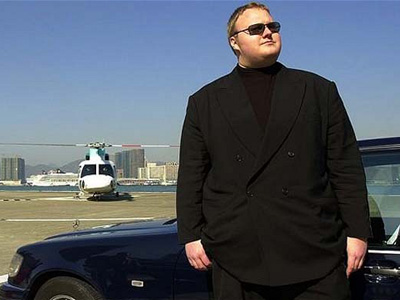
In the latest episode of the ongoing saga of accused hacker Kim Dotcom, the Megaupload founder says he suspects that the illegal intelligence New Zealand authorities collected on him was shared in real-time with American authorities.
The US government says Dotcom masterminded a multi-million-dollar copyright infringement conspiracy by running the Megaupload cyberlocker, and although the authorities refuse to release any evidence of the alleged wrongdoing, Dotcom says he thinks he was illegally targeted by a secretive snooping-collective with an international reach.
New Zealand’s Inspector-General of Intelligence and Security has already determined that the country’s spy agency, the Government Communications Security Bureau (GCSB), illegally monitored Dotcom when they subjected him to a rigorous undercover investigation reserved only for foreign nationals in the months leading up to the January 2012 raid on his home and his subsequent arrest. As a citizen of New Zealand at the time, the Germany-born Megaupload founder was targeted unlawfully and all intelligence gathered on him is now being brought into question. Speaking to the TorrentFreak website this week, Dotcom says the GCSB’s intricate involvement in the global Echelon intelligence network could have let US authorities come into possession with his personal communications.
“The interesting part is that the GCSB is one of the five partners in the Echelon project, the global spying project,” Dotcom says. “They are prying on every type of communication they can get their hands on, from wireless, to Internet, to satellite, to telephone.”
Last month, author and journalist Nicky Hager told Fairfax New Zealand News that the GCSB agents hired to conduct surveillance are “not spies in the normal sense” who have an array of technologies in their arsenal to monitor Dotcom’s activities. By locking into the Echelon network, Hager said the GCSB could “actually just plug in his email address, his name, his company name whatever and see what comes off it.”
Dotcom says he suspects the evidence the GCSB collected on him was fed into Echelon and offered to Americans on-the-spot, but says this could actually help his argument, “because all you can hear is that we were trying to do the right thing.”
“The GCSB was utilized to surveil all my communication in order to give the U.S. Government full access to all my communication, without the requirement of a warrant, and without the ability for me to get access to transcripts or discovery,” Dotcom adds to TorrentFreak. “The US has used this GCSB surveillance to get real-time access to my phone calls, Internet traffic and everything, and I can’t do anything about it. They refuse to cooperate with the court and say it’s all national security,”
The US is refusing to reveal the intelligence, however, despite their case against the file-sharing kingpin not advancing further than the indictment that has been unsealed since early 2012.
In a separate matter, Dotcom’s attorneys have hit another roadblock in their effort to have that indictment dropped, with the US Justice Department declining to play by their own rules as they try to keep their quickly collapsing investigation from fizzling to nothing. Attorneys for Dotcom have argued that the US must serve a company charged with a federal crime at their last American mailing address, but Megaupload never once operated out of the US.
“To this court’s knowledge, no court has ever dismissed an indictment for failure to meet Rule 4’s secondary mailing requirement,” Judge Liam O’Grady ruled last week when he dismissed the defense’s argument.
Dotcom’s attorneys first argued in July that “The Government bears the burden of proving that it has validly served Megaupload within the letter of the Rule… and effectively concedes it cannot carry it.”
Earlier this week, Dotcom’s US-based attorney Ira Rothken told the Inquirer, “Now that these procedures are coming under scrutiny they appear to have violated the law at nearly every part of the process,” adding, “From an illegal search warrant to what we believe is an illegal military style raid, to illegal data sharing with the US, illegal spying and ultimately what we believe is an overbroad takedown of the entire Megaupload enterprise.”
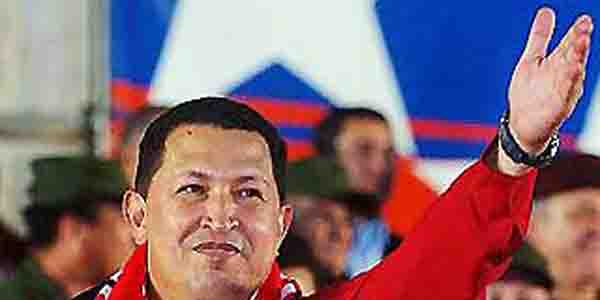
President Hugo Chavez put to rest any doubts about his masterful political touch in winning a third consecutive six-year term after a bitterly fought race against a youthful rival who has galvanized Venezuela’s opposition.
The state governor who lost Sunday’s presidential vote, Henrique Capriles, had accused the flamboyant incumbent of unfairly using Venezuela’s oil wealth to finance his campaign as well as flaunting his near-total control of state institutions.
Still, he accepted defeat as Chavez swept to a 10-point victory margin, the smallest yet for him a presidential race. This time, the former army paratroop commander won 55 percent of the vote against 45 percent for Capriles with more than 90 percent of the vote counted.
Chavez will now have a freer hand to push for an even bigger state role in the economy, as he pledged during the campaign, and to continue populist programs. He’s also likely to further limit dissent and deepen friendships with U.S. rivals.
Chavez spent heavily in the months before the vote, building public housing and bankrolling expanded social programs.
“I think he just cranked up the patronage machine and unleashed a spending orgy,” said Michael Shifter, president of the Washington-based Inter-American Dialogue think tank.
But Shifter also noted the affinity and gratefulness Venezuela’s poor feel for Chavez. “Despite his illness, I still think he retains a strong emotional connection with a lot of Venezuelans that I think were not prepared to vote against him.”
“They still think that he’s trying hard even if he’s not delivering what he promised, that he still has their best interests at heart,” Shifter said. “That’s the political skill that he has. He hasn’t lost that touch.”
Chavez spoke little during the campaign about his fight with cancer, which since June 2011 has included surgery to remove tumors from his pelvic region as well as chemotherapy and radiation treatment. He has said his most recent tests showed no sign of illness.
Tensions were high Sunday night as announcement of the results were delayed.
Finally, fireworks exploded over downtown Caracas amid a cacophony of horn-honking by elated Chavez supporters waving flags and jumping for joy outside the presidential palace.
“I can’t describe the relief and happiness I feel right now,” said Edgar Gonzalez, a 38-year-old construction worker.
He ran through crowds of Chavez supporters packing the streets around the presidential palace wearing a Venezuelan flag as a cape and yelling: “Oh, no! Chavez won’t go!”
“It’s time now to sweep away the squalid ones,” said another elated supporter, Ignacio Gonzalez, using a description of the opposition Chavez employed during campaigning.
“It’s time to get them out of governor’s and mayor’s offices. The next battle is in December,” when state and municipal elections will be held, added the 25-year-old student, who wore a red shirt that wedded the images of Chavez, Jesus Christ and South American independence hero Simon Bolivar.
Capriles posed the strongest challenge yet to Chavez, who won by a 27-point margin in 2006 and by 16 points when he was first elected in 1998.
“I will continue working to build one country,” said the wiry, 40-year-old grandson of Holocaust survivors who unified and energized the opposition while barnstorming across the country.
He said in his concession speech that he rejects the idea of two Venezuelas divided by ideology and class.
Capriles had vowed to address violent crime that has spun out of control, streamline a patronage-bloated bureaucracy and end rampant corruption, but his promises proved inadequate against Chavez’s charisma, well-oiled political machine and legacy of putting Venezuela’s poor first with generous social welfare programs.
Yet with a turnout of 81 percent, Chavez only got 551,902 more votes this time around than he did six years ago, while the opposition boosted its tally by 2.09 million. Chavez appeared to acknowledge the opposition’s growing clout.
“I extend from here my recognition of all who voted against us, recognition of their democratic weight,” he told thousands of cheering supporters from the balcony of the Miraflores presidential palace.
A Capriles victory would have brought a radical foreign policy shift including a halt to preferential oil deals with allies such as Cuba, along with a loosening of state economic controls and an increase in private investment.
Washington, which has often feuded with Chavez, declined to congratulate the president directly, but acknowledged the result.
“We congratulate the Venezuelan people for the high turnout and generally peaceful manner in which this election was carried out,” said State Department spokesman William Ostick.
“We believe that the views of the more than 6 million people who voted for the opposition should be taken into account going forward,” he added.
President Raul Castro of Cuba, which could have been badly hurt by a Chavez loss, was among Latin American leaders sending warm congratulations to the former paratrooper on his victory after nearly 14 years in office.
Chavez paid close attention to his military-like get-out-the-vote organization at the grass roots, stressing its importance at campaign rallies. The opposition said he unfairly plowed millions in state funds into the effort.
One pro-Chavez voter, private bodyguard Carlos Julio Silva, said that whatever his faults, Chavez deserved to win for spreading the nation’s oil wealth to the poor with free medical care, public housing and other government programs. The country has the world’s largest proven oil reserves.
“There is corruption, there’s plenty of bureaucracy, but the people have never had a leader who cared about this country,” Silva said after voting for Chavez in the Caracas slum of Petare. His daughter received an apartment from the state while the free medical care he gets included a recent operation to remove tissue that was clouding his vision.
First-time voter Brenda Aguirre, who is about to embark on cost-free legal studies at the Bolivarian University of Venezuela, was also willing to forgive “el comandante” for his shortcomings.
“Chavez isn’t to blame for the people who surround him,” she said.
Across town, where people from Aguirre’s neighborhood wait tables and sweep floors, Capriles told supporters not to feel defeated.
“We have planted many seeds across Venezuela and I know that these seeds are going to produce many trees,” he told them at his campaign headquarters.
At many polling places, voters began lining up hours before polls opened at dawn, some snaking for blocks in the baking Caribbean sun. Some shaded themselves with umbrellas. Vendors grilled meat and some people drank beer.
Chavez’s critics accused the president of inflaming divisions by labeling his opponents “fascists,” “Yankees” and “neo-Nazis,” and it’s likely hard for many of his opponents to stomach another six years of the loquacious and conflictive leader.
Some said before the vote that they’d consider leaving the country if Chavez won.
Gino Caso, an auto mechanic, said Chavez is power-hungry and out of touch with problems such as crime. He said his son had been robbed, as had neighboring shops.
“I don’t know what planet he lives on,” Caso said, gesturing with hands blackened with grease. “He wants to be like Fidel Castro – end up with everything, take control of the country.” – AP
This year’s Nobel prize season kicks off Monday with rumours suggesting the peace prize could go to Egypt’s Maggie Gobran for helping Cairo’s poor, Afghan burka opponent Sima Samar or US scholar Gene Sharp.
The first Nobel to be announced this year will be the medicine prize on Monday, when the jury in Stockholm reveals the winner or winners around 11:30 am (0930 GMT.)
Like every year, most of the speculation in the run-up to the announcements focuses on who will take home the prestigious peace and literature prizes.
Nobel Peace Laureates former Polish President Lech Walesa, former Russian President Mikhail Gorbachev, former South African President Frederik Willem de Klerk, and former U.S. President Jimmy Carter held a panel discussion at the University of Illinois at Chicago as part of the World Summit of Nobel Peace Laureates on April 23, 2012 in Chicago, Illinois. The 12th World Summit of Nobel Peace Laureates convenes in Chicago.
Betting sites have become a popular feature of the guessing game in recent years, with gamers sometimes curiously accurate amid suspicions of leaks from within the award committees.
This year, Coptic Christian Gobran, dubbed the “Mother Teresa” of Cairo’s slums, tops the list of one betting site for the peace prize, with 6.5-to-one odds ahead of the October 12 announcement.
But that race looks wide open this year with no clear frontrunner among the 231 nominees.
Although the peace prize committee never discloses the nominees’ names, former US president Bill Clinton, ex-German chancellor Helmut Kohl, the EU and WikiLeaks suspect Bradley Manning are known to be on the list.
The head of the Peace Research Institute of Oslo, Kristian Berg Harpviken, follows the work of the committee and each year publishes his own shortlist of possible winners.
His list includes Sharp, an American political theorist and expert on non-violent revolution; Russian rights group Memorial and its founder Svetlana Gannushkina; and independent Russian media outlet Echo of Moscow and its chief editor Alexei Venediktov.
A Nigerian duo campaigning against the misuse of religion, Archbishop John Onaiyekan and Mohamed Sa’ad Abubakar, Sultan of Sokoto, are also on it, as is Myanmar President Thein Sein.
Afghan human rights activist, ex-minister and burka opponent Sima Samar is meanwhile also seen as a possible winner, as is Cuban human rights activist Oscar Elias Biscet.
For the literature prize, Chinese author Mo Yan and Japan’s Haruki Murakami share the top two spots on one betting site.
Literature experts in Stockholm have suggested it could be time for the Academy to pick a woman or a North American.
Names being whispered in literary circles include Canadian short story writer Alice Munro — though the Swedish Academy has never given the prize to a short story writer — as well as US author Don DeLillo and Somali novelist Nuruddin Farah.
“One could imagine that it would be an author from North America, a man maybe, like Don DeLillo or Philip Roth,” said Elisabeth Grate, who runs her own publishing house.
“But it would be nice with a woman,” she added.
In line with tradition, and unlike the other prizes, the date of the literature prize announcement is revealed only a couple of days before. But it is traditionally announced on a Thursday, and could therefore come on October 11.
For the medicine prize, Swedish media have mentioned Japan’s Shinya Yamanaka and Britain’s John Gurdon as possible recipients for their research in nuclear reprogramming, a process that instructs adult cells to form early stem cells which can then be used to form any tissue type.
Public broadcaster Swedish Radio also suggested that the nod could go to researchers in the field of epigenetics, which studies nature versus nurture and how genes respond to their environment.
The physics prize, to be announced on Tuesday, has also created some buzz this year.
The discovery in July of a new fundamental particle believed to be the Higgs boson is one of the biggest breakthroughs in the field of physics in the past half-century, and is widely considered Nobel prize-worthy research.
The names of the chemistry prize laureates will be revealed on Wednesday, with Swedish Radio suggesting Svante Paeaebo of Sweden could win for his groundbreaking analysis of ancient DNA.
The economics prize, which has been dominated by Americans over the years, is the last to be announced, on October 15.
Because of the economic crisis, the Nobel Foundation has slashed the prize sum to eight million Swedish kronor ($1.2 million, 930,940 euros) per award, down from the 10 million kronor awarded since 2001. – AFP
Britain’s Foreign Office said it would appeal a High Court judgement on Friday that three elderly Kenyans who were tortured under British rule in the 1950s could pursue their claim for damages from London.
“The judgement has potentially significant and far reaching legal implications,” it said in a statement.
“The normal time limit for bringing a civil action is 3 to 6 years. In this case, that period has been extended to over 50 years despite the fact that the key decision makers are dead and unable to give their account of what happened.”
The Foreign Office added that it did not dispute that each of the three claimants in the case suffered torture and other ill treatment at the hands of the colonial administration.
Lawyers for the claimants said Friday’s judgement would be carefully studied by victims of alleged colonial torture from Malaya to the Yemen from Cyprus to Palestine, as well as South Africa.
The claimants, Jane Muthoni Mara, Wambuga Wa Nyingi and Paulo Muoka Nzili celebrated the news in Nairobi, Kenya. They were represented by a white lawyer, Martyn Day.
London’s High Court ruled the case, relating to the 1950s Mau Mau uprising, could proceed despite the time elapsed.
The ruling means the case will now go to a full trial. Lawyers for the three hailed it as a “historic” judgement.
While the government accepts UK forces tortured detainees it denies liability and will appeal against the decision.
After the 2011 ruling, the case went back to the High Court in July to consider a claim by the UK Foreign and Commonwealth Office (FCO) that the actions had been brought outside the legal time limit. The FCO said it faced “irredeemable difficulties” in relation to the availability of witnesses and documents.
As the news filtered through, several dozen elderly Kenyans erupted into cheers. They linked arms and danced through the grounds of the Kenyan Human Rights Commission, which has been supporting the claimants.
For them, and other veterans of the Mau Mau struggle, today’s judgement was a significant victory.
But elsewhere in Kenya the case has received little attention. Only a handful of reporters from the Kenyan media turned up to cover the reaction from the veterans themselves.
There are historical reasons for this. Many of those who found themselves in power following independence in 1963 had previously been associated with the Home Guard: those who fought with the British colonial authorities against the Mau Mau rebels.
When independence came, many believed this chapter in Kenya’s recent history would sow division rather than foster unity. The elderly veterans of that struggle are still fighting for recognition, both at home and abroad.
In his ruling, the judge said: “A fair trial for the Kenyans on this part of the case does remain possible and the evidence on both sides does remain significantly cogent for the court to complete its task satisfactorily.”
A lawyer for the three said the claimants had not been in court because they were in the Kenyan capital Nairobi, but they were “absolutely delighted” when they learned of the result.
Martyn Day said lawyers would be pressing for a trial “as quickly as possible” but they would also be pushing for the government to reach an out-of-court settlement.
“This is a historic judgement which will reverberate around the world and will have repercussions for years to come,” he said in a separate statement.
“The British government has admitted that these three Kenyans were brutally tortured by the British colony and yet they have been hiding behind technical legal defences for three years in order to avoid any legal responsibility. This was always morally repugnant and today the judge has also rejected these arguments.”
He added: “Following this judgement we can but hope that our government will at last do the honourable thing and sit down and resolve these claims. There will undoubtedly be victims of colonial torture from Malaya to the Yemen, from Cyprus to Palestine, who will be reading this judgement with great care.”
Written evidence from the three Kenyans sheds light on their treatment at the hands of colonial forces:
Mr Nyingi, 84, a father of 16, said he was arrested in 1952 and detained for about nine years. In one incident in 1959 he said he was beaten unconscious and still bears marks from leg manacles, whipping and caning. “I have brought this case because I want the world to know about the years I have lost and what was taken from a generation of Kenyans, he said
Mr Nzili, 85, said he was stripped, chained and castrated shortly after being arrested in 1957. “I felt completely destroyed and without hope,” he said
Ms Mara, 73, said she was 15 when she was raped at a detention camp. “I want the British citizens of today to know what their forefathers did to me and to so many others. These crimes cannot go unpunished and forgotten,” she said
A spokesman for the FCO said the judgement had “potentially significant and far-reaching legal implications”.
“The normal time limit for bringing a civil action is three to six years. In this case that period has been extended to over 50 years despite the fact that the key decision-makers are dead and unable to give their account of what happened,” the spokesman said.
“Since this is an important legal issue, we have taken the decision to appeal. In light of the legal proceedings it would not be appropriate for the government to comment any further on the detail of the case.”
The spokesman reiterated that the government did not dispute that each of the claimants suffered torture at the hands of colonial forces.
“We have always said that we understand the pain and grievance felt by those, on all sides, who were involved in the divisive and bloody events of the emergency period in Kenya, and it is right that those who feel they have a case are free to take it to the courts,” he said.
This website uses cookies to improve your experience. We'll assume you're ok with this, but you can opt-out if you wish. Cookie settingsACCEPT
Privacy & Cookies Policy
Privacy Overview
This website uses cookies to improve your experience while you navigate through the website. Out of these cookies, the cookies that are categorized as necessary are stored on your browser as they are essential for the working of basic functionalities of the website. We also use third-party cookies that help us analyze and understand how you use this website. These cookies will be stored in your browser only with your consent. You also have the option to opt-out of these cookies. But opting out of some of these cookies may have an effect on your browsing experience.
Necessary cookies are absolutely essential for the website to function properly. This category only includes cookies that ensures basic functionalities and security features of the website. These cookies do not store any personal information.
Any cookies that may not be particularly necessary for the website to function and is used specifically to collect user personal data via analytics, ads, other embedded contents are termed as non-necessary cookies. It is mandatory to procure user consent prior to running these cookies on your website.


 Julia Gillard has committed to 25 far-reaching goals over the next 13 years designed to tighten links with Asia and ensure that Australians are able to exploit the region’s “staggering” growth.