Brazil burning

brazilcupProtests in Brazil indicate what goes way, way beyond a cheap bus fare.

When, in late 2010, Dilma Rousseff was elected President after eight years of the impossibly popular Lula, a national narrative was already ingrained, stressing that Brazil was not the “country of the future” anymore; the future had arrived, and this was a global power in the making.

This was a country on overdrive – from securing the 2014 World Cup and the 2016 Olympics to a more imposing role as part of the BRICS group of emerging powers.

Not unlike China, Brazil was breathlessly exploiting natural resources – from its hinterland to parts of Africa – while betting heavily on large agribusiness mostly supplying, you guess it, China.

But above all Brazil fascinated the world by incarnating this political UFO; a benign, inclusive giant, on top of it benefitting from a lavish accumulation of soft power (music, football, beautiful beaches, beautiful women, endless partying).

The country was finally enjoying the benefits of a quarter of a century of participative democracy – and self-satisfied that for the past ten years Lula’s extensive social inclusion policies had lifted arguably 40 million Brazilians to middle class status.

Yet this breakneck capitalist dream masked serious cracks. Locally there may be euphoria for becoming the sixth or seventh world economy, but still social exclusion was far from gone. Brazil remained one the most unequal nations in the world, peppered with retrograde landowning oligarchies and some of the most rapacious, arrogant and ignorant elites on the planet – by-products of Portuguese colonialism.

And then, once again, corruption raised its Hydra-like head. Here’s a first parallel with Turkey. In Brazil as in Turkey, participative democracy was co-opted, ignored or forcefully diluted among an orgy of “mega-projects” generating dubious profits for a select few. In Turkey it revolves around the ruling party AKP’s collusion with business interests in the “redevelopment” of Istanbul; in Brazil around public funds for the hosting of the World Cup and the Olympics.

The new capitalist dream could not mask that the quality of life in Brazil’s big cities seemed to be on a downward spiral; and that racism – especially in the police – never went away while the demonization of peasant and Native Brazilian leaders was rampant; after all they were obstructing the way of powerful agribusiness interests and the “mega-projects” craze.

There’s no Turkey Spring – as there’s no Brazilian Spring. This isn’t Tunisia and Egypt. Both Turkey and Brazil are democracies – although Prime Minister Erdogan has clearly embarked on a polarizing strategy and an authoritarian drive. What links Turkey and Brazil is that irreversible pent-up resentment against institutional politics (and corruption) may be catalyzed by a relatively minor event.

In Turkey it was the destruction of Gezi park; in Brazil the ten-cent hike in public bus fares was the proverbial straw that broke the (white) elephant’s back. In both cases the institutional response was tear gas and rubber bullets. In Turkey the popular backlash spread to a few cities. In Brazil it went nationwide.

This goes way, way beyond a cheap bus ride – although the public transport scene in Brazil’s big cities would star in Dante’s ninth circle of hell. A manual worker, a student, a maid usually spend up to four hours a day back-and-forth in appalling conditions. And these are private transport rackets controlled by a small group of businessmen embedded with local politicians, who they obviously own.

Arguably the nationwide, mostly peaceful protests have scored a victory – as nine cities have decided to cancel the bus fare hike. But that’s just the beginning.

The mantra is true; Brazilians pay developed world taxes and in return get sub-Saharan Africa quality of service. The notion of “value for money” is non-existent. It gets even worse as the economic miracle is over. That magical “growth” was less than 1% in 2012, and only 0.6% in the first quarter of 2013. The immensely bloated state bureaucracy, the immensely appalling public infrastructure, virtually no investment in education as teachers barely get paid $300 a month, non-stop political corruption scandals, not to mention as many homicides a year as narco-purgatory Mexico – none of this is going away by magic.

Football passion apart – and this is a nation where everyone is either an expert footballer or an experienced coach – the vast majority of the population is very much aware the current Confederations Cup and the 2014 World Cup are monster FIFA rackets. As a columnist for the Brazilian arm of ESPN has coined it, “the Cup is theirs, but we pay the bills.”

Public opinion is very much aware the Feds played hardball to get the “mega-events” to Brazil and then promised rivers of “social” benefits in terms of services and urban development. None of that happened. Thus the collective feeling that “we’ve been robbed” – all over again, as anyone with a digital made in China calculator can compare this multi-billion dollar orgy of public funds for FIFA with pathetically little investment in health, education, transportation and social welfare. A banner in the Sao Paulo protests said it all; “Your son is ill? Take him to the arena.” – RT

Ivor Ichikowitz now runs biggest defence company in Africa

Ivor Ichikowitz
Ivor Ichikowitz

A fortnight ago, one of the biggest defence companies on the continent was formed. That’s defence companies as a whole, not private-owned or state-owned, but any defence company.

It didn’t receive a huge amount of coverage, perhaps because the industry isn’t a big story in a country more worried about service delivery as it approaches the 20th anniversary of its liberation from the total onslaught.

Or perhaps it was because Denel, the state-owned defence company, had put on a dog and pony show just days before, promising that it had turned the corner and stopped being a massive drain on taxpayers’ funds.

The new company was forged through the “business rescue” of the bankrupt ATE South Africa by the privately owned Paramount Group.

The little-known ATE is one of the country’s oldest and most established aerospace companies.

More to the point, it’s the only local company that can keep the South African Air Force’s Hawk fleet in the air, and the Rooivalk and Oryx chopper squadrons operational.

It’s a company that specialises in what is known as mission systems in aircraft, particularly Russian aircraft and aircraft formerly used by the SAAF, which are now used in countries like Brazil and China and in the Middle East.

It was rescued by a company that needs little introduction – a company that got one of its military spec armoured cars on to Top Gear, with presenter Richard Hammond driving it through central Joburg and right through derelict buildings in Newtown before trying to blow it up and failing. Hammond did blow a civilian Hummer to smithereens, though.

Only a fortnight ago, another one of its ilk was in the Saturday Star, bedecked with models in high heels as a publicity stunt for a burlesque show.

It’s these bizarre paradoxes that are reflected within Ivor Ichikowitz, Paramount’s founder.

The burly 47-year-old is a self-proclaimed pacifist who entered the murky world of defence armed only with a speech and drama degree from Wits, youthful idealism and a dollop of chutzpah in the late 1980s.

His Damascene conversion began in Rwanda, speaking to Paul Kagame just after the genocide of the Great Lakes had been halted. He had become conscientised at Wits and joined the ANC in exile after leaving varsity.

“Kagame said he needed an army and equipment to ensure that nobody could ever do this again. He had no money, the Rwandan government had no money. I came back to South Africa and found old SA Defence Force equipment that was being sold off, spoke to bankers, made the deals and within weeks, he had the kind of tools he needed to ensure stability,” Ichikowitz remembers.

From that inauspicious start, Paramount is South Africa’s biggest private defence contractor today, with a range of defence technologies including armoured vehicles, all locally designed and exported all over the world, particularly the Middle East, to police forces and armies.

The latest armoured vehicle addition is the Mbombe, a six-wheeled vehicle system that can be adapted to operate at the one end of the spectrum as an ambulance and at the other end as a lethal armoured fighting vehicle carrying a section of infantry. And with its 30mm auto cannon, it’s bigger and more deadly than the SANDF’s 6×6 Ratel fleet.

Paramount operates in 30 countries, bringing a range of defence and peacekeeping solutions, establishing entire bases, from tents to cutlery, water and power supplies and even running prisons.

In between, Ichikowitz’s other arm, TransAfrica Holdings, which emerged from the family business in Springs, owns mines, farms, upmarket tourism venues and even the Build-a-Bear franchise.

The one thing he is not, he insists, from his office eyrie on Sandton Drive, down the road from the US consulate-general and overlooking Sandton City, is a gunrunner or arms dealer.

It’s something that rankled him for a long time until an epiphany one day.

“A journalist on a local newspaper said to me: ‘Ivor, do you know how difficult it is to get Ichikowitz into a headline?’” he laughs.

If you want guns, or more correctly weapons systems, mounted on your Paramount vehicles, Ichikowitz’s people will source them for you from other arms manufacturers. It’s one of the reasons, he believes, why the South African defence industry should work together as a national asset rather than competing.

Paramount has never had to compete for a share of the national defence budget, like Denel has had to, so it’s gone off and developed as it has, picking up interesting offshoots of what were once core South African defence projects, like the old Mirage capability of the air force.

When the SAAF decided to get rid of them, Ichikowitz picked them up and now runs maintenance crews and teaches pilots from foreign air forces how to become fighter pilots with former SAAF top guns in Polokwane.

He’s also got the engineers who can maintain the former Soviet Mi-17 and Mi-24 helicopter gunships.

But Paramount doesn’t just maintain ageing aircraft, it has also developed a uniquely South African aircraft, the ARHLAC, a propeller-driven two-seater aircraft intended for reconnaissance and light attack – ideal for smaller armies.

In fact, that’s one of Ichikowitz’s driving ambitions, creating turnkey solutions, particularly in Africa, from an entire peacekeeping operation on the ground, complete with tents, supplies, armoured vehicles and even training, to providing air forces and even little navies.

“When you look at the early 1990s, Africa was split apart by civil wars and conflict. These days, it’s down to two or three dotted around the continent.

“That’s because countries are able to defend themselves and because of that they’re stable,” he says.

Defence, though, has a bad name, not because of apartheid, but because of post-apartheid’s most toxic legacy – the arms deal scandal.

Ironically, the SANDF was left with an ever-diminishing budget to even operate the new equipment that had been acquired, while being saddled with more external responsibilities in Africa, particularly in peacekeeping.

“Our defence industry is a national asset,” Ichikowitz says.

“With South Africa becoming a fully-fledged member of Brics, it is imperative that we enter a new phase of industrialisation.

“The development of home-grown technology, skills and manufacturing capabilities is crucial if we are to capitalise on the world’s appetite to do business in our region and the huge potential for intra-African and intra-Brics trade.” – The Star (extract)

Read the full article here.

Autism tied to air pollution, diesel and mercury

autismResearchers seeking the roots of autism have linked the disorder to chemicals in air pollution and, in a separate study, found that language difficulties of the disorder may be due to a disconnect in brain wiring.

Researchers from Harvard University’s School of Public Health found that pregnant women exposed to high levels of diesel particulates or mercury were twice as likely to have an autistic child compared with peers in low-pollution areas. The findings, published today in Environmental Health Perspectives, are from the largest U.S. study to examine the ties between air pollution and autism.

One in 50 U.S. children are diagnosed with autism or a related disorder, according to the Centers for Disease Control and Prevention. Children with autism may be unresponsive to people, become indifferent to social activity and have communication difficulties. A separate study from Stanford University and published in Proceedings of the National Academy of Sciences is the first to suggest that weak connections between brain regions for speaking and reward may be why.

“There isn’t a lot of data to strongly point at what are the root causes of the social deficits in children with autism,” Daniel Abrams, a postdoctoral research fellow at Stanford University in California, said in a telephone interview. “We think it has this important motivation and reward component to it.”

The cause of autism isn’t known, though genetic factors are thought to be important, according to the National Institutes of Health.

The link to air pollution was initially made in 2006 by a group led by Gayle Windham at the California Department of Health Services. Another study, published in November 2012, also found links between air pollution and autism.

“People were skeptical” of the initial report from Windham’s group, said Marc Weisskopf, an author of today’s study and an associate professor of environmental health and epidemiology at Harvard University’s School of Public Health in Boston. “I went to do this in a larger setting, not at all convinced we would see anything.”

The Harvard researchers used data from the Nurse’s Health Study 2, a long-term study involving more than 116,000 nurses, begun in 1989. Within that group, the scientists looked at 325 women who had a child with autism and 22,000 women who had children without the disorder.

Using data from the Environmental Protection Agency, researchers estimated the women’s exposure to toxins, a method Weisskopf said is imperfect. Many of the compounds travel together in the air, so separating their contributions was difficult. What’s more, the EPA data is taken once every four years, so it’s an imprecise way of estimating exposure, and doesn’t take into account women’s contact from traveling to places other than their homes.

“There’s a lot of error in estimating what the mother’s exposed to,” he said. His study is large enough to suggest follow-up studies with more precise methods of detecting chemicals in the air, he said.

The study also found that including lead exposure was also associated with increased risks of autism.

About 2 percent of American school children were diagnosed with autism disorders in 2011 and 2012, according to the Centers for Disease Control and Prevention.

In the language study, brain imaging determined that the connections between brain regions for language and reward were stronger in children who don’t have the disorder than in those diagnosed with it, said Abrams. That’s important because communication problems are key diagnostic criteria for autism.

Insensitivity to human speech can affect a child’s early development, the authors said. Typical infants will listen to human speech and engage with sounds as a way to develop early language skills and emotional understanding, as well as to bond with their parents, the authors wrote.

The researchers looked at how the speech part of the brain was connected to other regions. Those with autism had weaker connections between the temporal lobe, where speech is controlled, and the dopamine reward pathway that elicits pleasurable feelings, the study found.

They also found weak links between voice regions and parts of the brain that process emotional information, Abrams said. In the future, the researchers plan to look at whether there are certain parts or types of speech that activate an autistic child’s brain, he said.

The study included 20 children with autism who were considered high functioning, with language skills and issues with communication. Their magnetic resonance imaging scans were compared with 19 children without the disorder who had similar intelligence. – bloomberg.com

Who is Mr Rhodes?

Ben Rhodes offers insight to POTUS
Ben Rhodes offers insight into POTUS

Everyone is wondering who Mr. Rhodes is. Ben Rhodes, a 30-something who ascended from literally nowhere to be what seems a main driving force behind Obama’s foreign policy. He is credited with convincing the president to embrace the Arab Spring, convincing the president to bomb Libya, and, now, convincing the president to start yet another war, this time against Syria.

[To South Africans his name sounds a lot like that of Cecil John Rhodes (5 July 1853 – 26 March 1902), a ruthless imperialist, therefore not a friendly name.]

Who is he? How did a 24-year old aspiring fiction-writer in 2002 suddenly become one of the drafters of not only the 9/11 Commission report but also the Iraq Study Group Report? Then move on to Obama’s presidential campaign as a speechwriter and then to Deputy National Security Advisor, from which he announced the beginning of a US war on Syria while the president met with supporters in the East Room of the White House? Those familiar with Washington know that such miraculous ascents rarely happen on their own and are equally rarely the result of pure, raw talent.

There might be some clues to his brother David’s also improbable rise — from a lowly production assistant at Fox News at the end of the 1990s to covering presidential elections for Fox News (including the one where his brother was writing Obama’s speeches) to the lofty position of president of CBS news by 2011!

The excellent Russ Baker was wondering about all this way back in March, when he noticed a typical New York Times gloss-over article on Rhodes.

Aside from his quite unbelievable rise, we do know that he was catastrophically wrong on Libya, where a Time Magazine article pointed out at the time that he was the strong counter-weight to those who argued for more caution on the use of force.

Here is how Time put it back in 2011, when the interventionists were on the verge of their triumph:

Obama and his aides know they are taking a big risk. “It’s a huge gamble,” says the senior administration official. The administration knows, for example, that al Qaeda, which has active cells in Libya, will try to exploit the power vacuum that will come with a weak or ousted Gaddafi. They also know that the U.S. will have to rely on other countries for the crucial task of rebuilding Libya and that the region may in fact be further destabilized by intervention. Outweighing that, the National Security Council’s Ben Rhodes says, are the long-term benefits of saving lives, protecting the possibility of democratic change elsewhere in the region and—tellingly—ensuring “the ability of collective action to be a tool in circumstances like this.”

Rhodes carried the day on Libya and he was completely incorrect in his assessment, his analysis, his prediction, and his prescription. Anyone who bothers to look at Libya today, which is run by gangs of roving extremist death squads would see what a fool Ben Rhodes is for his promise of “democratic change” in Libya — and how much more foolish is the president for following the advice of such a person.

Rhodes is named as the source of the White House-altered CIA talking points on Benghazi, where references to the Islamist extremist role in the attack on US Ambassador Chris Stevens were erased. It is understandable why the fiction writer Rhodes would want to toss that reference in the circular file: that particular sub-plot did not fit in with the main theme he had already painstakingly written, namely that the US attack on Libya would end the killing, stabilize the country, and bring about a democratic revolution that would continue to spread through the region. Fiction writers understand that a sub-plot could take your readers too far off the main narrative of the story and cause serious structural problems. That is why there are so many rounds of re-writes. The killing of Stevens and the rise of murderous extremists did not fit the plot, so it had to be deleted.

Being wrong on war when you are on the sending end of death and destruction is less obvious to your countrymen than when you are on the receiving end. But anyone living in Libya after Rhodes’ “life-saving” mission knows full well the kind of liberation that comes at the tip of a US missile. And neighboring countries know as well what happens when a nation armed to the teeth with weapons, including chemical weapons, completely implodes after its infrastructure is destroyed by foreign attack.

In Washington, though, being catastrophically wrong on Libya eminently qualifies Ben Rhodes to take the lead on US Syria policy. – Lew Rockwell Blog

South Africans top the global list for entrepreneurial capacity

Possibly as a result of extra pressure from anti-white discrimination due to affirmative action and Black Economic Empowerment, South African self-made entrepreneurs top the global list.

The creation myth of American wealth is almost always rooted in the entrepreneur.

It’s the two kids who start a computer company in their garage or dorm room. Or the former standup comic who creates form-shaping undergarments, or the South African immigrant who creates a new electric car and private space program.

But despite the high-profile examples, America may actually be falling behind the rest of the world when it comes to creating entrepreneurial wealth. A new study from Barclays, “Origins and Legacy: the Changing Order of Wealth Creation,” finds developing countries now lead the U.S. when comes to wealth creation by entrepreneurs.

(Read More: Entrepreneur Asia: A CNBC Special Report)

Worldwide, 40 percent of millionaires (which is defined as those with investable assets of $1.5 million or more) cited a “business sale or profit” from their business as their source of wealth. Only a quarter of the millionaires cited inheritance as their wealth source.

In the U.S., only 21 percent of millionaires cited business sale or profit as their source of wealth. A much larger percentage cited saved earnings or personal investments as their sources of wealth.

Where the entrepreneurs are: South Africa comes out on top, percentage-wise

In the Asia-Pacific region, 57 percent cited business sale or profit as a source of wealth—far more than in the U.S. South Africa (68 percent) and Latin America (58 percent) were also higher.

So is America losing its entrepreneurial mojo? There is some evidence that entrepreneurial activity is flagging. The latest data from the Kauffman Foundation found that there were 514,000 new business owners a month in 2012, down from 543,000 in 2011. The 2012 numbers marked the lowest in five years.

(Read More: Key to Wealth: Work, Risk or Luck?)

A report from the Hudson Institute found that brand-new companies added 2.34 million jobs in 2010 compared with an average of about 3 million a year dating back to 1977.

But the Barclays report said another difference between the U.S. and other countries could also be one of basic wealth cycles. Wealth in developing countries is newer, and therefore there is more wealth from freshly minted companies than from savings or investments.

“These [developing] markets have a much shorter history of widespread wealth creation and many of the high-net-worth individuals in these markets are first generation wealthy,” the report said.

Entrepreneurs were also more likely to increase their fortunes during the recession compared with those with inherited wealth or those who made their money from investments and savings.

They are also more prone to taking risks, given that risk-taking is key to entrepreneurial wealth. As a result, their fortunes are more volatile than the wealth made from savings and earnings.

(Read More: We’re Rich Again! So Why Don’t We Feel It?)

“Entrepreneurs need to embrace volatility and recognize that fortunes can be lost as quickly as they were made,” the report said. – CNBC

Desmond Tutu on Father Trevor

trevorhuddlestoneThe epitaph on the granite base of the statue in the English town of Bedford simply states, “No white person has done more for South Africa than Trevor Huddleston,” the words of Nelson Mandela.

I don’t know if Father Trevor, as we used to call him in Sophiatown, would be totally comfortable with the fact that a 12-word précis of his life should include the descriptor, “white”. Why did Madiba not use a nationalist or professional reference instead, such as, “No English person” or, “No Christian person”?

No. Madiba was right. When we grew up, the colour of our skins was what defined who we were, where we lived and what we were allowed to be. It was fundamentally important that Trevor Huddleston was white.

His kindness and compassion, his servant leadership, were evidence that not all white people had horns and tails. He taught us that the limitations imposed on us by apartheid were in fact false ceilings, that the sky was the limit.

One of the earliest and most painful memories of my childhood is accompanying my father, a school principal, to the shop – I think it was in Ventersdorp – and witnessing him being humiliated by a young white shop assistant… being addressed, “Ja, boy?” by one much younger than himself, and being forced to swallow his pride.

But I believe the most defining moment of my life occurred when I was about nine years old, outside the Blind Institute in Roodepoort where my mother was a domestic worker. We were standing on the stoep when this tall white man in a black cassock, and a hat, swept by. I did not know that it was Trevor Huddleston. He doffed his hat in greeting my mother.

I was relatively stunned at the time, but only later came to realise the extent to which it had blown my mind that a white man would doff his hat to my mother. It was something I could never have imagined. The impossible was possible.

I subsequently discovered that this was quite consistent with Trevor Huddleston’s theology: that every person is of significance, of infinite value, because they are created in the image of God.

A few years after that meeting in the street, I was admitted to Coronation Hospital, in Coronationville, where I was diagnosed with TB. I was to spend 20 months in hospital. Trevor Huddleston visited me regularly; he made me feel very special.

I remember drawing a birthday card for Father Trevor in 1947, and later listening to the wireless broadcast of the wedding service of Princess Elizabeth and Philip Mountbatten, the Duke of Edinburgh.

It was not that I was extra-special in any way. He made so many people feel special, everyone he touched. He was one of us, a member of our family, God’s family. When he wore a white cassock it quickly became grubby from all the little hands that tugged him and hugged him. Then he’d shoo us out of the office because he had to meet someone “important”. The fact is, he made us all feel important – because we all are!

There was a boy called Hugh, for example, who – like me – was pretty much a little township nobody. Hugh was pretty good at blowing the trumpet, not that he could afford one of his own. The next thing, Father Trevor made contact with Louis “Satchmo” Armstrong and a trumpet for Hugh was on its way from the US. Bra Hugh Masekela went on to become one of the world’s top trumpeters.

Of course, Father Trevor was eventually to leave Sophiatown. After 13 years of service, in 1956, he returned to England. In 1960 he was appointed Bishop of Tanzania, and in 1978, Archbishop of the Province of the Indian Ocean. He was a founder member of the Anti-Apartheid Movement, was appointed vice-president of the movement in 1961 (serving for 20 years), and served as president from 1981 to 1994.

Trevor Huddleston’s humanity, and the passion with which he opposed apartheid – and other injustices and indignities – were attributes I have sought to emulate throughout my life.

As a nation that is still seized with the necessary process of healing the divisions of its past, we would do well not to allow the contributions of giants, such as Father Trevor, to be lost in the mists of time.

This is an extract from Desmond and the Very Mean Word. Text copyright 2013 by Desmond M Tutu. Illustrations copyright 2013 by AG Ford. Reproduced by permission of the publisher, Candlewick Press.

Tomorrow is the centenary of Father Huddleston’s birth in Bedford, England. This article is the first in an ongoing, occasional series provided to the Cape Times by the Desmond TutuDesmond and Leah Tutu Legacy Foundation.

Mandela’s ‘last hill’

Artist's impression of the Nelson Mandela Centre of Memory

By Christopher Torchia, Associated Press

The desk is spotless and books neatly line the shelves in Nelson Mandela’s office at a Johannesburg-based foundation that carries his name, but the former South African president and anti-apartheid leader hasn’t worked there for years.

The meticulously preserved room is one of many tributes to the legacy of a former prisoner who became so revered for his efforts to reconcile a racially divided nation that many South Africans cannot bring themselves to speak openly about the possibility of his death. That reluctance is gradually eroding as the 94-year-old receives treatment for a recurring lung infection, spending a fourth day in a Pretoria hospital on Tuesday.

President Jacob Zuma called Mandela’s condition “very serious” but said he has stabilized, in an interview with state broadcaster SABC.

Prayers are pouring in for Mandela, adding to a mood of urgency about his deteriorating health that has been compounded by a series of hospital stays in recent months. The description of Mandela as “ravaged by time,” in a statement from a foundation led by retired archbishop Desmond Tutu and his wife, speaks to the fragile state of a man who is so mighty in stature.

Concerns about his health already had been heightened in recent weeks after a video broadcast on state television in April showed him silent and unresponsive, even when Zuma tried to hold his hand.

“He was a very fruitful fighter, but he’s only human,” said Thabiso Masemola, a 21-year-old student. “He’s reached a point in life where he needs to rest. Let him go, let him be. He’s finished his purpose in life.”

Such a view is gaining currency as South Africans become uneasy with the protracted decline of Mandela, who endured 27 years in prison during white minority rule and became the first black president in all-race elections in 1994. At the other end of the spectrum is a stubborn hope that this larger-than-life figure will somehow defy the inevitable.

The aversion to blunt talk of Mandela’s eventual demise stems partly from traditional respect for the living, but also from adulation in a country that put Mandela’s image on its banknotes and erected busts and statues in his likeness. The intensity of emotion among some South Africans is an indicator of the outpouring of feeling that will accompany Mandela’s passing, whenever it comes.

Mzinkosi Tantsi, a driver for a neighbor of Mandela in the Johannesburg neighborhood of Houghton, said it had been a “blessing” to shake the former president’s hand.

“I see him as my father,” said 12-year-old Kutlwano Hlabana, whose school group was visiting the Apartheid Museum, which documents the repressive system of racial segregation and the fight against it. The Johannesburg site invites visitors to experience a taste of apartheid’s arbitrariness by choosing between two entrances labeled “Whites” and “Non-Whites.”

For Johannesburg resident Mokgadi Mabuti, Mandela’s sacrifice and contribution to reconciliation amount to a psychological balm. She struggles with the idea of his departure even though South Africa, for all its inequality and other social problems, is relatively stable.

“I’m worried about what might happen when he’s dead. Most of the things that have happened in South Africa are because of him, so I’m not ready to let him go,” she said.

Mabuti would rather skirt the subject of Mandela’s eventual end, quoting a biblical passage about the impact of words.

“The tongue is very powerful. What you say with your tongue can speak into the future,” she said. “So it’s not good that they should speak of him as if he doesn’t exist anymore.”

Cashing in is on the minds of some in Qunu, the rural village in the Eastern Cape province where Mandela grew up. The Sowetan newspaper reported that a number of people were preparing to rent rooms in their homes on the assumption that there would be a big influx of visitors if he dies.

After his retirement from the presidency, Mandela regularly worked from an office in the recently refurbished building that houses the Nelson Mandela Centre of Memory, which promotes the former leader’s values.

The office, which is open by appointment, resembles the kind of hallowed memorial usually reserved for those no longer among the living.

There are framed photographs of Mandela in healthier times with his wife, Graca Machel, former U.N. chief Kofi Annan, fellow activist Walter Sisulu, who died a decade ago, and others. His volumes include the Quran, “A Briefer History of Time” by Stephen Hawking and a book about leadership. A boxing glove, cricket bat and a British police helmet are among the gifts on display.

Glass cases at the center show penned messages in books given to Mandela from people including Nadine Gordimer, a South African author and winner of the Nobel literature prize in 1991. She wrote that the anti-apartheid leader had read a smuggled copy of her then-banned novel, “Burger’s Daughter,” while held at the Robben Island prison.

“You most likely didn’t bring the book back with you when you returned to us, and lived magnificently, untiringly, leading the Struggle, so I thought I’d like to replace the ‘imprisoned’ copy,” Gordimer wrote.

Cornel West, an American civil rights activist, addressed his book, “Democracy Matters,” to: “Bro’ Nelson Mandela.”

In his autobiography, “Long Walk to Freedom,” Mandela summarized a life of struggle:

“I have walked that long road to freedom. I have tried not to falter; I have made missteps along the way. But I have discovered the secret that after climbing a great hill, one only finds that there are many more hills to climb.”

Now he is climbing the last hill.

—

Associated Press writer Wandoo Makurdi contributed to this report from Johannesburg.

Global netizens worried over US spying

News that the U.S. government has been snooping on Internet users worldwide came as little surprise to global netizens, who said Friday they have few expectations of online privacy as governments increasingly monitor people’s digital lives, often with Internet companies’ acquiescence.

Privacy activists concerned over the U.S. National Security Agency’s selective monitoring of Internet traffic called on people to take measures to better protect their digital data ranging from emails to photos to social network posts. But most people eschew encryption and other privacy tools and seemed resigned to the open book their online lives have become.

“It doesn’t surprise me one bit. They’ve been doing it for years,” said Jamie Griffiths, a 26-year-old architect working on his laptop in a London cafe. “I wouldn’t send anything via email that I wouldn’t want a third party to read.”

From Baghdad, to Bogota, Colombia, many said they already carefully censor what they write online and assume governments are regularly spying on online activity, be it as part of global counter-terrorism or domestic surveillance efforts.

“The social networks and email have always been vulnerable because tech-savvy people know how to penetrate them,” said Teolindo Acosa, a 34-year-old education student at Venezuela’s Universidad Central who was leaving a cybercafe in Caracas.

Leaked confidential documents show the NSA and FBI have been sifting through personal data by directly accessing the U.S-based servers of Google, Facebook, Microsoft, AOL, Skype, PalTalk, Apple and YouTube.

Following Thursday’s revelation, U.S. President Barack Obama said Friday that the surveillance did not “target” U.S. citizens or others living in the U.S. – which does not mean their communications were not caught up in the dragnet.

But that didn’t dampen the outrage of people who resent what they consider Washington’s self-anointed role as the world’s policeman.

“To the United States, everyone is suspicious, even the pope!” said leftist Colombian Sen. Alexander Lopez. “Everyone is under observation these days and this should be taken up by the United Nations.”

Lopez said he has no plans to close his Google and Microsoft email accounts. He figures he’ll be spied on no matter what he does.

The revelation of global data vacuuming could hurt U.S. technology companies if Internet users become disillusioned and abandon them in favor of homegrown alternatives that offer greater security.

U.S. privacy activist Christopher Soghoian said he finds it “insane” that so many politicians outside the United States use Google gmail accounts.

“This has given the NSA an advantage over every other intelligence system in the world. The Americans don’t have to hack as much, because everyone in the world sends their data to American companies,” he said.

Hossam el-Hamalawy, a blogger with Egypt’s Revolutionary Socialists, one of the Egyptian groups that helped spearhead the 2011 uprising, said the dearth of locally developed Web tools means many around the world are simply stuck with U.S. sites, even if they know the government is monitoring them.

“The problem is that there is no alternative,” he said. “If you don’t use Facebook, what is the alternative social network available for the Internet user who is not an IT geek?”

Soghoian predicted an increasing push by governments and companies in Europe in particular, where privacy has been a much bigger issue for voters than in the United States, away from storing data in U.S.-based server farms.

Indeed, under U.S. law it is not illegal for the NSA to collect information on foreigners.

The disclosure of the NSA data-vacuuming program known as PRISM is only the latest “of many U.S. government programs created to infringe on personal freedoms,” said Carlos Affonso Pereira de Souza, a technology policy professor at FGV think tank in Rio de Janeiro.

Going back well into the 20th century, the United States, Britain, Canada, Australia and New Zealand ran a secret satellite communications interception network that became known as Echelon and searched information including telexes, faxes and emails, according to experts including U.S. journalist James Bamford. The system was the subject of a 2001 European Parliament inquiry.

According to a U.N. report released this week, such surveillance has been on a global upsurge with governments increasingly tapping into online personal data and even discouraging online anonymity by passing laws prohibiting it.

The governments of China, Iran, Bahrain are among other nations that already aggressively oversee online activity, in many cases putting people in prison for political blog posts and other messages.

Israel’s attorney general in April upheld a practice allowing security personnel to read email accounts of suspicious individuals when they arrive at the airport, arguing it prevents militants from entering the country.

The U.N. report said such activity has been expanding as technology advances, and that countries should prioritize protecting people’s online rights.

“In order to meet their human rights obligations, States must ensure that the rights to freedom of expression and privacy are at the heart of their communications surveillance frameworks,” the report reads.

Its author, Guatemalan Frank La Rue, calls for legal standards to ensure “privacy, security and anonymity of communications” to protect people including journalists, human rights defenders and whistleblowers.

Civil libertarians in the United States were much more upset about a different revelation published Wednesday, that the NSA has been collecting the phone records including the calls, numbers, times and duration of all U.S. citizen customers of the telecommunications giant Verizon.

—

Associated Press writers Vivian Sequera in Bogota, Ian Deitch in Jerusalem, Jill Lawless in London, Bradley Brooks in Sao Paulo, Fabiola Sanchez in Caracas, Sameer N. Yacoub in Baghdad and Tony G. Gabriel in Cairo contributed to this report. Jack Chang contributed from Mexico City.

Grand plan to turn Johannesburg into ‘Africa’s New York’

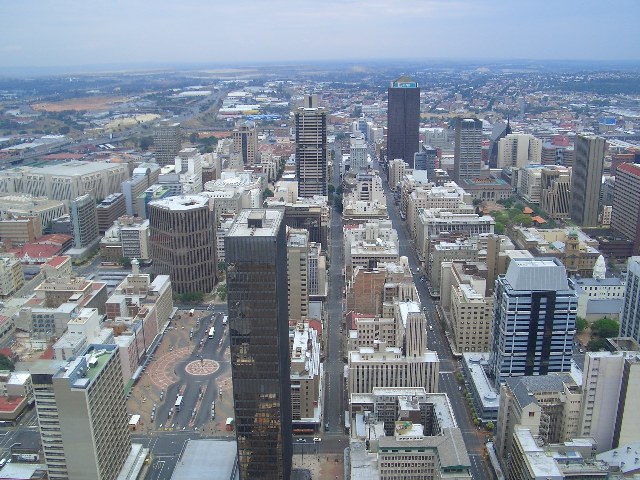
Johannesburg: fine from the air but down there muggings are rife

City authorities in Johannesburg, South Africa’s economic hub, have unveiled an ambitious plan to undo urban inequalities of the apartheid era and turn the continent’s wealthiest city into the “New York of Africa”.

City mayor Parks Tau says the 10-year scheme, which is set to cost some $10 billion (7.5 billion euros), will lead to a “new era” for Johannesburg and its 4.4 million inhabitants.

Plans are on the cards for an extensive new road and railroad network, better houses and revamped buildings to spruce up the city, originally built on a gold rush in the late 19th century.

The inspiration for change is the cosmopolitan New York City in the United States, with its attractive bridges, roads and efficient subway network and parks.

“We are re-inventing the city of Johannesburg,” Tau said. “We are turning this city into a New York of Africa,” he added.

Officials say the project will correct urban planning dating back to white minority rule, which pushed designated black areas to the outskirts of the city, with poor access to transport and other infrastructure and services.

“This is a major step in reversing the inequalities caused by the apartheid regime,” Tau told AFP.

In some cases, commuting between the city centre and northern suburbs currently takes up to nearly two hours.

A network of enhanced public transportation enabling people in outlying areas to make connections by trains, buses and taxis will be established, together with cycle paths.

Alison Todes of the University of Witwatersrand’s School of Architecture argues that the time has come for an efficient transport system that will also help reduce the city’s carbon footprint.

“The city is quite spread out and a lot of people use private cars. Less travel time and less cars on the road will also be good for the environment,” Todes said.

The launch three years ago of a high speed train service linking Johannesburg and the administrative capital Pretoria was a milestone in providing efficient public transport.

But the train serves limited routes and high fares make it inaccessible to the bulk of the working class, who rely on crowded privately-run minibus taxis and ageing state-owned metro trains.

“Our economy is growing, so we saw a need to prioritise investment on infrastructure to boost the economic capacity of the city,” Tau said.

The city will finance the renovations from its own coffers.

Despite its established wealth, boasting the largest concentration of dollar millionaires in the country, parts of Johannesburg are dirt poor.

Clusters of palatial homes protected by gates and electric fences stand side-by-side with sprawling slums that have no running water and sanitation.

Nearly half a million of Johannesburg’s population lives in informal housing. Some have been on a waiting list for state-subsidised houses for 15 years.

Almost a fifth of the total renovation budget will be channelled to low-cost housing schemes dubbed “corridors of freedom”.

“Housing is the biggest challenge facing the city. We can’t claim to be a world class African city when we still have people living in poor conditions,” Tau said.

Building improvements will also reach into the inner city, which has seen an exodus of large businesses due to decay and high levels of crime.

Business giants like the Johannesburg Stock Exchange, Africa’s largest bourse, left the once-thriving central business district for northern suburb Sandton — now the continent’s richest square mile.

Many mining firms and banks joined the exodus to the north, though a few have started moving back.

“It is our goal to create a safe, business-friendly environment,” Tau said.

In 2009, closed-circuit surveillance cameras were installed in areas around the inner city to help fight crime.

But the main opposition Democratic Alliance (DA) party worries that the municipality will not be able to monitor spending adequately, amid daily reports of public sector corruption.

For the past three years the city has failed to get a clean bill of health from the country’s auditor general.

“We don’t dispute that it is a great investment, but we need assurances that public funds would be handled efficiently,” DA spokesman Mmusi Maimane said.

“My main concern is that there is no capacity to handle such a huge budget,” he said. – AFP

Outside Agitators

Pat Buchanan

A Cairo court has convicted 43 men and women of using foreign funds to foment unrest inside Egypt in connection with the overthrow of President Hosni Mubarak.

Sixteen of those convicted were Americans. All but one, Robert Becker of the National Democratic Institute, had already departed. Becker fled this week rather than serve two years in an Egyptian prison.

And U.S. interventionists are in an uproar.

“Appalling and offensive,” said Sen. Pat Leahy of the verdicts.

“The 2011 revolution was supposed to end the repressive climate under Mubarak,” said The Wall Street Journal of our ally of 30 years whom Hillary Clinton called a family friend.

This “crackdown,” decries The Washington Post, was defended with “cheap nationalism and conspiracy theories.” As for Egypt’s proposed new law for regulating foreign-funded groups promoting democracy, it is “based on … repressive and xenophobic logic.”

Yet the questions raised by both the Cairo and Moscow crackdowns on U.S.-funded “democracy” groups cannot be so airily dismissed.

For these countries have more than a small point.

While U.S.-funded democracy promotion is portrayed as benign, the National Endowment for Democracy, the International Republican Institute, DNI, and Freedom House have been linked to revolutions that brought down regimes in Serbia, Ukraine, Georgia, Uzbekistan, and Kyrgyzstan, and nearly succeeded in Belarus.

People who pride themselves on bringing about revolutions should not whine when targeted regimes treat them like troublemakers.

And who directs these “pro-democracy” groups?

Before 2011, Freedom House was headed by ex-CIA Director Jim Woolsey, who says we are in “World War IV.” The IRI is chaired by John McCain, who pushed for U.S. intervention in the Russia-Georgia war and is clamoring for airstrikes on Syria.

The DNI chairman is ex-Secretary of State Madeleine Albright, who says: “We are the indispensable nation. We stand tall, and we see further than other countries into the future.”

Is it not understandable to patriots of the original “Don’t Tread on Me” republic that foreigners might resent paid U.S. agents operating inside their countries to alter the direction of their politics?

We have a right to advance our democratic values, we say.

But for the United States to push, for example, for freedom of speech, press, and assembly in the People’s Republic of China is to promote political action that must lead to the fall of Beijing’s single-party state. Do we not understand why that might be seen by the Chinese Communist Party of Xi Jinping as subversive?

In the Cold War Americans learned that not only was the Communist Party U.S.A. a wholly owned subsidiary of Joseph Stalin’s Comintern, but that party had deeply infiltrated the U.S. government and Hollywood. In the late ’40s and early ’50s, America was convulsed over communist penetration of our institutions.

Martin Luther King Jr. was wiretapped by J. Edgar Hoover at the direction of JFK and Attorney General Robert Kennedy because he refused to dump an adviser, Stanley Levison, who was a communist and thought to be a Soviet spy.

Were the Kennedys being “repressive and xenophobic”?

If we were apoplectic that Soviet-funded communists were seeking to influence our culture and politics, why ought not other countries, with cultures and institutions far different from our own, react even as we did?

In the stricter societies of the Islamic world, governments have enacted laws regarding alcohol, premarital sex, divorce, abortion, homosexuality, gay marriage, and religious conversions different from any such laws in the U.S.A.

In some of those countries, such activities can produce floggings, amputations, stonings, and beheadings. In many of these countries, children are indoctrinated in the Islamic faith in government-supported schools. Not here.

We may deplore this, but where do we get the right to intervene in the internal affairs of these countries if they do not threaten us?

And are we really consistent in our democracy promotion?

How many U.S.-funded agents of Freedom House, NED, IRI, and NDI are in Bahrain demanding elections that would permit the Shia majority to dump the king and oust our 5th Fleet from its Persian Gulf base?

How would we react if Riyadh funneled billions of petrodollars into organizations and agents to finance Wahhabi madrassas and assist local Muslim communities in the U.S.A. with their efforts to enact sharia law?

[…]

There is the arrogance of power, the End-of-History babble about democracy being the last, best hope of earth to which all nations should aspire—and if they don’t, give them a kick in that direction.

Once the most admired of nations, America is no longer so.

Why not? Because of our compulsive interventions, military and political, in the internal affairs of nations that are none of our business.

Defund the American Comintern, and bring the outside agitators home.

By

‘Exiles in our own fatherland’ – Kleinfontein residents

Show of force: municipal posse driving into Kleinfontein

There are no signs that say “Whites Only.”

There are, though, men in military fatigues who log the license plates of vehicles approved to enter Kleinfontein, a rural enclave that is home to about 1,000 Afrikaner whites. And there is a bust of Hendrik Verwoerd, the former South African leader who spearheaded white racist rule.

This exercise in separate, self-sufficient living near the South African capital, Pretoria, is more than just a throwback to the apartheid era that ended with the country’s first all-race elections in 1994. In recent days, Kleinfontein and its campaign to be formally recognized as a township have become a touchstone for fresh debate about law, freedom and the kind of “rainbow nation” that South Africa is trying to be.

Kleinfontein, which is all private property, requires its residents to be Afrikaners, descendants of settlers who arrived from Europe centuries ago and speak Dutch-based Afrikaans, the idiom of South Africa’s former overseers. That brings accusations of racism in a nation whose population of over 50 million is mostly black, but the community skirts race references in its manifesto. Descendants of British settlers, for example, would not be welcome to live here.

The community is not organized “on the basis of race,” said Jan Groenewald, chairman of the board of directors of Kleinfontein, which means “Little Fountain” in Afrikaans. Instead, he said, the goal is to preserve a cultural bedrock that stretches back to the lore of the hardy Voortrekker settlers.

The dig-in mindset at the austere settlement echoes that of its ancestors, who drew ox wagons into a defensive circle, a tactic that helped them defeat a much bigger Zulu force at the Dec. 16, 1838 Battle of Blood River. The date has near-mystical import for staunch Afrikaners, though the vast majority of whites accepted South Africa’s new, multi-racial order in 1994 as part of a negotiated settlement.

“We are here to stay,” read Afrikaans-language signs outside modest brick-and-tile homes linked by dirt roads in Kleinfontein.

Residents don’t pay taxes on municipal services because they don’t receive them. They draw water from a spring and are building a sewage system. There is a cafe, a primary school and a care center for the elderly. Zebra, antelope and wildebeest roam in one part of the fenced, 721-hectare (1,780-acre) property. Residents buy many of their goods from outside the fence.

“If I was a racist, we wouldn’t speak to a black. We wouldn’t do business with them,” said Annatjie Oncke, a 49-year-old house cleaner living in a caravan park. She and other poor residents do the kind of menial labor reserved for blacks in the era when whites were in charge. Kleinfontein also has engineers and other skilled workers, as well as retirees.

In the past, small bands of Afrikaners have sought to establish enclaves elsewhere in South Africa, notably in the Northern Cape community of Orania, founded in 1990. Nelson Mandela, South Africa’s first black president, traveled to Orania in 1995 and had coffee there with Verwoerd’s widow in a show of racial reconciliation. Verwoerd was assassinated in 1966.

Kleinfontein has been around almost as long as Orania, but is now under scrutiny in part because it wants local authorities to recognize it as an entity with the right to run its own affairs. The Times, a South African newspaper, reported that provincial lawmakers were informed last year that black police officers were barred from entering the enclave.

Last week, members of the Democratic Alliance, a political party, protested outside Kleinfontein.

“By creating a ‘whites-only’ area, this community is saying that it has no respect for people who are different from them. It is saying that it fears people who are different,” said Mbali Ntuli, the party’s youth leader.

On Wednesday, Kgosientso Ramokgopa, the mayor of Pretoria and surrounding areas, visited Kleinfontein as part of an inquiry into its alleged failure to comply with municipal planning laws. Delegations of the two sides met in a hall with a corrugated iron roof, a church bell mounted outside in a scaffold.

Ramokgopa noted the right of every citizen to “reside in any part of the country,” while Groenewald, Kleinfontein’s chairman, spoke of the right to “self-determination.”

The mood was diplomatic, and jovial at times. Ramokgopa joked about “koeksusters,” a fried, sugary snack favored by his Afrikaner hosts. Groenewald referred to Mandela’s leadership, but also hinted at his resolve with a mention of Koos de la Rey, a general in the 1899-1902 Anglo-Boer war who did not want conflict but fought hard when it began.

South Africa’s national flag does not fly in Kleinfontein, though some residents were seen recently with the “Vierkleur” (“Four-color”), the flag of the Transvaal republic, which in the 19th century formed part of what is now South Africa. A community member handed out a declaration that complained of betrayal and persecution of the “Boer-Afrikaner nation,” and described South African democracy as a sham.

“We find ourselves exiles in our own fatherland,” the statement said. “We experience this new dispensation not as a democracy, but as the dictatorship of an alien majority.”

For some observers, any uproar over Kleinfontein masks bigger challenges about racial integration in South Africa, where average income levels of whites still outstrip those of blacks. Unemployment is high and residents of some districts have protested violently against the government’s failure to provide basic services, a fact that Kleinfontein’s leaders did not let slip in their discussions with Pretoria officials.

Author Eusebius McKaiser said the country is still wrestling with the legacy of “apartheid geography,” in which some districts originally designed for different races still remain largely segregated.

“We need to stop gloating about the anger we feel towards people like those who live in Kleinfontein,” McKaiser wrote in The Star newspaper. “They are honest and crude about their revulsion of people who are different to themselves. We are not fundamentally different to Kleinfontein’s people. We are just less honest, more subtle.”

Ramokgopa, the mayor, toured Kleinfontein in a convoy of vehicles that kicked up dust and had residents peering at the commotion from their windows. He said the “inherent contradictions” at play over Kleinfontein would emerge elsewhere.

“The nature of the conflict in South Africa is defined by race and that’s something that we need attend to,” he said. “The next generation will still be grappling with this question.” – Sapa/AP

Attack on gold continues

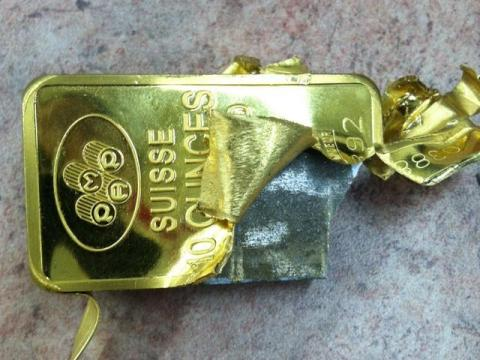
The orchestrated attack on bullion in the paper gold market took the spot prices of gold and silver down on Friday and Monday, but actual physical purchases rose during this period. The sales were of paper claims, not of real metal.

The demand for physical possession of bullion rose so strongly that large wholesalers such as www.tulving.com and large retailers such as Gainesville Coins reported sold out items. Also, dealers raised the premiums above the spot price that is charged for coins. From Friday to Monday the premium on Silver Eagles at the large online retailer, Gainesville Coins, rose from $3.75 to $5.99 above the spot price of silver. The percentage increase in premium was larger than the percentage decline in the silver price. Thus, the price of a silver one Troy ounce coin did not drop despite the drop in the spot price. Today (April 16) the price of a silver eagle purchased with a credit card from retailer Gainesville Coins is $30.36. You would never know that the market had fallen out.

Today (Tuesday, April 16) Tulving reported 29% of its bar and coin bullion categories sold out and had almost no silver coin stock. The premium over spot on new gold eagles was $63.95. At large online retailers the premium was $71. Gainesville Coins has no silver Buffalos and lists shipment of orders to commence when coins are available, estimated to be May 10.

What I am reporting are facts, not a theory. We have just had two days of massive sales of paper claims on bullion, but during these days when the price of gold and silver collapsed under short sales, it was difficult to get your hands on the metal itself. On telephone orders you wait in long queues to place an order and are told that delivery awaits availability.

Listening to the media and to academic economists such as Paul Krugman, you would think no one any longer wants gold and silver. But try getting your hands on some.

The physical bullion market, gold especially, is dominated by Asians. Americans are a minor player. Most Americans still believe in the almighty dollar, but few Asians do. The Chinese tomorrow would dump their two trillion of US dollar-denominated assets and purchase gold, except that the action would drive down the dollar and drive up the gold price. So, unlike the orchestrated attack on gold, China plays a slow hand, using the orchestrated attack on gold to acquire the metal at lower prices.

As I understand it, the open interest or future contracts on COMEX greatly exceed the bullion available for delivery. This is a paper market mainly settled in cash, not by taking delivery. If the contracts had to be settled in bullion instead of cash, the COMEX would fail.

One advantage of growing old is that one gains perspective. I remember when gold was $35 an ounce and silver $1 an ounce. If memory serves, until sometimes in the 1960s, a person could still take a paper dollar to a bank and be given a silver dollar. There were $1 dollar and $5 dollar silver certificates (paper money) that circulated along with Federal Reserve currency. At that time banks did not differentiate. A dollar was a dollar. Silver certificates today have collectors’s value, but the Federal Reserve currency does not.

If memory serves, sometimes after 1966 if a person presented a silver certificate to a Federal Reserve Bank, he received one or five ounces or raw silver in return depending on the denomination of the certificate, which looked like a Federal Reserve note except it said Silver Certificate. I have some of these envelopes of little pieces of silver.

When silver was taken out of US coins in the 1960s and copper was taken out of the US penny in the early 1980s, despite my opposition as Assistant Secretary of the US Treasury for Economic Policy, all real constraints on fiat money were removed.

Today we see the Fed protecting its protection of “banks too big to fail” with low interest rates by creating enormous sums of money in order to purchase both Treasury bonds and mortgage backed derivatives.

These Fed purchasers are at the expense of savers and CD and bond purchasers who receive a negative real rate of interest.

Now, to protect its bank rescue policy, the Fed is attempting to drive down the price of bullion, thus depriving Americans of any way of protecting their life savings from the inflation that the Fed’s money printing will ultimately cause.

Save a handful of corrupt banks, screw the American public–that is the Fed’s policy.
Like almost every other American institution, the Fed represents the mega-rich.

Anyone with open eyes can see that it is impossible for the US dollar to maintain its current exchange value and role as world money when its supply is being increased by $1,000 billion per year while the world is ceasing to use the dollar for international payments.

The attack on gold is a desperate attempt to protect the US dollar from the Fed’s policy of quantitative easing. But the attack on bullion has apparently failed. The price was driven down, but the demand for physical possession has hit new highs.

What is it that we really know? What have we learned since the Clinton regime?

We have learned that integrity is rare in the US government, in the justice system, and in the financial sector. Whatever integrity one can find in these arenas wouldn’t amount to one ounce of gold.

Americans live in a rigged system in which propaganda determines the public’s awareness and consciousness. Americans, or most of them, live in the Matrix.

Since the end of WWII, most foreign governments have been in the habit of going along with Washington. Only in the aftermath of Washington’s phony wars based on lies and phony economy based on rigged statistics is the rest of the world beginning to realize that Washington is a destabilizing force.

Chavez, the recently deceased leader of Venezuela made the point most powerfully when he spoke at the UN. Standing at the podium in the General Assembly, he said that “Satan himself stood here yesterday speaking as if he owned the world. You can still smell the sulfur.” He was speaking of George W. Bush, and the entire assembly knew it.

The Russian leader, Putin, speaking of Washington, has declared that we know what comrade wolf is up to.

The Chinese can see the new military bases that stupid Washington is building in the Chinese area of influence.

A country whose currency is being abandoned as the means of international settlement, not only by the BRICS but also by puppet states such as Australia and Japan, has reached the point of absurdity when it tries to eliminate bullion as a refuge against the depreciating dollar.

The Federal Reserve and the US Treasury using their dependent bullion banks, every one of which would be busted if interest rates were not rigged by the Federal Reserve, have used leverage in the paper market to drive down the prices of gold and silver; yet, purchases of physical bullion are outrunning supplies.

What we are witnessing is the failure of a policy of financial corruption.

Integrity is a scarce commodity in the US government. Try to find much of it. Demonstrating a rare example of integrity, Brooksley Born resigned as head of the Federal Commodity Futures Trading Commission, because the Federal Reserve chairman, the US Treasury secretary, and the SEC chairman prevented her from during her statutory duty and regulating over the counter derivatives. The three morons who prevented her from doing her duty caused the financial collapse.

Integrity is almost non-existent in the US justice system.

Integrity is totally non-existent in the US financial system. As Michael Hudson has proven, the financialization of the economy has destroyed the economy.

With dollars, and now with Washington’s demand Japanese yen and European euros being printed in profusion, where can people put their money, at least those who still have some?

Can they put it in bonds when the Federal Reserve is monetizing debt at $1,000 billion annually and real interest rates are negative?

Can they put it in stocks that are pumped up by banks speculating with the Fed’s money while retail sales, labor force participation, and consumer incomes fall?

Safety can only be found in gold and silver, traditional, historical money that cannot be inflated.This is why bullion is under attack by Washington.

Readers ask me what they can do to protect themselves and where can they go to make gold and silver purchases.

I am not a registered financial advisor. I do not provide financial advice.

Every person must make their own decision. All I can do is to provide information, which is not guaranteed to be correct.

There are various simple options in contrast with the more demanding options of the professional trader. A person can accumulate gold and silver coins and keep them in a home safe or bury them on the property. A person can purchase shares of the Central Fund of Canada which convey ownership in a company that owns gold and silver bullion in a vault in Canada. A person can put money under management with companies that have a strong component of gold, such as Golden Returns Capital LLC whose gold depository is in the US.

Or you can decide to go with William S. Kaye (wskaye@pacgrp.com) whose depository is in Hong Kong.

There is GoldMoney, a Channel Islands based depository firm with storage vaults in London, Switzerland and Asia, and there is GoldSwitzerland, a Swiss company with its storage vault in Switzerland.

If you want a reading on whether physical gold is being sold or merely paper shorts, subscribe to John Brimelow brimelowgoldjottings@gmail.com

This list is not exhaustive. Protecting wealth can be harder than acquiring wealth. This is especially true for the middle class. The super rich can lose hundreds of millions of dollars and still be rich.

Gold and silver investments are not my speciality. I am an economist. I am aware that the US media is a propaganda organization, not a purveyor of truth. Currently the US is creating 1,000 billion dollars annually, but the demand for dollars is not growing with the supply.

Therefore, the exchange value of the dollar is at risk. A high and rising dollar price of bullion is an indication that the exchange value of the dollar with regard to other currencies is too high.

To protect the dollar from its money printing practice, the Fed has used naked shorts, its bullion bank dependents, and the presstitute media to drive down the gold price in the paper market, essentially an unreal market not inhabited by purchasers of physical metal. If the dollar’s exchange value takes a visible hit, import prices will rise, and the Fed will lose control over interest rates.

Meanwhile the demand for bullion possession rises.

The latest disinformation being put out is that bullion dealers, faced with the collapse of bullion prices, are afraid of the risk of purchasing bullion to sell to the public. They are going out of business and not replenishing their stocks. Gold and silver bullion is not available, because bullion dealers are afraid to stock the metals.

Little doubt that Americans who believe every fairy tale “their” government tells them will believe this one too. But those who don’t will observe the long lines waiting to purchase physical metal, not paper claims, and continue to load up on bullion. –  Paul Craig Roberts

The assault on gold

I was the first to point out that the Federal Reserve was rigging all markets, not merely bond prices and interest rates, and that the Fed is rigging the bullion market in order to protect the US dollar’s exchange value, which is threatened by the Fed’s quantitative easing. With the Fed adding to the supply of dollars faster than the demand for dollars is increasing, the price or exchange value of the dollar is set up to fall.

A fall in the dollar’s exchange rate would push up import prices and, thereby, domestic inflation, and the Fed would lose control over interest rates. The bond market would collapse and with it the values of debt-related derivatives on the “banks too big too fail” balance sheets. The financial system would be in turmoil, and panic would reign.

Rapidly rising bullion prices were an indication of loss of confidence in the dollar and were signaling a drop in the dollar’s exchange rate. The Fed used naked shorts in the paper gold market to offset the price effect of a rising demand for bullion possession. Short sales that drive down the price trigger stop-loss orders that automatically lead to individual sales of bullion holdings once their loss limits are reached.

According to Andrew Maguire, on Friday, April 12, the Fed’s agents hit the market with 500 tons of naked shorts. Normally, a short is when an investor thinks the price of a stock or commodity is going to fall. He to sell the item in advance of the fall, pocket the money, and then buy the item back after it falls in price, thus making money on the short sale. If he doesn’t have the item, he borrows it from someone who does, putting up cash collateral equal to the current market price. Then he sells the item, waits for it to fall in price, buys it back at the lower price and returns it to the owner who returns his collateral. If enough shorts are sold, the result can be to drive down the market price.

A naked short is when the short seller does not have or borrow the item that he shorts, but sells shorts regardless. In the paper gold market, the participants are betting on gold prices and are content with the monetary payment. Therefore, generally, as participants are not interested in taking delivery of the gold, naked shorts do not need to be covered with the physical metal.

In other words, with naked shorts, no physical metal is actually sold.

People ask me how I know that the Fed is rigging the bullion price and seem surprised that anyone would think the Fed and its bullion bank agents would do such a thing, despite the public knowledge that the Fed is rigging the bond market and the banks with the Fed’s knowledge rigged the Libor rate. The answer is that the circumstantial evidence is powerful.

Consider the 500 tons of paper gold sold on Friday. Begin with the question, how many ounces is 500 tons? There are 2,000 pounds to one ton. 500 tons equal 1,000,000 pounds. There are 16 ounces to one pound, which comes to 16 million ounces of short sales on Friday.

Who has 16 million ounces of gold? At the beginning gold price that day of about $1,550, that comes to $24,800,000,000. Who has that kind of money?

What happens when 500 tons of gold sales are dumped on the market at one time or on one day? Correct, it drives the price down. Investors who want to get out of large positions would spread sales out over time so as not to lower their sales proceeds. The sale took gold down by about $73 per ounce. That means the seller or sellers lost up to $73 dollars 16 million times, or $1,168,000,000.

Who can afford to lose that kind of money? Only a central bank that can print it.

I believe that the authorities would like to drive the gold price down further and will, if they can, hit the gold market twice more next week and put gold at $1,400 per ounce or lower. The successive declines could perhaps spook individual holders of physical gold and result in actual net sales of physical gold as people reduced their
holdings of the metal.

However, bullion dealer Bill Haynes told kingworldnews.com that last Friday bullion purchasers among the public outpaced sellers by 50 to 1, and that the premiums over the spot price on gold and silver coins are the highest in decades. I myself checked with Gainesville Coins and was told that far more buyers than sellers had responded to the price drop.

Unless the authorities have the actual metal with which to back up the short selling, they could be met with demands for deliveries. Unable to cover the shorts with real metal, the scheme would be exposed.

Do the authorities have the metal with which to cover shorts? I do not know. However, knowledgeable dealers are suspicious. Some think that US physical stocks of gold were used up in sales in efforts to disrupt the rise in the gold price from $272 in December 2000 to $1,900 in 2011. They point to Germany’s recent request that the US return the German gold stored in the US, and to the US government’s reply that it would return the gold piecemeal over seven years. If the US has the gold, why not return it to Germany?

The clear implication is that the US cannot deliver the gold.

Andrew Maguire also reports that foreign central banks, especially China, are loading up on physical gold at the low prices made possible by the short selling. If central banks are using their dollar holdings to purchase bullion at bargain prices, the likely results will be pressure on the dollar’s exchange value and a declining market supply of physical bullion. In other words, by trying to protect the dollar from its quantitative easing policy, the Fed might be hastening the dollar’s demise.

Possibly the Fed fears a dollar crisis or derivative blowup is nearing and is trying to reset the gold/dollar price prior to the outbreak of trouble. If ill winds are forecast, the Fed might feel it is better positioned to deal with crisis if the price of bullion is lower and confidence in bullion as a refuge has been shaken.

In addition to short selling that is clearly intended to drive down the gold price, orchestration is also indicated by the advance announcements this month first from brokerage houses and then from Goldman Sachs that hedge funds and institutional investors would be selling their gold positions. The purpose of these announcements was to encourage individual investors to get out of gold before the big boys did. Does anyone believe that hedge funds and Wall Street would announce their sales in advance so the small fry can get out of gold at a higher price than they do?

If these advanced announcements are not orchestration, what are they?

I see the orchestrated effort to suppress the price of gold and silver as a sign that the authorities are frightened that trouble is brewing that they cannot control unless there is strong confidence in the dollar. Otherwise, what is the point of the heavy short selling and orchestrated announcements of gold sales in advance of the sales?

Paul Craig Roberts is a  former Assistant Secretary of the Treasury for Economic Policy and associate editor of the Wall Street Journal. His latest book, The Failure of Laissez Faire Capitalism and  is now available. http://www.paulcraigroberts.org/

India’s evil Apartheid

Why are South African Indians concerned about equal rights in this country, but seem to care little about an evil system back home?

In a uniquely Indian version of Romeo and Juliette, a teenage girl and boy were publicly lynched earlier this month in rural Uttar Pradesh. The girl’s parents and hundreds of villagers watched and applauded.

The crime? The girl was a Brahmin, Hinduism’s highest caste; the boy, a Jat, a somewhat lower, though still respectable, farming caste. The girl’s family had been ‘defiled’ by their daughter crossing the ‘pollution barrier’ to consort with a lower caste boy. The appropriate punishment was death.

At the end of August, India, a self-professed champion of human rights, will attend the UN’s conference on racism in Durban, South Africa. While the US is frantically trying to shield its protégé, Israel, from charges of racism at Durban, India is just as frantically trying to prevent its caste system, which is often called ‘hidden apartheid,’ from being put onto the conference’s agenda.

For decades, India loudly denounced discrimination against blacks in the US and South Africa. But hidden from the world’s gaze, India, according to many human rights groups, continues to practice and condone the world’s largest, most pernicious system of institutionalized racism and discrimination, the caste system.

Of India’s 1 billion people, 160 million are untouchables, or ‘Dalits’(meaning: ‘broken people’). Untouchables are at the bottom of the Hindu caste system of segregation; light-skinned Brahmins at the top. In between are a myriad of castes and sub-castes. Untouchables, India’s poorest people, are forced to perform society’s most menial, degrading tasks.

Untouchables are barred from sections of villages inhabited by higher caste Hindus. A Dalit’s ‘unclean’ shadow must never fall upon that of a Brahmin, lest he be defiled. Dalits may not draw water from higher caste wells, nor touch food implements of their betters. They may not enter higher caste temples, nor own land. Their children sit in the back of classrooms, or are simply denied schooling.

The ancient Hindu caste system dates back to 1500 BC when fair-skinned Aryan tribes invaded northern India. The newcomers conquered India’s dark-skinned indigenous Dravidian inhabitants. Though occupation and rank originally determined caste, over centuries caste came to be associated with skin color. Even in overseas Indian communities, including Canada, caste still reigns. Marriage solicitations routinely request ‘light-skinned’ boys or girls.

Fair-skinned Brahmins, 3.5% of the population, are India’s ruling elite, holding 78% of judicial positions and half parliament’s seats. In recent tests, Indian scientists discovered that high-caste Hindus, particularly Brahmins, are genetically closer to Europeans than they are to dark-skinned, Dravidian Indians. Caste became a rigid system whereby India’s fair-skinned ruling class kept lower and swarthier orders in their places – as laborers, landless peasants, and servants – exploiting them in the name of religion.

The Sikh religion and Islam both reject the Hindu caste system. Millions of low caste Indians found refuge from racial oppression as Sikhs, Muslims, and, more recently, Christians. All three religions have been and remain subject to varying forms of persecution by India’s Hindu majority.

Dalits are forced to clean public toilettes and remove human feces, usually with their hands. They sweep up after Indians defecate in the streets and move dead animals. According to an extensive report on caste by the respected Human Rights Watch, large numbers of Dalit women are routinely raped and forced to become sex slaves for Hindu priests and land owners. Of India’s estimated 40 million indentured laborers – a modern form of slavery – most are Dalit children, often sold into lifelong servitude by starving parents.

When Dalits try to defend themselves from abuse and exploitation, they are attacked by higher-caste gangs and local police. Their shanties are burned and their women gang raped. Dalits, like Muslim Kashmiris, are frequently subjected to beatings, rape, torture and arson by India’s brutal police, says Human Rights Watch.

The recent case of India’s famed Bandit Queen, a Dalit woman who killed a score of higher caste men who had raped her, is but one dramatic example of the suffering inflicted by India’s cruel caste system, which makes South Africa’s former apartheid look benign by comparison.

Modern India’s father, the great Mohandas Gandhi, struggled against caste and called for liberation of Dalits. India outlawed discrimination against untouchables in the 1950′s, and has enacted affirmative action programs for Dalits in education, voting, and government jobs. Nepal just followed suit this summer. India’s president, a ceremonial post, is a Dalit, though most of its leaders, like PM Vajypee and Home Minster L.K. Advani, are high-caste, fair-skinned Hindus.

“The Indian government has been very successful at manufacturing an image as the world’s largest democracy,” says Smita Narula, author of the Human Rights Watch report,…”but none of its (anti-discrimination) laws are implemented and the Constitution is not enforced.”

Delhi simply winks at the widescale oppression of Dalits across India, remembering them only at election time. India appears unlikely to make a major national effort to root out the deeply ingrained caste system until worldwide outrage shames India’s elite into taking drastic action. Durban would be a good start. India won’t achieve the international respect and great power status it so craves until the evil of caste is ended for good. – Eric Margolis wrote this article before the start of the World Conference against Racism, Racial Discrimination, Xenophobia and Related Intolerance in August 2001. This conference was held under the auspices of the United Nations. Nothing much has changed since then.