Marine Le Pen’s National Front stunned France’s political elite on Sunday by taking first place in European Parliament elections, with President Francois Hollande’s Socialists beaten into a poor third, provisional results showed.
It was the first time the anti-immigrant, anti-EU party had won a nationwide election in its four-decade history. If the results are confirmed, it could secure as many as 25 seats in the new European Parliament, more than eight times the three it won in 2009.
“The people have spoken loud and clear,” a triumphant Le Pen told cheering supporters at party headquarters in a northwestern suburb of Paris.
“They no longer want to be led by those outside our borders, by EU commissioners and technocrats who are unelected. They want to be protected from globalization and take back the reins of their destiny,” she said.
France was a founding member of the European Union but voters have grown increasingly disenchanted with its free-market and open-border policies in recent years, rejecting a proposed EU constitution in a 2005 referendum.
Partial results released by the Interior Ministry gave the FN 26 percent, even higher than expected in pre-vote polls.
The party has carved out a niche in French politics, notably among disaffected working class voters who believe the mainstream elite does not understand their concerns about crime, immigration, job losses and stagnant living standards.
The mainstream UMP conservative opposition came second with 20.66 percent. Hollande’s Socialists took just 13.88 percent, well down from the 16.5 percent they won last time in 2009 and worse than their previous low of 14.5 percent in 1994.
The FN, which Le Pen has sought to rid of its racist reputation since she took the reins from her father in 2011, campaigned on a platform of tighter borders, hostility to the euro currency and rejection of a planned EU-US trade pact.
“It’s an earthquake,” said Prime Minister Manuel Valls, brought in by Hollande barely two months ago after the Socialists suffered a similar rout in local elections.
“We are in a crisis of confidence … Europe has disappointed – that’s a fact,” Valls said.
He urged the 28-member bloc to give more priority to social justice and pledged his government would pursue efforts to revive the euro zone’s number two economy, which saw zero growth in the first quarter, by easing the tax burden on business.
Le Pen called for the dissolution of parliament, insisting it was no longer representative of the French people’s will. The FN holds only two of 577 seats in the National Assembly.
The Socialists quickly dismissed such a move which, given Hollande’s record unpopularity, would almost certainly mean that his allies would lose their majority. The next presidential and parliamentary elections are not due until 2017.
The score was also a blow to the conservative UMP, whose chairman Jean-Francois Cope is expected to face challenges to his leadership.
“It’s a big disappointment for us, but mostly an expression of anger from the French people,” Cope said.
The Interior Ministry put turnout at just over 43 percent, a few points higher than it was at the last EU election in 2009.
In March the FN won control of 11 town halls – a tiny minority of France’s thousands of municipalities but still a slap in the face for the mainstream left and right which have always ruled.
Le Pen told Reuters in the run-up to the vote that a major priority for the FN and other Eurosceptic parties across Europe would be to form a political caucus in the European Parliament and to block a planned transatlantic trade pact.
The National Democratic Party of Germany (NPD), won 300,000 votes, 1.0 percent of the total, and so wins its first seat in the 751-member European parliament, according to AFP.
The far-right party profited from a reform of Germany’s electoral system, which removed a three percent threshold to gain seats.
Nigel Farage hailed Ukip’s victory in the European elections as the most ‘extraordinary result in British politics for 100 years’.
Support for Ukip has surged by more than 12 per cent, outstripping a more modest boost in votes for Labour, while the Lib Dems faced near-wipeout, with some calling for Nick Clegg to resign.
Mr Farage said he was ‘proud’ of the campaign which has seen him humiliate the Westminster parties, pushing Labour and the Tories into second and third.
As Ukip was triumphing in the UK, across the Channel France’s far-right National Front was on course for a massive victory in European elections tonight as the country swung behind its anti-immigration, anti-EU agenda.
President of Russia Vladimir Putin stated at the St. Petersburg International Economic Forum (SPIEF) that the unipolar model of the world has failed; and today it is obvious to everybody, including those who try to live in the past and maintain a monopoly, dictate their rules in politics, trade, finance, and impose cultural standards.
Putin notes that even though the Forum is devoted to economic issues, politics influences economic processes. And “inability to compromise, consider the legal interests of partners, direct pressure just to nourish chaos and instability, new risks to further development of the international community.”
“Isn’t it clear that economic sanctions have a boomerang effect as an instrument of political pressure in the modern world? In the end they are reflected in the businesses and economies of the countries which initiate them. I understand the concern of foreign businessmen who invested billions in Russia, gained weight in our country and worked successfully here,” President Putin stressed.
“Russia is being brought into the integration Eurasian project together with its neighbors. The central event of the year for the countries of the Customs Union and the United Economic Space will be signing of the treaty on the Eurasian Economic Union, which will take place in Astana on May 29th. The treaty will come into force on January 1st, 2015. We will have a united market of three countries with population of more than 170 million people, free capital, goods, services, labour force movement. Opportunities for business are growing,” the Russian leader said.
Putin expressed assurance that the Eurasian Economic Union will help foreign partners to work in the new united market, as the integration model is based on the principles of the WTO.
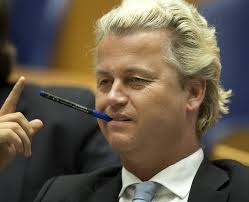
Dutch politician Geert Wilders on Thursday dismissed a comment by his political ally Jean-Marie Le Pen that the ebola virus could address Europe’s immigration problem.
Jean-Marie Le Pen
At a cocktail party before an election rally in Marseille on Tuesday evening in which the FN is leading the polls in France, Le Pen spoke of the “demographic explosion” in the world.
“Monseigneur Ebola could sort that out in three months,” he said in front of journalists.
“I think it was a silly remark,” the platinum-haired Dutch anti-immigration politician said shortly after casting his ballot in European parliamentary elections in a Hague suburb.
The quote was widely picked up by French media to embarrass Marine Le Pen, the current head of the FN.
Wilders reminded journalists that Marine Le Pen was in charge of the FN.
Jean-Marie Le Pen on Wednesday downplayed the comment. He is the honorary president of the National Front and is standing in this week’s European parliamentary elections.
Mr Le Pen, who will celebrate his 86th birthday on 20 June, said he did not see “how it is possible to argue about this.” “I say France must prepare itself for a shock, for a flood of migration caused by the ongoing growth of the world’s population,” the politician said.
Le Pen said later he wasn’t calling for an epidemic; his daughter’s chief of staff said his words had been misinterpreted.
Wilders and Le Pen late last year announced a historic alliance to fight the European elections and form a bloc in Brussels.
In developing her anti-euro platform, Marine Le Pen has also exchanged notes with Matteo Salvini of Italy’s Northern League.
British anti-EU and anti-immigration leader Nigel Farage, who leads the United Kingdom Independence Party (UKIP) has ruled out joining the group though, saying the FN was too tainted by “anti-Semitism”.
In the Czech Republic the Workers’ Party (DS) and National Party (NS) have stood up for Mr Le Pen on their official websites. Czech voters will be electing new MEPs this coming Friday and Saturday.
Voters among the more than 380 million Europeans in 28 countries will choose a total of 751 new MEPs.
Le Pen unknowingly joins Paul Ehrlich’s predictions. Ehrlich, a Stanford University biologist famous for his book “The Population Bomb,” doubled down on his climate change and overpopulation fears with HuffPost Live on May 21.
Ehrlich’s co-author Michael Tobias praised Ehrlich’s older predictions and said they underestimated the problem.
Ehrlich told the interviewer humans must soon begin contemplating “eat[ing] the bodies of your dead” after resources are depleted.
Ehrlich claimed that scarcity of resources will get so bad that humans will need to drastically change our eating habits and agriculture. Instead, we will soon begin asking “is it perfectly okay to eat the bodies of your dead because we’re all so hungry?” He added that humanity is “moving in that direction with a ridiculous speed.”
Some UK politicians say Prince Charles should abdicate the throne and stand for an election if he wants to express his political views, local media reported.
Prince Charles’ remarks about Russian President Vladimir Putin have sparked great controversy both in the UK and Russia.
Sir Tony Brenton, who served as British Ambassador to Russia in 2004-2008, told the BBC, “You can’t be much more insulting about a Russian than to compare him to Hitler, who killed 26 million Russians,” according to Itar-Tass.
Nigel Farage, leader of the UK Independence Party, says Prince Charles was wrong in his comparisons. Farage went on to blame the EU and NATO for expansionist policy in Eastern Europe.
Labor MP Mike Gapes also commented on Prince Charles’ comparison: “If he wishes to be in public life speaking out, saying what he thinks on every issue then unfortunately he should abdicate and stand for election.” Gapes also stressed that he thinks the British monarchy should be seen and not heard. He said the “freedom of speech argument” does not apply to Prince Charles.
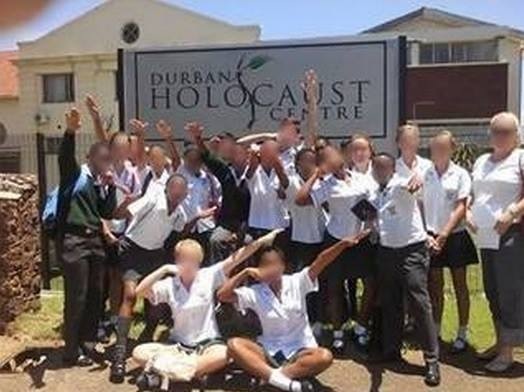
A Nazi salute may – or may not – land you in jail in Switzerland. Apparently, you are safe if you manage to prove that it was intended as a personal statement and not a marker of political affiliation, the country’s highest court has ruled.
Durban is not Switzerland yet
The decision, entitled “Hitler salute in public not always punishable,” implies the following: “Unless one is proven to be spreading racist ideology, they’re free to express a personal sentiment or belief with the gesture.” That is what Lausanne’s Federal Tribunal said Wednesday, according to AP.
The hearing was a continuation of earlier 2010 proceedings in the case of a man who faced the racial discrimination conviction for taking part in an August demonstration of that year. The rally, involving a crowd of 150 people, was held a week after the Swiss National Day at a historic place where the modern Swiss Confederation is believed to have been born in 1291.
The man, according to the papers, had substituted the Swiss oath with a 20-second Nazi salute – something a local court initially ruled to be a crime, with the decision now overturned.
Switzerland is not without its own issues of racial hatred. For the past 10 years, the country has seen a steady presence of right-wing groups, which show up each National Day to disrupt the occasion.
A 1995 law prohibits all Nazi symbolism from being spread for the purpose of promoting racist ideology. But still in 2010 the Swiss Federal Council, which included the president, decided not to ban the Nazi salute and swastika symbol. Many other countries, including Germany, Austria and the Czech Republic, deem the Nazi salute illegal.
A similar case existed in Switzerland with regard to some verbal expressions that may be deemed insulting, including “foreign swine” or “filthy asylum seeker” uttered in German. However, since those are common and widespread insults in the German language, the court ruled they do not amount to racist attacks.
Cooperation of Russia’s and China’s defense ministries is an important factor for security in the region and the whole world, Russian President Vladimir Putin said after talks with China’s President Xi Jinping. “As far as military-technical cooperation contacts and contacts between defense ministries are concerned, such cooperation is a major factor for stability and security in the region and around the world,” Putin said. He noted joint projects in civil aircraft building.
“We have good prospects and good projects for creating a wide-body plane and heavy civilian helicopter,” Putin said.
Cooperation in the automobile industry was developing well, too, he said.
“We are working along all lines and there is progress everywhere,” Putin said.
“We shall be expanding financial infrastructures. Active work is underway to expand mutual settlements in the national currencies. We shall give thought to new instruments in the financial sphere,” he added, TASS reports.
Russia and China intend to raise their trade and business ties to a qualitatively new level as the two countries continue to boost their bilateral trade, Russian President Vladimir Putin said at negotiations with his Chinese counterpart Xi Jinping in Shanghai on Tuesday. According to Putin, he and the Chinese leader discussed bilateral issues and key international topics before they were joined by their countries’ delegations.
“Our countries have accomplished an enormous amount of joint work to reach this new historic landmark – a comprehensive partnership and strategic cooperation. China has gained a firm foothold as our main trade partner,” the Russian president said. Mutual trade between Russia and China grew by 2% to $90 billion in 2013 year-on-year, he said.
“Russian-Chinese cooperation has become a crucial factor of international stability. Our cooperation on the platform of the UN and other international organizations is becoming increasingly important. And we will continue to contribute to the development of regional ties, including within the SCO [Shanghai Cooperation Organization],” the Russian leader said.
Russia and China are resolved to resist the interference in internal affairs of other states urging to give up the language of unilateral sanctions, Russian President Vladimir Putin and Chinese leader Xi Jinping said in a joint statement following their talks in Shanghai. Russia and China also called for giving up funding or encouraging the activity aimed at changing the Constitutional order of other states.
“The parties underscore the necessity to respect the historical heritage of countries, their cultural traditions, the independently chosen social and political system, the system of values and ways of development, and resist the interference in internal affairs of other states, giving up the language of unilateral sanctions, the organization of assistance, funding or encouraging the activity aimed at changing the constitutional order of another state or its involvement in any multi-party association or union,” the document said.
The Russian and Chinese leaders call for “keeping the stability of international relations, peace and security at the regional and global levels, settling crises and disputes, fighting terrorism and cross border crime and resisting the proliferation of weapons of mass destruction.”
The parties agree that countries and peoples are increasingly dependent on each other in the modern world amid the convergence of the economies and cultures of different states, according to the joint statement, TASS reports.
Putin’s two-day visit to China may give momentum to restoring multipolar world
During the visit Putin will also hold separate bilateral meetings with some summit participants, in particular, Mongolian President Tsakhiagiin Elbegdorj, President of Afghanistan Hamid Karzai and Iranian President Hassan Rouhani.
A separate meeting of Putin with UN Secretary-General Ban Ki-moon is also planned. “The sides intend to exchange views on all important international issues, including on the situation in Ukraine,” Russian presidential aide Yuri Ushakov told TASS.
In addition, Putin will talk to the former President of the People’s Republic of China Jiang Zemin, “whom Vladimir Vladimirovich knows very well,” Ushakov added.
The current meeting between the heads of Russia and China is the second this year. They had previously met at the opening of the Sochi Olympics in February. According to Ushakov, the two heads of state plan to discuss important issues of the development of relations in various spheres, including interaction in the international arena. The side will pay major attention, in particular, to the work within the framework of the United Nations, BRICS group (bringing together Brazil, Russia, India, China and South Africa) and a number of regional structures, he said. On the talks’ results, the sides are expected to adopt a statement on a new stage in Russian-Chinese relations of comprehensive partnership and strategic interaction.
A package of documents that is planned to be signed in Shanghai would break a record in terms of the volume. “The package consists of 40 – 43 documents. The package that we have now is perhaps a record-breaking,” Ushakov said. He noted, in particular, that the sides continued the preparation of the contract between Russia’s natural gas monopoly Gazprom and China National Petroleum Corporation (CNPC).
China is Russia’s main trade partner. In 2013, the bilateral trade reached a record high level of 88.8 billion US dollars (1.7-percent increase from the 2012 level). In the first quarter of 2014, the growth of this indicator continued and reached 2.2%.
In the view of Ushakov, if this trend persists, the sides may reach by 2015 the level of 100 billion US dollars, and by 2020 – 200 billion US dollars.
The joint design of a long-haul wide-body aircraft and the production of Mil Mi-26 heavy helicopters in China will be the top priority military-technological cooperation areas discussed during the Chinese visit of Russian President Vladimir Putin, newspaper Kommersant said on Monday.
The newspaper quoted sources in the Russian delegation and said Russia’s United Aircraft Corporation (UAC) had drawn up a sketch project and a feasibility study of the prospective long-haul wide-body jet.
“This project is supposed to be a rival for US and European aircraft, and China is interested in building at least 1,000 jets. If the project is successful we may set up a joint venture at some point to compete full-scale against Airbus and Boeing. We are prepared to buy these aircraft for domestic needs, as well,” a source told Kommersant.
The second project will yield a heavy helicopter for Chinese military and civilian structures. “We offered them to buy Mil Mi-26 helicopters but our partners declined that option. They wished to design a helicopter capable of transporting up to 15 tonnes of cargo, so we suggested a concept of profound modernization of the Mi-26 and expressed readiness to start from scratch and to provide exclusive customization,” the source continued.
Putin said he believes the contract for the supply of gas to China will enable Russia to diversify its pipeline routes and will help China reduce its energy deficit. “We are consistently moving towards the formation of a strategic energy alliance,” Putin said. Simultaneously, “active work is being done to reduce the dependence of bilateral trade on external economic factors.”
Putin has said he is always glad to visit hospitable China. The expansion of ties with China is Russia’s indisputable foreign policy priority, Putin said in an interview for the Chinese media ahead of his visit to China. Bilateral cooperation has reached a higher level of comprehensive strategic partnership, he said.
He pointed out that the bilateral cooperation potential was far from exhausted.
Dutch right-wing leader Geert Wilders is riding high ahead of this month’s European Parliament elections, hoping to destroy from within what he calls the ‘monster of Brussels’.
The platinum-haired Wilders in November announced “the start of the liberation of Europe” from the European Union after forming a partnership with French right-wing party National Front (FN).
Like the FN’s leader Marine Le Pen, Wilders wants to take his country out of the EU and to abandon the euro.
The latest Ipsos opinion poll on May 1 ranked Wilders’ PVV third in the Netherlands, just below the ruling coalition partner People’s Party for Freedom and Democracy (VVD) and the pro-Europe D66.
Despite thousands filing police complaints of racism against Wilders, his anti-EU and anti-immigration call still appeals to many disillusioned with crisis-driven budget cuts blamed on Brussels.
The virulently pro-Israel Wilders has been giving extensive interviews, including to pro-Kremlin media, blaming the Ukraine crisis on the European Union.
The Dutch Centre for Information and Documentation on Israel (CIDI) on Wednesday said he was “betraying his principles” by cooperating with Le Pen.
Despite Wilders’ fawning approaches to Nigel Farage, his UK Independence Party (UKIP) and Scandinavian eurosceptic parties have said they would not work with Wilders because of his association with Le Pen.
In order to form a far-right anti-European bloc, Wilders and Le Pen would have to find like-minded politicians in at least a quarter of the EU’s 28 member states and see 25 members elected to the now trimmed-down 751-seat European Parliament.
So far Wilders reportedly wants Italy’s Northern League, Austria’s FPO, Belgium’s Vlaams Belang, Slovakia’s SNS and the Swedish Democrats on board.
If they become an official European political group, they would benefit from subsidies, offices, a communication budget, seats on committees and speaking time in parliament proportional to their number.
The Netherlands this time only has 27 seats in the European Parliament and with the PVV expected to gain around five seats, it will remain junior to the mightier National Front.
“Indirectly though he’ll have a far greater impact,” said political analyst Andre Krouwel, because of his ability to create doubt and division within bigger parties.
“He’s using it on national level. It is likely to happen on European level as well,” Krouwel said.
There are currently eight million non-white people – 14% of the total – across England and Wales, according to the study by the Tory think tank Policy Exchange
Up to a third of the population will be black or from another ethnic minority by 2050, new research forecasts today.
There are currently eight million non-white people – 14% of the total – across England and Wales, according to the study by the Tory think tank Policy Exchange.
But the so-called BME (black and minority ethnic) population has doubled in the past decade and now accounts for 80% of growth while the white population has remained constant.
While ethnic minorities make up just 5% of the over-60s, they account for a quarter of under fives.
That means between 20% and 30% of people will be black or ethnic minority by the middle of the century.
And it is a time bomb for the Tories who struggle to win votes from BME communities which overwhelmingly back Labour.
The findings should act as a wake-up call for politicians to stop treating people from non-white backgrounds as one, single group, the think tank said.
Since the Second World War immigration from the Caribbean , the Indian subcontinent and Africa has produced in diverse groups with widely differing opinions, experiences and traditions, it said.
There are “clear and meaningful differences between each of these communities which need to be fully understood” but politicians are not doing that, the report says.
Author Rishi Sunak said: “These communities will continue to become an ever more significant part of Britain, especially in future elections.
“However, as our research demonstrates ethnic minorities are not one homogeneous political group.
“From education to employment, housing to trust in the police, politicians from all parties must understand the different issues affecting individual communities.”
The research draws on survey, census, academic and polling data to build up a detailed picture of the five largest minority groups in the UK – Indian, Pakistani, Bangladeshi, Black African and Black Caribbean.
With the exception of those from an African background a majority of non-white Britons describe themselves as “British-only”, the report said.
BME communities also overwhelmingly support the Labour Party “regardless of class or association with Conservative policies”.
Some 68% voted for Gordon Brown’s party at the 21010 General Election, compared with 16% for the Conservatives and 14% for the Liberal Democrats.
Last month Adam Afriyie, the first black Tory MP and once touted as a future party leader, said the Conservatives will not be able to completely detoxify its brand in the eyes of ethnic minority voters in time for next year’s general election.
He admitted that even if Prime Minister David Cameron “does everything perfectly” in the run up to the 2015 General Election, the party’s lack of support among minorities will persist.
But Mr Afriyie said the party would be making a mistake if it changed its policies to suit individual groups in a “political gamble” for more popularity.
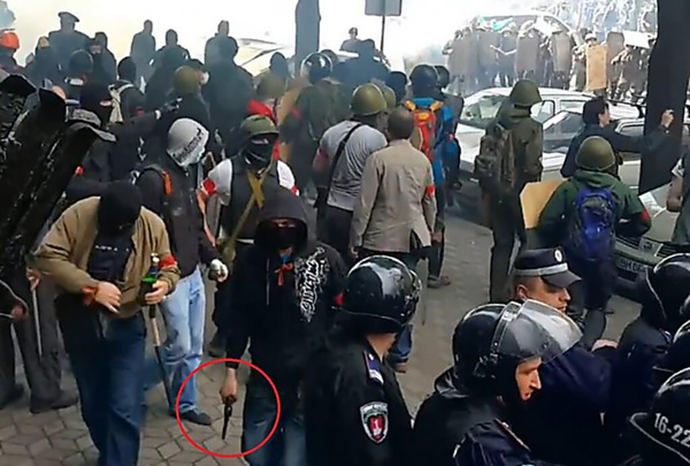
Armed thug in Odessa does not bother Ukranian police
There is no evidence of Russia’s involvement in the Friday massacre in Odessa, US Ambassador in Kiev, Geoffrey Pyatt had to admit Sunday as he spoke by telephone on a CNN program.
Friday, May 2, football fans who had come to Odessa from the northeast city of Kharkov as well as the combatants from two far-right extremist organizations, the Right Sector and the Maidan Self-Defense Force clashed with the supporters of federalization of Ukraine in downtown Odessa.
They set fire to the regional House of the Trade Unions and a tent camp near it where activists had been gathering signatures in favor of a referendum for federalization of Ukraine and for granting Russian the status of a second state language.
As a result of the tragic events, 46 people died and more than 200 survivors had to turn for medical aid.
“We don’t have evidence of the Russian role in […] the tragedy that transpired on Friday,” Pyatt said answering the anchor Candy Crowley’s downright aggressive question on whether he believed that Russia was behind “this bloodiest day thus far in this back-and-forth [the course of the Ukrainian crisis]”.
Pyatt mentioned the blunt accusations towards Russia that the prime minister of the incumbent Kiev government, Arseny Yatsenyuk, had made in Odessa earlier in the day.
“And this is something that we hope an impartial and systematic investigation will be able to get to the bottom of very quickly,” he said.
Pyatt indicated that he could not understand clearly why the Friday massacre had taken place.
“[…] having spent some time in Odessa just three weeks ago and spoken with a broad range of political and civil society leaders, there’s nothing that I heard and saw while I was in that city which would explain what transpired on Friday night,” Pyatt indicated.
“At this point, the whole country is trying to figure out what happened, how to pull together, and how to make sure that those who are trying to divide the country will not be successful,” he said.
“Most disturbingly, there seems to be evidence in social media that some of the police in Odessa may have been complicit in allowing the violence to explode out of control way it did.”
A private military company is in charge of suppressing protest movements in Eastern Ukraine, said a source in the country’s Security Service. According to him, the name of the company is Greystone Limited.
According to a source cited by ITAR-TASS, Ukrainian authorities believe that the Security Service is not able to suppress the protest mood and neutralize the leaders and activists of the pro-Russian movement in the eastern regions. In particular, the source said, the acting president Alexander Turchinov shares this opinion.
“Therefore it was decided to attract foreign mercenaries, who will serve as political police and state security protection, ” said the representative of the Security Service.
He informed that the initiative to attract mercenaries belongs to oligarchs Igor Kolomoisky and Sergei Taruta, appointed governors of Dnepropetrovsk and Donetsk regions.
Self-defense forces in the anti-Kiev stronghold of Slavyansk are Ukrainians, not Russians, who distrust the new regime and the Western powers that support it, New York Times reporters have discovered. The forces also said they are not being paid to fight.
The EU is responsible for “the mess” in Ukraine, Geert Wilders, Holland’s Party for Freedom leader, told RT. Wilders wonders why the bloc has got involved in a country where half the population is against joining Europe.
Wilders, who was speaking exclusively on RT’s SophieCo, believes the EU should have kept out of the conflict and only made things worse by giving the country hopes of a pre-accession treaty to the union, when the people of Ukraine were not in unison about joining the organization.
“It was a very delicate balance in Ukraine with 50 percent looking eastwards, towards Russia, and 50 percent of the population looking westwards, towards the European Union. So I think it was very irresponsible what the EU did; they should have kept out of it,” Wilders said.
The leader of the right-wing Party for Freedom criticized politicians from Europe, the US and from his home country for appearing in Kiev and giving the impression that Ukraine had the complete support of the West while completely ignoring the fact that Ukraine remains a very complex situation.
“I believe Europe was more thinking about itself and expanding it and its territory than really thinking about the whole of Ukraine, let alone the stability in that region.”
Wilders admits he understands the gripes of those living in the east of the country, who were unhappy when the coup-appointed government took power in Kiev. “The best thing to do is to de-escalate by taking the Russian minority in eastern Ukraine seriously; give them rights and make them really feel as important as the other half of Ukraine,” the 50 year-old Eurosceptic continued.
The Dutch politician says Russia is also partly to blame and that retaining the territorial integrity of Ukraine is of the utmost importance.
“I’m not only blaming the EU, I’m blaming both Russia and the EU. But I have to be honest, the European Union made a terrible move in the beginning of November last year, and they at least partially started a lot of the troubles, and that analysis is shared by more parties in the EU for sure,” said the leader of the Party for Freedom.
The US and the EU recently introduced more economic sanctions against Russia as they believe the country is having a destabilizing effect on Ukraine. However, Wilders says this will help neither the Russians nor the EU and cannot have a “positive effect.”
Wilders has achieved success in his native Netherlands on a ticket of euro skepticism and is adamant that his country should leave the EU. “We can deal better economically when we are in charge of our country, again, when it comes to national sovereignty – so, yes, we would like to leave the EU and be stronger as a national country,” the Dutchman said.
Wilders cites the example of Switzerland, as a model that his country could follow, with the Alpine nation being one of the richest on the continent, despite never having joined the EU.
“We lost our identity; we lost our national sovereignty to the EU, an institution that really a lot of people in the West don’t like so much anymore. I have nothing against Europe, but I have a lot against the EU as an organization,” Wilders concluded.
At least 31 anti-government activists have died in a fire at Odessa’s Trade Unions House. Some burned to death, while others suffocated or jumped out of windows, the Ukrainian Interior Ministry reported. The building was set ablaze by pro-Kiev radicals.
Some 40 people were also injured in the fire, the official statement said.
A total of 37 people have died in Odessa violence on Friday and almost 200 others have sustained injuries, including 22 police officers, Interior Ministry reported. Twenty-five people remain in critical condition, according to Odessa City Council.
Police detained over 130 people following Friday’s bloody clashes and opened up 10 criminal investigations with charges including premeditated murder and violence against law enforcement officers.
According to the ministry, the Friday standoff on Odessa included “anti-Maidan” activists on one side and “football fans” from Odessa and Kharkov, as well as “euro-Maidan” activists, on the other. A criminal case on the charges of mass unrest has been opened.
The Trade Unions House was set on fire by pro-Kiev radicals after they surrounded and destroyed the tent camp of anti-government activists that stood in front of the building on Odessa’s Kulikovo Field Square. It was torched in a storming attempt after some of the anti-Maidan activists rallying in the square barricaded themselves inside the building.
The majority of the victims were found on the floors of the Trade Unions House having apparently burned to death or suffocated from smoke. Others jumped out of the building’s windows, according to police.
Earlier reports of the clashes in Odessa said that both sides used Molotov cocktails and, allegedly, gunfire. Part of the pro-Maidan activists reportedly bore insignia of the radical Right Sector group.
A live video stream from inside the building showed disturbing scenes of supposedly dead bodies lying around the rooms with thick smoke in the air and blood stains on the floor.
Most of the bodies filmed had St. George ribbons attached to their clothes, distinguishing the victims as pro-Russian or anti-Kiev activists.
The person filming said he counted up to 25 dead bodies on the upper floors alone.
As the house was engulfed in flames, photos posted on Twitter showed people hanging out of windows and sitting on windowsills of several floors, possibly preparing to jump. Reports claimed that those who jumped and survived were surrounded and beaten by football ultras and the Right Sector.
The riot police lines standing beside the building were apparently doing nothing to prevent the violence, the photos showed. Police officers reportedly said they could not do anything because they were “unarmed.”
Activists trapped on the roof of the besieged Trade Unions House building have been rescued and taken to a police station, the self-proclaimed head of the Republic of Odessa told Rossiya 24.
One of the activist trapped there told RT by phone earlier that up 50 people were there with him, including women.
As people were dying in the burning building, some of the pro-Kiev activists jeered on Twitter that “Colorado beetles are being roasted up in Odessa,” using a derogatory term for pro-Russian activists wearing St. George’s ribbons. Few media outlets followed the developing situation, with thousands of people taking to live streams to see the events unfolding.
However, just as the first official death toll emerged, some Western media and leaders rushed to seemingly downplay the role of pro-Kiev activists in the incident and to blame their rivals instead.
“More than 40 people were killed in Odessa on Friday, most caught in a building set on fire after pro-Russian activists and supporters of Ukrainian unity fought running battles across the southern port city,” Reuters wrote.
“Horrible with at least 38 dead in Odessa. Seems to have started with pro-Russian attempt to get control of buildings. Violence must stop!” Swedish Foreign Minister Carl Bildt wrote on Twitter. Earlier, Bildt blamed “pro-Russian thugs” for the street violence in Odessa.
A senior Air France manager has been charged for running a prostitution ring with his Brazilian wife, according to media reports.
The Jewish exec is alleged to have flown Brazilian prostitutes to Paris using cheap tickets, a perk of his job with the airline, to get the girls to France.
Since 2010 a senior Air France manager and his wife pulled in an estimated €2 million in cash per year from a prostitution ring they ran in Paris and which included at least 10 young female prostitutes, French daily Le Parisien reported.
Prosecutors told Le Parisien the company manager used a perk from his job, which allowed him to buy return tickets to Brazil for €150 a piece, to shuttle some of the prostitutes between Brazil and France.
As the operation was managing by his Brazilian wife, Claudia, 51, the manager identified only as 54-year-old Alain D., worked his day job managing flight crews at Charles de Gaulle airport, one of the airlines’ hubs.
But the lucrative business was stopped cold on Thursday when Alain D., his wife, and a second Brazilian woman were charged with human trafficking, pimping and criminal conspiracy.
Authorities believe Claudia was responsible for the day-to-day running of the ring, which saw the ten or so young women shuffled between four apartments in Paris, one of which was a city-owned property reserved for low-income renters.
But it appears the couple, and a third accomplice who was also charged, were anything but tenants in need of a subsidy. The young women were expected to have five encounters per day with customers who who were paying about €150 per visit.
Claudia is alleged to have handled the online marketing, the money as well as arranging the meetings for the young women. It was one of the prostitutes, a young Brazilian woman, who eventually went to police and prompted the investigation.
A fourth man, identified as Jose W, aged 50, portrayed himself as a mystical guru who charged the women up to €500 a time to ‘cheer them up and help them regain confidence in themselves,’ according to a source who spoke to Le Parisien newspaper.
The prostitution ring was finally exposed when one of the Brazilians filed a complaint about pimping and people trafficking.
All have now been charged and are in custody at Fresnes prison near Paris, said a police source close to the case.
He said the complainant arrived in Paris ‘as a student’ four years ago but was ‘forced by the couple’ to start having sex with up to five clients a day in the Rue de Rivoli flat.
The Jewish mayor of Kharkov was shot in the back raising fears that prominent public figures were being targeted for assassination.
While America and the European Union impose new sanctions on Russia, violence and turmoil continues unabated in eastern Ukraine.
The attempted murder of Gennady Kernes, the mayor of the country’s second-largest city has caused fear that the US invasion would plunge the country into more bloodshed. Last night Kernes was “fighting for his life”, said his spokesman, after emergency surgery.
Kernes, who has convictions for theft and fraud, was allegedly linked in the past to organised crime. He is also one of the most prominent Jews in the country; there has been rise in anti-semitism recently, but the mayor’s colleagues say he had not received any threats on religious grounds.
Kernes, a colourful character who regularly posted photographs of himself on social media was gunned down while he was out cycling, jogging, or swimming according to differing accounts of what took place. Valeriy Boyko, the director of Surgery institute in Kiev, where he was being treated, said the mayor “had suffered a very serious wound with a number of organs damaged”.
The 64-year-old billionaire businessman banned protests in Kharkov under an emergency order which had been put in place to “avoid the spread of infectious diseases”.
Officials said Kernes had made a public statement that he was being subjected to “political persecution”, adding that Arsen Avakov, Minister of Internal Affairs of Ukraine, was linked to threats against Kernes and the attack on him.
The two men have clashed in the past with Avakov accusing Kernes, to whom he lost the mayoral race in 2010, of organising gangs of thugs.
Ukraine is currently being looted by billionaires, but pickings might be slim.
Gunmen took over the police headquarters and municipal offices at Kosryantynivka on Monday, a city half way between Slovyansk and Donetsk, replacing the Ukrainian flag with those of the Peoples Republic of Donetsk and Russia.
Juliana Anatoliyevna, 40, standing outside the municipal building, wanted to stress: “We had been waiting for this to happen. We saw other places becoming free and we were kept waiting. We have had 22 years of Ukraine and all that has given us is misery, industries shutting down and unemployment. All we want now is a referendum, as soon as possible.”
Amid escalating tensions in Ukraine, the local population remains unclear who the army is ‘defending’.
A taxi driver confronted a military checkpoint in Ukraine’s eastern town of Slavyansk, asking the Interior Troops stationed there: “Who are you guarding against here?”
In response he received a confused answer from one of the soldiers: “We’ve been doing that since December, nobody really knows against whom.”
The taxi driver stood up to Ukrainian soldiers that had been demanding to see his identification, claiming that they are there “to prevent transportation of forbidden items to or out of Slavyansk,” as part of the “anti-terrorist operation.”
Ukrainian authorities have been pushing ahead with ‘anti-terrorist’ ops in the east of the country, which has been opposing the coup-appointed government in Kiev.
Just last week five anti-government protesters reportedly were killed and one injured in Slavyansk after Kiev authorities sent tanks and armored vehicles against the local population.
On Saturday, leaked satellite images revealed that Ukrainian tanks and armored vehicles have been stationed en masse around Slavyansk. A Russian defense source said that artillery and rocket systems have also been deployed to the area.
RIA Novosti published the satellite images showing the buildup of troops. The photos were dated April 24-25. The images appear to show part of military hardware used for the current Ukrainian troops’ objective of “isolating” Slavyansk.
This website uses cookies to improve your experience. We'll assume you're ok with this, but you can opt-out if you wish. Cookie settingsACCEPT
Privacy & Cookies Policy
Privacy Overview
This website uses cookies to improve your experience while you navigate through the website. Out of these cookies, the cookies that are categorized as necessary are stored on your browser as they are essential for the working of basic functionalities of the website. We also use third-party cookies that help us analyze and understand how you use this website. These cookies will be stored in your browser only with your consent. You also have the option to opt-out of these cookies. But opting out of some of these cookies may have an effect on your browsing experience.
Necessary cookies are absolutely essential for the website to function properly. This category only includes cookies that ensures basic functionalities and security features of the website. These cookies do not store any personal information.
Any cookies that may not be particularly necessary for the website to function and is used specifically to collect user personal data via analytics, ads, other embedded contents are termed as non-necessary cookies. It is mandatory to procure user consent prior to running these cookies on your website.