Dutch show courage in Zim

Zanu-PF thugs threaten white mother

Dutch farmers want Zimbabwe to pay them compensation. White farmers were forced off their land during from 2000 to 2002 when the land grabbing started in all earnest.

Radio Netherlands reported on Wednesday that the farmers took their case to the International Centre for the Settlement of Investment Disputes (ICSID), a Washington-based court which operates under the aegis of the World Bank.

Earlier this year, Zimbabwe finance minister Tendai Biti promised payment but has not held his promise, despite a letter from the Dutch foreign minister in August asking him to honour his word.

The ICSID already ruled in favour of the Dutch in 2009 and ordered Zimbabwe to pay up €8.8m in compensation, to be increased by 10% for each year since the illegal anti-white “reforms”.

According to the report, the group is now entitled to a sum of more than €23m and the Dutch government has been pressuring Zimbabwe over the past two years to fulfil its international obligations. A special envoy has been appointed to negotiate with Zimbabwean officials.

“We wanted to take action earlier, but decided to wait for Biti’s proposal,” the group’s chairperson Lion Benjamins was quoted as saying. “But now we’re sick of waiting, so we have decided to take steps to show Zimbabwe we’re serious.”

The group lobbying European parliamentarians in an attempt to ensure the EU refuses to lift its sanctions on Zimbabwe until the compensation is paid. They are also lobbying the British government to release frozen assets of the Robert Mugabe regime in order to foot the land grab bill.

Two students, one black, ‘lynched’ in France

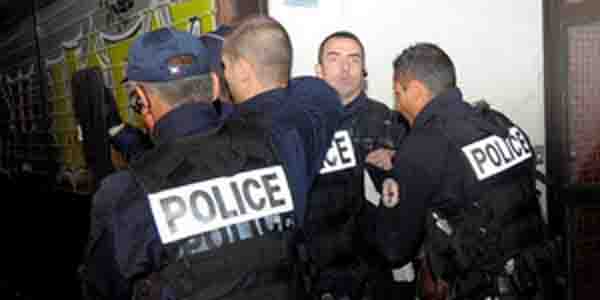
French police escort a suspect into custody

French police on Tuesday arrested 12 suspects over the killing of two students lynched by a mob armed with hammers, baseball bats and knives.

The killings last Friday in the Echirolles suburb of Grenoble sparked outrage in France and prompted President Francois Hollande to travel to the southeastern city late Monday to visit the families of the dead young men.

Hollande was accosted as he visited the poor suburb by a local resident who lambasted security forces for failing to stop the violence she said was plaguing the area.

Interior Minister Manuel Valls also travelled to the city and on Tuesday denounced what he called a “massacre” and vowed that the killers would be tracked down.

Three suspects, who may be of most interest and all have convictions for violent crimes, are still on the run, prosecutor Jean-Yves Coquillat told reporters.

Kevin Noubissi and Sofiane Tadburt, both aged 21, were beaten and stabbed to death by a gang of about a dozen people in a park. Noubissi was stabbed seven to eight times, and Tadburt 30 times, the prosecutor said.

The gang was reportedly seeking vengeance after a minor incident outside a high school involving Noubissi’s younger brother.

Funerals for the two friends were due to take place Wednesday at the local mosque.

On Tuesday evening police said about 10,000 people took part in a memorial march to honour the two young men, who were said by friends and families to be model students.

Participants marched in silence while carrying white balloons and holding up placards showing photos of the victims.

Most of those arrested Tuesday in Grenoble were aged between 18 and 21, and most have criminal records, officials said.

No one has admitted guilt, the prosecutor added.

Two brothers, both in the military, were the first to be arrested in the case, police said, after being brought in for questioning on Monday. One was found near Grenoble, the other in a town about 500 kilometres (300 miles) away.

Their mother was also brought in for questioning Tuesday. – AFP

Clashes with police as Spain announces more austerity measures

Spanish protest scene

Protesters clashed with police in Spain’s capital on Tuesday as the government prepares a new round of unpopular austerity measures for the 2013 budget that will be announced on Thursday.

Thousands gathered in Neptune plaza, just a few meters away from El Prado museum in central Madrid where they formed a human chain around parliament, surrounded by barricades, police trucks and more than 1,500 police in riot gear.

Police fired rubber bullets and beat protesters with truncheons, first as several protesters were trying to tear down barriers and later to clear the square. The police said at least 15 people had been arrested and at least 6 injured.

The protest, promoted over the Internet by different activist groups, was younger and more rowdy than recent marches called by labor unions. Protesters said they were fed up with cuts to public salaries and health and education.

“My annual salary has dropped by 8000 euros and if it falls much further I won’t be able to make ends meet,” said Luis Rodriguez, 36, a firefighter who joined the protest. He said he is considering leaving Spain to find a better quality of life.

With this year’s budget deficit target looking untenable, the conservative government is now looking at such things as cuts in inflation-linked pensions, taxes on stock transactions, “green taxes” on emissions or eliminating tax breaks.

The 2013 budget is the second one conservative Prime Minister Mariano Rajoy has had to pass since he took office in December. Spain must persuade its European partners that it can cut the budget shortfall by more than 60 billion euros by 2014.

Rajoy has already passed spending cuts and tax hikes worth slightly more than that over the next two years, but half-year figures show the 2012 deficit target slipping from view as tax income forecasts will not be hit due to economic contraction.

He said earlier this month the 2013 budget would cut spending further in all areas of government apart from pensions and borrowing costs.

Spain is at the centre of the euro zone debt crisis on concerns the government cannot control its finances and those of highly indebted regions, bitten by a second recession since 2009 which has put one in four workers out of a job.

Regional tension

On the regional front, Catalonia, which generates about 20 percent of the national output, announced on Tuesday it would hold early elections on November 25 after its call for more tax autonomy was rejected last week by Rajoy.

Political uncertainty in cash-strapped Catalonia, along with an announcement from southern region Andalucia it might seek a 4.9 billion euros credit line from the central government, will pile more pressure on Madrid to seek European aid.

Rajoy is holding back from applying for help, which would activate a European Central Bank bond-buying programme and bring down Spain’s punishing debt premiums.

With the threat of the plan alone reducing 10-year yields by around 2 percentage points, the cautious leader, known for keeping his cards close to his chest, is playing for time.

Rajoy says he is mulling the conditions of a bailout application, but suspicion that he may wait until after regional elections on October 21 pushed short-term yields higher at auction on Tuesday.

The government is also expected on Thursday or Friday to set a fresh timetable for economic reforms, seen as an attempt to pre-empt strict EU-imposed conditions for aid.

“Let us in, we want to evict you,” protesters chanted outside parliament. Evictions have soared in Spain as thousands of people have defaulted on bank loans.

Demonstrators said they were angry that the state has poured funds into crumbled banks while it is cutting social benefits.

“We’re protesting against the cuts. I’ve had to give up my apartment,” said Ondina, a 30-year-old fine arts graduate who is without a job. She said she can’t survive on an unemployment benefit of 260 euros ($340) a month.

Running out of options

Half-year deficit data indicate national accounts are already on a slope that will drive Spain into a bailout. The deficit to end-June stands at over 4.3 percent of gross domestic product, including transfers to bailed out banks, making meeting the 6.3 percent target by the end of the year almost impossible.

On Tuesday, the treasury ministry said the central government deficit to end-August had reached 4.77 percent of GDP, already above its year-end target of 4.5 percent of GDP.

“Its going to be difficult keeping the deficit to around 2 percent in the second half, when the first half was closer to 4 percent, especially since traditionally, the second half deficit is higher than the first,” said Juan Ignacio Conde-Ruiz, economist at Madrid’s Complutense University.

For 2012, the measures aim to reap savings of over 13 billion euros, but economists see the deficit missing the target by almost 1 percentage points implies further saving needs of up to 10 billion euros for this year alone.

Rajoy has been careful to highlight the importance of next year’s deficit target of 4.5 percent of GDP though any shortfall this year will weigh on 2013’s accounts. After slashing civil servants’ wages, raising value added tax and cutting health and education spending, Rajoy is running out of options. – Reuters

Ecuador wants to take Assange to Sweden under its protection

Julian Assange in Ecuador embassy
Julian Assange speaks to the media from the Ecuadorian embassy in London

Ecuador has suggested that it take WikiLeaks founder Julian Assange to Sweden for questioning under its protection, in the latest move in the diplomatic spat between the two countries.

Assange took shelter in the Ecuadorian embassy in London in June, in an effort to avoid extradition to Sweden, where he is wanted for questioning in relation to allegations of rape and sexual assault.

Ecuador has granted the Australian asylum inside the embassy but Britain says it will not allow him to leave the building for the South American country.

Ecuadorian Foreign Minister Richard Patino said late Friday that he would discuss the proposal with his British counterpart William Hague on the sidelines of the UN General Assembly meeting in New York on Thursday.

Patino said the meeting would be aimed at “finding a diplomatic solution framed within international law to the case of the refugee Julian Assange.”

Assange says he fears that once extradited to Sweden he could be extradited to the United States. There he could face charges related to the release by WikiLeaks of US diplomatic cables, under which he could face the death penalty. – DPA

French magazine risks Muslim ire with cartoons of Prophet Mohammed

French magazine is set to increase Muslim ire by printing cartoons of the Prophet Mohammed Wednesday a day after 12 died in an Afghan suicide bombing, the deadliest attack linked to an anti-Islamic film.

A female suicide bomber killed 12 people in Afghanistan on Tuesday in the deadliest single attack attributed to the controversial film which has sparked furious protests across the Muslim world.

The deaths raised to over 30 the toll from incidents linked to the trailer for “Innocence of Muslims,” a film produced by extremist Christians in the United States that depicts the Prophet Mohammed as a thuggish womaniser.

After a week that has seen protests in at least 20 countries, there were fears that the wave of anger in the Islamic world could hit harder in Europe as it emerged that French satirical weekly Charlie Hebdo was planning to publish cartoons caricaturing the Prophet Mohammed in its Wednesday edition.

Charlie Hebdo is no stranger to controversy over its handling of the issues relating to Islam.

Last year it published an edition “guest-edited” by the Prophet Mohammed that it called Sharia Hebdo. The magazine’s offices in Paris were subsequently fire-bombed.

Charlie Hebdo’s latest move was greeted with immediate calls from political and religious leaders to avoid inflaming the situation.

French Prime Minister Jean-Marc Ayrault issued a statement expressing his “disapproval of all excesses”.

The magazine’s editor, originally a cartoonist who uses the name Charb, said the images would “shock those who will want to be shocked”.

Dalil Boubakeur, the senior cleric at Paris’s biggest mosque, appealed for France’s Muslims to remain calm.

President Barack Obama said Tuesday he expected governments in the Muslim world to protect American diplomats, despite their revulsion at a film made on US soil deemed offensive to their faith.

“The message we have to send to the Muslim world is that we expect you to work with us, to keep our people safe,” Obama said during a taping of the “Late Show with David Letterman” on CBS TV.

US Secretary of State Hillary Clinton, meanwhile, said “we are taking aggressive steps to protect” diplomatic missions worldwide.

Among those killed so far have been four US diplomatic staff in Libya, including ambassador Chris Stevens, who died when militants laid siege to the US mission in Benghazi a week ago on September 11 in a four-hour attack.

Clinton said the FBI had launched an investigation inside Libya, and she vowed that “we will not rest until the people who orchestrated this attack are found and punished.”

In Afghanistan, Hezb-i-Islami, the second largest insurgent group after the Taliban, said the suicide bomb attack was to avenge the “insult” of the film.

“The bombing was in retaliation for the insult to our Prophet,” spokesman Zubair Sidiqi told AFP by phone from an undisclosed location.

Security officials said nine foreigners including South Africans were among those killed on a highway leading to Kabul airport when the bomber blew up her station wagon alongside a minivan carrying foreign workers.

Taliban fighters last week stormed a British-run airfield, killing two US Marines and destroying six US fighter jets in another act of vengeance.

In Lebanon, the head of the Shiite Muslim movement Hezbollah, listed in the United States as a terrorist organisation, made a rare public appearance to warn of “very dangerous” repercussions if the entire film is released, rather than the 14-minute trailer that has already sparked outrage.

Al-Qaeda’s franchise in North Africa urged Muslims to storm US embassies and kill American envoys in Muslim countries, monitoring group IntelCenter said.

The film-maker Nakoula Basseley Nakoula, a 55-year-old Egyptian Copt and fraudster who was sentenced to 21 months in prison in the United States in June 2010, has not been seen since Saturday when he was questioned.

The risks now facing those involved in the film’s production were underlined when a Salafist cleric in Egypt called Monday for the deaths of all those involved in its making.

Before dawn on Monday, officers from the Los Angeles County sheriff’s department escorted four members of Nakoula’s family to join him in hiding.

Egypt’s public prosecutor has ordered that seven US-based Egyptian Copts be tried over their role in the film, accusing them of “insulting the Islamic religion, insulting the Prophet and inciting sectarian strife.”

However Interpol in a statement said it was not aware of any request from Egypt for the arrest of people related to the film but stressed that its charter “forbids it from undertaking any matter of a predominantly political, military, religious or racial nature.”

In Pakistan, two protesters died after demonstrating against the film close to the Afghan border and outside the US consulate in Karachi.

Police used tear gas to disperse more than 2,000 protesters trying to reach the US consulate in the city of Peshawar, chanting anti-US slogans and burning the Stars and Stripes flag.

Afghanistan, Bangladesh and Pakistan blocked access to YouTube, following the video-sharing website’s failure to take down the clip of the film. Saudi Arabia and Russia indicated they may follow suit.

In east Jerusalem hundreds of Palestinians clashed with Israeli border police, hurling stones and firebombs at a checkpoint.

Kate’s really shocking photo

The photo published by the French magazine, Closer
The picture of Kate published by Closer
The Duke and Duchess of Cambridge will sue the French magazine Closer for the publication of nude photographs of the Duchess, Clarence House said.
The gossip magazine printed pictures of Kate taken during the couple’s private holiday in France. The scandal arrives arrived just as the two are visiting a mosque in the Malaysian capital of Kuala Lumpur.

A royal spokesman said that the law suit had been initiated in France and will be for invasion of privacy.

The editor of Closer, Laurence Pieau, was however unrepentant, saying the two royals “were visible from the street”.

“The photos concerned are not in the least shocking. They show a young woman tanning topless, like the millions of women you see on beaches,” said Laurence Pieau.

She described the reaction to the topless photos as “a bit exaggerated”. That created the suspicion that the British monarchy was not so much opposed to the duchess’s topless sunbathing, but are instead furious over this picture where she gets rid of the bikini bottom.

The caption for this photo reads: “Cream for the buttocks? That’s when you feel like removing the bottom piece.”

The duke and duchess, who were relaxing at the French chateau of the queen’s cousin, Lord Linley, are apparently very annoyed.

The magazine’s caption next to the photos state: “Like you have never seen them before. No fixed little smiles and understated dresses. On vacation Kate forgets everything.”

Prime Minister David Cameron’s officiale spokesman said: “The view of Downing Street is that they have a right to their privacy.”

Sudan embassy staff safe: German foreign minister

German Foreign Minister Guido Westerwelle said that staff at the country’s embassy in Sudan were safe after the building came under siege by protesters Friday.

“The German embassy in Khartoum is currently the target of attacks by violent demonstrators. The embassy staff are safe. The crisis cell at the foreign ministry (in Berlin) is meeting and is in contact with the embassy,” he said in a statement. – AFP

Vast crowds in Catalonia demand independence from Spain

Showing support for Catalonian autonomy from Spain

(Reuters) – Hundreds of thousands of Catalans took to the streets of Barcelona on Tuesday in an unprecedented show of mass support for autonomy from Madrid, blaming Spain’s economic crisis for dragging their wealthy region down.

Surging unemployment and financial disarray have stoked a fever of separatism in Catalonia, a comparatively prosperous part of Spain whose leaders say their wealth is being sucked dry by the central government.

Crowds waved red and yellow striped Catalan flags – one of the oldest still in use in Europe – and sang the Catalan anthem on a national day marking the conquest of Catalonia by Spain’s King Philip V in 1714 after a 13 month siege of Barcelona.

The central government said the crowd was 600,000 strong. Catalan police gave figures as high as 1.5 million.

Marchers said the sheer size of the crowd – swollen with people from around the region who descended on its capital in bright sunshine – would at last make Madrid hear their message.

“This is a blow for the government. People like me came from everywhere. I don’t think they were expecting something as big,” said 53-years-old Teresa Cabanes, who came from Santa Coloma de Gramanet, in the outskirts of Barcelona, to march.

“We feel that the central government is fooling with us. We Catalans are giving away a lot of money to Spain.”

They held up banners and signs saying “No to the Fourth Reich”, “No to Europe”, “Independence Now!” and “Catalonia: the New European State”.

The huge volume of people overwhelmed the mobile phone network, which shut down for hours under the strain. Marchers who had attended Catalan national day rallies for decades, including others that attracted hundreds of thousands, said this was the biggest they could recall.

The march ended after nightfall without any incident and no people were arrested, police said.

The show of anger and ethnic pride will play into the hands of regional authorities who are trying to force the central government to yield control over taxes raised in Catalonia.

Catalans speak a language similar to, but distinct from, the Castillian Spanish spoken in the rest of Spain. The region accounts for 15 percent of Spain’s population but 20 percent of its economy.

With Spain’s economy in freefall from the euro zone debt crisis, Catalans complain of paying billions of euros more in taxes than they receive back from Madrid, even as their regional government has been forced to fire workers and cut services.

The region’s president, Artur Mas, has suggested he could seek independence if he is not given more control over tax raised from Catalonia.

“If we cannot reach a financial agreement, the road to freedom for Catalonia is open,” he repeated on Tuesday. Mas did not attend the march but said he backed it in spirit.

URGENT BATTLE

The annual Diada holiday is typically commemorated with a fiesta in the Catalan capital with song, dance and a floral offering to Rafael Casanova, a hero of the siege.

But the outpouring on Tuesday was a sign that the economic crisis has transformed issues of cultural identity into a mainstream political movement bent on autonomy. A poll by the regional government in July showed for the first time that more than half of Catalonia’s population favors independence.

For Mas and his nationalist Convergence and Union party (CiU), that translates into demands for control over tax.

When Spain returned to democracy in the mid-1970s, regions such as Catalonia and the Basque Country saw a vibrant resurgence of their culture and languages that had been crushed during the dictatorship of Francisco Franco.

Catalonia has long sought more autonomy, though without a violent separatist movement like the Basque Country’s ETA.

Economists calculate Catalans pay at least 12 billion euros more in taxes per year to Madrid than they receive back for services like schools and hospitals. Many Catalans say the figure – difficult to calculate because of a complex system of transfers – is even higher, up to 16 billion.

“A lot of people who were not into independence are more and more into it now,” said Elvira Farre, a retired secretary from Barcelona. “They are being driven into it by their feelings but also by their wallets.”

Government worker Jauma Turra said: “It’s like a marriage you can’t put up with any more.”

The Madrid government took a dim view of what leaders there saw as Mas’s stirring up Catalans ahead of the march.

“Catalonia has serious deficit and employment problems and this is not the moment for messing around or disputes or controversy,” Prime Minister Mariano Rajoy of the conservative People’s Party said on Monday.

SUSPICION

Many Catalans are suspicious of what they see as the centralizing aims of the People’s Party.

Although Catalonia’s unemployment is somewhat lower than Spain’s as a whole – 22 percent instead of more than 24 percent – the region has suffered badly due to the Spanish debt crisis.

There are 700,000 jobless in Catalonia. The government cannot borrow from financial markets to pay bills because, like other Spanish regions, it saw its debt downgraded to junk.

Catalonia was among the first of Spain’s 17 autonomous regions to start making budget cuts to its public services in 2010 and cuts have grown deeper, with civil servant pay cuts causing a public backlash in recent months.

Despite his austerity drive, Mas has managed to deflect fury over his region’s economic problems onto the central government, saying if the tax system were set up differently Catalonia would not be in its quagmire.

He has proposed a “fiscal pact” that would give Catalonia its own tax authority. He is scheduled to meet Rajoy on Sept 20 to discuss it, but Rajoy is expected to reject it.

“It’s part of a political game that has been going on for years. The only difference is that the crisis has changed the stakes,” said Antonio Barroso, political analyst with Eurasia Group consulting firm.

Catalans were particularly galled when the central government raised the value-added tax across Spain from Sept 1, but said it would not pass the extra revenue to the regions.

Catalonia has already had to tap billions of euros in emergency central government funds this year to catch up on months of back payments to service providers.

Mas says he now needs another 5.7 billion euros to pay maturing debt, but the possibility that the central government would demand more say in local finances in exchange for the aid is adding to anger in the province.

If he meets the expected resistance from Rajoy on the fiscal pact, Mas is expected to call early elections to try to win an absolute majority in the regional parliament, where he currently governs through alliances with other parties. He could use such wider backing to press Madrid for more autonomy.

Afrikaans becomes a campaign issue in Dutch election

Geert Wilders

Shutting the Netherlands down on Sundays, protecting Afrikaans and living a work-free life are some of the more offbeat policies being put forward by Dutch parties ahead of Wednesday’s vote.

A whopping 21 parties are contesting parliament’s 150 seats in the election, the second in just over two years after government collapsed in April over a disagreement on European Union austerity measures.

Should they get their say, the conservative Reformed Political Party (SGP), which currently has two seats in the Lower House, wants to close all shops on Sundays in order for citizens “to go to church”.

The party, which bases itself on strict Christian principles and has never had a woman in parliament since its founding in 1918, advocates a “no work” Sunday, unless the work is an act of charity or an essential service.

In an ideal world the SGP would also like to see an end to Sunday matches that are watched religiously at stadiums and in sitting rooms around the football-mad country because they mean police officers “have to work”, a party official told AFP.

The Sovereign Independent Pioneers Netherlands (SOPN), also known as the “UFO party” after its founder UFOlogist Anton Teuben, wants to give every citizen a “living wage” and do away with the necessity of having a job.

The SOPN also advocates the ban of future land ownership with the total “land area of the Dutch State being seen as the property of Mother Earth. Current owners can use the land provided they look after it,” the SOPN said in its election manifesto.

A “movement” rather than a party, the SOPN predicted winning this election with a “majority of 76 seats or more” but has not managed a single seat since it started in 2003.

In its campaign manifesto, the Party for Freedom (PVV), run by eurosceptic anti-Islam politician Geert Wilders said it wanted to push for the preservation of the Afrikaans language in South Africa and Namibia.

Spoken by white and mixed-race South Africans, Afrikaans has its roots in 17th-century Dutch spoken by early colonial farmers and slaves, with words borrowed from Indonesian and indigenous languages.

“We are defending our Dutch language. Afrikaans is closely related to Dutch… but the language is further being marginalised,” the PVV said.

The Party for Animals (PvdD), currently with two MPs, wants recreational angling banned, demanding also that “fishing lessons” in schools be scrapped.

The party also wants a complete ban on pigeon racing as a sport, saying many of the birds die of exhaustion.

The Dutch Electoral Commission struck down 26 other parties who said they wanted to take part in the polls, but failed to hand in valid candidacy lists.

Of these, the Party for Humans and Other Earth Dwellers said they had no problem with people taking drugs “but in moderation.”

They also advocate free food and drink in supermarkets, financed by income tax gained from citizens.

The Club of Non-voters argued that at least a third of all Dutch citizens were disillusioned with politics and would support their movement.

“Should the movement decide to become a political party and take part in the elections, there would be a big chance that the prime minister would come from our ranks.”

“But in the current political system you have to take part. We won’t.” – AFP

U.S. groups also sponsor Geert Wilders of Dutch Freedom Party

Geert Wilders

(Reuters) – Anti-Islam groups in America have provided financial support to Dutch politician Geert Wilders, an anti-immigration campaigner who is seeking re-election to the Dutch parliament this week.

While this is not illegal in the Netherlands, it sheds light on the international connections of Wilders, whose Freedom Party is the least transparent Dutch parliamentary group and a rallying point for Europe’s far right.

Wilders’ party is self-funded, unlike other Dutch parties that are subsidized by the government. It does not, therefore, have to meet the same disclosure requirements.

Groups in America seeking to counter Islamic influence in the West say they funded police protection and paid legal costs for Wilders whose party is polling in fourth place before the Sept 12 election.

Wilders’ ideas – calling for a halt to non-Western immigration and bans on Muslim headscarfs and the construction of mosques – have struck a chord in mainstream politics beyond the Netherlands. France banned clothing that covers the face in April 2011 and Belgium followed suit in July of the same year. Switzerland barred the construction of new minarets following a referendum in 2009.

The Middle East Forum, a pro-Israeli think tank based in Philadelphia, funded Wilders’ legal defense in 2010 and 2011 against Dutch charges of inciting racial hatred, its director Daniel Pipes said.

The Middle East Forum has a stated goal, according to its website, of protecting the “freedom of public speech of anti-Islamist authors, promoting American interests in the Middle East and protecting the constitutional order from Middle Eastern threats”. It sent money directly to Wilders’ lawyer via its Legal Project, Pipes said.

Represented by Dutch criminal lawyer Bram Moscowitz, Wilders successfully defended himself against the charges, which were brought by prosecutors in Amsterdam on behalf of groups representing minorities from Turkey, Morocco and other countries with Muslim populations.

The case heard in October 2010 was filed in response to Wilders’ comments in the Dutch media about Muslims and his film “Fitna”, which interlays images of terrorist attacks with quotations from the Koran and prompted protests by Muslims in Islamic countries worldwide. The court found he had stayed within the limits of free speech.

Pipes declined to say how much his group paid for Wilders’ defense.

Moscowitz declined to discuss payments for Wilders’ defense, citing client confidentiality.

Wilders said in an emailed statement that his legal expenses were paid for with the help of voluntary donations from defenders of freedom of speech.

“I do not answer questions of who they are and what they have paid. This could jeopardize their safety,” Wilders said.

VISITS TO THE UNITED STATES

Wilders, 49, first became a member of the Dutch parliament for the pro-business Liberal Party before winning nine seats for his own Freedom Party in 2006, campaigning against Islam, which he calls a threat to Dutch culture and Western values.

He called Islam a violent political ideology and vowed never to enter a mosque, “not in 100,000 years”. His party won 24 seats in the 150-seat lower house in June 2010.

He has been under 24-hour security for eight years after receiving death threats from radical Muslim groups in the Netherlands and abroad. Norwegian mass killer Anders Breivik cited anti-Islamic comments by Wilders in an online manifesto that sought to justify his crimes. Wilders has denounced Breivik and his actions.

David Horowitz, who runs a network of Los Angeles-based conservative groups and a website called FrontPage magazine, said he paid Wilders fees for making two speeches, security costs during student protests and overnight accommodation for his Dutch bodyguards during a 2009 U.S. trip.

Horowitz said he paid Wilders for one speech in Los Angeles and one at Temple University in Philadelphia. He declined to specify the amounts, but said that Wilders had received “a good fee.”

When Wilders’ Philadelphia appearance sparked student protests, Horowitz said, he paid a special security fee of about $1,500 to the Philadelphia police department. Horowitz said he also paid for overnight accommodation for four or five Dutch government bodyguards accompanying Wilders on the trip.

Wilders said in response: “I am frequently asked to speak abroad. Whenever possible I accept these invitations. I never ask for a fee. However, sometimes the travel and accommodation expenses are paid. My personal security is always paid for by the Dutch government.”

Pipes and Horowitz denied funding Wilders’ political activities in Holland. Both run non-profit, tax exempt research and policy organizations which, under U.S. tax laws, are forbidden from giving direct financial backing to any political candidate or party. U.S. law does allow such groups to support policy debates financially.

During Wilders’ visit to Los Angeles, where Horowitz runs an organization called the David Horowitz Freedom Center, Horowitz said he organized an event at which Danish cartoons lampooning the Prophet Mohammed were auctioned. He said he did not remember how much money this event raised or what happened to the proceeds.

Horowitz agreed with the Dutchman’s repeated, public comparison of the Koran to Hitler’s Mein Kampf. Comparing the two works was a “fair analogy,” Horowitz said. He said Wilders was “fighting the good fight.”

Horowitz said U.S. backers helped Wilders raise money to pay legal fees to fight a ban from visiting Britain in 2009, where he planned to screen Fitna. The British government said at the time: “The Government opposes extremism in all its forms. The decision to refuse Wilders admission was taken on the basis that his presence could have inflamed tensions between our communities and have led to inter-faith violence.”

Wilders won an appeal in the British courts in October 2009 when the ban was overturned.

Wilders has other supporters in the United States, such as Pamela Geller, who runs Stop Islamization of America and has backed Wilders in public statements. Geller remains a supporter. She says she does not provide Wilders with financial assistance.

Wilders has not revealed how his political activities are paid for. Former Freedom Party officials have said he has no personal funds and almost entirely relies on foreign donations.

Like other Dutch political parties, members of parliament for the Freedom Party have been allocated 165,000 euros ($211,200) per year for expenses. Former Freedom Party officials speaking on condition of anonymity said the money, nearly 4 million euros per year, went to the party and has not been accounted for.

Wilders said in his emailed response that former Freedom Party officials making such allegations were bitter and spiteful. “These people have other motives than telling the truth,” he said.

“Our party has a sixty euro annual budget. The rumors about millions of euros in sponsoring are complete nonsense. A Freedom Party-related foundation receives donations from Dutch or foreign sources, but these are modest amounts of money and certainly never millions,” it continued.

The Dutch government turned down requests for additional information about Freedom Party finances.

“I do not possess relevant information or documents” about the Freedom party finances or campaign contributions because the party does not receive subsidies, Dutch Minister for Internal Affairs Liesbeth Spies said in a written response.

Swimming in Burka Requires Extra Lifeguards

Swimming in Sweden

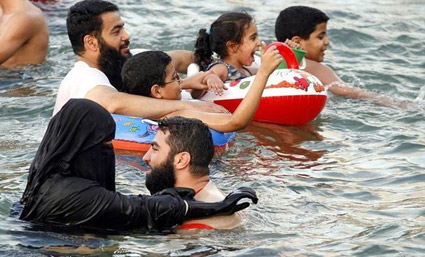
In a small rural village, Katrineholm, in Sweden, officials ask for lifeguards at bathing places. The reason for this request is that otherwise immigrant muslim women, bathing in burkas, might risk their life by drowning.

Mr Marcus Asplund works at Västra Sörmlands Rescue Service preventing drowning accidents. He recommends the City Council of Katrineholm to employ lifeguards, especially at the popular bathing places Djulöbadet and Duveholmsbadet. The reason for this is that swimming clothes covering the whole body have become a popular fashion among female inhabitants in this Swedish rural area. Unfortunately they often don’t know how to swim.

– Some immigrant girls are not permitted to be in the water without these body covering clothes, but as the clothes are heavy they increase the risk of drowning, Mr. Asplund tells the local paper.

The summer of 2003 a Somalian girl drowned whilst swimming fully dressed at one of these swimmingplaces. Similar accidents are regularly taking place across the country of Sweden when burkas and similar clothes get wet and pull the woman under the water surface.

The City Council of Katrineholm is though not willing to arrange for lifeguards this summers swimming season. Pat Werner (labour) chairman of the Custodian and Technology Board regards swimming education is the way to go.

– We have arranged swimming lessons for the immigrant girls in the citys public indoor swimming pool. They are offered total body covering swimming clothes, burkinis, so anyone who wants to learn how to swim is welcome, he ends.

French very pessimistic about the future

Reuters) – The French are bleaker about their country’s future than at any time since 2005, a new poll showed on Saturday, with 68 percent saying they are “rather” or “very” pessimistic, the highest level ever in the initial months of a new presidency.

The poll’s findings jibed with a survey released last weekend which found that Socialist President Francois Hollande’s approval rating had slipped to 54 percent, continuing a steady decline since he took office in May.

The level of pessimism fell just short of an all-time high of 70 percent registered in August 2005, when the poll was created near the end of Jacques Chirac’s government.

Hollande’s government has been reeling from unemployment at a 13-year high and a rash of job cuts in recent weeks at top employers like carmaker Peugeot and retailer Carrefour . The government launched a plan this week to create 150,000 state-sponsored jobs for youth.

Only 34 percent of those surveyed were confident in the government’s ability to battle unemployment, and just 20 percent expect the government to be able to improve their buying power.

“It’s the first time that anxiety is so high at the beginning of a presidential mandate,” said polling firm Ifop, which conducted the survey for Dimanche Ouest France newspaper, in a statement accompanying the findings.

Pessimism stood at just 34 percent at the equivalent point in Chirac’s presidency in 2002 and 50 percent in Nicolas Sarkozy’s in 2007, the firm said.

The government’s efforts to spur consumption have been complicated by its EU deficit-cutting commitments, which mean hitting a 3 percent deficit target next year. That will force it to find some 30 billion euros ($37.8 billion) in deficit cuts next year, half of which it has said would come from spending.

The poll found that the pessimism extended even to 58 percent of Socialist party supporters.

Nearly 60 percent lacked confidence in the government’s ability to strengthen law and order, which has emerged as a concern in the wake of riots last month in the city of Amiens.

Those surveyed were asked: “In thinking about the future, for you and your children, would you say that you are very optimistic, rather optimistic, rather pessimistic or very pessimistic,” along with queries about their confidence in the government’s ability to make progress on various issues.

The poll was based on the views of 1,004 people aged 18 and over, interviewed Aug. 30 and 31.

Anders Breivik’s ideas ‘are almost mainstream in many European countries’

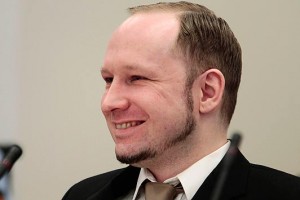
Anders Breivik in court in April 2012Norwegian mass killer Anders Behring Breivik may have failed to ignite a race war with Muslims, but he succeeded in stoking anxieties about the stability of Europe’s increasingly diverse societies.

Though his talk of an international underground of killers – latter-day Crusaders he called the Knights Templar – seemed to be mere fantasy, and while his methods place him far beyond the pale of mainstream politics, many of his beliefs are to be found within the fold of anti-Muslim, anti-immigrant populists.

“His ideological `manifesto’ is a distilled representation of a cultural crisis that pervades the European continent and finds expression in an increasingly xenophobic populism,” Kirsten Simonsen, a professor at Denmark’s Roskilde University, wrote in “Bloodlands”, a 2012 series of essays about Breivik.

Some notions – that Europe and its indigenous cultures are being weakened by immigration and multiculturalism – have been helping reshape the continent’s right-wing politics for years.

These beliefs occasionally find an echo on the margins of centre-right parties, among politicians seeking support from communities plagued by rising unemployment.

Mario Borghezio is a case in point.

The Italian politician set off a storm of outrage after Breivik’s gun and bomb massacre by declaring in a radio interview that its perpetrator had some “excellent” ideas.

Borghezio exemplifies a trend among populist anti-immigration groups – the use of the language of Western counter-terrorist efforts against al Qaeda to pursue what amounts to an anti-Islamic cultural campaign.

CALL FOR A “EUROPEAN SPRING”

Human rights groups are increasingly alarmed, not just at the far right, but at what many see as the pandering to its Islamophobic stereotypes by Europe’s mainstream parties.

“We need our own ‘European Spring’ to overcome old and emerging forms of racism and intolerance,” Nils Muiznieks, the Commissioner for Human Rights at the Council of Europe, a governmental human rights body, wrote in a July 2012 blog.

Muslims, he said, had become the primary “other” in right-wing populist discourse in Europe, and needed to be accepted as an integral part of society, entitled to equality and dignity.

Political parties in Austria, Bulgaria, Belgium, Denmark, France, Italy, the Netherlands, Norway and Switzerland had employed anti-Muslim rhetoric for political gain, he said.

Borghezio’s Breivik comment was denounced by his party, the pro-devolution, anti-immigrant Northern League, which apologized to Norway and temporarily suspended Borghezio from their ranks.

The European lawmaker argued the indignant reaction was misplaced, because he strongly condemned Breivik’s violence.

And yet, a year on, he still sees Breivik’s stance on some issues as attractive – particularly a perceived need to prevent Muslim immigration to Europe and combat Islamist extremism.

“Not all the ideas were criminal. It is the man who behaved in a criminal way,” Borghezio told Reuters.

CHEAP MUSLIM LABOUR

Tough regulation of immigrants, particularly Muslims, was essential, he said. In many mosques in Italy, he said, Muslims in economic difficulty were encouraged by extremist Islamist organizations “to carry out antisocial and illegal acts”.

His comments echo the public position of many in Europe’s far-right networks: a sense that the continent is under threat from Islamic extremists and is being betrayed by a rapacious political elite that values cheap Muslim labor above the economic welfare of its own communities.

Security specialists worry that far-right social media commentary stigmatizing Europe’s Muslims may help push enthusiasts towards militancy, much as al Qaeda propaganda opened pathways to violence for numerous Islamist radicals.

In a 2012 report, European police agency Europol stated the threat of violent right-wing extremism “has reached new levels in Europe and should not be underestimated. The threat will most likely come from lone actors, but organized, underground groups also have the capability and intention to carry out attacks.”

Some argue Breivik might have had more chance of setting off the kind of religious war he imagined if he had targeted Muslims, so as to create a cycle of revenge killings, rather than killing young white Norwegians from the pro-immigration Labour party, which encouraged a rallying behind common values.

“COUNTER-JIHADIST” MOVEMENT

On September 3, 2011, six weeks after Breivik’s Utoeya massacre, Stephen Lennon, a leader of the rightist English Defence League, took to a podium in central London and warned against any repeat of the 2005 attacks by British Islamists on London’s transport network that killed 52 people.

“The Islamic community will feel the full force of the English Defence League if we see any of our citizens killed, maimed or hurt on British soil ever again,’ he said.

U.S.-based researcher Arun Kundnani, in a June 2012 paper for the Hague-based International Centre for Counter-Terrorism, asserts that in the past two decades rightist violence in Europe has been comparable to Islamist bloodshed.

By his count, since 1990, at least 249 people had died in incidents of far‐right violence in Europe, compared to 263 who have been killed by jihadist violence.

A 2012 report by a left-wing anti-racist group, Hope Not Hate, identified more than 100 groups it said were part of a so-called counter-jihadist movement promoting anti-Islamic agendas in Europe, the United States, Canada and Australia, sharing anti-Islamic commentaries, photos, videos and rock music.

The groups, some of which Breivik quotes from in his manifesto, replaced the old racial nationalist politics of neo-Nazis with the language of cultural wars, Hope Not Hate said.

Immigration is an obsession with such groups.

Fifteen to 20 million Muslims, out of a total population of 500 million, are estimated to live in the 27-member European Union as well as non-EU members Norway and Switzerland.

France, a nation of 60 million people, is home to Europe’s largest Muslim minority, estimated at about 5 million. Norway estimates two percent of its 5 million population are Muslims.

A 2011 Pew survey of 50 European countries said the Muslim share of the population was expected to grow from six percent of the region’s people in 2010 to eight in 2030, due in part to higher birth rates among Muslims than non-Muslims.

“ADULTERATING” PURE NORWEGIAN BLOOD

Breivik argued his 77 victims, mostly teenagers at the ruling Labour Party’s summer camp on Utoeya, deserved to die because they supported Muslim immigration, which he said was adulterating pure Norwegian blood.

In Norway itself, Breivik’s deeds rebounded against the right. The mainstream but anti-immigration Progress Party, briefly joined by Breivik, suffered a huge blow in municipal elections two months after the attack.

But a growing number of opinion surveys show Europeans increasingly receptive to the notion that immigration, especially by Muslims, should be curbed or halted.

A July 2011 Pew Attitudes survey found that, when asked whether Muslims wanted to adopt local customs or stay culturally distinct, majorities of European populations chose the latter answer. A Populus research service poll in 2011 of more than 5,000 people in Britain for the Left-wing Searchlight Educational Trust found deep resentment among a range of communities about immigration.

“TOO MANY” IMMIGRANTS

In June 2012 an Ipsos MORI poll on attitudes to immigration found that in seven out of nine EU member states surveyed the majority regarded immigration as having had a negative impact on their country: Sweden and Poland were the only exceptions.

Mainstream centre-political parties have tried to keep up with the trend, enacting a variety of measures in the social sphere that have sometimes inflamed tensions on the street.

France banned clothing that covers the face in April 2011 and Belgium followed suit in July of the same year, while similar legislation has been proposed in the Netherlands, Italy and some Spanish regions. Switzerland barred the construction of new minarets following a referendum in 2009.

There is a broad European shift away from overt skin-color racism to prejudices about culture and religion shaped in part by the West’s war on al Qaeda.

“The whole focus of far right activity in Europe has shifted from race, the idea that ‘blacks are inferior’, to wider issues of identity,” said Ted Cantle, executive chairman of the Institute of Community Cohesion, a think tank.

Multiculturalism is another bugbear of the far right, which tends to define it as an excessive tolerance of immigrant communities that amounts to Western cultural suicide.

Centre-right politicians who have also questioned multiculturalism and advocated the primacy of Western liberalism in recent years include British Prime Minister David Cameron, German Chancellor Angela Merkel and former French President Nicolas Sarkozy. All did so facing domestic political pressure to take a tougher line on immigrants unwilling to adapt to host cultures.

Another example is Dutch populist Geert Wilders, head of the anti-immigration, anti-euro Freedom Party. Breivik’s manifesto reproduced anti-Islamic comments Wilders made to the Dutch parliament. Wilders has denounced Breivik and his actions.

Pepe Egger, head of Western European Forecasting for the UK-based Exclusive Analysis research house, says some of Breivik’s ideas are held quite widely among European political activists.

“The bizarre thing is that his ideas, as Islamophobic as they are, are almost mainstream in many European countries,” he told Reuters. “The perceived need to defend Europe against ‘Islamisation’ is not that far removed from what you can find in the opinion pieces in large daily newspapers.” – Reuters

German president asks for ‘courage’ against racism

Joachim Gauck

German President Joachim Gauck on Sunday demanded courage from civilians and more action from officials to prevent a repeat of the orgy of racist violence that shook Rostock two decades ago. Commentators say the speech said too little on the amount of racism still prevalent in German society.

“We are strong. We know that we are strong. Our homeland will not fall into Nazi hands!” That was the central message delivered by German President Joachim Gauck on Sunday at events commemorating the 20th anniversary of the racist attacks on an asylum-seekers hostel on the outskirts of Rostock.

 “We can’t erase the biggest xenophobic riots in the history of post-war Germany,” he said. “As such, we are all the more obligated to prevent the incident from being forgotten.”

As he spoke, Gauck stood in front of the so-called “Sunflower House,” a concrete block building in the Rostock suburb of Lichtenhagen which was once used to shelter asylum seekers. For four days, from Aug. 22 to Aug. 26, 1992, a right-wing mob — supported by thousands of sympathetic locals — surrounded the building, chanted xenophobic slogans, threw rocks and, ultimately, set a neighboring building on fire where over 100 guest workers from Vietnam lived.

The police response was largely ineffective. Incredibly, nobody died in the attack, but the sheer scale of it came as a shock to post-reunification Germany and turned it into a symbol of the several, large-scale xenophobic attacks that marred the country in the early 1990s. Rostock became shorthand for similar riots in Hoyerswerda in 1991 and for the deadly arson attacks in Solingen and Mölln in 1992 and 1993.

‘We Need Courageous Citizens’

The president’s speech was the apex of a week of events, activities and discussions organized to mark the anniversary. And thousands turned out on Sunday for Gauck’s appearance, one of particular importance to the president. Gauck, after all, was born in Rostock and worked for many years as a pastor in a nearby town. Born during Nazi times, Gauck grew up in communist East Germany, getting to know two brands of totalitarianism in the process.

“Seldom in our recent history has an event made it so clear to me as the riots in Rostock that we need both: We need courageous citizens who don’t look away when our democratic and peaceful society is challenged,” Gauck went on. “But we especially need a state that is both willing and able to protect the dignity and lives of people.”

The president was speaking to the ineffectiveness of the police response two decades ago. But it was also a reference to recently revealed official failings relating to the National Socialist Underground (NSU), a trio of neo-Nazis who were able to murder 10 people between 2000 and 2007 — nine of immigrant descent and a policewoman — without being caught. Investigators failed to identify the killing spree as being racially motivated until late last year.

The German press on Monday likewise takes a look back to Rostock and examines Gauck’s speech.

The Schweriner Volkszeitung, a daily in the capital of the state of Mecklenburg-Western Pomerania where Rostock is located, writes:

“President Joachim Gauck, himself from Rostock and now an honorary citizen of the city, issued clear demands on Sunday. Democracy, he said, needs courageous citizens … and an effective state…. Well said, but now it must be implemented in every case and in every place. Forceful action against right-wing extremism demands courage, the willingness to intervene on the behalf of others instead of allowing oneself to be intimidated. In western Germany, nobody should act as though xenophobia or right-wing ideas are just a problem in former East Germany, the product of a mixture of a lack of experience with democracy during communist times combined with the disappointment of those whose lives did not dramatically improve following reunification.”

“Immigrant houses burned in the west too, in Mölln and Solingen, xenophobic ideas are also alive and well in the west too, as can be seen by the right-wing mobs that form there. The confrontation must take place across the entire country, particularly in the schools, so that right-wing hate does not take root in people’s heads.”

Left-leaning Berliner Zeitung writes:

“Gauck delivered an excellent speech. But it was only a speech. What else could it have been? It could, for example, have been an analysis — and attempt to come to terms with the present. A reference, for example, to the number of right-wing criminal acts in Germany — it was 34 per day in the first six months of this year — would have been welcome…. As would a few thoughts on how police — officially — do what they can to arrive at as few right-wing extremists and xenophobic crimes as possible.”

“Maybe it is clever of the president not to say everything that citizens already know. But Gauck surely knows that a flashy speech doesn’t just serve to educate, it can also blind people…. ‘We are strong. We know that, we are strong!’ he said. But merely knowing it won’t be enough.”

Center-right daily Frankfurter Allgemeine Zeitung writes:

 “Gauck’s speech in Rostock was, at its core, a call for realism. A society that has no fear of that which is foreign is an illusion. The cohabitation of people from different backgrounds and cultures is hardly possible without conflict. As a result, an immigration country such as Germany must reach agreement on the ‘amount and conditions of immigration,’ as Gauck noted, in order to create the conditions for cohabitation within which conflicts are resolved with mutual respect.

The left-leaning Die Tageszeitung writes:

“Gauck’s speech leaves a bitter aftertaste. The president didn’t say a word about the failure of state security officials in other right-wing crimes, like those of the National Socialist Underground, which involved 10 unresolved killings, one of them in Rostock. Gauck avoided drawing concrete connections to the present. His plea to ‘not let grass grow’ over the events doesn’t change that. As such, the commemoration in Rostock-Lichtenhagen became a history lesson, far away from the racism that is prevalent in the year 2012.” – Spiegel Online