‘East Germany and the ANC shared a special bond’ – Deutsche Welle

Christine Müller
Christine Müller

East Germany and the African National Congress shared a special bond: not only the government, but also the public in the communist state supported the anti-apartheid movement in South Africa.

Heavily armed police forces pushing along black children and teenagers, beating them with clubs, shooting with live ammunition. The disturbing images of the Soweto Uprising shocked the world in June of 1976.

Some 15,000 students in the South African township protested against a new rule that said they’d only be able to take exams in Afrikaans, the language of most white South Africans. They accused the apartheid regime of massively limiting their access to education.

Authorities said 575 people died in the dispute, but the protesters themselves said the number of victims was much higher. Years of unrest followed and led to international protest.

Soweto as catalyst

For Christine Müller from Leipzig, then in communist East Germany, the Soweto uprising was a “defining moment.” She still remembers the effect the pictures had on her. “This rage enveloped me, because I felt so helpless,” Müller told DW. “I thought that we needed to do something immediately.”
Christine Müller

Christine Müller says seeing the pictures from Soweto made her feel ‘helpless’
She researched the topic and looked for fellow supporters. For decades, she worked in church groups that advocated solidarity with the anti-apartheid movement. Today, Müller is the head of the “One World” working group at the Protestant Church of Saxony. For Müller, her involvement is an expression of her Christian faith.
“‘Apartheid’ means exclusion,” she said. “And that’s not just about the victims of racism in South Africa, but more generally about the excluded, who don’t get a piece of the pie when it comes to wealth and power.”

Involuntary union of church and state

East German stamp exalting African wars of liberation

In East Germany, the Protestant church was a main source of political opposition. But the authoritarian government was also involved in the fight against apartheid. That made for an unusual alliance.
The communist leadership in East Berlin described its support for liberation movements as anti-imperialistic solidarity. But East Germany also had pragmatic goals at heart: the government wanted to raise its country’s profile on the world stage. Until the 1970s, it lacked diplomatic ties to western nations because democratic West Germany regarded itself as the only legitimate successor state to the wartime regime. West Germany’s Hallstein Doctrine of 1955 considered it an “unfriendly act” when other countries established diplomatic relations with the East.

Together with the US and Britain, West Germany was among the countries with the strongest ties to the apartheid regime in Pretoria. The West German Protestant church (EKD) was largely mute on the issue. Support for the African National Congress (ANC) and its imprisoned member Nelson Mandela tended to come from leftist groups. That led to angry disputes within the church.

In contrast, the East German government generally regarded any independent social movements as a threat. That didn’t make the anti-apartheid efforts of grassroots groups, or of the East German government, any less worthy, historian Ilona Schleicher said. In the face of the situation in Soweto and other examples of brutal violence against blacks, political persuasion and worldview weren’t of any importance, she said: “Every human being, no matter whether they oppose their state or not, reacts the same to those pictures if they’re really human: with compassion, solidarity and the desire to help.”

Fighting for democracy under communism

But the lack of democracy in East Germany cast a shadow over its anti-apartheid stance, Schleicher said: “They were fighting for something they didn’t have in their own country.” She experienced the anti-apartheid movement as the wife of an East German diplomat in southern Africa. That influenced her stance. “As a working-class child, I grew up with the promises of socialism,” Schleicher told DW. “For me, everything in East Germany looked right. The realization that many things were not in fact right in our country only came to me much later, and also because of the experiences we had abroad.”

On the ground in South Africa, she saw that the liberation fighters didn’t care about who helped them or what their motivation was. “What counted was the actual support.” The ANC profited from East German support in various ways. Instructors and teachers worked in ANC training centers in Tanzania and universities in East Germany accepted black South African students. To make this possible, the official Solidarity Committee collected donations in the population.

When the ANC began using violence against its oppressors in the 1960s, East Germany continued to support it. The Solidarity Committee sent paramilitary equipment including camouflage fabric, binoculars and rubber boats. And instructors trained more than 1,000 resistance fighters in Africa, but also in a secret military camp in the East German village of Teterow.

Apartheid support in West Germany

At the same time in West Germany, companies like Daimler-Benz, Siemens and Deutsche Bank invested in South Africa, and thus provided a form of support to the apartheid regime and its violations of human rights – knowing that they had the West German government on their side.

ANC supporters in the East did experience a crisis of conscience, Müller said: “That was the problem for many of my fellow Christians who said ‘We can’t support our government’s anti-imperialistic politics.'” That’s why she was even happier when the apartheid laws were abandoned in 1990, the year East Germany itself ceased to exist, and in 1994, when Nelson Mandela was elected as the first black president. Müller said that was a nice affirmation for her efforts, even though things are far from perfect in South Africa. – Deutsche Welle

African railroads secure raw materials for resource-hungry China

railafricachinaThe Chinese, investing heavily in Africa to secure its oil and other raw materials for their expanding economy, are spearheading a new era of railroad building to unlock the continent’s interior.

This is an echo of the long-gone colonial empires when a century ago British and French engineers first opened up Africa to plunder its riches.

The railroad frenzy is being accompanied by a massive push to build several major ports along the coast of East Africa to accelerate exports across the Indian Ocean, mostly to China, India and Japan, as well as lay down a network of oil and gas pipelines to these ports.

“Railways are key to increasing regional trade,” said Darlan Fabio de David, chief executive of Rift Valley Railways, a private equity-backed company rehabilitating the line between the Kenyan port of Mombasa and the inland Ugandan capital of Uganda that was built by the British between 1896 and 1901.

Kenya, which has found oil, is a key link in all this because it lies on the Indian Ocean. There are plans to build a huge deepwater port at Lamu which would act as a rail and pipeline hub for regional exports.

Further north, landlocked Ethiopia is another. It has no ports, but it has long been a pivotal economic player in the region, funneling goods from inland Africa to the continent’s ports through its rail lines.

Extending that network would stimulate economic activity further inland and export trade via the Red Sea port of Djibouti in the Horn of Africa.

In Tanzania, which with neighboring Mozambique is on the cusp of a major offshore gas boom, the main port of Dar es Salaam, the capital, could greatly enhance its importance as the main export center for copper and cobalt from Zambia and the Democratic Republic of Congo.

Congo’s mineral-rich, and war-ravaged, Katanga province produces 580,000 metric tons of copper a year and about 60,000 metric tons of cobalt. Zambia produces 6,750,000 tons of copper annually.

Between them they account for 7 percent of the world’s copper output and roughly half the planet’s cobalt.

New rail lines, replacing the costly road system currently in use, would cut transportation costs. Hauling these products to the east coast rather than southward via Durban in South Africa would allow the DRC and Zambia to export larger volumes of minerals.

The Chinese have been making massive investments in Africa over the last decade in return for access to the continent’s mineral riches.

The recent oil and gas discoveries in East Africa, ideally located for direct shipment eastward across the Indian Ocean, and the prospect of more to come have accelerated Chinese investment in streamlining transportation systems to the planned megaports.

On Nov. 28, the presidents of Kenya, Uganda, Rwanda and the fledgling state of South Sudan conducted the groundbreaking of Kenya’s $4 billion Mombasa-Nairobi line, financed by the Export-Import Bank of China, which will run parallel to the existing colonial-era line.

“The project will define my legacy as president of Kenya,” declared Uhuru Kenyatta.

The first section will link the Kenyan port of Mombasa to the capital, Nairobi, reducing the journey time from 15 hours to about four.

It is said to be the country’s biggest infrastructure project since independence 50 years ago.

The cost of the railway will be $5.2bn (£3.2bn) – mostly funded by China.

Some Kenyans have complained that the contract was given to the Chinese state-owned China Road and Bridge Corporation (CRBC) without going to tender.

Kenyan President Uhuru Kenyatta and his Chinese counterpart Xi Jinping agreed the deal in August in Beijing.

There are now almost 1 million Chinese living in Africa. A decade ago, there only a few thousand.

China’s new president, Xi Jinping, visited Tanzania and the DRC in the summer, his first major foreign tour, underlining Africa’s importance in China’s economic strategy.

China recently overtook the United States as the world’s largest importer of oil. Almost 80 percent of Chinese imports from Africa are mineral products.

China is the continent’s leading business partner, with trade — which tripled over the last decades — exceeding $166 billion. That’s expected to soar over the next 10 years when the new railroads, pipelines and ports kick in.

Direct investment — usually building airports, highways, schools, factories and railroads — is more difficult to quantify because much of Beijing’s funding goes through tax shelters. But China’s ambassador to South Africa recently said it “exceeds $40 billion.”

Another major project is rehabilitating the rail link between Addis Ababa, Ethiopia’s capital, and the port of Djibouti, a tiny former colony of France on the Red Sea, which links the Mediterranean with the Indian Ocean.

The 475-mile, $3 billion line is being built largely by Chinese companies, as is the Mombasa-Nairobi track. China will also provide most of the locomotives and rolling stock. – UPI/BBC


Fire of Freedom Ignites in Europe

europeBy Ronald L. Ray

Since the worldwide financial crisis of 2008, caused by avaricious investment and banking houses, longstanding ethnic tensions in several European countries have been exacerbated by the ongoing financial problems. As a result, separatist movements from the Balkans to the British Isles have been gaining ground among the people,much to the chagrin of the Bilderbergers and other one-world-government types. Apparently, historical heritage and culture cannot be completely bulldozed by the bureaucrats. Interestingly, while the methods for seeking independence vary, nearly all of the separatist regions enjoy a greater degree of prosperity than the ruling countries—a key aspect of the conflicts.

For instance, the small island of Corsica in the Mediterranean, birthplace of Napoleon, has been ruled by France for more than two centuries. The popular tourist destination received a limited amount of autonomy in 1982, and in a 2003 referendum, just 50.98% of Corsicans voted against greater self-rule. For 50 years, however, the urge for independence has been growing. In the 2010 regional elections, nationalists made their best showing ever, with autonomists and separatists combined achieving nearly 35% of the vote.

Until now, the French government seems to have followed a policy of appeasement, but it is not enough for some. The National Liberation Front of Corsica (FLNC) has engaged in terrorist activity for over 30 years, including tragic attacks on the French mainland and bombings of island vacation and summer homes.

Hard Assets Alliance

In Belgium, artificially created in the 19th century out of parts of the Netherlands and France, the majority of Dutch-speaking Flemings are increasingly dissatisfied with having to subsidize the poorer, French-speaking Walloons. This is nothing new, as troubles have been ongoing for half of the country’s history.

But after more than 18 months without a federal government, Flemish nationalists achieved a stunning victory in October 2012. Currently, according to a recent poll, more support a confederation than separatism but the recently-abdicated King Albert may have stirred additional dissension by publicly chastising “populists” last December, comparing nationalists as reminiscent of 1930s fascists. Pundits predict that the 2014 elections could be decisive for the future.

Spain possesses the distinction of not just one but two independence-minded minority groups: the Catalonians and the Basques. Catalonia, which enjoyed a great degree of autonomy under the Habsburgs, was forcibly annexed by King Philip V of Spain in 1714. But the people retain their own language and culture and are markedly more prosperous than the majority of Spain.

As elsewhere, the disproportionate taxation of the region by Spain’s national government is a significant sore point. This year, hundreds of thousands of Catalonians formed a “via catalana,” a human chain some 250 miles long, to protest for freedom on their national day in September. In 2012, 1.5 million of the 7.5 million inhabitants demonstrated for independence. So far, though, the socialist government in Madrid has been unresponsive.

Meanwhile, in the Spanish Basque region the ETA terrorist organization gave up its weapons after 50 years, in 2011. Since then, peaceful efforts by the people,who also have a unique language and culture—and claim to be survivors of Atlantis—continue on the political front. But by contrast, primary emphasis is given to overcoming Spain’s financial crisis first. The French Basques have yet to achieve even their own, united political region.

More remotely, the semi-autonomous island of Greenland seeks independence from Denmark, but development of its rich ore mining and crude oil potential is necessary first to eliminate the need for Danish subsidies. China has become a key trading partner in this regard.

South Tyrolia, forcibly incorporated into Italy after World War I, is perhaps the leading light of separatism. The people still consider themselves to be Austrian, retaining the German language, customs and drive, despite decades of efforts by the Italians to wipe out that culture. Just as people in the regions mentioned above, Tyrolians resent increasing taxation by Rome, which serves only to subsidize the less industrious Italians. While a modus vivendi, or temporary agreement, continues to exist, most of the people possess a strong desire for reunification with North Tyrolia, a focus that exerts major influence on the political climate.

Finally, there is Scotland. Here again, the enterprising Scots seek freedom from economic exploitation by the Anglo-Normans to the south. While the plurality still favor the United Kingdom, a growing number seeks complete independence from the rest of Great Britain. The Scottish National Party obtained an absolute majority in the restored Scottish Parliament two years ago, and a national referendum on independence is to be held on September 18, 2014.

It is uncertain whether the British monarch would continue to reign over a free Scotland, but republicans seem presently to have the upper hand.

One note of concern, however, is that of voices who would seek entry into the European Union after independence. In fact, this may be the new tack by the New World Order to ensure that even the newly independent remain under international bankster hegemony. – American Free Press


Billionaire bunkers

hollyhillsAl Corbi’s residence in the Hollywood Hills offers breathtaking views of downtown Los Angeles, but it has more in common with NSA headquarters than with the other surrounding contemporary, writes Forbes.

The Corbi family uses biometric recognition software for “keys”, doesn’t fear earthquakes thanks to steel-reinforced concrete caissons that burrow 30 feet into the private hilltop and sleeps easily inside a 230square metres home within a home: a ballistics-proof panic suite that Corbi refers to as a “safe core.”

Paranoia is increasingly commonplace. Futuristic security technologies–many developed for the military but sounding as though they came straight from James Bond’s Q–have made their way into the home, available to deep-pocketed owners whose peace of mind comes from knowing that their sensors can detect and adjust for, say, a person lurking in the bushes a half-mile away.

“If you saw this stuff in a movie you would think it is all made up,” says Corbi, whose fortress-like abode doubles as the demonstration house for his firm, Strategically Armored & Fortified Environments (SAFE).

It’s not hard to see why such cutting-edge technologies would appeal to high-profile homeowners. “We had an assessment done three years ago from a private security company,” says John Paul DeJoria, billionaire founder of John Paul Mitchell Systems. “They said … that every now and again you get a real kook, and what if they came to your home and tried to do something stupid?” Now his main residence has security “similar to that of the White House.”

Understanding the Knockout Game

knockThe Knockout Game, as any fool knows, is an activity engaged in by groups of feral Black “youths” whereby they attempt to sucker punch a lone White. It is interesting to see the way that the mainstream media is now tentatively approaching the problem, perhaps spurred by the good work of people like Colin Flaherty, author of White Girl Bleed a Lot, who has done a lot to publicize the ‘game’ to people who haven’t had direct experience of it.

The point of the so-called game is to land a perfect, cartoon-like knockout punch on the victim. Whether or not the victim then hits the ground and dies seems to be of little concern to the high-fiving participants.

There have possibly been cases when other Blacks have been victims, so the mainstream media and establishment can go on pretending that there is no racial component to it. But there obviously is, and not just because Blacks are overwhelmingly attacking Whites in this manner.

The real racial dimension is actually much wider than most people suspect, because the Knockout Game is merely a product of a much more widespread phenomenon, namely the awkward way that Blacks and Whites relate to each other in public spaces in America and the simulated blindness that this encourages. The Knockout Game has sprouted into existence because there is a socio-environmental niche for it.

One of the characteristics of modern urban societies is the way that people politely or not so politely ignore each other. This habit of treating other people as if they are not there is essential to the smooth running of dense urban societies, simply because we don’t have time to treat everyone like a human being.

In well-run homogenous societies, like Japan, where there are high levels of mutual trust, ignoring others or turning your back on them is hardly a problem. You will often find Japanese people asleep on trains and in other public places in complete safety.

It is a different story in multiracial societies, especially those like America, where there is deep-seated animosity and smouldering distrust between the different racial groups. In general, American Blacks harbour resentment and feelings of animosity against Whites, who, in turn and quite sensibly, distrust Blacks.

Where such feelings exist, the natural response is for the antagonistic populations to separate out, and of course this has happened to a considerable degree in America, at the community level with self-segregation and White Flight.

At a street level, the correct natural response when confronted by a potentially dangerous group of young men from a different racial group is to be extremely wary. This should involve such actions as bracing oneself, readying a weapon — concealed or not — for self-defence, and maintaining as much distance as is possible by circling around the group, crossing to the other side of the street, or doing a U-turn.

The problem, however, is that American society is striving quite unnaturally to maintain a myth of racial harmony. This means that any of the above actions would be considered inflammatory and the victims know this.

The only thing for a White to do in such cases is to pretend that nothing is wrong and walk past such groups as if they were all members of the same racial and ethnic trust group. In fact, to counter feelings of fear and discomfort that naturally arise on such occasions, special efforts are made to mask any obvious fear and to appear nonchalant and unconcerned.

The methods used to achieve this include looking at a spot in the distance, staring at the ground, giving an insincere or nervous smile, and, most importantly, simulating trust by showing a lack of positional awareness.

This effort has three consequences. First, he will appear to the group of Blacks to be acting in a forced and unnatural way, which they will construe, quite rightly, as motivated by a sense of racial difference and distrust. Second, he will allow the Blacks to get within punching distance; and third, he will present his blind side to some of the group members, making him an easy target for a sudden punch.

One of the media myths quickly developing about the Knockout Game is that the victims are almost always unsuspecting. Although that may be possible in some cases, it seems likelier that most of the victims are actually intensely aware they are in a dangerous situation but have few options except to “act cool,” open up, and hope for the best.

In the name of the great post-racial myth, American society has been creating countless opportunities for such incidents every day. Look around you in any racially mixed setting, and you will see the telltale body language of the racially aware White playing his own game of racial blindness, a blindness that in other situations has given birth to the Knockout Game. – The Occidental Observer

Inside a Twitter fake account

faketwitterOne day earlier this month, Jim Vidmar bought 1,000 fake Twitter accounts for $58 from an online vendor in Pakistan.

He then programmed the accounts to “follow” the Twitter account of rapper Dave Murrell, who calls himself Fyrare and pays Mr. Vidmar to boost his standing on the social network. Mr. Vidmar’s fake accounts also rebroadcast Mr. Murrell’s tweets, amplifying his Twitter voice.

Mr. Murrell says he sometimes buys Twitter ads to raise his profile, “but you’ll get more with Jim.” He says many Twitter users try to make their followings look bigger than they are. “If you’re not padding your numbers, you’re not doing it right,” he says. “It’s part of the game.”

Mr. Vidmar offers a window into the shadowy world of false accounts and computerized robots on Twitter, one of the world’s largest social networks. Surrounded by a dozen computers at his home overlooking a golf course near the Las Vegas Strip, Mr. Vidmar has been buying fake accounts and unleashing them on Twitter for six years.

Today, he says he manages 10,000 robots for roughly 50 clients, who pay Mr. Vidmar to make them appear more popular and influential.

His are among millions of fake accounts on Twitter. Mr. Vidmar and other owners manage them to simulate Twitter users: they tweet; retweet, or forward, other tweets; send and reply to messages; and follow and unfollow other Twitter accounts, among other actions.

Some entertainers pay for fake followers. But false accounts can be political tools as well. In 2011, thousands of fake accounts disrupted anti-Kremlin protesters on Twitter.

The fake accounts remain a cloud over Twitter Inc. in the wake of its successful initial public offering. “Twitter is where many people get news,” says Sherry Turkle, director of the MIT Initiative on Technology and Self. “If what is trending on Twitter is being faked by robots, people need to know that. This will and should undermine trust.”

Fake accounts thrive on Twitter in part because, unlike Facebook, FB -1.01% Twitter doesn’t limit users to a single account, or require them to use their real names.

Twitter’s terms of service prohibit “mass account creation,” and the buying or selling of accounts or followers. Last spring, Twitter helped a research team apply a filter that, for a time, blocked 95% of new fake accounts.

Italian security researchers Andrea Stroppa and Carlo De Micheli say they found 20 million fake accounts for sale on Twitter this summer. That would amount to nearly 9% of Twitter’s monthly active users. The Italian researchers also found software for sale that allows spammers to create unlimited fake accounts. The researchers decoded robot-programming software to reveal how easy it is for spammers to control the convincing fakes.

In April, Twitter and the researchers applied the filter. Mr. Vidmar says he remembers the day, because most of his fake accounts were deleted, and he couldn’t create new ones. “They cleaned house,” he says.

But Mr. Vidmar and others say the underground market quickly adapted. The researchers’ system flagged accounts with incomplete profiles, no pictures, and little activity. In response, Mr. Vidmar says suppliers now fill out more account details, add pictures, and tweet from the accounts before selling them.

That drove up the cost of fake accounts. But marketers and researchers say the black market is again thriving.

Just two weeks after the crackdown, Twitter caught only about half the suspicious accounts being offered by merchants previously identified as selling fake accounts, according to the Berkeley researchers.

Mr. Vidmar says one of his suppliers is offering 150,000 fake accounts for sale. “I could go buy fake accounts from about 20 different sources right now,” he says.

Mr. Ding, the Barracuda Labs researcher, says the fake-account market is “going very strong.” He and other researchers say Twitter doesn’t appear to be applying the Berkeley researchers’ techniques to root out other fake accounts.

Mr. Vidmar’s robots have helped make his clients “trending topics” on Twitter, giving them special mention on Twitter users’ home pages. The trending topics appear just below the “promoted trend” that the company sells for as much as $200,000 a day. The trending topics aren’t marked as “sponsored,” so they appear more genuine.

Rapper Tony Benson says hiring Mr. Vidmar to promote his account on Twitter is “the best decision I ever made.” Mr. Vidmar’s robots made the rapper, known as Philly Chase, a trending topic so often around Philadelphia that he attracted attention from local newspapers. Prominence on Twitter led to gigs, fans and ways to promote his videos, Mr. Benson says.

Mr. Vidmar uses software to follow tens of thousands of accounts for his clients, another tactic Twitter prohibits. Being followed prompts many Twitter users to return the favor, and follow his clients.

In September, Mr. Vidmar used software to follow more than 100,000 Twitter users in a week for the Australian rock band The Contagious; that boosted the band’s following by 20,000.

The band has a “verified” account, meaning it has taken extra steps to prove to Twitter that the account is real. – WSJ

Mysterious primitive population interbred with modern humans

ancestors_0New genome sequences from two extinct human relatives suggest that these ‘archaic’ groups bred with humans and with each other more extensively than was previously known.

The ancient genomes, one from a Neanderthal and one from a different archaic human group, the Denisovans, were presented on 18 November at a meeting at the Royal Society in London. They suggest that interbreeding went on between the members of several ancient human-like groups living in Europe and Asia more than 30,000 years ago, including an as-yet unknown human ancestor from Asia.

“What it begins to suggest is that we’re looking at a ‘Lord of the Rings’-type world — that there were many hominid populations,” says Mark Thomas, an evolutionary geneticist at University College London who was at the meeting but was not involved in the work.

The first Neanderthal1 and the Denisovan2 genome sequences revolutionized the study of ancient human history, not least because they showed that these groups interbred with anatomically modern humans, contributing to the genetic diversity of many people alive today.

All humans whose ancestry originates outside of Africa owe about 2% of their genome to Neanderthals; and certain populations living in Oceania, such as Papua New Guineans and Australian Aboriginals, got about 4% of their DNA from interbreeding between their ancestors and Denisovans, who are named after the cave in Siberia’s Altai Mountains where they were discovered. The cave contains remains deposited there between 30,000 and 50,000 years ago.

Those conclusions however were based on low-quality genome sequences, riddled with errors and full of gaps, David Reich, an evolutionary geneticist at Harvard Medical School in Boston, Massachusetts said at the meeting. His team, in collaboration with Svante Pääbo at the Max Planck Institute for Evolutionary Anthropology in Leipzig, Germany, have now produced much more complete versions of the Denisovan and Neanderthal genomes — matching the quality of contemporary human genomes. The high-quality Denisovan genome data and new Neanderthal genome both come from bones recovered from Denisova Cave.

The new Denisovan genome indicates that this enigmatic population got around: Reich said at the meeting that they interbred with Neanderthals and with the ancestors of human populations that now live in China and other parts of East Asia, in addition to Oceanic populations, as his team previously reported. Most surprisingly, Reich said, the new genomes indicate that Denisovans interbred with another extinct population of archaic humans that lived in Asia more than 30,000 years ago, which is neither human nor Neanderthal.

The meeting was abuzz with conjecture about the identity of this potentially new population of humans. “We don’t have the faintest idea,” says Chris Stringer, a paleoanthropologist at the London Natural History Museum, who was not involved in the work. He speculates that the population could be related to Homo heidelbergensis, a species that left Africa around half a million years ago and later gave rise to Neanderthals in Europe. “Perhaps it lived on in Asia as well,” Stringer says. – Nature

Liberals have false sense of uniqueness

libsNew research published in the scientific journal Psychological Science has found that people who identify themselves as liberals tend to underestimate the amount of actual agreement among those who share their political views, while people who are conservative tend to overestimate agreement among those who share their views.

To test this, 300 different participants were given a series of political (ex: “I support unionization”) and non-political (ex: “I like juice”) statements, and were told to respond with either agreement or non-agreement. They were then asked how much they thought other people who shared their political views would agree with their answers to the previous questions; by doing this, researchers could see how much consensus each person thought there was within their ideology.

The results?

Liberals showed what the researchers call ‘truly false uniqueness,’ perceiving their beliefs as more divergent from the beliefs of other liberals than they actually were. Moderates and conservatives, on the other hand, showed evidence of ‘truly false consensus,’ perceiving their beliefs to be more similar to those of other members of their political group than they actually were.”

Scientists hypothesize this has to do with the fact that in general, liberal desire uniqueness more than conservatives.

Chadly Stern, a psychological scientists from NYU who led the research, hopes that these findings will help us to understand the emergence of social movements:

Liberal social movements might struggle to develop solidarity and formulate shared goals within their ranks, both because liberals want to maintain unique beliefs and because they underestimate the amount of agreement among their members… Conservative social movements might initially capitalize on perceiving agreement to galvanize their ranks, but their inaccurate perceptions could impair group progress when actual agreement is necessary.”

Read more.

Zimbabwe’s factories grinding to a halt due to mandatory black ownership

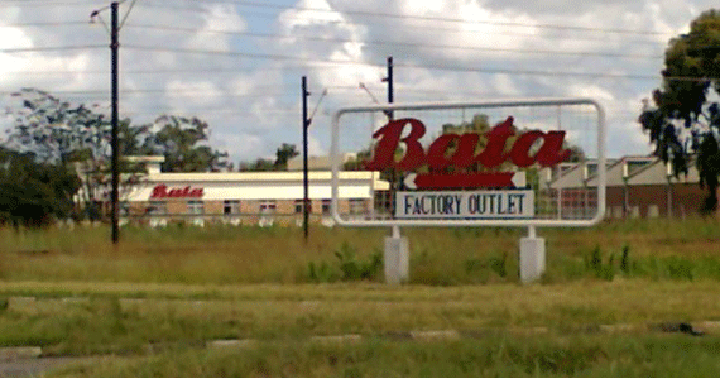
The Bata shoe factory in Gweru, Zimbabwe

by Chris Chinaka

Across Zimbabwe, dozens of factories lie idle with peeling paint, rusting machines and broken roofs in once bustling industrial districts, symbols of the huge economic challenge facing President Robert Mugabe and his ZANU-PF party.

On the surface, things look rosy after Mugabe’s landslide election victory in July: growth forecasts are looking more positive as agriculture recovers, inflation has been tamed and the stock market is starting to buzz again after some listless post-election trading.

But look behind the headlines and the landlocked southern African nation’s manufacturing heartlands, which accounted for a quarter of the economy a generation ago, are now wastelands – and some fear the decay is permanent.

From Harare in the north to the second city of Bulawayo in the south, companies are working at a third of capacity, down from 55 percent a year ago, according to the Confederation of Zimbabwe Industries (CZI).

“Businesses are collapsing, and the economy will need a real big push-start to get going again,” said an accountant winding down tube-making firm BMA Fasteners and Tube and Pipe in Harare. He declined to be named for professional reasons.

“At this rate, it’s frightening to think what the future holds,” the 42-year-old said, scratching his head. “I don’t think it is an exaggeration to say it might just be hell.”

Although they are careful not to blame politics, industry bosses say business confidence has fallen since the 89-year-old Mugabe was declared the overwhelming victor in the July 31 election, which the opposition MDC rejected as rigged.

New finance minister Patrick Chinamasa expects the economy to grow 6.1 percent in 2014 from 3.4 percent this year but that will make no dent in unemployment estimated at over 80 percent.

Zimbabwe’s economy shrank by 45 percent during a decade-long crisis blamed on ZANU-PF, but bounced back in 2009 after Mugabe was forced to share power with arch rival Morgan Tsvangirai after violent and disputed elections the previous year.

The July election put paid to that coalition, and with it what some critics saw as the MDC’s moderating influence on Mugabe and ZANU-PF nationalism.

FOREIGN INVESTMENT

In its most blatant form, that nationalism was manifest in Mugabe’s “indigenisation” push, under which foreign-owned firms have been forced to sell majority stakes to local blacks.

However, with the economy so desperate for capital – some estimates put domestic credit demand at $12 billion, more than double total bank deposits – Mugabe may be forced to soften his anti-foreigner stance.

“We are likely to see a more pragmatic approach by the politicians,” said Grant Flanagan of Amigo Partners, which manages a Zimbabwe-focused investment fund, noting some faint signs of a softening of policy.

Most notably, in his new cabinet, Mugabe swapped combative indigenisation minister Saviour Kasukuwere for a mild-mannered technocrat who has already suggested the government is open to discussion about the extent and timing of black ownership.

However, there are no details and when asked by Reuters about indigenisation, another member of the government, Industry and Commerce minister Mike Bimha, declined to discuss something he said was outside his remit.

Without a decent period of clarity and consistency, investors are unlikely to be writing any cheques.

“ZANU-PF must realise they are in trouble over the economy,” independent economic commentator John Robertson said. “Investors, particularly in mining, where they have an opportunity, will want to see whether there really is any softening. If there is, then definitely the economy stands some chance.”

DAUNTING CHALLENGE

Even then, turning the ship round will be difficult.

The African Development Bank estimates that fixing the infrastructure needs $14 billion, a sum that in reality can only be met by the World Bank and IMF, which stopped lending to Harare in 1999 because of unpaid debts.

Private investors will then have to address a manufacturing vacuum filled by cheap imports, mostly from China.

Nowhere is the evidence more glaring than at David Whitehead, a large textile firm that used to employ 2,500 people in Chegutu, 100 km (60 miles) southwest of Harare, but which collapsed two years ago and stands empty today.

A handful of people are contracted to maintain machinery. Most of the time, only a couple of guards are on patrol.

Elsewhere, the factory sector built during the years of isolation imposed on white-minority Rhodesia has lost makers of everything from shoes to medicines, carpets to building materials and chemicals to food.

In 1986 manufacturing contributed 26 percent of GDP. Today it is just over 2 percent.

The industrial graveyard includes Ziscosteel, once the largest integrated steel works in the region, which shut in 2008 due to what analysts said was gross mismanagement and a failure by the state-owned firm to upgrade its equipment.

The government has been struggling to revive it with a number of foreign firms, including lately Essar from India.

“There is a long way to go and the starting point for our companies is retooling. There is no other way. There is idealism, and then there is reality,” says economist Prosper Chitambara, a leading private economic consultant.

WAIT AND SEE

The Harare tube firm, which used to employ 300 people, says it was a victim of a range of factors – price controls, foreign currency problems, power cuts, and then cheaper imports from India and China.

“Everything that could go wrong went wrong,” said the accountant in charge of its burial rites.

For ZANU-PF, the absence of the MDC as a coalition partner means it has no-one to blame and nowhere to hide.

Robert Mugabe taking a nap

After the July election, it launched a Zimbabwe Agenda for Sustainable Social Economic Transformation, although the document was culled from the black empowerment parts of its manifesto, leading many to see it as more of the same from a party well-known for its empty economic blueprints.

However, aides say Mugabe himself is taking greater interest in the economy in a bid to rebuild a legacy tarnished by the hardships and hyperinflation of the last 13 years.

A glimmer of hope lies in tobacco farming, where state and private support for small-scale farmers is expected to push production to 200,000 tonnes from 45,000 in 2008, the pit of a slump blamed on Mugabe’s seizures of white commercial farms.

Many also see huge potential in mining and diamonds if the government can assuage concerns over forced sales of stakes to locals.

“We have to wait and see,” said the security guard manning the entrance to the David Whitehead factory in Chegutu, echoing a refrain heard in boardrooms from Harare to Johannesburg, London and New York. – Reuters

(Additional reporting by Pascal Fletcher in Johannesburg; Editing by Ed Cropley and Giles Elgood)

Coulter: Nigerians manning Obamacare

Ann Coulter
Ann Coulter

By Ann Coulter.

In a weird confluence of the nation’s two most pressing issues — Obamacare and our insane immigration laws — this week we found out that the tens of thousands of “navigators” hired by the government to enroll people in Obamacare will include convicted felons.

Despite some “navigators” having already been exposed as having arrest warrants against them, the Department of Health and Human Services (HHS) has no plans to screen out the criminals. (But rest assured: If your identity is stolen as a result of trying to sign up for Obamacare, no one will be more upset about it than President Obama.)

In addition to convicted felons, navigators are drawn from labor unions, community organizers, former ACORN staffers and front-groups for the Democratic National Committee.

Call right up and give all your private financial and medical information to those guys! What could go wrong? (Before Obamacare was even online, Minnesota’s health exchange emailed the Social Security numbers and other identifying information for about 2,400 Americans to a man applying to be a “navigator.”)

If you call today, you can sign up for Obamacare plus learn about a Nigerian prince in exile who’s willing to share his vast inheritance with you in exchange for your bank account numbers.

To much fanfare, in 2006 Medicare announced that only 7 percent of its payments were a result of fraud. Two years later, The New York Times reported that it was actually 31.5 percent — and that Medicare had aggressively hidden the fraud from outside auditors.

Do you think a privately run insurance company would take three years to notice that one-third of its payouts had been obtained by fraud? But with federal programs, there’s a powerful incentive not to look for fraud. That would merely vindicate critics of big government!

In 2012, Medicare’s crack investigators noticed that more than a billion dollars in home health care payments for 2008 had gone to one single county in Florida — more than all such payments made to the rest of the entire country.

Do you think it would take five years for a private insurer to figure out it had been scammed out of $1 billion by a few health care professionals in one county? Anyone else would notice being stolen from, but not the government. It’s not their money.

Wherever there’s a government program, there’s a gigantic opportunity for criminals. A staggering percentage of the health care workers scamming Medicare and Medicaid are foreign-born — much higher than their numbers in the medical profession generally.

Do you notice anything that stands out about the list of convicts? Would any of their names have sounded strange to Ben Franklin? Of 22 people convicted of defrauding American taxpayers by fraudulently billing Medicare or Medicaid, at least 17 have almost comically foreign names.

None of the scammers should be foreigners! We can’t do anything about our native-born crooks, but why are we importing them?

Enormous, unwieldy corrupt government programs run by arrogant bureaucrats would be bad enough in 1950. But after decades of our Third World-only immigration policies, one can’t help noticing that Medicare and Medicaid are beckoning Disneylands for foreign-born thieves.

The problem isn’t their complexion, it’s their culture. In America, we think only dumb people become criminals. That’s not true in the Third World!

Nigeria, for example, leads the world in criminal enterprises. Every level of Nigerian society is criminal, with the smart ones running Internet scams, the mid-range ones running car theft rings, and the stupid ones engaging in piracy and kidnapping. At the University of Lagos, you can major in credit card fraud.

There were almost no Nigerians in the United States until the 1970s. Today, there are nearly 250,000 Nigerians in the U.S. (committing the cyber-crime Americans just won’t do!). In 2011, we took in more immigrants from Nigeria than from the United Kingdom (9,246 from the U.K. and 9,344 from Nigeria).

Of course, Obamacare never would have passed without decades of massive immigration from the Third World. Liberals didn’t change any minds — they changed the voters. In order to pass Obamacare, Democrats had to bring in the Third World to vote Democratic.

The downside is that the country is now chock-full of people who come from cultures where criminality and government corruption is a way of life — at the very moment that the country is expanding a government-run health insurance program already shot through with fraud and abuse.

Only confiscatory tax rates can support such a system.

Gosh, I sure hope our new Somali and Nigerian immigrants have German-style rectitude and are very honest about reporting all their income to the government.

South African productivity

Bongani Coka
Bongani Coka spreading the wealth

By Johann Theron

Recent commentary by international (financial) companies such as IHS Global and Goldman Sachs stated as follows respectively;

“South African crime at lowest levels in 15 years” (Wall Street Journal)

“Education/healthcare and public sector productivity remain a challenge” (Two Decades of Freedom Report)

That South Africa is a convenient investor destination is obvious, but that investors are getting nervous to the point where they analyze South Africa free of charge is less obvious. The basic tenet of both reports indicates that SA is a great country to invest in, if they could only address the persistent employment issue where crime may have dropped, but poverty remained. The Goldman Sachs report states quite categorically that “labor productivity” improved while poverty remained – because there are fewer jobs with the same/more output.  This means however, that labor productivity actually did not improve. This ambivalence requires further investigation.

The CEO of Productivity SA is Mr. Bongani Coka. He recently promoted the growing of South Africa’s economic competitiveness during the yearly productivity month in October. Seen together with the almost co-incidental establishment of a competitive Economic Freedom Fighter political party (against the reigning ANC political party), one can only wonder at the unusually large newspaper splash accorded to this “economic” issue in Business Times of October 27, 2013 p 19.

It is almost as if the ANC wants to say: Look, we really know about economic competitiveness! However, apart from admitting to the (unfortunate) drop in WEF rankings, Coka continues to correctly define Productivity = output/input where this include labor, capital and materials productivity factors. However, he states as follows; “[These factors] are used in their conversion into outputs as efficiently and effectively as possible, thus improving living standards.” It is clear that his focus is on output (in this case living standards) – and not input optimization. For example; Productivity SA issues awards based on the following performance criteria;

Industry productivity

Productivity awareness

Outcome-based solutions

South Africa’s competitiveness

The result of the above approach appears to emulate the Department of Education’s outcomes-based curriculum, where according to the Global Competitiveness Index of 2013, South Africa’s education is the worst in the world (or there abouts). It follows then that South Africa’s competitiveness must also be worse off. The facts seem to support this.

It is clear that Mr. Coka’s version of productivity, which could have been derived from Mr. Asmal’s education strategy, is incorrect in its western context – thereby negatively affecting the entire country. Over the last 10 years his organization has been issuing awards for shiny productive performance but it was all in vain. The blunder is not that he apparently followed the footsteps of his esteemed partner in freedom of speech. He was simply blinded by those promising shiny outputs instead of focusing on the hard work of input management. To explain as follows:

Mr. Coka admitted not having statistics on the national labor hours worked and thus the efficiency of the work executed in those hours. Is this not the basic input required in a country competing with highly productive BRIC partners?

Mr. Coka admitted not servicing the Government sector at all. The fact that the entire local government sector is inefficient and ineffective (according to Goldman Sachs), seemed to have escaped him and his boss in its entirety. (To be fair – he works with public enterprises such as South African Airways [sic])

Mr. Coka correctly identified capital productivity as an important factor but failed to implement/measure proper physical asset management processes as required by financial statements. This essentially means that the country’s infrastructure is in reverse mode, however, it benefits the politically attractive option to procure billions of rand’s worth of re-capitalization “solutions” – using never-ending financial bonds followed by the associated clever re-distribution of “capital”.

The competitive deduction in the African context however, is that the more South Africa’s infrastructure reverses, the more efficient the redistribution of shiny capital and so it will continue with the planned massive national transport and electricity supply projects, followed by the great Inga dam project in the Democratic Republic of the Congo.

It follows then that the South African version of productivity = bond value/infrastructure value, which means that productivity of capital redistribution is measured instead of labor. The end-game is foreign investors losing money to the South African elite over the long term. This might also help to explain why South African poverty has been on a plateau for the last two decades.

Outdoor air pollution classified as carcinogenic by World Health Organization

air pollutionby Melissa Roper

It is not yet certain if climate change is the result of anthropogenic-sourced carbon emissions or, on the contrary, is a Sun-influenced phenomenon. As the debate on global warming versus global cooling continues, results of recent research draw attention towards an equally worrying side-effect of industry greenhouse gas emissions – the fatal implications of air pollution on human health. Earlier this month, 24 experts from 11 countries met at the International Agency for Cancer Research (IARC) headquarters in Lyon to assess the correlation between cancer and air pollution. IARC is the cancer specialized agency of the World Health Organization (WHO), the coordinating authority for health within the United Nations.

Cancer and air pollution: two widespread phenomena

The scientists evaluated over 1000 papers analysing the carcinogenicity of particulate matter and transport-related pollutants, and the results of the study will be published as Volume 109 of the IARC Monographs. According to the study’s Press release published on 17th October 2013, “outdoor air pollution [is] a leading environmental cause of cancer deaths”. This conclusion is the first paper to officially link the two:  both the worldwide rate of cancer and global air pollution have become alarmingly widespread phenomena in the past decades.  Cancer has become so common, that the international medical industry was revolutionized in order to address the problem in evermore effective ways. As Licensed Prescriptions explain, it has become possible to diagnose, prevent and treat cancer quickly, in some cases even without the need of a biopsy. One of the reasons why cancer has become such a frequent problem may be that “the air we breathe has become polluted with a mixture of cancer-causing substances” as summarized by Dr. Kurt Straif, Head of IARC Monographs.

Sources and effects of air pollution

The IARC study reports that although air pollution comes from a mixture of natural and anthropogenic sources, “the predominant sources of outdoor air pollution are transportation, stationary power generation, industrial and agricultural emissions, and residential heating and cooking. Generally, the burning of fuels – oil, coal, gas or wood – release elements such as particulate matter, carbon monoxide, sulphur oxides, and metals (lead, in particular) into the air. Humans breathe in these particles, which get stuck in the lung tissue and produce breathing affections and cancer on the long term.

South Africa air pollution

The University of Western Cape’s Biodiversity and Conservation Biology Department (BCB) also discusses air pollution, stating that “pollution from exhaust gases of vehicles is responsible for 60% of all air pollution and in cities up to 80%”, with lead being one of the most dangerous chemicals emitted by the transport industry. Combustion of coal is also acknowledged as a major source of air pollution leading to possible fatal effects. For South Africa in particular, one of the dangerous side effects of burning coal is acid rain, affecting stone, metal and brick elements. Highly acid rain, snow, hail or fog is produced when sulphur and nitrogen dioxides combine with the atmospheric moisture. “Coal in South Africa is rich in sulphur and the power stations in the Mpumalanga Province could be responsible for acid rain over other areas of our country”, explains the BCB.

Indeed, as announced by Greenpeace in August 2013, Witbank, a town outside of Johannesburg, has “some of the world’s most polluted air”. This can be linked with the activity of the 11 coal-fired power stations situated across Mpumalanga. Witbank is also the place where 83% of South Africa’s coal is mined.

Improving the National Ambient Air Quality

South African air is polluted by the high sulphur dioxide and particulate matter concentrations resulted from power-generation and industrial burning of coal.  This urgent matter was addressed by the most recent air quality governance approach, the Air Quality Act of 2004 and the recent National Ambient Air Quality Standards 2010. Key directions of the new approach include: Decentralisation of air quality management responsibilities; Requirements that all significant sources be identified, quantified and addressed; Setting of ambient air quality targets as goals to achieve emission reductions. The National Standards sets limits for the following airborne particles: Sulphur dioxide (SO2), Nitrogen dioxide (NO2), Particulate matter (PM 10 – 10 micrometre diameter), Ozone (O3), Benzene (C6H6), Lead (Pb) and Carbon monoxide (CO). The required date of compliance with the standards depends on each element, from “immediate” (2010) to January 1st 2015.

French presidential chef bids farewell with raspberry millefeuille

Bernard Vaussion in the presidential kitchen

by Sylvie Corbet

France’s presidential chef is retiring after four decades of culinary service, having fed five French presidents and peppered the steaks tartare of some of the world’s most powerful leaders.

Bernard Vaussion, 60, was filled with emotion while cooking his last lunch for the President Francois Hollande on Thursday at the Elysee Palace. The farewell meal included raspberry millefeuille, a rich pastry. Hollande has a well-known sweet tooth and has been mocked for his portly figure.

“It’s easy to work with Francois Hollande. There are not many things that he doesn’t like. He’s somebody who loves eating,” said Vaussion.

He said that over the years the most important skill for the job -besides cooking – was the ability to adapt to the tastes of each French leader.

Francois Mitterrand loved seafood. Jacques Chirac preferred snails and sauerkraut. More recently, Nicolas Sarkozy caused a stink by rejecting French gastronomy and asked Vaussion to serve him a healthier menu based on fish, vegetables and salad. Sarkozy also drinks no wine – a revelation that initially caused controversy and offended Gallic pride.

France is one country where food and drink get political.

Sarkozy also said “non” to cheese and only allowed it on the menu during visits to Paris from a well-known cheese fan, German Chancellor Angela Merkel.

Vaussion noted that Hollande, Sarkozy’s successor, was his polar opposite in food as well as in politics.

Hollande is a hearty eater who enjoys gastronomy as an art of living. Cheese is, of course, back on the table, which may be one reason Hollande has visibly gained weight since his May 2012 election.

But the leadership is not the only cause of change.

France’s economic crisis has taken its toll on the Palace menu, as the kitchen tries to cut expenses.

“Some luxury foods have disappeared from the menu, such as truffles and lobster,” said Vaussion.

But the Elysee kitchen remains a place of note.

Underground and the size of two tennis courts, the famed kitchen is home to hundreds of copper pots that hark back to the time of 19th-century King Louis Philippe, France’s last monarch. They’re still in use.

As Vaussion retires, he will take with him insider information about the tastes of the famous. An example? Queen Elizabeth II loves foie gras. – AP

Stasi Meets Steve Jobs

snoopingBy Eric Margolis

“Gentlemen do not read other gentlemen’s mail” sniffed US Secretary of State Henry Stimson in 1929 when told that American cryptographers had broken Japan’s naval and diplomatic codes.

Stimson, who later headed the War Department, ordered code-breaking shut down.

Alas, there are not any old-school gentlemen left in Washington these days. Revelations of US electronic spying by whistleblower Edward Snowden have ignited a furor across Latin America and now Europe.

This week’s uproar was intensified by claims that the US National Security Agency (NSA) had tapped into the cell phone of German Chancellor Angela Merkel, Europe’s most important and influential leader. Further outrage erupted in France after reports that its leaders and diplomats had been tapped by NSA’s big ears.

To no surprise, President Obama officially denied listening in to Merkel’s calls. A US source sought to lessen the damage by claiming NSA had only tapped her office phone, not her cell phone. German anger was not assuaged.

Back in the day, French Interior Ministers – notably Nicholas Sarkozy – used to stay up late poring over wire taps of fellow officials’ peccadillos. That was good fun. Today, by contrast, the NSA and CIA are sweeping up all communications of supposed allies as part of the runaway US national security state. Call it the Stasi meets Apple’s late Steve Jobs.

Last month alone, NSA reportedly sifted through 70 million French phone calls, text and email under the lame pretext of fighting terrorism. What NSA was really finding were the phone numbers of prominent Frenchmen’s mistresses or boyfriends – very useful for CIA blackmail ops – and important commercial information. Terrorism is a red herring. NSA’s run amok spying, allegedly to combat “terrorism,” is making a lot of Americans wonder again about the events of 9/11 that triggered the explosion of America’s spy state, restrictive laws, and foreign wars.

Still, one wonders if President Obama knew what his spies were doing. He has little control over the Pentagon and probably even less over America’s mammoth, ever-growing spy state built by former President George W. Bush that costs over $80 billion per annum. Some 4.8 million Americans now have secret security clearance and work for the octopod national security state.

Obama would not be the first president not to know what his spooks were up to. But he should have been this time. Bugging the leaders of America’s closest European and Latin American allies was an incredibly stupid act. Nothing thereby learned could have been worth the damage caused.

US Elint (electronic spying) has humiliated European and Latin leaders and made them and NATO look like American vassals to be dismissed or disdained.

How can Europe’s leaders face their own voters after this shameful episode? Revelations by Snowdon and Army private Bradley Manning show that Washington treats its NATO allies in the same imperious manner the old Soviet Union bossed around the Warsaw Pact.

Europe’s leaders are under mounting pressure to demonstrate their independence of Uncle Sam by taking some stern retaliatory action against US interests.

A starting point would be building a brand-new electronic communications architecture for Western Europe that resists US penetration, and creating a truly independent Europe military capability. Time for Europe to stop being foot soldiers to America’s nuclear knights.

US reputation in Europe and Latin America is now at an all-time low. The next NSA spying scandals will likely come from the Mideast, India and Pakistan, Canada, South Korea and Japan. Obama may be remembered as having gotten the world even angrier at the US than predecessor George W. Bush – quite an accomplishment.

Washington claims “everyone does spying.” True enough, but no one is anywhere close to NSA’s giant vacuum cleaner and all-hearing bugs. What the US has been doing is far more than information gathering against a handful of anti-American militants. It’s heavy-duty intimidation. A reminder that Big Brother is watching and listening.

The deeply corrupt US Congress won’t do much to curtail NSA’s information theft. Too many of its members profit from market trades made on the basis of NSA snooping.  – The Gulf Times