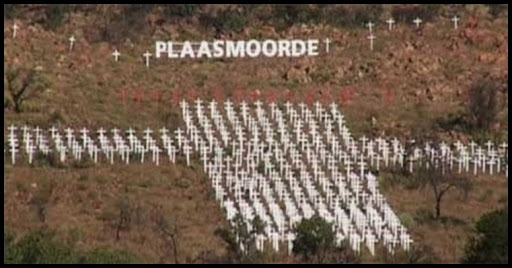
‘Apartheid’ as metonym for Afrikaners

In a multiethnic society like South Africa, groups will always blame each other for their lack of wealth, education, political power, and so on. In this respect, SA is no different to Malaysia, Sri Lanka, Northern Ireland, Belgium or anywhere else.

Apartheid is a national obessession. To some extent it has imparted some sort of inverse identity to the so-called New South Africa where people wonder whether we are really the 51st state of the USA, the southern province of Zimbabwe or part of the British Empire. Of course, one of the first steps after 27 April 1994 was to rejoin the Commonwealth so in a sense that made many people feel “whole” again.

Apartheid is, however, also a metonym. Being an Afrikaans word, sometimes the only Afrikaans word that many people know, it stands for “Afrikaners”. A statement like “apartheid destroyed black wealth” decodes as “Afrikaners destroyed black wealth”. The massive participation of Afrikaners in education between 1948 and 1994, mainly because the angelic English owned all the mines and industries, may therefore be seen as “de-educating South Africa”. At one point 50% of teachers in English-language white schools were also Afrikaners. Soon these “deprived” Engelse will be blaming Afrikaners for not having won more Nobel prizes for science, not having founded Google or Microsoft or not inventing the Ipod. Instead, they were “forced” to read Somer by CM van den Heever or some Afrikaans poetry in their second-language class, which “dehumanised” them.

Of course, Afrikaner teachers also taught millions of people science and mathematics, but as some minister once said: “Verwoerd made it too difficult, because he was a racist.” Fortunately Kader Asmal introduced “mathematical literacy” which is is the non-racist version.

As Paul Berkowitz so eloquently argues in How do you solve a problem like Apartheid?: “In the end, perception usually trumps truth.” Someone will have to be blamed for the fact that the average black South African does not enjoy the same standard of living as the average citizen of Luxembourg or Norway. Nor does the average white, of course, but that is besides the point.

Apartheid, like Satan, still lurks within dark corners of South Africa, usually on farms or in Afrikaans schools or within the homes of poorer Afrikaners living on smallholdings such as in Muldersdrift or Kameeldrif.

Within the metonymic logic of South African ethnic discourse, eliminating apartheid is easy: you have just have to eliminate Afrikaners. This can be done in three ways: putting them all on a boat to Australia, assimilating them completely, or by killing them en masse. Or maybe one by one, family by family.

In Muldersdrift, Kameeldrif, on farms and even in the cities, the clarion call to “eliminate the last vestiges of apartheid” is being responded to with vicious enthusiasm. Remember that Lord Milner or one of his contemporaries also used those terms on the eve of the Anglo-Boer War: “eliminating the last vestiges of Afrikanerism from South Africa”. Afterwards 500 000 British soldiers and 100 000 armed blacks put the Boer women and children in concentration camps and burned everything to the ground, homes, barns, even churches. In fact, the British were the only Western people to have burnt churches in the modern era.

According to historians, it took Germany 120 years to recover from the Thirty Years War (1618-1648) when a similar “scorched earth policy” had been followed on its soil. However, no-one – least of all the omniscient apartheid theorists of today – has ever argued that the Anglo-Boer had any economic effect whatsoever. On the contrary, the economic effect is generally seen as positive, in having put control of the economy firmly in English hands. Confiscated Boer livestock and grain were sold to the British army by English companies whose names have changed since, some of which are today listed on the JSE. “Apartheid capital” therefore metamorphosed into “English entrepreneurial flair”. This was the first form of BEE, or British Economic Empowerment. Arguably, the current form of BEE still benefits bankers and stockbrokers more than it does blacks, because these rake in huge fees for enriching a few high-profile blacks.

After the war, irate letter writers from Natal castigated Milner and others for not having killed all the Boers and “cleansing the country for England”. That would have been one way of nipping apartheid in the bud, as it were.

But it is never too late and we can all agree that apartheid is being eliminated every day, whether metaphorically by erasing Afrikaans names of towns or streets, or physically by terminating the bearers of the disease. There is an uncanny resemblance between the gentlemanly style of the British in 1900-1902 and the methods of the current crop of freedom fighters, who appreciate that children, especially girl children, represent the next generation and it therefore makes sense to eliminate them first. The names of Alyssa Botha and Danielle Esterhuizen come to mind, but there are many others too.

The West’s slippery slope to sadism

20 May 1983, Civilians killed in Church St bomb attack, with the help of Britain, The Netherlands and Sweden

by Joseph Secrève

If one were to take a bird’s eye view of the changes that took place in Western nations over the past sixty years, one could only muse at the rapid shifts that have occurred in this short time. The dust of war had hardly settled and an invisible war on the Western soul has taken its place. In small increments, we have been fed slivers of violence, less dialogue and more action through the national media and entertainment industry. A sense of higher purpose has been clouded and narcissism has taken over. Remember the Cold War spy dramas where pistol-wielding protagonists held lengthy dialogues with their enemies at gunpoint? Especially in the case of Ian Fleming’s immortal superspy, a clear shift could be seen if one compares Connery with Craig. More often the use of violence has been promoted as a means of solving disputes and debasement has become acceptable under the guise of an ‘alternative lifestyle’.

In stark contrast to today, Truman Capote’s famous non-fiction novel In Cold Blood caused a national stir when it was first released in 1966. The book recounts the killing spree of two rogues who killed a Kansas farmer and his family after it was rumoured that they had a substantial amount of cash in their home. The killers got away with only a modicum of dollars, but the carnage they left behind traumatised a large section of rural America. To quote Capote: “Of what were they frightened? It could happen again.”

The intensity of Capote’s research in today’s terms would seem slightly out of place. Such levels of violence and cruelty have become an almost everyday occurrence, and in rural South Africa there are even multiple cases of torture, often leading to murder, with on average one murder per week. This carnage has spread like an inkblot over South Africa, fuelled by the “Kill a Boer, Kill a Farmer” slogan, and there appears to be no end in sight. Every subsequent president under the ANC is less reserved in either chanting or defending this bloodcurdling invective. In Capote’s interview with the accused Perry Edward Smith, the latter revealed that he had felt a deep sense of shame as he slit the throat of Mr. Clutter. Nowadays the mutilation of people and deliberate desecration of corpses unveils a motive of a different kind: sheer hatred! The intentional destruction of human life has become a goal in itself, especially when one considers that these savages…uhm…I mean “robbers” seldom steal anything valuable. Usually no more than a cell phone gets stolen to prevent the victims from calling someone or their car gets taken as a getaway vehicle, only to be abandoned a few kilometres down the road.

Our Marxist-inspired intellectuals and ideologues are eager to help defend these offensive acts, often rationalising the chaos away with their usual outmoded Freudian frustration-aggression or deprivation theories. This is their version of ‘supporting the oppressed’. Strangely enough, many people still buy it. The more savagery the murderers cause, the more warranted their grievances are held to be, especially from people who have no knowledge or experience of these communities. Filling their knowledge gaps with presuppositions then becomes a reality.

Fortunately our understanding of human psychology could help us show the way. In many respects the Arendtian concept of the ‘banality of evil’ clears matters up a bit. The everyday nature of these acts of cruelty makes them appear normal. Hannah Arendt however faltered in believing that people were entirely nonchalant when it comes to the killing of others. Research has shown that there is always an element of ideology present in these levels of appalling behaviour. Psychologist Philip Zimbardo demonstrated this in his Stanford Prison Experiment, which was later to be elevated to the ranks of classic psychology experiments. In this experiment a makeshift prison was erected on the university premises and student participants were randomly assigned to the role of prisoner or warden. It was the intention to run this experiment for a fortnight, but after six days the severe levels of abuse from the warden participants on the prisoner participants compelled Zimbardo to pull the plug prematurely. In fact, Zimbardo himself was moderately blinded by this experiment, and only started seeing the trees from the forest when a new participant entered the experiment and pointed out how badly abusive the wardens had become.

This convinced Zimbardo how easily a fabricated reality could alter the perception and behaviour of people, regardless of their deeper understanding that this ‘reality’ is only play-acting and not for real. What was more astonishing was the level of docility of the prisoner participants. Having to go to the bathroom with a bag over their heads and their ankles in chains; or having to do push-ups with one hand behind their backs were humiliations they fairly readily accepted.

In this sense, South Africa – like many communist-run countries – is a collection of all the evil psychology experiments raked together from times past. Farmers and other whites are considered to be fundamentally to blame for all social ills that have visited South Africa. The stoic acceptance of the fate of whites is further exacerbated by calls from intellectuals, with the likes of leftist author André P. Brink who mentioned that his people deserved to disappear. The reason why is not really important. The daily reality is clouded with the notion that they are unwanted to the extent of being outlaws. One doesn’t need to control human behaviour directly, as this would likely meet up with resistance. The better option would be to control the mental climate, ie. cast a stage where the actors are told to live this reality, and then slowly turn up the heat. By letting this severe debauchery creep in slowly has the additional benefit to cause confusion and paralyse the victim even more. Had the approximately 4 000 South African farmers lost their lives in, say a week or a month instead of twenty years, this would have been a sure-fire cause for war.

Unfortunately our powerful leaders, our presses and public intellectuals have the habit of denying certain aspects of daily life such as the abominable state of cruelty we have fallen into. Harvard psychologist Stephen Pinker claims that we are living in a higher state of peace in the West than ever before. The impending genocide on white South Africans is primarily expounded by a small group of bloggers who are constantly facing a wall of denial or ridicule. Especially regarding South Africa, they are having a tough time in dealing with this frustrating Cassandra Complex.

As for communism, there were always the frontrunners who were obsessed with their brave new world ideology and who were capable of turning a blind eye to all the evils they personally witnessed. The Romanian communist leader Ana Pauker is a prime example, as she saw to the deportation of her own husband who later died in the gulags under Stalin’s orders, but did not shed a tear. Not to mention how cannibalism was justified and even rewarded with top jobs under chairman Mao’s command in certain Chinese provinces. Yet, all the while, the promised utopia did not materialise. The only real change that took place was to turn the situation awfully grim and harden people’s attitudes further, effectively closing themselves off from truly seeing each other.

If we want to understand this process in full, we would be misguided in believing that this sadism is due to some form of repression and is now undergoing a cathartic release. The reinforcement to do evil comes from outside and acts on the devil inside.

To return to the example of Capote: How many murderers in South Africa and elsewhere feel a sense of shame for their barbaric deeds? Probably not many, especially within the climate dictated by the media that such murders are not crimes but belated reactions to “suffering” from decades ago.

If Capote been alive and in South Africa, I’m sure he would have quoted instead: ”Of what were they frightened? It will happen again”.

Joseph Secrève was born in South Africa but lives in the Netherlands. He is a psychologist by training.

Blade runner killing and the media blackout

by Ilana Mercer

After decades of indifference from America’s infotainment industry, imagine my surprise to hear TV anchors like Megyn Kelly of Fox News allude to the killing fields of South Africa.

South Africa should be in the news every day. It isn’t. Scant few among the West’s Yellow Press care to chronicle the country’s favorite blood sport: murder. The Afrikaners, in particular – arguably that country’s founding people – are being killed off at genocidal rates with nary a murmur from the media – although the same crowd is on the scene to report on Nelson Mandela’s every wheelchair-bound move.

According to Genocide Watch, South Africa under the African National Congress is now at stage 5 of the 8 stages of genocide. However, were it not for a little-known, heroic Internet journalist (cited in “Into the Cannibal’s Pot: Lessons for America from Post-Apartheid South Africa”), few would know who the victims of this racial onslaught are and how they die.

Soon jurist Alan Dershowitz was chiming in about “how dangerous” life in South Africa was. Dershowitz even denigrated the country’s judiciary as “a very politically correct judiciary,” “filled with people from the ANC and supporters of the ANC”; most certainly “not one of the finer judiciaries in the world.”

A subject that had been submerged since 1994 – the ramshackle state of post-apartheid South Africa – was suddenly being raised, if in veiled terms.

The reason for the heightened awareness among the criminally comatose is Blade Runner Oscar Pistorius’ run-in with the law. The Olympian amputee killed his girlfriend, model Reeva Steenkamp, in what he contends was a case of mistaken identity. This being South Africa, the crime scene in suburban Pretoria is rumored to have been contaminated by the new and notorious South African Police Services. And the prosecutor has overreached, charging Pistorius, who has no priors, with premeditated murder.

The high-profile murder is PC and TV perfect for a left-liberal media, in South Africa and beyond, that wish to peddle the myth of “colorless” crime in South Africa. It is no such thing. In the aggregate, violence in the Rainbow Nation – more appropriately called the “Rambo Nation” – is unidirectional: black on black and black on white. Violence against women generally flows in the same direction. Considering, moreover, that the country now has one of the world’s highest murder rates and lowest conviction rates, a South Africa thug can safely pursue his vocation without fearing the consequences.

South African authorities, universities and think tanks no longer provide information about victimization patterns by race of victim and offender. Nevertheless, in the research for my book, I uncovered data according to which, at 76.6 percent of the population, blacks committed 76.4 percent of “intimate femicides” (defined as “the killing of a female person by an intimate partner”). And they committed 68.3 percent of “non-intimate femicides”: “the killing of a woman by someone other than an intimate partner.”

Whites have proven woefully inadequate to the task of filling their pro-rata crime quotas (page 38). At less than 9 percent of the population and dwindling, the corresponding numbers for white South Africans were 3.9 and 2.6 percent, respectively.

Order lIana Mercer’s brilliant polemical work, “Into the Cannibal’s Pot: Lessons for America from Post-Apartheid South Africa”

With respect to incarceration rates, whites “underperformed” again. According to the South African Department of Correctional Services, 113,773 criminals had been sentenced as of June 2008, of whom only 2,190 were white. Whites make up only 1.9 percent of the number of sentenced criminals.

Weighing in with 90,013 sentenced individuals – approximately 79.1 percent of the total number of criminals sentenced – blacks more than filled their per-population crime allotment.

This high-profile celebrity case involves a class of people – wealthy white South Africans – whose role in the country’s violent crime is statistically insignificant. Trust a hypocritical media to turn a statistical outlier, an anomaly, into a perfect foil for the continued blackout on the color of crime in South Africa.

The incontinent gushing over Pistorius has given way to condemnation. Paranoid about security is how the athlete’s “obligingly stupid” journo friends are now labeling him. They had only ever jetted in from low-crime or no-crime countries for an interview.

More at home among the international glitterati, Oscar Leonard Carl Pistorius is no Afrikaner “everyman,” says activist Dan Roodt, who is such a man. Even so – and for all his privilege – Pistorius knows the rapacity and invincibility of the criminal class in his country. Like every other Afrikaner, he knew in his gut what infiltrating gangs would do to a legless Boer. He had seen the mangled images.

Perhaps Pistorius will speak up.

Deconstructing David Smith on Oscar Pistorius

The British Guardian is a notoriously anti-South African and more particularly anti-Afrikaans newspaper. As a purveyor of quasi-leftwing propaganda it is probably only rivalled by the former Soviet rag Pravda (‘The Truth’) which nowadays no longer enthuses about the class struggle and violent revolution. Unlike The Guardian.

The Oscar Pistorius incident is a kind of fait divers that would have gone unnoticed were he not a Paralympian athlete. However, for The Guardian’s Africa correspondent, David Smith, the murder is pregnant with meaning, revealing “deep-rooted attitudes to women, race and guns”. (See Oscar Pistorius: South Africa prepares for its own OJ-style trial of the century.)

A murder between two white people, which is ostensibly some kind of crime passionel, therefore has a deeper social meaning which the brainy Brecht-quoting Brit will reveal to us. Unfortunately for David Smith, his sensationalistic article, half-reportage, half-oped piece – but full-blooded propaganda – does not live up to its pop-psychological pretensions.

Smith, like his namesake in the Johannesburg Star, Janet Smith, who equally specialises in stereotypes about South Africa and Afrikaners, is confident that his British readers share those same idée reçues, reinforced by years of one-sided caricatures sent out from South Africa. Asserting racism in the Pistorius case, is like invoking a mediaeval theory of witches, referring to succubi that we know “exist out there somewhere”.

The notion that there is any similarity between the case of O.J. Simpson and Pistorius is equally spurious. In Simpson’s case there was a clear racial element, which eventually played itself out in the differential white and black perceptions of Simpson’s guilt. Simpson, a black man, had been accused of murdering his white wife. There is more of a resemblance to the recent allegations of abuse suffered by Mrs. Judy Sexwale at the hands of her cabinet minister husband than to the Pistorius case.

Yet probably accusations of black husbands beating up their white wives is not news to David Smith and The Guardian. It does not fit their edenic view of Africans as the innocent victims of white racism.

Smith and The Guardian, as far as I know, have never reported on farm murders or the many high-profile cases of white children, some even babies or toddlers, killed in cold blood by young black males in South Africa. Willemien Potgieter, Danielle Esterhuizen and Alyssa Botha come to mind. News from South Africa is carefully filtered to incite international animus against local whites, Afrikaners especially.

Obviously, David Smith and other foreign correspondents are acting in bad faith. Their writing flies in the face of journalistic ethics, credibility or even basic decency. In more than one sense, they are “framing” us, portraying us as ruthless killers and “racists” while we are the real victims of the sadistic violence raging in South Africa.

I would go even further and suggest that the British Left, that motley collection of Anglican radical clerics, cultural Marxists and whatever “militant tendency” remains in the Labour Party, are not happy with the slow pace of the killing in South Africa. The sadism, although vicious and bloodcurdling as when elderly ladies are tortured with hot irons, made to drink boiling water, gang-raped or hacked to pieces, does not happen on a scale large enough to satisfy the heirs of Kitchener or Roberts’s genocidal instincts.

David Smith, for example, laments the fact that there are “160 000 inmates who endure incarceration in Africa’s most overcrowded prison system”. We know that only 8% of murder cases ever result in a conviction in this country. The inefficiencies of our “transformed” criminal justice system, as well as corruption, see to that. Recently we learned that one third of all “South African” men had raped a woman on some occasion. Now, if all the murderers, the rapists and the robbers could have been apprehended and punished, there would no doubt have been a million “inmates enduring incarceration” in South Africa, almost elevating us to American levels of imprisonment.

However, even the fact that 8% of our murderers are in jail is too much too bear for British sadists who believe that these admirably passionate animals, the murderers and rapists, should be allowed to roam free within the paradise of cruelty that is South Africa.

Since the early nineteenth century, Britain has followed a remarkably consistent policy of ethnocide and even genocide towards the indigenous whites and Afrikaners of this country. I get the sense in David Smith’s ramblings about gun culture and white racism, that the process of decay and dissolution is not taking place fast enough. The hundreds of thousands of our people who are fleeing to Australia, New Zealand and other countries as a result of the violence, to be assimilated there into the Anglo-Saxon population, are not sufficient to ensure our immediate and sudden demise. More horror, more sadism is needed.

Hence Smith and all the others who are inciting black hatred against us, hoping for some sort of “final solution”. Smith’s message is clear: every Afrikaner male is, like Oscar Pistorius, a woman killer, a “gun freak” who needs to be eliminated in some or other way. Gated communities and other ways of protecting oneself from the paradise of cruelty brought about by British political intervention in South Africa, “arguably inflame the divide between the haves and the have-nots”, as Smith puts it. His platitudes tumble like clothes in a tumble dryer, but we must not miss the underlying logic that protecting oneself from violence is morally wrong. Within a sadistic universe the victim, once chosen by the master, has no right to resist being abused or slaughtered.

When the British camp commandant barks, we should all accept our fate unreservedly. Britain is an island state with an immense capacity for ethnocentrism, whether directed against Afrikaners, Russians, the French or the Germans. I recently re-read Kurt Vonnegut’s cult novel from the late sixties, Slaughterhouse Five, set against the backdrop of the Dresden bombing. British contempt for the Other inspired not only the Boer concentration camps and the Dresden bombing, but also the series of colonial killings in Africa and India. More recently, British soldiers in Irak have been accused of committing atrocities against the civilian population there. Terms used by these paragons of antiracism for Iraqis include: “stinking Arabs”, “yip-yaps”, towel-heads”, “flip-flops”, and “crusties.” (See The British Military in Iraq : A Legacy of War Crimes and Atrocities.)

To Britain and its journalists, South Africa is just a zoo or game park where they may gawk at the next “kill”, naturally siding with the predators, those magnificent creatures.

Not all South African blacks are amenable to the antiwhite hate being broadcast from London by the likes of David Smith and his local emulators. A decade or two ago Muff Anderson of the Johannesburg Sunday Times smuggled AK-47s from London in the boot of her car, dishing them out to any young warlord feeling like a bout of killing. She was widely lauded for this. Gun-smuggling is an interesting sideline to journalism as one creates the news one writes about.

On the other hand, the affable Zulu, President Jacob Zuma, has said some sympathetic things about Afrikaners and acknowledged our right to exist in South Africa. He is certainly for a return to law and order, even while South Africa is being destabilised by barely disguised ethnic and racial propaganda from Britain and those local media who still fawn at the feet of the colonial power.

The only South African politician currently finding favour in British eyes, is Mrs. Helen Zille, leader of the DA and the daughter of German immigrants who is trying her best to pass for English. On the subject of South Africa’s rape epidemic, when the Rape Crisis Centre in Cape Town appealed to Zille for funding, she callously replied: “Get in line – there are thousands of NGOs desperate for funding, all equally needy.” A few weeks later she was in front of the cameras protesting against the gang-rape and murder of the coloured girl of 15, Anene Booysen. Even if Zille’s accent is not quite pukka yet, at least she has mastered British hypocrisy.

Frankly, Oscar Pistorius holds little interest for me. Let him have his soap opera in court. However, we should refuse to let him be portrayed as some kind of archetypal white male or Afrikaner “everyman”, which he is not. I have never even heard him speak Afrikaans in public. Apart from his surname, you could really mistake him for an Englishman. Or a journalist. They have a taste for guns too, especially AK-47s. Just ask Muff Anderson.

Self-segregation trumps imposed multiculturalism

Ilana Mercer

Ilana Mercer on multiculturalism, political correctness, and more

FLORIDA, January 28, 2013 — Ilana Mercer is a rarity.

Originality is rare in punditry these days. Every time a new narrative-of-the-day arrives, we take refuge in groupthink rather than thinking for ourselves. Not Mercer.

Originally from South Africa, she moved to Israel after authorities pressured her anti-apartheid father. Today, Mercer is one of America’s leading paleolibertarian voices. She not only has a prominent column for World Net Daily, but is the author of Into The Cannibal’s Pot, a book about what has happened to her home country over the years.

Mercer shares her views about topics ranging from political polarization to race relations.
****
Joseph F. Cotto: This seems like one of the most polarized eras in American politics. Why do you think that our country’s political atmosphere has become so divisive?

Ilana Mercer: I think you are correct in your assessment regarding the unparalleled polarization of American society. Have you noticed how commentators on both sides of received political wisdom attempt to diminish the fact you articulate by referring to America’s fractious history? Nevertheless, this is a complex issue that is hard to answer briefly. I’ll try. In the introduction to F.A. Hayek’s “The Road to Serfdom,” economist Milton Friedman underscores this important point: “The argument for collectivism is simple if false; it is an immediate emotional argument. The argument for individualism is subtle and sophisticated; it is an indirect rational argument.”

Underway today in the USA is a monumental clash between individualism and collectivism; between the forces of reason and reality, against force and coercion. The “philosophical” differences between the Republikeynesians, on the one hand, and the Democrats, on the other, are insignificant. The first believe individual rights should be carefully calibrated by central planners; the latter believe these natural rights can be overridden.

There is also a cultural dimension to these irreparable divisions. We are today, thanks to social engineering, a deracinated and divided society. We are no longer what John Jay termed “a people descended from the same ancestors, speaking the same language, professing the same religion, attached to the same principles of government, very similar in their manners and custom.” There can be no unity without community. The glue of togetherness is gone, replaced by a flimsy, fluid, and thoroughly fake unity peddled by politicians. “Ideas” they call it. On the one day, it’s a crusade for democracy; on the next, it’s a war against racism.

Cotto: From foreign terrorism to domestic riots, we live in an increasingly challenging world. In order to face it, America must have a sufficient national security policy. What would you say that this should entail?

Mercer: It depends on your definition of “a sufficient national security policy.” If it means protecting borders and people not our own—which is how both Republicans and Democrats conceive of “national security—”then, no, we disagree on what is a “sufficient national security policy.” US foreign policy operates upon the premise that American men and matériel should be capable of reaching and controlling all corners of the world. I’ve opposed this foreign policy folly as long as I’ve been writing. (And in particular, in Jan. 16, 2004, I pointed out that, “Inviting an invasion by foreigners and instigating one against them are two sides of the same neoconservative coin.”)

Republicans profess to understand why the Welfare State cannot bring prosperity. Why don’t they get that the Warfare State, which operates on the same principles and by the same principals, cannot bring security? Remember, the military, the ostensible vehicle for national security, is government. The military works like government; is financed like government, and sports many of the same inherent malignancies of government.

The quest for ultimate security has given us Police State USA, the TSA, and wars that have bankrupted us. Bankruptcy is inimical to national security. We won’t be too secure if China quits funding the federal behemoth. Or if the Moody’s credit-rating agency downgrades U.S. Treasuries to junk bond status, befitting the banana republic we are becoming.

A rational, constitutional “national security,” guided by the principles of limited government, would involve a defense of America’s borders alone, a well-armed citizenry, strong secessionist, states’-rights movements, and the end to an immigration policy that has turned our country into a mass of hostile, competing factions.

Cotto: Multiculturalism is spreading rapidly across the Western world. This has led not only to cultural barriers, but tremendous religious and ethnic conflicts. What are your views on the subject?

Mercer: Multiculturalism as practiced in the West amounts to top-down, centrally enforced and managed integration. Show me a historical precedent where forced integration has worked. As it works across the Anglo-American and European spheres, one group (the founding, historical majority) is forced by self-anointed and elected elites, on pain of public and professional ostracism, to submerge its history, heroes, customs, culture, language, and pander to militant minorities, who’ve been acculturated by the same elites in identity-politics warfare.

As a libertarian, I believe that the right to include or exclude; associate with or dissociate from, is inherent in the right of private property. Private property is a civilizing institution. How better to keep the peace than to respect the right of free private-property owners to keep their distance (or not)—to hire, fire, and, generally, associate at will? This foundation of civil society is being dismantled for the sake of militant multiculturalism and policed pluralism

Cotto: Political correctness has brought many changes to American public discourse. How do you regard its legacy?

Mercer: As I write in “Into the Cannibal’s Pot,” “PC is the law of rule — mob rule — as opposed to the rule of law. Political correctness is tyranny euphemized. In fiction, the Orwellian Ministry of Truth is a reified entity. In reality, there isn’t one concrete ministry that decides how the nation thinks — there are many such entities. America’s many Ministries of Truth include the education system, most churches, the self-anointed ‘intellectuals,’ the ruling duopoly and their attendant TV bobbleheads. They issue countless edicts. This ‘dark art of rule’ demands obedience.

“Choose to disobey, and you risk public shame, libel, and loss of livelihood. Sometimes The Ministries of Truth will lunge for your property in the form of a law suit. Canada’s Ministries have a special Kangaroo Court in which they judge Un-PC speech (mainly), and from which traditional legal defenses have been barred. Examples of such expunged defenses: an appeal to truth and the lack of intent to harm. This self-inflicted tyranny, so typical of Western societies, plays a role in collapsing our societies.”
Cotto: Much to our country’s detriment, race relations appear to have soured during recent years. Some might say that this is rooted in generational poverty, while others would blame an increasing number of culture clashes. What is your take on this dilemma?

Mercer: I would probably dispute the thing you finesse or define as “race relations.” There are presumably many good relationships between fair-minded individuals—black, white, brown, etc. I have those. I am sure you do too. But, as for “race relations” in the collective sense, these consist in whites, as a group, accepting that all blacks have an eternal claim against them—for no other reason than that they are white. For ever after, whites have accepted that they are destined to be roped into the Sisyphean struggle to appease the unappeasable. Or so African Americans repeatedly tell them. White liberals, the vast majority of Obama’s base, lap up the libel of a racist America. The same curvature of the spine afflicts the “conservative” priesthood. Sane individuals reject this Mark of Cain; as they should a false accusation of hate they don’t harbor; hate The Other harbors.

Numbers from The Bureau of Justice Statistics confirm that white-on-black hate crimes are practically (and certainly statistically) non-existent. These are manufactured myths. Young, white, and poor: Now this is the group that is more likely than any other age group to be well represented among the reported victims of hate crimes. A significantly higher percentage of victims of violent racial hatred say their attackers were black.” “Nine out of 10 of them identify their race as the reason blacks targeted them.” Now tell me who’s doing the hating?

Originally published by the Washington Times Communities

Pimping the culture

by Ilana Mercer

The marketplace doesn’t adjudicate the quality of art or pop culture – it does no more than offer an aggregate snapshot of the trillions of subjective preferences acted upon by consumers. That snapshot, in 2013, tells us that when it comes to “Bread and Circuses,” Rome and its provinces wallow in the same lowbrow popular culture.

Incidentally, to judge the quality of a cultural product is not to begrudge the preferences of the people who purchase it. It is simply to apply timeless, objective standards in assessing these products.

In its salient features, the Commander In Chief’s Ball resembles the annual White House Correspondents’ Association Dinner. There, some of the most pretentious, worthless people in the country – in politics, journalism and entertainment – convene to revel in their ability to petition and curry favor with one another, usually to the detriment of the people, whether the latter know it or not.

By and large, when it comes to entertainment, the people and the elites are on the same empty page – most of the musicians whose products they patronize, or with whom they fraternize, can’t read music, much less play it.

“Grammy and Academy Award winner” Jennifer Hudson, to whose primal screams the president and first lady attempted to dance, doesn’t sing; she screams. Voice coaches once considered the Hudson brand of “vocal wobble” a deficiency in technique and talent. But then, “Why be a musician, when you can be a success?” Such cacophony currently plays to full houses. It is to their credit that the First Couple smoothed the noise over with some smooth moves.

“We all know Beyoncé can sing,” came the response from inaugural organizers to the rumors that the singing sensation lip-synched to “The Star Spangled Banner.” Beyoncé is another performer who distinguishes herself with an obscene bump-and-grind routine and a din of discordant, jarring yelps.

Order lIana Mercer’s brilliant polemical work, “Into the Cannibal’s Pot: Lessons for America from Post-Apartheid South Africa”

We know not definitively whether Beyoncé moved her mouth to a prerecorded version of the national anthem, but much like babies banging on a play-play piano, the nation is preoccupied with the matter.

We do know this: As a studio musician close to home has explained to me, the T&A line-up at the Inaugural and Commander In Chief’s Balls would be reduced to embarrassing grunts, out-of-tune yelling and bedroom whispers, if not for the magic of Auto-Tune, which is the “holy grail of recording.” Auto-Tune “corrects intonation problems in vocals or solo instruments, in real time, without distortion or artifacts.”

Auto-Tune technology is what makes a cast of vain ventriloquists like Katy Perry and Glee what it is.

More sounds that curdled the air were those of Alicia Keys pounding on the piano keys.

“Obama’s on Fire. Obama’s on Fire,” the smirking Ms. Keys chanted tunelessly over and over again. The tradition of a praise singer or a tribal poet laureate still flourishes in Africa. But the tribal poet, unlike Keys, is a splendid performing artist. I know. I’ve seen him in my native South Africa convey the glory of the African savanna – even bring to life moribund leaders – with mesmerizing words and movement.

To sing well, you need a finely tuned instrument and musicality. An example of such an instrument is Carly Simon’s voice in this live performance of “That’s The Way I Always Heard It Should Be – 1972.” Hers is an evocative and nuanced voice. As to the lyrics, you’d have to be both literate and complex to write as evocatively.

To counter the assault on the ears popularized even further by the current White House, do lend an ear to the opera group “Seven,” singing the National Anthem at the Republican National Convention in Tampa, Fla., Aug. 30, 2012.

However, the National Anthem – the words to which were written in the aftermath of the Battle against the British, at Fort McHenry, Sept. 14, 1814 – is not much of an antidote to the ugliness of the Inaugural soiree.

So here are the sounds of “Seven” singing “Joyful, Joyful We Adore Thee,” set to Ludwig van Beethoven’s “Ode to Joy.” Enjoy! (This rendition has garnered only 173 YouTube views.)

I’d rather listen to the dodecaphony of 12-tone music than sit through the guttural battle cries emitted by today’s performers.

The fiscal cliff: a lemming’s lunacy

Since the chicken-little metaphor is hackneyed, let us use the alleged lunacy of the lemming as a metaphor for the prattle that rises from the cattle that is America’s intelligentsia, in general, and on the fiscal cliff, in particular. “Alleged lunacy” because the idea that the adorable fury critter plunges periodically to its death, en masse, is a figment of another intellectual powerhouse: the think tank known as the Walt Disney Company.

From the late-night talk show hosts and their guests, to the daytime cable news comedians and their hangers-on: All are discussing the country’s impending and “horrifying” collective tumble down the thing called the “fiscal cliff.”

As the fiscal-cliff chant goes, the country is headed for an economic precipice due to a bundle of laws that will take effect at the bewitching hour of midnight, December 31, 2012. Only a compromise between our factioned overlords in DC, who enacted the law in the first place, will avert mass suicide.

Let us unpack this linguistic construct.

At least some of the noisy nomenclature refers to a package of spending cuts, “deep, automatic cuts,” by Barron’s telling, bundled in the Budget Control Act of 2011. About.com has counted “over 1,000 government programs – including the defense budget, Medicare,” and unemployment benefits (99 weeks’ worth), as slated for slashing, and concedes that the “deficit, as a percentage of GDP, would be cut.” “The federal budget deficit will be immediately cut in half, shrinking to approximately $641 billion in 2013 from the approximately $1.1 trillion in 2012,” estimates financier Peter Schiff.

I’m inclined to think of this “budget sequestration,” described by Wikipedia as “broad and shallow,” as no more than cuts to designated increases in spending.

However you slice it, why, pray tell, is this a bad thing? Even the country’s lying money mavens agree, on occasion, that cuts in state spending are good for the private, productive economy. Torture them on The Rack, and they will confess that unless US government spending is slashed, we run the risk of becoming Greece. (The truth is that the tipping point has been reached. We are Greece in denial.)

The country’s “wise” men have thus classified the government-cutting component of the fiscal free-fall as a catastrophe.

Let us continue to unpack this political portmanteau. The next component in the fiscal-cliff equation is private property seizures (tax hikes). Although the US government no longer pays for its obligations, it continues to borrow against the future earnings of its people. What is not borrowed or counterfeited by the Fed is confiscated from individual Americans.

Conveniently lost on the Republican quislings who are now weaseling out of their nominal commitment to refrain from additional theft of private property is the distinction between what is mine and what is thine: Taxes are private property plundered. The fiscal-cliff deal includes the expiration of a temporary reprieve previously granted to private property. The Bush tax cuts will sunset, as will the temporary payroll tax cuts and certain tax breaks for businesses. Also to take effect are taxes tied to President Obama’s health-care behemoth.

It is alleged that to fail to confiscate this private property is to add $3.18 trillion to the national debt. The notion, however, that one must “pay for tax cuts” is ridiculous—the government here (and everywhere) is the proverbial burglar promising to return stolen goods just as soon as its financial position has improved. If anything, tax cuts for high-income earners, who also pay for most of the plunder, are nothing short of a return of stolen goods.

Loot plundered from individuals will invariably vanish into the federal maw, where all funds are fungible and none are accounted for.

What should be obvious to the few who understand the natural laws of economics is that slashing government, however symbolically, is to be encouraged; the confiscation of private property to be vehemently opposed.

Apartheid is not to blame for mine violence, Cynthia Carroll

The recent comments by Anglo American CEO Cynthia Carroll represent an insult to everyone who still harbours some South African pride, despite our country’s slide into third-world squalor and corruption.

As reported by Sapa, Carroll said: “The violence we have seen in the mining sector this year has its seeds in the legacy of apartheid and the underlying social problems that remain.”

Now, when the National Party came to power in 1948, the entire system of migrant labour had already been in existence for decades. Since the discovery of gold, the colonial mining companies had constantly been clamouring for labour, the cheaper the better. The result was our chaotic urbanisation and immigration, with workers recruited from all over Southern Africa.

Since the nineteenth century, tens of thousands of people have died in mining accidents, the human cost of enriching a few British capitalists. Apparently Ms. Carroll has recently brought the fatality rate down in her mines, but her temerity in lecturing us about apartheid when the mines killed ten times as many people as our police riot squads in forty years is simply breath-taking.

During the 1922 strike, Smuts who by that time had become something of a British puppet, bombed miners from the air and practised a shoot-to-kill policy, killing 200 miners and injuring hundreds more.

Whereas the National Party through investments in Eskom, Transnet, Sasol, Iscor, the CSIR, HSRC, and the creation of more than twenty universities had tried to reduce our dependence on minerals, the mining companies in turn fought back by financing radical movements and propaganda.

Since the days of Rhodes and Milner, the mines have sown discord in South Africa, cynically exploiting our ethnic and political differences.

We must remember that the roots of British business may be traced back to the island’s tradition of piracy and the so-called “privateers” that received carte blanche from English monarchs to plunder the ships of other nations. The English were also the biggest slave traders in Africa, bar the Portuguese.

South Africa has hardly benefited from her mineral wealth, given that most of the profits accrue overseas. As in Joseph Conrad’s allegorical novel, Nostromo, the mines represent a curse to us, causing cycles of conflict and disaster, from the Anglo-Boer war to the current struggle between trade unions for dominance. ANC factions are likewise fighting over BEE deals involving the mines, with political assassinations in Kwazulu-Natal now almost commonplace.

As Mamphela Ramphele has suggested, the mines keep us chained to the nineteenth century and colonial forms of labour exploitation. If we stopped mining altogether and simply traded metals on world markets we would derive more benefit from platinum and gold than we do at present.

Will the US Follow South Africa Down the Path of White Decline?

by Dan Roodt

In the aftermath of President Obama’s victory, the Wall Street Journal described the GOP as the WOP, the White Old Party. Indeed, the Republican Party finds itself in a demographic death spiral as youth, single women, blacks, Hispanics, and Asians overwhelmingly vote Democrat.

In fact, the Democratic Party could become the American version of South Africa’s ANC as immigration and high non-white birth rates ensure a steady stream of Democratic voters eager for “change” or even South African-style “transformation:” the ANC’s term for racial revolution and ever tighter anti-white measures.
The latest proposal is for all charities, such as orphanages or soup kitchens to lose their non-profit status if they serve any whites at all. It would mean that charitable organizations could serve only blacks and that whites would not be allowed to help each other in any organized way, even to alleviate poverty or care for orphaned white children.

In the United States, such extreme anti-white measures are probably unthinkable today, but as recently as the early 1980s the idea of a black president in South Africa was deemed equally unthinkable. Even Prime Minister Margaret Thatcher’s spokesman Bernard Ingham said at the time: “Anyone who thinks the ANC will form the government of South Africa is living in cloud cuckoo-land.”

In the 1960s, so-called apartheid South Africa was still considered such a desirable place to live that 500,000 Britons emigrated there, fleeing socialist Britain.

The question therefore arises: how could South Africa, once seen as a leading Western power more or less on par with Canada or Australia, collapse so quickly to become “just another African country?” And what lessons can white Americans draw from our tragic demise, as they ponder the outcome of a Presidential election in which the evidence of a demographic turn for the worse is clear for all to see?

Ilana Mercer’s book, Into The Cannibal’s Pot: Lessons for America from Post-Apartheid South Africa went some way towards portraying the horrors and mayhem of whites living under a hostile black government, but the underlying causes of South Africa’s spectacular collapse still need explanation.

A century ago, South African whites still enjoyed demographic parity with blacks and were a majority in most towns and cities. In 1950, demographers sympathetic to the National Party shocked everyone at a Stellenbosch University conference by stating that the black population could grow from 8 million to 20 million by 2000. This prediction seemed so outlandish no one believed it. The recent census confirmed that blacks now represent 40 million, far overshooting the “nightmare scenario” of 1950.

South African whites feared communism more than anything else, but American racial ideologies such as affirmative action and so-called BEE (“black economic empowerment—our version of minority procurement) are doing vastly more damage to them. At least under communism the Bolshoi ballet still functioned and the Soviet Union still had a space program. The pursuit of diversity and multiculturalism in South Africa has, however, led to across the board decline; some small towns regularly suffer water and electricity shortages.

In my opinion, America’s future will not resemble its past, but will look more like today’s South Africa. As the number of whites declines, loss of power will follow, leading to aggressive legislation pushing whites out of jobs and most positions of power.

Many whites will emigrate or move to the remaining red states, just as South Africa’s whites have emigrated since 1994. But ultimately there will be no place to go as the global demographic decline of whites means that even European countries suffer the same fate of dispossession.

Demography is destiny, as Auguste Comte said. There is a mysterious process whereby whites react to racial domination not by rioting or claiming special privileges as other races do, but by working harder, having even fewer children, and quarrelling among themselves. We see this happening in South Africa, in Western Europe and, of course, in America where white Republicans and Democrats are like two dogs fighting over a bone, while a third is about to run away with it and leave them with nothing.

The Republican Party is poised to adopt the attitude of South Africa’s liberal opposition party, the Democratic Alliance, which has forsaken its core white support and practices affirmative action in its own ranks. There are three women on its election posters: one white, one colored or mixed-race, and one black, at once expressing the party’s diversity and its disdain for the white male.

Jared Taylor asks that the Republican Party be loyal to its electorate and become the unabashed champion of white interests. Again, the history of South Africa is instructive. British Prime Minister Harold McMillan made a famous speech in the South African parliament  on February 3, 1960 in which he warned us that “the wind of change is blowing through the African continent” and that ultimately we would have to surrender power to the nonwhite majority. Our brilliant leader, Hendrik Verwoerd, promptly replied in an unprepared speech that “the tendency in Africa for nations to become independent, and at the same time to do justice to all, does not only mean being just to the black man of Africa, but also being just to the white man of Africa.”

Verwoerd’s slogan of “justice for the white man too” was rejected by most of the Western world. Lest we forget, the rank and file of the Republican Party rebelled against Ronald Reagan’s veto and passed sanctions against South Africa on Sept. 29, 1986.

Since that time, the U.S. has consistently pursued an anti-white foreign policy. In Southern Africa it supported black Marxist movements such as the African National Congress (ANC) and the South West African Peoples Organization (SWAPO). In Europe, it has called for a large Muslim state, Turkey, to be included in the European Union. Would the American elite ever adopt a pro-white policy domestically while pursuing the opposite of such a policy externally?

There are three forces that are likely to determine the Republican Party’s position on white interests. The first is the wishes of its own electorate; the second is the corporate sector that funds the party, and the third is the mainstream media. America’s large corporations support affirmative action and diversity, while the media support multiculturalism. The GOP will follow their bidding and betray its voters.

Like the whites of the former Rhodesia, South West Africa, and South Africa, Republicans will embark on a forlorn search for conservative allies “of color” whom non-white voters will reject as “traitors.” Even if a black woman such as Condoleezza Rice could be fielded as the next Republican presidential candidate, it is doubtful whether many blacks or Hispanics would vote for her.

Pat Buchanan and others have already chronicled “the death of the West,” but we need to understand the laws of this process, because it follows a pattern of false hopes, interspersed with successive betrayals by white leaders. The final days of the Roman Empire followed the same fatal chain of events.

The crisis is far deeper than most Americans realize. South Africa went from being a powerful, Western country to capitulation in just ten years: from 1980 to 1990. President Barack Obama has already started to fire some of his best generals, just like F.W. de Klerk purged his army of all pro-white generals prior to surrendering to the ANC.

I fear that white Americans take false comfort in “still being the majority.” They do not realize how quickly they will lose that status as global demographics change, and immigration to the US accelerates. South Africa is now being overrun by immigrants from sub-Saharan Africa. But America too will become a haven for African immigrants as the population of our continent doubles from the current one billion to two billion within the next 30 or 40 years.

It could even be that Africa’s burgeoning population poses a far greater demographic risk to Americans than Mexicans. Unprecedented technological change, especially in communications, has put immigration information at the disposal of Africans in even the remotest villages.
American whites could become a minority much sooner than they think. That has been our experience in South Africa; people appreciate the enormity of the changes only after it is too late.

Some white Americans may clamor for self-determination, and the South may want to secede again. However, any breakaway group will find itself in the political wilderness, without media support and fighting the forces of demography and history.

We need to form a global network to keep America from falling into the hands of anti-white zealots. We should constantly compare notes on successes and failures, taking heart from every advance. The United States is such a military and economic power that the battle now taking shape within its borders could well determine the fate of the West. If the United States goes the way of South Africa, whites everywhere will be in danger.

The D-bomb has dropped

by Ilana Mercer

In our democracy – for we are no longer a republic that upholds individual rights and limits central power – you vote not for the representative who will defend your inalienable, individual rights. Rather, if you are The Rich – whom the left treats as a reified, rigid state-of-being – you vote defensively. If you are The Poor, you vote extractively – you empower your guy to steal The Other Guy’s stuff and hand it over.

Elections are when the politically dominant majority gets to thump the politically weak minority.

The Moron Media, left and right, are sticking to their story. Barack Obama had “out-hustled” Mitt Romney. Obama ran a better “ground game.” He triumphed “in the trenches,” “neutralized” his rival. He had not stopped campaigning since 2008. The president’s mega-machine was unbeatable, even though his vision was lacking. (As I like to say, a visionary bureaucrat is a voracious one. The best leader is one who leads in limiting his leadership.)

Had Romney, say some of the analysts, been a better tactician, scrappier, less of a patrician – he’d have won.

The media so arguing have advocated for immigration policies that have helped, over the decades, to replace the American people with a new, vastly different people. Although whites broke for Romney in a big way – as a proportion of the voting public, the founding majority is teetering on minority status. It has shrunk to the point where it is becoming powerless against a coalition in opposition.

As an extension of their life’s work, the “news” people aforementioned have anointed a string of progressive commentators who are distinguished from the Democrats with whom they cavort in studios in one way only: They call themselves Republicans.

This lot’s line on the Republicans’ Nov. 6 defeat went as follows: Be nicer to the axis of Asians, blacks, browns (and brown-nosing bimbos) who handed the Democrats a handy victory.

In a word, neutralize the D-Bomb.

Order lIana Mercer’s brilliant polemical work, “Into the Cannibal’s Pot: Lessons for America from Post-Apartheid South Africa”

For years, those of us who’ve warned about demographics have been dubbed racists. But the D- Bomb has dropped. Its debris is scattered across “the field” upon which Mitt Romney said he “left everything.”

Asians, blacks and Latinos united for Obama.

As always, women voted with their wombs, although married sisters were less wild for big daddy O. (Oh, how we suffer for the female suffrage! I once vowed to “give up my vote if that would guarantee that all women were denied the vote.”)

To the pox of the 19th Amendment – it granted women the vote – add the 26th Amendment. Smuggled into the Constitution by statute, it artificially swelled the ranks of Democratic voters by millions of 18-, 19- and 20-year-olds. While they don’t work for a living, the vote grants youngsters a claim on the livelihood of those who do.

Overlapping voter categories notwithstanding, Obama thus curried favor with females – single ladies, in particular – the faithless, kids and minorities.

Put differently, those earning less than $50,000 trended Barack Obama; those earning more than $50,000, and certainly individuals in the upper-income tax bracket, preferred Mitt Romney.

People with higher incomes constitute a minority, an economically dominant minority (to paraphrase Amy Chua). People with low incomes are in the majority, a politically dominant majority.

The rich are politically impoverished; the poor politically rich. The rich dominate the economy; the poor dominate the polity.

When elections roll around, the politically powerful exact their revenge against the economically powerful.

What kind of a right gives one man control over another man’s life? In a democracy, the right to vote does just that.

As for demographics, they have become destiny. They were not necessarily so. Demographics have been the excuse central planners have advanced to persevere with immigration policies that destroy civil society and shore up the welfare state.

The now-waning West became great not because it outbred the rest of the world. The West was once great because of its human capital – innovation, exploration, science, philosophy; because of superior ideas and the willingness to defend such a civilization, not because it was more populated than the rest of the world.

America doesn’t need more people; it needs better people.

Making nice with constituencies that vote repeatedly and habitually for the candidate who promises them more stuff is tantamount to sleeping with the enemy. The only voters who could be swayed by the promise of the free market are the Democratic Party’s Asian supporters, since they enjoy higher incomes and stabler families than the party’s Hispanic and black devotees.

Ultimately, elections are about perception – the way in which the people perceive the political planks of the two parties.

The American people perceive the Democratic Party as the party of entitlements. They think of the Republican Party as the party of austerity.

History and reality tell us that both parties have grown government into the gigantic, intractable, wealth-gobbling Thing that it is. But in the age of reality TV, reason and reality are meaningless.

Perception is everything.

The idea of an American People is yet another misconception. The extravaganza that had one adorable, carrot-topped kid bawling “no more ‘Bronco Bamma’ and Mitt Romney, please” has ended. But if this advance auction of stolen goods – H. L. Mencken’s definition of an election – proved anything, it is that America is a mass of competing factions.

Some vie to keep more of their rightful property; others fight to get their paws on that very property.

And the tipping point has arrived. This, Nov. 6, 2012, has proven.

Ilana Mercer is a classical liberal (libertarian) writer and a fellow at the “Jerusalem Institute for Market Studies.” She is the author of “Into the Cannibal’s Pot: Lessons For America From Post-Apartheid South Africa.” “The titular tease,” explains Ilana in the book, “is meant as a metaphor and is inspired by Ayn Rand’s wise counsel against prostrating civilization to savagery.” Ilana’s website is IlanaMercer.com.. She blogs at www.barelyablog.com.

Pretoria PEN and the new occult censorship

by Dan Roodt

I belong to a writer’s organisation called Pretoria PEN which has been affiliated for the past six years to PEN International, a world-wide network of authors and journalists. Some of the people who have been presidents of PEN chapters or “centres” as they are called, have been famous writers such as Günter Grass, Václav Havel, Salman Rushdie and others.

However, since October last year I have been embroiled in an increasingly ugly procedural and quasi-political wrangle with a group of Cape authors who have hijacked Pretoria PEN. Yes, I know, lots of people in South Africa get hijacked all the time, usually facing an AK-47-wielding hijacker demanding their motor vehicle. Many also get killed or wounded in the process. Sometimes the hijackers kill their victims just for sport.

So immediately, as is our wont, I can hear a chorus of voices piping in: “Regard yourself as lucky. You are still alive!” That’s normally what people say to a hijack victim who has merely lost his car or pick-up truck. Or to a rape victim. Present-day South Africa is, after all, famous for all the wrong things, being the so-called “rape capital” of the world. We are also way up there with Colombia and a few others in the murder stakes. If only our rugby and cricket teams could maintain the same consistent standards as our murderers, we would have won the last few rugby matches against the All Blacks of New Zealand.

The three Cape authors who hijacked or tried to hijack our literary society are Fanie Olivier, John Miles and Piet Haasbroek. Strictly speaking, Olivier is a poet and not from the Cape either, as he commutes between Poznań and Durban. Poznań, as you probably know, is a Polish city. In one of my favourite short French novels by Jean-Philippe Toussaint, La salle de bain, there are some Polish painters who disturb the main character while he he has taken up residence in the bathroom, reading books and listening to football matches broadcast over the radio.

I was not disturbed by any Polish painter, a rare species in South Africa, but by a Polish email informing me that these three gentlemen were demanding the keys, figuratively speaking, to our little societal Volkswagen. We held meetings, amended our constitution and invited any dissident members to make their voices or their votes heard, to enter into debate and reasonable discussion, to no avail.

After Poznań, the action moved to Stellenbosch where on 7 March 2012 Olivier delivered a speech where he, inter alia, denounced organ music. Now, it may interest you that one of the aftereffects of apartheid or Afrikaner rule in South Africa is that the whole country is littered with organs, especially German ones, being of good quality. Many postgrads in music have written theses about the church organs of small towns. Of course, many of those small towns now bear different names and some of them are awash in sewage as the new town councils are more interested in buying Mercedes-Benzes than in maintaining their water purification systems. Visiting such run-down water purification plants has become a form of tourism among some local activists, one of them being Mr. Jaap Kelder of the National Taxpayers’ Association.

But I digress. The point of Olivier’s denuncation of organ music was that it had some connotation with Christianity. One of the sins committed by Pretoria PEN was that we had actually contracted one of those postgrads, an organist from the University of Pretoria’s music school, to come and give a recital to us after our AGM in January, boycotted by Olivier and his friends. And that was not only a faux pas, but also decidedly politically incorrect. In fact, during Olivier’s rambling little speech in Stellenbosch, the mere mention of the organ elicited howls of ridicule and guffaws of contempt.

Perhaps some background is needed. Fanie Olivier, the poet laureate of a place called Durban-Westville, has spent most of his life teaching literature at segregated universities, situated in the notorious Bantustans or “homelands” of apartheid. His father, a powerful figure and high-ranking member of a secret Afrikaner society known as the Broederbond (the Society of Brothers), was the first principal of the Indians-only University of Durban-Westville, so it is quite understandable that the heir to the throne, young Fanie, was also appointed there where he debuted with the anthology, Gom uit die sipres (Glue from the cypress).

Later he was a professor of Afrikaans at the University of Venda, in the former homeland known as the Republic of Venda. I am unaware that he ever took up Venda citizenship, although he may have learnt the language. For those who know little about South Africa, the Limpopo province, where the majority of Vendas live, in the former Republic of Venda, is where most ritual murders take place. A few hundred people get killed every year, to make medicine from body parts. Children too. Of course, this is never put on our tourist brochures and few people dare to write about it, except some bored court reporters who may happen to stumble upon such a case being heard. Usually, such reports are anodyne, with the race and ethnicity of murderer and victim carefully omitted and published towards the bottom of the inner pages of newspapers where only the very curious ever venture.

The thing about ritual murders is that they entail a belief in the occult. Some hijackers also buy muti, or medicine, from so-called sangomas or witch doctors, before setting out on the day’s business, pistol or assault rifle in hand. But “occult”, for those who know Latin, also has another meaning: “that which is concealed or difficult to detect”. Now, I am not of the school that looks for “influences” in an author’s work, but perhaps Fanie Olivier did to some extent acculturate during his many years at the University of Venda.

He has an uncanny belief in the powers of obfuscation, the ruse, making simple things abstruse, even claiming that our society, Pretoria PEN, “ceased to exist long ago”, as if he were waving Harry Potter’s magic wand or throwing the bones in a dark hut in Venda while declaiming some powerful incantation that will change a man into a croccodile or cause someone to drop dead hundreds of kilometres away.

I know vampires are fashionable too. Or the girl with the dragon tattoo. But the next scene in Fast Fanie’s racy tale (a previous cricket player here had the nickname, “Vinnige Fanie”) shifts to South Korea where, during the annual congress of PEN International, he presents himself as not only the President of Pretoria PEN, having hijacked us by remote control, magically, as it were, by email from Poland, but also its chief name-changer. Now, it so happens that name changes are another touchy topic in South Africa. One day you may be driving down a street, and the next the name may be changed to that of some Party stalwart or some arcane figure from a non-existent past, such as the mythical Chief Tshwane who, legend has it, founded a lost city, more or less in the same place as present-day Pretoria and therefore deserves to be eponymously honoured.

In the book South Africa’s Brave New World, R.W. Johnson ascribes a lot of the current South African obsessions with gambling, palaces and lost cities to the influence of entrepreneur Sol Kerzner who built a series of such casino palaces and follies, replete with artificial waterfalls and lakes, even beaches, in another Bantustan, the Republic of Bophutatswana. Johnson states somewhere that SA has now become “one big Bantustan”. Not far from where I live, there is a Renaissance Tuscan village with a casino and shops inside and artifical stars twinkling on the ceiling. Very African, you might say.

In a Bantustan, by knowing the right people and oiling the right palms, you could become a millionaire, and go off to Las Vegas or the Bahamas and repeat the trick there. Just look at Sol Kerzner. Vinnige Fanie is a man of ambition who knows his way around any Bantustan, especially the Grand Bantustan that Johnson refers to. He is also a lawyer, an advocate at the Durban bar, so able to ensnare hapless authors in his byzantine legalistic strategems.

But let’s stick to our plot and get back to the city of Gyeongju in South Korea. This is also historical, for it must be the first name change in history that was decreed in a completely different country, in the Far East, where dragons and not kitsch concrete elephants usually adorn the palaces. Poor old Pretoria, poor old Kruger whose statue still stands – for the time being at least – on Church Square, Pretoria. There he gets polluted by pigeon droppings and some pieces of his bronze get hacked off, nay hijacked by entrepreneurial individuals,  who sell them to scrap metal dealers. And Church Street was found to be such an offensive name that it was changed to… what? I will have to look it up on Google, one moment…

This is all very confusing. Church Street in Pretoria was so offensively long, being one of the first streets laid out in the city, that its name had to be changed to four other names: Helen Joseph, WF Nkomo, Stanza Bopape and Elias Motswaledi.

The only name that I recognise among those ones, is that of Helen Joseph, who happened to be a communist and not some legendary chief of the city lost in the mists of time, out of Rider Haggard or Edgar Rice Burroughs.

There is such a thing as Cape Communism. Or the Stellenbosch school of Marxism, which is why the university there is sometimes referred to as Stalinbosch. It is also a place where authors get banned if they do not say the right things, like I was banned from appearing on campus in 2005 during the Woordfees festival but finally managed to participate in a panel discussion only because I had armed bodyguards protecting me from being attacked by rabid Red Guards who regarded me as a bad influence on the public. In fact, I have it on good authority that some zealots are pressing for my books to be removed from the library of the University of Stellenbosch for being sexist or racist or both.

One of the people who accused me of “sexism” was André Brink who writes barely disguised autobiographical novels boasting about the number of his female conquests and in his latest novel, Philida, makes liberal use of the ethnic slur, “kaffir”, for which people in South Africa normally get dragged before the Equality Court and fined or even imprisoned. See the logic there? I don’t.

But back to Gyeongju where Pretoria PEN became the latest casualty of the ANC government’s name change policy, no doubt because it was seen as an “offensive” name, as offensive as the capital’s name or Paul Kruger’s name whose statue is being slowly devoured by the clients of scrap metal dealers. According to Fanie Olivier, delivering his rambling speech in Stellenbosch, “Pretoria PEN” was a “random” name. (He used the Afrikaans word “lukraak”, which more or less means random.)

One month after the meeting in Gyeongju, shortly after asking for Fanie Olivier’s address as it seems that this little exercise, plagiarised from the writings of Franz Kafka, will now go to court, I receive a laconic email from PEN International stating the following:

“We are writing to inform you that on 14 September 2012 the PEN International Assembly of Delegates at the 78th PEN Congress in Gyeongju, Korea voted to change the Pretoria PEN Centre’s name to PEN Afrikaans.
Following this decision, Pretoria PEN no longer exists as a Centre of PEN International.”

How curious. So our legally constituted literary society, founded in the real city of Pretoria, not some fictional realm of the imagination or the ANC government’s commissars, may be vaporised without even consulting us. No right of appeal, nothing.

Talking of commissars, is it any coincidence that the South African Minister of Higher Education also happens to be the leader of the Communist Party, that old blade runner, known as Blade Nzimande? Logically, those academics down at the University of Stellenbosch where the new “cloned” but rebranded Pretoria PEN is ostensibly headquartered, have to kow-tow to their minister who has wide powers to appoint and dissolve university councils. So now we understand a bit better how so many intellectual champions of apartheid and the Bible have now converted to another Book and find organ music execrable.

However, if literature is becoming more and more state-controlled in our de facto one-party state (65% of the population and 90% of black people vote for the ANC and its SACP alliance partner), there are also the corporate powers to consider. Often the big corporations and government work closely together, especially when contracts are awarded. It is generally accepted that the “New South Africa” is one of the most corrupt countries in the world. Not for nothing have we coined the term “tenderpreneur” to describe people doing business with the state.

Add to this mix the National Intelligence Agency whose white, Afrikaner members are apparently so desperate to keep their jobs amid rampant affirmative action that they will do anything to ensnare their own people in acts of high treason, conspiracy and sex scandals. Facebook and the commentary sections of South African web pages are apparently rife with NIA trolls who sow dissension, ridicule and slander. Public figures seen to be “dissidents” or “outspoken” are regularly vilified.

Quite a few members of Pretoria PEN, such as myself and singer/writer Steve Hofmeyr, have been subjected to whole campaigns, also in the media. Several people regularly posted a satirical poem that I had written as a 20-year old everywhere he could and also sent it to thousands of people by email, completely disregarding any copyright I may hold over the poem. One such person was apparently an English-speaking member of a far-right group who considered me to be a danger to society for having written such scabrous satirical poetry in my young days.

Is it pure coincidence that while Fanie Olivier is waging his behind-the-scenes email campaign against Pretoria PEN, there should be another group of trolls on Wikipedia publishing half-truths and distortions about me? When I enquire about their identity, I get promptly banned from Wikipedia! The anonymous literary critics on Wikipedia have also ascertained that I suffer from mental retardation, being insufferably stupid, and that all my books put together contain “nothing of any merit”. At least these Wiki-writers, even if faceless, are not ambiguous.

Part of Fanie Olivier and his henchmen’s approach was to “leak information” to friends, journalists at the Cape Town daily Die Burger and other Naspers publications who would then try to stigmatise me and others. Naspers tabloid Sondag went so far as to draw a completely spurious association between me and a supposed adult-dating site, suggesting that I was a pornographer. Naturally I complained to the Press Ombudsman of South Africa, who ordered the newspaper to publish an apology on its front page. The newspaper lodged one appeal after the other, but each time the original decision was upheld. In a final desperate attempt to stall the apology, the newspaper is suing the Press Ombudsman, a historical first in South Africa.

The journalist from Die Burger who had published Fanie Olivier’s “leak” was also ordered by the Ombudsman to publish an apology to me and Pretoria PEN at the beginning of 2012. That was before Naspers got around to the idea that it could bully the Ombud through lengthy court cases.

Only a few months ago, as president of Pretoria PEN, I testified before the Media Commission about press freedom in South Africa and mechanisms for keeping the Naspers group, which has a total monopoly in Afrikaans media, under control without curtailing freedom of the press.

I strongly suspect that the takeover attempt by Fanie Olivier, John Miles and Piet Haasbroek is being financed by some Naspers entity, such as one of their book-publishing concerns down in Cape Town. An unnamed “sponsor” paid for three people to fly to Gyeongju. At the very least, the name of this sponsor should be revealed, for the sake of transparency.

In the meantime, the Naspers propaganda machine is destroying authors’ or performers’ reputations, almost at will. This is the new censorship in South Africa which, in deference to Fanie Olivier and his fellow travellers, I would call “occult censorship”. It is vague, but no less insidious and effective.

In the old days we had the staid Judge Lammie Snyman and his fellow censors who saw it as their prerogative to protect us from communist or terrorist propaganda and obscenity. They were easy to deal with and almost counter-productive. They made heroes out of people like André Brink or Nadine Gordimer whose books were banned for a few short months or slightly longer before they were unbanned on appeal. Today, we are caught between Scylla and Charybdis, the state that wants to control everything according to the East German model, and the Naspers media monopoly that prides itself on being able to make or break anyone’s reputation. If you had deep pockets, you could take them on in the courts, or otherwise through the Ombudsman. As I have found out, even the Ombudsman will only give you a Pyrrhic victory as Naspers sees itself not bound by any adverse decision from the so-called “self-regulatory body”.

When the Naspers Sunday paper Rapport published the infamous interview with another Pretoria PEN member, Annelie Botes, on 21 November 2010 I immediately saw all the hallmarks of another character assassination. Preying on Annelie’s honesty and concern about crime and violence in South Africa, they focussed on one sentence where she spoke of her inner fears as a member of an ethnic and racial minority. The context was completely disregarded and she was immediately calumnied as xenophobic, even racist.

Annelie Botes is probably the most popular literary author in South Africa. Locally, she far outsells André Brink, Nadine Gordimer, J.M. Coetzee or any of the big names in South African literary fiction. She addresses difficult and courageous themes, such as autism, incest and child abuse in her works. The public loves her for it.

However, as a result of the Rapport interview, the K. Sello Duiker award was taken away from her and just yesterday she confessed on Facebook that her latest manuscript had been rejected by her publisher. In this way, another talented and widely-read author is being silenced.

I see on the CV of Annelie Botes that she also has a teaching licentiate in classical music – the piano – and was at one time a church organist. As a result, she will never be acceptable to any PEN Centre down in Cape Town, least of all one that meets on the campus of Stellenbosch University, with Philistine Fanie as its president.

Let’s make the organ our new resistance symbol, I feel! And the pen, of course, which may just be mightier than the hijacker’s AK-47, even in this country where violence and revolution have been romanticized for so long.

I receive quite a bit of fan mail, despite being banned in Stellenbosch. The other day I got a note from a young hacker who offered to hack the ebooks of all my literary enemies and upload them to the Swedish Pirate Bay and similar websites. That way no one would have to buy their books ever again; they and their publishers would make losses. I declined his offer, being something of a victim of piracy or “hacked” and dismembered works myself.

However, I thought to myself afterwards, have things become so desperate that such extreme measures, sabotaging or pirating the books of others, should be considered? Indeed, there is a sense of “living on the edge” in South Africa. We are locked into a struggle for survival, and in some respects our whole world is caving in around us. Whether it is the Marikana mining massacre or just another everyday xenophobic killing of an immigrant from another African country, or a farm murder, we are living in an “age of iron”, to borrow a phrase from J.M. Coetzee. The latter preferred emigration to Australia.

The theme of fear that Annelie Botes broached in her interview is becoming more and more palpable. Another colleague and Pretoria PEN member, Gustav Venter, has just published his novel Die amigdala van Alrina Smal in which a woman goes almost insane with fear after a sexual assault. Will it even be reviewed by the printed press, I wonder? It also deviates from the post-card multicultural paradise that everybody sees in South Africa and for that reason might fall victim to the new occult censorship.

Effectively, Annelie Botes, Steve Hofmeyr, Gustav Venter, Fransi Phillips and all the other innovative and courageous authors depicting our contemporary reality in their works, together with me, have been excluded from PEN International without due process or any right of appeal. The censors of Stellenbosch and the media monopoly have spoken.

Yet we do need to organise ourselves to confront our imminent exclusion from the literary community, in South Africa and abroad. Already Fanie Olivier is making legal threats to us if we continue to exercise that right as we have been doing since 2004. He claims to have the support of the London management of PEN International.

But we have the right to associate with one another, as well as the right to communicate with other authors and NGOs all over the world. Let no one intimidate us into surrendering that right, nor into giving up the fight for free speech in South Africa.

Russia the only country speaking of SA atrocities

The cover of Versia, from some years before

by Avigdor Eskin, translated from the Russian by Karlinka Bismark

Russia is the only country that speaks of the atrocities of Africans in South Africa.

Avigdor Eskin stirred the world, with 34 striking miners at a platinum mine in Marikana South Africa were shot and killed by police during a protest. Be clear: this is not about the times of apartheid: the time and place – here and now. As a result, the government first set out to bring to justice the miners themselves and accuse them of provoking bloody riots. However, the world-wide publicity forced President Jacob Zuma to change his mind. All those arrested were released. Miners and mine-owners directly linked to the ruling party, “the African National Congress’, hastened to meet halfway in the demands for higher wages. So the conflict was over.

It will be recalled that the global response to the aforementioned carnage did not include South African Embassy pickets and calls for sanctions, as happened after Sharpeville in 1960. On March 10, 1960 seven thousand black demonstrators surrounded the building where the police station was and tried to take it by storm. The police opened fire, killing 69 blacks.

For the “Sixties” in the world, this event has become iconic and unforgettable. The protests covered almost all the countries of the West. A UN Security Council adopted a resolution at No. 134 condemning the actions of the authorities in South Africa. The Battle at the mine of Marikana did not receive this massive reaction, because the miners were not shot by white police, as it was in Sharpevile, and their black counterparts.

A month ago, the “Voice of Russia” in English, reported on Marikana. It was the first of its kind. And it has been widely rastirazhirovana. As long as 18 years ago, the apartheid regime in South Africa was eliminated and the power was placed in the hands of the “African National Congress”, with the country thrown back to the third world.

In 1994, the average life expectancy of black South Africans reached 64 years, but now it has fallen below 50. The average statistical number of 49 includes data on the white and Asian population of the country, of which the life expectancy is much higher. If we consider the Negro population on its own, its life expectancy is less than 47 years. But South Africa came out on top in the world regarding population infection and AIDS.

Post-apartheid South Africa also firmly holds first place in the world in rape, killing and looting. And it set the world record for the lengthiest trial. In 2002, the South African security forces arrested 23 Afrikaners on suspicion of conspiracy to overthrow the government, as well as in the preparation of acts of sabotage. The trial is known as “Boeremag” – the name of the group, which translated from Afrikaans means “Boer force”. 20 people were behind bars pending a court decision.

The main point of the charges can be called an analogue of the 64th article in the Soviet Criminal Code. The defendantsm repeatedly met and discussed plans for a separate state for the white part of the territory of South Africa. However, only five of them participated in the preparation of real sabotage. This process is similar to the famous court case that went down in history as the “Rivonia trial” – bearing the name of the town near Johannesburg.

On July 11, 1963, 10 leaders of the “African National Congress” were arrested on charges of conspiring to overthrow the government. On their account was by then 221 acts of sabotage. The trial lasted less than two years. The main accused was named Nelson Mandela. The struggle to free Mandela and his associates was conducted all over the world for many years.

Not one human rights organization in the world will stand up for the prisoners from the “Boeremag” and none of the advocates of human rights pay attention to the fact that 20 people were held under severe prison conditions not by a court, but in anticipation of the judgment. The lawyer of two of the defendants Paul Kruger told us, “If you compare the Rivonia trial with the Boeremag then in many ways we are forced to recognize the lawlessness in the second”.

Accused Wilhelm Pretorius has suffered severe torture that affect his health to this day. I’m not talking about the fact of the length of the trial. Nowhere in the world do you hold the accused in jail for more than 10 years in anticipation of the verdict.

Unfortunately, the world is indifferent to what is happening in that country. This is racism. “The world does not want to hear us because we are white, pursued by the black majority. “

A month ago, the court read out the last conviction to all the accused, going all the way over to the prosecutor’s office. But the decision on punishment may take a year, based on the experience of the case. Only one of the accused was suddenly released from prison – the hero of the war on terror in the 80s, Adriaan van Wyk. The judge ruled that, for any turn of events, he did not condemn Van Wyk for a longer period than the one served. After 10 and a half years in a dungeon Adriaan was released.

However, he was not allowed contact with his colleagues on the movement for the rights of the Afrikaner and give interviews to the press. The judge’s decision was explained by Attorney Dan Mostert : “First of all I want to say that my client should not have been kept in jail for a single day. His fault was that he was involved in the discussion of plans for the establishment of an independent Afrikaner state. But I want to draw attention to the fact of his release. A month ago, the ‘Voice of Russia’ in English, reported this, and it has been widely replicated.

“There is no doubt that it influenced the judge’s decision to set Adrian free. Sometimes we do not understand the importance of publicity. There are times when wide publicity under tyranny saves lives. “

Interestingly, in the 60s and 70s, the Soviet Union, with its propaganda apparatus was the locomotive in the struggle for the accession to power of the ANC in South Africa. This initiative was taken up by liberal circles in Europe and the U.S. – from the early 80s -and their governments. This is what the global front for the abolition of the apartheid regime looked like. White South African government has met the international requirements and gradually transferred power to the black majority led by “the African National Congress”. Since then, the international media has been ignoring the facts of flagrant human rights violations in this country, and have not admitted to their error. An exception is the Russian media, which have repeatedly talked about the systematic extermination of white people in this country.

The South African government itself denies the murder of more than fifty thousand of its white citizens, but attributes it to the general wave of crime. But the facts have belied this explanation. In their speeches in English, most of the Negro leaders talk about democracy and equality. However, during the transition to their tribal dialect they openly call for the physical destruction of the Afrikaner.

Every person can now find online records of the famous song “Kill the Boer”, that accompanied the entire struggle against the white regime. After coming to power, it was repeatedly performed publicly by Nobel Peace Prize winner Nelson Mandela, together with with his associates. In January this year, the current South African President Jacob Zuma performed once this call for murder on racial grounds in during the African National Congress’s centenary celebrations.

The well-known human rights activist, Dr. Dan Roodt, head of the organization for the preservation of the Afrikaner culture PRAAG said in an interview with us that after the call of President Zuma to attack the white minority, the number of attacks on white farmers in South Africa as a whole had increased markedly. “When the President himself publicly calls for the extermination of our people, the radical part of Black youth perceives it as a call to action.”

Orignally published in Russian in the newspaper Versia.

White farmers are uniquely vulnerable

White crosses for victims of farm murders

Over the past fifteen years it has been taken as a given that commercial farmers have subjected to extremely high levels of violent and often murderous attack in South Africa. Many intellectuals and human rights organisations have however been anxious to underplay the import of this problem: The underlying concern apparently being that farmers might end up being regarded as ‘victims’ rather than as ‘perpetrators’. The line generally taken has been that there is no evidence that these attacks are in any way racially or politically motivated.

However, the question has now been raised whether farm attacks are such a unique problem at all. On Friday the South African Institute of Race Relations (SAIRR), a well-respected research organisation, issued a press statement – titled “Farmers not uniquely vulnerable to armed attack” – which claimed that the “number of farm attacks per 100 000 farmers and their families is comparable to the number of criminal attacks per 100 000 people in the general population.”

This claim has been widely reported on and could, if left unchallenged, end up being accepted as fact given the pre-existing biases of many in the media. The question needs to be asked: do the Institute’s claims hold up to scrutiny?

The SAIRR analysis was based upon farm attack figures compiled by the Transvaal Agricultural Union (TAU SA). The Institute used this data as the SAPS have not released farm attack figures since the 2006/2007 reporting period.

In 2011 TAU SA counted 85 farm attacks. Based on this figure the Institute calculated that “in 2011 the number of attacks per 100 000 farmers and farmworkers in the formal sector was 16.8. If it is assumed that farmworkers are not targeted and that attacks are aimed at commercial farmers and their families only, the rate of attack was 45.8 per 100 000 (assuming three dependants each).”

The Institute argued that although “It is difficult to benchmark farm attacks against other types of crimes… the rates calculated above are broadly comparable to rates per 100 000 people for other serious crimes among the general population. For example, in 2011 South Africa had a murder rate of 31.9 per 100 000 people. In that year the house robbery rate was 33.4 per 100 000. The total aggravated robbery rate was 203 per 100 000.”

On request the Institute provided the data on which it based its analysis. It reached the 45.8 per 100 000 figure by taking the number of commercial farmers in South Africa (46 400) and quadrupling the figure to 185 600 (on the assumption that each farmer has three dependents). The formula used was (85/185 600)X100 000 = 45.8 farm attacks per 100 000 people.

There are number of obvious flaws in the Institute’s methodology.

Firstly, it assumes that the average household size of a commercial farmer is four. This seems unlikely given that the average age of a commercial farmer is, according to Agri SA, 62 years. If one assumed the average household size of a commercial farmer was, for example, 2.6 the “rate of attack” would be 70.5 per hundred thousand (holding the Institute’s other assumptions constant).

Secondly, the Institute’s analysis effectively assumes that a single individual is victimised in each farm attack. In reality a single farm attack may involve several different crimes (murder, attempted murder, robbery, assault with intent to cause grievous bodily harm etc.) and more than one victim.

Thirdly, TAU SA’s figures for farm attacks include attacks on smallholdings (which do not necessarily fall under the 46 400 figure) as well as farms. This assumption, unlike the previous two, would tend to inflate the “rate of attack”. Offsetting this is the fact that Agri SA estimates that there are actually only 37,000 commercial farmers at present.

Finally, and most importantly, the TAU SA farm attack data is not comprehensive and does not claim to be. TAU SA’s data is collected from press reports and informal reporting networks. Their data on farm murders is pretty solid but there is significant under-counting of farm attacks. This can be seen by comparing TAU’s SA’s figures with those of the SAPS before the latter stopped publishing their data. See Graph 1 below.

Note: SAPS data from April to March the following year. TAU SA’s (via the SAIRR) from January to December.

In 2006/2007 the SAPS recorded 794 farm attacks as opposed to the 81 TAU SA recorded in 2006. It is unlikely that this level of under-counting has changed over the past few years. This can be illustrated by comparing TAU SA’s figures for farm attacks in KwaZulu-Natal with those collected by the KwaZulu-Natal Agricultural Union (Kwanalu). In 2011 TAU SA recorded 3 farm attacks in the province, Kwanalu 36. See Graph 2.

Sources: TAU SA figures (via the SAIRR); Koos Marais, KwaZulu-Natal Agricultural Union

All this goes to show that the Institute’s conclusions are based on incomplete data and some dubious assumptions, and they should not be regarded as reliable. The question raised by the Institute remains however: Are farmers less or more vulnerable to armed attack than other South Africans?

One alternative approach is to compare the farmer murder rate with the national murder rate. Drawing on TAU SA’s more complete statistics on confirmed farm murders Johan Burger of the Institute of Security Studies wrote that of the 50 victims in 2011 32 were farmers, 14 were direct family, three were workers and one was a visitor. He noted: “According to Statistics South Africa’s Census of Commercial Agriculture, there were 32,375 farmers (i.e. people farming either full-time or part-time) in South Africa in 2007. Therefore, the murder of 32 farmers (exclusive of their families and workers) in 2011 provides a ratio of 98.9 killings per 100,000.” This is three times the national murder rate.

One problem with this comparison is that most murders fall under the category of ‘social fabric crimes’ i.e. cases where someone is stabbed by an associate in a drunken brawl or a man beats his wife to death in a rage. A like-for-like comparison would be between the rate of farmer murders with the national rate of South Africans killed during robberies and other such crimes. In their report on the 2011/2012 crime statistics the SAPS state that 16% of murders are committed during the commissioning of other crimes. A back of the envelope calculation puts the national rate for this kind of murder then at just under 5 killings per 100 000 people.

An alternative approach to answering the question raised by the Institute would be to compare the rate of farm attacks (per 100 000 farms) with the rate of house robberies (per 100 000 households) using official SAPS data for both. The advantage of this approach is that it limits the assumptions that have to be made; uses data from the same source (the SAPS); and compares like-with-like.

There is however a limited period during which this comparison is possible. The SAPS only started collecting and publishing house robbery data in 2002/2003, and they stopped publishing “farm attack” data in 2007.

A further problem is that the headline SAPS data on farm attacks includes attacks on smallholdings. The Report of the Committee of Inquiry into Farm Attacks (July 2003) did however publish a breakdown of SAPS figures for 2001 which differentiated between attacks on farms and attacks on small holdings. See below.

Source: The Report of the Committee of Inquiry into Farm Attacks, July 2003

It is thus possible to compare the rate of farm attacks in 2001 at least with the rate of house robberies in 2002/2003. See the Table 2.

Table 2: Comparison of rate of household robberies (2002/2003) with rate of farm attacks by province (2001):

Province Households 2002 ‘000 House robberies 2002/03 House robberies per 100 000 households Farms(2002) Farm attacks 2001 Attacks per 100 000 farms Rate of farm attacks 2001/ Rate of house robberies 2002/3
Gauteng

2 683

4701

175.2

2206

18

816.0

4.7

KZN

2 073

1569

75.7

4038

108

2674.6

35.3

Mpum

768

316

41.1

5104

234

4584.6

111.4

E Cape

1 484

1397

94.1

4376

66

1508.2

16.0

W Cape

1 166

335

28.7

7185

40

556.7

19.4

N Cape

256

29

11.3

6114

12

196.3

17.3

N West

791

396

50.1

5349

87

1626.5

32.5

Limpopo

1 081

228

21.1

2915

35

1200.7

56.9

FState

713

92

12.9

8531

30

351.7

27.3

Total

11 015

9063

82.3

45818

630

1375.0

16.7

Note: These farm attack figures exclude attacks on smallholdings

On average then a farm was over fifteen times more likely to be attacked in 2001 than a household was likely to be robbed in 2002/2003. This however obscures wide variations by province. The lowest ratio of the rate of farm attacks to the rate of house robberies was in Gauteng (4.7/1) and the highest in Mpumalanga (111.4/1). The ratios in many provinces were probably, in reality, even greater given that many of those farm attack incidents (on farms and small holdings) would also have been counted as house robberies in the SAPS figures.

I do not have the breakdown for the figures for attacks on farms versus smallholdings for subsequent years. However, assuming that the proportions remained constant the rate of farm attacks compared to the rate of house robberies (per 100 000 units) would be as follows:

Assumption: 60% of recorded “farm attacks” are attacks on farms (not small holdings)

According to these estimates then the “rate of attack” on farms in South Africa has been over ten times the “rate of attack” on households. In the more rural provinces this ratio would be considerably greater. It is unlikely that this ratio has narrowed too much over the past five years. This can be seen by analysing the “rate of attack” in KwaZulu-Natal using the Kwanulu data referenced above. See Graph below.

The data collected by Kwanalu on attacks and murders on commercial farms in the province is all confirmed. However, it is a minimum not a maximum figure. It suggests however that the “rate of attack” on farms in the province was, at least, around seven times higher than the rate of attack on households in the province.

In conclusion then, the Institute based its analysis on some questionable assumptions and – more critically – highly incomplete data on the number of farm attacks. Simply correcting for the latter would effectively debunk the conclusions of its analysis. As the SAPS no longer publish data on farm attacks it is not possible to do a proper comparison between the rate of farm attacks and the rate of household robberies in 2011. It is clear however from both the historic data and the limited current data that farmers have been, and still are, uniquely vulnerable to armed and often murderous attack. – James Myburgh

This article was published with the assistance of the Friedrich-Naumann-Stiftung für die Freiheit (FNF).

Tutu, TRC, not the model to be followed, says IFP

Buthelezi

IFP leader says Archbishop Desmond Tutu’s Commission is not a model to be followed.

Delivering the second annual Desmond Tutu International Peace Lecture at the University of the Western Cape this week, Mrs Graca Machel spoke of the TRC as a moment for victims and perpetrators to look each other in the eye, and face the painful truth. Perhaps, she said, we need a similar institution again to deal with the great hurt we are inflicting on one another through rape and violence.

The premise that such initiative would bring healing in our society is predicated on the assumption that the first TRC brought reconciliation to South Africa. Unfortunately, that is not the case. Mrs Machel pointed out how many of our people still carry the wounds and scars of Apartheid and “We are harming one another because we can’t control our pain.”

I would like to believe that if a rapist were forced to look his victim in the eye, he would be inescapably struck by the intrinsic right to human dignity and security, and feel the overwhelming burden of remorse. But we know that, more often than not, rapists and abusers do look their victims in the eye, for in most cases they are not strangers, but family members or family friends.

Thus there is something lacking in the formula of bringing victims and perpetrators together in a formal environment. Perhaps we need to consider why the first TRC failed to establish reconciliation in our nation.

There is a popular misconception that the IFP refused to participate in the TRC process. On the contrary, we made a comprehensive submission, detailing the murders of some 400 IFP leaders and office bearers who were killed in a systematic plan of assassination during the internecine low intensity civil war waged by the ANC against other components of the liberation struggle. To date, none of those 400 murders has been solved.

I also appeared before the TRC, but I was not prepared to ask for amnesty, for I had done nothing wrong. I publicly stated that if I had committed any crime or had orchestrated any criminal acts, the State should charge me. When it comes to those political leaders who did seek amnesty, the TRC process ensured that we will never know the details of the criminal acts for which amnesty was sought.

The family of Mr Steve Biko described the TRC as “a vehicle for political expediency”. I was a Minister in President Mandela’s Cabinet when he informed us of his decision to appoint Archbishop Desmond Tutu as Chairperson of the TRC. Cabinet records will show that I objected even then, for the success and the credibility of the TRC depended on non-partisan leadership. Archbishop Tutu was aligned with the ANC and was a former patron of the UDF. How could the IFP expect fairness in the TRC process?

In the end, the TRC could not find one shred of evidence to link me, personally, to human rights’ violations. That is because I never once committed, ordered, ratified, sanctioned or condoned any violation of human rights. Nevertheless, the TRC sought to implicate me regardless, and I was forced to bring a lawsuit to rectify the preposterous findings in the TRC Report.

The TRC was not a definitive moment separating us from our past and allowing us to walk into democracy with a clean slate. It was valuable in exposing the horrors of Apartheid, but failed the far greater issue of black-on-black violence which had claimed some 20 000 lives. Thus we walk, still crippled by the lack of full reconciliation in our nation. There was somehow a lack of honesty behind the TRC process.

Similarly, a second TRC process to deal with the violence of the past eighteen years cannot be a definitive moment, separating us from this societal plague and allowing us to walk forward with a clean slate. The deeper issue, the missing part to the formula, still needs to be addressed.

I suspect that the rapist and the abuser fail to respect the intrinsic right to human dignity of their victim, because their own dignity has been compromised. It is difficult to respect a universal principle when that principle doesn’t seem to apply to your own life. This doesn’t excuse criminality, but it does explain why our country is locked in a perpetual cycle of violence.

As much as we tout the Constitution and the unassailable human rights of all our people, the fact remains that both poverty and corruption create daily infringements on our rights that tell us in a much louder voice â” the voice of experience â” that we don’t have an intrinsic, unassailable right to dignity, security, education, housing and healthcare.

If you were to tell someone who has been on the waiting-list for an RDP house for sixteen years that they have a fundamental and constitutionally protected human right to decent housing, would they be more inclined to listen to the words or the reality?

Our people are frustrated. They are not simply wounded by the scars of Apartheid. They are battered by the facts of life in a democratic South Africa; facts like poverty, a failing education system, high levels of crime, high unemployment, pervasive corruption, a struggling healthcare system. Need I continue?

Frustration exploded in widespread service delivery protests, and now it is exploding in strikes and the threat of strikes. But, all along, frustration has been the undercurrent to violence and crime. We must deal with the wounds of the present.

The results of the South African Social Attitudes Survey of the Human Sciences Research Council are revealing when it comes to understanding the frustration that separates our people.

Sixty-four percent of respondents feel that “people of different racial groups do not really trust or like each other”. Fifty-eight percent believe that people of other race groups are trying to get ahead economically at the expense of their own group. More than half feel that other race groups exclude their group from positions of power and responsibility, and almost half feel that their traditions and values are under threat because of the influence of other races.

This should challenge some conventional thinking. While many black South Africans feel deliberately excluded from the economy, so do many white South Africans. While many white South Africans feel their values are under threat, so do many black South Africans.

Somehow this is less about race than it is about opportunity, empowerment, inclusion and equality. For as long as our people are frustrated and see their human rights trampled by poverty and corruption, they will struggle to respect the human rights of their neighbour.

A process like the TRC presupposes a clear distinction between victim and perpetrator. I wonder how a second TRC process, to deal with the wounds of the present, would distinguish between the two.

Mangosuthu Buthelezi

07 October 2012