China now controls crucial section of SA’s English media

André Kriel
The coloured André Kriel replaced white socialist Terry Bell

Paul Trewhela says there are disturbing implications of the Sekunjalo consortium’s takeover of the Independent newspaper group. A Communist state has never had such enormous influence over a crucial section of English-language news media anywhere in the world, warns Trewhela, himself a former party member.

The Communist Party of China – the ruling party of a totalitarian state in the second biggest economic power in the world – has taken a 20 percent stake in the second biggest press corporation in South Africa.

According to a statement of the Competition Commission on 16 August last year, a first acquiring firm is Sekunjalo Independent Media (Pty) Ltd, a private firm incorporated in South Africa. A second acquiring firm, Newco, is “a newly formed entity to be incorporated in the Republic of Mauritius.” The announcement continues: “In the Shareholders Agreement entered between China International Television Corporation (“CITVC”) and China Africa Development fund (“CADF”), it is indicated that Newco shall be called Interacom Investment Holdings Limited.”

What the Competition Commission did not state – apparently this was of no concern to it – is that CITVC and CADF are wholly owned instruments of the Chinese state, which in turn is wholly controlled by a single political organisation, the Communist Party. No political parties are permitted in China, except the Communist Party, which exercises a one-party dictatorship over the media.

Sanctioned in October last year, the Chinese state carried through this deal in conjunction with the ANC government, which has taken 25 percent state ownership of the same company via the Public Investment Corporation. In the hands of an openly ANC-sympathetic company, Sekunjalo, this has facilitated ANC/Chinese state entry into most of the main morning newspapers published in English in the country.

The press corporation is now 45 percent owned by these two governments. The former Argus Company, was previously owned by the Anglo American Corporation, which it sold to the Independent News and Media Group, led by Sir Tony O’Reilly, in 1994. Cash-strapped, and having asset-stripped its South African acquisition, INM sold it to the consortium led by Sekunjalo, a Black Economic Empowerment company, last August.

With its 55 percent shareholding of the former O’Reilly press network in South Africa, Sekunjalo now controls 14 newspapers including the nationally circulated Sunday Independent; The Star and Pretoria News in Gauteng; the Cape Times, Cape Argus, Daily Voice and Weekend Argus in Cape Town; The Mercury, Post, Isolezwe, Daily News, Sunday Tribune and Independent on Saturday in Durban; as well as the Diamond Fields Advertiser in Kimberley.

The group’s titles are reported to account for 28 percent of the total advertising spend in paid newspapers in South Africa, 22 percent of all newspapers sold in the country, and 63 percent of the English language market. This makes it a powerful presence in the most widely-read language medium of print journalism in the country.

Never before has a Communist state been in such a position of influence over the press in South Africa. The English media has strictly always been in the hands of British colonial interests. While Mandela is seen as an icon in Britain and the US, they have both been strangely mum on Mandela’s Communist leanings.

The whole affair was masked in South Africa and internationally by a global wave of attention to the decline, death, and funeral of Nelson Mandela, as the pre-eminent icon of 21st century secular, global religious veneration, despite acknowledgement by the South African Communist Party on the day after his death that in the two years before he was arrested in August 1962 he had in fact been a member of SACP central committee.

No suggestion of this awkward fact was permitted to disturb the premiere of the film Mandela: Long Walk to Freedom in London – announced from the podium at the close of the film, on the evening of his death – or his commemoration last week in Westminster Abbey, both events attended by royalty.

The same awkward fact was missed also in no less than five biographies of Mandela written since his release from prison in 1990, most notably by the British author and journalist Anthony Sampson in his “authorised” biography of 1999, though established conclusively in general histories published in South Africa in the three years preceding Mandela’s death by British historian Stephen Ellis and Russian professor Irina Filatova, on the basis of interviews and research in the archives in South Africa, Moscow and Berlin.

Apart from a few perfunctory reports, and with no analysis, the immense implications of the transfer of the most important sector in English-language newspapers in South Africa to a company heavily backed by the Communist and ANC governments has received no attention in South Africa itself, and next to nothing elsewhere, apart from a well-grounded report in the Toronto Globe and Mail by Geoffrey York, writing from Nairobi on 12 October last year, headed “Why China is making a big play to control Africa’s media.”

Immediately following Mandela’s death, a purge of editorial staff in South Africa’s morning newspapers got under way, with shocking speed. Ms Alide Dasnois, exemplary editor of the venerable Cape Times – the first daily paper in southern Africa, founded in Cape Town in 1872 by Frederick York St Leger and modelled on The Times in London – was “relieved of her post” (as delicately phrased by her very experienced deputy, Tony Weaver, in a pained and appalled response) on the morning after Mandela died.

Recalling the massive effort of Cape Times staff on the night before she was sacked, Weaver described the newspaper’s memorial “Madiba wraparound” – affectionately using Mandela’s clan name – as “the best newspaper I have ever worked on.” It was voted by Time Magazine one of the 14 best front pages in the world. “History called, the Cape Times answered,” Weaver concluded. “Alide Dasnois was the editor. It was our last Madiba moment.”

Not so for Dr Iqbal Survé, the chairman of Sekunjalo, now front man for China’s news interests in the most developed economy in Africa, and media front man also for the regime of South Africa’s president Jacob Zuma:

“It is my considered view, and that of the senior executive team”, declared Dr Survé (in his previous career, Nelson Mandela’s medical doctor), in an attempt to justify his sacking of Dasnois, “that the failure of the Cape Times to lead with such a momentous event was an affront to the dignity of Madiba and a disservice to our readers”.

Well, no. More to the point, is Dr Survé’s announcement that his China-and-ANC-backed media empire will in future report more “positive aspects” of the country.

A month after the sacking of Dasnois, Terry Bell – a former political detainee under the apartheid regime, former exile and veteran Business Report columnist in the Independent group titles – was abruptly told that his “Inside Labour” column had been placed on “indefinite hold” while a “recalibration process” is underway.

Three weeks earlier, in his column, Bell had queried an extraordinary instruction which had been received by the Cape Times. According to Bell, this instruction had come from one Andre Kriel, general secretary of the clothing and textile workers’ union, Sactwu. Kriel, wrote Bell, claimed to have spoken to Iqbal Survé, who had agreed that Kriel should “facilitate” the matter of relations between the Cape Times and its new owners. (SACTWU has a share in the consortium.)

Bell reported that Kriel had also “launched attacks on the Cape Times, claiming that this newspaper ‘has not ever carried one positive story about the great struggles that workers have waged’.” Kriel clearly saw his role, continued Bell, “as one campaigning against ‘neo-liberalism’, something he apparently sees as epitomised by the Cape Times.”

In addition to being a council member of the South Africa-US Business Forum, Survé is also chairman of the South Africa-Saudi Arabia Business Council. Sekunjalo lists his senior executive team as: Khalid Abdulla (chief executive officer), Salim Young (lead independent non-executive director), Vukile Mehana (independent non-executive director) and Aziza Begum Amod (non-executive director). Related people are listed as: Mohamed Yusaf Kajee (executive director for Sekunjalo Investments) and Ferhad Khan.

With such powerful joint state financial influence over the Independent group, this is potentially one of the most dangerous attacks on press freedom in South Africa since the founding of the Cape Times as the first daily newspaper in the country in 1872, and a breach of the spirit of the Constitution.
India backs Russia in Ukraine

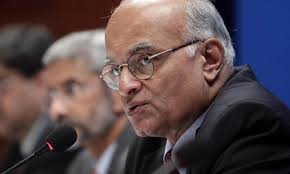
Shivshankar Menon
Shivshankar Menon

India broke with the international community in acknowledging that Russia has legitimate interests in Ukraine.

On Thursday a senior Indian official endorsed Russia’s position in Ukraine in recent days, even as Delhi urged all parties involved to seek a peaceful resolution to the diplomatic crisis.

When asked for India’s official assessment of the events in Ukraine, National Security Adviser Shivshankar Menon responded:

“We hope that whatever internal issues there are within Ukraine are settled peacefully, and the broader issues of reconciling various interests involved, and there are legitimate Russian and other interests involved…. We hope those are discussed, negotiated and that there is a satisfactory resolution to them.”

The statement was made on the same day that Crimea’s parliament voted to hold a referendum for secession from Ukraine.

India is the second major nation to publicly lean toward Russia after China’s public statements.

Ukraine’s puppet government reacted to India’s endorsement of Russia’s legitimate interests with hostility.

India and Russia have long-standing ties and Moscow is Delhi’s top arms provider. Moreover, Russia and the former Soviet Union has been nearly alone in the international community in continue to back India during crucial moments such as following its 1974 and 1998 nuclear tests.

Delhi believes Russia’s intervention offers the best chance of stabilizing Ukraine. India’s Foreign Ministry on Thursday also released a statement noting that there are “more than 5,000 Indian nationals, including about 4,000 students, in different parts of Ukraine.” At the same time, India’s overall interest in Ukraine is fairly negligible—certainly less than China’s, for instance—and thus Delhi might assess that it has more to gain by publicly sticking by Moscow at a time when it desperately needs support.

India also has plenty of interests in certain regions along its peripheral, and at certain times—such as during the Sri Lanka Civil War—has intervened to protect various societal groups with strong ties to India.

Indian officials have told Telegraph India that, in the newspaper’s words, Delhi is “convinced that the West’s tacit support for a series of attempted coups against democratically elected governments — in Egypt, Thailand and now Ukraine — has only weakened democratic roots in these countries.”

This rationale would be consistent with India’s long-standing, deep-seated abhorrence to anything that merely resembles Western imperialism. At the same time, India has not historically made supporting democracy abroad a central tenet of its foreign policy.

Source: The Diplomat

Chinese want to buy SA platinum assets on the cheap after strikes

platinum ingotsBloomberg reports that China’s Long March Capital Ltd., which partners with Citic Group Corp., is considering buying South African platinum assets after their value was depressed by strikes, the company’s Managing Partner Clement Kwong said.

The company is now reviewing a decision to hold off on purchasing South African platinum assets because of the labor issues, Kwong said in a Feb. 19 interview in Johannesburg. Long March last year partnered with Citic unit Baiyin Non-Ferrous Metal Group Co. Ltd. and China-Africa Development Fund to complete their buy-out of Perth-based Gold One International Ltd. and indirectly acquired a stake in Westonaria, South Africa-based Sibanye Gold Ltd.. (SGL)

“If the industry survives and makes a profit then that would be a good signal to look at investing,” said Kwong, who founded Long March Capital with a partner in 2008. “This last round has repriced these assets down so I think it would be as cheap as it gets.”

Anglo American Platinum Ltd. (AMS), Impala Platinum Holdings Ltd. (IMP) and Lonmin Plc (LMI) say they have lost 4.4 billion rand ($399 million) of revenue because of a four-week strike by about 70,000 workers. The companies, which together produce about three quarters of the world’s platinum, suffered losses from weeks of walk-outs in 2012 and 34 protesting miners were killed by police at Lonmin’s Marikana mine on Aug. 16 that year.

The platinum workers are demanding that monthly wages for the lowest-paid underground laborers be more than doubled to 12,500 rand a month. The Association of Mineworkers and Construction Union, which represents the employees, rejected a pay-increase offer of as much as 9 percent. South Africa’s annual inflation rate is 5.8 percent.

Share Decline

Anglo American Platinum declined 0.6 percent in Johannesburg yesterday to 450.37 rand, giving it a market value of 121.5 billion rand, a third of its value when it reached a record in 2008. Lonmin has declined by three quarters since its 2008 record while Impala has fallen 64 percent.

“There is a current situation that has not been resolved,” Kwong said. “But we think we are scraping the bottom now. I don’t see how much worse the demands can be.”

Long March Capital advises and manages the group of investors, which in December completed their purchase of Gold One. The mining company acquired a 17 percent stake in Sibanye in August.

Long March Capital remains “very positive” on the “phenomenal number” of investment opportunities in South Africa, although it’s wary of labor issues and discussion by the ruling African National Congress of additional taxes and nationalizing the nation’s mines, Kwong said.
‘Huge Opportunity’

The ANC in 2012 backed higher taxes for mines and rejected proposals to nationalize mines, an idea that the party’s youth wing had promoted for two years.

“Some of the challenges like organized labor, the somewhat unclear regulatory environment, these are discouraging to further investment,” Kwong said. “But the underlying economics, the underlying resources, still present huge opportunity for further investment.”

South Africa is the continent’s largest coal and gold producer and holds the world’s biggest reserves of platinum and chrome. Jinchuan Group Ltd. and the China Development Bank in 2011 bought a 45 percent stake in Wesizwe Platinum Ltd. (WEZ) State-owned China National Arts & Crafts Corp. Last month bought Aquarius Platinum Ltd.’s (AQP) Blue Ridge and Sheba Ridge mines for $37 million. Glencore Xstrata Plc (GLEN) said in November it would like to sell its 24.5 percent stake in Lonmin.
Congo, Zimbabwe

As Long March Capital seeks to expand into Africa, it is also doing due diligence on mine projects in Democratic Republic of Congo and will look at assets in Zimbabwe next week, Kwong said.

“The more de-risked a project, the easier it is to get funded today so something without even a pre-feasibility report is a little difficult to swallow,” Kwong said. “But if it is near production, but requires a substantial amount of capex to take it into production in order to unlock value, that is probably our favorite type of profile. We do have access to a reasonably priced source of capital in order to provide the capex to unlock the projects.” – Franz Wild, Bloomberg.com

BRICS puncture credit bubbles risking deflationary shock

bartdrunkHalf the world economy is one accident away from a deflation trap. The International Monetary Fund says the probability may now be as high as 20pc.

It is a remarkable state of affairs that the G2 monetary superpowers – the US and China – should both be tightening into such a 20pc risk, though no doubt they have concluded that asset bubbles are becoming an even bigger danger.

“We need to be extremely vigilant,” said the IMF’s Christine Lagarde in Davos. “The deflation risk is what would occur if there was a shock to those economies now at low inflation rates, way below target. I don’t think anyone can dispute that in the eurozone, inflation is way below target.”

It is not hard to imagine what that shock might be. It is already before us as Turkey, India and South Africa all slam on the brakes, forced to defend their currencies as global liquidity drains away.

The World Bank warns in its latest report – Capital Flows and Risks in Developing Countries – that the withdrawal of stimulus by the US Federal Reserve could throw a “curve ball” at the international system.

Source: The Telegraph

‘Africa needs fertility management’

Bill and the many natives

Stopping overpopulation is one way the dangers of climate change can be mitigated, according to two of the most prominent believers in global warming.

Former Vice President Al Gore and Microsoft founder Bill Gates said at the World Economic Forum in Davos that contraception is a key in controlling the proliferation of unusual weather they say is endangering the world.

“Depressing the rate of child mortality, educating girls, empowering women and making fertility management ubiquitously available … is crucial to the future shape of human civilization,” said Gore, who won the Nobel Peace Prize in 2007 for his work on global warming.

Gore said Africa’s population is expected to surpass India’s and China’s by the mid-21st century and will be more than both combined by the end of the century.

Source: CNBC

Beijing watches sun rise… digitally

Watching sunrise on a screen

You know it’s bad when…The smog has become so thick in Beijing that the city’s natural light-starved masses have begun flocking to huge digital commercial television screens across the city to observe virtual sunrises.

Following this week’s practical shutdown of the city of “beyond index” levels of pollution, as The Mail Online reports, residents donned air masks and left their homes to watch the only place where the sun would hail over the horizon that morning…

It’s grim…

The futuristic screens installed in the Chinese capital usually advertise tourist destinations, but as the season’s first wave of extremely dangerous smog hit, ths happened…

The air took on an acrid odor, and many of the city’s commuters wore industrial strength face masks as they hurried to work.

‘I couldn’t see the tall buildings across the street this morning,’ said a traffic coordinator at a busy Beijing intersection who gave only his surname, Zhang. ‘The smog has gotten worse in the last two to three years. I often cough, and my nose is always irritated. But what can you do? I drink more water to help my body discharge the toxins.’

The density of PM2.5 was about 350 to 500 micrograms Thursday midmorning, though the air started to clear in the afternoon. It had reached as high as 671 at 4 a.m. at a monitoring post at the U.S. Embassy in Beijing.

That is about 26 times as high as the 25 micrograms considered safe by the World Health Organization, and was the highest reading since January 2013.

In the far northeastern city of Harbin, some monitoring sites reported PM 2.5 rates of up to 1,000micrograms in October, when the winter heating season kicked off.

Beijing reported 58 days of serious pollution last year, or one every six to seven days on average, Xinhua quoted Zhang Dawei, director of the Beijing Municipal Environmental Monitoring Center, as saying.

China has drawn up dozens of laws and guidelines to improve the environment but has struggled to enforce them in the face of powerful enterprises.

On Wednesday, China’s commercial capital, Shanghai, introduced emergency measures, allowing it to shut schools and order cars off the road in case of severe smog.

China tests hypersonic missile defense buster

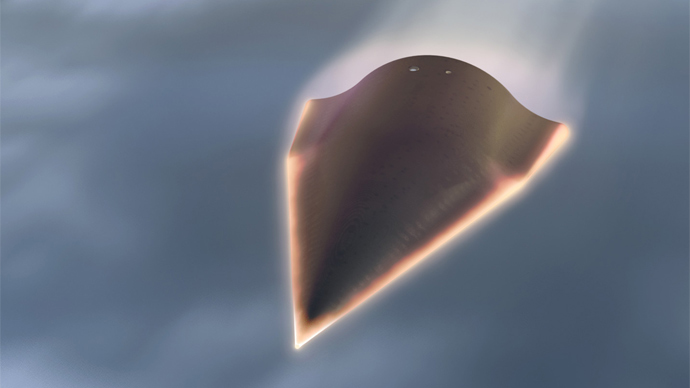
chinaglideChina has successfully tested its first hypersonic missile delivery vehicle capable of penetrating US missile defense system and delivering nuclear warheads with record breaking speeds, Pentagon officials have confirmed.

The new hypersonic glide vehicle (HGV), dubbed the WU-14 was allegedly spotted flying at record-breaking speeds during a flight test over China on January 9, an anonymous Pentagon official told the Washington Free Beacon.

The new weapon delivery system is reportedly designed to be launched as the final stage of China’s intercontinental ballistic missile, which would approach its target at a velocity of up to 10 times the speed of sound. Hypersonic speed range lies between Mach 5 and Mach 10, or 3,840 to 7,680 miles per hour.

A Pentagon spokesman confirmed the Chinese test launch but declined to provide details.

“We routinely monitor foreign defense activities and we are aware of this test,” Lt. Col. Jeffrey Pool, a Marine Corps spokesman, told the Washington Free Beacon.

“However, we don’t comment on our intelligence or assessments of foreign weapon systems,” Pool said in a statement. “We encourage greater transparency regarding their defense investments and objectives to avoid miscalculation,” he added.

Hypersonic vehicles, which are also being designed by the US, India and Russia, are developed for precise targeting, rapid delivery of weapons, and are being tested to outmaneuver hostile missiles and space defenses.

“A boost glide missile theoretically would be intended to counter existing mid-course missile defenses,” Mark Stokes, a former US Air Force officer told the Washington Free Beacon.

Strokes explained that China is developing two hypersonic flight vehicle programs – one believed to be of a post-boost vehicle designed to be deployed from a missile that pursues its target from near space, or some 62 miles from earth. Basing his hypothesis on emerging reports from China, Stokes believes that hypersonic glide vehicles could reach Mach 12 speeds of up to 9,127 miles per hour, potentially compromising a US missile defense.

“The beauty of the HGV is that it can perform hypersonic precision strikes while maintaining a relatively low altitude and flat trajectory, making it far less vulnerable to missile defenses,” Rick Fisher, an analyst at the International Assessment and Strategy Center, told the Washington Free Beacon.

“With the integration of strategic analysis and planning into technical research, China’s pursuit of hypersonic and high-precision weaponry promises to be faster and more focused than that associated with its previous [anti-satellite] and [ballistic missile defense] related research and programs,” Lora Saalman, a specialist on Chinese strategic systems with the Carnegie Endowment Saalman said in an email to the publication. “This recent test is a manifestation of this trend.”

The Chinese are “actively seeking global military power to challenge the United States, and it is not yet in any mood to talk, or engage in arms control, about it,” Fisher said.

In May, the Pentagon’s assessment of Chinese capabilities suggested that China built the world’s largest shockwave hypersonic wind tunnel capable of generating test flying conditions of up to Mach 9 speeds. – RT

Ex-Blackwater chief looks East

blackwaterThe former Navy Seal Erik Prince who founded the private security group Blackwater is pitching to run logistics for Chinese mining and energy companies in Africa. Blackwater became controversial for its role providing private security in Iraq.

Prince is now chairman of Hong Kong-listed Frontier Services Group, which is backed by Citic Group, the Chinese state-owned investment company, and Hong Kong entreprenuer, Johnson Ko Chun Shun.

He remains the largest individual shareholder having sold an east African aviation start-up company he owned to what was essentially a shell company.

China builds schools, hospitals and railways as a quid pro quo for getting access to raw materials without interfering in local politics and is expected to invest up to $1tn over the next decade in Africa.

This comes on top of the billions it has put in to finance mines, power plants and other infrastructure, which have helped it generate trade of $185bn with the continent.

Defending Blackwater’s record, Prince said its tactics were sanctioned by the US government and that ultimately it was made a political scapegoat for wider errors in an unpopular war.

“Nearly being killed in a plane incident about a year and a half ago as we were up looking at a mine site in Burkina Faso, I thought if this is the best that is available here and [people] are going to spend a lot of money building a mine, there’s got to be a better way than this,” he told beyondbrics.

The incident in question was an accident rather than an attack of some kind and Prince plays down the security aspect of the new company. “When you look at the spend of a $3bn mine, think of the costs of logistics in that – our ability to compress some of those costs for our customers and still make very good money in the process, that’s what we’re about.”

His aim is to build a multi-billion dollar “austere logisitics” company, with aviation to transport people, goods and equipment under either scheduled or emergency conditions and to conduct surveillance.

Source: FT

The case of platinum

platinumOver the last few years, the rare earth market has taught investors about the dangers (and rewards) of geographically concentrated metals.

One nation — China — produces 86 percent of the planet’s rare earths. This dominance caused a panic in the market when Chinese exports were disrupted by government policies aimed at keeping rare earths in the country for domestic use.

Fear of a massive supply disruption subsequently drove prices of the metals higher, also lifting share prices of producing and exploration companies to dizzying heights.

A similar story unfolded recently in the graphite market. The top three graphite-producing nations control some 88 percent of global output. Again, this monopoly has raised fears of a supply crunch.

Which metal is next?

New data released by the United States Geological Survey (USGS) last month provides some clues.

The USGS information shows the breakdown of global production for over 80 metals and other mineral commodities, revealing which markets are the most geographically concentrated — and thus the most primed for supply crises due to political, social or geological problems in the biggest producing nations.

Rare earths and associated elements like yttrium and niobium dominate the list, along with small-market commodities like bismuth, helium and mercury.

But the data reveals that several other metals — with larger global markets — are at risk because of their extremely restricted geographic output.

Like tungsten. China produces 85 percent of the world’s tungsten supply. That’s a market that produces 73,000 metric tonnes (MT) per year — comparable in size to the rare earth market, where production totals 110,000 MT yearly.

China produces 62,000 MT of tungsten a year. The next-largest producer, Russia, puts out just 3,500 MT. As with rare earths, what happens in China moves this market.

Recently, China has been making moves to cut its tungsten exports by imposing export taxes and implementing policies that favor value-added, in-country processing of tungsten ores.

Options for additional global tungsten supply are limited. Substantial reserves are found in both Russia and Kazakhstan — neither of which are seeing much development.

Canada is one of the few nations seeing some ramp up in tungsten output. Canada produced 2,000 MT in 2012. Producers like North American Tungsten (TSXV:NTC) have contributed much of this output.

With its substantial known reserves and past production, the United States could also be an alternative tungsten supplier. EMC Metals’ (TSXV:EMC) Springer Mine in Nevada and Galway Metals’ (TSXV:GWM) Victorio project in New Mexico are two of the most advanced projects in the US.

South Korea could also become a tungsten player, with Woulfe Mining (TSXV:WOF) trying to bring the historic Sangdong tungsten mine back into production. Woulfe attracted investor interest last year when IMC, a subsidiary of Warren Buffett’s firm, Berkshire Hathaway (NYSE:BRK.A), agreed to pay $35 million for a 25-percent stake in the project. Woulfe plans to start production at Sangdong — once the world’s biggest tungsten mine — by the fourth quarter of this year.

Other companies with tungsten projects on the move include: Almonty Industries (TSXV:AII), which has a past-producing tungsten mine in Western Spain; Blackheath Resources (TSXV:BHR), which is exploring for tungsten in Portugal; Happy Creek Minerals (TSXV:HPY), which has a tungsten-molybdenum property in British Columbia, Canada; Playfair Mining (TSXV:PLY), which is developing a portfolio of tungsten projects across Canada; Tungsten Mining (ASX:TGN), which has an advanced tungsten play in Western Australia; and Wolf Minerals (ASX:WLF), an emerging tungsten producer focused on the Hemerdon Ball tungsten and tin mine in Devon, England.

The new strategic metals

Tungsten is probably the most familiar of the at-risk metals. But a number of other names could soon become well known to investors.

The antimony market is another that swings with China. Chinese production accounts for 83 percent of the 180,000 MT of antimony produced globally each year.

Several new antimony projects are being evaluated in Canada, Turkey, Italy, Russia and Australia, among others. Production is being hampered, however, by the metal’s toxicity and environmental risks.

Strontium and wollastonite are two other less-known metals with potential supply problems.

China, Spain and Mexico produce 96 percent of the world’s 380,000-MT-per-year supply of strontium, a metal whose anchor use is in glass and ceramics. Iran is noted as one of the few nations that could increase strontium supply.

Wollastonite — used to manufacture plastics, rubber and paints — comes in near-entirety from China, India and Mexico.

A more familiar name making the at-risk list is vanadium. While top-producing nation China controls only 37 percent of global output, the top three countries — China, South Africa and Russia — together account for 97 percent of the market.

Vanadium may be particularly vulnerable to disruption given recent labor unrest in South Africa. The metal also has few substitutes in high-end aerospace alloy applications.

Largo Resources (TSXV:LGO) holds one of the nearest-term sources of alternate supply in its Maracas project in Brazil, now under construction. American Vanadium (TSXV:AVC) is in permitting with its Gibellini project in Nevada.

And PacificOre Mining (TSXV:PC), formerly Apella Resources, started pre-drilling last year on what the company states is one of the largest undeveloped vanadium deposits in the world: the Lac Dore vanadium-titanium project is near Chibougamau, Quebec.

Other vanadium explorers include Energizer Resources (TSX:EGZ), which is bringing forward a graphite and vanadium deposit in Madagascar, and West Melville Metals (TSXV:WMM), which is working to advance its Isortoq iron-titanium-vanadium project in Greenland.

A precious metal in peril

One of the most interesting findings is that platinum is an at-risk metal, with 72 percent of global platinum output coming from top producer South Africa, a place that — as noted above — is facing significant issues, including labor unrest, higher power costs and aging mines.

Potential new sources of platinum are rare, especially in investment-friendly jurisdictions. The other significant producing nations are Russia and Zimbabwe.

Canada produces 3.5 percent of the world’s platinum as by-product from nickel in Sudbury, Ontario. Companies like Prophecy Platinum (TSXV:NKL,OTCQX:PNIKF) are looking for similar nickel-platinum deposits.

One potential new source of by-product production could be Colossus Minerals’ (TSX:CSI,OTCQX:COLUF) Serra Pelada platinum-gold project in Brazil, currently under construction. Other companies looking to develop platinum properties include Nortec Minerals (TSXV:NVT), which has a polymetallic deposit that includes platinum in Finland, and Rockland Minerals (TSXV:RL), which has a copper-nickel-platinum-palladium asset in Quebec, Canada.

Platinum stands in stark contrast to gold, which took the honors from our survey as the least geographically concentrated metal on the planet. Top producer China put out just 14 percent of the world’s gold in 2012. The top three producers — China, Australia and the United States — managed just 31 percent of world production. – resourceinvestingnews.com

Defeated by the Taliban, Washington decides to take on Russia,China

pcrby Paul Craig Roberts

The several days of organized protests in Ukraine are notable for the relative lack of police violence. Unlike in the US, Canada, Thailand, Greece, and Spain, peaceful protesters have not been beaten, tear gassed, water cannoned, and tasered by Ukrainian police. Unlike in Egypt, Palestine, and Bahrain, Ukrainian protesters have not been fired upon with live ammunition. The restraint of the Ukrainian government and police in the face of provocations has been remarkable. Apparently, Ukrainian police have not been militarized by US Homeland Security.

What are the Ukrainian protests about? On the surface, the protests don’t make sense. The Ukrainian government made the correct decision to stay out of the EU. Ukraine’s economic interests lie with Russia, not with the EU. This is completely obvious.

The EU wants Ukraine to join so that Ukraine can be looted, like Latvia, Greece, Spain, Italy, Ireland, and Portugal. The situation is so bad in Greece, for example, that the World Health Organization reports that some Greeks are infecting themselves with HIV in order to receive the 700 euro monthly benefit for the HIV-infected.

The US wants Ukraine to join so it can become a location for more of Washington’s missile bases against Russia.

Why would Ukrainians want to be looted?

Why would Ukrainians want to become targets for Russia’s Iskander Missiles as a host country for Washington’s aggression against Russia?

Why would Ukrainians having gained their sovereignty from Russia want to lose it to the EU?

Obviously, an intelligent, aware, Ukrainian population would not accept these costs of joining the EU.

So, why the protests?

Part of the answer is Ukrainian nationalists’ hatred of Russia. With the Soviet collapse, Ukraine became a country independent of Russia. When empires break up, other interests can seize power. Various secessions occurred producing a collection of small states such as Georgia, Azerbaijan, the former central Asian Soviet Republics, Ukraine, the Baltics, and the pieces into which Czechoslovakia and Yugoslavia were broken by “nationalism.” The governments of these weak states were easy for Washington to purchase. The governments of these powerless states are more responsive to Washington than to their own people. Much of the former Soviet Empire is now part of Washington’s Empire. Georgia, the birthplace of Joseph Stalin, now sends its sons to die for Washington in Afghanistan, just as Georgia did for the Soviet Union,

These former constituent elements of the Russian/Soviet Empire are being incorporated into Washington’s Empire. The gullible nationalists, naifs really, in these American colonies might think that they are free, but they simply have exchanged one master for another.

They are blind to their subservience, because they remember their subservience to Russia/Soviet Union and have not yet realized their subservience to Washington, which they see as a liberator with a checkbook. When these weak and powerless new countries, which have no protector, realize that their fate is not in their own hands, but in Washington’s hands, it will be too late for them.

With the collapse of the Soviet Union, Washington quickly stepped into the place of Russia. The new countries were all broke, as was Russia at the time and, thus, helpless. Washington used NGOs funded by Washington and its EU puppets to create anti-Russian, pro-American, pro-EU movements in the former constituent parts of Soviet Russia. The gullible peoples were so happy to have escaped the Soviet thumb that they did not realize that they now had new masters.

It is a good bet that the Ukrainian protests are a CIA organized event, using the Washington and EU funded NGOs and manipulating the hatred of Ukrainian nationalists for Russia. The protests are directed against Russia. If Ukraine can be realigned and brought into the fold of Washington’s Empire, Russia is further diminished as a world power.

To this effect NATO conducted war games against Russia last month in operation Steadfast Jazz 2013. http://www.strategic-culture.org/news/2013/10/17/nato-steadfast-jazz-exercise-chill-of-cold-war.html Finland, Ukraine, Georgia, and neutral Sweden have offered their military participation in the next iteration of NATO war games close to Russia’s borders despite the fact that they are not NATO members.

The diminishment of Russia as a powerful state is critical to Washington’s agenda for world hegemony. If Russia can be rendered impotent, Washington’s only concern is China.

The Obama regime’s “Pivot to Asia” announced Washington’s plan to surround China with naval and air bases and to interject Washington into every dispute that China has with Asian neighbors. China has responded to Washington’s provocation by expanding its air space, an action that Washington calls destabilizing when in fact it is Washington that is destabilizing the region.

China is unlikely to be intimidated, but could undermine itself if its economic reform opens China’s economy to western manipulation. Once China frees its currency and embraces “free markets,” Washington can manipulate China’s currency and drive China’s currency into volatility that discourages its use as a rival to the dollar. China is disadvantaged by having so many university graduates from US universities, where they have been indoctrinated with Washington’s view of the world. When these American-programmed graduates return to China, some tend to become a fifth column whose influence will ally with Washington’s war on China.

So where does this leave us? Washington will prevail until the US dollar collapses.

Many support mechanisms are in place for the dollar. The Federal Reserve and its dependent bullion banks have driven down the price of gold and silver by short-selling in the paper futures market, allowing bullion to flow into Asia at bargain prices, but removing the pressure of a rising gold price on the exchange value of the US dollar.

Washington has prevailed on Japan and, apparently, the European Central Bank, to print money in order to prevent the rise of the yen and euro to the dollar.

The Trans-Pacific and Trans-Atlantic Partnerships are designed to keep countries in the US dollar payments system, thus supporting the dollar’s value in currency markets.

Eastern European members of the EU that still have their own currencies have been told that they must print their own currencies in order to prevent a rise in their currency’s value relative to the US dollar that would curtail their exports.

The financial world is under Washington’s thumb. And Washington is printing money for the sake of 4 or 5 mega-banks.

That should tell the protestors in Ukraine all they need to know.

Paul Craig Roberts was Assistant Secretary of the Treasury for Economic Policy and associate editor of the Wall Street Journal. He was columnist for Business Week, Scripps Howard News Service, and Creators Syndicate. He has had many university appointments. His internet columns have attracted a worldwide following. His latest book, The Failure of Laissez Faire Capitalism and Economic Dissolution of the West is now available.

African railroads secure raw materials for resource-hungry China

railafricachinaThe Chinese, investing heavily in Africa to secure its oil and other raw materials for their expanding economy, are spearheading a new era of railroad building to unlock the continent’s interior.

This is an echo of the long-gone colonial empires when a century ago British and French engineers first opened up Africa to plunder its riches.

The railroad frenzy is being accompanied by a massive push to build several major ports along the coast of East Africa to accelerate exports across the Indian Ocean, mostly to China, India and Japan, as well as lay down a network of oil and gas pipelines to these ports.

“Railways are key to increasing regional trade,” said Darlan Fabio de David, chief executive of Rift Valley Railways, a private equity-backed company rehabilitating the line between the Kenyan port of Mombasa and the inland Ugandan capital of Uganda that was built by the British between 1896 and 1901.

Kenya, which has found oil, is a key link in all this because it lies on the Indian Ocean. There are plans to build a huge deepwater port at Lamu which would act as a rail and pipeline hub for regional exports.

Further north, landlocked Ethiopia is another. It has no ports, but it has long been a pivotal economic player in the region, funneling goods from inland Africa to the continent’s ports through its rail lines.

Extending that network would stimulate economic activity further inland and export trade via the Red Sea port of Djibouti in the Horn of Africa.

In Tanzania, which with neighboring Mozambique is on the cusp of a major offshore gas boom, the main port of Dar es Salaam, the capital, could greatly enhance its importance as the main export center for copper and cobalt from Zambia and the Democratic Republic of Congo.

Congo’s mineral-rich, and war-ravaged, Katanga province produces 580,000 metric tons of copper a year and about 60,000 metric tons of cobalt. Zambia produces 6,750,000 tons of copper annually.

Between them they account for 7 percent of the world’s copper output and roughly half the planet’s cobalt.

New rail lines, replacing the costly road system currently in use, would cut transportation costs. Hauling these products to the east coast rather than southward via Durban in South Africa would allow the DRC and Zambia to export larger volumes of minerals.

The Chinese have been making massive investments in Africa over the last decade in return for access to the continent’s mineral riches.

The recent oil and gas discoveries in East Africa, ideally located for direct shipment eastward across the Indian Ocean, and the prospect of more to come have accelerated Chinese investment in streamlining transportation systems to the planned megaports.

On Nov. 28, the presidents of Kenya, Uganda, Rwanda and the fledgling state of South Sudan conducted the groundbreaking of Kenya’s $4 billion Mombasa-Nairobi line, financed by the Export-Import Bank of China, which will run parallel to the existing colonial-era line.

“The project will define my legacy as president of Kenya,” declared Uhuru Kenyatta.

The first section will link the Kenyan port of Mombasa to the capital, Nairobi, reducing the journey time from 15 hours to about four.

It is said to be the country’s biggest infrastructure project since independence 50 years ago.

The cost of the railway will be $5.2bn (£3.2bn) – mostly funded by China.

Some Kenyans have complained that the contract was given to the Chinese state-owned China Road and Bridge Corporation (CRBC) without going to tender.

Kenyan President Uhuru Kenyatta and his Chinese counterpart Xi Jinping agreed the deal in August in Beijing.

There are now almost 1 million Chinese living in Africa. A decade ago, there only a few thousand.

China’s new president, Xi Jinping, visited Tanzania and the DRC in the summer, his first major foreign tour, underlining Africa’s importance in China’s economic strategy.

China recently overtook the United States as the world’s largest importer of oil. Almost 80 percent of Chinese imports from Africa are mineral products.

China is the continent’s leading business partner, with trade — which tripled over the last decades — exceeding $166 billion. That’s expected to soar over the next 10 years when the new railroads, pipelines and ports kick in.

Direct investment — usually building airports, highways, schools, factories and railroads — is more difficult to quantify because much of Beijing’s funding goes through tax shelters. But China’s ambassador to South Africa recently said it “exceeds $40 billion.”

Another major project is rehabilitating the rail link between Addis Ababa, Ethiopia’s capital, and the port of Djibouti, a tiny former colony of France on the Red Sea, which links the Mediterranean with the Indian Ocean.

The 475-mile, $3 billion line is being built largely by Chinese companies, as is the Mombasa-Nairobi track. China will also provide most of the locomotives and rolling stock. – UPI/BBC


US defies China’s fly zone with B-52 flight

B-52 bomber
B-52 bomber

Two American B-52 bombers flew over a disputed area of the East China Sea without informing Beijing, challenging China’s claims to an expanded air defense zone, officials said Tuesday.

The flight of the giant, long-range Stratofortress planes sent a clear warning that Washington would push back against what it considers an aggressive stance by Beijing in the region.

The move also signaled staunch US support for Japan, which has been locked in a mounting feud with Beijing over disputed islands in the East China Sea.

The unarmed bombers took off from Guam on Monday on a scheduled flight, as part of what defense officials insisted was a routine exercise dubbed “Coral Lightning Global Power Training Sortie.”

“Last night we conducted a training exercise that was long-planned. It involved two aircraft flying from Guam and returning to Guam,” Pentagon spokesman Colonel Steven Warren told reporters.

Although China has insisted it has a right to police the skies over the area, no flight plan was submitted beforehand to the Chinese and the mission went ahead “without incident,” Warren said.

The two aircraft spent “less than an hour” in China’s unilaterally-declared Air Defense Identification Zone (ADIZ) and did not encounter Chinese planes, he said.

A defense official, speaking on condition of anonymity, confirmed to AFP the two US planes were B-52 bombers.

The military flight carried important symbolism as it came a week before US Vice President Joe Biden’s scheduled trip to China, Japan and South Korea next month.

China announced the expanded air defense zone amid a sovereignty dispute with Japan over the island chain in the East China Sea known as Senkaku in Japanese and Diaoyu in Chinese.

The area also includes waters claimed by Taiwan and South Korea, which also have both denounced Beijing’s move.

Without taking sides in the territorial argument, UN Secretary General Ban Ki-moon on Tuesday called on China and Japan to negotiate an end to their dispute.

Ban on Tuesday said tensions should be handled “amicably through dialogue and negotiations.”

Under the rules declared by China, aircraft are expected to provide a flight plan, clearly mark their nationality and maintain two-way radio communication to allow them to respond to identification queries from Chinese authorities.

Pentagon officials said the United States views the area as international air space and American military aircraft would operate in the zone as before without submitting flight plans to China in advance.

Japan, the United States and several other governments promptly rejected China’s announced air defense zone after it was announced Saturday.

The US State Department renewed its criticism Tuesday, saying China’s action appeared to be an attempt to “unilaterally change the status quo in the East China Sea.”

The move “will raise regional tensions and increase the risk of miscalculation, confrontation and accidents,” State Department spokeswoman Jen Psaki said.

Australia summoned Beijing’s ambassador to express its opposition and Japanese airlines said Wednesday they had stopped following China’s new rules.

The reversal came after pressure from the Japanese government, which insisted China’s announcement was invalid, and after governments around the world lined up alongside Tokyo.

France and Germany each expressed concern and urged restraint on all sides.

“We are committed to a peaceful resolution through dialogue to this dispute, in accordance with international law,” French foreign ministry spokesman Romain Nadal said.

The territorial dispute over the islands has simmered for decades but in September 2012, Japan nationalized three of the islands, in what it portrayed as an attempt to avoid a more inflammatory step by a nationalist politician.

Beijing, however, accuses Tokyo of disturbing the status quo, and has sent ships and planes to the islands in a show of force.

In response, Japan has mobilized vessels and aircraft, raising fears the tensions could trigger an accidental clash.

Beyond the East China Sea, Beijing has taken an assertive approach to a number of territorial disputes, particularly in the strategic South China Sea.

In response to China’s growing military might and influence, the United States has sought to shift its strategic focus to Asia, planning to expand America’s military presence across the Pacific.

But a spate of crises in the Middle East and budget woes have often hampered Washington’s attempt at a so-called “pivot” to the Asia-Pacific. – AFP

Neo-Con hit team trainer faces competition from… Blackwater

erikprince
Addicted to cocaine and crashing Lamborghinis?

Blackwater founder Erik Prince personifies the hidden hand in America’s terror wars.

His company secretly armed and maintained drones in Pakistan, trained CIA hit teams and collected $2 billion as a U.S. government security contractor.

Mr. Prince said he looks back on that adventure as “13 lost years.” The billions of dollars are gone now, and he blames the U.S. government.

After a series of federal investigations, government contract battles and critical congressional hearings, Mr. Prince sold Blackwater in 2010. In the wake of continued controversy over his most recent pursuits while based in Abu Dhabi, Mr. Prince has returned to Virginia to write a new chapter of his life—as an entrepreneur buying oil, land and minerals in Africa.

In interviews, Mr. Prince and former Blackwater officials provided previously unreported details of the company’s dealings with the CIA and its former director, Leon Panetta. Blackwater’s fortunes, which dimmed as the Iraq war dragged on, sank markedly when President Barack Obama took office in 2009 and sought distance from President George W. Bush’s war policies.

A chief target of Mr. Prince’s ire is Mr. Panetta, who in 2009 shut down the covert training operation for CIA “hit teams” that former Blackwater officials said took place on Mr. Prince’s Virginia property.

At the time, former Blackwater officials said, the company also was working on America’s clandestine drone program. Former company officials said that a few dozen Blackwater employees, taking the place of American military forces, maintained drones armed with Hellfire missiles in Pakistan. The company didn’t fly them, but prepared them to launch attacks.

When that information became public in 2009, right after Mr. Panetta canceled the Blackwater hit-team training, the CIA director ended the company’s role in maintaining the drones.

Mr. Prince said he is convinced that Mr. Panetta outed him as a CIA “asset” at a closed congressional hearing that year, adding that it was unthinkable for a CIA director to reveal the real name of a covert operative to lawmakers.

“No one was out to scapegoat anyone in the relationship with Blackwater, but there were some issues that arose that prompted a serious look at contracts with the company,” said one former CIA official involved in the discussions. “There was a perception that they were trying to run some of their own operations untethered from agency oversight.”

Along with its clandestine work, Blackwater had a much more public role providing security for American diplomats and CIA personnel in Iraq and Afghanistan. Blackwater guards were caricatured as war-zone cowboys.

Blackwater convoys were feared in Iraq. The drivers were under State Department orders to do everything necessary to protect the department’s workers—directives that Mr. Prince alleges forced Blackwater to use aggressive tactics.

The State Department didn’t comment on the allegation.

Paul Bremer, the Neo-Con American diplomat who oversaw the U.S. government’s early invasion in Iraq liked them. “Their job was to keep me alive,” said Mr. Bremer. “I can say they never fired a shot in my presence, so they weren’t a bunch of cowboys running around shooting at people.”

Blackwater guards were involved in a series of deadly shooting incidents that alienated Iraqi citizens and the government. In September 2007, they killed 17 Iraqis in Baghdad’s Nisour Square.

Last month, the Justice Department renewed the prosecution of four Blackwater guards involved in the shooting, which still generates anger in Iraq.

“On balance, I think [Blackwater] operated in irresponsible ways which led to a lot of hostility toward our country,” said Rep. Henry Waxman, a California Democrat and former chairman of the House Committee on Oversight and Government Reform, who grilled Mr. Prince during a 2007 hearing. “They were overpaid for their work, and there was little, if any, accountability to the U.S. or the Iraqi governments.”

Following the Nisour Square shooting, the U.S. tightened its oversight and training of contractors to try to prevent another such incident, said Alex Gerlach, a State Department spokesman.

After the Obama administration cut most ties with Blackwater, Mr. Prince sold the company and moved to Abu Dhabi, where he quickly became embroiled in further controversy. Mr. Prince said he served as an adviser in setting up a privately trained antipiracy security force in Somalia that was accused of violating a United Nations arms embargo. And he was a consultant on a failed effort to set up a security force in Abu Dhabi made up largely of former Colombian soldiers.

In August 2012, Blackwater – now called Academi – paid a $7.5 million fine relating to allegations of arms smuggling when Prince was in charge.

Now, Mr. Prince said, he is done working for the U.S. government. He has invested millions in setting up Frontier Resource Group, a private-equity firm that operates in more than a dozen African countries. The company raised $100 million to invest in infrastructure Africa in conjunction with Chinese companies.

The firm is building an oil refinery in South Sudan, owns a cement factory in the Democratic Republic of Congo, conducts aerial gas and oil surveys across the continent, and is looking at taking over idle oil wells damaged by insurgents in Nigeria, he said.

“Africa is so far the most unexplored part of the world, and I think China has seen a lot of promise in Africa,” Prince, who served with SEAL Team 8 in Haiti and the Balkans, said during a visit to Hong Kong, later telling the South China Morning Post: “The problem is if you go alone, you bear the country risk on your own. You have to get support and maintenance there.”

Which means exactly what? Well, no one really seems to know. Prince’s objectives in Africa are obscured, while FRG’s goals are vague and convoluted.

“The view of his new company is very limited, and very opaque. If you look at his website it seems like a front for funding and training local security forces to provide security for resource projects in African nations, particularly for the Chinese,” Geoffrey Ingersoll, a former member of the Marine Corps and a Military and Defense reporter for Business Insider, told Guyism.com.

Will FRG’s new business partners care how the company achieves its goals? Not really, no.

“The Chinese are cut-throat capitalists. They’re much more concerned with their workers not getting kidnapped, and with making money. the over-arching concern is that they want to dominate Africa, geopolitically and economically,” Ingersoll said.

“What I think he wants to do is bring in contractors to employ and train organic security forces. That way, you only need a handful of former SEALs to command 200 men, and those 200 men you can pay small salaries because they’re from sub-Saharan Africa The tactic is called a ‘force multiplier’ – and comes straight out of the Marine Corps ‘small wars’ manual.”

FRG could face competition from… Blackwater.

“Academi is supposedly moving it’s operation to Africa, because the Americans have grown tired of their uncontrollable, heavily subsidized child acting like a rich kid addicted to cocaine and crashing Lamborghinis,” Ingersoll said.

As it turns out, Prince might need more than an army to conquer Africa. WSJ/guyism.com

Did JPMorgan buy influence in China?

Wen Ruchan
Wen Ruchun

To promote its standing in China, JPMorgan Chase turned to a seemingly obscure consulting firm run by a 32-year-old executive named Lily Chang.

Ms. Chang’s firm, which received a $75,000-a-month contract from JPMorgan, appeared to have only two employees. And on the surface, Ms. Chang lacked the influence and public name recognition needed to unlock business for the bank.

But what was known to JPMorgan executives in Hong Kong, and some executives at other major companies, was that “Lily Chang” was not her real name. It was an alias for Wen Ruchun, the only daughter of Wen Jiabao, who at the time was China’s prime minister, with oversight of the economy and its financial institutions.

JPMorgan’s link to Ms. Wen — which came during a time when the bank also invested in companies tied to the Wen family — has not been previously reported. Yet a review by The New York Times of confidential documents, Chinese public records and interviews with people briefed on the contract shows that the relationship pointed to a broader strategy for accumulating influence in China: Put the relatives of the nation’s ruling elite on the payroll.

New York Times reporter Ben Protess, who has been reporting on the story, says it’s common for banks in China to try and gain influence by hiring the children of the ruling elite. But what’s unusual in this case, he says, was that it was the child of the prime minister — and she chose to use an alias, rather than her real name.

So what did Wen do? Protess and his colleague obtained a letter outlining how Wen and her consulting firm helped broker an underwriting deal for the bank in China at a state-owned railway company. She also helped advise the bank on the macro-economic policies in China.

“The idea is, you had on tap, on the payroll, somebody who was able to help you navigate this booming country and that could potentially open the door to big business,” Protess says.

In the US, it’s part of a multi-faceted government investigation into JPMorgan’s hiring practices in China that might involve dozens, or perhaps hundreds, of current and former Chinese government officials and their families.

“This is a major investigation that presents an important threat to the bank,” Protess adds.