A Guinean woman has been attacked in a bus in Rome by angry passengers who told her she was infected by Ebola and had to get off the bus, Italian media reports. She was taken to hospital suffering from multiple bruises.
Fataomata Sompare, 26, was about to get off the bus on Monday, said Il Messaggero, an Italian newspaper, as cited by the Local.
A teenage girl who was on the bus with her friends saw Sompare and began accusing her of having the deadly virus. Then some of the teen’s relatives started beating the woman.
“They told me that I had Ebola and that I had to get off the bus,” said Sompare, who has been living in Italy for four years.
People at a bus stop near Grotte Celoni Metro station in the east of the city managed to save the woman, who suffered multiple bruises after being beaten by passengers. The police arrived and she was taken to hospital.
The incident was reported to public prosecutors by Sompare’s lawyer.
“[She is] a victim of racism, which is now rampant in this city,” the Sompare’s partner Alessandro Corbelli told Il Messaggero. He added that the incident was “shameful” and she had been attacked “only because she’s black.”
The incident is not the only example of Ebola hysteria in recent days. In the US, Ebola-phobic parents sent a Maine teacher on mandatory leave after he returned from Dallas, where first victim of the virus in the country died. In Mississippi, parents pulled their kids out of school because of the principal’s trip to Zambia.
The death toll from the Ebola virus has reached 4,877 people for far, the World Health Organization said on Wednesday.
According to the UN health body, 9,936 people in Guinea, Liberia and Sierra Leone, the three countries worst-affected by the virus, have contracted the disease.
Russian President Vladimir Putin perhaps couldn’t resist an invite from his Italian chum, former Premier Silvio Berlusconi, in the early hours of Friday to his mansion in Milan, according to the WSJ.
A Russian presidential spokesman said Mr. Putin visited “his old friend” Mr. Berlusconi following an invite from the Italian politician. Mr. Berlusconi heads Italy’s biggest opposition party.
President Putin, 62, must have felt the need to relax after his meeting with Ms. Merkel at 1.36 a.m. CET on Friday. He drove off with a large police escort, which included dark limousines, to Mr. Berlusconi’s house and stayed there until roughly 3 a.m.
Putin is in Italy for peace talks with European Union leaders after Ukraine threatened the flow of natural gas. The government in Kiev wants to divert fuel for domestic use as it cannot pay for gas, Bloomberg reported.
“There are big transit risks,” Putin said yesterday in Belgrade, Serbia. If Russia sees its Ukrainian partners “are starting to siphon off our gas from the export pipeline network, we will respond by reducing flows by the amount stolen.”
Italy is the major terminal for South Stream.
The Italian EU presidency is in favour of the Russian pipeline, South Stream, which would circumvent Ukraine to bring gas to south-east Europe.
“We think South Stream should go ahead, as it would improve the diversification of gas routes to Europe,” Italy’s state secretary for EU affairs Sandro Gozi said in July during a press event in Brussels.
He echoed statements made by Italian foreign minister Federica Mogherini who visited Moscow in the same month and met with her Russian counterpart.
South Stream would deprive Ukraine of transit revenues from the gas pipelines that cross its territory and bring about 80 percent of Russian gas exports to EU countries.
It would also enable it to cut off supplies to Ukraine to exert political pressure, without affecting its EU gas clients.
Michael Gonchar, a former executive at Ukraine’s gas distribution firm, Naftogaz, told EUobserver, that, together with Nord Stream, Russia’s recently-built pipeline to Germany, South Stream would give Moscow “a 100 percent monopoly on shipments of gas to Europe from the east”.
He added that it would make it less likely that the EU will ever build a gas pipeline to the Caspian Sea, the so-called Southern Corridor, to diversify supplies.
A “piecemeal” World War III may have already begun with the current spate of crimes, massacres and destruction, Pope Francis has warned.
“War is madness,” the Pope said at a memorial to 100,000 Italian soldiers at Redipuglia cemetery near Slovenia. The Argentine Pope has often condemned the idea of war in God’s name.
Only last month, Pope Francis said the international community would be justified in using force to stop what he called “unjust aggression” by Islamic State militants, who have killed or displaced thousands of people in Iraq and Syria, including many Christians, the BBC’s David Willey reports.
In Saturday’s homily, standing at the altar beneath Italy’s fascist-era Redipuglia memorial – where 100,000 Italian soldiers killed during WWI are buried, 60,000 of them unnamed, the Pope paid tribute to the victims of all wars.
“Humanity needs to weep, and this is the time to weep,” he said. “Even today, after the second failure of another world war, perhaps one can speak of a third war, one fought piecemeal, with crimes, massacres, destruction,” he said.
Italy’s former Prime Minister and leader of the right-wing opposition party Forza Italia Silvio Berlusconi on Sunday accused NATO and Western leaders of irresponsible attitudes towards Russia.
“We are strangled by a most profound economic crisis, the situation is only worsening and it the situation is being aggravated by the international situation and the decisions of European leaders, heads of Western countries, the United States and NATO, who were irresponsible and unthinking to make null and void of the enormous work done after the signing of the Pratica di Mare agreement [on the establishment of the Russia-NATO Council] that ended the 50-year-long Cold War,” he said.
He said that the recent development around the Ukrainian crisis, the United States’ and the European Union’s policy of sanctions against Russia were irresponsible decision of the world leaders. “Russia cannot but defend Ukrainian citizens of the Russian origin who are like brothers for Russians,” he noted.
At the NATO summit Kiev has reached an agreement on sending Western military advisers to Ukraine and on the delivery of modern weapons from five countries, including Italy.
Yuri Lutsenko, an adviser to Ukrainian President Pyotr Poroshenko and leader of the Pyotr Poroshenko Bloc party, said on Sunday agreements were reached at the NATO summit.
“Agreements were reached at the NATO summit on Western military advisers and the delivery of modern weapons from the United States, France, Italy, Poland and Norway,” Lutsenko wrote on his Facebook page.
The Ukrainian president said last Friday on the results of the NATO summit in Wales that some countries were ready to supply weapons to Ukraine. Poroshenko declined then to specify the counties, offering Kiev these “newest types of weapons,” for confidentiality reasons.
France, Germany, and Italy are among EU members who don’t want to follow the US lead and impose trade sanctions on Russia. US sanctions are seen as a push to promote its own multibillion free-trade pact with Europe.
“France, Germany, Luxembourg, Austria, Bulgaria, Greece, Cyprus, Slovenia, and EU President Italy see no reason in the current environment for the introduction of sectorial trade and economic sanctions against Russia and at the summit, will block the measure,” a diplomatic source told ITAR-TASS.
In order for a new wave of sanctions to pass, all 28 EU members must unanimously vote in favor. EU ministers plan to discuss new sanctions against Russia at their summit in Brussels on Wednesday, July 16. Even if only one country vetoed, sanctions would not be imposed. With heavyweights like France and Germany opposed to more sanctions the measure will likely again be stalled, the source said.
According to the source, the US sees slapping Russia with sanctions as a way to promote its own trade agenda with Europe, a side rarely explored in mainstream media. The Transatlantic Trade and Investment Partnership (TTIP) between the US and Europe would create the world’s largest free trade zone, but some worry it could balloon into an “economic NATO” or could end up putting corporate interests above national.
“Last year the EU and the US started difficult negotiations on a free trade agreement, which would force the EU into serious concessions, in particular, agricultural quality standards and regulation on genetically modified products. In this circumstance, restrictions against Russia will force EU countries to expand trade with the US,” the source said, citing shale gas as an example.
On June 20, Czech President Milos Zeman came out against sanctioning Russia, saying there is “no reason” to further “isolate” the country.
America was successful in getting Europe to toe its sanctions agenda at the height of the Ukraine crisis, but now Russia has removed its troops from the Ukraine border and promised peace in the region, Europe isn’t interested in further sanctions.
The EU initially followed the US cue when it imposed sanctions on Russia after the reunification of Crimea in March, but these measures were limited to politicians and businessmen. The EU unleashed a second round which expanded the list to over 72 individuals, who cannot enter the EU or access any assets there.
Russian officials maintain that sanctions are counterproductive, and will end up hurting the West more than they will Russia.
Another reason EU countries are wary of slapping Russia with economic sanctions is the possible spillover effect. Unlike the US, European countries rely heavily on Russia as a trading partner, especially for natural gas. The World Bank estimates that if sanctions escalate European gas prices could jump 50 percent.
Europe clearly has much more to lose by punishing its neighbor, with annual trade in goods and services worth $330 billion. American trade with Russia, by contrast is just a tenth of that at $38.1 billion.
Deals with UK-based BP, US-based Weatherford International, and ExxonMobil, continue to show that most countries continue to do business with Russia, politics aside.
Italian police on Wednesday arrested 24 people involved in a campaign to demand independence for Venice and its surrounding region and seized a tractor that they said the activists had tried to convert into a sort of tank.
The surprise arrests came just two weeks after activists held an online vote calling for the Veneto region, which encompasses the lagoon city, to break away from the rest of Italy and declare itself the “Repubblica Veneta”.
The authorities accused the 24 separatists of being involved in “terrorism”, “fabrication of weapons of war” and “subversion of the democratic order”.
The activists were part of a “secessionist group that was planning various initiatives, some of them violent, aimed at pushing for the independence of Veneto and other parts of the national territory of the Italian State,” the paramilitary Carabinieri said.
The activists were allegedly planning to use the “tank”, which was armed with a makeshift cannon, to stage a protest in Venice’s St Mark’s Square, 17 years after a similar stunt in which Veneto separatists drove a home-made armoured car into the famous square.
Police claim the makeshift tank was in good working order and was capable of firing projectiles from its barrel.
Those arrested included Franco Rocchetta, a former MP and the founder of the Liga Veneta, or Veneto League, one of several separatist movements calling for independence for the affluent north-eastern region.
In last month’s unofficial referendum, organisers claimed that 56 per cent of registered voters in the region cast a vote online and that an overwhelming majority supported secession from Italy.
They said that out of a total 2.36 million votes cast, 2.1 million voted for independence.
The drive for independence is supported by Veneto’s most powerful politician, Luca Zaia, who is president of the region and a member of the separatist Northern League.
Mr Zaia leads a regional assembly which is debating holding an official referendum on the issue, just as Scotland secured the right to hold September’s vote on seceding from the UK. He says there are powerful economic and cultural reasons for Veneto to strive for independence.
Venetians and the people of surrounding cities such as Padova and Vicenza deeply resent the fact that each year Rome takes 20 billion euros of their tax revenue.
They feel that the money is squandered on corrupt and dysfunctional parts of Italy, particularly in the crime-ridden south.
Voting begins Sunday on a referendum on whether Venice and its surrounding region should secede from the rest of Italy, in an attempt to restore its 1,000-year history as a sovereign republic.
La Serenissima — or the Most Serene Republic of Venice — was an independent trading power for a millennium before its last leader was deposed by Napoleon in 1797. The republic encompassed not just Venice but what is now the surrounding region of Veneto and it is there that the vote will take place from tomorrow until Friday.
Campaigners have been inspired by the example of Scotland, which will hold its referendum on independence in September, and Catalonia, where around half the population say they want to break away from Spain.
Activists say that the latest polling shows that 65% of voters in the Veneto region, which includes historic cities such as Treviso, Vicenza and Verona, are in favour of cutting ties with Rome.
For decades there has been deep-seated dissatisfaction in the rich northern regions of Italy with what is widely regarded as inefficient and venal rule from Rome, as well as resentment that hard-won tax revenues are sent south and often squandered.
About 3.8 million people in Veneto are eligible to vote. Campaigners want a future state to be known as Repubblica Veneta — the Republic of Veneto.
They acknowledge that the vote is not binding on the national government in Rome and could cause a big constitutional upheaval, but insist that if it passes, they will start taking steps to withhold taxes, in what would effectively be a unilateral declaration of independence.
“If there is a majority yes vote, we have scholars drawing up a declaration of independence and there are businesses in the region who say they will begin paying taxes to local authorities instead of to Rome,” Lodovico Pizzati, the spokesman for the independence movement, told The Daily Telegraph.
Cécile Kyenge with the Belgian Deputy Prime Minister, Joelle Milquet, to her right
Ministers from 17 EU member states on Monday (23 September) gathered in Rome to condemn the racism directed towards Italy’s integration minister Cecile Kyenge.
Ministers from 17 member states gathered in Rome to condemn racism.
The ministers called for a new pact to stamp out racism across Europe, which they see as on the rise.
“What has happened to the Italian minister is unacceptable but we’re talking about a widespread phenomenon,” Belgium’s deputy prime minster, Joelle Milquet, told reporters in Rome.
They signed a “Declaration of Rome,” which calls upon the EU to put together a plan for 2014-2020 on diversity and the fight against racism.
“Intolerance and discrimination, in whatever form, is reprehensible. We cannot ignore it and we cannot do nothing about it,” states the declaration.
The ministers want the European Commission to draft a report on racism before the European Parliament elections next May.
It notes that all member states should finalise the transposition of anti-discrimination legislation and put in place “judicial instruments” to help weed out attacks.
The declaration also condemns political movements with racist and xenophobic positions and notes that the economic crisis has reinforced populism and racism.
Speaking to reporters after the declaration, Kyenge thanked her counterparts for their support.
Kyenge, an eye doctor born in the Congo, has faced racial slurs and jeers in her first five months office from far right Italian politicians and others. She has also faced death threats.
Right-wing Northern League senator Roberto Calderoli compared her features to that of orangutan. Italian Northern League MEP Mario Borghezio, who is a member of the civil liberties committee, described the Italian government as a ‘bongo bongo’ administration because of Kyenge.
In early September, members of the far-right Forza Nuova movement smeared blood on mannequins, which they placed outside municipal buildings in Rome. The act was in protest of Kyenge’s proposal to extend citizenship to Italian-born children of immigrants.
“I have never said Italy is racist, every country needs to start building awareness of immigration and Italy has simply arrived very late,” Kyenge said following the mannequin incident.
In August, a member of separatist group Veneto State, threatened to kill Kyenge on his Facebook page.
In another incident over the summer, Italian Councillor Dolores Valandro, was given a 13-month suspended sentence, a €13,000 fine, and a three-year ban from holding public office after she suggested Kyenge should be raped. – euobserver.com
An earlier boatload of migrants rescued by the Italian Coast Guard
More than 600 migrants from Eritrea, Pakistan, Syria and other countries have landed on Italian shores on three boats, coast guards said Tuesday.
The coast guard rescued 336 people aboard a boat near Porto Empedocle in Sicily and escorted them ashore, where most of them fled from police.
The migrants said they were all from Eritrea.
Dramatic video images shot from a border guard vessel showed the migrants including women and children being helped off a heavily overcrowded boat at night.
A second boat with 233 people aboard was also spotted by a navy vessel and taken to the tiny island of Lampedusa, Italy’s southernmost point and a major arrival point for migrant boats from Libya and Tunisia.
A third boat with 67 people aboard arrived in a small port near Syracuse in southeast Sicily. The migrants said they were all from Pakistan and Syria.
“I want to be a human like everybody. In Syria, everything is destroyed,” one of the migrants told news channel SkyTG24. Another said the journey had “lasted 10 days and we ran out of water”.
Local coast guard official Luca Sanciglio said: “We were told about the impending landing by a fisherman who spotted them. The boat was not stable so we had to ferry them to the shore.”
“We have a duty to rescue everyone 24 hours a day and that includes immigrants,” he said.
“After so many days and nights of suffering, they just want water and someone to welcome them,” he added.
Most of the thousands of economic migrants and refugees who have landed in Italy in recent months have landed in Libya from other parts of Africa.
Some 350 migrants — many of them from Egypt and Syria — arrived on four boats in Sicily on Monday.
Calmer weather conditions and growing unrest in north Africa have led to a surge in migrant arrivals in recent weeks.
Italy’s interior ministry said 24,277 migrants landed in Italy in the 12-month period between August 1, 2012, and August 10, 2013. – AFP
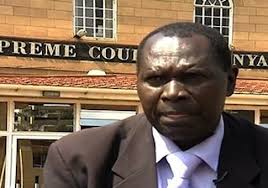
A Nairobi lawyer wants to sue Israel and Italy for killing Jesus Christ.
Dola Indidis is taking his case to the International Court of Justice.
Indidis is Catholic and says he knows Jesus had to die, as espoused in the Bible.
But he doesn’t believe it was necessary for Christ to die so brutally.
Two thousand years after the fact, he wants Israel and Italy to be held accountable for the actions of Roman governor Pontius Pilate and Herod the King of the Jews.
“My case is that Pontius Pilate, who tried Jesus Christ, had no jurisdiction. The judge himself says on the record, says he had no jurisdiction. Later he changed the story when he was under pressure.
“He convicted Jesus, who also did not have an equivocal plea of guilty, and he sentenced him a sentence which was also not lawful…”
Indidis says Pope Francis is aware of his case and that some in the Vatican support it.
Few of Indidis’s compatriots feel the same though — but he’s adamant the ancient wrong needs to be corrected.
He’s seeking a judgment from the International Court of Justice that the legal process wasn’t followed.
Italy’s first black minister, a target of racist slurs since her appointment in April, has condemned a spectator who threw bananas towards her while she was making a speech at a party rally.
Integration minister Cecile Kyenge, who was born in Democratic Republic of Congo, has angered far-right groups with her campaign to make it easier for immigrants to gain Italian citizenship.
Shortly before the incident on Friday, members of the right-wing Forza Nuova group left mannequins covered in fake blood at the site of the rally in Cervia, central Italy, in protest against Kyenge’s proposal to make anyone born on Italian soil a citizen.
“Immigration kills,” was written on leaflets accompanying the dummies – a slogan Forza Nuova has previously used when referring to murders committed by immigrants in Italy.
Although the bananas missed the stage where Kyenge was speaking, she responded to the gesture on Twitter, calling it “sad” and a waste of food, considering the economic crisis.
“The courage and optimism to change things has to come above all from the bottom up to reach the institutions,” she added.
Kyenge has faced regular insults since becoming minister, often from other politicians. Earlier this month a senior parliamentarian in the anti-immigration Northern League party likened her to an orangutan and only apologized after a storm of criticism. – Reuters
Black footballer Balotelli on the cover of the Italian VanityFair
by Michele Leridon, Davide Lerner
From monkey chants in football stadiums to threats against the first black minister, racial outbursts in Italy reflect the profound social change taking place in a country relatively new to immigration.
Shocking episodes of racism have multiplied over the past few months, from hooligans taunting star striker Mario Balotelli with inflatable bananas to crude and vicious insults against the country’s Immigration Minister Cecile Kyenge, an Italian citizen born in the Democratic Republic of Congo.
Kyenge, who refuses to write Italy off as racist, has taken the brunt of the abuse since her election in April, shrugging off derogatory nicknames or photograph montages online in which her head is superimposed onto the bodies of indigenous African women.
“Why does no one rape her, so she can understand what the victims of atrocious crime feel?” a party official with Italy’s anti-immigrant Northern League party wrote of her last month in a Facebook post, while last week the vice-president of the Senate compared her to an orangutan.
The former was given a 13-month suspended sentence and was banned from public office for three years, while senator Roberto Calderoli is being investigated for inciting racial hatred — though he refuses to resign, insisting he has done enough by apologising to Kyenge with a bunch of flowers.
Bizarrely, the probe against him was only opened after a consumers association, Condacons, launched a complaint. And despite a petition signed by 200,000 people calling for Calderoli’s removal, the League member has so far managed to hold on to his prestigious Senate post.
“Italy is no more racist than other European countries, but sensitivity to the issue is not as developed here,” Italian historian Marco Fossati told AFP.
Michela Marzano, a philosopher and deputy from the centre-left Democratic Party (PD), said: “there is an extreme tolerance towards intolerance.”
“Italy has not had many opportunities to enter into contact with ‘the Other’, because it has always been a country of emigration rather than immigration,” she said.
While millions of Italian fleeing poverty emigrated to the United States, Latin America and other parts of Europe throughout the Twentieth century, the Mediterranean country has only had to absorb large numbers of immigrants over the past 20 years or so.
“We have remained very provincial, and the Calderoli affair has sparked a lot of indignation but no concrete action,” said Fossati, adding: “anyone who reacts with indignance is seen as a moralist, someone who is infected with the ‘politically correct’ virus.”
Luigi Manconi, head of the civil rights commission in the Senate, dates the ‘legitimisation’ of racial abuse back to an episode in 2007, when an Italian woman was raped by a Romanian man ahead of municipal elections, kicking off a fear-based campaign equating Romanians to rapists.
From that point, Manconi says, the Northern League — and Calderoli in particular — have felt increasingly free to be racist and “have played a fundamental role in the legitimation of xenophobia.”
Adriano Prosperi, modern history professor at Pisa University, compares Italians’ apathy in the face of racism today with the introduction of racial laws in 1938 which were “passively absorbed by Italian society” under dictator Benito Mussolini’s Fascist regime.
Centre-right former premier Silvio Berlusconi, renowned for off-colour comments, sparked a backlash in January when he stated during the inauguration of a Holocaust museum that the regime “in many ways did good things” for Italy — before retracting his comment.
Despite such incidents, Prosperi said he does not think Italy is “profoundly racist at heart”. While the League may generate shock headlines — its former leader Umberto Bossi once said immigrants arriving by boat should be shot at with cannons — it won just four percent in the last elections.
The real reason Calderoli has not been forced out, Prosperi says, is that the current government “has sacrificed values for the sake of realpolitik.” – AFP
Domenico Dolce, left, and Stefano Gabbana, in the company of some fashion clients
An Italian court on Wednesday sentenced Italian fashion designers Domenico Dolce and Stefano Gabbana to one year and eight months in prison for tax evasion.
The pair’s lawyer, Massimo Dinoia, said they planned to appeal, adding that the case is “groundless.” The designers, known for their sexy styles favored by celebrities such as Madonna, Naomi Campbell and Katy Perry, have denied the charges.
The case dates back to 2004, when two of the company’s main brands were sold to Luxembourg-based holding company Gado.
Related Video
A court in Milan has convicted fashion designers Domenico Dolce and Stefano Gabbana of tax evasion. Christina Binkley reports.
Prosecutors alleged that the sale was made to avoid declaring taxes on royalties deriving from the two brands’ activities.
Under Italian law, the pair wouldn’t go to prison because sentences of less than three years are served with house arrest or community service. Moreover, the designers have the right to appeal the verdict twice, and Italian courts often take years to reach a final decision.
Public prosecutor Laura Pedio dubbed the operation as a “sophisticated tax fraud” and originally asked for a two-year jail term for the duo. If the conviction is upheld, the pair would also need to pay a fine to Italy’s tax agency for €500,000.
Over the last five years, Italian tax authorities have ratcheted up pressure on tax evasion in an effort to claw back an estimated €120 billion a year in unpaid taxes, cracking down in particular on the use by Italian companies of offshore centers to avoid taxes.
According to Italian tax authorities, the country lost about €17 billion in undeclared or under-declared income to offshore centers last year, compared with €11 billion for 2011, with Luxembourg the leading country used by Italian individuals and companies seeking to hide money abroad. Corporate tax rates in Luxembourg can be close to zero, while they are about 28% in Italy.
While Dolce & Gabbana has emerged as one of the most high-profile cases pursued by Italian tax authorities, Italian authorities have gone after other fashion groups in the past. In 1996, Giorgio Armani received a nine-month suspended sentence and was fined $64,000 for paying off tax authorities in exchange for favorable audits. Mr. Armani admitted to having paid the bribes.
Late last year, prosecutors launched an investigation into whether the Marzotto family, a wealthy textile dynasty, and four managers dodged 65 million euros in Italian income taxes when it sold fashion house Valentino through a Luxembourg holding company in 2007.
Earlier this year, the family paid the taxes that the state claimed it owed, but will face a criminal trial later this year.
The family and managers have denied all charges. – Wall Street Journal
Italy’s first black Cabinet minister is facing Internet death threats before a visit to a region known for its anti-immigrant political base.
But Cecile Kyenge says she’s not afraid and challenged Italians to respond to such intimidation themselves to prove that Italy isn’t racist.
Kyenge, a Congolese-born doctor who has lived in Italy since 1983, has been the target of racist diatribes ever since she was named integration minister in April. She has been called “Congolese monkey,” and a member of a “bonga bonga government.”
Last week, a local politician from the xenophobic Northern League party was expelled from the party after she suggested on Facebook: “Why doesn’t someone rape her (Kyenge), so she can understand what victims of atrocious crimes feel?” The official, Dolores Valandro, was implying that immigrants were responsible for violent crime in Italy.
Kyenge on Wednesday acknowledged “racist episodes,” but declined to brand the country as a whole racist. She has offered a muted response to the attacks against her, saying it’s more for Italy as a nation to respond.
“These actions are directed against all of us, not just me,” Kyenge told reporters. “Surely it hasn’t left me indifferent. But I think the response that the country gives is important.”
Unlike France, Germany or Britain, where second and third generations of immigrants have settled, albeit uneasily, Italy is a relative newcomer to the phenomenon, with the first waves of immigrants coming to Italy’s shores only in the 1980s. The country’s race problem was then largely seen at soccer stadiums, where even today black stars like Mario Balotelli are routinely subjected to racists taunts.
But Kyenge’s emergence onto the political stage has brought the issue to the fore, spurred on in part by her call for Italy to change its citizenship law to allow children born in Italy of legal immigrants to obtain citizenship more easily.
Currently, such children can only apply once they turn 18, and can be denied citizenship for a host of bureaucratic mistakes or omissions. Kyenge says changing the law is a key part of changing Italians’ very concept of citizenship, to take into account the country’s changing demographics.
Foreigners made up about 2 percent of Italy’s population in 1990; currently the figure stands at 7.5 percent.
“It’s a new citizenship that comes about by the meeting of different cultures,” she said.
Her call, however, has been met with stiff resistance by the anti-immigrant Northern League, which isn’t taking part in a parliamentary committee drafting the new citizenship law. Kyenge’s spokesman, Cosimo Torlo, said it’s unclear at what age citizenship could be obtained under the proposed legislation – at age 3, 5 or 10 – but that “Whatever it is, it will be better than the current law.”
The threats against Kyenge are real. She arrived at the Foreign Press Association with a phalanx of bodyguards, two of whom flanked the dais where Kyenge spoke, talking into their shirt cuffs and sending signals to two other colleagues at the back of the room.
Asked about the unusually high security detail, Kyenge noted that all ministers have bodyguards. “But it’s clear that for me, because of the threats I have received, there’s a greater attention on protection.”
This weekend, Kyenge will give the opening address to a multicultural festival in the northern region of Veneto, the political home base of the Northern League. Far-right groups are planning a protest. Isabella Zuliani, vice mayor of the town hosting the event, told newspaper Il Gazzettino that police have already been informed about a new round of Internet death threats directed at Kyenge, including one that exhorted simply: “Kill her.”
“Racist episodes exist, but you can’t say that a country is racist because there are certain episodes in the territory,” Kyenge said.
That said, Kyenge appeared more ready to acknowledge such “racist episodes” than in her first meeting with the media, soon after she was nominated. Then, she said Italy’s problem wasn’t so much racism as ignorance of “the other.”
After two months of taunts directed against her, Kyenge said, “Maybe what is missing in Italy is a culture of immigration: We have to try to know, understand the ‘other,’ and that diversity is a richness.
“As soon as we understand that, we can evaluate whether Italy is racist,” she added. – AP
This website uses cookies to improve your experience. We'll assume you're ok with this, but you can opt-out if you wish. Cookie settingsACCEPT
Privacy & Cookies Policy
Privacy Overview
This website uses cookies to improve your experience while you navigate through the website. Out of these cookies, the cookies that are categorized as necessary are stored on your browser as they are essential for the working of basic functionalities of the website. We also use third-party cookies that help us analyze and understand how you use this website. These cookies will be stored in your browser only with your consent. You also have the option to opt-out of these cookies. But opting out of some of these cookies may have an effect on your browsing experience.
Necessary cookies are absolutely essential for the website to function properly. This category only includes cookies that ensures basic functionalities and security features of the website. These cookies do not store any personal information.
Any cookies that may not be particularly necessary for the website to function and is used specifically to collect user personal data via analytics, ads, other embedded contents are termed as non-necessary cookies. It is mandatory to procure user consent prior to running these cookies on your website.