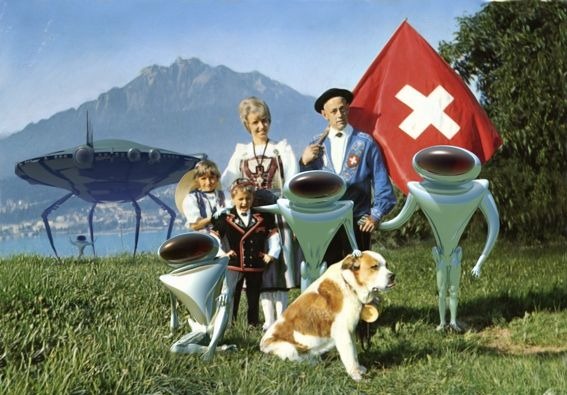
Good luck to the little people fighting for NATO

Demonizing Russian President Vladimir Putin, an Anglo-American pastime, seems even more childish when one considers that any president of the Russian Federation would act in exactly the same manner to protect the interests of his country in the face of NATO aggression.

When Putin attended the Bucharest summit in 2008 to sign an agreement that there would be no invitations extended by NATO to Ukraine and Georgia to join the alliance, little did he know that promises signed in English do not mean much.

The former Danish Prime Minister Anders Fogh Rasmussen, NATO’s salesman for neo-conservative invasions and occupations of Iraq and Afghanistan, finds no task set by his Atlanticist masters too daunting. Implementing a scorched earth policy in both countries, Rasmussen has now scrapped the Bucharest agreement to create tension in Eastern Europe, inflaming the region with hostile rhetoric and permanent military bases.

As NATO expands eastward in order to surround Russia on all borders, Rasmussen has come across yet another obstacle that might be worth his while to ignore: Article 10 of the NATO Charter.

Article 10 stipulates that NATO membership is only open to European States: “The Parties [NATO Treaty signatories] may, by unanimous agreement, invite any other European State in a position to further the principles of this Treaty and to contribute to the security of the North Atlantic area to accede to this treaty. Any State so invited may become a Party to the Treaty by depositing its instrument of accession with the Government of the United States of America.”

The US does not consider the Russian Federation as “European”. Kiev, Tbilisi, Sofia certainly qualified as “North Atlantic” back in the Cold War era as little as they qualify today. Calls for NATO to ignore Article 10 and expand far beyond the North Atlantic and Europe, are abundant however.

NATO meanwhile has invented new ways of getting around this obstacle. “Membership Action Plan” and “Intensified Dialogue” are NATO-speak for fast-track membership into the military alliance.

One of the first moves in Georgia after the Soros-initiated Rose Revolution of 2003, was to sign up for NATO’s Membership Action Plan (MAP). However, Georgia claims ownership of two independent republics, Abkhazia and South Ossetia. Fearful of the latest attempt by NATO to absorb Georgia, Abkhazia and South Ossetia recently announced the creation of a “Unified Defense Space” to counter Georgia’s and NATO’s total onslaught.

Similarly, after President Viktor Yushchenko and his Soros and American allies prevented the elected president of Ukraine, Viktor Yanukovych from being sworn in as president after the so-called “Orange Revolution” of 2004, one of Yushchenko’s first actions as president was to sign Ukraine up for NATO’s “Intensified Dialogue” program.

After Yanukovych was ousted in the so-called “Euromaidan” revolution earlier this year, the new Kiev coalition of World Bank technocrats and neo-fascists called for fast track membership for Ukraine in NATO.

The wounded Kiev regime is fumbling along towards NATO membership even though a 2009 poll revealed that 57 percent of Ukrainians opposed NATO membership for their country. In Russian-speaking eastern Ukraine, which has declared independence from Kiev, a poll showed 74 percent opposed to NATO membership.

Yet NATO seems reluctant to accept a very existential problem with regards to its expansionist strategy. NATO planners, working with neocon clones in Sweden, Finland, Austria, Ireland, Switzerland, and Malta remain deaf to sound warnings of their constituents. And while these countries are all “European”, their voters are not interested in membership of the War Club.

President Obama said in Estonia that NATO is an alliance of “democracies” even though most of these “democracies” are opposed to joining the alliance. Obama clearly believes that his definition of democracy does not include abiding by the wishes expressed by majorities.

Recent polls show 50 percent of Swedes opposed to NATO membership. Although Finland and NATO signed a Memorandum of Understanding in April 2014 that many believe permit NATO pre-positioning of military equipment near the Russian border, polls show 52 percent of Finns also opposed to NATO membership.

Former Finnish Presidents Tarja Halonen and Mauno Koivisto have warned that Finnish membership in NATO would irrevocably harm Finland’s relations with Russia. Switzerland, where opposition to NATO runs high in the historically neutral nation, former Swiss President Adolf Ogi has called for Switzerland’s membership of NATO.

NATO has also been trying to wean Ireland away from its traditional neutrality. Many observers believe that NATO has a secret agreement with Ireland to use Shannon Airport as a cargo and personnel transit hub. An Irish Defense Policy Green Paper released by Ireland’s Defense Minister Alan Shatter, released earlier this year however, calls for Ireland to pursue NATO membership.

NATO’s gambit has been to use the terrorist threat to lure Ireland into the alliance, warning that Ireland would be “safer from terrorism” inside NATO. David Cameron, British premier, has just tried the the same trick to stem the yes-tide in Scotland’s up-coming referendum on independence.

In May of this year, Austria inched closer to NATO membership when it became the first non-NATO country to join NATO’s Cooperative Cyber Defense Center of Excellence in Estonia, while polls clearly show a majority of Austrians being opposed to NATO membership.

Malta renewed its membership in NATO’s Partnership for Peace (PfP) program in 2008 without parliamentary approval, and in contravention of the neutrality article in Malta’s constitution.

A confidential NATO paper recently leaked to Der Spiegel calls for enhanced “interoperability” of the military forces of Armenia and Azerbaijan, as well as Moldova, with NATO, and proposes “smart defense” operations between the three nations and NATO. Moldova’s constitution prohibits the country from joining any military alliance, but that inconvenient fact has not deterred Moldovan Defense Minister Vitalie Marinuţa, another Soros clone, from calling for Moldova to join NATO.

NATO’s Long March east is a far cry from the agreement made between the George H W Bush administration and Soviet President Mikhail Gorbachev that in exchange for Moscow’s agreement on German reunification, NATO would not inch any further east. That agreement was scrapped by Bill Clinton’s Secretary of State Madeleine Albright, who eagerly welcomed her native Czech Republic, as well as Poland and Hungary as NATO members in 1997. Albright’s promises that NATO would not further expand came to naught.

Estonia, Latvia, and Lithuania joined NATO in 2004 after membership negotiations began under Albright’s tutelage in 2000. Bulgaria, Slovakia, Slovenia, and Romania also joined NATO in 2004. Croatia and Albania followed in 2009.

Recent statements by NATO and the Obama administration represent an immense escalation of US and NATO military threats against Russia. Without any public discussion, and entirely over the heads of the little people in all these countries, the Obama administration has committed them to a war with the second largest nuclear power in the world.

“Article 5 is crystal clear. An attack on one is an attack on all. So if, in such a moment, you ever ask again, ‘who will come to help,’ you’ll know the answer — the NATO Alliance, including the Armed Forces of the United States of America, ‘right here, present, now!’ We’ll be here for Estonia. We will be here for Latvia. We will be here for Lithuania… Here in the Baltics… it would mean more US forces—including American boots on the ground continuously rotating through Estonia and Latvia and Lithuania,” Obama boomed.

The signatories will be sad fodder for the War Club. The willful recklessness of American foreign policy is obvious, as there will not be enough American “boots on the ground”. The dying will have to be done by the parties who signed on with NATO. Good luck to them.

Swiss could grant Snowden asylum

Switzerland has reportedly decided it will not extradite National Security Agency whistleblower Edward Snowden to the US if he comes to testify against the NSA’s spying activities, Swiss media said.

It has been revealed that trade secrets from other nations are not safe with the NSA. Snowden suggested earlier that the United States conducted espionage to prevent losing its economic prowess to other countries.

In the document, titled “What rules are to be followed if Edward Snowden is brought to Switzerland and then the United States makes an extradition request,” Switzerland’s Attorney General stated that Snowden should be guaranteed safety if he arrives to the country to testify, Sonntags Zeitung reported.

In particular, the report proposes to ensure the whistleblower’s safety by inviting him as a witness to a parliamentary hearing focusing on the NSA’s surveillance practices.

In the document, the authority said that Switzerland does not extradite a US citizen, if the individual’s “actions constitute a political offense, or if the request has been politically motivated,” Swiss ATS news agency reported.

Snowden’s safety can thus be guaranteed if it is ruled that the charges against him have a “predominantly political character,” the document concluded.

The only obstacle for that could be “higher-level government commitments,” the Office of the Attorney General said, adding that it must be verified if such obligations do, in fact, exist.

The document was reportedly requested last November.

Snowden’s Swiss lawyer, Marcel Bosonnet, said he is pleased with the Attorney General’s conclusions.

“The legal requirements for safety are met,” he assured, adding that Snowden has already showed interest in testifying.

Immigration rights activist Sarah Progin-Theuerkauf hinted that Snowden might even have a shot at Swiss asylum following the proposed testimony.

“There is evidence that Edward Snowden meets the criteria of refugee status under the Geneva Convention and therefore should be granted asylum,” she told Sonntags Zeitung.

Swiss politicians meanwhile are calling to welcome Snowden to Switzerland as soon as possible.

“We must now move forward, so that Snowden can travel to Switzerland as a witness as soon as possible,” SVP National Luzi Stamm said, adding that the Swiss people have the right to know the truth behind the extent of US spying activities.

Over the past year, Snowden has been the recipient of the German ‘Whistleblower Prize,’ the Sam Adams Award which was presented to him in Moscow, the German ‘positive’ Big Brother Award, the Ridenhour Truth-Telling Prize, and the Fritz Bauer Prize.

He also joined the board of directors of the Freedom of the Press Foundation, co-founded by Daniel Ellsberg, and was elected in absentia as rector of the University of Glasgow.

Source: RT

Canada moves gold of Switzerland, Netherlands, Sweden to unknown location

In just three months, on November 30, the Swiss will vote in a federal referendum on the future of the country’s gold reserves.

The referendum has arisen through a popular initiative called ‘Save our Swiss gold initiative’. In Switzerland, citizens can propose changes to the Swiss constitution through a mechanism called a popular initiative, even if parliament is against the proposal.

The ‘Save Our Swiss Gold’ initiative is set to highlight the important issue of sovereign gold reserves and who has possession and controls them. It may lead to an important debate about each country’s national patrimony and their gold reserves.

The ‘Save Our Swiss Gold’ initiative is proposing the following:
– rules to prevent the Swiss National Bank (SNB) selling any more of the country’s gold reserves
– to direct that the SNB must keep a minimum of 20% of its reserves in gold, and
– to require that all Swiss gold must be stored in Switzerland.

This would require repatriation of Swiss gold since some of the Swiss gold reserves are stored abroad.
The Swiss National Bank (SNB) are against the proposal but were forced last year, in reaction to the popular campaign, to reveal the storage locations of the Swiss gold.

In April 2013, Thomas Jordan, SNB President, confirmed that 70% of Switzerland’s gold is in Switzerland, 20% is at the Bank of England, and 10% is stored with the Bank of Canada, and that this mix of holdings had been in place for more than a decade.

Since the Swiss hold a total of 1,040 tonnes of gold reserves, this would mean that there are 104 tonnes of Swiss gold at the Bank of Canada and 208 tonnes in the Bank of England. Jordan’s explanation of the foreign gold storage was that it provided “adequate regional diversification and good market access”.

Since the Bank of England specialises in the custody of gold on behalf of numerous foreign central banks, it’s not surprising then that the SNB stores gold at the Bank of England.

What is surprising is that the SNB still holds gold at the Bank of Canada, since the Bank of Canada is a legacy custodian of other countries’ gold and appears to have stopped storing other nations sovereign gold in recent years.

When the Bank of Canada was asked earlier this year as to how many foreign central banks it acts as gold custodian for, it confirmed that it currently acts as gold custodian for only four foreign central banks, but that due to confidentiality, it was unable to disclose the identity of the national account holders.

However, its known from other sources that both the Netherlands and Sweden also hold some of their gold reserves at the Bank of Canada.

The Federal Reserve Bank of New York holds 1,536 metric tons of German gold, nearly half of Berlin’s reserves.
This enormous hoard of gold is stored in the fifth subfloor of the bank’s building on Liberty Street, 25 meters
80 feet) below street level, and 15 meters below sea level. Or is it? The Germans want to know and
want it back, as do the Swiss and other nations.

The Dutch central bank, De Nederlandsche Bank, has stated previously that most of its gold reserves are held at the Federal Reserve Bank in New York, the Bank of England, and the Bank of Canada, with less than 10% stored in the bank’s own headquarters in Amsterdam.

The Swedish Riksbank has also stated recently that its gold is stored in a number of foreign locations, such as the Federal Reserve, the Bank of England but also the Bank of Canada.

The identity of the 4th foreign central that stores gold at the Bank of Canada is unclear, but it may be the Bank of England or the Federal Reserve, since both banks historically held gold accounts with the Bank of Canada.

Given that Canada sold nearly all of its own substantial gold holdings a number of years ago, it seems like an anomaly that the Bank of Canada in Ottawa is still holding gold on behalf of other countries. Most countries that had held gold in Ottawa repatriated it long ago.

Citizens of Switzerland, the Netherlands and Sweden should be concerned that some of their nation’s gold is in custody with a bank that is no longer a specialist in gold custody and that did not even see fit to maintain its own gold reserves.

They should also be concerned about the secrecy and lack of transparency regarding their gold, especially given that the Bank of Canada’s remaining custody gold has recently been moved to an unknown destination.

The Bank of Canada’s headquarters on Wellington Street in Ottawa is currently undergoing an extensive multi-year renovation which required the Bank to vacate the building last year, and empty it’s entire contents, including the gold stored in the subterranean vault.

Whatever gold was still in the vault, that runs from Wellington Street on one side of the building out as far as Sparks Street on the other side, has now been relocated elsewhere.

Where the gold has been moved to is unknown since the Bank of Canada won’t comment.

The upcoming Swiss gold referendum will be very interesting and will highlight and focus minds on why the SNB vigorously defends the need to keep some of its gold reserves in Canada, especially given that the Ottawa gold is now on the move.

Owning allocated and segregated physical coins and bars is best in Hong Kong, Singapore and Zurich, investors say.

Swiss share Russian concern over nuclear in Ukraine

Swiss President and Chairperson-in-Office of the OSCE Didier Burkhalter shared Russia’s concern over nuclear security due to US intention to supply nuclear fuel to Ukraine and urged Moscow to address the International Atomic Energy Agency.

“We share your opinion regarding the nuclear security problem. Nuclear security represents a key problem for the Swiss nuclear policy,” Burkhalter wrote in a letter to Vladimir Gutenev, first deputy chairman of Russia’s State Duma committee on industry.

In June, Gutenev sent Burkhalter a letter, warning him about the potential threat to the security of European countries in the case of man-made disasters at Ukraine’s nuclear power plants in light of the intention of the current Kiev authorities to sign an agreement on fuel supply from the United States.

The IAEA plans a diplomatic conference at the beginning of next year. The Swiss president reminded that his country had proposed to introduce changes to The Convention on Nuclear Safety and said he would welcome Russia’s help in the preparation of the conference of the IAEA, the keeper of the Convention.

He said, however, the specific issue of US supplies to Ukraine needed to be addressed by the Ukraine’s national security first.

Burkhalter added that the nuclear security was out of the authority of the Organization for Security and Co-operation in Europe, but could be reviewed by the IAEA board.

Russian Foreign Minister Sergei Lavrov said Wednesday that Moscow must be informed of every attempt by Ukraine to use Western nuclear fuel in Soviet- and Russian-made reactors, referring to US company Westinghouse seeking to seize more contracts in Europe, including Ukraine.

Joe Biden’s son, oligarch fingered in MH17 crash

NATO held an exercise code named «BREEZE 2014» that ended in Black Sea. The exercise, which included the use of electronic warfare and electronic intelligence aircraft such as the Boeing EA-18G Growler and the Boeing E3 Sentry Airborne Warning and Control System (AWACS), coincided with the shootdown of Malaysian Airlines Flight 17 in eastern Ukraine, some 40 miles from the Russian border.

NATO ships and aircraft had the Donetsk and Lugansk regions under total radar and electronic surveillance.

MH-17 was shot down over a region where Russian-speaking separatist forces have been battling against the alliance of the Ukrainian armed forces and a private mercenary force answerable to a Ukrainian-Israeli billionaire oligarch.

About 200 U.S. Army personnel normally assigned to bases in Germany were in Ukraine during the time of the MH-17 fly-over. They were participating in NATO exercise RAPID TRIDENT II. Ukraine’s Ministry of Defense led the exercise.

BREEZE included the AEGIS-class guided missile cruiser USS Vela Gulf. AEGIS cruisers’ AN/SPY 1 radar has the ability to track all aircraft over a large region.

The USS Vela Gulf was able to track Malaysian Airlines 17 over the Black Sea and any missiles fired at the plane. U.S. AWACS electronic intelligence (ELINT) aircraft were also flying over the Black Sea region at the time of the MH-17 flyover of Ukraine. Growler aircraft have the capability to jam radar systems in all surface-to-air threats.

The announcement of U.S. BREEZE and RAPID TRIDENT II military maneuvers came on May 21, 2014, and were announced on the website operated by Vice President Joe Biden’s office. Biden’s son, Hunter Biden, is a newly-named director of the Ukrainian natural gas and oil company Burisma Holdings, Ltd., owned by Kolomoisky, an Ukrainian-Israeli.

Kolomoisky has raised his own private mercenary army, and some say they even own the BUK missiles allegedly used in the shootdown of MH-17. Kolomoisky is the Governor of Dnipropetrovsk oblast in eastern Ukraine.

Burisma is part of Kolomoisky’s large umbrella corporation called Privat Group. He is estimated to be the second-richest person in Ukraine, also has strong connections inside Kiev’s Borispol International Airport, where it has been reported that Ukrainian Interior Ministry troops stormed the air traffic control tower shortly before MH-17 was shot down.

A Spanish air traffic controller, who possessed knowledge of the Ukrainian Interior Ministry’s involvement in the shootdown of MH-17, has reportedly had his life threatened. The Spanish controller, identified only as «Carlos,» understood that the shootdown of MH-17 was carried out by supporters of former Ukrainian Prime Minister Yulia Tymoshenko and Interior Minister Arsen Avakov. Kolomoisky is a political ally of both Tymoshenko and Avakov.

Kolomoisky’s forces are armed with advanced weaponry, obtained both from Ukrainian weapons inventories and from purchases on the black market. Kolomoisky’s forces, comprising Ukrainian regular military personnel; neo-Nazi units from west Ukraine, and foreign mercenaries, including Georgians, Romanians, and mercenaries from Sweden and Germany.

His troops were also responsible for the deadly May 1 fire-bombing of the trade union building in Odessa and burning people alive inside the Mariupol Police Station on May 9.

Georgians who serve in Kolomoisky’s Army have reportedly been trained in the use of BUK missile systems previously sold by Ukraine to Georgia under the presidency of Mikheil Saakashvili. Kolomoisky has utilized ex-President Saakashvili’s «consulting services» in Dnipropetrovsk in the military and political campaign against the breakaway people’s republics of Donetsk and Lugansk.

Kolomoisky chooses to «command» his army from the safety of Switzerland.

Ukrainian Interior Minister Arsen Avakov and Kolomoyskyi will bear responsibility for their crimes, Russian Investigative Committee chief Alexander Bastrykin said Thursday.

“Avakov and Kolomoyskyi aren’t going anywhere. Sooner or later they will be held accountable for their criminal responsibility according to the norms of international law,” Bastrykin said.

As events in Ukraine continue to unravel, Russia is launching criminal cases against both individuals. The Russian Investigative Committee identified 2,700 victims in the criminal cases in the Ukrainian crisis, accusing Avakov and Kolomoyskyi of organizing unlawful massacres.

The testimonies came shortly after Russia issued arrest warrants for Avakov and Kolomoyskyi on charges of organizing murders and abductions, using banned means and methods of warfare, and preventing journalists from entering in the country.

Russian courts sentenced both Avakov and Kolomoyskyi in absentia in early July with the decision driven by the threat the two pose to regional security.

The shooting down of MH-17 drew the attention of the world’s media away from a ground invasion of Gaza.

Swiss and Chinese central banks enter into currency swap

The Swiss National Bank and the People’s Bank of China reached a currency swap agreement on Monday, allowing the two central banks to buy and sell their currencies up to a limit of 150 billion renminbi, or 21 billion Swiss francs ($23.4 billion).

The deal will also allow the Swiss central bank to invest some of its huge accumulation of foreign exchange reserves in the Chinese bond market, the SNB said in a statement Monday.

The Zurich-based SNB said the agreement will further strengthen collaboration between it and its Chinese counterpart and is a “key requisite for the development of a renminbi market in Switzerland.” It could also facilitate trade and investment between the two countries, the PBOC said.

Switzerland is the latest of a series of countries to set up swap lines with China, which is keen to promote the international use of the yuan.

Last year China signed swap agreements with the European Central Bank and a clutch of others, including the U.K., Brazil and Indonesia.

The agreement between China and Switzerland has a term of three years and can be renewed thereafter, the PBOC said. – Dow Jones Business News

False Flag Attacks

Prof. Daniel Ganser
Prof. Daniel Ganser

By Professor Daniele Ganser, University of Basel

As evidence has accumulated that the official story of 9/11 is false, the dwindling number of defenders of the official conspiracy theory have been reduced to two arguments. One is that no government would attack its own people or stand aside while terrorists did so. The other argument is that if such a thing had happened, someone would have talked.

Professor Daniele Ganser of the University of Basel in Switzerland demonstrates that there is no basis in history for either of these two arguments. He provides details of two officially acknowledged government conspiracies to murder citizens for political reasons.

One is Operation Gladio, officially exposed by Italian Judge Felice Casson and Italian Prime Minister Giulio Andreotti. This conspiracy involved the CIA, NATO, and Italian intelligence. The conspirators set off bombs in public places in European cities, killing and maiming citizens. The series of attacks were officially blamed on communists and discredited the Italian Communist Party, thus terminating its rise in polls and elections.


Nazi salute OK in Switzerland

A Nazi salute may – or may not – land you in jail in Switzerland. Apparently, you are safe if you manage to prove that it was intended as a personal statement and not a marker of political affiliation, the country’s highest court has ruled.

durban-holocaust-center
Durban is not Switzerland yet

The decision, entitled “Hitler salute in public not always punishable,” implies the following: “Unless one is proven to be spreading racist ideology, they’re free to express a personal sentiment or belief with the gesture.” That is what Lausanne’s Federal Tribunal said Wednesday, according to AP.

The hearing was a continuation of earlier 2010 proceedings in the case of a man who faced the racial discrimination conviction for taking part in an August demonstration of that year. The rally, involving a crowd of 150 people, was held a week after the Swiss National Day at a historic place where the modern Swiss Confederation is believed to have been born in 1291.

The man, according to the papers, had substituted the Swiss oath with a 20-second Nazi salute – something a local court initially ruled to be a crime, with the decision now overturned.

Switzerland is not without its own issues of racial hatred. For the past 10 years, the country has seen a steady presence of right-wing groups, which show up each National Day to disrupt the occasion.

A 1995 law prohibits all Nazi symbolism from being spread for the purpose of promoting racist ideology. But still in 2010 the Swiss Federal Council, which included the president, decided not to ban the Nazi salute and swastika symbol. Many other countries, including Germany, Austria and the Czech Republic, deem the Nazi salute illegal.

A similar case existed in Switzerland with regard to some verbal expressions that may be deemed insulting, including “foreign swine” or “filthy asylum seeker” uttered in German. However, since those are common and widespread insults in the German language, the court ruled they do not amount to racist attacks.

Source: RT

Swiss decide against Russian sanctions

Didier Burkhalter
Didier Burkhalter

The Swiss federal government on Wednesday decided not to impose sanctions against Russia for its seizure of Crimea, claiming it wanted to find a “balance” between international law and Switzerland’s interests.

“The position of our country is independent of the UN,” Swiss president Didier Burkhalter told a press conference in Bern, saying Switzerland can only use sanctions when they are based upon “international law and the interests of the Swiss”.

“And in this case the rights and the interests play a role… we need to find a balance,” he added, as well as noting that Russian interests in Switzerland were “very large”.

“The federal council has noted the sanctions imposed by the European Union and the United States,” he added.

Burkhalter said some sanctions imposed by the EU would apply to Switzerland, including a ban on the freedom of movement of some Russian nationals as Switzerland is a member of the Schengen group of European countries, which allow passport-free movement between them.

Burkhalter, who is also the country’s foreign minister, said Switzerland would not allow itself to be used in the conflict.

The majority of Russian gas and petrol is traded in Geneva, and Switzerland is an increasingly popular destination for Russia’s wealthy.

Source: The Local

Russia, Switzerland mark 200 years of diplomatic ties

ruskiswissRussia and Switzerland on Thursday mark the 200th anniversary of the establishment of diplomatic relations. On this occasion, the two countries’ foreign ministers exchanged congratulatory messages, where they reiterated their commitment to further development of bilateral cooperation in various areas and further political contacts, including top-level contacts.

“The jubilee is a good occasion to look back at the path our countries have travelled, to recall the common historic past and try to analyze its lessons, to draw intermediate results of cooperation and outline plans for the future,” Dmitry Lyubinsky, director of the Russian Foreign Ministry’s Third European Department, told Itar-Tass. “It is important that both we and our partners are looking at the future of the Russian-Swiss relations with optimism.”

On February 22 (March 6), 1814, Russian diplomat Count Ivan Antonovich Kapodistria presented his credentials as the Russian Ambassador to Switzerland. A year after that, the Vienna congress proclaimed the Russian Empire as one of the guarantee powers for permanent Swiss neutrality. Thus, Russia made its contribution to the structure of Switzerland’s political system, thanks to which Switzerland avoided disastrous wars of the 19th and 20th centuries.

“I cannot say that everything was always smooth in our relations,” Lyubinsky went on. “The murder of Russian diplomat Vorovsky in Lausanne in 1923 and subsequent acquittal of the killer by the jury lead to the severance of diplomatic relations, which were resumed only in March 1946. Ever since, bilateral cooperation has only been growing and now we have reliable and promising partners in Switzerland in all areas of cooperation.”

Moscow is set for constructive cooperation with Bern over the period of the latter’s presidency in the Organization for Security and Cooperation in Europe (OSCE) in 2014. Strengthening of the OSCE’s role and enhancing its authority in international affairs meets the interests of both countries. Increased attention should be focused on problems stemming from transnational threats, on protection of the interests on national minorities, on counteracting extremism, and on OSCE reforms. It is important to exert more effort to promote the Helsinki Plus 40 process in order to draft a conceptual strategic document on principles of cooperation and security in Europe by the anniversary of the Helsinki Final Act in 2015.

The Russian-Swiss relations have reached a qualitatively new level in the recent years. A milestone event in bilateral relations was the first-ever visit by the Russian president to Switzerland in September 2009. The visit gave an extra impetus to closer cooperation in all areas, including the sphere of high technologies and innovation. Close contacts are maintained by the foreign ministries of the two countries. In 2007, they signed a joint memorandum on closer cooperation. The documents provides for consultations on a wide range of international and bilateral issues. In 2013 alone, the two countries’ foreign ministers and top-ranking foreign ministry officials had more than 20 such rounds. Russian and Swiss foreign ministers have annual meetings, including on the sidelines of various international events. Russian-Swiss summit meetings have become a regular practice in the recent years.

Source: TASS

‘Who will clean Swiss toilets?’

swissaliensSwitzerland’s vote to curb immigration has soured relations with the European Union and prompted companies including Nestle SA to warn of a potential effect on their business.

The vote outcome requires government quotas for all immigrants including European Union nationals.

The referendum responded to concerns over Switzerland’s mushrooming population, which grew 12 percent between 2000 and 2012. That has caused rents to spiral, construction to boom, and space in trains to grow tighter.

Switzerland voted against joining the EU’s precursor in 1992, preferring to stay a landlocked country surrounded by the bloc. A set of bilateral treaties, touching on topics ranging from market access for goods and services to scientific research, govern its relations.

While two recessions in four years have boosted anti-immigration parties across the euro area, Switzerland is unique because the limits will target many highly skilled workers.

It’s not only in parts of Switzerland that people welcomed the vote outcome. European politicians from France’s Marine Le Pen to Geert Wilders of the Netherlands and Heinz-Christian Strache in Austria cheered the decision, saying the Swiss result should resonate in the rest of Europe.

The Swiss People’s Party, or SVP, the biggest in parliament with 26.6 percent of the national vote in 2011, is a staunch opponent of EU membership and is also critical of too much power with the federal government in Bern. It spearheaded the anti-immigration vote, as it has other popular initiatives, billing these as a way for the common citizen to take back power. Party President Toni Brunner is a farmer by profession.

Swiss people feel disadvantaged in the labor market with wage dumping.

Switzerland managed to remain largely unscathed from the debt crisis and recession that afflicted the euro area. In 2013, the unemployment rate among Swiss citizens as measured by the International Labour Organization stood at 3.1 percent while among foreigners it was 8.3 percent.

For the EU, the jobless rate was 12.1 percent last year. At the same time, Swiss house prices have climbed almost 40 percent in the last 10 years.

Switzerland thus seems better off alone as immigrants become a burden to society. Adding fuel to the fire, the clampdown by European governments on tax evaders with secret Swiss bank accounts has at times been portrayed by the SVP as Switzerland getting bossed about by the EU.

Even so, the approval of the immigration ballot has many Swiss worried. Who’s going to clean Swiss toilets, take care of the sick and elderly, and who’s going to wash the dishes in a restaurant?

The banking and pharmaceuticals sectors are the economy’s big pillars. Agriculture makes up only 3.6 percent of employment and about 1 percent of annual output. Only a quarter of the population lives in a rural area, less than Austria or Italy, though more than in France.

Switzerland is doing well, and the EU isn’t. The Swiss want to keep it that way it seems.

Switzerland votes a narrow ‘yes’ to cap EU immigration

Swiss referendum posters in French

Switzerland has voted 50.3 percent in favor of limiting annual migration from the EU, thus ending the policy of free movement within the bloc that was established in 2002.

Swiss voters narrowly decided that immigration quotas would be reintroduced, thereby overturning the free movement policy introduced in the European Union 12 years ago. Early results showed the country to be very divided in opinion over the ‘Stop mass immigration’ initiative.

‘Stop mass immigration’ was introduced by the nationalist Swiss People’s Party (SVP). Its goal is to introduce annual quotas on the number of foreign workers entering the country. The result will likely vex multinational companies based there; Roche, Novartis, UBS, and other industry giants frequently utilize foreign labor.

Before Sunday’s results were fully confirmed, it appeared that Swiss voters were completely divided over the issue, with early projections gauged from partial results and estimates showing a 50-50 split (with a three percent margin of error). Ten out of 26 cantons – state districts – and half-cantons had voted in favor of the initiative.

Public opinion institute Gfs.bern stated at first that the outcome seemed too close to call. However, it emerged by Sunday evening that more than half of Swiss cantons supported the move, according to Reuters.

Many in Switzerland – which is surrounded by the EU but is not a member – believe that rising immigration levels are putting pressure on infrastructure, rent prices, the social security system, and unemployment rates.

The SVP party has been campaigning for the amendment, saying that immigrants are destroying the nation’s Alpine identity and taking away skilled jobs.

“Many people feel this is challenging their identity, even if there isn’t any concrete economic impact on a personal level,” Georg Lutz, professor of political science at the University of Lausanne Georg, told Reuters.

“I don’t want to live like a sardine in a tin can,” independent politician Thomas Minder, who supports the initiative, told tabloid newspaper Blick.

According to the latest data, 23 percent of the country’s eight million inhabitants are foreigners – the second largest proportion in Europe after Luxembourg.

Many fear the initiative would have a negative impact on the economy, which relies on foreign workers for progress and a competitive edge.

Italians and Germans reportedly comprise the largest contingent of immigrants to Switzerland, most of whom seek work in IT, healthcare, and financial sectors.

Severin Schwan, Austrian CEO of Roche Pharmaceuticals, said about half of the employees at the research and development site in Basel, Switzerland are foreigners.

Hans Hess, head of Swissmem – a leader in electrical and mechanical engineering – believes that Switzerland’s economy is successful because of innovation, which requires a steady stream of qualified immigrants.

“Innovation is the driver of the Swiss economy. That’s why we need highly qualified workers inside Switzerland and from abroad,” Hess said.

Indeed, four in every ten new companies were founded by foreigners, according to Orell Fuessli Wirtschaftsinformationen AG. Those new companies also created 30,000 jobs in 2013.

Other than a skilled workforce, immigrants benefit the economy through consumer spending. Credit Suisse reported that about 25 percent of private consumption growth since 2008 was thanks to foreigners.

The constitutional amendment could potentially erode Switzerland’s relationship with the EU, which views the freedom of movement policy as a fundamental right. – RT.COM

Swiss turn down Greece’s retroactive tax plan

Swiss Finance Minister Eveline Widmer-Schlumpf turned down the proposal of her Greek counterpart Yiannis Stournaras to impose taxes on Greeks’ bank accounts and transfer the money to Athens. 

 Eveline Widmer-Schlumpf
Eveline Widmer-Schlumpf

Currently in the Greek capital, Widmer-Schlumpf told Stournaras that Switzerland does not do such deals any more, focusing instead on automatic information exchange between tax authorities, currently negotiated at international level.

“Models we had earlier considered and discussed to prevent untaxed money in Swiss banks are partly outdated,” Widmer-Schlumpf said.

The total amount of Greek deposits in Swiss banks is not clear, some scenarios speak even of 60 billion euro. It’s not a secret that the debt-ridden country would love to extend a long arm and grab a percentage even if the money has been already taxed.

‘Africa needs fertility management’

Bill and the many natives

Stopping overpopulation is one way the dangers of climate change can be mitigated, according to two of the most prominent believers in global warming.

Former Vice President Al Gore and Microsoft founder Bill Gates said at the World Economic Forum in Davos that contraception is a key in controlling the proliferation of unusual weather they say is endangering the world.

“Depressing the rate of child mortality, educating girls, empowering women and making fertility management ubiquitously available … is crucial to the future shape of human civilization,” said Gore, who won the Nobel Peace Prize in 2007 for his work on global warming.

Gore said Africa’s population is expected to surpass India’s and China’s by the mid-21st century and will be more than both combined by the end of the century.

Source: CNBC