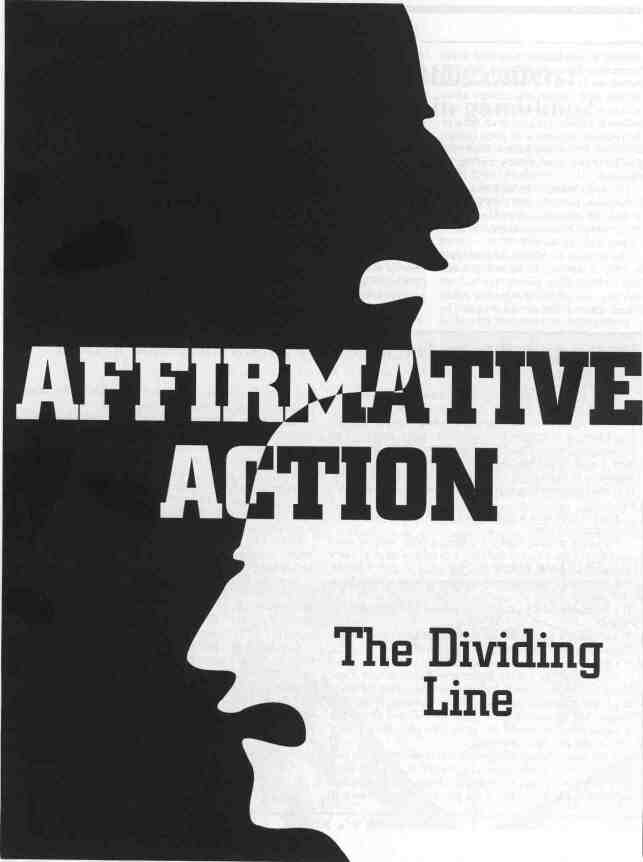
What happened to race-neutral admissions?

The Supremes

Nine years after the Supreme Court said colleges and universities can use race in their quest for diverse student bodies, the justices have put this divisive social issue back on their agenda in the middle of a presidential election campaign.

Nine years is a blink of the eye on a court where justices can look back two centuries for legal precedents. But with an ascendant conservative majority, the high court in arguments Wednesday will weigh whether to limit or even rule out taking race into account in college admissions.

The justices will be looking at the University of Texas program that is used to help fill the last quarter or so of its incoming freshman classes. Race is one of many factors considered by admissions officers. The rest of the roughly 7,100 freshman spots automatically go to Texans who graduated in the top 8 percent of their high school classes.

A white Texan, Abigail Fisher, sued the university after she was denied a spot in 2008.

The simplest explanation for why affirmative action is back on the court’s calendar so soon after its 2003 decision in Grutter v. Bollinger is that the author of that opinion, Sandra Day O’Connor, has retired. Her successor, Justice Samuel Alito, has been highly skeptical of any use of racial preference.

Justice Anthony Kennedy, a dissenter in the 2003 decision, probably holds the deciding vote, and he, too, has never voted in favor of racial preference.

As a result, said Supreme Court lawyer Thomas Goldstein, “No matter what the court does, it is quite likely that the UT program is going to be in big trouble.”

The challenge to the Texas plan has gained traction in part because the university has produced significant diversity by automatically offering about three-quarters of its spots to graduates in the top 10 percent of their Texas high schools, under a 1990s state law signed by then-Gov. George W. Bush. The admissions program has been changed so that now only the top 8 percent gain automatic admission.

More than eight in ten African-American and Latino students who enrolled at the flagship campus in Austin last year were automatically admitted, according to university statistics. Both sides acknowledge that the use of race is present.

In all, black and Hispanic students made up more than a quarter of the incoming freshmen class. White students constituted less than half the entering class when students with Asian backgrounds and other minorites were added in.

“For decades, the defense of racial preferences was, `We’d love to find a way to get diversity without using race, but it’s just not possible. There’s just no other way.’ And Texas found another way,” said Richard Kahlenburg, a senior fellow at the Century Foundation and prominent advocate of class-based affirmative action.

The university says the extra measure of diversity it gets from the slots outside automatic admission is crucial because too many of its classrooms have only token minority representation, at best. At the same time, Texas argues that race is one of many factors considered and that it “is impossible to tell whether an applicant’s race was a tipping factor.”

The Obama administration, 57 of the Fortune 100 companies and large numbers of public and private colleges that could be affected by the outcome are backing the Texas program. Among the benefits of affirmative action, the administration argues, is that it creates a pipeline for a diverse officer corps that it called “essential to the military’s operational readiness.” In 2003, the court cited the importance of a similar message from military leaders.

But lawyers for Fisher, of Sugar Land, Texas, said the race-blind method under which the university automatically admits most of its students has been successful. They say Fisher, who has since graduated from Louisiana State University, was excluded because of her race, and they point to a handful of African-American and Latino students who were admitted with lower scores than hers.

“If any state action should respect racial equality, it is university admission,” Fisher’s lawyers said in their written submission to the court.

The university says that a fuller picture of the process shows that white students with lower scores also were admitted, while many more minority students with higher scores than Fisher also were not offered admission.

The case also raises several contentious side issues, including whether affirmative-action programs hurt the very people they are supposed to be helping. A new book by law professor Richard Sander and journalist Stuart Taylor argues that “large preferences often place students in environments where they can neither learn nor compete effectively, even though these same students would thrive had they gone to less competitive but still quite good schools.”

Their book, “Mismatch,” says these students are set up to fail, getting lower grades and dropping out more often than white students with similar backgrounds.

Taylor and Sander, a law professor at the University of California at Los Angeles, point to statistics in California to support their argument. After voters changed the state constitution to outlaw racial preferences, UCLA saw significant declines in enrollment by black and Hispanic students.

But the number of African-American and Latino graduates was unchanged for the five classes after the ban when compared to the five years before the change in state law, they said.

The dozens of legal briefs in the Texas case also highlight a debate over whether racial preference programs actually limit the number of students from Asian backgrounds, who are disproportionately represented in student bodies relative to their share of the population.

The university says Asian-American enrollment has increased under the policy that is being challenged. The numbers would be even higher if Texas stopped factoring in race, Fisher and others say. – AP

Phoenix sends only non-white police to Washington

Downtown Phoenix, Arizona

They’re supposed to be the cream of the crop, going to Washington to protect the newly elected American president and represent Phoenix, Arizona.

But the police association said the Phoenix Police Department used race to determine who’s going – and that’s not all CBS 5 News, a local TV channel has learned.

One of the officers who’s set to pack up and head to Washington when we elect a new president is on the Brady List – a compilation of officers whose honesty and integrity is in question.

“I couldn’t believe it, because we sent officers back four years ago and that was done on seniority,” said William Buividas with the Phoenix Law Enforcement Association, or PLEA.

The Phoenix Police Department hand-picked a group of 40 or so officers to go, but the way they did so has PLEA up in arms.

“In this case the department decided to use ethnic and gender as a basis for selection,” Buividas said.

He showed CBS 5 News a group of officers from one division who were chosen. Buividas said several officers were passed up despite their seniority.

“The two alternates have seniority, are senior to every person who’s going on the list,” Buividas said.

He also showed CBS 5 News a string of emails with the department in which they admitted to using race, gender and ethnicity in their selection process, saying it was the expressed desire of the police chief.

“Why somebody with very little seniority gets to go but somebody with 20, 25 years on gets passed over because they’re the wrong color,” Buividas said.

But that’s not all. In this sample we found one officer, Diana Pineda, is on the Brady List. The Brady List is a group of officers within each department whose integrity has been called into question. CBS 5 News paid a visit to Pineda and asked her why she thought she was chosen to go to the capital.

“Oh, I have no idea,” Pineda told us.

Pineda is on the list stemming from an incident back in 2007. We asked her what happened.

“You know what? I can’t really talk right now, but why don’t you guys come back,” she said.

But when we returned, no one answered the door.

PLEA has filed a grievance but so far no changes have been made. We reached out to police for an interview, but they declined saying because they’re in the grievance process it would be inappropriate for them to comment.

When does affirmative action reach ‘critical mass’?

University of Texas Austin
The University of Texas at Austin

AUSTIN, Texas — Walking across the South Mall, or scanning the football stadium’s 100,000 seats on game day, University of Texas admissions Director Kedra Ishop sees how much has changed since the 1990s, when she was a black student at what was an inordinately white school.

This giant flagship campus — once so slow to integrate — is now awash in color, among the most diverse in the country. The student body, like Texas, is majority-minority.

At the dining hall, minority students no longer cluster together. Actually, it’s more a high-end food court now, and many tables are racial mosaics — white, black, Latino, Asian.

So is this the “critical mass” of minority students that the U.S. Supreme Court narrowly endorsed in 2003 as an educational goal important enough to allow colleges to factor the race of applicants into admissions decisions?

That question will be front and center Wednesday when a more conservative Supreme Court revisits affirmative action for the first time since that landmark case nine years ago involving the University of Michigan.

Abigail Fisher
Abigail Fisher, who was denied admission to the University of Texas because of race preference

This time, it’s Texas defending the use of race in admissions, fighting a discrimination lawsuit from Abigail Fisher, a rejected white applicant. As it happens, the court’s decision will affect relatively few students at Texas, which admits most students through a system that doesn’t factor in race.

But a broad ruling rolling back affirmative action could be an earthquake at other campuses across the country that make more use of race, potentially changing the educational trajectories of millions of students.

For all the wrenching debates about opportunity and fairness the affirmative action debate evokes, the outcome will likely come down to how the current justices fill out the answer to questions they began to answer in 2003: What is critical mass, and how far can a university go to achieve it?

Generally, it’s the point where there’s enough diversity on campus to provide a rich educational environment. But beyond that, it’s a concept critics call maddeningly vague and supporters necessarily so. Is it enough for the student body to be diverse overall, or must all groups be well represented? What if there’s diversity in the student body, but not in most individual classrooms?

Texas will swallow its pride and argue that for all its progress, it’s still short of critical mass. Under state law, most UT students are admitted automatically based on their high school GPA, with race playing no role. But for the smaller remainder of its class where it enjoys more leeway, Texas argues it should be able to use race as a factor.

The reason: Some groups, especially blacks, remain underrepresented compared to Texas’ population. And minority students clump together academically, leaving most classes with no more than a single black or Latino voice.

But the university won’t give a target number, something the court would likely call an unconstitutional quota.

“There’s never been a discussion of ‘this is the target, this is what it looks like, this is where we’re trying to go,'” Ishop said. “We know what it doesn’t look like. And we know without the ability to examine students in their completeness that we can get back there very quickly.”

Such arguments sound mushy to UT’s opponents, who call the school’s goals for critical mass a quota in disguise. They say the university has gone too far using race in admissions, abusing the discretion the court granted colleges to define critical mass for themselves.

“It is a squishy concept that’s being manipulated,” said Terence Pell, president of the Center for Individual Rights, which argued against affirmative action in the Michigan case and has filed a brief against Texas in the current one. “It’s just sort of diversity for its own sake,” he added, “with no end and no limit.”

History’s role

History isn’t central to the legal issues in the affirmative action debate, but it’s an issue at UT-Austin. The football team didn’t integrate until 1970, and even as minority enrollment expanded, UT little resembled increasingly diverse Texas, leaving minority students feeling isolated.

“It was very seldom three or more were gathered,” said Machree Gibson, who arrived on campus in 1978, earned two degrees and later became the first black female president of the Texas Exes, the university’s powerful alumni group. “We used to joke, ‘Three in a room, we’re a gang.'”

Today, even a short drive through campus leaves Gibson amazed how things have changed.

But UT still doesn’t look like Texas. Of its 52,000 students, 5 percent are black (compared to 12 percent of the state population). Latinos make up 18 percent at UT (38 percent statewide) and Asians 15 percent (4 percent statewide).

Greek life and off-campus housing for upperclassmen remain mostly segregated — the West Campus neighborhood is mostly white, Riverside more black and Latino, and the Far West neighborhood Asian, limiting interactions. Academically, many departments have few non-white faces. Senior Kristin Thompson says she’s one of just two black female civil engineers in her class, despite aggressive recruiting. She’s found her community outside class, but her academic experience has been lonely.

“At UT we talk about what starts here changes the world, but I think we’re doing a disservice to students by not preparing them for a world that doesn’t have these demographics,” she said.

In the Michigan case nine years ago, psychologists, educators and, most influentially, the military flooded the court with briefs arguing a diverse learning environment helped prepare students —- whites and minorities —- for jobs and citizenship. Many also argued it takes a critical mass of minorities

How many? There was no magic number. But enough for minorities not to feel isolated in the classroom, and non-minorities to realize minorities’ views weren’t one-size-fits-all.

Those arguments persuaded Justice Sandra Day O’Connor, the court’s key swing vote. In her majority opinion in the 5-4 case, she gave Michigan and other universities leeway to define critical mass in terms of their own educational goals, and to use race as a plus-factor in admissions to get there (O’Connor has since been replaced by Justice Samuel Alito, a strong affirmative action skeptic).

In Texas, a 1996 federal appeals court ruling had prohibited UT from using race in admissions, and black enrollment had plummeted. A year later, the Texas Legislature passed a “Top 10 percent” law, guaranteeing UT admission to any student at the top of his or her Texas high school.

The law was race-neutral, but it boosted the number of minorities — by some measures, close to current figures. To UT’s opponents, that proves UT can reach ample diversity — even “critical mass” — without resorting to racial preferences.

But UT says the diversity produced by the 10 percent law was stilted. Ninety percent of smaller classes had one or zero blacks, and 43 percent no more than one Latino. A student survey found minorities felt isolated, and a majority of all students felt there weren’t enough minorities for “the full benefits of diversity to occur.”

The university wanted leeway to recruit more minorities with different interests, to ensure fields such as geosciences, architecture and Thompson’s civil engineering had a critical mass, not just the campus overall.

So for the relatively small portion of its class — currently about one-quarter — not admitted automatically by their high school performance, UT designed a system to mimic what the court had allowed in the Michigan case. In that second system UT emphasizes race is a small factor, among many “special circumstances” that may be considered. It’s also not automatic, and could benefit any applicant, even a white one in some cases.

Both sides acknowledge the effect of race in UT’s system is modest (Fisher contends race is decisive for just 33 additional minority enrollees per year). To UT, that shows race is used along the limited lines the court has allowed. To Fisher, it shows that UT doesn’t need to use race at all.

On campus, critical mass evokes a range of responses. Jesse Hernandez, a senior who attended a virtually all-Latino high school in the Rio Grande Valley, says its benefits include generating a vibrant multicultural social life. Latino cultural groups, and fraternities and sororities, help minorities find a community at a huge school, but also benefit the broader student body by sharing their culture on campus.

Thompson, the civil engineering student, says she’ll recognize critical mass “when there are less racial incidents on campus, when students feel like they can go anywhere on campus and feel welcome, can go anywhere and speak their mind and not feel like they’re going to be chastised for it, ridiculed for it, looked at crazy,” she said. She loves UT, but says it’s not there yet.

“To me that’s the end goal: a welcoming campus, not a quantity of students.”

Senior Jordan Grenadier’s experience has been different.

“I don’t ever feel like I walk on campus or walk into a classroom and only see one particular type of people,” said Grenadier, who leads the campus chapter of the group Young Conservatives of Texas. On West Mall, where student groups set up tables, “it’s so diverse whenever you walk down there, it’s almost hard to imagine the university saying ‘that’s not good enough.'”

The question isn’t “whether or not (diversity) is important,” she said. “It’s, ‘Is it justified? Can someone who is qualified to attend the university not get accepted because someone who is maybe not as qualified gets in because of racial preferences?'”

UT-Austin’s president, Bill Powers, who agrees critical mass is the “central question” in the case, says UT isn’t just saying “we’ll know it when we see it.” He says “analytics,” such as classroom diversity surveys, will show UT if it’s successfully preparing students to live and work in a diverse world.

“Right now, African-Americans and Hispanics are underrepresented,” Powers said in an interview in his library-like office on campus. “We’ll reach a critical mass when you can (see it) both in the campus atmosphere and the milieu in individual classes. Not 100 percent, but where a sufficient number of individual classes bring this cross-cultural environment.”

“It really is going to hinge on what lens the court looks at the campus through,” said Gerald Torres, who says diversity is key to meaningful conversations about environmental justice in his law school courses. “Is it the lens of the classroom or is it the lens of the campus? If it’s the lens of the campus, then (the court) is likely to say the percentage increase of students of color under the 10 percent plan is sufficient. If they look at the classroom, I think they’ll say it’s not.”

Attorneys for Fisher, who sued Texas after she was denied admission to UT-Austin in 2008, contend that by even referencing the state’s demographics in its critical mass goals, UT is acknowledging a quota. They also argue the Supreme Court never intended to make diversity in every classroom the benchmark for critical mass.

“As long as you have a critical mass in the school as a whole, you’re going to bump into people in the dorms, in the all-night bull sessions,” Pell said. “That’s what’s going to give you the benefits of diversity. Now Texas says that’s not good enough, you have to have diversity in every corner of the university, in every classroom, every major.” – Associated Press

Chasing non-white votes

Trying very hard

Republican presidential candidate Mitt Romney says he would honor temporary work permits for young illegal immigrants who were allowed to stay in the U.S. because of a decision by President Barack Obama.

Romney told The Denver Post, in an interview appearing in Tuesday’s edition, that people who are able to earn the two-year visas to stay and work wouldn’t see them revoked under a Romney administration.

“The people who have received the special visa that the president has put in place, which is a two-year visa, should expect that the visa would continue to be valid. I’m not going to take something that they’ve purchased,” Romney told the Post, promising to put a comprehensive immigration reform plan into place before those visas expire.

In June, Obama issued a new policy that allows some young illegal immigrants who were brought to the U.S. as children to avoid deportation. Romney criticized Obama for circumventing Congress to make the change a few months before the presidential election.

During the Republican presidential primary, Romney said he would veto legislation to provide a path to citizenship for some of the young people who benefited from Obama’s new policy.

The Denver Post interview comes as Romney and Obama are fighting a heated battle for Colorado, whose significant Hispanic population could determine which candidate receives the state’s nine electoral votes.

American ‘research war’ over affirmative action

by Scott Jaschik, Inside Higher Ed

With the U.S. Supreme Court about to hear arguments in the Fisher v. University of Texas case that could decide the fate of affirmative action in admissions, a research war has broken out. Defenders and critics of the consideration of race are releasing new studies (some of which were submitted in briefs to the court) on the impact of affirmative action.

Several studies presented Friday at the Brookings Institution suggested that eliminating the consideration of race would not have as dramatic an effect on minority students as some believe, and that the beneficiaries of affirmative action may in fact achieve less academic success than they would otherwise. The studies were criticized by some present for being one-sided.

Yield Rates After a Ban

One of the studies explored the impact on the yield rate — the proportion of admitted students who enroll — of black, Latino and Native American students to the University of California after the state barred the consideration of race in admissions. Minority enrollments fell after voters adopted the ban, in part because greater proportions of white and Asian applicants, on average, have the academic and other credentials required for admission.

But the paper focused on a subset of minority students: those who gained admission after the ban on affirmative action. Many observers at the time predicted that these students would be less likely to enroll, as they would perceive the system to be hostile, and news articles quoted minority students to this effect.

But a paper by Kate Antonovics, an economist at the University of California at San Diego, and Richard Sander, a law professor at the University of California at Los Angeles, found that the ban on affirmative action didn’t produce “chilling effects,” but actually produced “warming effects” on the likelihood of minority students’ accepting offers of admission.

The paper examined the yield rates by students in the three years after Proposition 209 (the ban) took effect. Across the system, the yield rate increased by about 10 percent. The increase was the greatest at Berkeley and UCLA. At Berkeley, the pre-Proposition 209 yield rate for underrepresented minority groups was 37.9 percent, and that increased by 5.7 percentage points after affirmative action considerations were barred from the admissions process. At UCLA, a 38.8 percent yield rate increased by 3.9 percentage points.

Antonovics, who presented the paper, said that the findings were important. She said that critics of affirmative action might expect (and accept) that the end of the consideration of race would lead to an overall decline in minority enrollment rates, but that there would be “a layer of concern” if some of that drop could be attributed to students who met race-neutral admissions standards opting not to enroll. She said that she and Sander expected to find this “chilling effect,” and were surprised to find “no evidence for it” and instead see evidence showing the opposite impact.

[ad 1]

‘Mismatch’ Theory

The fear Antonovics expressed is that minority students might not be enrolling at highly competitive institutions at which they would be a good academic match. Another kind of “mismatch” has also been the focus of much research on affirmative action in recent years — and that idea (hotly debated) is that minority students who are admitted to better institutions because of affirmative action may end up with lower academic achievement as a result. (Sander, who helped organize the Brookings program, has been a leading proponent of the idea.)

On Friday, Doug Williams, chair of economics at the University of the South, presented a paper arguing that law schools provide solid evidence for the existence of mismatch. He said that because of the requirement that lawyers pass a bar exam, there is an independent measure of successful learning in law school. Because some minority students with similar academic credentials (judged by undergraduate grads and LSAT scores) enroll at more or less competitive law schools, he said it is possible to see whether there is a mismatch.

There has long been a gap between black and white law graduates on bar passage rates, he noted. Currently, about 97 percent of white law school graduates pass the bar, with 92 percent passing on the first try. For black law graduates, the figures are 78 and 61 percent, respectively. But Williams said that these gaps are partly explained by the differing academic credentials of black and white law students, and so by themselves don’t back mismatch theory.

But in comparing minority law graduates of comparable academic preparation who enroll in more or less competitive law schools, Williams said that those (from among those with comparable academic credentials) who enroll in the bottom two tiers of law schools pass the bar at a rate that is 14 percentage points higher than that of those who enroll at the top law schools. And he said that suggested a statistically significant mismatch.

Williams said that he would like more detailed information about law students — including the law schools that they apply to and are admitted to — but based on the information he does have, he said that he had “strong evidence” to back mismatch.

Sander said that panelists at the program were “ideologically diverse” and that there was no attempt to include only scholars of one point of view.

The debate will likely continue Thursday when a coalition of social science groups — the American Educational Research Association, the American Sociological Association, the American Statistical Association, the Association for the Study of Higher Education, the Law and Society Association and the Linguistic Society of America — hold a briefing on research those organizations cited in their brief to the Supreme Court encouraging the justices to uphold the legality of the consideration of race and ethnicity in admissions.

Fisher vs. University of Texas – one girl against Obama and corporate America

University of Texas Austin
The University of Texas at Austin

WASHINGTON — Last month the Obama administration threw its support behind the University of Texas’ use of race as a standard in its admissions policies, asking the Supreme Court not to interfere with the consideration of racial preferences in college admissions.

Abigail Fisher, who was denied admission to the Univerity of Texas in 2008 on the basis that she was white, has filed suit before the US Supreme Court in a bid to overturn affirmative action at the university level. In her submission before the court, she argues that the university has imposed a racial quota system that excluded her for the sake of admitting students of lesser ability. As a result, her civil and constitutional rights were violated.

Arguments in the case will start on October 10, not long before the US presidential election and are bound to attract national attention in America, as well as all other countries where affirmative action and racial quotas are being applied, such as South Africa.

According to a recent article in Forbes magazine, dozens of groups have weighed in as the Supreme Court prepares to hear oral arguments over the constitutionality of affirmative action.

Everyone from professors (one group calls itself the “Empirical Scholars,” another, the “Texas Association of Scholars”) to think tanks (the Cato Institute) to advocacy organizations (the NAACP) to universities (Brown University) to student groups (the National Black Law Students Association) to various state and local governments (California) and public officials (Senate Majority Leader Harry Reid) have submitted amicus briefs trying to influence the Court in what is likely to become one of the most controversial decisions of its upcoming term.

The present case seeks to overturn a previous ruling in Grutter v. Bollinger in 2003, which again opened the door wide for anti-white racial preference policies in America. In that case, Big Business also supported the argument for affirmative action. In a filing to the Court at the time, 65 corporations with more than a trillion dollars in annual revenues – including Intel, Merck, Boeing, and Coca-Cola – had underligned the importance of affirmative action in their “continued success in the global marketplace.”

The Court took notice of their concerns.  The 5-4 majority upholding the University of Michigan Law School’s admissions policy emphasized these efforts to establish a diverse workforce to meet the challenges of a global economy in Grutter v. Bollinger, the key ruling stemming from the pair of lawsuits.

“What is more,” former Justice Sandra Day O’Connor wrote in Grutter at the time, “high-ranking officers and civilian leaders of the United States military” also looked for a “racially diverse officer corps.”  O’Connor’s opinion elaborated on the military’s use of affirmative action to ensure “an officer corps that is both highly qualified and racially diverse.”  As several retired military leaders with decades of experience had urged the Court, she applied this line of reasoning from the military setting to the nation’s public universities.

Abigail Fisher
Abigail Fisher, who was denied admission to the University of Texas because of race preference

For Fisher v. University of Texas, the US Justice Department, in a court brief co-signed by several other government agencies, told the high court that a diverse college population was in the university’s — and the government’s — best interests. “The armed services and numerous federal agencies have concluded that well-qualified and diverse graduates are crucial to the fulfillment of their missions,” Solicitor General Donald B. Verrilli said.

The court brief was cosigned by lawyers from the departments of Defense, Education, Commerce, Labor and Health and Human Services.

The Supreme Court’s ruling on the University of Texas’ admission program will be its first ruling on affirmative action in higher education since 2003.

However, the same groups in the military and corporate America that supported race preference in 2003 have largely repeated their arguments in a new round of amicus briefs filed in response to Fisher.

“Fulfillment of the national security interest in officer corps diversity must not be imperiled by a sweeping ruling against race-conscious admissions,” argued the brief filed on behalf of General Anthony C. Zinni, Admiral Dennis C. Blair, General Wesley K. Clark, and dozens of other high-ranking former officials from all branches of the US armed forces.

Likewise, dozens of the nation’s largest companies – including Pfizer, Starbucks, and Wal-Mart to name a few – also echoed the arguments put forth nine years earlier by a similar list of corporations.

Texas admits most of its students because they rank among the top 10 percent in their high school classes. Fisher’s grades did not put her in that category. For other students, Texas officials say that race is considered among many factors, including academic record, personal essays, leadership potential, extracurricular activities, and honors and awards. The school says race is not used to set quotas, which the high court has previously rejected.

“Race is not considered on its own, and it is never determinative of an applicant’s admission by itself,” Verrilli said. “Rather, race is one of a number of contextual factors that provide a more complete understanding of the applicant’s record and experiences. That is a far cry from impermissible racial balancing.”

The Texas policy has been upheld by federal appeals courts, which said it was allowed under the high court’s decision in Grutter vs. Bollinger in 2003 that upheld racial considerations in university admissions at the University of Michigan Law School. But Fisher appealed to the current Supreme Court, which is considered to be more conservative than the one that ruled in 2003 and more likely to jettison that decision or at least limit when colleges may take account of race in admissions.

Before adopting race as part of its admission policy, Texas’ student body was 21 percent African-American and Hispanic. By 2007, the year before Fisher filed her lawsuit, African-Americans and Hispanics accounted for more than a quarter of the entering freshman class.

“Race is considered not on its own, but as a piece of information that provides valuable context in understanding an applicant’s achievements and his likely contributions to the university,” Verrilli said. “That individualized consideration is designed to work in conjunction with the Top 10 plan to enable the university to construct a class that is diverse in all ways valued by the institution.”

The case is Fisher v. University of Texas at Austin, 11-345.

– AP, Forbes and various other sources

Oklahoma voters to wipe out all affirmative action?

Affirmative actionOKLAHOMA CITY (AP) — Oklahoma voters will decide in November on a Republican-backed proposal to wipe out all affirmative action programs in state government, a move that many opponents say is designed only to stoke racial tensions and drive white, conservative voters to the polls.

The GOP-controlled Legislature voted in 2011 to send the proposal to a vote of the people over the objection of Democrats who argued there already was a prohibition on racial or gender quotas in state government and that such a change was unnecessary.

“I think as a state we need to take the lead in showing that we don’t look at the color of people’s skin; we look at their qualifications,” said state Sen. Rob Johnson, R-Kingfisher, who sponsored the proposal. “The only way we’re going to get past racism and get people not to see the color difference is to get our government to lead by example.”

The bill drew fierce opposition from Democrats during spirited debate in the Legislature and led to a formal reprimand of Republican state Rep. Sally Kern who, during debate in support of the bill, questioned whether there were disproportionately high numbers of blacks in prison because “they didn’t want to work hard in school.” Kern also said women don’t work as hard as men because they “tend to think a little bit more about their families.”

Kern later delivered a tearful apology on the House floor, and then voted for her own reprimand.

Democrats maintain placing such a hot button state question on the ballot is a political ploy to draw more conservative voters to the polls.

“(Republicans) have obviously had success in past election cycles where they’ve put some contentious issue on the ballot which generated excitement or fear from their base and created a big turnout from their side,” said Oklahoma Democratic Party Chairman Wallace Collins. “I think they’re trying to utilize that tactic to basically influence elections across the state.”

But Johnson disputes that claim.

“That’s absolutely ridiculous,” Johnson said. “It doesn’t have anything to do with elections or trying to get people out to vote. This issue isn’t a Republican versus Democrat kind of issue.

“I think this is something the people of Oklahoma should decide, and I think it’s important enough to put on the ballot.”

State officials say even if the proposal passes, it won’t have an impact on any state hiring or bidding practices, although it could lead to the elimination of some scholarships at public universities that target minority students and women.

An annual report on the demographic profile of state employees versus the general population still will be produced and the state’s Human Capital Management division will continue to recruit a diverse and inclusive workforce, said Shelly Reeves, a spokeswoman for Office of Management and Enterprise Services, the agency formerly known as the Office of State Finance.

“Whether the state question passes or not, we will not change those practices,” Reeves said.

But the proposal has riled many in Oklahoma’s minority community who contend that racism is alive and well in the state and that the ballot proposal only serves to enflame racial tension.

“If we’re living in a post-racial society, then why do minorities and women continue to be at the top of every bad list and at the bottom of every good list?” Lawrence Ware, a philosophy professor at Oklahoma State University and a pastor of Prospect Missionary Baptist Church, asked a mostly African-American audience during a forum last week at Langston University’s Oklahoma City campus. “If we are in a post-racial society, why is it African-Americans make up 13 percent of the U.S. population but over 40 percent of the prison population?

“No, we’re not living in a post-racial society. Just because there is a black face in a high place, it does not mean that we have overcome.”

Evidence suggests women and minorities in Oklahoma do face discrimination in employment, home ownership and education, according to a 2012 study by the Henderson Center for Social Justice at the University of California’s Berkeley Law.

According to the study, the African-American unemployment rate in Oklahoma was more than double that of white Oklahomans in 2010, and white women, and minority men and women all earn “substantially less” per year than white men. The poverty rates for blacks and Hispanics also is more than double the rate for whites, and minority children are more likely to attend low-performing schools, the study shows.

“There is ample evidence that disparity is still prevalent in the state of Oklahoma,” the study concludes. “While there are some promising trends in the public sector, it is clear that discrimination and disparity have not yet been fully remedied in housing, education, employment and other sectors.”

The study also cites research from other states that have enacted similar bans, including California, Washington, Nebraska and Michigan, that suggests “affirmative action bans limit the opportunities available to people of color and women.”

Emphasis on affirmative action must shift to education

The Freedom Front has in reaction to research undertaken by the South African Institute of Race Relations (SAIRR), which indicates that there is a correlation between the employment of an individual and the individual’s level of education, regardless of race, that there are an increasing amount of proof that affirmative action’s time has been served. According to the SAIRR research, 41% of black people have a degree and 36% of these people are employed in professional positions. Similarly, there were 45% white people with degrees and 42% of them are in professional positions. According to Adv. Anton Alberts, FF Plus parliamentary spokesperson in Labour, the research indicates that race no longer plays a role on a professional level and that the labour market offers opportunities to graduates, regardless of their race. That means that the emphasis has to shift away from affirmative action and should rather be placed on proper training. “In addition, South Africa has a serious shortage of skilled labour and it would be to the government’s advantage to rather fix the problems with the education system so that quality education can take place. The mere continued implementation of affirmative action on the other hand, denies the country effectiveness and optimal functioning of the economy. That is why the FF Plus will continue to oppose affirmative action,” Alberts explained.

“The rationale of affirmative action is busy falling away and any continued implementation will make it objectionable on the basis of the implementation of an irrational policy which is merely being maintained for the easy advantages which it disperses on the basis of race to a segment of the population. The ANC government should not be surprised if the policy in its entirety is eventually challenged in the Constitutional Court,” Alberts warned.

Education, not race determines employment in South Africa – SAIRR

Educational achievement is a more important indicator of why people are employed rather than race, the SA Institute of Race Relations (Sairr) said on Wednesday.

“The proportion of people by race in professional positions closely mirrors the proportion of people by race with professional qualifications,” said research manager Lucy Holborn in a statement.

The data challenged the view that South African employers were resisting racial transformation in the workplace.

According to the data, there were about 41 percent of black people with degrees and there were 36 percent of blacks in professional positions.

There were 45 percent of white people with degrees or higher qualifications and there were 42 percent of them in professional positions.

“While a degree of racial prejudice exists in all societies, the data suggests that educational achievement will determine the pace of future employment equity progress in South Africa,” she said.

Sairr sourced information from Statistics SA and the Commission for Employment Equity.

Nothing maverick about The Daily Maverick’s sucking up to Woolworths

The Daily Maverick should rebaptise itself as “The Cute Conformist”, for that is really what it is, a bunch of people who sound like your average ANC propagandist on the SABC, except they think they are cute.

One such very cute conformist writing for that cyber rag is a certain Justin MacCarthy. I had never heard of him, until someone mentioned that he had accused me of producing a rant against Woolworths. MacCarthy is given to clichés, so probably everyone who does not agree with him, is guilty of “ranting”.

However, one of the commentators on his piece states that MacCarthy is actually the MD of TBWA/Hunt Lascaris who happens to be the lead advertising agency for… You guessed it: Woolworths. How mercenary, how venal! If this is the quality of people Woolworths actually pay to do their PR for them, I am getting more and more confident that we are going to bring the PC Cape firm to its knees with our current campaign.

Judging from his profile on The Daily Maverick, alias The Cute Conformist, MacCarthy also lives in Durban. Yes, that hot and humid place in KZN, the area where they speak Zulu. I have some memories of Durban and petty ethnic insults that seem to sprout amid the tropical verdancy in that “Indian Ocean City” as Mbeki referred to it during the World Conference Against Racism that yours truly proudly attended. I was one of about five whites among the multicultural multitude. I saw the ANC wasting a few hundred million rand to produce hot air, amid general disorganisation, non-functioning interpretation systems (with all the equipment lying around) while Jews and Palestinians screamed at each other.

Talking of petty ethnic banter in Durban, that is about the sum total of the stupendously brilliant “adman” Justin MacCarthy’s intellectual repertoire. Not only does he fulminate – or “rant”, to bring it back to his set of platitudes – against Afrikaners, but also against white English-speaking South Africans (Wessas). In fact, his tedious sermon of an article bears the long-winded title: “Moaning Myrtle and Mrs Woolworths: Why white English speaking South Africans are failing our country.”

MacCarthy’s penchant for cliché and the unexamined idée reçue is complemented by his urge to entertain us on his autobiography. Therefore in the first paragraph he lurches into confessing that he is actually a foreigner, an uitlander. Again, I seem to recall Mbeki declaring at some point: “Never again will you be uitlanders,” addressing himself to some undefined leftist and presumably white alcholic or drug-crazed populace with a stated allegiance to Great Britain and its creation, the ANC, like the uitlanders of old. However, Justin MacCarthy uses the word buitelander, which lacks the historical reference to the people who caused the Anglo-Boer War. The most hilarious part of his preaching which I am going to quote at length here, as I am sure it will amuse you too, is that he “is not given to generalisations”. Apparently he was at Wits, that bush college in Jan Smuts Avenue which I also attended in days gone by. However, “An Introduction to Logic” in Philosophy 1 was oviously not one of the courses he took:

“When I first came to South Africa, I thought racism belonged to white Afrikaners of a certain ilk. How disappointing, then, to find that the selective blindness plaguing the country is not only frighteningly widespread, but that even a new generation of white people feels as entitled as ever.

I’ve followed the furore in a frappuccino over the Woolworths boycott with a great deal of interest these past few weeks. When the ‘story’ broke I admit I was quite dismissive and thought it would be over by the time I’d finished my double espresso. I was wrong. Not to inflate the issue with any greater import than it deserves, but it got under my skin and irritated me like a mozzie in my ear. In fact, I find the entire matter not only distasteful but quite alarming. It’s actually revealed an issue of much greater proportion than I imagined – and one of critical national importance.

I’m not given to generalisations. They’re often concocted from a narrow base of opinionated observation and therefore dangerous. However, I am making an exception here, and using several, which (in my defence) are based on many years of broad-based observation. So when I refer to white English-speaking South Africans, for instance, I refer to them as a collective – which is, by definition, a generalisation, and therefore unfair. I admit upfront that my accusations are far from universal.

In my teens, my primary association with Apartheid was not blacks or coloureds or Indians (we were separated then) but the white Afrikaner male. I was a buitelander to them (being an Irish import), and I was here in their land of milk and honey by their good grace. When I turned 16 they insisted I join their army. I politely declined. They did everything in their considerable power to force me into conscription, including amending a law to close a loophole on dodging buitelanders. They bullied and intimidated me and threatened me with all manner of foul impositions, so that my lasting impression of the Afrikaner was that of a myopic, insecure bully, empowered to enforce doctrine and dogma by the authority of their illegitimate State. Their leader, the serpentine, lip-licking, finger-wagging Groot Krokodil who spat threatening warnings about black people and communists and the devil from my parents’ television set, personified everything that was grotesquely distasteful about this tribe of denialists. I evolved into adulthood with a deep distaste for anyone who belonged to this tribe, a view that was compounded by the police intolerance and brutality I witnessed first-hand at demonstrations on Wits campus. Their iron-rigid dogma, unshakable intolerance and viciously violent enforcement of their will awoke in me the horrors of Apartheid and the hotbed of student activism that fizzed comparatively peacefully around the fringes of the township violence so prevalent throughout the eighties. Even at a liberal institution like Wits University, I had to sign my name and student number to access the special library reading room where one could consume the filth penned by the likes of Marx and Engels, under constant suspicion that Craig Williamson was taking note of my silent revolutionary intentions.

My prejudice was hard to shake, and every now and then I get an unpleasant reminder like a surge of indigestion that elements of this benighted tribe remain. Like when I read Dan Roodt’s rant about Woolworths and his “War Against Racism”, or when I learned of the trade union organisation Solidarity’s call for a boycott in which they take an appallingly poor dig at Woolworths’ proposition (“making a differentiation” [sic]). However, this should not be unexpected, as a vocal number of Calvinistic Afrikaners are rather disgruntled by their loss of absolute authority. It sits uncomfortably with aspects of their superior being belief system.

Yet many, many are not. Many get on with life and work an honest day and pray to their god and demand no more than what is enshrined in our Constitution. They have skills and application and they possess a can-do attitude. They make a number of aspects of our economy productive and efficient. They pay their taxes and help their neighbours and are generally cheerful and conscientious citizens who understand that as possessors of knowledge and skill, they have a responsibility to deliver on their contribution to making this country stable and prosperous.

What struck me about the calls to boycott Woolworths was the reaction of middle-class English speaking white South Africa. In as much as a cry of racism is expected from diehard enclaves of the Afrikaner resistance, I didn’t expect the outpourings of bile from this bunch that I thought understood the dynamics, if for no other reason than they are the beneficiaries of the finest education South Africa has to offer. The weight and volume of derogatory comments, misinformed myopism and out-and-out racism shocked me. PRAAG, the pro-Afrikaner organisation of which Dan Roodt is some sort of high priest, has managed a whole 1,500 petition signatories in their WAR on Woolworths. That’s pretty feeble. My 13-year-old son has half that many BBM contacts. Dan the Man also has 2,665 Twitter followers. Solidariteit doesn’t disclose the number of signatories to their anti-Woolworths campaign, but they do have 12,500 Facebook fans collected over the three years they’ve had the profile (the trade union itself was founded in 1902). They also have 2,880 Twitter followers. It’s probably safe to assume that the majority of their members support their cause either actively or passively. These are the guys claiming to be behind the temporary suspension of Woolworths’ Facebook wall. Assuming a high duplication of Facebook and Twitter fans/followers, neither organisation has a particularly impressive following in the numbers game.

Conversely, an English speaking blogger and self-styled “internet marketing” expert by the name of Justin Harrison has 34,600 Facebook fans and 68,900 Twitter followers, although he maintains he doesn’t like Twitter and is going to close his account – which two weeks later he still hasn’t gotten around to doing. He has, since he went public with his protest over Woolworths, protected his Twitter account under the pretext that he couldn’t take the hate. His blog, http://www.justinharrison.com/,has a significant following, although it has been down for some days with a redirect to his Facebook page, leading me to suspect him of attempting to control the buzz. Perhaps his views on EE were having an effect on his business interests. Now, Mr Harrison has courted quite a bit of controversy since his call to boycott. 2OceansVibe, a streaming radio station and website that appears to be developing a bit of a CSI bent, did an exposé of sorts on Harrison’s social media following after some industry folk asked “who?” when his numbers were bandied about. His website has subsequently undergone unscheduled maintenance for the past 10 days, lending more credence to my suspicions.

Controversy, bought followers and credibility questions aside, what Harrison did achieve was to be the first to spot the Woolworths recruitment ad and create a fuss (according to him at least). His various blog posts, Facebook posts and tweets ranted about the gross unfairness, unconstitutionality and immorality of Employment Equity. He fed the trolls and they feasted. By comparison, the News24 comments feed was relatively tame. Now that takes some doing.

Immersing myself in this swamp emanating from the bile ducts of the internet, I discovered a whole boil of racism festering and seemingly lanced by the Woolworths recruitment ad. The majority of the whining came from English speaking whites, possibly because they make up a disproportionate percentage of Woolworths’ customer base, or possibly because they’re just as racist as their Calvinistic broeders. What they almost universally displayed was a distinct misunderstanding of the difference between BBBEE and EE (which are related, not equated) and a complete insensitivity to what Ferial Haffajee in her fabulous article The Woolworths boycott brigade eloquently termed “intergenerational privileges”. The dramatic irony of their invoking Constitutional rights they had barely anything to do with coupled with a blind miscomprehension of just how fundamental redress is to their survival, forged from the vantage point of their soapbox of inherited privilege, is so ironic as to be worthy of a Shakespearean three-part drama.

Here’s the reality, white South Africa, whether or not you like it, agree with it, are guilted into submission or just plain accept it as part of living in this magnificent country: unless we address the grotesque imbalance of access to the corridors of wealth creation, this country will fail and it won’t by any stretch be just the government’s fault. It will be just as much your own. This country is magnificent while you have access to education, jobs, skills and the means to make a good living. It’s not if you don’t and are forced to live off government grants and have no real prospects of improvement. That plain sucks. It sucks emotional energy and replaces it with anger and resentment that feed the monsters like Julius Malema who use it for the advancement of their personal agenda. Malema is a dangerous character, not because of who he is, but because of the support he can mobilise. When you have no voice and no representation, you’ll take Julius over nothing. Silence Julius, and another thousand will fill his place. Look at the history of civilisation, and every time the inequality gap has reached a tipping point. You have to be blinded by dogma not to get it.

If you are a white product of the new South Africa (in the sense that you were born after 1990 or so) then open your mind and read our history. You cannot dismiss Apartheid as the “sins of our fathers”.  As hard as that may be to swallow, it’s a fact, and as much as you may feel a victim of history, be bloody thankful you weren’t born black in 1960. You have been born to a position of privilege, so quit moaning about a small element of job reservation and use that privilege to your own advantage. Learn some more skills, work that much harder, or go to the big school of entrepreneurism and take the hard road.”

I apologise for subjecting you to all that, but I felt it to be quite a revealing “confession of an adman”. Now I understand why most advertisements in South Africa these days do not show any white faces, why Vodacom thinks the average white man has never heard of “Bluetooth” and needs some black genius to explain it to him or why paying a visit to your local bank often feels like a visit to a branch office of the Cuban Communist Party, as you will be confronted with socialist-realist-style propaganda posters masquerading as advertising or “corporate communication”.

Let me just summarise three of his dogmatic and ethnocentric suppositions, which any mild application of intelligence, historical research and coherent argument will reveal to be baseless.

Afrikaners are a benighted tribe: Just name one other tribe in Africa and many other parts of the world that has produced the finest body of prose and poetry on the African continent, folk songs, Cape Dutch houses, as well as modern and postmodern architecture, our own popular music stars, engineering feats such as the old Transnet, Eskom, Sasol, the Rooivalk helicopter, G5 and G6 cannons, not to mention the atom bomb by means of an innovative enrichment process.

Whites have inherited privilege: Unlike in the U.K. and many European countries, we white South Africans do not really have a class system. We are far poorer, on average, than most Westerners for the simple reason that we have poured a huge amount of our income, wealth and manpower into “black upliftment” over decades and even centuries. Since 1948 we have spent trillions of rand on blacks via our taxes, charitable contributions, donations, corporate responsibility programmes, church welfare schemes, etc., only to demonstrate the old adage: “Never a good deed shall go unpunished.” We owe blacks absolutely nothing. In fact, they owe us. Big time!

Without BEE, EE and the alphabet soup of discriminatory measures, this country will fail: No, this country will fail because of these measures. Already the wholesale ethnic cleasing of white engineers and accountants from the municipalities has caused many towns and cities to fail, with raw sewage running down the streets and into rivers, the degradation of roads and a chaotic lack of town planning, no to mention the financial bankruptcy of many such towns. The same goes for state hospitals, Eskom and Transnet. The only reason why Eskom is still functioning, is because of its huge tariff increases, to “fund” the structural inefficiences brought on by rampant greed and affirmative action.

Woolworths, too, is taxing its white consumers to finance its sojourn into the dizzy world of ANC race politics. Very soon you will see quotes from Steve Biko and Frantz Fanon printed on your insipid packet of Thai spring rolls at Woolworths, as those two are apparently very much en vogue at the moment.

I am an Afrikaner or, by Justin MacCarthy’s and probably Woolworths’s definition, an “element of this benighted tribe” that “remains”. In one of Zapiro’s cartoons he actually referred to the old South Africa as “Jurassic Park”, with the same kind of exasperation that Afrikaners are not yet extinct. Despite the murder of 3000 farmers, the killing last week of André Jordaan of Muldersdrift and the week before of 13-year old Alyssa Botha. And all the others that have been raped, killed, humiliated, driven off through affirmative action, insults, innuendo, baseless accusations of being “guilty of a crime against humanity” and so on.

We are still here, against all odds. Unlike the white Rhodesians, the Portuguese of Moçambique and Angola (500 years of Portuguese settlement in Angola), the Indians of Idi Amin’s Uganda and other African minorities who have simply been ethnically cleansed from their lands, we refuse to bow to the pressure to simply “move on”. We are supposed to go and disappear into the wider Anglo-Saxon empire, somewhere in Canada, Australia, New Zealand, the United Kingdom. After all, the more effective form of genocide, apart from simply massacring the target population, is assimilation.

However, although I consider myself an Afrikaner, we must acknowledge that the total onslaught – PW Botha did not live to see his term vindicated by the New South Africa – is against all whites in this country. In a sense the ANC has never recognised that there are two language communities, two Western cultures, in this country. To them, we are simply “the whites”, the “non-designated group” against whom it is fine to discriminate or even to incite violence as Malema and so many others, even Zuma, have done.

There is a community of prejudice between the ANC, Malema, Woolworths, TBWA/Hunt Lascaris and Justin MacCathy. While they cry “racism!” at every turn, their style of generalisation, of stereotyping, of Kafkaesque accusation and calumny correspond to most legal or academic definitions of racism or ethnic prejudice. That is why I am going to lay a complaint of “apartheid” against Woolworths, because they are more guilty of apartheid by the international definition than government officials of the old South Africa.

Ultimately, Justin MacCarthy is an identityless opportunist, a drifter without any real culture except maybe yesterday’s American fashion that the mass media will stamp on him like he in turn will toil to stamp it on us and everyone else who queues up at McDonald’s or KFC or any of the global icons that define our “South African”landscape. By the way, someone mentioned the other day that “no white person is allowed to own a McDonald’s franchise”. That is something worth investigating, once we have finished with Woolworths.

The uitlander opportunist that J.B.M. Hertzog referred to as the “foreign fortune seeker” is therefore still with us. As ever, he is the source of conflict and discord. He is the purveyor of lies, propaganda and “generalisations”, slinging mud against “the whites”, notwithstanding our well-nigh pristine human-rights record, compared to other nations, be they German, British, Japanese, American, Rwandan, Cambodian, or whatever.

I specifically refer to Hertzog because he was more or less the inventor of the notion of “South Africanism” and of a broader Afrikaner identity that included all “indigenous whites”.

When an uitlander like MacCarthy, confidently full of his hatred for local whites, having been well fed on British leftist and Scandinavian propaganda in the 1980s, therefore vilifies Wessas, I feel concerned too. In fact, I have a theory that there are only two types of Afrikaners in South Africa: the ones who still speak Afrikaans and the ones who lost their language through British policy in the nineteenth and early twentieth centuries. Of course, today many Afrikaans children are also growing up “English” in foreign lands due to ANC policy, so we are all in the same boat.

This ANC nightmare was foisted on us by Britain, Sweden and Norway who provided the money, the propanda and strategic know-how for what was virtually a coup d’état in the early nineties. Regime change. With an election to follow. How many times have not seen that in the recent past, causing the same violence, misery and instability as in South Africa?

Once the nightmare is over, a new Afrikaner nation will rise up and the old wounds will heal. Once again we will be strong, and fair and tolerant like we have always been.

All those who are currently managing the unjust and, yes, exceedingly racist “transformation system” – and that includes people like Justin MacCarthy who are in a real sense collaborators – wil some day have to answer to us.

However, unlike the ANC and their odious hangers-on, we are not prone to terror and violence. We will use logic and reason to defeat them. The current system is so full of legal and other contradictions that it will almost collapse of its own accord.

But as in those self-defence manoeuvres in which one uses the attacker’s momentum to help topple his body and bring him crashing down, we need to give the system a push in the right direction. Let’s keep on boycotting Woolworths.

Also, don’t forget to sign our petition against Woolworths.

Follow me on Twitter.

Afrikaners are a lost cause, Dan Roodt

By English-speaking Patriot

Dear Dan Roodt, congratulations on your letter about apartheid in Business Day and here on praag.org. And did you see the knee jerk reaction from the liberals, the Afrikaans jingoes and the “others” in Business Day? Always guaranteed to defend the shambles, as you put it. I’ll never understand these people. They go against nature!

As far as Woolworths is concerned, I have boycotted them entirely. But others haven’t. The wording of their advertised “explanation” was ambiguous, so their actual racist advertisements need to be circulated so that everyone can see just what they are doing.

 MultiChoice did the same thing – gave shares only to blacks. Yet most of MultiChoice customers are white. Nobody said a word.

 I can tell you that all universities, all government departments, all municipalities and most private job advertising refer to “Employment Equity” and the other euphemisms they use to discriminate. People whine about this to the newspapers, but that’s as far as it goes. There will always be whites who will do the catering for these morons when they gorge themselves at their “conferences”, there will always be whites who will set up the sound system for their ridiculous rallies, there will always be whites who will provide the flowers for their funerals, and there will always be whites who, as you say, keep the whole show on the road. And look at the farmers! Do you think they will ever stand together and hold back the food for just one week? Not on your life!

 It is difficult to get the whites to do anything. Especially Afrikaners, they simply sit back and suffer so very politely. They don’t want to be  omstrede. They will die from ordentlikheid! They watch the department stores remove Afrikaans signs from within their stores, and they do nothing. Frankly, my feeling is they deserve what they get. Fancy buying the Beeld every day, the biggest piece of twisted and traitorous journalism I’ve ever seen in my life! And they’ve been doing this for as long as I can remember.  They are giving soup to squatters and illegals, and their churches have made them so “lam” that it is a world phenomenon!

 These third-world cretins are laughing all the way to the bank. There is no unity  within Afrikanerdom, and if there are three together, one is a traitor. You’ve only got to look at the Boeremag trial. Without the Afrikaans informers, there would never have been a Boeremag. Yet these traitors walk around without a care in the world, getting their traitorous salaries from the ANC who are destroying their own Afrikaans people!

 In Ireland they would have had their knees capped. And what do the Palestinians do with their traitors?

 No Dan Roodt, they are a lost cause. There is no spirit, no sense of an eye for an eye, and they are awash with “it’s God’s will” and other such nonsense. They are living martyrs, no different from those who were thrust into the Colosseum in ancient Rome, ready to die for their “faith” and ending up as bones in the catacombs.

 It makes me sick to my stomach!

Woolworths responds with ads as boycott gains momentum

Posters displayed in Woolworths over the weekend, in which the company defended its anti-white employment policy

After PRAAG and other organisations had initiated a boycott against retailer Woolworths because of its discriminatory employment policy, the company responded with newspaper advertisements in major Sunday newspapers yesterday. Woolworths placed such advertisements in Rapport, the Sunday Times and City Press.

Woolworths also placed similar messages to the one published in the press in its shops all over the country. It claimed to be “setting the record straight”, stating: “Woolworths does employ white people… Diversity is important to us. It is not about numbers, but about people.”

However, consumers in the past week noted that there were almost no white employees to be seen in Woolworths shops all over the country. While a reputed 79% of consumers buying from Woolworths are white, they are being served by blacks and the company is also applying strict race preference in advertising for black personnel.

The campaign against Woolworths is also being waged on Facebook and Twitter where a large majority of participants have expressed their intention to boycott the upmarket supermarket chain.

Woolworths has for a long time refused to use the Afrikaans language in its shops and on packaging. Afrikaans is only to be found on medical and health products sold by Woolworths where legislation requires it. In previous discussions with PRAAG, Woolworths has refused to alter its language policy, stating that it abides by the ANC government’s legislation. Although the ANC does not prohibit Afrikaans, the regime is made up of previously exiled blacks, Indians and British people who are generally hostile to indigenous whites and the Afrikaans language.

According to Dr. Dan Roodt, “PRAAG and all other white consumers have two big reasons to boycott Woolworths. Firstly, because they are applying a form of apartheid within the international definition against the white minority and secondly because they are trying to marginalise the Afrikaans language which is spoken by the majority of South African whites and is also a second language to half of non-Afrikaans whites. We are looking into ways in which we can lay a criminal charge against Woolworths in terms of international law and will shortly proceed against them.”

PRAAG is also opposed to the use of Afrikaans terms on products in Woolworths. “Whereas Woolworths are anti-white and anti-Afrikaans, they are actually selling Afrikaner food in their shops and using our names for it, such as biltong, koesksisters, malvapoeding, sosaties and nartjies. This represents naked exploitatioin of our heritage, while attacking our culture,” said the leader of PRAAG.

ANC minister praises Woolworths

Mildred Oliphant, the ANC's Minister of Labour

Labour Minister Mildred Oliphant on Friday lauded retailer Woolworths’ stance on employment equity.

“As [the] government of South Africa and those that seek genuine transformation, we shall continue to encourage companies like Woolworths to continue with the transformation and integration of the society,” she said in a statement.

PRAAG, followed by labour union Solidarity this week started a campaign to boycott Woolworths after the company ignored its ultimatum to remove job advertisements from its website which the union said excluded whites.

Woolworths argued it had an obligation to meet its employment equity targets as an employer with more than 50 employees.

Oliphant said Woolworths was among listed companies that had been subjected to a review process in 2009 in terms of the Employment Equity Act.

“During this process, like any other employer that was reviewed, Woolworths committed itself to transforming their workplace by implementing their employment equity plan, as approved by the director general,” she said.

When a follow-up review was done in the 2011/2012 financial year, the company had progressed in meeting its employment equity targets, she said.

“However, there are those that hate to see integration in the workplace and society in general; they seek to find fault with those that genuinely implement employment equity as a means of addressing our painful past and imbalance,” she said. – Sapa

Do you like organic antiwhite coffee?

Dear PRAAG supporter,

Those of you who have not yet read my latest column written today, should do so, here:

The WAR on Woolworths and what it means

If you have been to South Africa, you will know that Woolworths is an upmarket chain store selling fairly good clothes and food under their own brand, very much like the Marks & Spencer chain in the United Kingdom. You can also buy all sorts of organically grown products there – at a price.

Over the past week, Woolworths has been in the news for publishing job advertisements saying “For blacks only”. That provided the spark for our current campaign against their affirmative action programme, with one or two other organisations and trade unions jumping on the bandwagon.

I am quite amazed by the good response on Facebook and Twitter. On Woolworths’s Facebook page there were more than 2 000 comments of irate white shoppers pledging to never support them again. Afterwards the company locked its Facebook wall. It is the first time that I have seen such a tremendous response and almost spontaneous boycott spirit taking shape.

The combination of the ANC government and Big Business colluding on excluding whites from jobs has almost succeeded in making second-class citizens and mere survivors of us all. I know of so many middle-class families who are struggling as a result with the husbands unable to find work as almost no-one wants to employ a white male anymore.

How this will all work out, we will find out. But what I find heartening is that there is such a tremendous sense of solidarity suddenly among white South Africans, as I mention at the start of my column. Also recently I was watching a French TV discussion with author Richard Millet talking about his two latest books, one of which is entitled “Antiracism, a literary terror”. His tremendous pessimism – he spoke of his “despair” – struck me, as well as the other more politically correct members of the panel who already considered themselves a minority in their own country!

Millet referred to being “the only white at six in the evening in the subway at Châtelet-Les-Halles”. To other members of the French talk show, that did not matter as “those people were Frenchmen too, even if they were black or Arab”. However, as we can see from our experience as a minority that has lost power in our own country, it does not work that way. As soon as one is outnumbered at the ballot box, so-called affirmative action becomes the national ideology and both the state and major corporations deem the employment of whites undesirable. For them it is not even about “filling quotas” according to demographic percentages, but about impoverishing us so that we should finally sink to their third-world level of income and social existence. Somehow, the slightest remaining pocket of white or Western excellence is seen as an affront to their own dignity and sense of “being in power”.

Although many people seem to have written us off, the four million white people here are increasingly showing a solidarity and a zest for meeting the challenge of creating something new, a new economy and lifestyle away from governmental and corporate strictures. People are talking about distributing produce directly from our farmers to consumers, to bypass the supermarket chains and of setting up small banks all over the country in order to regain control of our capital that is languishing in the big four banks, with more or less the same employment policies as Woolworths.

The big irony is that we are paying taxes, interest and banking fees so that we may be excluded from the job market and even from having our own businesses, thereby funding our own ultimate demise. This has to stop. Fortunately many people are starting to see it that way.

In many towns, people are protesting the corruption and profligacy of the ANC’s municipal officials and politicians by refusing to pay local taxes. The indefatigable Mr. Jaap Kelder, a good friend and comrade, is fighting the municipalities in the courts and through his national network of ratepayers’ associations, so we are giving them a good run for their money.

A few months ago I started being more active on Twitter and my account has now grown to 2 500 followers. On Facebook I have another 6 500 people or so and all our messages and links are distributed through other networks as well so that we do not really need the traditional media anymore, even though I still try to get articles and letters into the major newspapers. This week I published a critical letter in the daily Beeld in reply to the affirmative action principal of the University of the Free State, Jonathan Jansen, who is enforcing diversity on his campus and even made an ideological course on multiculturalism mandatory for all students. Our two websites in English and Afrikaans now get as much traffic as some of the second-tier newspapers so being in the mainstream media or on radio keeps us in the public eye, but we could well do without it too. I firmly believe that there will come a time in South Africa when there will be a clampdown on dissident voices and a lot of people will be banned from the mainstream media. By that time we will hopefully be so strong on the internet that we would not even notice being excluded from the traditional media.

I also serve on the so-called Strategy Committee for the Afrikaner people that we formed a year ago. Even though our work is more or less confidential, we are going to have an invitation-only conference for 200 people in November where we will finally decide on a strategy going forward and which will most probably include elements of self-determination.

All of this is very exciting but time-consuming, sometimes even exhausting. There are endless meetings, discussions and planning sessions. But we have no choice, we must keep up the good fight.

As so many people have argued, our fight will ultimately be the fight of the whole European and North American world. I must write to Monsieur Millet in Paris to tell him that he need not despair so much. There are four million white Africans down here and another million or so expats who are ready to show the way!

Thanks once again for your loyal support and interest in our cause.

With kind regards,

Dan Roodt

Director, Pro-Afrikaner Action Group (PRAAG)