Vice President Joe Biden has made yet another flub. During his speech at the United States-Africa Summit yesterday, Vice President Biden referred to Africa as a “nation.”
Africa is, of course, a 54-country continent.In reference to Africa joining the status of the most lucrative nations in the world, Vice President Biden stated “there is no reason the nation of Africa cannot and should not join the ranks of the world’s most prosperous nations in the near term-in the decades ahead.”
The Ukrainian gas company that Vice President Joe Biden’s son, Hunter Biden, just joined is a growing conglomerate that has been compared to “Exxon in its early days.”
Burisma Holdings announced Tuesday that the younger Biden will join the company as the head of its legal unit.
Burisma is a private oil and gas company founded in 2002, under joint activity agreements with Ukrainian state-owned producers, and quickly grew to become the largest private gas producer in Ukraine. The company’s average daily output stood at 10.5 thousand barrels of oil equivalent per day in September 2013, and could double that figure within two years. All of the company’s gas is sold to industrial customers in Ukraine.
Britain’s leading public health doctor today blames the failure to find a vaccine against the Ebola virus on the “moral bankruptcy” of the pharmaceutical industry to invest in a disease because it has so far only affected people in Africa – despite hundreds of deaths.
Professor John Ashton, the president of the UK Faculty of Public Health, says the West needs to treat the deadly virus as if it were taking hold in the wealthiest parts of London rather than just Sierra Leone, Guinea and Liberia.
Writing in The Independent on Sunday, Professor Ashton compares the international response to Ebola to that of Aids, which was killing people in Africa for years before treatments were developed once it had spread to the US and UK in the 1980s.
He writes: “In both cases [Aids and Ebola], it seems that the involvement of powerless minority groups has contributed to a tardiness of response and a failure to mobilise an adequately resourced international medical response.
“In the case of Aids, it took years for proper research funding to be put in place and it was only when so-called ‘innocent’ groups were involved (women and children, haemophiliac patients and straight men) that the media, politicians, scientific community and funding bodies stood up and took notice.”
Africa’s population is set to double to more than 2.4 billion over the next few decades due to improved health care and medicines, a new study found.
Sub-Saharan Africa – the world’s poorest region – will record the largest amount of population growth of any area in the world between now and 2050, according to the Population Reference Bureau (PRB).
But the massive baby boom could put huge strain on resources and fledgling economies in some of the world’s most deprived areas, the PRB warned.
And the projected growth in population assumes that family planning will become more widespread in regions where, for religious or cultural reasons, contraception has not been widely adopted.
The 10 countries worldwide with the highest fertility are all in sub-Saharan Africa.
Today, women in sub-Saharan Africa average 5.2 children, a rate that rises as high as 7.6 in Niger.
And improved access to medicine and health care mean millions more of these children will now survive to adulthood.
Wendy Baldwin, the organisation’s president and CEO, said: “Nearly all of that growth will be in the 51 countries of sub-Saharan Africa, the region’s poorest.
“Rapid population growth makes it difficult for economies to create enough jobs to lift large numbers of people out of poverty.”
In addition to high birth rates, the region’s population is also quite young, with 43 percent of the population below age 15.
Carl Haub, senior demographer and co-author of the data sheet, said: “Given its youthful population, future population growth in Africa will depend upon the degree to which the parents of tomorrow use family planning.
“The projections that we cite assume that family planning will become more widespread. If not, Africa’s population will grow more rapidly, further constraining efforts to address poverty, create jobs, and protect the environment.”
This year’s Data Sheet provides detailed information on 20 population, health, and environment indicators for more than 200 countries, and has a special focus on wealth and income inequality.
Developing countries tend to have wide income gaps between rich and poor that are associated with dramatic differences in fertility and health.
In Uganda, women from the poorest fifth of families have twice as many children as those from the wealthiest fifth.
And children from the poorest families are much more likely to die before turning 5 than their counterparts in the wealthiest families.
PRB’s 2013 World Population Data Sheet shows the stark contrasts between rich and poor countries, illustrated by comparing Niger and the Netherlands.
The demographic divide: Niger and Netherlands
Niger Netherlands
Population (2013): 16.9 million 16.8 million
Projected Population (2050): 65.8 million 17.9 million
2050 Projected Population as a Multiple of 2013: 3.9 1.1
Lifetime Births per Woman: 7.6 1.7
Annual Births: 845,000 176,000
Annual Deaths: 195,000 141,000
% of Population Below Age 15: 50% 17%
% of Population Ages 65+ (2013): 3% 16%
% of Population Ages 65+ (projected 2050): 3% 27%
Life Expectancy at Birth (all): 57 years 81 years
Infant Mortality Rate (per 1,000 live births): 51 3.7
Annual Number of Infant Deaths: 43,000 650
Even though the two countries have almost the same population size today, Niger is projected to nearly quadruple its population from about 17 million today to 66 million in 2050. The Netherlands’ population will likely grow very slowly from 17 million to 18 million over that same time.
At the root of this “demographic divide” are differences in the average number of births per woman and the share of the population in their childbearing years.
Niger’s total fertility rate of 7.6 lifetime births per woman is more than four times the Netherlands’ rate of 1.7 per woman.
One-half of Niger’s population is younger than age 15, compared with 17 percent of the Netherlands’ population. – Daily Mail
Under the “smokescreen” of giving aid or charity, western governments and multinational corporations are pillaging states in sub-Sahara Africa with losses nearing $60 billion each year, according to research published on Tuesday by a coalition of 10 Africa and UK-based NGOs.
The report, Honest accounts? The true story of Africa’s billion dollar losses, finds that while an estimated $134 billion flows into the continent annually through a combination of loans, foreign investment and aid, African nations lose approximately $192 billion in profits made by foreign multinational companies, as well as through tax evasion and the costs of adapting to climate change.
“Notions of aid and charity are in reality aiding politicians and multinational corporations to continue plundering Africa behind a shroud of ‘generosity’,” the report’s authors write. “It is preventing governments from being held accountable for policies that have a far greater impact on Africa and diverting attention from the structural changes needed to eliminate poverty and gross inequality.”
The losses stem from abuses across a wide range of areas including: “illicit financial flows; profits taken out of the continent by multinational companies; debt payments; brain drain of skilled workers; illegal logging and fishing and the costs incurred as a result of climate change.”
According to the report, if other countries keep looting Africa at the same rate, over the next 10 years the African people will lose $580 billion.
“Common understanding is the UK ‘helps’ Africa through aid, but in reality this serves as a smokescreen for the billions taken out,” said Martin Drewry, director of Health Poverty Action. “It’s sustained looting – the opposite of generous giving – and we should recognize that the City of London is at the heart of the global financial system that facilitates this.”
“The amount of resources flowing out of Africa demands we rethink the idea that Africa is impoverished,” the report continues. “Millions of ordinary Africans are certainly poor, but they are being kept so by a combination of bad policies and immoral or criminal activities perpetrated by elites both inside and outside the continent.
Nigeria’s coach Stephen Keshi blamed American referee Mark Geiger after his side lost 2-0 to France in the World Cup last 16 in Brasilia.
Germany and France snuffed out African hopes after both European powerhouses left Africa with no teams to support.
France beat African champions Nigeria 2-0 and Germany secured their 2-1 victory over Algeria in extra time.
Joseph Yobo from Nigeria scored an own goal to add to France’s 1-0 victory.
It was the first time two African teams had reached the second round.
Both black teams went out within hours of each other to leave the continent still struggling to make an impact despite many teams including black players.
SABC commentators in South Africa openly favoured only-black teams in the competition, often making it a case of racial pride.
Many Nigerian supporters however, wore white-face to cheer their team.
Keshi opined at his post-match press conference at the Mane Garrincha National Stadium. “I’m not happy with the officiating,” because Emmanuel Emenike had a first-half goal ruled out for offside.
Replays show however that the call was correct.
Keshi also complained that France had been allowed to get away with certain offences.
The Ebola outbreak ravaging West Africa is “totally out of control,” according to a senior official for Doctors Without Borders (MSF), who says the medical group is stretched to the limit in responding.
The outbreak has caused more deaths than any other of the disease, said another official with the medical charity. Ebola has been linked to more than 330 deaths in Guinea, Sierra Leone and Liberia, according to the World Health Organization.
International organizations and the governments involved need to send in more health experts and increase public education messages about how to stop the spread of the disease, Bart Janssens, the director of operations for the medical group in Brussels, told The Associated Press on Friday.
“The reality is clear that the epidemic is now in a second wave,” Janssens said. “And, for me, it is totally out of control.”
The Ebola virus, which causes internal bleeding and organ failure, spreads through direct contact with infected people. There is no cure or vaccine, so containing an outbreak focuses on supportive care for the ill and isolating them to limit the spread of the virus.
The current outbreak, which began in Guinea either late last year or early this year, had appeared to slow before picking up pace again in recent weeks, including spreading to the Liberian capital for the first time.
“This is the highest outbreak on record and has the highest number of deaths, so this is unprecedented so far,” said Armand Sprecher, a public health specialist with Doctors Without Borders.
According to the WHO, the highest previous death toll was in the first recorded Ebola outbreak in Congo in 1976, when 280 deaths were reported. Because Ebola often touches remote areas and the first cases sometimes go unrecognized, it is likely that there are deaths that go uncounted during outbreaks.
The multiple locations of the current outbreak and its movement across borders make it one of the “most challenging Ebola outbreaks ever,” Fadela Chaib, a spokeswoman for the World Health Organization, said earlier in the week.
But Janssens’ description of the Ebola outbreak was even more alarming, and he warned that the countries involved had not recognized the gravity of the situation. He criticized WHO for not doing enough to prod local leaders; the U.N. health agency did not immediately respond to requests for comment.
“There needs to be a real political commitment that this is a very big emergency,” he said. “Otherwise, it will continue to spread, and for sure it will spread to more countries.”
But Tolbert Nyenswah, Liberia’s deputy minister of health, said the highest levels of government are working to contain the outbreak, noting that Liberia had a long period with no new cases before this second wave.
NAIROBI, Kenya, March 21, 2014/ — Royal Philips (AEX: PHI, NYSE: PHG) today announced the establishment of its Africa Innovation Hub in Nairobi, Kenya, which underlines the company’s commitment to invest in Africa. The Philips Africa Innovation Hub will work both on the creation of new inventions, as well as bringing these inventions to the market.
The Philips Africa Innovation Hub will do application-focused scientific and user studies to address key challenges like improving access to lighting and affordable healthcare as well as developing innovations to meet the aspirational needs of the rising middle class in Africa.
The Philips Africa Innovation Hub will be located at the Philips East African Headquarters in Nairobi, where African talents and international researchers will operate on the concept of “open innovation” and will work in close collaboration with the R&D ecosystem of Kenya and Africa. Philips is in discussions with local organizations and Universities on R&D collaborations to co-create meaningful solutions for Africa.“We welcome the establishment of Philips’ Innovation Hub in Kenya; Philips is a globally recognized innovation powerhouse and their selection of Nairobi as the site to establish their African Innovation hub is a testament to the Kenyan government’s commitment to nurture the drive for research and innovation in the region”, says, Hon’ble Adan Mohammed, Cabinet Secretary for Industrialization and Enterprise Development. “We lend our full support to the investment being made by Philipsand look forward to the outcomes of their Africa-specific research and projects that can contribute to transforming society, business and government across the continent”.
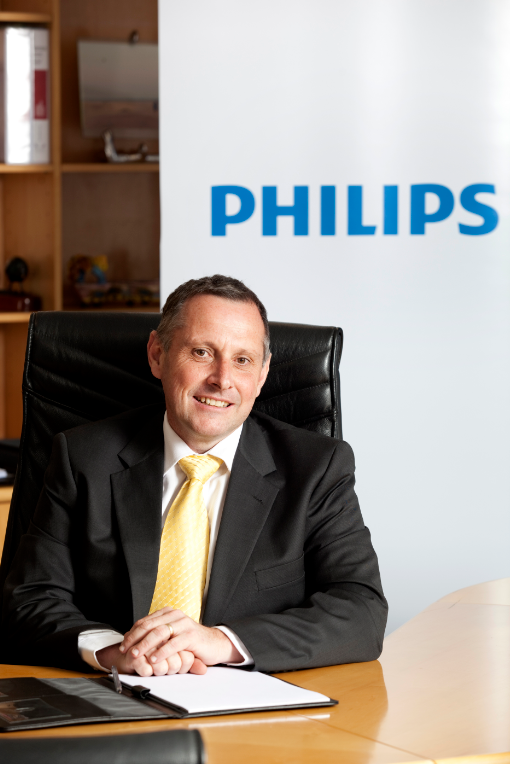
JJ van Dongen, Senior Vice President & CEO Philips Africa
JJ van Dongen, Senior Vice President & CEO Philips Africa states: “Philips is passionate to invent, apply technology and partner to help people succeed. Our ambition is to create impactful innovations that matter to people and address the key challenges that confront society. With Kenya as a leader in the continent in science and entrepreneurship as well as a hub of collaboration on technology and innovation, Nairobi, is the ideal location to establish Philips’ African research presence. We want to tap into the city’s vibrant R&D eco-system and contribute to the process of co-creating new solutions, new business models and meaningful partnerships to provide innovations that make an impact.”
Enhancing people’s lives in Africa though meaningful innovations
Some innovations that Philips was already working on have now become part of the Innovation Hub, hence, the PhilipsAfrica Innovation Hub will kick-off with ventures that are under development as well as in the pilot phase; these include:
Respiratory rate monitor to support pneumonia diagnosis: Pneumonia is the leading cause of death among children under the age of five, resulting in 1.1 million deaths worldwide annually (1). Of these, 99% of deaths occur in developing countries in low-resource settings, which typically entail rural areas with very limited or poor healthcare facilities or with low-skilled health workers. The current diagnostic tools in such settings are not easy to use, can easily distract the workers from an accurate conclusion, and thus lead to a poor diagnosis.
The Innovation hub is working on the development and clinical testing of a robust and affordable Automated Respiratory Rate Monitor that aims to support the diagnosis of pneumonia among infants and children, using smart sensing technology on the body which is intended to be more accurate and reliable compared to manual processes being currently observed. This device will be specially designed for use by community health workers and nurses in rural areas. In Kenya, discussions are on with the Kenya Medical Research Institute (KEMRI) to further develop this project and co-create an effective solution tailored to circumstances in rural Africa.
Community care services: The development and testing of a work-flow innovation designed to reduce the number of avoidable maternal and child deaths. The purpose of the workflow is to enable remote area health centers to diagnose, triage, treat, stabilize and (prepare for) transport expectant mothers that come in for a check-up and treatment.
Smokeless cook stove: Philips has designed and is manufacturing this innovative stove to improve the lives of those who rely on wood or biomass for their daily cooking. These specially designed stoves are extremely efficient and significantly reduce the use of wood as fuel. The cook stove can reduce smoke and carbon monoxide emissions by more than 90% compared to an open fire (2) thus reducing the health risks of indoor cooking. The contribution of the innovation hub is to create new go-to-market models for these stoves.
Consumer solar solutions: Today an estimated 560 million Africans live without electricity; Philips is committed to improving access to lighting in Africa, for the majority of the population that lives in off-grid communities. The Innovation hub is designing and developing new consumer products using the combination of solar power and energy efficient LED technology. New go-to-market models are also being established to ensure these solutions become accessible to people that would not be able to afford them otherwise.
The Philips Africa Innovation Hub while headquartered in Kenya, will be responsible for pan-African research and projects and will have operations across Africa, linked to the Philips regional offices across the continent; the hub will be headed by Dr. Maarten van Herpen and will work in close collaboration with the Philips research labs in Bangalore, Shanghai and Eindhoven.
(2) Reference source: Water boiling test version 4.2.2 done at accredited stove laboratory, Aprovecho Research Center (http://www.aprovecho.org/lab/index.php), Oregon, USA.
Facebook is in negotiations to buy a drone manufacturer with the aim of using high-altitude autonomous aircraft to beam internet connections to isolated communities in Africa.
The social networking company is one of the main backers of the internet.org project, which aims to connect the large parts of the world that remain offline.
Only 2.7billion people – just over one-third of the world’s population – have access to the internet, according to Facebook. Other project backers include Ericsson, MediaTek, Nokia, Opera, Qualcomm and Samsung.
TechCrunch reports that Facebook intends to buy the maker of advanced solar-powered drones that can remain in the air for up to five years at a time.
Titan Aerospace’s drones fly at up to 20000m, effectively operating as satellites, with far lower operating costs, which the company calls “atmospheric parking”. The Solara models can carry up to 100kg of equipment.
TechCrunch says Facebook plans 11000 drones for blanket internet coverage to places with patchy or nonexistent connections.
Neither Facebook nor Titan Aerospace would comment.
The project would be in direct competition with Google’s Project Loon, which envisages 30 balloons in the stratosphere using varying wind currents at different altitudes to remain in a geostationary position.
Secretary of State John Kerry on Wednesday sounded like the Zampolit for Africa when he likened new anti-gay legislation in Uganda that imposes harsh penalties for homosexuality to anti-Semitic laws in Nazi Germany or apartheid South Africa.
The Zampolit is the Communist political commissar charged with taking “active measures” to ensure thought control. The politruk (Russian term) committed to the civilian control of the military, appeared during the October Revolution. Political commissars were part of the the Red Army that remained in the Soviet Army.
The United States spends millions on military training in Uganda.
“You could change the focus of this legislation to black or Jewish and you could be in 1930s Germany or you could be in 1950s-1960s apartheid South Africa,” Kerry told a group of reporters. “It was wrong there egregiously in both places and it is wrong here,” he added.
Strangely, Kerry forgot to mention that racial segregation in the US, lasted well beyond the 1960’s to the 1970’s.
Most Americans believe segregation leads to negative outcomes across American communities with higher rates of violent crimes, and lower levels of wellbeing. Across American communities, some argue, segregation is a key determinant of inequality.
Bankrupt black cities in the US like Detroit have borne this out. Clearly racial mixing and desegregation have thus been promoted to disguise black crime rates in the country.
The American experiment in South Africa is a complete disaster, however. Crime rates have soared since the ANC took over in 1994 with the assistance of Britain and the US.
Kerry said the legislation signed by President Yoweri Museveni on Monday was “atrocious” and expressed concern at mounting discrimination against gays in 78 countries around the world.
Discrimination against gays dim in comparison to child rape and farm murders in South Africa, despite efforts by certain foreign-funded NGO’s and the SAPS to camouflage the scourges. The American Secretary of State either is not aware of this, or does not care.
Homosexuality is a taboo in almost all African countries and illegal in 37, including in Uganda where it has been criminalized since British colonial rule by popular demand.
Yet Kerry denied that it was an “African problem”. “This anti-gay movement is obviously bubbling up in various places around the world; it is not just an African problem, it’s a global problem, and we are wrestling with it and we are going to as we go forward.”
The term “going foward” is a much used expression of the Zampolit.
Uganda launched a public awareness campaign earlier that led to a sharp reduction in the AIDS rate.
“What is happening in Uganda is atrocious and it presents all of us with an enormous challenge because LGBT rights are human rights and the signing of this anti-homosexuality law is flat out morally wrong,” Kerry said.
The State Department’s annual global human rights report will highlight the issue when it is released on Thursday and Kerry said a gathering of U.S. ambassadors in Washington would discuss ways to deal with rising prejudice against homosexuals.
The gay theme is very popular amongst Anglo-American elites. A former French prime minister Edith Cresson suggested that one in four British men may be gay.
“It’s a question of education, and I consider it something of a weakness,” Cresson said at the time.
She passed similarly harsh judgments on American and German men.
The World Bank plans to launch in July a $1 billion plan to map Africa‘s natural resources with the aim of delineating more clearly the continent’s uncovered mineral wealth.
The project, dubbed the Billion Trillion Dollar Map, “will unlock the true worth of Africa’s mineral endowment,” Tom Butler, mining specialist at the Bank’s private finance arm, the International Finance Corp, said yesterday.
Speaking in Cape Town, South Africa, Butler said most of Africa’s subsoil resources have not been surveyed.
Doing so, in a public way, would be useful to policy makers, investors and the public, helping to boost development, he said, according to prepared remarks.
“There is yet an enormous amount of wealth left to discover,” he said.
“Coupled with in-country training and institutional support, and the work of exploration companies, this initiative will unlock the true worth of Africa’s mineral endowment.”
The World Bank , which calls accessible data on resources a “public good”, said it has already invested over $200 million in developing geological data for Africa over the past 10 years.
Currently, it is supporting a comprehensive airborne geological survey of the entire country of Malawi.
The World Bank will be using satellites and airborne surveys to fill geological gaps across the continent where a lack of adequate data hampers mining investments.
Mining companies and governments from sub-Saharan Africa who have expressed interest, a senior bank official told Reuters on Wednesday.
“Times are tough, so the mining companies are counting their pennies, but there is a lot of interest because it is exactly when commodity prices are low and the companies are reducing their investment budgets that having the information to guide their priorities is valuable,” said Paulo de Sa, senior manager at the World Bank’s mining unit.
De Sa met with 10 mining companies on the sidelines of an African mining conference, including Rio Tinto and Ivanhoe Mines, who were interested in the fund.
Initially targeting southern and eastern Africa, De Sa said the fund would aim to collate existing data onto a single, digital platform that would be accessible to the public.
Besides helping to guide exploration investment, African governments could benefit by being able to negotiate better deals when handing concessions to mining companies, he said.
“If they know what they have in their territory, they are in a better position to fine-tune and calibrate the fiscal regime and mining laws,” De Sa said.
When Mozambique, for example, privatised its giant Moatize coal mine, it did not know the true potential of the coal basin until Brazilian miner Vale started exploration work.
De Sa said the bank, which has received expressions of interest from Malawi and Mozambique to assist with geological mapping, hoped to identify copper prospectivity in Zambia, Africa’s top producer of the metal.
“There is a lot more copper in Zambia than what is known, so we hope to identify the areas with more prospectivity and then the government will be able to attract more investment to areas because they know there will be a lot more certainty, a lot less risk,” he said.
The data could also be used by governments when planning infrastructure development or water resource allocations.
De Sa said the mapping fund hoped to unearth up to $1 trillion worth of new mineral resources on the continent.
Sweden’s SOF (or Special Operations Forces) are reported to have deployed to Chad, the Central Africa Republic, and the Congo in recent years.
Swedish operators may have also conducted other classified covert operations, including domestically in their home nation, which have gone unreported thus far. SOG (Swedish Operation Group) is reported to have a small number of women in the unit, or attached to it, who work in intelligence roles.
Partnered with indigenous forces, SOG has conducted dozens, if not hundreds, of raids in Afghanistan.
SOG also appears to be a part of Admiral McRaven’s “Global SOF framework,” now called the ISCC under SOCOM. This is a new and unique organization that represents a positive step forward for US and Allied SOF.
“Sweden has two full-time officers in the NATO special forces team in Belgium and another tied to the new U.S. special forces management’s international staff, which opened in October in Florida. The latter is confirmed by Defence Minister Karin Enstrom (M) , who visited headquarters last summer…The U.S. is building a global network of special units that can work together. When the international headquarters opened in October last year included ten countries , Sweden and Australia are the only ones who are not members of NATO.” (Dn.se)
What the future holds for Sweden’s SOG, and for the new Global SOF network, is something that we will be keeping an eye on.
Julia Duncan Cassell, Liberia’s Minister of Gender and Development
The Liberian president, Ellen Johnson Shireaf, has appeared on Liberian television on Monday to denounce the country’s epidemic of child rape, calling it one of Liberia’s “biggest challenges” and “a growing concern”.
“It is shameful that this continues to mar the image of our country,” Sirleaf said.
She said current legislation was undermined by “families of victims who are easily compromised, by the lack of evidence, and by sympathetic judges” and called on communities to do more to bring rapists to justice.
“I chaired a meeting of women leaders… who are working on a program that will call on religious, traditional and community leaders, parents, teachers, women and youth groups to become agents of change and commit to take action to prevent sexual violence, as this is everyone’s responsibility,” she said.
“We need your support also, to ensure that our children and our women are safe.”
According to Liberia’s Gender Ministry, ” 65 percent of the 1,002 cases reported in 2013 concerned victims aged between three and 14, yet just 137 cases came to court with only 49 rapists convicted”. In a statement to journalists, the Gender Ministry also said: “As a result of rape 10 children from eight counties between the ages of three and 14 died during the year 2013. In some of the cases the perpetrators are still at large.”
The Gender Ministry deplored the habit of families to coverr up the rape if the attacker is related to the victim. There was also a lack of qualified medical personnel.
“Parents are compromising the cases because mostly the perpetrators are relatives or friends. We can say that the figure could be at least three times this if parents were not compromising,” the ministry said.
However, many people eschew the Western-style court and medical system and prefer “mediation by community elders or village chiefs”.
The website Global Post reported on a recent case, unbeknown to most of the outside world, whereby a 14-year-old girl Olivia Zinnah was buried here on 22 December, “after suffering years of pain and surgeries following a rape when she was 7”.
Olivia Zinnah
Although the country’s Gender Ministry made efforts to draw attention to Zinnah’s death, her passing went unremarked but for a few stories in local media. Zinnah, who died of an infection in a Monrovia hospital a week before Christmas, was the fourth girl this year to succumb to rape-related injuries in this West African nation of four million, the ministry said.
For three years after her 2005 violation in a rural area outside Monrovia, Zinnah received only traditional healing, which can include herbs and sorcery. She was not taken to a doctor. Police were not called. When her uncle Lawrence Samuel came to visit the family in 2008, he was shocked to see Olivia in a terrible state, with poorly treated wounds and a systemic infection.
“She was almost decomposed from the infection,” said Samuel, 70.
Samuel asked women in the family what had happened and they told him Olivia had been raped by a family member, he said. Samuel reported the crime and named the suspect to the police, brought his niece to Monrovia for medical care, and contacted the Ministry of Gender, he said.
Ministry officials took on Olivia’s case, paying for her medical treatment and four surgeries, the last of which left her with a colostomy bag.
“We did everything we could to save her,” said Gender Minister Julia Duncan Cassell.
Doctors Without Borders (DWB) in 2011 reported that 92 percent of females treated for rape in its Liberia facilities were under 18. A DWB study published in November said that of about 1,500 females treated in Monrovia clinics in 2008 and 2009 after rape, four out of 10 were younger than 12 and one in 10 were younger than 5. “Half the survivors were children aged 13 years or younger and included infants and toddlers,” the report said.
Because sexual violence so often goes unreported, it’s impossible to know the true scale of the child-rape problem here. In many cases, families of raped children accept money from the rapist to hush up the crime, Cassell said. In Olivia’s case, it does not appear her family accepted any money, but once the girl’s uncle reported the crime, the rest of the family shunned both Olivia and her mother, Cassell said. That common social penalty imposed on those who break silence around rape cases combines with the payoffs to deter reporting and foster impunity for rapists, the minister said.
“There are a lot of other Olivias out there that we don’t know about,” Cassell said.
Deputy Gender Minister Annette Kiawu played a central role in the ministry’s intervention in Olivia’s case.
“For her it was difficult,” Kiawu said. “She always had an urge to want to play like the other children. You would see her once in a while laughing, or trying to jump around. She used to smile every now and then.”
Although linkages have been drawn between widespread sexual violence during Liberia’s 14 years of civil war and the current levels of sexual violence, Cassell said the causes of Liberia’s epidemic child rape go beyond the fallout from conflict that ended a decade ago. Poverty leads to the settlements and thus to impunity; poor education leads to a lack of understanding among males of the physical and emotional damage caused by rape; high rates of teen pregnancy lead to lots of mothers unequipped to secure girls from predators, Cassell said.
“You’ve got a 16-year-old girl with two children already,” Cassell said. “How does she know how to protect her children?”
The alleged perpetrator of Olivia’s rape was arrested, but released without prosecution. Gender ministry officials are investigating to determine why he went free, and plan to get the case reopened. “He needs to pay for that,” Cassell said.
Her ministry paid for Olivia’s funeral, and ministry officials were on hand to discuss the case with a handful of local media, part of Cassell’s effort to bring attention onto the child-rape issue, and build awareness among the populace about the need to prevent and report sexual violence. So far, there’s been no significant public reaction to the death of Olivia here or abroad. – News agencies and Global Post website
The former Navy Seal Erik Prince who founded the private security group Blackwater is pitching to run logistics for Chinese mining and energy companies in Africa. Blackwater became controversial for its role providing private security in Iraq.
Prince is now chairman of Hong Kong-listed Frontier Services Group, which is backed by Citic Group, the Chinese state-owned investment company, and Hong Kong entreprenuer, Johnson Ko Chun Shun.
He remains the largest individual shareholder having sold an east African aviation start-up company he owned to what was essentially a shell company.
China builds schools, hospitals and railways as a quid pro quo for getting access to raw materials without interfering in local politics and is expected to invest up to $1tn over the next decade in Africa.
This comes on top of the billions it has put in to finance mines, power plants and other infrastructure, which have helped it generate trade of $185bn with the continent.
Defending Blackwater’s record, Prince said its tactics were sanctioned by the US government and that ultimately it was made a political scapegoat for wider errors in an unpopular war.
“Nearly being killed in a plane incident about a year and a half ago as we were up looking at a mine site in Burkina Faso, I thought if this is the best that is available here and [people] are going to spend a lot of money building a mine, there’s got to be a better way than this,” he told beyondbrics.
The incident in question was an accident rather than an attack of some kind and Prince plays down the security aspect of the new company. “When you look at the spend of a $3bn mine, think of the costs of logistics in that – our ability to compress some of those costs for our customers and still make very good money in the process, that’s what we’re about.”
His aim is to build a multi-billion dollar “austere logisitics” company, with aviation to transport people, goods and equipment under either scheduled or emergency conditions and to conduct surveillance.
The Chinese, investing heavily in Africa to secure its oil and other raw materials for their expanding economy, are spearheading a new era of railroad building to unlock the continent’s interior.
This is an echo of the long-gone colonial empires when a century ago British and French engineers first opened up Africa to plunder its riches.
The railroad frenzy is being accompanied by a massive push to build several major ports along the coast of East Africa to accelerate exports across the Indian Ocean, mostly to China, India and Japan, as well as lay down a network of oil and gas pipelines to these ports.
“Railways are key to increasing regional trade,” said Darlan Fabio de David, chief executive of Rift Valley Railways, a private equity-backed company rehabilitating the line between the Kenyan port of Mombasa and the inland Ugandan capital of Uganda that was built by the British between 1896 and 1901.
Kenya, which has found oil, is a key link in all this because it lies on the Indian Ocean. There are plans to build a huge deepwater port at Lamu which would act as a rail and pipeline hub for regional exports.
Further north, landlocked Ethiopia is another. It has no ports, but it has long been a pivotal economic player in the region, funneling goods from inland Africa to the continent’s ports through its rail lines.
Extending that network would stimulate economic activity further inland and export trade via the Red Sea port of Djibouti in the Horn of Africa.
In Tanzania, which with neighboring Mozambique is on the cusp of a major offshore gas boom, the main port of Dar es Salaam, the capital, could greatly enhance its importance as the main export center for copper and cobalt from Zambia and the Democratic Republic of Congo.
Congo’s mineral-rich, and war-ravaged, Katanga province produces 580,000 metric tons of copper a year and about 60,000 metric tons of cobalt. Zambia produces 6,750,000 tons of copper annually.
Between them they account for 7 percent of the world’s copper output and roughly half the planet’s cobalt.
New rail lines, replacing the costly road system currently in use, would cut transportation costs. Hauling these products to the east coast rather than southward via Durban in South Africa would allow the DRC and Zambia to export larger volumes of minerals.
The Chinese have been making massive investments in Africa over the last decade in return for access to the continent’s mineral riches.
The recent oil and gas discoveries in East Africa, ideally located for direct shipment eastward across the Indian Ocean, and the prospect of more to come have accelerated Chinese investment in streamlining transportation systems to the planned megaports.
On Nov. 28, the presidents of Kenya, Uganda, Rwanda and the fledgling state of South Sudan conducted the groundbreaking of Kenya’s $4 billion Mombasa-Nairobi line, financed by the Export-Import Bank of China, which will run parallel to the existing colonial-era line.
“The project will define my legacy as president of Kenya,” declared Uhuru Kenyatta.
The first section will link the Kenyan port of Mombasa to the capital, Nairobi, reducing the journey time from 15 hours to about four.
It is said to be the country’s biggest infrastructure project since independence 50 years ago.
The cost of the railway will be $5.2bn (£3.2bn) – mostly funded by China.
Some Kenyans have complained that the contract was given to the Chinese state-owned China Road and Bridge Corporation (CRBC) without going to tender.
Kenyan President Uhuru Kenyatta and his Chinese counterpart Xi Jinping agreed the deal in August in Beijing.
There are now almost 1 million Chinese living in Africa. A decade ago, there only a few thousand.
China’s new president, Xi Jinping, visited Tanzania and the DRC in the summer, his first major foreign tour, underlining Africa’s importance in China’s economic strategy.
China recently overtook the United States as the world’s largest importer of oil. Almost 80 percent of Chinese imports from Africa are mineral products.
China is the continent’s leading business partner, with trade — which tripled over the last decades — exceeding $166 billion. That’s expected to soar over the next 10 years when the new railroads, pipelines and ports kick in.
Direct investment — usually building airports, highways, schools, factories and railroads — is more difficult to quantify because much of Beijing’s funding goes through tax shelters. But China’s ambassador to South Africa recently said it “exceeds $40 billion.”
Another major project is rehabilitating the rail link between Addis Ababa, Ethiopia’s capital, and the port of Djibouti, a tiny former colony of France on the Red Sea, which links the Mediterranean with the Indian Ocean.
The 475-mile, $3 billion line is being built largely by Chinese companies, as is the Mombasa-Nairobi track. China will also provide most of the locomotives and rolling stock. – UPI/BBC
This website uses cookies to improve your experience. We'll assume you're ok with this, but you can opt-out if you wish. Cookie settingsACCEPT
Privacy & Cookies Policy
Privacy Overview
This website uses cookies to improve your experience while you navigate through the website. Out of these cookies, the cookies that are categorized as necessary are stored on your browser as they are essential for the working of basic functionalities of the website. We also use third-party cookies that help us analyze and understand how you use this website. These cookies will be stored in your browser only with your consent. You also have the option to opt-out of these cookies. But opting out of some of these cookies may have an effect on your browsing experience.
Necessary cookies are absolutely essential for the website to function properly. This category only includes cookies that ensures basic functionalities and security features of the website. These cookies do not store any personal information.
Any cookies that may not be particularly necessary for the website to function and is used specifically to collect user personal data via analytics, ads, other embedded contents are termed as non-necessary cookies. It is mandatory to procure user consent prior to running these cookies on your website.