A federal appeals court on Wednesday ruled that three major companies cannot be held liable in the United States for crimes South Africa’s former apartheid government committed, saying a recent US Supreme Court decision “plainly bars” such lawsuits.
The plaintiffs brought their suits under the Alien Tort Statute (ATS), a law passed in 1789 that allowed non-US citizens to bring cases in US federal courts for violations of international law, such as piracy. In recent decades it took on renewed importance, employed to allow non-US citizens to sue for alleged human rights violations abroad.
But a recent Supreme Court decision found that “federal courts may not, under the ATS, recognize common-law causes of action for conduct occurring in the territory of another sovereign,” Circuit Judge Jose Cabranes wrote in the unanimous decision.
In April, the Supreme Court unanimously ruled that a federal court in New York could not hear claims by 12 Nigerians who accused Anglo-Dutch oil company Royal Dutch Shell Plc of complicity in a violent crackdown on protestors in Nigeria from 1992 to 1995. The case, Kiobel v. Royal Dutch Petroleum Co, was seen as a major victory for multinational corporations.
The appeals court ruling on Wednesday could mark the end for plaintiffs in the long-running case, who accused Daimler AG , Ford Motor Company and International Business Machines Corp of facilitating decades of race-based crimes such as torture and extrajudicial killings because their South African subsidiaries sold products to it.
The automakers knew their vehicles were being used by South African forces to violently suppress protesters, while IBM knew its computers were being used to help strip black citizens of their rights, plaintiffs said.
The defendant companies can now request that the case be dismissed in district court, the ruling said. Attorneys for the plaintiffs and representatives of the defendant companies were not immediately available. Apartheid ended in 1994 when South Africa held its first all-race elections, bringing Nelson Mandela and the African National Congress to power.
More than 50 major corporations were initially sued in 2002, but the complaints were later amended to target fewer companies. Supporters of the lawsuits included South African Archbishop Desmond Tutu, a recipient of the Nobel Peace Prize. – Sapa/AP
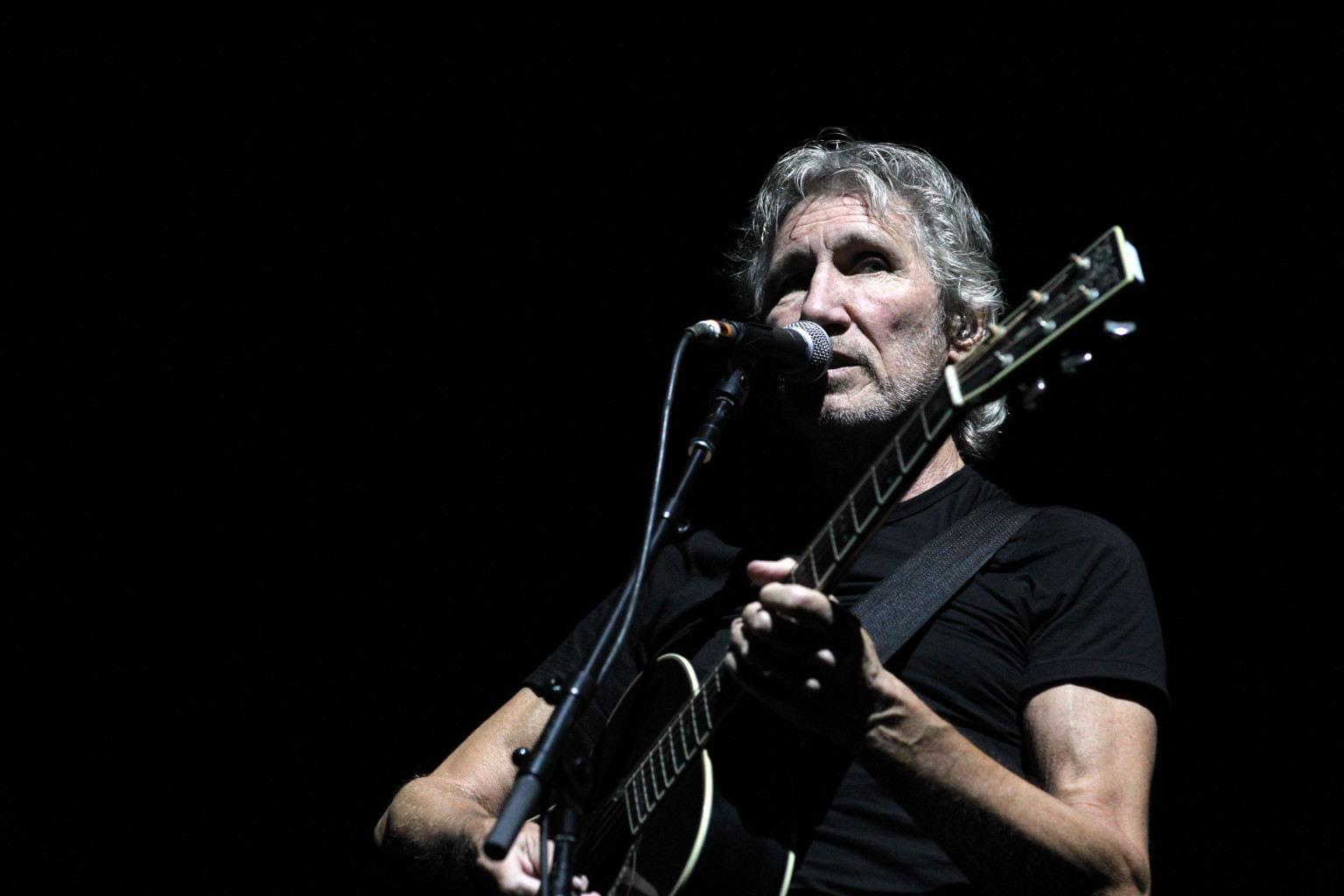
Ex-Pink Floyd musician Roger Waters during a concert
In an impassioned and hard-hitting open letter to fellow “Rock and Roll” musicians, Roger Waters (frontman and lead guitarist of world-famous rock band, PinkFloyd) has invited and called-on his peers to join the boycott, divestment and sanctions (BDS) against Israel campaign (see the full letter underneath). In a letter issued from Warsaw (Poland) earlier this morning, Waters writes:
“To cut to the chase, Israel has been found guilty – independently – by international human rights organizations, UN officials, and the International Court of Justice, of serious breaches of international law. These include, and I will name only two “the Crime of Apartheid” [and] the Crime of Ethnic Cleansing…[I]t falls to civil society and conscientious citizens of the world, to dust off our consciences, shoulder our responsibilities, and act. I write to you now, my brothers and sisters in the family of Rock and Roll, to ask you to join with me, and thousands of other artists around the world, to declare a cultural boycott on Israel.”
Waters explains in his open letter that there are two recent events that have prompted his letter, one of which was the December 2012 cancellation by Stevie Wonder of a headline performance at a benefit dinner for the Israeli Defence Force. Water adds that he, together with Archbishop Desmond Tutu, “wrote to Stevie [Wonder] to try to persuade him to cancel. My letter ran along these lines, ‘Would you have felt OK performing at the Policeman’s Ball in Johannesburg the night after the Sharpeville massacre in 1960?'”
Roger Waters (60) is an English musician, singer, songwriter and composer best known for his role in world famous rock-band, Pink Floyd. Waters served as bassist, co-lead vocalist, lyricist, principal songwriter and conceptual leader of the band. Pink Floyd subsequently achieved international success with the concept albums “The Dark Side of the Moon”, “Wish You Were Here”, “Animals”, “The Wall” and “The Final Cut”. Pink Floyd has sold more than 250 million albums worldwide, including 74.5 million units sold in the United States as of 2013.
In his open letter from this morning to rock and roll musicians, Waters also challenges mainstream media and specifically criticizes the USA media, stating that: “The clear inference would be that the media in the USA is not interested in the predicament of the Palestinian people, or for that matter the predicament of the Israeli people. We can only hope they may become interested as they eventually did in the politics of apartheid South Africa.”
The open letter by Roger Waters ends with reference to the former Apartheid regime in South Africa, the 1980s international boycott of South Africa movement and specific mention of the African National Congress’ (ANC) recent Mangaung boycott of Israel resolution:
“Back in the days of Apartheid South Africa at first it was a trickle of artists that refused to play there..then it became a stream, then ariver then a torrent and then a flood. (Remember Steve van Zant, Bruce and all the others? “We will not Play in Sun City?”)…The sports community joined the battle, no one would go and play cricket or rugby in South Africa, and eventually the political community joined in as well. We all as a global, musical, sporting and political community raised our voices as one and the apartheid regime in South Africa fell…Maybe we are at the tipping point now with Israel and Palestine. These are good people both and they deserve a just solution to their predicament. Each and every one of them deserves freedom, justice and equal rights. Just recently the ANC [African National Congress], the ruling party of South Africa, has endorsed BDS. We are nearly there. Please join me and all our brothers and sisters in global civil society in proclaiming our rejection of Apartheid in Israel and occupied Palestine, by pledging not to perform or exhibit in Israel or accept any award or funding from any institution linked to the government of Israel, until such time as Israel complies with international law and universal principles of human rights.”
Background
With Israeli discrimination, human rights abuses, violations of International Law and illegal settlement construction on the increase, Palestinians, inspired by the successful boycott and isolation of Apartheid South Africa, called on the international community in 2005 to play a decisive role in their struggle for self-determination and an end to Israel’s Apartheid policies. Palestinians called on global civil society, artists and multi national corporations to impose a program of boycott, divestment and sanctions (BDS) against Israel. The Palestinians laid out three demands that Israel needs to respect for the boycott to be called-off. Firstly, an end to the illegal Israeli Occupation. Secondly, allowing Palestinian refugees to return to their homes. And, thirdly, for Israel to ensure full equality for Palestinian citizens living inside Israel (see:www.bdsmovement.net/bdsintro). Activists maintain that the BDS campaign is not a malicious, blunt or punitive one which is out to punish Israelis but rather it is a practical, non-violent, goal-orientated and focused campaign that is uncompromisingly entrenched in international law and human rights – and also one that is increasingly supported by (progressive) Israelis themselves. Just some of the artists and intellectuals who have publicly lent their support and respected the boycott in recent years include: award-winning musician, Stevie Wonder; Jazz artist, Cassandra Wilson; Maxi Jazz of the UK band, Faithless; musician, Elvis Costello; Pultizer-prize winning author, Alice Walker; intellectual, Stephen Hawking and most recently, the film director, Mira Nair.
BDS South Africa warmly salutes Roger Waters for his principled position. His open letter is sure to go down in history as a turning point in the boycott of Israel campaign and the larger movement for a free Palestine.
Issued by Muhammed Desai on behalf of BDS South Africa
Roger Waters’s letter
To My Colleagues in Rock and Roll
Nigel Kennedy the virtuoso British violinist and violist, at The Recent Promenade Concerts at The Albert Hall in London, mentioned that Israel is apartheid. Nothing unusual there you might think, then one Baroness Deech, (Nee Fraenkel) disputed the fact that Israel is an apartheid state and prevailed upon the BBC to censor Kennedy’s performance by removing his statement. Baroness Deech produced not one shred of evidence to support her claim and yet the BBC, non political, supposedly, acting solely on Baroness Deech’s say so, suddenly went all 1984 on us. Well!! Time to stick my head above the parapet again, alongside my brother, Nigel Kennedy, where it belongs. And by the way, Nigel, great respect man. So here follows a letter last re-drafted in July.
To My Colleagues in Rock and Roll.
In the wake of the tragic shooting to death of un-armed teenager Trayvon Martin and the acquittal of his killer Zimmerman, yesterday, Stevie Wonder spoke at a gig declaring that he will not perform in the State of Florida until that State repeals its “Stand your ground” Law. In effect he has declared a boycott on grounds of conscience. I applaud his position, and stand with him, it has brought back to me a statement I made in a letter I wrote last February 14th, to which I have referred but have never published.
The time has come, so here it is.
This letter has been simmering on the back burner of my conscience and consciousness for some time.
It is seven years since I joined BDS (Boycott, Divestment and Sanctions) a non violent movement to oppose Israel’s occupation of the West Bank and violations of international law and Palestinian human rights. The aim of BDS is to bring international attention to these Israeli policies, and hopefully, to help bring them to an end. All the people of the region deserve better than this.
To cut to the chase, Israel has been found guilty, independently, by international human rights organizations, UN officials, and the International Court of Justice, of serious breaches of international law. These include, and I will name only two;
1.The Crime of Apartheid:
The systematic oppression of one ethnic group by another.
On 9 March 2012, for instance, the UN Committee on the Elimination of Racial Discrimination called[1] on Israel to end its racist policies and laws that contravene the prohibition against racial segregation and apartheid.
2.The Crime of Ethnic Cleansing:
The forcible removable of indigenous peoples from their rightful land in order to settle an occupying population. For example, in East Jerusalem non Jewish families are routinely physically evicted from their homes to make way for Jewish occupants.
There are others.
Given the inability or unwillingness of our governments, or the United Nations Security Council to put pressure on Israel to cease these violations, and make reparations to the victims, it falls to civil society and conscientious citizens of the world, to dust off our consciences, shoulder our responsibilities, and act. I write to you now, my brothers and sisters in the family of Rock and Roll, to ask you to join with me, and thousands of other artists around the world, to declare a cultural boycott on Israel, to shed light on these problems and also to support all our brothers and sisters in Palestine and Israel who are struggling to end all forms of Israeli oppression and who wish to live in peace, justice, equality and freedom.
I am writing to you all now because of two recent events.
1. Stevie Wonder.
Word came to me, the first week of last December that Stevie Wonder had been booked to headline at a gala dinner for the Friends of The Israeli Defend Force in LA on 6th December 2012. An event to raise money for the Israeli armed forces, as if the $4,3,000,000,000 that we the US tax payers give them each year were not enough? This came right after The Israeli defence Force had concluded yet another war on Gaza, (Operation Pillar of Defence), according to human rights watch, committing war crimes against the besieged 1.6 million Palestinians there.
Anyway, I wrote to Stevie to try to persuade him to cancel. My letter ran along these lines, “Would you have felt OK performing at the Policeman’s Ball in Johannesburg the night after the Sharpeville massacre in 1960 or in Birmingham Alabama, to raise money for the Law Enforcement officers, who clubbed, tear gassed and water cannoned those children trying to integrate in 1963?”
Archbishop Desmond Tutu also wrote an impassioned plea to Stevie, and 3,000 others appended their names to a change.org petition. Stevie, to his great credit, cancelled!
2. Earlier that week I delivered a speech at The United Nations. If you are interested you can find this speech on you tube. The interesting thing about these two stories is that there was NOT ONE mention of either story in the mainstream media in the United States.
The clear inference would be that the media in the USA is not interested in the predicament of the Palestinian people, or for that matter the predicament of the Israeli people. We can only hope they may become interested as they eventually did in the politics of apartheid South Africa.
Back in the days of Apartheid South Africa at first it was a trickle of artists that refused to play there, a trickle, that exercised a cultural boycott, then it became a stream, then a river then a torrent and then a flood. (Remember Steve van Zant, Bruce and all the others? “We will not Play in Sun City?”) Why? Because, like the UN and the International Courts of Justice they understood that Apartheid is wrong.
The sports community joined the battle, no one would go and play cricket or rugby in South Africa, and eventually the political community joined in as well. We all as a global, musical, sporting and political community raised our voices as one and the apartheid regime in South Africa fell.
Maybe we are at the tipping point now with Israel and Palestine. These are good people both and they deserve a just solution to their predicament. Each and every one of them deserves freedom, justice and equal rights. Just recently the ANC, the ruling party of South Africa, has endorsed BDS. We are nearly there. Please join me and all our brothers and sisters in global civil society in proclaiming our rejection of Apartheid in Israel and occupied Palestine, by pledging not to perform or exhibit in Israel or accept any award or funding from any institution linked to the government of Israel, until such time as Israel complies with international law and universal principles of human rights.
The African National Congress has broken the affirmative action deal it reached with the National Party in 1994, apartheid era foreign minister Pik Botha reportedly said.
According to a Fin24 report Botha said that Affirmative Action in its current guise was not what the two parties agreed upon.
The former minister said that the intention during the negotiations was to rectify the injustices of the apartheid era. Botha though said that had the ANC insisted on including the current Employment Equity Act in the Constitution at the time, then having a new constitutional dispensation would have been impossible.
“Discrimination against white young people, who had nothing to do with apartheid, was definitely not part of the agreement between the NP and the ANC. Neither, generally, was discrimination against whites, coloureds or Indians,” Botha was quoted as saying by Fin24.
“The boomerang effect of the Employment Equity Act is that masses of black people are still untrained and unemployed and that the country’s economic progress is severely hampered by a shortage of skills. This affects millions more blacks than whites,” Botha added.
Botha opined that fundamental talks between leaders of all races was needed to “agree on the road ahead”. – iAfrica.com
The BBC is due to cut comments made by violinist Nigel Kennedy about “apartheid” in Israel when it broadcasts his concert, performed with Palestinian artists as part of the Proms musical festival, on British television channels next week.
The concert, held at London’s Royal Albert Hall last week, featured 17 musicians from the Palestine Strings, the troupe performed Vivaldi’s Four Seasons alongside Kennedy.
Kennedy likened the situation in Israel to apartheid in South Africa.
“Ladies and gentlemen, it’s a bit facile to say it but we all know from experiencing this night of music tonight that giving equality and getting rid of apartheid means there’s a chance for amazing things to happen,” said Kennedy.
The decision to cut Kennedy’s comment was made due to “editorial reasons,” they removed because of “the way it fitted in with the program, ” a BBC spokesperson told Al Arabiya English.
“Nigel’s comment to the audience at his late-night prom on August 8 will not be included in the deferred BBC 4 broadcast on August 23 because it does not fall within the editorial remit of the proms as a classical music festival.”
Kennedy has previously refused to play concerts in Israel, but has participated in the Palestinian-run Jerusalem Festival in East Jerusalem.
In 2007 he told the Israeli newspaper Haaretz: “It’s no coincidence. I became aware of the Palestinian story while I was a student in New York. My girlfriend then was Palestinian, and, through her, I began to familiarize myself with and understand the problem even before the [separation] wall and the other atrocities.
“She had to return home every year or she would lose her citizenship, and, like it was for all of us students, that wasn’t exactly her thing. Then I understood that it was simply a way to harass the Palestinians and prevent them from studying,” he added.
Kennedy dedicated his performance at the Proms to Palestinians, according to his introduction.
“The concert tonight is very emotional, because I am performing for people who are imprisoned, to give them two hours of fun and show them that the world has not forgotten about them,” he said.
Dressed in popular Palestinian garments, the players from the Palestinian orchestra played a specially-curated fusion of classical work with Arab and folk music alongside the celebrated violinist. – Al Arabiya
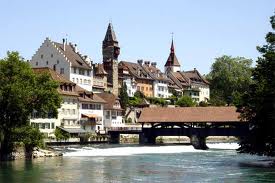
A town in Switzerland is being likened to apartheid-era South Africa, after the local mayor drew up plans to ban asylum-seekers from some public places.
A new centre to house migrants has been opened in Bremgarten, 20 kilometres west of Zurich.
The proposals would see the newcomers kept away from a sports centre, the swimming pool and areas around schools, in order to preserve the peace in the town of 6,500 residents, according to the mayor, Raymond Tellenbach.
“We wanted these restrictions in order to prevent tension with residents, especially with students. It’s for their security. We want to be sure that they are not molested,” said Tellenbach.
The idea of keeping the 150 asylum-seekers living at the centre away from certain areas has drawn criticism from politicians from a wide range of parties.
“This reminds me of apartheid. This leads to two classes of citizens – those who can go everywhere and those who cannot, only because of their residence status,” said Socialist MP Silvia Schenker
Switzerland is in the racial spotlight after Oprah Winfrey accused a shop assistant in Zurich of being racist. The black American TV-star apologised later for het rant.
The American media icon, who is one of the world’s richest women, claims the shop assistant refused to show her a handbag which cost more than 26,000 euros.
The shop-owner says the incident was a misunderstanding. euronews.com
Former Anglican Arch Bishop and Nobel Peace Laureate, Desmond Tutu has told the Global Community of Growth, Innovation and Leadership forum that the painful story often told about apartheid is not an exaggeration, but it is the truth.
Tutu addressed the forum after he was presented with the 2013 Growth, Innovation and Leadership Award from Frost and Sullivan, an International company which brings together various global business executives to address their growth challenges.
The Nobel Peace Laureate told the Global executives the apartheid segregation laws even prohibited intimate relationships between Black and White South Africans.
“Police used to climb trees to peep through the windows of bedrooms and then to rush in and feel the temperature of the sheets. I mean you can only laugh but it was serious if they found a white person sleeping with a black Person. Most of those white people committed suicide.”
He told those who come from the powerful nations that they can stop the current deaths and destruction currently taking place in Egypt and Palestine. – SABC
An uprising against Afrikaans ended Bantu education
The apartheid-era Bantu education system was much better than the current education regime, a Wits academic said in Pretoria on Thursday.
“It was far better in terms of quality than the education that our kids are receiving nowadays. That is where the problem is,” Rabelani Dagada, a lecturer at Wits Business School, told a debate on affirmative action.
“Affirmative action should be about empowerment. The best way to empower is not to take from those who have and give to those who don’t have. It won’t work.”
Dagada said South Africans could only be empowered through proper education.
“After 20 years of democracy, the education levels have plunged. It’s worse than the so-called Bantu education. The best way to do transformation, empowerment is to provide quality education.”
Former foreign affairs minister Pik Botha said South Africa, under the ANC’s leadership, had moved away from former president Nelson Mandela’s principles. He said the country’s affirmative action policies were mainly hurting the black majority.
“How much further down must all of us go before we say this is enough now? Our education is far behind, it is the worst in Africa, (but) it has the highest per capita expenditure.”
Botha said Zimbabwe’s education system was better than South Africa’s.
“When is this going to change? At state hospitals black patients must wait for three years for an operation.”
Botha said when Mandela became president, he was careful not to lose skilled white people.
“He said we must not lose the proficiency of the whites. They must not leave the public service, but they should help us to train people to achieve that same proficiency,” said Botha.
The behaviour of South Africa’s police force remain largely unchanged since the apartheid era, former Constitutional Court judge Zac Yacoob said in a New Age report on Monday.
“Sadly, the police of today do not seem to be better than the police of yesterday,” said Yacoob, in reference to the Marikana tragedy.
In August last year, 44 people died during strike-related unrest at Lonmin’s Marikana operations in Rustenburg.
Thirty-four people — almost all striking mineworkers — were shot dead in a clash with police on August 16. Ten people, including two police officers, were killed in the preceding week.
Yacoob was speaking at the commemoration of the Golela Nine in Chatsworth, Durban.
Nine anti-apartheid activists, known as the Golela Nine were found dead after they were ambushed near the Swaziland border at Golela in 1988.
Yacoob had represented the families of the victims at the inquest into their death. – eNCA
Egypt’s Foreign Ministry expressed its extreme dissatisfaction with South Africa’s statement on the most recent events in Egypt.
South Africa’s Department of International Relations and Cooperation had declared its rejection for the latest events which caused former president Mohamed Morsi’s ouster and the constitution’s suspension.
These measures oppose the conventions and customs of the African Union, the department said.
South Africa’s continued claim of Morsi’s legitimacy insults millions of Egyptians’ will, the Egyptian Foreign Ministry said in a statement.
“It is sadly ironic that Egypt was among the first to defend the rights of South Africans in their fight against apartheid whereas South Africa’s current government takes a negative stance regarding the Egyptians’ attempt to rectify the course of their revolution.”
Thousands of supporters of ousted Egyptian President Mohammed Morsi have defied a new warning from the military-backed cabinet and are continuing their sit-ins in the capital, Cairo.
The country’s interim leaders have ordered police to end ongoing protests at two sites in the city.
But Mr Morsi’s Muslim Brotherhood said they had no option but to continue the month-long sit-ins.
The United States has again urged Egypt to respect freedom of assembly.
Pro-Morsi demonstrators want to see the Islamist leader reinstated. He was removed by the army on 3 July, after just one year in office.
They have defied previous threats of removal, despite clashes with security forces that have left dozens dead.
The Egyptian interior ministry says gradual steps will be taken to disperse the crowds.
“The continuation of the dangerous situation in Rabaa al-Adawiya and Nahda squares, and consequent terrorism and road blockages, are no longer acceptable given the threat to national security,” it said in a statement on Wednesday.
Police had been tasked to end the demonstrations “within the law and the constitution”, it added.
‘Attempt to terrorise’But Essam el-Erian, vice president of the Freedom and Justice Party, the Brotherhood’s political party, said the protesters would not be deterred by the latest threats.
“There are expectations of a massacre taking place in front of the eyes of the whole world,” he said.
“The free people in Egypt and the world must stand against this stupid cabinet mandate for the police to end the sit-in protests.”
The main protest sit-in is at a square near the Rabaa al-Adawiya mosque in the capital’s north-east, where clashes erupted on Saturday in which some 70 people were killed, and in Nahda Square near the main campus of Cairo University.
“Nothing will change,” Brotherhood spokesman Gehad el-Haddad told AFP news agency after the cabinet threat.
He dismissed the dispersal announcement as an “attempt to terrorise Egyptians” and said the decision to clear the camps had been taken by a “gang” that had no respect for the law.
Another Muslim Brotherhood member, Mohamed el-Beltagy, told Associated Press the army had forgotten “its main role in protecting the Egyptian borders and decided to kill its people”.
The government has not given details of when the clearance could happen.
US state department spokeswoman Marie Harf appealed for it to avoid violence.
“We have continued to urge the interim government officials and security forces to respect the right of peaceful assembly,” she said.
“That obviously includes sit-ins. So we’ve made that point publicly and privately, and we’ll continue to do so.”
Official visitorsMeanwhile, three top Muslim Brotherhood figures have been referred to court on charges of inciting violence.
Brotherhood leader Mohammed Badie, his deputy Khairat al-Shater and senior leader Rashad Bayoum face trial over allegations of inciting the killing of protesters outside of their headquarters last month.
An African Union delegation confirmed on Wednesday that it had met Mr Morsi, who has not been seen in public since being ousted.
He had received no official visitors until Tuesday, when he met EU foreign policy chief Catherine Ashton who said he was “well”.
The ousted leader has been formally remanded in custody at an undisclosed location, according to a judicial order.
He has been accused of the “premeditated murder of some prisoners, officers and soldiers” when he and several Muslim Brotherhood leaders were freed during a breakout at a Cairo prison in January 2011.
He is alleged to have plotted attacks on jails in the uprising that overthrew President Hosni Mubarak.
Mr Morsi is also accused of conspiring with the Palestinian militant group Hamas, which governs the Gaza Strip and has strong links with the Muslim Brotherhood.
He was overthrown by the military after mass rallies in which millions of Egyptians calling for his removal took to the streets. – Aswat Masriya/BBC
A man called Michael Blum turned up in our street, staying in the house opposite. He is a French-speaking Israeli who lives in Vienna. He said he was doing a “project” on the house and the area. He had a grant from somewhere and asked if he could come and talk to me. He was a short, energetic little mesomorph who arrived and immediately set up video equipment – something I was not expecting.
I remember thinking at what a disadvantage I was as I shrunk into the sofa like a small pile of sand and he asked me all the expected questions, slowly building to what he really wanted to ask. Would the people who live in the house have been able to live there during the years of apartheid? And what had I thought when they first moved in? I said, “noise”, which is always my horror. I explained that I had had meningitis and it had damaged cranial nerves that amplified sound in my head. Busy little Mr Blum video-ed away.
He then organised a sort of halfhearted party on a patch of lawn that abuts the street, which he importantly called “The Green Patch Party”. There were some breakdancers, some students, a few peripatetic vagrants whom we had never seen before – and of course Mr Blum batting about with a video camera. Mr Blum went away and our street returned to its normal old slightly low-rent atmosphere. However, searching through the Internet for something, I came across Michael Blum’s name again as being the author of something called “Very Real Time”, his project on 17 Aandbloem Street and there I was – as usual – the old colonial racially biased person.
He described the flaky party on the grass as becoming, “A milestone in Cape Town’s partying history”.
“It aimed,” wrote Blum, in his lefty join-the-numbers prose with its self-congratulatory subtext, at “squatting” the patch of grass in front of the house. Well thank you Mr Blum, we as residents in the area, have spent a long time trying to “unsquat” the grass in front of our houses.
He went on to say, “The appropriation of the small piece of land in front of the house can be seen as a natural extension of the private sphere”.
This sort of half-baked thinking, this lauding of the underdog, this scream of ecstasy over anything disadvantaged, ill, poor, mad or homeless and this thoughtless beating down of anyone who earns a living by actually going to work is big business in the art world of Europe. Grants can be got with a flick of the finger, if the projects come sashed with kneejerk words like Aids, apartheid, Robben Island.
Mr Blum is a true journeyman of this type of thinking; his other work is a “book specifically designed for waiting rooms”, which purports to be “following the visual paradigm of loss and exploring related issues through diverse imagery”.
In South Africa we have always been victims of a foreign eye, often attached to a camera, filtering across our lives with ease. Many of us have given up time to try to explain this country; few of us have been rewarded. And the harder we tried to explain, the more subtle the thought, the easier the whole thing was to misunderstand. When I said to Mr Blum that whenever I saw new neighbours I was worried about noise, he conveniently saw it as racial, because what would his principals think if he came back without some white bogeyman?
His report states, “Lin Sampson, despite her political opinions, sat with the Black Noise guys and talked with them”. Once in the thick of apartheid, a British TV station asked to interview me. They took me to someone else’s house and posed me beside a pool with a drink with a little umbrella in it. It appeared with a voice-over that went, “While Lin Sampson sits beside her pool sipping a drink, her maid lives less than 5km away in a cardboard box”.
I didn’t even have a maid. But the real irony of Mr Blum’s essay is that until he turned up we were all living together quite happily.
How does one measure evil? Is there such a thing as a universal ‘index’ according to which deeds of evil can be judged?
If we, for example, take the Universal Declaration of Human Rights as the final arbiter of what is evil and what is not, how could we then judge Zimbabwe as being more evil than, for example, China or Saudi Arabia – two countries enjoying marvelous ties with the West despite their abysmal human rights records and lack of democracy.Is this blatant hypocrisy, or just the obligatory Realpolitik of individual nations surviving in a cynical world where might is right?
Be that as it may; it would be quite an interesting exercise to give Joe and Jane Average a list of five words to rank according to the evilness ‘index’ of the West.For example; take the words Apartheid, Gowon, Mengisthu, Hutu and Kim IL Sung, and then give them a rating-number, 1 – 5, on the supposed scale of the evil they signify. Try it.
It would not be surprising if your ranking closely resembles the original order of the words I listed. The last four words/names will most probably be vaguely familiar and have some negative connotations, whereas the first word, Apartheid, is guaranteed to conjure up images of the most evil kind.
The question now obviously is whether evil is evil most foul simply because you know about it, especially in view of the fact that the above four words/names that you are not really familiar with denote genocides of a million and more!
Did you know that fewer than 2000 people were killed by security forces in South Africa during the 42 years of Apartheid? And did you know that 80% of all the politically motivated deaths during Apartheid (total 20 000) was due to black-on-black (mostly tribal) violence? 2000 too many of course, but seen against the background of the never-ending vilification of white South Africans, the four million-man genocides mentioned above and innumerable unknown other evils like, for example, Robert Mugabe’s knighthood – awarded by the Queen while he was massacring over 20 000 Matabeles in 1984, surely must illustrate that selective (media-borne) knowledge of evil can never be the ultimate criteria when putting together an ‘index’ of universal evil.
Lest I stand accused of quantifying evil, let us examine the reason why Apartheid’s 2000 dead in 42 years is judged as being more evil than, amongst others, Pol Pot’s 2 million dead in 4 years and Rwanda’s 1 million dead in 3 months.
Apartheid South Africa was ruled by whites, and whites (the West) demand that their kin, wherever they may find themselves on this lonely planet, act according to the moral standards they have set themselves, be it those inherent in human rights, democracy or neo-liberalism, in general.Whenever a white nation transgresses, it is punished till it conforms… and rightly so. Noble and honourable indeed the West’s moral hegemony is, especially given the fact that none of the other races bother to do so at all.
Japan can’t be bothered (except financially) by China’s human rights abuses and lack of democracy, neither can black South Africa by Mugabe’s horror regime, or Saudi Arabia by the Taliban’s madness. Different moral strokes for different coloured folks, it would seem.
But then, the West has always been on a mission to make existence as livable as possible, for all humanity. A quest not easily undertaken or brought to fruition, especially when living in the moral outskirts of progressive human existence… like in Africa.
Did you know that the life expectancy of black South Africans nearly equalled that of Europeans during the last decade of Apartheid? Did you know that the black population nearly trebled during Apartheid? Did you know that black South Africans had the highest per capita income and education levels in Africa during Apartheid?
No, of course you didn’t, because your view of evil has already been defined… by the willful “filtering” of morality through the MSM and popular culture.
Problems inherited from the apartheid era can be solved through research, Deputy President Kgalema Motlanthe said – without irony – on Saturday, as South Africa struggles with ever worsening maths en science results since 1994.
South Africa has hit rock bottom in an international measure of the quality of maths and science education recently.
Concern is mounting whether the education system is producing a sufficient number of graduates in the hard sciences to support South Africa’s growth and development.
The World Economic Forum’s annual report on financial development, released in 2012, placed South Africa last in a ranking of 62 countries in the quality of maths and science education.
The 2011 census results, released on Tuesday, showed that a decade ago mostly white 2.7% of men and 2% of women who had tertiary qualifications in South Africa had qualifications in the fields of natural, physical and mathematical sciences. By 2011, this had declined to 2% of men and 1.8% of women, due to racial discrimination against whites.
“Inevitably, most if not all the historically inherited challenges constituting a dead weight on our development ambitions can only be addressed through the research agenda of our national research institutes,” Motlanthe told a summit on science and technology in Polokwane, Limpopo.
Motlanthe said national research institutes had the task to remain relevant to the developmental agenda through the use of science, technology and innovation.
“In other words harnessing the force of science and technology to meet our developmental needs is among the surest ways out of the current quagmire of under-development,” he said.
Motlanthe said through the National Development Plan, government laid out the parameters within which each social partner could make a contribution towards the achievement of the country’s shared vision.
“This shared vision entails the reduction of poverty, stimulating economic growth, effecting economic transformation and creating employment.” He said South Africa needed to do more in mobilising resources for the task of producing quality education for both teachers and learners alike.
“Only a sound and quality education system with strong emphasis on mathematics and science can serve as a reliable feeder for tertiary institutions…,” he said.
Motlanthe said research projects were carried out disparately without knowledge sharing and co-ordination to avoid duplication.
“Our national research efforts lack a central framework or institute to define and identify the most immediate projects, resulting in duplication, wastage and inefficient use of funding.” The lack of collaboration robbed the country of the benefits which would accrue from research.
Research institutes could commission a study of the systemic failure in the governance system and how best could government address its problems, he said.
Motlanthe said under-utilisation of existing research institutes by government often led to wasteful expenditure in that each government department commissioned research in common areas.
“I submit that the benefits of science, technology and innovation are not only potentially immense for us but also, and more crucially, constitute the pre-conditions for South Africa’s development.” – SAPA/praag
The Rev. Jesse Jackson has called to boycott the “apartheid state” of Florida if the Department of Justice does not lodge a civil rights case against George Zimmerman.
“Trayvon is a symbol of a deeper malady,” the reverend said in a CNN interview Thursday.
“No doubt, the inclination is to boycott Florida, stop conventions, to isolate Florida as a kind of apartheid state” if the DOJ does not act, Jackson said.
Jackson charged that homicides against blacks have tripled since stand your ground laws were put in place in Florida. The Daily Caller reported Tuesday that the law actually benefits blacks in the state disproportionately, saying blacks made about a third of Florida’s total stand your ground claims in homicide cases, a rate nearly double the black percentage of the state’s population.
“The majority of those claims have been successful, a success rate that exceeds that for Florida whites,” the Daily Caller said.
Martin Luther King III said at a recent NAACP convention that if supporters of Trayvon Martin really want to put their money where their mouths are, they can boycott the Florida orange juice industry.
“The true way generally when people don’t understand your plight is when you decide to exercise your buying power elsewhere,” he said at the Orlando, Fla., convention, CBS reported.
He made the comments in the context of condemning “stand your ground” laws. He’s not the first to raise the idea of boycotting Florida’s citrus growers and sellers in the days since George Zimmerman was acquitted of the murder of 17-year-old Trayvon Martin — but he is one of the highest-profile figures to do so.
Hundreds of protesters at Philadelphia’s Love Park called for the same action on Sunday, just hours after learning of the acquittal. – The Washington Times
The ANC’s Jessie Duarte has torn into the DA-run Western Cape and City of Cape Town, expressing her disgust at how she says “apartheid has seeped back, very quietly and comfortably, into the province”.
“What apartheid left, the DA has just taken forward… we must admit as a nation that this is an apartheid-run province…” Duarte, the ANC’s deputy secretary-general, said during a visit to Bonteheuwel on Friday.
In recent weeks, the ANC has wheeled out the big guns, including President Jacob Zuma, in its struggle to take control of the Western Cape in next year’s elections. And after her visit which also included stops last week in the southern Cape and West Coast, Duarte scored the Western Cape government a zero for service delivery to the poor.
“I’ve been to Fish Hoek, where the DA made promises they did not keep. The people do not have water there, there’s an open drain running through the area, but there’s more concern about the wetlands than there is concern for the people,” Duarte said.
She accused the provincial government of “really not doing anything here for black people; let me be blunt, because I’ve not seen white people in this city live in these conditions.
“What Helen Zille is telling us is that there’s two South Africas, one is hers for rich people, and they could also include rich black people, but not for the poor,” Duarte said. -Weekend Argus
This website uses cookies to improve your experience. We'll assume you're ok with this, but you can opt-out if you wish. Cookie settingsACCEPT
Privacy & Cookies Policy
Privacy Overview
This website uses cookies to improve your experience while you navigate through the website. Out of these cookies, the cookies that are categorized as necessary are stored on your browser as they are essential for the working of basic functionalities of the website. We also use third-party cookies that help us analyze and understand how you use this website. These cookies will be stored in your browser only with your consent. You also have the option to opt-out of these cookies. But opting out of some of these cookies may have an effect on your browsing experience.
Necessary cookies are absolutely essential for the website to function properly. This category only includes cookies that ensures basic functionalities and security features of the website. These cookies do not store any personal information.
Any cookies that may not be particularly necessary for the website to function and is used specifically to collect user personal data via analytics, ads, other embedded contents are termed as non-necessary cookies. It is mandatory to procure user consent prior to running these cookies on your website.


 A federal appeals court on Wednesday ruled that three major companies cannot be held liable in the United States for crimes South Africa’s former apartheid government committed, saying a recent US Supreme Court decision “plainly bars” such lawsuits.