Mozambique’s army broke up the base of about 50 huts close to the country’s main north-south highway early on Saturday, according to state-run Radio Mozambique on Sunday.
“We evicted some bandits camped in the area,” provincial police commander Joaquim Nido told the radio station.
Official opposition and ex-rebel movement Renamo earlier claimed it repelled government attacks on its camp near the town Muxungue late on Friday and early on Saturday.
Authorities claimed there were no casualties, but Renamo said it had killed government soldiers and independent newspaper A Verdade also reported an unknown number of deaths citing unnamed sources.
Provincial commander Nido said gunmen from the camp killed two civilians in attacks on vehicles travelling along the highway on June 21.
At the time of those attacks Renamo denied responsibility, though it warned two days earlier it would block the road.
Clashes
Simmering tensions between Renamo and the Frelimo-led government erupted in violent clashes again in April – over two decades after a bloody civil war ended.
Even though Renamo is in no position to initiate a widespread guerrilla campaign, it is estimated to have 1,000 men under arms and analysts say it could cause enough trouble to upset a foreign mining investment boom.
Mozambican police step in
Renamo demands more representation in the armed forces and changes to the electoral law. Several rounds of talks between the two parties have failed.
Renamo leader Afonso Dhlakama said this week he was willing to meet with President Armando Guebuza if government forces withdrew from the former rebels’ base.
Soldiers had surrounded the camp in Sofala province’s remote Gorongosa mountains after the June 21 attacks.
Renamo has periodically threatened a return to violence after the end of the civil war, but only began acting on its threats since Dhlakama reopened his base in October 2012.
Commentators doubt the movement, previously supported by the apartheid government of neighbouring South Africa, has the resources to relaunch full-scale hostilities. – AFP
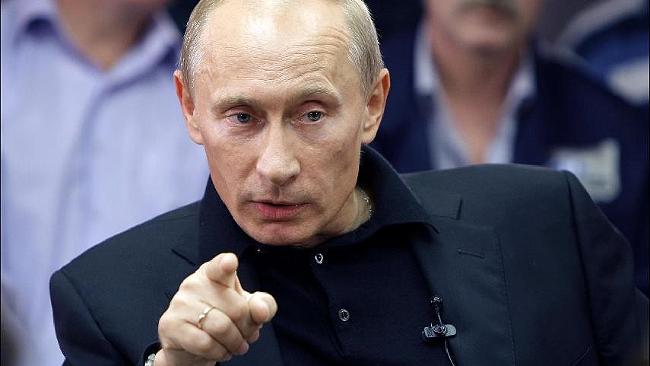
Russia’s President Vladimir Putin has said that Egypt risks slipping into civil war following the military overthrow of president Mohamed Morsi.
Dozens of people have been killed and more than 1 000 wounded in clashes between Morsi’s supporters, opponents and the military since the president’s exit.
“Syria is already in the grips of the civil war … and Egypt is moving in the same direction,” Putin told Russian state news agency RIA Novosti on Sunday during a visit to Kazakhstan’s capital Astana.
Meanwhile, Egypt’s transition has stumbled after the choice of Mohamed ElBaradei as interim prime minister was thrown into doubt by Islamist objections.
ElBaradei’s nomination had been confirmed by several sources and state media on Saturday, but just before midnight a presidential spokesperson told reporters that the prime minister had not in fact been chosen.
The abrupt U-turn came amid opposition to the appointment by the Nour Party, Egypt’s second Islamist force after Morsi’s Muslim Brotherhood movement, highlighting the challenge the military faces in finding consensus among liberals and conservatives on who should run the country.
Clashes between tens of thousands of pro- and anti-Morsi protesters swept the Arab world’s most populous nation on Friday and at least 35 people were killed and more than 1 000 wounded.
The violence, which saw rival factions fighting street battles in central Cairo and many others cities and towns, underlined the pressing need for a swift political solution seen as inclusive to all.
“We extend our hand to everyone, everyone is a part of this nation,” the spokesperson told reporters. “The Muslim Brotherhood has plenty of opportunities to run for all elections including the coming presidential elections or the ones to follow.”
Minutes after he spoke, state media reported that the public prosecutor ordered that four top Brotherhood leaders held this week be detained for a further 15 days on accusations that they incited violence against protesters.
The four included Saad el-Katatni, head of the group’s political wing, and Khairat El-Shater, its political strategist.
The Brotherhood has said it wants nothing to do with the military’s plans for a new interim government. It believes Morsi should be reinstated, and has pledged to keep protesting until he is.
The Nour Party, however, had agreed to the army-backed transition plan leading to new elections. Its withdrawal from the process would strip that plan of vital Islamist support.
And following the Nour rejection, the interim administration headed by Adli Mansour delayed naming the new prime minister.
On Sunday, people were still reeling from one of the bloodiest days in over two years of tumultuous upheaval since autocrat Hosni Mubarak, who ruled for 30 years, was toppled in a popular uprising that was part of the 2011 “Arab Spring”.
The Brotherhood called for another day of protest on Sunday.
Huge protests were staged on June 30 to pressure Morsi into resigning amid growing anger at economic stagnation and the perception among many that the Brotherhood was seeking to take control of every part of the state – a charge it fiercely denies.
Millions took to the streets to cheer his ouster on Wednesday, but for many Islamists it was a bitter reversal that raised fears of a return to the suppression they endured for decades under autocratic rulers.
The military said it had not carried out a coup, but merely enforced the will of the people. – Reuters
Lindiwe Hani has came out in support of her mother, Limpho, as the fight for Chris Hani’s legacy escalates.
This follows an article by our sister publication, Sowetan this week, in which Vanessa Hani accused the ANC of betraying her father’s legacy and said this was the reason she was ditching it to join Mamphela Ramphele’s new party Agang SA.
Lindiwe lashed out at Vanessa in a Twitter campaign, saying she was not a Hani.
“I do not have a sister called Vanessa Hani. Vanessa is not a member of our family. I have only heard of her via the media like the rest of SAans (South Africans),” Lindiwe tweeted.
Responding to one of her followers who urged her not to disown Vanessa, she tweeted: “One has to be owned in order to [be] disowned. We do not know her.”
Apparently implying that Vanessa should take a DNA test, Lindiwe wrote: “Only one way to be sure.”
Vanessa refused to comment.
In a dramatic twist, Hani’s widow, Limpho, called Talk Radio 702 disputing Vanessa’s claims that she was the struggle hero’s daughter and challenged her to take a paternity test. Limpho said Vanessa and her sister Cleopatra were using her late husband’s name for “monetary gain” on Redi Tlhabi’s show on Friday.
She said she only got to know about Vanessa and other “kids who came from nowhere to claim Hani’s surname” from the media.
“I think they are taking it too far. Doing stupid things in my husband’s name, saying they are dumping the ANC. Who are they?
“You know Redi, as a married woman, how it would feel if a child, after years and years of marriage, came out to say they were Brian’s child..?” she asked the presenter, whose husband is called Brian.
Limpho also questioned why they were reluctant to reveal their mother’s identity.
Vanessa and Cleopatra first made the claims in 2009 saying they are Hani’s children from a relationship he had before he married Limpho. – Sunday World
Former president Thabo Mbeki’s nephew died in Sweden last year under what now appears to have been suspicious circumstances.
Swedish police are facing accusations of brutality leading to his death. They have also been accused of attempting a cover-up.
Sunday World can reveal that Magnus Moerane (41), the son of Mbeki’s cousin Sophia Moerane, suffered fractures to his skull after being apprehended by the police in Stockholm in October.
It has emerged that Magnus was declared dead on arrival at a Stockholm hospital. But the police told Moerane that Magnus had been admitted to the intensive care unit of the hospital and could not be saved.
It took the intervention of the South African embassy in Sweden for Moerane to get full disclosure about her son’s death and access to the autopsy reports.
“The mission wrote a diplomatic note to the Swedish Foreign Ministry in which it was indicated that Moerane was not satisfied with the initial information provided, and that the embassy requested the authorities to provide a full disclosure around the circumstances of the death of Magnus Moerane.
“The Swedish authorities gave full co-operation to the SA embassy and provided the results of their investigations, including a second autopsy, to the embassy,” said Department of International Relations and Co-operation spokesman Clayson Monyela. He said the embassy could not interfere in the legal processes of a sovereign state.
Moerane believes her son was the victim of a racist assault by the police, similar to the shooting of a 69-year-old man of Portuguese origin in Stockholm last month, sparking riots.
A 73-year-old retired nurse, Moerane said she had known that her worst nightmare would soon become a reality when the police refused to show her the file on her son.
She reported Magnus missing a day after not hearing from him and after going to his flat.
Moerane last saw her son on October 30. He was dead the next day.
“The police told me to get an attorney because there was a problem,” she said.
Moerane’s ordeal worsened when she was told that she did not qualify for legal aid because she did not have home insurance.
She said her persistence in demanding answers from the police eventually led to them breaking the news of Magnus’s death to her and her youngest son, Vuyo (35).
“A man came into the room and said that, according to the report, the police had apprehended Magnus. They were forced to give him a bear-hug (tackle) to restrain him because he was big and tall.
“They said Magnus broke loose and fell on the concrete, which fractured his skull,” said Moerane.
Moerane phoned Mbeki a few weeks ago to tell him of the death of her son and the circumstances.
“I said: ‘Motswala (cousin), it’s bad.’ He went quiet and said: ‘I’m shocked,'” Moerane said.
Mbeki’s office was unavailable for comment at the time of publication.
Magnus was the eldest son of Mbeki’s cousin Moerane – the fifth child of Mbeki’s late uncle, Michael Moerane.
Michael Moerane was the elder brother of Mbeki’s mother, Epainette. He was a renowned music teacher and classical music composer.
The police said that after the 41-year-old fell he was put into a police car, then suffered seizures followed by heart failure .
The autopsy report said Magnus died from “the breaking of of the skull base and wounds in the brain tissues.
The report further said: “The injuries to the head have a look that can be the result of an unidentified blunt object.”
Swedish police commissioner Marianne Oman, who dealt with the case, was unavailable for comment.
Moerane said a three-paragraph letter from deputy chief district attorney Kay Engfeldt proved her theory that a cover-up was being attempted.
In the letter, Engfeldt said she had found “no reason for investigation” of Magnus’s death.
Engfeldt wrote: “Known facts: A man has died in connection with a police intervention. It gives no suggestion that a crime has been committed by someone from the police.”
Engfeldt’s decision came after a final autopsy report stated that Magnus died from “acute poisoning by Sertraline”.
Sertraline is an antidepressant used to treat depression, and obsessive-compulsive disorder, panic disorder and anxiety disorders.
But Moerane refuses to accept this version of events.
She believes her son was the victim of racial profiling – condoned by the Swedish government to rid its borders of illegal immigrants.
“Police brutality and racial profiling are common here,”Moerane said.
She added: “I am saddened that I had to bury my son in a country that didn’t want him. We might as well have remained in South Africa and have him die a noble death because he was fighting apartheid.”
Magnus worked at Arrow Nordic Components AB from 1998 to 2001.
He was diagnosed with Asperger syndrome, an autism spectrum disorder that results in difficulty with social interactions.
The Swedish embassy in Pretoria said it had not received any information from the Swedish Ministry of Justice concerning the Sunday World’s inquiry into the ambiguities surrounding the death of Magnus Moerane.- Sunday World
Hundreds of thousands of protestors flood Cairo’s Tahrir Square while a man waves an Egyptian flag from a rooftop last night
Sixteen Islamist activists were shot dead early on Monday during a protest outside a key Cairo army headquarters calling for ousted president Mohamed Morsi to be reinstated, his Muslim Brotherhood said.
“Sixteen people were killed and 100 others injured, many of them in serious condition,” the group’s spokesman Ahmed Aref told AFP.
Police barricades prevented journalists from accessing the area around the elite Republican Guards base.
Demonstrators told AFP that troops and police had fired tear gas canisters and bullets into the air to disperse the protesters.
“They wanted to disperse the protesters,” who were determined to stage an indefinite sit-in, the protester said.
Another protester, Mahmud al-Shilli confirmed that security forces fired into the air, adding that a group of men in civilian clothing had attacked the protesters.
“The Republican Guard fired tear gas but the thugs came from the side. We were the target,” Shilli told AFP.
Earlier, demonstrators told AFP by telephone that troops and police had fired tear gas canisters and live rounds in a bid to disperse them.
“I saw with my own eyes the people who they shot at,” one protester said, adding that several people had been injured.
On Friday at the same spot, four Islamists were shot dead by soldiers.
Supporters of Morsi’s Muslim Brotherhood have mobilised in large numbers in different parts of Cairo in recent days, vowing to defend Morsi, who was ousted by the military on Wednesday after mass protests calling for him to be removed from power.
Morsi was Egypt’s first freely elected president but lasted just a year in power. – AFP
Illegal initiation schools have turned the circumcision culture into “something criminal”, Health Minister Aaron Motsoaledi said in The Times newspaper on Monday.
“The mushrooming of initiation schools is seen every single day in Eastern Cape. Hooligans… tsotsis take advantage and prey on this custom.
“It has turned into something criminal and no longer has anything to do with culture. Young lives are being destroyed,” said the minister.
The Eastern Cape health department said at the weekend that 30 initiates had died from circumcision-related injuries and nearly 300 had been hospitalised.
“Some parents are blackmailed into paying for their children’s safety,” said Motsoaledi.
“Because of the belief that children must be left at these initiation schools, parents do not report them missing to the police in fear of going against tradition.” – Sapa
After making the selection call that could have divided the British and Irish Lions along national lines, Warren Gatland’s coaching career was in the balance. The doomsdayers were even hinting at the future of the combined ‘home nations’ tour concept hinging on the outcome of third test in Sydney.
They started with a bang, literally, in the first scrum and opened the scoring within two minutes, setting the tone for a record 41-16 win over Australia in Saturday’s series-deciding match that ended a 16-year drought for the Lions.
Gatland was the target of vitriolic criticism for three days after dropping Irish center Brian O’Driscoll, the most loyal servant of the Lions in the modern era. The coach was ultimately vindicated as he delivered the combined team from Wales, Ireland, Scotland and England its first series triumph since 1997.
Gatland has had great success since taking over the Wales national team in 1997. And despite being a New Zealander, he was the obvious choice to coach the British and Irish Lions on a 10-match tour that opened in Hong Kong last month and included nine matches in Australia. It was his ability to stand back and look at the overall picture that undoubtedly helped the Lions.
But even after the victory in Sydney, he was still reeling from the torrent of criticism he’d copped.
“I was absolutely shocked at the vitriolic terms of the criticism,” Gatland said. “I haven’t enjoyed the last 72 hours, it’s been tough personally.
“Maybe in a week or two I might get some pleasure out of tonight. But at the moment there hasn’t been a lot of pleasure out of feeling vindicated at the amount of criticism directed at me personally.”
Having said that, he later told a British tabloid that he’d “jump at the opportunity” to take charge of the Lions on their next tour in 2017 – to New Zealand.
“It would be a massive honor and extra special to take them to my home country,” Gatland was quoted as saying by the Mail on Sunday.
New Zealand’s 2011 World Cup-winning coach Graham Henry was in charge of the Lions when they lost the 2001 series in Australia 2-1, after opening that series with an emphatic win. England’s 2003 World Cup-winning coach Clive Woodward was in charge for the 3-0 drubbing in New Zealand in ’05. Gatland was an assistant coach in 2009 when the Lions lost the series 2-1 in South Africa.
“I’ve been lucky enough to be involved in the last two tours – 2009 was about restoring some real pride into that Lions jersey and felt we did that in South Africa,” Gatland told a news conference late Saturday night. “This wasn’t about that. This was delivering. This was winning the series. And we’ve achieved that. The pleasing thing for everyone, we saw how special Lions tours can be.”
He’s already plotting the next tour – or at least offering his advice to anyone who succeeds him.
“Going forward, you need to make sure that the amount of interest it creates, the amount of hype, the amount of money it generates, you’ve got to do the Lions tour properly,” he said. “You’ve got to have the right preparation time. When the Lions negotiate a series it’s got to be done properly.”
Gatland said he was frustrated at the start of the tour with the limited preparation time for his squad, and that was compounded by easy wins in Hong Kong against the Barbarians and the Western Force in Perth in the first two matches.
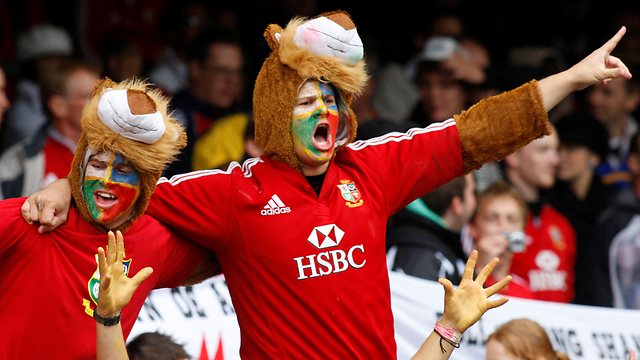
The Lions tour attracted an accumulated crowd of 389,400 at nine matches in Australia, including records for each of the test venues in Brisbane, Melbourne and Sydney – finishing off with the 83,702 people cramming into the Olympic stadium which was reconfigured after the 2000 Games. An estimated 40,000 traveling British and Irish Lions fans swelled the population of expats already living in Australia, and made the downtown areas of test cities a sea of red jerseys on match day.
O’Driscoll was delighted in the end, capping off his fourth Lions tour with his first series victory. He played in the first two tests – winning the first 23-21 in Brisbane and losing the second 16-15 in Melbourne -but Gatland benched him for the third, the first time O’Driscoll had been dropped in his 133-test career. But after the match, the 34-year-old Irishman was delighted to hold the Tom Richards Cup high above his head and do a circuit of the pitch for the Lions fans. – AP
“This is fantastic for rugby going forward,” Gatland said. “It’s great for the Lions, and it creates an interest and excitement for the future for the Lions tours.”
South African singer Kurt Darren is recovering in hospital after breaking eight ribs in a car accident in Pretoria, Eyewitness News reported on Sunday.
“We’re very fortunate that his back is not broken,” his brother Darren van Heerden told the news station.
On Saturday night, the car in which Darren was travelling as a passenger fell into a ditch in Pretoria East.
Darren was subsequently airlifted to Milpark Hospital where he is in a stable condition, according to Eyewitness News.
The driver of the car was also injured and taken to hospital.
In a statement released by Louis van Wyk, from Music Profile Management, the singer’s condition is described as “stable” even though he is currently in ICU and seems to be experiencing “extreme pain and discomfort”.
It is always so amusing to witness mere mortals turning another mortal into a god. The MSM is ablaze, in awe prostrated… rapturously conveying the frenzied idolization, the unfolding living-liturgy and imminent deification of a mortal called Mandela.“He is alive in us!““He is the paragon of Love and Grace!““We must all be a Mandela“.
“He died in Robben Island but was resurrected to make the Miracle of the Rainbow Nation come true“.
Holy moly!
Mandela`s inevitable communion with the Choir Eternal is being heralded in with such bellicose abandonment that one already dreads the brewing stupefaction set to follow in its wake, 2000 years from now.
Did He really walk on water, all the way from Robben Island to Tuin Huis? Did He really ascend to the top of Mount Table to write the Holy Constitution Script and perform the We-Are-Oneness Miracle upon His return? Did He really take one million fish and divide them into 16 million portions equal in size to the original million? Did He really soar smilingly undead into the Heavens in a silver gull-wing Mercedes SLK drawn by four golden Qunu goats?
That is was a boat, Realpolitik, social welfare grants and a hearse will be irrelevant then. For the peddling of Guilt has always been the most profitable profession in History. Money certainly makes the moral world go round.
Just, for example, ask Charlemagne – whose Economic Empowerment of the Franks through the `Christianizing` subjugation of the Saxons, made him and his cronies incredibly rich and famous. All in the name of the Catholic Pope…just like Zuma, Sexwale, Ramaphosa and ilk do in the `Secular-Humanizing` name of Mandela.
Or the Mandela daughters, with their fake hair, clothing range, wine brand and `Being Mandela` reality show in America. Or instant-billionnaire Al Gore, with his dystopian anthropogenic Global Warming nonsense.
It is all so darn easy. All you have to do is clothe the ever-recurring memes sustaining religiosity in the moral garments of the new Religion… and then flaunt them shamelessly, like a drag queen at a Gay Pride parade.
In our Zeitgeist, Human Rights have become the new 10 Commandments, Apartheid the new Original Sin, the (CO2-free) Rainbow Nation the new Heaven, `racism` the new heresy, political-incorrectness the new blasphemy, the South African Human Rights Council (SAHRC) the new Inquisition Tribunal and the heterosexual Afrikaner male the new Devil.
As Nietzsche said, nothing changes, except change itself. But then, who can blame the perennially weak of mind? The Sleep of Reason calls forth monsters. And who better to protect them against that Monster they dread the most, their own mortality, than a man of flesh…who became God.
A Rwandan man who came to Canada in 2001 as a refugee after the 1994 genocide in Rwanda has been acquitted on charges that he participated in the very genocide that he fled.
Jacques Mungwarere was acquitted Friday on one count of genocide by murder and on one count of crimes against humanity by murder.
He was arrested in 2009 in Windsor, Ontario, and accused of participating in a massacre of Tutsis in the region of Kibuye.
He claimed the accusations against him were fabricated. His lawyer argued that Mungwarere was fingered as a potential murderer after he agreed to testify for the defense at the trial of another Rwandan in the United States.
Ontario Superior Court Judge Michel Charbonneau ruled Friday that the defense raised a reasonable doubt. – AP
The 1960s divided America. An activist and rebellious youth fought, sang and partied for more freedom and equality. The Civil Rights Movement, the free speech campaign at Berkeley and anti-Vietnam war protests helped push America into a necessary blender of tumult and turbulence.
Now, one of the divides of contemporary American culture separates those who celebrate the progress, changes and improvements the country has made in the past five decades, and those who believe we still live in the 1960s.
Trapped in a sociopolitical version of the movie “Groundhog Day,” there is a powerful cadre of citizens devoted to maintaining the fight against racism, sexism and other “isms,” even though, thankfully, the prejudices of the past lose relevance every day.
The U.S. Supreme Court recently ruled to remove a section of the Voting Rights Act that placed the voting laws and procedures of Alabama, Alaska, Arizona, Georgia, Louisiana, Mississippi, South Carolina, Texas and Virginia, under federal authority. Lawmakers passed the provision in 1965, because the singled-out states had such a cruel record of racism. No reasonable person believed that elected leaders in those states would fairly implement the reforms of the Voting Rights Act and open the polls to black voters. It was a good move and one that ensured accountability. Consider that in Mississippi, in the 1964 election, black voter turnout was a mere 6 percent.
But in 2012, the percentage of black voters in Mississippi, along with black voter turnout in eight of the nine states singled out by the law, was higher than white voter turnout. Looking at the new data confirms that the worst offenders of voter suppression in the 1960s have now achieved voter equality. Chief Justice Roberts wrote that there was no good reason to continue to punish states based on “40-year-old facts having no logical relationship to the present day.”
President Obama disagreed, claiming “deep disappointment in the ruling.” Al Sharpton said that the decision “cancels Martin Luther King’s dream” and Bill Maher called it “racism 2.0.” The fact that a higher percentage of black people than white people in the previously punished states voted for a black president, who won re-election, is of no importance to Sharpton, Maher or even that president.
It’s not just in the campaign to divide the country between “racists” and egalitarians that statistics, evidence and logical argument are dismissed.
President Obama won re-election in part because he convinced a significant percentage of the electorate that American culture, led by the Republican Party, is waging a patriarchal “war on women.” Obama, naturally, was the knighted dragon slayer dedicated to protecting every maiden from attack.
The problem with the sexism narrative is that women now graduate college at higher rates than men. They hold 51.4 percent of managerial positions. They are rising in all the professions, while men are dropping, and in married households, they account for 40 percent of breadwinners.
In America, leading institutions were undeniably at one time racist and sexist, but we have steadily marched toward equality. Racism and sexism, like all forms of evil, will never die, because evil itself is ineradicable, but they maintain no influence over the general culture.
But in liberal “Groundhog Day,” America of 2013 is just like America of 1965.
One of the college courses I teach is African-American Literature and Blues and Jazz Music. I instruct my students that the beauty and brutality of American history is impossible to understand or appreciate without a full confrontation with the role that race has played in the formation and evolution of the country.
It is important to study history and realize that America, like any country, will never become a sociological Eden. But to parrot the slogans of 1968, while rejecting the evidence that proves their vacuity, is to not only to deny reality, but also to encourage racial resentment and gender tension and advance a debilitating culture of victimhood. It also ignores the real problems of today — the lack of economic opportunity leading to upward mobility, our failing public schools and the infringements on personal freedom.
The crises of the 21st century are solvable only by people living in the 21st century.
Masciotra is the author of “All That We Learned About Livin’: The Art and Legacy of John Mellencamp” (forthcoming, The University Press of Kentucky) and “Against Traffic: Essays on Politics and Identity.” For more information visit www.davidmasciotra.com.
“Tea party,” “patriot,” “Constitution” and “Bill of Rights”: these keywords are the very stuff of the American Revolution, which took place during the last half of the 18th century. They are also some of the words that cued the “Infernal Revenue Service” to target the philosophical descendants of the Revolutionaries, in 21st century America.
Had they been aware that in 2012 not all Americans are created equal, the targeted not-for-profit organizations, aiming to fly beneath the IRS radar, would have also avoided any references to “The Declaration of Independence,” whose proclamation, on July 4, 1776, we celebrate as Independence Day.
Ordinary Americans of a certain age are already in compliance with the anti-American program carried out by their government, Democratic or Republican. Having been conditioned by our country’s many Orwellian Ministries of Truth, they celebrate July 4th firecrackers, fire-sale prices and cookouts. The Declaration doesn’t feature. As this column once remarked, contemporary Americans are less likely to read the Declaration of Independence now that it is easily available on the Internet, than when it relied on horseback riders for its distribution.
Back in 1776, gallopers carried the Declaration through the country. As historian David Hackett Fischer recounted in “Liberty and Freedom,” printer John Dunlap had worked “through the night” to set the full text on “a handsome folio sheet.” And John Hancock, president of the Continental Congress, urged that the “people be universally informed.”
And so the people were.
“From the beginning,” wrote James McClellan, “American Constitution-makers had the general support of their countrymen. The principles of government they espoused during the Revolution and implemented after the British surrender at Yorktown were widely shared in every town and village. It was on the basis of this remarkable consensus, this serene moment of creation, this fertile ground of American political experience, that the new Constitution was established.” (page 59)
The excerpt is from McClellan’s magisterial “Liberty, Order, And Justice: An Introduction to the Constitutional Principles of American Government,” published by Liberty Fund. Like many of this country’s greatest patriots, McClellan wrote from a farm in Virginia.
While Mark Levin, the radio man lauded by his Republican adherents as “The Great One,” has denounced the secessionists among us (check), McClellan (a real scholar) seconded the Declaration’s secessionist impetus. The Declaration’s first part, he argued, “offered a philosophical justification for secession, based on the theory that all men are entitled to basic rights, that the purpose of government is to protect those rights, and that the people have the right to abolish that government if it fails to fulfill its obligation.” (page 122)
The provision of the Declaration of Independence that has aroused the greatest controversy is Thomas Jefferson’s statement “that all men are created equal. This was a poor choice of words,” admits McClellan, for “neither Jefferson nor any other members of the Continental Congress seriously believed that all people are equal.”
“Nor could Jefferson have possibly had in mind the “type of ‘égalité’ proclaimed by the French revolutionaries a decade later – that is, a radical leveling of society to a common stratum through government imposition of political, social, and economic equality.”
According to McClellan, the florid phrase “all men are created equal” meant only that “the American people, as a nation, were entitled to the same rights as Englishmen.” This demand for equal rights is the main thrust of the Declaration of Independence.
“Some forms of equality,” explained McClellan, “are clearly compatible with individual liberty, equality before the law or equal rights being the most obvious. … These forms of equality are generally consistent with the ideal of individual liberty because they may be attained without coercion.”
“Social and economic equality, on the other hand, finds no support in the Constitution or in the political tradition that grew out of the Declaration of Independence. … To reduce the entire American population to a single class of people, devoid of all social and economic distinctions, would have required massive and interminable coercion, resulting in a loss of individual liberty.”
Such “drastic measures” drove the Jacobin French Revolution. “They were never contemplated by those who wrote and approved the founding documents.” (page 136)
With the Declaration of Independence, the colonists were advancing a constitutional argument whereby Americans would be “entitled to the rights of Englishmen”: “the right to trial by jury, the right to self-government, the right of taxation by consent, and the right against quartering troops in private household. Theirs was a philosophical appeal resting on the claim of equal rights and the republican principles of government by consent.” (page 137)
The tenet of equality before the law served as a catalyst for the anti-slavery movement. Equally and justifiably is the preamble invoked “to support secession, the theory being that the States in 1861, as in 1776, had a fundamental or natural right to ‘change their form of government and institute a new [or no] government whenever necessary for their safety and happiness.”
Sadly – and as the existence of the IRS, an agency devoted to legalized thuggery attests – what remains of the sublime ideals “shared in every town and village” in early America is a deracinated, fragmented and demoralized people, managed to their detriment by a despotic State.
Thomas Jefferson, the author of the Declaration, called it “an expression of the American Mind.” Judging from their enemy lists, unceasing evil and dark schemes, IRS apparatchiks and their masters in government consider the Declaration an expression of a subversive American mind.
Police outside Sheremetyevo international airport in Moscow
Hopes have risen that Edward Snowden may finally be able to leave Moscow, where he has been stranded in an airport for 14 days, after three Latin American countries offered the fugitive US intelligence leaker asylum.
Bolivia on Saturday became the third country to offer refuge to the former US National Security Agency (NSA) contractor, with President Evo Morales saying he was willing to take Snowden in “if he asks”.
The offer came not long after Venezuela’s leftist President Nicolas Maduro said he would grant the 30-year-old “humanitarian asylum” and Nicaraguan President Daniel Ortega said his country could offer a safe haven.
The flurry of offers arrived after a series of rejections from many of the 21 countries to which Snowden had applied to last week for refuge.
The WikiLeaks anti-secrecy website that has been supporting Snowden’s cause said he had recently applied to six additional countries that it refused to name.
But it was far from clear how exactly Snowden — hidden out of sight of reporters for the past two weeks — could reach another nation from the transit zone of Russia’s sprawling Sheremetyevo international airport.
He has been stripped of his passport by the US authorities and a refugee pass initially believed to have been offered to him by Ecuador has since been declared invalid.
“He has no passport and asylum can only be granted to a specific individual. I have grave doubts that this is now possible,” senior ruling party lawmaker Alexander Romanovich told Moscow Echo radio.
Sheremetyevo only handles commercial flights and Snowden cannot travel past passport control to another airport used by foreign dignitaries.
Even if he got on a commercial flight, the plane carrying him could be grounded — the fate suffered by the jet carrying Morales after several EU states denied it overflight rights over suspicions Snowden was onboard.
Analysts meanwhile said Moscow may be increasingly concerned about getting sucked into a diplomatic spat with Washington that it had never planned for and which it would rather avoid.
— Leftist Latin American leaders offer asylum —
Morales declared however that Bolivia has “no fear” of the United States and its European allies, and that he would be willing “to give asylum to the American, if he asks”.
The offer was echoed by Maduro, who visited Moscow at the start of the week for a gas summit during which he strongly hinted that Venezuela –long a diplomatic irritant for the United States — could welcome the opportunity to help Snowden out.
But he made his intentions absolutely clear in an address at an independence day event in Caracas.
“As head of state of the Bolivarian republic of Venezuela, I have decided to offer humanitarian asylum to the young Snowden … to protect this young man from the persecution launched by the most powerful empire in the world,” said Maduro said.
Nicaragua’s Daniel Ortega voiced a slightly more toned down message only minutes earlier.
“We are open, respectful of the right to asylum, and it is clear that if circumstances permit it, we would receive Snowden with pleasure and give him asylum here in Nicaragua,” Ortega said at a public event.
So far, only Nicaragua, of the three that have offered asylum, said it had received his formal request; that could mean a petition there is further along in the pipeline than elsewhere.
Ecuador had been seen as the American’s best hope when he arrived in Moscow from Hong Kong on June 23 after leaking secrets about the extent of the US data surveillance programme to the press.
But the leftist government in Quito has yet to consider his application.
— ‘Russia is not happy he is here’ —
Russian President Vladimir Putin has refused to extradite Snowden to the United States while still stressing that he would like to see him gone as soon as possible.
Analysts interpret the mixed message as a sign that Moscow feel like they are being drawn into a fracas with Washington at a time when it would rather avoid additional difficulties to the two sides’ strained ties.
“Russia is not happy that he is here. If it wanted to offer him asylum, this would have been done right away,” said Carnegie Moscow Centre analyst Maria Lipman.
She noted that Putin himself was a former KGB spy who cares deeply about the safety of state secrets.
Alexander Konovalov of the Institute of Strategic Assessments agreed that “there is nothing for us to gain from Snowden”.
Putin has denied ever questioning Snowden about the details of the US spy network and has even suggested that doing so was not worth the effort.
“Snowden’s asylum in Venezuela would be the best option,” said parliament’s foreign affairs committee chairman Alexei Pushkov.
“This country is in a sharp conflict with the United States,” Pushkov tweeted. “It will not get any worse.” – AFP
This website uses cookies to improve your experience. We'll assume you're ok with this, but you can opt-out if you wish. Cookie settingsACCEPT
Privacy & Cookies Policy
Privacy Overview
This website uses cookies to improve your experience while you navigate through the website. Out of these cookies, the cookies that are categorized as necessary are stored on your browser as they are essential for the working of basic functionalities of the website. We also use third-party cookies that help us analyze and understand how you use this website. These cookies will be stored in your browser only with your consent. You also have the option to opt-out of these cookies. But opting out of some of these cookies may have an effect on your browsing experience.
Necessary cookies are absolutely essential for the website to function properly. This category only includes cookies that ensures basic functionalities and security features of the website. These cookies do not store any personal information.
Any cookies that may not be particularly necessary for the website to function and is used specifically to collect user personal data via analytics, ads, other embedded contents are termed as non-necessary cookies. It is mandatory to procure user consent prior to running these cookies on your website.