South Africa, a bigger version of Zimbabwe

The multicultural dream that the US and Britain foresaw in South Africa is simply not going to happen. In fact, it is not even being realised in their own countries, backed up by huge globalised economies.

If things continue like now, South Africa will become a bigger version of Zimbabwe. Most whites will leave, the infrastructure will collapse and a few expats will keep the mines going. Probably incoming Chinese and Indians will acquire some remaining assets on the cheap and still squeeze the last few rands out of what used to be the greatest republic ever on the African continent.

However, every dark cloud has a silver lining, as they say. The way I see it, we are in this mess as a result of outside intervention, Soviet for sure, but to a far greater extent from Britain and the US. If it were not for Father Trevor Huddleston, Anthony Sampson, the American Black Caucus, Ted Kennedy and a few others, this country by now would have been a world power. We had the technology, the know-how and the drive to create something extraordinary in Southern Africa, but we had leaders that went from mediocre to bad to treasonous. De Klerk had no right to turn the army over to the ANC and abolish Afrikaner sovereignty for which our women and children had died in the camps and for which the women of the Great Trek had been prepared to “walk barefoot over the Drakensberg”.

Therefore the economic crisis in the Anglo-Saxon countries is to our benefit. It lessens the chances of further and even more catastrophic intervention in SA. Many Afrikaners fear Britain and America more than they fear the ANC, because ultimately the Anglo-Saxon powers might intervene to prop up an ANC government if ever conditions had to become so intolerable that an Afrikaner revolt or rebellion would be a matter of survival.

The other positive aspect is the revolution in technology and communications. We may not have a volkstaat or own republic yet, but we have the internet. While American ideas such as affirmative action and the moral superiority of blacks led to our downfall a short while ago, Facebook, Google and YouTube are rearming us. Even if we lose our last schools and churches, as well as the remaining suburbs or farming areas that are recognisably Afrikaans, we will still be able to associate on Facebook and Twitter, on Skype and so on.

The Afrikaner identity has been a subject of much debate. Often academics and journalists have been hostile to us, claiming that we simply “do not exist” or otherwise have been legislated out of the way by the ANC government. I am vaguely contemplating a short book on Afrikaner history in English for our potential friends in America and elsewhere that are curious about us. The title I am toying with is: “The orphans of the West”. We were more or less abandoned by the West even though we fought on the Allied side in two world wars and in Korea.

Like every orphan, we will have to reconcile ourselves with the reality of that abandonment and forge a new future for ourselves on some part of South African soil.

Some of the idiots who devised the current system have said: “South Africa’s identity is our constitution.” As if a flawed document like that could ever represent an identity. Frenchman Jean Raspail, author of the dystopian novel on immigration, The Camp of the Saints, coined a very useful simile. He spoke of the newcomers inhabiting a Western shell like the hermit crab. The ANC and its hangers-on, including the white Left in this country, are but hermit crabs enjoying their new home, made in our government buildings – but which they did not create.

There is a very interesting – and moving – short story by Hennie Aucamp called “Die uitsettingsbevel” – The eviction order. In it he also refers to language, of being at home in one’s own language. We have been served our eviction order, that we are no longer welcome here, but ultimately we carry that home with us in the form of our language, culture and tradition.

Many people claim that the Afrikaans tradition is almost dead, like a plant starved of water and nutrients. However, our identity is not defined by one document such as the SA constitution, but by many. It is the narrative of especially the twentieth century, culminating in the 1960s where Afrikaners for a brief few years had a sense of a “republic found again”. In French it sounds even better, slightly Proustian, as “la république retrouvée”. It was an almost utopian time before the calumny, the hypocritical boycotts, the posturing and barely disguised local ethnic hatred of Afrikaners started. Communism, the classless society or liberalism never mobilised any black South Africans, but the phrase “kill a Boer” sung by Mandela, Malema and others sure did.

Possibly there no longer exists an Afrikaner nation, given the intense social engineering of the last decade or two. I am not so pessimistic, however. And then an Afrikaner archive is still extant. That archive represents the sum total of 350 years of Herculean effort and pioneering struggle, of tragic deaths at the hand of black tribes or British soldiers, as well as our enormous literary, legal, theological, philosophical and musical output of the twentieth century.

It is inevitable that that archive, unless the ANC manages to destroy it beforehand, which is a distinct possibility, will be digitized and will ultimately end up on the internet: searchable, overwhelming and alive. When that happens, the Afrikaner nation will be reborn and the phoenix will rise from the ashes as it did after the murder of Retief and his men in early 1838, or after 1902 when Kitchener and Roberts had burnt the Transvaal and the Free State to the ground (including the churches). Even the anglicised children of the diaspora Afrikaners will be affected by it. At first they will read about their forebears in English, but perhaps the generation after them will be curious enough to start relearning Afrikaans, like the Jews relearned Hebrew, which will only be a mouse click away.

Defeat is a terrible thing and, like the American Southerners, we have been defeated twice, firstly militarily by Britain and secondly by that alliance of post-war leftism and black nationalism that cast us as villains and racists, the morally and physically expendable members of humanity about whom no one sheds any tears. Orphans.

On the other hand, the defeated have a way of reasserting themselves. Germany and Japan lost the Second World War, but prospered economically. Today Germany controls the pursestrings of Europe.

And make no mistake: South Africa is still us. The hermit crab never really belongs in his shell, and knows it.

One day the kingdom will be ours again, or at least part of it. The ANC and the rest of our ruling circus are just as strong as their backers. Yesterday it was the Soviet Union, Sweden, British Labour and the Anglican Church. Today it might be China, India and the Arab world. Tomorrow it might be Obama or Hillary Clinton’s America, with political correctness gone haywire.

My wife always maintains that we Afrikaners can go back to the land tomorrow. My grandmother lived alone on a farm in the Rustenburg district, completely self-sufficient. She never had black servants or workers and she only bought sugar and powdered milk from the shop. The rest she grew or reared with her bare hands, without electricity.

So we have this vast country all around us that will sustain us, no matter what. Social and economic collapse in South Africa poses no threat to us. It would only be a matter of concern for the UN, for the Anglo-American empire, for the EU, possibly China and India. To us such a collapse would represent one vast opportunity, like the country we found here when we had dragged our oxwagons over the Drakensberg: a wide and temperate realm, empty of people except for a few emaciated tribes here and there, no tropical diseases and teeming with wildlife.

However, the hermit crab people ensconced in our buildings, our barracks, our police stations and consuming our taxes do not have the inner strength to maintain their supposed hegemony. They depend on outside support and even the threat of exterior force to cow us into submission, to keep us subjugated by affirmative action, racial quotas and other measures. Their incessant propaganda broadcast night after night on the public television has an Orwellian air, that of mind control exercised by a paranoid ruling clique.

As someone said: “Nowhere else in the world has a majority ever sought refuge in an arsenal of legislation to protect itself from the competitive threat of a minority.” We are so few, and yet they are so afraid of us.


‘No child behind’ failing in the USA

No child left behind
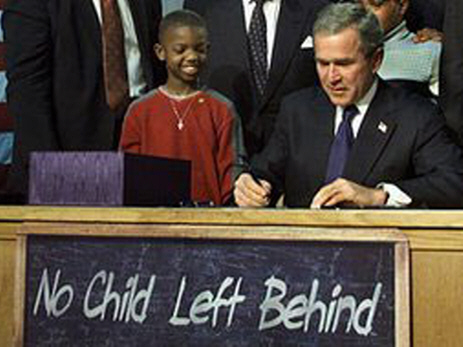
President Bush signing 'No Child Left Behind' into law

It could be the beginning of the end for No Child Left Behind.

The goal was lofty: Get all children up to par in math and reading by 2014. But the nation isn’t getting there, and now some states are getting out.

In a sign of what’s to come, President Barack Obama on Thursday freed 10 states from some of the landmark law’s toughest requirements. Those states, which had to commit to their own, federally approved plans, will now be free, for example, to judge students with methods other than test scores. They also will be able to factor in subjects beyond reading and math.

“We can combine greater freedom with greater accountability,” Obama said from the White House. Plenty more states are bound to take him up on the offer.

While many educators and many governors celebrated, congressional Republicans accused Obama of executive overreach, and education and civil rights groups questioned if schools would be getting a pass on aggressively helping poor and minority children – the kids the 2002 law was primarily designed to help.

The first 10 states to be declared free from the education law are Colorado, Florida, Georgia, Indiana, Kentucky, Massachusetts, Minnesota, New Jersey, Oklahoma and Tennessee. The only state that applied for the flexibility and did not get it, New Mexico, is working with the administration to get approval.

Twenty-eight other states, the District of Columbia and Puerto Rico have signaled that they, too, plan to flee the law in favor of their own plans.

The government’s action on Thursday was a tacit acknowledgement that the law’s main goal, getting all students up to speed in reading and math by 2014, is not within reach.

The states excused from following the law no longer have to meet that deadline. Instead, they had to put forward plans showing they will prepare children for college and careers, set new targets for improving achievement among all students, reward the best performing schools and focus help on the ones doing the worst.

Obama said he was acting because Congress had failed to update the law despite widespread agreement it needed to be fixed.

“We’ve offered every state the same deal,” Obama said. “If you’re willing to set higher, more honest standards than the ones that were set by No Child Left Behind, then we’re going to give you the flexibility to meet those standards.”

The executive action by Obama is one of his most prominent in an ongoing campaign to act on his own where Congress is rebuffing him.

No Child Left Behind was one of President George W. Bush’s most touted domestic accomplishments, and was passed with widespread bipartisan support in Congress. It has been up for renewal since 2007. But lawmakers have been stymied for years by competing priorities, disagreements over how much of a federal role there should be in schools and, in the recent Congress, partisan gridlock.

The law requires annual testing, and districts were forced to keep a closer eye on how students of all races were performing – not just relying on collective averages. Schools that didn’t meet requirements for two years or longer faced increasingly harsher consequences, including busing children to higher-performing schools, offering tutoring and replacing staff.

Over the years, the law became increasingly unpopular, itself blamed for many ills in schools. Teachers and parents complained it led to “teaching to the test.” Parents didn’t like the stigma of sending their kids to a school labeled a failure when requirements weren’t met. States, districts and schools said the law was too rigid and that they could do a better job coming up with strategies to turn around poor performance.

A common complaint was that the 2014 deadline was simply unrealistic.

As the deadline approaches, more schools are failing to meet requirements under the law, with nearly half not doing so last year, according to the Center on Education Policy. Center officials said that’s because some states today have harder tests or have high numbers of immigrant and low-income children, but it’s also because the law requires states to raise the bar each year for how many children must pass.

The current law requires schools to use standardized tests in math and reading to determine student progress. The waivers announced Thursday do not excuse states from those requirements but instead give them the freedom to use science, social studies and other subjects in their measures of student progress.

The 10 states also now can include scores on college admission exams and other tests in their calculation of how schools are performing. They can be excused from penalties included in the federal law but had to come up with their own set of sanctions for low-performing schools.

For example, Georgia will replace the law’s pass-or-fail with a five-star rating system and will use end-of-course tests and Advanced Placement performance in its measure of students.

In Oklahoma, schools are to be taken over by the state if they consistently fail to meet standards.

Kentucky – the first state to formally ask the federal government to be excused from some requirements when Gov. Steve Beshear sent a letter to Washington last summer – will use ACT college-entrance exams and other assessments by that company in its measures.

The schools still have to focus on the subgroups of students outlined in the federal law, such as English language learners and students with disabilities.

Not everyone applauded Thursday’s announcement.

While No Child Left Behind isn’t perfect, said Jeanne Allen, president of the Center for Education Reform, it’s thrown a valuable spotlight on problem schools. She said giving districts and states more flexibility “without firm consequence” is not reform.

“If school district power were the answer to our education woes, our nation would be soaring high above the rest of the world in achievement. It is not, and it will not, until our leaders – just as the people they serve – face both rewards and sanctions for the education systems they govern,” Allen said.

Nancy Zirkin, executive vice president of the Leadership Conference on Civil and Human Rights, said, “Our coalition will continue to play an active role in holding all 10 of these states and the Department of Education accountable for our children.”

But some educators also said Obama’s plan gives states flexibility with more clear and attainable goals.

Gene Wilhoit, executive director of the Council of Chief State School Officers, said under the waiver plan states essentially have a contractual relationship with the federal government to deliver on the approved plan.

“I think there is a legitimate concern or fear out there on the part of people that by giving these waivers, states might be `let off the hook’ in terms of accountability, and I think what you’ll find is just the opposite,” Wilhoit said. “They have raised the standards. They have put in place much more focused attention to the lowest performing, they have put in place professional development activities that didn’t exist prior, and they are holding those schools much more accountable.”

In Colorado, Bridget Cole, a 4th grade teacher who was eating an egg salad sandwich with a group of student on a field trip to the Colorado state Capitol, said she was relieved to hear the news out of the White House.

“No Child Left Behind never changed how I taught. I know what my kids need. It’s easier for me to see where my kids need to be rather than pay attention to what the federal government tells me my kids need to be,” Cole said.

While the president’s action marks a change in education policy in America, the reach is limited. The populous states of Pennsylvania, Texas and California are among those that have not said they will seek waivers, although they could still do so.

Some states might wait to see if Obama wins re-election November, said Jeffrey Henig, professor of political science and education at Teachers College, Columbia University. Others might bet the administration “won’t be in a position to strongly clamp down on them for failure to meet progress goals that the administration has indirectly indicated it admits are unrealistic,” Henig said.

Education Secretary Arne Duncan said states without waivers will be held to the standards of No Child Left Behind because “it’s the law of the land.”

Until now, the issue of education has stayed largely out of the presidential race.

But Sen. Mike Enzi, R-Wyo., ranking member of the Senate committee with jurisdiction over education, said Obama was using education as a “political poker chip.”

“This action clearly politicizes education policy, which historically has been a bipartisan issue,” Enzi said. “It is time for the president to work with Congress on important issues like this instead of acting unilaterally.”

And when Rep. John Kline, R-Minn., the chairman of the House Education and the Workforce Committee, released new legislation Thursday that would rewrite No Child Left Behind, it included a provision that prohibits the education secretary from coercing states into adopting specific academic standards in exchange for a waiver.

Duncan maintained this week that the administration “desperately” wants Congress to fix the law.

In an election year in a divided Congress, action on Capitol Hill appears unlikely.

Report says Apple to unveil new iPad in March

Ipad 2
Apple iPad 2

NEW YORK (AP) — A news report says Apple plans to unveil a new iPad early next month.

AllThingsD, a website affiliated with The Wall Street Journal, says Apple Inc. is holding an event in San Francisco the first week of March – the same week Apple announced the iPad 2 last year.

The report cites unnamed people familiar with the device. Apple declined comment Thursday.

It’s not known whether the new device will be called the iPad 3, and when it will be available for sale. Last year, sales of the iPad 2 began in the U.S. nine days after the announcement.

Since the first iPad came out in 2010, sales of traditional computers have slowed. Rival PC and phone makers have been unable to mirror Apple’s success with their own tablet computers.

Pat Buchanan and MSNBC’s pygmy

“The ideas he put forth aren’t really appropriate for national dialogue, much less the dialogue on MSNBC.” So decreed MSNBC president Phil Griffin about Patrick J. Buchanan’s grand historical synthesis, “Suicide of a Superpower: Will American Survive to 2025?” Mr. Griffin was justifying the booting from the network of one of the last authentic conservatives in mainstream media.

If I were not already persona non grata within the mainstream, I would be worried.

In an exchange with this writer, Mr. Buchanan had mentioned that his “18,000-word chapter on ethnonationalism and tribalism and the surge of both throughout the Third World—as well as our own declining world—tracks pretty much with what” I had written in my book, “Into the Cannibal’s Pot: Lessons for America from Post-Apartheid South Africa,” published in May of 2011.

Buchanan’s towering text concludes as follows: “We were one nation. We spoke the same language, learned the same history, celebrated the same heroes, observed the same holy days and holidays … were taught the same truths about right and wrong, good and evil, God and country. We were a people then. That America is gone. Many grieve her passing. Many rejoice. But we are not a people anymore.” (Page 424.)

America, as Mr. Buchanan observes, was eaten away by the acid of the 1960s revolution, “with its repudiation of Christian morality and embrace of secularism and egalitarian ideology.” South Africa was relatively unaffected by that revolution. It was a staunchly traditional Christian country. Stores closed on Sundays. Television came late to the place but so did pornography and the gay-rights movement. In South Africa, the influence of Christianity receded after the 1994 democratic transition.

Whereas “Americans are no longer a people,” by contrast, the Afrikaners, as illustrated in “Into the Cannibal’s Pot,” still linger as a people, clinging to what Barack Obama would indubitably deride as their Bibles, their guns and their bigotries.

Dubbed the white tribe of Africa, this organic nation has, however, ceased to exist as a nation-state, dissolved by democratic decree. The sundering of state sovereignty has, in turn, exposed Afrikaners to ethnic cleansing, a familiar feature of democracy a la Africa.

Despite the Afrikaner’s superior military prowess, they simply “surrendered without defeat.” Ferocious though it was, the South African Defence Force (SADF) ceded to the African National Congress and its representatives. “You, me and our men can take this country in an afternoon,” said former Chief of the SADF General Contand Viljoen, famously, to the reigning Chief, General George Meiring. He uttered this comment as President de Klerk prepared to cave into ANC demands, forgoing all checks and balances for South Africa’s Boer, British and Zulu minorities. Yet, the very same Afrikaner people, in the same spirit, went on to peacefully dismantle the six nuclear devices they had built at Pelindaba, west of the capital, Pretoria.

Why did the mighty SADF capitulate to Mandela’s ragtag ANC? Why did the tough descendants of the trek Boers, who have 350 years of history on the continent of Africa—as long as their American cousins have been in North America—give up their birthright for a mess of pottage?

Since it all makes so little sense, my conclusions are more philosophical than factual.

RECONCILING PIETISM WITH POWER

Some clues as to why WASP (white Protestant Anglo-Saxon) societies tend to wither from within are offered by W. de Klerk (no relation to the traitor president). In “The Puritans In Africa,” de Klerk devotes his authorial energies to fleshing out the archetypal Afrikaner with an almost forensic objectivity. The tragedy of the Afrikaner and the American—a function of a shared Calvinist-Puritan ancestry—is the struggle to reconcile Pietism with power:”

The basic dilemma of Western man is how to reconcile power with justice. … Those within the Calvinist-Puritan ethic, who secretly yearn for power, find it impossible to do so openly and unashamedly. … Naked power… is not possible for Western Christian man, especially of Calvinist-Puritan leanings. … For Puritan man, the quest for power—a quest very much alive—cannot be an open bid for supremacy,” but, rather, has to be “power acceptable in Christian terms”; it must be power driven by a devotion to a “great ideal.”

The Afrikaner’s “great ideal” was ineluctably tied to enduring as a biblically sanctified nation. However, if national endurance was to be accomplished, the exercise of power would be absolutely essential. Apartheid was the political superstructure within which the Volk sought safety for what they saw as their divinely ordained sovereignty. But the “exceedingly tough” Puritan mind was crippled by a correspondingly “tender conscience.” This “great ideal” had turned the Boers into something they detested.

The people who had fought imperial Britain in Africa’s first anti-colonial war were now lords and masters of their own satrapies: the African Bantustans. Soon, the biblically blessed country became an Ishmael, an outcast. Charges of racism were especially difficult to withstand and rationalize. Petty perhaps, but no less intolerable for these South-African Spartans was their banishment from sparring in international sports. Patriots that they are, Afrikaners resented being expected to feel ashamed of their country. Puritans that they were, the resentment soon turned inward.

As an abstraction, the ostensive grand ideal of separate but equal development failed to reconcile power with justice. True to type, the Puritans of Africa relinquished the former to achieve the latter.Upon the American mind, Puritanism has left a very different mark. While the Afrikaner’s “great ideal” turned him into an outcast, America’s messianic calling made it a crusader for democracy.

The U.S.’s asserted exceptionalism gave imprimatur to its expansionism. The American Puritanical toughness has manifested itself primarily in never-ending expeditions overseas. Its corresponding—and paradoxical—Puritanical “tenderness” has culminated in a national death-wish: mandating multiculturalism and mass immigration at home, while pursuing a monoculturalist Manifest Destiny abroad. These are two sides of the same coin.

Thus has the United States become “an empire of liberty,” and a contradiction-in-terms. Thus has the US been hoisted on its own petard, its “great ideal” harboring the seeds of its own destruction. That the pygmy from MSNBC prefers not to speak about this reality does nothing to change it.

©2012 ILANA MERCER
WND
  & RT

‘Capitalism a scam’ – South African trade union

Growing poverty, unemployment and equality around the world indicate capitalism is a scam and must be scrapped, Cosatu president Sidumo Dlamini said on Thursday.

“The world is looking for a way out,” Dlamini told delegates attending the sixth Presidential Council of the World Federation of Trade Unions in Johannesburg, according to a copy of his speech.

“It is unfortunate that when this inhuman system has been exposed at all levels of society, the left forces in the world do not speak with one voice and present their own alternatives.”

Dlamini urged union leaders to find alternatives to present to society, “given the glaring failures of capitalism”.

He said it was unacceptable that out of the seven billion people on earth, more than 925 million remained hungry and without hope.

“How can this happen and the world keeps quiet to openly point out that capitalism has failed humanity?”

A recent report by the International Labour Organisation shows that about 1.1 billion people in the world are either unemployed or living in poverty.

Dlamini told union leaders they carried a heavy burden to provide answers to the unemployed.

“It is us, the left axis in the world, who must provide an answer on how to build the 600 million jobs needed to sustain economic growth and maintain social stability,” he said.

“It is us who must table a solution before society on how to address unemployment by the more than 74.8 million youths who are part of the 3.3 billion global labour force.”

Gay marriage wins final legislative approval in Washington state

(Reuters) – A bill to legalize gay marriage in Washington state won final legislative approval on Wednesday in a largely party-line vote that moved the state to the cusp of becoming the seventh in the nation to recognize same-sex nuptials.

Washington’s Democratic Governor Christine Gregoire said she looked forward to signing the measure and “putting into law an end to an era of discrimination” even as opponents, led by religious conservatives, vowed to seek its repeal at the polls in November.

The approval in the state House of Representatives came a day after gay marriage advocates won a key legal victory in California when a federal appeals court declared a voter-approved gay marriage ban in that state unconstitutional.

The Washington legislation cleared the state House of Representatives by a vote of 55-43, a week after the state Senate passed it by a 28-21 vote. Democrats, accounting for the lion’s share of support for the bill, control both legislative bodies in Olympia.

Several prominent Washington-based companies employing tens of thousands of workers in the state also endorsed the bill, including Microsoft, Amazon and Starbucks.

Supporters of same-sex marriage are pushing similar statutes in Maryland and New Jersey, and a referendum to legalize gay marriage in Maine has qualified for the November ballot there.

Six other states already recognize gay marriage — New York, Massachusetts, Connecticut, Vermont, New Hampshire and Iowa — as does the District of Columbia.

But neither Tuesday’s legal ruling in San Francisco nor the statehouse action in Olympia will immediately alter the status quo for gay couples. The outcome of the court challenge in California is likely to remain stayed until the appeals process finishes running its course, and the Washington state measure cannot go into effect before early June.

HEATED DEBATE

Wednesday’s floor action began with lawmakers quickly rejecting a series of amendments, most of them relatively technical in nature, that would have slowed the bill’s momentum by forcing it back to the Senate for further consideration.

Debate grew emotional at times, with the bill’s chief House sponsor, Representative Jamie Pedersen, a Democrat who has four young children with his gay companion of 10 years, arguing that the state’s domestic-partnership law falls short.

“I would like our four children to understand … that their daddy and their papa have made that lifelong commitment to each other,” he said. “Thousands of same-sex couples in our state deserve the respect and protection from our government that only marriage can convey.”

Representative Jay Rodne, a Republican who said he was guided by his Roman Catholic faith to oppose gay marriage, decried the bill as tantamount to “progressive reengineering in its most extreme and damaging form.”

“This bill is about validation. This bill is about acceptance … Marriage is not about self-actualization, validation or acceptance,” he said. “Marriage is about life.”

In the end, two Republicans joined 53 Democrats in voting for the bill in the House, while two Democrats sided with 41 Republicans in opposition. It passed unchanged from its Senate version.

Gregoire, in a statement issued after the vote, said Washington state would “no longer deny our citizens the opportunity to marry the person they love.”

“We tell every child of same-sex couples that their family is every bit as equal and important as all other families in our state,” she said.

VALENTINE’S DAY

The bill is to be formally delivered to the governor’s desk by week’s end, and Gregoire will then have five days to sign it, not including Sunday. Aides said enactment was expected to come on or before next Tuesday, Valentine’s Day. Still, the measure would not take effect before June 7, three months after the conclusion of the legislative session.

In the meantime, opponents of same-sex matrimony said they would seek to overturn the legislation via one of two ballot measures — a referendum for repeal or an initiative defining marriage as the exclusive domain of heterosexual couples.

The initiative would need 241,153 signatures of registered voters by July 6 to secure a place on the November ballot. A repeal would need just half the number of signatures by June 6.

If a repeal referendum qualifies for the November ballot, the gay marriage law would be suspended until the election and certification of returns, meaning December 6, before it is either repealed or goes into effect.

One amendment rejected in both the Senate and House would have submitted the issue directly to voters in a referendum, bypassing the need for a petition.

Also left unchanged were provisions allowing gay couples from out of state to get married in Washington and permitting religious organizations to refuse to rent out their chapels or other facilities as venues for same-sex weddings.

Should gay marriage opponents pursue an initiative to define matrimony as being restricted to one man and one woman, gay marriages under the newly passed statute could proceed on June 7, regardless of ballot-qualification efforts.

But it was unclear whether gay weddings performed in the interim would be nullified if an initiative restricting marriage to male-female unions were to pass in November.

There is precedent in California for handling such a situation. California’s Supreme Court legalized gay marriage in 2008, only to see voters approve a state constitutional amendment banning same-sex matrimony six months later.

The state’s high court later upheld the gay marriage ban, known as Proposition 8, but ruled that 18,000 same-sex weddings officiated between May and November 2008 were still legal.

A federal judge later ruled Prop 8 unconstitutional, a decision upheld on Tuesday by the 9th U.S. Circuit Court of Appeals.

Legal experts said that ruling, while narrowly tailored to California, could ease the way for a successful court challenge in Washington state should voters ban gay marriage at the polls.

Greek leaders agree to austerity measures

Lucas Papademos
Lucas Papademos, Greek Prime Minister

(Reuters) – Greek leaders clinched a long-stalled deal on reforms and austerity measures needed to secure a bailout and avoid a messy default, government sources said, hours before the country’s financial backers were to meet in Brussels on Thursday.

Athens’ partners in the European Union and the International Monetary Fund have been exasperated by a lack of agreement on the sacrifices they demanded in return for a 130 billion euro ($172 billion) bailout, with time running out for Greece before a major March 20 bond redemption.

Finance Minister Evangelos Venizelos set off for Brussels without a complete deal after all-night talks with leaders of the three Greek coalition parties and chief EU and IMF inspectors left one sensitive issue – pension cuts – unresolved.

But following further negotiation on Thursday, two government sources said an overall agreement had been reached.

“A few minutes ago, I got a call from the Prime Minister of Greece saying that an agreement had been reached and has been endorsed by the major parties,” European Central Bank President Mario Draghi told a news conference in Frankfurt in the first official confirmation.

The euro and European stocks strengthened on news of the breakthrough, which raised prospects of averting a chaotic hard default by the euro zone’s most indebted country within weeks, that could send tremors around the global economy.

The risk premium investors charge for holding Italian and Spanish bonds rather than safe-haven German Bunds fell back.

Euro zone officials say the full package must be agreed with Greece and approved by the EU, IMF and European Central Bank by February 15 so legal paperwork can be completed in time to avoid a chaotic default that may threaten the global economic recovery.

“The financial survival of the country in the coming years depends on the new program … It is a time of responsibility for everyone,” Venizelos said.

Greece’s two major labor unions called a 48-hour strike for Friday and Saturday against the reforms that the party chiefs managed to agree on.

“The painful measures that create misery for the youth, the unemployed and pensioners do not leave us much room,” secretary general of the ADEDY union, Ilias Iliopoulos, told Reuters.

“We won’t accept them. There will be a social uprising.”

Venizelos should now be able to present to fellow euro zone finance ministers a fully-fledged new bailout plan, including a commitment for 3.3 billion euros in budget cuts this year, when they meet at 1700 GMT.

Before then, all eyes will be on what the ECB is willing to do to help Greece at its monthly policy meeting.

WRITTEN COMMITMENT SOUGHT

After the overnight talks, a senior government official said the party chiefs had agreed on how to make about 90 percent of the promised savings, leaving a relatively small hole in the calculations.

Asked how the differences over pension cuts had been resolved, another government official told Reuters: “”There will be cuts in other areas of public spending and we will see how we will minimize reductions in pensions.”

International lenders are demanding that the party leaders commit themselves in writing to implement the program of pay and pension cuts, structural and administrative reforms.

The leaders have been loath to accept the lenders’ tough conditions, which are certain to be unpopular with voters. They face parliamentary elections possibly as early as April.

“In these difficult hours we have to look after the ordinary people, the pensioners,” conservative New Democracy leader Antonis Samaras said after the political leaders’ meeting.

“I haven’t got the right to not negotiate hard and I don’t care what other people think about that. We have to make sure that people will suffer less.”

Newspaper editorials criticized the harshness of the austerity measures demanded by Greece’s lenders, but said there was no other option but to give in and agree.

“The memorandum seems, and in fact is, heavy and unbearable for the majority of the Greek people but unfortunately it is the only choice so that the country is not led over the cliff,” financial daily Imerisia said.

Greece has been falling deeper into recession since it was rescued by a first bailout deal in May 2010, and latest unemployment data showed the country’s jobless rate rose to a new record of 20.9 percent in November.

Industrial output fell 11.3 percent in December, in further proof of the deep economic malaise.

ALMOST THERE

Prospects for a bailout deal had brightened when the finance ministers’ chairman Jean-Claude Juncker called the Brussels meeting – which IMF managing director Christine Lagarde will attend – to examine the bailout plan.

On offer from the EU and IMF is a package involving the new rescue funds and a bond swap with private creditors to ease the nation’s large debt burden.

Athens is also urging the ECB to forego profits on its Greek bond holdings in what could raise 12 billion euros or more. The bank’s 23-member Governing Council met on Thursday but Draghi declined to say how the Greek bonds held by the ECB and national central banks would be handled.

For the bailout, Athens must accept conditions requiring big cuts in many Greeks’ living standards. The smallest member of the coalition, the far-right LAOS party, was particularly uncomfortable with the measures.

Panos Beglitis, spokesman for PASOK which is in the coalition along with LAOS and the conservative New Democracy party, said the leaders had agreed to cut the minimum wage by 22 percent as part of efforts to make the economy more competitive. Plans to scrap holiday bonuses paid to private sector workers had been dropped.

Two sources said the government would promise spending cuts and tax rises worth 13 billion euros from 2012 to 2015, almost double the seven billion originally pledged.

Other elements of the deal have been gradually slotting into place, including the bond swap with private creditors to ease Greece’s debt burden by reducing the value of government bonds held by banks and insurers.

Private bondholders are expected to take real losses of about 70 percent on their holdings as part of the swap, under which they receive new, longer-dated Greek bonds to try to reduce Greece’s debt burden by about 100 billion euros.

Talks on the swap have dragged on for weeks, complicated by the position of hedge funds and demands that public creditors also chip in. Officials and bankers say the deal cannot be finalized until the rest of the rescue package is nailed down.

($1 = 0.7545 euros)

(Additional reporting by Renee Maltezou, Lefteris Papadimas and Karolina Tagaris in Athens and Paul Carrel in Frankfurt; Writing by David Stamp and Deepa Babington; editing by Elizabeth Piper)

Putin ‘has exhausted his potential’

Mikhail Gorbachev said Thursday that Prime Minister Vladimir Putin has “exhausted” his potential as Russia’s leader and his inability to change the Kremlin’s political system might prompt more massive anti-government protests.

Putin – who became prime minister after serving as Russia’s president in 2000-2008 – is almost certain to become president again during the March election, despite recent opposition rallies that have been the largest protests Russia has seen since the Soviet collapse.

Gorbachev, a former Soviet leader, said of Putin: “He won’t carry that weight. By now he has exhausted himself. Looks like that.”

Gorbachev recently urged Putin to give up power and annul the results of December’s fraud-tainted parliamentary vote, which triggered the rallies. The thousands of protesters also have joined Kremlin critics in accusing Putin’s government of cracking down on dissent, limiting press freedoms and breeding widespread corruption in Russia.

“If he does not overcome himself, change the way things are – and I think it will be difficult for him to do that – then everything will end up on city squares,” Gorbachev said at a news conference.

“We can’t let it happen. We’ve already seen what happens on city squares,” Gorbachev said, referring to the Arab Spring rallies in northern Africa and the Mideast.

Gorbachev led the Soviet Union from 1985 until its collapse in 1991. He remains admired abroad, but he is regarded as insignificant at home and his comments are not likely to affect public opinion or threaten Putin’s grip on power.

South African Mineworkers Union issues communist-style call for nationalisation

Irvin Jim
Irvin Jim

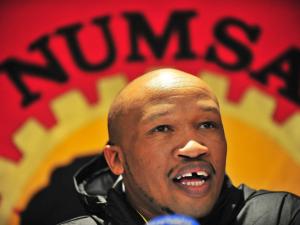
Yesterday NUMSA, the National Mineworkers Union of South Africa, issued a document replete with Marxist references to the class struggle, calling for the nationalisation of mines in South Africa. It based its policy position on two fundamental ANC documents: the Freedom Charter and the Morogoro Conference of 1969 when the ANC was still firmly tied to the old Soviet Union.

Here follows the whole statement by NUMSA:

White domination persists in South Africa – Irvin Jim

Irvin Jim
08 February 2012

NUMSA GS says without nationalisation black people doomed to remain at bottom of society

Press Statement on the Nationalisation Report of the ANC

“In our country – more than in any other part of the oppressed world – it is inconceivable for liberation to have meaning without a return of the wealth of the land to the people as a whole. It is therefore a fundamental feature of our strategy that victory must embrace more than formal political democracy. To allow the existing economic forces to retain their interests intact is to feed the root of racial supremacy and does not represent even the shadow of liberation.” (Morogoro Conference of the ANC, meeting at Morogoro, Tanzania, 25 April – 1 May 1969)

The National Union of Metal Workers of South Africa (NUMSA) is extremely disturbed and dismayed by the statements made by two ANC Ministers in the Mining Indaba during the course of this week, in Cape Town.

Numsa as part of a Cosatu delegation in the ANC Economic Transformation Committee (ETC) did have the opportunity to see the Nationalisation Report last week but we were not given copies as the Report was embargoed.

We were advised that the Report would be tabled in the ANC NEC and the NEC was to define the process on how the Report was to be circulated in the branches of the ANC and to components of the Alliance for debate in preparing for the coming ANC National Policy Conference.

WE find it very disturbing that the Report has been unofficially released to the media before the structures of the ANC and its Alliance could see it.

We further find it quite unfortunate that two ANC ministers have found it fit to use the Report in support of their private views against nationalisation of mines and other strategic economic sectors. As we show below, the ANC NGC in 2010 was unanimous in support of the nationalisation of mines and other strategic economic assets in the country.

Numsa takes the view that both Minister Susan Shabangu and Trevor Manuel have acted completely without any ANC mandate in deciding to speak for the ANC government and for the ANC and the Alliance that there will be no nationalization of mines and key strategic sectors in the economy. Their unilateral pronouncement goes completely against the ANC’s position which says – it is the ANC who leads government and not government leading the ANC. Numsa therefore reject with contempt their cheap manipulation of our democratic processes in the movement.

We have also noted that in the recent past right-wing global rating agencies have been doing the same in threatening our movement should nationalisation take place. These seek to make sure that there is no fundamental change in the vested Apartheid white monopoly economic interests, thus guaranteeing that black people in general and Africans in particular remain at the bottom of South Africa’s economy and society and detained forever in poverty, unemployment and inequality.

Below we restate in our view, the current and historic position of the ANC and its Alliance on this extremely important matter of nationalisation of mines and strategic economic assets of the country. 

A. Nationalisation and ANC Policy

1. The basic revolutionary socio-economic programme of the ANC is the Freedom. The core tenet of the Freedom Charter states that:

“The national wealth of our country, the heritage of South Africans, shall be restored to the people; The mineral wealth beneath the soil, the Banks and monopoly industry shall be transferred to the ownership of the people as a whole; All other industry and trade shall be controlled to assist the well-being of the people; All people shall have equal rights to trade where they choose, to manufacture and to enter all trades, crafts and professions.”

In this regard we fail to understand the constant refrain that nationalisation is the ANC policy because in our understanding the representatives of our people who gathered in Kliptown in 1955 adopted this policy position of the ANC.

2. The restoration of the wealth of the country to the people is, has been, and will always be, at the heart of the struggle to liberate all South Africans, today and tomorrow. 

3. The transferring to the ownership of the people as a whole of the mineral wealth beneath the soil, the banks and monopoly industry is the basic foundation and only basis upon which lasting peace and a common nationhood can be created in South Africa.

4. To reinforce these fundamentals of the liberation struggle, the ANC at its Morogoro Conference further stated that:

“In our country – more than in any other part of the oppressed world – it is inconceivable for liberation to have meaning without a return of the wealth of the land to the people as a whole. It is therefore a fundamental feature of our strategy that victory must embrace more than formal political democracy. To allow the existing economic forces to retain their interests intact is to feed the root of racial supremacy and does not represent even the shadow of liberation.”

5. The roots of South African racial supremacy would be well nourished if the existing economic forces were to be allowed to retain their interests intact. This is a very self-evident truth. In South Africa, real poverty is black and African, and wealth is white and European.

6. In the 2010 ANC National General Council – the policy forum of the ANC – the Economic Transformation Commission reported thus:

“There was greater consensus in the commission on the nationalisation of mines and other strategic sectors of the economy. The NGC therefore mandated the NEC to ensure further work be done, including research, study tours and discussions, and to report to the Policy Conference for decision at National Conference in 2012.”

7. We have quoted the documents above to show the centrality, the revolutionary significance, of the unchanging core demand of the liberation struggle in South Africa – to return the basic wealth of the country to the people as a whole.

8. All ANC Policy and other documents have always faithfully reiterated this demand. The demand to return the wealth of the country to the people as a whole, including by transferring this wealth into the hands of the people (nationalisation) is a central and defining feature of the ANC. To deviate from this is un-ANC.

B. Revisionism, distortion and vulgarisation of the main strategic objective of the struggle for liberation in South Africa

1. The restoration of the basic wealth of the country to the people was, and still is, the essence, the reason, the strategic objective, of the struggle for liberation in South Africa. Only this could end racial supremacy and Colonialism of a Special Type (CST). Only this could guarantee peace, equality and restore the dignity of all the people of South Africa.

2. It is now clear that long before the 1994 democratic breakthrough, elements of English, Afrikaner and African elites had begun to work very hard to dilute the essence of the struggle for liberation in South Africa, by peddling a version of freedom and democracy that would allow the essential existing economic forces to retain their interests intact. Thus the new South Africa after 1994 was handed down a constitution offering democratic freedoms but in essence made private property sacred in a country in which the majority had no property – to be more precise, the country’s constitution fails to address the land stolen from our people through the 1913 Land Act!

3. Since 1994, we have seen a progressive watering down, weakening and erosion of the essential and basic revolutionary demand of the liberation struggle – the returning of the wealth of the land into the hands of the people as a whole.

4. A very dangerous revisionist tendency is one that simply re-interprets the demand in narrow legalistic and technical terms, and thus attempts to convince us that some of the reforms (charters, taxation, and BBBEE) the ANC government has put in place since 1994 amount to “transferring the wealth of the land into the hands of the people”.

5. A further equally dangerous tendency is simply to vulgarise and distort the core revolutionary demand of the liberation struggle – the demand to transfer all the major wealth of the country into the hands of the people, thus restoring the country to all its people – by simply reducing it to the question of the nationalisation of mines, and even this is further mired in financial and technical obstacles!

6. The core revolutionary demand of the freedom struggle in South Africa is very clear: The national wealth of our country, the heritage of South Africans, shall be restored to the people! It is all the “national wealth” and not just the mines, which must be restored to the people. All other industries must be subordinated to the imperative to develop the people and provide for them. This distortion seeks to diminish and conceal the other wealth which must equally be restored and transferred to the people as a whole.

7. Implicit in the demand is not just the revolutionary need to uproot racial supremacy and restore the dignity of all our people, but also a very strong anti-imperialist demand.

8. A most vulgar postulation is one that simply says after 1994, we are all free to share in the country’s wealth, and it is now each person for themselves and all the government has to do is make the country business friendly. Thus all over the country we find business and enterprise promotion NGOs and sometimes these are assisted by monopoly industries.

C. The persistence of white monopoly capitalism in South Africa, post 1994

1. Anyone with the barest minimum of knowledge about the state of the South African economy and society, 17 years after “democracy” will not fail to notice the persistence of white domination of the economy and society, notwithstanding the small sprinkling of black and African capitalists.

2. The South African economy continues to be dominated by the Minerals/Energy/Finance Complex which is largely white owned. The white population continue to in fact grow their domination of social and cultural life of the country.

3. Poverty and unemployment are largely black, and African, with African females and youths faring the worst.

4. South Africa has become the most unequal place on Earth today. At the bottom, of course are black and African people, and at the top, are white people. The facts to illustrate this are there for all to see.

5. Black and African people are condemned to inferior public sector education and health facilities, while the white population enjoys first world schools, hospitals and shopping malls. Of course the trick today is that there is no Group Areas Act and you are simply told to get on with it as an individual and make your money and you will join the white population!

6. As a result of the lamentable failure to radically restore the basic wealth of the country to the people as a whole, 11 percent of the South African School system accounts for more than 70 percent of Matric passes.

7. An average white male in South African earns anything above R19 000, 00 per month while a black male earns just about R2 400, 00!

8. Ultimately of course, the life expectance of a white person in South Africa today stands at about 70 years, while that of a black person is at 48 years – some 22 years less!

D. The struggle continues, and it is a class struggle!

1. At Numsa we are not surprised that the 2010 ANC NGC Resolutions which clearly indicated that there was consensus on nationalisation are being manipulated and shoved into the dustbin.

2. At Numsa we are not surprised that rather than investigate what the most appropriate forms of nationalisation of mines and other strategic sectors of the economic would be, the ANC Report has done everything to confirm that nationalisation of the mines would be a “disaster” for South Africa. Knowing the dominance of white monopoly capital in general and white mining and financial capital in particular, our political and social life post 1994 we did not expect anything less than this distortion of the ANC NGC Resolutions.

3. Further, we at Numsa do not think that the struggle to restore the wealth of the country to the people as a whole will ever be won via research teams and Conference Resolutions. As a working class, and industrial working class formation our experience teaches us that capital concedes nothing without a fight!

4. Thus we are not surprised that elements deployed by the ANC in government to implement ANC policies have been very busy trying to assure capitalists that government in South Africa does not belong to the ANC and that it is not government policy to nationalise! Those ANC deployees who advocated the neo liberal macro economic framework in 1996 continues to champion a failed and discredited neo liberal policy framework which stands in direct opposition to the ANC’s progressive and revolutionary agenda as contained in the Freedom Charter.

5. The people who voted this government into office suddenly do not exist. This is as it should be, as the dominant class in this country is that of white monopoly capitalists!

6. At Numsa we must serve notice to the people of this country: the black and African working class are fast losing patience at the pace at which their conditions of extreme poverty are being dealt with.

7. The success and sustainability of the 1994 democratic breakthrough in this country rests on the extent and speed of restoration of the wealth of the country to the people as a whole, including transferring the national wealth to the people. Anything less than this is a recipe for disaster.

8. At Numsa we will continue to mobilise the working class and to demand in the revolutionary alliance for the speedy implementation of the entirety of the Freedom Charter.

9. In the ANC Policy Conference Numsa will demand for the restoration of the basic wealth of the country to all the people as a whole.

10. In the National Conference of the ANC this year Numsa will demand the transferring – nationalisation – of the mines and other strategic economic sectors into the hands of the people as a whole. This is what we understand the struggle for liberation, democracy and equality in South Africa to be all about. Anything short of this is a betrayal of all our 100 years of struggle and sacrifice against racist white monopoly capitalism.

Statement issued by Irvin Jim, NUMSA general secretary, February 8 2012

PRAAG supports embassy occupation and calls for global Pro-Afrikaans Movement (PAM)

Koster protest
PRAAG protest against genocide in Koster, a small rural town in South Africa

PRAAG (the Pro-Afrikaans Action Group) based in Johannesburg supports the occupation of South African embassies in all Western countries on the tentative date of 15 March 2012. It has also called for a global Pro-Afrikaans Movement (PAM) that would see sympathetic parties, organisations and individuals supporting Afrikaner rights in South Africa, including the right to life.

“International law lays the responsibility to protect upon all governments, especially the South African government which is governing from the very city, Pretoria, where Afrikaners once exercised sovereignty and where the vestiges of our former independence are still evident in the form of statues, street names and architectural symbols,” said Dr. Dan Roodt, leader of PRAAG.

“We also claim the right to speak our own language and to have our own institutions such as schools and universities,” he continued.  “All institutions stolen from us should be returned as soon as possible, together with compensation for damages to our artefacts, documents, objets d’art and heritage.”

Dr. Roodt stated that the current violence and discrimination suffered by his people were tantamount to genocide and should arouse international concern and intervention.

“As the first nation of European and Western descent threatened by imminent national death at the hands of a third-world alliance in our own country, the Pro-Afrikaans Movement should inspire those who support us to also fight for their own survival and the preservation of their own heritage and way of life,” he said. “However, we are confident of our victory and the restoration of our sovereignty and independence, as well as the return of our land by those who have conquered it by non-military means.”

Roodt concluded by saying: “We pledge ourselves, once we have secured our Fourth Republic, to help those patriots of all countries who have come to our aid in this, the darkest hour of our history, so as to safeguard their own freedom against uncontrolled immigration, affirmative action and other measures meant to cause the downfall of European culture as a whole.”

For more information: Contact PRAAG at info[at]praag.org

Hackers publish German military secrets

Hackers from the group Anonymous said Wednesday they had accessed classified German files and posted them online, revealing details of the country’s military operations in Afghanistan.

Anonymous said it obtained the data from a server at the Bundestag or German parliament. The group has claimed responsibility for a series of leaks of confidential data worldwide in the past year.

The military documents were collected for an inquiry, now finished, into a September 2009 airstrike by US jets under German orders that killed more than 140 Taliban fighters and Afghan civilians.

Omid Nouripour, a Green Party legislator who was on the inquiry committee, told dpa the documents posted online were authentic. He said he had not seen anything in the online version that would put lives in danger.

The Bundestag administration said it was checking the leak. A spokeswoman said it was possible the documents had been merely appendices to the inquiry’s report.

The inquiry criticized the 2009 airstrike.

Banks make millions out of breaking metals storage rules

London Metal Exchange

LONDON, Feb 6 (Reuters) – Banks and trading houses have found a way to beat the ravages of economic downturn, storing millions of tonnes of metal with a business model that outsmarts new rules put in place following widespread concern about their practices.

As of April 1 this year, new London Metal Exchange regulations mandate that warehouses which hold over 900,000 tonnes of metal must release a minimum 3,000 tonnes a day, up from 1,500 previously.

On that date, however, investment bank Goldman Sachs and commodity trader Glencore plan to hike rents for storing aluminium at their respective warehouses in Detroit and Vlissingen, Netherlands by around 10 percent, according to an LME announcement in December.

Detroit, and more recently Vlissingen, have long incited anger from clients forced to pay daily rent for metal stuck in queues of around a year, while the warehouses drip feed their stock out at the lowest possible rate.

The new rules were expected to dent queues. But with warehouses able to hike rents in response, it is little wonder players like JP Morgan want to expand their storage hubs in Rotterdam and Chicago.

“From April you will see there will be a lot more (metal) coming out, this is now compulsory. The compensation for that is a very nice one, because the outcharges and the rents are so much higher,” said a warehouse source.

Both Goldman and Glencore declined to comment, or give the latest profit forecast for their warehousing units, though Glencore previously revealed its warehousing unit made a $31 million profit in 2010.

That was in a year when the company had only owned its lucrative LME-listed Vlissingen warehouses for three months, and some industry participants believe warehousing will be a money spinner this year again, despite new LME rules.

“It seems as though the warehousing companies are saying to the LME if you want metal out more quickly you are damaging our business model and we’ll have to take action to compensate for that,” said Natixis analyst Nic Brown.

Chris Evans, LME head of business development said: “When the discussions of the load out rate were underway last year we said that if we increase the rate there is likely to be an increase in costs and this is what we seeing now.”

LME data shows that as of Feb. 2, Detroit warehouses – 80 percent Goldman-owned – held 1.36 million tonnes of aluminium. At a new rent of 45 cents per tonne per day, the warehouses could generate $612,000 a day in rental revenue alone.

An exact figure cannot be calculated because many clients negotiate lower rental rates, but banks remain hungry for more business, with commodities heavywieght Barclays having recently bought a stake in UK-based warehouse Erus Metals.

“Don’t feel sorry for the warehouses, they’re making huge money and will make even more money now rents have gone up. Doubling the load out rate to 3,000 tonnes a day was woefully inadequate,” said an industry source.

CONSUMER LOSS

Such views regularly receive cheer from aluminium consumers, the big losers in warehousing, who find themselves being out-bid by bankers and trading houses when trying to buy metal from producers.

Because the business models of bank-owned warehouses are built on getting in as much metal as they can for as long as possible, they have to pay incentives to attract metal in.

This incentive in turn pushes up the premium a consumer must pay a producer in order for them not to deliver metal to a warehouse. The bizarre market dynamic has prompted some to question the LME’s purported role as a market of last resort.

“It’s a market of first resort and its brought the LME into disrepute,” said the industry source. “What’s the point of having a prompt date when you can’t get the metal out till 2013?”

Premiums for western duty-paid aluminium on the spot market in Rotterdam are at around $165-190 a tonne , almost triple the $40-60 premium for Grade A copper – a metal which unlike aluminium, is in chronic short supply and which should, all things being equal, be drawing in a much higher premium.

All things are not equal, however, not in the aluminium market. Global consumption might be less than production, but global demand from banks and trading houses more than makes up the difference.

“There’s a real supply chain threat to the business, metal is available (it’s) just not accessible,” said Nick Madden, chief procurement officer for Atlanta-based Novelis, the world’s biggest maker of rolled aluminium products.

“The warehouses continue to offer incentives, which we firmly believe props up the premium.”

But the last word from Britain’s Office of Fair Trading was that it will not investigate activities of large dealers in LME warehouses, while the LME for its part holds it cannot intervene in a free marketplace.

At a recent briefing, LME Chief Executive Martin Abbott said: “It’s not our job to change the market, it’s our job to reflect the market and fact that there are queues is an accurate reflection of too much cheap money chasing hard commodities.”

Glencore and Xstrata agree $90 billion merger

(Reuters) – Glencore and Xstrata agreed an all-share merger worth $90 billion (56 billion pounds) on Tuesday in the industry’s largest ever deal, creating a commodities powerhouse spanning mining, agriculture and trading.

Glencore, the world’s largest diversified commodities trading house, will issue 2.8 new shares for each Xstrata share in a deal they said was a “merger of equals.”

The ratio is a 15.2 percent premium to Xstrata shareholders compared with its share price last Wednesday before word leaked out about the merger talks, a joint statement said.

“A merger between Glencore and Xstrata offers a unique opportunity to create a new business model in our industry to respond to a changing environment. It is the logical next step for two complementary businesses,” said Xstrata chief executive Mick Davis, who will be CEO of the enlarged Glencore.

Glencore CEO Ivan Glasenberg will be deputy CEO and Xstrata chairman John Bond will retain his post.

Xstrata shareholders other than Glencore, which already has a 34 percent stake in the mining group, will hold 45 percent of the new group.

Bringing together Xstrata, the world’s fourth-biggest diversified miner, and Glencore will create a group looking to ride an extended surge in demand in coming years for commodities from China and other emerging nations.

As the world’s biggest exporter of coal for power plants and a top copper producer, the combined firm aims to have the bulk to compete with mining sector leaders BHP Billiton, Vale and Rio Tinto.

On Monday, Xstrata shares closed down 1.7 percent while Glencore declined 4.5 percent, against a 1.0 percent fall in the sector, with both still above the level they were at before the potential deal was announced.

(Reporting by Eric Onstad)

Eugene Terre’Blanche trial continues

Eugene Terre'Blanche
The murdered Eugene Terre'Blanche and his horse Attila

Argument in a trial within the trial of two people accused of killing rightwing leader Eugene Terre’Blanche will be heard on Tuesday.

The High Court sitting in Ventersdorp would then decide on the validity of information gathered from the two murder accused shortly after the crime.

The defence has contended this information is not admissible as evidence.

Farmworker Chris Mahlangu and a minor, who may not be named, are charged with beating Terre’Blanche to death in his farmhouse outside Ventersdorp in North West in April 2010.

Both have pleaded not guilty to murder, housebreaking, and robbery with aggravating circumstances. Mahlangu claims he acted in self defence. The teenager has denied involvement in the crime.

The last witness, police photographer Zandisile Mqamba, was called to the stand on Monday. – SAPA