Ruling party candidate leads in Honduras presidential vote

Juan Orlando Hernandez

by Alberto Arce

The ruling party candidate held the lead in early vote counting to become Honduras’ next president, while two of his four main opponents began crying foul early Monday over the results in the violent and impoverished Central American nation.

With just over half the ballots tallied by late Sunday, Juan Orlando Hernandez of the governing National Party had a comfortable edge over Xiomara Castro, whose husband Manuel Zelaya was ousted in a 2009 coup that has left the country politically unstable.

Hernandez and Castro went into Sunday’s election neck-and-neck in opinion polls, and expectations of a close finish raised fears that a disputed result would produce more instability and protests. Voting went off peacefully amid a heavy turnout, however, and the uncertainty of the final results plus a cold, rainy night kept the streets quiet.

The winner will likely have no more than a third of the vote and face a divided congress, whose 128 members were also up for election. As a result, the political situation is unlikely to change in the failing state of 8.5 million people, which is home to the world’s highest homicide rate and a transit point for much of the South American cocaine heading to the U.S.

Both candidates claimed victory, with Hernandez saying he would start Monday with the job of leading Hondurans out of the misery they’ve endured. Poverty and violence have climbed in the last four years under President Porfirio Lobo, also of the National Party.

Castro said her campaign’s numbers gave her a victory by 3 points, then left her election-night party at a hotel and was not heard from the rest of the night. Zelaya urged her supporters to stay at the polls and keep monitoring the count.

“We don’t accept the results,” Zelaya said early Monday. “There are more than 1 million votes that have yet to be counted.”

Salvador Nasrallah, a popular sportscaster and candidate of the Anticorruption Party who was in fourth place, also questioned the official returns.

“Our data do not match the official data that the system is transmitting,” Nasrallah said.

David Matamoros, president of Honduras’ electoral court, said final results were not expected until Monday morning.

“The preliminary results we have given so far do not show any tendency or declare any winner,” he said Sunday night.

Both U.S. Ambassador Lisa Kubiske and Ulrike Lunacek, head of the European Union observer mission, said reports from the polls indicated the vote and subsequent count so far were regular.

“We had 110 observers in almost all Honduras states, and we have seen a transparent process with all parties represented at the table,” Kubiske said, noting that there is a system in place for people to peacefully file complaints or contest the results.

Castro, 54, had led the race for months portraying herself as the candidate for change, promising relief from violence and poverty and constitutional reform that would make the country more equitable.

“From the data from our surveys and vote counts, I am the president of Honduras,” she said early in the night. “The victory is overwhelming and irreversible.”

Hernandez, 45, erased Castro’s early lead in a field of eight candidates as he focused his campaign on a promise to bring law and order. As president of Congress, Hernandez pushed through legislation creating a military police force to patrol the streets in place of the National Police, which are penetrated by corruption and often accused of extrajudicial killings.

“Today the people voted to leave behind the political crisis of 2009 that left thousands in Honduras jobless, migrating and divided, that left us alone and isolated,” Hernandez said.

The number of people working for less than minimum wage of $350 a month in Honduras has grown from 28 percent in 2008 to 43 percent today.

“There is insecurity, fear, violence, hunger and unemployment. There are problems that are so deep that I doubt anyone can really solve them,” said Jose Barreiro, a voter. – AP

—

Associated Press writer Freddy Cuevas contributed to this report.
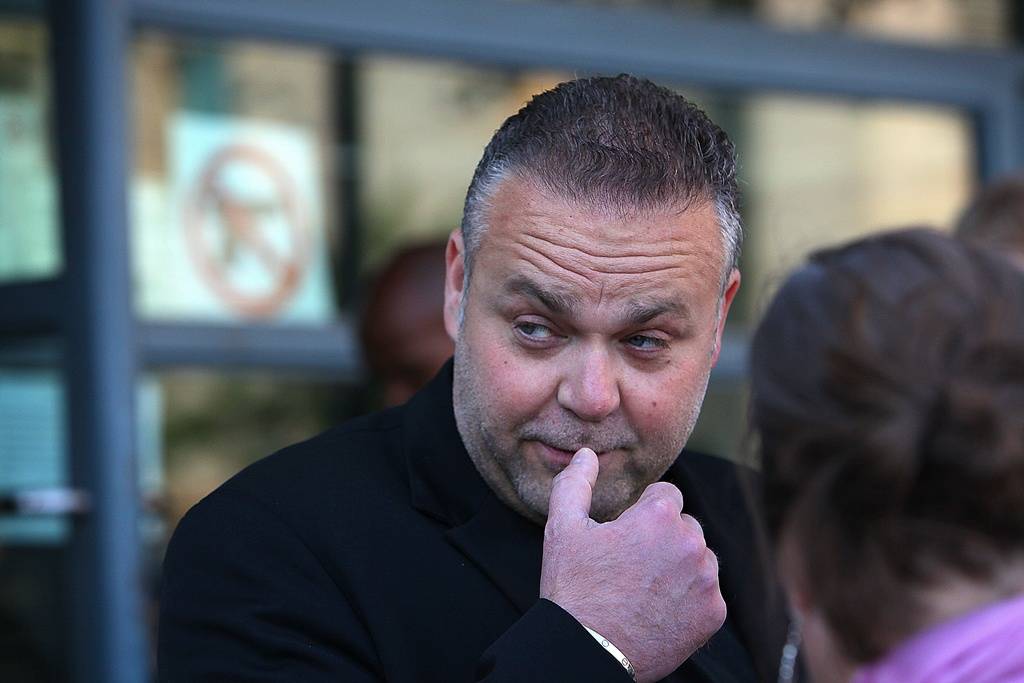
Krejcir: judgement exptected today

Radovan Krejcir
Radovan Krejcir

The High Court in Johannesburg is expected to pass judgement on Monday on weather Czech businessman Radovan Krejcir will be moved from jail to hospital.

His lawyers filed an urgent application with the court on Sunday requesting that Krejcir be moved from jail to hospital.

They claimed that Krejcir was assaulted following his arrest on Friday.

Judge Ramarumo Monama on Monday reserved his judgement.

“Judgement in this matter is reserved to (later today),” Monama said shortly before 1am on Monday morning in the High Court in Johannesburg.

The verdict would be delivered at 11am.

Monama heard testimony from Krejcir’s doctor, a state doctor and a police official.

Krejcir’s doctor, who can not be named for security reasons, recommended that the Czech businessman be hospitalised. He said Krejcir could face renal failure if he did not get medical attention.

The doctor said the injuries suffered by Krejcir were consistent with those of someone who been assaulted.

The State also called its own doctor who claimed that he had observed injuries on Krejcir wrists. He claimed these could have been caused by the handcuffs.

The State argued that Krejcir could receive medical attention in jail.

Meanwhile, Krejcir and a co-accused were expected to appear in the Alberton Magistrate’s Court for kidnapping and attempted murder charges.

It was not known how the latest developments would affect the appearance. -Sapa

Johannesburg hijack accused to apply for bail

Scene of the hijacking as captured on CCTV

One of four men implicated in a hijacking filmed on CCTV in the Johannesburg CBD was expected to apply for bail in the city’s magistrate’s court on Monday.

Police arrested Siphelele Mdlalose, 29, Khanyisani Ngubane, 24, Mhlonishwa Mchunu, 36, and Ntobeko Hlatshwayo, 29, on Thursday.

A Toyota Rav4 and a Toyota Corolla believed to have been stolen were seized.

Police were investigating four hijackings caught on camera in downtown Johannesburg, to which the men may also be linked.

The CCTV footage was being analysed to identify the hijackers and the weapons used, said police.

In one clip a family driving a Toyota Rav4 was seen being hijacked at the intersection of Commissioner and Crown streets in broad daylight.

Police spokeswoman Obakeng Mabaso said at the time that a car overtook the family’s car while they were waiting at the intersection, and parked in front of it. Another car parked it in from behind.

“Two men from one car and two from the other car got out…. They ordered [the family] to get out of the car.”

They took two cellphones and R10,000 in cash. Two of the assailants were armed. In the video, a woman is seen being pulled out of the car. She falls to the ground and walks towards the pavement as the attackers drive off with the car. – Sapa

‘Embrace new affirmative action bill’: Black Management Forum

affirmativeactionThe Black Management Forum urged the private sector on Friday to embrace the Employment Equity Amendment Bill.

“The BMF applauds the passing of the EE Amendment Bill in Parliament and encourages corporate South Africa to embrace the amendments,” the organisation said in a statement.

The bill, which aims to regulate demographic representivity in the workplace completed its passage through Parliament on Thursday when it got the nod in the National Council of Provinces.

It had earlier been approved in the National Assembly.

“The amendments are necessary to ensure that the effects of past discriminatory practices can be addressed in order to level the playing field and afford everyone the same advantages and opportunities.”

Advocate objects to Afrikaans testimony at Marikana hearing

afrikaans_grafikaSome families of deceased Marikana mineworkers were prejudiced at the Farlam Commission of Inquiry as they did not understand Afrikaans, a lawyer said on Friday.

Dumisa Ntsebeza SC, for the families, brought the complaint shortly after the inquiry resumed its public hearings on Friday.

It was prompted by the fact that police Brigadier Adriaan Calitz testified exclusively in Afrikaans.

“I did not have a problem with translation… I have been approached by the families from Lesotho, who are saying ‘because the Brigadier is insisting on speaking in Afrikaans, which apparently is his Constitutional right, Sesotho has been eliminated completely,” Ntsebeza said.

“There are three channels [of translation used at the commission] and the Brigadier is speaking in Afrikaans, then there is a translation to English and another translation from English to IsiXhosa.”

Some of the families had been prejudiced, contended Ntsebeza, saying five families had raised the complaint.

Commission chairman, retired judge Ian Farlam, then translated Calitz’s brief testimony.

“He was telling us about the experience he has had, which he referred to yesterday about a riotous incident. He particularly told us about an incident in May last year when there was a strike and there was disorder,” Farlam said.

“Police ran out of bullets in the incident.”

Farlam said perhaps arrangements would be made to cater for the Sotho-speaking families next week.

“We will see what we can do, if it’s possible to do something. [We may] provide for a third translation service just for those five people, I am not sure whether we can do that,” he said.

“We may have to resort to translating the transcript to them when it becomes available.”

Head of the evidence leaders, Geoff Budlender, said translators at the commission had complained that Calitz, apart from answering quickly to the questions, also spoke too quickly.

On Friday, some people in the auditorium were dressed in Julius Malema’s Economic Freedom Fighters party regalia.

In May, the commission heard that Calitz gave the order for police to “engage” the striking Marikana miners in August last year.

A video clip taken from a helicopter that Calitz was in during the police’s dispersal operation at Marikana was played for the commission.

“Get out there and engage,” Calitz is heard saying on the clip.

Calitz was one of the commanders assigned to the Marikana operation.

Another police officer, Maj-Gen Charl Annandale, who was under cross-examination at the time, confirmed Calitz’s voice was audible in the clip.

“That was Papa one, Brigadier Calitz,” said Annandale.

Annandale headed the police tactical response team during the wage-related unrest at Lonmin’s platinum mining operations at Marikana, near Rustenburg in North West last year. He said he was at the joint operations centre listening to the police radio when the instruction was given.

The three-member commission is holding public hearings in Centurion. The other commissioners are senior advocates Bantubonke Tokota and Pingla Hemraj.

Thirty-four people, mostly striking miners, were shot dead on August 16, 2012 and 78 were wounded when police fired on them while trying to disperse and disarm a group which had gathered on a hill near the mine.

In the preceding week, 10 people, including two policeman and two security guards, were hacked to death near the mine.

President Jacob Zuma appointed the commission in August last year. – Sapa

Jury awards Apple $290 million in suit with Samsung

apple-wallpaper-logoA jury has added $290 million more to the damages Samsung Electronics owes Apple for copying vital iPhone and iPad features, bringing the total amount the South Korean technology titan is on the hook for to $930 million.

The verdict Thursday covers 13 older Samsung devices that a previous jury found were among 26 Samsung products that infringed Apple patents.

The previous jury awarded Apple $1.05 billion. But U.S. District Judge Lucy Koh ordered the new trial and tossed out $450 million of the damages after concluding that jury miscalculated the amount Samsung owed.

Apple had asked for $380 million, arguing Samsung’s copying cost it a significant amount of sales. Samsung countered that it owed only $52 million because the features at issue weren’t the reasons most consumers chose to buy Samsung’s devices instead of Apple’s.

Samsung said it would appeal both verdicts.

“For Apple, this case has always been about more than patents and money,” Apple spokeswoman Kristin Huguet said. “While it’s impossible to put a price tag on those values, we are grateful to the jury for showing Samsung that copying has a cost.”

A third trial is scheduled for March to consider Apple’s claims that Samsung’s newest devices such as the popular Galaxy S III on the market also copied Apple’s technology.

Apple and Samsung are the world’s two biggest smartphone makers. The bitter rivals have been waging a global battle for supremacy of the $300 billion worldwide market. The size of the award didn’t faze Wall Street or harm or help either company’s financial fortunes in any significant way.

Samsung reported it had $47 billion in cash at the end of September and racked up $247.5 billion in revenue last year. Apple has $147 billion of cash on hand and took in $170.9 billion in revenue last year.

“We understood that the money wasn’t really an issue,” said juror Barry Goldman-Hall. “This was about the integrity of the patent process.”

Goldman-Hall, 60, of San Jose was one of two men and six women on the jury, which was tasked only with determining damages.

Apple has argued in courts, government tribunals and regulatory agencies around the world that Samsung’s Android-based phones copy vital iPhone features. Samsung is fighting back with its own complaints that some key Apple patents are invalid and Apple has copied Samsung’s technology.

Samsung lawyer William Price argued Apple is misconstruing the breadth of its patents to include such things as basic rectangle shape of most smartphones.

“Apple doesn’t own beautiful and sexy,” Price told the San Jose jury.

Apple attorney William Lee told the jury that Samsung used Apple’s technology to lift it from an also-ran in the smartphone market three years ago to the world’s biggest seller of them today.

“Apple can never get back to where it should have been in 2010,” Lee told the jury Tuesday at the conclusion of the weeklong trial.

The fight in San Jose is particularly contentious. The courtroom is a 15-minute drive from Apple’s headquarters, and several prospective jurors were dismissed because of their ties to the company.

The three jurors who discussed the verdict outside court said Apple’s proximity made no difference in their deliberations.

“Although Apple is down the street, it’s a global company just like Samsung,” jury forewoman Colleen Allen said. “I have a Samsung television and refrigerator and an Apple computer. I like both companies.”

Allen, 36, of Aromas, is an emergency room nurse who served nearly eight years in the Navy, including a posting in Afghanistan.

“If we didn’t award Apple much, we’re saying it’s OK to infringe patents,” Allen said.

The South Korea-based Samsung has twice sought to stop the trial, accusing Apple on Tuesday of unfairly trying to inflame patriotic passions by urging jurors to help protect American companies from overseas competitors. The judge denied Samsung’s request for a mistrial, but did reread an instruction ordering jurors to put aside their dislikes and biases in deciding the case.

On Wednesday, Samsung again demanded a halt to the trial after the U.S. Patent and Trademark Office told Apple it was planning to invalidate a patent protecting the “pinch-to-zoom” feature at issue in the jury’s deliberation. The judge ordered more briefing while declining to stop the trial. – AP

At least 11 killed in bus crash near Louis Trichardt

KONICA MINOLTA DIGITAL CAMERAAt least eleven people have been killed after a bus collided with another vehicle on the N1 near Louis Trichardt in Limpopo.

The bus was apparently overtaking a car, when it crashed head-on into the vehicle.

Limpopo Roads and Transport spokesperson Jimmy Machaka said the Gudwil Luxury Coaches bus involved in the accident was ferrying passengers from Johannesburg to Harare.

“The accident occurred around 2am. We don’t know where it was heading but we can confirm that it came from Johannesburg. Paramedics are still clearing the scene. Only one lane is operating but is moving very slow,” said Machaka.

Gudwil representative Cherinet Gudis said the company was saddened by the accident.

“I can’t comment much about the incident because we are still rushing to the scene. But obviously we are saddened by the report,” said Gudis.

Gudis confirmed that the bus had left at 7.30pm Johannesburg on Thursday and it was heading to Harare.

An estimated 56 passengers were in the bus.

The accident comes less than two weeks after the Moloto bus crash.

30 people were killed when a when a Putco bus collided with another vehicle on the notorious road. -eNCA

Four men arrested for hijacking in downtown Johannesburg

Scene of the hijacking as captured on CCTV

Four men have been arrested in connection with the hijacking of a family’s car in central Johannesburg, which made headlines when CCTV footage of the crime was posted online, Gauteng police said on Friday.

On Thursday Lt-Col Lungelo Dlamini said in a statement that the men had been taken in for questioning and that the family’s silver Toyota Rav4 and a Toyota Corolla were recovered on Wednesday.

“Further investigations are continuing as more people might have been involved,” he said.

Police were investigating four hijackings in downtown Johannesburg, also caught on camera, which the men may also be linked to.

The footage was being analysed to identify the hijackers and the weapons used.

On November 16, the family were hijacked at the intersection of Commissioner and Crown streets.

Police spokeswoman Obakeng Mabaso said at the time that a car overtook the family’s car as they were waiting at the intersection, and parked in front of it. Another car parked it in from behind.

“Two men from one car and two from the other car got out… .They ordered [the family] to get out of the car.”

They took two cellphones, and R10,000 in cash. Two of the assailants were armed. In the footage, a VW Polo cuts in front of the Toyota and an Opel Corsa parks behind it. There appear to be four occupants in the Toyota.

During the hijacking, a woman is pulled out of the car, falls to the ground and walks towards the pavement as the attackers drive off with the car. – Sapa

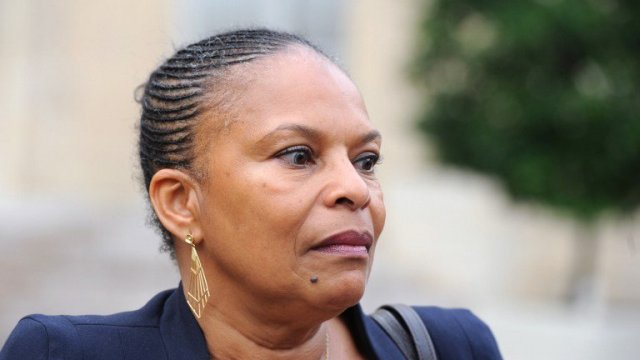
Is France racist? Monkeys, bananas and a black minister

Christiane Taubira
Christiane Taubira

 “Is France Racist?” That was the recent headline in a leading French newspaper, after a far-right magazine compared the country’s black justice minister to a monkey. The incident has triggered self-reflection in France, where the far-right National Front party is ahead is some polls, and figures show a 23-percent rise in reported racist incidents last year.

The front cover of the far-right magazine Minute earlier this month depicted Justice Minister Christiane Taubira with a caption that read: “Clever as a monkey, Taubira gets her banana back” – a play on the French slang for smile.

A Paris court has opened an inquiry into the publication.

Deputy Education Minister George Pau-Langevin described it as an attack on French values. She said she thinks all French people care about the republic because it was built on the rejection of discrimination and racism, and on the equality of all people. That’s why everything that goes against those fundamental principles of the republic harms the republic itself.

Christiane Taubira – who is from French Guiana, an overseas department of France – has been subjected to a series of racial slurs, including being compared to a chimpanzee by a candidate for the right-wing National Front. Taubira said she fears a threat to France’s social cohesion.

There has been a recent change of tone in public debate, said Rainbow Murray, an expert in right-wing French politics at Queen Mary University of London. “There’s always been an underlying racism in France shown by the difficulty in ethnic minority people finding employment. But there’s been perhaps more willingness to express that racism openly in recent months.”

Some observers trace France’s current racial tension back to 2005, when riots occurred in the suburbs of Paris and other cities. Former president Nicolas Sarkozy, then France’s interior minister, described the rioters as “racaille” or scum – crossing a rhetorical line in describing the primarily immigrant communities.

Murray said France has never properly integrated its large immigrant communities. “One thing that’s unique about France compared to the UK and the U.S. and similar examples, is that they’re not multiculturalist. They’re integrationalist. So they deny the existence of difference even when it’s really there. And because of that they don’t have explicit policies capable of coping with race. They don’t even acknowledge race in census data.”

Author and blogger Priscilla Lalisse-Jespersen, an American from Alabama who moved to Paris with her French husband, traces the rise in racism to France’s economic woes. She spoke to VOA via Skype. “Unemployment is rising. The president’s approval is dropping steadily; he’s right now the most unpopular president in French history. France is also afraid of globalization, and they also have a national identity crisis.”

President Francois Hollande has condemned the attacks on Taubira. Rights groups accuse him of a lukewarm reaction – and warn that taboos over public displays of racism are collapsing. – Voice of America

France names suspect in Paris newspaper shooting

Abdelhakim Dekhar
Abdelhakim Dekhar

by Nicolas Gaudichet, Pauline Talagrand

France said Thursday the suspect arrested over this week’s shootings in Paris is a man previously jailed for his role in a “Bonnie-and-Clyde” style multiple murder that gripped the country 20 years ago.

Abdelhakim Dekhar was arrested on Wednesday after a major manhunt following a shooting at the left-wing newspaper Liberation that left an assistant photographer seriously hurt and another at the headquarters of the Societe Generale bank.

His DNA matched samples from the scenes of the attacks, officials said.

“All the evidence today points to his involvement in the events that he has been charged with,” Interior Minister Manuel Valls said.

Dekhar, who is in his late 40s, was convicted in 1998 of buying a gun used in an October 1994 shooting attack by student Florence Rey and her lover Audry Maupin. Three policemen, a taxi driver and Maupin himself were killed in a case that shook France.

He served four years in jail for his role in the killings, and his former lawyers have described him as “enigmatic” and “strange”.

Dekhar was arrested Wednesday evening in a vehicle in an underground parking lot in the northwestern Paris suburb of Bois-Colombes, after apparently trying to commit suicide.

Valls said that “everything appears to point to a suicide attempt”, and sources told AFP Dekhar was semi-conscious when he was found.

The head of the Paris criminal police department, Christian Flaesch, said he was in custody in a “medical environment” and was not in a fit state to speak to investigators.

Valls said investigators would need more information to be able to “understand his motivation”, adding that “one or two letters” had been found.

Investigators said the letters were “confused” and sought to “explain this act.”

In a press conference, Paris prosecutor Francois Molins said the letters spoke of a “fascist plot,” touched on “how suburbs are run” and accused the media of participating in the “manipulation of the masses”.

Molins said Dekhar was in detention for attempted murder and kidnapping.

The arrest came after a witness statement to police, who had on Tuesday released a new photograph of the suspect and received hundreds of calls from potential witnesses.

One of them was a man who had housed the suspect, said a source connected with the investigation.

The witness quoted the suspect as saying “I’ve made a stupid mistake.”

The shooter opened fire with a 12-gauge shotgun at the offices of Liberation early on Monday, hitting a 23-year-old photographer’s assistant as he hauled gear in the lobby, then firing another blast that hit the roof before leaving within seconds.

He then crossed the city to the La Defense business district on its western edge, where he fired several shots outside the main office of the Societe Generale bank, hitting no one.

He hijacked a car and forced the driver to drop him off near the Champs Elysees in the centre of the French capital, before disappearing.

Police say he was the same man who last Friday stormed into the Paris headquarters of a 24-hour TV news channel, BFMTV, briefly threatening staff with a gun before hurrying out.

Dekhar was suspected of being the third man in the so-called Rey-Maupin affair in 1994, which shocked France.

Investigators at the time compared the young couple to the infamous American outlaws Bonnie and Clyde.

Witnesses at the trial in 1998 described him as a mentor to the couple and accused him of exploiting their youth to manipulate them.

He argued that he had been a secret agent in the pay of Algerian security services, charged with infiltrating the radical left in France in search of those acting in coordination with Islamists in Algeria.

In the early 1990s Dekhar was known to hang out at squats used by left-wing radicals and which were often under police surveillance.

Maupin died of injuries sustained during a shootout with police and Rey, a middle-class student hitherto unknown to the police, was tried and sentenced to 20 years in jail. She was released in 2009.

Dekhar was acquitted of armed assault but found guilty of procuring the weapon and sentenced to four years. He was released soon afterwards, having already served his time in pre-trial detention.

This week’s attacks set off a major manhunt and raised concerns about violence against media outlets.

The photographer, who suffered wounds to the chest and stomach, appeared to be in better condition on Wednesday.

Hospital officials said he had regained consciousness and was no longer on an artificial respirator. – AFP

Trevor Noah’s show ‘The Racist’ touring Britain

Trevor Noah
Trevor Noah

The Edinburgh Festival is not the kind of place that tends to attract giggling groupies – but then it has never featured a comedian quite like Trevor Noah.

Not only was he mobbed by gaggles of signature-hungry fans after his debut dates there last year, he has, since then, become the first South African comedian to appear on The Tonight Show.

He also has a unique story to tell: the son of a black Xhosa mother and white Swiss-German father, Noah was ‘born a crime’ under the apartheid regime.

‘But I was lucky growing up,’ says the warm, softly spoken 29-year-old, ‘I was always allowed to question. Some kids were not afforded that luxury. I’m not an angry person by nature. It’s easier to be an abrasive comedian, to be very in-your-face, but I find disarming is more fun. I feel you can get more across if people are laughing with you.

Which is why, even though Noah’s show is called The Racist, white people needn’t be afraid of sitting in the front row when he takes it on tour around Britain next week.

‘I would love everyone to come,’ he says. ‘Everyone in history has some sort of link to racism, somewhere. I guess, in recent history, white people have had the most notoriety when it comes to racism. But funnily enough, racism is almost not a colour thing, but a people thing – people will always find something to be racist about.

‘As the world becomes more and more PC, we don’t tell each other how we really feel – but people are surprised how similar we all are, in terms of what we’re thinking. I live for those moments where I feel like, “ooh, I’m pushing my luck here”.’

The Racist sees Noah go on a journey of identity by attempting to re-invent himself as a black American (the coolest kind of black, in his eyes). It’s a tight, smart, astute show, with Noah oozing charisma.

Even though he seems a natural talent, Noah had to learn his craft his own way. With comedy practically banned in South Africa while he was growing up (‘the first time I watched any was Eddie Murphy on DVD, when I was about 20’), he looked closer to home for inspiration.

‘I definitely get my sense of humour from my mum,’ he smiles. ‘She is wild, she’s crazy, she’s a storyteller. And she laughs a lot.’

He worked as radio and TV host in his home country before focusing on comedy. In 2011, he was taken under Eddie Izzard’s wing after the legendary Europhile spotted Noah (who had ‘no clue who Izzard was’) performing at London’s Comedy Store. Izzard went on to produce Noah’s subsequent, storming stints in Edinburgh and London last year.

‘Stand-up in the UK is a very old art form,’ notes Noah. ‘It’s a very cultured comedy society, and very calmed down.

In South Africa, on the other hand, it has only been legal since the start of democracy, so there’s still a huge excitement – it’s very big, very boisterous.’

Now, Noah says, the country has a thriving, evolving comedy scene. ‘There’s a sense of belief now. The comedy is growing with the country, which is good – we are learning what free speech means. We haven’t gotten to the level of PC yet, so it’s still very raw and unrefined, which is great to watch and be a part of.’

Noah hopes that South Africa’s government leaders start thinking as progressively. ‘There’s still a lot of fixing to be done,’ he says, ‘but we’re waiting for a time when politics is less defined by race and history, and more about what the country needs going forward.’

Whatever the future has in store for South Africa, Noah’s looks glittering – but he’s also taking things as they come. ‘I never make plans that are definitive,’ he says. ‘The only plan is to be the best comedian I can be and to enjoy it. I feel that everything that comes after that is a blessing, a bonus. If I can pay my bills, live a good life and make people laugh while doing that, what more could you ask for?’

Trevor Noah’s British tour begins at Warwick Arts Centre on Nov 26. www.trevornoah.com – metrro.co.uk

Oprah Winfrey is delusional about racism, white and black

Gregory Kane
Gregory Kane

by Gregory Kane

Ah, the tenets of Libthink, one of which is that anyone opposed to the policies of one President Obama is, by definition, a racist.

A second is that only whites can be racist. Another is that no black person, anywhere, at any time and under any circumstances, can be a racist.

And now, courtesy of none other than Oprah Winfrey, those white racists need to die for America to enter racial Shangri La.

Oprah’s on a tour. She was recently in Great Britain to promote her movie “Lee Daniels’ The Butler.”

A correspondent for the BBC asked her if she felt that racism was the reason some Americans opposed Obama and his policies. Oprah, the one person responsible, more than any other, for Obama being president, of course said yes.

But she said much more than that. Specifically, she said this when asked if the problem of racism in America had been solved:

“Of course the problem [of racism] is not solved. … As long as there are people who still— there’s a whole generation — I say this, you know, I said this, you know, for apartheid, South Africa, I said this for my own, you know, for my own community in the South — there are still generations of people, older people, who were born and bred and marinated in it, in that prejudice and racism, and they just have to die.”

In one quick, thoughtless breath, Oprah added another tenet to Libthink: Not only are all racists white, but they also need to “just die,” every last one of them.

Once all those old, white racists “who were born and bred and marinated in it” have died, then America will be forever purged of racism.

Make that “white racism,” and remember, according to Libthink doctrine, that’s the only racism worth mentioning.

The racism that blacks might hold for non-blacks, that Latinos might hold for non-Latinos and that Asians might hold for non-Asians won’t go away of course, no matter how much adherents of Libthink doctrine might wish it were so.

There will continue to be the attacks that black thugs make against white victims, some of which (if not all) have to be at least partially motivated by race.

That black vs. Latino racist conflict won’t end after all those old white folks “bred and marinated in racism” die.

Said conflict has been going on for years. You might have seen an episode about it on Oprah’s show when it was on the air.

What’s that? You never heard about what happened to Cheryl Green on Oprah’s show? Well, there might be a reason for that.

Oprah, her brain steeped in Libthink as it is, probably didn’t figure this tale of Latino-on-black violence was worth doing a show about.

Green was only 14 years old when a Latino gang member fatally shot her in the Harbor Gateway area of Los Angeles on Dec. 15, 2006.

Four years later, Jonathan Fajardo was found guilty of Green’s murder. He was also found guilty of a hate crime, which means Green’s murder was racially motivated.

This wasn’t a murder carried out by some old, “bred and marinated”-in-racism white person Oprah holds in such disdain. At the time of Green’s murder, Fajardo, a Latino man, was only 18 years old.

So Oprah’s notion that racism is the exclusive worldview of the old and the white appears to be utter nonsense.

In the early 1990s, a Korean-American named Joel Lee was fatally shot on the streets of Baltimore.

Witnesses identified a distinctly not old and distinctly not white African American male as the shooter. At his trial, witnesses also told of the utter hatred he had for Asians.

A predominantly black jury acquitted him. In spite of Oprah’s delusions, racism won’t end once all those old, “bred and marinated in racism” whites die.

Gregory Kane, a Washington Examiner columnist, is a Pulitzer Prize-nominated news and opinion journalist who has covered people and politics from Baltimore to the Sudan.

First published in the Washington Examiner.

Rescue workers among six dead in Latvian supermarket collapse

The scene overnight in front of the collapsed supermarket

Six people including two rescue workers were killed and 35 others injured on Thursday when the roof of a supermarket collapsed in a suburb of Latvia’s capital Riga, emergency services confirmed.

“Rescue efforts will continue through the night but it’s too early to name a cause or say whether there will be more victims or survivors,” emergency services spokeswoman Viktorija Sembele told AFP.

Two firefighters working at the scene to rescue trapped shoppers were among the six dead, she said, but was not able to immediately provide information about the age or sex of other victims.

Soon after midnight two people were pulled alive from the rubble, raising hopes that more survivors would be found.

Visiting the scene while rescue efforts continued, Prime Minister Valdis Dombrovskis confirmed that police had launched a criminal investigation to determine the cause of the roof collapse and said he would be holding an emergency meeting Friday morning.

Mayor Nils Usakovs announced he was cancelling leave and was also calling an emergency meeting of municipal and rescue services for Friday.

“As soon as rescue work has finished, construction experts will investigate the causes,” said a press release from his office.

Up to 13 emergency brigades and 17 ambulance teams were working at the site late Thursday with support from military personnel.

Run by the Lithuanian-owned Maxima chain — Latvia’s number two retailer after Rimi — the supermarket was built in 2011 and was nominated for an architectural award, according to local media reports, which also said it had recently been under renovation.

Maxima published a statement on its website overnight saying the company was “overwhelmed and shocked” by the disaster but that it was not yet aware of the cause and was providing “all the information at our disposal” to the authorities. – AFP

Central African Republic ‘on brink of genocide’

The United States is calling for deeper international involvement to halt violence in Central African Republic, amid growing alarm that the impoverished nation is on the brink of a possible genocide.

US Secretary of State John Kerry on Wednesday unveiled $40 million in new funding to help the country, with the bulk of the aid going to support the African Union-led peacekeeping mission known as MISCA.

“It’s a very, very serious situation right now,” a top State Department official told AFP, asking not to be named.

“It will require extensive, continued and deepened international commitment working with the CAR government to address the humanitarian crisis, to strength MISCA so that it can carry out its security mission, civil protection mission and lay the ground work for” elections set to take place in February 2015, the official added.

In the latest in a long line of rebellions and coups, the Seleka rebel coalition ousted president Francois Bozize in March and put the CAR’s first Muslim leader, President Michel Djotodia, in power.

But the move has unleashed unprecedented sectarian bloodshed, with fighting between the mainly Muslim former rebels who seized power in March and militia groups set up to protect Christian communities, which make up about 80 percent of the population.

The unrest has displaced almost 400,000 of the country’s estimated 4.6 million people, left 2.3 million in need of assistance and some 1.1 million scrambling to find food, according to the latest UN figures.

central-african-republicFrance’s Foreign Minister Laurent Fabius said Thursday that the country was “on the verge of genocide,” while a Kerry deputy told US lawmakers this week that it was in a “pre-genocidal” phase.

“The needs are so extensive, it’s really hard to say one is greater than the others,” the US official said in an interview.

“One area there’s going to be a serious need in over the coming year is in food aid, and that’s because the population has been so terrorized and traumatized by what’s happening in the country, that it’s had a serious impact on the planting season and necessarily that’s going to cause greater food insecurity in the months ahead.”

The US is supporting moves at the United Nations to boost an AU-led force to some 3,652 troops made up of soldiers from Chad, Cameroon, Gabon, Congo-Brazzaville and Equatorial Guinea with a contribution also expected from Burundi.

“The mandate is excessively broad given the very extensive challenge in front of them,” the official said, stressing that it was felt the AU force would be better placed to restore order and stability than a UN peacekeeping mission.

Apart from being quicker to set up and equip, “often the UN missions are more peacekeeping and this is not a peacekeeping situation, this is more enforcement,” he said.

The UN Security Council plans to vote in early December on a resolution to allow CAR’s neighbors, the African Union and France to intervene in the sprawling nation.

French President Francois Hollande said Paris was planning to “significantly increase” its contingent in the country, where it already has 400 soldiers in place to help protect the airport in Bangui and French nationals. – AFP