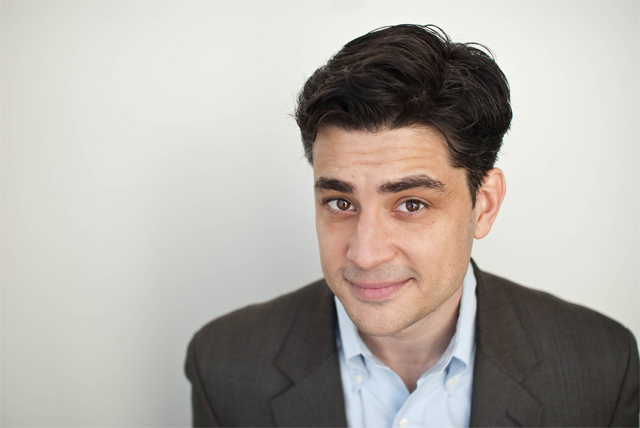
Why don’t you have black friends?

Tanner Colby
Tanner Colby

by Tanner Colby

“So, how many black friends do you have now?”

It’s a question I get asked a lot, ever since I set out five years ago to find out why I, your typical middle-class white person, had no black friends at all.

I do have black friends now, actually. Several. But I rarely offer that information when asked, because to ask white people how many black friends they have is to pose the wrong question.

Recently, a Reuters poll came out showing that 40% of white Americans have zero nonwhite friends, and only 20% of white Americans have five or more nonwhite friends. People seemed shocked that the numbers were so bad.

Personally, I was surprised that they were so good. America remains a deeply segregated and divided country. Even accounting for institutional and socioeconomic barriers, in the places we have the opportunity to integrate—the high school cafeteria, for instance—we largely don’t.

The Reuters survey itself is misleading, lumping all minorities together under the vague heading of “nonwhite.” Depending on what part of the country you live in (e.g, anywhere but Minnesota or Wyoming), it’s not uncommon to have Asian or Hispanic friends.

But the social divide between whites and those groups is more a function of the slow-rolling, generational process of immigrant assimilation. That is a wholly different phenomenon from the social divide between whites and blacks, which is the product of 400 years of slavery and segregation. That’s the social divide we should worry about, and if the poll had focused on that, the numbers would surely have been much worse.

The reason why “How many black friends do you have?” is such a terrible question is because it shows how we typically talk when we talk about race. Even when we try to talk about race in a constructive way, we usually make black people the object of the sentence, rarely the subject.

Black friends are the things to be acquired to prove one is not racist. The way the question is asked accords black people no agency, nor does it reveal anything about the real character of the white person being queried.

What you really want to know is not “How many black friends do I have?” but rather, “Have I become the type of individual that a black person might choose to be friends with?” That’s a real question. Poll a couple thousand white people with that and you might start to get some interesting answers, or at least some confused and befuddled looks.

White people are products of their own whitewashed, sanitized environment. Black people have been systematically excluded from white neighborhoods. Black stories rarely surface in popular culture. The history of race in high school textbooks has been boiled down to a handful of bedtime stories about Jackie Robinson and Rosa Parks. Try to tap into the average white person’s feelings on race and you won’t necessarily find feelings of hate and antipathy. You just won’t find much of anything, no fully formed or well-considered thoughts about race of any kind. There’s nothing really there. Even white people who want black friends don’t know where to start.

America’s lack of integration wouldn’t be such a big deal except for the fact that relationships and social networks are vital to economic advancement.

Even when programs like school busing and affirmative action give black people access to white spaces, when those people go to climb the social ladder there’s nothing there for them to grab onto, because there’s very little reciprocal effort coming from the other direction. It’s high effort and low reward.

The result is that black people end up with integration fatigue. Many black writers responded to the Reuters poll with essays on why they didn’t want white friends, and didn’t need them. White friends weren’t worth the bother.

This is their prerogative, but ultimately, it’s to society’s disadvantage because white people control the access to, well, just about everything. If you don’t have white friends, you might have a decent job and a comfortable life, but all the doors of opportunity in this country are not open to you. “I may do well in a desegregated society,” the Rev. Martin Luther King Jr. said, “but I can never know what my total capacity is until I live in an integrated society.”

Interracial friendships, social bonds across the color line, are a key factor in putting the sins of America’s past behind us. But it’s not something that’s accomplished by white people knowing lots of black people. It helps if white people know how to be better white people. – CNN.COM

Tanner Colby is the author of Some of My Best Friends Are Black: The Strange Story of Integration in America.

Fighting on the streets in Germany over refugees

Members of the Pro Deutschland group at a similar protest a year ago

German police kept angry rival protesters apart Wednesday during a third day of demonstrations in suburban Berlin over a new shelter for asylum seekers.

The conflict on the streets over a recent upsurge in refugee arrivals has spilled into violence this week. However Germany’s government rejected a call to summon state leaders for crisis talks about how to handle a recent upsurge in arrivals.

On Tuesday evening, the far-right National Democratic Party (NPD) demonstrated near the newly opened shelter, a four-storey former school in a housing estate built in Hellersdorf, east of Berlin.

Leftist counter-demonstrators then blocked a tramline nearby. During a melee between them and police, one officer’s cheekbone was broken by a hurled bottle. City police said they made 25 arrests.

Pro Deutschland, an anti-Islam group that has previously demonstrated against mosques, held a protest about 1 kilometre from the site, but there was no violence. Police fielded 300 officers.

With a general election on September 22, mainstream parties are wary of the deep divisions on the issue of refugees. Far rightists want to expel foreigners, whereas many liberals favour friendly immigration laws.

Most refugees in Germany enter without documents and apply for asylum after arrival. There has been a sharp rise this year in arrivals because of the conflicts in Syria and Afghanistan.

Wolfgang Bosbach, a conservative in Chancellor Angela Merkel’s Christian Democratic Union, urged local, state and national leaders to hold crisis talks, warning that extremists would exploit the issue.

“The government is aware that the increase in the numbers of refugees is posing a major challenge for the states and the regions,” an Interior Ministry spokesman said. “We are working closely together with them and therefore see no need for a crisis meeting.”

He said 5,000 approved refugees from the Syrian conflict would begin arriving at the end of August or early September under a relief plan. Nearly 12,000 other Syrians had reached Germany and applied for

asylum.

“We take the concerns of people about the refugee situation seriously,” he said.

The 200-bed overflow hostel at Hellersdorf has been set up in a low-income area of the capital where divisions run deep. Hellersdorf is an area of apartment blocks built by the communist authorities.

In the 23 years since reunification, attacks on foreigners have been especially common in the former communist east, where unemployment is high and populists accuse immigrants of taking away jobs.

Germany allocates asylum seekers to hostels across the country while their applications are processed. They are not allowed to work.

On Monday, the first 42 residents arrived at the shabby overflow hostel at Hellersdorf. A pro-refugee Berlin group said six people moved out again in fear for their safety. – dpa

Stabbing during student elections in South Africa

knife_murderThree students were stabbed on the Tshwane University of Technology (TUT) Polokwane campus this week, the institution said on Wednesday.

The attack on Tuesday was sparked by an argument related to student leadership elections held on campus, TUT spokeswoman Willa de Ruyter said in a statement.

The injured students received treatment at a local hospital and were discharged.

“The alleged perpetrator, who was assaulted by bystanders, has been apprehended and is currently under police guard in hospital. The [police have] already launched an investigation into the matter,” De Ruyter said.

The university instituted an internal investigation. De Ruyter said the institution was weapon-free and had security measures in place to ensure the safety of staff and students. – Sapa

Oprah: Just because you’re not racist doesn’t mean you’re not a racist

Ben_Shapiroby Ben Shapiro, FrontPage Magazine

Oprah Winfrey is a cultural mover and shaker. That much is clear after her historically inaccurate film The Butler, which portrays Ronald Reagan as a doddering racist and ignores the legacy of bigotry of Southern Democrats, finished first last week at the box office. Seventy-two percent of those who went to see the film cited Oprah’s participation as a factor in favor of their buying a ticket. Sadly, Oprah has used that power to push a false racial narrative directly at odds with the racial narrative pushed by The Butler.

First, The Butler’s racial narrative. The movie, as Oprah has said, begins with a lynching in 1926 and ends with President Barack Obama in the White House. The notion is that Obama marks the culmination of a centuries-long movement toward equality for blacks in America, a popular perspective that largely explains Obama’s election in 2008.

Then there’s Oprah’s actual racial narrative. In her view, President Obama remains an exception to a broader racist rule. Trayvon Martin, Oprah says, is just today’s Emmitt Till, murdered in 1955 by the Ku Klux Klan. So what if racism in America is at an all-time low? So what if the vast majority of Americans are not only not racist, but actively anti-racist? That’s not enough for Oprah. “A lot of people think if they think they’re not using the n-word themselves, they physically aren’t using the n-word themselves, and do not harbor ill will towards black people that it’s not racist,” she said in a comment that is as challenged syntactically as it is intellectually.

This is paranoia of the highest sort. And it is absolutely crippling to America’s future. If a huge number of Americans believe that racism that is not present in action nonetheless lurks beneath the surface of our life, waiting to burst forth in a conflagration of hate such as that which allegedly claimed Trayvon, there can be no shared future.

But many on the left, including Oprah, apparently don’t want a shared future. They want emotional blackmail. The corollary to the belief that racism hides in the nooks and crannies of the white personality is the belief that the only way to expunge such racism by embracing the philosophy of people like Oprah. If you see The Butler, you’re buying a racial indulgence; if you vote Obama, you’re buying a racial indulgence. Lee Daniels, director of The Butler, told CBS News that white extras cried during the filming of the movie. Presumably, in his view, that meant they were not racist. But what about all the Americans who will never shed tears over The Butler? How will they demonstrate their non-racism, even if there has never been a shred of evidence that they are in fact racist?

That seems to be the perspective not just of many black Americans like Oprah and Daniels, but the perspective of many in various minority communities. For example, in California, Governor Jerry Brown recently signed a law declaring that transgender children must be allowed to enter bathrooms of their choice and join sports teams of their choice. The idea here is that this will minimize bullying, as though most Americans bear children with gender identity issues some sort of ill will. The truth is far simpler: Americans have a right to worry that their children will feel uncomfortable in a bathroom next to someone of the opposite sex, no matter what that person believes him or herself to be. That’s not wrong. That’s normal. But the onus has now been placed on children without gender identity issues to explain why they feel uncomfortable at the urinal next to a girl, even if they’ve never bullied a transgender child.

That’s nasty. More than that, it’s an attempt to shape values by implying that everyone is in need of having their fundamental racism, sexism, homophobia overcome by government action.  Americans have nothing left to discuss. America is now a country where whites are often perceived as racist until proven innocent. And the only way to prove yourself innocent is to perform acts approved by the leftist establishment.

None of this helps black Americans. All it does is perpetuate power for those who divide us in pursuit of political gain. Hillary Clinton, who has begun touring the country invoking the supposed racism of voter ID supporters, is merely the latest race hustler to attempt this pernicious trick. Unfortunately, it seems to work. And that means that Oprah’s racial narrative is far more influential than The Butler’s.

Ben Shapiro is an attorney and writer and a Shillman Journalism Fellow at the Freedom Center, and author of the new book “Primetime Propaganda: The True Hollywood Story of How The Left Took Over Your TV” from Broadside Books, an imprint of HarperCollins.

Springboks dump black player for missing flights

Trevor Nyakane
Trevor Nyakane

by David Legge

Prop Trevor Nyakane has been dumped from the South Africa squad for missing flights and a video session, the national rugby union announced Sunday.

A statement said the 24-year-old forward would miss the trip to Argentina for a Rugby Championship match on August 24 because of “repeated breaches of team protocol”.

And a tweet from the official Springbok rugby account shed greater light: “No great scandal folks. Breach of protocol in Trevor’s case means missing flights and video session.”

Nyakane was among 30 players chosen for home and away Tests against the Pumas at the start of the annual southern hemisphere rugby championship that includes title-holders New Zealand and Australia.

But the prop from Bloemfontein-based Super 15 outfit the Cheetahs did not make the matchday 23 in the 73-13 rout of Argentina at Soccer City stadium in Soweto this weekend.

The 118-kilogram forward rose to prominence as an second-half impact player for his province and won his first Springboks cap against Italy last June as a replacement.

Nyakane also came off the bench against Scotland and Samoa in other four-nation tournament games and is considered a long-term challenger to tighthead incumbent Jannie du Plessis.

Coach Heyenke Meyer has replaced Nyakane with uncapped Lourens Adriaanse in his 26-man touring squad while Piet van Zyl takes the place of unavailable scrum-half Fourie du Preez.

Japan-based Du Preez, who came off the bench this weekend after a two-season absence, has been freed by Suntory Sungoliath only for the three South African home fixtures in the Championship..

Nyakane, injured hooker Chiliboy Ralepelle, full-back Zane Kirchner, centre Juan de Jongh, Du Preez and lock Franco van der Merwe drop out of the original 30-strong squad.

“We are allowed to travel with only 26 players and it was difficult to leave out a few of our squad members,” Meyer admitted before the Springboks flew to South America Sunday.

“The players that stay behind will benefit from game time in the Currie Cup and will certainly be in the selection frame when we select the squad for Australia and New Zealand.”

Despite the 60-point triumph against the Pumas, South Africa will be wary of facing them in western city Mendoza, where they snatched an undeserved 16-16 draw last season.

Squad

Backs: Bjorn Basson, JJ Engelbrecht, Bryan Habana, Patrick Lambie, Ruan Pienaar, Willie le Roux, Jan Serfontein, Morne Steyn, Jano Vermaak, Jean de Villiers (capt), Piet van Zyl

Forwards: Lourens Adriaanse, Willem Alberts, Marcell Coetzee, Eben Etzebeth, Siya Kolisi, Juandre Kruger, Francois Louw, Flip van der Merwe, Tendai Mtawarira, Coenie Oosthuizen, Bismarck du Plessis, Jannie du Plessis, Gurthro Steenkamp, Adriaan Strauss, Duane Vermeulen – Sapa

New Sharks recruit SP Marais has Springbok ambitions

SP Marais
SP Marais

New Sharks recruit SP Marais said it was not easy leaving Port Elizabeth for Durban, following his recent switch from the Southern Kings, but felt the move was necessary for his long-term ambitions.

The 24-year-old was the biggest pre-Currie Cup signing for the KwaZulu-Natal side and their new coaching staff.

Marais revealed on Tuesday he turned down offers from the Bulls and Cheetahs following his former team’s relegation from Super Rugby.

“There were a few options but I had to look at the bigger picture,” he said.

“I had to make a sound decision and, for any rugby player, the most important thing is your game time and that was one of the big factors that brought me here.”

The Cape Town-born player made a successful start with the Sharks scoring a match-winning try on debut against the Lions last Friday.

“As you see, I’ve been here a week and already got the opportunity,” Marais said.

“I need to use these opportunities now, so that when Super Rugby comes around next year, I’ve already found my place here.

“The first game was good, but it was more about the team winning and I’m glad I was part of that.”

His decision to leave Eastern Province was based on his ultimate goal to play for the Springboks.

“If you want to go further and into the green and gold, then this is the way to do it.

“So it was time for me to move and I’m very happy to be here.”

Marais credited Alan Zondagh, former Western Cape coach and founder of the Rugby Performance Center (RPC), as well as ex-Springbok assistant Alan Solomons, who recently left the Kings, for enhancing his development.

“The two of them played quite a big role in my career,” he said.

The Sharks on Tuesday confirmed Jacques Botes would stay on as captain for the competition, despite the return of Keegan Daniel.

The regular skipper missed the opening two games of the campaign with a knee injury, but would be back this week, said backs coach Sean Everitt.

“We want to keep Jacques as captain just for continuity purposes,” Everitt said. “

Just because it’s a new group, with new coaches, the more continuity you have the better. He’s done really well and we want him to continue.”

Daniel would wear the number six jersey instead of Brynard Stander, who was ruled out due to a ligament problem.

Odwa Ndungane and Tim Whitehead (ankle and rib) were also out — the former after sustaining a hamstring injury on Friday, although Sizo Maseko, Jean Deysel and Marco Wentzel have all been passed fit to play. – Sapa

Briton, Irishwoman charged for 24 pounds of cocaine in Peru

Cocaine-2Prosecutors formally levied drug-trafficking charges on Tuesday against two young women from Scotland and Ireland who were arrested this month trying to depart Peru with 24 pounds of cocaine in their luggage.

The prosecutor’s office in Callao, the city abutting Lima where its airport is located, also said in a statement Tuesday night that Michaella McCollum Connolly, 20, and Melissa Reid, 19, face a maximum penalty of 15 years in prison if convicted.

Their lawyers claim they were coerced into carrying the drugs by criminals who threatened them and their families and had them followed to Peru to ensure they collected the cocaine.

A Peruvian police official says both women insisted on their innocence during questioning. He spoke on condition of anonymity.

The two young women spent much of Tuesday in medical checks and preprocessing ahead of an expected transfer to prison to await trial.

Since their Aug. 6 arrest at Lima’s airport as they tried to board a flight for Madrid, the women’s plight has received blanket coverage by British tabloids. The reports have featured photos of both young women in swimsuits, and partying in Ibiza.

Small-time smugglers who plead guilty in Peru usually receive six-year prison sentences and, with good behavior, can be out in two years.

Peru’s penal authority says 1,648 foreigners are currently in its prison on drug-trafficking charges, 31 of them British citizens. – AP

John Maynard Keynes: Where’s The Genius?! (Part 1)

mercer_ilanaby Ilana Mercer

[followbutton username=’IlanaMercer’ count=’true’ lang=’en’ theme=’light’]

Like Ilana Mercer’s Facebook page

The following is the first part of my conversation with Benn Steil. Dr. Steil is senior fellow and director of international economics at the Council on Foreign Relations. His latest book is“The Battle of Bretton Woods: John Maynard Keynes, Harry Dexter White, and the Making of a New World Order.”

ILANA MERCER: Congratulations on a beautifully written book, so carefully researched, with both archival and secondary material. Followers of the Austrian School of economics, as I believe we both are, havea reflexive disdain for John Maynard Keynes.Nevertheless, the portrait you drew of him was powerful and persuasive. For example, it is easy to sympathize with Keynes’ frustration with the American mind—so prosaic and anti-intellectual—during the critical Bretton-Woods negotiations. There is much to admire too about Keynes’ “unrelenting nationalism.” I had never before thought of Keynes as an English patriot, first. You, a Hayekian thinker, managed to humanize J. M. Keynes. How did that happen?

BENN STEIL: Thanks Ilana. I’m a great admirer of Hayek’s writing, as you know, but I’ve never been one to wear the Austrian (or any other) label. More importantly, “The Battle of Bretton Woods” is in large measure a parallel biography of Keynes and Harry Dexter White, and no biographer succeeds in engaging readers of any stripe without empathy towards his subjects. In the case of Keynes, I may not sympathize with his economics in the way that his greatest biographer, Robert Skidelsky, does, but I found it not in the least bit difficult to admire him as a gifted public intellectual and to warm to him as a human being, with all his obvious flaws and foibles. One aspect of Keynes that I tried to bring out is how fundamental his English upbringing and nationalism were to shaping both his economic and political thinking. He was a defective diplomat, no doubt, but he took to the role with ease and enthusiasm.2)

MERCER: My mistake. You were awarded the 2010 Hayek Book Prize, so I presumed you favored Austrian economics. But back to Keynes. As you reveal, he “never bothered with a [doctorate]; he hadn’t even a degree in economics,” and “he formally studied economics for a brief period” only. (page 61) His election to “a life fellowship at Kings College, Cambridge, at twenty-six” seemed to rely on familial membership in Britain’s intellectual peerage. Yet, as you contend, he amalgamated the qualities of “mathematician, historian, statesman, philosopher” “with a genius that no economist has ever matched.” (page 62) Guide the perplexed, please.

STEIL: It’s important to understand that in Keynes’s day, and particularly in the “Oxbridge” environment in which he was schooled, it was not abnormal to become an economics “don” without a PhD. Also, there was and still is a powerful element of “nature over nurture” in Oxbridge thinking about a person’s capacity, and the combination of Keynes’s natural polymorphic intelligence and lineage (his father was a Cambridge economist) no doubt influenced his tutor and patron, the great economist Alfred Marshall. Hayek was critical of what he felt was Keynes’s lack of knowledge of important elements of classical economics, which was – in Hayek’s view – partly due to the fact that Keynes did not read German, which was still an important language for economics theorizing in the late 19th century.

Into the Cannibal's Pot

MERCER: By extension, I didn’t see in “The Battle of Bretton Woods” evidence for Keynes’ asserted brilliance. Clearly, John Maynard Keynes possessed an “effortless facility with words.” There were, moreover, a few wonderfully enjoyable quips that showed Keynes to be likeably bourgeoisie. Those of us on the Old Right can identify with what you call Keynes’ “Burkean conservatism.” Namely, his view that “society should never be forced to bend itself to abstract economic principles.” But public works, economic protectionism, cheap money, “deficit-financed government spending,” and“the animal spirits of the spendthriftin the service of boosting “consumption demand”: Where’s the genius in these? Doesn’t Keynesianism simply appeal to the worst in human nature?

STEIL: Keynes, I should emphasize, was not a redistributionist. He wrote, for example, that “the immense accumulations of fixed capital which, to the great benefits of mankind, were built up during the half century before the [first world] war, could never have come about in a Society where wealth was divided equally.” Keynes’s aim was to save capitalism, which we must understand was under great intellectual assault after WWI and the Russian revolution, and particularly during the Great Depression.

MERCER: Twice do you compare Keynes to Albert Einstein, writing that Keynes had “assaulted the intellectual orthodoxy of the economics profession the way Einstein had done with physics two decades earlier.” (pages 3, 89) However, for good or ill, Einstein unearthed laws of nature. Keynes’ theories perverted the natural laws of economics, did they not?

STEIL: I argue in the book that Keynes was transparently mimicking Einstein, whom he greatly admired, in titling his opus magnum “The General Theory” (of Employment, Interest and Money) – as in “The General Theory” of Relativity. Here’s the crux of the problem you touch on (somewhat brutally, in your second batch of questions) – Einstein’s induced laws of physics were falsifiable, whereas Keynes’s laws of economics were not. This is why economists can argue with such passion about the same phenomena decade after decade without the matters ever getting “settled.” I explain in my book economist Jacques Rueff’s critique of Keynes’s critical concept of “liquidity preference,” which underlies the whole intellectual structure of “The General Theory” as a universal theory. It matters who is right – if Keynes is right, then a depression can literally go on forever unless government steps in to substitute for fallen aggregate demand, whereas if Rueff is right, and depressions are manifestations of remediable policy failures (say, inappropriate monetary policy) or institutional blockages, then massive Keynesian fiscal interventions will cause new problems.

MERCER: You omitted another option derived deductively: the Austrian Business Cycle theory of Mises and Hayek, which is most assuredly correct. In any event, let us return to the character of Keynes. In your book you remark that, “What is striking is that Keynes did not support his position with economic theory. It was purely a matter of political viability.” (page 83) In 1917, British Prime Minister David Lloyd George captured the essence of Maynard’s “mercurial” mind, referring to him as an impulsive man who “dashed at conclusions with acrobatic ease,” and “rushed into opposite conclusions with the same agility.” (page 70) Again: Where’s the genius?

STEIL: Well, regarding the first quote you do cut out the middle of the sentence, which said “at this point in time.” The context was 1931, when, as I explain, Keynes’s stimulus ideas were a political nonstarter. So he publicly backed import tariffs as, what he considered, a second-best policy alternative to revive the British economy in the face of internationally uncompetitive but sticky wages. Keynes, as a scholar, pundit, and government adviser, did dash back and forth during his career between positions he believed were fundamentally right and those he believed were better than the most likely alternative policy stance. As for Lloyd George’s comments, they are spot on. Despite fundamental shifts and reversals through time in Keynes’s thinking on matters such as the virtues of free trade and price and currency stability, his writing sustained one supreme constant: biting disdain toward those who remained wedded to either old heresies, as he saw them, or old orthodoxies. If consistency were a mark of genius, then Keynes was surely not one. But he was right about much in his career – important stuff, like deriving the grave economic and political consequences of British war debts, or of the Versailles treaty – and, when he was wrong, he was typically wrong with sparkling flair.

[followbutton username=’IlanaMercer’ count=’true’ lang=’en’ theme=’light’]

Like Ilana Mercer’s Facebook page

©2013 By ILANA MERCER

For syndication rights to http://BarelyABlog.com or http://IlanaMercer.com, contact ilana@ilanamercer.com. Read more.

Egypt ‘in a state of media and rhetorical war’

The military says Tamer Abdel-Raouf sped through a military checkpoint, ignoring soldiers’ warning shots. A colleague who was with him in the car says he obeyed the soldiers’ orders to turn back, but they opened fire anyway as he was making a U-turn.

The result was the same: The reporter for the flagship Egyptian daily Al-Ahram on Monday became the fifth journalist to die as the media are swept up in the bloodshed roiling Egypt.

Television and radio stations air patriotic songs while a slew of talk show hosts glorify the military that seized power and denounce the Islamist government it overthrew.

A satirical programme on TV has become almost real in Egypt
This satirical programme on TV has become almost real in Egypt

It’s a sharp turnaround from the challenges these same journalists faced under President Mohammed Morsi’s rule, when reporters were sued by Islamist lawyers for “insulting the president.” After his ouster, his Muslim Brothehrood group openly blacklisted 50 of those media personalities.

Now journalists are facing deadlier perils.

A week ago Mick Deane of the British TV broadcaster Sky News and two Egyptian journalists were fatally shot while covering the violent breakup of protest camps in Cairo. Other foreign journalists are also feeling the pressure, complaining that security forces fail to respect the exemption that allows them on the streets after nighttime curfew.

The tense media landscape is increasingly mirroring the venomous atmosphere, where people are fractured along political lines.

“The whole media scene has been extremely polarized and it’s a reflection of the polarization in society,” said Rasha Abdulla, a media professor at the American University in Cairo.

TV presenters have sung the national anthem on TV and openly cried tears of joy when Morsi was ousted seven weeks ago.

Meanwhile, Morsi’s Brotherhood group has waged its own media campaign online and through its spokesmen on social media websites after channels sympathetic to the group were shuttered last month.

In one, a spokesman posted a picture of dead Syrian children online, claiming they were Egyptian kids killed by police. In clashes that the Health Ministry said killed around 80 people, the Brotherhood’s emails to reporters initially claimed 200 were killed. At another point it claimed the overall death toll was more than triple what the Health Ministry was reporting.

The discrepancies come from both sides, as the death of reporter Abdel-Raouf demonstrates.

A statement by the army said that he sped through a checkpoint after curfew and soldiers fired warning shots.

However, Hamed al-Barbari of Al-Gomhuria newspaper told the New York-based Committee to Protect Journalists that the two, riding in the car together, were turned back by soldiers at the checkpoint. He said the soldiers then fired at the car as they were making a U-turn, shooting Abdel-Raouf in the head.

Abdel-Raouf had been critical of Morsi’s ouster on Facebook and other social media, though the CPJ said there was no evidence that he was targeted for his views.

Western journalists have come under attack from angry citizens. CPJ reported that during violent protests Saturday, Annabell Van Den Berghe, a freelance journalist with the Belgian public broadcaster VRT, and crew were confronted by people who accused them of being American spies and said Western media were biased. They beat a crew member but did not harm the journalists.

The Qatar-based Al-Jazeera network, particularly its channel dedicated to live coverage of events in Egypt, has been the only major Arabic-language outlet for the Muslim Brotherhood’s views. Its Cairo office was raided by security forces last week and two of its journalists detained.

A number of its presenters quit around the time of Morsi’s ouster, saying the station had misled viewers. The network counters that it is covering all events in Egypt with “balance and integrity”

Three Turkish journalists, Metin Turan and Heba Zakaria were arrested over the weekend and Tahir Osman Hamde was reported arrested on Tuesday. It’s not clear whether any have been released.

Senior Egyptian officials have taken to critiquing the foreign media.

The State Information Service released a statement saying some media outlets are “falling short of describing events of June 30 as an expression of popular will.”

Meeting foreign journalists recently, interim Foreign Minister Nabil Fahmy expressed his frustration.

“You have a problem of your profession frankly,” he said, saying the limited space to report complex issues makes the journalists “very superficial in what you are doing.” “And frankly,” he added, “many of you have covered the news incorrectly and unfairly.”

Adel Iskandar, author of “Egypt in Flux: Essays on an Unfinished Revolution,” said that under the rule of autocratic President Hosni Mubarak, “The military was untouchable and invisible” and that “the media, both state and private, were obedient because they were censored.

“Now they are willfully on the bandwagon.”

Under Mubarak, bloggers were targeted as well. Mostly liberal, leftist and secular protesters active on Twitter and Facebook were beaten and arrested during subsequent rallies against the military rulers who temporarily took over after he was toppled. Similarly, online administrators of Brotherhood websites and online activists sympathetic to the group are now being arrested, shot at and even killed by security forces at anti-government protests.

Noha Radwan, a scholar of Arabic literature at University of California at Davis, follows events in her native Egypt closely, and says the media is actually driving polarization in the country.

“For the past three weeks media sources on the ground, whether they are the governmental or the independent channels. have been working the public into nothing short of a mass hysteria,” she wrote, blaming both the state media and Islamists.

“Every media source in Egypt is lying, spreading hearsay, and dismissing reports that do not serve their agendas. The result is a frenzied and divided population that is proving uncharacteristically callous to the bloodshed among one group or the other.”

Iskandar said that while Egypt may not be in a state of actual war, the battle lines have been drawn in the media

Egypt, he said, “is in a state of media and rhetorical war.” – AP

Trust for Marikana victims

Kay Sexwale
Kay Sexwale

A trust is being set up for victims of strike-related violence in Marikana last year, a group calling itself Citizens4Marikana said on Tuesday.

“We are in the process of forming a trust for the benefit of the persons identified by the Farlam Commission [of Inquiry] as victims of the Marikana massacre, and their families,” it said in a statement.

“The aim of the trust will be to benefit the named beneficiaries in whatever way the trustees deem most appropriate… Right now that could be by providing finance for legal fees.”

In the long term, this could be used for education scholarships.

“Ultimately, how funds are spent will be determined by the trustees and we will be responsible only for raising those funds.”

The group was started on Twitter following comments about the August 16 shooting last year that left 44 people dead at Lonmin’s platinum mine in Marikana.

“Our mission is to ensure that the truth of the events at Marikana are revealed and that the victims, and their families, achieve justice,” it said.

“While we recognise the importance of the Farlam Commission, justice cannot be found… unless real recompense is made to the people most intimately affected.”

On June 21, Dali Mpofu, for the miners, told the commission that due to financial constraints, it could be his last day representing the miners. He brought an application in the High Court in Pretoria several weeks ago seeking funding, but this was dismissed. Mpofu then took the State to the Constitutional Court, asking that it pay for his legal team. The application was dismissed on Monday.

On its website, Citizens4Marikana state that Nkome Attorneys, based in Pretoria, were appointed to temporarily collect donations.

Citizens4Marikana is as a social media movement started by a group of people moved by the violence at Marikana. There was nothing political behind it, said representative Kay Sexwale, former radio presenter and niece of former human settlements minister Tokyo Sexwale.

“We are just outraged at the Marikana massacre and we feel that something has to be done,” she said.

“Nothing is cast in stone. We are not trying to steal anyone’s money. We are just collecting money for those families affected. It is about the 44 people who died in August last year.”

Citizens4Marikana was started by “random people” on social media network Twitter, including Sexwale, UN secretary general at the G8 and G20 Youth Summits in 2012 Erik De Ridder, photojournalist Greg Marinovich, and Nomboniso Gasa, who describes herself as a researcher, analyst, and public speaker. – Sapa

‘Too few Afrikaans-speakers in dept. of trade and industry’

Rob Davies
Rob Davies

The under-representation of Afrikaans-speaking personnel in the department of trade and industry is unacceptable and the Freedom Front Plus will be asking the minister of trade and Industry, Mr. Rob Davies, to rectify the imbalance, Adv. Anton Alberts, the FF Plus’ parliamentary spokesperson on trade and industry said.

It appears from a reply to a question of Adv. Alberts addressed to the minister in which he asked for an analysis of the languages spoken by all the personnel in his department and other institutions which report to the department of trade and industry.

According to Adv. Alberts, in certain sections in his department, such as the Companies Tribunal and the National Consumer Commission, there aren’t any Afrikaans speaking personnel.

“It is unacceptable and worrying and serves as proof that the interests of minorities such as Afrikaans speakers are being ignored by the ANC government, especially when it is taken into consideration that a lot of correspondence and many complaints are submitted in Afrikaans,” Adv. Alberts said.

From the minister’s reply, it appears that of the 1 541 personnel in the department, only 123 are Afrikaans speakers, while Afrikaans is the third most spoken language in the country.

Apart from the Companies Tribunal and the National Consumer Commission, where there aren’t any Afrikaans speakers, percentage wise, there are only 4,4% at the Export Credit Insurance Corporation and 1,2% at the National Empowerment Fund.

The National Metrology Institute of South Africa is the most representative with 37,5% of personnel being Afrikaans speakers.

Serial black rapist denied bail after DNA tests

baby_rapeAn alleged serial rapist was denied bail by the Mahwelereng Magistrate’s Court on Tuesday, Limpopo police said.

“The court decided to not grant him bail, he is remanded in custody,” said Brigadier Hangwani Mulaudzi.

He may not be named until he has pleaded. The matter was postponed to September 27 for further investigation. The 42-year-old was arrested last week after he was linked to 12 rapes through DNA tests.

He allegedly killed three of his rape victims near Mahwelereng’s villages between 2002 and 2012. He reportedly dragged his victims to nearby bushes where he raped them. – Sapa

Bomb sweep at Pistorius court

Oscar Pistoirus during a previous court hearing

The police’s explosives teams carried out a precautionary sweep to check for explosives inside the Pretoria Magistrate’s Court room where paralympian Oscar Pistorius would appear on Monday.

Reporters were asked to temporarily leave the court where earlier, video cameras were being set up.

Security had assisted media with more chairs.

Pistorius’s brother Carl Pistorius was seen carrying the access tags that would allow his family inside.

It would have been Pistorius’s girlfriend Reeva Steenkamp’s 30th birthday on Monday.

Pistorius was charged with premeditated murder after the model and law graduate was shot dead in his Pretoria home on February 14.

The State was expected to serve the double amputee with an indictment, the National Prosecuting Authority said on Friday.

“We also expect to have the trial starting early 2014, but we cannot at this stage confirm the exact date because this has to be agreed upon in court by all parties concerned,” spokesman Medupe Simasiku said at the time.

During a subsequent bail hearing, Pistorius’s defence read out a statement in which Pistorius said he thought Steenkamp was an intruder.

He has been out on R1 million bail since February 22, with some of the conditions amended since then.

On June 4, prosecutor Andrea Johnson said in court that no details of the investigation would be revealed. She said the State needed more time to investigate the crime.

This was by agreement with Pistorius’s defence.

Johnson said the attention generated by Steenkamp’s death was not something the prosecution or the State could control, and felt his rights should not be overridden and that he had the right to be treated like any other person.

Last Tuesday, police confirmed that the investigation into Steenkamp’s death had been completed and that the matter would be postponed.

National police spokesman Lt-Gen Solomon Makgale said the investigating team was convinced that Pistorius had a charge to answer to.

The court session was expected to start at 9am. – Sapa

Egyptian Islamists attack churches

A burnt-out Coptic Church in Egypt

by Hamza Hendawi

After torching a Franciscan school, Islamists paraded three nuns on the streets like “prisoners of war” before a Muslim woman offered them refuge. Two other women working at the school were sexually harassed and abused as they fought their way through a mob.

In the four days since security forces cleared two sit-in camps by supporters of Egypt’s ousted president, Islamists have attacked dozens of Coptic churches along with homes and businesses owned by the Christian minority. The campaign of intimidation appears to be a warning to Christians outside Cairo to stand down from political activism.

Christians have long suffered from discrimination and violence in Muslim majority Egypt, where they make up 10 percent of the 90 million population. Attacks increased after the Islamists rose to power in the wake of the 2011 Arab Spring uprising that drove Hosni Mubarak from power, emboldening extremists. But Christians have come further under fire since President Mohammed Morsi was ousted on July 3, sparking a wave of Islamist anger led by Morsi’s Muslim Brotherhood.

Nearly 40 churches have been looted and torched, while 23 others have been attacked and heavily damaged since Wednesday, when chaos erupted after Egypt’s military-backed interim administration moved in to clear two camps packed with protesters calling for Morsi’s reinstatement, killing scores of protesters and sparking deadly clashes nationwide.

One of the world’s oldest Christian communities has generally kept a low-profile, but has become more politically active since Mubarak was ousted and Christians sought to ensure fair treatment in the aftermath.

Many Morsi supporters say Christians played a disproportionately large role in the days of mass rallies, with millions demanding that he step down ahead of the coup.

Despite the violence, Egypt’s Coptic Christian church renewed its commitment to the new political order on Friday, saying in a statement that it stood by the army and the police in their fight against “the armed violent groups and black terrorism.”

While the Christians of Egypt have endured attacks by extremists, they have drawn closer to moderate Muslims in some places, in a rare show of solidarity.

Hundreds from both communities thronged two monasteries in the province of Bani Suef south of Cairo to thwart what they had expected to be imminent attacks on Saturday, local activist Girgis Waheeb said. Activists reported similar incidents elsewhere in regions south of Cairo, but not enough to provide effective protection of churches and monasteries.

Waheeb, other activists and victims of the latest wave of attacks blame the police as much as hard-line Islamists for what happened. The attacks, they said, coincided with assaults on police stations in provinces like Bani Suef and Minya, leaving most police pinned down to defend their stations or reinforcing others rather than rushing to the rescue of Christians under attack.

Another Christian activist, Ezzat Ibrahim of Minya, a province also south of Cairo where Christians make up around 35 percent of the population, said police have melted away from seven of the region’s nine districts, leaving the extremists to act with near impunity.

Two Christians have been killed since Wednesday, including a taxi driver who strayed into a protest by Morsi supporters in Alexandria and another man who was shot to death by Islamists in the southern province of Sohag, according to security officials, who spoke on condition of anonymity because they weren’t authorized to release the information.

The attacks served as a reminder that while on the defensive in Cairo, Islamists maintain influence and the ability to stage violence in provincial strongholds with a large minority of Christians.

Gamaa Islamiya, the hard-line Islamist group that wields considerable influence in provinces south of Cairo, denied any link to the attacks. The Muslim Brotherhood, which has led the defiant protest against Morsi’s ouster, has condemned the attacks, spokesman Mourad Ali said.

Sister Manal is the principal of the Franciscan school in Bani Suef. She was having breakfast with two visiting nuns when news broke of the clearance of the two sit-in camps by police, killing hundreds. In an ordeal that lasted about six hours, she, sisters Abeer and Demiana and a handful of school employees saw a mob break into the school through the wall and windows, loot its contents, knock off the cross on the street gate and replace it with a black banner resembling the flag of al-Qaida.

By the time the Islamists ordered them out, fire was raging at every corner of the 115-year-old main building and two recent additions. Money saved for a new school was gone, said Manal, and every computer, projector, desk and chair was hauled away. Frantic SOS calls to the police, including senior officers with children at the school, produced promises of quick response but no one came.

The Islamists gave her just enough time to grab some clothes.

In an hourlong telephone interview with The Associated Press, Manal, 47, recounted her ordeal while trapped at the school with others as the fire raged in the ground floor and a battle between police and Islamists went on out on the street. At times she was overwhelmed by the toxic fumes from the fire in the library or the whiffs of tears gas used by the police outside.

Sister Manal recalled being told a week earlier by the policeman father of one pupil that her school was targeted by hard-line Islamists convinced that it was giving an inappropriate education to Muslim children. She paid no attention, comfortable in the belief that a school that had an equal number of Muslim and Christian pupils could not be targeted by Muslim extremists. She was wrong.

The school has a high-profile location. It is across the road from the main railway station and adjacent to a busy bus terminal that in recent weeks attracted a large number of Islamists headed to Cairo to join the larger of two sit-in camps by Morsi’s supporters. The area of the school is also in one of Bani Suef’s main bastions of Islamists from Morsi’s Muslim Brotherhood and ultraconservative Salafis.

“We are nuns. We rely on God and the angels to protect us,” she said. “At the end, they paraded us like prisoners of war and hurled abuse at us as they led us from one alley to another without telling us where they were taking us,” she said. A Muslim woman who once taught at the school spotted Manal and the two other nuns as they walked past her home, attracting a crowd of curious onlookers.

“I remembered her, her name is Saadiyah. She offered to take us in and said she can protect us since her son-in-law was a policeman. We accepted her offer,” she said. Two Christian women employed by the school, siblings Wardah and Bedour, had to fight their way out of the mob, while groped, hit and insulted by the extremists. “I looked at that and it was very nasty,” said Manal.

The incident at the Franciscan school was repeated at Minya where a Catholic school was razed to the ground by an arson attack and a Christian orphanage was also torched.

“I am terrified and unable to focus,” said Boulos Fahmy, the pastor of a Catholic church a short distance away from Manal’s school. “I am expecting an attack on my church any time now,” he said on Saturday.

Bishoy Alfons Naguib, a 33-year-old businessman from Minya, has a similarly harrowing story.

His home supplies store on a main commercial street in the provincial capital, also called Minya, was torched this week and the flames consumed everything inside.

“A neighbor called me and said the store was on fire. When I arrived, three extremists with knifes approached me menacingly when they realized I was the owner,” recounted Naguib. His father and brother pleaded with the men to spare him. Luckily, he said, someone shouted that a Christian boy was filming the proceedings using his cell phone, so the crowd rushed toward the boy shouting “Nusrani, Nusrani,” the Quranic word for Christians which has become a derogatory way of referring to them in today’s Egypt.

Naguib ran up a nearby building where he has an apartment and locked himself in. After waiting there for a while, he left the apartment, ran up to the roof and jumped to the one next door building from which he exited at a safe distance from the crowd.

“On our Mustafa Fahmy street, the Islamists had earlier painted a red X on Muslim stores and a black X on Christian stores,” he said. “You can be sure that the ones with a red X are intact.”

In Fayoum, an oasis province southwest of Cairo, Islamists looted and torched five churches, according to Bishop Ibram, the local head of the Coptic Orthodox church, by far the largest of Egypt’s Christian denominations. He said he had instructed Christians and clerics alike not to try to resist the mobs of Islamists, fearing any loss of life.

“The looters were so diligent that they came back to one of the five churches they had ransacked to see if they can get more,” he told the AP. “They were loading our chairs and benches on trucks and when they had no space for more, they destroyed them.” – AP
