Two KwaZulu-Natal policemen were jailed for 15 years each for murder by the Richards Bay Regional Court, the Independent Police Investigative Directorate (Ipid) said on Friday.
Freeman Masikane and Bhekuyise Dladla of the Hluhluwe uniform branch were sentenced on Tuesday, spokesman Moses Dlamini said.
The officers lied about the events that led to the death of a man during a chase. On September 16, 2009 the officers claimed to have received a report of a stolen vehicle. They gave chase and claimed that the driver, Sandile Dube, 22, refused to stop.
“The members fired shots directed at the driver.”
The car veered off the road and overturned, flinging Dube and his passenger out.
“The police alleged that the driver died as a result of the accident. The Ipid took over the investigation and after investigation found that the police’s version was not true,” he said. – Sapa
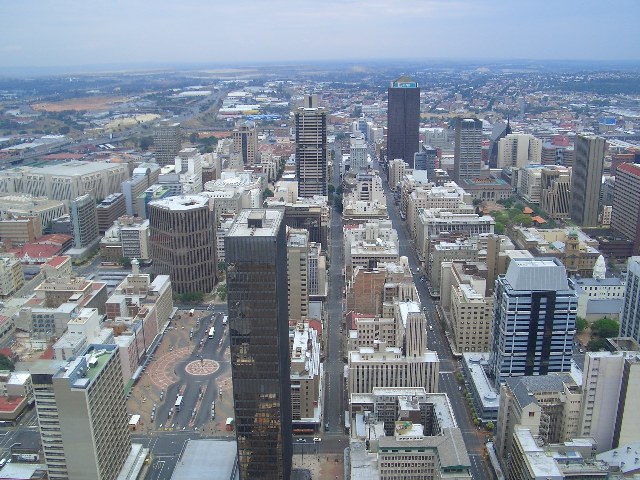
Johannesburg: fine from the air but down there muggings are rife
A City of Johannesburg official and two other people, accused of illegally selling state land in Lenasia, are expected to appear in the Johannesburg Magistrate’s Court on Friday.
Gauteng human settlements department spokesman Motsamai Motlhaolwa said the three allegedly sold land in Lenasia Extension 13 and Extension 4.
“The suspects allegedly defrauded unsuspecting residents of their money by selling them state-owned land,” he said.
“The first suspect will appear before the court for allegedly selling four government-owned stands.”
Official Sifiso Handsome Litau made his first appearance in March and was released on bail.
He was one of seven people arrested for illegally selling state land. The seven were appearing in different courts for selling stands for between R15,000 and R50,000.
Motlhaolwa said an alleged kingpin was arrested by the Hawks in 2010.
“With the help of our department, the Hawks also arrested an alleged kingpin Richard Zikhali, whose case is being heard at the Johannesburg Specialised Commercial Crimes Court,” said Motlhaolwa.
“To date three fraudsters have been found guilty and serving sentences ranging from three to six years in prison. Amongst those found guilty is Pastor Mandla Dlamini, 76, who is serving a three year sentence.”
In November, the Gauteng housing department demolished about 50 houses in Lenasia.
The department said it was acting within the law because the houses were illegally built on government land.
The buyers were given forged deeds of sale with the department’s logo. Following the bulldozing of houses, Lenasia residents held several protests about the demolitions and blockaded roads leading into Lenasia with rocks and burning tyres. – Sapa
Black footballer Balotelli on the cover of the Italian VanityFair
by Michele Leridon, Davide Lerner
From monkey chants in football stadiums to threats against the first black minister, racial outbursts in Italy reflect the profound social change taking place in a country relatively new to immigration.
Shocking episodes of racism have multiplied over the past few months, from hooligans taunting star striker Mario Balotelli with inflatable bananas to crude and vicious insults against the country’s Immigration Minister Cecile Kyenge, an Italian citizen born in the Democratic Republic of Congo.
Kyenge, who refuses to write Italy off as racist, has taken the brunt of the abuse since her election in April, shrugging off derogatory nicknames or photograph montages online in which her head is superimposed onto the bodies of indigenous African women.
“Why does no one rape her, so she can understand what the victims of atrocious crime feel?” a party official with Italy’s anti-immigrant Northern League party wrote of her last month in a Facebook post, while last week the vice-president of the Senate compared her to an orangutan.
The former was given a 13-month suspended sentence and was banned from public office for three years, while senator Roberto Calderoli is being investigated for inciting racial hatred — though he refuses to resign, insisting he has done enough by apologising to Kyenge with a bunch of flowers.
Bizarrely, the probe against him was only opened after a consumers association, Condacons, launched a complaint. And despite a petition signed by 200,000 people calling for Calderoli’s removal, the League member has so far managed to hold on to his prestigious Senate post.
“Italy is no more racist than other European countries, but sensitivity to the issue is not as developed here,” Italian historian Marco Fossati told AFP.
Michela Marzano, a philosopher and deputy from the centre-left Democratic Party (PD), said: “there is an extreme tolerance towards intolerance.”
“Italy has not had many opportunities to enter into contact with ‘the Other’, because it has always been a country of emigration rather than immigration,” she said.
While millions of Italian fleeing poverty emigrated to the United States, Latin America and other parts of Europe throughout the Twentieth century, the Mediterranean country has only had to absorb large numbers of immigrants over the past 20 years or so.
“We have remained very provincial, and the Calderoli affair has sparked a lot of indignation but no concrete action,” said Fossati, adding: “anyone who reacts with indignance is seen as a moralist, someone who is infected with the ‘politically correct’ virus.”
Luigi Manconi, head of the civil rights commission in the Senate, dates the ‘legitimisation’ of racial abuse back to an episode in 2007, when an Italian woman was raped by a Romanian man ahead of municipal elections, kicking off a fear-based campaign equating Romanians to rapists.
From that point, Manconi says, the Northern League — and Calderoli in particular — have felt increasingly free to be racist and “have played a fundamental role in the legitimation of xenophobia.”
Adriano Prosperi, modern history professor at Pisa University, compares Italians’ apathy in the face of racism today with the introduction of racial laws in 1938 which were “passively absorbed by Italian society” under dictator Benito Mussolini’s Fascist regime.
Centre-right former premier Silvio Berlusconi, renowned for off-colour comments, sparked a backlash in January when he stated during the inauguration of a Holocaust museum that the regime “in many ways did good things” for Italy — before retracting his comment.
Despite such incidents, Prosperi said he does not think Italy is “profoundly racist at heart”. While the League may generate shock headlines — its former leader Umberto Bossi once said immigrants arriving by boat should be shot at with cannons — it won just four percent in the last elections.
The real reason Calderoli has not been forced out, Prosperi says, is that the current government “has sacrificed values for the sake of realpolitik.” – AFP
A house in Detroit, mirroring the black city’s decay
by Tom Krishner and Dee-Ann Durbin
The city of Detroit, which for years paid its bills with borrowed money, is the largest city in U.S. history to file for bankruptcy protection. Here’s a look at how the city spiraled into financial ruin and why it’s in so much trouble:
What happened?
For decades, Detroit paid its bills by borrowing money while struggling to provide the most basic of services for its residents. The city, which was about to default on a good chunk of its $14 billion-plus debt, now will get a second chance in a federal bankruptcy court-led restructuring. Detroit’s budget deficit this year alone is estimated at $380 million, and Kevin Orr, its state-appointed emergency manager, chose bankruptcy over diverting money from police, fire and other services to make debt payments. The move conserves cash so the city can operate, but it will hurt Detroit’s image for years. It also leaves creditors with pennies on the dollar and places in jeopardy the pension benefits of thousands of city retirees.
Mayor Kwame Kilpatrick, after his federal indictment on corruption charges
Why did it happen?
It took decades of decay to bring down the once-mighty industrial giant that put the world on wheels. The city grew to 1.8 million people in the 1950s, luring them with plentiful jobs that paid good wages to stamp out automobiles for sale across the globe. But like many American cities, Detroit’s fall began late that decade as developers starting building suburbs. Then came the 1967 race riots that accelerated the number of white residents who moved to the cities north of Eight Mile Road, considered the region’s racial dividing line. At the same time, auto companies began opening plants in other cities, and the rise of autos imported from Japan started to cut the size of the U.S. auto industry. Detroit’s property values fell, tax revenue dropped, police couldn’t control a growing murder rate, and many middle-class blacks fled the city for safer suburbs with better schools. By 2009, the auto industry collapsed along with the economy as a whole, eventually pulling the city down with it. Government corruption under former black Mayor Kwame Kilpatrick only made things worse. In the 2000 census, Detroit’s population fell under 1 million in as the exodus continued. Today it’s barely above 700,000.
Did the auto industry’s fall drag down Detroit?
It’s a big factor. The city is littered with abandoned factories built in the postwar boom years, most of which have multiple stories. As the Japanese auto invasion began cutting into Detroit’s sales, General Motors, Chrysler, Ford and hundreds of auto parts companies looked outside the city to build one-story plants that could handle modern assembly lines. With every downturn, more companies abandoned the city, leaving the hulking buildings to squatters. Detroit’s tax base continued to erode. By the time the auto industry melted down in 2009, only a few factories from GM and Chrysler were left. GM is the only one with headquarters in Detroit, though it has huge research and testing centers with thousands of jobs outside the city.
Where else has this happened?
Before Detroit, the largest local government bankruptcy filing was in Jefferson County, Ala., in November 2011. The county cited more than $4 billion in debt, mostly from corrupt deals involving sewer financing that fell apart when the home mortgage crisis hit in 2008. The county is still trying to clean up the mess. Last month, commissioners sought a compromise that calls for paying creditors a little over half the money they’re due and raising sewer rates. They hope to exit bankruptcy by December. Jefferson County has nearly 700,000 people, which is similar in size to Detroit, and includes the city of Birmingham. The economic crisis also caused bankruptcies of smaller cities. The California cities of Stockton, San Bernardino, and Mammoth Lakes all filed for bankruptcy last year. Stockton and San Bernardino were hit by plummeting home values during the recession, which cut property and sales taxes, while Mammoth Lakes was overwhelmed by a $43 million breach-of-contract judgment brought against it by a developer.
General Motors rebounded after bankruptcy: can Detroit follow?
Maybe. In GM’s 2009 government-funded bankruptcy, the company was split in two, with money-making assets staying at GM and decrepit plants and billions in debt going to a separate company. GM reduced its debt from $46 billion to $8 billion and used the bankruptcy to close factories, shed brands and get more concessions from union workers. The new, leaner company has since racked up $17.2 billion in profits and added jobs in Detroit. For the city, the comeback will be much harder. Its decaying neighborhoods can’t be sent elsewhere. But creditors whom Detroit owes more than $14 billion will have to take pennies on the dollar. Thousands of retired city workers could lose at least part of their pension benefits. Concessions could be forced upon dozens of city unions, including pay and benefit cuts. Free of these financial burdens, Detroit will be able to concentrate its limited dollars on services such as basic police and fire protection. Better services could bring more people and lure more business investment. Already the downtown and an area to the north called Midtown are seeing business and residential growth — signs that Detroit has a future. – AP
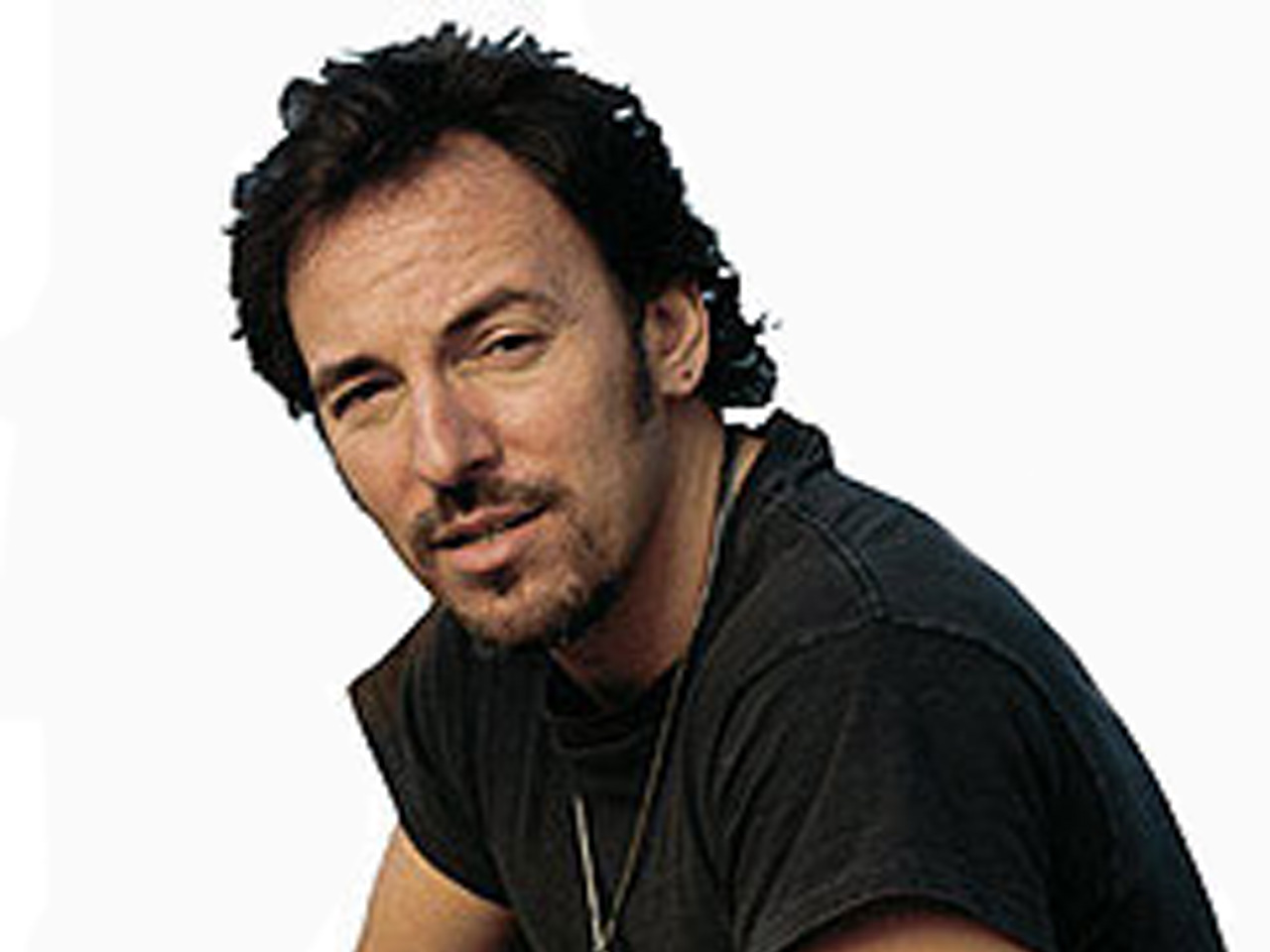
Bruce Springsteen dedicated his protest song “American Skin (41 Shots)” to teenager Trayvon Martin during a concert in Limerick, Ireland.
In a video posted online, the 63-year-old singer told the crowd Tuesday: “We’ll send this as a letter back home for justice for Trayvon Martin” after noticing a fan’s sign that read “American Skin (41 Shots).”
George Zimmerman was acquitted Saturday of second-degree murder and manslaughter charges in Martin’s death. Zimmerman said he fired his gun in self-defense during a February 2012 confrontation with the 17-year-old in Sanford, Florida.
Lyrics in the song include “you can get killed just for living in your American skin.” Springsteen wrote the song about the 1999 police shooting death of Guinean immigrant Amadou Diallo. – AP
Richie McCaw’s return will add extra spice to Saturday’s Super Rugby qualifier between Canterbury Crusaders and Queensland Reds as the All Blacks skipper comes up against old foe Quade Cooper.
McCaw is back after a six-month sabbatical from rugby and has been named among the replacements as the seven-time champions look to stay alive in the Super 15 title race in the sudden-death encounter against the 2011 winners.
The Reds are looking to overturn a six-match losing record in Christchurch, and have not beaten the Crusaders in New Zealand since 1999.
The winners will progress to next week’s semi-finals against either holders Waikato Chiefs or triple champions Northern Bulls, who have a bye after finishing first and second in the final standings.
McCaw’s debut appearance of the season provides a psychological lift for the Crusaders, who also have All Black ace Dan Carter calling the shots in his fly-half duel with discarded Cooper.
And there’s little love lost between the Wallaby and McCaw.
Cooper shoved the Kiwi in the head after James O’Connor scored a match-winning try in the 2010 Bledisloe Test in Hong Kong.
During the 2011 Tri-Nations decider the Australian kneed McCaw following a ruck but was later exonerated.
Cooper said he was anticipating a torrid time from the Crusaders’ supporters following his past incidents with the revered All Blacks skipper.
“I expect that every week. Nothing changes. We just played down in NSW and I take it I’m not the most favourable bloke down there either,” Cooper said.
“It is what it is and that’s part and parcel of rugby and rivalries in rugby. We’ve got a great rivalry with the Crusaders as a team. We played them in 2011 and managed to get the win. I’m sure that will add to the occasion.”
Crusaders coach Todd Blackadder said of McCaw: “While he’s mentally tough, he won’t be physically fit to the level that’s required. He’s a quality player and he’s Richie McCaw, of course, but at the end of the day we’ve still got to put this team first.”
The match will have a Test feel to it with 13 All Blacks (nine present and four former) in the Crusaders up against a Reds team containing 14 Wallabies (six present and eight former).
The Reds will also be strengthened by the return of key Wallabies –scrum-half Will Genia and lock James Horwill — who missed last week’s 14-12 win over the Waratahs.
While Queensland haven’t won in Christchurch for 14 years they have beaten all four New Zealand sides they have played this season.
If they defat the Crusaders they will become the first Australian team to clean sweep all five Kiwi opponents.
In Sunday’s other qualifier, South Africa’s Central Cheetahs are searching for their first victory in five trips to Canberra when they take on the ACT Brumbies.
It will be the Brumbies’ first playoff game since 2004 when they downed the Crusaders in the final, while the Cheetahs are making their debut in the finals.
The Brumbies lost out on the important second spot to the Bulls after their 21-15 last-round slip-up against the lowly Western Force in Perth.
Wallaby flanker George Smith will return to the Brumbies starting side after playing 30 minutes off the bench against the Force.
“For me now it’s about picking a team that can win the competition,” Brumbies World Cup-winning Springbok coach Jake White said.
“George has all that experience, has played in play-offs and won the competition before so any bit of advantage we can get going into this knockout stage of the competition is going to be vital.”
The Cheetahs narrowly lost 24-23 on their last trip to Canberra. – AFP
The Bloemfontein-based Cheetahs will celebrate their best season in Super Rugby on Saturday by gate-crashing a playoff party for former champions.
The Cheetahs – who have qualified for the playoffs for the first time -are the only one of the six remaining teams which has never won a Super Rugby title. Their quarterfinal opponents, the ACT Brumbies, have two; the Canterbury Crusaders, who host the other quarterfinal, have seven and their opponents, the Queensland Reds have one.
Two teams received a bye to the semifinal stage: the Hamilton-based Chiefs will defend their only Super Rugby crown and the Pretoria-based Bulls will attempt to win their third title and their first since 2010.
The Cheetahs are unused to being among such illustrious company.
Their best-ever finish was seventh in 1997, after which they left the tournament for nine years. Since rejoining the competition in 2006, they have never finished higher than 10th.
But this season, under former Springboks hooker Naka Drotske, they have perfected one of the most expansive gameplans in the competition, winning 10 of 16 regular-season games and showing an ability – vital to South African teams – of winning in Australia and New Zealand.
They won at the Dunedin-based Highlanders, the New South Wales Waratahs and the Western Force, losing only to the Chiefs on their overseas games.
“We have a confident atmosphere in the team and we know if we play well, we can beat any team on the day,” Drotske said.
“The last two tours – where we have won in Australia – have done our confidence the world of good. And we prefer to play the Brumbies. They are also new to the playoffs and their current group of players hasn’t played in this round of the competition yet, so it is a new thing to them as well.”
The Cheetahs were underestimated by many opponents, and hope to exploit the same advantage on Sunday when the Brumbies, champions of the Australian conference, might take them too lightly.
“We play better as a team when we are underdogs as there is absolutely no pressure on us,” Drotske said.
The Brumbies have been the top team in Australia this season but the confidence of many players may have been dented by being part of an Australia team that was beaten by the British and Irish Lions, while the ACT was also beaten last week in Perth.
Brumbies coach Jake White says veteran flanker George Smith will definitely be among his starting lineup for the match, though Smith had a tough time in the third Lions
test after suffering an early head knock.
The Crusaders have named All Blacks captain Richie McCaw on the bench and international lock Luke Romano in their starting lineup for Saturday’s match at Christchurch.
McCaw expected to miss all of the Super Rugby season during an eight months “sabbatical” which began after New Zealand’s loss to England at Twickenham in December. He was due to return for the All Blacks’ first Rugby Championships match against Australia on Aug. 17 but has answered the Crusaders’ call for late-season reinforcement.
The Crusaders are attempting to win an eighth Super Rugby title. This will be their 12th-straight appearance in the playoffs but the players are not yet jaded.
“You have got to treat it as an honor, not a burden,” scrumhalf Andy Ellis said. “As soon as you think ‘we have been here so many times, we should win it, we should win it’ it just creates anxiety.”
Queensland has named Wallabies James Horwill and Will Genia in their starting lineup, though they have lost center Anthony Faingaa, winger Rod Davies and utility Mike Harris from a backline which has changed in four places after last week’s narrow win over New South Wales.
“There is always going to be some damage at this time of the year and while it’s disappointing to be without a few guys, we are getting the experience of James and Will back,” coach Ewen McKenzie said. “Their influence can’t be understated and you need world-class players and strong leaders if you are going to win these games on the big stage.” – AP
The black BMW which sped through a red traffic light and crashed in Braamfontein was registered to a presidential bodyguard, The Star reported on Thursday.
Maj-Gen Mzingaye Mxolisi Dladla, of the police’s presidential protection service, reportedly refused to comment to the newspaper about the car, which was reportedly part of a blue light convoy.
“I don’t discuss anything about my unit, to any paper,” he was quoted as saying.
According to The Star, presidency spokesman Mac Maharaj said he could not comment on the crash, as “all blue light protection is under the SAPS, you need to ask them”.
It was reported that President Jacob Zuma retained Dladla as his personal bodyguard after he was dismissed as deputy president in 2005.
When Zuma became president, Dladla was one of the bodyguards in Zuma’s closest circle, known as the Echo Group and was appointed head of the presidential protection service.
On Tuesday, the car reportedly registered to Dladla was involved in a crash near the Nelson Mandela Bridge in Braamfontein.
When photographers began taking pictures of the crash, the car’s number plates were removed.
Johannesburg metro police spokesman Chief Superintendent Wayne Minnaar told the newspaper the police would investigate the crash. – Sapa
One of Mpumalanga’s most wanted criminals, suspected drug-leader Douglas Mogakane, will appear in the Mhala Magistrate’s Court in Thulamahashe on Thursday.
A Sapa correspondent reported that Mogakane would appear in connection with more than 10 charges including from murder, armed robbery and carhijacking.
Mogakane, 27, was arrested in Pretoria after an armed robbery in July last year after he escaped from custody in Skukuza police cells on August 4, 2011.
On Tuesday, he appeared in the Pretoria Magistrate’s Court on charges of business robbery, committed in Pretoria after his escape, which led to his arrest.
He was refused bail and the case was postponed to August 14, for further investigation.
Mogakane was transferred to Mpumalanga to face his other charges, police said.
“Mogakane is alleged to have committed a series of atrocious crimes including rapes, business robberies, armed robberies, house robberies, murder, car hijackings, theft of motor vehicle and possession of unlicensed firearms,” spokesman police spokesman Colonel Leonard Hlathi.
He said Mogakane would appear along with two others who are accused of being part of his gang.
“We hope the court does not grant him bail until his trial. After his escape from the Skukuza police cells Mogakane reportedly continued to terrorise the community of Mpumalanga, allegedly raping women, killing people and also hijacking cars,” said Hlathi.
Hlathi said some trial dates had been set.
“In some of his alleged cases, a trial date has been scheduled to take place during September, 11. He will not face the trial in the magistrate’s court but in regional court.” – Sapa
The amount two senior police officers are accused of stealing from a crime intelligence fund has been reduced, the Pretoria Magistrate’s Court heard on Wednesday.
Crime intelligence unit chief financial officer Maj-Gen Solly Lazarus and the unit’s head of logistics Colonel Hein Barnard would now face charges relating to the alleged theft of R370,000.
Prosecutor Gerrie Nel submitted the revised figure to the court. Both were suspended and charged with theft, fraud, and corruption initially involving R1.1 million.
The two said, through their lawyer, they would seek to have part of their bail conditions reviewed.
The court turned down their request to have the charges broken down into individual offences.
Nel opposed the suggested amendment to the charges. He said the charges were related, even though they were committed on different occasions over a lengthy period.
“We have one fraudulent action but the same role players.”
The matter was postponed to September 18.
The duo was granted bail of R10,000 each in December. In 2011, the unit’s former head Richard Mdluli was also charged with fraud and corruption following alleged misuse of the unit’s funds.
Mdluli allegedly used the money to purchase luxury vehicles. The charges against him were later withdrawn. – Sapa
More and more, the term “genocide” is entering our everyday vocabulary. Many people, including columnists, have already explained that it is not the absolute number of people killed that defines a genocide, but the motives and the manner in which they are slaughtered.
The atrocities committed on South African whites during farm murders, house robberies, car hijackings and the shooting of children, even toddlers such as Willemien Potgieter, point to a disturbing form of ethnic cleansing going on in the country.
In a current survey on our Afrikaans website and with more than 700 people participating, 93,9% of those polled declared: “I believe there is a white genocide taking place in South Africa.”
How did this Afrikaner genocide arise? Where did it come from? When did it start? Many people believe it is caused by racial tension. Although race does play a role in that the perpetrators are normally black and the victims white, race in itself does not account for the nature of this genocide which is as pervasive as it is officially denied and passed over in silence by the so-called mainstream media.
I believe the genocidal movement against Afrikaners started already in the 1940s. Early in the fifties there were the first incidents when whites were randomly attacked and butchered by black rioters, so there was already an inchoate form of ethnic violence even back then. In East London a nun doing charity work in the local black township was murdered and then set upon by the rioters who ate parts of her body. Such acts of cannibalism endure to this day, as was reported in Witchdoctor who cooked farmer’s testicles a few days ago. More importantly, however, the ideology of Afrikaner genocide was being formed at the time with mostly communists dreaming of a day when South Africa would be cleansed of its indigenous whites altogether.
Recently a biography by Alan Wieder, Ruth First and Joe Slovo in the war against apartheid was published. I have not read it, but it is certainly significant that an unreconstructed communist such as Slovo should be widely honoured today. [Postscript: I did read it after writing this and wrote a review in Afrikaans.] Although Slovo spent most of his adult life in London, he was by far the most influential revolutionary in South Africa during the twentieth century. Through his skillful use of both terrorist violence and propaganda, he was able to conquer the once seemingly invincible Afrikaner government with its strong military backed by a powerful industrial state.
It would be fair to say that a coterie of communist intellectuals from the 1940s introduced the notion that South Africa should either “return to the origin” of a putative, Edenic, unspoilt Africa before the coming of the evil white man or it should undergo a violent revolution that would create a completely new and strictly egalitarian society. Either way, a radically “new country” had to be constructed.
Commentators as diverse as Dr. Gregory Stanton of Genocide Watch and the French “new philosophers” (nouveaux philosophes) of the 1970s have argued that there is an intrinsic link between communism and genocide. Most genocides of the twentieth century, be they in Soviet Russia, China, Cambodia, Vietnam and elsewhere, have been committed by communists. At least sixty million people were murdered in what has become known as a “Red Holocaust” perpetrated under the leadership of figures such as Joseph Stalin, Kim Il Sung, Mao Zedong, Ho Chi Minh and Pol Pot.
Communism is an absolutist ideology that brooks no dissent, therefore a causal link seems to exist between communism and genocide. Since the quasi-communist takeover of South Africa in 1994 and with the country since moving further and further to the Left, genocide has also started to appear as a fundamental characteristic of the so-called “new South Africa”.
Intolerance towards the Afrikaner ethnic group, the Afrikaans language, literature and culture have grown rapidly. Many communists regard the Afrikaans language in itself as “offensive” and therefore want it banned from the public domain. Afrikaans place names too have been systematically removed from towns, streets, buildings and other places.
A foreign African set alight by local South African blacks
At the same time the country is often shaken by xenophobic riots and killings, directed against foreign Africans. During 2009, 80 people were slain during a spate of xenophobic attacks, with hardly anyone charged with the murders.
In a sense, Afrikaners are also considered to be foreigners, being non-black and non-English. Having been excluded from political power, they are now caught between two chauvinisms, two forms of intolerance: racial and linguistic. Even though they have been in the country for 360 years, they are deemed “not to fit in” with the new, revolutionary culture which is Afro-Saxon, black and English.
However, neither all blacks nor all English-speakers display intolerance towards Afrikaners and Afrikaans. Millions of black people also speak Afrikaans as a second language and as a lingua franca in large parts of South Africa. Where does Afrikaner hatred come from then?
It comes from the revolutionary minority, of whom Joe Slovo is the progenitor. In a sense, Marxism is the ultimate uitlander ideology. After the discovery of gold in the Transvaal in 1886, about 50 000 foreign speculators descended upon Johannesburg. Despite being very tolerant and accomodating to them, the then Afrikaner or Boer government was not to their liking and a process of fomenting war and ethnic hatred towards Afrikaners was launched.
Many of the stereotypes and caricatures created by the uitlander press of Johannesburg are still with us today and have never been challenged. These have simply been adapted and amended to suit the ends of the Marxist revolutionaries. Whereas in the nineteenth century the Afrikaner was depicted as being “backward and uneducated” (even though many uitlanders crawled out of the slums of European cities), he is now seen as “conservative and racist”.
To Slovo and his followers, the Afrikaner’s love of his language and culture, his patriotic attachment to South Africa, his pride in his intellectual and economic achievements, are all signs of his incorrigible “fascism”. The continued existence of some Afrikaans schools, churches, cultural associations and so on, is seen as a reactionary refusal to bend to the will of the revolutionary Left that conquered the country in 1994. The Afrikaner must therefore be punished for his dissidence and his children preferably brainwashed into accepting the dissolution of their culture and identity, as well as their integration into a kind of mulatto multitude.
Slovo was not alone in his abhorrence of Afrikaners. In the writings of his close friend, the Nobel-prize winning author Nadine Gordimer, as well as the photographs of the acclaimed photographer, David Goldblatt, we find a similar treatment of Afrikaners as uncouth and even mentally retarded “white trash”. In emulation of Gordimer, the renegade Afrikaner author André Brink has created some even more extreme caricatures from Afrikaner history. Many of these left-wing cultural Marxists drew on American “Appalachian” stereotypes to portray Afrikaners to foreign audiences. Afrikaners are seen as “white trash”, despite the fact that as a group in South Africa they have produced more postgraduates, more accountants, more lawyers, more classical musicians, more scientists and mathematicians than any other. Until recently, more books had been published in Afrikaans in South Africa than in English.
But to the communist revolutionaries, we are “backward” and “mentally retarded”.
In fact, even the finest examples of modern Afrikaner architecture have been derided as expressions of the apartheid ideology and a kind of “degenerate art”. Ironically, those who object to the Nazi concept of Entartete Kunst or “degenerate art”, apply it themselves when looking at Afrikaans architecture, paintings, music, literature and so on.
The Rand Afrikaans University (now University of Johannesburg) as photographed by David Goldblatt (Museum of Modern Art, New York)
Like the French new philosophers such as André Glucksmann and Jean-François Revel have claimed, Marxism is a totalitarian ideology. It demands total revolution: a radical change in the whole world and all culture. But it may also stigmatise a culture as useless and even pernicious. If one cannot destroy the culture itself, its bearers may always be physically eliminated. Within the totalitarian mind, all of this is perfectly logical.
Volumes may be written about the betrayal of Afrikaners by their own ruling elite, especially by Mr. FW de Klerk. But one of the most tragic consequences of that betrayal has been the passing of the formerly nationalist media group, Naspers, over to the camp of the Slovoists. The politics of Naspers, as opposed to its more neutral foreign investment decisions, is determined by one or two political commissars serving on its board of directors.
Until recently, Prof. Jakes Gerwel, a self-confessed Marxist who had wept when the Berlin wall came down, had served on the Naspers board. Another radical cultural Marxist who is strongly hostile towards Afrikaners and their tradition, is Prof. Hein Willemse who still serves on the board.
Trotsky described Czarism “as belonging in the dustbin of history”. To the uitlander communist in South Africa, Afrikaners represent “white trash” that also belong in the “trash can of history”. Since 1994, both the mass media and government have conspired to produce a series of very negative images of Afrikaners.
They purveyors of hate produce the hate crimes, creating a climate in which killing Afrikaners is seen to be permissible, even desirable. But Afrikaner or white genocide can also be a joke, presumably because:
no-one cares;
whites should just accept whatever happens to them.
Writing on a blog for the left-wing Mail & Guardian newspaper, Sarah Britten explains why joking about so-called “corrective rape” for lesbians is horrific, but making fun of white genocide on Twitter is not. Even just recognising the phenomenon of white genocide, makes one a “right-wing extremist”:
“But joking about corrective rape is very different from joking about #whitegenocide. One is real, an act of violence against a very vulnerable section of society. The other is the perception of a politically motivated programme of murder, one that is deeply entwined with right-wing extremist narratives. One kind of joke reinforces existing power structures; the other subverts them.”
To the Left, whites need never fear, even when they are killed or told that they are going to be murdered.
A novel portraying Afrikaners as mentally retarded, racist, incestuous “white trash”, such as Triomf by Marlene van Niekerk, was acclaimed as the greatest work of literature ever to come out of South Africa, apart from Gordimer’s body of writing. On the state television and in the pages of the Naspers newspapers, such caricatures of Afrikaners were eagerly embraced.
Van Niekerk spent some time at the University of the Witwatersrand where she had imbibed the Slovoist view of Afrikaners as “degenerate whites”. The theme of incest in the novel and a subsequent film was a metaphor for the Afrikaner nation itself. By dating or marrying someone of your own kind, you are committing a form of incest, which can only produce degenerates. Of course, at a certain level, the cultural Marxists of South Africa want to claim that being white or of European ancestry is in itself a form of “genetic degeneracy”. History is on the side of the creole or the mulatto, as the Marxist intellectual and Naspers director, Prof. Hein Willemse, has often explained.
“Opting out” of creolization, be it linguistic, racial or otherwise, is therefore deemed to be an affront to the system. Afrikaners who wish to continue with their tradition, as well as the standard, Germanic form of their language that may be traced back to the seventeenth century and even to the European Middle Ages and Middle Dutch, are regarded as dissidents, even heretics. In 2005 I was invited to talk about my fairly innocuous novel Moltrein in a bookshop in Stellenbosch and was almost prevented from doing so by a group of Marxist academics. I was even threatened with violence.
This was my first direct experience of the anti-Afrikaner intolerance that manifests itself in censorship, ostracism and, of course, farm murders and other kinds of ethnic killings in South Africa. Many Naspers journalists are in favour of such censorship. The full extent of the horrors and atrocities currently being visited upon Afrikaners is carefully sanitised as “just crime which one finds everywhere”, when it is not completely ignored. Among journalists and academics, there is much tacit support for the ethnic cleansing of Afrikaners. Prof. Jonathan Jansen, the affirmative-action rector of the University of the Free State, has stated on more than one occasion that there was something wrong with people who dated or married members of their own race.
Uitlander communists and other South African revolutionaries are contemptuous of Afrikaans and Afrikaners because they are seen as “Eurocentric”, “too white”, “exclusive” (even though Afrikaners are routinely excluded from government and most institutions on racial grounds) and, of course, “racist”. In South Africa, we have really come full circle and the racism of the anti-racists is far worse than any traditional ethnic chauvinism of the “nationalist” type.
“Mixing the races” is seen as imperative in South Africa, because Afrikaners need to be assimilated and coerced into “being part of one, big multicultural nation”. In the words of Leopold Scholtz, one of the Naspers ideologues, “the Afrikaner must be fused with the brown (mulatto or Coloured) people”.
But for some assimilation is too slow. Killing is so much quicker and more effective. Hence the “final solution to the Afrikaner problem” that is taking shape in South Africa.
The South African sevens rugby will compete for the bronze medal in the rugby sevens tournament at the World Student Games after going down in a narrow 17-14 defeat to hosts Russia in the semifinals, in Kazan, on Tuesday.
Clearance Khumalo dotted down to give the South Africans the early lead, but Russia hit back to take a 12-7 advantage into the interval.
And while Khumalo scored again in the second half — both his tries were converted by Stefan de Villiers — the host nation managed to bag a surprise win.
Earlier, in the quarterfinals, the SA men, who had gone unbeaten in the group stages, charged into a 21-7 half-time lead and held off some resistance from Belgium for a 26-12 victory.
South Africa will face Great Britain, who were defeated 33-12 by France in their semifinal, in the bronze medal match on Wednesday, the final day of the Games.
Meanwhile, Alistair Davis finished fifth with a score of 25 from 10 shots in the men’s double trap shooting semifinals, narrowly missing out on a place in the bronze medal contest.
Earlier on Tuesday, the 20-year-old Olympian had been fourth best of the first-round qualifiers, progressing to the penultimate round.
In the pool, the SA 4x100m medley relay quartet — Richard Ellis, Nico Meyer, Leith Shankland and Giulio Zorzi — finished seventh in the final in 3:42:22. Russia secured the gold medal in 3:34.27. – Sapa
South African referee Jaco Peyper will be in charge of the first Vodacom Super Rugby qualifier between the Crusaders and the Reds in Christchurch, New Zealand, on Saturday.
This was confirmed by the SA, New Zealand and Australian Rugby (Sanzar) body on Tuesday.
The second qualifier, scheduled for Sunday morning in Canberra, Australia, between the Brumbies and the Cheetahs, would be refereed by New Zealand’s Glen Jackson.
Sanzar also confirmed that the first semi-final of the southern hemisphere franchise competition would be hosted at Loftus Versfeld, in Pretoria, when the Bulls take on the highest placed qualifier at 5.05pm on July 27.
The second semi-final, between the Chiefs and the other qualifier, would take place at Waikato Stadium in Hamilton, New Zealand, at 9.35am (SA time) on the same day.
Referee appointments for the semi-finals would be confirmed early next week. – Sapa
This website uses cookies to improve your experience. We'll assume you're ok with this, but you can opt-out if you wish. Cookie settingsACCEPT
Privacy & Cookies Policy
Privacy Overview
This website uses cookies to improve your experience while you navigate through the website. Out of these cookies, the cookies that are categorized as necessary are stored on your browser as they are essential for the working of basic functionalities of the website. We also use third-party cookies that help us analyze and understand how you use this website. These cookies will be stored in your browser only with your consent. You also have the option to opt-out of these cookies. But opting out of some of these cookies may have an effect on your browsing experience.
Necessary cookies are absolutely essential for the website to function properly. This category only includes cookies that ensures basic functionalities and security features of the website. These cookies do not store any personal information.
Any cookies that may not be particularly necessary for the website to function and is used specifically to collect user personal data via analytics, ads, other embedded contents are termed as non-necessary cookies. It is mandatory to procure user consent prior to running these cookies on your website.

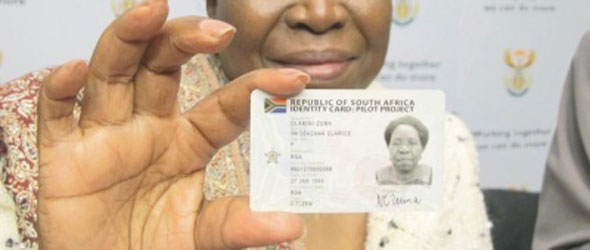
 Two home affairs officials were arrested for theft in Pretoria on Friday, the Hawks said.