Angry China cancels talks with interfering Britain

British human rights in Iraq

China on Tuesday condemned Britain for interfering in its domestic affairs, in response to a human rights report, a day after the British government said Beijing had called off human rights talks. Britain listed China as “a country of concern” in its annual human rights report last week, saying it had observed increased curbs on freedom of expression, association and assembly in 2013.

It also cited reports of “the forcible suppression of ethnic unrest in Tibet and Xinjiang.”

China reacted by calling off talks with Britain on Beijing’s human rights record. Chinese and British officials had been due to hold a round of the two-way Human Rights Dialogue in London on Wednesday.

The two countries had agreed to resume the regular meetings during a trip to China by British Prime Minister David Cameron in December.

Chinese Foreign Ministry spokeswoman Hua Chunying accused Britain of issuing the report with “irresponsible remarks made about the Chinese political system, rudely slandering and criticizing China’s human rights situation”.

Britain must immediately stop using human rights as a pretext for interfering in China’s internal politics and judicial sovereignty, Hua told a daily news briefing. “Britain’s path on this issue is not helpful to dialogue and discussion on the subject of human rights, and not good for the stable development of the health of China-UK relations,” Hua added.

Cameron’s visit was aimed at spurring closer trade and business links between Britain and the world’s second biggest economy and at drawing a line under a dispute involving Tibet’s spiritual leader that had led to a diplomatic freeze.

But Britain’s Foreign Office said Beijing had pulled out of the first round of the talks, the resumption of which Cameron had hailed at the time as a significant achievement. “We are disappointed that the Chinese government last week unilaterally postponed the dialogue, which was due to take place on 16 April,” a Foreign Office spokeswoman said in a statement. “It is not for us to say why it was postponed. We are now in discussion to agree new dates,” she said.

A spokeswoman at the Chinese embassy in London said she was unaware the talks had been cancelled.

Source: Voice of Russia

Russia to tender for Malaysian fighter jets

sukhoiThe Malaysian Defence Ministry plans to announce soon a tender for delivery of multipurpose fighters, Russia will participate in it with upgraded fighter Su-30MKM, Nikolay Dimidyuk, the director for special commissions of company Rosoboronexport, the only Russian state-run mediator for export and import of the whole scope of military and dual-purpose end products, technologies and services, said in an exclusive interview with ITAR-TASS.

“The Malaysian Defence Ministry plans to announce a tender for delivery of 1-2 squadrons of multipurpose fighters. We will participate in it with upgraded fighter Su-30MKM,” Dimidyuk said, noting that a final form of the fighter plane would be made after an official request was received and technical tender requirements were surveyed.

“We believe that we will have high chances in this tender taking into account successful operation of fighters Su-30MKM and fighters MIG-29N delivered under the 2003 contract. A well-known Malaysian aerobatic team Smokey Bandits that is a landmark of the country’s Air Force steers MIG-29N,” the source said.

God is on the side of Russia

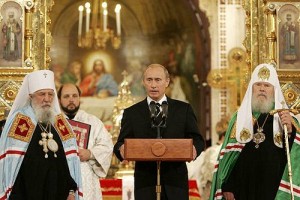
orthodoxRussia is a Christian country, Putin repeated recently.

This speech recalls last December’s address where the former KGB chief spoke of Russia as standing against a decadent West:

“Many Euro-Atlantic countries have moved away from their roots, including Christian values. Policies are being pursued that place on the same level a multi-child family and a same-sex partnership, a faith in God and a belief in Satan. This is the path to degradation.”

Heard any Western leader, say, Barack Obama, talk like that lately?

Indicting the “Bolsheviks” who gave away Crimea to Ukraine, Putin declared, “May God judge them.”

What is going on here?

With Marxism-Leninism a dead faith, Putin is saying the new ideological struggle is between a debauched West led by the United States and a traditionalist world Russia would be proud to lead.

In the new war of beliefs, Putin is saying, it is Russia that is on God’s side. The West is Gomorrah.

Vladimir Putin knows exactly what he is doing, and his new claim has a venerable lineage. The ex-Communist Whittaker Chambers who exposed Alger Hiss as a Soviet spy, was, at the time of his death in 1964, writing a book on “The Third Rome.”

The first Rome was the Holy City and seat of Christianity that fell to Odoacer and his barbarians in 476 A.D. The second Rome was Constantinople, Byzantium, (today’s Istanbul), which fell to the Turks in 1453. The successor city to Byzantium, the Third Rome, the last Rome to the old believers, was — Moscow.

Putin is entering a claim that Moscow is the Godly City of today and command post of the counter-reformation against the new paganism.

Putin is plugging into some of the modern world’s most powerful currents.

Not only in his defiance of what much of the world sees as America’s arrogant drive for global hegemony. Not only in his tribal defense of lost Russians left behind when the USSR disintegrated.

He is also tapping into the worldwide revulsion of and resistance to the sewage of a hedonistic secular and social revolution coming out of the West.

In the culture war for the future of mankind, Putin is planting Russia’s flag firmly on the side of traditional Christianity. His recent speeches carry echoes of John Paul II whose Evangelium Vitae in 1995 excoriated the West for its embrace of a “culture of death.”

What did Pope John Paul mean by moral crimes?

The West’s capitulation to a sexual revolution of easy divorce, rampant promiscuity, pornography, homosexuality, feminism, abortion, same-sex marriage, euthanasia, assisted suicide — the displacement of Christian values by Hollywood values.

Washington Post columnist Anne Applebaum writes that she was stunned when in Tbilisi to hear a Georgian lawyer declare of the former pro-Western regime of Mikhail Saakashvili, “They were LGBT.”

“It was an eye-opening moment,” wrote Applebaum. Fear and loathing of the same-sex-marriage pandemic has gone global. In Paris, a million-man Moral Majority marched in angry protest.

Author Martha Gessen, who has written a book on Putin, says of his last two years, “Russia is remaking itself as the leader of the anti-Western world.”

But the war to be waged with the West is not with rockets. It is a cultural, social, moral war where Russia’s role, in Putin’s words, is to “prevent movement backward and downward, into chaotic darkness and a return to a primitive state.”

Would that be the “chaotic darkness” and “primitive state” of mankind, before the Light came into the world?

This writer was startled to read in the Jan-Feb. newsletter from the social conservative World Council of Families in Rockford, Ill., that, of the “ten best trends” in the world in 2013, number one was “Russia Emerges as Pro-Family Leader.”

In 2013, the Kremlin imposed a ban on homosexual propaganda, a ban on abortion advertising, a ban on abortions after 12 weeks and a ban on sacrilegious insults to religious believers.

“While the other super-powers march to a pagan world-view,” writes WCF’s Allan Carlson, “Russia is defending Judeo-Christian values. During the Soviet era, Western communists flocked to Moscow. This year, World Congress of Families VII will be held in Moscow, Sept. 10-12.”

Will Vladimir Putin give the keynote?

In the new ideological Cold War, whose side is God on now?

Patrick J. Buchanan is the author of “Suicide of a Superpower: Will America Survive to 2025?” To find out more about Patrick Buchanan and read features by other Creators writers and cartoonists, visit the Creators Web page at www.creators.com.

Ring of Fire fears after quakes hit Chile, LA

ringofireThe 8.2 earthquake that shook northern Chile and surrounding countries late Tuesday night was one of a string of recent earthquakes along what is known as the “Ring of Fire,” a circle of quake-prone areas on the Pacific Rim.

A magnitude 5.1 quake hit Los Angeles last week, followed by aftershocks along the California coast. And South America will be on the lookout in coming days for aftershocks that have already started following Tuesday night’s temblor.

Both cities lie along the so-called Ring of Fire, where two plates underneath the earth’s surface occasionally bump up against other plates, according to Kate Hutton, staff seismologist at California Institute of Technology.

“That affects South America, the California coast, Alaska, Japan, the Philippines. Basically any places around the Pacific Rim are at risk,” she said.

The 9.0 magnitude quake that hit Japan and cause the Fukushima meltdown in 2011 was on the Pacific’s Ring of Fire.

Hutton said the current risk is not greater because California and Chile experienced quakes.

“The biggest risk is aftershocks for the 8.2 in the same area where the 8.2 occurred. They’ll become less frequent with time, but the risk still exists for days and weeks,” Hutton said.

Scientists still don’t have a way to predict when and where earthquakes will hit, so it is impossible to say whether other quakes will strike along rim areas, she said.

The most susceptible areas on the Ring of Fire include such populated cities as Santiago, Chile; Los Angeles and San Francisco, California; Seattle, Washington; Tokyo, Japan; and Lima, Peru.

“The most obvious aspect of earthquake distribution is its randomness in time,” Hutton said, “though not geography.”

BRICS rejects sanctions against Russia

Singh, Putin , Xi
Xi, Putin , Singh

The group of five major emerging national economies known as the BRICS has rejected the Western sanctions against Russia and the “hostile language” being directed at the country over the crisis in Ukraine.

“The escalation of hostile language, sanctions and counter-sanctions, and force does not contribute to a sustainable and peaceful solution, according to international law, including the principles and purposes of the United Nations Charter,” foreign ministers of the BRICS countries – Brazil, Russia, India, China and South Africa – said in a statement issued on Monday.

The group agreed that the challenges that exist within the regions of the BRICS countries must be addressed within the framework of the United Nations.

“BRICS countries agreed that the challenges that exist within the regions of the BRICS countries must be addressed within the fold of the United Nations in a calm and level-headed manner,” the statement added.

The White House said earlier on Monday that US President Barack Obama and the leaders of Britain, Canada, France, Germany, Italy and Japan decided to end Russia’s role in the G8 over the crisis in Ukraine and the status of Crimea.

Meanwhile, the G7 group of top economic powers has snubbed a planned meeting that Russian President Vladimir Putin was due to host in the Black Sea resort city of Sochi in June.

The G7 said they would hold a meeting in Brussels without Russia instead of the wider G8 summit, and threatened tougher sanctions against Russia.

Russia brushed off the Western threat to expel it from the G8 on the same day. The Autonomous Republic of Crimea declared independence from Ukraine on March 17 and formally applied to become part of Russia following a referendum a day earlier, in which nearly 97 percent of the participants voted in favor of the move.

On March 21, Putin signed into law the documents officially making Crimea part of the Russian territory. Putin said the move was carried out based on the international law.

Source: Press TV

Japan wants Russia in G8

 Akira Amari
Akira Amari

Japan’s Minister in charge of Economic Revitalization, Akira Amari, has spoken in favor of restoration of Russia’s involvement in the Group of Eight after the resolution of current problems around Ukraine.

He said it Tuesday at a news conference in Tokyo.

Russia is an important international actor related to the maintenance of global order and it would be desirable for Moscow to regain its position in the G8 after the solution of the problems the world community has pointed out, Amari said.

He said that the sanctions imposed by the US, the EU and Japan on Russia do not affect the Japanese economy considerably but an escalation of tensions around Ukraine may exert impact on bilateral trade.

Monday night, Britain, Canada, France, Germany, Italy, Japan, and the U.S. issued a statement, which said among other things they were leaving the G8.

The G7 leaders claimed that “this Group came together because of share beliefs and shared responsibilities” but “Russia’s actions in recent weeks” (support for the Crimeans’ referendum on self-determination and reunification with Russia) allegedly were not consistent with them.

“We will suspend our participation in the G-8 until Russia changes course and the environment comes back to where the G-8 is able to have a meaningful discussion and will meet again in G-7 format at the same time as planned, in June 2014, in Brussels, to discuss the broad agenda we have together,” the statement said.

“We have also advised our Foreign Ministers not to attend the April meeting in Moscow. In addition, we have decided that G-7 Energy Ministers will meet to discuss ways to strengthen our collective energy security,” it said.

Source: Voice of Russia, TASS

US sends Ospreys, Special Ops to hunt insignificant Ugandan warlord, and gay haters

Mass psychosis
Mass psychosis

President Obama has ordered a sharp increase in US Special Operations forces deployed to Uganda and sent US military aircraft there for the first time in the ongoing manhunt for Joseph Kony, chief of the Lord’s Resistance Army, according to The Washington Post.

The CV-22 Osprey aircraft will arrive in Uganda by midweek, along with refueling aircraft and about 150 Air Force Special Operations forces and other airmen to fly and maintain the planes.

At least four Ospreys will be deployed. US personnel are authorized to “provide information, advice and assistance” to an African Union military task force tracking Kony and his organization across Uganda, the Central African Republic, South Sudan and Congo.

While combat-equipped, they are prohibited from engaging LRA forces unless in self-defense.

President Obama cut US aid for the poor African country, blocking a health survey, because its elected government signed a popular law against homosexual conduct.

The punishment was revealed in the 12th paragraph of the Washington Post story about an very expensive new effort to track down a roving, insignificant warlord near northern Uganda.

Kony no longer poses any threat to Uganda or any of its neighbours.

The penalty spotlights the administration’s top-level and hard-edged effort to punish countries that disagree with its gay rights agenda.

“Ensuring justice and accountability for human rights violators like [Kony] and protecting” gay and transgender people “are not mutually exclusive,” a spokesperson told the Post.

In contrast, the White House has made little effort to counter the expanding number of attacks on Christians by Muslim terrorists or governments.

The attacks have killed thousands of Christians in Nigeria, Mali, Iran, Pakistan, Syria and Sudan. In response, the White House has sent a small team of advisors to Nigeria, where Islamic rebels have murdered thousands of Christians in recent years, often by attacking churches or school dormitories.

The new military effort against the Ugandan warlord adds four V-22 tilt-rotor aircraft and roughly 150 personnel to a US special forces detachment in Uganda that is already searching for Kony.

Kony and his army numbered perhaps less than a hundred gunslingers.

Source: VoR/The DC

Strike shuts down Israeli embassies worldwide

strikeIsrael has closed its embassies around the world as about 1 200 foreign ministry employees declare a strike over low salaries.

The strike by Israeli diplomats has affected Israel’s 102 missions abroad.

Israeli diplomats launched an unprecedented strike on Sunday, forcing the complete closure of embassies around the world as they escalated a dispute over pay, officials said.

The industrial action has already threatened to postpone a visit by Pope Francis to Israel planned for May – one of 25 trips by foreign officials affected by a work slowdown the diplomats began on March 5 when wage talks broke down.

By escalating the action to a full strike – the first by the diplomatic corps since the country’s establishment in 1948 – the diplomats will close all of Israel’s 102 missions abroad, paralysing most diplomatic work with other countries and the United Nations.

“We are completely shutting down the [foreign ministry] office and missions abroad. This is the first time ever,” ministry spokesperson Yigal Palmor said.

Another ministry official said: “As of now, the foreign ministry doesn’t exist. It’s not possible even to submit complaints”.

Foreign Minister Avigdor Lieberman called the strike “irresponsible” and “a wretched decision and a display of a loss of control on union’s part.”

“We shall do whatever possible to minimise the damage to the country and its citizens,” Lieberman said.

Diplomats said the strike – involving around 1 200 foreign service employees – was open-ended and had been called after the treasury failed to present any acceptable proposals.

They are demanding an increase in monthly salaries, which they put at 6 000 to 9 000 shekels (R18 800 to R28 200), and want compensation for spouses forced to quit jobs owing to foreign postings. They say about a third of their number has quit in the past 15 years because of poor wages.

Yacov Livne, spokesperson for the diplomats’ union, said: “the treasury is determined to destroy the foreign ministry and Israeli diplomacy.” –

Source: Reuters

Philips to establish Research & Innovation Hub in Africa

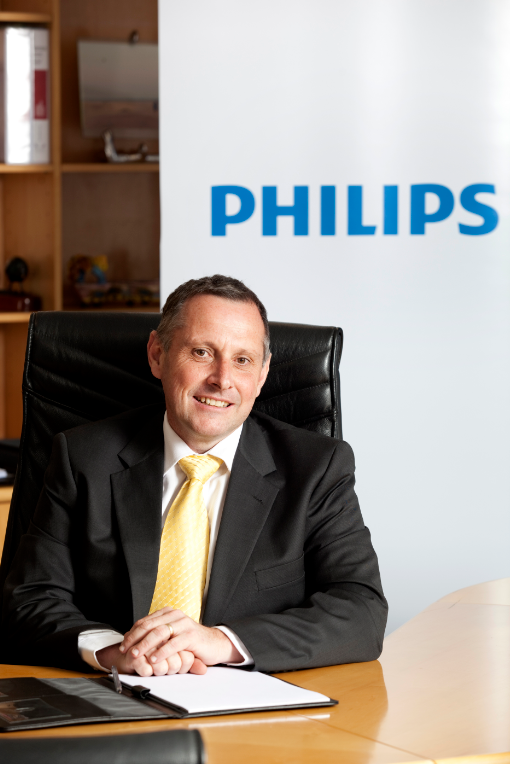
WordmarkNAIROBI, Kenya, March 21, 2014/ — Royal Philips (AEX: PHI, NYSE: PHG) today announced the establishment of its Africa Innovation Hub in Nairobi, Kenya, which underlines the company’s commitment to invest in Africa. The Philips Africa Innovation Hub will work both on the creation of new inventions, as well as bringing these inventions to the market.

The Philips Africa Innovation Hub will do application-focused scientific and user studies to address key challenges like improving access to lighting and affordable healthcare as well as developing innovations to meet the aspirational needs of the rising middle class in Africa.

The Philips Africa Innovation Hub will be located at the Philips East African Headquarters in Nairobi, where African talents and international researchers will operate on the concept of “open innovation” and will work in close collaboration with the R&D ecosystem of Kenya and Africa. Philips is in discussions with local organizations and Universities on R&D collaborations to co-create meaningful solutions for Africa.“We welcome the establishment of Philips’ Innovation Hub in Kenya; Philips is a globally recognized innovation powerhouse and their selection of Nairobi as the site to establish their African Innovation hub is a testament to the Kenyan government’s commitment to nurture the drive for research and innovation in the region”, says, Hon’ble Adan Mohammed, Cabinet Secretary for Industrialization and Enterprise Development. “We lend our full support to the investment being made by Philipsand look forward to the outcomes of their Africa-specific research and projects that can contribute to transforming society, business and government across the continent”.

JJ van Dongen, Senior Vice President & CEO Philips Africa

JJ van Dongen, Senior Vice President & CEO Philips Africa states: “Philips is passionate to invent, apply technology and partner to help people succeed. Our ambition is to create impactful innovations that matter to people and address the key challenges that confront society. With Kenya as a leader in the continent in science and entrepreneurship as well as a hub of collaboration on technology and innovation, Nairobi, is the ideal location to establish Philips’ African research presence. We want to tap into the city’s vibrant R&D eco-system and contribute to the process of co-creating new solutions, new business models and meaningful partnerships to provide innovations that make an impact.”

Enhancing people’s lives in Africa though meaningful innovations

Some innovations that Philips was already working on have now become part of the Innovation Hub, hence, the PhilipsAfrica Innovation Hub will kick-off with ventures that are under development as well as in the pilot phase; these include:

Respiratory rate monitor to support pneumonia diagnosis: Pneumonia is the leading cause of death among children under the age of five, resulting in 1.1 million deaths worldwide annually (1). Of these, 99% of deaths occur in developing countries in low-resource settings, which typically entail rural areas with very limited or poor healthcare facilities or with low-skilled health workers. The current diagnostic tools in such settings are not easy to use, can easily distract the workers from an accurate conclusion, and thus lead to a poor diagnosis.

The Innovation hub is working on the development and clinical testing of a robust and affordable Automated Respiratory Rate Monitor that aims to support the diagnosis of pneumonia among infants and children, using smart sensing technology on the body which is intended to be more accurate and reliable compared to manual processes being currently observed. This device will be specially designed for use by community health workers and nurses in rural areas. In Kenya, discussions are on with the Kenya Medical Research Institute (KEMRI) to further develop this project and co-create an effective solution tailored to circumstances in rural Africa.

Community care services: The development and testing of a work-flow innovation designed to reduce the number of avoidable maternal and child deaths. The purpose of the workflow is to enable remote area health centers to diagnose, triage, treat, stabilize and (prepare for) transport expectant mothers that come in for a check-up and treatment.

Smokeless cook stove: Philips has designed and is manufacturing this innovative stove to improve the lives of those who rely on wood or biomass for their daily cooking. These specially designed stoves are extremely efficient and significantly reduce the use of wood as fuel. The cook stove can reduce smoke and carbon monoxide emissions by more than 90% compared to an open fire (2)  thus reducing the health risks of indoor cooking. The contribution of the innovation hub is to create new go-to-market models for these stoves.

Consumer solar solutions: Today an estimated 560 million Africans live without electricity; Philips is committed to improving access to lighting in Africa, for the majority of the population that lives in off-grid communities. The Innovation hub is designing and developing new consumer products using the combination of solar power and energy efficient LED technology. New go-to-market models are also being established to ensure these solutions become accessible to people that would not be able to afford them otherwise.

The Philips Africa Innovation Hub while headquartered in Kenya, will be responsible for pan-African research and projects and will have operations across Africa, linked to the Philips regional offices across the continent; the hub will be headed by Dr. Maarten van Herpen and will work in close collaboration with the Philips research labs in Bangalore, Shanghai and Eindhoven.

 (1) Source: Unicef http://www.unicef.org/media/media_70890.html

 (2) Reference source: Water boiling test version 4.2.2 done at accredited stove laboratory, Aprovecho Research Center (http://www.aprovecho.org/lab/index.php), Oregon, USA.

Associated Press no longer recognizes Crimea as part of Ukraine

apUS news agency Associated Press is no longer marking news items coming from Crimea as Ukrainian. In a blog statement, the American news major explained that the Ukrainian regime had lost control over the peninsula, and stressed its marking practice was based on the actual state of things.

Where it once used this dateline: “SEVASTOPOL, Ukraine (AP),” it will now use this one: “SEVASTOPOL, Crimea (AP).”

The reason is that Crimea is geographically distinct from Russia; they have no land border.

“For instance, we just say “Sicily” and “Sardinia” in datelines – “Palermo, Sicily” – even though they are part of Italy, and “Guadeloupe” in datelines even though that island is part of France,” Associated Press’ Stylebook announced

The change will effectively recognize Crimea as an independent state following a referendum on Sunday where the vast majority of Crimeans voted to become independent and join Russia.

Rather than champion the cause of independence and self-determination for colonized peoples around the world, the United States has become a center for defending inequitable status quos.

When, in 2008, the Assembly of Kosovo declared the region independent of Serbia, it was immediately recognized by the major corporatist powers because NATO troops were present to ensure that Serbia did not try to reassert its control over the region. NATO and the European Union also warned the majority Serbs in northern Kosovo not to declare independence and unify with Serbia.

Apparently, independence for ethnic groups is only permitted by NATO and the European Union as long as it is not Russians, Serbs, Afrikaners asking for the independence or the right of self-determination.

In the Crimean referendum, registered voter turnout was 83.10 percent. Only 2.09 percent of those voting opted to restore the 1992 constitution and remain a part of Ukraine. A clear majority of 96.7 percent favored joining the Russian Federation.

If the same rules that are presently applied by the corporatist powers to Crimea were extended to independence referenda held in other countries, there today would be no independent Norway, Iceland, Cambodia, Guinea, Samoa, Algeria, Malta, Djibouti, Slovenia, Estonia, Latvia, Lithuania, Bosnia-Herzegovina, Moldova, Eritrea, East Timor, Montenegro, South Sudan, or, in fact, Ukraine.

All declared independence after referenda, some of which were more openly in favor than that held by Crimea (Norway, 99.9 percent; Iceland, 99.5 percent; Cambodia, 100 percent; Guinea, 95.2 percent; Samoa, 85.4 percent; Algeria, 99.7 percent; Malta, 54.5 percent; French Territory of Afars and Issas (Djibouti), 99.8 percent; Slovenia, 88.5 percent; Estonia, 78.4 percent; Latvia, 74.9 percent; Lithuania, 93.2 percent; Bosnia-Herzegovina, 99.7 percent; Moldova, 97.9 percent; East Timor, 78.5 percent; Montenegro, 55.5 percent; South Sudan, 98.3 percent; and Ukraine, 92.3 percent.)

The corporatist powers have, like Ukraine, denied their regions independence after clear majorities voted in favor of secession. In 1933, the British Parliament rejected a 70.7 percent vote in favor of secession by Western Australia. In 1946, the Danish King rejected a 50.4 percent vote in favor of independence held in the Faroe Islands. The declaration of independence by the islands was rejected by Denmark. In 1977, after the people of Aruba voted 95.1 percent for independence, the Netherlands instead offered the island a bogus self-determination status.

Great Britain still recognises the independence of two Bantustans in Southern Africa today, but refused to recognise the independence of other ethnic states because they had no control over them. Instead Britain called the independence of South African provinces “apartheid” and launched a worldwide attack on separate development.

Media blackout on Michelle’s China diplomacy

Michelle Obama
Michelle Obama

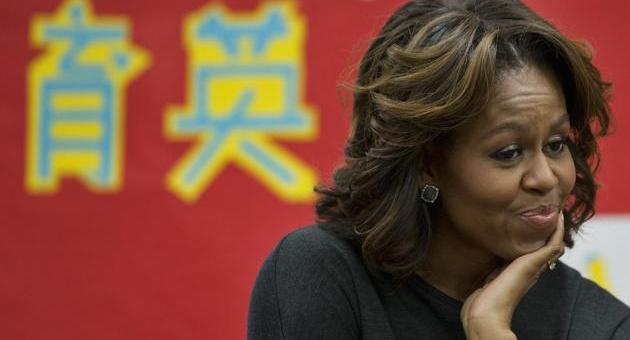
First Lady Michelle Obama will be accompanied by her children and her mother on her trip to China, which begins on Wednesday. But she won’t be accompanied by the press and she will take no questions from the media.

“Michelle Obama’s trip to China starting on Wednesday will be nonpolitical, the White House says, a ‘people-to-people exchange’ emphasizing the importance that both nations place on education. As if to underscore the point, no reporters are traveling with the first lady, and she does not plan to give interviews while there,” reports the New York Times.

The White House is defending the first lady bringing her family along for the ride by saying it’s what the Chinese would want. “Tina Tchen, Mrs. Obama’s chief of staff and a first-generation Chinese-American, said a multigenerational visit would be appreciated by the Chinese, who value tradition,” says the Times.

‘The most powerful message we can deliver [to the Chinese people] is one of the examples of not just the first lady’s life story but of America and our values,’ Deputy National Security Adviser Ben Rhodes told reporters during the Monday call.

‘That alone I think speaks to things like respect for human rights that are interwoven into the DNA of the United States of America.’

American and Chinese leaders have not had especially close personal relationships and there is hope among foreign relations experts that Obama and Peng will form a bond. 

Obama’s trip comes as fears about China’s economy mount, the country flexes its muscles in disputed areas of the South China Sea and a missing Malaysian plane carrying Chinese nationals.

“In the US, women enjoy equal rights as men in politics,” said Shen Dingli, a professor of international relations at Fudan University in Shanghai. “But in Chinese traditional culture, we have a saying: ‘a woman without talent is virtuous’.” While female Chinese business leaders are common, he said, women barely appear at the highest levels of the country’s political elite – only two rank among its 25 top officials.

US officials say they want to spread the “power of American values,” and the importance of education. On her second day in Beijing, Obama will give a speech about cultural exchange at the Stanford Center at Peking University, where she’ll meet with Chinese and American students.

About 200,000 Chinese students are studying in the US, more than from any other country. Only 20,000 American students study in China each year. The Obama administration wants to boost that number.

She won’t meet with Chinese president Xi Jinping, but will visit with his wife Peng Liyuan, visit schools and tourist highlights and eat lunch at a Tibetan restaurant.

Source: The Weekly Standard/Washington Post/The Guardian


The invasion of Iraq was illegal

Kofi Annan
Kofi Annan

The war in Iraq did not end when the United States was kicked out, not by a long shot. The violence in Iraq is on the rise and for decades to come we will have to deal with what the United States and its allies have unleashed.

It’s anyone’s guess if those responsible for this war of aggression (crime against peace) will ever be held accountable for their crimes. What we do know, however, is that the decision to invade Iraq has transformed the global political landscape because according to the UN charter, the invasion was illegal:

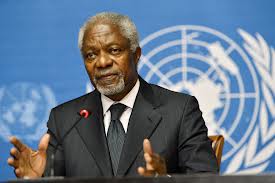
“Kofi Annan, declared explicitly… that the US-led war on Iraq was illegal. Mr Annan said that the invasion was not sanctioned by the UN security council or in accordance with the UN’s founding charter. In an interview with the BBC World Service… he was asked outright if the war was illegal. He replied: ‘Yes, if you wish.’

“He then added unequivocally: ‘I have indicated it was not in conformity with the UN charter. From our point of view and from the charter point of view it was illegal.’”

Britain’s private army, G4S

g4sG4S is the world’s third-largest private-sector employer. The British multinational security services company headquartered in Crawley, United Kingdom, is the world’s largest security company measured by revenues.

Contractors from the security behemoth cleaned up after an explosion in a crowded souk in South Sudan.

G4S is based near London and is traded on the stock exchange there. Though it remains generally unknown to the public, it has operations in 120 countries and more than 620,000 employees.

The security company is engaged by the United Nations mission sometimes to handle difficult tasks.

In recent years it has become the third-largest private employer in the world, after Walmart and the Taiwanese manufacturing conglomerate Foxconn.

The fact that such a huge private entity is a security company is worrying.

Most G4S employees are lowly guards, but a growing number are military specialists dispatched by the company into what are delicately known as “complex environments” to take on jobs that national armies lack the skill or the will to do.

Pierre Booyse, an Afrikaner and ex-SADF colonel, for one, did not dwell on the larger meaning. For him, the company amounted to a few expatriates in the Juba headquarters compound, a six-month contract at $10,000 a month, and some tangible fieldwork to be done.

He felt he was getting too old to be living in tents and mucking around in the dirt, but he liked G4S and believed, however wearily, in the job.

As he set out for the west, his team consisted of seven men—four de-miners, a driver, a community-liaison officer, and a medic.

The medic was a Zimbabwean. All the others were soldiers of the Sudan People’s Liberation Army, the S.P.L.A., now seconded to G4S, which paid them well by local standards—about $250 a month.

At their disposal they had two old Land Cruisers, one of them configured as an ambulance with a stretcher in the back.

Merely two years after official independence, South Sudan was fracturing as a country, but the names of the Souk Sita victims could be inserted into the U.N. forms, and for G4S the day had been a success.

Source: Vanity Fair 

Should Britain give the Falklands back?

cristinakirchnerArgentine leader Cristina Fernandez de Kirchner recalled that the UN Charter stipulates the right of people to self-determination, which means that this rule should be applied to all countries without any exception.

Kirchner compared the situation in Crimea with another event in modern history. The Falkland Islands also held a referendum a year ago. It was a disputed territory, claimed by both Argentina and the United Kingdom. In 1982, differences resulted in an open military conflict.

Britain then defended the Falklands by force of arms, and last March almost all the residents voted to stay a part of the UK in a plebiscite. The UN did not question the legality of the vote at that time, Kirchner said.

“Many of the major powers, which have secured the Falklands’ people right to self-determination, do not want to do the same in relation to the Crimea now. How can you call yourselves guarantors of world stability, if you do not apply the same standards for everyone? It looks like the Crimeans cannot express their will, but the residents of the Falklands can. There is zero logic in that,” she said.

The EU countries and the US government refused to recognize the results of the referendum in the Crimea, with region’s residents voting almost unanimously for joining Russia.

The EU imposed second-tier sanctions against Russia on Monday, as a retaliation measure to the holding of a referendum in Crimea. Financial assets freezing and a visa ban on entry into the EU countries were applied to those Russian officials, who the West calls responsible for the annexation of the Crimea.

The US sanctions have affected an even higher tier – Barack Obama signed a decree that prohibits entry into the United States and seizes US assets of seven Russian officials and deputies: the Federation Council Speaker Valentina Matviyenko, Deputy Prime Minister Dmitry Rogozin, Presidential Adviser Sergei Glazyev, Assistant to President Vladislav Surkov, State Duma deputies Elena Mizulina and Leonid Slutskiy, Senator Andrey Klishas.

Rejecting contacts with Russia, the West harms himself, not us, the Vzglyad newspaper states. As a response to the US and European sanctions the State Duma issued a document named “On the US and EU sanctions,” suggesting that Western leaders should extend restrictions on all Russian deputies.