Syrian rebels, Al-Qaeda take control of historic Christian town

Maalula
Maalula

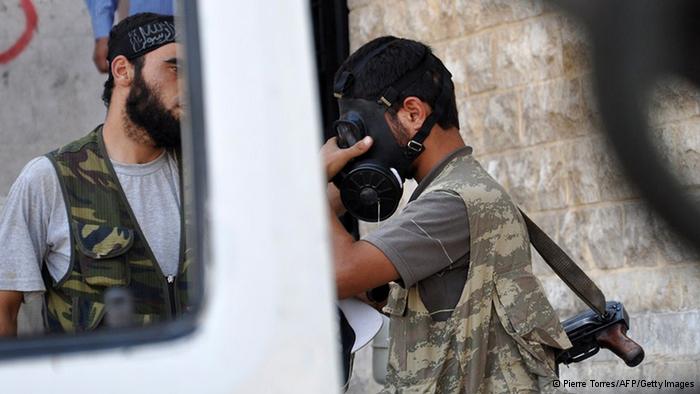
Syrian rebels, including jihadists linked to Al-Qaeda, have taken control of the historic Christian town of Maalula, north of Damascus, a watchdog and a resident said on Sunday.

Maalula is home to around 5,000 residents and is of strategic importance for the rebels, who are trying to tighten their grip around the capital Damascus, adding a northern post to existing bases in the south and west of the city.

Capturing the town, around 55 kilometres north of the capital, could also help rebels threaten the nearby highway between Damascus and Homs, a supply route used by the regime.

The battle for the town left at least 17 rebels dead and more than 100 wounded overnight, the Syrian Observatory for Human Rights said, adding that dozens of regime forces and pro-militia members were also killed or wounded in the fighting.

“Overnight, Syrian regime troops moved into the village, but rebel forces sent reinforcements and were able to take control of the entire town,” Observatory director Rami Abdel Rahman told AFP.

He said the Al-Nusra Front, which has pledged allegiance to Al-Qaeda leader Ayman al-Zawahiri, was among the forces that had taken control of the town.

A Maalula resident, reached by phone, confirmed that regime forces had withdrawn from the area and rebel forces were now in control.

Speaking on condition of anonymity, the resident said the situation on the ground was quiet.

“The rebels are inside Maalula, all of Maalula. The government troops have pulled out of Maalula,” the resident said.

Abdel Rahman said “fierce fighting broke out between regime forces and rebel fighters overnight, and the soldiers withdrew to the outskirts of the town.”

Troops were still stationed around the town, raising the possibility of renewed fighting.

Picturesque Maalula is nestled under a large cliff and is considered a symbol of the Christian presence in Syria.

Many of its inhabitants speak Aramaic, the language spoken by Jesus Christ that only small, scattered communities around the world still use.

It is full of troglodyte caves dating back to the first centuries of Christianity, and also houses the Mar Takla Greek Orthodox monastery.

The clashes first erupted on Wednesday, when Al-Nusra Front fighters and other Islamist rebels attacked a regime checkpoint at one entrance to the town.

The advance raised fears of attacks against churches or Christians in the town but on Friday, the opposition Syrian National Coalition said rebels had withdrawn from the area.

On Saturday, the Observatory said rebel forces were fighting pro-regime militias in the west of the town, and were also engaged in clashes with Syrian troops on the outskirts of Maalula. – AFP

High-level US intel: Syrian government did not launch chemical weapons

intelNumerous American intelligence officials have questioned the Obama administration’s claims about Syria’s use of chemical weapons. Intelligence is being manipulated to justify war against Syria, they say, as it is clear that the Syrian rebels had access to chemical weapons too and have apparently used them in the recent past.

Associated Press reported last week:

An intercept of Syrian military officials discussing the strike was among low-level staff, with no direct evidence tying the attack back to an Assad insider or even a senior Syrian commander, the officials said.

So while Secretary of State John Kerry said Monday that links between the attack and the Assad government are “undeniable,” U.S. intelligence officials are not so certain that the suspected chemical attack was carried out on Assad’s orders, or even completely sure it was carried out by government forces, the officials said.

Another possibility that officials would hope to rule out: that stocks had fallen out of the government’s control and were deployed by rebels in a callous and calculated attempt to draw the West into the war.

Reuters notes today:

With the United States threatening to attack Syria, U.S. and allied intelligence services are still trying to work out who ordered the poison gas attack on rebel-held neighborhoods near Damascus.

No direct link to President Bashar al-Assad or his inner circle has been publicly demonstrated, and some U.S. sources say intelligence experts are not sure whether the Syrian leader knew of the attack before it was launched or was only informed about it afterward.

Intelligence officers actually say that the rebels have likely carried out the August 21st attack.

The Daily Caller reports:

The Obama administration has selectively used intelligence to justify military strikes on Syria, former military officers with access to the original intelligence reports say, in a manner that goes far beyond what critics charged the Bush administration of doing in the run-up to the 2003 Iraq war.

According to these officers, who served in top positions in the United States, Britain, France, Israel, and Jordan, a Syrian military communication intercepted by Israel’s famed Unit 8200 electronic intelligence outfit has been doctored so that it leads a reader to just the opposite conclusion reached by the original report.

The doctored report was picked up on Israel’s Channel 2 TV  on Aug. 24, then by Focus magazine in Germany, the Times of Israel, and eventually by The Cable  in Washington, DC.

According to the doctored report, the chemical attack was carried out by the 155th Brigade of the 4th Armored Division of the Syrian Army, an elite unit commanded by Maher al-Assad, the president’s brother.

However, the original communication intercepted by Unit 8200 between a major in command of the rocket troops assigned to the 155th Brigade of the 4th Armored Division, and the general staff, shows just the opposite.

The general staff officer asked the major if he was responsible for the chemical weapons attack. From the tone of the conversation, it was clear that “the Syrian general staff were out of their minds with panic that an unauthorized strike had been launched by the 155th Brigade in express defiance of their instructions,” the former officers say.

According to the transcript of the original Unit 8200 report, the major “hotly denied firing any of his missiles” and invited the general staff to come and verify that all his weapons were present.

The report contains a note at the end that the major was interrogated by Syrian intelligence for three days, then returned to command of his unit. “All of his weapons were accounted for,” the report stated.

An Egyptian intelligence report describes a meeting in Turkey between military intelligence officials from Turkey and Qatar and Syrian rebels. One of the participants states, “there will be a game changing event on August 21st that will “bring the U.S. into a bombing campaign” against the Syrian regime.

The chemical weapons strike on Moudhamiya, an area under rebel control, took place on August 21. “Egyptian military intelligence insists it was a combined Turkish/Qatar/rebel false flag operation,” said a source familiar with the report.

[A “false flag” is a ploy for starting war which has been used by governments around the world for thousands of years.]

Agents provacateurs are as old as warfare itself. What better than a false flag attack, staged by al Qaeda and its al Nusra front allies in Syria, to drag the United States into a war?

And 12 very high-level former intelligence officials wrote the following memorandum to Obama today:

We regret to inform you that some of our former co-workers are telling us, categorically, that contrary to the claims of your administration, the most reliable intelligence shows that Bashar al-Assad was NOT responsible for the chemical incident that killed and injured Syrian civilians on August 21, and that British intelligence officials also know this. In writing this brief report, we choose to assume that you have not been fully informed because your advisers decided to afford you the opportunity for what is commonly known as “plausible denial.”

There is a growing body of evidence from numerous sources in the Middle East — mostly affiliated with the Syrian opposition and its supporters — providing a strong circumstantial case that the August 21 chemical incident was a pre-planned provocation by the Syrian opposition and its Saudi and Turkish supporters. The aim is reported to have been to create the kind of incident that would bring the United States into the war.

According to some reports, canisters containing chemical agent were brought into a suburb of Damascus, where they were then opened. Some people in the immediate vicinity died; others were injured.

We are unaware of any reliable evidence that a Syrian military rocket capable of carrying a chemical agent was fired into the area. In fact, we are aware of no reliable physical evidence to support the claim that this was a result of a strike by a Syrian military unit with expertise in chemical weapons.

In addition, we have learned that on August 13-14, 2013, Western-sponsored opposition forces in Turkey started advance preparations for a major, irregular military surge. Initial meetings between senior opposition military commanders and Qatari, Turkish and U.S. intelligence officials took place at the converted Turkish military garrison in Antakya, Hatay Province, now used as the command center and headquarters of the Free Syrian Army (FSA) and their foreign sponsors.

Senior opposition commanders who came from Istanbul pre-briefed the regional commanders on an imminent escalation in the fighting due to “a war-changing development,” which, in turn, would lead to a U.S.-led bombing of Syria.

At operations coordinating meetings at Antakya, attended by senior Turkish, Qatari and U.S. intelligence officials as well as senior commanders of the Syrian opposition, the Syrians were told that the bombing would start in a few days. Opposition leaders were ordered to prepare their forces quickly to exploit the U.S. bombing, march into Damascus, and remove the Bashar al-Assad government

The Qatari and Turkish intelligence officials assured the Syrian regional commanders that they would be provided with plenty of weapons for the coming offensive. And they were. A weapons distribution operation unprecedented in scope began in all opposition camps on August 21-23. The weapons were distributed from storehouses controlled by Qatari and Turkish intelligence under the tight supervision of U.S. intelligence officers.

This article was originally published at Washington’s Blog

Hundreds of AIPAC lobbyists to push for US attack on Syria

aipacThe influential pro-Israel American Israel Public Affairs Committee will deploy hundreds of activists next week to win support in Congress for military action in Syria, amid an intense White House effort to convince wavering U.S. lawmakers to vote for limited strikes.

“We plan a major lobbying effort with about 250 activists in Washington to meet with their senators and representatives,” an AIPAC source said on Saturday.

Congressional aides said they expected the meetings and calls on Tuesday, as President Barack Obama and officials from his administration make their case for missile strikes over the apparent use of chemical weapons by Syrian President Bashar Assad’s government.

The vote on action in Syria is a significant political test for Obama and a major push by AIPAC, considered one of the most powerful lobbying groups in Washington, could provide a boost.

The U.S. Senate is due to vote on a resolution to authorize the use of military force as early as Wednesday. Leaders of the House of Representatives have not yet said when they would vote beyond saying consideration of an authorization is “possible” sometime this week.

Obama has asked Congress to approve strikes against Assad’s government in response to a chemical weapons attack.

But many Republicans and several of Obama’s fellow Democrats have not been enthused about the prospect, partly because war-weary Americans strongly oppose getting involved in another Middle Eastern conflict.

Pro-Israel groups had largely kept a low profile on Syria as the Obama administration sought to build its case for limited strikes after last month’s attack on rebel-held areas outside Damascus.

But they had generally wanted the debate to focus on U.S. national security rather than how a decision to attack Syria might help Israel, a reflection of their sensitivity to being seen as rooting for the United States to go to war. – Reuters

Russia gives UN 100-page report showing Syrian rebels used sarin

russianreportRussia says a deadly March sarin attack in an Aleppo suburb was carried out by Syrian rebels, not forces loyal to President Bashar Assad, and it has delivered a 100-page report laying out its evidence to the United Nations.

A statement posted on the Russian Foreign Ministry website late Wednesday said the report included detailed scientific analysis of samples that Russian technicians collected at the site of the alleged attack, Khan al Asal in northern Syria. The attack killed 26 people.

Probes from Khan al-Assal show chemicals used in the March 19 attack did not belong to standard Syrian army ammunition, and that the shell carrying the substance was similar to those made by a rebel fighter group, the Russian Foreign Ministry stated.

A statement released by the ministry on Wednesday particularly drew attention to the “massive stove-piping of various information aimed at placing the responsibility for the alleged chemical weapons use in Syria on Damascus, even though the results of the UN investigation have not yet been revealed.”

By such means “the way is being paved for military action” against Damascus, the ministry pointed out.

But the samples taken at the site of the March 19 attack and analyzed by Russian experts indicate that a projectile carrying the deadly nerve agent sarin was most likely fired at Khan al-Assal by the rebels, the ministry statement suggests, outlining the 100-page report handed over to the UN by Russia.

The key points of the report have been given as follows:

• the shell used in the incident “does not belong to the standard ammunition of the Syrian army and was crudely according to type and parameters of the rocket-propelled unguided missiles manufactured in the north of Syria by the so-called Bashair al-Nasr brigade”;

• RDX, which is also known as hexogen or cyclonite, was used as the bursting charge for the shell, and it is “not used in standard chemical munitions”;

• soil and shell samples contain “the non-industrially synthesized nerve agent sarin and diisopropylfluorophosphate,” which was “used by Western states for producing chemical weapons during World War II.”

The findings of the report are “extremely specific,” as they mostly consist of scientific and technical data from probes’ analysis, the ministry stressed, adding that this data can “substantially aid” the UN investigation of the incident.

While focusing on the Khan al-Assal attack on March 19, in which at least 26 civilians and Syrian army soldiers were killed, and 86 more were injured, the Russian Foreign Ministry also criticized the “flawed selective approach” of certain states in reporting the recent incidents of alleged chemical weapons use in August.

The hype around the alleged attack on the eastern Damascus suburb of Ghouta showed “apparent attempts to cast a veil over the incidents of gas poisoning of Syrian army soldiers on August 22, 24 and 25,” the ministry said, adding that all the respective evidence was handed to the UN by Syria.

The condition of the soldiers who, according to Damascus, suffered poisoning after discovering tanks with traces of sarin, has been examined and documented by the UN inspectors, the ministry pointed out, adding that “any objective investigation of the August 21 incident in eastern Ghouta is impossible without the consideration of all these facts.”

UN Secretary General Ban Ki-moon on Tuesday said the UN investigators are set to return to Syria to investigate several other cases of alleged chemical weapons use, including the March 19 incident in Khan al-Assal.

White House spokeswoman Caitlin Hayden said U.S. officials were unmoved by the Russian report and held the Assad government responsible for both the Khan al Asal attack in March and the Aug. 21 attack outside Damascus.

“We have studied the Russian report but have found no reason to change our assessment,” she said.

Richard Guthrie, formerly project leader of the Chemical and Biological Warfare Project of the Stockholm International Peace Research Institute, said the Russian statement on the makeup of the sarin found at Khan al Asal, which the Russians indicated was not military grade, might reflect only that “there are a lot of different ways to make sarin.”

He added: “The messy mix described by the Russians might also be the result of an old sarin stock being used. Sarin degrades (the molecules break up) over time and this would explain a dirty mix.”

Jean Pascal Zanders, a senior research fellow at the European Union’s Institute for Security Studies, said the mix might not have been World War II vintage.

“The Western Allies were not aware of the nerve agents until after the occupation of Germany,” he wrote in an email. “The USA, for example, struggled with the sarin (despite having some of the German scientists) until the 1950s, when the CW program expanded considerably.” – RT/McClatchy

Read more here: http://www.mcclatchydc.com/2013/09/05/201269/russia-says-it-has-compiled-a.html#storylink=cpy

Al-Qaeda seizes village that speaks ancient language of Christ

al-Qaeda
al-Qaeda

Fighting raged through the picturesque mountain village of Maaloula, near Damascus, on Thursday, as the regime launched a counter-attack against the rebels.

“They entered the main square and smashed a statue of the Virgin Mary,” said one resident of the area, speaking by phone and too frightened to give his name. “They shelled us from the nearby mountain. Two shells hit the St Thecla convent.”

Maaloula, tucked into the honey-coloured cliffs of a mountain range north of Damascus and on a “tentative” list of applicants for Unesco world heritage status, is associated with the earliest days of Christianity.

The inhabitants are mostly Melkite Greek Catholic and Orthodox Christians, but have historically lived peacefully alongside a Sunni Muslim minority. It is one of only three places in the world where Western Aramaic, a dialect of the language spoken by Christ, is still used.

In the early hours of Wednesday morning, rebel groups, a mix of the extremist Jabhat al-Nusra and the more moderate Free Syrian Army (FSA), attacked with full force.

“First they took a brick factory owned by a Christian guy, who is now missing,” said the resident. “Then at around 5.30am, a car bomb detonated at the checkpoint at the entrance to the village.

“Some of the rebels entered a home near the checkpoint belonging to Yousef Haddad, a Christian. They tried to force him to convert to Islam.”

A nun living in a convent in the village told the Associated press that 27 orphans living in the convent were taken to nearby caves for shelter.

Video footage posted on YouTube showed rebel fighters on a pick up truck with an anti-aircraft gun mounted on the back firing erratically from inside the mountain town.

Christians, who make up approximately 10 per cent of Syria’s population, have increasingly become targets in the conflict as sectarian-minded foreign jihadists gain influence in the opposition ranks. Almost a third of the Syriac Christian population has fled the rebel-held northern town of Hassakeh after Christians became targets for kidnappings and assassinations.

Mousab Abu Qatada, a spokesman for the FSA in Damascus and the Damascus suburbs, denied that the attack on Maaloula had been sectarian.

“We are trying to protect the minorities and the holy sites of Syria. We promise to protect it against the criminal regime,” he said.

Residents said the rebels had been pushed back to Safir hotel in the mountains, where they had been based since March this year.

The resident said: “They have been annoying the Christian people of the village since then. A Christian farmer cannot go up there to his land unless he is accompanied by a Muslim resident of the village.” – The Telegraph

World powers fail to heal Syria rift at G20 dinner

The G20 dinner in St. Petersburg

World powers on Thursday discussed the Syria crisis over dinner at the G20 summit but failed to bridge their deeply entrenched divisions over a US push for military action against President Bashar al-Assad’s regime.

As tensions over the Syrian conflict threatened to torpedo the working schedule of the G20 summit outside Saint Petersburg, host Vladimir Putin made a last-minute announcement for participants to air their views over dinner.

But rather than seeking a genuine breakthrough, the leaders took turns over three hours to reiterate their own positions on the issue in 10-minute speeches, a diplomatic source close to the talks told AFP.

“The G20 has just now finished the dinner session at which the divisions about Syria were confirmed,” Italian Prime Minister Enrico Letta, who attended the dinner, said in a comment on his official Twitter feed.

Russia has led the opposition to US-led military action against the Syrian President Bashar al-Assad over a chemical attack on August 21 outside Damascus, which Washington says was perpetrated by the regime.

In New York, the US envoy to the United Nations accused Russia of holding the UN Security Council hostage, while British Prime Minister David Cameron said London had fresh evidence of chemical weapons use.

In a new bid for a peaceful solution for Syria, the UN announced that its special envoy Lakhdar Brahimi would attend meetings at the two-day summit to push for peace talks.

“Providing more arms to either side is not the answer. There is no military solution,” the UN quoted Ban as telling the G20 leaders at the dinner hosted by Putin.

Russia meanwhile said Syria’s Foreign Minister Walid Muallem would travel to Moscow on Monday as Obama seeks to convince US lawmakers to approve military action.

A French diplomatic source said the closed-door dinner, hosted by Putin at the luxurious imperial palace of Peterhof outside Saint Petersburg, was not meant to secure a deal.

“The objective was an exchange between the top world leaders and not to come to an agreement” on the crisis, said the source.

Following the dinner, which ended at around 1:00 am (2100 GMT), the leaders of the world’s top emerging and developed nations were treated to a rendition of a abridged version of the opera “La Traviata”.

Putin and Obama put on a show of smiles for the cameras as they shook hands just before the summit got under way on the shores of the Gulf of Finland.

— ‘War cannot solve the problem’ —

Syria’s allies remained unmoved by Obama’s push.

Iran’s supreme leader Ayatollah Ali Khamenei called allegations of an August 21 chemical weapons attack by the regime a “pretext” to launch strikes against the country, and pledged to support Damascus “until the end”.

According to US intelligence, more than 1,400 people living in rebel-held suburbs of Damascus were killed in the strike, which involved the use of sarin nerve gas.

“We have just been looking at some samples taken from Damascus in the Porton Down laboratory in Britain which further shows the use of chemical weapons in that Damascus suburb,” Cameron told BBC TV from the G20 summit.

A British source told AFP that a soil and cloth sample taken from the site of the alleged chemical attack in the Syrian capital “has tested positive for sarin”.

Beyond convincing Russia, Obama has a tough sell ahead elsewhere. China — another veto-wielding Security Council member — has already expressed its “grave concerns” over unilateral military strikes.

A political solution is the only way to end the Syria crisis, a senior Chinese official said on Thursday, warning world powers to be “highly prudent” over the issue.

“War cannot solve the problem in Syria,” Chinese delegation spokesman Qin Gang told reporters at the G20.

Pope Francis added his voice to the calls for a peaceful solution to the Syria crisis, warning against the “futile pursuit of a military solution”.

German Chancellor Angela Merkel has repeatedly ruled out her country’s participation in any US-led military strike against Assad’s regime, while the British parliament has also rejected the idea.

EU president Herman van Rompuy said while the Damascus chemical attack was “a crime against humanity” there was “no military solution to the Syrian conflict”.

While no formal bilateral sit-down meeting is planned between Obama and Putin, a White House official suggested there would likely be some kind of more informal conversation.

With Russia expected to use its UN Security Council veto to block any military action, US ambassador to the United Nations Samantha Power on Thursday accused Russia of holding the UN Security Council “hostage” over the Syria crisis.

Western military action against Syria had looked imminent last week, but Obama deferred the move and is seeking backing from Congress when it resumes sitting next week.

Since British lawmakers voted down a bid for strikes against the regime, Washington has found a firm partner in France.

Now in its third year, the popular uprising against the Assad regime has cost more than 100,000 lives. – AFP

Protest at G20 in Russia about ‘gay discrimination’

Russian gays protest

Spaced out along St. Petersburg’s main thoroughfare, about a dozen human rights activists staged individual protests to attract the attention of leaders of the world’s biggest economies to human rights violations in Russia.

Activist Iosiph Skakovsky said they held individual protests because mass protests are often banned or disrupted by police.

Activist Natalya Tsymbalova was protesting “discrimination of sexual minorities, falsification of elections, pressure on NGOs, violation of the freedom of public assembly.”

Her handmade poster said that Russian President Vladimir Putin’s claim that gays are not discriminated against was a lie. “There is discrimination. Speak out for Russia!”

A new Russian law banning gay propaganda aimed at minors has drawn international criticism.

Police checked the documents of individual protesters but did not interfere in their actions. – AP

Assad winning hearts and minds, NATO data shows

President  Assad
President Assad

After two years of civil war, support for the regime of Syrian President Bashar Assad was said to have sharply increased.

NATO has been studying data that told of a sharp rise in support for Assad. The data, compiled by Western-sponsored activists and organizations, showed that a majority of Syrians were alarmed by the Al Qaida takeover of the Sunni revolt and preferred to return to Assad, Middle East Newsline reported.

“The people are sick of the war and hate the jihadists more than Assad,” a Western source familiar with the data said. “Assad is winning the war mostly because the people are cooperating with him against the rebels.”

The data, relayed to NATO over the last month, asserted that 70 percent of Syrians support the Assad regime. Another 20 percent were deemed neutral and the remaining 10 percent expressed support for the rebels.

The sources said no formal polling was taken in Syria, racked by two years of civil war in which 90,000 people were reported killed. They said the data came from a range of activists and independent organizations that were working in Syria, particularly in relief efforts.

The data was relayed to NATO as the Western alliance has been divided over whether to intervene in Syria. Britain and France were said to have been preparing to send weapons to the rebels while the United States was focusing on protecting Syria’s southern neighbor Jordan.

A report to NATO said Syrians have undergone a change of heart over the last six months. The change was seen most in the majority Sunni community, which was long thought to have supported the revolt.

“The Sunnis have no love for Assad, but the great majority of the community is withdrawing from the revolt,” the source said. “What is left is the foreign fighters who are sponsored by Qatar and Saudi Arabia. They are
seen by the Sunnis as far worse than Assad.” – worldtribune.com

Zuma attends G20 in St Petersburg

G20russiaPresident Jacob Zuma has arrived in St Petersburg, Russian Federation for the G20 Leaders’ Summit.

A meeting of BRICS Leaders was scheduled, giving leaders an opportunity to reflect on the progress made with regards to the implementation of the eThekwini Declaration, notably receiving progress reports in respect of the New Development Bank and the Contingent Reserve Arrangement.

President Zuma is accompanied by the Minister of Finance, Mr. Pravin Gordhan, and the Minister of International Relations and Cooperation, Ms. Maite Nkoana-Mashabane.

The primary objectives of the G20 are to facilitate policy coordination in order to achieve global economic stability and promote long-term sustainable growth.

South Africa’s participation in the G20 is guided by national interests and the primacy of the African Agenda. South Africa therefore seeks to use its participation in multilateral fora such as the G20 to promote and strengthen the interests of the African continent and those of the Southern hemisphere. In this regard, the G20 presents meaningful opportunities for advancing much-needed global governance reforms and orienting the international development agenda.

G20 countries account for 85 percent of global economic output, 80 percent of global trade, and two-thirds of the world’s population.

It is envisaged that the G20 Summit will focus on a set of measures aimed at boosting sustainable, inclusive and balanced global growth, including the creation of decent jobs. During its tenure as G20 President, Russia has focused its work on the interconnected issues on the G20 agenda around three priorities, which are intended to promote:

* Growth through quality jobs and investment;

* Growth through trust and transparency; and

* Growth through effective regulation.

Unemployment and ongoing problems and vulnerabilities in the global economy were discussed by Brics leaders on the margins of the G20 summit in Russia on Thursday, the presidency said.

“[We] believe that major economies, including the G20, could do more to boost global demand and market confidence,” said President Jacob Zuma, who chairs Brics — which consists of the Brazil, Russia, India, China, and South Africa group of emerging economies.

The leaders reiterated the concerns they expressed at the Durban Brics summit in March about the unintended negative spill-overs of the unconventional monetary policies of certain developed economies.

“[We] recalled the urgent need to implement the 2010 International Monetary Fund quota and governance reform, as well as to complete the next general quota review by January 2014, as agreed at the G20 Seoul summit in order to ensure the fund’s credibility, legitimacy, and effectiveness,” said Zuma.

Brics looked forward to the ninth World Trade Organisation ministerial conference, to be held in December.

“[We] expect that it will be a stepping stone to the successful and balanced conclusion of the Doha Development Round,” Zuma said.

The leaders also congratulated Russia on successfully hosting the G20 summit, which started on Thursday and runs until Friday. – Sapa

Arabs will pay for full Syrian invasion

Kerry and Hagel, laughing
Kerry and Hagel, enjoying the moment

Secretary of State John Kerry said at Wednesday’s hearing that Arab counties have offered to pay for the entirety of unseating President Bashar al-Assad if the United States took the lead militarily.

“With respect to Arab countries offering to bear costs and to assess, the answer is profoundly yes,” Kerry said. “They have. That offer is on the table.”

Asked by Rep. Ileana Ros-Lehtinen (R-Fla.) about how much those countries would contribute, Kerry said they have offered to pay for all of a full invasion.

“In fact, some of them have said that if the United States is prepared to go do the whole thing the way we’ve done it previously in other places, they’ll carry that cost,” Kerry said. “That’s how dedicated they are at this. That’s not in the cards, and nobody’s talking about it, but they’re talking in serious ways about getting this done.

A possible US military operation in Syria would not result in a war with Russia, Kerry said at a meeting of the foreign affairs committee of the US House of Representatives.

“Foreign Minister [Sergei] Lavrov of Russia has made it clear – pretty much to paraphrase – Russia does not intend to fight a war over Syria,” Kerry said at the meeting on Wednesday when asked whether there was a potential danger of a military conflict with Russia.

“And I’ve had personal conversations with President [Vladimir] Putin and with the foreign minister that have indicated Syria doesn’t rise to that level of potential conflict. Their ships are kind of staying out of the way. They are not threatening that. And I don’t think that would be what would happen here,” he said.

General Martin Dempsey, chairman of the US Joint Chiefs of Staff, said the assessment of Russia’s possible response would be presented to Congress at closed hearings. – Washington Post, RIA Novosti

Libya on the verge of total collapse

libyaviolenceA little under two years ago, Philip Hammond, the Defence Secretary, urged British businessmen to share in the reconstruction of Libya and exploit an anticipated boom in natural resources.

Yet now Libya has almost entirely stopped producing oil as the government has lost control of much of the country.

Mutineers have taken over oil ports on the Mediterranean and are seeking to sell crude oil on the black market.

As world attention focused on the coup in Egypt and the poison gas attack in Syria over the past two months, Libya has plunged into its worst political and economic crisis since the defeat of Gaddafi two years ago.

Government authority is disintegrating in all parts of the country putting in doubt claims by American, British and French politicians that Nato’s military action in Libya in 2011 was an outstanding example of a successful foreign military intervention which should be repeated in Syria.

Libya’s prized high-quality crude oil has plunged from 1.4 million barrels a day earlier this year to just 160,000 barrels a day.

Libyans are increasingly at the mercy of militias which act outside the law.

The international community has ignored the escalating violence. The foreign media, which once filled the hotels of Benghazi and Tripoli, have likewise paid little attention to the near collapse of the central government.

Foreigners have fled Benghazi since the American ambassador, Chris Stevens, was murdered in the US consulate by jihadi militiamen last September.

Anarchy has spread around the capital. The government called on the Supreme Security Committee, made up of former anti-Gaddafi militiamen nominally under the control of the interior ministry, to restore order.

Diplomats have come under attack in Tripoli with the EU ambassador’s convoy ambushed outside the Corinthia hotel on the waterfront. A bomb also wrecked the French embassy.

One of the many failings of the post-Gaddafi government is its inability to revive the moribund economy. Libya is wholly dependent on its oil and gas revenues and without these may not be able to pay its civil servants.

A member of the parliamentary energy committee, told Bloomberg that “the government is running on its reserves. If the situation doesn’t improve, it won’t be able to pay salaries by the end of the year”.

Cricket chief lashes out at ‘racist abuse’

Ahmed
Fawad Ahmed

Cricket Australia chief James Sutherland has lashed out at “racist comments” directed at Muslim Fawad Ahmed after the leg-spinner asked not to wear a kit displaying the logo of beer brand VB.

Pakistan-born Ahmed, who became an Australian citizen in July after his application was fast-tracked, did not have the logo on his shirt during his international debut in last week’s T20 matches against England.

It emerged Tuesday that he had “expressed discomfort with the conflict this created for him, due to his religious beliefs”.

Cricket Australia agreed with his request to wear an unbranded shirt, but this sparked critical comments on the Cricket Australia website and other social media.

“Legitimate reason RELIGION, no its not, it’s a game of cricket, not praying at a church,” said one reaction.

“It is driven by money and fans not by religious fanatics. Those who don’t like the Australian culture should leave, or keep misguided values to themselves.”

Sutherland said he was disgusted with such comments.

“Cricket Australia would like to express its extreme disappointment over racist comments towards Fawad Ahmed on social media… some of which are falsely attributed to former Australian cricketer Dean Jones,” he said in a statement late Tuesday.

“CA does not condone racism in any way, shape or form.

“CA is fully supportive of Fawad’s personal beliefs and he is a valued and popular member of the Australian cricket team and the wider cricket community.”

South African batsman Hashim Amla, also a Muslim, is another player in a similar situation and has been permitted not to wear the logo of Cricket South Africa sponsor Castle, a beer company, on his kit.

The sensitive issue also reared up in English football with striker Papiss Cisse pulling out of Newcastle United’s pre-season tour this year, saying he was not prepared to promote the club’s sponsors, money-lending company Wonga.

But the Senegal international has since donned a Newcastle shirt featuring the logo after talks with the club and Islamic teachers.

The rise of Ahmed, a former refugee who fled his home in the Pakistan border region near Afghanistan, where he said he was targeted by the Taliban, has seen him become a hero to some in Australia’s immigrant communities. – Sapa/AFP

Israel, US in missile test

ankorMissiles that Russia reported were launched in the Mediterranean Sea on Tuesday were part of a joint American-Israeli military exercise, Israel’s media said.

The reports said Ankor(Sparrow)-type missiles was directed from bases in the Mediterranean and in the centre of Israel.

Moscow’s defence ministry, as cited by Russian news agencies, said its early warning system had detected the launch of two ballistic missiles from the central part of the Mediterranean fired towards the Sea’s eastern coastline on Tuesday morning.

Israel’s army said it was “not familiar” with any missiles being fired in the Mediterranean.

Tensions have been running high in the region after a reported chemical attack near Damascus. The USA and France claim that the Syrian government used sarin gas in the attack. – AFP

Syrian rebels caught with sarin gas

Sergei Lavrov
Sergei Lavrov

Russia called on Turkey in June to share its findings in the case of Syrian rebels who were seized on the Turkish-Syrian border with a 2kg cylinder full of nerve gas sarin.

Russia’s top foreign official Sergei Lavrov said the Kremlin wanted to get clear on the issue of chemical weapons used in Syria, since the allegation had taken on the role of a trading card in the conflict, becoming a focus of constant provocations.

“I do not rule out that some force may want to use it [the rumour] to say that the “red line” has been crossed and a foreign intervention is needed,” the minister said.

“We are still waiting on a comprehensive report from our Turkish colleagues,” he added, citing the incident when a gang of terrorists carrying a canister with nerve gas sarin was arrested inside the Turkish territory about two weeks ago. – turkishweekly.net