Uhuru Kenyatta, Britain’s nightmare

After four days of counting and recounting votes, Uhuru Kenyatta was declared the winner of Kenya’s presidential election. This is not what the British government had been hoping for.

The failed attempt by the UK to warn people off voting for Kenyatta has changed the former colonial power’s standing in Kenya, both with its leaders and its people. Bungled diplomacy and most of all hubris, have ruined a crucial friendship in Africa.

Western governments made clear their support for Kenyatta’s rival, Raila Odinga. If Kenyatta was to win the election, they would limit relations with Kenya to “essential contact only”.

Clearly, the British had relied on their usual haughty manner to impress the natives once more.

The ostensible reason is that Kenyatta is to stand trial at the International Criminal Court on charges of crimes against humanity. Robert Mugabe however, enjoys the benefits of Western aid after having confiscating white farmland and ethnically cleansed his country.

Kenyatta is accused of having planned the violence which followed Kenya’s disputed 2007 election. Dealing with an ICC indictee could be difficult, so foreign diplomats made it clear that Kenya risked being marginalised if it voted for Kenyatta.

So keeping contact with an ICC indictee to a minimum; was the piont that diplomats repeatedly stressed in the months running up to the election on March 4. Kenyatta’s rivals began telling of the disastrous economic impact this could have on Kenya. Former UN Secretary General Kofi Annan also weighed in, telling Kenyans that voting for an ICC suspect would complicate foreign relations.

But this tactic has backfired. Instead of scaring people into voting for Odinga, Kenyans have begun to question why they should listen to the West. This played into Kenyatta’s hands: he portrayed Odinga as a puppet of the West and the ICC case as an example of Western countries bullying Africans.

The UK has been a particular focus for Kenyatta’s attention. Any comments made by the British High Commissioner, Christian Turner, were seized upon as an example of modern colonialism. Kenyatta told how he would defend Kenya from such interference if he were elected president. Whilst votes were being counted, Christian Turner was once again drawn into the discussion, when Kenyatta’s Jubilee Coalition accused him of “shadowy, suspicious and rather animated involvement” in the election.

The bad feeling Kenyatta has shown towards the UK may partly be due to personal history. Uhuru Kenyatta’s father and Kenya’s first president, Jomo Kenyatta, was imprisoned during British rule. The current British government’s political and financial support of the ICC case involving Kenyatta does not help either, particularly now that the prosecution’s case is has weakened following the dropping of an unreliable key witness. But it is possible that much of it is down to simple opportunism. Kenyatta saw a way of using the ICC case to his advantage, turning Kenyans against foreigners who were “out to get Kenya”.

British diplomats failed be drawn into a debate, which was helping Kenyatta win the election.

Now that Kenyatta has been elected, the UK has a problem. Kenya is a hub for business and political interests in sub-Saharan Africa and is a close ally in security and counter-terrorism operations.

The importance of these ties is likely to override any desire to avoid contact with Kenyatta. Already the UK has started to backtrack. In a statement released by the Minister for Africa, Mark Simmonds, the UK reaffirmed its commitment to the “deep and historic partnership with Kenya”, although the statement avoided any mention of Kenyatta. The pre-election threats of very limited contact seem to have been forgotten, as the UK now tries to find a way of working closely with Kenya, but without much public contact with its president. However, it will take more than talk of deep and historic partnerships to mend the damage the UK has done.

Convincing Kenyatta that he still has something to gain from working with the UK will be difficult. – Source: Standpoint

Dutch stores to label products from Israeli settlements

The Netherlands has asked its retail chains to label Israeli products made in areas beyond the 1949 ceasefire line, including Judea, Samaria, eastern Jerusalem and the Golan Heights.

The Netherlands is the second European country, after the UK, to introduce this kind of labeling system.

However, there will be no punitive measures for those retailers who choose not to comply. Also, it will not be illegal to import products from these areas and only labeling of fresh fruit, vegetables, wine, honey, olive oil, fish, meat, chicken, eggs and cosmetics will be affected.

The decision comes following the EU recommendation for its member states to implement an economic boycott of Jewish communities in those areas.

Solidarity hero shocks world with anti-gay words

Lech Walesa, the Polish democracy icon from Solidarity and Nobel peace prize winner, has sparked outrage in Poland by saying that gays have no right to a prominent role in politics and that as a minority they need to “adjust to smaller things.”

Some commentators are now suggesting that Walesa, the leading figure in Poland’s successful democracy struggle against communism, has irreparably harmed his legacy.

Walesa said in a television interview on Friday that he believes gays have no right to sit on the front benches in Parliament and, if represented at all, should sit in the back, “and even behind a wall.”

“They have to know that they are a minority and must adjust to smaller things. And not rise to the greatest heights, the greatest hours, the greatest provocations, spoiling things for the others and taking (what they want) from the majority,” he told the private broadcaster TVN during a discussion of gay rights. “I don’t agree to this and I will never agree to it.”

“A minority should not impose itself on the majority,” Walesa said.

The words have enraged many.

“From a human point of view his language was appalling. It was the statement of a troglodyte,” said Jerzy Wenderlich, a deputy speaker of Parliament with the Democratic Left Alliance.

Walesa, Poland’s first democratic-era president, is a deeply conservative Roman Catholic and a father of eight. But, the democracy he helped create in 1989 from the turmoil of strikes and other protests has had a profound social transformation in recent years.

Poland is a traditionally conservative and Catholic society that long suppressed discussions of gay rights. The topic was essentially taboo under communism, and in the early years of democracy. The Polish church, which has a strong role in political life, still holds that homosexuality is deviant, while gays and lesbians say they face discrimination and even violence.

However, much has changed. A watershed moment came in 2011 when a new progressive and anti-clerical party – Palikot’s Movement – entered Parliament for the first time. Taking seats for the party were Anna Grodzka, a transsexual, and Robert Biedron, who is openly gay. These were all historic firsts.

Some predicted the consequences for Walesa could be serious.

“Now nobody in their right mind will invite Lech Walesa as a moral authority, knowing what he said,” Wenderlich said.

Monika Olejnik, a leading television journalist, said Walesa “disgraced the Nobel prize.”


100% horsemeat in UK ‘beef’ lasagne

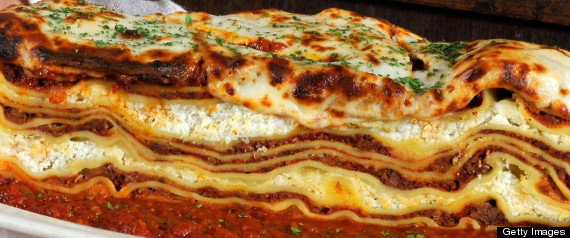
Tests on beef lasagne have revealed that some of the ready meals were made entirely from horsemeat.

Findus analysed 18 of its beef lasagne products and found 11 meals contained between 60% and 100% horsemeat, the Food Standards Agency (FSA) said.

There is no evidence to suggest the horsemeat found in the Findus beef lasagne is a food safety risk, the FSA said.

However, the agency has ordered urgent tests on the lasagne for the veterinary drug phenylbutazone. Meat from animals treated with “bute” is not allowed to enter the food chain in Britain as it may pose a risk to human health.

All food companies have been told to test their beef products, with the FSA saying it was “highly likely” that criminal activity was to blame for the contamination.

Consumers who have purchased the ready meals – produced by French food supplier Comigel on behalf of Findus – have been advised by the FSA not to eat them and return them to the shop they were bought from.

Retail giant Tesco and discount chain Aldi have already withdrawn a range of ready meals produced by Comigel over fears they contained contaminated meat.

Findus UK has already started a full recall of its lasagne products. It withdrew its 320g, 360g and 500g lasagne meals from supermarket shelves as a precautionary measure earlier this week.

It came after Comigel alerted Findus and Aldi that their products “do not conform to specification”.

Findus UK apologised to customers “for any inconvenience caused” – and said anyone who bought the affected lasagne products could get a full refund.

A spokesman said: “We understand this is a very sensitive subject for consumers and we would like to reassure you we have reacted immediately. We do not believe this to be a food safety issue.

“We are confident that we have fully resolved this supply chain issue. Fully compliant beef lasagne will be in stores again soon.”

“We have had three weeks of damaging revelations about what is happening in the meat industry … there is evidence that criminal gangs are involved in this, and frankly I cannot believe that the Government hasn’t called in the police to investigate this in the UK.

“I don’t see how we get to the bottom of it without getting in specialist teams and working out who is behind this fraud and why it is happening.”

People must have confidence that the food they buy is properly labelled, legal and safe to eat, she added.

He’s back again!

Agolf Hitler?

Eighty years after Adolf Hitler’s rise to power, a novel that imagines his return to modern-day Berlin has become a bestseller in Germany, though a comedy about the Fuehrer is not to everyone’s taste.

Instead of committing suicide in his bunker on April 30, 1945, in “He’s Back” (Er Ist Wieder Da), Hitler wakes up in 2011 without the slightest idea what has happened in the intervening 66 years.

He stumbles through Berlin, dazed by the fact that Germany is now ruled by a woman and is home to millions of Turks.

The nearly 400-page novel is by Timur Vermes, a 45-year-old journalist.

In one scene, the Nazi leader asks a group of boys for directions, addressing them as “Ronaldo Hitler youth”. He has mistaken their football shirts bearing the name of the soccer star as some kind of military uniform.

“Who’s the old guy?” the boys ask each other.

In a celebrity obsessed society where success is often gauged by follower numbers on social networks or YouTube views, Hitler soon becomes the star of an entertainment show with a Turkish host.

“You’re golden my dear! This is just the beginning, believe me,” his producer says.

Bild, Europe’s widest circulation newspaper, complains: “He killed millions of people. Today, millions cheer him on YouTube.”

In the book, Hitler discovers jeans, tries to create an email address (“Hitler 89” referring to the year of his birth is already taken) and discovers cooking shows.

A farce in poor taste to some, a political satire to others, “He’s Back” has done well in bookstores. With a print run of 360,000, the book recently made Germany’s bestseller list and is set to be published in English and more than a dozen other languages.

The author says he wanted to present Hitler in a new light.

“We too often harbour the negative attitude of those who see Hitler only as a monster to make themselves feel better,” Vermes says. “I thought it was important to show how he would operate and how he would act in today’s world.”

Unthinkable even 10 years ago, Hitler is today increasingly the subject of comedians and artists — including a comic film directed by a Jew and a burlesque musical comedy. – AFP

Immigration UK’s ‘biggest challenge’

The British public views immigration as the biggest issue facing society, but UK citizens are basically tolerant to immigration, as long as new arrivals are in work and integrate into society, it was revealed in a poll reported in The Observer.

The poll found that one in three people believes tension between immigrants and UK citizens is a major cause of division, while over half those questioned believe it is one of the top three causes, a major new survey entitled ‘State of the Nation: Where is Bittersweet Britain Heading?’ found out, the British Sunday paper wrote.

Over the past two decades immigration has increased to historically high levels, with 100,000 more people entering than leaving the country every year since 1998.

Sunder Katwala, the director of British Future, the think tank which carried out the survey, said it showed that there was a national anxiety about immigration which politicians needed to address.

However, he pointed out that the results suggested that there was very little relation between the geographical distribution of immigrants and the levels of people’s concern. For example, immigration was regarded as a divisive issue by 19 per cent of people in the north-east of England and 20 per cent of people in Wales. In both areas a 2011 census showed that one in 20 people were born abroad. But in London, where one in three people are immigrants, the number of people who regarded immigration as divisive, still stood at 20 per cent.

“People are obviously very anxious about immigration. But I was struck by how much it was driven by a national rather than a local tension. And I don’t think anyone has any confidence in how it is managed as a system. Also there is concern around national cohesion, identity and ability to cope with the scale of change,” said Katwala.

Other issues considered the three essential traits of a Briton were respect for the law, freedom of speech of others, and an ability to speak English. These came out as the top criteria among all ages and social classes in the survey, which polled 2,515 people aged between 16 and 75. Treating women and men equally and respect for people of all ethnic backgrounds and faiths came fourth, fifth and sixth on the list respectively.

The release of the poll’s results coincides with an upcoming speech by Eric Pickles, the communities secretary, in which he hopes to aid efforts of integration into society. He is expected to stress that knowledge of English is vital to social mobility and for the economy as a whole.

The survey also found that three in four people think that the UK is in a housing crisis, an issue that has been on the political agenda of all parties for a number of years. Current Housing Minister Nick Boles is proposing that green field sites, currently protected by planning law, should be built upon in order to provide much needed new housing stock. All age groups surveyed said that owning your own property is better than renting.

When asked what made people proud to be British, the NHS came top, with 45 per cent of people saying it was the institution they were most proud of. The armed forces came second, with 40 per cent of people saying they made them feel proud to be British, while in light of the Olympics and the Paralympics, 38 per cent said ‘Team GB’.

When people were asked if being born in Britain was important to being British, two thirds said as long as someone has worked here for up to 15 years, they should be allowed access to the welfare state, regardless of where they were born.

Finally, roughly two thirds said they would rather be British than any other nationality in the world, while around 15 per cent said they would rather not be British and 20 per cent neither agreed nor disagreed.

Biting the hand that feeds you…

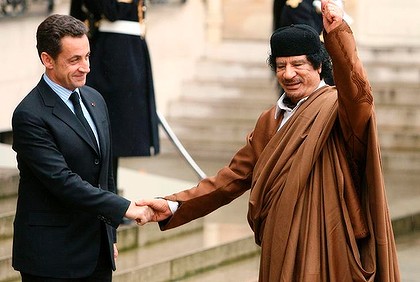
Sarko meets his funder

Evidence has been promised to a French court that could prove former President Nicolas Sarkozy accepted more than €50 million in campaign donations from ousted Libyan leader Muammar Gaddafi.

­Information pointing to the existence of such documents was revealed late last year by Franco-Lebanese businessman Ziad Takieddine. He’s currently facing corruption charges and is under investigation over allegations of his involvement in a money laundering operation between France and the Middle East, in which he is believed to have been involved for 20 years.

“I can provide you with details of the financing of Nicolas Sarkozy’s campaign,” Le Parisien quoted Takieddine as saying. He told the judge the sums involved would exceed €50 million, as Sarkozy’s 2006-7 campaign was “abundantly” financed by Tripoli. The payments continued after Sarkozy’s victory, Takieddine added.

Takieddine’s testimony repeats allegations made by Gaddafi’s son Saif al-Islam and French investigative website Mediapart. Sarkozy has denounced the claims as “grotesque.”

He also claimed to be in possession of “evidence that three French companies in Libya have received contracts for fictitious services” to the tune of “more than €100 million.”

At a December 19 hearing, Takieddine said a number of meetings to organize the payments had taken place in 2006 and 2007 between Claude Gueant, Sarkozy’s chief of staff, and Gaddafi’s private secretary, Bashir Saleh. He said records of these meetings were in the possession of former Libyan Prime Minister Al Baghdadi Mahmoudhi, who is living in exile in France.

Takieddine was apprehended while attempting to take cash out of Libya on a private flight in March 2011, during the NATO-led anti-Gaddafi campaign.

His trial centers on claims that a series of bombings in 2002 in Karachi, Pakistan, were carried out in revenge for the non-payment of bribes agreed during the 1994 sale of a French submarine. The tragedy killed 14 people, including 11 French naval engineers. Takieddine is charged with acting as an intermediary in the deal.

It is alleged that some of the cash involved was transferred back to former Prime Minister Edouard Balladur’s 1995 presidential election campaign. The activities also implicate Nicolas Sarkozy, who was Balladur’s campaign spokesman and budget minister.

If found to be true, the allegations could severely embarrass the former French president, as he together with UK Prime Minister David Cameron played a leading role in instigating the NATO airstrikes that helped topple Gaddafi in October 2011.

French immigrant youths burn 1200 cars for fun

Muslim youths burning cars in France

A New Year’s Eve tradition for some in France of torching empty, parked cars has continued.

Interior Minister Manuel Valls said Tuesday that 1,193 vehicles were burned overnight around the country, where the stunt began in the 1990s.

There was no way to compare this figure to recent ones because the conservative government of former President Nicolas Sarkozy stopped making the numbers public while he was in office. But the rate of burned cars was apparently steady. On Dec. 31, 2009, 1,147 vehicles were burned.

For some, the decision of France’s current Socialist government to resume making public figures of New Year’s Eve’s torched cars is unwise.

Bruno Beschizza, a security chief for Sarkozy’s UMP party, said on iTele TV that publishing the numbers motivates youths to commit such crimes. – AP

UK cuts social services to finance Afghan war

British soldiers in Afghanistan
British soldiers from B Company, 2 Mercian set off on an operation in Malgir, Helmand

The UK has revealed that the cost of its involvement in the war in Afghanistan has reached $27.6 billion, and may end up being as much as $32.5 billion. Meanwhile, the UK continues to slash domestic social services to reduce its budget deficit.

UK Prime Minister David Cameron said that Britain has no plans to abandon Afghanistan: “We will be contributing £70m [US$113 million] a year to help pay for the Afghan National Security Forces.”

The UK recently announced an accelerated plan to withdraw 3,800 of its 9,000 troops from Afghanistan in 2013. However, like the US, the UK will maintain an undisclosed number of soldiers in Afghanistan to help local forces with security after NATO’s mission ends in 2014.

“Because of the success of our forces and the Afghan National Security Forces… we’ll be able to see troops come home in two relatively even steps – 2013 and 2014,” Prime Minister Cameron told Parliament.

At least 438 British troops died during the UK’s 11-year involvement in the widely unpopular and expensive war. UK opinion polls suggest that a majority of British voters think the war is “unwinnable,” and would like to see the soldiers come home ahead of schedule.

And while the UK continues to spend money in Afghanistan, even past the 2014 mark, vital domestic services are being cut. Public spending in 2011 and 2012 dropped by 1.58 per cent ($17.5 billion), the Guardian reported.

The country’s healthcare budget was reduced by 1.2 percent including inflation, about $2 billion, and the education budget was cut by 5.7 percent including inflation, about $5.4 billion.

Cameron has warned that Britain must continue with deep cuts to public spending to reduce the UK’s budget deficit.

In 2012, local patient care was put at risk when GPs were asked to cut services including childhood immunization campaigns, out-of-hours care and minor surgery.

The funding of arts organizations and museums in England will also be cut by $18.8 million starting in 2013. And more than 200 UK libraries were closed this year alone.

The cuts to education have mostly affected children from poor families – one of the repercussions was the closure of primary schools’ breakfast clubs, which were run by charities that provided free breakfasts. – RT

Miss France ‘as white as snow’

Marine Lorphelin

A black rights group on Monday slammed the latest Miss France competition for producing a “white as snow” winner from a field it claimed was unrepresentative of the country’s ethnic make-up.

Marine Lorphelin, 19, a brunette medical student from Burgundy, was on Saturday crowned Miss France 2013, having edged out Miss Tahiti, Hinarini de Longeaux, in the final round of judging.

Louis-Georges Tin, the president of the CRAN (Representative Council of Black Associations), on Monday lamented the lack of contestants from France’s African and north African communities.

“The failure to represent the contemporary French population in an event such as this is obviously serious,” Tin said in a statement issued jointly with Fred Royer, the creator of Miss Black France.

“It amounts to denying the very existence of French people of African origin.”

Of the 33 finalists in Saturday’s contest, eight were from ethnic minorities with six of those coming from France’s Pacific or Caribbean territories.

“In the antiquated world of Miss France, blacks apparently can only come from overseas departments,” the CRAN statement said.

“As for Frenchwomen of north African heritage, they were ‘represented’ by only one candidate who was quickly eliminated (too Muslim perhaps?).”

France is home to around five million Muslims, most of them of north African origin.

The statement went on to express regret that “Miss France is as white as the end of year snow on the steeples of an eternal France.”

‘Tintin in the Congo’ not racist, Belgian court rules

A Brussels court has rejected a legal bid to ban “Tintin in the Congo”, the second adventure of Belgian writer Hergé’s globe-trotting boy reporter. Black associations in the country claimed the book contained racist stereotypes.

“Tintin in the Congo” – a classic 1920s comic strip about Belgium’s celebrated fictional boy reporter – is not racist, a Brussels court ruled on Wednesday.

The Brussels Appeals Court upheld a 2011 ruling against Congolese immigrant Bienvenu Mbutu Mondondo and the Belgian Council of Black Associations, who wanted the book banned.

In 2010 Mbutu, who lives in Belgium, Congo’s former colonial ruler, said Tintin employed a little black helper who was seen as “stupid and without qualities”.

“It makes people think that blacks have not evolved,” he said.

In one scene, a black woman prostrates herself before Tintin, saying: “White man very great. White mister is big juju man.”

‘Gentle and candid humour’

Alain Amici, lawyer for the plaintiffs, told the court in 2011: “The negative stereotypes portrayed in this book are still read by a significant number of children. They have an impact on their behaviour.”

Not so, said Brussels judges, for whom “Tintin in the Congo” is full of “gentle and candid humour”.

The cartoon strip, written in the late 1920s, was Belgian writer Hergé’s second Tintin adventure. It was followed by stories in which the author tried to add greater realism and historical accuracy.

Hergé himself recognised that “Tintin in the Congo” was a “youthful sin” that reflected the prejudices of the time.

In 2007 a British court ruled that “Tintin in the Congo” should be sold with a warning that it includes racist content.

Mbutu has also tried to have the cartoon banned in France, unsuccessfully. – France24

Belgium on high alert ahead of anti-Muslim film’s release

Belgium has heightened its terror alert level ahead of the release of another highly provocative film exploring Islam, reportedly made in cooperation with the notorious Koran-burning US pastor Terry Jones.

­The film’s creator is Pakistan national Imran Firasat, a former Muslim who now lives in Spain. Firasat said he aims to expose the truth of the life of the Prophet Muhammad with ‘The Innocent Prophet: Life of Muhammad from the Point of View of an Ex-Muslim.’

“If we want to know the truth of Islam, we must go deep into the life of Muhammad to find out whether he was a genuine profit sent by God or was he simply a child molester, assassin and a self-proclaimed prophet,” he said in the film’s trailer.

Firasat also hailed pastor Terry Jones as his inspiration. Jones wrote on his website, “It is our hope and desire that we can present a picture of Muhammad that has possibly not been revealed in the past, that will help people in the Western world, and even Muslims, to better understand this person called Muhammad, his life and teachings.”

Jones is infamous for his incendiary anti-Islam speeches, and for staging a ‘Koran-burning day’ on the 10th anniversary of 9/11.

­’The Innocent Prophet’ is expected to be a highly provocative film; Belgian police have raised the country’s ‘terrorism alarm’ level from 2 to 3, the second-highest, ahead of the film’s online release on December 14.

The Belgian Interior Ministry said it was increasing the level to ‘serious threat’ as a precautionary measure, Flanders News reported.

Police units in areas with large numbers of Middle Eastern and North African immigrants are reportedly on alert. Technical divisions of the Belgian police force have also been ordered to closely monitor Islamist websites and mass text messages.

­In response to Belgium’s heightened terror allert, Firasat said he might postpone the release of the film so it could be previewed by authorities to ensure “there is nothing in this movie which doesn’t fall under the right of freedom of expression and that my movie will not cause any kind of loss to humanity.”

“The necessary modification will be also made if requested by the authorities,” he wrote on trailer’s YouTube page. Still, Firasat insisted he is not afraid of “Islamic violence,” and that postponing the release is a token of respect “towards Europe, which is my family.”

Earlier this year, riots broke out in Belgium after the notorious American-made video ‘Innocence of Muslims’ went viral on the web, sparking violent anti-US protests throughout the Arab world.

Gold-digging in Paris

Last week, police in the French capital arrested three people as part of a widening grave robbery investigation.

There was further public outrage after two masked intruders shot dead a 52-year old precious metal worker when he tried to stop them stealing gold from his foundry in the chic central Parisian district of Le Marais.

Police said sky-high market prices for precious metals are acting as a magnet for thieves with scant regard for the living or the dead.

In Pantin cemetery, in the north of Paris, dozens of bodies have recently been dug up, with gold teeth and jewellery stolen from them.

Police sources said the three men seized last week were gravediggers employed by the city’s cemeteries.

Last month, four other men – three from the same Pantin cemetery – were arrested and placed under investigation for aggravated theft, grave robbery and violating the integrity of a corpse.

According to a source close to the investigation, the men removed personal belongings from corpses in the freshest graves, opening them in the dead of night.

Two of the men were caught wearing miner’s helmets and gloves. Their boots were covered in fresh earth.

One of the suspects was found to be carrying 10 gold teeth.

After the initial arrests, the mayor of Paris, Bernard Delanoe, expressed his outrage and ordered the city authorities to step up surveillance of cemeteries.

Even closer to the city centre, a metalworker was gunned down last Wednesday when he fought back against motorbike helmet-clad thieves trying to break into the gold workshop where had been employed for 36 years.

A neighbour said she heard him shout: “I haven’t got the keys!” before chasing the attackers and being shot.

Visiting the scene shortly after the murder, Manuel Valls, the interior minister, admitted: “There is a problem with regulating gold, with illegal workshops that recycle gold, which is often the product of theft or snatched gold chains.”

Precious metal theft is big business is France. Earlier this year, the national rail operator, SNCF, launched a special security programme to clamp down on the massive theft of copper cables that has led to huge delays on its lines.

Ten days ago, his men broke an illicit gold reseller network operating out of the Saint Denis train station in a northern Paris suburb. “It was a real open supermarket for stolen gold. All the thieves from across the capital came there to sell their wares for cash,” he told The Daily Telegraph.

He said a large part of their booty ended up in Belgium, where “legislation is more relaxed”. – The Daily Telegraph

‘Tuigdorpen’: Word of the year

Amsterdam residents with a record of harassing their neighbors will be exiled, the city’s mayor announced. After being forced out, they will live under police supervision in special container housing units with only basic amenities.

­Authorities in the Dutch capital have formed a task force to identify the worst offenders behind the 13,000 complaints of antisocial behavior the city receives annually, Amsterdam-based daily Het Parool reported.

Those charged who defy a compulsory six-month course in the camps will face eviction and homelessness. Amsterdam Mayor Eberhard van der Laan has allocated an estimated 1.3 million euro to the project, which he argued will protect law-abiding residents from being forced to move by unruly neighbors.

The camp dwellers will supposedly be motivated to change their behavior after they return to the city, authorities said.

“The aim is not to reward people who behave badly with a new five-room home with a south-facing garden. This is supposed to be a deterrent,”
a mayoral spokesperson said.

Some have dubbed the camps ‘tuigdorpen’ – ‘scum villages’ – over their similarity to the rhetoric of right-wing anti-immigrant politician Geert Wilders, leader of the Party for Freedom. Last year, Wilders said that “repeat offenders should be forcibly removed from their neighborhood and sent to a village for scum.”

The controversial proposal sparked widespread debate, with the term becoming the Netherlands’ ‘word of the year’ in a poll conducted by Van Dale, the leading national dictionary.

The new policy will come into effect in January. There are several small-scale trial projects of a similar nature already underway in the Netherlands, including a location near Amsterdam where 10 shipping container homes have been set up for persistent offenders.

The world has an extensive record of communities evicting those seen as misfits: Jewish ghettos in Europe, Bantustans for blacks in apartheid South Africa and the Soviet Union’s unofficial ‘rule of 101 km,’ which banned criminals, dissidents and work-dodgers from living closer than 100 kilometers from large cities.

The Netherlands is no exception – troublemakers in the 19th century were exiled to live in special villages in Drenthe and Overijssel outside Amsterdam. – RT