Moscow’s actions in the Crimea are comprehensible, former German chancellor, Helmut Schmidt said, criticizing the Western reaction to the peninsula’s reunification with Russia.
President Vladimir Putin’s approach to the Crimean issue is “completely understandable,” Schmidt wrote in Die Zeit newspaper where he’s employed as an editor.
While the sanctions, which target individual Russian politicians and businessmen, employed by the EU and the US against Russia are “a stupid idea,” he added.
The current restrictive measures are of symbolic nature, but if more serious economic sanctions are introduced “they’ll hit the West as hard as Russia,” Schmidt warned.
He also believes that the refusal of the Western countries to cooperate with Russia in the framework of the G8 is a wrong decision.
“It would’ve been ideal to get together now. It would certainly do a lot more to promotion of peace than the threats of sanctions,” the ex-chancellor explained.
But the G8 itself isn’t that as important as the G20, in which Russia remains a member, he added.
Schmidt executed the duties of chancellor of West Germany in 1974-82, also working as the country’s finance, economy and defense minister.
The recognition of Kosovo independence set a precedent that gives Crimeans, as well as Basques and Catalans, a right for self-determination, German opposition leader said, lashing out against Angela Merkel’s support of sanctions against Russia.
Gregor Gysi, a parliamentary head of the largest lower-house opposition party in Germany has spoken out on Thursday against German Chancellor’s unquestioning support of the coup-appointed Ukrainian government.
“They formed a new government….. Immediately recognized by president Obama by the EU and German government as well. Miss Merkel! The vice-prime minister, the defense minister, minister of agriculture, environment minister, the attorney general.. They are fascists!” he stated.
Gysi said that NATO opened Pandora’s Box by recognising the unilaterally proclaimed independence of Kosovo and that Crimea’s secession from Ukraine applies the same pattern of international law.
“With Kosovo, they opened Pandora’s box. What’s allowed for Kosovo, you should also allow for others. I told you this but you haven’t listened to me. Winning the Cold War has eclipsed everything for you, you forgot about everything else,” Gysi said.
“The Basques are asking why can’t they make their choice, whether they want to stay within Spain or not? Catalonians are asking, why can’t they decide whether they want to belong to Spain or not. Of course people living in Crimea are asking the same thing.”
“I think that Crimea breaking away from Ukraine is just the same as Kosovo. I knew Putin would use this argument, and he did,” the politician said. “It must be found, such status for the Crimea, which will be acceptable for Ukraine, Russia, and us.”
Gysi also commented on NATO’s expansion to the east and called on the German government and the West to acknowledge the “legitimate security interests of Russia.”
“When we restored Germany’s unity, the US, German and other foreign ministers proclaimed there will be no NATO expansion to the east. But this promise has been broken. There was an expansion of NATO in Russia’s direction,” said Gregor Gysi in an outburst directed at Merkel.
“Security in Europe, there are neither without nor against Russia, but with Russia. When the crisis is over one day, an advantage could be that international law is finally respected again from all sides,” Gysi concluded.
Right before Gysi’s emphatic statement Chancellor Angela Merkel addressed German MPs, expressing her support of imposing sanctions and warning Russia that it risks “massive political and economic consequences” if it sticks to its position on Ukraine.
Russia has repeatedly said it considers the actions of Crimean authorities reasonable and legal, and will respect the results of the referendum.
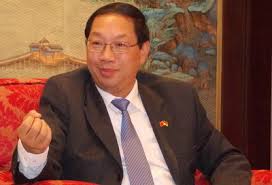
China’s top envoy to Germany has warned the West against punishing Russia with sanctions for its intervention in Ukraine, saying such measures could lead to a dangerous chain reaction that would be difficult to control.
In an interview with Reuters days before the European Union is threatening to impose its first sanctions on Russia since the Cold War, ambassador Shi Mingde issued the strongest warning against such measures by any top Chinese official to date.
“We don’t see any point in sanctions,” Shi said. “Sanctions could lead to retaliatory action, and that would trigger a spiral with unforeseeable consequences. We don’t want this.”
The interview was conducted on Wednesday, the same day that the EU agreed a framework for sanctions that would slap travel bans and asset freezes on people and companies accused by Brussels of violating the territorial integrity of Ukraine.
German Chancellor Angela Merkel, has taken the side of the putschists supported by the United States, and warned that unless Russia accepts the idea of a “contact group” to resolve the crisis diplomatically, Russia risked “massive” political and economic damage if it did not change course in the coming days.
Washington, enabled by its compliant but stupid NATO puppets, is pushing the Ukrainian situation closer to war.
German Chancellor Merkel has failed her country, Europe, and world peace. Germany is the strength of the EU and NATO. Had Merkel said “No” to sanctions on Russia, that would have been the end of the crisis that Washington is brewing, a crisis unlikely to be ended short of war.
But Merkel has signed away the sovereignty of the German nation and assigned the fate of Germany to a province in the American Empire. Thus has Merkel and the weak German leadership consigned the world to war. Already blamed for World War 1 and World War 2, now Germany will be blamed for World War 3.
Washington’s mismanaged Ukrainian coup has cost Washington Crimea, which Washington wanted most of all in order to deprive Russia of its warm water naval base on the Black Sea. In addition, the mismanaged overthrow of an elected government in Ukraine is threatening to also lose the Russian cities of eastern Ukraine. Like Crimea, eastern Ukraine consists of former Russian areas that Khrushchev stuck into Ukraine in the 1950s.
In what is clearly a fruitless and pointless effort to get Crimea back, Washington is demanding that Russia interfere in Crimea and prevent Crimea from seceding from Ukraine. If the Russian government refuses to follow Washington’s orders, Washington has announced that it will inflict “damaging sanctions” on Russia. Initially, EU countries expressed an unwillingness to go along with Washington, but with bribes and threats, Washington has conquered Merkel and has its European puppets lined up following orders.
Washington understands that economic sanctions are a far less threat to Russia than the loss of its Black Sea naval base. Washington also understands that Putin cannot possibly abandon the millions of Russians in eastern and southern Ukraine to the mercy of the anti-Russian and unelected government imposed by Washington in Kiev. As Washington knows that its threat of sanctions is empty, why did Washington make it?
The answer is in order to drive the crisis to war. Washington’s neoconservative nazis have been agitating for war with Russia for a long time. They want to remove one of the three remaining restraints (Russia, China, Iran) on Washington’s world hegemony. Washington wants to break up the BRICS (Brazil, Russia, India, China, South Africa) before these countries form a separate currency bloc and avoid the use of the US dollar.
Russia will respond in kind to Washington’s sanctions. European peoples and Western banks and corporations will suffer losses. It would be at least two or three years before Washington has in place means of delivering US natural gas achieved by fracking and contamination of US water supplies to Europe to take the place of Russia’s cutoff of energy to Europe.
The Western presstitute media will dramatize the Russian response to sanctions and demonize Russia, while ignoring who started the fight, thereby helping Washington prepare Americans for war. As neither side can afford to lose the war, nuclear weapons will be used. There will be no winners.
All of this is perfectly clear, just as was the obvious conclusion of the march of events leading up to World War 1. Now, like then, the people who see the outcome are powerless to stop it. Delusion rules. Arrogance and hubris overflow. Statements and actions become ever more reckless, and then there is hell to pay.
Americans and Europeans, if they had any awareness at all, would be in the streets violently protesting the coming war toward which the insane criminals in Washington are driving the world.
Instead, the German chancellor, the French president, the British prime minister and the Western presstitute media continue to lie: It was legitimate for the West to steal Kosovo from Serbia and to steal the Ukrainian government, but it is not legitimate for the Russian population of Crimea to exercise self-determination and return to Russia. Washington and its EU puppets even have the audacity to declare falsely, after overthrowing an elected government in Ukraine and installing an unelected one, that Crimean self-determination violates the Ukrainian constitution, which no longer exists because Washington destroyed it.
The criminally insane government in Washington has pushed the Russian bear into a corner. The bear is not going to surrender.
Paul Craig Roberts was Assistant Secretary of the Treasury for Economic Policy and associate editor of the Wall Street Journal. He was columnist for Business Week, Scripps Howard News Service, and Creators Syndicate. He has had many university appointments. His internet columns have attracted a worldwide following. His latest books are, The Failure of Laissez Faire Capitalism and How America Was Lost.
Following decades of a heavily subdued program, Germany is planning to resume counter-espionage against both the US and other Western allies in response to ongoing revelations surrounding NSA’s global surveillance practices, Der Spiegel reports.
Another primary motivation for the resumption of surveillance is US reluctance to agree to a no-mutual-spying treaty desired by Germany, the reports suggests.
The beefed up program will include more active tracking of US agents operating within Germany’s borders. British embassies – as well as those of the US – could also be targeted, according to the report.
“This step would be an about-face from the decades-long practice of systematically monitoring the activities of countries such as China, Russia and North Korea but rarely the activities of Western partners,” read Spiegel’s assessment of the situation.
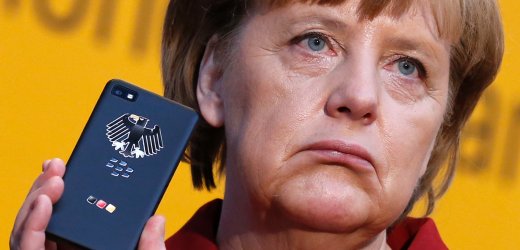
One of the revelations considered to be most serious was the fact that the US was monitoring a non-governmental cell phone used by German Chancellor Angela Merkel. According to the files leaked by Edward Snowden, the German Chancellor’s mobile phone has been on an NSA target list since 2002 and was codenamed “GE Chancellor Merkel.” Surveillance and communication equipment installed on the roofs of both the US and British embassies in the capital was also deeply criticized.
Head of the German domestic intelligence service, the Bundesamt für Verfassungsschutz (BfV), Hans-Georg Maassen suggested last November that active operations may be stepped up in the wake of the news. Germany was required to “adjust counter-espionage and take a 360-degree view,” according to Maassen.
In January, Germany called for less rhetoric and more action in the wake of President Obama’s pledge to stop spying on world leaders. While the announcement was greeted with optimism, politicians said it had been “too little, from a German point of view.”
Mere days afterwards, former NSA contractor and whistleblower Edward Snowden chose the German ARD broadcaster to give his first TV interview, stating that: “There is no question that the US is engaged in economic spying.”
Clemens Binninger, part of Merkel’s Christian Democrats party, said that in regards to the discrepancies between countries surveilled, Germany needs to “cease the differentiation and treat them all the same way.”
Chancellor Merkel said on Saturday in her weekly podcast that herself and French President Francois Hollande would review plans to build up a trustworthy data protection network in Europe.
She aired her disapproval of companies such as Google and Facebook, basing their operations in countries with low levels of data protection, while in reality being active in countries with high data protection.
“Above all, we’ll talk about European providers that offer security for our citizens, so that one shouldn’t have to send emails and other information across the Atlantic. Rather, one could build up a communication network inside Europe,” she said.
In the wake of the revelations about US global spying activities, Merkel has become one of the biggest supporters of greater data protection making it mandatory for ministers to use encryption on their phones to secure their communications against intrusion.
However, before the new counter-intelligence plan comes into effect, an agreement must be reached between Merkel‘s office, the Interior Ministry and the Foreign Ministry, Der Spiegel reports. – RT
Angela Merkel greets one of the ‘Wise Men’ at the Chancellery in Berlin
Despite a growing PC backlash against it, blackface is still hugely popular in Germany, where people insist they aren’t racist
With Karneval ready to kick off later this month, many in Germany are picking out their festive getups and preparing to drink as much Hefeweizen as possible.
It has a long history in this country of roughly 82 million, where Nazism is banned.
“It’s horrible that black people are being portrayed as clowns and funny-looking people,” says Tahir Della, spokesperson for the Initiative for Black People in Germany, an anti-racism group. “It’s degrading.”
Hougan Jean Claude is possessed by the Spirit Ogou. Ogou is the male warrior spirit who wields a machete during the ceremony. Ogou is known as a tough task master who regularly calls people out at ceremonies to demand that the become initiated into the Vodou religion.
Mockery, if not total degradation, is part of the history of Germany’s Karneval. Though the holiday itself goes back further, the tradition of wearing costumes developed during the 1800s in the western part the country. At the time, the Germans were under French rule, and they used Karneval as a chance to mock their foreign overlords.
In the modern era, the mockery has moved into other realms. It’s all supposed to be in good fun. One advertisement for a costume on Amazon features a white actor in blackface with cartoonish red lips, a minstrel-like smile, a spear in one hand and a bone in the other (the company did not immediately respond to a request for comment). Another costume on Karneval-Megastore, a site run by the German company Kultfaktor, features a man in blackface wearing a grass skirt with a bone through his nose.
The company later apologized, saying it had returned them to the manufacturer, and expressing “regret and dismay” that anyone would think these outfits were racist.
“Karneval is all about having fun,” says the Kultfaktor spokesperson. “Of course we play with clichés, but this fact also applies at Karneval to all categories of people. We also have costumes that take light-skinned people for a ride, and this may be overlooked.”
For light-skinned people, stereotypes about black people linger: That they’re lazy, stupid, brutish and subhuman.
In Germany today, many claim that minstrel shows were a uniquely American phenomenon with little or no history on the continent. But blackface is sometimes shunned in the U.S., though there are some glaring exceptions.
Europe has been slower to change. In Germany, chocolate-covered marshmallows are still often called Negerkuss, or “Negro kiss,” and some German-made candy was pulled from the shelves in Sweden just a few weeks ago, following customer complaints that its ads were racist.
Germany’s blackface problems go far beyond costumes or candy. German Chancellor Angela Merkel posed with children dressed in blackface last year for an official event.
Two years ago, a German theater chose to feature actors in blackface—a decision that sparked online backlash. At the time, some argued that there weren’t enough black actors in Germany.
So why is it still acceptable in Germany? Part of the problem is that racism here means Nazism, according to T. Vicky Germain, a filmmaker and activist in Berlin. If you try and explain why something’s racist, people will often give you an annoyed look and say they aren’t Nazis. “That’s a serious problem,” says Germain.
Just two months ago, nearly 7 million people tuned in to ZDF, a major, publicly funded German TV station, when the program presenter on Wetten, Dass…? (Wanna Bet That…?) dared the audience to come dressed as two characters in a well-known children’s book. For one of the characters, the presenter suggested audience members use “coal or shoe polish” to blacken their faces.
The studio audience complied, and so did the mayor of Augsburg, a city of in southern Germany. After the incident, the network refused to apologize, and the local newspaper argued that the incident could not be called racist because audience members were dressing up like a “bold, adventurous and sympathetic hero.”
As one Reddit user, whose name has since been deleted, writes: “I bet that about 99 percent of Germans could not tell you what a minstrel show or blackface is. [The children’s character] has a positive image here and this has nothing to do with a minstrel type black caricature at all.”
On social media, some were outraged, as the hashtag #blackface spread widely. But the practice is still so common—in costume ads and elsewhere—that it’s not likely to disappear anytime soon.
Last summer, German Chancellor Angela Merkel promised her citizens a pact which would prohibit U.S. spying on German citizens. But since then, Washington has shown little interest in pursuing such a treaty. Now, officials in Germany fear the deal is dead.
Failed talks? Hardly. The negotiations “are continuing,” says Germany’s foreign intelligence service, the Bundesnachrichtendienst (BND). “We are still talking,” says the German government. In other words, nothing has yet been decided. The No-Spy deal is still alive.
But the statements coming out of Berlin and Pullach, where the BND is headquartered, reek of forced optimism. Nobody wants it to look as though efforts have been abandoned toward a deal which would see the U.S. agree to swear off spying operations in Germany.
Yet despite the assertions, most of those involved are slowly coming to the realization that a surveillance deal between Washington and Berlin isn’t likely to become reality. The U.S. government is still digging in its heels.
On Tuesday, the German daily Süddeutsche Zeitung quoted one source who is familiar with the talks as saying “we won’t get anything.” The paper also reported that the US is refusing to promise that it won’t monitor members of the German government and other politicians in the future.
Whistleblower Edward Snowden has met with a German MP in Moscow. He passed a letter addressed to the German government and federal public prosecutor where he allegedly said he is ready to testify over Washington’s probable wiretapping of Merkel’s phone.
During the meeting, Snowden made it “clear that he knows a lot,” Greens lawmaker Hans-Christian Stroebele told ARD channel.
“He expressed his principle readiness to help clarify the situation. Basis for this is what we must create. That’s what we discussed for a long time and from all angles,” the MP said. “He is essentially prepared to come to Germany and give testimony, but the conditions must be discussed.”
Stroebele, 74, is a member of the German parliament’s control committee which is responsible for monitoring the work of intelligence agencies.
Snowden wouldn’t be able to travel to Germany to give evidence, as that would effectively see his refugee status lifted. If that were to happen, it would be possible for him to be extradited to the US, Interfax news agency quoted an unknown source as saying.
“At the same time, the German General Prosecutor’s Office could in principle send its representatives to Russia or pass its written questions on to Edward Snowden,” the same source said.
German Chancellor Angela Merkel has dispatched the country’s top foreign affairs and intelligence advisers to Washington this week to further investigate the allegations that her cell phone was tapped by the NSA, the report which caused fierce outrage in Germany.
The scandal initially broke when journalists working with Snowden’s leaked documents contacted the German government for clarification. German politicians subsequently suggested involving Snowden as a witness in the wiretapping case.
The German Federal Prosecutor’s Office may summon Snowden to be a witness in the case, German justice minister Sabine Leutheusser-Schnarrenberger told Deutschlandfunk radio on Sunday.
“If our suspicions prove correct and a case is opened, the German Federal Prosecutor’s Office will have to consider the possibility of interrogating Snowden as a witness,” she said.
If Snowden were to come to Germany for the case, the EU country could breach US’ requests for extradition, the minister added.
Leutheusser-Schnarrenberger also said that the phone tapping is illegal and constitutes a crime, therefore those responsible should be held accountable.
A parliamentary session will be held on November 18 to discuss the phone tapping. The Greens, along with the far-left Die Linke party, previously asked for a public inquiry into the matter. They were the ones to call on witnesses, including Snowden.
In June, Edward Snowden, a former NSA contractor who disclosed secret US surveillance programs, fled to Hong Kong and then to Russia.
President Vladimir Putin rejected US demands to extradite Snowden to face charges including espionage.
In early August, Snowden was granted temporary asylum, which can be extended annually.
France said Thursday it was closing down a 1,000-strong infantry regiment based in Germany that is part of a highly symbolic Franco-German brigade, a move Berlin reacted to with “regret”.
The brigade was set up in 1989 by then French president Francois Mitterrand and German chancellor Helmut Kohl to increase military cooperation between the two former World War II-era foes.
The French defence ministry said in a statement that it would be shutting down the 110th Infantry Regiment based in the southwestern German town of Donaueschingen in 2014.
The regiment groups together 850 soldiers and 150 civilians, and the ministry said the decision was part of “difficult choices” needed as France cuts its military budget to reduce its state deficit.
But it reaffirmed “France’s full commitment” to the brigade, which will be left with around 4,000 soldiers based in both countries after the regiment closure.
German Defence Minister Thomas de Maiziere expressed “regret” at the decision, saying in a statement that the regiment “contributed with success for many years to Franco-German friendship”.
After the dissolution, France will still have 500 troops in Germany, about the same number of German troops that are stationed in France.
The rest of the brigade is made up of French soldiers based in France and German military based in Germany.
The brigade is highly symbolic in nature as it is difficult for both countries to jointly deploy soldiers to hotspots, given the different rules of engagement that govern both armies.
Soldiers from the brigade have nevertheless been sent to Afghanistan and Kosovo in the past. – AFP
by John-Thor Dahlburg and Geir Mouson, Associated Press
European leaders united in anger Thursday as they attended a summit overshadowed by reports of widespread U.S. spying on its allies -allegations German Chancellor Angela Merkel said had shattered trust in the Obama administration and undermined the crucial trans-Atlantic relationship.
The latest revelations that the U.S. National Security Agency swept up more than 70 million phone records in France and may have tapped Merkel’s own cellphone brought denunciations from the French and German governments.
Merkel’s unusually stern remarks as she arrived at the European Union gathering indicated she wasn’t placated by a phone conversation she had Wednesday with President Barack Obama, or his personal assurances that the U.S. is not listening in on her calls now.
“We need trust among allies and partners,” Merkel told reporters in Brussels. “Such trust now has to be built anew. This is what we have to think about.”
“The United States of America and Europe face common challenges. We are allies,” the German leader said. “But such an alliance can only be built on trust. That’s why I repeat again: spying among friends, that cannot be.”
The White House may soon face other irked heads of state and government. The British newspaper The Guardian said Thursday it obtained a confidential memo suggesting the NSA was able to monitor 35 world leaders’ communications in 2006. The memo said the NSA encouraged senior officials at the White House, Pentagon and other agencies to share their contacts so the spy agency could add foreign leaders’ phone numbers to its surveillance systems, the report said.
The Guardian did not identify who reportedly was eavesdropped on, but said the memo termed the payoff very meager: “Little reportable intelligence” was obtained, it said.
Other European leaders arriving for the 28-nation meeting echoed Merkel’s displeasure. Swedish Prime Minister Fredrik Reinfeldt called it “completely unacceptable” for a country to eavesdrop on an allied leader.
If reports that Merkel’s cellphone had been tapped are true, “it is exceptionally serious,” Dutch Prime Minister Mark Rutte told national broadcaster NOS.
“We want the truth,” Italian Premier Enrico Letta told reporters. “It is not in the least bit conceivable that activity of this type could be acceptable.”
Echoing Merkel, Austria’s foreign minister, Michael Spindelegger, said, “We need to re-establish with the U.S. a relationship of trust, which has certainly suffered from this.”
France, which also vocally objected to allies spying on each other, asked that the issue of reinforcing Europeans’ privacy in the digital age be added to the agenda of the two-day summit. Before official proceedings got underway, Merkel held a brief one-on-one with French President Francois Hollande, and discussed the spying controversy.
The Europeans’ statements and actions indicated that they hadn’t been satisfied with assurances from Washington. On Wednesday, White House spokesman Jay Carney said Obama personally assured Merkel that her phone is not being listened to now and won’t be in the future.
“I think we are all outraged, across party lines,” Wolfgang Bosbach, a prominent German lawmaker from Merkel’s party, told Deutschlandfunk radio. “And that also goes for the response that the chancellor’s cellphone is not being monitored – because this sentence says nothing about whether the chancellor was monitored in the past.”
“This cannot be justified from any point of view by the fight against international terrorism or by averting danger,” Bosbach said.
Asked Thursday whether the Americans had monitored Merkel’s previous communications, White House spokesman Carney wouldn’t rule it out.
“We are not going to comment publicly on every specified alleged intelligence activity,” he said.
But while the White House was staying publicly mum, Carney said the Obama administration was discussing Germany’s concerns “through diplomatic channels at the highest level,” as it was with other U.S. allies worried about the alleged spying.
In the past, much of the official outrage in Europe about revelations of U.S. communications intercepts leaked by former NSA contract worker Edward Snowden seemed designed for internal political consumption in countries that readily acknowledge conducting major spying operations themselves. But there has been a new discernible vein of anger in Europe as the scale of the NSA’s reported operations became known, as well as the possible targeting of a prominent leader like Merkel, presumably for inside political or economic information.
“Nobody in Germany will be able to say any longer that NSA surveillance – which is apparently happening worldwide and millions of times – is serving solely intelligence-gathering or defense against Islamic terror or weapons proliferation,” said Hans-Christian Strobele, a member of the German parliamentary oversight committee.
“Because, if you tap the cellphone or the phone connection of the presidents of France or Brazil, or the cellphone of the chancellor, then this is no longer about collecting intelligence about international terrorism, but then that is about competition, about getting advantages in this competition and winning. That’s why today is a watershed moment.”
Martin Schulz, president of the European Parliament, said Europe’s undermined confidence in the U.S. meant it should suspend negotiations for a two-way free-trade agreement that would account for almost half of the global economy. The Americans, Schulz said, now must prove they can be trusted.
“Let’s be honest. If we go to the negotiations and we have the feeling those people with whom we negotiate know everything that we want to deal with in advance, how can we trust each other?” Schulz said.
European Union Commission President Jose Manuel Barroso said for many Europeans, eavesdropping on their phone calls or reading their emails is particularly objectionable because it raises the specter of totalitarian regimes of the recent past.
“At least in Europe, we consider the right to privacy a fundamental right and it is a very serious matter. We cannot, let’s say, pretend it is just something accessory,” Barroso told a presummit news conference.
Referring to the East German Communist secret police, the feared Stasi, Barroso said, “to speak about Chancellor Merkel, in Germany there was a part of Germany where there was a political police that was spying on people’s lives every day. So we know very recently what totalitarianism means. And we know very well what comes, what happens when the state uses powers that intrude in people’s lives. So it is a very important issue, not only for Germany but for Europe in general.”
In Berlin, the German Foreign Ministry summoned the U.S. ambassador to stress how seriously it takes the reported spying on Merkel. Germany’s defense minister said his country and Europe can’t return “to business as usual” with Washington, given the number of reports that the United States has eavesdropped on allied nations.
“The Americans are and remain our best friends, but this is absolutely not right,” Thomas de Maiziere, who served as Merkel’s chief of staff, told ARD television. “I have reckoned for years with my cellphone being monitored, but I wasn’t reckoning with the Americans.”
A German parliamentary committee that oversees the country’s intelligence service met to discuss the spying allegations. Its head, Thomas Oppermann, recalled previous reports to the panel that U.S. authorities had denied violating German interests, and said, “we were apparently deceived by the American side.” – AP
Germany’s largest telecom provider, Deutsche Telekom, is looking to introduce a “national routing” service which would keep German internet traffic out of the hands of foreign spies.
The former state-owned communications giant outlined the plans at a secret meeting in the Economy Ministry, business weekly Wirtschaftswoche reported.
Currently, email data is exchanged between users worldwide via international Internet exchange points; physical structures through which Internet service providers (ISPs) exchange Internet traffic between their networks.
The company hopes to hammer out an agreement with other national Internet providers which would guarantee that “while being transported from the sender to the receiver in Germany… no single byte leaves Germany,” Thomas Kremer, a board member of Telekom’s data privacy, legal affairs and compliance, told the magazine.
To put the plan into effect, Deutsche Telekom must secure the support of all its competitors, including Telefonica and Vodafone.
While Vodafone and Telefonica are currently mulling the initiative, another competitor – Internet service provider QSC – has questioned the efficacy of the plan, saying it was not possible to determine with certainty whether data is being routed nationally or internationally.
“In a next step, this initiative could be expanded to the Schengen area,” the spokesman said, referring to the group of 26 European countries – excluding Britain – that have removed border controls for participating countries.
Deutsche Telekom first began leading the charge for to protect its users’ privacy from foreign intelligence agencies in August when they rolled out ‘Email Made in Germany’, an encrypted email service that only uses German servers to process and store all domestic email traffic.
The move followed revelations that the US National Security Agency (NSA) collects 500 million pieces of phone and email metadata from Germany each month — more than in any other EU country.
“Germans are deeply unsettled by the latest reports on the potential interception of communication data,” said Rene Obermann, head of Deutsche Telekom.
“Now, they can bank on the fact that their personal data online is as secure as it possibly can be.”
Experts do not believe the move will stop governments from getting their hands on information, although it might complicate efforts to do so.
“Of course the NSA could still break in if they wanted to, but the mass encryption of emails would make it harder and more expensive for them to do so,” Sandro Gaycken, a professor of cyber security at Berlin’s Free University, said when the idea was first proposed. – RT
American technology companies like Google and Facebook were put on the defensive when Edward Snowden’s allegations about U.S.-government surveillance of Internet traffic emerged this spring. Outside the U.S., some companies and politicians saw an opportunity.
Three of Germany’s largest email providers, including partly state-owned Deutsche Telekom AG teamed up to offer a new service, Email Made in Germany. The companies promise that by encrypting email through German servers and hewing to the country’s strict privacy laws, U.S. authorities won’t easily be able to pry inside. More than a hundred thousand Germans have flocked to the service since it was rolled out in August.
“We can say that we protect the email inbox according to German law,” says Jorg Fries-Lammers, a spokesman for one of the German companies, 1&1 Internet AG. “It’s definitely a unique selling point.”
The U.S. National Security Agency has acknowledged collecting email data about Americans through phone and Internet companies. Silicon Valley companies have said that they don’t give the government unfettered access to user data but that they are barred from disclosing details.
Fueled by the controversy, countries are seeking to use data-privacy laws as a competitive advantage—a way to boost domestic companies that long have sought an edge over Google, Microsoft Corp. MSFT +1.50% and other U.S. tech giants.
“Countries are competing to be the Cayman Islands of data privacy,” says Daniel Castro, a senior analyst at the Information Technology and Innovation Foundation, a nonpartisan Washington, D.C., think tank that receives funding from the tech industry.
While establishing these islands of privacy might make for good marketing, the initiatives face hurdles. Laws demanding that data be stored in-country can give domestic Internet-service providers a boost but also could raise their customers’ costs.
And creating domestic walls for online service runs into a hard reality.
“It basically ignores the entire Internet,” says Ronaldo Lemos, director of the Institute for Technology & Society, a Rio de Janeiro think tank. “This data has to circulate. It’s going to be sent to Miami, to Europe. It’s not going to be sitting idle.”
Nevertheless, some European leaders are renewing calls for a “euro cloud,” in which consumer data could be shared within Europe but not outside the region. Brazil is fast-tracking a vote on a once-dormant bill that could require that data about Brazilians be stored on servers in the country. And India plans to ban government employees from using email services from Google and Yahoo Inc. YHOO +2.38%
U.S. companies are watching such developments with trepidation.
“We should all be nervous when countries impose costly new requirements on companies as a condition of serving their citizens,” says Facebook Chief Operating Officer Sheryl Sandberg. “It means fragmenting the Internet and putting the economic and social opportunities it creates at risk.”
Google declined to comment for this article, and Yahoo didn’t respond.
It is too soon to tell if a major shift is under way. But the Information Technology and Innovation Foundation estimates that fallout from revelations about NSA activities could cost Silicon Valley up to $35 billion in annual revenue, much of it from lost overseas business. A survey conducted this summer by the Cloud Security Alliance, an industry group, found that 56% of non-U.S. members said security concerns made it less likely that they would use U.S.-based cloud services. Ten percent said they had canceled a contract.
“We talk to our sales leaders, who talk to customers every day, and this has the potential to significantly erode the trust of customers around the world,” says John Frank, a deputy general counsel at Microsoft.
It could be tough for U.S. companies to undo any damage, particularly when the extent of NSA activities is secret and other nations have been critical of the U.S. On Tuesday, Brazilian President Dilma Rousseff in a United Nations address assailed U.S. snooping on her country. Last week she canceled a planned visit to Washington.
European Commission Vice President Neelie Kroes, who supervises the European Union’s digital portfolio, has been encouraging the bloc’s companies to tout their privacy creds. “Privacy is not only a fundamental right,” she said in Estonia this summer. “It can also be a competitive advantage.”
For small German companies competing against big ones—like online-security company Symantec Corp. SYMC -1.32% and Amazon.com Inc., AMZN -0.67% which provides corporate cloud services—the NSA surveillance program “is a present from heaven,” says Oliver Dehning, chief executive of antispameuropeGmbH, which builds spam-protection software. “It’s kind of an opportunity to strike back and protect our home market.”
He turned the Snowden leaks into a marketing campaign, tweeting about the news and speaking at industry conferences about how Germans can protect themselves from spying.
Symantec and Amazon declined to comment for this article.
Some of the promises of the would-be data islands could be tough to meet.
While much of the legislation proposes that information about citizens be located in-country, that overlooks that the data may need to be transferred elsewhere.
And laws requiring domestic hosting could raise the price of computing. The in-country hosts could have trouble competing with the economies of scale enjoyed by big U.S. companies, says Jim Reavis, president of the Cloud Security Alliance. Also, it could well be less expensive to use a data center in another country than to build one at home.
Country-specific computing can have its own privacy concerns, meanwhile. Some countries pushing domestic hosting—Brazil, for example—don’t protect the privacy of citizens’ Internet data, so consumers wouldn’t be safe from their own governments’ eyes. Brazil made 715 requests for Facebook user data in the first half, according to the company.
Because Germany has strict privacy laws, Email Made in Germany says customers who send email to fellow subscribers can be assured the U.S. and German governments will have a difficult time accessing the users’ messages. Customers see a bright-green check mark next to messages sent by fellow subscribers. A gray check appears next to messages from other email providers. That means Germans can ensure their privacy only for email to people on German soil.
Even some companies that seek to profit from fears about U.S. snooping acknowledge that law-enforcement agencies in other countries want to catch up with Washington’s capabilities.
“In the long run, there won’t be any difference between what the U.S. or Germany or France or the U.K. is doing,” says Roberto Valerio, whose German cloud-storage company, CloudSafe GmbH, reports a 25% rise in business since the NSA revelations.
“At the end of the day, some agency will spy on you,” he says. – WSJ
President Obama announced today that he talked on the phone with Iranian president Rouhani: “Just now I spoke on the phone with President Rouhani of the Islamic Republic of Iran,” he said. “The two of us discussed our ongoing efforts to reach an agreement over Iran’s nuclear program.”
This is the first time leaders from America and Iran have spoken since 1979.
“I reiterated to President Rouhani what I said in New York. While there will surely be important obstacles to moving forward and success is by no means guaranteed, I believe we can reach a comprehensive solution.
“I’ve directed Secretary Kerry to continue pursuing this diplomatic effort with the Iranian government. We had constructive discussions yesterday in New York with our partners, the European Union, the United Kingdom, France, Germany, Russia, and China, together with the Iranian foreign minister, and going forward, President Rouhani and I have directed our teams to continue working expeditiously in corporation with the P-5 plus one to pursue an agreement. And throughout this process we will stay in close touch with our friends and allies in the region, including Israel.
“Now we are mindful of all the challenges ahead. The very fact that this was the first communication between an American and Iranian president since 1979 underscores the deep mistrust between our countries.”
Obama said that “Iran’s supreme leader has issued a fatwa against the development of nuclear weapons, President Rouhani has indicated that Iran will never develop nuclear weapons.”
“I have made clear that we respect the right of the Iranian people to access peaceful nuclear energy in the context of Iran meeting its obligations. So the test will be meaningful, transparent, and verifiable actions,” said Obama, which could lead to a relaxation of sanctions.
Obama talked of a new relationship between the U.S. and Iran, if his diplomatic efforts succeed. – TWS
A chemist and an actor — both with family roots in Senegal — have become Germany’s first black federal lawmakers, according to official election results released Monday.
They were among 34 lawmakers with immigrant backgrounds to win seats in Sunday’s election, up from 21 in the previous term, said the Migration Media Service, a group that provides facts and figures on immigration in Germany.
Although nearly one in five of Germany’s 80 million people are immigrants, or the children or grandchildren of immigrants, relatively few have made it into the federal legislature. Until now there were no black lawmakers in Parliament, despite more than 500,000 people of recent African origin believed to be living in Germany.
“My election into the German Parliament is of historical importance,” said Karamba Diaby, a Senegalese-born chemist who moved to the city of Halle in 1986 after receiving a scholarship to study in communist East Germany.
The 51-year-old, who gained German citizenship in 2001, said his priority would be to promote equal opportunities in education. “Every child born in Germany should have the chance to be successful in school regardless of their social background or the income of their parents,” he said.
The other black lawmaker elected Sunday was Charles M. Huber, a 56-year-old actor born in Munich to a Senegalese father and a German mother. Huber is a member of Chancellor Angela Merkel’s Christian Democratic Union, which won the election with 41.5 percent of the vote.
Merkel’s party also now has its first Muslim lawmaker in the Bundestag. Cemile Giousouf was elected in the western town of Hagen. The 35-year-old was born in Germany to Turkish immigrant parents.
Several lawmakers of Turkish origin have previously been elected to the lower house, but most were with the Social Democratic Party, which Diaby represents, the environmentalist Green Party or the Left Party.
“Measured against the 630 seats in Parliament, some 5.4 percent of deputies now come from immigrant families,” the Migration Media Service noted. “In the population as a whole their share is more than three times as high, with about 19 percent. – AP
This website uses cookies to improve your experience. We'll assume you're ok with this, but you can opt-out if you wish. Cookie settingsACCEPT
Privacy & Cookies Policy
Privacy Overview
This website uses cookies to improve your experience while you navigate through the website. Out of these cookies, the cookies that are categorized as necessary are stored on your browser as they are essential for the working of basic functionalities of the website. We also use third-party cookies that help us analyze and understand how you use this website. These cookies will be stored in your browser only with your consent. You also have the option to opt-out of these cookies. But opting out of some of these cookies may have an effect on your browsing experience.
Necessary cookies are absolutely essential for the website to function properly. This category only includes cookies that ensures basic functionalities and security features of the website. These cookies do not store any personal information.
Any cookies that may not be particularly necessary for the website to function and is used specifically to collect user personal data via analytics, ads, other embedded contents are termed as non-necessary cookies. It is mandatory to procure user consent prior to running these cookies on your website.