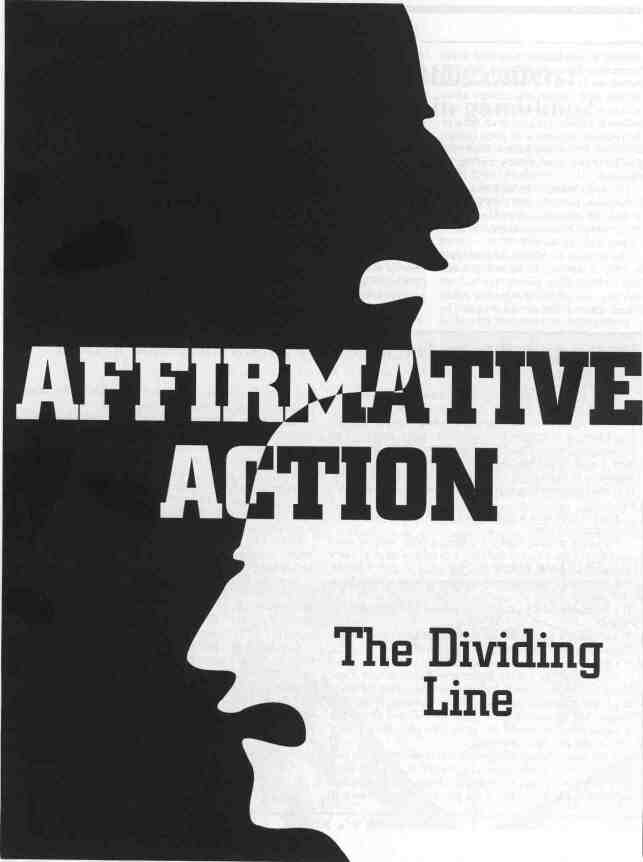
OKLAHOMA CITY (AP) — Oklahoma voters will decide in November on a Republican-backed proposal to wipe out all affirmative action programs in state government, a move that many opponents say is designed only to stoke racial tensions and drive white, conservative voters to the polls.
The GOP-controlled Legislature voted in 2011 to send the proposal to a vote of the people over the objection of Democrats who argued there already was a prohibition on racial or gender quotas in state government and that such a change was unnecessary.
“I think as a state we need to take the lead in showing that we don’t look at the color of people’s skin; we look at their qualifications,” said state Sen. Rob Johnson, R-Kingfisher, who sponsored the proposal. “The only way we’re going to get past racism and get people not to see the color difference is to get our government to lead by example.”
The bill drew fierce opposition from Democrats during spirited debate in the Legislature and led to a formal reprimand of Republican state Rep. Sally Kern who, during debate in support of the bill, questioned whether there were disproportionately high numbers of blacks in prison because “they didn’t want to work hard in school.” Kern also said women don’t work as hard as men because they “tend to think a little bit more about their families.”
Kern later delivered a tearful apology on the House floor, and then voted for her own reprimand.
Democrats maintain placing such a hot button state question on the ballot is a political ploy to draw more conservative voters to the polls.
“(Republicans) have obviously had success in past election cycles where they’ve put some contentious issue on the ballot which generated excitement or fear from their base and created a big turnout from their side,” said Oklahoma Democratic Party Chairman Wallace Collins. “I think they’re trying to utilize that tactic to basically influence elections across the state.”
But Johnson disputes that claim.
“That’s absolutely ridiculous,” Johnson said. “It doesn’t have anything to do with elections or trying to get people out to vote. This issue isn’t a Republican versus Democrat kind of issue.
“I think this is something the people of Oklahoma should decide, and I think it’s important enough to put on the ballot.”
State officials say even if the proposal passes, it won’t have an impact on any state hiring or bidding practices, although it could lead to the elimination of some scholarships at public universities that target minority students and women.
An annual report on the demographic profile of state employees versus the general population still will be produced and the state’s Human Capital Management division will continue to recruit a diverse and inclusive workforce, said Shelly Reeves, a spokeswoman for Office of Management and Enterprise Services, the agency formerly known as the Office of State Finance.
“Whether the state question passes or not, we will not change those practices,” Reeves said.
But the proposal has riled many in Oklahoma’s minority community who contend that racism is alive and well in the state and that the ballot proposal only serves to enflame racial tension.
“If we’re living in a post-racial society, then why do minorities and women continue to be at the top of every bad list and at the bottom of every good list?” Lawrence Ware, a philosophy professor at Oklahoma State University and a pastor of Prospect Missionary Baptist Church, asked a mostly African-American audience during a forum last week at Langston University’s Oklahoma City campus. “If we are in a post-racial society, why is it African-Americans make up 13 percent of the U.S. population but over 40 percent of the prison population?
“No, we’re not living in a post-racial society. Just because there is a black face in a high place, it does not mean that we have overcome.”
Evidence suggests women and minorities in Oklahoma do face discrimination in employment, home ownership and education, according to a 2012 study by the Henderson Center for Social Justice at the University of California’s Berkeley Law.
According to the study, the African-American unemployment rate in Oklahoma was more than double that of white Oklahomans in 2010, and white women, and minority men and women all earn “substantially less” per year than white men. The poverty rates for blacks and Hispanics also is more than double the rate for whites, and minority children are more likely to attend low-performing schools, the study shows.
“There is ample evidence that disparity is still prevalent in the state of Oklahoma,” the study concludes. “While there are some promising trends in the public sector, it is clear that discrimination and disparity have not yet been fully remedied in housing, education, employment and other sectors.”
The study also cites research from other states that have enacted similar bans, including California, Washington, Nebraska and Michigan, that suggests “affirmative action bans limit the opportunities available to people of color and women.”
The Church of England Newspaper reports that the former Bishop of Harare, Dr. Nolbert Kunonga, has urged Zimbabwe strongman Robert Mugabe to expel the few remaining white farmers from their lands, telling a gathering of ZANU (PF) supporters that “Whites like other aliens should not be allowed to own land and other properties in the country as they are strangers.”
In an account of his sermon printed in The Zimbabwean, Dr. Kunonga said that he too had been engaged in a campaign of expropriating white-owned properties. “I took 3800 church properties in the region since their title deeds were in my name. There was no way the properties could remain under charge of the church controlled by whites and their black puppets. Bishops such as Julius Makoni, Chad Gandiwa and others are MDC-T and furthered western interests,” he said.
The controversial bishop, who was excommunicated by the Church of the Province of Central Africa after he quit the church to form his own Anglican Church of Zimbabwe, has waged a violent campaign of repression with the support of the security services against Anglicans who are loyal to the Bishop of Harare.
In 2011 the Archbishops of Canterbury, Central Africa, Southern Africa and Tanzania, along with local Anglican bishops, met with President Mugabe asking him to reassert the rule of law in Zimbabwe, and protect persecuted Anglicans from the depredations of Dr. Kunonga. The former bishop has been banned from travel to the U.S., the E.U. and the U.K. due to his complicity with the crimes of the Mugabe regime.
A long time supporter of the Zimbabwean president, Dr. Kunonga has campaigned against the opposition MDC party and its leader Morgan Tsvangirai. He told the gathering at the Dimbe Primary School near Marondera in Mashonaland East that MDC-T and “its western puppet, Morgan Tsvangirai, are agents of doom fighting to reverse the land reform programme and hand back land to the former colonial white masters.”
[ad 1]
“Tsvangirai is a white man masked in black skin. He is like the Biblical Pharaoh who enjoyed the suffering and economic deprivation of his own people. On the other hand, Mugabe is the Biblical Daniel sent to suffer for the cause of his people,” said Dr. Kunonga.
The former bishop added that those who drive out white farmers, MDC supporters and foreigners from their lands “will enter the kingdom of God.”
“As Christians; we must gear ourselves for a bloody war against white interests,” he said.
Contralesa president Chief Phathekile Holomisa has called on South Africans to stand up and reclaim land from the white minority by next year, reports the SABC. Chief Holomisa says the ANC-led government has failed people by adopting the land redistribution policy.
He says land was not bought from the blacks it was forcibly taken by whites. He was speaking at the memorial lecture of struggle hero, McGregor Mgolombana at Dikishe outside Mthatha in the Eastern Cape. Mgolombana was exiled because he resisted forced removal for his community.
Holomisa says: “We need to prepare ourselves next year for a struggle for the restoration of land so that we no longer have a situation where 87% of land is in white hands and the 13% is occupied by blacks. It is unsustainable what you find in the constitution which requires that the state must buy land from the whites in order to be able to give it to the landless South Africans, it is unsustainable because it is unaffordable because the money is not there, so a way must be found therefore to ensure that redistribution of land takes place without any obstacles being put, be it in terms of the constitution or in terms of the requirement that the land must be bought . The people who took it from the majority of South Africa did not buy it.”
Meanwhile Deputy Minister of Defence, Thabang Makwetla has admitted that there have been challenges in the restitution of land. “We will see what happens at the ruling party’s national conference in looking at the matter because there are clear suggestions that we need to look at other ways of expediting this programme. The challenge in the recent years has been the availability of sufficient budget to make sure that land that is under claim is bought back by the government and handed back to the communities.”
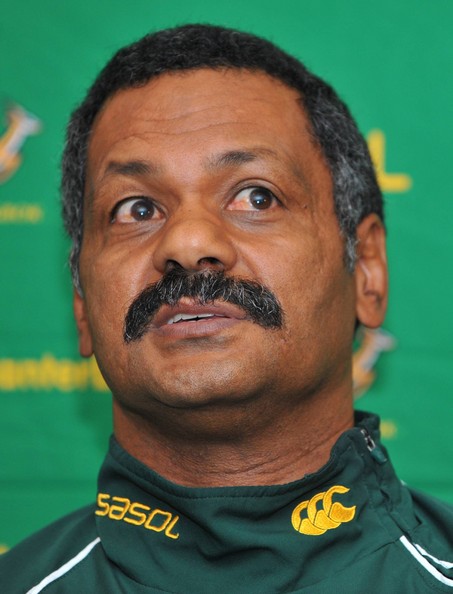
By making the Springbok team too white, black South Africans were being alienated from the sport and the team, which was divisive for the country, former Springbok coach Peter de Villiers said in an internet radio interview.
“We have to know what country we’re living in, and at the moment we’re turning a lot of black people against us by making the team white,” he told Ballz Radio earlier this week.
De Villiers did not want to comment on the Springbok team’s recent performance, as he said he had not watched the team lose their match against the All Blacks 21-11 in Dunedin, New Zealand last week, Beeld reported.
“People don’t want to talk [about race], but I have to… we’re breaking up the country, and damaging a sport that we all love,” De Villiers said.
He did not want to comment on current Springbok coach Heyneke Meyer’s selections for the team, but said that the best players should be sent onto the field.
“I don’t want to comment on his team selections, but I do know that you can’t keep doing the same thing and expect different results.” – Sapa
Educational achievement is a more important indicator of why people are employed rather than race, the SA Institute of Race Relations (Sairr) said on Wednesday.
“The proportion of people by race in professional positions closely mirrors the proportion of people by race with professional qualifications,” said research manager Lucy Holborn in a statement.
The data challenged the view that South African employers were resisting racial transformation in the workplace.
According to the data, there were about 41 percent of black people with degrees and there were 36 percent of blacks in professional positions.
There were 45 percent of white people with degrees or higher qualifications and there were 42 percent of them in professional positions.
“While a degree of racial prejudice exists in all societies, the data suggests that educational achievement will determine the pace of future employment equity progress in South Africa,” she said.
Sairr sourced information from Statistics SA and the Commission for Employment Equity.
Today I ask a question, because I do not know the answer.
I was born 10 years and 3 months before the end of Apartheid in the province we now call Limpopo. I was born one of twins to loving and caring parents. I grew up in the midst of a changing landscape, albeit political, and saw a country grasp at the tenuous reins of a new future for all. Unfortunately, the ANC lost the reins a while ago and the over-fed, under-qualified, over-paid and under-educated horses are running all over the show.
What should have been the start of a better, brighter and stronger South Africa has become the exact opposite. As a country, we live in fear of the dark, we are weaker than ever and even more divided. Apartheid might have visibly and purposely divided the masses, but nowadays, it is a feeling of discord and disharmony that divides us. It might not be as visible but it is much, much more obvious.
I believe I am a good person. Religion aside, I have never purposely hurt another living entity (my twin brother doesn’t count since he had it coming a few times), nor have I been purposely cruel towards someone else.
Crime in SA is a very big and very real problem which we all face on a daily basis. But it does seem that the crimes against whites are extremely brutal and overtly violent. Why was a 13-year old shot, and subsequently died, along with her sister and father for a few cell phones?
Why was a young woman raped, her foot cut off and used to sodomize her and then killed with boiling oil? Why was a man beaten to death with his own garden shovel? Why was a 92-year old woman raped and beaten for a few hundred rand?
This could have happened to anyone but it happened to white people and their attackers were reportedly black.
I know crime happens everywhere and not just to white people. But as I am constantly told, I am the minority, that I am one of the evil white devils, that I am responsible for the plight of every poor, unemployed and homeless person in this country.
Still waiting to hear how the hell I’m responsible for that. Why not blame the homos (I’m pro-gay btw), hippies and hoodlums on us while you’re at it?
The ANC Youth League Facebook page is riddled with hate speech (once you decipher the horrible spelling and grammar) against the whites. Lamola, Malema and their cadres have all said publicly that they will kill whites and have urged others to do so. We’re told we should be “grateful” we’ve been “allowed” to stay in the land of our birth, we’ve been warned that there will be mass murder when Nelson Mandela dies.
Although the last statement may or may not be true, and with that in mind, is it any wonder that we feel persecuted?
So my question is, why are there so many (note that I used many and not all) people in my home country who want to kill me or are willing to kill me? Well, I have a theory but no answers. I think it is because I am white and I am still being blamed for the past.
Posters displayed in Woolworths over the weekend, in which the company defended its anti-white employment policy
After PRAAG and other organisations had initiated a boycott against retailer Woolworths because of its discriminatory employment policy, the company responded with newspaper advertisements in major Sunday newspapers yesterday. Woolworths placed such advertisements in Rapport, the Sunday Times and City Press.
Woolworths also placed similar messages to the one published in the press in its shops all over the country. It claimed to be “setting the record straight”, stating: “Woolworths does employ white people… Diversity is important to us. It is not about numbers, but about people.”
However, consumers in the past week noted that there were almost no white employees to be seen in Woolworths shops all over the country. While a reputed 79% of consumers buying from Woolworths are white, they are being served by blacks and the company is also applying strict race preference in advertising for black personnel.
The campaign against Woolworths is also being waged on Facebook and Twitter where a large majority of participants have expressed their intention to boycott the upmarket supermarket chain.
Woolworths has for a long time refused to use the Afrikaans language in its shops and on packaging. Afrikaans is only to be found on medical and health products sold by Woolworths where legislation requires it. In previous discussions with PRAAG, Woolworths has refused to alter its language policy, stating that it abides by the ANC government’s legislation. Although the ANC does not prohibit Afrikaans, the regime is made up of previously exiled blacks, Indians and British people who are generally hostile to indigenous whites and the Afrikaans language.
According to Dr. Dan Roodt, “PRAAG and all other white consumers have two big reasons to boycott Woolworths. Firstly, because they are applying a form of apartheid within the international definition against the white minority and secondly because they are trying to marginalise the Afrikaans language which is spoken by the majority of South African whites and is also a second language to half of non-Afrikaans whites. We are looking into ways in which we can lay a criminal charge against Woolworths in terms of international law and will shortly proceed against them.”
PRAAG is also opposed to the use of Afrikaans terms on products in Woolworths. “Whereas Woolworths are anti-white and anti-Afrikaans, they are actually selling Afrikaner food in their shops and using our names for it, such as biltong, koesksisters, malvapoeding, sosaties and nartjies. This represents naked exploitatioin of our heritage, while attacking our culture,” said the leader of PRAAG.
Labour Minister Mildred Oliphant on Friday lauded retailer Woolworths’ stance on employment equity.
“As [the] government of South Africa and those that seek genuine transformation, we shall continue to encourage companies like Woolworths to continue with the transformation and integration of the society,” she said in a statement.
PRAAG, followed by labour union Solidarity this week started a campaign to boycott Woolworths after the company ignored its ultimatum to remove job advertisements from its website which the union said excluded whites.
Woolworths argued it had an obligation to meet its employment equity targets as an employer with more than 50 employees.
Oliphant said Woolworths was among listed companies that had been subjected to a review process in 2009 in terms of the Employment Equity Act.
“During this process, like any other employer that was reviewed, Woolworths committed itself to transforming their workplace by implementing their employment equity plan, as approved by the director general,” she said.
When a follow-up review was done in the 2011/2012 financial year, the company had progressed in meeting its employment equity targets, she said.
“However, there are those that hate to see integration in the workplace and society in general; they seek to find fault with those that genuinely implement employment equity as a means of addressing our painful past and imbalance,” she said. – Sapa
The outcome of the ANC’s elective conference in Mangaung at the end of the year could have a big effect on South Africa’s future, former president FW de Klerk said on Thursday.
“I do think the choice of leadership in this December can positively or negatively effect our future in the short and the medium term,” he said, speaking at a Cape Town Press Club memorial dinner.
It was important that African National Congress members attending the conference acted in the interests of the country, and not individuals.
“Therefore I think it’s important that, in the context of a party structure, that the conference goers take good account of what is in the best interests not of person A or person B, but what is in the best interests of South Africa.”
De Klerk called for a return to the spirit of seeking reconciliation that prevailed in the country in the years immediately after 1994.
“How can we rise above grabbing and looking for positions and filling your pockets?”
South Africa needed political leaders who could serve communities and “put their hands and their heads together in ensuring we tackle the challenges we face”.
Responding to a question on whether South Africa should not be promoting itself with a massive international “road show”, De Klerk said investors had been frightened by what they had seen happening in South Africa over the past 18 months.
“What has happened at Marikana will make a joke of any road show,” he said, referring to the shooting dead of 34 striking mineworkers by police in North West on August 16.
They were also put off by reports of corruption.
“Investors are put off by factual accounts of the unbridled corruption that is taking place in South Africa. You can’t have a road show unless your house is in order.
“We need to sell ourselves, but we need to get the product right [first].”
Earlier, De Klerk, who turned 76 in March this year, said the main inequality divide in South Africa was no longer between blacks and whites, but between unionised and employed workers on the one hand, and unemployed on the other.
“It is a divide that lies at the heart of our inequality challenge.”
It was also a divide “that the Congress of SA Trade Unions is determined to defend by vigorously opposing any efforts to make the labour market more flexible”.
Another principal cause of inequality was the “catastrophic failure of our education system”.
A total of 60 percent of those who left school did so without a matric, and those who passed matric did so with an average mark of less than 40 percent.
De Klerk criticised the ruling party’s affirmative action and black economic empowerment policies.
“In the face of increasing national inequality, there is good reason to conclude that the government’s affirmative action and BEE policies have failed to address inequality, and might even have aggravated it.
“This is because most affirmative action and BEE occur in the top 10 to 15 percent of the income pyramid and have little or no impact on the bottom 85 percent of our society.
De Klerk, who served as South Africa’s last apartheid president from 1989 to 1994, called for these policies to be abandoned.
“Shift the accent in affirmative action programmes from race to relative disadvantage,” he said.
He also offered recommendations for the promotion of equality, including a more flexible labour dispensation, accelerated economic growth, and the rooting out of corruption, among others.
“In his ‘Wrath of dethroned white males’ (see underneath), Professor Malegapuru Makgoba has dared to offer a biological explanation for the power structure that prevails in the new South Africa. Makgoba is perhaps the leading theoretical Africanist in our country today. I am sorry, therefore, to bother him with Eurocentric logic, but his argument represents a tautology,” writes Dan Roodt.
In his “Wrath of dethroned white males” Professor Malegapuru Makgoba has dared to offer a biological explanation for the power structure that prevails in the new South Africa. According to him, the white male has been “dethroned” and should now learn to adapt to a subservient, even submissive, role within our society.
Until now, Social Darwinism or the model of society as a competition for resources where the fittest will survive and prosper, has often been associated with notions of European superiority. After all, Europeans from a minute area in north-western Europe managed to get on to little sailing boats to colonise and rule the greater part of the Earth for a few hundred years. Britain is said to have conquered 100-million people in the Indian sub-continent with 800 soldiers and 2 000 Indian auxiliaries.
Makgoba’s view of African male dominance therefore represents a novel departure from a previously Eurocentric idea. However, he is not the first South African to take an interest in biological explanations for human behaviour or politics. Two of his predecessors would be Eugene Marais and Jan Smuts.
Marais was keen on the study of primates, especially baboons, and wrote two books about them, The Soul of the Ape and Burgers van die Berge. The great Afrikaner physician, journalist, poet and intellectual stressed the similarity between human and baboon behaviour, including an occurrence where he observed human boys and young baboons playing together, making clay figures and imitating one another.
This extraordinary incident is recounted in Burgers van die Berge. It fits in with Makgoba’s view that imitation and “aping” are normal features of both human and baboon societies. Nowhere would Marais, however, advance the notion that imitation was solely linked to hierarchy and dominance.
Makgoba is perhaps the leading theoretical Africanist in our country today. I am sorry, therefore, to bother him with Eurocentric logic, but his argument represents a tautology. Because black males are in power, he deduces that they are both dominant and “fitter” than white males. However, it could be that they are dominant for reasons other than their fitness.
Not so long ago, Mathatha Tsedu, the then editor of the Sunday Times, caused quite a ripple when he wrote in his column on July 13 2003 that black men sometimes display a lack of prowess. He quoted an anonymous Cabinet member who had told him: “When you come from where we come from and you then have to realise that if you want something done quickly you have to rely on whites, it is really debilitating. You bleed internally, but our very own comrades do not work. There is generally no work ethic.”
Of course, there could be a debate about what attributes an alpha male should have in human society. Should he be intelligent, physically strong or both? Should he be a good manager, highly numerate and literate, disciplined and with a good work ethic? Or are these but the traits of a tame white baboon and are universal criteria for primate success such as aggression, reproductive prowess and dominant behaviour more important?
Makgoba’s assessment leans toward the latter interpretation. However, I do not think that the same conditions of Darwinian survival pertain in the human world as opposed to the animal world. Human beings display altruistic behaviour uncommon in many species so that they would not necessarily subjugate the weaker members of their society as happens in a primate hierarchy.
Take the nuclear project at Pelindaba that existed under the previous government, for example. A handful of white Afrikaner males produced six nuclear bombs, deadly enough to kill millions of people in one fell swoop. In a straight Darwinian contest, they should have used that power to eliminate their black male rivals forever, thereby ensuring their own dominance within Makgoba’s scheme of rivalry between white and black males. Yet not only did they refrain from using the bombs, but they handed over power to the black males and peacefully dismantled their own lethal weapons.
Biologically speaking, such behaviour is absurd. No male baboon would be caught dead playing into the hands of his rival. Yet this is precisely what we have seen in South Africa.
At another level, however, one could argue that a form of social Darwinism is still operative at every level in a capitalist society where individuals and companies are selected for fitness through economic competition. This leads to a further contradiction in Makgoba’s argument, for while exalting black male fitness over white male weakness, he insists on affirmative action and black economic empowerment.
Because of racial-preference measures in our society, Darwinian competition, even at the more civilised economic level — as opposed to brute contests with bared teeth and flailing limbs — is flawed.
Either black males such as Makgoba will have to discard racial preference so that the real Darwinian contest may begin, or they will have to continue invoking sympathy for the poor, downtrodden black male having been disadvantaged by centuries of colonial oppression and racism. In other words, they will have to choose between Darwinism and altruism.
As they would say in the baboon world: you can’t have your banana and eat it.
In the primate family, to which humankind belongs, there are certain heritage features which display “clear dominance relationships among members, and the proclivity to imitate”, hence such terms as “aping and monkey business”. Alienated. Quarrelsome. Spoilers. Certain white males exhibit all the symptoms of the dethroned male baboon.
A critical factor of human development and leadership is “our primate heritage” as defined in the book Leading Minds: An Anatomy of Leadership, by Howard Gardner, Harvard University’s distinguished psychologist and professor of education.
In the primate family, to which humankind belongs, there are certain heritage features which display “clear dominance relationships among members, and the proclivity to imitate”, hence such terms as “aping and monkey business”.
These heritage features are most pronounced in males who compete for control of the social cluster, for protection of offspring and possession of the most desirable females.
Baboons or bonobos, for example, are often headed by a dominant male with pretenders to the throne hanging around. The dominant male ensures that progeny are not only his through reproduction, but also that all members of the colony imitate him. He becomes the “gold standard”. Ultimately the dominant male is dethroned by a younger and fitter male, only to repeat another variation cycle of hierarchy, dominance and imitation.
The dethroned male becomes depressed, quarrelsome and a spoiler of the new order until he gets ostracised from the colony to lead a frustrated, lonely and unhappy life. This is our “primate heritage”.
I use this example because baboons are familiar to most South Africans; they are among our closest primate relatives genetically and a totem for some Africans. African people have been referred to as bobbejaan and at times shot and killed by certain white males who apparently “confuse or mistake” us for baboons.
More importantly, I use this example because humankind is reflective and should do better than our primate relatives; also because the dethroned white male in South Africa is playing the same role as dethroned baboon troop leaders do.
The primate practice teaches us that information is not sufficient to bring about change; that change often only occurs when it is enforced on even such a highly sophisticated species as humankind.
A group of dethroned white males called “Die Boeremag” are recently alleged to have been plotting a coup and even entertaining the exciting thought of assembling all Africans on the N1 and then chasing or marching them to Zimbabwe. In their naïve logic, Zimbabwe belongs to Africans and South Africa belongs to whites.
Another group of white males are languishing in a Zimbabwean jail for masterminding a coup in Equatorial Guinea; a group of white male farmers have emigrated to Nigeria; and some white males are alleged to be causing “instability in the Free State”.
Recently, Justice John Hlophe to his credit raised the issue of racism within the Cape Division of the judiciary as largely ascribed to and associated with white males. Many prominent Africans have complained repeatedly and with increasing frequency over the decade about “alienation and institutionalised racism” within the academic, church, corporate, media, sports and public/government sectors of our country.
As the transformation of our society deepens, like the peeling of an onion, more racist white males are being caught, fingered out and revealed. Surely we must by now recognise and respect that Africans who have been victims of racism over centuries and generations understand better than the perpetrators about what racism is, means and feels.
We must equally accept that 350 years of racist experiences and socialisation cannot be overcome in 10 years of freedom. The request for “reconciliation” and “forgiveness” masquerades as a quest for memory loss. Regrettably, whenever an African raises this issue, the white male response has been “to play the man rather than the ball”.
Racism, a socially constructed phenomenon with no biological basis, is a complex system of symbols and meanings that continues to modify over time as a consequence of both societal structural changes and political struggles. A segment of white males continues to deny the collective body of African experiences and instead wants to monopolise and to dictate the definition and appropriate meaning to racism. If and when they do accept the existence of racism, it is often detached and projected. Lately, many African students at campuses of higher learning are complaining about “racism, alienation and social exclusion”. The main culprits are the younger generation of white males imitating their elders.
Similar symptoms of the dethroned are evident in the caustic, negative terms in which the debate about black economic empowerment is framed; in the ways in which black executives are vilified; and in the way in which employment equity is always viewed through the prism of its impact on the longevity and well-being of the (dethroned) white male.
The dawn of the new dispensation has retired a segment of previously dominant and ambitious white males prematurely. This segment has lost its power, authority and a sense of purpose in society. Whether intended or unintended, conscious or unconscious, a sector of white males have an adaptation problem.
They have become bitter; but this also has become a serious problem for our society and a major obstacle to our democratic transformation. Some members of this group, which is out of kilter with the mindset of liberated African society, have become spoilers — across a wide range of activities. It has become not only ungrateful but also oblivious to Ubuntu. This group does not seem to understand the word “reconciliation”.
All these take place in the midst of a society making every effort to reconcile its horrible past and to transform itself into a just, equitable and non-racial society. The creation of a non-racist society will emerge to a large extent through the conscious confrontation of the current pervasive racism by all.
It is crucial here to indicate that not all white males display this obnoxious, arrogant, racist behaviour we continue to experience 10 years after liberation. In fact, to the contrary, many white males have made great strides, great sacrifices and significant contributions to this evolving equitable, non-racist and non-sexist South Africa we are creating through our Constitution and our African renaissance vision.
But the group of spoiler white males, just like the male baboon or bonobo, was once a dominant force through colonial and apartheid conquests. Over centuries this group defined that which was civilisation as opposed to that which was barbarism. He defined that which was liberal as opposed to that which was autocratic. Even when he excluded women, blacks and the uneducated classes in society, he still called this liberal philosophy.
He defined culture, morality, ethics and the shape and form of wealth distribution according to the way it suited and advantaged him. He created and bequeathed the world an illiberal, unjust, unequal, racist and sexist society. Over centuries and through dominant enforcement he ensured that his mindset or world view was imitated without question by those he presided over. This dominant white male has had an unparalleled and unrivalled opportunity in which to shape the history and future of the world and humankind according to his image.
But as history and nature would have it, unfortunately the white male in his prime was never able to conquer everyone. The great Arab and Chinese histories and cultures continued to challenge the monolithic culture of the white male. The indestructible and experiential cultures of the Africans remained impervious and alive despite centuries of imperial invasion and concerted efforts to obliterate these.
With the demise of the empires and of Western values, even the stiff upper lips of these white males begun to quiver. This white male feels ostracised from society and is leading “a frustrated, lonely and an unhappy life away from the herd”.
We now have a predominantly African government presiding over an African country and a predominantly African society with dominant African values. This African force will follow our primate heritage of cultural social clusters, dominance and imitation, with modifications made by our Constitution, which respects human dignity, diversity and non-sexism. It will also be influenced by the context of the 21st century, globalisation and the greater mosaic of interdependent cultures.
Africans will transform and reconcile this society by ensuring that the fingerprints of their African culture, value and knowledge systems and notions of social order are embedded in and are the blueprints of a future South African society.
Africans will not transform this country through previously dominant foreign rules, values or cultures. No dominant group ever transforms society through subservience and alien values. This would simply be against our primate heritage. When the English were dominant we were anglicised, when the Afrikaners were dominant we were Europeanised, now that Africans are dominant we must Africanise and not apologise for our Africanness.
The white male should instead be excited by the new prospects of imitating Africans. When we say “Mayibuye iAfrika” we mean it and mean business. Democratic governments are representative of the will, values and aspirations of the majority and not the will and aspirations of a whingeing white male minority.
While Ubuntu will continue to influence our drive for reconciliation, let there be no doubt that sooner or later African dominance and the imitation of most that is African shall permeate all spheres of South African society
This message should be loud and clear just as the writing is on the wall for all to whom South Africa belongs. All modern democratic societies celebrate diversity around a common vision, in our case an African vision. It should therefore become common sense that the white male soon learns to speak, write and spell in an African language; that he, like Johnny Clegg, learns to dance and sing like Ladysmith Black Mambazo. He should learn kwaito, dance like Lebo, dress like Madiba, enjoy eating “smiley and walkies” and attend ‘“lekgotla” and socialise at our taverns.
He must soon accept, value and imitate the things that matter dearly to Africans. The sooner this white male gets out of his denial mode, the sooner he will receive treatment and proper African rehabilitation. Surely, our white male group can and should do better than the baboon or the bonobo.
Malegapuru Makgoba is the vice-chancellor of the University of KwaZulu-Natal and writes in his personal capacity
In this article Jane Duncan of Rhodes University argues that South Africa remains the most racist society in the world and that racism will only end once whites hand over their remaining assets to blacks.
In the wake of the Marikana massacre, information is trickling into the public domain, which suggests that the police killing of workers was more premeditated than initially thought. Workers who were released from police custody have confirmed accounts of unjustified police violence against protestors, and these accounts have challenged the dominant narrative of the police having acted purely in self-defence.
Public opinion remains sharply divided about whether the police were justified in shooting the miners, and much opinion has divided along racial lines, which is hardly surprising given the experiential and perception gaps between so many black and white people. More disturbingly, though, many responses have taken a decidedly racist turn.
Media reports of miners having engaged in rituals, ostensibly to protect themselves against police bullets, have unleashed a torrent of racist remarks on online news sites and social networks. Commentators have referred to black people as primitive, superstitious, retarded, chimpanzees, lazy unproductive parasites, “…moronic Neanderthals that would rape a baby to cure themselves of HIV,” (in the words of one commentator) undeserving of the vote and incapable of running a country.
In the wake of Marikana, social networks are seething with racial hatred. Delighted by the fact that the black government was doing something right for a change, racists rushed to the defence of the police and ignored or rubbished evidence suggesting that the police acted inappropriately.
In gloating over the miners’ deaths and what they consider to be black stupidity generally, racists seem blithely unconcerned about possibility that they may be straining black patience to the limit.
Racist utterances have become much more visible in the past few years, suggesting a fracturing of the country’s social fabric. Institutions that track social cohesion in South Africa have sounded alarm bells too. The government’s National Planning Commission (NPC) and the Institute for Justice and Reconciliation (IJR) have both warned that the South African nation is not cohering as it should.
According to the IJR, South Africans are experiencing a low sense of national belonging and continue to associate strongly with identity groups based on language, ethnicity and race. While day-to-day interactions across racial lines are gradually becoming more frequent – although mainly in the middle class – a staggeringly high 42 per cent of the people surveyed said they still never socialised across racial lines.
The South African nation is clearly very, very ill. Why are more South Africans retreating into racial laagers, quicker to recognise their apparent differences than their commonalities, and why do public displays of racism seem to be on the rise?
Racism is not just as a set of attitudes, but a systemic phenomenon. Racism serves a particular ideological function in capitalist societies – including South Africa’s – namely to justify the subjugation of blacks to extract surplus value out of them more easily. Under apartheid, the South African state used racism to portray inequality as an inevitable outcome of the inherent superiority of whites and inferiority of blacks.
What needs to be more fully understood is why racism did not simply wither away after apartheid. Appropriate anti-racist strategies cannot be developed without a correct diagnosis of the problem.
It could be argued that racism continues to exist because of the residual racist consciousness left over from the apartheid era, and that racists merely need to be educated out of their attitudes. This approach ignores the social function of racism in post-apartheid South Africa.
Racism allows whites to portray the country’s continuing inequality as natural and inevitable, that exists because of the inherent weaknesses of black people (and therefore which cannot be changed), rather than as a result of how society is organised (and which therefore can be changed). It allows them to argue that black people remain at the bottom of society – with substandard housing, crumbling education and chronic unemployment – because they are naturally inclined towards this social status.
In the case of Marikana, racism played a particular ideological role, namely to justify violent repression of workers’ wage demands. It is in the interest of whites – who still largely remain at the apex of the economic power structure – to keep race thinking alive as a mainstay for black exploitation, and to demonise resistance to that exploitation.
Many white people simply do not appreciate that the transition to democracy did not have to unfold in the way that it did. The transition created a democracy while leaving the commanding heights of the economy still in white hands, and the government’s Broad Based Black Economic Empowerment strategy has largely failed to change this racialised economic structure.
The ANC could have insisted on widespread expropriation of property without compensation: an entirely justifiable position given the historic dispossession of black people. Instead of recognising and appreciating black magnanimity, racists are rebuffing the hand of reconciliation that has been extended to them.
The rise of racism is not driven by local factors only. Globally, racism becomes more pronounced during recessionary periods, as competition for jobs amongst workers increases, which may quickly become racialised. This is why the 2008 global recession saw a sharp rise in racist and xenophobic sentiments globally, especially against migrant workers.
How can South Africa develop a community of shared values? According to the recently deceased activist and scholar, Neville Alexander, the nation must be built on all levels of the social formation, including the cultural, the social and the economic.
The ANC’s cardinal error – informed by errors in its theory of national unity – was to assume that they could legislate the nation into being, without creating the material conditions for South Africans to experience a common identity. Deepening inequality has made national unity even more elusive, and created fertile ground for racists. The ANC’s top down, idealist approach to nation building was naïve, dangerously misguided and ultimately unsustainable.
The danger is that, in this recessionary period, organised responses to intensifying racism may not be guided by anti-racist principles: that is, principles that seek to make race thinking disappear entirely by creating the basis for a truly non-racial society, rather than the cosmetic one South Africa has now.
The rise of Julius Malema has shown that South Africa is still capable of a rightward shift towards re-racialised, even proto-fascist politics, and a racial backlash along these lines is entirely possible. If this shift happens then South Africa’s dream of a non-racial society will be shattered, and the country could descend into a spiral of strife that it may not be able to emerge from very easily.
This is why racists need to think very, very deeply before speaking; blog by blog, tweet by tweet, they are courting disaster for themselves, and for the country as a whole.
It is important to note, though, that white people are not the only racists in South Africa, and many whites are decidedly anti-racist. But whites remain the most vocal culprits because they command inordinate amounts of social, cultural and economic capital.
Racism must be fought at every turn, and racists must be named and shamed. It is tempting simply to ban public displays of racism, but this will not make racist attitudes go away. It is better for South Africa to realise just how sick it is.
Whites need to start accepting some harsh realities. Most importantly, whites need to realise that the country’s social inequalities – expressed most starkly in the massive wage gap between the Lonmin managers and workers – are unsustainable. Whites will need to start sharing their wealth, if they are to continue to have a future in this country. Admittedly, they are unlikely to do so without a fight, but as the unfolding events at Lonmin and other mines suggest, that fight has already begun.
Professor Duncan is Highway Africa Chair of Media and Information Society, School of Journalism and Media Studies at Rhodes University, Grahamstown, South Africa.
With acknowledgements to The South African Civil Society Information Service.
On August 16, 36 striking miners were shot dead by South African Police Service officers at the site of the Lonmin Platinum Mine, at Marikana—northwest of this writer’s birthplace, Johannesburg.Seventy eight of the 3000 rioting strikers were injured.
International response to the massacre at Marikana ran to variations on a theme: “They’re killing their own people”—although not quite so crudely put, as that would imply that the beleaguered white inhabitants of post-apartheid South Africa were not refracted through the Rainbow Nation’s national spectrum.
Nevertheless, as is to be expected of the pack animals that make up the press in the West, the incredulity over “black police firing at black mine workers” was unanimous.
Perhaps the journalistic herd intended to separate state-conducted violence from state-condoned violence. The latter is most certainly a black-on-black and black-on-white franchise. For in reality, most murders of Africans in Africa and, incidentally, of Africans in America, are courtesy of other blacks.
Needless to say, the luminaries of Western café society are not exercised when Nelson Mandela’s party, the African National Congress, inadvertently socks it to honky by denying the holocaust of the nation’s rural whites.
“A labor dispute between the oppressors (whites) and the oppressed (blacks)”: That is the mantra invariably mouthed by media whenever an innocent farmer is slaughtered—a weekly occurrence, on aggregate—in the country considered by cretins such as Anderson Vanderbilt Cooper, “a model of stability since racist white rule ended.”
But when the ANC, in control of the dominant-party state that is South Africa, engages in crowd control against what is deemed simplistically as “its own people,” that makes headlines. To wit, “The violent incidents on August 16were the single most lethal use of force by South African security forces against civilians since the end of the apartheid era.”
Allusions were made to the Sharpeville massacre.
Cut to March of 1960. A small band of panic-stricken policemen of the apartheid era—the media insists on appending the adjective “racist” in mentioning these men—shot dead 69 black demonstrators.
Prior to the 1960 Sharpeville massacre, nine white cops had been murdered in Durban.
Prior to the Marikana massacre, the strikers, all sweetness-and-light, had killed at least 10 individuals. There were police officers battered to death, mine security guards burned alive, and a union shop steward hacked to smithereens.
Let me hazard a guess: Contra their sympathizers in the West, who don’t scare fast enough—the marauding mob at Marikana put the fear of God in the misguided folks who fired upon them. The same law-enforcement officers had first tried to disperse and stop the rioters with tear gas, water cannons, stun grenades and barbed wire.
You’d have had to experience the onrush of a riled-up African crowd to comprehend the terror among these frightened, likely incompetent, cops entrusted with defending mine operators and other staff still at the site. The last would have endured hours, if not days, of menacing chanting, singing, stomping, all amplified through loudspeakers.
Likewise, the besieged police at Sharpeville would have been petrified, as the “unarmed” mob brandishing pangas, spears and sticks, advanced on their isolated outpost and breached the station’s fence, at the eponymous African township.
In both instances, the cops—white and black, then and now, right or wrong—fought to stay alive.
The media mob has already cut some slack to the black cops who were assailed at Marikana by 3000 miners. The frightened, outnumbered fellows at Sharpeville, who confronted 5,000 to 7,000 frenzied protesters: They’ve been condemned for eternity.
Sharpeville’s “villains” had also attempted to control the crowds with tear gas and batons before that fateful shooting.
Why not ask 800,000 Rwandan Tutsis what a tribe armed with indigenous weapons is capable of doing to a despised, helpless “Other”?
Ask the same of some 4000 white South Africans farmers, who once helped feed the continent.
Or, closer to home, let an all-American lass, Amy Elizabeth Biehl, tell you how furious her white skin and good intentions made an “unarmed” crowd, back in Cape Town of 1993.
Silly me. Question those Tutsis—whose blood turned the Kigara River red—all you like, but they will not reply. For they were torn asunder or macheteed by their longtime Hutu neighbors.
Ask the late Ms. Biehl about her ordeal, but she too has been silenced—stabbed and stoned, by an “unarmed” mob with murder on its mind.
As to the 4000 (and counting) Boers—they’re dead and buried too. Interred in the land they had farmed for centuries; culled like springbok on a hunting safari by the same, disarming, inadvertent enemies of peace and prosperity.
In a world awash in floating fiat currency, demand for platinum will remain consistent and predictably high, even as production plummets in one of platinum’s prime producers, South Africa.
That’s guaranteed.
The miners of Marikana told Time magazine that they would not return to work until their wages were doubled (poor productivity be damned). Any scab who stepped in to do “their” jobs would be eliminated. Or so they promised.
On Wednesday, hosts at MSNBC informed America that the words “golf” and “Chicago” are racist, especially if they are used while speaking of Barack Obama.
Newsbusters’ Rusty Weiss reported early Thursday morning that while covering the GOP convention, Chris Matthews “came to the conclusion that reminding people of the President’s roots in Chicago politics is racist.”
The Washington Post’s Eugene Robinson set the tone of the exchange.
“It’s all part of this Barack Obama as ‘other’ sort of blanket campaign that has been waged by the Republican Party for some time now. It may be gaining some traction now, though I wonder why now as opposed to a bit closer to election,” he said.
“Yea, well let me ask you about that, gentleman,” Matthews responded. “What about now, is this constant barrage of assaults, saying the guy is basically playing an old game of demagoguery politics, where you take the money from the worker bees and give it to the poor people to buy votes. That’s basically what they’re charging him with. Old big-style, big-city machine of 50 years ago.”
“They keep saying Chicago, by the way, you noticed?” he asked.
“Well, there’s a lot of black people in Chicago,” said New York Magazine’s John Heileman.
The same day, MSNBC’s Lawrence O’Donnell claimed that a reference to Obama’s golf outings was also racial code.
“For four years, Barack Obama has been running from the nation’s problems, he hasn’t been working to earn re-election. He has been working to earn a spot on the PGA Tour,” Sen. Mitch McConnell (R-KY) said.
Naturally, O’Donnell saw racism in the remark.
“Well, we know exactly what he’s trying to do there. He is trying to align to Tiger Woods and surely, the — lifestyle of Tiger Woods with Barack Obama,” he said.
Martin Bashir, another MSNBC host, asked O’Donnell to clarify his remarks.
“Lawrence — don’t you think — don’t you think that what he’s really trying to do is to suggest that the president is not paying attention to the central issues that come with the responsibility he has?” Bashir asked.
“Martin, there are many, many, many rhetorical choices you can make at any point in any speech to make whatever point up want to make. If he wanted to make the point that you just suggested and I think he does want to make that point, they had a menu of a minimum of ten different kinds of images that they could have raised,” O’Donnell said.
“And I promise you, the speech writers went through, rejecting three or four before they land order that one. That’s the one they want for a very deliberate reason. That — there’s — these people reach for every single possible racial double entendre they can find in every one of these speeches,” he added.
“You really believe that about Mitch McConnell?” Bashir asked.
“I know these people are insensitive. I know the speechwriters are insensitive. I know the way they work. They do not have the same sensitivity level that other speechwriters do. But when you get to the Tiger Woods reference, there were people in the speech writing room, I know this, without a shadow of a doubt, who said wait a minute, do we really want to go there?” O’Donnell responded.
“The singular focus of MSNBC for the past six days has been racism. There’s one subject that they’re talking about: racism. The racism of Romney; the racism of Ryan; the racism of every speaker the convention; the racism of the Republican Party; the racism of every Republican and conservative. It’s all they’re talking about. It’s laughably hilarious, except to them,” he said.
Limbaugh went on to say the network is “nothing more than an arm” of the Obama campaign.
“Their charge they’ve been given is to run around on TV and to say that everything every Republican is saying is racist. Because they don’t have anything else. It really demonstrates the depths to which they have descended,” he added.
Townhall’s Katie Pavlich noted that Obama “refers to Chicago often in his own speeches.” By Matthews’ own “logic,” that would make him a racist.
Rep. Allen West (R-FL) said that perhaps Matthews has “gotten off of his medications.” West also wondered what other cities he was not allowed to speak of.
A handbook for companies on how to apply affirmative action in South Africa
THE DA’S PLAN FOR BROAD-BASED BLACK ECONOMIC EMPOWERMENT THAT WILL BOOST ECONOMIC GROWTH AND JOB CREATION
During apartheid, racial separation and economic discrimination were the defining characteristics of South Africa. Black South Africans were subject to ruthless asset-stripping and restrictions: labour laws that prevented their advancement, land expropriation, business regulations banning black ownership, Bantu education, and laws that prevented black South Africans from living in metropolitan areas.
The DA looks forward to the time when everyone in South Africa can participate fully in a non-racial economy and society. South Africa must continue on the journey towards achieving justice for all. In order to achieve this, we need to make strategic interventions to counter the effects of apartheid’s asset stripping and restrictions. This can be done by growing our economy and creating more jobs for South Africans. Broad-Based Black Economic Empowerment (B-BBEE) is one of the interventions that will help to achieve this.
The Constitution provides a mandate for B-BBEE, as it supports measures to empower persons or categories of persons disadvantaged by discrimination. The majority of South Africa’s people have a legitimate claim to economic redress. If we not do succeed in providing redress, the process of reconciliation, and how South Africans relate to one another, is put at risk. Within this context, the DA supports the underlying principle of B-BBEE.
We are, however, concerned that the guiding principle of B-BBEE is being undermined by a number of factors that have played out in the public sphere and in the media. These include a ‘get rich quick mentality’ among some B-BBEEE tenderers; the emergence of ‘fronting’; the rise of ‘tenderpreneurs’; a lack of long-term sustainability, and the fact that some B-BBEEE beneficiaries do not feel incentivised to create opportunities for others.
The DA believes that we need to change how we implement B-BBEE by altering the scorecard, not discarding it. There have been some notable successes in B-BBEE, and the DA is today submitting working proposals that draw upon these successes to make it work better. This can be done by sharpening the definitions, streamlining and altering the weightings of the scorecard and introducing measures to address our most pressing challenges: job creation, education and skills development.
We will push for such changes in the Portfolio Committee for Trade and Industry, where three sets of regulatory frameworks will soon come under review: the B-BBEE Amendment Bill, amendments to the Preferential Procurement Policy Framework Act (PPPFA) and the Revised Codes of Good Practice on B-BBEE.
The PPPFA and B-BBEE Act
Amendments to the PPPFA and the B-BBEE Act were published in December last year. The DA is in broad agreement with them. Specifically,
* The DA supports the intention of the legislation to prohibit and punish fronting activity, its clarification of the definition of fronting, and the strict penalties the legislation proposes for those found guilty of fronting. It is important that fronting in respect of all B-BBEE elements is recognised as a criminal offence – and not just the misrepresentation of black ownership.
* The DA welcomes the alignment between the Codes of Good Practice and procurement regulations, and specifically the fact that the empowerment status of firms tendering for government business must be determined on the basis of all B-BBEE elements, rather than on the basis of ownership alone. This will encourage the business community to broaden its focus in terms of empowerment to include alternative empowerment mechanisms.
There are, however, some concerns which will need to be clarified in the committee:
* Section 12(A) of the B-BBEE amendment bill gives the Minister the right to allow organs of state and public entities to determine their own “transformation policies”, which would take precedence over the Codes of Good Practice. We remain concerned about the potential abuse that may arise from this.
* The appointment of the head of the B-BBEE Commission by the Trade & Industry Minister might bring into question the Commission’s impartiality. The DTI will thus have to give additional assurances that the Commission will remain impartial.
* The Commission has the power to investigate allegations of fronting and may delegate its “duties and functions” to the Special Investigating Unit or “any other person or organ of state”. We believe that it is necessary for these powers of delegation to be clarified.
* The Bill requires that all “public companies listed on the Johannesburg Stock Exchange” provide to the Commission (a) “the report on their compliance with B-BBEE” and (b) “any other prescribed information”. Given the already cumbersome regulatory environment in which South African businesses have to operate, we will question the limitations on the powers of the Commission to call for information.
* The B-BBEE Commission will now take responsibility for responding to technical questions. The DA will seek specific information on how the Commission will be capacitated to deal with these queries, so as not to repeat the lack of responsiveness by the DTI in handling queries in the past.
The Codes of Good Practice:
The DA believes that there has been an over-emphasis on the ownership component of the empowerment scorecard. Too few have benefited from the government’s insistence on focusing only on ownership for the past few years. This has been to the detriment of other B-BBEE components that have the potential to expand access to economic opportunities.
The Cabinet has approved the revised B-BBEE Codes of Good Practice to be published for public comment. The DA will use the public consultation around these proposals, as well as their consideration in the Portfolio Committee on Trade and Industry, to advocate for ten principled changes to the code. These are as follows:
1. Recognition for contributions to job creation
We will propose an increased weighting to the socio-economic development component, and call for points to be awarded in recognition of employment creation. Employment is the most sustainable way to lift people from poverty, and it acts as an economic multiplier by increasing people’s purchasing power. Specific recognition must be given for job creation by South African businesses.
2. Encouraging access to employment through the Youth Wage Subsidy
An alternative scorecard should recognise job creation via the DA’s proposed Youth Wage Subsidy programme. As it stands, the scorecard for the skills development element awards points for the percentage of black employees participating in learnership programmes offered through the Sector Education and Training Authorities (SETAs). SETAs are an unwieldy and ineffective tool to bolster skills development, lacking the flexibility to respond to the market.
3. Encouraging participation by black new entrants in ownership transactions
The DA will propose increased recognition for the participation of “black new entrants” in ownership equity programmes. The ownership element currently awards only 2 bonus points for equity deals that benefit individuals who have not previously held ownership in other entities with a total cumulative value of more than R20 000 000. These points can be increased, while reducing the threshold for qualification as a “black new entrant”. This will promote broad-based participation in equity transactions, and help reduce the incentive to “re-empower” those who have already gained access to wealth though B-BBEE.
The DA believes that there should be a cap on the monetary value for individuals and companies participating in B-BBEE deals. This will not prevent black entrepreneurs from accessing investment opportunities. Rather it will determine the extent to which their participation will be deemed to contribute to broad-based empowerment.
4. Allowing local companies to make use of equity equivalent programmes as an alternative to ownership reform
The present Codes allow foreign-owned companies to use specified development programmes as an alternative to equity transfers. Contributions are measured against 25% of the value of the entity’s operations in South Africa. These programmes have the potential to benefit many more people. They provide an alternative to ownership schemes that often tie up capital in B-BBEE, without creating productive participation by black South Africans in the economy. We believe that this option should also be available to local companies.
5. Incentivising both internal and externally focused skills development initiatives.
Cabinet indicated that a decision has been taken to make skills development more outwardly focused. The scorecard currently only recognises contributions to skills development for an entity’s own employees in the skills development component. This excludes South Africa’s large unemployed population from capacity-building initiatives initiated by the business community.
The DA will propose that contributions to skills development opportunities for any South African earning less than R15 000 per month be recognised in the skills development component. Recognition of skills development contributions for non-employees will encourage businesses to invest in equipping South Africans to participate in the formal economy.
6. Increasing the weight of the enterprise development element
We support the proposed merger of the management control and employment equity elements to create an integrated measurement of black participation in strategic decision-making and key management roles. This would allow for additional points to be allocated to both enterprise development and socio-economic development.
To ensure that enterprise development initiatives assist emerging entrepreneurs who add productive value, the Codes must incentivise support to enterprises with black owner-managers, rather than simply firms with black shareholding. Given the potential job-creating power and growth contribution of small businesses, consideration could be given to the recognition of all enterprise development initiatives in support of businesses below a specified turnover threshold – regardless of the racial profile of the small business owners.
7. Recognition for talent management strategies
Employment equity drives will only be sustainable if they are coupled with appropriate strategies to attract, develop and retain talented staff. Recognition for the development of effective talent management strategies should be included in the employment equity element of the scorecard.
8. Recognising support for local industry
Businesses that use local resources should be rewarded for their investment in the South African economy. The DA will support changes to the preferential procurement component that increases recognition for procurement from locally owned businesses, and removes the exclusion benefit for imports. Industries that rely on imports will not be adversely affected as they will continue to be benchmarked against their peers who face the same global supply realities. The aim must be to retain as much capital as possible in the local economy, especially in the rural areas.
9. Easing the regulatory burden on small businesses
Small and medium size enterprises employ 68% of South Africa’s labour force, but carry a very high administrative burden. We welcome the intention to make an upward adjustment in the thresholds for compliance for exempted micro enterprises. We similarly welcome the move to qualify the B-BBEE scorecard and propose that these thresholds are regularly adjusted for inflation.
We are, however, concerned about the proposal that requires Qualifying Small Enterprises (QSEs) to comply with the full B-BBEE scorecard and believe that it is likely to make it much more difficult for small businesses to become compliant with the Codes and reap the potential benefits of a good empowerment status.
10. Reducing the cost of compliance
The cost of compliance to B-BBEE regulations for QSEs can be reduced by introducing B-BBEE audits, once every two years, that produce scorecards which will be valid for 24 months. This would also allow businesses to implement empowerment programmes with slightly longer timeframes.
In sum, the DA’s approach is a unified one: ensuring that the Constitution continues to frame the principles of B-BBEE, and creating the right policy environment for it to succeed. For B-BBEE to succeed, millions of poor and unemployed black South Africans must benefit from it, so that they can lift themselves and their families out of poverty, acquire new skills and ensure that their children are able to gain access to the formal economy.
This website uses cookies to improve your experience. We'll assume you're ok with this, but you can opt-out if you wish. Cookie settingsACCEPT
Privacy & Cookies Policy
Privacy Overview
This website uses cookies to improve your experience while you navigate through the website. Out of these cookies, the cookies that are categorized as necessary are stored on your browser as they are essential for the working of basic functionalities of the website. We also use third-party cookies that help us analyze and understand how you use this website. These cookies will be stored in your browser only with your consent. You also have the option to opt-out of these cookies. But opting out of some of these cookies may have an effect on your browsing experience.
Necessary cookies are absolutely essential for the website to function properly. This category only includes cookies that ensures basic functionalities and security features of the website. These cookies do not store any personal information.
Any cookies that may not be particularly necessary for the website to function and is used specifically to collect user personal data via analytics, ads, other embedded contents are termed as non-necessary cookies. It is mandatory to procure user consent prior to running these cookies on your website.

 OKLAHOMA CITY (AP) — Oklahoma voters will decide in November on a Republican-backed proposal to wipe out all affirmative action programs in state government, a move that many opponents say is designed only to stoke racial tensions and drive white, conservative voters to the polls.