Warning: Washington and its NATO, EU vassals are insane

By Paul Craig Roberts.

Herbert E. Meyer, a nutcase who was a special assistant to the CIA director for a period during the Reagan administration, has penned an article calling for Russian President Putin’s assassination. If we have “ to get him out of the Kremlin feet-first with a bullet hole in the back of his head, that would be okay with us.”

As the crazed Meyer illiustrates, the insanity that Washington has released upon the world knows no restraint. Jose Manual Barroso, installed as Washington’s puppet as European Commission President, misrepresented his recent confidential telephone conversation with Russia’s President Putin by telling the media that Putin issued a threat: “If I want to, I can take Kiev in two weeks.”

Clearly, Putin did not issue a threat. A threat would be inconsistent with Putin’s entire unprovocative approach to the strategic threat that Washington and its NATO puppets have brought to Russia in Ukraine. Russia’s permanent representative to the EU, Vladimir Chizhov, said that if Barroso’s lie stands, Russia will make public the full recording of the conversation

Anyone familiar with the disparity between the Ukrainian and Russian militaries knows full well that it would take the Russian military 14 hours, not 14 days, to take all of Ukraine. Just remember what happened to the American and Israeli trained and equipped Georgian Army when Washington set its stupid Georgian puppets on South Ossetia. The American and Israeli trained and equipped Georgian army collapsed under Russian counterattack in 5 hours.

The lie that Washington’s puppet Barroso told was not worthy of a serious person. But where in Europe is there a serious person in power? Nowhere. The few serious people are all out of power. Consider the NATO Secretary General, Anders Rasmussen. He was a prime minister of Denmark who saw he could rise beyond Denmark by serving as Washington’s puppet. As prime minister he strongly supported Washington’s illegal invasion of Iraq, declaring that “we know that Saddam Hussein has weapons of mass destruction.” Of course, the fool didn’t know any such thing, and why would it matter if Iraq did have such weapons. Many countries have weapons of mass destruction.

According to the rule that anyone who serves Washington is elevated, the cipher Rasmussen was elevated.

The problem with elevating unprincipled fools is that they risk the world for their career. Rasmussen has now put the entirety of Eastern and Western Europe at risk of annihilation. Rasmussen has announced the creation of a blitzkrieg spearhead force capable of blitzkrieg attack on Russia. What Washington’s puppet calls “the Readiness Action Plan” is justified as a response to “Russia’s aggressive behavior in Ukraine.”

Rasmussen’s “lightening spearhead force” would be wiped out along with every European capital. What kind of idiot provokes a nuclear superpower in this way?

Rasmussen asserts “Russia’s aggressive behavior” but has no evidence of it. Russia has stood on the sidelines while Washington’s puppet government in Kiev has shelled and bombed civilian housing, hospitals, schools and issued a constant stream of lies against Russia. Russia denied the requests of the now independent eastern and southern provinces of Ukraine, former Russian territories, to be reunited with Russia. As readers know, I regard Putin’s decision as a mistake, but events might prove me wrong and that is OK with me. For now, the fact is that every act of aggressive behavior is the result of the US and EU support of the Kiev nazis. It is the Ukrainian nazi militias that are attacking civilians in the former Russian territories of eastern and southern Ukraine. A number of regular Ukrainian military units have defected to the independent republics.

Yes, nazis. Western Ukraine is the home of the Ukrainian SS division that fought for Hitler. Today the militias organized by the Right Sector and other right-wing political organizations wear the nazi insignia of the Ukrainian SS divisions. These are the people that Washington and the EU support. If the Ukrainian nazis could win against Russia, which they cannot, they would turn on the West, just as has the Washington-funded ISIS that Washington unleashed on Libya and Syria. Now ISIS is remaking the Middle East, and Washington appears helpless.

William Binney, a former high level official in the US National Security Agency, and colleagues from the CIA and military intelligence services have written to German chancellor Merkel advising her to beware of Obama’s lies at the upcoming NATO summit in Wales. The US intelligence officials advise Merkel to remember Iraq’s “weapons of mass destruction” and don’t again be deceived, this time into conflict with Russia.

The question is: who does Merkel represent? Washington or Germany? So far Merkel has represented Washington, not German business interests, not the German people, and not Germany’s interests as a country. Here is a protest in Dresden where a crowd prevents Merkel’s speech with shouts of “kriegstreiber” (warmonger), “liar, liar,” and “no war with Russia.”

My Ph.D. dissertation chairman, who became a high Pentagon official assigned to wind down the Vietnam war, in answer to my question about how Washington gets Europeans to always do what Washington wants replied: “Money, we give them money.” “Foreign aid?” I asked. “No, we give the European political leaders bagfuls of money. They are for sale, We bought them. They report to us.” Perhaps this explains Tony Blair’s $50 million fortune one year out of office.

The Western media, the largest brothel on earth, is desperate for war. The editorial board of the Washington Post, now a trophy newspaper in the hands of Amazon.com’s billionaire owner, ran an editorial on August 31 that projected all of Washington’s (and the Post’s) lies upon Putin.

Amazon.com’s owner might know how to market products on the Internet, but he is hopeless when it comes to running a newspaper. His editors at the Washington Post have made his trophy a worldwide laughing stock.

Here are the mindless accusations against Putin from the editors that the billionaire put in charge of his trophy newspaper:

Putin, bitterly resentful at the loss of power from the Soviet collapse, has “resurrected the tyranny of the Big Lie” in order to reconstitute the Russian Empire.

“Russian sponsored militias in Ukraine” are responsible for the “shoot-down of the Malaysian airliner in July.” The “Russian state-controlled media” lied and misrepresented to the Russian people the party responsible for downing the airliner.

“In the absence of independent and free reporting, few Russians realize that Russian soldiers and armaments are in action in eastern Ukraine, albeit (as in Crimea) in uniforms and vehicles stripped of their identifying insignia and license plates. With no free media, Russians are left to fend for themselves against a firestorm of falsehoods.”

“Mr. Putin’s Big Lie shows why it is important to support a free press where it still exists and outlets like Radio Free Europe that bring the truth to people who need it.”

As a former Wall Street Journal editor, I can say with complete confidence that such extraordinary propaganda posing as an editorial would have resulted in the immediate firing of all concerned. In my days on the Congressional staff, the Washington Post was regarded as a CIA asset. Today the Post has sunk far below this status.

I have seen much media propaganda in my day, but this Washington Post editorial takes the cake. The editorial shows that either the editorial writers are completely ignorant or they are completely corrupt and also assume that their readers are completely ignorant. If Russian military units were in action in eastern Ukraine, the situation would be precisely as Alexander Zakharchenko and Dmitry Orlov describe. Ukraine would no longer exist. Ukraine would again be part of Russia where it was for centuries prior to Washington taking advantage of the Soviet collapse to tear Ukraine away from Russia.

The question before us is: how long will Russia’s patience last with the West’s enormous lies and provocations? No matter how restrained Russia is, Russia is accused of the worst. Therefore, Russia might as well inflict the worst.

At what point will the Russian government decide that Washington’s mendacity, and that of its European puppets and corrupt Western media, render hopeless Russia’s efforts to resolve the situation with diplomacy and unprovocative behavior? As Russia is constantly accused falsely of invading Ukraine, when will the Russian government decide that as Western propaganda has established that Russia has invaded Ukraine and has imposed sanctions and new military bases on Russia’s borders because of the alleged invasion, Russia might as well go ahead and rid themselves of the problem Washington has brought to Russia and invade Ukraine?

There is nothing that NATO could do about it if Russia decides that Ukraine in Washington’s hands is too much of a strategic threat to Russia and reincorporates Ukraine again into Russia where it has resided for centuries. Any NATO force sent would start a war that NATO can’t win. The German population, remembering the consequences of war with Russia, would overthrow Washington’s puppet government. NATO and the EU would collapse as Germany departed the absurd construct that serves Washington’s interest at the expense of Europe.

Once this happens, the world will have peace. But not until.

For those who care to understand how the land of lies works, Washington’s puppet government in Kiev attributes the defeat of its military forces by the Donetsk Republic to the presence in the Donetsk army of Russian military units. This is the propaganda that has gone out to western Ukraine and to the presstitute western media, a collection of whores that echo the propaganda without any investigation whatsoever. However, Kiev has a different story for the IMF. Kiev cannot receive IMF money with which to pay off its Western creditors if Ukraine is at war. Therefore, Ukraine tells the IMF the opposite story: Russia has not attacked Ukraine.

The Western media remains uninterested in any facts. Just the lies. Only the lies.

The Washington Post, the New York Times, CNN, Fox “news,” Die Welt, the French press, the British press all plead: “please Washington give us more sensational lies that we can trumpet. Our circulation needs it. Who cares about war and the human race if only we can regain financial stability.”

Justin Raimondo warns that Washington is planting the seeds of World War III.


Dr. Paul Craig Roberts was Assistant Secretary of the Treasury for Economic Policy and associate editor of the Wall Street Journal. He was columnist for Business Week, Scripps Howard News Service, and Creators Syndicate. He has had many university appointments. His internet columns have attracted a worldwide following. Roberts’ latest books are The Failure of Laissez Faire Capitalism and Economic Dissolution of the West and How America Was Lost.

Diplomatic earthquake as Germany halts US cooperation

US has nothing to contribute other than clichés about transatlantic ties

The German government’s decision to recommend the CIA station chief’s removal was reportedly made at a senior governmental level, following a “fruitless” telephone exchange between CIA Director John Brennan and Klaus-Dieter Fritsche, the coordinator between the German Chancellery and the BND.

According to German newsmagazine Der Spiegel, Brennan offered Fritsche no apology and had “nothing to contribute other than clichés about transatlantic ties”, as well as his expressed irritation about the way the media were handling the incident.

Berlin is also irritated by the fact that US President Barack Obama did not raise the issue during a telephone conversation with German Chancellor Angela Merkel on July 3, even though the CIA’s BND recruit had been arrested the day before.

German government sources believe the President either had not been notified by the CIA of the agent’s arrest, or was too embarrassed to mention it.

Meanwhile, Washington has so far remained silent on the matter. National Security Council spokeswoman Caitlin Hayden told reporters on Thursday: “we’re certainly not going to discuss who knew what and when in regards to the allegations”.

Germany has instructed its intelligence agencies to limit their cooperation with their American counterparts “to the bare essentials” until further notice, according to media reports.

The move follows news that Berlin requested on Thursday the immediate removal from Germany of the United States Central Intelligence Agency chief of station —essentially the top American official in the country.

The request came after two German citizens, one working for the BND, Germany’s main external intelligence organization, and one working for the country’s Federal Ministry of Defense, were allegedly found to have been secretly spying for the US.

German media reported on Thursday that the temporary halt in Berlin’s intelligence collaboration with Washington applies across the spectrum, with the exception of areas directly affecting tactical security concerns for Germany, such as the protection of its troops in Afghanistan, or defending against immediate terrorist threats.

Sources in the German capital claimed that the removal of the CIA station chief was technically a “recommendation for his departure”, and did not constitute an official diplomatic expulsion.

However, German observers described the incident as a “diplomatic earthquake”, which would have been unthinkable as a policy option for the German government, barring actions against “pariah states like North Korea or Iran”.

This is not the first time an American intelligence officer has been asked to leave Germany. Berlin expelled another CIA officer in the 1990s, after it emerged that the American intelligence Agency had tried to recruit a German official at the Federal Ministry for Economic Affairs.

Unlike the current imbroglio, the previous spy affair was handled discreetly and with almost no media fanfare, as is customary among allies.

Germany expels CIA chief in Berlin

Germany is expelling the CIA chief in Berlin in retaliation for the latest espionage scandal.

The expulsion comes shortly after two alleged US agents were unmasked, suspected of acting as double agents within the state security apparatus, and passing secrets to US intelligence contacts.

The move was “a reaction to persistent failure to work together in efforts towards clarification,” according to the chief of the Parliamentary Control Panel.

The two new cases, which came in quick succession of one another, increase the strain on already tense relations after the revelations made about the extent of global NSA espionage in June, 2013.

Chancellor Angela Merkel criticized the spy’s presence in Germany, stating that when common sense is switched on, “spying is ultimately a waste of force,” reported Der Spiegle.

She added that in 21st century intelligence work, there should be a strong focus on the essentials rather than that which is just technically possible – to the point that “one can’t see the wood because of all the trees,” Merkel said.

“The order arose against the backdrop of the ongoing investigation by the General Prosecutor’s Office, in addition to existing issues in recent months surrounding the actions of US intelligence agencies in Germany,” said the document.

The US stated on Thursday that it was imperative that the two nations continued to cooperate on intelligence and security matters.

“We have seen these reports and have no comment on a purported intelligence matter. However, our security and intelligence relationship with Germany is a very important one and it keeps Germans and Americans safe,” White House spokeswoman Caitlin Hayden told Reuters.

“It is essential that cooperation continue in all areas and we will continue to be in touch with the German government in appropriate channels,” she added.

A 31-year-old intelligence officer was arrested last week, and further reports on Wednesday indicated that a German soldier was also being investigated.

According to German newspaper Die Welt, the soldier was said to have made “intensive contacts” with alleged US intelligence officials, and had been under surveillance by Military Intelligence (MAD) for some time.

The US has not yet denied allegations that the German intelligence official was passing classified information to the NSA.

In a report published on Monday, two unidentified government officials told Reuters of the CIA’s involvement in the operation, which led to the recruitment of the 31-year-old suspected spy, who is now in the custody of German officials.

The man was alleged to have passed the Americans 218 secret documents in exchange for € 25,000 ($34,100), and having been a double agent for them for two years through meetings with his contact in Austria and passing on secret documents on a USB stick.

Last October, Merkel was enraged to learn she was allegedly on the NSA’s tapping list since 2002. The Chancellor called the alleged spying, which became known thanks to Edward Snowden’s leaks, “unacceptable.”

A German parliamentary committee has since been holding hearings on the NSA’s spying activities in Germany.

Source: RT

More evidence that OBL’s death was faked

devgruMore evidence suggesting the entire story surrounding Osama bin Laden’s death is a fabricated lie.

A newly-released email shows that 11 days after the (alleged) killing of terror leader Osama bin Laden in 2011, the U.S. military’s top special operations officer ordered subordinates to destroy any photographs of the al-Qaida founder’s corpse or turn them over to the CIA.

The email was obtained under a freedom of information request by the conservative legal group Judicial Watch. The document, released Monday by the group, shows that Adm. William McRaven, who heads the U.S. Special Operations Command, told military officers on May 13, 2011 that photos of bin Laden’s remains should have been sent to the CIA or already destroyed. Bin Laden was killed by a special operations team in Pakistan on May 2, 2011.

McRaven’s order to purge the bin Laden material came 10 days after The Associated Press asked for the photos and other documents under the U.S. Freedom of Information Act. Typically, when a freedom of information request is filed to a government agency under the Federal Records Act, the agency is obliged to preserve the material sought — even if the agency later denies the request.

On May 3, 2011, the AP asked Special Operations Command’s Freedom of Information/Privacy Act Division office for “copies of all e-mails sent from and to the U.S. government account or accounts” of McRaven referencing bin Laden. McRaven was then vice admiral.

A May 4, 2011 response from the command’s FOIA office to the AP acknowledged the bin Laden document request and said it had been assigned for processing. AP did not receive a copy of the McRaven email obtained by Judicial Watch.

The Department of Defense FOIA office told the AP in a Feb. 29, 2012 letter that it could find no McRaven emails “responsive to your request” for communications about the bin Laden material.

Source: AP

Neo-Con hit team trainer faces competition from… Blackwater

erikprince
Addicted to cocaine and crashing Lamborghinis?

Blackwater founder Erik Prince personifies the hidden hand in America’s terror wars.

His company secretly armed and maintained drones in Pakistan, trained CIA hit teams and collected $2 billion as a U.S. government security contractor.

Mr. Prince said he looks back on that adventure as “13 lost years.” The billions of dollars are gone now, and he blames the U.S. government.

After a series of federal investigations, government contract battles and critical congressional hearings, Mr. Prince sold Blackwater in 2010. In the wake of continued controversy over his most recent pursuits while based in Abu Dhabi, Mr. Prince has returned to Virginia to write a new chapter of his life—as an entrepreneur buying oil, land and minerals in Africa.

In interviews, Mr. Prince and former Blackwater officials provided previously unreported details of the company’s dealings with the CIA and its former director, Leon Panetta. Blackwater’s fortunes, which dimmed as the Iraq war dragged on, sank markedly when President Barack Obama took office in 2009 and sought distance from President George W. Bush’s war policies.

A chief target of Mr. Prince’s ire is Mr. Panetta, who in 2009 shut down the covert training operation for CIA “hit teams” that former Blackwater officials said took place on Mr. Prince’s Virginia property.

At the time, former Blackwater officials said, the company also was working on America’s clandestine drone program. Former company officials said that a few dozen Blackwater employees, taking the place of American military forces, maintained drones armed with Hellfire missiles in Pakistan. The company didn’t fly them, but prepared them to launch attacks.

When that information became public in 2009, right after Mr. Panetta canceled the Blackwater hit-team training, the CIA director ended the company’s role in maintaining the drones.

Mr. Prince said he is convinced that Mr. Panetta outed him as a CIA “asset” at a closed congressional hearing that year, adding that it was unthinkable for a CIA director to reveal the real name of a covert operative to lawmakers.

“No one was out to scapegoat anyone in the relationship with Blackwater, but there were some issues that arose that prompted a serious look at contracts with the company,” said one former CIA official involved in the discussions. “There was a perception that they were trying to run some of their own operations untethered from agency oversight.”

Along with its clandestine work, Blackwater had a much more public role providing security for American diplomats and CIA personnel in Iraq and Afghanistan. Blackwater guards were caricatured as war-zone cowboys.

Blackwater convoys were feared in Iraq. The drivers were under State Department orders to do everything necessary to protect the department’s workers—directives that Mr. Prince alleges forced Blackwater to use aggressive tactics.

The State Department didn’t comment on the allegation.

Paul Bremer, the Neo-Con American diplomat who oversaw the U.S. government’s early invasion in Iraq liked them. “Their job was to keep me alive,” said Mr. Bremer. “I can say they never fired a shot in my presence, so they weren’t a bunch of cowboys running around shooting at people.”

Blackwater guards were involved in a series of deadly shooting incidents that alienated Iraqi citizens and the government. In September 2007, they killed 17 Iraqis in Baghdad’s Nisour Square.

Last month, the Justice Department renewed the prosecution of four Blackwater guards involved in the shooting, which still generates anger in Iraq.

“On balance, I think [Blackwater] operated in irresponsible ways which led to a lot of hostility toward our country,” said Rep. Henry Waxman, a California Democrat and former chairman of the House Committee on Oversight and Government Reform, who grilled Mr. Prince during a 2007 hearing. “They were overpaid for their work, and there was little, if any, accountability to the U.S. or the Iraqi governments.”

Following the Nisour Square shooting, the U.S. tightened its oversight and training of contractors to try to prevent another such incident, said Alex Gerlach, a State Department spokesman.

After the Obama administration cut most ties with Blackwater, Mr. Prince sold the company and moved to Abu Dhabi, where he quickly became embroiled in further controversy. Mr. Prince said he served as an adviser in setting up a privately trained antipiracy security force in Somalia that was accused of violating a United Nations arms embargo. And he was a consultant on a failed effort to set up a security force in Abu Dhabi made up largely of former Colombian soldiers.

In August 2012, Blackwater – now called Academi – paid a $7.5 million fine relating to allegations of arms smuggling when Prince was in charge.

Now, Mr. Prince said, he is done working for the U.S. government. He has invested millions in setting up Frontier Resource Group, a private-equity firm that operates in more than a dozen African countries. The company raised $100 million to invest in infrastructure Africa in conjunction with Chinese companies.

The firm is building an oil refinery in South Sudan, owns a cement factory in the Democratic Republic of Congo, conducts aerial gas and oil surveys across the continent, and is looking at taking over idle oil wells damaged by insurgents in Nigeria, he said.

“Africa is so far the most unexplored part of the world, and I think China has seen a lot of promise in Africa,” Prince, who served with SEAL Team 8 in Haiti and the Balkans, said during a visit to Hong Kong, later telling the South China Morning Post: “The problem is if you go alone, you bear the country risk on your own. You have to get support and maintenance there.”

Which means exactly what? Well, no one really seems to know. Prince’s objectives in Africa are obscured, while FRG’s goals are vague and convoluted.

“The view of his new company is very limited, and very opaque. If you look at his website it seems like a front for funding and training local security forces to provide security for resource projects in African nations, particularly for the Chinese,” Geoffrey Ingersoll, a former member of the Marine Corps and a Military and Defense reporter for Business Insider, told Guyism.com.

Will FRG’s new business partners care how the company achieves its goals? Not really, no.

“The Chinese are cut-throat capitalists. They’re much more concerned with their workers not getting kidnapped, and with making money. the over-arching concern is that they want to dominate Africa, geopolitically and economically,” Ingersoll said.

“What I think he wants to do is bring in contractors to employ and train organic security forces. That way, you only need a handful of former SEALs to command 200 men, and those 200 men you can pay small salaries because they’re from sub-Saharan Africa The tactic is called a ‘force multiplier’ – and comes straight out of the Marine Corps ‘small wars’ manual.”

FRG could face competition from… Blackwater.

“Academi is supposedly moving it’s operation to Africa, because the Americans have grown tired of their uncontrollable, heavily subsidized child acting like a rich kid addicted to cocaine and crashing Lamborghinis,” Ingersoll said.

As it turns out, Prince might need more than an army to conquer Africa. WSJ/guyism.com

Glonass to compete with GPS

glonassThe US Department of Defense and Central Intelligence Agency have been trying to persuade the US State Department not to let Roscosmos build several GLONASS ground-based measuring stations in the United States, alleging that they could be used for military purposes.

They fear that these structures could help Russia spy on the United States and improve the precision of Russian weaponry, the officials said. These monitor stations, the Russians contend, would significantly improve the accuracy and reliability of Moscow’s version of the Global Positioning System, the American satellite network that steers guided missiles to their targets and thirsty smartphone users to the nearest Starbucks.

The Pentagon argues that if the State Department sanctions the GLONASS stations’ deployment, Russia might be able to significantly increase the accuracy of its guided missiles and might also use those stations for intelligence activity from US territory. The arguments have prompted the White House to postpone decision-making on the issue until Russia provides additional information, according to anonymous sources in the US Administration and Department of State.

US congressman Michel Rogers, who earlier requested the Pentagon’s estimates of the consequences of the GLONASS stations’ deployment for US national security, said that he didn’t understand why the US should be interested in encouraging GLONASS, a competitor of the American GPS system, when the use of GPS worldwide gives the US obvious advantages in many respects.

Moscow rejects the structures have anything to do with surveillance operations, contending they are designed to improve the accuracy of Russia’s version of the Global Positioning System (GPS), the American satellite network that steers guided missiles to their targets and helps passengers with navigation.

“They don’t want to be reliant on the American system and believe that their systems, like GPS, will spawn other industries and applications,” said a former senior official in the State Department’s Office of Space and Advanced Technology.

The monitor stations have been a high priority of Russian President Vladimir Putin for several years as a means to improve Glonass not only to benefit the Russian military and civilian sectors but also to compete globally with GPS.

Earlier this year, Russia positioned a station in Brazil, and agreements with Spain, Indonesia and Australia are expected soon, according to Russian news reports. The United States has stations around the world, but none in Russia.

In May 2012, Moscow requested that the United States allow the ground-monitoring stations on American soil. American technical and diplomatic officials have met several times to discuss the issue and have asked Russian officials for more information, said Ms. Harf, the State Department spokeswoman.

In the meantime, CIA analysts reviewed the proposal and concluded in a classified report this fall that allowing the Russian monitor stations here would raise counterintelligence and other security issues.

The State Department does not think that is a strong argument, said an administration official. “It doesn’t see them as a threat.”

Voice of Russia, RIA, Press TV, NY Times

Kerry talks tough in Syria meeting with Russia

John Kerry
John Kerry

by Matthew Lee and Nancy Benac

Striking a tough tone, U.S. Secretary of State John Kerry opened swiftly convened talks with Russia on Syria’s chemical weapons Thursday by bluntly rejecting a Syrian pledge to begin a “standard process” by turning over information rather than weapons – and nothing immediately.

That won’t do, Kerry declared at an opening news conference, a stone-faced Russian Foreign Minister Sergey Lavrov at his side. “The words of the Syrian regime in our judgment are simply not enough.”

“This is not a game,” Kerry said of the latest developments in a series that has rapidly gone from deadly chemical attacks to threats of retaliatory U.S. air strikes to Syrian agreement with a Russian plan to turn over the weapons and, finally, to the crucial matter of working out the difficult details.

“We believe there is nothing standard about this process at this moment because of the way the regime has behaved,” Kerry declared. And he kept alive the threat of U.S. military action, saying the turnover of weapons must be complete, verifiable and timely – “and finally, there ought to consequences if it doesn’t take place.”

Adding to the drama, Russian President Vladimir Putin weighed in from afar, raising eyebrows with an opinion piece in The New York Times that chided Americans for seeing themselves as “exceptional.” That was an apparent reference to a comment President Barack Obama made in his Syria speech Tuesday night, explaining why he felt the U.S. needed to take action. Congress has shown little inclination to authorize military action, and a vote on that has been put off.

Putin also warned that a U.S. strike against Syria because of chemical weapons use could unleash new terrorist attacks. And he still maintained there is “every reason to believe” the weapons were used by rebels and not by Assad’s military. In Washington, Obama’s spokesman said Russia was “isolated and alone” in that view.

Obama, for his part, said simply that he was hoping for “a concrete result” from the talks.

The back-and-forth was a stark indication of the challenging work ahead as Kerry, Lavrov and their teams of chemical weapons experts plunge into talks aimed at finding agreement on how to dismantle the chemical weapons amid the confusion and danger of Syria’s civil war.

Lavrov seemed to contradict Kerry’s negative view of Syrian President Bashar Assad’s offer to provide details on his country’s chemical arsenal beginning 30 days after it signs an international convention banning such weapons. Syria’s ambassador to the United Nations said that as of Thursday his country had become a full member of the treaty, which requires destruction of all chemical weapons. However, the United Nations said it will take at least another 30 days.

The Russian said the initiative must proceed “in strict compliance with the rules that are established by the Organization for the Prohibition of Chemical Weapons.” That suggests Russia does not agree with the U.S. that this is an exceptional case and that Syria should face tougher standards than other countries.

“We proceed from the fact that the solution to this problem will make unnecessary any strike on the Syrian Arab Republic, and I am convinced that our American colleagues, as President Obama stated, are firmly convinced that we should follow a peaceful way of resolution to the conflict in Syria.” Lavrov said.

The distrust in U.S.-Russia relations was on display even in an off-hand parting exchange at the news conference.

Just before it ended, Kerry asked the Russian translator to repeat part of Lavrov’s concluding remarks.

When it was clear that Kerry wasn’t going to get an immediate re-translation, Lavrov apparently tried to assure him that he hadn’t said anything controversial. “It was OK, John, don’t worry,” he said.

“You want me to take your word for it?” Kerry asked Lavrov. “It’s a little early for that.”

They were smiling at that point.

Shortly after making their opening statements, the two went into a private dinner. Talks were to resume Friday.

The meetings in Geneva got underway as Assad, in an interview with Russia’s Rossiya-24 TV, said his government would start submitting data on its chemical weapons stockpile a month after signing the convention. He also said the Russian proposal for securing the weapons could work only if the U.S. halted threats of military action.

But Kerry, who met earlier Thursday with Lakhdar Brahimi, the U.N.-Arab League envoy for Syria, made clear the threat remains.

“President Obama has been clear that should diplomacy fail, force might be necessary to deter and degrade Assad’s capacity to deliver these weapons,” he said. “It won’t get rid of them, but it could change his willingness to use them.”

Even as diplomacy took center stage, word surfaced that the CIA has been delivering light machine guns and other small arms to Syrian rebels for several weeks, following Obama’s statement in June that he would provide lethal aid to the rebels.

The U.S. is hoping that an acceptable agreement with the Russians can be part of a binding new U.N. Security Council resolution being negotiated that demands that Syria’s chemical weapons be put under international control and dismantled and condemns the Aug. 21 attack that led to the current crisis. Russia has long opposed U.N. action on Syria, has vetoed three earlier resolutions and has not indicated it is willing to go along with one now.

As for arming the Syrian rebels, White House National Security Council spokeswoman Bernadette Meehan said the administration could not “detail every single type of support that we are providing to the opposition or discuss timelines for delivery, but it’s important to note that both the political and the military opposition are and will be receiving this assistance.”

Current and former U.S. intelligence officials said the CIA has arranged for the Syrian opposition to receive anti-tank weaponry such as rocket-propelled grenades through a third party, presumably one of the Gulf countries that have been arming the rebels. They spoke on condition of anonymity because they were not authorized to discuss the classified program publicly.

Loay al-Mikdad, a spokesman for the Free Syrian Army, told The Associated Press that his group expected to receive weapons in the near future.

“We are cooperating with the American administration and have been receiving some logistical and technical assistance and there are commitments by the administration to arm us but until now we have not received any weapons,” al-Mikdad said by telephone.

The U.S. officials said the aid has been arriving for more than a month.

The U.S. team with Kerry in Geneva includes officials who worked on inspection and removal of unconventional weapons from Libya after 2003 and in Iraq after the first Gulf War. Officials with Kerry said the teams that eventually go into Syria would have to be an international mix.

The meetings are taking place in the same hotel where former Secretary of State Hillary Clinton in 2009 gave Lavrov a symbolic “reset button” as a goodwill gesture and a reminder of the Obama administration’s efforts to improve U.S.-Russian relations. – AP

US weapons streaming into Syria

syria5The CIA has begun delivering weapons to rebels in Syria, ending months of delay in lethal aid that had been promised by the Obama administration, according to U.S. officials and Syrian figures. The shipments began streaming into the country over the past two weeks, along with separate deliveries by the State Department of vehicles and other gear — a flow of material that marks a major escalation of the U.S. role in Syria’s civil war.

The arms shipments, which are limited to light weapons and other munitions that can be tracked, began arriving in Syria at a moment of heightened tensions over threats by President Obama to order missile strikes to punish the regime of Bashar al-Assad for his alleged use of chemical weapons in a deadly attack near Damascus last month.

The arms are being delivered as the United States is also shipping new types of nonlethal gear to rebels. That aid includes vehicles, sophisticated communications equipment and advanced combat medical kits.

U.S. officials hope that, taken together, the weapons and gear will boost the profile and prowess of rebel fighters in a conflict that started about two and a half years ago.

Although the Obama administration signaled months ago that it would increase aid to Syrian rebels, the efforts have lagged because of the logistical challenges involved in delivering equipment in a war zone and officials’ fears that any assistance could wind up in the hands of jihadists. Secretary of State John F. Kerry had promised in April that the nonlethal aid would start flowing “in a matter of weeks.”

The delays prompted several senior U.S. lawmakers to chide the Obama administration for not moving more quickly to aid the Syrian opposition after promising lethal assistance in June. The criticism has grown louder amid the debate over whether Washington should use military force against the Syrian regime, with some lawmakers withholding support until the administration committed to providing the rebels with more assistance.

Sen. Bob Corker (R-Tenn.), who has pressed the Obama administration to do more to help the rebels, said he felt embarrassed when he met with Syrians along the Turkish border three weeks ago.

“It was humiliating,” he said in an interview Wednesday night. “The president had announced that we would be providing lethal aid, and not a drop of it had begun. They were very short on ammunition, and the weapons had not begun to flow.”

The latest effort to provide aid is aimed at supporting rebel fighters who are under the command of Gen. Salim Idriss, according to officials, some of whom spoke on the condition of anonymity because part of the initiative is covert. Idriss is the commander of the Supreme Military Council, a faction of the disjointed armed opposition.

U.S. officials, speaking about the provision of nonlethal aid, said they are determined to increase the cohesion and structure of the rebel fighting units.

“This doesn’t only lead to a more effective force, but it increases its ability to hold coalition groups together,” said Mark S. Ward, the State Department’s senior adviser on assistance to Syria, who coordinates nonlethal aid to rebels from southern Turkey. “They see their leadership is having some impact.”

The CIA shipments are to flow through a network of clandestine bases in Turkey and Jordan that were expanded over the past year as the agency sought to help Middle Eastern allies, including Saudi Arabia and Qatar, direct weapons to moderate Syrian rebel forces.

The CIA declined to comment. – Washington Post


Snowden reveals US ‘Black budget’

blackbudgetU.S. spy agencies have built an intelligence-gathering colossus since the attacks of Sept. 11, 2001, but remain unable to provide critical information to the president on a range of national security threats, according to the government’s top-secret budget.

The $52.6 billion “black budget” for fiscal 2013, obtained by The Washington Post from former ­intelligence contractor Edward Snowden, maps a bureaucratic and operational landscape that has never been subject to public scrutiny. Although the government has annually released its overall level of intelligence spending since 2007, it has not divulged how it uses the money or how it performs against the goals set by the president and Congress.

Tables detail spending requests for agencies, as well as personnel breakdowns by pay grade, language expertise, and years of service.

The 178-page budget summary for the National Intelligence Program details the successes, failures and objectives of the 16 spy agencies that make up the U.S. intelligence community, which has 107,035 employees.

The summary describes cutting-edge technologies, agent recruiting and ongoing operations. The Post is withholding some information after consultation with U.S. officials who expressed concerns about the risk to intelligence sources and methods. Sensitive details are so pervasive in the documents that The Post is publishing only summary tables and charts online.

“The United States has made a considerable investment in the Intelligence Community since the terror attacks of 9/11, a time which includes wars in Iraq and Afghanistan, the Arab Spring, the proliferation of weapons of mass destruction technology, and asymmetric threats in such areas as cyber-warfare,” Director of National Intelligence James R. Clapper Jr. wrote in response to inquiries from The Post.

“Our budgets are classified as they could provide insight for foreign intelligence services to discern our top national priorities, capabilities and sources and methods that allow us to obtain information to counter threats,” he said.

Among the notable revelations in the budget summary:

●Spending by the CIA has surged past that of every other spy agency, with $14.7 billion in requested funding for 2013. The figure vastly exceeds outside estimates and is nearly 50 percent above that of the National Security Agency, which conducts eavesdropping operations and has long been considered the behemoth of the community.

●The CIA and the NSA have begun aggressive new efforts to hack into foreign computer networks to steal information or sabotage enemy systems, embracing what the budget refers to as “offensive cyber operations.”

●Long before Snowden’s leaks, the U.S. intelligence community worried about “anomalous behavior” by employees and contractors with access to classified material. The NSA planned to ward off a “potential insider compromise of sensitive information” by re-investigating at least 4,000 people this year who hold high-level security clearances.

●U.S. intelligence officials take an active interest in friends as well as foes. Pakistan is described in detail as an “intractable target,” and counterintelligence operations “are strategically focused against [the] priority targets of China, Russia, Iran, Cuba and Israel.” The latter is a U.S. ally but has a history of espionage attempts against the United States. – Washington Post

CIA: US helped Saddam as he gassed Iran

Sadam Hussein
Saddam Hussein

The U.S. government may be considering military action in response to chemical strikes near Damascus. But a generation ago, America’s military and intelligence communities knew about and did nothing to stop a series of nerve gas attacks far more devastating than anything Syria has seen, Foreign Policy has learned.

In 1988, during the waning days of Iraq’s war with Iran, the United States learned through satellite imagery that Iran was about to gain a major strategic advantage by exploiting a hole in Iraqi defenses. U.S. intelligence officials conveyed the location of the Iranian troops to Iraq, fully aware that Hussein’s military would attack with chemical weapons, including sarin, a lethal nerve agent.

The intelligence included imagery and maps about Iranian troop movements, as well as the locations of Iranian logistics facilities and details about Iranian air defenses. The Iraqis used mustard gas and sarin prior to four major offensives in early 1988 that relied on U.S. satellite imagery, maps, and other intelligence. These attacks helped to tilt the war in Iraq’s favor and bring Iran to the negotiating table, and they ensured that the Reagan administration’s long-standing policy of securing an Iraqi victory would succeed. But they were also the last in a series of chemical strikes stretching back several years that the Reagan administration knew about and didn’t disclose.

U.S. officials have long denied acquiescing to Iraqi chemical attacks, insisting that Hussein’s government never announced he was going to use the weapons. But retired Air Force Col. Rick Francona, who was a military attaché in Baghdad during the 1988 strikes, paints a different picture. – Foreign Policy

‘Ed Snowden is Jason Bourne’

Jason Bourne
Jason Bourne

A deep distrust of government has led young Americans to hold up NSA leaker Edward Snowden as a hero, Sen. John McCain said Sunday.

“There’s a young generation who believes he’s some kind of Jason Bourne,” the Arizona Republican said during on “Fox News Sunday,” referring to the lead character in the Bourne movie trilogy who battled his own government, particularly the CIA.

Mr. Snowden’s revelations — including details of the National Security Agency’s data-collection efforts — have led to a debate on the national security vs. privacy question, and how to balance the two.

President Obama last week laid out a series of proposed reforms to government spying programs in an effort to reassure Americans that their Fourth Amendment rights aren’t being trampled. His proposals include having a privacy advocate argue against the federal government in court, more restrictions on the mass collection of phone records and other steps.

Mr. McCain, a widely respected figure on national security and his party’s 2008 presidential nominee, said the White House’s recommendations could be beneficial.

But there’s a deeper problem that must be addressed, he said.

“Right now there’s kind of a generational change. Young Americans do not trust this government,” Mr. McCain said. “Without trusting government you can’t do a lot of things.”

Mr. Snowden now has been granted asylum in Russia in another blow to relations between the U.S. and its old Cold War foe. – Washington Times


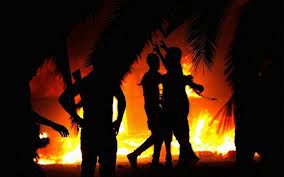
Benghazi: CIA sent missiles to jihadis

US compound after attack

Despite evidence showing the Benghazi attack was staged by a State Department hired jihadist security outfit in connection with an arms transfer to al-Qaeda mercenaries in Syria, the US MSM is pretending it does not know what happened in Libya on September 11, 2012.

The corporate media has yet to point out that the Obama administration attempted to cover-up the real reason for the murder of ambassador Stevens – U.N. Ambassador Susan Rice and the State Department initially pointing to a lame anti-Muslim video – and has consistently downplayed the incident and characterized it as a non-event not requiring congressional investigation and the impeachment of President Obama.

A number of guests appearing on the Alex Jones Show following the attack have built an indisputable case that the CIA was shipping arms from U.S.-controlled facilities located at the U.S. mission in Benghazi to its mercenaries in Syria and the murder of ambassador Stevens was carried out by an al-Qaeda affiliated group as part of a turf war between the CIA and elements in the Pentagon.

In May, former government insider Steve Pieczenik explained how a Pentagon effort to derail a CIA operation may have occurred.

All the evidence points to the Pentagon doing nothing to stop the attack on the compound. Martin Dempsey, chairman of Joint Chiefs of Staff, admitted during a Senate hearing in June that highly trained Special Forces were stationed a few hours away from Benghazi on the night of the attacks but were not deployed.

This contradicts comments made by Gregory Hicks, the former top U.S. diplomat in Benghazi, who told Congress in May that officials from Special Operations Command-Africa ordered the units to stand down.

In May, Infowars.com posted an article reporting the fact the Benghazi attack and the murder of ambassador Stevens had nothing to do with an absurd anti-Islam video, as the establishment media and the Obama administration insisted, but was directly connected to the shipment of arms from Libya to the mercenaries in Syria.

Lt. Col. Tony Shaffer, appearing on the same show, alleged that Turkey partnered with the CIA to take down Bashar al-Assad in Syria and, hours before the compound was attacked and Stevens and others lost their lives, the Turkish Consul General Ali Sait Akin met with the U.S. ambassador.

According to Egyptian security officials, Stevens was instrumental in recruiting jihadists for the CIA’s war in Syria and “served as a key contact with the Saudis to coordinate the recruitment by Saudi Arabia of Islamic fighters from North Africa and Libya. The jihadists were sent to Syria via Turkey to attack Assad’s forces,” writes Aaron Klein.

It has been widely reported that the Syrian mercenaries belong to the al-Nusra Front, an al-Qaeda affiliate.

It was learned after the attack that the February 17th Martyrs Brigade was paid by the State Department to protect the U.S. diplomatic mission in Benghazi. The group had “clear al-Qaida sympathies, and had prominently displayed the al-Qaida flag on a Facebook page for months before the deadly attack,” Max Rosenthal reported for Newsmax in May. The February 17th Martyrs Brigade, it was latter learned during a House Oversight and Government Reform Committee hearing, are in league with Ansar al-Sharia, said to be linked to al-Qaeda in the Islamic Maghreb.

Part of the operation involving Stevens included sending surface-to-air missiles to al-Qaeda in Syria. “Speculation on Capitol Hill has included the possibility the U.S. agencies operating in Benghazi were secretly helping to move surface-to-air missiles out of Libya, through Turkey, and into the hands of Syrian rebels,” CNN also reported late last week.

The Obama administration announced in late September that “it planned to expand a program to secure and destroy Libya’s huge stockpile of dangerous surface-to-air missiles” and that “the U.S. State Department has one official on the ground in Libya, as well as five contractors who specialize in ‘explosive ordinance disposal,’ all working with the rebel Transitional National Council to find the looted missiles,” ABC News reported.

In fact, the State Department, under the guidance of ambassador Stevens, was moving to round up the missiles and send them to al-Qaeda in Syria. Prior to this, in December, 2011, the U.S. claimed to have secured 5,000 surface-to-air missiles and destroyed them outside of the village of Sidi Bin Nur in Libya. Doubtless, instead, they became part of the CIA’s cache destined for Syria.

CIA was ‘running arms smuggling team in Benghazi’

Arming the enemy
Arming the enemy

The CIA has been subjecting operatives to monthly polygraph tests in an attempt to suppress details of a US arms smuggling operation in Benghazi that was ongoing when its ambassador was killed by a mob in the city last year, according to reports.

Up to 35 CIA operatives were working in the city during the attack last September on the US consulate that resulted in the death of Ambassador Chris Stevens and three other Americans, according to CNN.

The circumstances of the attack are a subject of deep division in the US with some Congressional leaders pressing for a wide-ranging investigation into suspicions that the government has withheld details of its activities in the Libyan city.

The television network said that a CIA team was working in an annex near the consulate on a project to supply missiles from Libyan armouries to Syrian rebels.

Sources said that more Americans were hurt in the assault spearheaded by suspected Islamic radicals than had been previously reported. CIA chiefs were actively working to ensure the real nature of its operations in the city did not get out.

So only the losses suffered by the State Department in the city had been reported to Congress.

“Since January, some CIA operatives involved in the agency’s missions in Libya, have been subjected to frequent, even monthly polygraph examinations, according to a source with deep inside knowledge of the agency’s workings,” CNN reported.

Frank Wolf, a US congressman who represents the district that contains CIA headquarters in Langley, Virginia, is one of 150 members of Congress for a new investigation into the failures in Benghazi.

“I think it is a form of a cover-up, and I think it’s an attempt to push it under the rug, and I think the American people are feeling the same way,” he said. “We should have the people who were on the scene come in, testify under oath, do it publicly, and lay it out. And there really isn’t any national security issue involved with regards to that.”

A CIA spokesman said it had been open about its activities in Benghazi.

“The CIA has worked closely with its oversight committees to provide them with an extraordinary amount of information related to the attack on US facilities in Benghazi,” a CIA statement said. “CIA employees are always free to speak to Congress if they want,” the statement continued. “The CIA enabled all officers involved in Benghazi the opportunity to meet with Congress. We are not aware of any CIA employee who has experienced retaliation, including any non-routine security procedures, or who has been prevented from sharing a concern with Congress about the Benghazi incident.”- The Telegraph

Who is Naspers?

naspers_cartoon

by Albert Brenner

The bewildered herd must be governed by a specialized class whose interests reach beyond the locality. (Walther Lippmann)

Knowledge is power… and power is money. In order to make big money, you need big money.

The first big fund to invest in Naspers was Comerica Foreign Equity. This fund is run by World Asset Management, the investment arm of HSBC. This bank has its main (private) office on Tortola, the largest of the British Virgin Islands.

And guess where Naspers’s investment arm, MIH Holdings Limited, is located? Yes, in the exact same street of this tax-haven of the (mostly) British elite. Just think about the above every time you pay a small fortune to watch M-Net, SuperSport, DSTV, et cetera.

Now, HSBC is the world’s 3rd largest bank with $2.36 trillion in assets. Formerly known as Hong Kong Shanghai Bank Corporation, HSBC is one of the most unscrupulous banks ever. It has been the cash cow of the British elite since its inception as a repository for British Crown opium proceeds accrued during the Chinese Opium Wars.

Armed with a royal charter, Lord Shelbourne started the Chinese opium trade in 1783 with merchants from the East India Company. Shelbourne’s main spin-doctor was Adam Smith. The latter worked for the East India Company, which was formed from the slave-trading Levant Company and later became known as Chatham House. The latter is home to the Royal Institute for International Affairs (RIIA), the second most influential think tank in the world.

The RIIA was founded in 1920. Its American sister institute, the Council on Foreign Relations (CFR), was founded one year later. Walther Lippmann, the Pulitzer-Prize essayist, journalist and mass-media genius was one of the founding members of the CFR. But more about him later. Needless to say, these two organizations, the RIIA and CFR, work hand in hand.

Now, the CFR is run by some of the best brains in America. They are truly exceptional people. They basically run the State Department, the CIA and are connected to nearly everybody that matters in the business and academia in America, and globally.

The CIA operates under the cover of various organizations when it comes to furthering America’s strategic and economic interests. The Ford Foundation is one of the main fronts of the CIA (i.e. the CFR).

In June 1985, this foundation hosted the first ever meeting between the ANC and the Broederbond (i.e. the NP).

The conference took place in Glen Cove, Long Island on June 1st. The main players were Professor JP De Lange (Head of the Broederbond) and ANC officials, Thabo Mbeki, Mac Maharaj and Seretse Choadi.

This meeting did not produce the results the CFR were hoping for. So they summoned the (economic) artillery, David Rockefeller.

Along with being a CFR director for 46 years, David Rockefeller served as chairman of the board from 1970-85 and was the organization’s honorary chairman till 2001. During this time, he was also chairman of Chase Manhattan Bank.

On 31st July 1985, Chase Manhattan decided not to roll over South Africa’s debt. Apparently Pik Botha’s traitor heart nearly stopped beating: “I will never forget the night of July 31 when [Minister of Finance] Barend du Plessis phoned me … [He said]: ‘Pik, I must tell you that the country is facing inevitable bankruptcy … The process has started.'” (source).

The rest is history.

So what has this got to do with Naspers? Well, it just shows that Naspers is just another appendage of interest groups beyond the borders of South Africa. In other words, it does not serve the interests of South Africans. But then, neither do other media giants in South Africa.

Caxton/CTP’s chairman in the early 1990s was Van Zyl Slabbert, who also became the chairman of the Johannesburg Stock Exchange. Slabbert was the useful idiot of CFR member George Soros. The latter, through his Open Society Foundation, sponsored Slabbert and super-useful idiot Max Du Preez… especially with his anti-Afrikaner Vrye Weekblad newspaper.

So, every time you hear about the Davos Afrikaner called Koos Bekker, the big boss of the 33rd largest media company in the world called Naspers (worth R344 billion or $34,88 billion) just know that he is just another witting puppet on an Anglo-American string.

He is just like those rich Boer farmers who became hensoppers during the Anglo-Boer War… selling out their own people purely for profit. Nothing more, nothing less.

Meaning that the “Who is Naspers?” question is not really that interesting. The really interesting question is the “why” behind Naspers.

Answering this question will take us through the wonderful worlds of Baudrillard (e.g. see my article Mandela’s Empire), Noam Chomsky’s Manufacturing Consent: The Political Economy of the Mass Media, the Washington Consensus, Bretton Woods, Walther Lippmann’s  Public Opinion… all the way back to Edmund Husserl`s phenomenology (e.g. see my article Why Mandela).

It is a fact that people can only make sense of Reality through “ideal meanings”. Those ideal “pictures in your head” prevent you, more often than not, to “… come to judgment by critical thinking” (Walther Lippmann).

Journalism is “intelligence work” and journalists are a link between policymakers and the public, according to Lippmann.

Meaning that journalists (and the media companies that employ them, e.g. Naspers) always sanitize the Truth at the behest of their pay-masters…

(to be continued)