Malema promises bloodshed

Unlucky victim of South African violence

Axed ANC Youth League leader Julius Malema believes bloodshed will help him get South Africa’s land and mineral resources, according to a report on Tuesday.

Malema was in Harare on Saturday to attend a wedding ceremony and address Zanu-PF youth, the Zimbabwe Herald reported.

He said the youths in South Africa were calling for whites to surrender land and minerals resources they hold because “when they came from Europe they did not carry any land into South Africa”.

“What we are asking is for them to surrender our minerals because they did not come with any mineral. We want that land and those minerals for free because they never paid for those minerals.”

Malema said whites committed murder to get land.

“Actually they killed people to get that land and those minerals. We are not going to give them money when we take the land back because it will be like we are thanking them with money for killing our people.

“We will never do that, little did they know that we are not scared of blood. We are scared of defeat. We don’t want to be defeated but seeing blood is not what we are scared of as long as that blood delivers what belongs to us we are prepared to go to that extent.”

Malema told the youth he was in Zimbabwe to gain inspiration and wisdom, so that when he returned home he could “double the spirit of fighting against imperialist forces”.

He said Zimbabwe was an inspiration to Africa, in that it is now wholly independent and has divested itself of external control.

Malema faces a money-laundering charge relating to a R52m tender awarded to On-Point engineers, which he allegedly benefited from. – Sapa

Mine strikes continue in South Africa

Strikers at the Lonmin mine, typically armed with 'traditional weapons'

Wildcat strikes at platinum, gold, coal, diamond, chrome and iron ore mines continued across a number of provinces on Thursday.

Thousands of strikers at Gold Field’s KDC West mine confirmed they would continue to down tools.

“We will not go back to work until our demands are met,” a leader of the strikers, Ellis Booi, proclaimed to the cheers of thousands of Gold Field’s workers who had gathered at a stadium close to the West Rand mine on Thursday.

While some wildcat strikes have seen some mines shut down production for two to three weeks already, workers at many other mines made the decision to down tools this week.

Strikes have now been reported in Gauteng, the North West, the Northern Cape, Free State, Kwazulu-Natal and Limpopo.

Mining operations at Kumba Iron Ore’s Sishen Mine in the Northern Cape were suspended on Thursday, after around 300 striking employees blocked an entrance to the open pit where mining takes place.

On Tuesday, an underground sit-in by about 65 workers began at Petra Diamond’s Kimberley mine. This action subsequently halted mining operations this week.

On Thursday, Petra Diamond spokesman Gert Kloppers said the company would like the miners to come back up.

“They are welcome to come out anytime. We would appreciate that,” he said, adding the company and unions were committed to finding a solution to the problem.

A strike also started on Tuesday at Harmony Gold’s Kusasalethu mine on the West Rand when a group of about 300 workers prevented those on a night shift from going underground.

On Thursday, the mine remained closed as some workers barricaded the entrance.

Wildcat strikes which flared up on Monday at Gold One’s Ezulwini mine on the West Rand, Bokani Platinum mine in Limpopo and at Samancor Western Chrome Mines near Rustenburg extended into Thursday.

There seemed no clear end in sight for the three-week long strike at Gold Fields KDC West Mine, near Carletonville and at the Beatrix mine in Free State involving around 22,000 workers collectively.

Similarly, mining operations at Anglo Gold Ashanti’s six mines in Gauteng remained shut as wildcat strikes involving tens of thousands of workers, which started in late September, continued into October.

“All remains at a standstill,” spokesman Stewart Bailey said on Thursday.

Anglo American Platinum’s (Amplats) Rustenburg and Union mines have also continued to be the scene of disorder since mid-September, with the company conducting risk assessments this week after damage to property was reported.

Miners at Coal of Africa’s Mooiplaats Colliery in Mpumulanga have continued striking since pay talks broke down two weeks ago.

A number of affected mines planned disciplinary hearings for Friday, warning that a possible outcome of these could be dismissals.

Meanwhile, union leaders and gold and coal mine CEOs met at the Chamber of Mines in Johannesburg on Thursday.

“We need to find a common ground with the captains of industry,” said National Union of Mineworkers president Senzeni Zokwana.

Unions want the bargaining councils reopened. – Sapa

Marikana massacre scene inspected

A rock on Marikana Hill

By Genevieve Quintal and Jonisayi Maromo

A judicial inquiry into the shooting of striking Lonmin platinum workers at Marikana in August concluded an inspection on Monday of the hills where the workers were killed.

Two North West crime scene experts led retired judge Ian Farlam and his team around the area where 34 miners were shot dead by police.

Warrant Officer Patrick Thamae pointed out where bodies were found near the main hill, where the mineworkers assembled in the days leading up to the shooting on August 16.

A large crowd of observers and advocates representing the different parties followed Farlam and the experts.

Thamae pointed out the place where seven bodies were found. Another five were found next to a kraal, he said.

Farlam asked him to show the commission where barbed wire was rolled by police on the day of the shooting.

The commission was then taken a few hundred metres further, to where a single body had been found.

Thamae said the body was found “in the road”.

Cartridge cases of various calibres had been found near the body, he said.

He told the commission a number of R5 rifle and pistol cartridges were found lying in areas surrounding the hill, where police were believed to have been standing at the time of the shooting.

In another area, pistol cartridges and rubber bullets were discovered.

Another crime scene expert, Captain Apollo Mohlaki, led the commission in inspecting a small hill.

Mohlaki pointed out where bodies had been found.

He also showed the judge the place where traditional weapons recovered from the protesters were heaped.

The judge held an umbrella to shield himself from the sun as he was helped up the steep hill.

Large boulders on the hill were chipped by bullets.

The procession inspected other areas where other bodies and bullet cartridges were discovered. The locations had been marked with yellow paint.

Mohlaki pointed out bullet markings and drops of blood on some of the boulders surrounding the small hill.

A group of miners, arrested after the shooting and since released on bail, stood watching on the sidelines of the commission’s inspection. They would not talk to the media.

The workers are represented by advocate Dali Mpofu, who defended expelled ANC Youth League president Julius Malema during his disciplinary hearing.

During the inspection, Mpofu stopped to speak to his clients.

He told Farlam they wanted to point out that three or four helicopters had hovered over the scene on the day of the shooting.

Earlier, the mineworkers undertook their own scene inspection, separately from that of the judicial commission of inquiry.

A miner showed Association of Mineworkers and Construction Union (Amcu) leader Joseph Mathunjwa areas where striking mine workers were shot by the police.

He pointed to an area surrounded by rocks where a body was found, and indicated that the miner was shot from a helicopter above.

[ad 1]

Mathunjwa, wearing a white Amcu T-shirt, took photographs and asked questions.

Before the formal inspection started, residents from the nearby informal settlement approached the scene, singing struggle songs and carrying placards reading: “Don’t let the police get away with murder”.

The crowd shouted “amandla, awethu” while they danced.

A group of policemen stood watching.

The 34 miners were killed and 78 were wounded when police opened fire on them while trying to disperse a group of protesters near Lonmin’s platinum mine in Marikana in August.

Some reports since the event have suggested that several miners were shot dead among rocks a distance from where the police clashed with workers.

The commission’s inspection in loco continues on Tuesday, when the mine hostels, informal settlements and formal settlements will be visited.

The commission will also inspect shafts and any other areas deemed important to the inquiry. – Sapa

Marikana inquiry starts

Retired judge Ian Farlam

The judicial inquiry into the shooting at Lonmin’s Marikana mine will begin in Rustenburg in the North West on Monday.

The commission of inquiry would start with public hearings at 9am at the town’s civic centre.

On Monday, all parties involved would go to the area where 34 striking workers of the Lonmin Platinum mine in Marikana were shot dead by police on August 16.

The commission’s secretary said people would be allowed to point out places which they considered relevant to the inquiry. The descriptions of what happened at the site would be recorded.

Following the in loco inspection, formal sittings of the commission were expected to start at the civic centre on Wednesday.

In August, President Jacob Zuma announced a three-member judicial commission of inquiry to probe the mine violence.

[ad 1]

The commission, chaired by retired Judge Ian Farlam, has been mandated to determine the roles played by Lonmin, the police, the Association of Mineworkers and Construction Union, and the National Union of Mineworkers.

It will also determine the role played by the department of mineral resources or any other government department or agency, and the conduct of individuals and groupings in promoting a situation of conflict and confrontation which could have given rise to the shootings. – Sapa

South Africa losing investor confidence

A toxic mix of government stasis, creaking infrastructure and social unrest is prompting doubts about South Africa’s stability in a continent with too many economic scare stories.

It may, in the end, be events on a dusty patch of Highveld two hours’ drive from Johannesburg that end South Africa’s 18-year post-apartheid honeymoon.

In the weeks since dozens were killed in clashes between police and miners at Marikana, a wave of violent strikes has swept the South Africa, strangling vital mineral production and threatening fuel supplies.

Long pent-up anger at the slow pace of economic reform has come to the fore. More militant unions and political populists such Julius Malema are mining that rich seam of discord.

“Things are not rosy” said Mohammed Nalla, an economic analyst at Nedbank Capital in Johannesburg. “(The outlook) is deteriorating, we’ve got institutional decay and structural decay in the economy that is setting in.”

According to Nalla and others, the root of the problem is a lack of accountability at the top.

With no serious electoral rivals, the ruling ANC is accused of being too concerned with the accumulation of wealth and power.

Today ANC members are squarely focused on a December meeting that will select their next leader and, de facto, the next leader of the country.

Unpopular President Jacob Zuma faces a potential challenge from Deputy President Kgalema Motlanthe. Neither man is risking difficult decisions that could upset their power base.

That political drift is starting to eat away at investor confidence, and the timing could hardly be worse.

Just as the financial world seems ready to give Africa a shot at replicating the growth that transformed South East Asia and Latin America, some are wondering if Africa’s economic talisman is going to the dogs.

The cruel irony of the situation was underscored this week.

South Africa was welcomed into an elite group of bond issuing countries — opening the door to a whole new set of foreign investors — while at the same time having its bond rating cut.

Moody’s downgrade left South Africa, rated at Baa1 — around the level of peers Russia, Brazil and Thailand. But the diagnosis was bleak and a further ratings cut is likely.

Moody’s said South Africa’s twin fiscal and trade deficits were a serious worry, but the more immediate problem was a government that is unwilling and, increasingly, unable to tackling mounting economic problems.

If that sentiment takes root South Africa could be in serious trouble very quickly.

Thanks to the country’s mineral wealth and because of low returns to be had in the developed world, investors have been happy to seek out profits in more risky but growing markets such as South Africa.

As a result South African debt and the rand are still well liked by traders, helping keep the country’s already large trade deficit and tattered public finances under control.

“That momentum does not last forever, we know that these things come to end,” warned Nalla.

A significant slowdown in investment would be a double whammy for South Africa, which is highly dependent on both foreign inflows of capital and foreign imports.

A slowdown would increase the government’s cost of borrowing, squeezing public spending and at the same time weakening the rand, which would push up the price imported food and energy.

Already, over the last year, foreign inflows to the South African stock market have turned into modest outflows. Equities may yet prove to be the canary in the coalmine, but so far more crucial bond and currency investors seem willing to roll with the punches.

“We are not seeing the ‘Zimbabwe’ situation in South Africa. That is not what is happening. We are not seeing investors run away with their hands in the air,” said Peter Attard Montalto of Japanese investment bank Nomura.

[ad 1]

“What is happening is a slow grind of under-performance, (South Africa) not realising its full potential and that is a result of policy and the politics that are going on.”

South Africa may be saved, at least for now, by the few institutions that still work well, he added.

“The problem is, investors go to see the SARB (South African Reserve Bank), they go to see the National Treasury and these are amazing world-class institutions that are on a par with, or even better than, some developed markets.

“People don’t actually go and interact with the education ministry, the labour ministry — that’s where you see the real issues (and) at the provincial level, where the vast majority of provinces are highly inefficient, with large amounts of corruption.”

If political stasis allows that type of institutional decay to spread, South Africa could be in for a rough time ahead. – Sapa

Zuma blames apartheid

Jacob Zuma

South Africa’s president says the mining unrest that captured international attention following the police killing of 34 striking miners will be resolved through negotiation.

President Jacob Zuma told the Associated Press that the Aug. 16 killings at the Lonmin PLC platinum mine in Marikana should not be viewed as “the kind of incident that will be a common occurrence” or “that things have gone out of control in South Africa.”

He said the strikes which spread to other, mostly gold, mines were a direct consequence of the strike at Marikana and that they too would be resolved through negotiation.

Zuma denied that the strikes revealed startling inequalities in post-apartheid South Africa, saying it was not a problem that has “arisen now,” blaming the problem on the legacy of apartheid. – AP

SA mining trapped in the 19th century – Ramphele

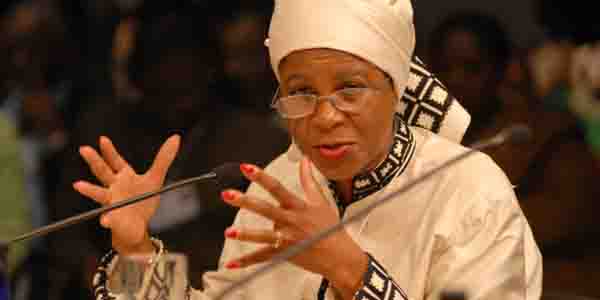
Mamphela Ramphele

South Africa needs to dig itself out of a 19th-century mining business model, academic Mamphela Ramphele said on Wednesday.

Speaking at a media briefing ahead of an international leadership education conference in Cape Town, she said a failure to change the nature of the industry was having devastating repercussions.

“We’ve just had this tragic Marikana debacle, and what was in evidence there is the consequence of South Africa failing to transform the mining industry from a 19th century business model, which relies on cheap migrant labour, very archaic mining technology and a… low-skilled, labour-intensive industrial base.”

She said change could come from leaders of business schools, leaders in the private mining sector and citizens putting their heads together.

“I want to make sure my three-year old grandson, in 30 years’ time, is in a country he can be proud of; and that will not happen, unless we deal with the legacy issues which are holding us back.”

Ramphele, who also chairs the Gold Fields board, said her recent visit to the mining house’s Australian operations showed the industries in the two countries were like chalk and cheese.

“Of course, they were established in different periods, but that doesn’t stop us, because one of the things South Africa is underplaying is technological innovation capacity,” Ramphele said.

She referred to the London Underground rail system, and said tunnelling technology developed in South Africa had contributed towards this.

Ramphele said the ability to innovate and change to a new mining model was not lacking in South Africa.

“We just have not applied our minds because there isn’t the political leadership and will to create a framework for a mining industry of the 21st century.”

She also took aim at industry bosses.

“The private sector, in the form of the mining industry, has also not exercised its mind about how do you leverage the huge endowment… in the form of mineral resources; leveraging that as a way of positioning South Africa as a globally competitive economy… .”

[ad 1]

Ramphele said South Africa had missed the benefits of the last mining boom, while other countries flourished.

“The other thing we do in South Africa — which is really inexplicable, that’s the polite way of putting it — is that we are exporting value to China, to India, to everywhere.

“We mined the riches the dear Lord gave us, gave it to others to process, which means we are exporting jobs, then we re-import (processed minerals) at huge costs for our own purposes, which is why we are de-industrialising.”

She said re-industrialisation in mining would depend on a rethink of the whole value chain.

Ramphele is also a businesswoman and medical doctor, and was an anti-apartheid activist. – Sapa

South African mining crisis puts traditional unions on the spot

Miners assembling on a hillside in Marikana to mourn their colleagues killed by police

The violent crisis that has shaken South Africa’s mines shows workers’ distrust for traditional trade unions, up to now the guardians of social peace despite the country’s deep inequality.

Miners this week clawed record salary increases of 22 percent from the Lonmin platinum mine operators after a near six-week wildcat strike that killed 46.

Having rejected major player the National Union of Mineworkers (NUM), miners appointed their own representatives at the negotiations.

The unprecedented agreement may upend the whole mining industry, a fifth of the GDP of Africa’s largest economy, analysts said, and bodes ill for the country’s powerful trade union federation COSATU, and NUM, its main member.

Wildcat strikes have already spread to other gold, platinum and chrome mines, including world number one Anglo American Platinum and Gold Fields.

“Marikana holds the potential for an era in South African labour relations where violent strike action forces the hand of weakened management as opposed to historical collective bargaining promoted by COSATU and its affiliate unions,” said independent analyst Daniel Silke.

The country’s labour movement has been formalised for decades, and representative unions have exclusive negotiation rights with employers in an extremely structured process.

Unions also formed a formidable opposition to the white minority regime during apartheid. Since its inception in 1985, COSATU was affiliated with the African National Congress.

This alliance helped to avoid major social unrest when the ANC took over government in 1994 after the first all-race elections, and COSATU only gained in power through the deal.

But now the partnership threatens to taint the federation.

“COSATU has moved away from its roots to become a political organisation, while its supposed to be a labour movement,” economist Dawie Roodt told AFP.

On the ground, mineworkers say they live in hell, pointing to shacks without electricity, water or sanitation.

“Because of the separation between the grassroots and leadership, the mine worker feels his interests are not being protected anymore. This guy from the union is more interested to become a mine shareholder, and has forgotten about the worker’s wages,” said Roodt.

But it has not all been bad. The Chamber of Mines has said workers have it good compared to others in South Africa amid a 40 percent unemployment rate.

“The National Union of Mineworkers has done too good a job for its members over the past 30 years, especially the past 10, getting its members double-digit, double-inflation wage increases with no increases in productivity,” Peter Major, mining and resources head at consulting company Cadiz Corporate Solutions, wrote in the weekly Mail & Guardian.

Now, the same workers are abandoning the old guilds in favour of new ones, like the Association for Mineworkers and Construction Union (AMCU), which has been blamed for inciting the violence at Lonmin.

Other miners go it alone. Wildcat strikes have increased since the start of the year. They often erupt into violence, with intimidation against non-strikers. Some clashes spill explode into deadly violence.

Police shot dead 34 people on August 16 at the Marikana mine, a week after clashes between workers left 10 dead. Two people died in subsequent violence.

“The key issue here is whether the trade union movement, whether COSATU itself, can keep a handle on the more militant workers who have smelled blood with management as a result of Marikana,” said Silke.

“The pressure will really be on COSATU to retain a level of organisation …to attempt to elicit a better deal for members or face the potential of political polarisation.”

Unions were losing membership “without a doubt”, added Roodt.

“The political outcome will be (that) we need a separation between labour and government. (The situation) is untenable.” – Sapa

Two more miners killed by police, one dragged by armoured car

Amplats strikers
Amplats strikers

RUSTENBURG, South Africa (AP) — Days after soldiers were deployed, South African President Jacob Zuma’s office announced Thursday he has ordered military forces to assist police trying to control labor unrest in the nation’s crucial mining sector. Despite resolution of the longest and bloodiest strike, two more deaths were reported.

Even as miners returned to work Thursday at the Lonmin PLC platinum mine in Marikana where police killed 34 miners on Aug. 16 labor advocates said police killed two more people: a ruling party municipal councilor who died of injuries from a rubber bullet and a miner who was run over by an armored car.

Zuma’s office said he was invoking the Constitution to use the military to support police “in the prevention and combating of crime as well as the maintenance of law and order in the Marikana Area … and other areas around the country where needed” until Jan. 31. The notice from the presidency referred to section 201 (2) of the Constitution, which states that “only the President, as head of the national executive, may authorize the employment of the defense force.”

Last weekend some 1,000 soldiers were trucked into the “platinum belt” northwest of Johannesburg.

Thursday morning, police in two water cannon trucks and several armored cars confronted striking Anglo American Platinum miners at a shantytown where residents set up barricades of rocks and burning tires and logs. Before long, the fires died down and most of the police pulled back. The people dispersed, leaving a herd of goats milling around the water cannons. Strike leader Evans Ramokga told The Associated Press that one miner was run over Wednesday by a police armored car and dragged several meters (feet) before it stopped. He said the man died overnight in the hospital.

Police spokesman Dennis Adriao said he was unaware of the incident which occurred at the scene where police fired rubber bullets, tear gas and stun grenades to break up a march by thousands of strikers. The mines near Rustenburg belong to Anglo American Platinum, the world’s largest platinum producer.

“The only thing we want is to sit down and have them hear our demands,” Ramokga said. He said authorities have refused to give permission for the thousands of strikers among Anglo’s 15,000 workers there to hold a protest march to back their demands for a gross monthly salary of 16,070 rand ($2,000).

Anglo issued an ultimatum for workers to report for duty by Thursday night or threatened to act on a court order declaring the strike illegal. That gives Anglo the power to fire strikers.

“Anglo American Platinum’s Rustenburg mining operations are already under considerable economic pressure, any further delays in returning to work will only increase the risk to the long-term viability of these mines,” it said in a statement late Wednesday.

The Marikana Solidarity Campaign meanwhile reported that African National Congress councilor Paulina Masutlhe was shopping Saturday at the Wonderkop shantytown where Lonmin platinum miners live when police firing from a speeding armored car hit several women. Masutlhe was hit in the abdomen and leg and rushed to the hospital, where she died Wednesday, a statement said.

Adriao said he is investigating the report of a death. He said police had reported to the Independent Police Investigative Directorate that several people were hit by rubber bullets in a raid to disarm strikers on Saturday, the day after the government ordered a crackdown.

The directorate already has opened 34 murder and 78 attempted murder charges against police in the Aug. 16 shootings, the worst state violence since the white minority apartheid regime was brought down in 1994. The government has said it is awaiting the outcome of a judicial commission of inquiry that is to report to the president in January.

The solidarity campaign condemned the brutality of police and called for “the immediate identification and suspension of the police officers involved in her (Masutlhe’s) murder. “

“We are also extremely unhappy that, to date, none of the police officers involved in the massacre on 16 August 2012 has been identified or suspended – this is totally unacceptable and unlawful,” said the campaign that includes the powerful Congress of South African Trade Unions that is part of a governing alliance with the African National Congress party and the South African Communist Party.

The deaths at the two mines, both northwest of Johannesburg, bring the strike-related death toll to 47.

Lonmin on Tuesday resolved its five-week strike by agreeing to pay raises of 16 to 22 percent.

The strike already has spread to several gold, platinum and chrome mines, damaging investor confidence in the country that produces 75 percent of world platinum and is the No. 4 chrome producer and in the top 10 of gold producers.

South African President Jacob Zuma deploys troops in the country

The SA National Defence Force has officially been deployed domestically from September 14 until next year in Marikana “and other areas of the country where needed”, the Presidency said in a statement on Thursday.

The Presidency said in a short statement that the soldiers would be deployed to support the police “in the prevention and combating of crime as well as the maintenance of law and order in the Marikana area, North West province and other areas around the country where needed.”

The statement did not detail where the other areas may be.

The deployment will last from September 14 until January 31, 2013.

“The extended period will see the SANDF soldiers supporting the police during the festive season period around the country, as they did last year, 2011,” the statement read. – Sapa

Marikana is a dangerous precedent, says Vavi

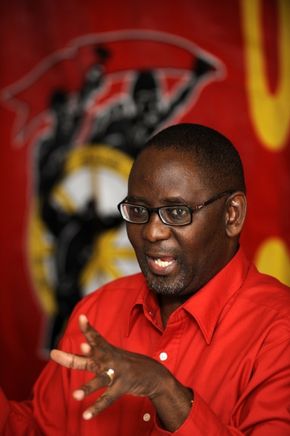
Zwelinzima Vavi

by Genevieve Quintal and Gillian Jones

The Marikana wage deal set a dangerous precedent, the Congress of SA Trade Unions (Cosatu) general secretary Zwelinzima Vavi said on Wednesday.

“If those workers forced the hand of the company in that fashion through an unprotected strike, what stops Driefontein in doing the same,” Vavi asked delegates at Cosatu’s national congress in Midrand, Johannesburg.

Earlier on Wednesday Vavi had to leave the congress to deal with a strike at Gold Fields Driefontein mine in Carletonville where 15,000 workers have been on an illegal strike for the past 10 days.

Leaders of the National Union of Mineworkers (NUM) accompanied him.

On his return from the mine Vavi said the mineworkers were demanding a salary of R12,500. This was the same demand made by workers at Lonmin’s Platinum mine in Marikana, North West.

On Tuesday Lonmin workers accepted a final offer of a 22 percent increase giving some workers R11,000 a month.

Vavi warned that other workers would think that they too could get substantial increases by going on illegal strikes.

“We are not saying that workers do not deserve their money, but if we are not careful this may mean an end of the central bargaining system in the country.

“Workers will just embark on wildcat strikes and steam ahead and force us to follow them.”

He called for the congress to come up with a radical commitment to putting workers interests first.

He said the Driefontein workers were having problems with their NUM branch leaders. “[However] they all remain loyal members of NUM.”

The workers said they would not abandon the union just because of their problems with the branch leaders.

Vavi said the workers were demanding that the leaders be dismissed and would not listen to argument that according to Cosatu’s constitution there were processes to follow.

The NUM would hold a special national executive committee meeting on Wednesday night to discuss the issue. – Sapa

Police fire rubber bullets at Amplats miners

Police used rubber bullets and teargas to disperse a group of people gathered near Anglo American Platinum (Amplats) in Rustenburg on Wednesday, said a spokesman.

“Police dispersed people trying to gather illegally. As we have said, we are not tolerating any illegal gatherings,” said Captain Dennis Adriao.

“Police utilised teargas and stun grenades, and rubber bullets were used at the [nearby] squatter camp.”

Amplats spokeswoman Mpumi Sithole said: “I can confirm that [the police have] dispersed a group of people gathering illegally at Sondela informal settlement.

“We do not know why the people were gathered and cannot confirm if they are our employees. As reported yesterday [Tuesday], our mines are operational…”

Last week, government ministers in Cabinet’s security cluster said the government would no longer tolerate violence, threats and intimidation taking place in the mining sector, as massive strikes sprang up along Rustenburg’s platinum belt, with another one near Carletonville.

The measures included a crackdown on illegal gatherings, the carrying of dangerous weapons, incitement, and threats of violence against anyone in the affected areas.

Adriao said that for large groups of people to gather, in terms of the Regulation of Gatherings Act, they had to give notice to the local municipality for the gathering to take place.

Section four set out certain conditions for the gathering.

“Police need to be present, emergency services need to be on standby, marshalls present the whole day. Water points need to be established,” said Adriao.

The relevant municipality in this case was Rustenburg.

Further details were not immediately available, but SAFM reported that mineworkers near Jabula and Thembelani mine had been arrested and that the gathering was related to an unprotected pay strike.

After suspending operations last week, citing employee safety due to the situation in the region, Amplats resumed operations on Tuesday.

Workers were paid over the suspension period, and praised the company for this.

On Friday, during the operations suspension, they marched to the company’s Bleskop stadium and decided that they also wanted a salary increase.

Unlike their mining colleagues at other operations, who were seeking R12,500, they said they wanted R16,070 and other modifications to their fringe benefits.

On Tuesday night a lengthy strike at nearby Lonmin ended with a wage agreement.

‘Put down your weapons,’ asks South African Justice Minister

Put down your weapons and stop committing violence, or face the full might of the law, Justice Minister Jeff Radebe warned striking miners on Friday.

In an announcement made in Pretoria, following a meeting of security cluster ministers and other Cabinet members, he said government would no longer tolerate the violence, threats and intimidation taking place in the mining sector.

“The South African government has noted and is deeply concerned with the amount of violence, threats and intimidation that is taking place in our country, particularly in the mining industry.

“These acts… clearly undermine our government’s efforts of ensuring economic and security stability,” Radebe said.

Government recognised that if the current situation continued unabated, “it will make it even harder to overcome our challenges of low economic growth and high unemployment”.

“Our government will not tolerate these acts any further.”

He announced measures to be put in place to ensure the situation was brought under control.

These included that “illegal gatherings, the carrying of dangerous weapons, and incitement, as well as threats of violence against anyone in the affected areas, will be dealt with accordingly”.

Radebe said law enforcement agencies “will not hesitate to arrest those who have been found to have contravened the law”.

Government was making a “clarion call” on all South Africans to desist from such illegal acts.

Asked if he was declaring a state of emergency, Radebe responded: “No, but we want stability; we want to bring about normality in the mining sector in South Africa. We can no longer tolerate acts of intimidation, illegal gatherings, and the carrying of dangerous weapons.”

Those who wanted to go to work had to be allowed to do so without any intimidation.

Speaking at the briefing, State Security Minister Siyabonga Cwele said the “key” issue was the deaths caused by dangerous weapons.

“What is key is… these dangerous weapons kill our citizens. They are not just decorative things, or traditional things, but they actually have killed our people.

“Carrying dangerous weapons and firearms [and] participating in illegal gatherings is not going to be tolerated by law enforcement officers,” he said.

Asked if the police would use live ammunition to enforce the law, Radebe responded: “The question of live ammunition — that’s an operational matter, so we will not answer that.”

He said the measures announced applied to affected mining areas only, and not the rest of the country.

Asked if the announcement was a warning to expelled ANC Youth League leader Julius Malema — who has called on miners to stage a mass national strike — Radebe said the measures were not aimed at specific individuals.

“This statement… is not directed at any specific individual or individuals.”

It sought to ensure stability in the country.

He then added: “But all those who break the law, regardless of who they are, they will be dealt with the full might of the law. That’s the message we want to present today.”

Cwele told journalists: “No more incitement of violence will be tolerated.”

Asked if the army would be deployed to help police, Radebe, after noting that it was the police who were responsible for security in South Africa, said: “That will be an operational matter. Who they want to be reinforced with.”

The decision would be taken by the national commissioner.

He said law enforcement agencies “will not hesitate to arrest those who have been found to have contravened the law”. – Sapa

South African finance minister says unrest damaging the economy

Labour unrest in the mining industry was extremely damaging to the economy, Finance Minister Pravin Gordhan said on Friday.

“It undermines confidence in the South African economy, and if we undermine confidence, we undermine investment,” he told reporters at a press conference in Pretoria. – Sapa