Czech army should defend borders against migrants

The Czech Republic should defend its borders, using the army to expel “illegal immigrants” because the European Union isn’t curbing the influx of refugees into the bloc, President Milos Zeman said.

Zeman’s comments echoed those of other politicians calling for the EU to take action to stem the flood of people into the region from Syria and other conflict areas as they travel through Greece and the Balkan states to western Europe.

“Of course I would wish for the EU to strengthen its borders, but I don’t see any real action,” Zeman told reporters in Prague castle on Monday. “Therefore I believe the Czech Republic should take of its borders alone and expel illegal immigrants from the borders, including with the use of the army.”

The refugee crisis has escalated in central Europe this month, with Austrian police finding a Hungarian-licensed truck containing the bodies of 71 migrants last week. Scores more drowned when their boats capsized off the coast of Libya. Most refugees traveling to the EU pass through former communist countries as they head to Germany and other richer states.

Source: Bloomberg

Weaponizing Migrants

Europeans ought to be demanding Uncle Sam’s head on a silver platter, and those of their own leaders on pikes.

Thanks to 25 years of lunatic U.S. foreign policy initiatives and relentless military aggressions, the steady drip of illegal immigration into Europe from Africa and the Middle East has become a crisis of refugees.

Not only has the U.S. killed and maimed at least a million people and displaced millions more, it has destroyed the property – water, sanitation and transport systems – that support the networks of trade and commerce essential to the survival of developed human communities.

The U.S. has salted great swaths of the Middle East with the desiccated and irradiated debris of war. Disease and contagions lurk in shadows while the agents of violence march in the noonday sun.

On Thursday last, Nicolas Bonnal, writing for the French website Boulevard Voltaire, reported on an Austrian magazine’s scoop – courtesy of leaks from military intelligence stationed in Vienna – that the U.S. government is paying guides and middlemen who bring migrants to Europe across the Mediterranean Sea. The original Info-Direkt article reported that the guides are well-equipped with technology, and are old hands at working Facebook, Twitter and Skype, as were the agents who instigated the Arab Spring.

With the targets of “color revolutions” having caught on to the CIA’s game of sedition, has inducing mass migrations meant to re-jigger the world so as to better serve their global purposes become the very latest weapon in the U.S. neo-cons’ arsenal?

It’s hard to credit the idea that Hillary Clinton, then the U.S. Secretary of State, didn’t understand the consequences of the “responsibility to protect” attack on Libya she and her foreign policy gal pals cooked up around the boiling cauldron that is U.S. foreign policy.

Muammar Gaddafi himself loudly warned both Italy and France, who so unwisely joined in the U.S.-instigated Libyan melee, of the flood of refugees that would come from toppling his gatekeeper government.

But why would a flood of refugees into Europe interest U.S. policymakers?

Possibly because the U.S.’s many attempts to bait Russia into attacking Ukrainian armed forces and thereby scare up increased Nato funding from the alliance’s membership have proved a risible failure. Flooding Europe with “swarms” of refugees just might convince Europeans that there is a useful purpose an expanding Nato presence could fulfill immediately.

Those same U.S. policymakers are actively working to inundate the U.S. with millions of migrants from Mexico and Central America, another imperial playground, on the flimsy basis of a Barack Obama Executive Order. Eager for a youthful, docile, dependent and cheap population of worker bees, the U.S. federal government is now engaged in draining the last wealth of the American middle class for use in settling and supporting many millions of immigrants, whose children will become the future taxpayers and voters the grotesquely obese federal government requires for its own future survival.

At last then, the long-sought weapons of mass destruction have been located. We can see them clearly now: They are Africa’s and the Middle East’s desperate and dispossessed migrants, and Central America’s young and unwitting illegals, of “the free world’s” creation, and they are on the move.

Source: Anne Williamson lewrockwell.com

Merkel booed at refugee centre

Angela Merkel has vowed “no tolerance” for violent anti-migrant protests that have gripped Germany in recent weeks.

The German chancellor called on her countrymen to make a stand against the “shameful and disgusting” protests on Wednesday, as she visited a migrant shelter that has been the scene of some of the worst violence.

“There is no tolerance for those people who question the dignity of others, there is no tolerance for those who are not willing to help where legal and human help is required,” Mrs Merkel said.

“The more people who make this clear, the stronger we shall be.”

But Mrs Merkel was booed and denounced as a “traitor” by rightwing protesters as she visited the government migrant shelter in the small town of Heidenau, outside Dresden.

More than 30 police officers were injured in three nights of running battles with protesters trying to stop asylum-seekers from entering the shelter over the weekend.

“Germany will help where help is needed. This will require still more strength,” Mrs Merkel said.

“We cannot operate as if we were in a normal situation. We shall succeed only if we break new ground together.”

Germany takes in by far the most asylum-seekers of any EU state, and expects to host 800,000 this year.

The country recently stopped deporting Syrian refugees under EU rules that require them to claim asylum in the first country they reach, and started accepting their claims itself.

But the record numbers have seen an outbreak of violent protests from the far-Right, and Mrs Merkel has been under increasing pressure to take a stand on the issue.

Meanwhile British premier David Cameron has called migrants “swarms of people” linked to organised crime in an interview with ITV.

Source: The Telegraph/ITV

Italy saves 3000 migrants

Italy’s coastguard on Saturday successfully coordinated the rescue of around 3000 migrants in the Mediterranean after receiving distress calls from more than 20 overcrowded vessels drifting in waters off Libya.

One of the biggest single-day rescue operations to date appeared to have been concluded without any reports of casualties.

Two navy ships, the Cigala Fulgosi and the Vega, picked up, respectively, 507 and 432 migrants from two wooden boats in danger of sinking just off Libya, the navy said.

The coastguard said its patrol boats had boarded a total of just under 1,000 people from various unseaworthy fishing boats and inflatables that had left Libya overnight Friday-Saturday.

At least another 1,000 rescued migrants and refugees were reported to be headed for Italian ports on other boats as the wave of new arrivals triggered increasingly virulent attacks on centre-left Prime Minister Matteo Renzi’s handling of the migration crisis.

“This must a joke. We are using our own forces to do the people smugglers’ business for them and ensure we are invaded,” said Maurizio Gasparri, a senator for Silvio Berlusconi’s centre-right Forza Italia party.

“Help them, rescue them and take care of them: but don’t let them land here,” the populist leader of the anti-immigration Northern League wrote on his Facebook page.

The rescued migrants included a batch of 311, including a new-born baby, who were on a boat belonging to humanitarian group Doctors without Borders (MSF) which is expected to dock on Monday in Vibo Valentia in Calabria, according to port authorities there.

A further 370 had been picked up by the Italian customs police and were headed for Messina in Sicily and the Norwegian boat Siem Pilot was also carrying hundreds of people to port.

Just over 170,000 migrants and refugees from Africa, the Middle East and South Asia landed at Italy’s southern ports in 2014 after being rescued in the Mediterranean, while the total for 2015 has already topped 104,000.

A further 135,000-plus have landed in Greece since January and more than 2,300 people have died at sea while trying to make it to Europe with the help of traffickers.

Source: AFP

Migrant flood breaks new record in June

A record 107,500 migrants crossed the European Union’s borders last month, according to new figures, showing they are arriving in dramatically increasing numbers and creating a humanitarian crisis for the 28-nation bloc.

EU border agency Frontex reported that its latest figures far outstripped the previous monthly record in June of 70,000.

During the first seven months of the year, there were nearly 340,000 migrants, up from 123,500 during the same period last year, Frontex said.

“This is an emergency situation for Europe that requires all EU member states to step in to support the national authorities who are taking on a massive number of migrants at its borders,” Frontex director Fabrice Leggeri said in a statement.

Germany alone expects as many as 750,000 refugees to seek asylum there this year, according to media reports.

The UN refugee agency said in the last week alone, 20,843 migrants — virtually all of them fleeing war and persecution in Syria, Afghanistan and Iraq — arrived in Greece, which has seen around 160,000 migrants land on its shores since January, according to the UN refugee agency.

Germany, as Europe’s economic powerhouse, has become the refugees’ top destination, with one in three who arrived in the EU last year seeking asylum there.

According to a report in the Handelsblatt newspaper, Berlin expects up to three-quarters of a million to apply for asylum in 2015.

UN refugee chief Antonio Guterres called Tuesday for more solidarity among European countries in taking in asylum seekers, insisting it was “unsustainable” for Germany, along with Sweden, to take in the majority of refugees.

France and Britain meanwhile were preparing to sign a deal this week to try to alleviate the migrant crisis in the northern French port of Calais, where thousands of people desperate to get to Britain through the Channel tunnel have gathered.

There is no sign the flood of migrants into Europe will subside.

Some 250,000 migrants have already crossed the Mediterranean this year to Italy and Greece, and the International Organization for Migration said Tuesday it expected that number to pass 300,000 by the end of the year.

The ones who make it to shore are the lucky ones, with 2,440 people having died trying so far this year, according to the UNHCR.

The vast majority of migrants will travel on towards northern Europe.

One dead after migrants storm Eurotunnel

At least 1,500 migrants desperate to reach England made new attempts to enter the Eurotunnel terminal overnight in the French port town of Calais, a police source said Wednesday, adding that one person was found dead.

“Our team found a corpse this morning and the firefighters have confirmed the death of this person,” added a spokesman for Eurotunnel.

The migrant, a man of Sudanese origin believed to be aged between 25 and 30, was hit by a truck that was leaving a cross-Channel ferry, the police source said.

The latest fatality brings the number of migrants who died near the Channel Tunnel terminal site to nine since June. It comes a day after some 2,000 migrants were pushed back near the terminal entrance, in the largest single attempt to enter the tunnel linking France to Britain.

Calais, where the French end of the Channel Tunnel is located, has seen an explosion in recent years in the number of migrants, who live mainly in makeshift camps in the port city after fleeing war and poverty from countries including Eritrea, Libya and Syria.

The situation in Calais has been exacerbated by strikes by workers and farmers in the region, causing further disruption at the key port.

British police last week raised their estimate of the number of migrants in Calais to 5,000 from 3,000, with thousands of attempts made each day to board lorries and trains headed to the UK.

Authorities stopped more than 8,000 attempts at crossing the Channel over a six-week period in June and July, according to the British interior ministry.

British Prime Minister David Cameron on Wednesday expressed concern over the worsening crisis.

“This is very concerning,” he told reporters during a visit in Singapore, adding that “we are working very closely” with French authorities to address the situation.

Increasing Paris-London tension

The Calais encampments have soured relations between Britain and France, which blame each other for failing to cope with the crisis.

The mayor of Calais, Natacha Bouchart, has threatened to shut down the port if Britain does not do more to tackle the crisis. A report by the French interior ministry released earlier this month criticised a lack of cooperation between the UK and France on sharing information and resources.

Another Eurotunnel spokesman said later on Tuesday: “This is an issue that is a really for the government to sort out. We need them to stop the migrant flow from Calais but it appears to be too much for them to handle.”

Last week Eurotunnel said it would demand nearly €10 million from the French and British governments to help cover the extra security costs involved in combatting the flow of migrants.

French Interior Minister Bernard Cazeneuve and British Home Secretary Theresa May held a UK-France summit Tuesday in London to discuss the ongoing crisis.

“The French and UK governments are working in close collaboration on this issue which affects us both,” said May following the talks with Cazeneuve.

The UK minister said that intelligence and law enforcement specialists will be posted to combat the “terrible” gangs of people smugglers “making a profit out of human misery”.

France and Britain also vowed to work together to return migrants, mainly to West Africa, “to ensure that people see that making this journey does not lead to them coming to Europe and being able to settle”, May added.

The Conservative government minister also announced an extra £7 million ((€10.8 million) for security at Coquelles, the French suburb which is home to the Eurotunnel terminal, which is in addition to the £15 million already pledged.

Source: France24/AFP/Reuters

White flight from South Africa

A total of 95 158 whites have left South Africa since 2011, according to a new Statistics SA report released on Thursday.

According to the 2015 mid-year population estimates, in the same period 1 067 937 Africans and 40 929 Asians migrated to South Africa.

The figures took into account total departures and total arrivals over the period.

A lot of white engineers had found employment in Dubai. The United States, New Zealand and the United Kingdom were among the countries South African whites had migrated too.

While over 95 000 whites had left South Africa since 2011, according to Stats SA’s estimates, white migration has slowed.

Between 1986 and 2000, 304 112 white South Africans left the country. Between 2001 and 2005, 133 782 whites emigrated, dropping to 112,046 between 2006 and 2011.

The immigration of Indians and Asians to South Africa had increased since 2001, with the same applying to Africans.

Between 2001 and 2005, 23 335 Indians and Asians had immigrated to South Africa, with 769 038 Africans doing the same. Between 2006 and 2010, 34 689 Indians and Asians, and 922 884 Africans, had migrated to South Africa.

South Africa’s population was estimated at 54 956 900 in 2015, with 80.5% (44 228 000 people) being African.

Source: Nesw24

Migrants exploiting Calais ferry strike

A strike has closed the port of Calais and the Channel Tunnel. Striking French ferry workers blockaded the French port with a wall of flaming tyres, before forcing the closure of the Channel Tunnel by getting on to the tracks.

Some of the 3,000 migrants camped at Calais are reportedly trying to exploit the strike by jumping on to slow-going lorries.

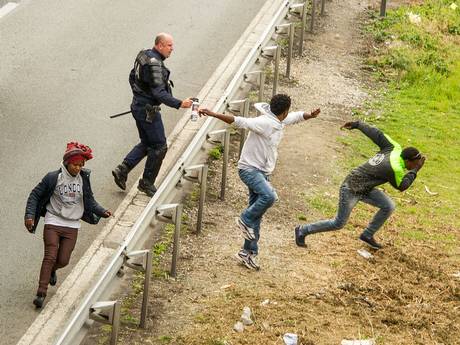
African migrants waited near the A16 highway as they tried to access the Channel Tunnel in Calais. Police officers sprayed them with teargas to keep them away.

Drivers have been told to avoid Calais altogether, as striking workers set the road on fire and a queue of 500-600 vehicles waiting to use the Eurotunnel to get to the British side of the channel.

All ferries between Dover and Calais have been suspended thanks to the wildcat action by MyFerryLink workers, which started at 3.50am on Tuesday.

They forced the closure of the Channel Tunnel, invading the tracks. Eurostar services were subject to delays and cancellations because trains are stuck outside the tunnel, while Eurotunnel services are operating with disruptions of up to 2.5 hours following earlier closures, Sky News has reported.

Eurostar tweeted that services will resume tomorrow after engineers repair fire-damaged tracks overnight.

Traffic jams built up on both sides of the channel, with delays on other cross-channel ferry routes such as Dover to Dunkirk.

Source: The Independent

Africans are not refugees

We’re supposed to believe that everybody scrambling to get into Europe is a refugee from some kind of war. But the Wall Street Journal sends reporter Drew Hinshaw to look at the flow of migrants out of Senegal, a country that is currently peaceful and (relatively) prosperous:

Allure of Wealth Drives Deadly Trek
Young Men in Senegal Join Migrant Wave Despite Growing Prosperity at Home
BY DREW HINSHAW

… Mr. Ba represents a puzzling segment of the migrant population: Unlike those fleeing war, famine or economic desperation, this group is risking rising living standards to brave banditry, starvation and stormy seas to make a better life in Europe.

Officials here say five men from this village of several thousand—which in recent years has welcomed smartphones, laptops and satellite television—are known to have perished this year. More are missing, their fate unknown. Another man leaves every week, officials say.

Senegal is a stable West African democracy, and Kothiary has profited from the currents of globalization transforming rural Africa’s more prosperous areas. Flat screen TVs and, increasingly, cars—mostly purchased with money wired home by villagers working in Europe—have reshaped what was once a settlement of mud huts. The wealth has plugged this isolated landscape of peanut farms and baobab trees into the global economy and won respect for the men who sent it.

But it has also put European living standards on real-time display, and handed young farm hands the cash to buy a ticket out.

They leave behind a proud democracy whose steady economic growth has brought American-style fast food chains, cineplexes and shopping malls to this nation of 15 million, but hasn’t kept pace with the skyrocketing aspirations of the youthful population. Dusty and remote villages like Kothiary have become an unlikely ground zero for this exodus.

The number of Senegalese jumped 123% from the first four months of last year, which also saw record emigration. West Africa houses several of the world’s faster-growing economies but is also sending some of the most migrants out.

Students there, Mr. Sidibé included, have cashed out their scholarships to pay traffickers for a ride to Tripoli. Even their professors have traded in paychecks to journey north, joining policemen, civil servants and teachers, said Souleymane Jules Diop, the country’s minister for emigrants.

“People don’t go because they have nothing, they go because they want better and more,” said Mr. Diop. “It’s aspiration.”

An aide walked into his office to list the countries that had seen spiking numbers of Senegalese showing up without papers—places the minister would have to visit in the next two weeks: Cuba, Brazil, Venezuela, Turkey, Morocco, France and the U.S.

“What is happening now is not that different from the time of slavery,” Mr. Diop said. “We are losing the arms we need to build this country.”

For policy makers on the world’s poorest continent, the experience of Kothiary highlights a predicament. Senegal has followed almost every Western prescription on how to push Africa out of poverty: holding free and fair elections for four decades, liberalizing trade, building some of Africa’s better infrastructure.

And yet many of its best and brightest young people are leaving. Almost 75% of people here surveyed in a 2013 Oxford University study said they wanted to emigrate in the next five years. Last year, the ministry of emigration nearly tripled the number of passports it printed from the previous year.

Legal entry to most nations for a Senegalese citizen would require a visa—and, to obtain that, steady salaried work of a sort rare in Senegal.

The exodus is spurred by Senegal’s youthfulness. Half the population of Senegal, and of Africa, is under 19.

These African youth are coming of age in a bleak job market. Just 11% of Senegalese adults were employed full time during a 2012 Gallup poll, a rate the poll showed was typical for the continent. For many young men who acquire extra cash, the best place they see to invest it is on a ticket out.

The result is a cycle that is making Senegal’s expanding economy hooked on remittances. … More than half the houses in Senegal have at least one family member abroad. In Kothiary, they are the homes with satellite TV. …

More than half the houses in Senegal have at least one family member abroad. In Kothiary, they are the homes with satellite TV.

Four cellphone towers climb over the settlement. Constant electricity and treated tap water, their bills paid for with remittances, flow into its homes. Outside, some children still chase tires together down the dusty roads. More and more, however, hang by themselves, thumbing soccer games on their new smartphones.

In the home of 72-year-old Amadou Kanté, four satellite TV dishes poke out from the walls of a two-story compound. There are TVs in several of his living rooms. Four Lenovo laptops are scattered on the furniture. Asked how many members of this family have a smartphone, his daughter Oumou Kanté replied, “everyone.”

Mr. Kanté lavishes praise on the son—a nurse in France—who sends him home the €225, or about $250, each month that buys these gadgets.

And yet this year, a younger son sneaked out, calling his father to say he was a few days from the Libyan border and needed $600 to get to Tripoli. The old man wired the cash.

It’s not mentioned, but I’m guessing that this 72 year old patriarch who owns a compound with several living rooms is a polygamist:

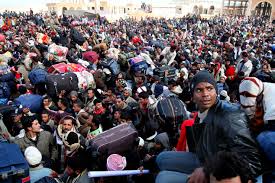
A ‘polygamy belt’ stretches across Africa, from Senegal through to Tanzania, in which it is not uncommon for a third of married women to share their husbands (Jacoby 1995). In the present day, this prevalence is almost unique to Africa. All Demographic and Health Survey (DHS) data sets report that at least 92% of married women are monogamous – except for those from Haiti and sub-Saharan Africa.

Record 4,200 migrants rescued at sea by Italian coastguard

Up to 4,200 migrants sailing across the Mediterranean Sea were rescued by European ships on Friday, but 17 people died during the journey on unseaworthy boats. The number rescued in 24 hours appears to be one of the highest in recent years.

The 17 bodies were found on three inflatable dinghies, from which over 300 other migrants were rescued alive, the Italian Navy said on Twitter.

Friday’s rescue operations were led by the Italian coastguard, and involved German and Irish naval ships working under the auspices of the EU’s Frontex border agency.

A similar international maritime mission off the coast of Sicily on Thursday resulted in the rescue of over 700 migrants from Libya in six boats.

So far, the busiest days this year have been on April 12 when 3,791 migrants were rescued and the May 2 rescue of 3,690 people.

According British activist John Wight, the drowning of hundreds of refugees in the Mediterranean is “a crime against humanity,” and “the ultimate responsibility lies with Western governments that have proved themselves the enemy of everything good in the world and a friend to everything bad.”

Over 40,400 boat migrants, many of them fleeing poverty and conflict-stricken countries such as Syria and Eritrea, have arrived in Italy since the start of the year, according to the International Organization for Migration (IOM).

New statistics gathered by IOM confirm 2015 appears to be “an even deadlier year than 2014,” when nearly 3,300 migrants perished trying to enter Europe. While last year the number of migrants dying in all Mediterranean crossings from January to April was 96, this year’s toll is an estimated 1,770 so far through to April 30, IOM said.

IOM’s team in Italy has recently reported a persisting trend of growing numbers of women from Africa, particularly Nigerians.

“In the first four months of 2015, we have registered an increase in the number of incoming Nigerian women – three times as many as during the same period last year. There are well-founded concerns that many of them may be victims of trafficking,” Federico Soda, Director of the IOM Coordination Office for the Mediterranean in Rome, stated earlier this month.

By mid-May, some 62,500 people had crossed the Mediterranean, and at least 1,800 have died, the agency added.

“It happens a lot in waves, you could have a few days where nothing happens, then there can be a high number of arrivals at the same time,” Flavio di Giacomo, a spokesman for the IOM in Italy, told AFP.

Speaking in Lisbon on Friday, Tunisia’s Prime Minister Habib Essid said his country will consider the naval campaign the EU plans to curb the migrant problem “almost a military intervention.”

Essid added that it will not help, as “if you stop the boats in this area, they will just move to the other side.”

Liberal MP calls African migrants a threat to white race

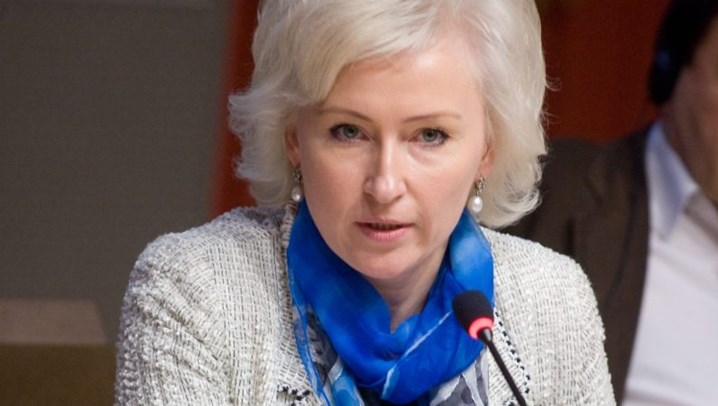
Kristiina Ojuland, a former Foreign Minister of Estonia and former member of the European Parliament, voiced her disapproval of the European Commission’s migrant quota plan on her official Facebook page, by calling for a pan-European campaign against admitting any refugees in the EU.

In a post that was more reminiscent of a far-right extremist, than a former Vice President of the European Liberal Democrat and Reform Party (ALDE), Ojuland said that the “white race is threatened” by dark-skinned immigrants (Ojuland actually used an Estonian word “neeger” which is not officially considered offensive in Estonia, but nevertheless becoming socially unacceptable).

“Today yet again I see a fully able young Negro begging for money in Italy, from people who have worked hard to earn a lunch. I think that we should start a pan-European campaign to collect signatures to ensure that not a single so-called refugee gets across the Mediterranean. Enough of this nonsense!” Ojuland, the former high-ranking politician who for years campaigned Estonia to join the EU, wrote.

Her posting has so far gathered over 2,000 “likes”, 500 shares and 300 comments. While many people pointed out her offensive remarks and some called her racist, one would have thought that the former foreign minister would back down, but it didn’t turn out to be so. Instead, Ojuland chose to rigorously defend her statement and even went offensive against the moderate commentators who asked for common sense.

“Stop using a word ‘racist’! As a white person, I feel that the white race is threatened today! Are Estonians also so brain-washed now that they start talking some kind of politically correct bullshit?” Ojuland said.

Another reasonable commentator was told by former liberal MEP that by being a member of the European Union does not mean “accepting people who would squeeze Estonia’s social system”. “Estonia needs to say clear no to Mediterranean migrants!” exclaimed Ojuland.

Ojuland was the Foreign Minister of Estonia from 2002-2005. In June 2004 she ran for the post of secretary-general of the Council of Europe, but was defeated. She was a member of the Estonian Reform Party from 1995-2013 and from 2009-2014 served as 1 of the 6 Estonian MEPs in the European Parliament. Ojuland was expelled from the Reform Party in June 2013 over alleged vote rigging in the party board elections and subsequently founded Party of People’s Unity, which failed to gain enough votes to enter the Parliament, effectively ending Ojuland’s major political career in Estonia.

Source: Estonian Public Broadcasting

Cannes: Immigrants 1, Lesbians 0

The debate around the world about what to do with growing waves of desperate migrants will be spurred by a Cannes Film Festival triumph for a movie that looks at the plight of a refugee hero.

“Dheepan”, a French movie about a Sri Lankan former soldier’s struggles in a Paris ghetto in the grip of narco-gangs, didn’t set out to tackle that wider thorny issue.

But the fact that the film’s win comes as refugee boats set off across Asian waters and the Mediterranean — the same sea lapping at glittering Cannes and its super-yachts — inevitably means it will figure in that context.

“It’s important to reflect on the situation,” the movie’s director, Jacques Audiard, admitted to reporters insistently raising the question.

But he stressed, “I started writing the screenplay four or five years ago and the situation wasn’t as critical as it is now”.

Nevertheless, “if it helps the situation, then so much the better”.

The movie won’t begin its release in cinemas for another three months. Its Cannes win will no doubt take it to countries that might otherwise have not seen it.

Some of those countries are ones grappling with the problem of immigrants.

A Hungarian movie taking viewers inside Auschwitz, “Son of Saul”, picked up the runner-up Grand Prize for its narrow but powerful look at the Holocaust.

The best actress award was something of an upset, confounding critics who had thought Australian star Cate Blanchett was untouchable for her turn in an American period lesbian drama, “Carol”.

Instead Blanchett’s co-star, Rooney Mara, and an actress in a French relationship drama called “Mon Roi”, Emmanuelle Bercot, ended up sharing the trophy.

Church set alight out of spite

Officials at the Central Methodist Church in the Joburg city centre believe that the fire at the building was the work of disgruntled members.

The church’s superintendent minister, Reverend Ndumiso Ncombo, said residents had set a room alight to spite church officials who gave them notice to move out.

“I wasn’t surprised when the fire started because the residents threatened to burn the building down when we gave them notice to move out,” he said. “We have opened a case of arson with the police.”

The fire last week Wednesday was started in one of the rooms, just a floor down from the church hall.

The small room where the fire was believed to have started lies in ruins, with clothes, groceries and broken glass from the shattered windows spread across the wet floor. Several large buckets, bottles and fire extinguishers lie outside the room.

After the fire was put out, residents were forced to evacuate the building.

The building, situated in the city centre, has acted as a haven for foreigners and destitute people who are desperate for a place to stay.

Since it opened its doors to the public almost 50 years ago, it has housed thousands of people at a time, especially during xenophobic flare-ups.

But now, the depilated building is a shadow of its former self. A strong stench of urine fills the graffiti-filled corridors and litter is spread across the broken floorboards. Makeshift housing structures are erected throughout the building, including on the staircases, in storage rooms and in the church hall where the thousands of residents once slept.

Ncombo said that although the sole reason for the mass evacuation was to renovate because the building was not safe to live in, the residents’ behaviour had also been a point of contention.

“We’ve found many of them selling and keeping large amounts of dagga and nyaope. They also used to vandalise the building; anything with steel or copper was stolen.”

Source: IOL

German cop probed for ‘immigrant abuse’

German prosecutors are investigating a police officer who allegedly abused two immigrants, strangling an Afghan man and forcing a Moroccan to eat pork off the floor.

The police officer has been accused of bragging about the brutal assaults in text messages and photos he sent via instant messaging service WhatsApp to his colleagues in the western city of Hanover.

Human rights group Pro Asyl condemned the alleged incidents, first reported by public broadcaster NDR, for their “appalling level of racism and inhumanity” and demanded a probe into how many “accomplices in police uniform” knew of the violence.

Prosecutors are investigating the officer, who has been suspended, on charges of physical assault and illegal weapons possession and have searched his home and work place.

In the first alleged case, in March last year, the officer had bragged in a text message about beating, strangling and sticking his fingers up the nose of a 29-year-old Afghan man whose feet were cuffed after he was detained for not carrying ID papers.

“It was funny … squealed like a pig,” the officer allegedly wrote on WhatsApp. “It was a present from Allah.”

In the second case, months later, the officer allegedly targeted a 19-year-old Moroccan man, who had been detained for travelling on a train without a ticket, carrying a small amount of marijuana.

NDR reported that the policeman bragged about how he assaulted and then humiliated the young man by forcing him to eat minced pork off the floor.

A photo allegedly sent by the officer shows a handcuffed man lying on the floor, wincing in pain, and apparently restrained by at least two officers.

Germany has become Europe’s top destination for people fleeing war and poverty. Last year, asylum requests rose 60 percent to more than 200,000, and the government expects that number to more than double this year.

Source: AFP