French presidential chef bids farewell with raspberry millefeuille

Bernard Vaussion in the presidential kitchen

by Sylvie Corbet

France’s presidential chef is retiring after four decades of culinary service, having fed five French presidents and peppered the steaks tartare of some of the world’s most powerful leaders.

Bernard Vaussion, 60, was filled with emotion while cooking his last lunch for the President Francois Hollande on Thursday at the Elysee Palace. The farewell meal included raspberry millefeuille, a rich pastry. Hollande has a well-known sweet tooth and has been mocked for his portly figure.

“It’s easy to work with Francois Hollande. There are not many things that he doesn’t like. He’s somebody who loves eating,” said Vaussion.

He said that over the years the most important skill for the job -besides cooking – was the ability to adapt to the tastes of each French leader.

Francois Mitterrand loved seafood. Jacques Chirac preferred snails and sauerkraut. More recently, Nicolas Sarkozy caused a stink by rejecting French gastronomy and asked Vaussion to serve him a healthier menu based on fish, vegetables and salad. Sarkozy also drinks no wine – a revelation that initially caused controversy and offended Gallic pride.

France is one country where food and drink get political.

Sarkozy also said “non” to cheese and only allowed it on the menu during visits to Paris from a well-known cheese fan, German Chancellor Angela Merkel.

Vaussion noted that Hollande, Sarkozy’s successor, was his polar opposite in food as well as in politics.

Hollande is a hearty eater who enjoys gastronomy as an art of living. Cheese is, of course, back on the table, which may be one reason Hollande has visibly gained weight since his May 2012 election.

But the leadership is not the only cause of change.

France’s economic crisis has taken its toll on the Palace menu, as the kitchen tries to cut expenses.

“Some luxury foods have disappeared from the menu, such as truffles and lobster,” said Vaussion.

But the Elysee kitchen remains a place of note.

Underground and the size of two tennis courts, the famed kitchen is home to hundreds of copper pots that hark back to the time of 19th-century King Louis Philippe, France’s last monarch. They’re still in use.

As Vaussion retires, he will take with him insider information about the tastes of the famous. An example? Queen Elizabeth II loves foie gras. – AP

France dissolves symbolic regiment based in Germany

Donaueschingen, Germany

France said Thursday it was closing down a 1,000-strong infantry regiment based in Germany that is part of a highly symbolic Franco-German brigade, a move Berlin reacted to with “regret”.

The brigade was set up in 1989 by then French president Francois Mitterrand and German chancellor Helmut Kohl to increase military cooperation between the two former World War II-era foes.

The French defence ministry said in a statement that it would be shutting down the 110th Infantry Regiment based in the southwestern German town of Donaueschingen in 2014.

The regiment groups together 850 soldiers and 150 civilians, and the ministry said the decision was part of “difficult choices” needed as France cuts its military budget to reduce its state deficit.

But it reaffirmed “France’s full commitment” to the brigade, which will be left with around 4,000 soldiers based in both countries after the regiment closure.

German Defence Minister Thomas de Maiziere expressed “regret” at the decision, saying in a statement that the regiment “contributed with success for many years to Franco-German friendship”.

After the dissolution, France will still have 500 troops in Germany, about the same number of German troops that are stationed in France.

The rest of the brigade is made up of French soldiers based in France and German military based in Germany.

The brigade is highly symbolic in nature as it is difficult for both countries to jointly deploy soldiers to hotspots, given the different rules of engagement that govern both armies.

Soldiers from the brigade have nevertheless been sent to Afghanistan and Kosovo in the past. – AFP

Merkel: US spying has shattered allies’ trust

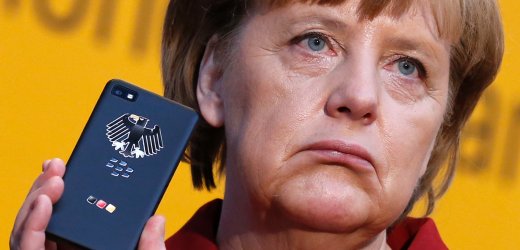
German Chanellor Angela  Merkel
German Chanellor Angela Merkel

by John-Thor Dahlburg and Geir Mouson, Associated Press

European leaders united in anger Thursday as they attended a summit overshadowed by reports of widespread U.S. spying on its allies -allegations German Chancellor Angela Merkel said had shattered trust in the Obama administration and undermined the crucial trans-Atlantic relationship.

The latest revelations that the U.S. National Security Agency swept up more than 70 million phone records in France and may have tapped Merkel’s own cellphone brought denunciations from the French and German governments.

Merkel’s unusually stern remarks as she arrived at the European Union gathering indicated she wasn’t placated by a phone conversation she had Wednesday with President Barack Obama, or his personal assurances that the U.S. is not listening in on her calls now.

“We need trust among allies and partners,” Merkel told reporters in Brussels. “Such trust now has to be built anew. This is what we have to think about.”

“The United States of America and Europe face common challenges. We are allies,” the German leader said. “But such an alliance can only be built on trust. That’s why I repeat again: spying among friends, that cannot be.”

The White House may soon face other irked heads of state and government. The British newspaper The Guardian said Thursday it obtained a confidential memo suggesting the NSA was able to monitor 35 world leaders’ communications in 2006. The memo said the NSA encouraged senior officials at the White House, Pentagon and other agencies to share their contacts so the spy agency could add foreign leaders’ phone numbers to its surveillance systems, the report said.

The Guardian did not identify who reportedly was eavesdropped on, but said the memo termed the payoff very meager: “Little reportable intelligence” was obtained, it said.

Other European leaders arriving for the 28-nation meeting echoed Merkel’s displeasure. Swedish Prime Minister Fredrik Reinfeldt called it “completely unacceptable” for a country to eavesdrop on an allied leader.

If reports that Merkel’s cellphone had been tapped are true, “it is exceptionally serious,” Dutch Prime Minister Mark Rutte told national broadcaster NOS.

“We want the truth,” Italian Premier Enrico Letta told reporters. “It is not in the least bit conceivable that activity of this type could be acceptable.”

Echoing Merkel, Austria’s foreign minister, Michael Spindelegger, said, “We need to re-establish with the U.S. a relationship of trust, which has certainly suffered from this.”

France, which also vocally objected to allies spying on each other, asked that the issue of reinforcing Europeans’ privacy in the digital age be added to the agenda of the two-day summit. Before official proceedings got underway, Merkel held a brief one-on-one with French President Francois Hollande, and discussed the spying controversy.

The Europeans’ statements and actions indicated that they hadn’t been satisfied with assurances from Washington. On Wednesday, White House spokesman Jay Carney said Obama personally assured Merkel that her phone is not being listened to now and won’t be in the future.

“I think we are all outraged, across party lines,” Wolfgang Bosbach, a prominent German lawmaker from Merkel’s party, told Deutschlandfunk radio. “And that also goes for the response that the chancellor’s cellphone is not being monitored – because this sentence says nothing about whether the chancellor was monitored in the past.”

“This cannot be justified from any point of view by the fight against international terrorism or by averting danger,” Bosbach said.

Asked Thursday whether the Americans had monitored Merkel’s previous communications, White House spokesman Carney wouldn’t rule it out.

“We are not going to comment publicly on every specified alleged intelligence activity,” he said.

But while the White House was staying publicly mum, Carney said the Obama administration was discussing Germany’s concerns “through diplomatic channels at the highest level,” as it was with other U.S. allies worried about the alleged spying.

In the past, much of the official outrage in Europe about revelations of U.S. communications intercepts leaked by former NSA contract worker Edward Snowden seemed designed for internal political consumption in countries that readily acknowledge conducting major spying operations themselves. But there has been a new discernible vein of anger in Europe as the scale of the NSA’s reported operations became known, as well as the possible targeting of a prominent leader like Merkel, presumably for inside political or economic information.

“Nobody in Germany will be able to say any longer that NSA surveillance – which is apparently happening worldwide and millions of times – is serving solely intelligence-gathering or defense against Islamic terror or weapons proliferation,” said Hans-Christian Strobele, a member of the German parliamentary oversight committee.

“Because, if you tap the cellphone or the phone connection of the presidents of France or Brazil, or the cellphone of the chancellor, then this is no longer about collecting intelligence about international terrorism, but then that is about competition, about getting advantages in this competition and winning. That’s why today is a watershed moment.”

Martin Schulz, president of the European Parliament, said Europe’s undermined confidence in the U.S. meant it should suspend negotiations for a two-way free-trade agreement that would account for almost half of the global economy. The Americans, Schulz said, now must prove they can be trusted.

“Let’s be honest. If we go to the negotiations and we have the feeling those people with whom we negotiate know everything that we want to deal with in advance, how can we trust each other?” Schulz said.

European Union Commission President Jose Manuel Barroso said for many Europeans, eavesdropping on their phone calls or reading their emails is particularly objectionable because it raises the specter of totalitarian regimes of the recent past.

“At least in Europe, we consider the right to privacy a fundamental right and it is a very serious matter. We cannot, let’s say, pretend it is just something accessory,” Barroso told a presummit news conference.

Referring to the East German Communist secret police, the feared Stasi, Barroso said, “to speak about Chancellor Merkel, in Germany there was a part of Germany where there was a political police that was spying on people’s lives every day. So we know very recently what totalitarianism means. And we know very well what comes, what happens when the state uses powers that intrude in people’s lives. So it is a very important issue, not only for Germany but for Europe in general.”

In Berlin, the German Foreign Ministry summoned the U.S. ambassador to stress how seriously it takes the reported spying on Merkel. Germany’s defense minister said his country and Europe can’t return “to business as usual” with Washington, given the number of reports that the United States has eavesdropped on allied nations.

“The Americans are and remain our best friends, but this is absolutely not right,” Thomas de Maiziere, who served as Merkel’s chief of staff, told ARD television. “I have reckoned for years with my cellphone being monitored, but I wasn’t reckoning with the Americans.”

A German parliamentary committee that oversees the country’s intelligence service met to discuss the spying allegations. Its head, Thomas Oppermann, recalled previous reports to the panel that U.S. authorities had denied violating German interests, and said, “we were apparently deceived by the American side.” – AP

US spying causes new anger in France, Mexico

LogoLeMondeby Marianne Barriaux and Michael Mainville BARRIAUX, Michael MAINVILLE

The United States has become embroiled in a new row over its controversial spying programme as allies France and Mexico condemned revelations Washington tapped millions of phonecalls and hacked into leaders’ emails.

French President Francois Hollande on Monday expressed his “deep disapproval” of reports of US spying in a phone call with President Barack Obama.

France’s Le Monde newspaper reported that the US National Security Agency had secretly monitored 70.3 million phone communications in France over 30 days from December 10, 2012, to January 8 this year.

The allegations, the latest from leaks by former NSA contractor Edward Snowden, also marred a visit to Paris by US Secretary of State John Kerry, where he discussed moves to try to end the war in Syria.

At the same time, German weekly Der Spiegel reported the NSA had also hacked into former Mexican president Felipe Calderon’s email account.

Calderon, on Twitter, described the revelations as an “affront to the institutions of the country, given that it took place when I was president”.

Hollande told Obama that the alleged practices were “unacceptable between friends and allies because they infringe on the privacy of French citizens”, the French leader’s office said in a statement.

The allegations come on top of previous revelations by Snowden — who has sought safety in Russia as US authorities pursue him for leaking classified information — that the United States had a vast, secret programme called PRISM to monitor Internet users.

French prosecutors are already investigating the programme, and French Prime Minister Jean-Marc Ayrault said he was “deeply shocked” by the new revelations.

“It’s incredible that an allied country like the United States at this point goes as far as spying on private communications that have no strategic justification, no justification on the basis of national defence,” he told journalists.

French Foreign Minister Laurent Fabius, on a visit to Luxembourg, said US ambassador Charles Rivkin was summoned to his ministry early Monday.

“These kinds of practices between partners that harm privacy are totally unacceptable,” he told reporters, adding France needed assurances that the United States was no longer monitoring its communications.

His comments were relayed to the US ambassador during the meeting, a ministry spokesman said — the second time in less than four months that America’s top representative in France has been hauled in over revelations about US snooping.

Kerry refused to comment on the specific accusations, but noted that Washington was reviewing its intelligence gathering operations following protests from allied governments.

He also sought to defend the US position.

“Protecting the security of our citizens in today’s world is a very complicated, very challenging task… because there are lots of people out there seeking to do harm to other people,” Kerry said at a press conference after meeting Arab League officials.

“Lots of countries are engaged in the activity of trying to protect their citizens in the world,” he said. “Our goal is always to try to find the right balance between protecting the privacy and security of our citizens.”

According to Le Monde, the spy agency automatically picked up communications from certain phone numbers in France and recorded certain text messages under a programme code-named “US-985D”.

The French daily said the documents gave grounds to believe that the NSA targeted not only people suspected of being involved in terrorism but also high-profile individuals in business and politics.

Hollande’s office said the French president and Obama had agreed “to work together to determine the facts and the exact scope of surveillance activities” revealed by Le Monde.

Der Spiegel also revealed that US agents had hacked into the Mexican presidency’s network, gaining access to Calderon’s account.

According to the report, the NSA said this contained “diplomatic, economic and leadership communications which continue to provide insight into Mexico’s political system and internal stability”.

The agency reportedly said the president’s office was now “a lucrative source”.

Mexican authorities said they would be seeking answers from US officials “as soon as possible”.

“This practice is unacceptable, illegitimate and contrary to Mexican law and international law,” the foreign ministry said.

Glenn Greenwald, an American journalist now living in Brazil who has broken many of the recent stories about secret US surveillance programmes, says Washington has spied on all Latin American countries.

Speaking to a press association in Miami, Greenwald said he would report about each case in the region and warned that more spying within the United States would also be revealed.

He also said the disclosures published by Le Monde Monday had been in the hands of the French daily for some time.

This is not the first time there have been reports that France and Mexico have been targeted in relation to NSA spying allegations since information leaked by Snowden first emerged in June.

Mexico’s current President Enrique Pena Nieto has already complained to Obama over reports US spies have gone through his emails.

And Der Spiegel reported last month that in 2010 the NSA monitored the internal computer network of France’s diplomats and that of the foreign ministry.

But France itself has also been accused of spying. Le Monde reported in recent months that intelligence services intercepted all communications in the country, stocking telephone and computer data for years –accusations denied by the government. – AFP

Deported Roma girl, family attacked in Kosovo

Leonarda Dibrani
Leonarda Dibrani

Unidentified assailants on Sunday attacked a Roma schoolgirl, whose deportation from France sparked controversy, along with her family in Kosovo where they have been living since their eviction, police said.

“The Dibrani (family) were walking in Mitrovica with their children when they were attacked by unknown” people, a police officer, who requested to remain anonymous, told AFP.

The mother of 15-year-old Leonarda, Xhemaili, was “beaten and is in hospital while the children, who are traumatised, are at a police station”, the officer said.

Meanwhile, another police officer told reporters that four people were detained over the incident which, according to first findings, may have been caused by some previous private affairs.

“The incident occurred between two families, the Dibranis and the Bislimis,” police captain Ahmet Gjosha said.

“It turned out that Mr Bislimi was Xhemaili Dibrani’s husband 25 years ago and we assume that this fact sparked the incident.”

The Beslimi family was repatriated from Switzerland four months ago, he said.

Police said they were taking the incident very seriously and a probe was launched.

Shortly after the incident a police officer had told AFP that “it shows that the Dibranis are not safe here”.

Leonarda’s father Resat Dibrani, 47, was at the hospital by his wife’s side.

On Saturday, French President Francois Hollande offered Leonarda the chance to go back to France, but without her family.

Hollande’s offer was immediately rejected by the girl while her father said that the family, deported on October 9, would not be divided and would return to France by any means.

Her parents and five brothers and sisters had lived in France for four years while their asylum bid was processed. It was eventually rejected in the summer.

Leonarda Dibrani’s eviction caused an outcry in France because she was detained during a school trip before being deported with her family, and students took to the streets demanding she return and Interior Minister Manuel Valls resign.

In an interview with AFP Thursday, Resat Dibrani said he was born in Kosovo and that his wife and five of his six children, including Leonarda, were born in Italy.

He said he had lied about his family’s Kosovo origins to have a better chance of obtaining asylum.

Earlier on Sunday, the father told AFP that his “children are afraid to go out”.

“I cannot adapt myself, I left 35 years ago. I do not recognise the town any more,” he said stressing that he had only 200 euros ($275) left to feed his family.

The father, who wants to return to France, said: “The problem is to get into (EU member) Croatia and afterwards the way is open.”

“I would have to get 20,000 euros” for people who would take us into Croatia, he added.

The results of a formal probe published in France on Saturday found that the deportation was lawful but that police could have used better judgement in the way they handled it.

They also found that Leonarda and her sister were taken in by French social services after having accused their father of violence — a claim they later retracted.

Last year, 36,822 immigrants, many of them Roma, were deported from France, a nearly 12 percent rise from 2011. – AFP

French interior minister faces outcry over Roma girl’s deportation

Manuel Valls
Manuel Valls, France’s Interior Minister

France’s Interior Minister Manuel Valls has defended the treatment of a 15-year-old Roma girl who was detained by police during a school trip and deported to Kosovo, amid an outcry within the ruling party.

Valls on Wednesday defended the deportation of Leonarda Dibrani, her parents and five siblings aged between one and 17 as legal, but ordered officials to review the handling of the case.

Confronted with an angry backlash from the left of the ruling Socialist party, Prime Minister Jean-Marc Ayrault promised the family would be brought back to France if the girl’s rights were found to have been infringed.

“If there is a God we will be aboard the first plane back to France,” Leonarda told AFP in an interview in the Kosovan town of Mitrovica, where the family have been given temporary housing by the local authorities.

“I’m frightened, I don’t speak Albanian. My life is in France. I don’t want to go to school here because I don’t speak any of the local languages. I had freedom there. I do not want to stay here.”

Opposition lawmakers backed Valls and warned that a decision to reverse the deportation would send out a damaging message that illegal immigrants were welcome in France.

“The law has to be applied and in this case an expulsion order had twice been upheld by the judicial system,” said Christian Jacob, leader of the parliamentary group of the centre-right UMP.

The fresh row over France’s treatment of Roma migrants erupted Wednesday when an NGO that campaigns against the expulsion of school-age children highlighted the incident, which happened on October 9 in the eastern town of Levier.

Claude Bartolone, the speaker of the National Assembly, underlined the extent of the disquiet in the Socialist camp over the case.

“There is the law but there are also values on which the left must never compromise,” he said in a tweet.

Education Minister Vincent Peillon said: “School has to be a sanctuary, we have to retain our principles based on rights and humanity.”

The controversy follows an outcry last month over remarks by Valls in which he said most of the 20,000 Roma in France had no intention of integrating and should be sent back to their countries of origin.

Polls have suggested as many as three in four French voters support that stance and Valls, who was already France’s most popular politician, has enjoyed a surge in his standing as a result of comments regarded as racist by his critics.

Leonarda’s father, Reshat, 47, who was deported a day before the rest of the family, said the family had been victimised because of their ethnicity.

“There are bad refugees in France who get papers easily — we didn’t do anything bad. They did it to us because we are Roma. We would be treated differently if our skin was a different colour.”

Valls insisted that the deportation of Leonarda and the rest of her family had been carried out in line with established procedure following the rejection of their application for asylum.

“Everyone should keep a cool head. Do not for one single moment doubt that the rules, based on the law, are applied by my services with intelligence, discretion and humanity,” the minister said.

“We have to carry out these deportations,” he added. “It is of course a difficult subject but any immigration policy requires respect for the law, respect for individuals and great firmness. I am accountable for that to the French people.”

Speaking later upon his arrival at the French Caribbean island of Martinique, Valls stressed that he backed “a policy of integration”.

The exact circumstances in which the girl was taken off the school bus remained unclear but both the interior ministry’s version and the account of a teacher agree that her arrest did not take place in view of other pupils.

The teacher, who gave her account via the Network for Education without Borders (RESF), however, claimed that the other children were fully aware of what was happening and were deeply distressed by the incident.

Leonarda herself said: “All my friends and my teacher were crying, some of them asked me if I had killed someone or stolen something as the police were looking for me. When the police reached the bus they told me to get out and that I had to go back to Kosovo.”

President Francois Hollande did not make any public statement on the row, prompting opposition accusations the government was in chaos. – AFP

Swiss war game sees bankrupt French invasion

suisseHordes of bankrupt French invade Switzerland to get their hands on their “stolen” money — such is the imaginary scenario cooked up by the Swiss military in simulations revealed over the weekend.

Carried out in August, the apparently outlandish army exercise was based on the premise of an attack by a financially stricken France split into warring regions, according to Matin Dimanche, the Lausanne-based daily.

One of these, “Saônia,” corresponding to the existing Jura region, was preparing attacks on Switzerland to retrieve money it had apparently swiped from France.

Operation “Duplex-Barbara” went as far as imagining a three-pronged invasion from points near Neufchâtel, Lausanne and Geneva, according to a map published in the Swiss newspaper.

Behind the dastardly raid was a paramilitary organisation dubbed BLD, the Dijon Free Brigade bent on grabbing back “money that Switzerland had stolen from Saônia”.

“For its credibility, the Swiss army must work (to ward against) threats of the 21st century,” Antoine Vielliard, Hauate-Savoie councillor, told Matin Dimanche.

However, Daniel Berger, captain of the Swiss armoured brigade, sought to play down the specificity of the threat.

“The exercise has strictly nothing to do with France, which we appreciate” he told the Swiss press. “It was prepared in 2012, when fiscal relations between both countries were less tense.” “French towns were cited to provide soldiers with a real scale,” he said.

Famous for its bank secrecy laws, Switzerland often comes under criticism for allowing foreign account holders to hide their wealth from tax officials at home.

But these opaque laws are coming under increasing fire as France and the US, among others, are cracking down on tax evasion during a period of economic hardship.

This is by no means the first imaginary scenario dreamed up by the Swiss army. Last year, it carried out an exercise based on the premise that a huge wave of refugees crossed into the country after the implosion of the European Single Currency and ensuing chaos across the continent.

“Stabilo Due” centered around a risk map created in 2010 and envisaged internal unrest between warring factions as well as the possibility of refugees from Greece, Spain, Italy, France, and Portugal.

Warning of an escalation of violence in Europe, defense minister Ueli Maurer said at the time: “I can’t exclude that in the coming years we may need the army.” The military is a hot topic in Switzerland, which has mandatory military service. Under Swiss law, all able-bodied men at age 19 have to undergo five months of training, followed by refresher courses of several weeks over the next decade.

A referendum held a week ago saw a large majority of Swiss voters reject plans to abolish conscription.

The current number of recruits stands at around 155, 000 — the biggest army in Europe relative to population size.

Some 73.2 per cent of Swiss said “no” to proposals by the anti-military group, Group for a Switzerland Without an Army, to have either a professional army or one made up of volunteers.

Neutral Switzerland has not been invaded since the Napoleonic Wars of the early 19th century.

Recent scholars have questioned the belief that the Swiss military’s complex of underground bunkers deterred an invasion by the Nazis during the Second World War.

Some historians argued that Adolf Hitler left the Swiss alone because he wanted to use their banks. – The Telegraph

Obama talks to Rouhani

Pres. Rouhani
Pres. Rouhani

President Obama announced today that he talked on the phone with Iranian president Rouhani: “Just now I spoke on the phone with President Rouhani of the Islamic Republic of Iran,” he said. “The two of us discussed our ongoing efforts to reach an agreement over Iran’s nuclear program.”

This is the first time leaders from America and Iran have spoken since 1979.

“I reiterated to President Rouhani what I said in New York. While there will surely be important obstacles to moving forward and success is by no means guaranteed, I believe we can reach a comprehensive solution.

“I’ve directed Secretary Kerry to continue pursuing this diplomatic effort with the Iranian government. We had constructive discussions yesterday in New York with our partners, the European Union, the United Kingdom, France, Germany, Russia, and China, together with the Iranian foreign minister, and going forward, President Rouhani and I have directed our teams to continue working expeditiously in corporation with the P-5 plus one to pursue an agreement. And throughout this process we will stay in close touch with our friends and allies in the region, including Israel.

“Now we are mindful of all the challenges ahead. The very fact that this was the first communication between an American and Iranian president since 1979 underscores the deep mistrust between our countries.”

Obama said that “Iran’s supreme leader has issued a fatwa against the development of nuclear weapons, President Rouhani has indicated that Iran will never develop nuclear weapons.”

“I have made clear that we respect the right of the Iranian people to access peaceful nuclear energy in the context of Iran meeting its obligations. So the test will be meaningful, transparent, and verifiable actions,” said Obama, which could lead to a relaxation of sanctions.

Obama talked of a new relationship between the U.S. and Iran, if his diplomatic efforts succeed. – TWS

France charges Rwandan doctor over genocide

Eugene Rwamucyo
Eugene Rwamucyo

French judges have charged a Rwandan doctor for planning to “commit the crime of genocide” in 1994, a judicial source said, after Kigali issued an international warrant against him.

Eugene Rwamucyo is wanted by Kigali for having allegedly planned and carried out atrocities in the Butare region of southern Rwanda, but in 2010, a French court rejected a request to extradite him.

After probing the accusations, judges in Paris whose job it is to investigate crimes against humanity decided to charge Rwamucyo with “involvement in an agreement with a view of committing the crime of genocide”, said the source, who wished to remain anonymous.

But they placed him under the status of “supervised witness” on the more serious charges of committing genocide and of complicity, the source added.

The status of “supervised witness” means that Rwamucyo can be interviewed under caution and could face further questions — and possibly charges — at a later stage.

“The fact that my client was placed under the status of supervised witness, and not under formal investigation, for ‘genocide’ shows the judges have doubts on this case and on the complaint that was made against him,” his lawyer Philippe Meilhac said.

The doctor is the subject of a complaint filed by the families of genocide victims for crimes against humanity.

Rwamucyo, who is in his 50s, lives in Belgium and used to work as a doctor in a hospital in the northern French city of Maubeuge.

He was suspended in 2009 when his employer found out the Rwandan government had issued an international warrant against him, and subsequently fired.

Rwamucyo denies the allegations of genocide and has accused the Tutsi-led government in Kigali of waging a campaign against him.

There are currently about 20 genocide-related cases pending in French courts.

France has repeatedly refused to extradite genocide suspects to Rwanda, fearing they would be denied a fair trial, but has sent some to Tanzania to face trial at the International Criminal Tribunal for Rwanda.

An estimated 800,000 people, mostly ethnic Tutsis, were massacred over the course of about 100 days from April to July 1994. – AFP

Western powers poised to pressure Syria

William Hague
Everything is ‘abundantly clear’ to William Hague

Western powers were poised Tuesday to press their efforts for a UN resolution to rid Syria of chemical weapons, one day after a report by the world body describing a “chilling” sarin gas attack there.

United Nations experts, without assigning blame, said they had gathered “clear and convincing evidence” that surface-to-surface rockets took sarin gas into the opposition-held Damascus suburb of Ghouta on August 21.

The United States had threatened a military strike on Syria over the attack, which it said killed more than 1,400 people.

Washington said responsibility for the attack rests squarely with the regime of President Bashar al-Assad.

“The technical details of the UN report make clear that only the regime could have carried out this large-scale chemical weapons attack,” said Washington’s UN ambassador Samantha Power. “It defies logic to think that the opposition would have infiltrated the regime-controlled area to fire on opposition-controlled areas.”

French Foreign Minister Laurent Fabius said there was “no doubt” that government forces were to blame, while British Foreign Secretary William Hague said the report made “abundantly clear” that the Syrian regime was behind the attack.

France and Britain will soon send a draft resolution to other Security Council members demanding a threat of sanctions if Assad does not keep to a disarmament plan and for the chemical attacks to be referred to the International Criminal Court, diplomats said.

The council, meanwhile, is expected to start negotiations this week.

UN chief Ban Ki-moon condemned the use of chemical weapons in Syria as “a war crime” as the country’s conflict again spilled into neighboring nations, with Turkey saying it had shot down a Syrian military helicopter.

Ban said the report prepared by the experts “makes for chilling reading.”

He added that the use of sarin had been proved “unequivocally and objectively” and that the Ghouta attack was “the most signficant” with chemical weapons since Saddam Hussein unleashed poison gas in Halabja, Iraq, in 1988, killing thousands.

“The environmental, chemical and medical samples we have collected provide clear and convincing evidence that surface-to-surface rockets containing the nerve agent sarin were used” in Ghouta, said the report by UN inspectors who were in Syria when the attack was staged.

The experts concluded that “chemical weapons have been used in the ongoing conflict between the parties in the Syrian Arab Republic, also against civilians including children on a relatively large scale.”

A separate UN-mandated independent human rights inquiry announced separately on Monday that it was investigating 14 alleged chemical weapons attacks in Syria.

Ban would not say on Monday who had carried out the attack.

“We may all have our own thoughts on this, but I would simply say that this was a grave crime and those responsible must be brought to justice as soon as possible,” Ban told reporters.

On Friday, he said Assad had “committed many crimes against humanity.”

While the United States, Britain and France all insist that the findings show Assad’s forces had used the weapons, Russia’s UN envoy Vitaly Churkin said after a Security Council meeting on the report that there should be more investigation into who was responsible.

Moscow has sided with Assad in blaming opposition rebels for the chemical assault.

The UN experts’ report will now become a key weapon in a Security Council battle over how much of a threat must be made against Assad to make him disarm.

The French, US and British foreign ministers called for a “strong” resolution after a meeting in Paris.

US Secretary of State John Kerry said: “If Assad fails to comply with the terms of this framework, make no mistake we are all agreed, and that includes Russia, that there will be consequences.”

Kerry and Russian Foreign Minister Sergei Lavrov agreed a plan on Saturday under which Syria’s chemical weapons would be eliminated by mid-2014.

Russia has agreed the plans must be backed by a Security Council resolution but rejects any move to include the threat of force into a UN text.

Lavrov said such threats could kill off hopes of a peace conference on the 30-month-old conflict in which more than 110,000 people, according to activists.

Kerry was due to meet Thursday to discuss the issue with his counterpart from China, which has welcomed the agreement but has sided with Russia in its resolve to veto any UN Security Council resolution against Syria.

Fighting has worsened in Syria as the diplomatic wrangling goes on and Turkey said it shot down a Syrian military helicopter on Monday after it entered Turkish airspace.

The Syrian MI-17 helicopter was detected two kilometers (1.2 miles) inside Turkish airspace and shot down by two F-16 jets five minutes later after failing to heed warnings, Deputy Prime Minister Bulent Arinc told reporters.

“It was continuously warned by our air defense,” Arinc said, adding there was no information about the fate of its crew because the helicopter fell on Syrian soil.

Arinc said Turkey has changed its military rules of engagement in response to repeated gunfire from the Syrian side. – Sapa/AFP

Al-Qaida-linked Syrian rebels hit Christian village

Syrian rebels fighting government forces

by Karin Laub and Zeina Karam

Al-Qaida-linked rebels have launched an assault on a regime-held Christian village in the densely populated west of Syria and new clashes erupted near the capital, Damascus – part of a brutal battle of attrition each side believes it can win despite more than two years of deadlock.

As the world focused on possible U.S. military action against Syria, rebels commandeered a mountaintop hotel in the village of Maaloula and shelled the community below Wednesday, said a nun, speaking by phone from a convent in the village. She spoke on condition of anonymity for fear of reprisals.

The attack came hours before a Senate panel voted to give President Barack Obama authority to use military force against Syria – the first time lawmakers have voted to allow military action since the October 2002 votes authorizing the invasion of Iraq.

The measure, which cleared the Senate Foreign Relations Committee on a 10-7 vote, was altered at the last minute to support “decisive changes to the present military balance of power” in Syria’s civil war, though it ruled out U.S. combat operations on the ground. It was expected to reach the full Senate floor next week.

The Syria conflict, which began with a popular uprising in March 2011, has been stalemated, and it’s not clear if U.S. military strikes over the regime’s alleged chemical weapons use would change that. Obama has said he seeks limited pinpoint action to deter future chemical attacks, not regime change.

Obama has been lobbying for international and domestic support for punishing President Bashar Assad’s regime, which the U.S. says fired rockets loaded with the nerve agent sarin on rebel-held areas near Damascus before dawn on Aug. 21, killing hundreds of civilians.

So far, however, he has won little international backing for action. Among major allies, only France has offered publicly to join the U.S. in a strike.

In a parliament debate, France’s Prime Minister Jean-Marc Ayrault made a passionate appeal for intervention in Syria, placing the blame for the alleged chemical attack on Assad and warning that inaction could let him carry out more atrocities.

The debate ended without a vote since President Francois Hollande can order a military operation without one.

Obama has called chemical weapons use a “red line,” and top administration officials argued before the Senate on Tuesday that Assad would take inaction by Washington as a license for further brutality against his people. The fighting has killed more than 100,000 Syrians and uprooted nearly 7 million from their homes.

During a visit to Sweden on Wednesday, Obama said a red line had been drawn by countries around the world that have backed a long-standing ban on chemical weapons. “I didn’t set a red line, the world set a red line,” he said.

With the Syria debate in Congress in full swing, questions arose around the administration’s assurances. It’s not clear, critics said, how the U.S. could expect to deliver surgical strikes in Syria’s chaotic battlefield or predict the repercussions, including possible Assad regime reprisals against Syria’s neighbors.

The civil war in Syria hit a stalemate almost from the start. The rebels control much of the countryside in the north, east and south, but the regime is hanging on to most urban centers in the west, where the majority of Syrians live.

Within that deadlock, each side has consolidated control over certain areas, said Peter Harling, a Syria expert at the International Crisis Group think tank.

Momentum “is always shifting enough for both sides to be able to convince themselves that victory is ultimately feasible,” he said. “In practice, both sides are stuck and can achieve very little militarily.”

The dawn assault on the predominantly Christian village of Maaloula was carried out by rebels from the al-Qaida-linked Jabhat al-Nusra group, according to a Syrian government official and the Syrian Observatory for Human Rights, an anti-regime group.

At the start of the attack, an al-Nusra fighter blew himself up at a regime checkpoint at the entrance to the village, said the Observatory, which collects information from a network of anti-regime activists.

The suicide attack was followed by fighting between the rebels and regime forces, the Observatory and a nun in the village said. Eventually, the rebels seized the checkpoint, disabled two tanks and an armored personnel carrier and killed eight regime soldiers in fighting, the British-based group said.

The nun said the rebels took over the Safir hotel atop a mountain overlooking the village and fired shells at it from there. “It’s a war. It has been going from 6 a.m. in the morning,” she said.

Some 80 people from the village took refuge in the convent, which houses 13 nuns and 27 orphans, she said.

A Syrian government official confirmed the assault and said the military was trying to repel the rebels. He spoke on condition of anonymity because he was not authorized to give official statements.

Maaloula, a mountain village some 40 miles (60 kilometers) northeast of Damascus, is home to about 2,000 residents, some of whom still speak a version of Aramaic, the ancient language of biblical times believed to have been spoken by Jesus.

The four-decade iron rule of the Assad clan over Syria has long rested on support from the country’s ethnic and religious minorities, including Christians, Shiite Muslims and Kurds. The Assad family and key regime figures are Alawites, followers of an offshoot of Shiite Islam, while most rebels and their supporters are Sunni Muslims.

In fighting in Damascus, a mortar shell fired by rebels hit a sports hall, killing a member of the national tae kwon do team, 27-year-old Mohammed Ali Neimeh, the state news agency SANA said. Neimeh had been training for an upcoming Islamic Solidarity Tournament in Indonesia this week.

Rebels and regime forces also clashed on the outskirts of the capital, according to amateur video. In the Daraya district, several fighters fired assault rifles from behind an earthen embankment. Smoke rose from the neighborhood of Barzek after the shelling.

There were new signs of rivalry among rebel groups that have been fragmented from the start. The two main camps are the Western-backed Free Syrian Army, which portrays itself as the largest fighting group, and jihadist fighters, including thousands from outside Syria, who have become increasingly dominant, particularly in the north and sparsely populated east.

Among the jihadists, there have been several splits in recent months, particularly between those loyal to commanders in Syria and those who pledge allegiance to al-Qaida-linked groups in Iraq.

In an amateur video posted online Wednesday, a foreign fighter was seen standing among other bearded men who he says have come to Syria from Russia and the Caucasus to wage jihad, or holy war.

“Our brigade is called the Mujahedin of the Caucasus and the Levant, and we have our brothers from all over the world with us,” he said in halting Russian translated into Arabic. He said his men had broken away from one of the jihadi blocs, known as ISIS, and that the group is also “independent from Jabhat al-Nusra and others.” – AP

—

Associated Press writer Albert Aji in Damascus contributed to this report.

Twitter flooded with opposition to US attack on Syria

Merkel's necklace
Merkel’s necklace

A deluge of duty military personnel as well as many veterans are taking to Twitter to express their opposition to the Obama administration’s plan to launch an attack on Syria.

After numerous US servicemembers posted photos of themselves holding up signs on Twitter refusing to fight on the side of Al-Qaeda in Syria, the meme developed into several different hashtag trends, including #IdidntJoin and #VetsOnSyria.

Congressman Justin Amash, a vocal critic of the Obama administration’s build-up to war, has been inundated with tweets from active duty military members and veterans in anticipation of a House vote on authorization of military action which is set to take place next week.

Opposition to an attack on Syria is by no means only reserved to regular servicemembers. Numerous top brass have also gone public to express their concerns and Pentagon officials are even leaking information in a desperate bid to derail the path to war.

Many members of Congress have expressed dissatisfaction at the evidence presented to them by the administration in behind closed door meetings.

In a related development, the French government released an intelligence report today which alleged “massive use of chemical agents” by the Syrian government last month. The report was “based… in part on dozens of videos culled by French intelligence services.” In other words, this damning “intelligence” report relies primarily on YouTube videos of the attack, which offer no clues whatsoever to who the culprits even were.

The German BND also issued a similar statement, but tried to quell the growing opposition to chancellor Angela Merkel‘s toadying to the US. Her attention-grabbing necklace from Sunday night’s political debate has received its own popular Twitter parody account.

The Germany Necklace account purports to tweet from the perspective of Merkel’s debate necklace, which bears the colors of the German flag in the wrong order, and parodies the amount of attention the accessory received in the media when compared to issues such as Syria, taxes and the eurozone crisis.

“It’s getting warm here,” tweeted the necklace, which was approaching 7,500 followers to @schlandkette on Monday.

“I give the chancellor my full backing,” the account tweeted.

President Bashar Al-Assad also warned today that potential western military intervention in Syria could spark a “regional war,” adding that “chaos and extremism will spread” if Obama green lights an attack which he has signaled will take place no matter which way Congress votes.

Syria: Another Western war crime in the making

Dr Paul Craig Roberts

by Paul Craig Roberts

Update:

The war criminals in Washington and other Western capitals are determined to maintain their lie that the Syrian government used chemical weapons. Having failed in efforts to intimidate the UN chemical inspectors in Syria, Washington has demanded that UN Secretary General Ban Ki-moon withdraw the chemical weapons inspectors before they can assess the evidence and make their report. The UN Secretary General stood up to the Washington war criminals and rejected their demand. However, as with Iraq, Washington’s decision to commit aggression against Syria is not based on any facts.

The US and UK governments have revealed none of the “conclusive evidence” they claim to have that the Syrian government used chemical weapons. Listening to their voices, observing their body language, and looking into their eyes, it is completely obvious that John Kerry and his British and German puppets are lying through their teeth. This is a far more shameful situation than the massive lies that former Secretary of State Colin Powell told the UN about Iraqi weapons of mass destruction. Colin Powell claims that he was deceived by the White House and did not know that he was lying. Kerry and the British, French, and German puppets know full well that they are lying.

The face that the West presents to the world is the brazen face of a liar.

Washington and its British and French puppet governments are poised to yet again reveal their criminality. The image of the West as War Criminal is not a propaganda image created by the West’s enemies, but the portrait that the West has painted of itself.

The UK Independent reports that over this past week-end Obama, Cameron, and Hollande agreed to launch cruise missile attacks against the Syrian government within two weeks despite the lack of any authorization from the UN and despite the absence of any evidence in behalf of Washington’s claim that the Syrian government has used chemical weapons against the Washington-backed “rebels”, largely US supported external forces, seeking to overthrow the Syrian government.

Indeed, one reason for the rush to war is to prevent the UN inspection that Washington knows would disprove its claim and possibly implicate Washington in the false flag attack by the “rebels,” who assembled a large number of children into one area to be chemically murdered with the blame pinned by Washington on the Syrian government.

Another reason for the rush to war is that Cameron, the UK prime minister, wants to get the war going before the British parliament can block him for providing cover for Obama’s war crimes the way that Tony Blair provided cover for George W. Bush, for which Blair was duly rewarded. What does Cameron care about Syrian lives when he can leave office into the waiting arms of a $50 million fortune.

The Syrian government, knowing that it is not responsible for the chemical weapons incident, has agreed for the UN to send in chemical inspectors to determine the substance used and the method of delivery. However, Washington has declared that it is “too late” for UN inspectors and that Washington accepts the self-serving claim of the al Qaeda affiliated “rebels” that the Syrian government attacked civilians with chemical weapons.  See also Syria Accepts UN Inspectors, US Spurns Call as ‘Too Late’.

In an attempt to prevent the UN chemical inspectors who arrived on the scene from doing their work, the inspectors were fired upon by snipers in “rebel” held territory and forced off site, although a later report from RT says the inspectors have returned to the site to conduct their inspection.

The corrupt British government has declared that Syria can be attacked without UN authorization, just as Serbia and Libya were militarily attacked without UN authorization. In other words, the Western democracies have already established precedents for violating international law. “International law? We don’t need no stinking international law!” The West knows only one rule: Might is Right. As long as the West has the Might, the West has the Right.

In a response to the news report that the US, UK, and France are preparing to attack Syria, the Russian Foreign Minister, Lavrov, said that such unilateral action is a “severe violation of international law,” and that the violation was not only a legal one but also an ethical and moral violation. Lavrov referred to the lies and deception used by the West to justify its grave violations of international law in military attacks on Serbia, Iraq, and Libya and how the US government used preemptive moves to undermine every hope for peaceful settlements in Iraq, Libya, and Syria.

Once again Washington has preempted any hope of peaceful settlement. By announcing the forthcoming attack, the US destroyed any incentive for the “rebels” to participate in the peace talks with the Syrian government. On the verge of these talks taking place, the “rebels” now have no incentive to participate as the West’s military is coming to their aid.

In his press conference Lavrov spoke of how the ruling parties in the US, UK, and France stir up emotions among poorly informed people that, once aroused, have to be satisfied by war. This, of course, is the way the US manipulated the public in order to attack Afghanistan and Iraq. But the American public is tired of the wars, the goal of which is never made clear, and has grown suspicious of the government’s justifications for more wars.

A Reuters/Ipsos poll finds that “Americans strongly oppose U.S. intervention in Syria’s civil war and believe Washington should stay out of the conflict even if reports that Syria’s government used deadly chemicals to attack civilians are confirmed.”  However, Obama could not care less that only 9 percent of the public supports his warmongering. As former president Jimmy Carter recently stated, “America has no functioning democracy.” It has a police state in which the executive branch has placed itself above all law and the Constitution.

This police state is now going to commit yet another Nazi-style war crime of unprovoked aggression. At Nuremberg the Nazis were sentenced to death for precisely the identical actions being committed by Obama, Cameron, and Hollande. The West is banking on might, not right, to keep it out of the criminal dock.

The US, UK, and French governments have not explained why it matters whether people in the wars initiated by the West are killed by explosives made of depleted uranium or with chemical agents or any other weapon. It was obvious from the beginning that Obama was setting up the Syrian government for attack. Obama demonized chemical weapons–but not nuclear “bunker busters” that the US might use on Iran. Then Obama drew a red line, saying that the use of chemical weapons by the Syrians was such a great crime that the West would be obliged to attack Syria. Washington’s UK puppets, William Hague and Cameron, have just repeated this nonsensical claim. The final step in the frame-up was to orchestrate a chemical incident and blame the Syrian government.

What is the West’s real agenda? This is the unasked and unanswered question. Clearly, the US, UK, and French governments, which have displayed continuously their support for dictatorial regimes that serve their purposes, are not the least disturbed by dictatorships. They brand Assad a dictator as a means of demonizing him for the ill-informed Western masses. But Washington, UK, and France support any number of dictatorial regimes, such as the ones in Bahrain, Saudi Arabia, and now the military dictatorship in Egypt that is ruthlessly killing Egyptians without any Western government speaking of invading Egypt for “killing its own people.”

Clearly also, the forthcoming Western attack on Syria has nothing whatsoever to do with bringing “freedom and democracy” to Syria any more than freedom and democracy were reasons for the attacks on Iraq and Libya, neither of which gained any “freedom and democracy.”

The Western attack on Syria is unrelated to human rights, justice or any of the high sounding causes with which the West cloaks its criminality.

The Western media, and least of all the American presstitutes, never ask Obama, Cameron, or Hollande what the real agenda is. It is difficult to believe than any reporter is sufficiently stupid or gullible to believe that the agenda is bringing “freedom and democracy” to Syria or punishing Assad for allegedly using chemical weapons against murderous thugs trying to overthrow the Syrian government.

Of course, the question wouldn’t be answered if asked. But the act of asking it would help make the public aware that more is afoot than meets the eye. Originally, the excuse for Washington’s wars was to keep Americans safe from terrorists. Now Washington is endeavoring to turn Syria over to jihad terrorists by helping them to overthrow the secular, non-terrorist Assad government. What is the agenda behind Washington’s support of terrorism?

Perhaps the purpose of the wars is to radicalize Muslims and, thereby, destabilize Russia and even China. Russia has large populations of Muslims and is bordered by Muslim countries. Even China has some Muslim population. As radicalization spreads strife into the only two countries capable of being an obstacle to Washington’s world hegemony, Western media propaganda and the large number of US financed NGOs, posing as “human rights” organizations, can be counted on by Washington to demonize the Russian and Chinese governments for harsh measures against “rebels.”

Another advantage of the radicalization of Muslims is that it leaves former Muslim countries in long-term turmoil or civil wars, as is currently the case in Iraq and Libya, thus removing any organized state power from obstructing Israeli purposes.

Secretary of State John Kerry is working the phones using bribes and threats to build acceptance, if not support, for Washington’s war crime-in-the-making against Syria.

Washington is driving the world closer to nuclear war than it ever was even in the most dangerous periods of the Cold War. When Washington finishes with Syria, the next target is Iran. Russia and China will no longer be able to fool themselves that there is any system of international law or restraint on Western criminality. Western aggression is already forcing both countries to develop their strategic nuclear forces and to curtail the Western-financed NGOs that pose as “human rights organizations,” but in reality comprise a fifth column that Washington can use to destroy the legitimacy of the Russian and Chinese governments.

Russia and China have been extremely careless in their dealings with the United States. Essentially, the Russian political opposition is financed by Washington. Even the Chinese government is being undermined. When a US corporation opens a company in China, it creates a Chinese board on which are put relatives of the local political authorities. These boards create a conduit for payments that influence the decisions and loyalties of local and regional party members. The US has penetrated Chinese universities and intellectual attitudes. The Rockefeller University is active in China as is Rockefeller philanthropy. Dissenting voices are being created that are arrayed against the Chinese government. Demands for “liberalization” can resurrect regional and ethnic differences and undermine the cohesiveness of the national government.

Once Russia and China realize that they are riven with American fifth columns, isolated diplomatically, and outgunned militarily, nuclear weapons become the only guarantor of their sovereignty. This suggests that nuclear war is likely to terminate humanity well before humanity succumbs to global warming or rising national debts.

Dr. Paul Craig Roberts was Assistant Secretary of the Treasury for Economic Policy and associate editor of the Wall Street Journal. He was columnist for Business Week, Scripps Howard News Service, and Creators Syndicate. He has had many university appointments. His internet columns have attracted a worldwide following. His latest book, The Failure of Laissez Faire Capitalism and Economic Dissolution of the West is now available.

Copyright © Paul Craig Roberts 2013.

Originally published on Paul Craig Roberts – Institute for Political Economy. Reproduced with the author’s permission. Contact information for syndication rights.

Gays try to claim friendly Russian kiss

kissrussiaA Russian gold medalist from the Moscow World Athletics Championships on Tuesday said she was insulted by Anglo-Saxon media claims that she had kissed a fellow female athlete on the lips in defiance of Russia’s new law against gay “propaganda”.

The incident highlighted certain Anglo-Saxon cultural attitudes. In Russia it is common for friends to kiss each other on the lips. In France even heterosexual male family members or friends may kiss.

Ksenia Ryzhova and Yulia Gushchina, members of Russia’s victorious 4×400 women’s relay team that provided one of the great moments of the championships, kissed each other on the podium after receiving their gold medals.

Some activists saw the kiss as a brazen show of defiance in support of gays and lesbians and against President Vladimir Putin after the championships were shadowed throughout by controversy over the law.

But Ryzhova on Tuesday insisted that she was married and made clear she was none too happy that people suspected that she and Gushchina might be more than just good friends.

“Yesterday, I was telephoned 20 times by various publications and instead of congratulating me they decided to insult me with these questions,” she fumed, quoted by the ITAR-TASS news agency.

“Myself and Yulia are both married and we are not having any kind of relationship,” she added, saying the two were very good friends after having trained together for eight years.

“It was a storm of emotions (after winning). And if at that moment we touched lips… I don’t know in whose fantasy this all gets thought up.

“This insults not just us but our trainers,” she added. – France24