Riot in Hendrina as ‘protestors’ burn down police station and loot shops

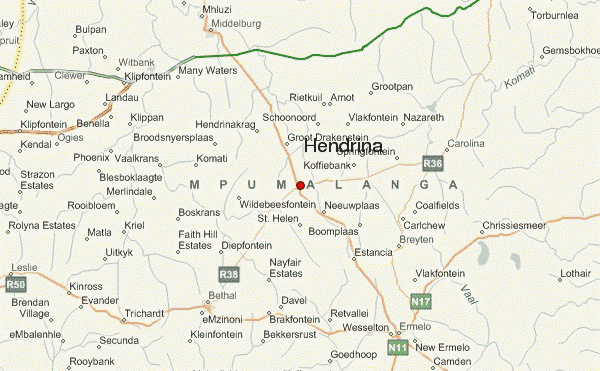
Hendrina in the Eastern Transvaal (present 'Mpumalanga')
Hendrina in the Eastern Transvaal (present ‘Mpumalanga’)

A furious mob of more than 1 000 people went on a violent rampage in the township of KwaZamokuhle in Hendrina on Sunday – threatening violence against Mayor Mike Masina and other Councillors whom they blockaded at the community stadium for almost 30 minutes.

But this was not before they stoned the Mayor’s vehicle and interrupted his speech in which he addressed several concerns raised by KwaZamokuhle residents about a week earlier regarding service delivery. The residents are demanding among others a mall, a hospital and a clinic.

Shortly after Mayor Masina and Councillors were provided safe passage by the Hendrina SAPS and left the area, the angry mob went on to burn a library, satellite police station and community hall.

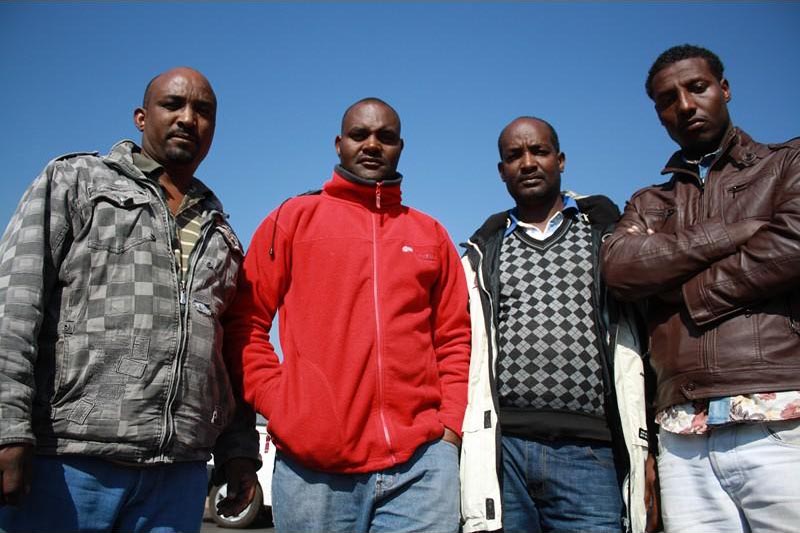
These Ethiopian shop keepers claim to have lost everything

The residents also burnt shops belonging to foreign nationals on Sunday night. Mostly Ethiopian shop owners were affected. They stated that at least 30 of their businesses were completely looted.

“Our walls were broken down with sledgehammers. We fled for our lives. Every single item was stolen – even chappies. Fridges were unplugged and carried away,” said Ethiopian national Ayele Abush.

Just over 50 Ethiopians are currently being accommodated at the local police station – most of whom claim that they’ve not a single cent left in their pocket. Hendrina police spokesperson, David Mbenekazi, said five people have been detained on allegations of arson, public violence and malicious damage to property They are yet to be formally charged.

“The investigation is ongoing and we expect to make more arrests during the course of the week,” he said.

• The residents of Kwazamokuhle held a protest march to Hendrina Municipal buildings on 10 June 2013 to hand over a memorandum to Mayor Masina – but he was not present to receive it and this infuriated the protestors.

Angry residents made some serious threats towards the Mayor’s office as they waited for two hours for him to arrive – only to be informed that he was in a meeting in Nelspruit. Protestors dispersed and went back home. The following Friday, on 14 June 2013, residents blocked the Arnot – Hendrina road, burnt tyres and stoned vehicles. A Police task force was called in to help subdue the unrest and 37 people were arrested on charges of public violence.

Black clouds of smoke could be seen for miles around Kwazamokuhle. Three people were taken to hospital to be treated for rubber bullet wounds they sustained during the protest.

The people of Kwazamokuhle and Hendrina want a Police Station in Kwazamokuhle, a 24 hour Clinic and English Medium Schools – all before the 2014 elections. – looklocal

Streets in Pretoria being cordoned off for Obama visit

Several streets in the Pretoria were closed off on Tuesday in preparation for the visit of US President Barack Obama, the Tshwane metro police said.

Spokesman Superintendent, Isaac Mahamba said several streets in central Pretoria were currently closed off as a dry run for security measures for the coming visit by president Barack Obama.

Mahamba was unable to confirm which streets would be affected by the security drill due to security reasons, but according to reports Pretorius and Beatrix Streets were currently closed off. Motorists were advised to use alternative routes on Tuesday.

President Barack Obama is reportedly due to arrive in South Africa with his family on 28 June for his first substantive visit to Africa since he took office.

It is currently still unknown if President Barack Obama will make a visit to the ailing former president Nelson Mandela that is being treated at the Medi-clinic Heart Hospital.

Reports indicated that the Obama family are due to meet with President Jacob Zuma in Pretoria on 29 June before travelling to Soweto and then to Cape Town on Sunday. – looklocal


White genocide in South Africa: the facts

Kevin_Kingby Kevin King

[followbutton username=’djkevking’ count=’true’ lang=’en’ theme=’light’]

In response to an article on News24, White Genocide, fact or fiction?, I’d like to separate fact from fiction.

The definition of genocide

“The international legal definition of the crime of genocide is found in Articles II and III of the 1948 Convention on the Prevention and Punishment of Genocide.

Article II describes two elements of the crime of genocide:

  1. the mental element, meaning the “intent to destroy, in whole or in part, a national, ethnical, racial or religious group, as such”, and

  2. the physical element which includes five acts described in sections a, b, c, d and e.  A crime must include both elements to be called “genocide.”

    1. Killing members of the group;

    2. Causing serious bodily or mental harm to members of the group;

      1. includes inflicting trauma on members of the group through widespread torture, rape, sexual violence, forced or coerced use of drugs, and mutilation.

    3. Deliberately inflicting on the group conditions of life calculated to bring about its physical destruction in whole or in part;

    4. Imposing measures intended to prevent births within the group;

    5. Forcibly transferring children of the group to another group.

Protected Groups

A national group means a set of individuals whose identity is defined by a common country of nationality or national origin.

An ethnical group is a set of individuals whose identity is defined by common cultural traditions, language or heritage.

A racial group means a set of individuals whose identity is defined by physical characteristics.

A religious group is a set of individuals whose identity is defined by common religious creeds, beliefs, doctrines, practices, or rituals.

Key Terms

The crime of genocide has two elements:   intent and action.  “Intentional” means purposeful.  Intent can be proven directly from statements or orders.  But more often, it must be inferred from a systematic pattern of coordinated acts.

Intent is different from motive.  Whatever may be the motive for the crime (land expropriation, national security, territorial integrity, etc.), if the perpetrators commit acts intended to destroy a group, even part of a group, it is genocide.

The phrase “in whole or in part” is important.  Perpetrators need not intend to destroy the entire group.  Destruction of only part of a group (such as its educated members, or members living in one region) is also genocide.  Most authorities require intent to destroy a substantial number of group members – mass murder.  But an individual criminal may be guilty of genocide even if he kills only one person, so long as he knew he was participating in a larger plan to destroy the group.”

Size does not matter

The author starts off by saying “If 70 000 whites were murdered by blacks since 1994, it could have indeed been close to a genocide”.  He then goes on to dispute this number, however size is irrelevant.

According to the definition of genocide, “an individual criminal may be guilty of genocide even if he kills only one person, so long as he knew he was participating in a larger plan to destroy the group [or part of a group]”

Intention to commit genocide

The definition clearly states that there are two ways to prove intent:   “from statements or orders” or “inferred from a systematic pattern of coordinated acts”.

The question of whether there is a presence of a systematic pattern of coordinated acts to commit genocide is highly debatable and difficult to prove.  Perpetrators of genocide are more likely to commit this crime covertly.  In a country like South Africa, the most violent country on earth, it is easy to hide the intent of committing genocide, xenophobia and homophobia under the cover of normal crime because of our high crime rates.  And if a genocidal plan was proven without a shadow of a doubt, the country would surely and immediately enter a stage of civil war and the economy would collapse, something which the perpetrators would strive to avoid.

On the other hand, proving intent from statement or orders is far less debatable.  High-ranking public officials making statements like “Kill the Boer”, “Shoot the Boer” or “One Bullet, One Farmer” can easily be interpreted as an order to commit genocide.  “Shoot the Boer” was found by the courts to be hate speech.  Hate speech incites violence.  According to the international definition of genocide:

“Article III:  The following acts shall be punishable:

  1. Genocide;

  2. Conspiracy to commit genocide;

  3. Direct and public incitement to commit genocide;

  4. Attempt to commit genocide;

  5. Complicity in genocide. “

Firstly, put your objective hat on.  Now consider the following:  A public figure making a public statement to “Shoot the Boer” or “Kill the Boer” sounds very much like a direct and public incitement to commit genocide.  You don’t need to commit genocide to be guilty of genocide and punishable under the 1948 convention.  But, however factual my findings are or no matter how much sense it makes, I’m a million percent sure that I will get responses like:   “That song is a cultural thing”, “Nobody takes these people seriously”, “Those phrases are misunderstood.” etc.  Hypothetically, let’s say you are right and these statements were not deliberately made to incite genocide and there is no organised plan to commit genocide.   Let’s go back to the definition of genocide:

“an individual criminal may be guilty of genocide even if he kills only one person, so long as he knew he was participating in a larger plan to destroy the group”

It only takes ONE individual to kill ONE person, if that individual knew he was participating in a larger plan to destroy the people.  That means that if only ONE individual interprets a statement like “Shoot the Boer” by his commander and chief for instance, to be an order to commit genocide and acts on it, that individual will be guilty of committing genocide, plain and simple.  Let’s look at a case study:

Case study – Helen and Alice Lotter

Free State farmers protesting against the gruesome ethnic murder on Helen and Alice Lotter

Mrs Helen Lotter, 57, and her bedridden mother Alice, 76.  Tortured to death with broken beer bottles in their anuses and vaginas – the attack had been so horrendous that the post-mortem examiner was unable to find any of Helen Lotter’s sexual organs at all; her breasts were partially cut off and broken bottle-shards were inserted in her vagina and anus as part of the hours of torture she and her mother Alice had endured –her cervix and uterus were completely shredded.  The mother’s front teeth were bashed out; her entire body was ‘covered in bruises, chafing and stabbing wounds. Her sexual parts were mutilated extensively also internally.  The old farm woman had died due to ‘asphyxiation after breathing in blood from penetrating stabbing wounds in her neck and throat’.  They were then both left to die.  Mrs Helen Lotter’s death-bed confession identified the killers as a gardener, Joseph Hlongwane, 22 who had only started working for them a few months earlier, and an associate Joseph Khumalo, 21.  The forensic DNA and fingerprint evidence confirmed Helen Lotter’s death-bed confession. “Kill the Boer” had been daubed in the women’s blood on the farmhouse walls.

ANC mayor, Mrs Mataba Leeto led an anti-Boer protest at the law court where the trial was held.  They chanted genocidal hate-speech songs such as ‘Kill the Boer, kill the Farmer’ in support of the two killers’ getting bail.  Mrs Leeto has not been put on public record as expressing any kind of sympathy nor outrage over the way the two Lotter women had been tortured to death.   Instead, she led a group which was protesting against the ‘racism’ of local Afrikaner residents who had held a ‘re-enactment’ of the way in which the women were tortured to death to illustrate the community’s deep anger. Both men were found guilty and sent to prison.

According to the definition of genocide, a crime can only be called genocide if both elements of Article II are present:

  1. the mental element, meaning the “intent to destroy, in whole or in part, a national, ethnical, racial or religious group, as such”, and

  2. the physical element which includes five acts described in sections a, b, c, d and e.

Mental element

Intent to destroy can be proven directly from statements or orders.  In this case the statement “Kill the Boer” can be linked directly to the crime and can be interpreted as an order.

In whole or in part: perpetrators need not intend to destroy the entire group, an individual criminal may be guilty of genocide even if he kills only one person, so long as he knew he was participating in a larger plan to destroy the group.  In this case two individuals killed two people, and by providing evidence for intention, “Kill the Boer”, their actions infer that in their minds, they were acting out on a larger plan to destroy a group.

A national, ethnical, racial or religious group:  In this case the perpetrators acted on the Afrikaner ethnic group specifically, as proven with their words “Kill the Boer”.

Physical element

In this case we had the killing members of the group.  On top of that, the crime included torture, rape, sexual violence and mutilation which are synonymous with genocide.

Conclusion

There are indicators that genocide could be happening on a larger scale, for example, widespread rape, torture and executions of Afrikaners on their farms, with perpetrators stealing few or no valuables.  However the existence of an organised plan to commit genocide is unknown and will be extremely difficult to prove.  Regardless, individuals can be perpetrators of genocide by definition.  In the above case study, the evidence provided is clear.  If you debate me on this case, at best you prove that this case is a racist hate crime, which I’m afraid is not much worse than genocide.  And before I’m accused of being right-winged, let me make myself clear – There are racists in every race on earth, racist hate crimes are committed by all races and genocide can be committed by any race upon another race, even if it’s done by individuals.

Understanding each other’s anger

As described in Stephen Covey ‘7 Habits’, “Seek first to understand, before seeking to be understood.”

We as human beings get angry when we are victims of crime, even more so when we are specifically targeted because of our race, sexuality, gender etc.  In South Africa we know this all too well.  We understand the great atrocities committed during Apartheid, the racial discrimination inflicted upon groups and the anger it produced.  Well the exact same anger is felt when individuals are targeted today, as seen in the case study, solely because of their race.  Understand why other members of the victim’s group would feel threatened, angry and perceive there to be a possible genocide occurring.  And when they speak out they are insulted.  Please, just a little understanding goes a long way in building this country.

[followbutton username=’djkevking’ count=’true’ lang=’en’ theme=’light’]

Candles burn for ailing Mandela

Cards and flowers for Nelson Mandela outside the Mediclinic Heart Hospital in Pretoria

Burning candles, bouquets of pink and red flowers, paintings and hundreds of messages at the entrance of a Pretoria hospital on Wednesday urged critically-ill former president Nelson Mandela to soldier on.

Well-wishers have consistently registered support for Mandela in different forms, transforming the Medi-Clinic Heart Hospital’s security wall into a miniature art gallery.

The celebrated anti-apartheid icon was admitted at the facility in the early hours of June 8 for a recurring lung infection.

The catalogue of presents, get-well-soon cards, mainly handwritten on cardboard, eclipsed the hospital’s signpost at the entrance on Celliers Street.

A card attached to a white teddy bear read: “Dearest Madiba. Thank you for everything you have done for our country. You are and will always be a true legend and a grandfather to all. From Alphonso Tania”.

Another read: “Tata Madiba, the Lord knows the plans of his children. May you get better, but even if you don’t, we will still love you as a nation. [From] Lwandile”.

Three candles were burning slowly near the messages. Many balloons, including several from a popular pizza outlet, were tied with ribbon onto bunches of flowers.

Security at the private hospital has been upscaled since Madiba was admitted.

After 5am on Wednesday, several police officers started screening vehicles entering the facility.

Despite the cold, scores of journalists from local and international media houses stayed outside the hospital.

Several broadcast vans still had their engines running. The news crews also set up generators for back up power.

Tshwane metro police officers parked near journalists on Celliers street. Numerous police patrol cars were also in the area.

Mandela’s home in Houghton was quiet on Wednesday morning, with police cars occasionally patrolling the area.

Around 1.10am three cars and one van from the Johannesburg metro police came down 4th Street, and turned into the street where Mandela’s house is located.

The van at the back of the patrol switched on its hazard lights, reversed and parked in the street in front of the gate before flashing its headlights.

About eight officers got out of the vehicles and had a discussion in front of the gate for 10 minutes before they all got back into the cars and drove off slowly.

Many Mandela family members, politicians, socialites and religious leaders had visited Madiba at the hospital after he was admitted for a recurring lung infection on June 8.

On Tuesday, Defence Minister Nosiviwe Mapisa-Nqakula and Pumla-Makaziwe Mandela visited the Medi-Clinic Heart hospital, in Arcadia, east of Pretoria.

Mapisa-Nqakula arrived in a black Mercedes-Benz with blue flashing police lights shortly before 7pm.

Minutes earlier Mandela’s eldest daughter, Pumla Makaziwe-Mandela, and his granddaughters Tukwini and Ndileka Mandela, arrived at the hospital in a red Range Rover.

Shortly before their arrival, Anglican Archbishop of Cape Town Thabo Makgoba left the hospital.

Madiba’s step-daughter Jozina Machel was also at the hospital.

Controversial businessman Kenny Kunene arrived at the hospital’s Celliers street entrance to place flowers and speak to the media.

After Kunene’s visit, more Pretoria metro police officers arrived at the entry point.

They cordoned off Celliers Street where it meets with Park Street.

Tshwane mayor Kgosientso Ramokgopa arrived to check on the police officers and left after a brief discussion with them.

Earlier on Tuesday, the presidency confirmed that Mandela remained in a critical condition.

“[Mandela’s] condition remains unchanged in hospital, and doctors continue to do their best to ensure his recovery, wellbeing, and comfort,” spokesman Mac Maharaj said in a statement. – Sapa

Sales of George Orwell’s ‘1984’ soar on Amazon as America becomes surveillance society

George Orwell
George Orwell

George Orwell’s dystopian novel “1984” is enjoying a spike in sales in the wake of revelations on surveillance in the United States.

Amazon.com says the book, published in 1945, has gone from No. 13,074 to No. 193 on its selling list, and it is moving higher, The Guardian reported. To put it another way, sales are up 7,000 percent.

In the novel, Orwell imagines a world divided into three large states, all of them exercising near-constant surveillance on their subjects. The government manipulates the news, history and the language.

The novel is set in London, the city where Orwell spent much of his adult life. But his primary target appears to be the Soviet Union, although he was also concerned about trends he saw in the United States and Britain.

It was “1984” that made “Orwellian” a common adjective in English. It is one that has been used a lot since news broke of National Security Agency monitoring of Internet and telephone traffic.

“What does our Constitution mean? What kind of country do we want to be? Kids will grow up knowing that every damn thing that they do is going to be recorded somewhere in a file, and I think that will have a very Orwellian and inhibiting impact on our lives,” U.S. Sen. Bernie Sanders, Ind-Vt., said in a recent interview.

Orwell died in 1950 at the age of 46. But the book remains under copyright in Britain and the United States, so his estate benefits from its new popularity. – UPI

Police patrol Madiba’s Johannesburg home

Nelson Mandela's houe in Houghton, Johannesburg
Nelson Mandela’s houe in Houghton, Johannesburg

Former president Nelson Mandela’s home in Houghton was quiet on Wednesday morning, with police cars occasionally patrolling the area as the former statesman remained in a critical condition in a Pretoria hospital.

At around 1.10am three cars and one van from the Johannesburg metro police came down 4th Street, and turned into the street where Mandela’s house is located.

The van at the back of the patrol switched on it’s hazard lights, reversed and parked in the street in front of the gate before flashing its headlights.

About eight officers got out of the vehicles and had a discussion in front of the gate for 10 minutes before they all got back into the cars and drove off slowly.

Police presence in the neighbourhood and patrolling increased on Tuesday night and Wednesday morning, compared to other nights.

The presidency announced on Sunday that Mandela’s health had deteriorated.

At 11.40pm on Wednesday a police van pulled up outside the main black gates of the house.

Two officers walked up and down the road to ensure no cars were parked in the streets in front of and on the side of the house. The other four officers went inside the gates and came out about half an hour later.

After midnight the officers all got back into the van and drove off.

Soon after this, another police car drove up and down the streets before leaving.

After 1.30am a Gauteng flying squad car drove past the house slowly before speeding away.

The house was dark with all curtains and blinds closed. Only the outside lights, in the yard and outside the house, were on.

Outside the main gates, people had put bouquets of flowers and more stones around one of the big trees. The stones were painted in the colours of the South African flag and had messages such as “Nelson Mandela we love you”, “Get well soon Tata” and “We love you Madiba” painted and written on them.

The flower beds around the yard were colourful with painted stones in each of them. One had small South African flags spread over the stones.

The stones bore messages including “God Bless Madiba”, “Thanx [sic] father” and “I love you Madiba” painted on them.

They had been left by well-wishers in the days since Mandela was hospitalised on June 8 for treatment of a recurring lung infection.

Police officers and security guards would take the cards and posters left by people inside.

A single broadcast vehicle was parked outside the house opposite the ailing statesman’s house.

On Tuesday, the presidency confirmed that Mandela remained in a critical condition.

“[Mandela’s] condition remains unchanged in hospital, and doctors continue to do their best to ensure his recovery, wellbeing, and comfort,” spokesman Mac Maharaj said in a statement.

On Sunday night, Maharaj said in a statement that the anti-apartheid icon and Nobel peace prize laureate’s condition had deteriorated and had become critical.

The presidency made the announcement after a visit by President Jacob Zuma and African National Congress deputy president Cyril Ramaphosa.

On Wednesday morning, it was quiet outside the Nelson Mandela Foundation a few streets from the former statesman’s house. Two cars were parked inside the premises. – Sapa

Family hears prayer for Mandela’s ‘peaceful, perfect end’

mandela91Cape Town’s Archbishop on Tuesday led Nelson Mandela’s closest family in a sombre prayer, offering support for his wife and a “peaceful, perfect, end” for a man considered by many to be a living saint.

Bishop Thabo Makgoba visited the Pretoria Mediclinic Heart Hospital where the anti-apartheid leader is critically ill, consoling wife Graca Machel “at this hard time of watching and waiting.”

After a 18-day vigil, in which the family has watched Mandela slip from a stable to critical condition, Makgoba urged them to be strong.

“Take away their fears so that they may dare to face their grief,” his prayer read.

“Guide the medical staff so that they may know how to use their skills wisely and well, in caring for Madiba and keeping him comfortable,” Makgoba said, referring to Mandela by his clan name.

Mandela’s condition has worsened despite more than two weeks of intensive treatment.

Many now fear the worst for a man who, in defeating apartheid, bent the arc of history toward his will and lit a fire that shone for millions across the world.

The prayer seemed to echo a feeling of inevitability about Mandela’s condition that is shared by millions of his compatriots, to whom he remains a moral giant, even though he stepped back from public life a decade ago.

“May (we) be filled with gratitude for all the good that he has done for us and for our nation, and may (we) honour his legacy through our lives.”

“Grant Madiba eternal healing and relief from pain and suffering.”

“Grant him, we pray, a quiet night and a peaceful, perfect, end.”

Putin: Snowden never crossed Russian border, so no extradition

Putin slams US demands

Former NSA contractor Snowden remains in the transit zone of a Moscow airport. President Putin said that Snowden never crossed the Russian border and doesn’t fall under any extradition treaty. He called accusations against Russia “nonsense and rubbish.”

“It is true that Snowden has arrived to Moscow, and it really came as a surprise for us. He arrived as a transit passenger, and didn’t need a [Russian] visa, or any other documents. As a transit passenger he is entitled to buy a ticket and fly to wherever he wants,” Vladimir Putin said as he spoke to journalists in Finland.

Edward Snowden is still at the transit area of Moscow’s Sheremetyevo Airport, Putin stressed. He said that any accusations against Russia are “nonsense and rubbish,” as the former NSA contractor “has not crossed” the Russian border.

The President also pointed out that there is no extradition treaty between Russia and the US, which makes it impossible to extradite people like Snowden.

“We can only extradite any foreign citizens to such countries with which we have signed the appropriate international agreements on criminal extradition,” he explained.

Snowden “has not committed any crime” on Russian soil, Putin added. Russian security agencies “have never worked with and are not working with” the former CIA employee, he also stressed.

“Snowden is a free person. The sooner he chooses his final destination, the better it is for him and Russia,” Putin said.

He also expressed hope that the Snowden saga would not have any negative impact on Russian-American relations and that the US “will understand this.”

Putin also commented on the situation with WikiLeaks founder Julian Assange, who has been holed up in the Ecuadorian embassy in London to avoid extradition to Sweden, fearing that he would then be extradited to the US.

“Just like Snowden, he considers himself a rights advocate and fights for sharing information. Ask yourself: should or should not people like these be extradited to be later put to jail?” the President asked.

“In any case, I would like not to deal with such issues because it is like shearing a pig: there’s lots of squealing and little fleece,” he said.

Washington again requested that Moscow expel Snowden on Tuesday, urging Russia to build upon its bilateral law enforcement cooperation with the US.

Russia has “clear legal basis” to expel the NSA leaker, National Security Council spokeswoman Caitlin Hayden said in a statement. She added that Snowden would face espionage charges in the US, even without an extradition treaty.

The White House, along with Putin, doesn’t want the issue to negatively impact the nations’ bilateral relations, Hayden said. – RT

Mandela still critical: South African presidency

The Medi-Clinic Heart Hospital in Pretoria

Former president Nelson Mandela remains in a critical condition in a Pretoria hospital, the presidency said on Tuesday.

“[Mandela’s] condition remains unchanged in hospital, and doctors continue to do their best to ensure his recovery, well-being and comfort,” spokesman Mac Maharaj said in a statement.

He said President Jacob Zuma thanked the public for their ongoing support and understanding.

Zuma said: “We must support him and support his family.

“We must demonstrate our love and appreciation for his leadership during the struggle for liberation and in our first few years of freedom and democracy by living out his legacy and promoting unity, non-racialism, non-sexism and prosperity in our country.”

Zuma also urged that Mandela and his family be shown sensitivity, dignity and privacy at this time.

The 94-year-old ailing icon was admitted to hospital on June 8 because of a recurring lung infection.

At the time, the presidency said Mandela was in a “serious but stable” condition.

However, on Sunday the presidency said his condition had become critical.

Mandela turns 95 on July 18.

Zuma said: “We must all be planning what to do next month in marking our 67 minutes of doing good for humanity as called upon by Madiba to do so, when he launched the International Mandela Day campaign.

“Let us make it the biggest Mandela Day ever on July 18, focusing on doing good all over the country.” – Sapa

Global surveillance: Where is the outrage?

temporaThe British-American surveillance program Tempora marks a historic turning point. Unnoticed by the public, intelligence agencies have pursued total surveillance. Governments have deliberately concealed from the public the extent to which we are being watched.

The term, “information superhighway” has always been insufficient to describe the Internet. In reality, the Web is a global communication space containing the private information of a large part of the population of every developed country. If someone were able to train an all-seeing eye onto the Internet, the blackmail potential would be almost limitless.

It is precisely this all-seeing eye that the British intelligence agency Government Communications Headquarters (GCHQ) and the American National Security Agency (NSA) have developed under the name Tempora. An appropriate real-world metaphor for the program might be something like this: In every room of every house and every apartment, cameras and microphones are installed, every letter is opened and copied, every telephone tapped. Everything that happens is recorded and can be accessed as needed.

It sounds preposterous, but it is frighteningly close to the reality that was unveiled by the Guardian on Friday. Together, the GCHQ and NSA monitor Internet traffic by tapping directly into the data stream sent through fiber-optic cables. They are able to copy and cache this data, to be sifted through later as needed.

Those behind this disgraceful program have not even bothered to deny what they are up to. The British spy agency has said it will not be commenting on the program — but said that whatever they do is in the service of the fight against terrorism and subject to strict legal controls. The NSA has been making this same argument since the Prism program was unveiled earlier this month. What we’re doing, they say, is for a good cause. It’s all regulated, and we’re only looking at the information collected when we deem it necessary.

But that’s all just pretence.

Would the public agree to the total video surveillance of their private living space because it could possibly also help in the pursuit of terrorists? Would we be satisfied with the fact that we would only be observed if some unnamed intelligence analyst considered it necessary? Of course not. A government proposing such a program would be forced out of office — and rightly so.

Where is the Outrage?

It therefore seems odd that the reactions in the Anglo-Saxon world have been so restrained. Sure, the Guardian, as well as the Washington Post, have reported in detail about the programs. Yet in the political sphere, it was mainly a few German politicians voicing their outrage.

And for good reason. The fact that the Americans and the British — it is yet to be revealed who else participated — have granted themselves this enormous power, without ever informing their own people, is a scandal of historic proportions. To the initiated, all the recent public debate about data retention, Internet privacy and the practices of Facebook and Google must have been downright amusing. The state, as it turns out, knew everything all along.

That was precisely the goal, according to the head of the NSA, Lieutenant General Keith Alexander. “Why can’t we collect all the signals all the time?” he asked in an internal document acquired by the Guardian. “Sounds like a good summer project for Menwith,” he continued, referring to a GCHQ/NSA facility at Menwith Hill in northern England.

Voters Must Defend Themselves

A different quote shows that intelligence personnel lied to the public following the first revelations of the existence of the program. European Justice Commissioner Viviane Reding said that, in meetings with US officials, she had been assured that data from Europeans had not been collected “in bulk.” The surveillance of Europeans, they insisted to Reding, had been targeted and only undertaken in exceptional cases. That now appears to be untrue — it’s just that the mass acquisition of data in Europe is taken care of by GCHQ, rather than by the NSA.

The public revelation of these activities in the Guardian, thanks to the risky actions of former NSA worker Edward Snowden, marks a turning point. The next weeks and months will show whether democratic societies across the world are strong enough to take a stand against the unlimited, totalitarian ambitions of Western secret services — or not.

The governments of the countries in question apparently did not have the necessary backbone. They knew full well that the kind of surveillance being undertaken lacked all democratic legitimacy. But they pursued the programs anyway, behind the backs of their electorates.

It is now up to voters to defend themselves. It is up to us, whose data has landed as by-catch in the nets of Tempora. We must force our own representatives to defend our freedoms. – Der Spiegel

Libya, Syria, Lies, Perfidies and Tony Blair

blairwarcriminal

by Felicity Arbuthnot

Having learned nothing from the catastrophes of Afghanistan, Iraq, Libya, it seems President Obama, the equally clueless UK Prime Minister Cameron and his culturally challenged Foreign Secretary William Hague are cheerleading another bloodbath in formerly peaceful, secular, outward looking Syria.

Having covertly provided arms and equipment to insurgents from numerous different countries for over two years, they have now moved to the overt stage, a move over which even arch hawks such as former National Security Advisor Zbigniew Brzezinski, and former Republican Senator Richard Luger, six term leader of the Senate Foreign Relations Committee urged caution.

Luger said such action would boost extremists, with Brzezinski dismissing Obama’s talk of “red lines” as thoughtless and risking “a large-scale disaster for the United States.”

During Brzezinski’s time as National Security Advisor to President Jimmy Carter the decision was made to finance the Mujahideen in Afghanistan in response to Soviet deployment there. He’s had a bit of time to reflect on blowback and perhaps the 2,243 wasted US lives in that “graveyard of empires” – so far.

It seems, however, the Washington and Whitehall regimes remain increasingly disconnected from reality. In spite of the plethora of gruesome images circulating on the internet of grinning terrorists holding up severed heads, cannibalising body organs and summarily executing, they are to provide further arms to insurgency’s Hannibal Lecters. This, also regardless of the fact that Riad al-Assad, founder of the so-called “Free Syrian Army” is quoted as saying that suicide bombing is “an integral part of revolutionary action, of Free Syrian Army action.”

Meanwhile, less than a month after the murder of a soldier in London’s Woolwich by wanna be jihadists (with reported relationship to hard drugs) Britain’s increasingly rudderless ship of state allows entry to a controversial Saudi preacher, Muhamed Al Arefe, alleged to have made anti-Shia and anti-Semitic exhortations and who argues that a husband “may use beatings to discipline his wife” as long as he beats her “lightly.”

Informed friends from the Middle East charge bluntly that he recruits jihadists, as last week in visits Riyadh and Cairo. One added:

David Cameron may as well stand at the gate (of the Mosque) and hand out arms for the ‘good freedom fighters’ who will be heading to Syria after hearing Arefe’s sickening lies, sectarian incitement and calls for jihad against the ‘infidel regime’.

This was not a low key occasion. Arefe spoke at the London Central Mosque and Islamic Cultural Centre, built on land donated by King George V1 to the Muslim Community of Britain. The Cultural Centre was officially opened by the King in 1944. The Mosque, completed in 1978, which can hold over five thousand worshippers in the main hall alone, was designed by renowned architect Sir Frederick Gibberd. Quite a platform for any recruiter.

However, Obama and Cameron hardly need to arm terrorists.  They are seemingly doing fine, via the US-UK-NATO last mega screw up: Libya.

This week it was reported  that weapons are flooding in to Syria from a Libya awash with weapons, “with spy chiefs saying” that the country has become a supermarket “of the world’s illegal arms trade.”

“Up to 3,000 surface-to-air missiles (SAMs) have gone missing since the conflict” with more than “one million tonnes of weapons belonging to Colonel Quaddaffi” looted after his terrible death at the hands of NATO’s “allies”.

Potentially that is enough SAMs to down 3,000 airliners.

The Daily Mail understands that, unsecured “ … there are now more weapons in Libya than in the entire arsenal of the British Army” according to MI6 estimates.

One internet video showed a stockpile of SAMs, which can hit an aircraft flying at 11,000 feet, in the hands of the Syrian insurgents. Used from airport perimeters anywhere, the result could be tragedy.

However, Akhbar Alaan TV reports  Benghazi has been supplying weapons to the Syrian terrorists for “over a year.” With pictures they “show the shipments from Libya, via Turkey to the Syrian opposition.”

The TV station’s reporter states:

Their own Libyan revolution was supported by NATO … But these former Libyan rebels say the world is abandoning the Syrian opposition. And because of that Benghazi decided to act …

Further:

All these weapons are donated by former rebel units in eastern Libya … According to the Libyan organizer they also have shipped around 120 SAM 7 surface to air-missiles to Syria.

Rebel units were, of course, aided by US Ambassador to Libya, Christopher Stevens, who arrived in a cargo ship loaded with arms (news, websites) and was murdered with colleagues in Benghazi on 11 September 2012.

According to the New York Times, Qatari C-17 cargo planes, capable of carrying a payload of over 70 tonnes, have picked up a weapons shipment at least three times this year, which were then delivered to the Turkish-Syrian border to be handed on to the “rebels”.

British-Libyan arms dealer Abdul Basit Haroun – who was a property developer in Manchester, UK for twenty years, until 2011 – has told Reuters that weapons are reaching Syria not alone by numerous flights, but on ships, concealed amongst humanitarian aid. Haroun has claimed that the authorities know about the shipment, “everybody knows”.

Further, Libyan Assembly Member Tawfiq Shehabi has said he supports the activitites of people like Haroun, who was a brigade commander during the Libyan uprising: “After the end of the (uprising) he became involved in supporting the Syrian revolution … he does a good job of supporting the Syrian revolution.”

Claims are that permission for shipments is sought from, and sanctioned by, Turkey. The UN has criticized Libya for proliferating weapons at an “alarming rate” and for “enriching the arsenals of a range of non-State actors, including terrorist groups.”

Reuters interviewed Haroun and a reporter was taken to a container of weapons being prepared for delivery to Syria “… stacked with boxes of ammunition, rocket launchers and various types of light and medium weapons.”

Arms are flown in to “neighbouring countries on chartered flights”, several to Jordan as well as Turkey, “weapons were then transferred over the border.”

In Libya, the versatile Mr Haroun “helps the government with state security, according to interior ministry spokesman Majdi al-Ourfi.”

Quite an own goal, NATO.

But no lessons have been learned. On Saturday (22 June) the ridiculously named, eleven nation “Friends of Syria”, meeting in Qatar, agreed to supply “all the necessary material” to the insurgents. Britain, with the US, is, of course, cheerleading.

This in spite of warnings from such as Charles Lister, analyst at HIS – Jane’s Terrorist and Insurgency Centre – of the danger that weapons “almost invariably end up in the hands of”  terrorists and extremists, and possibly even back in Britain.

General Sir Richard Dannatt, the former head of the army, said last week he was “very much in the camp of those who would not wish to be involved and intervene in any shape or form”, with Major General Julian Thompson, who commanded British forces in the Falklands War in 1982, saying it was “absolutely ridiculous” to contemplate another intervention …and getting involved with something else” whilst still mired in Afghanistan after nearly twelve years.

“Our information from Doha says that five countries have decided to start arming us immediately, and four other countries will give us logistical and technical support and, at a later stage, arm the Free Syrian Army,” a spokesman for the opposition fighters, Loay Al Mikdad, said in an interview with Qatar’s Al-Jazeera TV.

Incredibly, with not a glance towards legality, the Doha plotters “repeated their call for the establishment of a transitional governing body to which full executive powers would be transferred … Bashar Assad has no role in the transitional governing body or thereafter.”

However, Syria is a founding Member of the UN, one of the fifty one countries who signed to the Charter on 26 June 1945. Member States of the United Nations are bound by the UN Charter.

Article 2 (4) states:

All Members shall refrain in their international relations from the threat or use of force against the territorial integrity or political independence of any state, or in any other manner inconsistent with the Purposes of the United Nations.

Article 2 (1) The Organization is based on the principle of the sovereign      equality of all its Members.

Article 2 (2) All Members shall settle their international disputes by peaceful  means in such a manner that international peace and security, and justice, are not endangered.

Further:

The UN’s 1970 Declaration on Principles of International Law Concerning Friendly Relations and Cooperation among States directs:

No state or group of states has the right to intervene, directly or indirectly, for any reason whatever, in the internal or external affairs of any other state.

Consequently, armed intervention and all other forms of interference or attempted threats against the personality of the state or against its political economic and cultural elements are in violation of international law.

Recalling the duty of States to refrain in their international relations from military, political, economic or any other form of coercion aimed against the political independence or territorial integrity of any State,

Considering it essential that all States shall refrain in their international relations from the threat or use of force against the territorial integrity or political independence of any State, or in any other manner inconsistent with the purposes of the United Nations,

In accordance with the purposes and principles of the United Nations, States have the duty to refrain from propaganda for wars of aggression.

Every State has the duty to refrain from organizing or encouraging the organization of irregular forces or armed bands including mercenaries, for incursion into the territory of another State.

Every State has the duty to refrain from organizing, instigating, assisting or participating in acts of civil strife or terrorist acts in another State or acquiescing in organized activities within its territory directed towards the commission of such acts, when the acts referred to in the present paragraph involve a threat or use of force.

End note. That Middle East “Peace Envoy” Tony Blair who lied his way into the destruction of Iraq, kissed his welcoming host Colonel Gaddafi then betrayed him worthy of any Judas, has entertained President Assad.

In 2002, when Bashir al Assad visited Britain, met the Queen, the Prince of Wales, and dined with Blair at Downing Street, it was considered bestowing an honour on the President.

According to documents, on November 14, 2002, a desk officer covering Syria and Lebanon at the Foreign and Commonwealth office wrote:

You should be aware that President Bashar of Syria will visit the U.K. as a guest of government … This will include an audience with the queen. I have been advised that we need to consider whether the queen should bestow an honor on him.

Blair is, of course, cheer leading for Syria’s destruction: “A spokesperson for Tony Blair defended the actions of the government under the former PM, stating, “Engagement with Syria and Assad in 2002 was absolutely right …  Mr. Blair has said many times since that the situation has changed and Assad now has to go.”

Felicity Arbuthnot is a journalist with special knowledge of Iraq. Author, with Nikki van der Gaag, of Baghdad in the Great City series for World Almanac books

The US and Britain’s proxy war in Syria threatens planetary civilisation

roodt_fbfotoby Dan Roodt

[followbutton username=’danroodt’ count=’true’ lang=’en’ theme=’light’]

Like Dan Roodt’s Facebook page

The news that the UK, US and allies will provide ‘urgent military support to Syrian rebels’ has signalled the prolongation and possible escalation of the Syrian civil war. Not surprisingly, it was followed by news that Russia (is) to supply advanced weapons to Syria.

The so-called “Friends of Syria” group comprises Britain, France, the US, Germany, Italy, Jordan, Qatar, Saudi Arabia, Turkey, Egypt and the United Arab Emirates. We can safely say that America and Britain are the driving forces behind the initiative and that the other countries have merely been roped in to lend some international legitimacy to what is turning into a proxy war between the US-UK and Russia.

The Syrian conflict represents a threat to world peace. In fact, it could lead to the end of civilisation as we know it!

That may sound like an outrageous statement, but let me explain.

The civil war in Syria is not only a proxy war between the Atlantic powers (or Atlanticists) and Russia, but once Syria falls, the next target will be Iran and after that Russia itself.

Putin understands this. He is also correct when he accuses the American and British governments of disregarding the sovereignty of other states and nations. Especially Democratic and Labour governments have in recent decades embraced the doctrine of “regime change” whereby the two Anglo-Saxon powers see fit to start wars and uprisings in other countries to serve their own interests. However, a lot of the time they are not even serving their own interests but are acting to promote the new Soviet ideology of multiculturalism. Racial equality, or “equality of outcomes” is to the Atlanticists what class equality was to the former totalitarian states of Eastern Europe.

Elsewhere on this website, Felicity Arbuthnot quotes Sbigniew Brzesinski as saying that the United States is courting “large-scale disaster” in Syria:

“Having covertly provided arms and equipment to insurgents from numerous different countries for over two years, they have now moved to the overt stage, a move over which even arch hawks such as former National Security Advisor Zbigniew Brzezinski, and former Republican Senator Richard Luger, six term leader of the Senate Foreign Relations Committee urged caution.

“Luger said such action would boost extremists, with Brzezinski dismissing Obama’s talk of ‘red lines’ as thoughtless and risking “a large-scale disaster for the United States.”

Carl Schmitt
Carl Schmitt

The geostrategic scenario predicted by Russian writer and commentator Aleksandr Dugin, is being realised. I posted his essay The Great War of Continents on my personal blog some time ago. Dugin was influenced by the great German legal philosopher, Carl Schmitt, who was skeptical of democracy. In fact, we can see how democracy plays hardly any role in the decisions taken by the Atlanticists as the populations of both the US and the UK are vehemently opposed to further wars. A recent poll conducted by the Pew Research Center shows that Americans (are) overwhelmingly against arming Syrian rebels. Schmitt also wrote a book on Land and sea in which he theorised about the conflict between the Atlantic “sea powers” and the Eurasian “land powers”.

However, I think the Syrian conflict, together with the so-called “Arab Spring”, colour revolutions, as well as the South African revolution of 1994 portend a major movement with the ultimate objective of abolishing the nation state as we know it. Almost all of these revolutions were fomented from the outside by Atlanticists who discerned weaknesses in the ethnic, religious and multinational compositions of the states being attacked. The use of media and the arming or financing of “rebels” and terrorists were features of all these revolutions or “regime changes”.

Apart from the thalassocratic elements identified by Schmitt and Dugin – the USA and the UK being maritime powers – there is another, archaic driver behind Atlanticist overreach and that is the resurrection of a kind of Zombie British Empire (ZBE). America, being a republic, has always been ill at ease with its role as the New Rome. Americans are not well-versed in foreign languages, customs and geography. The average intern or staffer in Washington would not be able to find Syria on a map, let alone appreciate the ethnic, religious and political complexities of that society.

But in its economic and geostrategic decline, Britain has become the tail wagging the dog. It is clearly seeking to influence and direct the United States in re-establishing its nineteenth-century dominance as a global imperium. Earlier this year, an Historic strategy meeting between the USA and the UK was announced. More recently, it was revealed by Edward Snowden that the British are worse than US in spying. Just yesterday, it appeared that the UK (was) tapping the EU’s data flows and the “German Justice Minister… called the British spy agency’s massive eavesdropping of international fiber-optic cables ‘a catastrophe’.”

There is a long-standing hostility towards the nation state in Britain, which has become deeply rooted in academia, the media, the ubiquitous left-wing NGOs and especially in the Labour Party. European nationalism or the historical desire of European peoples to exercise their right to self-determination is routinely equated with Hitlerism. But even in the United States where Woodrow Wilson is remembered as a champion of self-determination and the nation state, there is another school of thought expressed by Wilson’s secretary of state, Robert Lansing, in the aftermath of World War I:

“The more I think about the President’s declaration as to ‘self-determination’, the more convinced I am of the dangers of putting such ideas into the minds of certain races. It is bound to be the basis of impossible demands on the Peace Congress, and create trouble in many lands. What effect will it have on the Irish, the Indians, the Egyptians, and the nationalists among the Boers? Will it not breed discontent, disorder and rebellion?”

The successful suppression of Afrikaner self-determination or “Boer nationalism” over more than a century, as well as the so-called “peaceful regime change” in South Africa in 1994, has emboldened neo-imperialists in the UK and the US to engineer many more regime changes, starting in Iraq, but also the Maghreb and Egypt, with the focus now on Syria.

This is what opponents of the Obama administration in the United States are starting to call the “New World Order”. The adherents of the NWO envisage such a radical change in global government, coupled with Big Brother spying techniques and sci-fi mind control, that we are indeed seeing the end, not only of Wilsonian self-determination, but even of the European order that arose at the end of the Thirty Years War in 1648. The so-called “Peace of Westphalia” in 1648 established national sovereignty and religious freedom as the two inviolable principles of European statecraft.

Under its current government, there is religious freedom in Syria, unlike in other Muslim states. On the other hand, we have seen Christian churches being attacked by the so-called rebels. The question has already been asked on this website: Who will the US really arm in Syria? Quoting from that RT report, we can only conclude that it must be radical Islamists opposed to the current modern-Arab regime of Bashar al-Assad:

“The US decision to arm the Syrian rebels fighting government troops has sparked feuds among various rebel factions dominated by radical Islamist fighters. As internal schisms among the rebels deepen, fighters from the Al-Qaeda-linked Al-Nusra Front have reportedly assassinated a large number of officers of the Free Syrian Army.”

The love-hate relationship that the USA is entertaining with Al-Qaeda may be conceptually difficult to grasp. But not if one takes a step back to look at the big picture, both present and past. On the one hand and especially after 9/11, Al-Qaeda was Enemy No. 1, the target for Bush’s “war on terror”. On the other hand, Al-Qaeda, the Muslim Brotherhood and similar fundamentalist groups are being funded, supported and armed by the United States to take over Arab countries and establish a form of theocracy, including shariah. Are the US and the UK being run by idiots who simply do not understand what they are doing?

The answer is no. The ostensible paradox of modern, so-called Western states with same-sex marriage laws, equality of the sexes, religious and political pluralism, aiding and abetting mediaeval, theocratic groups is no paradox at all.

Some years ago I realised with a shock that globalist capitalism would succeed where communism had failed, in establishing a denationalised, internationalist empire. Two Marxists, one American and one Italian – a former member of the Red Brigades – wrote a book looking forward to this global imperium  being created by the United States, appropriately entitled Empire. We all know that Lenin was apparently funded by a New York banker called Jacob Schiff.

Like globalism, fundamentalist Islam is also a doctrine that does not recognise secular government within a nation state, of the form established in Europe and America after 1648. Arabic Islamic culture is already transnational, as opposed to the Nasserist nationalist regimes of a Saddam Hussein or a Bashar al-Assad that must be destroyed at all costs. What the proponents of the New World Order, or the Atlanticists, are telling us is that Muslims and Arabs have no need of nation states. Neither do Europeans, Asians or Africans, for that matter. Within the globalist, new-world-order logic, only transnational entities such as the UN, the EU or the African Union matter. The nation state must be razed to the ground.

It follows that a failed state is always preferable to a functional one. Iraq was attacked and in its wake there is now a failed state, more or less bordering on chaos. Africa is littered with failed states, including Zimbabwe, the creation of British foreign policy. Many of these states cannot even supply potable water to their citizens, yet they are praised to high heaven as examples of “postcolonial democracy”. The New York Times recently declared Zimbabwe’s disastrous “land reform” a “success”, during which the property of private white land owners was confiscated. South Africa too, is on its way to becoming a failed state with rampant, crime, corruption and marauding bandits attacking houses and farms, often torturing white farmers to death.  But South Africa is the darling of the Anglo-American world, as a transnational state with more or less open borders – that which is envisaged for the whole planet as peoples, races and cultures mingle and we all sit at McDonald’s having a Coke. However, some of us will be wearing the burka and others will be sacrificing a goat outside to appease the forefathers.

Apart from the ideological imperative to destroy national identities and nation states wherever they are to be found, the globalist powers also have an economic imperative. As we all know, the United States has to a large extent transferred its manufacturing to China and the Far East. Both American and Britain have financial and service economies that depend on capital flows and trade. Up to a quarter of British GDP is generated in the City of London, by bankers, brokers, traders, consultants, accountants and other economic parasites that produce absolutely nothing. They are so-called “intermediaries”.

The British bank HSBC, one of the world’s largest, has been described as a criminal enterprise, for its role in money laundering.

The two bellicose countries are also bankrupt, amassing mountains of government and private debt. Successive bailouts of the banking industry have left them with amounts of debt that normal handheld calculators cannot even process unless one leaves out substantial numbers of zeroes. It is an old adage that war is the only way out of a prolonged economic downturn and financial melt-down. After the failure of quantative easing to kickstart the US economy, war is all that America has left.

The war economy is, by definition, a subsidised economy. The American taxpayer is funding the military-industrial complex, which can almost charge what it likes, having a captive market for its goods. Free weapons for Syrian rebels may therefore be seen as the latest round of quantitative easing and “stimulus”.

America will not attack China because, as some commentator put it the other day on a blog, that country represents “our T-bill sugar daddy”. China is the biggest buyer and holder of US debt, so for the moment no Chinese rebels will be armed.

Not so Russia, which competes with the USA in fhe only field where it has real industrial capacity left: armaments. With its military parades, patriotism and sense of tradition, Russia is the exact antithesis of globalist transnationalism. It also celebrates its own language, music and literature. In the USA and Britain, what passes these days for “literature” is mostly guilt-ridden, anti-white tracts attacking any sense of identity, tradition, genius or cultural standards. Nietzsche called it “nihilism”. Risking opprobium, one may even resuscitate a German term from the 1930s, Entartete Kunst or “degenerate art”. Let’s stick to “nihilism”.

The Nasserist, nationalist Arab regimes have fallen like the proverbial dominoes, pushed by American money and CIA tricks. Syria is proving a harder nut to crack. After Syria, Iran will be next, that citadel of Shiite power. Not only is Iran a country with a large population, but it also has a unique sense of self, with its religion and traditions.

However, the ultimate target is Russia. Whatever one may think of Russia and its role in the twentieth century, it is obvious that it has become a “guarantor of sovereignty” of sorts. Many Afrikaners muse today that we would have been better off if Vorster had surrendered to the Soviet Union in the 1970s than De Klerk’s capitulation to the Nordic and British-backed “rebels” of the ANC in 1994. Soviet nationalities policy was an enlightened way of allowing regional and national identities to flourish. Even as communists, Russians had respect for culture, including the culture of others.

Looking at pictures of Syrian churches being vandalised and sacked by the US-backed rebels, it saddens one to think that such acts are being condoned by some of the fresh-faced, all-American and probably Christian boys and girls that one still encounters in Washington offices, although they will probably soon be replaced by multicultural imports.

The modern civilisation whose fruits we are enjoying today came about during the European Renaissance and after the Peace of Wesphalia during 1648. French Socialist President François Mitterand was wrong when he stated: Le nationalisme, c’est la guerre. (“Nationalism means war.”) More often than not, nation states have created institutions, schools, universities, academies, opera houses, and theatres; such states have allowed peoples to determine their own destiny. As Woodrow Wilson put it to Congress a month after his famous Fourteen Points Speech, sometimes referred to as his “Four Point Speech” on 11 February 1918:

“National aspirations must be respected; people may now be dominated and governed only by their own consent. ‘Self-determination’ is not a mere phrase; it is an imperative principle of action…”

In Syria and elsewhere, Obama and Cameron, like Bush and Blair before them, are pitting themselves against this principle and that of sovereignty. If the Atlanticists succeed, a global disaster might ensue which could take us back to a high-tech version of the Middle Ages. We will be subjected to and even forcibly converted to various faiths, of which fundamentalist Islam is one and multicultural leftism is another. Heretics will again be persecuted, stoned to death or simply executed by various uniformed militiamen, either belonging to rebel movements or government forces.

Perhaps some of the global corporations and oil companies, employing their own private armies for protection, will do quite well in such a postnational world. But the rest of us will be terrorised by gangs, mobs and armed “rebels”, as is happening in many parts of Africa already.

Of course, South Africa is the guinea pig country, the first open-border, transnational state with hardly any sovereignty where any government official may be bought. Organised crime and multinational corporations share the spoils. Private property is open to interpretation and any Marxist historian’s vague theories about exploitation could jeopardise your title deed.

Is this the kind of world we want?

If Germany and France want to follow the arming of rebels and the destabilisation of whole countries, we should start boycotting their cars and buy Korean or Japanese. Russia should also do its best to wake Europe up to the dangers of the New World Order unfolding before our very eyes. Patriotic Americans and Britons who oppose the inteventionist role of their countries in wrecking the states and societies of other peoples, should also make their voices heard. Many are already doing so, via radio staions and the internet, but if we are to stop the powerful insiders taking control of the globe, much more action and information are needed.

[followbutton username=’danroodt’ count=’true’ lang=’en’ theme=’light’]

Like Dan Roodt’s Facebook page

American cars assume ethnic identities

Cherokees
Cherokees

Coming to a showroom near you for 2014: the first sport utility vehicle in its class equipped with a 9-speed automatic transmission. It’s also the first to offer a parallel-parking feature. And, in 4-wheel-drive models, the rear axle disconnects automatically, for fuel efficiency.

Oh, yes: its name is the Jeep Cherokee.

Hold on — wasn’t that model name retired more than a decade ago? Wasn’t it replaced by the Jeep Liberty for 2002?

Yet now, in a time of heightened sensitivity over stereotypes, years after ethnic, racial and gender labeling has been largely erased from sports teams, products and services, Jeep is reviving an American Indian model name. Why?

“In the automobile business, you constantly have to reinvent yourself, and sometimes it’s best to go back to the future,” said Allen Adamson, managing director of the New York office of Landor Associates, a brand and corporate identity consultancy.

Jeep, a division of the Chrysler Group, explained that its market research revealed a marked fondness for the name. The 2014 version, said Jim Morrison, director of Jeep marketing, “is a new, very capable vehicle that has the Cherokee name and Cherokee heritage. Our challenge was, as a brand, to link the past image to the present.”

The company says it respects changed attitudes toward stereotyping. “We want to be politically correct, and we don’t want to offend anybody,” Mr. Morrison said. Regarding the Cherokee name, he added: “We just haven’t gotten any feedback that was disparaging.”

Well, here’s some: “We are really opposed to stereotypes,” said Amanda Clinton, a spokeswoman for the Cherokee Nation in Oklahoma. “It would have been nice for them to have consulted us in the very least.”

But, she added, the Cherokee name is not copyrighted, and the tribe has been offered no royalties for the use of the name. “We have encouraged and applauded schools and universities for dropping offensive mascots,” she said, but stopped short of condemning the revived Jeep Cherokee because, “institutionally, the tribe does not have a stance on this.”

So far, marketing materials for the 2014 Cherokee model have eschewed references to, or portrayals of, American Indians and their symbols. That’s a far cry from the excesses of past years, when marketers went beyond embracing stereotyping to reveling in it. Indeed, Chrysler’s restraint seems an indication of just how much things have changed.

For decades, American Indian tribal names have helped to propel automobiles out of showrooms. Return with us now to the era when Pontiac’s sales brochures carried illustrations comparing its 6-cylinder engines to six red-painted, feathered cartoon Indian braves rowing a canoe.

Or review Pontiac’s marketing copy, which proclaimed that “among the names of able Indian warriors known to the white race in America, that of Pontiac, chief of the Ottawas and accepted leader of the Algonquin family of tribes, stands pre-eminent.” Of course, the visage of the chief was appropriated as a hood ornament.

Many other tribes were adopted as marketing tools. Long gone is the Jeep Comanche pickup truck, sold in the late 1980s, along with the Jeep Comanche Eliminator.

Certainly, American Indian names are still in the market: consider Indian motorcycles, about to resurface under yet another new owner, Polaris Industries. And Chrysler’s full-sized S.U.V., the Grand Cherokee, introduced in 1992 as a larger version of the Cherokee and still a market leader. In fact, its success was a reason for the revival of the Cherokee name for a midsize S.U.V.

American Indians have hardly been alone in the cavalcade of automobile cultural stereotyping. In the 1950s, advertising for the Studebaker Scotsman didn’t actually use the word cheapskate, but prospective buyers were informed that “when you and your family sit in your thrifty Scotsman…this great Studebaker body cradles you, your family and friends in safety.” It should be noted, though, that the Scotsman featured cardboard door panels and its hubcaps and trim weren’t chrome-plated: they were painted silver.

While there is no indication that the General Motors Viking was discontinued in the early 1930s because of protests by outraged Scandinavians, it’s a certainty that no automaker’s copy writers would dare write today that “the development of the Viking car closely parallels the development of the Viking youth in attaining manhood,” where “only those best fitted for leadership survived to contribute to the strength and superiorities of the race.”

Moreover, in the Roaring Twenties there was no apparent feminist backlash against the Little Jordan Tomboy. The cover of its 1927 advertising brochure depicted a smart, stylish woman in jodphurs and knee-length boots, clutching a riding crop. The purple marketing prose stated that “I am the Little Jordan Tomboy,” with “a thousand miles of open road before my saucy nose.”

Also hard to fathom today is the Studebaker Dictator, “Champion of its Class,” discontinued after 1937, when the rise of Hitler and Mussolini gave the model name an unpleasant odor.

In the late 1920s, the quest for association with high-profile leaders led the Windsor Autoworks in St. Louis to shamelessly place a color portrait of the Prince of Wales on its 1929 brochure for a new vehicle, The White Prince. Buckingham Palace was not amused, and expressed its displeasure.

American Indians have long opposed derogatory sports-team labels and likened fans’ use of war paint to the derogation of African-Americans with blackface. The N.C.A.A. has forbidden the use of nicknames, as well as mascots, logos, signs and band uniforms that are “deemed hostile or abusive in terms of race, ethnicity or national origin.”

In 1994, St. John’s University in New York changed the name of its sports teams from the Redmen to the Red Storm. Also gone are the Miami Redskins and the Marquette University Warriors; the Southeastern Oklahoma State University Savages are now the Savage Storm.

The Washington Redskins have resisted; so have the Atlanta Braves, opposing a name change or the discontinuation of its tomahawk chop. But the Braves’ team mascots, Chief Noc-A-Homa and Princess Win-A-Lotta, have been remaindered.

Even aside from the use of an American Indian tribal name in the Jeep Cherokee, the risks are high in the introduction of any vehicle. Automobile experts estimate the cost of renewing a nameplate like Jeep Cherokee at more than $50 million.

Why, given these risks, return to a discontinued brand? “Coming up with new names is very expensive these days,” said Mr. Adamson, the brand consultant, explaining that trademark research, focus groups and legal due diligence can be costly. The growing quest for viable names — and the third-rail of stereotypical labeling — are possible explanations for the advent of such hard-to-spell monikers as the Volkswagen Tiguan, and the growing adoption of concocted names like Acura, Elantra, Infiniti and Lexus — as well as the proliferation of alphanumeric designations.

“New models have all of these three-letter-code designations that mean nothing to me,” said Stephen W. Hayes, a Manhattan automotive historian and a collector of printed auto memorabilia, of nameplates like MKX, RX 350, F-150, 328i, QX56 and GL450 that populate the auto world. “Companies don’t name their cars as colorfully anymore.”

Nevertheless, “just the name of a brand itself is one of the most powerful marketing tools you have,” Mr. Adamson said. “Automobile brands define who you are, and Cherokee summons up rich associations.”

The Jeep Cherokee was a winner from the start, introduced in 1974 as a sport utility vehicle with the latest gadgets. Recent market research revealed that “there was so much passion behind the Cherokee,” Mr. Morrison, the Jeep marketing director, said. “What was really interesting was that people’s fondness for the Cherokee was greater than that for Liberty.”

Giving the new Jeep its old tribal name may have seemed just another acceptable risk. “Names can be polarizing, and can cause controversy, so you have to be careful,” Mr. Adamson said, but opposition to brand names has become something of a national pastime. “Anytime you introduce a name, someone will be upset.”

A name that has zero associations is even more likely to sabotage a new model’s introduction. “If you have a name that offends nobody, then you end up with a forgettable brand” that won’t cling to the memory, Mr. Adamson said.

“So,” he said, “it just won’t be sticky.”

First-Strike nuclear war as U.S. policy

nuclearI have now had the chance to read Obama’s Report on Nuclear Employment Strategy of the United States, that just came out on Friday, June 21, 2013.  The critical passage can be found on page 5:

“The 2010 Nuclear Posture Review established the Administration’s goal to set conditions that would allow the United States to safely adopt a policy of making deterrence of nuclear attack the sole purpose of U.S. nuclear weapons. Although we cannot  adopt such a policy today, the new guidance re-iterates the intention to work towards that goal over time.”

In other words, “nuclear deterrence” is not now and has not been the policy of the Obama administration going back to and including  their 2010 Nuclear Posture Review as well.  Since “nuclear deterrence” is not now and has never been the Obama administration’s nuclear weapons  policy from the get-go, then by default this means that offensive first-strike  strategic  nuclear war  fighting is now and has always been the Obama administration’s nuclear weapons policy. This policy will also be pursued and augmented by means of  “integrated non-nuclear strike options.” Id.

Therefore the entire 2013 NPR and Obama’s recent nuclear arms “reduction”  proposals must be understood within this context of the United States pursuing an offensive, strategic first-strike  nuclear war-fighting capability as augmented by non-nuclear strike forces:

“After a comprehensive review of our nuclear forces, the President has determined that we can ensure the security of the United States and our Allies and partners and maintain a strong and credible strategic deterrent while safely pursuing a one-third reduction in deployed nuclear  weapons from the level established  in the New START Treaty.” Id. at 6.

And we know now for sure that all the Ballistic Missile Defense (BMD)  systems that Obama is currently in the process of deploying in Europe, Asia, and the United States, on land, at  sea and perhaps in Outer Space are designed to provide the United States with a  strategic,  offensive, first strike nuclear war fighting capability against Russia and China and Iran and North Korea and Syria  for starters. The latter three because the United States has taken the position that they are not in compliance with their obligations under the Nuclear  Non-Proliferation Treaty: “…the United States has relied increasingly on non-nuclear elements to strengthen regional security architectures, including a forward U.S. conventional  presence and effective theater ballistic missile defenses…” Id. at 9.

So  the United States government  is currently preparing to launch, wage and win an offensive,  first-strike strategic nuclear war against Russia, China, Iran, North Korea and Syria. All the rest is just palaver. Including by our Dissembler-in-Chief. An “honors”  graduate of Harvard Law School.

Francis A. Boyle is a graduate of the University of Chicago and Harvard Law School. He has advised numerous international bodies in the areas of human rights, war crimes, genocide, nuclear policy, and bio warfare. He received a PHD in political science from Harvard University.