But despite Nelson Mandela’s stature as a global icon, money has failed to follow the flow of interest. Over the past two weeks, as Mandela recuperated in a Pretoria hospital from a recurring lung infection, those trading on his name, directly and indirectly, did not see a spike in their revenues, to their considerable distress.
In the Pretoria CBD, street vendors flogging portraits and postcards said they had had more inquiries from foreigners, but that sales were occasional at best. In Soweto, at the Regina Mundi church, mosaics with Mandela’s name and T-shirts bearing his face sat unsold; vendors said their trade was more heavily influenced by the seasons and weather than by news of the statesman’s health.
In the market of rare coins and common medallions nothing much changed, except marked disappointment for traders and speculators still hoping to cash in on common coins.
“In the past there has been a sort of an uptick, but this time we haven’t noticed that,” says Alan Demby, chief executive of the South African Gold Coin Exchange, which sells a number of Mandela-themed medallions. “Interest in this kind of thing peaks when people are in the news; when British royals Kate and William got engaged, a lot of people bought coins. When they married, more people bought coins. People like to have that kind of memorabilia. With Mandela, it’s not always the case.”
In 2008 it was indeed the case. Very rare proofs – the most highly valued grade of coin – featuring Mandela achieved record-breaking prices, with confirmed sales of more than R100000 and claims of one coin selling for R2.5-million. After that, various sellers attempted to flog common versions of the same coin for far more than their face value, and often succeeded, with prime examples selling for about R5 000 each.
In July attempts to sell similar coins for R250 each failed dismally, although sealed and allegedly uncirculated coins were sold for R75 a piece. Coins that were actually used as currency, with all the wear and tear that comes with use, were also on offer. An attempt to sell an entire bag of such coins attracted attention – with an offer of R4 each for coins that merchants are obliged to exchange for R5 worth of goods. – M&G
Foreign ministers of the “Friends of Syria” group meet in Doha on Saturday to discuss military help and other aid for rebels after an onslaught by government forces who have retaken key areas.
The meeting will address in a “concerted, coordinated and complementary manner” the concerns raised by the opposition’s military chief, Salim Idriss, during a “Friends of Syria” meeting in Ankara last Friday, a French diplomat said.
The rebels had notably asked for anti-tank and anti-air missiles to fight the regime forces. Western aid for them so far has been confined to non-military equipment like sophisticated communications materiel.
The upcoming talks — attended by ministers of Britain, France, the United States, Germany, Italy, Jordan, Saudi Arabia, Qatar, the United Arab Emirates, Turkey and Egypt — will also discuss a proposed peace meeting between President Bashar Al-Assad’s regime and the opposition to end the 27-month conflict which has claimed some 93,000 lives and shows no sign of abating.
“We will try in Doha to sum up the situation on the ground and to see how we can aid the opposition coalition and arrive at a political solution,” French Foreign Minister Laurent Fabius said.
The Doha talks will be held against the backdrop of a string of successes by government troops into rebel territory, backed up by Iranian forces and Lebanon’s Hezbollah group.
They have retaken Qusayr in the central Homs province near Lebanon and trying to recapture the key city of Aleppo.
It also comes days after a summit of G8 leaders issued a non-committal statement for a peace conference on Syria to be held as soon as possible. The group was deeply divided on key issues, especially owing the intransigence of Russia, Assad’s ally.
The G8 also agreed to push for a transitional government in Syria that could include members of Assad’s regime who switched sides.
French President Francois Hollande, who will be in Qatar and Jordan over the weekend in a visit that had been planned earlier, will also discuss the Syrian unrest with Qatar’s ruler Sheikh Hamad bin Khalifa Al Thani, officials said.
Qatar and Saudi Arabia have been the two major Middle Eastern states providing aid to the rebels.
Britain and France have recently pushed for providing weapons to them but have underscored that this must be done in a responsible manner to avoid the kind of anarchy that took place in Libya after the fall of dictator Moamer Kadhafi.
United States President Barack Obama has authorised sending small arms to the rebels after confirmation that chemical weapons were being used in the conflict. But he has refused to specify what they will be.
Syrian rebels have asked friendly world powers to give them heavier weapons and to impose a no-fly zone over parts under their control to avert a humanitarian disaster.
“The regime could use Scud missiles with unconventional warheads to shell liberated areas. So we need a safe haven,” Free Syrian Army spokesman Louay Meqdad told AFP.
“It is necessary to establish secure areas and impose no-fly zones in the south or north,” he said.
Calling for anti-tank and anti-aircraft weapons, he said that “if they do not provide us with arms to protect civilian areas, a humanitarian disaster will occur because regime troops are committing massacres in the areas they are recapturing”. – AFP
The South African government knew that British spooks were spying on it at the 2009 London G20 summit, say international relations sources.
As soon as it became aware of the surveillance by the United Kingdom’s Government Communications Headquarters, it took measures to strengthen security for its delegations visiting foreign countries.
The UK government acknowledged this week to its South African counterpart that the action was wrong, international relations insiders told the Mail & Guardian.
Though the news of the UK spying on South Africa was made public by the Guardian newspaper only last weekend, a source in the department of international relations and co-operation (Dirco) told the M&G that South Africa knew about the spooks in 2009, but opted to deal with the matter privately because of its embarrassing nature.
“What was carried in that Guardian article is something we already knew,” said the international relations source.
Among other things, the increased security measures demand that no South African government minister is allowed to use any host country’s communication tools when visiting other countries.
Dirco this week demanded that the UK government take action against those involved in the espionage at two G20 meetings in April and September 2009. South Africa, however, said this incident would not hurt “solid, strong and cordial” ties with the UK.
Dirco spokesperson Clayson Monyela told the M&G that South Africa would use relevant diplomatic channels to communicate issues. “There’s a planned SA/UK bilateral [meeting] in the coming weeks and South Africa will utilise that opportunity to raise anything that we believe affects our relationship.”
Information about the UK’s spying on South Africa, Turkey and Russia came to the fore this week after former US spy Edward Snowden leaked documents to the Guardian.
The Dirco insider said while governments know that they spy on each other, the UK is in the wrong because “they deliberately set up countries that they spied on. That’s not a conventional way of doing things. That’s why all the countries affected reacted with anger. As much as we know we spy on each other, don’t get caught.” – M&G
The dollar soared Thursday as global markets reeled from the US Federal Reserve’s signal it may start to taper its massive stimulus this year.
News of a cash crunch in China also sent jitters through the market, driving investors into the safe-have dollar.
The euro fell to $1.3223 around 2200 GMT from $1.3297 late Wednesday.
The dollar jumped against the Japanese currency, to 97.27 yen from 96.39 yen, while the euro rose to 128.62 yen from 128.24.
“The price action in the US dollar today confirms that yesterday’s Federal Reserve meeting marked a major turning point for the greenback,” said Kathy Lien of BK Asset Management.
Stock markets across the globe and commodity prices swooned after Federal Reserve Chairman Ben Bernanke said Wednesday that the central bank could begin to wind down its $85 billion-a-month stimulus program as early as this year if the US economy continues to improve.
Analysts said the markets focused on the timetable for the tapering instead of the Fed’s statement that any move is conditional on the economic outlook.
The world’s reserve currency also benefited from renewed concerns about slowing growth in China, the world’s second largest economy, after weak manufacturing data.
Lien noted that interbank overnight lending rates in China had spiked to a record high in a rise that began two weeks ago, but the central bank has refrained from injecting money into the system.
The situation was made worse by weakening economic data, she said.
“Now China finds itself in a liquidity crunch begging for the central bank to step in,” Lien said.
“The central bank however refuses to do because they want to punish speculators and are in the midst of reforming the economy but the longer they hold off, the more disruption it will have on China’s economy and the global financial markets.”
The dollar rose to 0.9275 Swiss franc from 0.9277 late Wednesday.
The pound, however, was stronger against the greenback, fetching $1.5501, up from $1.5483. – AFP
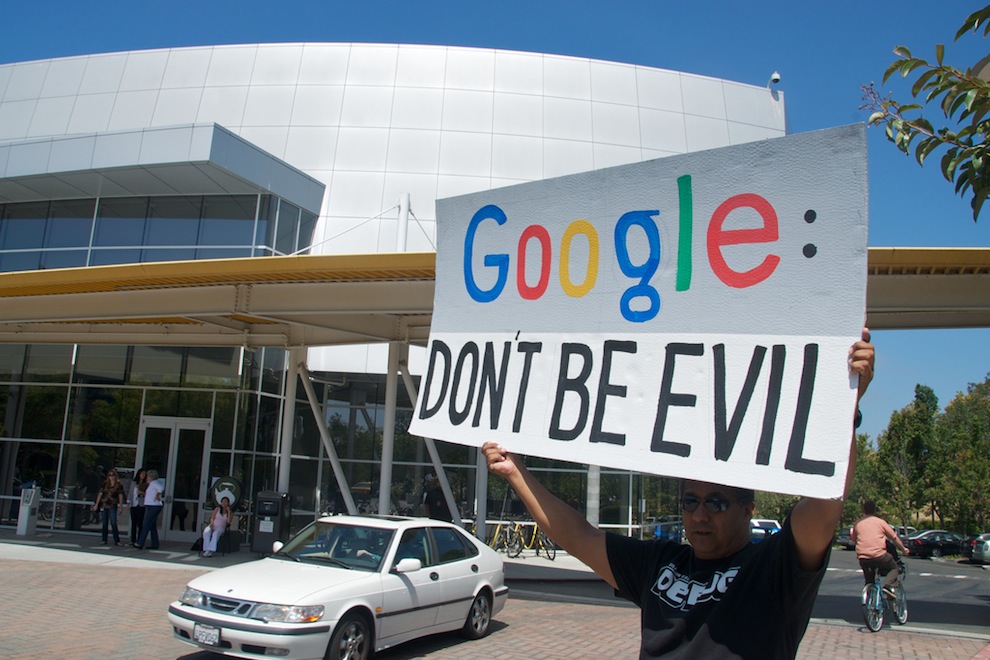
France on Thursday threatened Google with a fine of up to 150,000 euros ($198,000) if it does not bring its privacy procedures into line with French law on data protection within three months.
In a move that France hopes will be followed by other European states, the national data protection agency Cnil said the US Internet giant had failed to provide it with sufficient assurances about the storing and use of data it obtains from users.
“The information received in respect to this have so far been too imprecise or vague,” Cnil President Isabelle Falque-Pierrotin told AFP.
She said that Google must set a clear limit on the length of time it can store the data obtained from web surfers and seek prior approval from them before installing cookies on their devices.
France’s move follows Google’s introduction last year of a new privacy policy which enables it to track users activity across its search engine, gmail, the Google+ social networking platform and other services it owns, which include YouTube.
The changes make it easier for Google to collect and process data that could be used by advertisers to target individuals with offers tailored to their specific interest, thereby increasing the company’s revenue potential.
The changes have been widely criticised because of the implications for privacy but the pressure on Google to change how it operates has been limited to date.
The 27-member European Union warned Google in October 2012 that its data protection procedures did not comply with an EU directive on the subject and gave the company four months to change them.
That deadline passed without any action, prompting France to set up a task force of individual member states interested in pursuing the issue that involved Britain, Germany, Italy, the Netherlands and Spain.
Cnil President Falque-Pierrotin noted that while the maximum fine Google could face under French law was relatively small, Spain has the capacity of impose a penalty of up to one million euros ($1.3m).
Google has defended the changes it made last year on the ground that they simplify and standardise its approach across its various services.
But critics argue that the policy, which offers no ability to opt out aside from refraining from signing into Google services, gives the operator of the world’s largest search engine unprecedented ability to monitor its users.
Google has repeatedly stated that its privacy policy respects European law. – AFP
Expelled ANC Youth League president Julius Malema’s corruption case will continue in the Pietersburg Magistrate’s Court on Friday.
On Thursday, Malema told the court he feared that a delay in setting a trial date for his case could jeopardise the launch of his new political party.
“The sooner this case is finished, the better. I am in the process of forming a [political] party,” he said.
Malema blamed President Jacob Zuma for some of his troubles.
“It becomes impossible to convince people to join the party. President Zuma has done everything to make sure that I lost everything and block whoever is linked with Malema,” he told the court.
Malema is accused of making nearly R4 million from corrupt activities.
He is out on bail of R10,000 and faces charges of fraud, corruption, money-laundering, and racketeering.
His co-accused are his business associates Kagisho Dichabe, Lesiba Gwangwa, Helen Moreroa, and Makgetsi Manthata, who are out on bail of R40,000 each.
The State alleges Malema and the others misrepresented themselves to the Limpopo roads and transport department, leading to a R52m contract being awarded to On-Point Engineering.
According to court papers, Malema had business ties with Gwangwa, a director of On-Point Engineering. Malema’s Ratanang Family Trust was an indirect shareholder in On-Point.
The department paid the company R43m. According to the charge sheet, Malema substantially benefited from this payment, using it to buy a farm and a Mercedes-Benz. – Sapa
A heroic American whistleblower chooses, oh-so wisely, to expose Uncle Sam’s usurpations to the veteran reporters of the British Guardian and not to the partisan hacks of the American press. This fact tells you all you need to know about US presstitutes.
Confirmation of the degree to which American media has been co-opted by power came on June 10, again, via a British newspaper. The Mail Online divulged that Edward Snowden had “first approached the Washington Post with his leaks but the newspaper refused to comply with his publishing demands.” You see, the Washington Post had to hotfoot it back to Big Brother Obama before it would do its journalistic due diligence. “The Post broke the story on PRISM two weeks later, on Thursday, after consulting with government officials,” confirmed the Mail Online.
Even after being scooped by the Guardian, the Obama embeds at the Washington Post saw fit to inform their readers about PRISM on a purely need-to-know basis, “reprinting only four of the 41 PRISM PowerPoint slides,” and generally misrepresenting the nature of the program known as PRISM. The manufactured-in-America version of PRISM thus contradicts the “internal NSA documents” leaked to the Guardian.
According to the guardian of American freedoms at the Guardian, reporter Glenn Greenwald, the 41-slide PowerPoint presentation he acquired from Snowden has been authenticated as a document “used to train intelligence operatives on the capabilities of the program.” The presentation, pictorials with captions, handed out by the National Security Agency, boasts of having “direct access to the systems of Google, Facebook, Apple, Yahoo, PalTalk, YouTube in 2010; Skype and AOL, and other servers.”
Contrary to what you’re being told, “the world’s largest surveillance organization” can and does “obtain targeted communications without having to request them from the service providers and without having to obtain individual court orders.” And it is contrary to the Bill of Rights, the Fourth Amendment to the Constitution, in particular. It specifies that “warrants shall issue” only “upon probable cause, supported by oath or affirmation, and particularly describing the place to be searched, and the persons or things to be seized.”
Tellingly, the tools of Big Media and big government are not apprising you of these facts. Like a tortoise in its shell they’ve retreated from the watersheds that are the AP, the IRS and the NSA scandals, informing you only of what New York and Northeast elites think is important: “Most of you still like Obama.”
In light of “the disclosure that the federal authorities routinely collect data on phone calls Americans make, regardless of whether they have any bearing on a counterterrorism investigation,” the Gray Lady endeavored, fleetingly, to shake off a flea or two, and adopt a slightly less reverential tone toward the godhead Obama. The New York Times quickly lay down with dogs again; the paper rushed to restore Obama’s bona fides the following day.
As to other “nimble” minds in media: Andrea Tarantula, one of the interchangeable females on a Fox News idiot’s extravaganza called “The Five,” said that, “If they are competent with my information; they can have it. If not, let me have my freedoms back.” To Andrea (who is, admittedly, not as invincibly stupid as the statist Dana Perino), the inviolable “right of the people to be secure in their persons, houses, papers, and effects, against unreasonable searches and seizures” is subject to the efficiency of a naturally illicit search.
Not for Greg Gutfeld are arguments from principle. Sitting in for Bill O’Reilly, Gutfeld declared that “this” was not about surveillance but about a progressive government that could not be trusted. The majority of Americans are equally adrift, oblivious to the individual liberties American Constitution makers bequeathed them. The individuals questioned by the polling professionals at the Pew Research Center were inclined to approve of the phone-call tapping of millions, if conducted by the party for which they voted.
Lawrence O’Donnell and his entourage at MSNBC—Alex Wagner and Chris Hayes, the most enthusiastic Obama bobbleheads on TV—acted all surprised about rudderless America, never implicating their daily, partisan promotionals in the process. The hosts harped on the fact that no harm had come from the NSA PRISM program. And, after all, was Obama not obligated to continue the incursions into liberty begun by Bush? C’est la vie. Wagner did display a modicum of remorse for her cover-up. She admitted that Obama had gone beyond the call of duty in expanding counterterrorism and state surveillance.
Neoconservatives such as Bill Kristol of the Weekly Standard and the editorial board of the Wall Street Journal; retired United States Army Lt. Col. Ralph Peters, and radio talker Hugh Hewitt—all pronounced the NSA data sweep a non-scandal. Another neocon, Charles Krauthammer, saw Obama’s infractions as a vindication of Bush’s. The columnist invited Democrats now excusing Obama to pardon Bush and … party on.
Snowden came forth, in his words, “to reveal criminality.” But Fox News’ Megyn Kelly chose to mine crime from the ore of virtue. Kelly summoned a two-bit profiler, allegedly from the FBI’s Behavioral Analysis Unit—who sounded like she’d been plucked from the set of Criminal Minds—to expose “this guy.” Not to be outperformed by Kelly, the profiler unloaded terms like “loser” and “drop-out” on a man who has held many responsible positions within the intelligence community in his young life.
Yet another Fox News personality, Neil Cavuto, went on to compare Snowden to celebrity seducer Roman Polanski, who, in 1978, sought asylum in France after being convicted of sleeping with an American minor. Chimed Cavuto, “We don’t know why [Snowden] did what he did.”
Oh yes we do. Contra Cavuto, Snowden forsook creature comforts and worldly possessions to speak truth to power—and not to any power. The 29-year-old National Security Agency contractor has gone up “against the world’s most powerful intelligence agencies,” as he stated soberly. Snowden understands his chances of prevailing are not good. “[T]ey’re such powerful adversaries that no one can meaningfully oppose them. If they want to get you, they will get you in time.”
In Snowden’s poignant words, “You can’t wait around for someone else to act. I had been looking for leaders, but I realized that leadership is about being the first to act.” “I’m neither traitor nor hero. I’m an American,” he summed-up so simply.
Yes, we need fewer personalities like Cavuto and more men of character like Snowden.
Those who’re not suspended in the moral abyss with mainstream media already know that Edward Snowden is the best of America. Let us prove ourselves worthy of his sacrifice. Come every Memorial Day—more aptly called “Dying For Nothing Day”—we direct a commonplace saying at members of a military that has not defended authentic American liberties for decades. It is, however, to a young man such as this that we should say:”Thank you for your service, Mr. Snowden.”
James Gandolfini’s lumbering, brutish mob boss with the tortured psyche will endure as one of TV’s indelible characters.
But his portrayal of criminal Tony Soprano in HBO’s landmark drama series “The Sopranos” was just one facet of an actor who created a rich legacy of film and stage work in a life cut short.
Gandolfini, 51, who died Wednesday while vacationing in Rome, refused to be bound by his star-making role in the HBO series that brought him three Emmy Awards during its six-season run and helped change the landscape of television drama.
“He was a genius,” said “Sopranos” creator David Chase. “Anyone who saw him even in the smallest of his performances knows that. He is one of the greatest actors of this or any time. A great deal of that genius resided in those sad eyes.”
Dr. Claudio Modini, head of the emergency room at the Policlinic Umberto I hospital in Rome, said Gandolfini suffered a cardiac arrest and was pronounced dead at 11 p.m. Wednesday after resuscitation efforts in the ambulance and hospital failed.
Modini told The Associated Press that an autopsy would be performed starting 24 hours after the death, as required by law.
Michael Kobold, a family friend, told reporters in Rome that a family member discovered Gandolfini in his hotel room, but he declined to say whom. NBC quoted the manager of Rome’s Boscolo Exedra hotel as saying it was Gandolfini’s 13-year-old son, Michael.
Gandolfini had been expected to receive an award at the Taormina Film Festival in Sicily this weekend, and organizers said they were scrambling to instead put together a tribute “remembering his career and talent.”
Edie Falco, who played Tony Soprano’s wife Carmela on “The Sopranos,” remembered him as a “man of tremendous depth and sensitivity.”
“I am shocked and devastated by Jim’s passing,” she said in a statement, adding that her heart went out to his family “as those of us in his pretend one hold on to the memories of our intense and beautiful time together. The love between Tony and Carmela was one of the greatest I’ve ever known.”
Joe Gannascoli, who played Vito Spatafore on the drama series, said he was shocked and heartbroken.
“Fifty-one and leaves a kid – he was newly married. His son is fatherless now. … It’s way too young,” Gannascoli said.
Gandolfini and his wife, Deborah, who were married in 2008, have a daughter, Liliana, born last year, HBO said. Michael is the son of the actor and his former wife, Marcy.
Gandolfini’s performance in “The Sopranos” was his ticket to fame, but he evaded being stereotyped as a mobster after the drama’s breathtaking blackout ending in 2007. In a December 2012 interview with The Associated Press, he was upbeat about the work he was getting post-Tony Soprano.
“I’m much more comfortable doing smaller things,” Gandolfini said then. “I like them. I like the way they’re shot; they’re shot quickly. It’s all about the scripts – that’s what it is – and I’m getting some interesting little scripts.”
He played then-CIA director Leon Panetta in Kathryn Bigelow’s Osama bin Laden hunt docudrama “Zero Dark Thirty.”
“I told him I was glad an Italian played me – swear words and all,” Panetta said Thursday. “We laughed together at the fact that tough guys can have a heart of gold. He did, and we will miss him.”
Gandolfini also worked with Chase for the ’60s period drama “Not Fade Away,” in which he played the old-school father of a wannabe rocker. And in Andrew Dominick’s crime flick “Killing Them Softly,” he played an aged, washed-up hit man.
Brad Pitt, his co-star in that film, called him “a ferocious actor, a gentle soul and a genuinely funny man. I am fortunate to have sat across the table from him and am gutted by this loss. I wish his family strength and some semblance of peace.”
On Broadway, he garnered a best-actor Tony Award nomination for 2009’s “God of Carnage.”
Deploying his unsought clout as a star, Gandolfini produced a pair of documentaries for HBO focused on a cause he held dear: veterans affairs.
His final projects included the film “Animal Rescue,” directed by Michael R. Roskam and written by Dennis Lehane, which has been shot and is expected to be released next year. He also had agreed to star in a seven-part limited series for HBO, “Criminal Justice,” based on a BBC show. He had shot a pilot for an early iteration of the project.
While Tony Soprano was a larger-than-life figure, Gandolfini was exceptionally modest and obsessive – he described himself as “a 260-pound Woody Allen.”
In past interviews, his cast mates had far more glowing descriptions to offer.
“I had the greatest sparring partner in the world, I had Muhammad Ali,” said Lorraine Bracco, who, as Tony’s psychiatrist Dr. Melfi, went one-on-one with Gandolfini in their penetrating therapy scenes. “He cares what he does, and does it extremely well.”
Gandolfini grew up in Park Ridge in New Jersey, the son of a building maintenance chief at a Catholic school and a high school lunch lady.
After earning a degree in communications from Rutgers University, Gandolfini moved to New York, where he worked as a bartender, bouncer and nightclub manager. When he was 25, he joined a friend of a friend in an acting class.
Gandolfini’s first big break was a Broadway production of “A Streetcar Named Desire” where he played Steve, one of Stanley Kowalski’s poker buddies. His film debut was in Sidney Lumet’s “A Stranger Among Us” (1992).
Director Tony Scott had praised Gandolfini’s talent for fusing violence with charisma – which he would perfect in Tony Soprano.
Gandolfini played a tough guy in Scott’s 1993 film “True Romance,” who beat Patricia Arquette’s character to a pulp while offering such jarring, flirtatious banter as, “You got a lot of heart, kid.”
Scott called Gandolfini “a unique combination of charming and dangerous.”
In his early career, Gandolfini had supporting roles in “Crimson Tide” (1995), “Get Shorty” (1995), “The Juror” (1996), Lumet’s “Night Falls on Manhattan” (1997), “She’s So Lovely” (1997), “Fallen” (1998) and “A Civil Action” (1998). But it was “True Romance” that piqued the interest of Chase.
In his 2012 AP interview, Gandolfini said he gravitated to acting as a release, a way to get rid of anger. “I don’t know what exactly I was angry about,” he said.
“I try to avoid certain things and certain kinds of violence at this point,” he said last year. “I’m getting older, too. I don’t want to be beating people up as much. I don’t want to be beating women up and those kinds of things that much anymore.”
The U.S. Embassy in Rome, which said it had learned about the death from the media, said it would be available to provide a death certificate and help prepare Gandolfini’s body for return to the United States. The Embassy said it can take between four and seven days to arrange shipment outside of Italy.
It isn’t yet known yet what caused his heart to stop beating. Sudden cardiac arrest can be due to a heart attack, a heart rhythm problem, or as a result of trauma. The chance of cardiac arrest increases as people get older; men over age 45 have a greater risk. – AP
The trial of a Western Cape constable who tried to extort money from a taxi driver allegedly caught with perlemoen continues in the Bellville Specialised Commercial Crime Court on Friday.
Constable Mjatya Bukani, 35, and a police reservist were on patrol on December 8, 2010, when they searched a taxi driven by Wanana Gwadino and allegedly found a bag of perlemoen.
Bukani apparently demanded money from Gwadino, turning down his first offer of R300, but accepting a second offer of R500.
Bukani later allegedly demanded R500 more, which Gwadino withdrew from an ATM.
According to the charge sheet, Gwadino and his two passengers were locked in a holding cell, and were later released without being charged.
Bukani and the reservist have pleaded not guilty to a count of extortion, and an alternative count of corruption. – Sapa
The Star, once South Africa’s biggest daily, now also belongs to Sekunjalo
Sapa reports that Cosatu and its some of its affiliates make up a large portion of Sekunjalo Independent Media’s (SIM) shareholding, the company said on Thursday. But a mysterious Chinese investor is providing some of the funding and could end up with a 20% stake in one of South Africa’s most influential newspaper groups.
Employees of Independent News and Media (INM) would get 10 percent of the shares in company, SIM chairman Iqbal Surve said in a statement.
“We know we can continue to gro
w and run this media group profitably,” he said.
Independent News and Media in Ireland confirmed on June 17 that its shareholders had voted in favour of the sale of the media group to the Sekunjalo Group. The two shareholders of Independent News and Media SA (INMSA) would be SIM, with 75 percent, and the Government Employees’ Pension Fund (GEPF) acting through the Public Investment Corporation (PIC), with 25 percent. This would ensure that INMSA was “firmly in South African hands”, said Surve.
He said 63 percent of SIM’s shares would be held by Sekunjalo Investment Holdings; the Congress of SA Trade Unions’ (Cosatu) investment company Kopano Ke Matlaka, represented by Collins Matjila; the SA Clothing and Textile Workers’ Union Investments Group, represented by Andre Kriel; the Food and Allied Workers’ Union, represented by Basebenzi Investments and Katishi Masemola; and employees, via a special purpose vehicle.
The other 37 percent would be held by a number of “broad-based value adding partners”, he said.
These included the Black Business Chamber (Western Cape) and various independent South African Women’s business community organisations, represented by Lindiwe Barbara Ngcobo, and Manemele Maria.
Sekunjalo Digital Media would help drive a digital and mobile growth strategy; and the Mvezo Development Trust, represented by Mandla Mandela, would provide for the development of the communities of the Eastern Cape.
They were joined by the Umkhonto we Sizwe Military Association (through the Military Veterans’ Trust); and the Western Cape Development Trust, which would focus on the provision of bursaries for journalists from black communities.
Other shareholders were prominent entrepreneurs and business people such as Sandile Zungu, and media and advertising personalities Tim Modise and Groovin Nchabeleng, from the Blue Print Group.
“The Sekunjalo Consortium will at all times have control of INMSA, with a number of funding partners sharing in the equity of the company,” said Surve Funding would come from SIM itself, from banks, the trade union investment companies, the GEPF, and a Chinese consortium.
“To ensure that the business has sufficient capital resources to reinvest in vernacular titles, digital strategy, reinvigorating existing titles and an African growth strategy, additional funding has been arranged which may see a further shareholding/investment of 20 percent placed with the Chinese consortium,” he said.
INMSA owns the Cape Times, the Cape Argus, the Weekend Argus, the Daily Voice, The Star, Pretoria News, Saturday Star, Sunday Independent, Diamond Fields Advertiser, Weekend Pretoria News, Daily News, The Mercury, Post, Independent on Saturday, the Sunday Tribune, the Zulu daily newspaper, Isolezwe, and its Saturday and Sunday editions.
It also owns a number of weekly community newspapers in the Western Cape, and has investments in the community newspaper markets in KwaZulu-Natal and Gauteng.
It also owns and runs Independent Online (IOL) and publishes three Conde Nast international magazine brands: House & Garden, GQ and Glamour.
Surve said he strongly believed in the future of print media in South Africa.
“This is the beginning of a strategy to invest in newspapers across Africa, and to focus on developing digital and other cross-media opportunities.”
The Media Workers’ Association of SA (Mwasa) welcomed the announcement and said it believed the staff share would revolutionise labour relations in the media sector.
“Mwasa welcomes this offer to empower all staff and looks forward to further formal engagements to determine logistical and operational arrangements for the participation of staff in the direction of the new company,” it said.
It looked forward to meeting the challenges and opportunities the announcement presented, and congratulated Surve and the SIM consortium on a “watershed achievement”.
An old map from 1922 showing British South Africa and the protectorates
During a debate on the 1913 Land Act today, Dr. Pieter Mulder of the Freedom Front Plus said that the former British protectorates Botswana, Lesotho and Swaziland should be included when calculating the percentage of black-owned land in South Africa. All three territories formed part of British South Africa in 1913 and were also administered by South Africa.
Dr. Mulder said: “In the thoughts of many, the surface of these areas was included in the land of 1913. The one gets a 40% – 60% land distribution and even a 50 – 50 depending of how it is calculated. Until after the 1936 Act, there were attempts to incorporate these protectorates into South Africa.”
Here follows the full text of his speech:
“I have two problems with a debate such as this one:
“My first problem is that when we talk about history, all the facts, and not only the facts that suite us, should be placed on the table.
“The core of the objection against the 1913 Act is that it had divided the land between black and white and that only 13% of the land was given to black people. This is a valid criticism about injustices of the past. But it is based upon today’s facts and not based upon the facts of 1913.
“All the maps of 1913 indicate that the Union of South Africa was part of British South Africa. British South Africa in 1913 consisted of South Africa and the three former protectorates, today known as Botswana, Lesotho and Swaziland. In 1913 there was no question that these protectorates would one day become independent states. Botswana was until 1965 still managed from Mahikeng in South Africa. It was generally accepted that the protectorates would in the long run be incorporated into South Africa. That is why the South Africa Act of 1909, which was approved by the British parliament, provided for the incorporation of these three areas into South Africa at a later stage.
“In the thoughts of many, the surface of these areas was included in the land of 1913. The one gets a 40% – 60% land distribution and even a 50 – 50 depending of how it is calculated. Until after the 1936 Act, there were attempts to incorporate these protectorates into South Africa.
“I do not see it as my responsibility to try and defend 1913. What I do believe, is that it would only be reasonable, if in our criticism, we to try and understand all the arguments and thoughts of 1913.
“Why did this incorporation not succeed?
“Because there also other views. The chiefs of these protectorates seriously objected to the British in London against incorporation. Eventually they succeeded and in 1966 and 68 these areas became independent, which created the current set of facts.
“My second problem: It is not wrong to hold debates on the past. But such a debate is only sensible if something could be learnt from it from the future.
“The past cannot be changed through a lot of talking. That is why the FF Plus does not believe in a better past but in a better future. Little has been said about what we have learnt from the past and how we can succeed with land reform in 2013 without causing famine. Nothing has been said about how food will be provided for 52 million South Africans, of whom 70% will shortly be living in urban areas and this, while we only have 13% of good agricultural land. Little has been said about how we could better utilise the thousands of hectares of communal land.
“It is the future and this debate which we should be having now if we want to make South Africa a better place for all.”
The Muslim Lawyers Association (MLA) intends taking the NPA to court for refusing to arrest US President Barack Obama on his South African visit later this month.
“We will ask the court to review the decision neither to investigate or prosecute and to order them to commence a full investigation in terms of the Rome Statute,” MLA attorney Yousha Tayob said.
The MLA said it submitted a complaint to the national director of public prosecutions and the SA Police Service, calling for Obama to be “investigated, charged, arrested, and tried in a South African court for war crimes, crimes against humanity, and genocide”.
The MLA cited the Obama administration’s drone programme as the reason for its action.
The association said the complaint was made in terms of international customary law, as well as the implementation of the Rome Statute of the International Criminal Court, Act 2002 (the ICC Act).
“The [drone] programme is responsible for extra-judicial killings of both innocent civilians as well as US citizens abroad. The drone strike policy has continued unabated with total disregard for territorial sovereignty and this is cited as the primary reason that Obama should be investigated and tried for war crimes, crimes against humanity, and genocide,” the MLA said.
A drone is an unmanned aerial vehicle. In a recent speech Obama said the US used drones to target people it considered a threat to its national security when other measures were not possible.
The National Prosecuting Authority (NPA) confirmed receiving the MLA’s documents.
Tayob said the MLA received a letter of reply from the state attorney’s office on Wednesday.
“They have decided they are not commencing an investigation,” said Tayob.
The NPA was also not going to arrest or secure Obama’s attendance in a court room.
Tayob said the application for a review would be made next week, probably in the High Court in Pretoria.
The Media Review Network (MRN) was also opposed to Obama’s visit. Executive director Iqbal Jassat said the MRN planned a series of protests over Obama’s visits, over the US government’s use of drones, its failure to stop the “occupation of Muslim countries”, and its not shutting down the Guantanamo Bay detention centre as promised.
The MRN supports the MLA’s planned legal action.
“We have rallied behind these actions. Levels of pressure developed by civil society would force the US government to review the purpose of this visit and possibly lead to the cancellation,” said Jassat.
A row is reportedly also brewing over plans by the University of Johannesburg to award Obama an honorary degree.
According to a report in the Sunday Independent, students were split on this.
But deputy vice chancellor Tinyiko Maluleke said the process was a lengthy one, requiring high levels of consultation and agreement, and had not been finalised.
The process of nominating someone for an honorary degree began with discussions in the honorary degrees committee, where candidates had to receive 100 percent support.
From there, the nomination went to the senate, which consisted of senior academics and representatives of the Students’ Representative Committee. After that it, went to the council, which also consisted of student representatives.
At each stage, a certain amount of support was required.
“So when people say stuff has not been consulted or students have not been included, it’s simply not true. It’s a very lengthy process,” said Maluleke.
A foreign African set alight by local South African blacks
The inhumane and degrading treatment of African foreign nationals is a threat to democracy and freedom in South Africa, Home Affairs Minister Naledi Pandor said on Thursday.
“Our brothers and sisters on the African continent played an important role in the achievement of democracy and freedom in South Africa,” she said in a speech prepared for delivery in Pretoria for World Refugees Day.
“They extended hospitality and asylum to many of our exiled leaders and their families during the oppression of apartheid.”
She said Zimbabwe, Mozambique, Angola, Lesotho, Zambia, Tanzania, and Botswana paid an “even higher price” for supporting the anti-apartheid struggle.
“Many of their citizens perished in raids into their territories by the apartheid security forces.”
She said using force or threats of violence to resolve grievances in South Africa was unacceptable.
“Anti-immigrant violence is inseparable from the evil of racism. The insidious nature of rising levels of ethnicism in our society is another cause for concern.
“We need to re-commit to the non-racialism we believed in during the days of our struggle against apartheid. We need to teach our young people to recognise bias, intolerance, and racism and arm them with the skills to combat these forms of discrimination.”
She said more needed to be done to teach people the value of diversity and the advantages of living with people from different cultures.
“We will not shirk our responsibilities under our refugee law or international conventions. South Africa remains one of the most liberal countries in regard to the benefits asylum seekers and refugees are allowed in our country.”
In South Africa, refugees and asylum seekers could move freely, work and enjoy basic services, Pandor said.
“It is true that we do not grant refugee status easily. Show me a country that does. But we do take longer than we should in determining refugee status.
“We are taking steps to process applications more efficiently and fairly.
We are reviewing our procedures and implementing a fast-track capacity to process application status.”
Her department was working with international organisations to strengthen partnerships so “durable” solutions could be found for problems affecting refugees. South Africa was always open to refugees.
“Because we understand the importance of family and we understand the pain of losing the support and security of a family,” she said.
“I would like to reassure refugees here today of our admiration and support for [their] strength and resilience in the face of huge adversity.” – Sapa
Marine Le Pen faces prosecution for comparing Muslim immigration to the Nazi occupation of France after the European Parliament’s legal committee recommended that the nationalist leader be stripped of her immunity.
The full parliament is now expected to formally lift her protection from prosecution as an MEP after a vote on the recommendation on July 3, clearing the way for her to face race hate charges in a French court.
Sajjad Karim, a British Tory MEP on the parliament’s legal affairs committee, voted in favour Ms Le Pen losing her parliamentary immunity.
“There is a red line between freedom of speech and inciting racial hatred,” he said. “I, along with many other MEPs, today voted to drop Ms Le Pen’s immunity and I am confident that the majority of the European Parliament will follow our lead in July.”
French prosecutors asked the EU assembly last November to lift the French National Front leader’s immunity as a lawmaker so she could be prosecuted for remarks likening Islamic prayers to the Nazi occupation.
Ms Le Pen faces charges for comments she made in a speech to National Front supporters in December 2010 when she denounced the holding of Muslim prayers in the streets of France in areas where there are no mosques.
“For those who like to talk about World War II, to talk about occupation, we could talk about, for once, the occupation of our territory. There are no armoured vehicles, no soldiers, but it is an occupation all the same and it weighs on people,” she said.
She follows in the footsteps of her father Jean Marie, founder of the French National Front, who was stripped of his legal protection as an MEP to face German Holocaust denials charges in 1998, he had previously been convicted of similar charge in France. – Daily Telegraph
This website uses cookies to improve your experience. We'll assume you're ok with this, but you can opt-out if you wish. Cookie settingsACCEPT
Privacy & Cookies Policy
Privacy Overview
This website uses cookies to improve your experience while you navigate through the website. Out of these cookies, the cookies that are categorized as necessary are stored on your browser as they are essential for the working of basic functionalities of the website. We also use third-party cookies that help us analyze and understand how you use this website. These cookies will be stored in your browser only with your consent. You also have the option to opt-out of these cookies. But opting out of some of these cookies may have an effect on your browsing experience.
Necessary cookies are absolutely essential for the website to function properly. This category only includes cookies that ensures basic functionalities and security features of the website. These cookies do not store any personal information.
Any cookies that may not be particularly necessary for the website to function and is used specifically to collect user personal data via analytics, ads, other embedded contents are termed as non-necessary cookies. It is mandatory to procure user consent prior to running these cookies on your website.


 But despite Nelson Mandela’s stature as a global icon, money has failed to follow the flow of interest. Over the past two weeks, as Mandela recuperated in a Pretoria hospital from a recurring lung infection, those trading on his name, directly and indirectly, did not see a spike in their revenues, to their considerable distress.