Furniture firm IKEA has removed a photograph from its Russian website of people in colourful ski masks like those worn by punk band Pussy Riot, three of whose members were jailed after staging a protest against Vladimir Putin in a church.
The picture, which showed four people in the masks sitting on IKEA furniture, had been posted on a section of the site which displays photographs of customers posing at stores.
A notice on the website confirmed the image had been removed and said: “IKEA is a commercial organisation that conducts its activity outside of politics and religion.”
“We cannot allow our advertising project to be used as a platform for campaigning of any kind,” it added.
Pussy Riot’s band members were convicted of hooliganism motivated by religious hatred after belting out a song criticising Putin, then prime minister and now president, in Moscow’s Christ the Saviour Cathedral in February. They were handed two-year jail terms.
The brightly coloured balaclava masks they wore during the protest have become the band’s trademark.
The Russian Orthodox Church head has called the cathedral protest part of a campaign aimed at curbing the resurgence of Russia’s main faith.
Russia has dismissed the criticism from abroad, which the Foreign Ministry said pointed to a “clash of civilisations”. Putin has said the state is obliged to protect the feelings of the faithful.
A representative of IKEA in Russia confirmed on Sunday the notice had replaced a photograph of people wearing ski masks and declined to comment further immediately, asking for a written request which would be answered on Monday.
IKEA has invested about 2.5 billion euros ($3.25 billion) in Russia since 2000, building stores that anchor malls on the outskirts of big cities. When it posted record profits for the fiscal 2010/11 year in December, the company said some of its biggest sales gains were in Russia.
In 2009 IKEA had threatened to halt further expansion in the country, citing corruption and red tape, but last November it said it was looking to at least double its three-store footprint in Moscow and refurbish its 14 MEGA malls.
A Moscow court is to begin hearing an appeal against the convictions and sentences in the Pussy Riot trial on Oct. 1.
South African truck drivers are now officially on strike, according to radio station RSG. Over the long weekend the were threatening to go on strike after several months of failed salary negotiations with employers, the main transport workers’ union said Sunday.
The South African Transport and Allied Workers’ Union (Satawu) has given notice of plans to strike from Monday, though because there was a public holiday the stayaway would not take effect until Tuesday, a spokesman said.
“There is currently a recommended offer by the employers that we are considering, but we hope to check with our membership…. We are going to contact our members on Tuesday morning,” the union’s Vincent Masoga told AFP.
Masoga said truckers are seeking a 12-percent increase for 2013 and 2014. He refused to say how much the employers’ association is offering, but local broadcaster Talk 702 put the figure at eight percent.
South Africa’s central bank has forecast inflation will hold steady at around five percent through 2014.
The Road Freight Association of transport employers was not immediately available for comment.
A strike could disrupt retail and fuel supply chains in the country, which was swept by violent strikes in its crucial mining sector in recent weeks. – Sapa and RSG
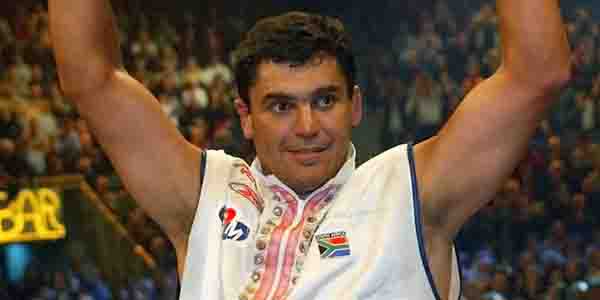
In a country where violent deaths widely go unnoticed, South Africans have reacted with outrage and shock at Corrie Sanders’ murder on the weekend.
The 46-year-old former world heavyweight boxing champion was shot in a restaurant in Brits outside Pretoria on Saturday night and died in hospital eight hours later.
Sanders’ former wife Sunette said that Corrie, who was attending the birthday party of his nephew, was leaning over his daughter to protect her when he was shot.
With 40 murders or more occurring on most days, killings seldom make the national news, but Sanders’ death has sparked widespread condemnation.
More than most other sports in South Africa boxing has crossed racial barriers and southpaw Sanders, who was known as “The Sniper”, was one of the most popular sportpersons in the country.
Although always considered a promising fighter, Sanders was already 37 when he was given a crack at the WBO heavyweight title in 2003 and in a fight described later by Ring magazine as the upset of the year, put down Wladimir Klitschko four times before winning on a TKO in the second round.
Just over a year later he lost to Klitschko’s elder brother Vitali and although he fought a few times after that eighth round TKO, he retired in 2008 after a first round KO against fellow South African Osborne Machimana with a record of 38-4 with 31 knock-out victories.
He then turned his attention to becoming a successful businessman and a three-handicap golfer.
It is a mark of the high esteem with which Sanders was held by South African sportsman that tributes came from many top South African athletes.
Former Bafana Bafana player Mark Fish, who played in the Premier League and the Serie A, expressed his condolences to Sanders’ family. “So sad to hear about the tragic death of SA boxing great and a true gentleman Corrie Sanders.”
Olympic swimming champion Cameron van der Burgh said: “Rest in peace Corrie. A champion of the world,” while former Springbok captain John Smit tweeted: “Just woke up to news of Corrie Sanders having been murdered, what another senseless waste of life in SA. RIP Champion.”
A former captain of the South African cricket side, Pat Symcox said: “Feel sick to the core. Just so damn angry over Corrie’s murder. A helpless feeling and one that wants to scream out,” while another captain of the Proteas Shaun Pollock said: “Tragic news about Corrie Sanders. My thoughts are with his family. RIP.”
Vitaly Klitschko also paid a tribute, saying Sanders had a “dangerous” style of boxing. “Corrie Sanders was the most difficult opponent I ever fought.”
Unlike many other South African boxers who moved to the US to further their careers, Sanders chose to stay in South Africa, saying in an interview a few weeks ago that he never considered leaving.
“I loved this country too much to move to the US like other boxers. It might sound strange, but I felt I had more black fans than white.
“I think the two big sports in the black community are boxing and soccer, and whenever I was out and about, they would stop me and want to chat. That was always very humbling.”
Sanders’ death is the latest in a number of high-profile murders that have shocked South Africa.
In 2005 Sanders’ stable mate Msukisi Sikali, who held the world title in the junior flyweight, flyweight, and super flyweight divisions was stabbed to death as he attempted to fight off a group of muggers.
The father of South African international Doctor Khumalo was killed three years earlier, while reggae star Lucky Dube was murdered in a botched highjacking in 2007.
The boxers’ death will once again ignite discussion in South Africa about the high crime rate and the failure of the government to deal with it, even though they say the statistics show a slight drop.
However, for Sanders’ family, like the relatives of many others killed in senseless crimes, the statistics are little comfort. – DPA
Van Gogh's 'Starry Night' in the Museum of Modern Art in New York, however
The operation began moments after the Van Gogh Museum in Amsterdam closed Sunday evening. Men removed alarm tags from behind some of Vincent Van Gogh’s greatest masterpieces, including “Sunflowers,” “Irises” and the famously crooked “Bedroom,” and quickly pulled the paintings down from the museum’s walls.
Fortunately, they were not thieves carrying out an epic heist, but curators preparing the works for transport to a temporary location across town where they will be on display for the next seven months while the museum is closed for renovations.
In all, 75 pieces – the cream of the biggest collection of Vincent Van Gogh’s work – are moving to The Hermitage, an Amsterdam dependency of the Russian state museum.
Watching the lifeblood of his museum disappear, Director Axel Ruger said he wasn’t nervous about the possibility the paintings could be damaged or stolen before they return next year.
“We do this all the time” when individual paintings go on loan to another museum, he said. But never on this scale, he conceded.
“I cannot really say much about the (security) measures that are being taken, because you will understand that we need to keep those confidential in order to safeguard the security of the transport,” he said.
Standing near a blank space on the wall where Van Gogh’s final work, the 1890 painting “Wheatfield with Crows,” had hung just minutes earlier, Curator Leo Jansen described in brief the treatment the paintings would undergo.
After being loaded onto felt-covered trolleys, they would be taken to a workshop to be wrapped in protective insulation and packed into hard-shell carrying cases called “turtles” that are resistant to both physical shocks and temperature changes.
The cases have been assigned code numbers rather than bearing the paintings’ individual names.
About an hour later, the first shipment was loaded onto a yellow van and then driven away under police escort. The route each shipment followed was kept secret until the last moment.
The operation continued like clockwork through Sunday night and into the day Monday in order to get the paintings on display again as soon as possible: the Van Gogh Museum is Amsterdam’s most popular, attracting 1.6 million visitors in 2011 – eclipsing both the Rembrandt-rich Rijksmuseum and the Anne Frank House museum.
[ad 1]
The exhibit at The Hermitage opens Saturday and runs through mid-April, with the Van Gogh Museum to reopen on April 25, 2013.
The closure of the Van Gogh Museum was timed in part to coincide with the reopening next door of the lesser-known Stedelijk, or city museum, which houses works by Dutch Modernists Piet Mondriaan and Gerrit Rietveld, as well as Pablo Picasso, Marcel Duchamp, Henri Matisse and many others.
Dubbed “the bathtub” by local press, the most notable new feature of the renovated Stedelijk is a white roof with an overhang that stretches so far from the side of the building it looks like it might simply break off.
Architects say it is structurally sound, made possible thanks to a stronger-than-steel composite material. – AP
With the U.S. Supreme Court about to hear arguments in the Fisher v. University of Texas case that could decide the fate of affirmative action in admissions, a research war has broken out. Defenders and critics of the consideration of race are releasing new studies (some of which were submitted in briefs to the court) on the impact of affirmative action.
Several studies presented Friday at the Brookings Institution suggested that eliminating the consideration of race would not have as dramatic an effect on minority students as some believe, and that the beneficiaries of affirmative action may in fact achieve less academic success than they would otherwise. The studies were criticized by some present for being one-sided.
Yield Rates After a Ban
One of the studies explored the impact on the yield rate — the proportion of admitted students who enroll — of black, Latino and Native American students to the University of California after the state barred the consideration of race in admissions. Minority enrollments fell after voters adopted the ban, in part because greater proportions of white and Asian applicants, on average, have the academic and other credentials required for admission.
But the paper focused on a subset of minority students: those who gained admission after the ban on affirmative action. Many observers at the time predicted that these students would be less likely to enroll, as they would perceive the system to be hostile, and news articles quoted minority students to this effect.
But a paper by Kate Antonovics, an economist at the University of California at San Diego, and Richard Sander, a law professor at the University of California at Los Angeles, found that the ban on affirmative action didn’t produce “chilling effects,” but actually produced “warming effects” on the likelihood of minority students’ accepting offers of admission.
The paper examined the yield rates by students in the three years after Proposition 209 (the ban) took effect. Across the system, the yield rate increased by about 10 percent. The increase was the greatest at Berkeley and UCLA. At Berkeley, the pre-Proposition 209 yield rate for underrepresented minority groups was 37.9 percent, and that increased by 5.7 percentage points after affirmative action considerations were barred from the admissions process. At UCLA, a 38.8 percent yield rate increased by 3.9 percentage points.
Antonovics, who presented the paper, said that the findings were important. She said that critics of affirmative action might expect (and accept) that the end of the consideration of race would lead to an overall decline in minority enrollment rates, but that there would be “a layer of concern” if some of that drop could be attributed to students who met race-neutral admissions standards opting not to enroll. She said that she and Sander expected to find this “chilling effect,” and were surprised to find “no evidence for it” and instead see evidence showing the opposite impact.
[ad 1]
‘Mismatch’ Theory
The fear Antonovics expressed is that minority students might not be enrolling at highly competitive institutions at which they would be a good academic match. Another kind of “mismatch” has also been the focus of much research on affirmative action in recent years — and that idea (hotly debated) is that minority students who are admitted to better institutions because of affirmative action may end up with lower academic achievement as a result. (Sander, who helped organize the Brookings program, has been a leading proponent of the idea.)
On Friday, Doug Williams, chair of economics at the University of the South, presented a paper arguing that law schools provide solid evidence for the existence of mismatch. He said that because of the requirement that lawyers pass a bar exam, there is an independent measure of successful learning in law school. Because some minority students with similar academic credentials (judged by undergraduate grads and LSAT scores) enroll at more or less competitive law schools, he said it is possible to see whether there is a mismatch.
There has long been a gap between black and white law graduates on bar passage rates, he noted. Currently, about 97 percent of white law school graduates pass the bar, with 92 percent passing on the first try. For black law graduates, the figures are 78 and 61 percent, respectively. But Williams said that these gaps are partly explained by the differing academic credentials of black and white law students, and so by themselves don’t back mismatch theory.
But in comparing minority law graduates of comparable academic preparation who enroll in more or less competitive law schools, Williams said that those (from among those with comparable academic credentials) who enroll in the bottom two tiers of law schools pass the bar at a rate that is 14 percentage points higher than that of those who enroll at the top law schools. And he said that suggested a statistically significant mismatch.
Williams said that he would like more detailed information about law students — including the law schools that they apply to and are admitted to — but based on the information he does have, he said that he had “strong evidence” to back mismatch.
Sander said that panelists at the program were “ideologically diverse” and that there was no attempt to include only scholars of one point of view.
The debate will likely continue Thursday when a coalition of social science groups — the American Educational Research Association, the American Sociological Association, the American Statistical Association, the Association for the Study of Higher Education, the Law and Society Association and the Linguistic Society of America — hold a briefing on research those organizations cited in their brief to the Supreme Court encouraging the justices to uphold the legality of the consideration of race and ethnicity in admissions.
The NY1 in Gugulethu was rebaptised Steve Biko by the DA
The NY1 road in Gugulethu, Cape Town, was officially renamed Stephen Biko Drive on Monday.
The renaming process was in line with Biko’s philosophy, Cape Town mayor Patricia de Lille said in a speech prepared for delivery on Heritage Day,
This was because it replaced terms from the past, associated with inferiority, with names associated with power.
In the old road name “NY” refers to “native yard”.
“… What was unique in South Africa and the Black Consciousness movement was the mobilisation around asserting agency in the face of history… for freedom,” De Lille said.
This involved breaking down the “mental prison” built through semantic means to emancipate the minds of black South Africans.
“Like many great prophets telling difficult truths, Steve Biko was murdered for his ideas… [and] the power of his revolution.”
Naming the road in his honour was an apt tribute, as it would give power to future generations by doing away with terms associated with historical injustice.
[ad 1]
“…This is the change of a reconciliation programme that tries to shape a better future from a divided past.
“It is by building, brick by brick, the Cape Town of tomorrow that truly belongs to everyone,” De Lille said. – Sapa
Heavyweight world champion Vitali Klitschko has paid tribute to South African boxer Corrie Sanders who died Sunday after being shot in an armed robbery.
“Corrie Sanders was the most difficult opponent I ever fought,” the 41-year-old World Boxing Council (WBC) champion told Germany’s Sport Bild Plus.
Sanders beat Vitali’s younger brother, Wladimir, by technical knock-out in Hanover, Germany in 2003 when he stopped the Ukrainian in the second round in a major upset to win the WBO heavyweight title.
He fought Vitali Klitschko a year later in Los Angeles for the vacant WBC heavyweight title, but lost by a technical knock-out in the eighth round.
“Corrie was fast, could give and take a punch. His style was very dangerous and did not suit me. I was very pleased to be able to win this fight,” Vitali Klitschko said.
The Klitschko brothers expressed condolences on their Facebook page Sunday after hearing of Sanders’ death.
“We were shocked to learn of the sudden death of Corrie Sanders and we want to express our sincere condolences to his family,” they said.
“We will remember Corrie as a great person both inside and outside the ring. He was a great fighter with a big heart who always positively represented the sport of boxing.”
[ad 1]
Sanders, 46, was shot in the stomach and hand while attending a family celebration at a restaurant at Brit near Pretoria on Saturday evening. He was taken to hospital where he died early Sunday.
South African news reports Monday said Sanders had been at his nephew Michael’s 21st birthday party at the Thatch Haven Restaurant when four armed men stormed in randomly shooting.
According to SAPA news agency, the former boxing champion was at the entrance to the venue, making his way to the buffet, when the shooting started.
Eyewitnesses said Sanders had told his daughter Marinic, 15, to get down and play dead and was covering his daughter when he was shot.
Police brigadier Thulani Ngubane told South African news media a search was continuing for the gunmen in a murder inquiry. – Sapa
Boxing trainer Harold Volbrecht says he was shocked to hear of the sudden death of his close friend Corrie Sanders.
Volbrecht, who trained Sanders for the first 14-years of the heavyweight champion’s professional career, said on Monday they had a shared a close relationship.
Sanders, 46, was killed during a robbery at a restaurant in Brits, North West, on Saturday night.
“I took over as his trainer for his first professional fight [against King Kong Dyubele in April 1989],” Volbrecht said.
“I flew to Cape Town, where Corrie stayed at the time, to watch the fight, and I brought him back with me [to Benoni] afterwards.
“He stayed with me and my family until he got married. He was like a son to me.”
Volbrecht said he had been fortunate to train some of the country’s most prized pugilists, including former IBF lightweight title holder Philip Holiday, and IBF and WBA super-featherweight champion Brian Mitchell, but he was closer to Sanders than any of the other fighters under his tutelage.
“Corrie was different because he stayed in my house,” Volbrecht said.
“We were much closer because I gave him daily advice. We had a very good relationship.”
Sanders beat Ukrainian Wladimir Klitschko in a second-round technical knockout in Hannover, Germany, to win the WBO heavyweight title in March 2003.
The following year he held Klitschko’s older brother Vitali for eight rounds before the fight was stopped in Los Angeles, California.
He retired in February 2008, after 46 professional fights, with 42 wins (31 of them by knockout) and only four defeats.
[ad 1]
“He was a brilliant all-round sportsman,” Volbrecht said.
“A lot of people assume, because he was a big guy, that he had a powerful punch, but he was not a powerful guy who picked up heavy weights.
“His hand speed and accuracy made him so effective.
“Muscle means nothing in boxing, and Corrie knew that. He understood the techniques of the sport.”
Volbrecht said Sanders, a keen golfer, had hoped to turn professional and wanted to play on the Champions Tour after he turned 50.
“It was his dream to play on the seniors tour as a professional golfer,” Volbrecht said.
“He had another four years to wait, but he was a brilliant golfer because he hit the ball so far.”
Volbrecht had been stunned to hear of Sanders’ death on Sunday morning.
“How does somebody walk into a restaurant while people are eating and just start shooting? It doesn’t make any sense,” he said.
“I can’t believe it. It’s so senseless, like something out of a wild west movie.” – Sapa
Former world-champion boxer Corrie Sanders died on Sunday after he was shot by three armed black men, but also refused medical treatment by two hospitals.
According to his relatives, his life could have been saved if he had received medical treatment sooner. Corrie Sanders was shot in the arm and stomach upon shielding his daughter with his body during the shooting in a restaurant in Brits, northwest of Johannesburg. He was attending the twenty-first birthday celebration of his nephew.
Corrie Sanders was refused admission to a private hospital in the vicinity of the attack because he did not have medical aid (health insurance). He was then taken to the former HF Verwoerd academic hospital, a state institution. According to his wife, Sunette Sanders the state hospital again refused to treat him as he had been shot “outside the municipal area of Pretoria”.
South Africa’s state medical system has been politicised, subject to government race preference policies and racial quotas for medical students. The former HF Verwoerd hospital has been renamed Steve Biko, in honour of the Black Consciousness leader and the hospital is now under black managerial control, as opposed to previously when it was managed by whites.
[ad 1]
Corrie Sanders was finally admitted to Kalafong hospital in a black area where he died yesterday morning, apparently for lack of urgent medical treatment.
His friend and fellow boxer, Kallie Knoetze, said it was “inhuman that people needing urgent medical treatment should be turned away from private hospitals without good reason”.
Corrie Sanders’s familie said that the tragedy of his death was “a perfect example of why the government had to relook at the South African healthcare system”.
Bernard-Henri Lévy flanked by his wife, Arielle Dombasle (in pink), tennis players André Agassi and Steffi Graf
by Bernard-Henri Lévy, French philosopher and writer
Strangely enough, what I find most shocking in this Richard Millet affair (this editor at Editions Gallimard who caused a scandal in Paris by publishing “Eloge litteraire de Anders Breivik”) is not the white trash racism he recycles, from one book to the next, in his story of the RER, where one feels surrounded by hordes of dark-skinned people.
It is not the tone, no doubt intended to be very Montherlant, of his reflections about “the” women (in one of the two other opuscules he published at the same time, one learns, among other elegant observations, that, once past 40, their skin has “the consistency of a ripe pear”).
It is not even the enormous provocation of this long-time editor who, envious of others’ success, as sometimes happens, has apparently just decided not, as Gide said, to “take himself for a great writer, as one may consider oneself a great hairdresser” (in the past 30 years, he has published a great number of texts, which met with general indifference), but to pull out all the stops, for his own benefit (a pathetic parody of ad man Jacques Séguela’s quip, addressed to Sarkozy at the time of his election, “If you don’t have a Rolex at 50, your life has been a failure”). In an earlier book, he had ventured to support Bin Laden (“there comes a moment when one can only prove Bin Laden right, provided he is not an American or Islamist fiction” — L’opprobre, published by Gallimard) — but no one was interested. Last May, he played the in-defense-of-Bachar-al-Assad card (a charge, meant to be “disturbing,” against the media in utter “rapture” before the “insurgents” of Homs and Aleppo — Printemps syrien, published by a smaller publishing house) — that also fell flat. But now, he’s outdone himself, shifted into high speed by actually offering “praise” for Anders Breivik, the serial killer of Utoya who is, he writes, “what Norway deserved” and whose act seems to him characterized by «absolute beauty» and “literary grandeur.” Miracle! It works! The little bureaucrat of letters finally has his grand affair! This Warholian “15 minutes of fame” which, he explains, his hero, “a writer by default,” didn’t really want but that he, Millet, madly desired, and he’s got it!
No. The real surprise, for me, has been the reaction of an entire part of the French literary milieu at the publication of these three libels fairly dripping with small-minded thoughts and spite.
There was the Pavlovian reflex of those who, as the first critics became aware of the existence of a book in which a psychopathic killer was thus presented as a “Malthusian hero,” disciple of Baudrillard, started bandying about terms like thought police, organized censure, the triumph of the politically correct.
As always, I mean as in most of the great debates of today, there appeared this strange, new technique which consists of, above all, not taking sides, the better to dismiss the protagonists, back to back — insulters and insulted, same fight; racists and anti-racists, the same lamentable antics; Breivik’s victims and victims, “like Breivik,” of the Norwegian social-democratic horror, a point for all sides, be on your way, there’s nothing to see.
[ad 1]
No less Pavlovian was the convening of the great Elders who were supposed to remind the stupefied reader than one can be a great-writer-and-a-perfect-bastard — poor Céline! Poor Aragon!
As the affair wouldn’t go away and there remained evil minds that found an editor recommending “the song of the Kalashnikov” and the “singular jubilation the fact of killing can inspire” bizarre, naturally there appeared this blogger or that one, speed versions of the editorialist, to compare this obscure actor of the literary scene, seeking a role and disgrace, with Marguerite Duras going off the deep end during a human interest story that made headlines in the 1980s, the Villemin affair (or the essayist Philippe Muray, no longer here to defend himself, whose thousands of pages of Exorcismes spirituels and Après l’Histoire, one should recall, quite apart from the fact that they never gave way to abjectness, were considerably more weighty than these three mediocre brochures).
They pulled the Literature and Evil number on us.
To “contextualise” the affair, they dared to cite Artaud, Sade or Bataille — which seems to me scarcely less serious than not having leapt out of one’s chair at the description of the “ethnic cloaca” that France, according to Millet, has become.
This entire story would be laughable, there would be something pathetic in this desire to be a pariah that one senses on each page of these three books were the author’s destiny not linked, precisely, to this House.
It is difficult to understand how the successors of Sartre and Malraux could continue to be published by a man for whom “what one calls literature” is no longer anything but “the hedonistic face of a nihilism of which anti-racism is the terrorist branch” and who perceives most writers who are his contemporaries as “henchmen” as well as “sycophants.”
This is an edited, synoptic version of a piece by Bernard-Henri Lévy previously published by Huffington Post.
A writer who argued in an essay that Norway deserved mass-killer Anders Breivik has been forced to step down from a prestigious role with top French publishers Gallimard.
Richard Millet remains a Gallimard employee, the company stressed Friday, but he will no longer sit on its committee of readers, which helps select books for publication and shapes the output of established writers.
Millet will continue to look after the writers he handled for the publishers, Gallimard said.
It remains to be seen how many of them will want to continue to be associated with him following an outcry over a publication branded “fascist” by a group of 120 writers this week.
Antoine Gallimard, chief executive of the publisher, had written to Millet to express his shock at the end of August, soon after the pamphlet “In Literary Praise of Anders Breivik” was published.
On Monday, Gallimard wrote to the writer once more to remind him that “as a member of the committee of readers, he represents the (publishing) house.”
Millet’s position had been made untenable and he duly announced his resignation from the reading committee late on Thursday.
The writer insists he does not approve of Breivik’s crimes but wrote approvingly of the Norwegian’s 1,500-page online manifesto which outlines his hatred for social democracy, immigration and multiculturalism.
[ad 1]
“Breivik is without doubt what Norway deserves,” Millet wrote, arguing that the killer was as much a child of a broken family as he was the product of an ideological-racial divide caused by immigration from outside Europe.
A prolific novelist and essayist, Millet has been the editor of two winners of France’s literary prize, the Goncourt — Jonathan Littel (2006) and last year’s winner Alexis Jenni.
Despite a traditional reluctance in France’s literary world to do anything which could be seen as restricting the freedom of speech, several Gallimard writers had urged the publisher to distance itself from Millet.
In an article for Le Monde this week, to which 120 writers put their names, novelist Annie Ernaux desribed the essay as a “fascist pamphlet that is a disgrace to literature.”
Breivik was sentenced last month to the maximum 21 years in prison for killing 77 people in a bomb attack and shooting rampage last year. – AFP
Genetically, culturally and ethically the Khoe-San have something special to add to this world. The importance of this study is to put the Khoe and San heritage in the right place in history and this research will provide a genetic backdrop for future studies – Mattias Jakobsson
The largest genomic study ever conducted among Khoe and San groups reveals that these groups from southern Africa are descendants of the earliest diversification event in the history of all humans – some 100 000 years ago, well before the ‘out-of-Africa’ migration of modern humans.
Some 220 individuals from different regions in southern Africa participated in the research that led to the analysis of around 2.3 million DNA variants per individual – the biggest ever.
The research was conducted by a group of international scientists, including Professor Himla Soodyall from the Human Genomic Diversity and Disease Research Unit in the Faculty of Health at the University of the Witwatersrand in Johannesburg.
Entitled Genomic variation in seven Khoe-San groups reveals adaptation and complex African history, the study has been selected for early online publishing in the renowned scientific journal, Science, on Thursday, 20 September 2012 at 20:00 SATS (14:00 U.S. EST).
“The deepest divergence of all living people occurred some 100 000 years ago, well before modern humans migrated out of Africa and about twice as old as the divergences of central African Pygmies and East African hunter-gatherers and from other African groups,” says lead author Dr Carina Schlebusch, a Wits University PhD-graduate now conducting post-doctoral research at Uppsala University in Sweden.
Soodyall, from the National Health Laboratory Services in South Africa, has a long standing relationship with Khoe and San communities and said that the findings are a “phenomenal tribute to the indigenous Khoe and San people of southern Africa, and through this magnificent collaboration, we have given the peoples of Africa an opportunity to reclaim their place in the history of the world”.
Besides the publication of the study, the authors will also be visiting the San groups of the Kalahari in the Askam area in South Africa on the 24th of September 2012 for the country’s Heritage Day celebrations. “We are excited that together with some of our colleagues from Uppsala University, we will be able to join in the celebrations with the San groups in the Kalahari who participated in our research and to acknowledge their contribution in making our research possible”.
The researchers are now making the genome-wide data freely available: “Genetic information is getting more and more important for medical purposes. In addition to illuminating their history, we hope that this study is a step towards Khoe and San groups also being a part of that revolution,” says Schlebusch.
Another author, Professor Mike de Jongh from the University of South Africa adds, “It is important for us to communicate with the participants prior to the genetic studies, to inform individuals about the nature of our research, and to not only to share the results with them, but also to explain to them the significance of the data for recapturing their heritage.”
[ad 1]
About the research
According to Assistant-Professor Mattias Jakobsson from Uppsala University, these deep divergences among African populations have important implications and consequences when the history of all humankind is deciphered.
The deep structure and patterns of genetic variation suggest a complex population history of the peoples of Africa. “The human population has been structured for a long time,” says Jakobsson, “and it is possible that modern humans emerged from a non-homogeneous group.”
The study also found surprising stratification among Khoe-San groups. For example, the researchers estimate that the San populations from northern Namibia and Angola separated from the Khoe and San populations living in South Africa as early as 25,000 – 40,000 years ago.
“There is astonishing ethnic diversity among the Khoe-San group, and we were able to see many aspects of the colorful history that gave rise to this diversity in their DNA”, said Schlebusch.
The study further indicates how pastoralism first spread to southern Africa in combination with the Khoe culture. From archaeological and ethnographic studies it has been suggested that pastoralism was introduced to the Khoe in southern Africa before the arrival of Bantu-speaking farmers, but it has been unclear if this event had any genetic impact.
The Nama, a pastoralist Khoe group from Namibia showed great similarity to ‘southern’ San groups. “However, we found a small but very distinct genetic component that is shared with East Africans in this group, which may be the result of shared ancestry associated with pastoral communities from East Africa,” says Schlebusch.
With the genetic data the researchers could see that the Khoe pastoralists originate from a Southern San group that adopted pastoralism with genetic contributions from an East African group – a group that would have been the first to bring pastoralist practices to southern Africa.
The study also revealed evidence of local adaptation in different Khoe and San groups. For example, the researchers found that there was evidence for selection in genes involved in muscle function, immune response, and UV-light protection in local Khoe and San groups. These could be traits linked with adaptations to the challenging environments in which the ancestors of present-day San and Khoe were exposed to that have been retained in the gene pool of local groups.
The researchers also looked for signals across the genome of ancient adaptations that happened before the historical separation of the Khoe-San lineage from other humans. “Although all humans today carry similar variants in these genes, the early divergence between Khoe-San and other human groups allowed us to zoom-in on genes that have been fast-evolving in the ancestors of all of us living on the planet today,” said Pontus Skoglund from Uppsala University.
Among the strongest candidates were genes involved in skeletal development that may have been crucial in determining the characteristics of anatomically modern humans.
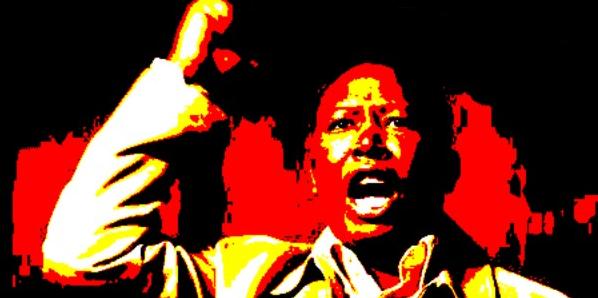
The SA Revenue Service (Sars) has obtained a R16 million judgment against former ANC Youth League leader Julius Malema for unpaid taxes, according to a report on Sunday.
The judgment was obtained in the High Court in Pretoria on September 11, City Press reported.
Malema did not oppose the application by Sars.
Sars spokesman Adrian Lackay confirmed the judgment against Malema for R16 million was obtained.
[ad 1]
He told the newspaper the amount included unpaid taxes, penalties and interest.
Lackay said he could not give any more details of Malema’s tax affairs because a “taxpayer’s confidentiality is a legal obligation imposed on Sars”.
According to the report Sars was about to seize Malema’s property and assets in Gauteng and Limpopo.
Alan Lewis, a tax law consultant and advocate, told City Press the judgment showed two things: Malema had a “hell of a lot of money” and he was in deep trouble.
Lewis, a former Sars employee, said the revenue service would most likely hand the judgment to a sheriff of the court, who would attach Malema’s properties and assets.
Sars started looking into Malema’s tax affairs last year after it was revealed that he was linked to companies which had obtained lucrative contracts from the Limpopo provincial government.
Millions of rands were channelled through Malema’s Ratanang Family Trust, according to the report. – Sapa
Miners assembling on a hillside in Marikana to mourn their colleagues killed by police
The violent crisis that has shaken South Africa’s mines shows workers’ distrust for traditional trade unions, up to now the guardians of social peace despite the country’s deep inequality.
Miners this week clawed record salary increases of 22 percent from the Lonmin platinum mine operators after a near six-week wildcat strike that killed 46.
Having rejected major player the National Union of Mineworkers (NUM), miners appointed their own representatives at the negotiations.
The unprecedented agreement may upend the whole mining industry, a fifth of the GDP of Africa’s largest economy, analysts said, and bodes ill for the country’s powerful trade union federation COSATU, and NUM, its main member.
Wildcat strikes have already spread to other gold, platinum and chrome mines, including world number one Anglo American Platinum and Gold Fields.
“Marikana holds the potential for an era in South African labour relations where violent strike action forces the hand of weakened management as opposed to historical collective bargaining promoted by COSATU and its affiliate unions,” said independent analyst Daniel Silke.
The country’s labour movement has been formalised for decades, and representative unions have exclusive negotiation rights with employers in an extremely structured process.
Unions also formed a formidable opposition to the white minority regime during apartheid. Since its inception in 1985, COSATU was affiliated with the African National Congress.
This alliance helped to avoid major social unrest when the ANC took over government in 1994 after the first all-race elections, and COSATU only gained in power through the deal.
But now the partnership threatens to taint the federation.
“COSATU has moved away from its roots to become a political organisation, while its supposed to be a labour movement,” economist Dawie Roodt told AFP.
On the ground, mineworkers say they live in hell, pointing to shacks without electricity, water or sanitation.
“Because of the separation between the grassroots and leadership, the mine worker feels his interests are not being protected anymore. This guy from the union is more interested to become a mine shareholder, and has forgotten about the worker’s wages,” said Roodt.
But it has not all been bad. The Chamber of Mines has said workers have it good compared to others in South Africa amid a 40 percent unemployment rate.
“The National Union of Mineworkers has done too good a job for its members over the past 30 years, especially the past 10, getting its members double-digit, double-inflation wage increases with no increases in productivity,” Peter Major, mining and resources head at consulting company Cadiz Corporate Solutions, wrote in the weekly Mail & Guardian.
Now, the same workers are abandoning the old guilds in favour of new ones, like the Association for Mineworkers and Construction Union (AMCU), which has been blamed for inciting the violence at Lonmin.
Other miners go it alone. Wildcat strikes have increased since the start of the year. They often erupt into violence, with intimidation against non-strikers. Some clashes spill explode into deadly violence.
Police shot dead 34 people on August 16 at the Marikana mine, a week after clashes between workers left 10 dead. Two people died in subsequent violence.
“The key issue here is whether the trade union movement, whether COSATU itself, can keep a handle on the more militant workers who have smelled blood with management as a result of Marikana,” said Silke.
“The pressure will really be on COSATU to retain a level of organisation …to attempt to elicit a better deal for members or face the potential of political polarisation.”
Unions were losing membership “without a doubt”, added Roodt.
“The political outcome will be (that) we need a separation between labour and government. (The situation) is untenable.” – Sapa
This website uses cookies to improve your experience. We'll assume you're ok with this, but you can opt-out if you wish. Cookie settingsACCEPT
Privacy & Cookies Policy
Privacy Overview
This website uses cookies to improve your experience while you navigate through the website. Out of these cookies, the cookies that are categorized as necessary are stored on your browser as they are essential for the working of basic functionalities of the website. We also use third-party cookies that help us analyze and understand how you use this website. These cookies will be stored in your browser only with your consent. You also have the option to opt-out of these cookies. But opting out of some of these cookies may have an effect on your browsing experience.
Necessary cookies are absolutely essential for the website to function properly. This category only includes cookies that ensures basic functionalities and security features of the website. These cookies do not store any personal information.
Any cookies that may not be particularly necessary for the website to function and is used specifically to collect user personal data via analytics, ads, other embedded contents are termed as non-necessary cookies. It is mandatory to procure user consent prior to running these cookies on your website.