A Russian gold medalist from the Moscow World Athletics Championships on Tuesday said she was insulted by Anglo-Saxon media claims that she had kissed a fellow female athlete on the lips in defiance of Russia’s new law against gay “propaganda”.
The incident highlighted certain Anglo-Saxon cultural attitudes. In Russia it is common for friends to kiss each other on the lips. In France even heterosexual male family members or friends may kiss.
Ksenia Ryzhova and Yulia Gushchina, members of Russia’s victorious 4×400 women’s relay team that provided one of the great moments of the championships, kissed each other on the podium after receiving their gold medals.
Some activists saw the kiss as a brazen show of defiance in support of gays and lesbians and against President Vladimir Putin after the championships were shadowed throughout by controversy over the law.
But Ryzhova on Tuesday insisted that she was married and made clear she was none too happy that people suspected that she and Gushchina might be more than just good friends.
“Yesterday, I was telephoned 20 times by various publications and instead of congratulating me they decided to insult me with these questions,” she fumed, quoted by the ITAR-TASS news agency.
“Myself and Yulia are both married and we are not having any kind of relationship,” she added, saying the two were very good friends after having trained together for eight years.
“It was a storm of emotions (after winning). And if at that moment we touched lips… I don’t know in whose fantasy this all gets thought up.
“This insults not just us but our trainers,” she added. – France24
William (Bill) Daly – whose family founded the iconic fruit cordial company W. Daly & Son in 1881 – was most likely on his way to deposit money for his church when he was murdered in the garden of his Morningside home.
Daly, 89, the last surviving son of the company founder, was found on Monday by his long-time domestic worker, Maureen Ngema. He had a rag tied around his neck and stuffed in his mouth.
His ankles had been bound with his shoes laces and his wrists were tied together with a key chain he normally had clipped to his belt.
The murder has shocked his neighbourhood and the Durban business community.
Ngema, 67, said she made the grisly discovery after noticing that the house she lives in on the property in Maple Road had been burgled.
Ngema, who has worked for Daly since 1985, said she had left the house at 4.30am for a check-up at Addington Hospital after a foot operation.
She arrived back at the house at about midday with her youngest son, Mandla, who worked as Daly’s gardener.
After making their way along the path on the side of the house and passing the dense foliage, they saw that the door of her living quarters was open. “The windows were broken and the burglar bars were bent aside. Inside, it had been ransacked,” said Ngema.
As she made her way back to the main house to tell her employer, her son inspected the premises before running to inform his brothers who work nearby, she said.
“He (Daly) didn’t answer the doorbell so I turned back.”
It was then, she said, that she spotted his body lying face up in the pathway leading to the back door of the property.
“I screamed and cried, I did not even get close, I could see it was him.”
Her screams alerted neighbour Clive de Vos. “I pulled him by the arm and showed him,” said Ngema.
Police spokesman Captain Khephu Ndlovu, who was at the crime scene on Monday, said Daly usually deposited his church’s Sunday offerings at a bank on Monday mornings.
“An already written-out deposit slip was found on him. He must have been on his way to the bank,” Ndlovu said.
Police suspect that robbery was the motive for the murder, as Daly’s pockets had been emptied and his bank cards, wallet, keys and ID were strewn on the floor, along with his panic button. It is unclear how the intruder/s entered the property, which is monitored by a security company, as the front and back entrances were locked.
Daly’s niece, Pat, arrived a few hours after the discovery of his body, from her home in Hilton, near Pietermaritzburg.
The narrow, secluded street was blocked by police cars and Pat was in tears as she walked into the house where her father, Dudley, who died in his sleep in December at the age of 98, had also grown up.
Neighbours and the police comforted Pat and Ngema as the two women sobbed. Mandla was also emotional.
“He (Daly) was like a father to me. Why did they have to kill him? He was an old man who did nothing bad to anyone,” he said.
De Vos said Daly was well liked in the neighbourhood.
“Everyone knew him, especially because of his vintage cars.”
He said Daly had stuck to a routine, doing certain things on certain days, which probably made him a “soft target”.
De Vos said crime was so rife in the area that after a year of living in Morningside, he had sold his house to move back to Johannesburg.
“I’ve had to hire a security guard. He comes in from six in the evening to six in the morning,” he said.
A few weeks ago criminals scaled his fence and told the guard he was interrupting their work, he said. “Luckily I came out and we were able to chase them away.”
Rose Boyle, who has lived in the area for almost 30 years, described Daly as “an absolute gentleman”. From her house in Anerley Road she would see Daly driving off in his vintage cars.
“Shocked does not begin to describe how I feel about what happened to him. I’m absolutely sick and horrified,” she said. “I can’t believe someone would do such a thing to an old gentleman.”
Another neighbour who did not want to be named said she was “gutted and angry” at the way Daly, whom she also described as a gentleman, had died.
“This is a horrible way for him to go. He was old and frail; there was no need to murder him,” she said.
Although she did not really know Daly, she, like many others in the neighbourhood, had noticed him because of his vintage cars which she said he kept “spick and span and was himself always smartly dressed”.
A case of murder and house robbery is being investigated by the Durban Central police. – Daily News
Hundreds of angry Mandela Park residents outside Mthatha in the Eastern Cape have vandalised and demolished houses allegedly built on their land without their consent.
They claim that homes of child headed families and widows were stolen by a local chief who resold them without their permission.
The demolitions were led by the South African National Civic Organisation. Chairperson of Mandela Park, Daluxolo Myeki says, “We are here to support the family …especially the orphans.”
Residents used anything at their disposal to demolish the houses and began demolishing an eight roomed house which was built next to an appalling two roomed flat which belongs to five children who are orphans.
Angry residents of Mandela Park allege that their chief sold this site for more than R45 000.
Myeki says they were there to protect them from the chiefs of the area which he termed “thugs”.
He says, “If there is no one who is occupying the space or the yard they just take the yard and sell it.”
Villagers say they live under terrible conditions because they are not sure when will they lose their homes to the local chiefs.
They say they will continue to protect child headed households.
The news owners of the houses could not be traced and the local chief could not be reached for comment. – SABC
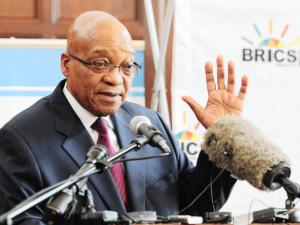
Total trade within the BRICS (Brazil, Russia, India, China, and South Africa) grouping amounted to $6.1 billion last year, President Jacob Zuma said on Tuesday.
“This represents 16.8 percent of global trade,” he told delegates at the BRICS business council meeting in Johannesburg.
“The presence and influence of the BRICS grouping continues to be felt.”
Zuma said the strength of BRICS was amplified by the fact that these countries accounted for 43 percent of the world’s population.
“Indeed, we are all gathered here because we see value in the BRICS partnership in many respects.”
In 2012, South Africa’s total trade with BRICS countries stood at R294bn, up from R264bn in 2011.
Total trade with Brazil grew from R18bn in 2011 to R20bn in 2012, and with Russia from R3bn in 2011 to R5bn in 2012.
Zuma said total trade with India, South Africa’s sixth largest trading partner, grew substantially from R53bn to R67bn.
Trade with China grew from R188bn in 2011 to R201bn in 2012.
“All these impressive statistics… should provide you with the determination and confidence to deliver on the imperatives…” he told delegates.
Trade and Industry Minister Rob Davies said the council meeting was intended to deepen the partnerships to enhance co-operation and development on the African continent.
BRICS council South African chairman Patrice Motsepe said it was crucial that the commitment to increase trade and investment was seen, and “quantifiable”.
“There’s a new sense of urgency,” Motsepe said.
He emphasised “value-added trade” and common objectives being sought.
“BRICS is not about excluding other countries,” said Motsepe.
“We want to see investments quantify… It is important to build on the BRICS partnership.” – Sapa
Hate speech, a policy based on racism and an economic policy of nationalisation clash with the letter and spirit of the South African Constitution and the Freedom Front Plus has in the light of this, lodged its strong objection with the Independent Electoral Commission to the registration of Julius Malema’s political party, the Economic Freedom Fighters.
According to Mr. Pieter Groenewald, the FF Plus’ chairperson, a strongly worded letter about this matter was sent to the Independent Electoral Commission (IEC) in which the commission has been requested to decline the application of Malema on constitutional grounds. Individuals and parties had until the end of last week had the opportunity to object to the registration.
“The EFF propagates the nationalisation of land, mines, banks and other assets without compensation and in particular on a racial basis. It is unconstitutional.
“Malema is already been found guilty in the High Court of South Africa of hate speech about the singing of the controversial song ‘Shoot the Boer’ which has subsequently been declared to be hate speech.
“With the singing of the song, Malema created race polarisation and incited emotions against a specific race and ethnic group, which is unconstitutional.
“To date, Malema as the leader of EFF has not shown any remorse. The FF Plus believes that he will continue with his unconstitutional actions and that he will abuse his party as a vehicle for similar discriminating actions and policy directions.
“In addition, the word ‘fighters’ is not suitable for a democratic system where political parties compete in elections in an orderly and democratic fashion. Section 16 of the Electoral Commission Act, states it clearly that any name or abbreviation which portrays the propagation or incitement of violence or hatred, is not acceptable,” Mr. Groenewald said.
A further request was also directed to the IEC in which the FF Plus objects to the English abbreviations of the name of the EFF, as it could lead to confusion amongst the public.
Mr. Groenewald said the FF Plus has already experienced that there is confusion on amongst others, social media networks.
“The FF Plus will in this regard be submitting the necessary proof to the IEC should it be necessary. About the issue of the name, we expect a thorough explanation from the IEC about its decision.
“To date the FF Plus is the only party which is opposing the registration of Malema’s party. We do not doubt for one minute that it is unconstitutional and the IEC will indeed neglect its mandate if the registration of the EFF is approved,” Mr. Groenewald said.
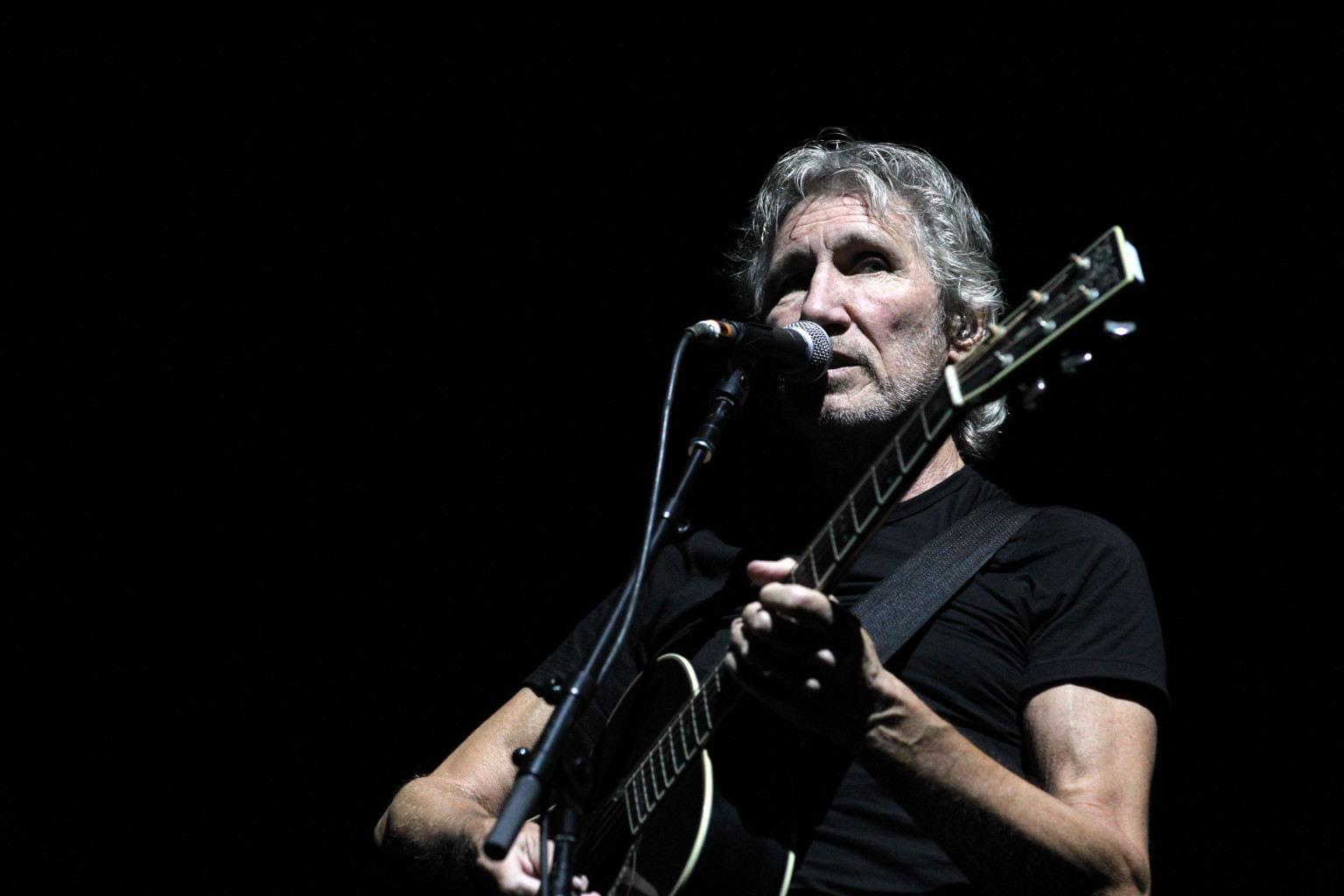
Ex-Pink Floyd musician Roger Waters during a concert
In an impassioned and hard-hitting open letter to fellow “Rock and Roll” musicians, Roger Waters (frontman and lead guitarist of world-famous rock band, PinkFloyd) has invited and called-on his peers to join the boycott, divestment and sanctions (BDS) against Israel campaign (see the full letter underneath). In a letter issued from Warsaw (Poland) earlier this morning, Waters writes:
“To cut to the chase, Israel has been found guilty – independently – by international human rights organizations, UN officials, and the International Court of Justice, of serious breaches of international law. These include, and I will name only two “the Crime of Apartheid” [and] the Crime of Ethnic Cleansing…[I]t falls to civil society and conscientious citizens of the world, to dust off our consciences, shoulder our responsibilities, and act. I write to you now, my brothers and sisters in the family of Rock and Roll, to ask you to join with me, and thousands of other artists around the world, to declare a cultural boycott on Israel.”
Waters explains in his open letter that there are two recent events that have prompted his letter, one of which was the December 2012 cancellation by Stevie Wonder of a headline performance at a benefit dinner for the Israeli Defence Force. Water adds that he, together with Archbishop Desmond Tutu, “wrote to Stevie [Wonder] to try to persuade him to cancel. My letter ran along these lines, ‘Would you have felt OK performing at the Policeman’s Ball in Johannesburg the night after the Sharpeville massacre in 1960?'”
Roger Waters (60) is an English musician, singer, songwriter and composer best known for his role in world famous rock-band, Pink Floyd. Waters served as bassist, co-lead vocalist, lyricist, principal songwriter and conceptual leader of the band. Pink Floyd subsequently achieved international success with the concept albums “The Dark Side of the Moon”, “Wish You Were Here”, “Animals”, “The Wall” and “The Final Cut”. Pink Floyd has sold more than 250 million albums worldwide, including 74.5 million units sold in the United States as of 2013.
In his open letter from this morning to rock and roll musicians, Waters also challenges mainstream media and specifically criticizes the USA media, stating that: “The clear inference would be that the media in the USA is not interested in the predicament of the Palestinian people, or for that matter the predicament of the Israeli people. We can only hope they may become interested as they eventually did in the politics of apartheid South Africa.”
The open letter by Roger Waters ends with reference to the former Apartheid regime in South Africa, the 1980s international boycott of South Africa movement and specific mention of the African National Congress’ (ANC) recent Mangaung boycott of Israel resolution:
“Back in the days of Apartheid South Africa at first it was a trickle of artists that refused to play there..then it became a stream, then ariver then a torrent and then a flood. (Remember Steve van Zant, Bruce and all the others? “We will not Play in Sun City?”)…The sports community joined the battle, no one would go and play cricket or rugby in South Africa, and eventually the political community joined in as well. We all as a global, musical, sporting and political community raised our voices as one and the apartheid regime in South Africa fell…Maybe we are at the tipping point now with Israel and Palestine. These are good people both and they deserve a just solution to their predicament. Each and every one of them deserves freedom, justice and equal rights. Just recently the ANC [African National Congress], the ruling party of South Africa, has endorsed BDS. We are nearly there. Please join me and all our brothers and sisters in global civil society in proclaiming our rejection of Apartheid in Israel and occupied Palestine, by pledging not to perform or exhibit in Israel or accept any award or funding from any institution linked to the government of Israel, until such time as Israel complies with international law and universal principles of human rights.”
Background
With Israeli discrimination, human rights abuses, violations of International Law and illegal settlement construction on the increase, Palestinians, inspired by the successful boycott and isolation of Apartheid South Africa, called on the international community in 2005 to play a decisive role in their struggle for self-determination and an end to Israel’s Apartheid policies. Palestinians called on global civil society, artists and multi national corporations to impose a program of boycott, divestment and sanctions (BDS) against Israel. The Palestinians laid out three demands that Israel needs to respect for the boycott to be called-off. Firstly, an end to the illegal Israeli Occupation. Secondly, allowing Palestinian refugees to return to their homes. And, thirdly, for Israel to ensure full equality for Palestinian citizens living inside Israel (see:www.bdsmovement.net/bdsintro). Activists maintain that the BDS campaign is not a malicious, blunt or punitive one which is out to punish Israelis but rather it is a practical, non-violent, goal-orientated and focused campaign that is uncompromisingly entrenched in international law and human rights – and also one that is increasingly supported by (progressive) Israelis themselves. Just some of the artists and intellectuals who have publicly lent their support and respected the boycott in recent years include: award-winning musician, Stevie Wonder; Jazz artist, Cassandra Wilson; Maxi Jazz of the UK band, Faithless; musician, Elvis Costello; Pultizer-prize winning author, Alice Walker; intellectual, Stephen Hawking and most recently, the film director, Mira Nair.
BDS South Africa warmly salutes Roger Waters for his principled position. His open letter is sure to go down in history as a turning point in the boycott of Israel campaign and the larger movement for a free Palestine.
Issued by Muhammed Desai on behalf of BDS South Africa
Roger Waters’s letter
To My Colleagues in Rock and Roll
Nigel Kennedy the virtuoso British violinist and violist, at The Recent Promenade Concerts at The Albert Hall in London, mentioned that Israel is apartheid. Nothing unusual there you might think, then one Baroness Deech, (Nee Fraenkel) disputed the fact that Israel is an apartheid state and prevailed upon the BBC to censor Kennedy’s performance by removing his statement. Baroness Deech produced not one shred of evidence to support her claim and yet the BBC, non political, supposedly, acting solely on Baroness Deech’s say so, suddenly went all 1984 on us. Well!! Time to stick my head above the parapet again, alongside my brother, Nigel Kennedy, where it belongs. And by the way, Nigel, great respect man. So here follows a letter last re-drafted in July.
To My Colleagues in Rock and Roll.
In the wake of the tragic shooting to death of un-armed teenager Trayvon Martin and the acquittal of his killer Zimmerman, yesterday, Stevie Wonder spoke at a gig declaring that he will not perform in the State of Florida until that State repeals its “Stand your ground” Law. In effect he has declared a boycott on grounds of conscience. I applaud his position, and stand with him, it has brought back to me a statement I made in a letter I wrote last February 14th, to which I have referred but have never published.
The time has come, so here it is.
This letter has been simmering on the back burner of my conscience and consciousness for some time.
It is seven years since I joined BDS (Boycott, Divestment and Sanctions) a non violent movement to oppose Israel’s occupation of the West Bank and violations of international law and Palestinian human rights. The aim of BDS is to bring international attention to these Israeli policies, and hopefully, to help bring them to an end. All the people of the region deserve better than this.
To cut to the chase, Israel has been found guilty, independently, by international human rights organizations, UN officials, and the International Court of Justice, of serious breaches of international law. These include, and I will name only two;
1.The Crime of Apartheid:
The systematic oppression of one ethnic group by another.
On 9 March 2012, for instance, the UN Committee on the Elimination of Racial Discrimination called[1] on Israel to end its racist policies and laws that contravene the prohibition against racial segregation and apartheid.
2.The Crime of Ethnic Cleansing:
The forcible removable of indigenous peoples from their rightful land in order to settle an occupying population. For example, in East Jerusalem non Jewish families are routinely physically evicted from their homes to make way for Jewish occupants.
There are others.
Given the inability or unwillingness of our governments, or the United Nations Security Council to put pressure on Israel to cease these violations, and make reparations to the victims, it falls to civil society and conscientious citizens of the world, to dust off our consciences, shoulder our responsibilities, and act. I write to you now, my brothers and sisters in the family of Rock and Roll, to ask you to join with me, and thousands of other artists around the world, to declare a cultural boycott on Israel, to shed light on these problems and also to support all our brothers and sisters in Palestine and Israel who are struggling to end all forms of Israeli oppression and who wish to live in peace, justice, equality and freedom.
I am writing to you all now because of two recent events.
1. Stevie Wonder.
Word came to me, the first week of last December that Stevie Wonder had been booked to headline at a gala dinner for the Friends of The Israeli Defend Force in LA on 6th December 2012. An event to raise money for the Israeli armed forces, as if the $4,3,000,000,000 that we the US tax payers give them each year were not enough? This came right after The Israeli defence Force had concluded yet another war on Gaza, (Operation Pillar of Defence), according to human rights watch, committing war crimes against the besieged 1.6 million Palestinians there.
Anyway, I wrote to Stevie to try to persuade him to cancel. My letter ran along these lines, “Would you have felt OK performing at the Policeman’s Ball in Johannesburg the night after the Sharpeville massacre in 1960 or in Birmingham Alabama, to raise money for the Law Enforcement officers, who clubbed, tear gassed and water cannoned those children trying to integrate in 1963?”
Archbishop Desmond Tutu also wrote an impassioned plea to Stevie, and 3,000 others appended their names to a change.org petition. Stevie, to his great credit, cancelled!
2. Earlier that week I delivered a speech at The United Nations. If you are interested you can find this speech on you tube. The interesting thing about these two stories is that there was NOT ONE mention of either story in the mainstream media in the United States.
The clear inference would be that the media in the USA is not interested in the predicament of the Palestinian people, or for that matter the predicament of the Israeli people. We can only hope they may become interested as they eventually did in the politics of apartheid South Africa.
Back in the days of Apartheid South Africa at first it was a trickle of artists that refused to play there, a trickle, that exercised a cultural boycott, then it became a stream, then a river then a torrent and then a flood. (Remember Steve van Zant, Bruce and all the others? “We will not Play in Sun City?”) Why? Because, like the UN and the International Courts of Justice they understood that Apartheid is wrong.
The sports community joined the battle, no one would go and play cricket or rugby in South Africa, and eventually the political community joined in as well. We all as a global, musical, sporting and political community raised our voices as one and the apartheid regime in South Africa fell.
Maybe we are at the tipping point now with Israel and Palestine. These are good people both and they deserve a just solution to their predicament. Each and every one of them deserves freedom, justice and equal rights. Just recently the ANC, the ruling party of South Africa, has endorsed BDS. We are nearly there. Please join me and all our brothers and sisters in global civil society in proclaiming our rejection of Apartheid in Israel and occupied Palestine, by pledging not to perform or exhibit in Israel or accept any award or funding from any institution linked to the government of Israel, until such time as Israel complies with international law and universal principles of human rights.
The Farlam Commission of Inquiry, which is investigating the deaths of 44 people during strike-related unrest at Lonmin’s platinum mine in Marikana last year, is expected to continue on Tuesday.
This follows the Constitutional Court ruling regarding funding for the legal teams representing the miners.
Thirty four people — almost all striking mineworkers — were killed on August 16 when police opened fire on them. Ten people, including two police officers, were killed in the preceding week.
On June 21 Dali Mpofu, for the miners, told the commission that due to financial constraints, it could be his last day representing the miners.
He brought an urgent court application in the High Court in Pretoria several weeks ago seeking funding, but this was dismissed.
Mpofu then took the State to the Constitutional Court, asking that it pay for his legal team.
The application was dismissed on Monday.
North West deputy police commissioner General William Mpembe on Monday told the Commission how his colleague was killed by striking miners.
“I couldn’t count how many [attackers] there were… There were plus minus five of them who attacked Monene,” testified Mpembe.
“They had pangas and knobkerries.”
Mpembe was being cross-examined by Takalani Masevhe, for the family of slain Warrant Officer Tsietsi Monene.
A second officer, Sello Lepaku, was also killed in the attack. – Sapa
Militants killed 25 policemen on Monday in the deadliest attack of its kind in years, as Egypt’s army-installed rulers escalated a campaign to crush ousted president Mohamed Morsi’s Muslim Brotherhood.
The assailants fired rocket-propelled grenades at two buses carrying police in the Sinai Peninsula, security sources said, just hours after 37 Brotherhood prisoners died in police custody.
The bloodshed came after Egypt’s military chief vowed a “forceful” response to violence roiling the Arab world’s most populous nation.
Judicial sources said new accusations of inciting the deaths of protesters had been levelled against Morsi, who has been held in a secret location since the military deposed him on July 3.
Meanwhile, Former president Hosni Mubarak won conditional release in the third of four cases against him, but remained in detention on the fourth, judicial sources added.
The Sinai attack raised fears of a return to the wave of deadly Islamist violence that swept the country in the 1990’s.
Egypt is struggling to put a lid on a deep political crisis and violence that has killed almost 900 people in days of clashes between Islamist protesters and security forces across the country.
Western states have condemned the violence and are threatening to cut off billions of dollars in aid, though Saudi Arabia said Monday that Arab nations would step in to fill any gap.
Morsi loyalists vowed new demonstrations on Monday, although a day earlier they had cancelled some marches citing security
concerns.
The interior ministry said 25 policeman were killed and two injured in the Sinai attack, which it blamed on “armed terrorist groups”.
A border official said afterwards that the Rafah crossing with the Palestinian Gaza Strip, near where the attack occurred, would be closed.
Security sources said another policemen was killed in the northern city of El-Arish, bringing to at least 75 the number of security force members killed in the Sinai since the army toppled Morsi.
The security situation in the Sinai has deteriorated sharply in the past weeks, with near daily attacks by militants targeting police and military installations.
Elsewhere, bloodshed sparked by the August 14 security force crackdown on pro-Morsi protest camps in Cairo showed little sign of abating.
Authorities said 37 Islamist detainees died after police fired tear gas in a bid to free an officer taken hostage by prisoners, as the inmates were being transferred to a north Cairo jail.
However, the Brotherhood, the once-banned movement from which Morsi hailed, held the police accountable, accusing them of “murder”. They said the incident affirmed “the intentional violence aimed at opponents of the coup, and the cold-blooded killing of which they are targets”. – Sapa
Egypt’s military-backed rulers are pressing on in their crackdown against the Muslim Brotherhood with the arrest early Tuesday of the group’s spiritual leader who had been in hiding near the huge sit-in in support of the country’s ousted Islamist president, which security forces violently dispersed a week ago, leaving hundreds dead.
The arrest of Mohammed Badie – the supreme leader of the Brotherhood, the Islamist group from which ousted president Mohammed Morsi hails -followed a chaotic day of bloodshed that saw 25 policemen killed in a militant ambush in Sinai and a court ruling announcing the possibility that the jailed ex-president Hosni Mubarak could walk free later this week.
Mubarak’s release could fuel the unrest roiling the country after Morsi, Egypt’s first democratically elected president and the autocratic Mubarak’s successor, was removed in a military coup on July 3.
Underscoring the growing anger over Morsi’s ouster, suspected Islamic militants on Monday ambushed two minibuses carrying off-duty policemen in Egypt’s Sinai Peninsula, forcing the men to lie on the sand and shooting 25 of them dead.
The brazen daylight attack raised fears that the strategic desert region bordering Israel and the Gaza Strip could be plunged into a full-fledged insurgency.
Badie was captured early Tuesday in an apartment in the eastern Cairo district of Nasr City, according to security officials and state television, very close to where Morsi’s supporters held a six-week sit-in protest that was cleared by security forces last Wednesday.
The private ONTV network showed footage of a man the network said was Badie after his arrest. In the footage, a somber looking Badie in an off-white Arab robe, or galabiyah, sits motionless on a sofa as a man in civilian clothes and carrying an assault rifle stands nearby.
Badie and his powerful deputy Khairat el-Shater, who is in custody, go on trial later this month for their alleged role in the killing of eight protesters outside the Brotherhood’s Cairo headquarters in June. His arrest is a serious blow to the group at a time when authorities are cracking down on its leaders and mid-ranking officials, detaining scores of them across the country.
The officials spoke on condition of anonymity because they were not authorized to speak to the media.
Late Monday, the 25 slain police officers were given a funeral with full military honors. The men’s coffins, draped in red, white and black Egyptian flags, were jointly carried by army soldiers and policemen, and Egypt’s interim President Adly Mansour declared a nationwide state of mourning to mark their deaths.
Mubarak, 85, has been in detention since April 2011, two months after he was ousted in a revolution against his rule.
He was found guilty and sentenced to life in prison last year for failing to stop the killing of some 900 protesters in the 18-day uprising. His sentence was overturned on appeal and he is now being retried, along with his security chief and six top police commanders.
Two judicial officials said Mubarak could walk free this week or next after a criminal court on Monday ordered his release in a corruption case in which he and his two sons were accused of embezzling funds for the maintenance of presidential palaces. His sons were ordered kept in custody.
Monday’s ruling, along with the fact that Mubarak had previously been ordered released in the killings of the protesters opened the possibility of freedom for the former president, the officials said, speaking on condition of anonymity because they were not authorized to speak to the media.
There will no longer be any grounds to hold him if a court accepts a petition by his lawyer requesting his release in a third case later this week or next.
But freeing Mubarak, widely hated for widespread abuses and repression during his 29 years in power, during one of the worst bouts of turmoil since his ouster would be a huge risk for the military-backed government.
It could lend credibility to allegations that the mass protests that preceded the July 3 coup that toppled Morsi were the work of Mubarak-era figures searching for a way to reinstate the former regime.
Last week, the military raided two protest camps of Morsi’s supporters in Cairo, killing hundreds of people and triggering a wave of violence that has left at least 1,000 people dead.
Human Rights Watch, in a report Monday, accused Egyptian security forces of using excessive force when they moved to clear the larger of the two camps. The New York-based group said the assault amounted to the “most serious incident of mass unlawful killings in modern Egyptian history.”
It called on authorities to reverse a recent decision authorizing the use of deadly force by security forces when they come under attack or when key government facilities are assaulted.
The Sinai Peninsula has long been wracked by violence by al-Qaida-linked fighters, some who consider Morsi’s Brotherhood to be too moderate, and tribesmen who have used the area for smuggling and other criminal activity. Attacks, especially those targeting security forces, have been on the rise since Morsi’s ouster.
Monday’s attack targeting the police officers took place near the border town of Rafah in northern Sinai. A few hours later, militants shot to death a senior police officer as he stood guard outside a bank in el-Arish, another city in the largely lawless area, security officials said.
There was no immediate claim of responsibility for either attack. The United States condemned the slaying of the police officers and repeated its commitment to help Egypt combat terrorism in Sinai. U.N. Secretary-General Ban Ki-moon also denounced the attack.
The Sinai attack came a day after security forces killed 36 detainees during a riot on a prison-bound truck convoy north of Cairo. The killings came as police fired tear gas to free a guard who was trapped in the melee, security officials said.
The government ordered an inquiry into the deaths, which it blamed on armed men allegedly trying to help the 600 Muslim Brotherhood detainees escape. It gave no details.
The Brotherhood blamed military chief, Gen. Abdel-Fattah el-Sissi, and the interior minister for Sunday’s killings. The group also called for an international inquiry into the deaths.
The United States said it was troubled by the “suspicious deaths” of the prisoners.
“We call on all Egypt’s leaders and the international community to condemn such attacks without equivocation,” said Psaki, the State Department spokeswoman.
Amnesty International demanded a “full, impartial and effective” probe into the events.
Morsi has been held in an undisclosed location since his ouster. On Monday, prosecutors ordered his detention for 15 days in connection with allegations that he conspired to kill and torture protesters during mass demonstrations by the opposition outside his presidential palace in December 2012. – AP
The murder case of Acting Judge Patrick Maqubela is expected to resume in the Western Cape High Court on Tuesday morning after Judge John Murphy last week amended charges against the two accused.
The amendments will now include the phrase that “the accused have caused the death of the late judge by means unknown”. The State has argued that the accused used plastic cling wrap to suffocate the judge.
Maqubela’s widow Thandi and her co-accused Vela Mabena are on trial for the 2009 murder.
Another amendment on the charges is that of forgery, faced by the widow. Judge Murphy ruled that the charge will now include the unlawful making of the will. He says the amendments are evidence-driven and will not affect the defence. Murphy says a State pathologist earlier testified that the cause of death could not be determined, but did not rule out other means.
He says the court has taken into consideration the constitutional rights of the accused to a fair trial and the defence team can still call more witnesses. The defence maintains that Judge Maqubela died of natural causes. – SABC
British authorities faced increasing pressure Monday to explain why they used anti-terror laws to detain the partner of a journalist who worked with US intelligence leaker Edward Snowden.
David Miranda — the Brazilian partner of Glenn Greenwald, an American journalist with Britain’s Guardian newspaper — was held for almost nine hours on Sunday as he passed through London’s Heathrow Airport on his way to Rio de Janeiro from Berlin.
A furious Greenwald said British authorities had “zero suspicion” that Miranda was involved in terrorism and instead spent hours questioning him about the Guardian’s reporting on the activities of the US National Security Agency, which has enraged Washington.
“This was obviously designed to send a message of intimidation to those of us working journalistically on reporting on the NSA and its British counterpart, the GCHQ (Government Communications Headquarters),” Greenwald wrote in the Guardian.
“They completely abused their own terrorism law for reasons having nothing whatsoever to do with terrorism.”
Miranda, 28, often assists Greenwald with his work, the Guardian said.
He is not an employee of the newspaper but it paid for his flights. He stayed in Berlin with Laura Poitras, a US filmmaker who has been working with the Guardian.
Miranda said he had been questioned by six agents at Heathrow who confiscated his electronic equipment.
“The minute I stepped out of the plane they took me away to a small room with four chairs and a machine for taking fingerprints,” he told the Guardian.
“They asked questions about my entire life, about everything. They took my computer, video game, mobile phone, my memory card.”
A spokesman for Prime Minister David Cameron said the British government takes “all necessary steps to protect the public from individuals who pose a threat to national security”.
“But it is for the police to decide when it is necessary and proportionate to use these powers,” the spokesman said.
London’s Metropolitan Police on Monday insisted their actions were “reviewed throughout to ensure the examination was both necessary and proportionate” and that its use of anti-terror powers was “legally and procedurally sound”.
The force also dismissed reports that Miranda was denied legal representation and said that a solicitor was present.
But authorities were under increasing pressure to explain why Miranda was held, with Brazil expressing “grave concern” that one of its citizens had apparently been “held incommunicado”.
Britain’s opposition Labour party called for an urgent investigation into whether anti-terror laws had been misused.
“Any suggestion that terror powers are being misused must be investigated and clarified urgently,” said Yvette Cooper, Labour’s home affairs spokeswoman.
Brazil’s foreign ministry said its embassy in London had contacted British officials prior to Miranda’s release and that Brazil would also be seeking an explanation.
“This measure is without justification since it involves an individual against whom there are no charges that can justify the use of that legislation,” the ministry said in a statement.
— ‘Revenge tactics’ —
Greenwald, a well-known journalist in the United States, analysed and published information on documents released by former US security contractor Snowden revealing huge electronic surveillance operations by the NSA.
The United States denied it asked Britain to detain Miranda.
“There was a heads-up that was provided by the British government, so this is something we had an indication was likely to occur,” White House deputy spokesman Josh Earnest told reporters.
“But it’s not something that we requested, and it’s something that was done specifically by the British law enforcement officials.”
Snowden was granted asylum in Russia after spending five weeks in limbo at a Moscow airport attempting to avoid extradition to the United States, where he is wanted on espionage charges.
Arriving to meet Miranda at Rio’s airport, meanwhile, Greenwald said he was now even more determined to continue reporting on the intelligence leaks — with a new focus on Britain.
“Now I will be more radical in my reporting,” he warned. “This was a clear attempt at intimidation.”
Rights group Amnesty International said Miranda was “clearly a victim of unwarranted revenge tactics”, while Reporters Without Borders said it was “outraged” by his detention. – AFP
Saudi Foreign Minister Prince Saud al-Faisal on Monday pledged to fill any financial gaps left by Western countries withdrawing aid from Egypt over its crackdown on Muslim Brotherhood protesters that has left hundreds dead since last week.
“To those who had declared they are stopping aid to Egypt or are waving such a threat, the Arab and Muslim nations are wealthy with their people and resources and will not shy away from offering a helping hand to Egypt,” he told state news agency SPA.
Meanwhile, Egypt’s public prosecutor ordered on Monday the detention of deposed President Mohamed Morsi for 15 days pending an investigation into allegations he participated in “violent acts”, state news agency MENA said.
On Thursday, Egyptian judicial authorities extended Mursi’s detention period for 30 days in a separate case.
Morsi, who was overthrown by the army on July 3, is being held at an undisclosed location on allegations of murder and spying. The new case centres on protests that took place in front of the presidential palace last December, MENA said. – Reuters
The Deputy President of Black Management Forum Koko Khumalo says a Gender Desk will be launched on Saturday, August 24 in Polokwane. She says the theme for the day is “Planning Beyond Lifetime”. Khumalo says the rationale for this theme is to address that women are the centre of families.
She says the Black Management Forum Gender Desk will ask members why they don’t see themselves going beyond their current level at the workplace. Khumalo further says that they are also going to do their own survey so that their members can talk about their experiences and relevant actions can be taken.
According to Khumalo, women must not only be empowered in the boardroom because the Black Management Forum stands for the development of Black Managerial Leadership. She adds that the reason it’s called Gender Desk and not women empowerment is because gender issues are not only related to women. “For women to get the equation right they need men to play a significant role.”
Women are said to play an essential role in the society. Khumalo says if a woman do not come from a supportive background it is equally hard for her to get escalated at work and produce results. “When I walk into the boardroom, I play as an equal not as a woman,” she says. – SABC
Coloured youth smoking a substance in the Western Cape
The Western Cape provincial government has budgeted R87 million to fight drug and alcohol abuse, premier Helen Zille said on Monday.
“Our commitment in this regard has led to a doubling of our annual budget for interventions to address substance abuse over the last four years, from just R42 million when we came into office in 2009, to R87 million this year,” she said.
“This budget also includes increased allocation for public information provision and early intervention services to help prevent the onset of drug and alcohol abuse.”
She said half a billion rand would be invested in the awareness and education programme over the next five years, should the Democratic Alliance remain in office.
The provincial government was also in discussion with the health department and the Sultan Bahu treatment centre in Mitchell’s Plain, with a view to establishing South Africa’s first outpatient opiate replacement programme.
“This initiative is aimed at addressing the harms associated with shifting trends toward heroin abuse in the province.”
She said the province had made great strides in reducing drug and alcohol-related harms over the past four years. – Sapa
This website uses cookies to improve your experience. We'll assume you're ok with this, but you can opt-out if you wish. Cookie settingsACCEPT
Privacy & Cookies Policy
Privacy Overview
This website uses cookies to improve your experience while you navigate through the website. Out of these cookies, the cookies that are categorized as necessary are stored on your browser as they are essential for the working of basic functionalities of the website. We also use third-party cookies that help us analyze and understand how you use this website. These cookies will be stored in your browser only with your consent. You also have the option to opt-out of these cookies. But opting out of some of these cookies may have an effect on your browsing experience.
Necessary cookies are absolutely essential for the website to function properly. This category only includes cookies that ensures basic functionalities and security features of the website. These cookies do not store any personal information.
Any cookies that may not be particularly necessary for the website to function and is used specifically to collect user personal data via analytics, ads, other embedded contents are termed as non-necessary cookies. It is mandatory to procure user consent prior to running these cookies on your website.


 A Russian gold medalist from the Moscow World Athletics Championships on Tuesday said she was insulted by Anglo-Saxon media claims that she had kissed a fellow female athlete on the lips in defiance of Russia’s new law against gay “propaganda”.