In a national Crime Intelligence driven operation, the SAPS Counter Narcotics team has uncovered a major drug lab in Alexander Drive, in Gillits, KwaZulu-Natal on Saturday night at approximately 20:00.
The team followed up on intelligence of the manufacture of heroin straws which led them to an elite house in the Gillits area, just outside Pinetown.
The nineteen men arrested are all foreign nationals of ages between 18 and 37 years. They are likely to face charges of possession and dealing in drugs. The entire operation, we estimate, has a street value of over R41 million which consists of R21.4 million worth of heroin straws, R4.1 million of mandrax tablets, R15 million of heroin powder and equipment.
The detection of this lab has come just days after the same team uncovered a major drug distribution centre in Kempton Park which was worth R75 million.
According to Lieutenant General Solomon Makgale, “We have no doubt that an operation of this magnitude is the work of a syndicate and we believe that we are making great inroads in bringing these major drug syndicates to its knees.
“While we applaud our Crime Intelligence unit for a job well done, we certainly don’t lose sight of enormous role our communities are playing to complement our efforts to minimise the scourge of drugs and the ill effects it has on our societies.” – South African Police Service
Police have made a breakthrough in arresting a suspect (40) linked to the murder of Lawrence Moepi who was killed in the parking lot of his auditing firm in Houghton on the 18 October 2013. A suspect who was arrested in Soweto on Saturday morning is due to appear at the Johannesburg Magistrate Court on Monday on charges of murder.
A breakthrough came following an investigation by the provincial investigation team who are also following several leads to arrest the second suspect. Moepi was allegedly followed into the parking lot of his then auditing firm, Sizwe Ntsaluba Gobodo, and fatally shot whilst he was getting out of his sedan. The suspects fled the scene in a VW sedan. An investigation is continuing to establish the motive for the killing. – South African Police Service
Today, the Provincial Commissioner, Lieutenant General Thulani Ntobela expressed his disapproval of the barbaric incident of robbery at a church in Masoyi.
On Friday, 22 November 2013, members of a local church in Mganduzweni Trust in Masoyi near White River gathered for a night prayer.
Just before mid-night, they were accosted and attacked by a gang of four men armed with a pump action short gun. The men commanded the congregants to lie down and robbed them of their personal belongings.
The thugs took some members of the church who parked their cars outside and searched them. It is alleged that they further took other personal belongings, cash and raped a 21-year-old church member.
“This act of lawlessness is not approved and must be condemned”, said General Ntobela.
A call is hereby extended to community members to rally behind the police in their efforts to put the acts of these miscreants to a curl-de-sac.
“A church is a place of worship where congregants gather to pray and it should be respected but these villains had a different ideology.
We need to stop them before they ruthlessly attack other churches,” concluded General Ntobela. – SA Police Service
Politicians from various parties have condemned the rape of a six-week-old baby in Galeshewe, Kimberley, in the Northern Cape.
Women, Children and People with Disabilities Minister Lulu Xingwana was appalled by several recent “monstrous atrocities” against women and children, she said in a statement on Thursday.
She noted with “serious concern” the rape of the baby, and the rape of a four-year-old boy, allegedly by a 17-year-old.
“These acts can only be committed by very sick people,” she said.
The newborn was raped on Tuesday night, allegedly by a 24-year-old man believed to be her uncle.
Xingwana said the government would ensure people accused of rape were not given bail and received harsher sentences, Sapa reported.
“These crimes will under no circumstances be tolerated and [are] totally unacceptable,” she said.
Democratic Alliance spokesman Mike Waters said South African women and children faced intolerably high levels of violence.
National Freedom Party leader Zanele KaMagwaza Msibi said such incidents were an indication that rape in society had taken a turn for the worse.
“No culture, provocation, neglect or mental condition can be used to justify this perverse behaviour,” said spokesman for Cosatu Patrick Craven.
He said violence against women and children had permeated all levels of society.
Congress of the People spokesman Willie Madisha said the party had gone to Galeshewe to support the family and their relatives.
The man accused of raping the baby appeared in the Kimberley Magistrate’s Court on Thursday.
The case was postponed to December 12 for a formal bail application.
The City of Cape Town obtained a court interdict preventing the city’s informal settlements’ organisation from holding a march, said mayor Patricia de Lille.
The march was scheduled to take place on Friday.
She said the order was obtained as a last resort on Thursday, Sapa reported.
De Lille said she did not want to see a repetition of the disorder last month, when protesters claiming to be part of a service delivery demonstration looted shops and vendors’ stalls, and damaged property in central Cape Town.
“One of the senior leaders of the group and ANC councillor in the City of Cape Town Loyiso Nkohla is quoted in today’s media reports saying that: ‘… we will only stop the march if a court of law says so,'” said De Lille.
She said the group’s application to march was not approved because of evidence indicating that it could disrupt vehicular and pedestrian traffic, result in injury to people, and possible damage to property.
On Thursday, the police said they were fully deployed for the march.
“There will be heavy police deployments in the CBD as well as areas of congregation for the marchers,” said Colonel Tembinkosi Kinana.
Kinana said air support would be deployed if required and warned that protesters who broke the law would be arrested.
Riots over a full-face Islamic veil, a woman losing her unborn baby in another similar confrontation and tensions flaring over a supermarket chain’s ad for the end-of-day feast for the Muslim holy month of Ramadan, are almost a daily staple for France.
France’s enforcement of its prized secularism is inscribed in law, most recently in a ban on wearing full-face veils in public. The policy instead may be fueling a rising tide of Islamophobia and driving a wedge between some Muslims and the rest of the population.
Yet ardent defenders of secularism, the product of France’s separation of church and state, say the country hasn’t gone far enough, AP reported.
They want to continue the cause of Voltaire helped and Victor Hugo, with a law targeting headscarves in the work place. Political pressure from a resurgent far-right has increased the tension.
A new generation of French Muslims — which at some 5 million, or about eight percent of the population, is the largest in Western Europe — are defending mosques, halal food and Muslim religious dress.
Women who wear Muslim apparel “are no longer safe,” said a 26-year-old mother of three living in Trappes, a town south of Paris known for its large immigrant population.
Women wearing Muslim headscarves, suffered three attacks in Reims and three more in Orleans. Investigations and court cases are underway.
Police clashed last week with crowds protesting the arrest of a man who allegedly attacked an officer after his wife was ticketed for veiling her face in public. Dozens of cars were set afire in two nights of unrest in Trappes and an adjoining town. A 14-year-old boy suffered an eye injury.
Weeks earlier, a man allegedly assaulted a pregnant woman and ripped off her veil— one of two separately accosted in the Paris suburb of Argenteuil. She lost her baby days later, although the link with the incident remains unclear.
Interior Minister Manuel Valls insisted that Islam and the French Republic are compatible and denounced “a rise of violence against the Muslims of France.” At a dinner celebrating the end of Ramadan at the Grand Mosque of Paris, he denounced “those who want to make France a land of conquest.”
People told a veiled woman who is of Algerian origin, “If you’re not happy, leave, go home,” she said. But, she pointed out, she was born in France.
Most French people are Catholic, but church attendance has been in decline for decades and secular ideals run deep. With the growth of France’s Muslim population, lawmakers have increasingly turned to legislation to try to stifle public displays of Islamic faith.
In 2004, a law banned “ostentatious” religious symbols in public schools, a measure clearly directed at Islamic headscarves. It has been enforced without resistance.
A two-year-old law banning burqa-style veils from the streets of France has met with more outcry, even though only some 2,000 Muslim women cover their faces. Most Muslim women in France wear neither, as Islam does not Islam does not require face veils or covered head
A report by the Observatory of Secularism, created in 2013 by President Francois Hollande, revealed that a handful of the 705 women stopped by police for covering their faces in public chalked up more than 10 tickets each – two of them more than 25 – suggesting that some are provoking authorities intentionally.
A local official in Nimes, posted on his Facebook account an ad by the Carrefour supermarket chain publicizing “oriental” dishes for the nightly breaking of the fast during Ramadan with the comment, “Our Republic, is it still secular? Everything is on the way out.” The post was hastily removed after an outcry from Muslims.
While several European countries embrace secular values, France has been at the forefront of enforcing them, with the separation of church and state enshrined in law since 1905.
“Laicite,” is the French word for secularism. Associations throughout France work to uphold it. Far-right groups use it as a mantra, and leftists embrace it as well. There is even a secularism prize.
Hicham Benaissa of the National Center for Scientific Research said today’s secularism “appears to be a sort of (protection) against the religious influence of Islam” when “its spirit is to protect the faiths.”
A pre-school has just fired a woman who refused to remove her headscarf. An appeals court ruling in March calling the firing illegal spurred a demand for laws protecting secularism in private companies that would govern, for instance, dress and schedule requirements for prayer time or religious holidays.
A resulting bill to regulate religion in companies, sponsored by the opposition conservatives, failed.
Another report, released in June by the Observatory, tried to tone down the controversy, suggesting that slights to secularism have been exaggerated and dialogue, not a new law, may solve problems.
Some Muslims believe they are being driven away from the mainstream, leading to the growth of private Muslim schools and propelling Muslims to open their own businesses.
The law and the media “with their constant finger-pointing at Muslims are the reason the French population has become aggressive,” one woman said. Because of her robes, she sells cosmetics from her home. “I myself couldn’t apply for a job in an office.”
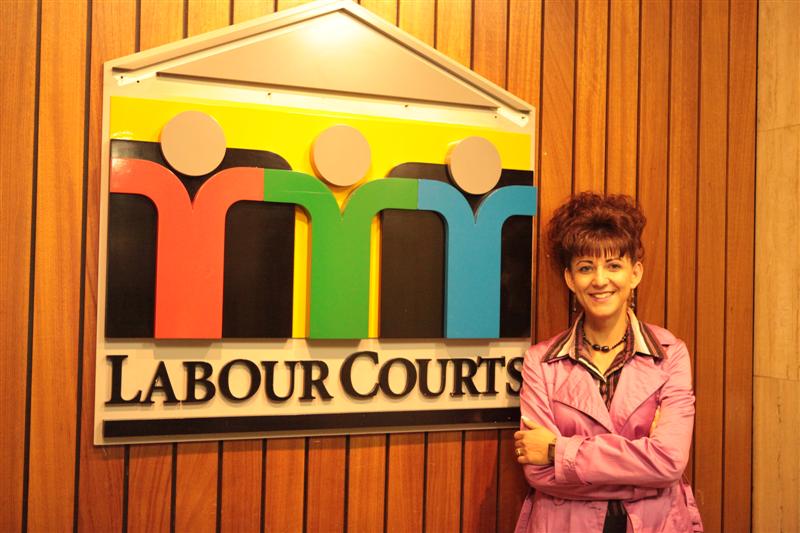
The Supreme Court of Appeal (SCA) said on Thursday the SA Police Service had clearly discriminated against Lt-Col Renate Barnard on the basis of race.
The SCA has upheld an appeal against a decision of the Labour Appeal Court (LAC) that overturned a decision of the Labour Court, Sapa reported.
The Labour Court held that Barnard had been unfairly discriminated against when she was not appointed to a higher position.
She was not promoted to position of superintendent within a specialised unit of the SAPS, despite being the best candidate for the post. The court held that Barnard had clearly been discriminated against on the basis of race.
Barnard had twice applied unsuccessfully for promotion to the position.
The position was that of superintendent within the then National Evaluation Services (NES), dealing with complaints by the public and public officials on any matter regarding the police services.
Despite recommendations by an interviewing panel and her divisional commissioner, the national commissioner did not appoint her.
The reason given was that racial representivity at the level of superintendent would be negatively affected.
On Thursday, the SCA said it noted that the appeal turned on its own facts and that it would be presumptuous to assert and foolish to assume that the decision in this case would be an all-embracing guide to deciding future cases.
“If we are to build a cohesive society with cohesive components within the state structure, we have to be situation sensitive,” the SCA said.
The judgment further stated that to redress past imbalances with affirmative action measures, race had to be taken into account, but it should do so fairly and without losing focus that the ultimate objective was to ensure a fully inclusive society.
“One [society] compliant with all facets of our constitutional project,” it stated.
Winamp, once one of the most popular media players on the market, will be officially discontinued on December 20, 2013, due to yet to be disclosed reasons.
AOL announced the decision in a brief statement on the official Winamp.com website, saying that the webpage and the downloadable media player will be removed on December 20.
“Winamp.com and associated web services will no longer be available past December 20, 2013. Additionally, Winamp Media players will no longer be available for download. Please download the latest version before that date. See release notes for latest improvements to this last release. Thanks for supporting the Winamp community for over 15 years,” the notification reads.
While nobody can tell for sure what the reason behind this surprising decision actually is, it appears that it’s all because the bad management that took over app development after the AOL acquisition.
Winamp, which was developed by Justin Frankel and Dmitry Boldyrev for Nullsoft, was purchased by AOL in June 1999 for no less than $80 million (€59.4 million) in stock.
In June 2000, Winamp reached a record 25 million registered users, but started a dramatic decline soon after that.
Even though development of new versions continued, and both Winamp 3 and Windows 5 reached the market in the next years, some users decided to stick to the original WInamp 2.95 version thanks to the impressive audio quality and its reduced footprint on system resources.
In the last few years, Winamp launched several new versions, including a Mac port and an Android version that’s experiencing quite a terrific success among smartphone owners. Unfortunately, the desktop business continued its drop as more users turned to other media players such as foobar2000 and Clementine.
Making Winamp open-source and allowing the dev community to continue improving it would indeed be a great idea, but we really doubt that AOL would come down to such a decision. – softpedia.com
Tokyo’s benchmark Nikkei 225 index jumped 1.80 percent to its highest close in almost six years Thursday as a weak yen and record finishes on Wall Street helped propel the market.
The headline Nikkei finished up 277.49 points to 15,727.12, its best close since mid-December 2007, while the broader Topix index of all first-section shares added 1.12 percent, or 13.96 points, to 1,261.04. – AFP
The Polokwane High Court dismissed EFF leader Julius Malema’s application to have charges against him dropped on Thursday.
Judge Ephraim Makgoba said the case against him would go ahead next year as scheduled, unless the National Prosecuting Authority decided to drop the charges against him.
The expelled former ANC Youth League leader faces charges of fraud, corruption, money-laundering, and racketeering.
It is alleged that he made nearly R4 million from corrupt activities.
Earlier it was reported by Sapa that Dali Mpofu had arrived at the Polokwane High Court on Thursday to support corruption-accused EFF leader Julius Malema.
Sporting a red Economic Freedom Fighters beret, red shirt and black jacket, Mpofu joined other Malema supporters waiting near the court entrance for Malema to arrive.
Mpofu is the lawyer representing the wounded and arrested Marikana mineworkers at the Farlam Commission of Inquiry into the shooting at the Lonmin platinum mine near Rustenburg last year, when 34 people were killed.
He recently announced he had resigned from the African National Congress to join the EFF.
A large contingent of international and local journalists also gathered outside the court where Malema was due to launch a bid to have charges against him dropped.
Earlier on Thursday, hundreds of Economic Freedom Fighters members blew vuvuzelas and some waved knobkerries as they chanted songs against President Jacob Zuma.
“Muso wa Zuma reya o menola [we will unseat Zuma’s government],” they sang.
Traffic was bumper-to-bumper, with streets around the court closed.
The expelled former ANC Youth League leader faces charges of fraud, corruption, money-laundering, and racketeering.
It is alleged that he made nearly R4 million from corrupt activities.
Malema is out on R10,000 bail. His four co-accused, who are his business associates, are out on bail of R40,000 each.
On Thursday, the EFF leader was expected to make representations to the judge in an attempt to have the charges against him dropped.
The State alleges that the five misrepresented themselves to the Limpopo roads and transport department, leading to a R52m contract being awarded to On-Point Engineering.
According to court papers, Malema had business ties with Lesiba Gwangwa, one of the co-accused and a director of On-Point Engineering.
Malema’s Ratanang Family Trust was an indirect shareholder in On-Point.
The department paid the company R43m. According to the charge sheet, Malema substantially benefited from this payment, using it to buy a farm and a Mercedes-Benz. – Sapa
Jailed opposition leader Yulia Tymoshenko called on EU leaders to drop all demands and sign a historic pact with Ukraine without any preconditions at a summit that opens Thursday.
The EU demanded that Ukraine boost the rule of law and free the jailed former prime minister before the two could sign a landmark political and free trade deal.
But last week President Viktor Yanukovych’s government stunned the West by halting all negotiations on the deal that would have set it on a path to EU membership, saying it wanted better terms.
Yanukovych said he would still travel to the two-day summit in Vilnius to continue negotiations but his government’s shock decision sparked the biggest rallies since the pro-democracy Orange Revolution in 2004.
“If Yanukovych takes a positive decision, I passionately ask you to sign the agreement on Friday without any hesitation and conditions including those that are related to my release,” Tymoshenko, 53, said in a message read out by her daughter Yevgenia late Wednesday.
“I thank you for steadfastly defending democracy in Ukraine. But today it’s necessary to release not just separate political prisoners,” said Tymoshenko who on Monday launched a hunger strike in solidarity with pro-European protesters.
“It’s necessary to free Ukraine. That means it’s necessary to sign the agreement if Yanukovych agrees to it.”
“By signing the agreement with him, you would help an entire nation to overcome a civilisational abyss created by erroneous ideologies and agressive empires, you would make another important step towards re-uniting the entire Europe.”
The Ukrainian government’s decision to scrap the EU pact has brought tens of thousands onto the streets since Sunday.
Setting up camp in central Kiev and led by opposition leaders including world boxing champion Vitali Klitschko, protesters has staged mass rallies since Sunday.
Yanukovych has called for calm after the protests turned violent, with riot police firing tear gas and protesters hurling traffic cones and rocks at the security forces.
Yanukovych stressed he would wait for better EU terms including financial aid before considering signing the deal. He said the bloc offered insufficient compensation for the damages Ukraine would suffer by rupturing ties with historic master Russia.
The EU said it was still ready to talk about the deal but the ball was in Ukraine’s court.
“Our offer stays on the table,” said the EU’s Enlargement Commissioner Stefan Fuele.
The debate over Ukraine’s future has turned into a heated diplomatic tussle between the EU and the Kremlin.
Russia wants its smaller neighbour to join a Moscow-led Customs Union which already includes the ex-Soviet states of Belarus and Kazakhstan. Moscow has repeatedly threatened Ukraine, which heavily depends on Russian natural gas, with economic retaliation if it signed the EU pact.
Top EU officials have said they “strongly disapprove” of Russian pressure on Kiev.
Russian President Vladimir Putin has responded by advising “our friends in Brussels, my personal good friends in the European Commission, to hold back on the sharp words”.
Kiev’s move to scrap the deal with the EU came after parliament failed to adopt legislation that would have freed Tymoshenko.
Shortly after she lost to Yanukovych in a 2010 presidential election, she was sentenced to seven years on abuse of power charges that the West sees as politically motivated.
Ukrainian opposition leaders Klitschko, Arseniy Yatsenyuk and Oleg Tyagnybok are also expected at the Vilnius summit. – AFP
A court ruling that the SA Police Service (SAPS) can investigate alleged Zimbabwean crimes against humanity was described as a landmark decision on Wednesday.
“The court’s decision makes it clear that South Africa has a legal obligation to investigate the perpetrators of international crimes wherever those crimes were committed,” said Priti Patel, deputy director of the SA Litigation Centre (Salc).
Salc said the finding by the Supreme Court of Appeal earlier in the day was a landmark decision for local and international justice.
Salc and the Zimbabwe Exiles’ Forum (ZEF) brought the case to the South African courts.
Patel said the ruling confirmed that the dispensing of international justice was not restricted to international forums.
“It commits the South African authorities to play their part in ensuring that torturers and other international criminals are held accountable for their actions.”
Salc submitted a document to the National Prosecuting Authority in 2008 containing evidence of the alleged involvement of key Zimbabwean officials in perpetrating crimes against humanity in relation to the torture of opposition party members in March 2007.
They wanted the NPA and the SAPS to initiate an investigation into the alleged crimes. The NPA and the SAPS refused to investigate and Salc and the ZEF appealed to the high court. It found in Salc’s favour.
The SAPS and the NPA appealed against the finding to the Supreme Court of Appeal.
The SCA held that the SAPS was empowered to investigate alleged human rights violations in Zimbabwe.
The court dismissed the appeal of the national police commissioner and national director of public prosecutions in the matter.
The SCA rejected the police’s submission that crimes against humanity were deemed to have been committed only once the perpetrators set foot in South Africa.
The court held that the police could investigate, irrespective of whether the alleged perpetrators were in the country.
It further found that, under international law, the SAPS was obliged to initiate an investigation into the alleged offences.
The court found that, on the police’s own version, there was enough evidence to initiate an investigation. This included determining whether the alleged perpetrators were in South Africa.
“No doubt, in conducting that investigation, the police will consider issues such as the gathering of information in a manner that does not impinge on Zimbabwe’s sovereignty,” the judgment read.
The court said it could not tell the police how to investigate such issues. – Sapa
Hundreds of EFF members gathered in the Polokwane police station foyer on Thursday to support their leader Julius Malema ahead of his court bid to have the charges against him dropped.
Malema’s supporters held placards and banners indicating which regions of the Economic Freedom Fighters they came from.
They also blew vuvuzelas and some waved knobkerries as they chanted songs against President Jacob Zuma.
“Muso wa Zuma reya o menola”, meaning “we will unseat Zuma’s government”, they sang.
Traffic was bumper to bumper, with streets around the court closed ahead of Malema’s appearance in the Polokwane Circuit of the High Court in Pretoria.
The expelled ANC Youth League president faces charges of fraud, corruption, money-laundering, and racketeering.
It is alleged that he made nearly R4 million from corrupt activities.
Malema is out on R10,000 bail. His four co-accused, who are his business associates, are out on bail of R40,000 each.
On Thursday, the EFF leader is expected to make representations to the judge in an attempt to have the charges against him dropped.
The State alleges that the five misrepresented themselves to the Limpopo roads and transport department, leading to a R52m contract being awarded to On-Point Engineering.
According to court papers, Malema had business ties with Lesiba Gwangwa, one of the co-accused and a director of On-Point Engineering.
Malema’s Ratanang Family Trust was an indirect shareholder in On-Point.
The department paid the company R43m. According to the charge sheet, Malema substantially benefited from this payment, using it to buy a farm and a Mercedes-Benz.
If the charges are not dropped, Malema’s trial would be heard from September 30 to October 31 next year. – Sapa
South Africa’s top appeals court on Wednesday ordered the police to investigate Zimbabwean officials who are accused of carrying out torture in the neighbouring country.
The case was brought before the Supreme Court of Appeal following allegations of torture of opposition party members in March 2007 in Zimbabwe.
The allegations include charges of water-boarding and electrical shocks being applied to the genitalia of activists opposed to long-serving President Robert Mugabe.
“This decision is really significant and is very much a precedent,” said Priti Patel, the deputy director of the Southern Africa Litigation Centre (SALC), which had filed the suit.
“The court’s decision makes it clear that South Africa has a legal obligation to investigate the perpetrators of international crimes wherever those crimes were committed,” she said.
According to SALC, the suspects visit South Africa, and therefore the government had an obligation to investigate the allegations.
The South African National Prosecuting Authority had claimed before the court that it was not required to investigate the alleged perpetrators because they were not presently in the country, but this was rejected by Judge Mohammed Navsa.
The NPA can still appeal the decision to the Constitutional Court, the country’s highest court.
Mugabe, who won elections this year to extend his 33 years at the helm of Zimbabwe, has denounced the attempts to investigate the 17 officials accused of torture as an assault on his country’s sovereignty.
An investigation could strain relations between the two countries. – dpa
This website uses cookies to improve your experience. We'll assume you're ok with this, but you can opt-out if you wish. Cookie settingsACCEPT
Privacy & Cookies Policy
Privacy Overview
This website uses cookies to improve your experience while you navigate through the website. Out of these cookies, the cookies that are categorized as necessary are stored on your browser as they are essential for the working of basic functionalities of the website. We also use third-party cookies that help us analyze and understand how you use this website. These cookies will be stored in your browser only with your consent. You also have the option to opt-out of these cookies. But opting out of some of these cookies may have an effect on your browsing experience.
Necessary cookies are absolutely essential for the website to function properly. This category only includes cookies that ensures basic functionalities and security features of the website. These cookies do not store any personal information.
Any cookies that may not be particularly necessary for the website to function and is used specifically to collect user personal data via analytics, ads, other embedded contents are termed as non-necessary cookies. It is mandatory to procure user consent prior to running these cookies on your website.


 In a national Crime Intelligence driven operation, the SAPS Counter Narcotics team has uncovered a major drug lab in Alexander Drive, in Gillits, KwaZulu-Natal on Saturday night at approximately 20:00.