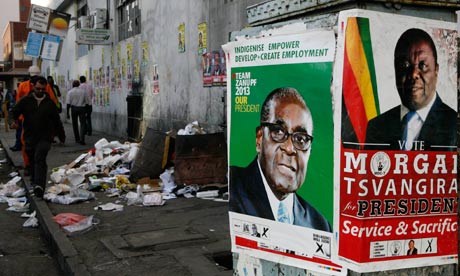
The “outcome of this election is illegitimate,” Prime Minister Morgan Tsvangirai said Thursday, and “does not reflect the will of the people of Zimbabwe.”
“The shoddy manner in which it has been conducted and the consequent illegitimacy of the result will plunge this country in a crisis,” he said in Harare.
Tsvangirai said he had conveyed his concerns to the African Union and the Southern African Development Community.
“The message we have given is that this is not a credible election.” – sapa
A manhunt is underway in Pretoria for a serial killer believed to have raped and killed at least 10 young girls, reports TimesLive. A team of detectives fear that the body count could rapidly increase if he is not found.
Police started patching together evidence three weeks ago, linking the killings, thought to have started in 2004, after the discovery of a body in East Lynne, Pretoria.
A 14-year-old girl found raped, murdered and dumped in Sunnyside, Pretoria, in 2004 is believed to have been the killer’s first victim.
South Africa ranks among the top three countries in terms of the number of serial killers.
Very little is known of the killer’s modus operandi which, according to police sources, appears to be to target teenagers in Pretoria’s northern and eastern suburbs.
The bodies of victims, who were bound, have been found dumped along rivers and streams running through Pretoria.
Detectives involved in the case, including officers from the police’s Investigative Psychology Unit, fear that, unless the killer is caught soon, the slaughter of young girls will continue.
The police are yet to compile a profile of the killer.
Forensic psychologist Dr Jackie de Wet said it was “incredibly difficult” to investigate serial crimes and to profile their perpetrators.
“It requires a lot of hard work, especially gathering useable and credible information. Unfortunately the police do not seem to be taking forensic psychology as seriously as they should. [Police] management, while being aware of the expertise and skills within police ranks, is seemingly under-using this very important resource,” said De Wet.
He said the police we re now including clinical psychologists in investigations “but unfortunately forensic psychology, under which profiling falls, is a very specialised field with a limited number of experts”.
A source with knowledge of the Pretoria investigation said that all the victims, including a boy, were aged between 14 and 19.
“Investigators are looking into at least 10 victims, but it could be more, a lot more.
“Members of the Search and Rescue Unit recently searched open veld near Eersterust where the bodies of five teenage girls, which are now also being looked at as possibly victims [of the serial killer], were found.
“If they are positively linked it could bring the number of victims up to 15,” he said.
He said the veld was searched after the police came to suspect that there were more bodies dumped there.
The bodies of the victims, which were in various stages of decomposition, had all been dumped in open fields around Pretoria.
Two were found in a field behind Mamelodi soccer stadium.
Four were found near the Tshwane metro bus depot, near East Lynne, and two between East Lynne and Eersterust.
At least one victim was found in Colbyn.
The first victim was found beneath the Telkom water tower in Sunnyside.
“When the first body was found, the bizarre crime scene … led police to predict that she was the victim of a serial killer.
“DNA obtained from other scenes and recently analysed alerted us to the fact that a serial killer is on the loose,” the policeman said.
Asked to elaborate on what was “bizarre” about the crime scene, the policeman refused, saying that to do so might jeopardise the investigation.
“We know that there is a serial killer operating in Pretoria. We are busy searching the archives and databases of police stations in the city to determine whether there are any more cases, especially involving missing teenage girls.”
He said investigators were waiting for the results of more forensic tests to determine whether a number of bodies of young girls recently found could be linked to the killer.
“At this stage very little is known about how the attacks occur except that they seem to take place after the victims leave school for home.
“In one case the girl phoned her mother to say she was boarding a taxi and was on her way home.”
Only last week serial rape suspect Shulters Sifiso Makhubo was found hanged in his Johannesburg Central prison cell hours before he was to appear in the Palm Ridge Magistrate’s Court in connection with the rape of 35 girls.
Women, Children and People with Disabilities Minister Lulu Xingwana has been told to improve the working conditions at her department’s head office in Pretoria, Beeld reported on Thursday.
According to the newspaper, dirty carpets, insect infestations and other findings were cited in a report by the parliamentary portfolio committee for women, children and people with disabilities, which inspected the premises in March.
In the report, which was tabled in Parliament on Wednesday, the committee reportedly said bathroom facilities in the building were unusable because some toilets and lights had been broken for nearly a year.
Beeld reported that Xingwana was already under fire for overseas trips costing millions, allegedly financed with money shifted from core projects.
She had also reportedly been criticised for spending more than R2 million on luxury furniture for her own office. – sapa
Vote counting was underway in Zimbabwe’s tightly fought election Wednesday, amid high turnout and accusations of rigging by President Robert Mugabe’s allies who wish to extend his 33-year rule.
The 89-year-old Mugabe is Africa’s oldest leader and is running for office for the seventh and perhaps final time.
His rival Morgan Tsvangirai hopes the election will usher in a new era for the troubled southern African nation.
Organisers reported high turnout across the country for the first election since the violent polls of 2008, that led to an uneasy power-sharing government between the two men.
There were no reports of widespread violence this time round, despite the fierce rhetoric of the campaign.
Police said officers in Harare fired warning shots in the air and arrested 10 soldiers who tried to jump the queue to vote.
At many stations voters started queueing before sunrise in the winter cold hours before polls opened. The lines continued well into the evening, with many marking their ballots by candle light.
Mugabe voted before lunchtime in a Harare suburb, where he insisted the poll would reflect the will of the people.
“I am sure people will vote freely and fairly, there is no pressure being exerted on anyone,” he said.
The one-time teacher came to prominence as a hero of Africa’s liberation movement, guiding Zimbabwe to independence from Britain and white minority rule.
But his military-backed rule has been marked by a series of violent crackdowns, economic crises and suspect elections that have brought international sanctions and made him a pariah in the West.
On Tuesday Mugabe vowed to step down if Tsvangirai was the victor. “If you lose you must surrender,” he said.
Tsvangirai, the current prime minister, said that promise should be taken “with a pinch of salt”.
Tsvangirai won the first round of voting in 2008, but was forced out of the race after 200 of his supporters were killed and thousands more injured in suspected state-backed attacks.
But the 61-year-old former union boss has repeatedly voiced concerns that the election is being rigged.
Tsvangirai’s party on Wednesday listed a battery of alleged irregularities.
Finance Minister Tendai Biti, a senior member of Tsvangirai’s Movement for Democratic Change, said the names of thousands of voters were missing from the electoral roll.
Biti, speaking after a meeting with the electoral commission, added: “They are admitting that there’s still two million people who are dead on the voters’ roll, but they said ‘because they’re dead, they can’t vote’.”
The MDC has handed its evidence to observers from the Southern African Development Community (SADC).
Since no Western groups were allowed to cover the presidential and parliamentary poll, the SADC’s account will be closely watched.
The African Union, which has been accused of whitewashing problems in the run up to the vote, said initial reports indicated it was “peaceful, orderly, free and fair”.
In Washington, US State Department spokeswoman Marie Harf also said that early signs indicated a “peaceful environment” — but that it was too soon to say if the election had been fair.
“We’ve made clear to the government of Zimbabwe and the region that further reductions in our sanctions will only occur if these next elections are credible, transparent and reflect the will of the Zimbabwean people,” she told reporters.
Tsvangirai cut a confident figure as he cast his own ballot, predicting his MDC would win “quite resoundingly”.
“This is a very historic moment for all of us,” he said. It is the time to “complete the change”.
Turnout appeared to be particularly brisk in the urban areas where Tsvangirai has enjoyed his strongest support, and which he must retain to stand any chance of victory.
But some analysts cautioned against interpreting the high urban turnout as a sign Tsvangirai would sweep the election.
“This election is going to be decided in the rural areas,” where two thirds of Zimbabweans live and where Mugabe enjoys strong support, said Michael Bratton, founder of polling organisation Afrobarometer.
Police warned on Wednesday that anyone trying to release unofficial results ahead of the official figures risked being arrested.
Already Sunday, Mugabe had threatened to arrest Tsvangirai if he tried to declare an early victory.
Some 6.4 million people, around half of the population, are eligible to vote. A candidate needs 50 percent of the vote to avoid a run-off.
The sharp-tongued Mugabe has focused his campaign on attacking homosexuals and on promises to widen the redistribution of wealth to poor black Zimbabweans.
As the economy recovers from a crisis that saw mass unemployment and galloping inflation, Mugabe loyalists insist their hero is “tried and tested”.
Tsvangirai hopes his plans to lure back foreign investors, create a million jobs in five years and improve public services will deliver a long-awaited victory.
The final results are expected within five days. – AFP
The bewildered herd must be governed by a specialized class whose interests reach beyond the locality. (Walther Lippmann)
Knowledge is power… and power is money. In order to make big money, you need big money.
The first big fund to invest in Naspers was Comerica Foreign Equity. This fund is run by World Asset Management, the investment arm of HSBC. This bank has its main (private) office on Tortola, the largest of the British Virgin Islands.
And guess where Naspers’s investment arm, MIH Holdings Limited, is located? Yes, in the exact same street of this tax-haven of the (mostly) British elite. Just think about the above every time you pay a small fortune to watch M-Net, SuperSport, DSTV, et cetera.
Now, HSBC is the world’s 3rd largest bank with $2.36 trillion in assets. Formerly known as Hong Kong Shanghai Bank Corporation, HSBC is one of the most unscrupulous banks ever. It has been the cash cow of the British elite since its inception as a repository for British Crown opium proceeds accrued during the Chinese Opium Wars.
Armed with a royal charter, Lord Shelbourne started the Chinese opium trade in 1783 with merchants from the East India Company. Shelbourne’s main spin-doctor was Adam Smith. The latter worked for the East India Company, which was formed from the slave-trading Levant Company and later became known as Chatham House. The latter is home to the Royal Institute for International Affairs (RIIA), the second most influential think tank in the world.
The RIIA was founded in 1920. Its American sister institute, the Council on Foreign Relations (CFR), was founded one year later. Walther Lippmann, the Pulitzer-Prize essayist, journalist and mass-media genius was one of the founding members of the CFR. But more about him later. Needless to say, these two organizations, the RIIA and CFR, work hand in hand.
Now, the CFR is run by some of the best brains in America. They are truly exceptional people. They basically run the State Department, the CIA and are connected to nearly everybody that matters in the business and academia in America, and globally.
The CIA operates under the cover of various organizations when it comes to furthering America’s strategic and economic interests. The Ford Foundation is one of the main fronts of the CIA (i.e. the CFR).
In June 1985, this foundation hosted the first ever meeting between the ANC and the Broederbond (i.e. the NP).
The conference took place in Glen Cove, Long Island on June 1st. The main players were Professor JP De Lange (Head of the Broederbond) and ANC officials, Thabo Mbeki, Mac Maharaj and Seretse Choadi.
This meeting did not produce the results the CFR were hoping for. So they summoned the (economic) artillery, David Rockefeller.
Along with being a CFR director for 46 years, David Rockefeller served as chairman of the board from 1970-85 and was the organization’s honorary chairman till 2001. During this time, he was also chairman of Chase Manhattan Bank.
On 31st July 1985, Chase Manhattan decided not to roll over South Africa’s debt. Apparently Pik Botha’s traitor heart nearly stopped beating: “I will never forget the night of July 31 when [Minister of Finance] Barend du Plessis phoned me … [He said]: ‘Pik, I must tell you that the country is facing inevitable bankruptcy … The process has started.'” (source).
The rest is history.
So what has this got to do with Naspers? Well, it just shows that Naspers is just another appendage of interest groups beyond the borders of South Africa. In other words, it does not serve the interests of South Africans. But then, neither do other media giants in South Africa.
Caxton/CTP’s chairman in the early 1990s was Van Zyl Slabbert, who also became the chairman of the Johannesburg Stock Exchange. Slabbert was the useful idiot of CFR member George Soros. The latter, through his Open Society Foundation, sponsored Slabbert and super-useful idiot Max Du Preez… especially with his anti-Afrikaner Vrye Weekblad newspaper.
So, every time you hear about the Davos Afrikaner called Koos Bekker, the big boss of the 33rd largest media company in the world called Naspers (worth R344 billion or $34,88 billion) just know that he is just another witting puppet on an Anglo-American string.
He is just like those rich Boer farmers who became hensoppers during the Anglo-Boer War… selling out their own people purely for profit. Nothing more, nothing less.
Meaning that the “Who is Naspers?” question is not really that interesting. The really interesting question is the “why” behind Naspers.
It is a fact that people can only make sense of Reality through “ideal meanings”. Those ideal “pictures in your head” prevent you, more often than not, to “… come to judgment by critical thinking” (Walther Lippmann).
Journalism is “intelligence work” and journalists are a link between policymakers and the public, according to Lippmann.
Meaning that journalists (and the media companies that employ them, e.g. Naspers) always sanitize the Truth at the behest of their pay-masters…
Police have seized dangerous weapons and dagga in nine schools in Galeshewe, Kimberley, Northern Cape police said on Wednesday.
Raids were conducted on Tuesday and Wednesday at the request of school principals and parents of pupils of various schools, Lieutenant Sergio Kock said.
“Classrooms, toilets, and storerooms on the school premises were searched… police confiscated several knives, pangas, broken mirrors, and other dangerous weapons,” he said in a statement.
Police also searched areas surrounding the schools where drugs were known to be sold.
“[We] confiscated 31 ‘fingers’ of dagga buried in a hole outside one of the mentioned houses. The dagga has a street value of approximately R3000.”
No arrests were made and pupils found in possession of dangerous weapons would face internal education department disciplinary processes. -sapa
Whatever the result of Zimbabwe’s election Wednesday one thing is for sure: four years of uneasy power-sharing between President Robert Mugabe and Prime Minister Morgan Tsvangirai will end.
As Zimbabweans streamed to the polls, the unity government partners sighed with relief at the close of their “painful”, “disappointing” union.
The forced marriage was arranged by the international community to avoid further violence in the wake of suspect and blood-soaked 2008 elections.
Tsvangirai won the first round, but was forced to drop out of the second round amid the killing of 200 of his supporters.
He then became prime minister as a reluctant partner in the unity government alongside Mugabe, the former guerrilla who has ruled since independence from Britain.
While the power-sharing deal which took effect in 2009 prevented full-scale conflict, critics today deplore its failure to achieve much-needed democratic reforms and kickstart the economy.
“It has been a major disappointment,” Rugare Gumbo, spokesman for Mugabe’s ZANU-PF party, told AFP.
But communications minister Nelson Chamisa, spokesman for Tzvangirai’s Movement for Democratic Change (MDC), said the government had achieved some victories.
“It has been difficult, difficult, painful but useful for the people of Zimbabwe. People’s lives have improved,” he said. “We are excited that we are coming out of the blast furnace.”
The arrangement was aimed at creating a “genuine, viable, permanent, sustainable” solution to the crisis.
But in its early days, Mugabe could not hide his discomfort.
“I feel awkward in a thing like that, absolutely awkward,” he told mediator President Jacob Zuma of South Africa at the time.
Ex-finance minister Simba Makoni, who was not part of the unity deal, branded the Mugabe-Tsvangirai government “pathetic” and “dismal”.
And analysts said the deal had failed to set a democratic framework for fresh elections.
Days before Wednesday vote, the country was “still grappling with issues of reforms, the timing of elections, issues of sporadic violence and intimidation,” said Trevor Maisiri, a researcher with the International Crisis Group.
“It has not fully served its primary purpose because the idea was to create a transitional mechanism that would lead to a credible election,” he said.
Initially the unity government was to last just two years but it had to be extended as delays plagued the formulation of a new constitution that would lay the basis for credible polls this time around.
The MDC “regrets, definitely that quite a number of reforms did not move as we had wanted,” said Chamisa, highlighting a lack of revisions of the media and security sector.
Civic rights coalition Sokwanele, which kept an eye on the government’s performance, traced 22,482 violations of the agreement — 90 percent by ZANU-PF.
The rivals still strongly disagree on the economy, and bitterly blame each other for Zimbabwe’s slow recovery.
Unemployment still hovers on the wrong side of 50 percent while millions of people are still economic refugees in neighbouring countries.
Once a net food exporter known as Africa’s breadbasket, Zimbabwe’s reformed agricultural sector is yet to produce enough to feed the country.
“There were many programmes that we were going to carry out, but our colleagues acted like they were an opposition party instead of carrying themselves as part of the government,” the ZANU-PF’s Gumbo claimed.
The MDC said it opposed “ill-conceived” black economic empowerment schemes that forced foreign companies to cede a majority of their shares, saying it drove away investors.
But some say the power-sharing agreement was not all bad.
The government rescued the moribund economy by abandoning the Zimbabwean dollar, ending rampant inflation that peaked at 231 million percent.
Politicians who previously had not seen eye-to-eye suddenly were forced to run the country together, which may explain the peaceful run-up to Wednesday’s polls.
Just being able to talk to each other in parliament or in cabinet “has really been helpful,” said Gumbo.
The coalition “brought about some sanity, peace and stability. We are not fighting as we used to. Even campaigning is being done in a peaceful, orderly manner,” he said.
Chamisa also said the unity government was a healthy exercise.
“The past four years showed that another Zimbabwe is possible. A Zimbabwe where we can realise, appreciate and celebrate the cross-pollination of ideas,” he said.
A 33-year-old woman was found dead in a water pipe near a farm in Breyten, Mpumalanga police said on Monday.
A farmworker saw what looked like a person’s arms in a pipe on Saturday morning and informed his employer, who then called the police, Colonel Leonard Hlathi said.
Police found Claudi van der Merwe partially naked, with her throat slit. They thought the two black refuse bags found near her body were used to carry her there.
Hlathi said her Kia Picanto was found three kilometres away.
Van der Merwe was last seen on Friday afternoon at the guest house in Hendrina where she worked.
The National Union of Mineworkers (NUM) would not comment on rape allegations against Cosatu general secretary Zwelinzima Vavi until it heard from the trade union federation, it said on Monday.
“It will be irresponsible to make statements at this stage,” NUM general secretary Frans Baleni told reporters in Johannesburg after the union’s national executive committee meeting.
“We do not want to engage on details about this matter until it is formally brought to us,” he said.
Vavi has admitted to having an extramarital affair with a married woman who was employed by the Congress of SA Trade Unions (Cosatu) and claimed she later tried to extort R2 million from him.
He denied raping her, and said the sex was consensual.
However, she brought a complaint of sexual harassment against him. An internal grievance proceeding was being held on Monday morning
Baleni said the union would wait for internal processes regarding the matter to take place. – Sapa
Religious leaders should do more to rehabilitate criminals, because this was not the sole responsibility of the correctional services department, Correctional Services Minister Sibusiso Ndebele said on Sunday.
“We call upon religious leaders to play a more active role in our concerted efforts to heal victims of crime, and rehabilitate offenders so that they return to society as better human beings,” he said.
“Corrections is not the sole responsibility of the department of correctional services. Corrections is a societal responsibility.”
On Friday, Ndebele met religious leaders and officials at the East London Correctional Centre.
“As government, we will not win the battle against crime and re-offending if victims of crime, and the religious community, are not at the centre of the justice system,” he said in a statement on Sunday.
“The religious community can encourage moral regeneration, coupled with basic values and cultures; be more prominent with its role in rehabilitation…. We cannot allow a situation where the poor are being punished because of their lack of money.”
He said religious leaders should play a major role reintegrating convicted criminals into society, and providing social and economic assistance to the families of people serving time in prison.
Ndebele said there was a church in every community and it was time for them to play their part.
“We all have a duty to play in the eradication poverty. We must perform charitable deeds as Buddhism, Christianity, Judaism, Islam and indigenous cultures dictate,” he said.
“Like slavery and apartheid, poverty is not natural. It is man-made and it can be overcome and eradicated by the actions of human beings.”
Research showed a correlation between a lack of education, poverty and crime, he said.
To reduce re-offending, the department had made education compulsory, he said.
“The hand that previously held an okapi, to harm others, must be transformed into a hand of a tailor, carpenter, builder and writer. We are, indeed, humbled to see offenders taking pride and working hard….”
He said his department was putting the victims of crime at the “core of the justice system” and their pain did not go away until the offenders were sentenced.
“I have no doubt in my mind that the religious community is best positioned to play a decisive role in setting right the hearts, minds, and souls of South Africans. As long as we do not make moral regeneration a central theme of our conduct, we will find ourselves having progressed one step forward, and regressed 10 steps backward,” he said. – Sapa
A staggering 40 million euro ($53 million) worth of diamonds and other jewels was stolen Sunday from the Carlton Intercontinental Hotel in Cannes, in one of Europe’s biggest jewelry heists in recent years, police said. One expert noted the crime follows recent jail escapes by members of the notorious “Pink Panther” jewel thief gang.
The hotel in the sweltering French Riviera was hosting a temporary jewelry exhibit over the summer from the prestigious Leviev diamond house, which is owned by Israeli billionaire Lev Leviev.
A police spokesman said the theft took place around noon, but he could not confirm local media reports that the robber was a single gunman who stuffed a suitcase with the gems before making a swift exit. The spokesman spoke on condition of anonymity because he was not authorized to discuss the matter on the record.
The luxury Carlton hotel featured prominently in Alfred Hitchcok’s “To Catch a Thief,” which starred Cary Grant as a reformed burglar chasing a jewel thief. It is situated on the exclusive Promenade de la Croisette that stretches a mile and a half (2.4 kilometers) along the French Riviera, and is thronged by the rich and famous throughout the year. The hotel’s position provides not only a beautiful view of the sea but also an easy getaway for potential jewel thieves along the long stretch of road.
“It’s a huge theft. Anytime you talk about a heist with many millions of dollars it turns heads and feeds the imagination,” said Jonathan Sazonoff, U.S. editor for the Museum Security Network website and an authority on high-value crime.
He said the likelihood of recovering the stolen diamonds and jewels is slim, because the thieves can easily sell them. “The fear is, if you’re dealing with high-quality minerals, it’s hard to get them back,” Sazonoff said. “They can be broken up and so they can be easily smuggled and sold.”
The valuable gems were supposed to be on public display until the end of August. It was not immediately clear how many pieces were stolen.
Leviev, in a brief statement, said: “Company officials are cooperating with local authorities investigating the loss and are relieved that no one was injured in the robbery.”
Several police officers were placed in front of the Carlton exhibition room – near a Cartier diamond boutique – to prevent the dozens of journalists and photographers from getting a look at the scene of the crime.
Hotel officials would not comment, and attempts to get comments from Leviev or his company were not immediately successful.
Europe has been struck by several brazen jewelry thefts in recent years, some of which have involved tens of millions of dollars in treasure.
On Feb. 18 in Belgium, some $50 million worth of diamonds were stolen. In that heist, robbers targeted stones from the global diamond center of Antwerp that had been loaded on a plane headed to Zurich. Authorities have since detained dozens of people and recovered much of the items stolen in that operation.
Five years ago, in December 2008, armed robbers wearing women’s wigs and clothing made off with diamond rings, gem-studded bracelets and other jewelry said then to be worth $108 million from a Harry Winston boutique in Paris.
Also in 2008 – in February of that year – in a scene reminiscent of the movie “The Italian Job,” masked thieves drilled a tunnel into a Damiani jewelry company showroom in Milan, Italy. They tied up the staff with plastic cable and sticky tape, then made off with gold, diamonds and rubies worth some $20 million. The robbers had been digging for several weeks from a building under construction next door.
Cannes appears to be a favorite target this year – in May it was struck by other two highly publicized jewelry heists during the Cannes Film Festival.
In the first theft, robbers stole about $1 million worth of jewels after ripping a safe from the wall of a hotel room. In the second, thieves outsmarted 80 security guards in an exclusive hotel and grabbed a De Grisogono necklace that creators said is worth 2 million euros ($2.6 million).
Sazonoff said it is normal for robbers to gravitate to a place like Cannes, whose glimmering harbor and glamorous film festival attract the world’s rich and famous. “Why do thieves target Cannes? It’s simple … On the Cote d’Azur, it’s where the monied people flow,” he said.
Sazonoff also said police would likely probe whether Sunday’s heist is linked to recent jail escapes by alleged members of the Pink Panther jewel thief gang.
On Thursday, gang member Milan Poparic escaped his Swiss prison after accomplices rammed a gate and overpowered guards with bursts from their AK-47s, police said.
Police say the Pink Panther network’s members are prime suspects in a series of daring thefts. According to Interpol, the group has targeted luxury watch and jewelry stores in Europe, the Middle East, Asia and the United States, netting more than ?330 million (£285m) since 1999.
Poparic is the third member of the Pink Panthers to escape from a Swiss prison in as many months, according to Vaud police.
“The brazen drama of it is their style… The possibility of the reemergence of the Pink Panther gang is very troubling and taken seriously by law enforcement worldwide,” Sazonoff said. “The theft of high value diamonds is exactly what they do, so it’s not a great leap to assume they are on the warpath again. They are a crime wave waiting to happen.” – AP
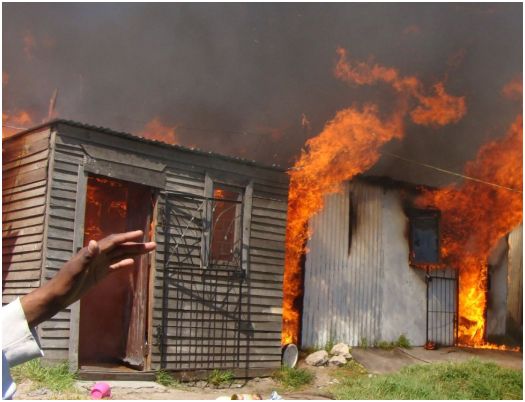
Five people have been arrested for allegedly setting fire to a home in which five people died near Eshowe, KwaZulu-Natal police said on Monday.
Captain Thulani Zwane said the five, aged between 19 and 36, were arrested on Sunday morning and were expected to appear in the Eshowe Magistrate’s court on Tuesday on charges of murder.
Thulani said four houses in a homestead in the Mbongolwane area were set alight on Saturday night.
Thulisile Mnyango, 50, Cebile Mnyango, 21, Lungelo Mnyango, 17, Mlamuli Mnyango, 10, and two-year-old Qiniso Mnyango, died in one of the houses.
A 19-year-old man was stabbed to death in Bloemfontein, Free State police said on Monday.
Zenzile Nqolo and Thabang Mohata were attacked by a group of men, who demanded their cellphones and wallets, when they left a local tavern on Saturday, said Captain Chaka Marope.
“It is alleged that Nqolo, in his attempt to fight back, was overpowered by the men and in [the] process sustained severe stab wounds,” said Marope.
Mohata escaped and alerted police, who were patrolling nearby. – Sapa
This website uses cookies to improve your experience. We'll assume you're ok with this, but you can opt-out if you wish. Cookie settingsACCEPT
Privacy & Cookies Policy
Privacy Overview
This website uses cookies to improve your experience while you navigate through the website. Out of these cookies, the cookies that are categorized as necessary are stored on your browser as they are essential for the working of basic functionalities of the website. We also use third-party cookies that help us analyze and understand how you use this website. These cookies will be stored in your browser only with your consent. You also have the option to opt-out of these cookies. But opting out of some of these cookies may have an effect on your browsing experience.
Necessary cookies are absolutely essential for the website to function properly. This category only includes cookies that ensures basic functionalities and security features of the website. These cookies do not store any personal information.
Any cookies that may not be particularly necessary for the website to function and is used specifically to collect user personal data via analytics, ads, other embedded contents are termed as non-necessary cookies. It is mandatory to procure user consent prior to running these cookies on your website.

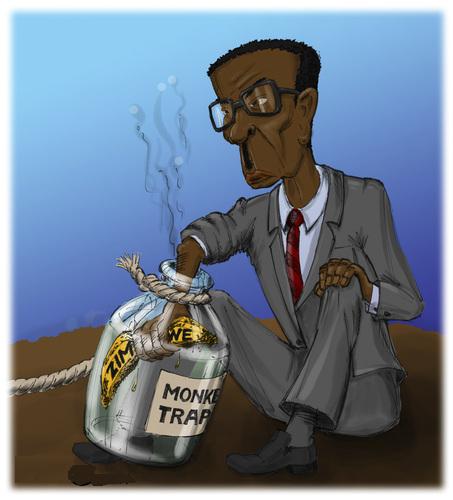
 The “outcome of this election is illegitimate,” Prime Minister Morgan Tsvangirai said Thursday, and “does not reflect the will of the people of Zimbabwe.”