Thursday while reporting for CNN on the tragic aftermath of the mass shooting live from outside the Emanuel AME Church in Charleston Don Lemon was yelled at by a Africa-American woman upset with the coverage.
Right before Lemon is in introduced you can hear the woman off camera shout, “Report the real truth. We are angry. White people are terrorists.”
Once Lemon came on the woman went on camera and said several times “Are you angry Don?”
Before they cut away she added, “The President is a puppet. Stop the Lies. He’s an uncle Tom too. President Obama is an Uncle Tom.”
Charleston shooter Dylann Storm Roof was reportedly taking a drug that has been linked with sudden outbursts of violence, fitting the pattern of innumerable other mass shooters who were on or had recently come off pharmaceutical drugs linked to aggression.
According to a CBS News report, earlier this year when cops searched Roof after he was acting suspiciously inside a Bath and Body Works store, they found “orange strips” that Roof told officers was suboxone, a narcotic that is used to treat opiate addiction.
Suboxone is a habit-forming drug that has been connected with sudden outbursts of aggression.
A user on the MD Junction website relates how her husband “became violent, smashing things and threatening me,” after just a few days of coming off suboxone.
Another poster on the Drugs.com website tells the story of how his personality completely changed as a result of taking suboxone.
The individual relates how he became “nasty” and “violent” just weeks into taking the drug, adding that he would “snap” and be mean to people for no reason.
Another poster reveals how his son-in-law “completely changed on suboxone,” and that the drug sent him into “self-destruct mode.”
A user named ‘Jhalloway’ also tells the story of how her husband’s addiction to suboxone was “ruining our life.”
A poster on a separate forum writes about how he became “horribly aggressive” towards his partner after taking 8mg of suboxone.
A website devoted to horror stories about the drug called SubSux.com also features a post by a woman whose husband obtained a gun and began violently beating his 15-year-old son after taking suboxone.
According to a Courier-Journal report, suboxone “is increasingly being abused, sold on the streets and inappropriately prescribed” by doctors. For some users, it is even more addictive than the drugs it’s supposed to help them quit.
As we previously highlighted, virtually every major mass shooter was taking some form of SSRI or other pharmaceutical drug at the time of their attack, including Columbine killer Eric Harris, ‘Batman’ shooter James Holmes and Sandy Hook gunman Adam Lanza.
As the website SSRI Stories profusely documents, there are literally hundreds of examples of mass shootings, murders and other violent episodes that have been committed by individuals on psychiatric drugs over the past three decades.
Pharmaceutical giants who produce drugs like Zoloft, Prozac and Paxil spend around $2.4 billion dollars a year on direct-to-consumer television advertising every year. By running negative stories about prescription drugs, networks risk losing tens of millions of dollars in ad revenue, which is undoubtedly one of the primary reasons why the connection is habitually downplayed or ignored entirely.
Dylann Storm Roof, 21, allegedly shot dead nine people in South Carolina last night.
He was pictured in an earlier photograph wearing a jacket incongruously showing both flags of apartheid-era South Africa and one from colonial British-ruled Rhodesia, now Zimbabwe.
The white gunman has been caught in North Carolina.
The attack came just a day after the New York Times warned that “the main terrorist threat in the United States is not from violent Muslim extremists, but from right-wing extremists.”
Two months ago, after the fatal shooting of an unarmed black man, Walter Scott, by a white police officer in neighboring North Charleston, major protests occured highlighting racial tensions in the area.
The officer has been charged with murder, and the shooting prompted South Carolina lawmakers to push through a bill helping all police agencies in the state get body cameras. The black pastor was a sponsor of that bill.
It appears that Roof robotically said: “I have to do it. You rape our women and you’re taking over our country. And you have to go”,’ Sylvia Johnson, a church member said.
A five-year-old girl survived the attack after her grandmother told her to play dead. The gunman then fled.
Police launched a massive manhunt for Roof and released surveillance images showing him and his car, warning the public that he was dangerous. He was eventually caught on Thursday morning.
Roof’s uncle, Carson Cowles, told Reuters that his nephew had received a .45 caliber pistol as a birthday present in April. He called the 21-year-old ‘quiet, soft spoken’ and said he recognized him in the photo released by police.
In a photograph of Roof on Facebook, he is seen strangely displaying the flag of apartheid-era South Africa on his jacket. He is also wearing another flag depicting that of British colonial Rhodesia, now called Zimbabwe.
Roof also displayed a Confederate flag on his license plate.
Court records show he was charged with a drugs offense in March 2015 and trespassing in April.
Police have since headed to the home of Roof’s mother, Cowles added.
Of the shooting, Charleston Police Chief Gregory Mullen said: ‘We believe this is a hate crime – that is how we are investigating it.’
On Thursday, the Department of Justice’s Civil Rights Division, the FBI and the U.S. Attorney’s Office have launched a hate crime investigation into the mass shooting, ABC reported.
The Bureau of Alcohol, Tobacco, Firearms and Explosives and other agencies have joined the investigation, Mullen said.
Obama called the killings ‘senseless’ and said it again highlighted the need for gun control.
Even as Rachel Dolezal, the Spokane NAACP president whose parents outed her as white, resigned from the organization on Monday ahead of a “Today” show interview, another Dolezal was thrust into the spotlight.
It was revealed Monday that Dolezal’s older brother Joshua Dolezal is awaiting trial on charges he sexually abused a black child — charges that the Dolezal family, in their own television appearance, implied Rachel Dolezal may have helped orchestrate. Joshua Dolezal is contesting the charges and is free on $15,000 bail while awaiting trial, according to the Denver Post.
Joshua Dolezal’s troubles could explain at least one piece of the complicated puzzle behind this saga, the question of why Rachel Dolezal’s parents would expose their daughter to such public humiliation and perhaps legal jeopardy.
Joshua Dolezal, 39, is the eldest child of the Dolezal clan. Rachel is his only biological sibling — Lawrence and Ruthanne Dolezal have four adopted children, some of whom are black. Joshua now faces four felony counts of sexual assault in Colorado, according to reports in the New York Daily News, the Denver Post and other local outlets that have been confirmed by The Washington Post.
The alleged incidents of sexual assault, according to a Clear Creek County affidavit in support of an arrest warrant obtained by the Daily News and reviewed by The Post, occurred at Lawrence and Ruthanne’s house in Colorado “in 2001 or 2002.” The victim, whose name was redacted in the affidavit, “was 6 or 7 years old,” and Joshua Dolezal was “19 years older.”
Among other accusations: On two occasions, according to the affidavit, Joshua Dolezal allegedly forced the victim to perform oral sex on him. On “7 or 8″ other occasions, Dolezal performed oral sex on the victim.
“Don’t tell anyone or I’ll hurt you,” Joshua allegedly said.
The affidavit included claims that an older incident of alleged abuse of another victim in 1991 had a racial element.
“The family had a subscription to National Geographic magazine,” it read. “… Joshua Dolezal showed [redacted] his collection of photos of topless and naked African women.”
It continued: “Joshua Dolezal was turned on by the black body and was curious about black women sexually.”
The abuse was reported in 2013, and Joshua Dolezal was arrested last year. The victim, according to the affidavit, “wanted to report the incident now because Joshua Dolezal has a one year old daughter and [redacted] does not want the daughter to be victimized.”
Dolezal will be tried in August, as ABC 7 Denver reported.
The allegations against Joshua Dolezal are significant because, in interviews with The Post and other outlets, the Dolezals alleged Rachel orchestrated them to win custody of her brother Izaiah. Izaiah, who is black, lives with Rachel Dolezal in Spokane — and Rachel says he is her son, the family alleged.
The parents of Rachel Dolezal, the civil rights activist under fire for her disputed racial identity, say they don’t know what caused their biological daughter to call herself African American.
Lawrence and Ruthanne Dolezal, without specifically addressing the charges against their son, broadly denied such behavior as well as Rachel Dolezal’s allegations that she was physically abused as a child.
“If she’s alleging there was abuse in our family from years past, then it’s false and there’s no need to comment on anything of that nature,” Lawrence Dolezal told The Post last week. “That’s just utter falsehood.”
“The allegations are totally false and malicious,” Ruthanne Dolezal told Megyn Kelly of Fox News when she asked about them Monday. “They’re fabricated.”
“Rachel Dolezal dismisses the controversy as little more than an ugly byproduct of contentious litigation between other family members over allegations of past abuse that has divided the family,” the paper said. “She’s particularly suspicious of the timing, noting that the allegations broke on her son’s birthday and come as the Colorado lawsuit … nears a key juncture.” While she referred to a lawsuit, the charges in Colorado are criminal.
Though it’s not clear when and how the Dolezals became so divided, insight into the warring family comes from an unlikely source: the published writing of Joshua Dolezal, the accused.
Joshua Dolezal is an English professor at Central College, a private liberal arts college in Pella, Iowa. His work, much of it nonfiction, has appeared in respected publications such as the Kenyon Review, and the University of Iowa Press published his memoir — which includes many references to his sister Rachel.
“Down from the Mountaintop: From Belief to Belonging” offers the most complete picture heretofore of Rachel Dolezal’s broken marriage. According to Lawrence Dolezal, she was married to a black man, Kevin Moore, and the couple divorced in 2004.
Joshua Dolezal saw signs of trouble. In many passages, Rachel Dolezal is portrayed as the victim of an unhappy marriage whose husband won’t let her and their young child leave the house — a woman who does what her spouse says when he says it.
Joshua Dolezal was angry. “I murdered him hundreds of times in my sleep,” he wrote of his former black brother-in-law. Eventually, the couple separated.
Of course, a memoir isn’t a fact-checked, reported news story and the ex-husband has been unavailable for comment and has not responded to numerous published accounts of her claims. But Joshua Dolezal said he did his best.
“To remember is to reconstruct and interpret,” he wrote in an author’s note, “and this is as truthful a story as my memory can tell.”
Everyone sometimes feels the urge to reinvent themselves — to start again afresh in a new place, free from the assumptions others have made about them.
Even so, after Rachel Dolezal moved from their family home in Montana to the city of Spokane in Washington State, her adopted brother was stunned to learn just how thoroughly she had transformed herself.
The blonde-haired, blue-eyed daughter of missionaries was passing herself off as black, and had even befriended an African-American man she was pretending was her father. She begged her brother Ezra not to rock the boat by revealing the truth about her past.
Dolezal as an ‘oppressed black woman’
Rachel told Ezra that, as one of four African-American infants her parents had adopted, he was welcome to visit her, not least because he obviously fitted in with her new persona. Much to his dismay, she wanted him to go along with the lie that he was her brother by blood.
‘She told me not to blow her cover,’ Ezra said yesterday. ‘She told me not to tell anybody about Montana or her family over there. She said she was starting a new life.’
Ezra was both baffled and angered by her imposture, which he considered tantamount to ‘blackface’, the deeply controversial tradition of white entertainers blacking up their faces. And it was, to be brutally frank, little different: she started to darken her skin colour, frizz up her straight hair into dark curls, and affect an African-American accent.
Ezra’s anger turned to fury when he and his family discovered that, not content simply pretending to be black, 37-year-old Miss Dolezal had even invented a whole history of suffering at the hands of white oppression, to help her climb the ladder in the civil rights world.
She told those she encountered in her new incarnation how her white mother and white step-father (in truth, her real father) had punished their mixed-race children with a kind of whip that had once been used on slaves.
Miss Dolezal also complained to the police of being the victim of hate crimes by white racists, who she said had even left a noose in her garage.
All this posturing appeared to do the trick, helping to establish Miss Dolezal as a leading light of the black rights movement in America’s Pacific Northwest. She is the president of the National Association for the Advancement of Colored People (NAACP) in Spokane, Washington state’s second- biggest city. She also runs the city’s police oversight committee and is an African Studies professor at the local university, where she gives impassioned classes on The Black Woman’s Struggle.
Now, however, after her horribly misrepresented parents decided it was time to reveal the truth about their daughter, her astonishing, decade-long deception has come spectacularly tumbling down. When a TV news crew finally confronted her, and asked if she was African-American, she eventually stammered that she ‘didn’t understand the question’ and ran off to hide in a dress shop.
Officials are now investigating whether she should be prosecuted for lying about her racial background in her application for the police ombudsman’s job. She might yet also face trouble from police, who have dropped investigations into all nine of the alleged race hate crimes she suffered amid allegations she invented them.
This outlandish case could have been dismissed as an example of someone merely seeking to get a leg up in their career by posing as someone they are not. But this is America, with its bitter legacy of slavery and segregation.
Black or mixed-race Americans have for centuries been passing themselves off as white in order to better their lives, but you can probably count on one hand the number of people who have tried to go in the opposite direction. So what are we to think of a talented young white woman who has spent the past decade pretending to be black?
Miss Dolezal is bound to fuel the growing furore when she addresses the media tonight at a meeting of her NAACP group. Deeply embarrassed to have been hoodwinked so easily, the national organisation has nevertheless supported her, praising her record and insisting that one’s racial identity is irrelevant in leading the group.
However, most people don’t believe for a second that she would have risen so far in the civil rights industry if she had been recognised as a white middle-class woman from a conservative family.
Unlike in many areas of life in America, being black is an obvious advantage in the civil rights industry where — to quote one commentator — it is seen as more ‘authentic’.
What’s peculiar about Rachel Dolezal, however, is that she is still insisting, even after her public exposure, that she really is black.
Whether this is a case of serious delusion or a brazen attempt to bluff it out is hard to tell. Although her parents, Larry and Ruthanne Dolezal, say they each have a grandparent who had some Native American blood, neither has any black lineage.
Miss Dolezal claims her parents timed their revelations to discredit her in an upcoming trial concerning sex abuse allegations relating to her brother, Joshua, 39, in which he will appear as a witness. They say they only spoke out after being approached by the media.
Their family background is a mix of German, Czech and Swedish. Nevertheless, Rachel was ‘always interested in ethnicity and diversity’ growing up, says her mother. That accelerated when her parents adopted four black infants in the Nineties.
Ironically, it appears that racism from black people may have spurred her to want to become one of them.
Members of her family believe that the turning point came when she won a scholarship to take a master’s degree in fine art at the largely black Howard University in Washington DC. They recall how she had submitted a portfolio of portraits of African-Americans, and people at the university — especially staff — were resentful when they discovered she wasn’t black as they had assumed.
Her brother Ezra says Miss Dolezal — still with a pale complexion and straight blonde hair — complained to her family of suffering racism.
She developed a ‘dislike for being white, and for white people’ that boiled down to ‘self-hatred’, he believes.
After university, she had a short-lived marriage to an African-American man which produced a son but ended, she claims, because her husband became violent to her and to the child.
In around 2006 or 2007, she started to ‘disguise’ herself as black, says her mother. It started with her hair — she had enjoyed arranging the hair of her adopted black sister, Esther — and Miss Dolezal was soon braiding her own in the same ethnic style, often covering it in an African headwrap.
By 2011, say family members, she was applying make-up to her face to appear ‘darker and darker’. A new look needed a new back story, and hers was elaborate — born in a tepee and brought up in South Africa, she said she had had to hunt with a bow and arrows for food.
None of it, say her family, is remotely true — she hasn’t even set foot in Africa.
It’s easy to scoff now at the many times this firebrand has eloquently spoken out about the difficulties of living as a black woman in a largely white part of the States. Even going to the cinema to watch 12 Years A Slave was an ordeal, she said, as she felt the eyes of her white neighbours turn to watch her reaction.
In 2010, she told the New York Times that she could ‘not imagine showing her face’ at an event held by the Tea Party, the ultra-conservative faction in the Republican Party, because of the preponderance of white faces. ‘It would make me nervous to be there unless I went with a big group,’ she said. Only last December, she wrote a column about the ‘asphyxiation we are experiencing as black people in America’.
Certainly, it would have been pretty much impossible to take some of her radical stances if she had been white.
A video clip, entitled Black Is Beautiful, shot in one of the classes she gives at Eastern Washington University, shows her railing against how black women’s hairstyles have been dictated by ‘white supremacy and racism’.
Talking about one particular style of African-American hair, she tugs at her own tight curls and says: ‘Like this.’
Thanks to her pretence, Miss Dolezal got away with a lot of arguably racist behaviour of her own. She once refused to allow a light-skinned Hispanic student to participate in a class exercise about white oppression because ‘she didn’t look Hispanic’.
Her tweets included one in which she lambasted the Oscar-winning film The Help, which examines the nature of social segregation between black and white, sniffing how it had ‘put $206mil in a white woman’s pocket’.
In another tweet, she praised a video entitled ‘S**t White Girls Say … to Black Girls’, claiming it was ‘true2life’.
It would be easy simply to goggle in astonishment — and many have. Critics of overweening political correctness are having a field day over the lengths one liberal white woman has gone to identify with black oppression. Dolezal may even remind British TV viewers of the ludicrous Ali G, the white rapper persona created by the comic Sacha Baron Cohen, who liked to complain at every perceived slight: ‘Is it because I is black?’
Conservatives have also highlighted what they see as the hypocrisy of liberals who have condemned Miss Dolezal’s claims to be black, yet applauded the recent announcement by former Olympic decathlon champion Bruce Jenner that he is now a woman calling herself Caitlyn.
Why can Jenner — who hasn’t even had gender-altering surgery — say he’s a woman if she can’t say she’s black?
But those on the Left, and many black commentators, say the comparison is unfair. Not only is ‘blacking up’ deeply racially offensive, they say, but there is the whole history of America’s unhappy race relations to take into account.
For years, under the so-called Jim Crow laws which preserved racial segregation in the South — even deep into the 20th century — a ‘one drop of blood’ rule meant that people with even the smallest trace of black ancestry were legally considered black.
For many, this was catastrophic. But according to academics, this has also established a tradition whereby pretty much any American can say they are black and not be challenged.
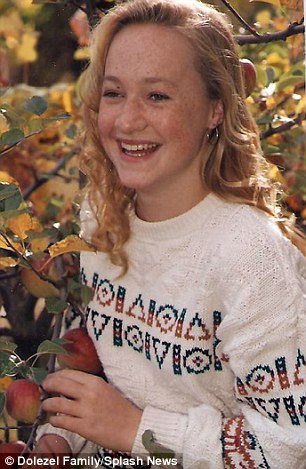
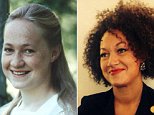
Indeed, those who have leapt to Rachel Dolezal’s defence say that if she wants to say she is black, why should anyone deny her that? The problem is that one click of the mouse in the internet age provides pictures of her as a young freckle-faced blonde girl, making a mockery of it all.
‘I wonder what race Rachel would become if she got stopped by the police?’ the — genuinely — black woman author Terry McMillan mused waspishly on Twitter. Unfortunately, one suspects, Miss Dolezal would seize on any mistreatment by the police as further proof of her noble struggle as an oppressed black woman. – DailyMail.co.uk (shortened)
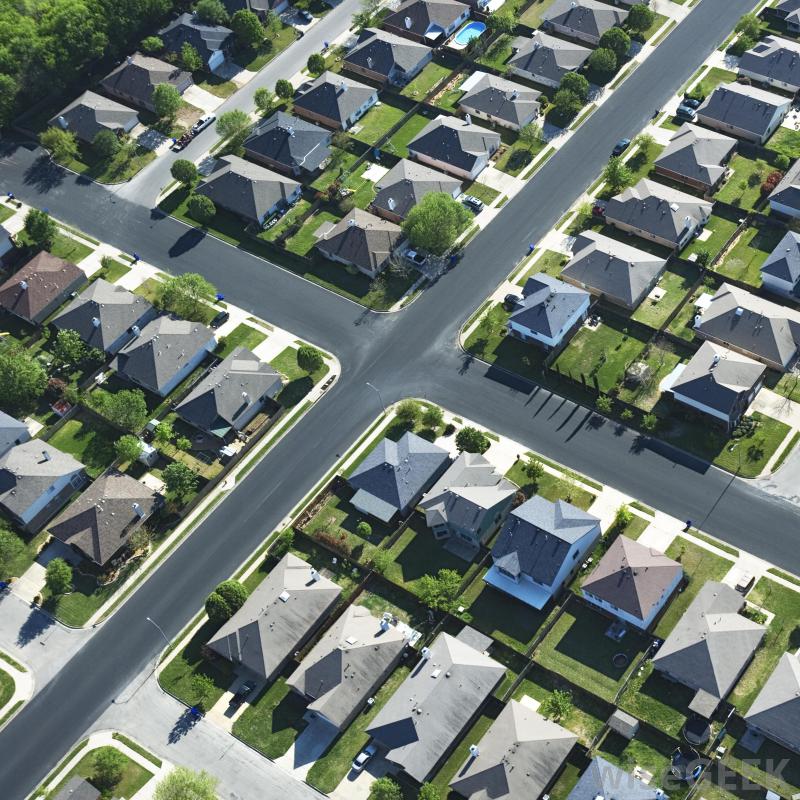
The Obama administration is moving forward with regulations designed to help diversify America’s wealthier neighborhoods, drawing fire from critics who decry the proposal as executive overreach in search of an “unrealistic utopia.”
A final Department of Housing and Urban Development (HUD) rule due out this month is aimed at ending decades of deep-rooted segregation around the country.
The regulations would use grant money as an incentive for communities to build affordable housing in more affluent areas while also taking steps to upgrade poorer areas with better schools, parks, libraries, grocery stores and transportation routes as part of a gentrification of those communities.
“HUD is working with communities across the country to fulfill the promise of equal opportunity for all,” a HUD spokeswoman said. “The proposed policy seeks to break down barriers to access to opportunity in communities supported by HUD funds.”
It’s a tough sell for some conservatives. Among them is Rep. Paul Gosar (R-Ariz.), who argued that the administration “shouldn’t be holding hostage grant monies aimed at community improvement based on its unrealistic utopian ideas of what every community should resemble.”
“American citizens and communities should be free to choose where they would like to live and not be subject to federal neighborhood engineering at the behest of an overreaching federal government,” said Gosar, who is leading an effort in the House to block the regulations.
Civil rights advocates, meanwhile, are praising the plan, arguing that it is needed to break through decades-old barriers that keep poor and minority families trapped in hardscrabble neighborhoods.
“We have a history of putting affordable housing in poor communities,” said Debby Goldberg, vice president at the National Fair Housing Alliance.
HUD says it is obligated to take the action under the Fair Housing Act of 1968, which prohibited direct and intentional housing discrimination, such as a real estate agent not showing a home in a wealthy neighborhood to a black family or a bank not providing a loan based on someone’s race.
The agency is also looking to root out more subtle forms of discrimination that take shape in local government policies that unintentionally harm minority communities, known as “disparate impact.”
“This rule is not about forcing anyone to live anywhere they don’t want to,” said Margery Turner, senior vice president at the left-leaning Urban Institute. “It’s really about addressing long-standing practices that prevent people from living where they want to.”
“In our country, decades of public policies and institutional practices have built deeply segregated and unequal neighborhoods,” Turner said.
Children growing up in poor communities have less of a chance of succeeding in life, because they face greater exposure to violence and crime, and less access to quality education and health facilities, Turner suggested.
“Segregation is clearly a problem that is blocking upward mobility for children growing up today,” she said.
To qualify for certain funds under the regulations, cities would be required to examine patterns of segregation in neighborhoods and develop plans to address it. Those that don’t could see the funds they use to improve blighted neighborhoods disappear, critics of the rule say.
The regulations would apply to roughly 1,250 local governments.
Hans von Spakovsky, a fellow at the conservative Heritage Foundation, called the Obama administration “too race conscious.”
“It’s a sign that this administration seems to take race into account on everything,” Spakovsky said.
Republicans are trying to block the Affirmatively Furthering Fair Housing rule. Before passing HUD’s funding bill this week, the GOP-led House approved Gosar’s amendment prohibiting the agency from following through with the rule.
Though segregationist policies were outlawed long ago, civil rights advocates say housing discrimination persists.
HUD is looking to break down many barriers, but Gosar suggested the regulation would have negative repercussions.
“Instead of living with neighbors you like and choose, this breaks up the core fabric of how we start to look at communities,” Gosar said. “That just brings unease to everyone in that area.”
“People have to feel comfortable where they live,” he added. “If I don’t feel comfortable in my own backyard, where do I feel comfortable?”
Critics of the rule say it would allow HUD to assert authority over local zoning laws. The agency could dictate what types of homes are built where and who can live in those homes, said Gosar, who believes local communities should make those decisions for themselves rather than relying on the federal government.
If enacted, the rule could depress property values as cheaper homes crop up in wealthy neighborhoods and raise taxes, Gosar warned.
It could also tilt the balance of political power as more minorities are funneled into Republican-leaning neighborhoods, he suggested.
The Supreme Court is expected to weigh in on housing discrimination in a related case in the coming weeks. At issue is whether government policies that unintentionally create a disparate impact for minority communities violate federal laws against segregation.
The Texas Department of Housing and Community Affairs is facing accusations that it makes low-income housing funds more readily available in minority neighborhoods than in white neighborhoods. This promotes segregation, critics argue, by encouraging minorities to continue living in poor communities where government assistance is available.
Court observers say the case could have a profound impact on HUD’s rule. – thehill.com
An NAACP leader’s parents have made a startling revelation: their daughter, for years a highly visible civil rights activist in Eastern Washington, is white.
Rachel Dolezal, Spokane’s NAACP Chapter President and part-time Africana Studies professor at Eastern Washington University, has been misleading people about her ethnicity for years, her parents say.
Her mother even offered photographic proof. While today the 37-year-old divorcee currently sports tight, dark curls, her mom Ruthanne Dolezal showed KREM photos of the fair and freckled blonde daughter she once knew.
Dolezal is now facing a city ethics probe after she identified herself as black in an application to serve on a local police ombudsman commission – a position she secured.’It’s very sad that Rachel has not just been herself,’ Ruthanne Dolezal told the Spokesman-Review. ‘Her effectiveness in the causes of the African-American community would have been so much more viable, and she would have been more effective if she had just been honest with everybody.’
The Dolezals remain in Northwest Montana, where Dolezal grew up. It is not clear why they have now shared the revelations but Dolezal has previously said that she no longer has any contact with her parents. In articles in the Easterner, she claimed they were violent towards her.
But her father denies this and said that Dolezal cut off all communication with them and doesn’t want them to be seen in Spokane ‘because we’re Caucasian’, Buzzfeed News reported. According to her mother, Ruthanne began to ‘disguise herself’ in 2006 or 2007.
Other than some ‘faint traces’ of Native American blood, Ruthanne said the family background is Czech, Swedish and German.
However, that’s not how her daughter identified herself when she became chairwoman of Spokane’s Office of Police Ombudsman Commission.
In her application for the volunteer appointment, Dolezal marked herself down as white, black and American Indian, reports the Spokesman-Review. She has also previously claimed that her white father is her step-father. In January, a photo showing Dolezal and a black man on the Spokane NAACP’s Facebook erroneously identified the man as her father.
On Wednesday, a reporter from KXLY confronted Dolezal a photo of her with the African-American man while on camera.
‘Ma’am, I was wondering if your dad really is an African-American man,’ the KXLY reporter asked.
‘I don’t understand the question,’ Dolezal replied. ‘I did tell you [that man in the picture] is my dad.’
‘Are your parents white?’ the reporter asked. Dolezal then removed her mic and walked away.
Reached by the Spokesman-Review, Dolezal answered questions about her ethnicity by saying: ‘That question is not as easy as it seems… There’s a lot of complexities … and I don’t know that everyone would understand that… We’re all from the African continent.’
According to her staff biography at Eastern Washington University, Dolezal received her master’s degree from Howard University, a historically black college in Washington, D.C. As Buzzfeed notes, Dolezal’s blog posts and interviews often reference her ‘black sons’.
However, her mother told CDAPress.com that one of those boys is Izaiah Dolezal – who was, in fact, one of four African American infants Rachel’s parents adopted in the 1990s, meaning the boy is Dolezal’s brother, rather than her son.
Izaiah, now 21, has since gone to live with Dolezal and no longer speaks with his adopted parents.
Publicly available birth records, list her biological parents as Ruthanne and Lawrence Dolezal of Montana.
Her Eastern Washington University bio also says that Dolezal has been the victim of at least eight ‘documented hate crimes’.
While in the position, Dolezal filed multiple police reports ranging from theft to harassment to racially motivated hanging of a nooses in her home.
In a more recent claim of racially motivated harassment, Dolezal made local headlines early this year when hate mail was supposedly sent to her at the NAACP post office box in Spokane.
However, police reports on the case revealed this week that whoever placed the letters and packages into the box would have had to have the key because none had bar codes or stamps.
In an official statement, the NAACP said on Friday: ‘NAACP Spokane Washington Branch President Rachel Dolezal is enduring a legal issue with her family, and we respect her privacy in this matter.
‘One’s racial identity is not a qualifying criteria or disqualifying standard for NAACP leadership. The NAACP Alaska-Oregon-Washington State Conference stands behind Ms. Dolezal’s advocacy record.
‘In every corner of this country, the NAACP remains committed to securing political, educational, and economic justice for all people, and we encourage Americans of all stripes to become members and serve as leaders in our organization.’
Sarah was at a college prep seminar when she was told she’d have to be better than everyone else.
Sarah was shown a prominent study that correlated race and SAT scores in college admissions, which found that Asian-Americans were at a stark statistical disadvantage, losing the equivalent of 50 points off their SATs by virtue of their race. Black and Latino applicants, in contrast, gained the equivalent of 230 and 150 points, respectively, the study claimed.
“I just thought it was really unfair,” Sarah, a 15 year-old student at a public high school outside San Francisco, told BuzzFeed News. “And I thought it was a little bit racist, a little bit prejudiced.” (Sarah asked that only her first name be used in order not to jeopardize her college applications.)
Above all, Sarah concluded that the unfair statistical disadvantage translated to more pressure and more work. Sarah, who immigrated to the U.S. from China with her parents when she was 5 years old, would have to spend the next three years trying even harder to distinguish herself in a highly competitive majority-Asian school. “I’m not even in my sophomore year, and it’s already hitting me,” she said.
Last month, a coalition of Asian-American groups filed a federal complaint alleging that Harvard University applied discriminatory quotas against Asians in its admissions process. In response, an even larger Asian-American coalition published an open letter rebuking the complaint and affirming its support for affirmative action policies that consider applicants’ race. The reaction to the Harvard complaint revealed fault lines in the Asian-American community around the often highly sensitive and personal issues of college admissions and race.
The debate has also underscored differences of opinion between recent immigrants and American-born people of Asian descent, particularly among Chinese-Americans. While many of the former see affirmative action as part of a long legacy of anti-Asian discrimination in the United States, many of the latter accept affirmative action as a necessary corrective to America’s history of racism, particularly against blacks.
“A lot of recent immigrants have the mentality that if you work hard enough, and prove yourself with high GPA and SAT scores, then that should be all you need” to get into a top college, said C.N. Le, a professor at the University of Massachusetts, Amherst. Whereas Chinese-Americans who have assimilated over generations to life in the United States, Le said, are more likely to appreciate “the structural factors that led to the formation of affirmative action” in the first place.
Such is the case with David Fong, who has a 15-year-old son in public high school in Redondo Beach, California. “I don’t agree with the people bringing the [complaint against Harvard], but I understand their thinking,” Fong told BuzzFeed News. “I just think their thinking is wrong.” Fong grew up in the tenements of New York City’s Chinatown, the son of working-class Chinese immigrants. His mother worked in a garment sweatshop, and his father was a waiter at a Chinese restaurant, until he and a group of fellow waiters pooled enough money to buy the place.
From that point on, Fong’s parents struggled to elevate the family to a solid middle-class existence. Fong was a latchkey kid who barely saw his constantly working mother and father. “The restaurant was open seven days a week,” he said. “The only times it closed were Christmas, Easter, and Thanksgiving was a half day.”
Fong’s parents placed a huge premium on his education. Fong listened, eventually getting undergraduate and law degrees from NYU. But he also came to deeply value diversity. Growing up, Fong went outside the Chinese community to make friends of different races and backgrounds, trying to combat the “informal social segregation” that he saw among his peers. “I think the next generation, when we’ve been here longer and gotten the chance to interact with other people and immerse ourselves in American society, realize that we need to be more open-minded,” Fong said.
Fong inculcated this perspective in his son, Jason Fong, a budding writer and committed wrestler who just finished his sophomore year at Redondo Union High School. Jason has seen the statistical evidence suggesting that he, as an Asian-American college applicant, may face higher hurdles than some of his peers. But if he were rejected from a school in favor of an underrepresented minority, he says, “I would accept that. It’s for the greater good of the country, because the diversity level in America is what makes it different from anywhere else in the world.”
Many recent Chinese immigrants think this mentality ignores the decades of very real discrimination that Chinese people have suffered in American history. American-born Chinese — or ABCs, as some immigrants call them — can lose sight of this discrimination, said Sean, the stepfather of Sarah, the high school student outside San Francisco. (Sean also asked to withhold his last name to protect Sarah’s identity.) He sees the effects of affirmative action on Asians as part of a lineage that includes the Chinese Exclusion Act and laws preventing Chinese people from working in government or marrying Americans.
“People who move here, I think, are more aware of the discrimination, because we’re sensitive,” Sean told BuzzFeed News. “We came from another country, and we always look around to see, am I doing well? What else do I need to do? So we force ourselves, and also our children, to work harder just to get recognition.”
When he looks ahead to Sarah’s future navigating high school and the college application process, Sean worries mostly about the pressure that the system places on his stepdaughter — pressure to do everything possible to obtain higher test scores to overcome the bias against her. That pressure, he said, can be harmful to the well-being of a generation of young Asians striving to succeed academically while also cultivating meaningful social lives. “When you’re 15 or 16, any pressure on you, when you feel it and assess it, it can be exaggerated fivefold,” Sean said. “The pressure, in my opinion, is unfair pressure.”
And it is a pressure that Sarah says she definitely feels. “Coming from a high school that has really high test scores and a really high population of Asians, everyone is fighting to be seen,” she said. She plays volleyball and pursues extracurricular activities in an effort, she said, to “beat the stereotype” that Asians are narrowly test-focused and excessively studious. “But it’s hard to maintain that when we also know that we’re at a disadvantage, and we have to study even harder to get even better SAT scores,” she said. “It’s hard to balance that.”
“Oftentimes I think it would be a lot easier if I wasn’t Asian,” Sarah added. “I think I could enjoy my high school experience more.”
Hillary Clinton closed a three-day campaign fundraising swing through Texas and New Mexico on Thursday with a rare public appearance at Texas Southern University in Houston to play the race card on voting rights.
She took no questions and spoke with no reporters, but angrily complained that Texas voters can present their concealed-carry gun permits as a voter ID, but not their college student identification cards.
Clinton was received with wild applause at the historically black college, but organizers arranged the 8,100-seat basketball arena so that three-quarters of the seats were roped off and empty.
They added rows of chairs on the floor, but 15-foot-tall blue curtains draped all around blocked the view of entire sections of empty seats, leaving the impression that Clinton couldn’t fill the room.
The university didn’t provide a crowd count, but an arena security official estimated that there were 2,200 in attendance. Clinton spoke for 31 minutes with the aid of a teleprompter, alleging that ‘hundreds of thousands of registered voters in Texas’ are being disenfranchised by a conspiracy of conservatives who want to freeze out black voters.
And elsewhere, she said, in the Carolinas, election officials have changed the location and open hours of polling places in order to flummox poor and minority voters.
Clinton also complained that state and local officials in southern states have crusaded against early voting plans, same-day voter registration, and pre-registration systems that target 16- and 17-year-olds in high schools.
Changes to voting laws in the South came fast and furious after a 2013 Supreme Court decision that revoked key provisions in the Voting Rights Act.
That law’s ‘special protections,’ as Clinton put it, had forced southern states with histories of discrimination to get permission from the federal government before putting new election laws in place.
Texas moved to amend its voting laws just hours after the decision to end that system was handed down.
Texas Southern, a historically black university, honored Clinton with a public service award named for the late Rep. Barbara Jordan, the first black female member of Congress from the Deep South.
‘She was a staunch advocate for the Voting Rights Act, which had helped make it possible for her to be elected,’ Clinton said Thursday, lamenting that the federal law’s ‘heart has been ripped out’ by America’s most senior jurists.
In the wake of that decision, Clinton said Thursday, Americans have seen a torrent of ‘new laws that make it harder than ever to vote.’
She warned against ‘a sweeping effort to disempower and disenfranchise people of color, and young people and poor people from one end of this country to the other.’
Minority communities’ feelings of being especially challenged on Election Day, she said, ‘just didn’t happen by accident. And it is just wrong.’
Americans support voter ID laws, the measures Clinton railed hardest against, by large margins.
In deep-red Texas, according to a University of Texas poll in late 2014, support runs at 3-to-1.
Orlando Watson, the Republican National Committee’s communications director for black media, fired a broadside at her following the speech.
‘Hillary Clinton’s rhetoric is misleading and divisive,’ Watson said. ‘In reality, the vast majority of Americans – including minority voters – support commonsense measures to prevent voter fraud.’
‘Clinton’s shameless attacks ignore the fact her Democrat-led home state of New York does not allow early voting while dozens of Republican-led states do. Her exploitation of this issue only underscores why voters find her dishonest and untrustworthy.’
It was also revealed that Clinton’s charity accepted a substantial donation from an anti-gay African church which has likened homosexuals to the Devil.
The 2016 Presidential candidate took money for her sprawling health nonprofit from the Cameroon Baptist Convention whose official policy is that being gay ‘contradicts God’s purpose for human sexuality’.
The devout Christian organization has in the past compared being gay to committing incest and human trafficking. Its leaders have also railed against US attempts to promote gay rights in Cameroon.
Despite this, the Cameroon Baptist Convention Health Board gave between $1million and $10million between 2010 and this year, according to the latest list of donors from the Clinton Health Access Initiative.
Bill Clinton’s foundation set up a fundraising arm in Sweden that collected $26 million in donations at the same time that country was lobbying Hillary Rodham Clinton’s State Department to forgo sanctions that threatened its thriving business with Iran, according to interviews and documents obtained by The Washington Times.
As US prosecutors go after 14 people — nine current and former FIFA officials, four sports marketing executives and an accused intermediary — in corruption allegations, seven were taken into custody in Zurich on Wednesday.
But strangely the Clintons and their dealings are not up for scrutiny it seems.
The Swedish entity, called the William J. Clinton Foundation Insamlingsstiftelse, was never disclosed to or cleared by State Department ethics officials, even though one of its largest sources of donations was a Swedish government-sanctioned lottery.
As the money flowed to the foundation from Sweden, Mrs. Clinton’s team in Washington declined to blacklist any Swedish firms despite warnings from career officials at the U.S. Embassy in Stockholm that Sweden was growing its economic ties with Iran and potentially undercutting Western efforts to end Tehran’s rogue nuclear program, diplomatic cables show.
At the time of Mr. Clinton’s foray into Swedish fundraising, the Swedish government was pressing Mrs. Clinton’s State Department not to impose new sanctions on firms doing business with Iran, including hometown companies Ericsson and Volvo.
Mrs. Clinton’s State Department issued two orders identifying lists of companies newly sanctioned in 2011 and 2012 for doing business with Iran, but neither listed any Swedish entities.
Behind the scenes, however, the U.S. Embassy in Stockholm was clearly warning the State Department in Washington that Sweden’s trade was growing with Iran — despite Swedish government claims to the contrary.
The Swedes were resistant to new sanctions, telling State Department officials repeatedly and unequivocally that they were worried new penalties would stifle the business between its country’s firms and Tehran. At the time, Iran was Sweden’s second-largest export market in the Middle East after Saudi Arabia.
“Behind the Swedish government’s reluctance to support further sanctions in Iran, especially unilateral European measures, is a dynamic (though still fairly small) trade involving some of Sweden’s largest and most politically well-connected companies: Volvo, Ericsson and ABB to name three,” the U.S. Embassy wrote in one cable to Washington.
U.S. intelligence officials told The Times that they kept the Obama administration apprised of Ericsson’s activities inside Iran, including the fact that the Swedish firm had provided Iran’s second-largest cellular provider with location-based technology to track customers for billing purposes. The technology transfer occurred in late 2009, shortly after Tehran brutally suppressed a pro-democracy movement in that country, the officials said.
U.S. intelligence further learned that Ericsson in 2010 discussed with Iran’s largest cellular firm providing tracking technology that could be used directly by Iranian security authorities.
The Pentagon has learned that additional samples of live anthrax were sent to three laboratories in Canada, two Defense officials confirmed Monday evening.
That means that specimens of the deadly Bacillus anthracis have been sent to labs in 12 states, the District of Columbia and three countries. The samples came from the U.S. Army lab at Dugway Proving Ground in Utah. Scientists there thought they had been shipping inactive strains of the deadly spores for research purposes.
If inhaled, anthrax spores can be lethal even with treatment, sparking a high fever and other flu-like symptoms. Biosafety expert Richard Ebright at Rutgers University has branded the blunder “gross negligence.”
Thus far, nobody has been sickened by the inadvertent shipments, said a senior Defense Department official who has been briefed on the matter but not authorized to speak publicly. Military investigators are continuing to comb through anthrax samples and records to determine if more potentially deadly vials have been shipped, the official said, adding that more labs may have received it.
Have the taxpayers of St. Paul, Minnesota in the US spent nearly $3 million over the past five years to bring chaos and danger to their schools and students?
Apparently so.
In 2010, the St. Paul school district began a contractual relationship with the Pacific Educational Group, a San Francisco-based organization that tries to help public schools deal with achievement and disciplinary issues involving black students.
PEG packages and sells the concept of victimization, for a very high price.
It claims that the American education system is built around white culture, tradition and social norms – aka “white privilege” – to the unfair detriment of black students.
PEG believes that black students will only achieve if school curricula are customized to meet their cultural specifications. It also rejects the concept of using suspensions or expulsions to discipline black students.
The relationship with PEG has been costly for the St. Paul district, in more ways than one.
According to information provided by the district to EAGnews through a freedom of information request, St. Paul schools spent at least the following amounts on PEG consultations services over the past five years:
* $137,720 in 2010-11,
* $366,800 in 2011-12,
* $598,900 in 2012-13,
* $489,150 in 2013-14 and
* $285,895 in 2014-15.
The district also reported spending “matched amounts” of $132,072 (2010-11), $363,260 (2011-12) and $537,900 (2012-13) on PEG, without explaining what that term means.
Not long after PEG started working with St. Paul school officials, crucial policy changes were made, according to various news reports.
Special needs students with behavioral issues were mainstreamed into regular classrooms, a position openly advocated by PEG.
Student suspensions were replaced by “time outs,” and school officials starting forgiving or ignoring violence and other unacceptable behavior, according to various sources.
“The disciplinary changes came out of meetings with an organization called Pacific Educational Group, a San Francisco-based operation that has been consulting with the district dating back to 2010,” the Minneapolis Star Tribune reported.
The result has been general chaos throughout the district, with far too many students out of control because they know there are no real consequences for their actions.
A local publication called CityPages recently told the story of Becky McQueen, an educator at St. Paul’s Harding High School.
“Last spring, when she stepped into a fight between two basketball players, one grabbed her shoulder and head, throwing her aside,” the CityPages article explained. “The kid was only sent home for a couple of days.
“In March, when a student barged into her class, McQueen happened to be standing in the doorway and got crushed into a shelf. The following week, two boys came storming in, hit a girl in the head, then skipped back out. One of them had already been written up more than 30 times.
“Yet another student who repeatedly drops into her class has hit kids and cursed at an aide, once telling McQueen he would “fry” her ass. She tried to make a joke of it — ‘Ooh, I could use a little weight loss.’ Her students interjected: ‘No, that means he’s gonna kill you.’”
McQueen now has her students use a secret knock on the classroom door, so she will know who to allow in, the article said.
“There are those that believe that by suspending kids we are building a pipeline to prison. I think that by not, we are,” McQueen told CityPages. “I think we’re telling these kids you don’t have to be on time for anything, we’re just going to talk to you. You can assault somebody and we’re gonna let you come back here.”
There are similar horror stories from many other school buildings in the district, according to CityPages:
At John A. Johnson Elementary on the East Side, several teachers, who asked to remain anonymous, describe anything but a learning environment. Students run up and down the hallways, slamming lockers and tearing posters off the walls. They hit and swear at each other, upend garbage cans under teachers’ noses.
Nine teachers at Ramsey Middle School have quit since the beginning of this school year. Some left for other districts. Others couldn’t withstand the escalating anarchy.
In mid-April, staff at Battle Creek Elementary penned a letter to their principal over “concerns about building wide safety, both physical and emotional, as well as the deteriorating learning environment.”
A week later, the principal announced that he would be transferred next year.
One despondent teacher told CityPages, “We have students who will spend an hour in the hallway just running and hiding from people, like it’s a game for them. A lot of them know no one is going to stop them, so they just continue.”
The families of the district have clearly had enough.
Over the past four years, as PEG has cast its influence in St. Paul, the number of students living in the district but attending non-district schools, has increased from about 9,000 to 12,000, according to Joe Nathan, executive director of the Minneapolis-based Center for School Change.
Two-thirds of those students come from low income families, or families of color, so it’s not just a typical case of “white flight,” Nathan said.
“The most basic thing our schools must offer is the safety of the children,” Nathan told the Star Tribune. “A significant number of families are saying their children do not feel safe in the schools. They don’t feel safe even going to the bathroom.”
The situation came to a head in April when members of the St. Paul Federation of Teachers, who organized under the name “Caucus for Change,” convinced the powerful Democratic Farm Labor Party to withhold its endorsement from three incumbent school board members who had planned to seek another term in the November election.
The three, who have supported the superintendent’s relaxed disciplinary policies, will reportedly not run without the party endorsement. The party has endorsed four new candidates to fill the upcoming vacancies on the board.
That means the St. Paul school district will likely have four new members on its seven member school board, and perhaps the new majority will do something to restore discipline, order and sanity to the schools.
But what about the district’s relationship with PEG? Will officials continue to waste taxpayer dollars on an organization that pushes policies that destroy any hope for creating or maintaining a productive learning environment?
The US government has charged four cancer charities with misusing more than $187m in donations, with two agreeing to be dissolved and two fighting the allegations, the Federal Trade Commission said on Tuesday.
The FTC, 50 states and the District of Columbia charged the Cancer Fund of America, Cancer Support Services Inc, the Children’s Cancer Fund of America and the Breast Cancer Society Inc with collecting millions of dollars in donations but doing little to help patients.
The Children’s Cancer Fund of America and Breast Cancer Society Inc settled with the government and agreed to shut down. Three officials from the organizations also settled and agreed to be banned from charitable fundraising.
The Cancer Fund of America opted to fight the government in court, as did the related Cancer Support Services organization and its president, James Reynolds Sr.
The Center for Investigative Reporting put the Cancer Fund of America second on its America’s Worst Charities list. Based on data from December, it said the group raised $86.8m for charity but gave just 1% of that to cancer patients.
The Children’s Cancer Fund of America ranked No 9.
The FTC said in its complaint that the organizations portrayed themselves as legitimate charities to raise money from telemarketing calls and from the Combined Federal Campaign, which collects from US government employees.
Instead, the complaint said, the groups “operated as personal fiefdoms characterized by rampant nepotism, flagrant conflicts of interest, and excessive insider compensation, with none of the financial and governance controls that any bona fide charity would have adopted”.
Professional fundraisers that they hired sometimes kept 85% of what they collected, the FTC said.
The agency said the organizations inflated their revenues to hide their misuse of donations.
The FTC said it had proposed judgments of $65m against the Breast Cancer Society and $30m against the Children’s Cancer Fund of America, which is what they collected from 2008 to 2012.
A 31-year-old woman and a young boy were shot in the head Thursday, becoming Baltimore’s 37th and 38th homicide victims so far this month, the city’s deadliest in 15 years.
The most recent killings claimed the lives of Jennifer Jeffrey and her seven-year-old son, Kester Anthony Browne. They were identified by Jeffrey’s sister, Danielle Wilder.
Jeffrey and her son were found dead early Thursday, each from gunshot wounds to the head.
As family members cried and held each other on the quiet, leafy block in Southwest Baltimore where they lived, Wilder said she felt as if “my heart has been ripped out.”
Wilder said a neighbor called their other sister early Thursday, concerned that she hadn’t hear any noise coming from Jeffrey’s house: no footsteps, Wilder said, no voices, and no gunshots. But when her brother let himself into the house to check on the mother and son, he discovered their bodies.
“She was in the living room,” Wilder said. “The baby was upstairs, in the bed.”
Wilder said police told her there were no signs of forced entry, and that whoever killed Jeffrey and Browne were let into the house sometime yesterday. Wilder said she thinks whoever killed Jeffrey, who also lived with her niece and grand-niece, wanted to catch her alone, and that the boy was collateral damage.
Thursday’s deaths continue a grisly and dramatic uptick in murders across Baltimore that has so far claimed the lives of 38 people. Meanwhile, arrests have plunged: Police are booking fewer than half the number of people they pulled off the streets last year.
Arrests were already declining before Freddie Gray died on April 19 of injuries he suffered in police custody, but they dropped sharply thereafter, as his death unleashed protests, riots, the criminal indictment of six officers and a full-on civil rights investigation by the U.S. Justice Department that has officers working under close scrutiny.
“I’m afraid to go outside,” said Antoinette Perrine, whose brother was shot down three weeks ago on a basketball court near her home in the Harlem Park neighborhood of West Baltimore. Ever since, she has barricaded her door and added metal slabs inside her windows to deflect gunfire.
“It’s so bad, people are afraid to let their kids outside,” Perrine said. “People wake up with shots through their windows. Police used to sit on every corner, on the top of the block. These days? They’re nowhere.”
West Baltimore residents worry they’ve been abandoned by the officers they once accused of harassing them, leaving some neighborhoods like the Wild West without a lawman around.
“Before it was over-policing. Now there’s no police,” said Donnail “Dreads” Lee, 34, who lives in the Gilmor Homes, the public housing complex where Gray, 25, was chased down. “People feel as though they can do things and get away with it. I see people walking with guns almost every single day, because they know the police aren’t pulling them up like they used to.”
The Baltimore Fraternal Order of Police Lodge 3 on Thursday posted a statement from President Gene Ryan on social media saying that the police are “under siege.”
“The criminals are taking advantage of the situation in Baltimore since the unrest,” Ryan wrote. “(Police) are more afraid of going to jail for doing their jobs properly than they are of getting shot on duty.”
Protesters said Gray’s death is emblematic of a pattern of police violence and brutality against impoverished African-Americans in Baltimore.
The 38 homicides so far in May is a major spike, after 22 in April, 15 in March, 13 in February and 23 in January.
With one weekend still to go, May 2015 is already the deadliest month in 15 years, surpassing the November 1999 total of 36.
Ten of May’s homicides happened in the Western District, which has had as many homicides in the first five months of this year as it did all of last year.
Non-fatal shootings are spiking as well — 91 so far in May, 58 of them in the Western District.
The mayor said her office is “examining” the relationship between the homicide spike and the dwindling arrest rate.
Source: AP
This website uses cookies to improve your experience. We'll assume you're ok with this, but you can opt-out if you wish. Cookie settingsACCEPT
Privacy & Cookies Policy
Privacy Overview
This website uses cookies to improve your experience while you navigate through the website. Out of these cookies, the cookies that are categorized as necessary are stored on your browser as they are essential for the working of basic functionalities of the website. We also use third-party cookies that help us analyze and understand how you use this website. These cookies will be stored in your browser only with your consent. You also have the option to opt-out of these cookies. But opting out of some of these cookies may have an effect on your browsing experience.
Necessary cookies are absolutely essential for the website to function properly. This category only includes cookies that ensures basic functionalities and security features of the website. These cookies do not store any personal information.
Any cookies that may not be particularly necessary for the website to function and is used specifically to collect user personal data via analytics, ads, other embedded contents are termed as non-necessary cookies. It is mandatory to procure user consent prior to running these cookies on your website.