Africa believes it will gain from BRICS bank

Africa’s ambitious infrastructure built programme is expected to get a boost from the BRICS New Development Bank.

The new bank was launched in Moscow ahead of the 7th BRICS Summit which starts in the city of Ufa on Wednesday evening. It is estimated that the continent’s infrastructure built has a R100 million a year gap in funding.

President Jacob Zuma, who is also the champion of the project, says the BRICS bank is meant to lift developing countries out of poverty and not to rival or compete with existing Western financial institutions such as the International Monetary Fund (IMF) and the World Bank.

The new BRICS Development Bank has an initial budget of R600 billion and it is expected to help finance infrastructure projects in all BRICS member states and other poor countries of the world.

There also seems to be growing interest in BRICS from – countries including Nigeria, Turkey, Mexico and Indonesia to join.

President Zuma says the bank is just an alternative to established financial institutions.

Pretoria is upbeat that South Africa and the rest of the continent have a lot to benefit from the new financial institution.

It is reported that Greece potentially joining the block will be discussed.

South Africa’s Lesley Maasdorp, is the vice president of the new bank while former Reserve Bank Governor, Tito Mboweni, is part of the board of governors.

Russian President Vladimir Putin who has been in a cold war with the western leaders over Ukraine is expected to set the tone when he addresses leaders’ gala dinner.

On Thursday, leaders are expected to sign several agreements on economic integration between Brics member states.
Rise of hypersonic missiles render fleets obsolete

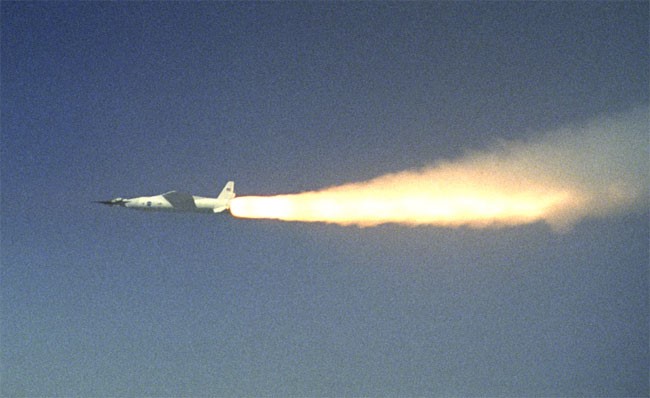
With the rise of hypersonic missiles, fleets have become largely obsolete, reduced as they are to huge sitting ducks. There is simply no defense for a large ship against an incoming MACH5 missile. Carriers can destroy small countries like Libya or Iraq, but not Russia and China.

Hypersonic weapons can achieve speeds over five times faster than the speed of sound (Mach 5) and they are the latest version of precision guided munitions (PGM) that make up part of the larger family of long-range strike weapons systems.

“Hypersonic weapons add to the complexity and elusiveness of the escalatory dynamics and this is something both sides will need to plan for”, says Eleni G. Ekmektsioglou from the American University’s School of International Service.

In the United States, hypersonic weapons are pursued in the context of the conventional prompt global strike (CPGS) commonly defined by officials as a technology of “high-precision conventional weapons capable of striking a target anywhere in the world within one hour’s time.”

Outside the United States, states such as China or Russia have been pursuing this promising technology in secrecy.

Chinese fears skyrocketed after President Barack Obama’s Prague speech and the 2010 Nuclear Posture Review (NPR). The Chinese understood America’s decreasing reliance on nuclear weapons as being tantamount to a greater reliance on conventional weapons—especially CPGS—where the United States enjoys an undeniable superiority.

Thus, the Chinese regard President Obama’s vision for a nuclear-free world as a trap that aims at containing China’s rise to power, Ekmektsioglou believes.

Russia has built a revolutionary new weapon system that can render enemy satellites and weapons useless.

Its Russian makers say it is a ‘fundamentally new electronic warfare system’ which can be mounted on ground-based as well as air- and sea-borne carriers.

‘The system will target the enemy’s deck-based, tactical, long-range and strategic aircraft, electronic means and suppress foreign military satellites’ radio-electronic equipment,’ Russia’s Radio-Electronic Technologies Group (KRET) Deputy CEO Yuri Mayevsky told Russian news agency TASS.

To comply with international weapons laws, the system will be mounted on ground-based, air-and seaborne carriers and not on satellites.

‘It will fully suppress communications, navigation and target location and the use of high-precision weapons,’ said adviser to the KRET first deputy CEO Vladimir Mikheyev.

The system will be used against cruise missiles and will suppress satellite-based radio location systems.

Biti: Zimbabweans might start eating each other

Zimbabweans might soon resort to cannibalism if the gripping hunger stalking the nation is not averted, former Finance Minister Tendai Biti has said.

Biti, now secretary general of the MDC Renewal Team, told party supporters in Harare’s dormitory town of Chitungwiza that stress related deaths had gone up in the country.

“If left to continue, the current situation will lead to cannibalism where human beings will resort to eating human flesh.

“Most of the deaths being witnessed in the country are either due to starvation or stress related ailments like High Blood Pressure, hypertension and heart attack, because of the economic, political and social decay we are witnessing,” said Biti.

“Going to funerals to pay condolences is now some form of formal employment because many people are stressed up to a level where the strain takes their lives”.

Biti said the current rise in domestic violence cases is an indication that “the stress levels in the country have gone to dangerous levels as well as a breakdown of the family structure.

Men who are no longer able to provide for their families resort to violent ways to assert themselves on the women”.

“The Renewal Team will, among other issues, launch an economic blue print Holistic Program for Economic Transformation (HOPE), that will outline the party’s strategy on curbing unemployment, attracting Foreign Direct Investment and dealing with external debt.

The economic blue print will also proffer the infrastructure expansion and development plan,” he said, urging government to move quickly to repeal the contentious indigenisation laws.

“As it is, the indigenisation policy has only resulted in massive capital flight causing companies to close en masse.

Companies closures have resulted in a serious decline of the capacity utilization of Zimbabwean Industries and sad losses of jobs, leaving many people destitute”.

The former treasury chief said his party’s economic proposals will “aim at restoration of human dignity in the country, creation of formal jobs and development of the country which is now more than 40 years behind in that respect”.

Source: newzimbabwe.com

Kenya is banking on water

Around the world people use bank machines to access cash: but in the Kenyan capital’s crowded slums, people now use similar machines to access an even more basic requirement — clean water.

In a bid to boost access to clean water, four water dispensing machines have been installed in Nairobi slums that operate like cash machines — with customers able to buy affordable water using smart cards.

It has cut costs dramatically, and is helping improve health, residents say.

“It’s pure and good for cooking, and above all it is affordable,” said Peter Ngui, who runs a small street restaurant.

“I used to get water from far away, but this water system is closer to my place of work.”

Previously people living in Nairobi’s cramped slums struggled to get clean water cheaply.

Without water pipes or plumbing in the tin-hut districts, residents resorted to buying water from sellers who dragged handcarts loaded with jerry cans or oil drums into the narrow streets.

That water was often dirty, sometimes taken illegally from broken pipes.

But the new machines, installed by the government-run Nairobi Water and Sewerage Company (NWSC), allow people to purchase water directly — and far more cheaply — than before.

Residents load money onto the water smart cards at a nearby kiosk or via payments sent on a mobile phone — a common system of payment in Kenya, which pioneered the sending of cash via phones — then tapping into the machine how many litres they want to buy.

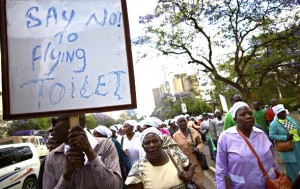
Kenya’s slums earned a grim reputation for “flying toilets” — when people defecate into plastic bags due to a lack of other facilities, which are then hurled somewhere else into the shanty town.

Source: AFP

UN Security Council not interested in ICC pleas

Amid worsening violence in Sudan’s Darfur region, a frustrated International Criminal Court prosecutor pleaded on Monday for the United Nations Security Council to take action to ensure justice “for the long-suffering victims of atrocity crimes.”

Wanted President Omar Hassan al-Bashir has traveled freely within Africa and has not yet been arrested.

The Hague-based court issued an arrest warrant for Sudan’s President al-Bashir, who is accused of crimes including alleged genocide in the country’s western Darfur province, in March 2009.

Yet Bashir rejects the court’s authority.

“It is long overdue for you to heed the cries of the victims of rape and sexual abuse, torture, mass displacement and other inhumane suffering Darfurians continue to endure,” said ICC Prosecutor Fatou Bensouda.

The United States, Britain and France have said the suffering in Darfur was at its worst level in a decade.

“Innocent civilians continue to bear the brunt of insecurity and instability, in particular as a result of what appears to be an ongoing government campaign to target them,” Bensouda said.

“The people alleged to be most responsible for these ongoing atrocities are the same people against whom warrants of arrest have already been issued,” she said.

The ICC’s Bensouda said the court had made ten referrals to the Security Council for non-compliance, including Sudan, Chad, Kenya, Djibouti, Malawi and Democratic Republic of Congo, but the 15-member council has not responded to any of the referrals.

Source: Reuters

Tunisia faces massive tourist losses after beach attack

Tunisia expects to lose at least $515-million (R6,3-billion) this year, or about a quarter of its estimated annual tourism earnings, following last Friday’s attack on a beach hotel that killed 39 people, mostly British holidaymakers.

The attack by an ISIS gunman on the Imperial Marhaba beach hotel in the popular resort town of Sousse came just months after militants attacked the Bardo museum in Tunis, killing 21 people, and delivering a blow to the country’s vital tourism industry.

“The attack had a great impact on the economy, the losses will be large,” Tourism Minister Salma Loumi told reporters late on Monday, giving a preliminary estimate from the Sousse attack.

The North African country earned $1,95bn in revenues from tourism last year.

The sector makes up seven percent of its GDP and is a major source of foreign currency and employment for Tunisia.

Loumi said the government planned to end a visitors’ tax and also to review debt relief for hotel operators as ways to help sustain the industry.

The government has said 1,000 more armed tourism police will patrol hotels and tourism sites and the army reserves will also be drafted in to beef up protection.

Authorities have arrested suspects tied to the attacker, but have given few details.

More than 3,000 Tunisians have also left to fight for militant Islamist groups in Syria, Iraq and Libya, and some have threatened to return to carry out attacks in their homeland.

Source: Reuters

Palestinian submission an ‘ICC credibility test’

The Palestinian Authority has submitted the first evidence of alleged Israeli war crimes committed during the Gaza conflict in 2014 to the International Criminal Court, seeking to accelerate the investigation of these abuses.

After meeting the ICC chief prosecutor Fatou Bensouda, Palestinian Foreign Minister Riyad al-Maliki said that he had submitted the dossiers concerning the 2014 Gaza war, as well as Israeli settlements on the occupied Palestinian land and treatment of Palestinian prisoners in Israel.

“Palestine is a test for the credibility of international mechanisms … a test the world cannot afford to fail. Palestine has decided to seek justice, not vengeance,” Maliki said.

He also added that he had agreed with prosecutors on a date of their visit to Palestine, although he did not reveal the exact time. “It depends on their ability to enter Palestinian territory without problems,” he added.

ICC prosecutors intend to make a field visits both to Palestine and Israel, but they have not received a formal permission from Israel yet, Reuters reports.

In the interview to RT, former special rapporteur to the UN Human Rights Council concerning Palestinian affairs said that International Criminal Court “faces a real credibility test”, as “if chief prosecutor fails to open any investigation into crimes committed in Palestine, there is a real danger that the ICC will fall apart…”

Israel denied all allegations of war crimes against its soldiers as well as disputed the UN report on alleged war crimes by claiming that its soldiers had upheld the “highest international standards.” It also accused Palestinian militants of firing thousands of rockets at Israeli population centers.

John Dugard said that Israel had just white-washed all involvement of its forces in any abuses during the 2014 Gaza war as it is clearly determined not to prosecute its soldiers for the crimes committed during this conflict.

Islamic State mints its own coins

Islamic State of Iraq and the Levant (ISIS) has begun minting its own “Islamic dinar” coins, Syrian activists claimed on Tuesday night.

Pictures posted on social media showed a series of gold sovereigns bearing ISIS inscriptions, and with a reported value of one gold dinar being with $139 (£89).

An anti-ISIS activist by the name of Abu Ibrahim Raqqawi, who lives in the ISIS controlled city of Raqqa in Syria, posted photographs of the coins on his Twitter account, saying they were due to come into circulation soon. Pictures were also posted on pro-ISIS social media accounts.

Isil announced last November that it would start producing their own currency in areas under its control, in an effort to “emancipate itself from the satanic global economic system”.

The currency, based on the original dinar coins used during the Caliphate of Uthman in 634 CE, was set to include seven minted coins: two gold, three silver and two copper.

Designs due to be embossed on the gold coins included a symbol of seven wheat stalks – a Quranic reference – and a world map.

The prototype design had also shown that the coins would carry an Arabic message on the lines of “The Islamic State – A caliphate based on the doctrine of the Prophet”.

ISIS has not attacked Israel but has concentrated on Islamic countries instead.

Source: The Telegraph

Ebola is back in Sierra Leone

Two new cases of the deadly Ebola virus have been recorded in Sierra Leone’s capital city of Freetown, about three weeks after the most recent new cases were found, underscoring the difficulty of ridding the region of the disease.

“This is worrisome because we had already closed all Ebola quarantine structures in Freetown since we had gone for weeks without a case,” Sidi Yahya Tunis, a spokesman for the National Ebola Response Centre (NERC) told Reuters. The cases were found in a densely populated slum called Magazine.

Sierra Leone, one of the three West African nations hit hardest during the outbreak, has so far experienced more than 13,000 cases and more than 3,900 deaths. Guinea is still struggling to hit zero cases; Liberia, which at one point last year led all three in the highest number of cases, was declared Ebola-free in May.

Altogether, the three countries have reported more 27,350 cases and more than 11,170 deaths. Overall infections are on the decline, with fewer than 25 cases in Ebola treatment units last week.

Source: Reuters

Maradona candidate for FIFA presidency

Argentine football player and coach Diego Maradona says he will run for the presidency of the International Federation of Association Footbal (FIFA), a journalist close to the star says.

“He told me he would be a candidate for president of FIFA and authorized me to communicate it,” Uruguayan journalist Victor Hugo Morales tweeted.

Maradona has been a harsh critic of incumbent FIFA president, 79-year-old Swiss Sepp Blatter. Blatter is under considerable pressure from investigations into claims of corruption by the FBI and Swiss authorities.

The scandal, which has already led to charges against 18 senior FIFA officials, has forced Blatter to announce he would resign soon. He made the announcement just days after defiantly winning his fifth term as FIFA president in late May.

Blatter will stay acting president until a successor is chosen between December 2015 and March 2016 – and Diego Maradona could be that successor.

Maradona is one of the most controversial figures in the history of football. The 54-year-old has played for seven football clubs and Argentina’s national team.

He was also addicted to cocaine for almost two decades, which had him suspended for 15 months in 1991 after he failed a drug test. He overcame the addiction in 2005, but it caused him heart problems.

After retiring from the field, he managed several football teams, including Argentina’s national squad. His latest job was managing the Dubai-based club Al Wasl.

With Maradona as FIFA-president the organization will probably focus on being much more anti-European. Global soccer has been one of the most effective vehicles to promote multiculturlism.

Skinny jeans land woman in hospital

A woman collapsed and spent hours unable to move because she was wearing skinny jeans, medical experts have said.

The 35-year-old’s calves were so swollen that her jeans had to be cut off her.

Her story has now been published in the Journal of Neurology to raise awareness of the dangers of wearing tight clothes.

After helping a relative move house – during which she spent a number of hours squatting as she emptied cupboards – she experienced numbness in her feet and found it difficult to walk.

This led her to trip and fall and unable to get up, she then spent several hours lying on the ground before she was found.

She was only able to walk unaided after four days of treatment.

Doctors found she had damaged muscle and nerve fibres in her lower legs as a result of prolonged compression while squatting, which they believed her tight jeans had made worse.

Associate Professor Thomas Edmund Kimber, of the University of Adelaide in South Australia, said: “The present case represents a new neurological complication of wearing tight jeans.”

Battle between ISIS and Taliban heat up

Taliban militants detonated explosives and fired rockets in an attempted attack on the Afghan Parliament as lawmakers were preparing to vote on a new defense minister Monday.

A large car bomb exploded near the outer wall of the parliament compound, sending a thick plume of smoke into the sky. Six Taliban fighters then tried to storm inside, said police spokesman Ebadullah Karimi.

Afghan security forces managed to fend off the attackers, who then moved into nearby building, firing rockets and AK-47 machine guns. All six attackers were killed in the ensuing firefight, Karimi said.

Lawmakers told the Afghan broadcaster Tolo TV that they and their colleagues were meeting when a huge explosion blew out windows in the building and gunshots rang out. Government officials ran out of the building, they said.

The members of parliament had assembled for a general meeting at which a confidence vote on Mohammad Masoom Stanikzai, the government’s nominee for defense minister, was to be held.

Taliban spokesman Zabiullah Mujahid said on his Twitter account that the group chose to target the parliament on the day of the defense minister vote.

Afghanistan is bracing for an upsurge in violence as spring begins with militants associating themselves with Islamic State.

Islamic State fighters have reportedly attacked a Taliban convoy in the country’s eastern Nangarhar province, killing at least 10 militants.

Many researchers believe it is the beginning of a long and violent battle for Afghanistan’s control.

Isis claimed responsibility for a suicide bombing in the eastern city of Jalalabad on Saturday, which appears to be the first major attack in Afghanistan by insurgents aligning themselves with the group which has been wreaking havoc across Syria and Iraq.

Siegfried O. Wolf, a South Asia researcher at the University of Heidelberg, believes the ISIS-Taliban battle could be “extremely dangerous for Afghanistan and Pakistan.”

The Afghan Taliban have sent a letter to Islamic State’s leader urging the rival jihadist group to stop recruiting in Afghanistan, saying there is room for only “one flag, one leadership” in their fight to re-establish strict Islamist rule.

The missive comes amid heavy fighting this week in eastern Afghanistan between the Taliban and breakaway factions who now swear allegiance to Islamic State.

Russia and Saudi Arabia sign nuclear deal

A number of cooperation documents were signed by Russia and Saudi Arabia on Thursday, after President Putin met with Saudi Prince Mohammed in what was one of the most anticipated meetings at the international economic forum in St. Petersburg.

The pair has signed six agreements in total, Al Arabiya News Channel reported. A cooperation agreement on a peaceful nuclear program was among the documents, the press service of Russia’s nuclear agency, Rosatom, said.

According to Rosatom, the document is the first in the history of Russia-Saudi relations to create a legal framework for cooperation between the nations in the field of nuclear energy. Future joint projects might include construction of nuclear power reactors, provision of services in nuclear fuel cycling, including those for nuclear power stations and research reactor facilities.

The Gulf kingdom has no industrial nuclear power plants, but has big plans for developing nuclear energy.

The two oil heavyweights have also agreed on the creation of a working group to develop joint energy projects, Russian Energy Minister Aleksandr Novak said on Thursday. Saudi Arabia is interested in energy projects in Russia, the minister said, adding that Russia doesn’t aim to replace existing partners in oil and gas cooperation, but rather wants to establish new ones.

The countries are ready to cooperate in a number of other spheres, the minister told journalists, mentioning pharmaceuticals and infrastructure development as prospective sectors.

“Our colleagues from Saudi Arabia have brought a lot of projects to the table. These projects will be introduced to our companies, including the ones involving the construction and upgrade of railways and building underground railway systems,” Novak said, adding that the Gulf kingdom plans to build metro systems in four cities in the near future.

Russia’s state space agency, Roscosmos, and Saudi national center for science and technology KACST signed papers including agendas for future cooperation in space exploration.

On meeting Putin, the 30-year old deputy crown prince Mohammed bin Salman, who is Saudi Arabia’s Defense Minister, announced that his father, King Salman, was inviting the Russian leader to visit the Gulf state.

“I have the honor to pass on an invitation to visit the kingdom of Saudi Arabia, as we regard Russia as one of the important states in the contemporary world, and our relations have roots in the past,” Prince Mohammed said, adding that Russia had been the first country to officially recognize the Gulf kingdom. “We will aim to develop bilateral relations in all sectors,” he added.

Israel sets free Jewish settlers after arson attack on Christian church

A group of young Jewish settlers suspected of torching the Catholic Church of the Multiplication, on the spot where Jesus is believed to have performed a Biblical miracle, have been released without charge.

The church, located on the banks of the Sea of Galilee, was set ablaze early Thursday morning. Graffiti saying, “The false gods will be eliminated,” in Hebrew – a quote from a Jewish prayer – was also daubed on a wall.

The church was marking the Biblical story of the Feeding of the 5,000, in which Jesus fed a crowd with five loaves and two fish, and has been rebuilt several times since the fifth century.

The building suffered extensive damage, with the roof partly collapsed and stone walls charred. Several members of the clergy suffered smoke inhalation, and one 80-year-old monk was reportedly hospitalized. The altar of the Catholic church is said to have been left intact, despite the damage to its other rooms. A church shop with Bibles and prayer books was completely destroyed in the fire.

Sixteen Jewish youths visiting the area from the West Bank were detained for questioning following the arson. The group, which included several seminary students and legal minors, were set free with no conditions after their testimonies were taken.