The residents of England’s windswept, wave-lashed southwest are Europe’s newest official minority.
The British government said Thursday Cornish people have been given the same status as Scots, Welsh and Irish — the U.K.’s other Celtic peoples — under EU law protecting national minorities.
Residents of Cornwall traditionally spoke a Celtic language similar to that of France’s Brittany region. Cornwall is famous for its seafaring heritage and for the Cornish pasty, a popular lunch food.
Some in Cornwall have long campaigned for greater autonomy, and even independence.
Dick Cole, leader of independence party Mebyon Kernow, said it was “a proud day for Cornwall,” though it is unclear what the status will mean in practice.
The measure commits Britain to preserving and promoting the Cornish identity, but does not bring extra money.
The West and the United States provoked the Ukrainian crisis, former President of the Czech Republic Vaclav Klaus said in an interview to Czech television (CT24).
“I think that not Russia is to blame for the outbreak in Kiev on the Maidan (Independence Square). Western Europe and the United States aggravated the situation,” he said.
“I had told them from the very beginning not to exert pressure on Ukraine, as it will only destroy and disintegrate it. Unfortunately, that is exactly what has happened,” Klaus said.
At present, in his view, the country is undergoing a difficult satge, and it is hard to “clearly say whether it wants to rely on the West or on Russia.” However, Ukraine should independently decide its own future.
“Let them determine their future for themselves – without any interference from outside,” the former Czech president said.
The discovery of large hydrocarbon deposits in the Arctic has sparked international competition over resources in frozen waters. Regional powers are quickly filing claims for the sea shelf, with Russia preparing to bring in the biggest bid to the UN.
Ahead of Moscow preparing to file a 1.2 million square kilometer Arctic waters bid to the UN later this year, President Vladimir Putin commissioned Russian ministries to get ready to take the new territories in the Sea of Okhotsk under full control and protection.
The Russian president ordered maintenance of border patrols of the extended sea shelf be in place by July 1, 2014.
Russia’s Defense Ministry has been instructed to ensure maritime authorities extend the Russian shelf in the Sea of Okhotsk beyond the generally recognized 200 nautical miles zone by December 1, 2015.
The Foreign Ministry is obliged to bring all the necessary documents, including new maps of the Sea of Okhotsk and scientific data serving as proof of Russia’s bid, to the UN by March 1, 2015.
Experts say the future of the world economy, to some extent, is dependent on the Arctic.
Last year, Russian energy giants, Gazprom and Rosneft, were granted rights to develop large hydrocarbon deposits recently discovered in the Pechora and Kara seas. The find could be a pot of gold for Russia’s gas industry.
The melting Arctic ice cap has made way for shipping routes and the exploration of resources at the bottom of the world’s smallest ocean. The North Pole icecap has decreased by 40 percent since 1979, opening up two shipping routes, the North Sea route and the Northwest Passage, with extremely high economic potential.
Approximately 30 percent of the world’s undiscovered natural gas and 15 percent of its oil lie in the Arctic. But the majority, 84 percent, of the estimated 90 billion barrels of oil and 47.3 trillion cubic meters of gas remain off shore.
According to the UN’s sea convention, any country has sovereign rights to resources within 200 nautical miles of its territorial waterways. There are five countries with territories in the Arctic: Canada, Denmark, Norway, Russia and the US.
As the icecaps are melting, a military race is also building up in the region.
The US Navy recently debuted a revised roadmap focused on expanding America’s muscle in the world’s coldest ocean over the next decade, increasing the number of personnel trained in Arctic operations, advancing technical equipment and surveillance needs.
The ultimate goal appears to be establishing international order under US leadership.
Earlier this year, NATO countries participated in a Norwegian-led Cold Response exercise in the Arctic, rehearsing high intensity operations with 16,000 troops deployed in extreme conditions. Non-NATO participants, Sweden and Switzerland, also took part.
“The United States is anxious to militarize the Arctic Ocean. It has to do it via its relations with Canada and it is also seeking to do it via NATO, through the participation of Norway and Denmark in NATO. And now it is calling upon Sweden and Finland to essentially join NATO with a view to establishing a NATO agenda in the Arctic,” Michel Chossudovsky, from the Centre for Research on Globalization in Montreal, revealed.
Meanwhile, Canada has been staging its own independent drills with hundreds of soldiers participating in cold-weather winter warfare exercises.
Not to be left out, last year Russia announced the resumption of a constant armed presence in the Arctic, which was abandoned by the military after the fall of the USSR.
Back in 2012, Russia’s former envoy to NATO and current Vice Prime Minister, Dmitry Rogozin, said that by the middle of the 21st century the fight for resources between various states will become “uncivilized.”
In about 40 years, Russia may lose its sovereignty if it fails to clearly set out its national interests in the Arctic, Rogozin said.
“It’s crucially important for us to set goals for our national interests in this region. If we don’t do that, we will lose the battle for resources which means we’ll also lose in a big battle for the right to have sovereignty and independence,” Rogozin stated at a Marine Board meeting in Moscow.
Much like the US Supreme Court, upon which Germany’s highest court was partially modeled after World War II, the German Federal Constitutional Court is the final interpreter of constitutional law. Accordingly, it has the last word on the legality of any treaties, agreements or actions undertaken by Germany at the European level.
The court already has challenged German involvement in some of the more creative legal acrobatics undertaken by the European Union. These include the establishment of the EU emergency bond-buying plan known as the Outright Monetary Transactions program. In that case, the German Federal Constitutional Court proceeded with caution and referred the case to the European Court of Justice. But there are strong indications that it could be more aggressive in future cases. A rejection of government moves in a landmark case, such as one involving potential German participation in a strengthened quantitative easing program, could derail the American project for Europe.
Economic policy is not the only issue on which the court has proven to be a thorn in German Chancellor Angela Merkel’s side. German electoral law currently requires a party to win a minimum of 5 percent of the national vote to enter the national parliament, a measure designed to keep small radical parties out of an already relatively fragmented parliament. Berlin used to apply a similar threshold to German parties seeking access to the European Parliament. The German constitutional court recently struck down this requirement, and some politicians fear it could soon do the same for German federal elections. The current surge in popularity of nationalist parties heretofore excluded from the legislature may jeopardize the existence of a pro-American government in Berlin, the only real decision-making body to take NATO forward.
The court’s current course of action poses an existential threat to Merkel’s political career and to Germany’s political affiliation. Should the court so rule, Germany could rapidly lose its place as the Continent’s strongman, being condemned instead to internal paralysis as it watches Europe slowly turn east.
As with most of the really important developments in Europe, the battle between the court and the German government will be drawn out and will remain out of the public eye for now. Still, the very existence of open discussions about reducing the power of one of the most trusted and impartial institutions in Germany testifies to how seriously the chancellor’s office takes the danger of the fallout from the court’s potential ruling.
The European Parliament approved Tuesday the last elements of a new regulatory system meant to prevent failing banks from ever again driving EU member states into bankruptcy.
With banking union draft passed by a very large majority, “we now have in place a true European system to supervise the eurozone banks and deal with any future failures,” EU Financial Markets Commissioner Michel Barnier said.
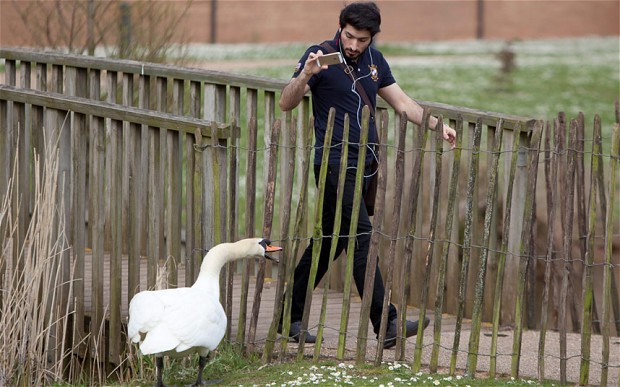
Warwick University has erected a fence around a campus lake to stop a spate of swan attacks on students.
A 4ft tall bird, which boasts an 8ft wingspan, has been accused of behaved aggressively towards foreign students as they cross over a footbridge near its nesting place at the university’s Gibbet Hill campus in Coventry, West Midlands.
The footbridge is used by hundreds of students everyday as a route between accommodation and university buildings. Undergraduates revealed that the swan only appeared to target students from ethnic minorities.
One 24-year-old student from India said: “These swans are very annoying, and the students feel as though they’re being bullied.
“I’m from India, and they attack me especially, they focus straight on me.
“We’ve been warned that the swans will be a bit feisty at this time of year, but they go for me all year round.
“I think they don’t like too many Indians in England – maybe the swans here are a little bit racist.”
Italian student Albertina Crocetti, 24, who is studying Physics with Business Studies, said: “It’s bizarre, she doesn’t seem to like foreigners and attacks them to defend her nest.
Swedish mobile telecoms equipment maker Ericsson paid 116 million Swedish crowns ($18 million) to a commercial agent, money which was then used to bribe Greek officials to secure a deal for Ericsson in 1999, Swedish radio reported on Wednesday.
In an interview, former Ericsson employee Liss-Olof Nenzell told Swedish radio that “politicians, generals and high-ranking state officials” had received the Ericsson money.
Ericsson said in a statement that it had paid money to a commercial agent, but did not know what became of it.
The Swedish company used to employ local commercial agents in many countries in a bid to increase sales.
“We have zero tolerance for bribes and corruption. At the time, we used agents, but we don’t anymore because it is a system that lacks transparency,” it said in an emailed statement.
“We know that a payment was made to an agent, but we don’t know what happened with the money after that. We really hope that the money wasn’t used for bribes, but we don’t know for sure.”
The Greek order was for the Ericsson airborne surveillance system Erieye and was worth 4.9 billion Swedish crowns ($759 million). Ericsson has subsequently sold its defense business to Swedish group Saab.
Alf Johansson, chief public prosecutor at the National Anti-Corruption unit of the Swedish Prosecution Authority, said he was looking into the matter and had asked Greek investigators for information.
He added, however, that he was only interested in potential crimes committed after July 1, 2004, as crimes before that date would have passed the statute of limitations, meaning they could not be prosecuted.
Antonis Kantas, deputy armaments chief at the Greek Defense Ministry between 1997 and 2002, has admitted to taking $16 million in bribes relating to arms deals with foreign companies and mentioned Ericsson in connection with bribes in his court testimony.
The Church of Norway on Tuesday rejected a proposal for religious same-sex marriage, even though it had the support of most bishops. Norway was among the first countries in Europe to grant homosexuals full rights, including marriage and adoption in 2009.
In October eight of Norway’s 12 bishops said they favored allowing religious weddings for same-sex couples. But the proposal needed the approval of the synod, the highest decision-making body in the church, which professes the Lutheran Christian faith.
During a national synod, 64 participants voted against and 51 in favor. The delegates will now examine other alternatives such as whether to add a religious blessing to civil ceremonies.
Benestad, a Norwegian priest who has been one of the leading voices against gay marriage, stated emphatically that marriage only describes a relationship between a man and one woman.
“I will be happy if we end up with marriage preserved as a relationship between man and woman,” Benestad said. “There is only one answer, both in the bible and in the history of the church, to the question of what a marriage is.”
Same-sex marriage became legal in Norway on January 1, 2009 when a gender neutral marriage bill was enacted after being passed by the Norwegian legislature in June 2008. Norway became the first Scandinavian country and the sixth country in the world to legalize same-sex marriage. However, there is no regulation about churches’ obligations in marriages.
In neighboring Sweden, the Lutheran church approved same-sex marriages in 2009. Denmark in 2012 made it mandatory for all churches to offer full religious weddings for same-sex couples, although priests opposed on principle can ask a colleague to take the service their place.
Like government leaders everywhere, Russia’s Vladimir Putin often lies. But when he tells an uncomfortable truth, few people in the US or Europe bother to listen. Take what he said about Ukraine back in 2007, when Time magazine interviewed him as their “Person of the Year.”
The Russians subsidize Ukraine, Putin explained. They sell it natural gas and other energy resources at $3 billion to $5 billion a year below international market prices. At the same time, the US “somehow decided that part of the political elite in Ukraine is pro-American and part is pro-Russian, and they decided to support the ones they consider pro-American, the so-called orange coalition.”
Why, Putin asked, should Russia continue to subsidize Ukraine? “If you want to support someone, you pay for it. Nobody wants to pay.”
Putin had it right. In their proposed economic agreement with Ukrainian president Viktor Yanukovych, the Europeans offered very little money. In their negotiations with him during the Euromaidan protests, they and their allies in Washington continued to offer far less than the estimated $20 billion to $35 billion that the country needed.
In February, about a week before Yanukovych ran away, the Christian Science Monitor summed up the situation. Ukraine’s international currency reserves were falling at a vertiginous rate. The national currency, the hryvnia, had lost value, and the international credit rating agency Fitch had downgraded the country’s sovereign debt. How would Ukraine pay what it owed – primarily to Western banks and Russia’s Gasprom? How would it pay salaries, pensions, and social benefits?
The EU agreement looked to a major infusion of capital from the International Monetary Fund. But that would come only after the Ukrainians agreed to what IMF managing director Christiane Lagarde later called a “profound transformation,” especially of its fiscal policy, monetary policy, and policies on energy.
“Nobody is willing to give economic support, from the United States or from the IMF or from Europe, to an unreformed Ukraine,” US State Department’s Victoria Nuland said in Kiev on February 7.
The Westerners had good reason for being tight-fisted. They knew that the incredibly corrupt Yanukovych and the Ukrainian oligarchs would take the money and stay put. That is how the country’s oligarchic system works, with or without Yanukovych. Most of the new billionaires – including the leading candidate to become the new president, Petro Poroshenko – made their first big money by “privatizing” formerly state-owned enterprises.
“Ukraine’s oligarchs got rich during the privatization sales of former Soviet-owned industries and factories shortly after independence in 1991,” explained the Monitor. “The country’s main industries of mining, metals, chemical production, and energy distribution were snatched up by individuals, who then reaped millions in profits.”
The Monitor did not mention one significant fact. Privatization only came about the way it did with what one academic study called “the support and cajoling of Western donors.” Will foreign meddlers never learn?
Nor did the Western-backed rip-off stop with the original sin. Several analysts tell the same story, none more succinctly than the Monitor. “Many of the oligarchs’ businesses – particularly in the mining, heavy industry, and energy distribution industries – operate in dilapidated, Soviet-era facilities that are extremely energy-inefficient, and heavily dependent on government subsidies.”
In other words, when would-be reformers talk about Ukraine’s corruption, they mean the oligarchic system. Not necessarily personal corruption, but a pervasive systemic corruption.
“Corruption and politics have always had a close relationship in Ukraine,” explains the Monitor. “The oligarchs have benefitted for two decades from close relations with government officials, who have at times turned a blind eye to the activities in exchange for support. At other times, politicians have enabled their oligarch supporters to get richer through key government appointments and a lack of transparency in government contracts.”
Systemic corruption also gobbled up foreign assistance. Ukraine has gotten far more aid than any county in the former Soviet Union, energy specialist Emily Holland told Bloomberg Businessweek. And where has it gone? “Into the pockets of an incredibly corrupt political elite and oligarchs.”
The Russians, with their own oligarchic system, continued to subsidize Ukraine’s energy imports. They also agreed in December to buy $15 billion in Ukrainian Eurobonds, and actually laid out the first $3 billion.
“The economy of Ukraine was going into the wall and was heading for disaster,” the IMF’s Lagarde told PBS Newshour. “Without the support that they were getting from this lifeline that Russian had extended a few months ago, Ukraine was heading nowhere.”
Mounting violence from the protesters, continuing refusal of Brussels and Washington to come up with serious money, and increasing loss of support from the oligarchs convinced Yanukovych to jump ship. Putin responded by stopping the subsidies, which meant raising the price Ukraine had to pay for its energy imports.
Brussels and Washington were left holding the bag, as Putin had suggested they should. So, at warp speed, the IMF and Ukraine’s Western-backed interim government came to terms. The Ukrainians would agree to “profound transformation.” The IMF would give them something between $14 billion and $18 billion over time.
Having worked as a private banker, central banker, and Minister of Economy, Prime Minister Yatsenyuk knew from the start what lay ahead. “To be in this government is to commit political suicide,” he predicted even before the Russians moved into Crimea.
The biggest challenge, he told an investor’s conference in Kiev last week, will be to sell Ukrainians on the need for “painful economic reforms.” Unpegging the hryvnia from the dollar will likely cause a 3% drop in GDP, he explained. Cutting the public sector by 10% will put a lot of people out of work. Losing the Russian subsidy on energy and simultaneously cutting domestic fuel subsidies will greatly increase the cost of living, though the government would provide “some sort of subsidy” to the poorest five to eight million households.
Yats understood how this would breed discontent, especially in the east and south, where people lean more toward Russia. He knew Moscow was telling them that they would enjoy higher living standards in Russia, with higher wages and better pensions and without the austerity that the Kiev government was now offering. “They’re saying: if you go to Russia, you’ll be happy, smiling, and not living in a Western hell.”
That is Russian propaganda, no doubt. But the message rings true, doesn’t it?
Yats has a much bigger problem. He and his Western-backed interim government have gone to great lengths to give the oligarchs even greater power – far more than to the Svoboda Party or followers of Stepan Bandera in Yatsenyuk’s Fatherland Party. In one of their first acts in office, they appointed oligarchs like Ihor Kolomoisky and Serhiy Taruta as governors in Eastern Ukraine, and are already working closely with the country’s likely new president, Petro Poroshenko.
Many in the West welcome “the Chocolate King’s” presence, especially since he was the highest-profile oligarch to support the Euromaidan protest. Western “deciders” have looked kindly on him for years, as journalist Andriy Skumin wrote in March 2012, just after Yanukovych appointed Poroshenko Minister of Trade and Economic Development.
“European circles, blindly searching for any adequate Western-thinking individuals within Ukraine’s establishment, have a favorable opinion of Poroshenko as a person who is reliable, can be charged with introducing changes in Ukraine and ending the deadlock in EU–Ukraine relations” Skumin wrote. But “the preservation of the monopolistic oligarchy will not allow for any European integration or even domestic transformations using European patterns. The only thing that could be done is perhaps only an outward European appearance.”
“Profound transformation” requires killing the oligarchic system, which no one in the game – least of all Poroshenko – has come close to suggesting. This is the IMF’s big lie. Lagarde talks of changing Ukraine, but the people she has entrusted to make those changes are the precisely the ones whose power the country most needs to curtail.
To crib from Vladimir Putin, Poroshenko and his fellow oligarchs are neither pro-American, pro-European, nor pro-Russian. They are not even necessarily pro-Ukrainian, though a bit of patriotic fervor may help them shove austerity down the throats of their underlings. Ukrainian oligarchs, like American plutocrats, are simply pro-themselves.
A veteran of the Berkeley Free Speech Movement and the New Left monthly Ramparts, Steve Weissman lived for many years in London, working as a magazine writer and television producer. He now lives and works in France, where he is researching a new book, “Big Money and the Corporate State: How Global Banks, Corporations, and Speculators Rule and How to Nonviolently Break Their Hold.”
Italian police on Wednesday arrested 24 people involved in a campaign to demand independence for Venice and its surrounding region and seized a tractor that they said the activists had tried to convert into a sort of tank.
The surprise arrests came just two weeks after activists held an online vote calling for the Veneto region, which encompasses the lagoon city, to break away from the rest of Italy and declare itself the “Repubblica Veneta”.
The authorities accused the 24 separatists of being involved in “terrorism”, “fabrication of weapons of war” and “subversion of the democratic order”.
The activists were part of a “secessionist group that was planning various initiatives, some of them violent, aimed at pushing for the independence of Veneto and other parts of the national territory of the Italian State,” the paramilitary Carabinieri said.
The activists were allegedly planning to use the “tank”, which was armed with a makeshift cannon, to stage a protest in Venice’s St Mark’s Square, 17 years after a similar stunt in which Veneto separatists drove a home-made armoured car into the famous square.
Police claim the makeshift tank was in good working order and was capable of firing projectiles from its barrel.
Those arrested included Franco Rocchetta, a former MP and the founder of the Liga Veneta, or Veneto League, one of several separatist movements calling for independence for the affluent north-eastern region.
In last month’s unofficial referendum, organisers claimed that 56 per cent of registered voters in the region cast a vote online and that an overwhelming majority supported secession from Italy.
They said that out of a total 2.36 million votes cast, 2.1 million voted for independence.
The drive for independence is supported by Veneto’s most powerful politician, Luca Zaia, who is president of the region and a member of the separatist Northern League.
Mr Zaia leads a regional assembly which is debating holding an official referendum on the issue, just as Scotland secured the right to hold September’s vote on seceding from the UK. He says there are powerful economic and cultural reasons for Veneto to strive for independence.
Venetians and the people of surrounding cities such as Padova and Vicenza deeply resent the fact that each year Rome takes 20 billion euros of their tax revenue.
They feel that the money is squandered on corrupt and dysfunctional parts of Italy, particularly in the crime-ridden south.
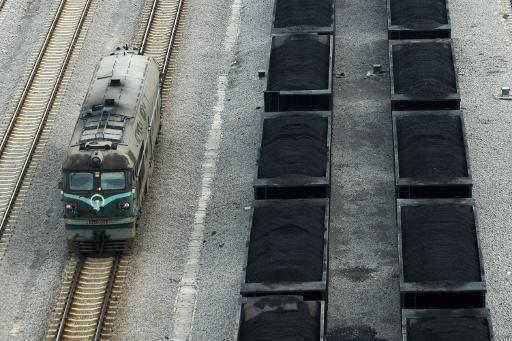
It is one of the world’s longest railways — an approximately 11,000-kilometre “modern-day silk road” that traverses Russia and Kazakhstan to link a megacity in the heart of China with a key commercial hub in western Germany.
On Saturday, as part of his landmark visit to Germany, Chinese President Xi Jinping is set to visit the last stop on the “Yuxinou” rail line, an industrial feat that promises to revolutionise transport between Europe and Asia.
Duisburg is a steel-making town of around half a million on the confluence of the Rhine and Ruhr rivers that boasts the world’s biggest inland port and is one of Germany’s most important transport and commercial hubs.
Despite the vast distances between them, it takes just 16 days for trains crammed with laptops and electronics to travel to Duisburg from Chongqing, a sprawling metropolitan symbol of rising China with a population of more than 30 million.
Xi is scheduled to welcome a freight train on Saturday afternoon as it completes a journey that has taken it through Central Asia, Russia, Belarus and Poland.
The area round the first ever McDonalds in Moscow in Pushkinskaya square saw today an extraordinary promo-campaign against “all the unhealthy stuff that came from the West”, Russian media as well as restaurant search engine Tillypad XL report.
Leaders of the movement “All the truth about food” are set to improvise later the symbolic deportation of the giant hamburger, universally seen as the basic junk food token.
“We are going to put forward our own bill that would set limits to the possible number of unhealthy fast food eateries in Russia, citing a high proportion of saturated fats in their menus, which proves harmful for human health,” says Maxim Raksha, the campaign coordinator.
He admits that one of the reasons for the event is the US-imposed sanctions on Russia. ‘I’ve been following the standoff between Russia and the West, and we’ve come to believe now is the right moment to say no to everything harmful that comes from them.”
The beef is “washed” in ammonium hydroxide and used in the filling of the burger. Before this process the food is deemed unfit for human consumption.
According to the chef and hamburger enthusiast, Jamie Oliver, who has undertaken a war against the fast food industry, “Basically, we’re taking a product that would be sold in the cheapest way for dogs, and after this process, is being given to human beings.”
Besides the low quality of the meat, the ammonium hydroxide is harmful to health. Oliver famously coined this the “the pink slime process.”
Marine Le Pen’s party, the Front National, is on course to secure the best result ever, exit polls show.
France’s anti-immigrant Front National was on track to win at least 14 towns in local elections, beating its previous record amid public dissatisfaction with President Francois Hollande’s Socialists.
But the Socialists retained control of Paris town hall in local elections on Sunday as their candidate Anne Hidalgo comfortably won the mayoralty.
Promising to be the mayor of “all Parisians,” Miss Hidalgo hailed her historic win as the “victory for a Left-wing that remains faithful to its ideal.”
Miss Hidalgo said: “As the first woman mayor of Paris, I am aware of the challenge that this represents.”
The victory is some consolation for Mr Hollande’s ruling party, which according to partial tallies and exit polls was on track to lose its grip on dozens of major towns elsewhere across France.
After winning the northern town of Henin-Beaumont in round one, the FN took at least 13 more towns, including Béziers in the southwest and Fréjus, population 84,000, on the Riviera. Its best ever previous score was three, in 1995.
The Front National scored a major victory by claiming the mayorship of the 7th sector of Marseille, putting it in charge of 150,000 people.
“We have moved onto a new level,” Marine Le Pen, FN leader, claimed. “There is now a third major political force in our country.”
But the FN failed to take Avignon, where the Socialists won, or Perpignan and Forbach.
Some 80 per cent of the French want President Hollande to dismiss Prime Minister Jean-Marc Ayrault, according to a Harris Interactive poll this week, and Manuel Valls, the ambitious and tough-talking interior minister, is their favourite to replace him.
Despite the strong showing for the FN, the centre-Right opposition UMP party, also regained control from the Left of the majority of towns and cities of more than 9,000 inhabitants.
These included Reims, Saint-Etienne, Roubaix and Quimper.
Yet another Cold War will not come about and Western sanctions are not dreadful to Russia, Vyacheslav Nikonov, a member of the State Duma lower house of the Russian parliament, points out in an article published in Rossiyskaya Gazeta on Wednesday.
The article, which deals with Russia’s stance in the light of the situation in Ukraine and threats of sanctions from the West, has been published under the headline “A Brief Telegram: Don’t Overstrain Yourself”.
“Yet another Cold War will not happen, the times have changed. The West is not a zone of economic growth any longer. It is, rather, a zone of stagnation,” Nikonov writes in reply to the article of Michael McFaul, US former Ambassador to Moscow, published in The New York Times on Monday.
Nikonov writes that only some 30 years ago the West accounted for 80% of global GDP, whereas now they account perceptibly for less than a half. “The European Union (EU) is yet to grow for another decade to reach out again to the indicators of 2007. In a couple of years, China will become a major economy in the world, getting ahead of the United States,” the MP points out.
Touching upon possible sanctions against Russia, he maintains that in present-day conditions efforts to isolate Russia would fail. “Its isolation does not work at all, even within its closest circle G7 where far from all share the radicalism of (Barack) Obama and of his chief expert on Russia (Michael) McFaul. Exclusion of Russia from G8 only deprives the Group of the leftovers of its significance,” Nikonov is convinced.
He recalls that the EU is one-third dependent on Russia-supplied energy, whereas Russia consumes one-third of European imports. “Are the Western constituents prepared to find themselves in another deep crisis due to the expression of the will of people in Crimea? Obviously not,” Nikonov writes.
Meanwhile, in his view, efforts to turn Ukraine into a showcase of prosperity and democracy will fail.
“The EU is not in a position to help even its own members Greece, Italy, Spain, Portugal, etc. Will it be able to help Ukraine, too? No way! An Association Agreement will signify not only a loss of (Ukraine’s) ‘nezalezhnost’ (independence) but an economic collapse as well,” the MP believes.
He points out that Russia, by bringing Crimea back, “has overcome the paralysis of will, and political apathy”.
Nikonov believes that Russia will not allow drawing itself into confrontation, “which the US ex-Ambassador calls for”.
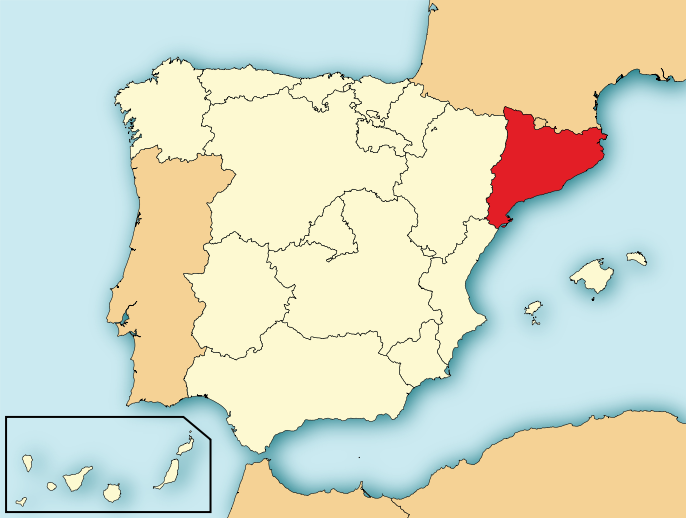
Spain’s Constitutional Court has ruled that a referendum in Catalonia on independence from the rest of the country would violate the law, saying that regions within Spain “cannot unilaterally call a referendum on self-determination.”
According to a summary of the ruling, any “right to decide” their future by Catalans has to be in accordance with Spain’s 1978 constitution, which stipulates Spanish unity.
The Constitutional Court ruled “unconstitutional and null” a declaration by the regional parliament in Barcelona which claimed that Catalonia has the right of self-determination.
Kingdom of Spain Constitutional Court of Justice Building (AFP Photo / Dominique Faget)Kingdom of Spain Constitutional Court of Justice Building (AFP Photo / Dominique Faget)
The fate of the region rests on the power struggle between Catalan President Artur Mas who had promised a referendum on independence from Spain on November 9 and the Spanish Prime Minister Mariano Rajoy who insists that such a vote would be illegal.
“No one can unilaterally deprive the entire Spanish people of the right to decide on their future,” Rajoy told the national parliament last month insisting that the referendum “can’t take place.”
Rajoy remains certain that Catalonia cannot be compared to Scotland’s aspiration of succession from the UK, because the Spanish written constitution, unlike British, rules out such a move.
But in Catalonia, March’s public opinion poll showed that 59.6 percent of the population want independence from the rest of Spain and want their region to become a “new state of Europe.”
Catalonia, an autonomous community with a population of 7.5 million is responsible for around one-fifth of the country’s GDP and one-quarter of its taxes. Public sentiment believes that the region will be much better off financially if they secede from Madrid.
The situation is aggravated by the economic crisis, which is forcing the Spanish government to adopt painful austerity policies.
In January the Catalan Parliament voted to send a petition to the national legislature seeking the power to hold the vote. That initiative is still in the process. If successful the referendum in Catalonia will be a month after a similar vote in Scotland, which is slated for September 2014.
Source: RT
This website uses cookies to improve your experience. We'll assume you're ok with this, but you can opt-out if you wish. Cookie settingsACCEPT
Privacy & Cookies Policy
Privacy Overview
This website uses cookies to improve your experience while you navigate through the website. Out of these cookies, the cookies that are categorized as necessary are stored on your browser as they are essential for the working of basic functionalities of the website. We also use third-party cookies that help us analyze and understand how you use this website. These cookies will be stored in your browser only with your consent. You also have the option to opt-out of these cookies. But opting out of some of these cookies may have an effect on your browsing experience.
Necessary cookies are absolutely essential for the website to function properly. This category only includes cookies that ensures basic functionalities and security features of the website. These cookies do not store any personal information.
Any cookies that may not be particularly necessary for the website to function and is used specifically to collect user personal data via analytics, ads, other embedded contents are termed as non-necessary cookies. It is mandatory to procure user consent prior to running these cookies on your website.

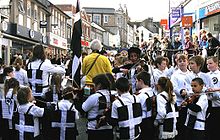
 The residents of England’s windswept, wave-lashed southwest are Europe’s newest official minority.