Denmark’s central bank to stop printing money

With more and more people paying with credit cards and their smartphones, Denmark’s central bank Nationalbanken says it no longer pays to print banknotes or mint coins.

By the end of 2016, Nationalbanken plans to outsource all of its printing and minting services to an external supplier.

“Although the amount of cash circulating in Denmark continues to be high, society’s demand for new banknotes and coins has been falling for years, and Nationalbanken has no expectations that the trend will be reversed,” the bank wrote in a press release.

In addition to the rise in alternative paying options, the central bank also said that today’s banknotes and coins are better recirculated into the economy and made of a better quality that ensures a longer shelf life. When viewed as a whole, the bank has determined that note and coin production is no a longer financially sound option.

The bank said that the move to an external supplier will result in a total savings of 100 million kroner ($17.2 million) through 2020.

In its statement, the bank stressed that having notes and coins produced externally would not affect the bank’s central role.

“Nationalbanken will continue to be the issuing authority for banknotes and coins and will maintain its expertise in the area of notes and coins. It is only the internal production of the notes and coins that will henceforth by done by external suppliers,” it wrote.

Source: The Local

American student loan debt at $1,2 trillion, could dampen economy

Economists and debt watchers are worried that the burden of $1.2 trillion in student loan debt will stifle the broader economy while keeping the younger generation from buying homes and getting married.

The Federal Reserve said in its consumer credit data report on Tuesday that Americans’ overall borrowing rose by $13.5 billion in August, particularly in the categories of auto loans and student loans. Those gains have increased overall consumer debt to a record level of $3.25 trillion.

The August increase in total borrowing marked a 6.8 percent increase over a year ago, with auto and students loans up 8.2 percent, the Associated Press reported.

The large increase in student debt has some analysts and economists alarmed over the possibility that young Americans will have so much debt they will postpone home purchases, delay marriage, and be late to begin their American Dream.

“Everything from saving for a home to saving for retirement is completely off the table,” Natalia Abrams, the executive director of StudentDebtCrisis.org, told NBC News.

Roughly 414,000 home sales will not happen this year because of high levels of student loan debt, according to a report from California-based advising firm John Burns Consulting. They say that’s equivalent to eight percent of all home sales, or to cuts in the housing industry measuring $83 billion a year.

Meanwhile, marriage is already being delayed. A recent study from the Pew Research Center shows that a record number of Americans have never married – the median age for those getting hitched for the first time is now 27 for women and 29 for men. In 1960, the median age was 20 for women and 23 for men.

Student loans have soared since the recession ended, topping $1.2 trillion in the second quarter of 2014. That’s up from $700 billion in 2009, according to the Federal Reserve. Currently, 40 million Americans are responsible for holding $1.2 trillion in loans – the average loan amount is $24,301 – and 90 percent are subsidized by the government, the Huffington Post reported.

“It is the most collectible kind of debt there is,” said Barmak Nassirian, a director at the Association of State Colleges and Universities, to Frontline. “It’s not dischargeable with bankruptcy. They will garnish your wages. They will intercept your tax refund. They will sue you in court.”

States have slashed funding for public universities by 23 percent since 2007 and tuition has therefore risen by 28 percent, leading to ever larger loans.

“If you owe $100,000 to 150,000 in student loans, you’re paying $1,000 to $1,500 a month. It’s cost-prohibitive,” said Abrams, who added that this is causing even those people with decent paying jobs to delay marriage and commit to more debt.

However, consumer spending in America accounts for 70 percent of economic activity, and the Federal Reserve thinks rising levels of consumer borrowing – coupled with strong employment growth – are viewed as a good sign that consumers are more confident about taking on debt to finance purchases. – RT.COM

‘Russia key strategic German partner’

Despite the sanctions, Russia is still key strategic partner for German businesses, Michael Harms, Chairman of the German-Russian Chamber of Commerce in Moscow, said Thursday.

“Unfortunately, the paradigm of our cooperation has changed significantly. At the beginning of the year I was working on the framework of a new Germany- Russia Partnership for Modernization, and today we have to speak about the impact of sanctions. Nevertheless, I would like to emphasize that from the perspective of the German business, Russia remains its strategic economic partner,” Harms noted at the news conference presenting the results of the poll on the impact of sanctions.

According to the survey conducted by the German-Russian Chamber of Commerce revealed Tuesday, most German companies operating in Russia believe that economic sanctions against Moscow are not proving effective. Almost 80 percent of the polled enterprises believe that economic sanctions are counterproductive and not conducive for political objectives. One third of the respondents agree that sanctions still need to be introduced. Two thirds, on the contrary, think that the sanctions are not necessary. The respondents said the sanctions will lead to further deterioration of the economic environment. Some 71 percent of enterprises expect economic slowdown by the end of the year.

Moreover, German medium-size businesses warned September 9 that European sanctions against Russia could cost them precious market share to companies in Asia. “China is the distinct beneficiary of Europe’s sanctions policy toward Russia,” The Wall Street Journal reported Rainer Seele, president of the German-Russian Foreign Chamber of Commerce, as saying Tuesday. He explained that sanctions were threatening long-standing economic ties between Germany and Russia.

The De-industrialization of America

By Paul Craig Roberts, Dave Kranzler, and John Titus.

On January 6, 2004, Paul Craig Roberts and US Senator Charles Schumer published a jointly written article on the op-ed page of the New York Times titled “Second Thoughts on Free Trade.” The article pointed out that the US had entered a new economic era in which American workers face “direct global competition at almost every job level–from the machinist to the software engineer to the Wall Street analyst. Any worker whose job does not require daily face-to-face interaction is now in jeopardy of being replaced by a lower-paid equally skilled worker thousands of miles away. American jobs are being lost not to competition from foreign companies, but to multinational corporations that are cutting costs by shifting operations to low-wage countries.” Roberts and Schumer challenged the correctness of economists’ views that jobs off-shoring was merely the operation of mutually beneficial free trade, about which no concerns were warranted.

The challenge to what was regarded as “free trade globalism” from the unusual combination of a Reagan Assistant Treasury Secretary and a liberal Democrat New York Senator caused a sensation. The liberal think-tank in Washington, the Brookings Institution, organized a Washington conference for Roberts and Schumer to explain, or perhaps it was to defend, their heretical position. The conference was televised live by C-Span, which rebroadcast the conference on a number of occasions.

Roberts and Schumer dominated the conference, and when it dawned on the audience of Washington policymakers and economists that something might actually be wrong with the off-shoring policy, in response to a question about the consequences for the US of jobs off-shoring, Roberts said: “In 20 years the US will be a Third World country.”

It looks like Roberts was optimistic that the US economy would last another 20 years. It has only been 10 years and the US already looks more and more like a Third World country. America’s great cities, such as Detroit, Cleveland, St. Louis have lost between one-fifth and one-quarter of their populations. Real median family income has been declining for years, an indication that the ladders of upward mobility that made America the “opportunity society” have been dismantled. Last April, the National Employment Law Project reported that real median household income fell 10% between 2007 and 2012.

Republicans have a tendency to blame the victims. Before one asks, “what’s the problem? America is the richest country on earth; even the American poor have TV sets, and they can buy a used car for $2,000,” consider the recently released report from the Federal Reserve that two-thirds of American households are unable to raise $400 cash without selling possessions or borrowing from family and friends.

Although you would never know it from the reports from the US financial press, the poor job prospects that Americans face now rival those of India 30 years ago. American university graduates are employed, if they are employed, not as software engineers and managers but as waitresses and bartenders. They do not make enough to have an independent existence and live at home with their parents. Half of those with student loans cannot service them. Eighteen percent are either in collection or behind in their payments. Another 34% have student loans in deferment or forbearance. Clearly, education was not the answer.

Jobs off-shoring, by lowering labor costs and increasing corporate profits, has enriched corporate executives and large shareholders, but the loss of millions of well-paying jobs has made millions of Americans downwardly mobile. In addition, jobs off-shoring has destroyed the growth in consumer demand on which the US economy depends with the result that the economy cannot create enough jobs to keep up with the growth of the labor force.

Between October 2008 and July 2014 the working age population grew by 13.4 million persons, but the US labor force grew by only 1.1 million. In other words, the unemployment rate among the increase in the working age population during the past six years is 91.8%.

Since the year 2000, the lack of jobs has caused the labor force participation rate to fall, and since quantitative easing began in 2008, the decline in the labor force participation rate has accelerated.

Clearly there is no economic recovery when participation in the labor force collapses.

Right-wing ideologues will say that the labor force participation rate is down because abundant welfare makes it possible for people not to work. This is nonsensical. During this period food stamps have twice been reduced, unemployed benefits were cut back as were a variety of social services. Being on welfare in America today is an extreme hardship. Moreover, there are no jobs going begging.

The graph shows the collapse in the labor force participation rate. The few small peaks above the 65% participation rate line show the few periods when the economy produced enough jobs to keep up with the working age population. The massive peaks below the line indicate the periods in which the dearth of jobs resulted in Americans giving up looking for non-existent jobs and thus ceased being counted in the labor force. The 6.2% US unemployment rate is misleading as it excludes discouraged workers who have given up and left the labor force because there are no jobs to be found.

Labor force part rate since Jan 2000.002

John Williams of Shadowstats.com calculates the true US unemployment rate to be 23.2%, a number consistent with the collapse of the US labor force participation rate.

In the ten years since Roberts and Schumer sounded the alarm, the US has become a country in which the norm for new jobs has become lowly paid part-time employment in domestic non-tradable services. Two-thirds of the population is living on the edge unable to raise $400 cash. The savings of the population are being drawn down to support life. Corporations are borrowing money not to invest for the future but to buy back their own stocks, thus pushing up share prices, CEO bonuses, and corporate debt. The growth in the income and wealth of the one percent comes from looting, not from productive economic activity.

This is the profile of a Third World country.

Dr. Paul Craig Roberts was Assistant Secretary of the Treasury for Economic Policy and associate editor of the Wall Street Journal. He was columnist for Business Week, Scripps Howard News Service, and Creators Syndicate. He has had many university appointments. His internet columns have attracted a worldwide following. Roberts’ latest books are The Failure of Laissez Faire Capitalism and Economic Dissolution of the West and How America Was Lost.

Mass surveillance destroys the economy

Privacy is a prerequisite for a prosperous economy. Four ways that mass surveillance hurts the US economy.

The Information and Privacy Commissioner of Ontario, Canada – Ann Cavoukian, Ph.D. – noted last month:

Privacy is Essential to … Prosperity and Well-Being

• Innovation, creativity and the resultant prosperity of a society requires freedom;

• Privacy is the essence of freedom: Without privacy, individual human rights, property rights and civil liberties – the conceptual engines of innovation and creativity, could not exist in a meaningful manner;

• Surveillance is the antithesis of privacy: A negative consequence of surveillance is the usurpation of a person’s limited cognitive bandwidth, away from innovation and creativity.

The Financial Post reported in February: “Big Brother culture will have adverse effect on creativity, productivity“.

Christopher Lingle – visiting professor of economics at ESEADE, Universidad Francisco Marroquín – agrees that creativity is a key to economic prosperity.

Edward Snowden said last year:

The success of economies in developed nations relies increasingly on their creative output, and if that success is to continue we must remember that creativity is the product of curiosity, which in turn is the product of privacy.

Silicon Valley is currently one of the largest drivers of the U.S. economy. Do you think Bill Gates and Steve Jobs could have tinkered so creatively in their garages if the government had been watching everything they do?

Everyone who has every done anything creative knows that you need a little privacy to try different things before you’re ready to go public with it. If your bench model, rough sketch or initial melody is being dissected in real time by an intrusive audience … you’re not going to be very creative.

Moreover, surveillance hampers the free flow of information as many people begin to watch what they say. The free flow of information is a core requisite for a fast-moving economy … especially an information economy, as opposed to economies focused on resource-extraction or manufacturing.

As quoted above, the White House states:

Assuring the free flow of information [is] essential to American and global economic prosperity, security, and the promotion of universal rights.

Mass surveillance makes people more reluctant to share information … and thus hurts the economy.

Top computer and internet experts say that NSA spying breaks the functionality of our computers and of the Internet. It reduces functionality and reduces security by – for example – creating backdoors that malicious hackers can get through.

Remember, American and British spy agencies have intentionally weakened security for many decades. And it’s getting worse and worse. For example, they plan to use automated programs to infect millions of computers.

How much time and productivity have we lost in battling viruses let in because of the spies tinkering? How much have we lost because “their” computer programs conflict with “our” programs?

Microsoft’s general counsel labels government snooping an “advanced persistent threat,” a term generally used to describe teams of hackers that coordinate cyberattacks for foreign governments. It is well-known among IT and security professionals that hacking decreases employee productivity. While they’re usually referring to hacking by private parties, the same is likely true for hacking by government agencies, as well.

And the spy agencies are already collecting millions of webcam images from our computers. THAT’S got to tie up our system resources … so we can’t get our work done as fast.

Moreover, the Snowden documents show that the American and British spy agencies launched attacks to disrupt the computer networks of “hacktivists” and others they don’t like, and tracked supporters of groups such as Wikileaks.

Given that the spy agencies are spying on everyone, capturing millions of screenshots, intercepting laptop shipments, creating fake versions of popular websites to inject malware on people’s computers, launching offensive cyber-warfare operations against folks they don’t like, and that they may view journalism, government criticism or even thinking for one’s self as terrorism – and tend to re-label “dissidents” as “terrorists” – it’s not unreasonable to assume that all of us are being adversely effected to one degree or another by spy agency operations.

Bill Binney – the high-level NSA executive who created the agency’s mass surveillance program for digital information, a 32-year NSA veteran widely regarded as a “legend” within the agency, the senior technical director within the agency, who managed thousands of NSA employees – tells Washington’s Blog:

The other costs involve weakening systems (operating systems/firewalls/encryption). When they do that, this weakens the systems for all to find. Hackers around the world as well as governments too.

These costs are hard to count. For example, we hear of hackers getting customer data over and over again. Is that because of what our government has done?

Or, how about all the attacks on systems in government? Are these because of weakened systems?

Trust is KEY for a prosperous economy. It’s hard to trust when your government, your internet service provider and your favorite websites are all spying on you.

The destruction of privacy by the NSA directly harms internet companies, Silicon Valley, California … and the entire U.S. economy (Facebook lost 11 millions users as of April mainly due to privacy concerns … and that was before the Snowden revelations). If people don’t trust the companies to keep their data private, they’ll use foreign companies.

American tech companies – including Verizon, Cisco, IBM and others – are getting hammered for their cooperating with the NSA and lack of privacy protection. The costs to the U.S. economy have been estimated to be in the hundreds of billions of dollars. And see this and this.

And destruction of trust in government and other institutions is destroying our economy.

A top cyber security consultant notes:

If privacy is not protected while performing mass surveillance for national security purposes, then the people’s level of trust in the government decreases.

And as we noted in 2002:

Personal freedom and liberty – and freedom from the arbitrary exercise of government power – are strongly correlated with a healthy economy, but America is descending into tyranny.

Authoritarian actions by the government interfere with the free market, and thus harm prosperity.

U.S. News and World Report notes:

The Fraser Institute’s latest Economic Freedom of the World Annual Report is out, and the news is not good for the United States. Ranked among the five freest countries in the world from 1975 through 2002, the United States has since dropped to 18th place.

The Cato institute notes:

The United States has plummeted to 18th place in the ranked list, trailing such countries as Estonia, Taiwan, and Qatar.

So lawlessness infringement of our liberty is destroying our prosperity.

Put another way, lack of privacy kills the ability to creatively criticize bad government policy … and to demand enforcement of the rule of law. Indeed, 5,000 years of history shows that mass surveillance is always carried out to crush dissent. In other words, mass surveillance is the opposite of the principle of the rule of law (in distinction to the rule of men) upon which America was founded.

Free speech and checks and balances on the power of government officials are two of the main elements of justice in any society. And a strong rule of law is – in turn – the main determinant of GDP growth.

Source: Washington’s blog

Detroit bankruptcy: a cocktail of white flight and black corruption

A house in Detroit, mirroring the black city's decay
A house in Detroit, mirroring the black city’s decay

by Tom Krishner and Dee-Ann Durbin

The city of Detroit, which for years paid its bills with borrowed money, is the largest city in U.S. history to file for bankruptcy protection. Here’s a look at how the city spiraled into financial ruin and why it’s in so much trouble:

What happened?

For decades, Detroit paid its bills by borrowing money while struggling to provide the most basic of services for its residents. The city, which was about to default on a good chunk of its $14 billion-plus debt, now will get a second chance in a federal bankruptcy court-led restructuring. Detroit’s budget deficit this year alone is estimated at $380 million, and Kevin Orr, its state-appointed emergency manager, chose bankruptcy over diverting money from police, fire and other services to make debt payments. The move conserves cash so the city can operate, but it will hurt Detroit’s image for years. It also leaves creditors with pennies on the dollar and places in jeopardy the pension benefits of thousands of city retirees.

Kwame Kilpatrick, after his federal indictment on corruption charges
Mayor Kwame Kilpatrick, after his federal indictment on corruption charges

Why did it happen?

It took decades of decay to bring down the once-mighty industrial giant that put the world on wheels. The city grew to 1.8 million people in the 1950s, luring them with plentiful jobs that paid good wages to stamp out automobiles for sale across the globe. But like many American cities, Detroit’s fall began late that decade as developers starting building suburbs. Then came the 1967 race riots that accelerated the number of white residents who moved to the cities north of Eight Mile Road, considered the region’s racial dividing line. At the same time, auto companies began opening plants in other cities, and the rise of autos imported from Japan started to cut the size of the U.S. auto industry. Detroit’s property values fell, tax revenue dropped, police couldn’t control a growing murder rate, and many middle-class blacks fled the city for safer suburbs with better schools. By 2009, the auto industry collapsed along with the economy as a whole, eventually pulling the city down with it. Government corruption under former black Mayor Kwame Kilpatrick only made things worse. In the 2000 census, Detroit’s population fell under 1 million in as the exodus continued. Today it’s barely above 700,000.

Did the auto industry’s fall drag down Detroit?

It’s a big factor. The city is littered with abandoned factories built in the postwar boom years, most of which have multiple stories. As the Japanese auto invasion began cutting into Detroit’s sales, General Motors, Chrysler, Ford and hundreds of auto parts companies looked outside the city to build one-story plants that could handle modern assembly lines. With every downturn, more companies abandoned the city, leaving the hulking buildings to squatters. Detroit’s tax base continued to erode. By the time the auto industry melted down in 2009, only a few factories from GM and Chrysler were left. GM is the only one with headquarters in Detroit, though it has huge research and testing centers with thousands of jobs outside the city.

Where else has this happened?

Before Detroit, the largest local government bankruptcy filing was in Jefferson County, Ala., in November 2011. The county cited more than $4 billion in debt, mostly from corrupt deals involving sewer financing that fell apart when the home mortgage crisis hit in 2008. The county is still trying to clean up the mess. Last month, commissioners sought a compromise that calls for paying creditors a little over half the money they’re due and raising sewer rates. They hope to exit bankruptcy by December. Jefferson County has nearly 700,000 people, which is similar in size to Detroit, and includes the city of Birmingham. The economic crisis also caused bankruptcies of smaller cities. The California cities of Stockton, San Bernardino, and Mammoth Lakes all filed for bankruptcy last year. Stockton and San Bernardino were hit by plummeting home values during the recession, which cut property and sales taxes, while Mammoth Lakes was overwhelmed by a $43 million breach-of-contract judgment brought against it by a developer.

General Motors rebounded after bankruptcy: can Detroit follow?

Maybe. In GM’s 2009 government-funded bankruptcy, the company was split in two, with money-making assets staying at GM and decrepit plants and billions in debt going to a separate company. GM reduced its debt from $46 billion to $8 billion and used the bankruptcy to close factories, shed brands and get more concessions from union workers. The new, leaner company has since racked up $17.2 billion in profits and added jobs in Detroit. For the city, the comeback will be much harder. Its decaying neighborhoods can’t be sent elsewhere. But creditors whom Detroit owes more than $14 billion will have to take pennies on the dollar. Thousands of retired city workers could lose at least part of their pension benefits. Concessions could be forced upon dozens of city unions, including pay and benefit cuts. Free of these financial burdens, Detroit will be able to concentrate its limited dollars on services such as basic police and fire protection. Better services could bring more people and lure more business investment. Already the downtown and an area to the north called Midtown are seeing business and residential growth — signs that Detroit has a future. – AP

Zuma denies uncertainty on economic policy

Jacob Zuma
Jacob Zuma

President Jacob Zuma has rejected the notion of South Africa lacking policy certainty and investor confidence.

“I think there is leadership in this country, very clear leadership. There is certainty on policy, there is certainty on economic policy. I would not accept the fact that there is no certainty,” he told the National Assembly on Wednesday.

Zuma was responding to a question by Democratic Alliance parliamentary leader Lindiwe Mazibuko.

She said labour unrest had contributed to a “break-down in investor confidence”, triggering warnings that South Africa’s platinum could decline by 60 percent in coming years.

She asked where Zuma stood on the issue of strike balloting, and argued that ANC MPs had undermined government’s efforts to improve the economy by removing a provision requiring a pre-strike vote from the Labour Relations Amendment Bill.

The president said labour strife at mines was a complex issue because of the emergence of rival trade unions, and it was vital that all roleplayers co-operate to resolve it.

“The difficulty has come in the manner in which the recent problems have emerged,” he said.

He praised Deputy President Kgalema Motlanthe for his mediation efforts between unions and mining companies.

“I think they are working very closely to agree on the matters that have to be addressed in terms of addressing the problems at the mining level,” he said.

Zuma said negative headlines were largely to blame on negative views expressed by the political opposition.

“Generally, people are saying we are doing very well. I have just come back from Japan. They are full of praises of South Africa… key investors. So it is not like a perception that is thrown around that investors are worried, not at all.”

He said the economy was well-balanced and aimed at dealing with the country’s specific challenges, including imbalances created by its apartheid past.

“Therefore, I confirm, the policies of the ruling party are absolutely correct, no-one could argue against them. Whoever argues against them does not understand the South African sentiment.” – Sapa

South African economy ‘may have turned the corner after stagnation’

BANKSERVAFRICA’s Economic Transaction Index (Beti) showed encouraging signs of the economy clawing back in May after three quarters of stagnation, the electronic payment transaction company said on Thursday.

While the Beti figures for May were not as strong as those for April, they still revealed growth of 2.9% year on year.

BankservAfrica’s regulated products CEO Brad Gillis said the negative sentiment in the South African economy “may not be completely justified”.

Although the actual index number for the May Beti was a little down from April, it was the second highest on record.

“This confirms that economic activity may have turned the corner after about three quarters of stagnation,” he said.

Between April and May, the Beti decreased 0.2%.

Economists.co.za chief economist Mike Schussler said April was the strongest month in a long time, as the shift in public holidays had made it a stronger-than-normal month.

“On the other hand, the May Beti seems more subdued, but it is clear that April was an exceptionally strong month, which, together with February transaction data, indicated a return to stronger growth in the economy,” he said.

However, the May Beti did not confirm that South Africa was very likely to have higher economic growth in the second quarter of 2013, than the first quarter.

“We saw no major strikes in May, and that has definitely played a role in relatively strong figures. The economy is still on its feet, but the pace is closer to a stroll than that of a 100m race”, Mr Schussler said.

He expected growth of about three percent in the second quarter of 2013.

“The South African economy has climbed back from stagnation levels that many still think the economy is in. Stagnation was last year’s battle … we are convinced that economic activity is picking up”, Mr Schussler said.

The actual number of economic transactions in the May Beti was 81.7-million, which was 3.5% higher than during May 2012.

The actual total monetary value of the transactions that the Beti reflects was more than R634.2bn just for May 2013.

The total value of transactions in May 2013 was therefore up 11.8% in nominal terms over May 2012. – Sapa

Britain heading for ‘triple-dip recession’?

Recession may just be a word. But in Britain it may become a habit – and a dangerous one at that.

It’s possible that official figures on first quarter economic growth, to be released Thursday, could show the country is back in recession, and tension is building.

Although economists on average expect growth of 0.1 percent on the quarter, they warn it would take the smallest statistical variation to put the figure in negative territory. That would place the country in recession, typically defined as two consecutive quarters of economic contraction.

Another recession – the third since the 2008 financial crisis – is already being referred to with foreboding in the media as a “Triple Dip.” Experts warn that its confirmation would create a wave of negative media attention that would scare consumers away from spending, feeding into a vicious cycle that has the economy flat-lining.

“It’s psychological – this is all psychological,” said Cary Cooper, a professor at Lancaster University Management School. “It’s about the message that those figures send to consumers and small businesses.”

The government desperately wants a strong number to justify its increasingly criticized policy of painful spending cuts. But recent indicators on Britain’s economy, the third-largest in the 27-country EU after Germany and France, have been disappointing.

Inflation is rising faster than wages, cutting into people’s standard of living. Unemployment is up at 7.9 percent. Two international ratings agencies have downgraded the country’s credit grade from the top level AAA, warning about the government’s fiscal policies.

The government, which has long played on its AAA rating as a sign of its economic might, has been pursuing a harsh program of spending cuts and tax increases to reduce the budget deficit, which at 7.4 percent of annual economic output is more than twice the EU’s 3 percent limit. Like many governments across Europe that have been scarred by the bond market turmoil that forced Greece and four other countries to need rescue loans, Britain is focusing on reducing debt quickly, even at the cost of short-term economic pain.

What some governments and economists are slowly realizing, however, is that they may have underestimated the damage such austerity would do.

There’s long been pressure domestically in Britain to ease off the budget cuts, but in the past few days the International Monetary Fund also chimed in. The fund, whose views carry weight as it is involved in all of Europe’s sovereign bailout programs, has pressured Treasury chief George Osborne to slow down the austerity measures in hopes of reviving the economy, whose output was worth 1.4 trillion pounds ($2.1 trillion) in 2012.

As the austerity debate rages on, no other person than the national spiritual leader – the Archbishop of Canterbury, Justin Welby – has waded in and used a word no want wants to hear: Depression.

Welby has unusual standing in the world of money because in a previous life he served as an oil industry executive and now sits on the parliamentary banking standards committee. He told an audience at the heart of government in Westminster on Monday that there was an issue of confidence and trust – and there is need to rebuild both.

“I would argue that what we are in at the moment is not a recession, but essentially some kind of depression and it therefore takes something very, very major to get out of it in the same way as it took something major for us to get into it,” he said.

The Bank of England has cut its interest rate to a record low 0.5 percent and pumped money into the financial system in the hope that will encourage banks to lend money more cheaply. But the results have been mixed and experts say there is only so much a central bank can do to create jobs.

On Wednesday, the Bank of England and the Treasury extended until January 2015 a program to boost lending and help the economy. The program offers funding at low interest rates to banks on condition that those rates are passed on to small businesses and households. Its results so far have been mixed, however.

Even if the economy dodges recession, the daily reality for many Britons remains tough.

The Trussell Trust, a food bank network, said it fed more than 350,000 people in the year ending in March – more than double the 128,000 served in the previous 12-month period. Tim Boyce, a retired investment banker who runs a south London branch, said he’s seeing the people behind those numbers. Inside a frosty church that’s opened its doors to the desperate, he watches as they come for emergency handouts of rice, pasta and beans.

“Most people don’t realize the extent of poverty,” he said as he sipped coffee to keep the edge off the chill. “It’s hiding in plain view.”

Take the cases of Kevin Bishenden, 50, and his wife, Nicola, 40. He’s an upholsterer who says that no one wants to hire someone his age. She says she just can’t find work. The only reason they aren’t homeless is that Britain’s welfare state manages to keep a roof over their heads.

But they’ve slowly been shedding all their possessions, together with memories of a past life. First a bike, then stuff from the kitchen. All the DVDs are going, though even Star Trek only gets you a few pennies. They’ve already sold their wedding rings.

He lamented a new council tax payment of 15 pounds ($22.80) that came into effect as part of government austerity plans. His exhaustion was plain as he tried to imagine paying for it.

“Where’s that supposed to come from?” – AP

African economies to grow rapidly, says IMF

Sub-Saharan Africa is poised to enjoy the type of high growth rates not seen outside Asia in the next few years, the International Monetary Fund said Monday, as the region’s unbridled economic rise continues.

The IMF predicted the region’s economy would grow at 5.0 percent in 2012 and 5.7 in 2013, a little slower than expected this year, but faster than expected next year.

“Sub-Saharan Africa is expected to continue growing strongly in the near term,” the Fund said in its regular economic outlook.

Ghana and the Ivory Coast are expected to top the region’s growth this year, with growth of over eight percent.

Oil producers Nigeria, Angola and Gabon will also see strong growth.

The outlook for the rest of the region is also rosy, raising hopes that Africa may be on the verge of experiencing the type of growth that has transformed Latin America and South East Asia in recent decades.

“Economic activity in sub-Saharan Africa has expanded by more than five percent in each of the past three years — continuing a decade-long run of strong performance that was only briefly interrupted by the global downturn in 2009,” the IMF said.

But there were a flew blots on an otherwise positive landscape.

Africa’s leading economy South Africa is likely to experience weak growth of around 2.6 percent this year, thanks in part to spillovers from Europe’s debt crisis.

The IMF predicted South Africa’s economy would grow 3.0 percent next year.

The IMF also warned that African nations must use the prolonged boom to help create a nest-egg for any trouble ahead.

And Sub-Saharan Africa still has a long way to reach its potential. Today it accounts for just 2.5 percent of world GDP — or 1.3 percent excluding South Africa and Nigeria. – AFP

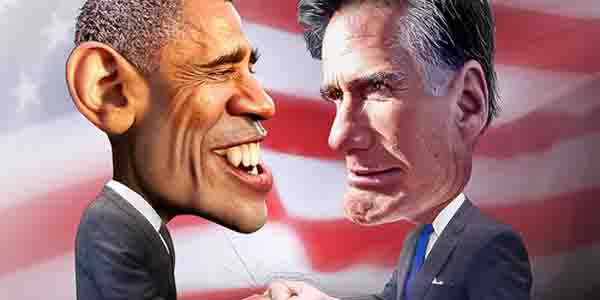
Romney-Obama debate aggressive

DENVER (AP) — In a showdown at close quarters, an aggressive Mitt Romney sparred with President Barack Obama in their first campaign debate Wednesday night over taxes, deficits and strong steps needed to create jobs in a sputtering national economy. “The status quo is not going to cut it,” declared the Republican challenger.

Democrat Obama in turn accused his rival of seeking to “double down” on economic policies that actually led to the devastating national downturn four years ago — and of evasiveness when it came to prescriptions for tax changes, health care, Wall Street regulation and more.

With early voting already under way in dozens of states, Romney was particularly assertive in the 90-minute event that drew a television audience likely to be counted in the tens of millions — like a man intent on shaking up the campaign with a little less than five weeks to run.

He seemed at ease in debate with the man who has been in the White House for four years. “It’s fun, isn’t it?” Romney said. In a rare post-debate concession, some Democratic strategists not involved in the campaign conceded the president was not at his best and missed opportunities to challenge his rival.

The former Massachusetts governor virtually lectured Obama at one point after the president accused him of seeking to cut education funds. “Mr. President, you’re entitled to your own airplane and your own house, but not your own facts,” he said.

The economy dominated the evening, as it has the race for the White House all year. Pre-debate opinion polls showed Obama with a slight advantage in key battleground states and nationally.

Romney said he had plans to fix the economy, overhaul the tax code, repeal Obama’s health care plan and replace with a better alternative, remake Medicare, pass a substitute for the legislation designed to prevent another financial crash and reduce deficits — but he provided no new specifics despite Obama’s prodding.

Said Obama: “At some point the American people have to ask themselves: Is the reason Governor Romney is keeping all these plans secret, is it because they’re going to be too good? Because middle class families benefit too much? No.”

The two men debate twice more this month, but they were first going their separate ways on Thursday. Obama had campaign stops in Colorado and then Madison, Wis., while Romney was booked into Virginia. All three states are among the nine battlegrounds likely to settle the race.

At times the debate turned into rapid-fire charges and retorts that drew on dense facts and figures that were difficult to follow. The men argued over oil industry subsidies, federal spending as a percentage of the GDP, Medicare cuts, taxes and small businesses and the size of the federal deficit and how it grew.

Obama sometimes seemed somewhat professorial. Romney was more assertive and didn’t hesitate to interrupt the president or moderator Jim Lehrer, who seemed to struggle to maintain control.

The wonky tone of the debate was a stark contrast to the harsh, broad-brush and sometimes personal attacks the two men make in person and in multimillion-dollar television advertising.

At the same time, Romney managed to make some points by personalizing his comments with recollections of people he said he had met on the campaign trail. In another folksy reference, Romney told Lehrer, a veteran of the Public Broadcasting Service, that he would stop the federal subsidy to PBS even though “I love Big Bird.”

Generally polite but pointed, the two men agreed about little if anything.

Obama said his opponent’s plan to reduce all tax rates by 20 percent would cost $5 trillion and benefit the wealthy at the expense of middle income taxpayers.

Shot back Romney: “Virtually everything he just said about my tax plan is inaccurate.”

The former Massachusetts governor and businessman added that Obama’s proposal to allow the expiration of tax cuts on upper-level income would mean tax increases on small businesses that create jobs by the hundreds of thousands.

The two campaign rivals clasped hands and smiled as they strode onto the debate stage at the University of Denver, then waved to the audience before taking their places behind identical lecterns.

There was a quick moment of laughter, when Obama referred to first lady Michelle Obama as “sweetie” and noted it was their 20th anniversary.

Romney added best wishes, and said to the first couple, “I’m sure this is the most romantic place you could imagine, here with me.”

Both candidates’ wives were in the audience.

Without saying so, the two rivals quickly got to the crux of their race — Romney’s eagerness to turn the contest into a referendum on the past four years while the incumbent desires for voters to choose between his plan for the next four years and the one his rival backs.

Romney ticked off the dreary economic facts of life — a sharp spike in food stamps, economic growth “lower this year than last” and “23 million people out of work or stropped looking for work.”

But Obama criticized Romney’s prescriptions and his refusal to raise taxes and said, “if you take such an unbalanced approach then that means you are going to be gutting our investment in schools and education … health care for seniors in nursing homes (and) for kids with disabilities.”

Not surprisingly, the two men disagreed over Medicare, a flash point since Romney placed Wisconsin Rep. Paul Ryan on his ticket.

The president repeatedly described Romney’s plan as a “voucher program” that would raise out-of-pocket costs on seniors.

He continued, directly addressing the voters at home: “If you’re 54 or 55 you might want to listen because this will affect you.”

Romney said he doesn’t support any changes for current retirees or those close to retirement.

“If you’re 60 or 60 and older you don’t need to listen further,” he said, but he contended that fundamental changes are needed to prevent the system from becoming insolvent as millions of baby boom generation Americans become eligible.

Romney also made a detailed case for repealing Obamacare, the name attached to the health care plan that Obama pushed through Congress in 2010. “It has killed jobs,” he said, and argued that the best approach is to “do what we did in my state.”

Though he didn’t say so, when he was governor Massachusetts passed legislation that required residents to purchase coverage — the so-called individual mandate that conservatives and he oppose on a national level.

Romney also said that Obamacare would cut $716 billion from Medicare over the next decade.

The president said the changes were part of a plan to lengthen the program’s life, and he added that AARP, the seniors lobby, supports it.

With a two-minute closing statement, Obama said he had spent his first four years in office fighting for those in the middle class and those seeking to make it there. “If you’ll vote for me, I’ll fight just as hard in my second term,” he said.

Romney was as critical of Obama’s tenure as he was the moment the two men walked onto the stage.

If the president is re-elected, he predicted continued economic trouble for the middle class, chronic unemployment, higher costs for health insurance and “dramatic cuts to the military.”

Obama took office in the shadow of an economic crisis but promised a turnaround that hasn’t materialized. Economic growth has been sluggish throughout his term, with unemployment above 8 percent since before he took office.

The two presidential rivals also are scheduled to debate on Oct. 16 in Hempstead, N.Y., and Oct. 22 in Boca Raton, Fla.

Vice President Joe Biden and Republican Rep. Paul Ryan of Wisconsin have one debate, Oct. 11 in Danville, Ky. Both men have already begun holding practice sessions.

ANC wants ‘strategic nationalisation’

The ANC has rejected “wholesale nationalisation” in favour of “strategic nationalisation”, according to recommendations from its national policy conference.

The African National Congress called for “transformative state intervention in the economy” which could take many forms.

One form is “state ownership, including more strategic use of existing state-owned companies, as well as strategic nationalisation, where deemed appropriate on the balance of evidence”.

“However, [the] conference has rejected wholesale nationalisation.”

The recommendations came out of the party’s policy conference in June and will be considered at its national conference in Mangaung in December.

The party said the economic transformation it wanted would not happen without bold state intervention.

This included financial regulation and control, including through a state owned bank, and progressive and redistributive taxation.

The ANC also called for wage policies which promote growth and address poverty and inequality, as well as progressive competition policies.

The ANC favoured state intervention in the minerals sector, with a focus on beneficiation.

“At the forefront of this intervention should be the strengthening of the recently created state mining company, by consolidating state mining assets into a single institution.

“This state mining company will expand or contract depending on the balance of evidence, including by partnering with the private sector in strategic mining ventures.”

This was the outcome of a debate on the ANC’s discussion document –“Maximising the developmental impact of the people’s mineral assets: state intervention in the minerals sector” — known as Sims.

Sims is based on an extensive study commissioned by the ANC to find out how best to leverage South Africa’s mineral wealth to grow the economy and create more jobs.

The study found that nationalisation of mineral assets was not affordable, as it would cost just over R1 trillion to acquire a 100 percent stake in all listed and non-listed mining companies.

The ANC said there was broad consensus at the policy conference that the minerals belonged to all South Africans through “state custodianship”.

“Exploitation of minerals must optimise the developmental impact, especially job creation, across the economy,” the party said.

It called for a greater degree of beneficiation, or transforming minerals into a higher-value product, which could either be consumed locally or exported.

The Sims report suggested introducing state control through the introduction of a 50 percent resource rent tax, or a super tax, which would kick in only when an investor had made a reasonable return, so as not to deter investors.

The ANC recommendations do not mention a percentage, but said the “state must capture an equitable share of mineral resource rents and deploy them in the interests of long-term economic growth, development and transformation”.

It also recommended that the state develop strategies to identify and manage strategic minerals in the national interest.

“Instruments to support beneficiation and competitive pricing of these strategic resources include the use of targeted export taxes.”

The ANC said other issues raised in the Sims report could be dealt with by the party’s national executive committee.

The willing-buyer, willing-seller principle of land reform would be replaced with the “just and equitable” requirement of section 25 of the Constitution, the ANC said.

The party proposed that expropriation without compensation be allowed on land acquired through unlawful means or used for illegal purposes.

[ad 1]

However, it also proposed in terms of land: “Keep nationalisation as an option.”

The ANC has recommended that the number of provinces be reduced, and that a presidential commission be appointed to review the provinces.

It also proposed keeping the system of separate local government and national elections.

“Election campaigns give the ANC an opportunity to connect with the masses and renew our mandates, so we shouldn’t reduce them.”

Recommendations made at the policy conference would be taken back to ANC branches for further discussion and input.

They would be presented at the ANC’s national conference where they could be adopted as official policy.

This would in turn inform government legislation and policies.

South African finance minister says unrest damaging the economy

Labour unrest in the mining industry was extremely damaging to the economy, Finance Minister Pravin Gordhan said on Friday.

“It undermines confidence in the South African economy, and if we undermine confidence, we undermine investment,” he told reporters at a press conference in Pretoria. – Sapa