Zuma praises Charlize

Charlize Theron meets the President and his wife

President Jacob Zuma congratulated South African-born actress Charlize Theron on Wednesday for scooping the World Economic Forum’s crystal award for her humanitarian work.

“We are proud of our Charlize,” Zuma said in a statement.

“She has succeeded in an extremely competitive environment, and is a visible and hardworking ambassador for her country.”

The Charlize Theron Africa Outreach Project finances programs designed to prevent the spread of HIV among young Africans, particularly in South Africa.

The programs include mobile health services in an impoverished region of South Africa.

Zuma said he met Theron on the sidelines of the conference in Switzerland on Wednesday, and she briefed him on her work.

“I assured her that South Africans love her and wish her all the best,” he said.

“We wish her success in every venture she undertakes.”

The award was presented to her on Tuesday night.

Last year, the award went to South African singer Yvonne Chaka Chaka, who was recognised for “using her art to improve the state of the world”. – Sapa

He’s back again!

Agolf Hitler?

Eighty years after Adolf Hitler’s rise to power, a novel that imagines his return to modern-day Berlin has become a bestseller in Germany, though a comedy about the Fuehrer is not to everyone’s taste.

Instead of committing suicide in his bunker on April 30, 1945, in “He’s Back” (Er Ist Wieder Da), Hitler wakes up in 2011 without the slightest idea what has happened in the intervening 66 years.

He stumbles through Berlin, dazed by the fact that Germany is now ruled by a woman and is home to millions of Turks.

The nearly 400-page novel is by Timur Vermes, a 45-year-old journalist.

In one scene, the Nazi leader asks a group of boys for directions, addressing them as “Ronaldo Hitler youth”. He has mistaken their football shirts bearing the name of the soccer star as some kind of military uniform.

“Who’s the old guy?” the boys ask each other.

In a celebrity obsessed society where success is often gauged by follower numbers on social networks or YouTube views, Hitler soon becomes the star of an entertainment show with a Turkish host.

“You’re golden my dear! This is just the beginning, believe me,” his producer says.

Bild, Europe’s widest circulation newspaper, complains: “He killed millions of people. Today, millions cheer him on YouTube.”

In the book, Hitler discovers jeans, tries to create an email address (“Hitler 89” referring to the year of his birth is already taken) and discovers cooking shows.

A farce in poor taste to some, a political satire to others, “He’s Back” has done well in bookstores. With a print run of 360,000, the book recently made Germany’s bestseller list and is set to be published in English and more than a dozen other languages.

The author says he wanted to present Hitler in a new light.

“We too often harbour the negative attitude of those who see Hitler only as a monster to make themselves feel better,” Vermes says. “I thought it was important to show how he would operate and how he would act in today’s world.”

Unthinkable even 10 years ago, Hitler is today increasingly the subject of comedians and artists — including a comic film directed by a Jew and a burlesque musical comedy. – AFP

Erotic novel will feature Barack and Michelle Obama

Faux, the American way. Beyoncé and the First lady exchange air kisses

Hollywood has finally totally invaded American politics.

A forthcoming erotic novel being described as “fan fiction” will feature the first couple as protagonists-in-chief. According to Pop Culture Public Relations, the firm representing the book’s publisher, the novel, a version of a “personalizable” erotic tome, will be printed with the first couple’s names in it and available online at no cost on January 28. In an e-mail circulated yesterday, Pop Culture PR wrote, “Barack and Michelle Obama Star in This Erotic, Romantic Novel.”

Surely American literature will reach new heights with the publication of GuestHouse Games, in which the Obamas, “alone in their isolated beachfront guesthouse in the tropical paradise of Kailua, Hawaii,” are “drawn into the ancient Hawaiian spiritual world and into the exploration of their own deepest and most forbidden desires.”

It looks like you’ll have to read the whole thing to find out why they’re staying in the guest house as opposed to the main residence, among other mysteries.

uStarNovels, the publisher of this pioneering work, describes itself as a purveyor of “specially crafted original erotica and erotic romance” featuring “characters that are relatable for everyone” and “experiences that are credible.” Chris Matthews, brace yourself for more thrills up your leg.

President Obama’s inauguration ceremony meanwhile was full of fashion moments, which included his wife’s new wig. But Beyonce’s earrings made for one of the most sensational details.

The star sang the National Anthem out with a pair of dazzling emeralds at her ears, worth a cool $1.8million, according to designer Lorraine Schwartz.

The bright green hue was hardly noticed under her loose blonde waves.

A representative for the designer confirmed the price and said “These earrings were perfect for Beyonce because they are modern and classic just like she is!”

Fashion pundits gave Michelle’s new do a don’t, though.

Oxfam: Inequality rises after Apartheid

The world’s 100 richest people earned a stunning total of $240 billion in 2012 – enough money to end extreme poverty worldwide four times over, Oxfam has revealed, adding that the global economic crisis is further enriching the super-rich.

“The richest 1 percent has increased its income by 60 percent in the last 20 years with the financial crisis accelerating rather than slowing the process,” while the income of the top 0.01 percent has seen even greater growth, a new Oxfam report said.

For example, the luxury goods market has seen double-digit growth every year since the crisis hit, the report stated. And while the world’s 100 richest people earned $240 billion last year, people in “extreme poverty” lived on less than $1.25 a day.

Oxfam is a leading international philanthropy organization. Its new report, ‘The Cost of Inequality: How Wealth and Income Extremes Hurt us All,’ argues that the extreme concentration of wealth actually hinders the world’s ability to reduce poverty.

The report was published before the World Economic Forum in Davos next week, and calls on world leaders to “end extreme wealth by 2025, and reverse the rapid increase in inequality seen in the majority of countries in the last 20 years.”

Oxfam’s report argues that extreme wealth is unethical, economically inefficient, politically corrosive, socially divisive and environmentally destructive.

The report proposes a new global deal to world leaders to curb extreme poverty to 1990s levels by:

– closing tax havens, yielding $189bn in additional tax revenues

– reversing regressive forms of taxation

– introducing a global minimum corporation tax rate

– boosting wages proportional to capital returns

– increasing investment in free public services

The problem is a global one, Oxfam said: “In the UK inequality is rapidly returning to levels not seen since the time of Charles Dickens. In China the top 10 percent now take home nearly 60 percent of the income. Chinese inequality levels are now similar to those in South Africa, which is now the most unequal country on Earth and significantly more [inequality] than at the end of apartheid.”

In the US, the richest 1 percent’s share of income has doubled since 1980 from 10 to 20 percent, according to the report. For the top 0.01 percent, their share of national income quadrupled, reaching levels never seen before.

“We can no longer pretend that the creation of wealth for a few will inevitably benefit the many – too often the reverse is true,” Executive Director of Oxfam International Jeremy Hobbs said.

Hobbs explained that concentration of wealth in the hands of the top few minimizes economic activity, making it harder for others to participate: “From tax havens to weak employment laws, the richest benefit from a global economic system which is rigged in their favor.”

The report highlights that even politics has become controlled by the super-wealthy, which leads to policies “benefitting the richest few and not the poor majority, even in democracies.”

“It is time our leaders reformed the system so that it works in the interests of the whole of humanity rather than a global elite,” the report said.

The four-day World Economic Forum will be held in Davos starting next Wednesday. World financial leaders will gather for an annual meeting that will focus on reviving the global economy, the eurozone crisis and the conflicts in Syria and Mali. – RT

Are Westerners behind terror in Africa?

Canada is investigating an allegation by the Algerian Prime Minister that one of its citizens co-ordinated the terror raid at the Saharan gas plant in which dozens of hostages were killed.

Westerners, including a man with blond hair and blue eyes, are believed to have been among the Islamist militants who launched last week’s attack on the Tigantourine complex near Algeria’s border with Libya.

A French jihadist, previously unknown to authorities, and two Canadians are suspected to have been involved in the hostage-taking, and reports also claim that a man with a Western accent was among the extremists who lured terrified gas workers from their rooms during the hostage crisis.

Prime Minister Abdelmalek Sellal told reporters that a man, judged “by his English accent” to have been Canadian, was among the 32 Islamists whose raid on the Algerian refinery prompted a global crisis. One of the Canadians, identified only as “Shaddad”, is alleged to have played a leading role in the attack which left 58 hostages – including 37 Westerners – dead after a four-day battle with Algerian forces. Five further Western workers are still unaccounted for. “A Canadian was among the militants,” Mr Sellal said. “He was co-ordinating the attack.”

The militant group also included men from Tunisia, Egypt, Mauritania and Niger, Mr Sellal said. At least 29 Islamists from eight nationalities were killed in the operation to end the siege, with the remaining three captured alive. The make up of the attacking group – an al-Qa’ida splinter brigade who call themselves “Those Who Signed in Blood” – will be carefully examined as security experts try to assess the scale of the terror threat across North and West Africa.

Concern at the international composition of the Algerian kidnap brigade will be compounded by reports from residents in Diabaly, Mali, that Islamists who overran the town last week contained English-speakers and militants of European appearance. Speaking to The Independent yesterday after French and Malian forces had retaken the town, student Amadu Dumbia said: “I definitely heard them and there’s no chance that I made a mistake with another language. They spoke like they were from England, but had darker skins.”

Mokhtar Belmokhtar, the leader of the group who is suspected of masterminding the gas plant attack from outside Algeria, yesterday warned that there would be more attacks on those participating in the military campaign in neighbouring Mali. In a statement to a radio station in Mauritania, which received regular communications from the militants during the In Amenas plant siege, the Algerian-born militant said: “We warn all the states who took part in the Crusader campaign against the Azwad region [northern Mali] that if they do not retreat from their decision there will be more operations.”

He also insisted that the brigade which undertook the attack was not local, saying “only five Algerians” took part in the attack and “none of them were locals from the city”.

Prime Minister David Cameron today told the Commons that the West faced a “generational struggle” in combating the “poisonous ideology” of Islamic extremists in the Sahel. Mr Cameron said that Britain would join the manhunt for Belmokhtar and promised extra support for the French campaign in Mali. Echoing the language used by Tony Blair in the aftermath of the September 11 attacks on the World Trade Centre, he said: “This is the work our generation faces and we must demonstrate the same resolve and sense of purpose as previous generations have with the challenges that they faced in this House and in this country.”

A spokeswoman for Canada’s Foreign Affairs Ministry yesterday said that they were still seeking clarity on a possible Canadian connection to the raid. “We are in close contact with Algerian authorities, but nothing [has been] confirmed yet,” Chrystiane Roy told Canada’s Globe and Mail newspaper.

The Algerian authorities have declined to confirm whether the alleged Canadian co-ordinator was among the 29 militants who died.

One of the hostage takers was a North American who took part in the killing of numerous Japanese workers, the AFP agency reported. An Algerian employee of a Japanese engineering firm working at the site, identified as Riad said the Islamist attackers shot three Japanese who were in a bus, then went straight to the rooms occupied by the Japanese.

“One terrorist shouted ‘Open the door’ with a North American accent, then fired,” he told AFP. “Two other Japanese died and we found four other Japanese bodies inside the base.”

One of the kidnappers was tall, blond with blue or green eyes and spoke English, an Algerian military source told the Norwegian daily Aftenposten. Norway’s Statoil energy company was one of the two foreign firms operating at the gas complex. – The Independent

Inauguration Poster Likens Obama to Jesus

Street vendors and souvenir stores across Washington, D.C. are selling posters depicting President Obama as Jesus Christ — and one national news publication called him the “Second Coming.”

The poster, which does not have the official endorsement of the White House, features an image of the president in prayer with the headline, “Prophecy Fulfilled.”

“Barak is of Hebrew origin and its meaning is ‘flash of lightning,” the poster notes, referencing a passage in in the Old Testament book of Judges.

Hussein, they allege, is a Biblical word meaning “good and handsome.”

“So you see, Barak was destined to be a good and handsome man that would rise like a flash of lightning to win victory in a battle against overwhelming odds,” the poster read.

This week’s cover of Newsweek depicts President Obama as the “Second Coming” – a biblical reference to the return of Christ.

It’s not the first time that Obama has been deified by his supporters.

Actor Jamie Foxx called President Obama “our Lord and Savior” during a recent television appearance.

“It’s like church over here,” Foxx told the audience. “First of all, give an honor to God and our Lord and Savior Barack Obama.”

“Barack Obama,” he shouted as the audience cheered.

Florida A&M professor Barbara Thompson published a book titled “The Gospel According to Apostle Barack.” The book likens Obama to Jesus Christ and Martin Luther King, Jr.

“I learned that Jesus walked the earth to create a more civilized society, Martin (Luther King) walked the earth to create a more justified society, but, Apostle Barack, the name he was called in my dreams, would walk the earth to create a more equalized society, for the middle class and working poor,” she wrote in an excerpt published by The Daily Caller. “Apostle Barack, the next young leader with a new cause, had been taken to the mountaintop and allowed to see over the other side.”

A controversial painting of President Obama, posed as Jesus Christ on the cross, was part of an art exhibit at Bunker Hill Community College in Boston. – Todd Starnes


‘Hign Noon’ rallies across the US

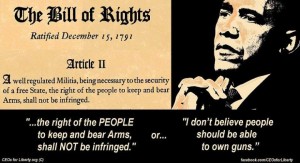
Pro-gun activists held “high noon” rallies across the United States on Saturday to defend the right to own firearms that they say is being threatened by President Barack Obama’s gun-control proposals.

The U.S. debate over gun control erupted 20 first-graders and six adults at an elementary school in Newtown, Connecticut, were killed with an assault rifle.

“We are law-abiding citizens, business owners, military, and we are not going to be responsible for other people’s criminal actions,” former Marine Damon Locke said to applause at a Florida rally he had helped organize.

Some in the crowd of about 1,000 in Brooksville, about an hour north of Tampa, hoisted signs that said: “Stop the Gun Grabbers” and “Gun control isn’t about guns, it’s about control.”

Obama and gun-control advocates have begun a push to reinstitute a U.S. assault weapons ban following the Connecticut massacre. A number of other states have taken up gun legislation, and New York, with among the strictest gun control laws in the country, broadened its assault weapons ban on Tuesday.

Obama has also called for a ban on high-capacity magazines and more stringent background checks for gun purchasers.

In Connecticut, a rally for gun rights drew about 1,000 people at the state Capitol, where lawmakers have reacted to the Newtown shooting with proposals to tighten gun-control rules, including limiting access to assault weapons and high-capacity magazines.

That did not sit well with gun owner Jessie Buchanan, who attended the rally in Hartford.

“They could take away the 10-round magazine today and tomorrow it would be the five-round and the next day it would be the whole thing,” Buchanan said.

In Denver, the mood was defiant as about 500 people, including families with children, gathered in unseasonably warm weather outside the state Capitol.

“I have earned the right to have my guns,” said Don Dobyns, an Air Force veteran and former police officer from Colorado Springs, who was among the rally organizers.

Sporting a shirt that read, “Girls with guns,” 31-year-old Jennifer Burk said, “My parents didn’t raise a victim and the government shouldn’t try and make me one.”

Gun-control advocates say U.S. civilians have no justifiable need for assault weapons or high-capacity magazines, and they say more background checks will help keep guns out of the hands of criminals.

The reaction has been fierce from gun supporters such as the National Rifle Association, who point to a right to bear arms that is enshrined in the Second Amendment to the U.S. Constitution and which they do not want to see watered down.

On Sunday, gun-control advocates plan to hold a National Gun Prevention Sabbath, where they say 150 houses of worship will call on the faithful to advocate for an “actionable plan to prevent gun violence.”

People who have lost loved ones to gun violence will display their photographs, organizers said. – Reuters


African invader could threaten food, jobs

Africa Cup of Nations visitors could introduce an unwanted and potentially economically crippling visitor – the African invader fly.

Issuing an urgent alert, the Department of Agriculture, Forestry and Fisheries yesterday announced steps it was taking to ensure visitors would not bring in any unwanted food or animal products that could be contaminated with the fly.

The fly – which has caused millions of rands worth of damage to the economies of South Africa’s neighbours – has already been detected in Limpopo, threatening food security.

Mpho Sekgala, the department’ s assistant director for plant health promotion , said: “Our appeal is not to bring any foreign food products, especially fruit.”

Jan Hendrik Venter, the department’s early warning systems manager, said Afcon posed a serious threat to the spread of the fly.

“It is imperative travellers do not travel with fruit from infected areas. One infected mango can contain 30 fly larvae and if this spreads we have serious problems.”

It is the third time since 2010 that the fly – whose larvae destroy fruit and vegetables – has been detected in Limpopo. In Botswana, it has caused more than R11-million damage on fruit farms.

“Our eradication programmes in the past have been successful. Eradication processes are under way in Limpopo,” Sekgala said.

Although it had been detected, it had yet to reach infestation phase.

“Our biggest concern is the spread of this fly and the threat to Mpumalanga and North West.

“All of our neighbouring countries have reported the fly’s occurrence … which is of major concern,” Sekgala said. Once infected, fruit had to be destroyed.

“The biggest challenge is the movement of infected fruit and education of hawkers and subsistence farmers.

“While infected areas have been quarantined, there is a danger of the fly spreading through vendors selling fruit to motorists.”

If the infestation is not curbed, it could have detrimental effects, especially to the economy.

Venter said: “We have established containment areas and are eradicating the insect through organic pesticides and specialised bait traps in villages, orchards and production zones.

“The financial loss is on multiple fronts. It can cause large production loss for small-scale farmers, threatening food security, and can lead to international trade bans.

“Trade restrictions could see market loss and difficulty in accessing new markets.

“The direct financial impact is in terms of production losses, while the indirect impact is market losses. Studies show that a 10% production loss can lead to the potential loss of 75000 jobs.” timeslive.co.za


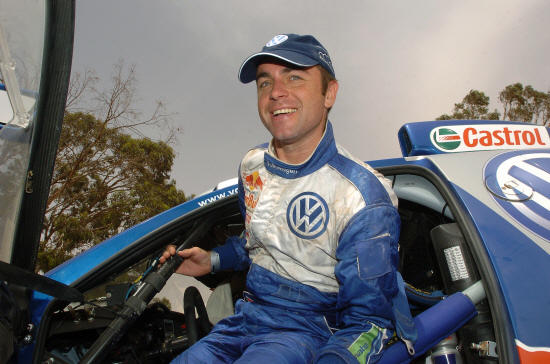
South Africa’s Giniel de Villiers placed second in Dakar Rally

Giniel de Villies,during his 2009 win in the Dakar Rally

Frenchmen Stephane Peterhansel and Cyril Despres, both hoping to retain their titles in the Dakar Rally, stayed on top of the standings after Thursday’s 12th stage.

Peterhansel kept his commanding lead in the car category, 50 minutes, 21 seconds ahead of Giniel de Villiers of South Africa and 1:31:06 in front of Joan Roma of Spain. Roma won the stage with American Robby Gordon 4:18 behind in second. With no need to push it, Peterhansel finished in sixth place.

With two stages remaining, followed by the podium presentation on Sunday in the Chilean capital Santiago, Peterhansel knows anything can happen.

“Yes, for sure we can smell victory, but I can remember two times when I have lost the Dakar just on the last day, so we know that anything can happen,” Peterhansel said. “I could make a mistake, we could have some technical problems. So, there are still two days left.”

In bikes, Despres was 5:39 ahead of KTM teammate Ruben Faria of Portugal in the standings. Chile’s Francisco Lopez trails by 13:40. Frans Verhoeven of the Netherlands won the stage, 1:38 ahead of Faria.

“There are still two days left to race and, on the Dakar, you can be smiling one day and then unfortunate the next day. … So I’m saving my smile for when we reach the end of the rally,” he said. “For the moment, it’s going fine.”

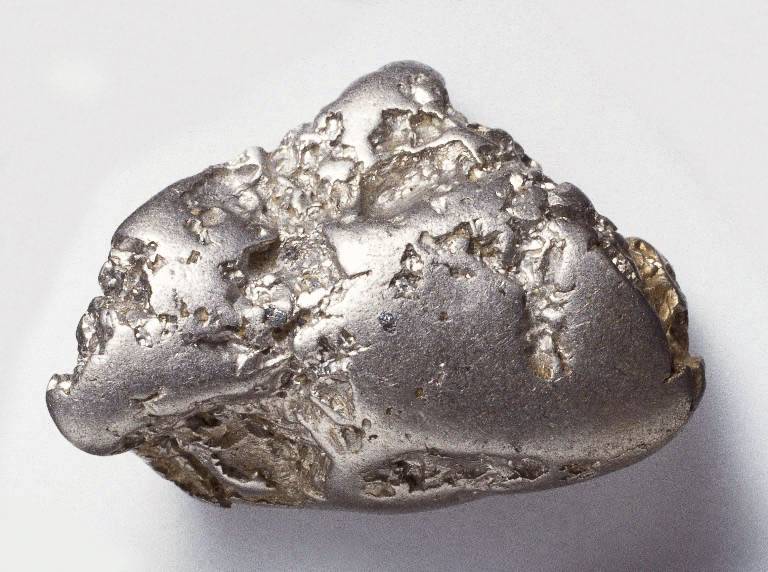
Quadrupled recycled platinum supply driving mining price down

A significant increase in the supply of platinum from recycling, a strong fall in demand for autocatalysts and price-elastic Chinese jewellery demand are combining to hobble the platinum mining industry.

 (Amplats) CEO Chris Griffith tells Mining Weekly Online in the accompanying video interview that secondary supply of platinum from recycling quadrupled from 500 000 oz a year to 2-million ounces a year from 2000 to 2012, with demand for autocatalysts falling by nearly 9% in the latter year.

While much store was placed on extra demand for jewellery in China, this demand proved to be price elastic, with demand rising when the price was down and demand falling when it was up, which kept the price in a narrow range.

With the price unlikely to rise and with the massive increase in costs, the industry is facing an increasingly tight future.

“Current market conditions are very difficult for platinum miners,” says Griffith.

This is in sharp contrast to the market conditions of the past.

From the 1980s to the 2000s, the rate of growth of demand for platinum in jewellery, industry and autocatalysis averaged 5% a year.

In 2006, Amplats anticipated wrongly that these halcyon conditions would persist to 2012.

But instead of demand continuing to grow at a rate of 5% a year from 2007 to 2012, there was a slight overall demand reduction, plummeting autocatalyst demand and ups-and-downs from jewellery demand, which traditionally serves as a market saviour when prices are low.

Miners were increasing supply in the expectation of continued high growth and at the same time the 2-million ounces of recycled supply began to virtually match what Amplats puts on to the market a year from its mining activities.

As a result of these fundamentals, there is an oversupply of platinum in the market – a scenario that is likely to persist.

“We’re unlikely to see a substantial improvement in demand in the short term and we are likely to see additional ounces come on to the market from secondary supply.

“Some of the demand will come from highly price-elastic areas, which means that the price is unlikely to rise.

“With the price unlikely to rise and with the massive increase in costs, it means that the industry is facing increasingly difficult times going ahead, not better times, hence the need for us, under circumstances of having loss-making shafts, to make a change to the business.”

The change has been the most far-reaching in the JSE-listed company’s 58-year history and involves the closure of two mines, the mothballing of four shafts, the selling of Union mine and the offer to create at least one new non-mining job for each of the 14 000 mining jobs that are expected to be shed.

“Clearly, our first objective has to be to restore profitability. In that process, we’ve evaluated this business inside and outside, backwards and forwards, for almost a year now, “ Griffith tells Mining Weekly Online.

The production profile will be cut by 400 000 oz to align the output with demand and Rustenburg will be restructured into three operating entities, removing 250 000 oz to 300 000 oz a year of high-cost production.

Four Rustenburg shafts, Khuseleka 1 and 2 shafts and Khomanani 1 and 2 shafts, will be mothballed for the long-term and the Rustenburg operations will become a 320 000 oz to 350 000 oz a year producer, ensuring more effective capital allocation.

As a result, Amplats will reduce its planned capital expansion over the next ten years by 25% to R100-billion in order to focus investment on low-cost, high-margin projects. – Creamer Media

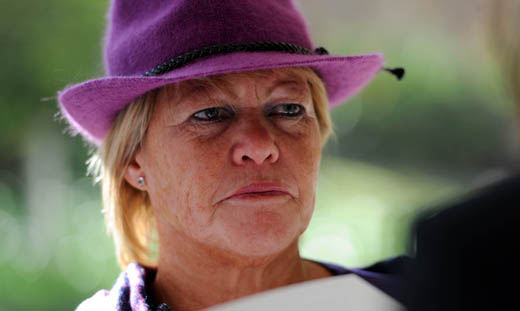
Breytenbach hearing continues

Glynnis Breytenbach

The disciplinary hearing of suspended NPA prosecutor Glynnis Breytenbach continues in Pretoria on Friday.

A senior National Prosecuting Authority (NPA) official is expected to testify on Friday as the authority’s final witness.

Breytenbach was suspended from the NPA on April 30, 2012, for allegedly failing to act impartially in an investigation.

She was part of a probe relating to a dispute between Imperial Crown Trading (ICT) and Sishen/Kumba Iron Ore over mining rights in the Northern Cape.

Her suspension came after ICT’s lawyer Ronald Mendelow sent a letter of complaint about Breytenbach to then-National Director of Public Prosecutions Menzi Simelane on October 31, 2011. He claimed Breytenbach favoured Sishen in her probe and had an improper relationship with Sishen’s lawyer Mike Hellens.

Breytenbach had argued that acting National Director of Public Prosecutions Nomgcobo Jiba suspended her in an attempt to stop her from prosecuting former police crime intelligence boss Richard Mdluli on fraud and other charges.

Breytenbach has pleaded not guilty to the 16 charges the NPA brought against her. They include bringing the NPA into disrepute by speaking to the media without authorisation, and performing work outside the NPA. – Sapa

Obama to move on gun control

President Barack Obama is launching the most sweeping effort to curb American gun violence in nearly two decades, and New York lawmakers easily passed the toughest gun control law in the country, as gun control advocates move to act swiftly after a massacre at an elementary school last month.

Obama is urging a reluctant Congress to ban military-style assault weapons and high-capacity ammunition magazines like those used in the Dec. 14 massacre of 20 elementary school children in Newtown, Connecticut.

The broad package Obama will announce Wednesday is also expected to include more than a dozen steps the president can take on his own through executive action. Those measures will provide a pathway for skirting opposing lawmakers, but they will be limited in scope, and in some cases, focused simply on enforcing existing laws.

But Congress would have to approve the bans on assault weapons and ammunition magazines holding more than 10 bullets, along with a requirement for universal background checks on gun buyers. Some gun control advocates worry that opposition from Republicans and conservative Democrats, as well as the National Rifle Association, will be too great to overcome.

The NRA released an online video Tuesday that called Obama an “elitist hypocrite” for having armed Secret Service agents protect his daughters at school while not committing to installing armed guards in all schools.

White House officials signaled that Obama would seek to rally public support for the measures he puts forward, perhaps holding events around the country or relying on Organizing for America, his still-operational presidential campaign.

For many Americans, gun ownership is a cherished right protected by the Second Amendment of the U.S. Constitution. Others argue that the country’s founders in the 18th century could never have envisioned the sort of high-powered assault weapons used in the Newtown attack.

White House officials, seeking to avoid setting the president up for failure, have emphasized that no single measure – even an assault weapons ban – would solve a scourge of gun violence across the country. But without such a ban, or other sweeping Congress-approved measures, it’s unclear whether executive actions alone can make any noticeable difference.

“It is a simple fact that there are limits to what can be done within existing law,” White House spokesman Jay Carney said Tuesday. “Congress has to act on the kinds of measures we’ve already mentioned because the power to do that is reserved by Congress.”

Obama will announce his proposals in a midday event at the White House, flanked by children who wrote to him about gun violence following the massacre of 20 students and six adults at Sandy Hook Elementary School. Law enforcement officials, mayors from across the country and supportive congressional lawmakers are also expected to attend.

According to a lobbyist briefed Tuesday, Obama will present a three-part plan focused on gun violence, education and mental health.

The president will call for a focus on universal background checks. Some 40 percent of gun sales take place without background checks, including those by private sellers at gun shows or over the Internet, according to the Brady Campaign to Prevent Gun Violence.

The president will call for banning assault weapons and limiting ammunition magazines to 10 rounds or fewer, and also propose a federal statute to stop “straw man” purchases of guns and crack down on trafficking rings. He’ll order federal agencies to conduct more research on gun use and crimes, something Republican congressional majorities have limited through language in budget bills, the lobbyist said.

Obama has pledged urgent action to prevent future mass shootings, and his plan – coming just one month after the Newtown attacks – is swift by Washington standards.

The president’s framework is based on recommendations from Vice President Joe Biden, who led a wide-ranging task force on gun violence. Beyond the gun control measures, Biden also gave Obama suggestions for improving mental health care and addressing violent images in video games, movies and television.

The vice president’s proposals included 19 steps that could be achieved through executive action.

Obama may order the Justice Department to crack down on people who lie on background checks; only a tiny number are now prosecuted. Such a step has support from the National Rifle Association, which has consistently argued that existing laws must be enforced before new ones are considered.

He also could take steps ordering federal agencies to make more data on gun crimes available and conduct more research on the issue, something Republican congressional majorities have limited through language in budget bills. And he may order tougher penalties against gun trafficking and give schools flexibility to use grant money to improve safety.

Gun control proponent Rep. Bobby Scott, a Democrat who met with Biden on Monday, said the president is also likely to take executive action to ensure better state reporting of mental health and other records that go into the federal background check database. But he, too, acknowledged there were clear limits to what Obama can do without Congress’ say-so.

“You can’t change the law through executive order,” Scott said.

States and cities have been moving against gun violence as well.

New York’s Assembly voted 104-43 on Tuesday to approve a law calling for a tougher assault weapons ban and provisions to try to keep guns out of the hands of the mentally ill who make threats. Democratic Gov. Andrew Cuomo quickly signed the measure into law.

“Common sense can win,” Cuomo said. “You can overpower the extremists with intelligence and with reason and with common sense.”

The NRA criticized the bill in statement. “These gun control schemes have failed in the past and will have no impact on public safety and crime,” the group said.

The measure also calls for restrictions on ammunition and the sale of guns.

Under current state law, assault weapons are defined by having two “military rifle” features such as folding stock, muzzle flash suppressor or bayonet mount. The proposal reduces that to one feature and includes the popular pistol grip.

Private sales of assault weapons to someone other than an immediate family will be subject to a background check through a dealer. New Yorkers also would be barred from buying assault weapons over the Internet, and failing to safely store a weapon could lead to a misdemeanor charge.

Ammunition magazines will be restricted to seven bullets, from the current 10, and current owners of higher-capacity magazines will have a year to sell them out of state. An owner caught at home with eight or more bullets in a magazine will face a misdemeanor charge.

White House officials signaled that Obama would seek to rally public support for the measures he puts forward Wednesday, perhaps holding events around the country or relying on Organizing for America, his still-operational presidential campaign.

“The president’s success in using this strategy, I think, is pretty notable,” Carney said of Obama’s efforts to engage the public in previous legislative fights.

Still, it’s unclear how much political capital Obama will exert in pressing for congressional action.

The White House and Congress will soon be consumed by three looming fiscal deadlines, each of which is expected to be contentious. And the president has also pledged to tackle comprehensive immigration reform early this year, another effort that will require Republicans’ support and one in which Obama may be more likely to get their backing.

Sen. Mitch McConnell, the chamber’s top Republican, has warned the White House that it will be at least three months before the Senate considers gun legislation. And Senate Majority Leader Harry Reid, a Democrat, has said immigration, not gun control, is at the top of his priority list after the fiscal fights. – AP

French war in Mali with hostage crisis in Algeria

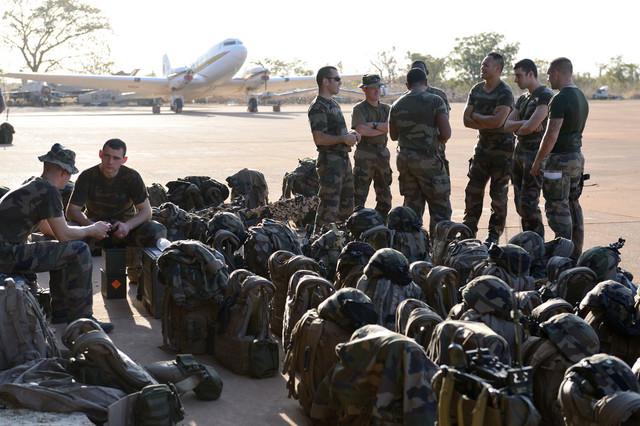
French troops arriving in Mali

French troops fought Islamist rebels in Mali while in neighbouring Algeria Al-Qaeda-linked fighters killed two people, took more than 40 foreign hostages and called for an end to France’s “crusade”.

Chad meanwhile announced it would be sending 2,000 soldiers to fight in Mali.

After days of air strikes on Islamist positions in northern Mali, controlled by the rebels since April, French and Malian ground forces battled the insurgents in the central towns of Diabaly and Konna.

But the assault on a gas field over the border in Algeria dramatically raised the stakes.

Islamists said they were holding 41 foreign hostages, including seven Americans, after their attack on the In Amenas gas field in the east of the country.

A group calling itself “Signatories for Blood” claimed the action in a post to the Mauritanian website Alakhbar.

The attack was in reprisal for “the crusade being waged by French forces in Mali” and for Algerian’s cooperation, it said, calling for an end to the operation.

Algerian Interior Minister Dahou Ould Kablia said that one Briton and an Algerian had been killed in the attack, while another six people — a Briton, a Norwegian a Scot and three Algerians — had been wounded.

Other reports said the hostages included Japanese, Malaysian, Norwegian and Filipino nationals. Dublin confirmed the kidnapping of an Irish national while the US State Department said several of its nationals were being held.

The attackers had also demanded the release of 100 Islamists held in Algeria in exchange for their hostages, a worker at the gas field site told AFP.

The attack came less than a week after France launched its air strikes on Islamists in northern Mali on January 11 and just days after Algeria opened its airspace to French fighter jets engaged in the mission.

Jointly operated by British oil giant BP, Norway’s Statoil and state-run Algerian energy firm Sonatrach, the gas field is located 1,300 kilometres (810 miles) southeast of Algiers, close to the Libyan border.

On the ground in central Mali, French troops engaged Islamist fighters in Diabaly, a town seized two days earlier by fighters led by Algerian Abou Zeid, one of the leaders of AQIM.

“The special forces are currently in Diabaly, in close-quarter combat with the Islamists. The Malian army is also in place,” a Malian security source said on condition of anonymity.

There were also clashes near Konna, the central town Islamists seized last week, prompting the French intervention, security sources said.

The French military said it had secured a strategic bridge on the Niger river near the town of Markala, south of Diabaly, blocking a key route to Bamako.

French Defence Minister Jean-Yves Le Drian said the western zone around Diabaly was home to “the toughest, most fanatical and best-organised groups. It’s under way there but it’s difficult”.

— ICC launches Mali war crimes probe —

The International Criminal Court said it had launched a warcrimes probe Wednesday, as rights groups and military sources denounced the Islamists’ use of child soldiers and use of civilians as human shields.

“Different armed groups have caused havoc and human suffering through a range of alleged acts of extreme violence,” chief prosecutor Fatou Bensouda said in a statement.

“I have determined that some of these deeds of brutality and destruction may constitute war crimes.”

Chad announced Wednesday it would send 2,000 soldiers to Mali, a significant boost to the African forces gathering there.

“We intend to send an infantry regiment and two support battalions, which comes to around 2,000 men,” Moussa Faki Mahamat told Radio France Internationale. They would work closely with the Malian army and the multinational West African force taking shape, he added.

Nigeria will command the UN-approved 3,300-strong multinational African intervention force and has promised 900 troops. Niger, Burkina Faso, Togo, Senegal, Guinea and Ghana have also promised troops.

Some 2,000 men will arrive within the next 10 days, according to a report from a meeting of regional army chiefs seen by AFP.

Ivory Coast President and ECOWAS regional bloc chairman Alassane Ouattara called for all European countries to lend support to the operation after a meeting with Chancellor Angela Merkel in Germany.

Germany has already pledged two transport planes and Italy logistical support.

France says it will ultimately send 2,500 troops, pitted against what are thought to be around 1,300 Islamic fighters.

Mali has been effectively split in two since April 2012, when Islamists took advantage of a military coup in Bamako and an offensive launched by Tuareg separatists in the north to seize half the country.

The UN and aid agencies report some 370,000 Malians have been displaced by the fighting. – AFP

Immigration UK’s ‘biggest challenge’

The British public views immigration as the biggest issue facing society, but UK citizens are basically tolerant to immigration, as long as new arrivals are in work and integrate into society, it was revealed in a poll reported in The Observer.

The poll found that one in three people believes tension between immigrants and UK citizens is a major cause of division, while over half those questioned believe it is one of the top three causes, a major new survey entitled ‘State of the Nation: Where is Bittersweet Britain Heading?’ found out, the British Sunday paper wrote.

Over the past two decades immigration has increased to historically high levels, with 100,000 more people entering than leaving the country every year since 1998.

Sunder Katwala, the director of British Future, the think tank which carried out the survey, said it showed that there was a national anxiety about immigration which politicians needed to address.

However, he pointed out that the results suggested that there was very little relation between the geographical distribution of immigrants and the levels of people’s concern. For example, immigration was regarded as a divisive issue by 19 per cent of people in the north-east of England and 20 per cent of people in Wales. In both areas a 2011 census showed that one in 20 people were born abroad. But in London, where one in three people are immigrants, the number of people who regarded immigration as divisive, still stood at 20 per cent.

“People are obviously very anxious about immigration. But I was struck by how much it was driven by a national rather than a local tension. And I don’t think anyone has any confidence in how it is managed as a system. Also there is concern around national cohesion, identity and ability to cope with the scale of change,” said Katwala.

Other issues considered the three essential traits of a Briton were respect for the law, freedom of speech of others, and an ability to speak English. These came out as the top criteria among all ages and social classes in the survey, which polled 2,515 people aged between 16 and 75. Treating women and men equally and respect for people of all ethnic backgrounds and faiths came fourth, fifth and sixth on the list respectively.

The release of the poll’s results coincides with an upcoming speech by Eric Pickles, the communities secretary, in which he hopes to aid efforts of integration into society. He is expected to stress that knowledge of English is vital to social mobility and for the economy as a whole.

The survey also found that three in four people think that the UK is in a housing crisis, an issue that has been on the political agenda of all parties for a number of years. Current Housing Minister Nick Boles is proposing that green field sites, currently protected by planning law, should be built upon in order to provide much needed new housing stock. All age groups surveyed said that owning your own property is better than renting.

When asked what made people proud to be British, the NHS came top, with 45 per cent of people saying it was the institution they were most proud of. The armed forces came second, with 40 per cent of people saying they made them feel proud to be British, while in light of the Olympics and the Paralympics, 38 per cent said ‘Team GB’.

When people were asked if being born in Britain was important to being British, two thirds said as long as someone has worked here for up to 15 years, they should be allowed access to the welfare state, regardless of where they were born.

Finally, roughly two thirds said they would rather be British than any other nationality in the world, while around 15 per cent said they would rather not be British and 20 per cent neither agreed nor disagreed.