ISIS set up stronghold in Europe

Security services think the Osve area in Bosnia is used for ISIS training camps and could be a base for devastating terror attacks on the West.

Islamic State have established a stronghold in mainland Europe, a Sunday Mirror investigation reveals.

Terrorists are secretly buying land in an isolated village, surrounded by deep woodland.

Security services think the area in Bosnia is used for ISIS training camps and could be a base for devastating terror attacks on the West.

Crucially, the location gives IS a key strategic position due to its proximity to the Mediterranean which is used by extremists from Syria, Iraq and North Africa.

At least 12 ISIS fighters trained in the village of Osve have left for Syria in recent months and five are reported to be dead.

Terror expert Dzevad Galijasevic said: “From this village a large number of people went to Syria and are going constantly.

“The chosen location of some of the properties is on a hill, where there is no possibility to approach without being seen. It is clear that the source of the terrorist threat is right there. It is a major threat.

“There is no one there who isn’t ready to respond to the summons to jihad.”

We visited the hilltop village 60 miles from Sarajevo and six miles from the town of Maglaj afternoon.

It is not mapped by GPS and is only accessible by steep and winding roads barely wide enough for cars to pass.

Bosnia is an ideal position for jihadis travelling illegally from Syria to Greece, via Turkey, and then through Macedonia and Serbia.

Guns and other weapons are easier to obtain in Bosnia than in other parts of Europe due to illegal ownership following the conflicts of the 1990s.

Five months ago, anti-terror cops raided the village of Gornja Maoca in the north of the country following reports of houses flying the ISIS flag.

The area is home to followers of the strict Sunni Islam Wahhabi movement. It has been raided by police several times over the past decade due to suspected links with radical groups.

Source: Daily Mirror
Buckingham braces for more Nazi-exposure

Buckingham Palace was last night braced for new embarrassment as turmoil continued over leaked footage showing the Queen performing a Nazi salute as a child.

An explosive Channel 4 documentary is set to reveal details of how Prince Philip’s sister met and admired Adolf Hitler, whom she described as a ‘charming and seemingly modest man’.

Three of his sisters were married to senior Nazi officers – one a colonel in the SS – and when Philip attended a family funeral in Germany in 1937 he was confronted by crowds giving the Heil Hitler salute. The documentary includes previously unseen extracts from a private memoir in which one sister talks of her early admiration for Hitler.

Meanwhile the footage showing the Queen performing a Nazi salute as a child could have been accidentally leaked by Buckingham Palace, it has been reported.

The Palace will not welcome a fresh focus on links to the Third Reich while controversy continues over the footage of the Queen.

The grainy film was shot in 1933, months after Hitler came to power and six years before the start of the Second World War. It shows the then seven-year-old Princess Elizabeth playing with a dog on the lawn at Balmoral with her sister Margaret, before raising her arm in a Nazi salute.

Her mother, the future Queen Mother, and her uncle Edward – later Edward VIII – are also shown in the pose. Her uncle appears to be showing them how to perform the Nazi salute, which even then was recognised internationally as a sign of obedience to Hitler.

Royal aides are investigating how the 17-second black and white film clip came to be published by The Sun, and Buckingham Palace has not ruled out legal action.

The footage was sold to a tabloid newspaper for a four-figure sum, the Mail has learnt.

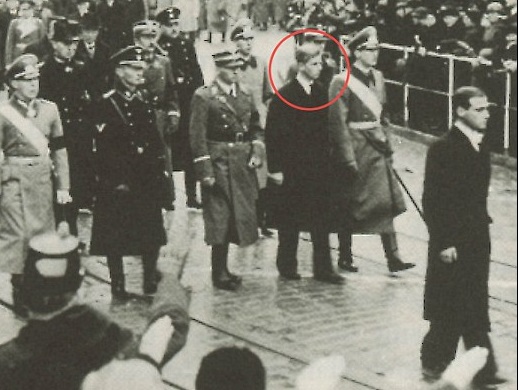
Another remarkable photograph from 1937 shows Prince Philip, then just 16, in a funeral procession for his older sister Cecile, who was killed in an air crash.

The young prince is flanked by grieving relatives, all wearing distinctive Nazi uniforms. One is clad in the uniform of the Brownshirts; another wears full SS regalia.

The street in Darmstadt, near Frankfurt, is lined with crowds – many giving the ‘Heil Hitler’ salute.

On his marriage to Princess Elizabeth, he assumed his mother’s maternal surname – Mountbatten, which is an Anglicised version of the German ‘Battenberg’.

The Queen’s real surname is also is German – Saxe-Coburg-Gotha. That was the surname of Prince Albert, Queen Victoria’s husband, who was born near Coburg in Germany.

The Royal Family’s surname was changed to Windsor in 1917, during the First World War, when Saxe-Coburg-Gotha was considered too German a name – not least because the planes coming over to bomb Britain were called Gotha bombers.

Source: Daily Mail

Israeli missile may have downed MH17

With debris of Malaysia Airlines Boeing 777 still covering the crash site in eastern Ukraine, the investigation of the July 17, 2014 tragedy is surrounded by secrecy. RT talked to international experts and the victims’ families, still waiting for answers.

“We want the facts, we don’t want propaganda,” Malaysian engineer Azahar Zanudin told RTD. “I’d like to know the real things about the disaster of MH17, because in MH17 case there is something wrong about the investigation,” the engineer said. Blaming the local media for “following the western media” bias, Zanudin has created a Facebook page, where he collects the news about the crash from around the world “for the people to see.”

“You can study the whole world behind your laptop, but the best thing you can do is check the spot yourself,” Dutch blogger Max Van Der Werff told RTD. The blogger has visited the crash site in Ukraine, and said that in the one week he spent there, he had learned more about the crash “than in a whole year behind my laptop.”

“The Netherlands is the official head of the investigation… (but) we are part of NATO, we are part of anti-Russian alliance, so we are not independent investigators,” Van Der Werff said, adding that the MH17 crash should have been investigated by the UN, “not a biased country like the Netherlands.”

Another independent researcher from the West also changed his opinion on the possible cause of the tragedy after visiting the crash site. “I thought that the story of (another) plane taking the Boeing was a propaganda of Russia,” German independent journalist Billy Six shared with RTD. Then he visited the site in eastern Ukraine and spoke to witnesses who claimed they saw military jets flying in the area, but no BUK missile launcher vapor trail.

A report on Malaysian Airlines MH17 air disaster in Ukraine last year by a group of old-hand aviation security experts maintains that the Boeing might have been downed by an Israeli Python air-to-air missile.

The report was leaked via the private LiveJournal account of Albert Naryshkin (aka albert_lex) late on Tuesday and has already been widely discussed by social media communities in Russia.

The authors of the investigative report have calculated the possible detonation initiation point of the missile that hit the passenger aircraft and approximate number and weight of strike elements, which in turn designated the type and presumed manufacturer of the weapon.

The missile that attacked MH17 had a passive radar homing head, which explains why the missile exploded so close to the cockpit. Under the radar-transparent nosecone of a Boeing 777-200 there is a surveillance radar station operable during the flight, so most likely the missile homed on to this radar as the target.

Apart from a radar homing head, the missile could also be equipped with an advanced, matrix type, imaging IR seeker, which enables the missile to determine the size and the type of the target and choose for attack its most vital element. For a huge Boeing aircraft, that’s the cockpit.

A simulation of the missile attack has proved that missiles with that type of guidance choose to attack a big passenger plane from the front hemisphere.

There are four air-to-air missiles that fit the description established by the experts, namely: French Magis-2, Israeli Shafrir, American AIM-9 and Israeli Python – all short-range.

The first three have been struck off the list for various reasons, including type of warhead or guidance system specifications. The Python deserved a closer look.

Moscow hopes US will abandon AMD plans for Europe

Moscow hopes the US will fulfill its promise not to develop a system of missile defense in Europe after a deal with Iran has been reached, Russian Foreign Minister Sergey Lavrov said in Vienna on Tuesday.

“We all probably remember that in April 2009 in Prague [US] President [Barack] Obama said that if the Iran nuclear program issue is sorted out, then the task of creating the European segment of the missile defense system will disappear,” Lavrov said at press conference in Vienna.

He said that Tehran and the P5+1 powers (the United States, the UK, France, Germany, Russia and China) have agreed on “joint all-inclusive plan of actions, which consists of the main document and five very detailed technical appendices.”

A draft of UN Security Council resolution has also been agreed upon which all participants of the talks will present as co-authors in New York in the next few days, Lavrov said, adding that the resolution will be considered by the UN SC and voted on. “We believe, it will be unanimously approved,” he added.

Germany backs down on Greece

Germany is at last bowing to pressure as a chorus of countries and key institutions demand debt relief for Greece, a shift that could break the five-month stalemate and avert a potentially disastrous rupture of monetary union at this Sunday’s last-ditch summit.

In a highly significant move, the European Council has called on both sides to make major concessions, insisting that the creditor powers must do their part as the radical Syriza government puts forward a new raft of proposals on economic reforms before a deadline expires tonight.

“The realistic proposal from Greece will have to be matched by an equally realistic proposal on debt sustainability from the creditors,” said Donald Tusk, the European Council president.

This is the first time Europe’s institutions have acknowledged clearly that Greece’s public debt – 180pc of GDP – can never be repaid and that no lasting solution can be found until the boil is lanced.

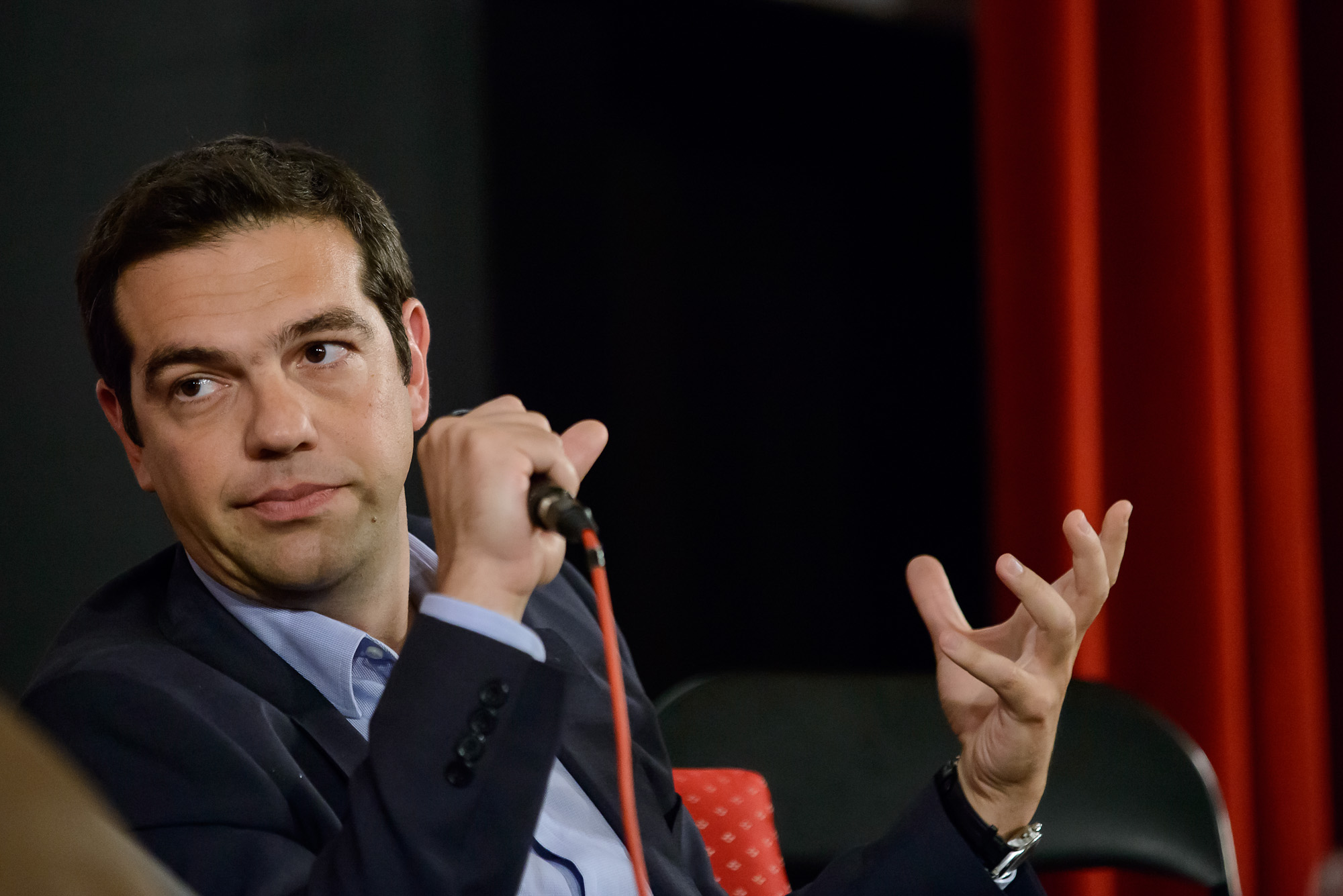
Any such deal would give Greek premier Alexis Tspiras a prize to take back to the Greek people after they voted by 61pc to 39pc to reject austerity demands in a landslide referendum last weekend.

While he would still have to deliver on tough reforms and breach key red lines, a debt restructuring of sufficient scale would probably be enough to clinch a deal, and allow him to return to Athens as a conquering hero.

The Greek parliament is due to vote to ratify the measures on Friday.

Source: The Telegraph

Greece also has an immigration problem

Unbelievable scenes on the island of Lesvos as refugees try to raid a food truck. The incident took place when nearly 2,500 migrants hosted in the camp of Lesvos (Mytilene) municipality in Kara Tepe saw the catering truck approaching. They started to run for a plate of food.

Reason for the panic was a rumor claiming that catering services for refugees had stopped on the island of Samos due to debts.

On Tuesday, another boat carrying people to Greece sank, more than 10 people missing.

Next to the Greek humanitarian and economic crisis and the country on the brink of collapse, there is also the Refugees Crisis.

Europe is keeping eyes and ears closed, while Eurocrats like European Commission President Jean-Claude Juncker are making ‘nice promises’ for aid and relocation to other EU countries.

Watch here.

German missiles taken over by hackers

German-owned Patriot missiles stationed in Turkey were briefly taken over by hackers, according to media reports on Tuesday.

The attack took place on anti-aircraft ‘Patriot’ missiles on the Syrian border. The American-made weapons had been stationed there by the Bundeswehr (German army) to protect Nato ally Turkey.

According to the civil service magazine, the missile system carried out “unexplained” orders. It was not immediately clear when these orders were carried out and what they were.

The magazine speculates about two weak spots in the missile system which could be exploited by hackers.

One such weakness is the Sensor-Shooter-Interoperability (SSI) which exchanges real time information between the missile launcher and its control system.

The second exposed point is a computer chip which controls the guidance of the weapon.

Attackers might have gained access in two different ways, one that takes over the operating of the missile system and one that steals data from it.

The patriot missile has been in service in the US army since 1984 and was first used in operation in the first Gulf war in 1991.

In 2012 Turkey asked that its Nato partners support it by stationing Patriot missile systems there, after the civil war in Syria drew closer to its southern border.

In June 2015 Germany announced that it would replace its Patriot missiles with MEADS, an air defence system designed in cooperation with the USA and Italy.

Source: thelocal.de

Russia to kick out major NGO’s

Russia’s upper house of parliament adopted on Wednesday a petition to the Prosecutor General’s Office, the Foreign and Justice Ministry asking them to consider the patriotic stop list of foreign NGOs for possibly including them to the list of undesirable organizations.

The petition, backed unanimously by a total of 156 senators, reads that Russia “has faced the greatest attack on its national interests, values and institutions over the past quarter of the century.”

Its key goal is to influence the domestic political environment in Russia as well as to “undermine the patriotic unity” of people and also disrupt integration processes involving Russia on space Commonwealth of Independent States (CIS).

“The unprecedented involvement in this activity of nonprofit organizations, which are also funded by the state budgets of foreign countries, allows speaking about a “soft aggression” against Russia,” the text of the petition obtained by TASS says.

The upper house says the Foreign and Justice Ministries and also the Prosecutor General’s Office should “consider the patriotic stop list” which includes a range of well-known anti-Russian foreign and international non-governmental organizations.

This measure is aimed at possibly making them a subject of the existing norms of the country’s law on undesirable organizations, it says.

The “stop list” includes 12 organizations, among them the Soros Foundation, the National Endowment for Democracy, the MacArthur Foundation, the Freedom House and the East European Democratic Center.

Source: Itar-TASS

Greece asks for 3-year facility from EU, agrees to ‘quick reforms’

Greece has officially asked for a three-year loan facility from the European Stability Mechanism (ESM) and agreed to quick reforms, promising to present a new plan on July 9 at the latest.

“The loan will be used to meet Greece’s debt obligations and to ensure stability of the financial system,” reads the letter sent by the new Greek finance minister.

Greece proposed to immediately implement a set of measures starting from the beginning of the next week, such as tax reform related measures and pension related measures. It also promised action to further strengthen and modernize the country’s economy.

“The Greek government will on Thursday 9 July at the latest set out in detail its proposals for a comprehensive and specific reform agenda for assessment by the three institutions to be presented to the Eurogroup,” the document added.

The requested 3-year bailout package from the IMF is estimated to be over €51 billion, however there is no exact amount.

On June 30 Greece asked for a 2-year bailout program hours before the deadline to repay €1.6 billion to the IMF expired. That request also included a debt restructuring plan, which the Eurogroup rejected that day.

Greece rejects austerity

Nearly 150 protesters rallied in the streets of Athens Monday just hours after the Greeks voted resoundingly to reject more austerity measures in exchange for another bailout from the country’s international lenders.

The triumph of the No camp in the Greek referendum means Athens will possibly default on its debt and run out of money because the European Central Bank will not lend the country any more cash. It will leave the EU, re-adopt its old currency, the drachma, according to a Barclays analysis.

Police said between 100 and 150 anarchist protesters had started throwing firebombs at riot police and setting trash cans on fire in the central Athens neighborhood of Exarcheia.

This is far from the place where celebrations are taking place by supporters of the “no” vote in Sunday’s referendum.

There was no indication that the violence was connected to the political campaigns involved in the vote.

The results of Sunday’s referendum — 61 percent voted “no,” compared with 39 percent for “yes” — left the country’s future in the European Union and its euro currency in tatters.

A total of 6.16 million Greeks voted in Sunday’s referendum, or 62.5 percent of eligible voters. The poll needed a minimum 40 percent turnout to be valid.

According to analysts, if Greece adopted national currency, it would automatically abandon the euro area.

The ECB is scheduled to meet tomorrow morning to decide on emergency liquidity assistance (ELA) policy. An outright suspension would effectively put the banking system into immediate resolution and would be a step closer to Eurozone exit.

All outstanding Greek bank ELA liquidity (and hence deposits) would become immediately due and payable to the Bank of Greece.

The maintenance of ELA at the existing level is the most likely outcome, at least until the European political reaction has materialized. This will in any case materially increase the pressure on the economy in coming days.

Marine Le Pen announces candidature for Northern region, takes lead in polls

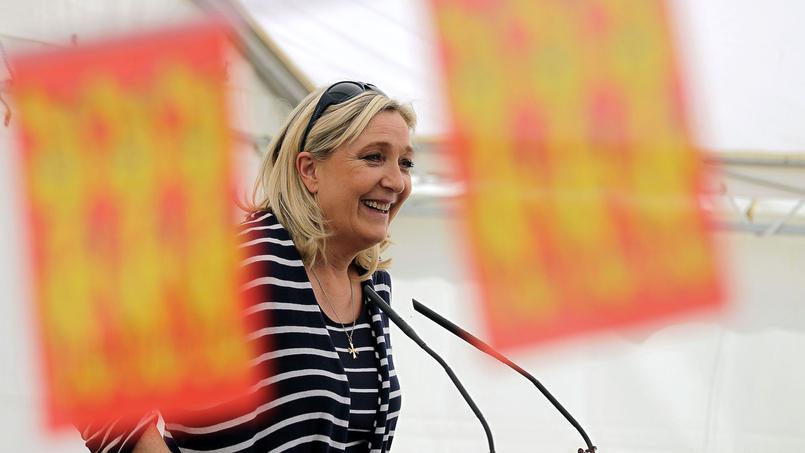
Marine Le Pen has announced her candidature in the Nord-Pas-de-Calais-Picardie region in the north of France during elections to be held on 6 and 13 December 2015, assuming a lead in the polls. If she is successful, her party, the Front National, will control an entire region in France for the first time.

According to an opinion poll for Le Figaro – LCI which was conducted by OpinionWay, she will win both the first and second rounds of the election, finishing with 5 percentage points more than her immediate, centrist rival, Xavier Bertrand of The Republicans.

Nord-Pas-de-Calais-Picardie used to be a Socialist area, but with rising joblessness and the problems with a refugee camp in the coastal town of Calais, support for the the Socialist Party has waned, with many voters now placing their hopes for a better life in Marine Le Pen’s Front National.

In announcing her candidature, Le Pen said that she could “immediately make a difference on the regional level and on the national level a bit later”, referring to her ambition to become the French president during the election of 2017. Asked why she hesitated until today to announce her candidature in the region, she said that “many people thought that my regional candidacy would clash with my presidential candidacy” but that she felt it imcumbent upon her to get involved in the “great and beautiful region”.

Contact lost with Freedom Flotilla

Contact has been lost with the Swedish boat Marianne, which had been leading the Gaza-bound Freedom Flotilla, after other boats turned back. The IDF announced that they intercepted and searched the vessel which had tried to “breach the maritime blockade.”

The Freedom Flotilla Coalition lost contact with the flagship of the flotilla at 10:57pm GMT, the organization said. The vessel was some 100 nautical miles from its destination when it happened.

Israel is maintaining its naval blockade of Gaza according to international law, as confirmed by the US Secretary General, said Israeli Foreign Affairs deputy spokesman, Oren Rozenblat.

The Israeli navy has engaged the vessel, boarded and searched it, the Israeli Defense Forces’ spokesman Peter Lerner confirmed. He said the Marianne is now being escorted to Ashdod Port after ignoring “repeated appeals to change course.”

However, the organizers of the flotilla have reasons to believe that the engagement was not as uneventful and non-violent as the navy claims, and that some people on board “might be hurt.”

“There is no humanitarian crisis in Gaza whatsoever,” claimed the official, commenting on the Israeli prime minister’s office sarcastically proposing the flotilla head for Syria instead.

However, the European activists against Gaza siege don’t agree with the Israeli official. Rami Abdo, one of the campaigners, says ‘the situation on the ground is dire.’

Meanwhile, Israeli PM Benjamin Netanyahu has praised the navy personnel “for their determined and efficient” actions that allowed for the maintenance of the the blockade.

“This flotilla is nothing but a demonstration of hypocrisy and lies that is only assisting the Hamas terrorist organization and ignores all of the horrors in our region,” Netanyahu said. “We are not prepared to accept the entry of war materiel [in] to the terrorist organizations in Gaza as has been done by sea in the past.”

“Israel is the only democracy that defends itself in accordance with international law,” Netanyahu was cited as saying in an issued statement.

The four vessels which departed from various ports on Saturday attempted to break the eight-year long Palestinian blockade, a news release on the campaign’s official webpage said. This time, some 70 people were on board, including former Tunisian President Moncef Marzouki and Spanish MEP Ana Maria Miranda Paza.

In 2010, a similar attempt to break the blockade with the “Freedom Flotilla” ended in bloodshed. Israeli troops then boarded a Gaza-bound vessel in international waters. Nine pro-Palestinian activists were killed.

In 2011, a report by a UN investigative committee implied that Israel has the right to stop Gaza-bound vessels, The Times of Israel reported. On Wednesday, UN Secretary-General Ban Ki-moon said he believed “a flotilla will not help to address the dire situation in Gaza,” but urged Israel to “lift all closures, with due consideration of Israel’s legitimate security concerns.”

Greek crisis ignites

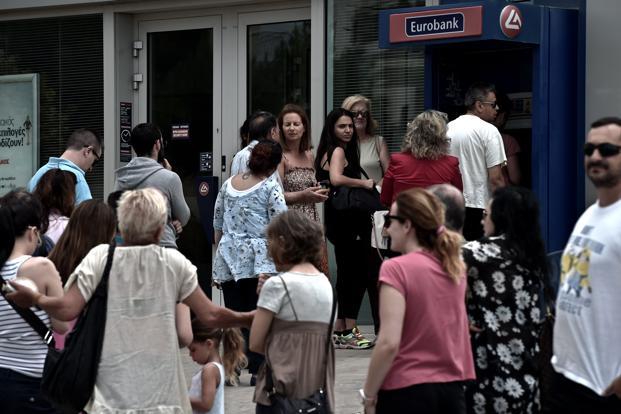
Banks in Greece and the country’s stock exchange will be shut all week in a sign of the deepening financial crisis.

The drastic move comes after people rushed to withdraw their cash amid panic ahead of the referendum on bailout terms.

Under the controls, there will be a daily €60 limit on withdrawals from cash machines, which will reopen on Tuesday.

The Foreign Office has warned British tourists to take enough cash to cover emergencies in case cash machines are emptied.

It said: “Visitors to Greece should be aware of the possibility that banking services – including credit card processing and servicing of ATMs – throughout Greece could potentially become limited at short notice.”

The euro fell sharply against the dollar amid investor jitters of a Greek debt default and exit from the eurozone.

Speaking in a televised address, Prime Minister Alexis Tsipras urged calm and insisted bank deposits were safe.

He blamed European partners and the European Central Bank for forcing Greece’s hand.

And he said the latest developments would not halt the planned referendum next Sunday.

But queues at petrol stations and the declining number of bank machines still dispensing cash underlined the scale of the country’s economic plight.

European creditors have refused a request to extend Greece’s international bailout beyond Tuesday, until after the referendum.

Source: Skynews

Grexit? Eurogroup says ‘Greece has closed the door’ with its referendum idea

AFP reports that Eurogroup head Jeroen Dijsselbloem on Saturday said Greece’s decision to hold a referendum over the future of its bailout programme was a “sad” decision that shut the door to further talks.

“The Greek government has apparently rejected our last proposals… that is a sad decision for Greece because it has closed the door for further talks where the door was still open in my mind,” the Dutch finance minister said as he arrived for talks with his eurozone counterparts.