The British were terrorists

British Terrorism Against Boer Civilians, cover of Dr. Elma Ross's book

by Dr Elma Ross, Wynberg, Cape Town

The letter by Pauline Morris, Anglo-Boer war myth, refers.

It is indeed necessary to debate issues concerning the concentration camps of the Anglo-Boer War.

My grandparents were in the Bethulie and Aliwal North camps as children, and they could never shake off the horror that they experienced. They went from healthy homes with everything they needed to situations of starvation and extreme thirst (children were sometimes deprived of water for a full day).

Their suffering motivated me to translate the stories of some of the survivors of those camps. I also point out how the children experienced the symptoms due to lack of food when they would slowly starve to death. I called the book British Terrorism against Boer Civilians, because the actions of the British soldiers meet the criteria for terrorism.

[ad 1]

The symptoms of fear and starvation are discussed, as well as the psyche of the soldiers that would, for example, force children to sleep in the mud or deny women the use of toilets. Years spent in the Middle East enabled me to show the difference between the actions of the US in building up Middle East societies after the discovery of oil, versus the ways in which Britain destroyed the Boer republics by means of the concentration camps.

The movie, Die Wonderwerker, points out that some people “were never the same again”; that some parents were too traumatised to look after their children, and had to farm them out to strangers. With more research in epigenetics, possible damage to future generations should also be considered. I would suggest descendants of survivors of those camps be consulted, before it is too late.

It is indeed time to discuss the damage the camps did to the psyche of the Boer people. But, I would urge Ms Morris to visit the camps, and to talk to us — not to strangers who had no family in those camps.

Boer women and children died ‘due to backwardness’

The emaciated Lizzie van Zyl. She and other children died in British concentrations camps due to 'Boer backwardness', claims UCT academic

A letter writer in Business Day, as well as an academic at the University of Cape Town, Elizabeth van Heyningen, claim that Boer women and children died in British concentration camps during the Anglo-Boer war because they were “backward” and did not know about soap and water.

Van Heyningen implies that it was really a “myth” that Afrikaners were “civilised Europeans… and not dirty African peasants”.

In her reply yesterday to a previous letter by Dr. Dan Roodt of PRAAG, Pauline Morris of Johannesburg writes:

I REFER to Dan Roodt’s Apartheid revisionism no threat (Letters, September 25). Mr Roodt must realise that historical revisionism applies to all history.

Let’s take the Anglo-Boer War which it seems is the bedrock of Afrikaner identity. A focus feeding this identity is the “genocide” of women and children in the refugee or concentration camps by the British.

I have been reading and interpreting letters that have recently been uncovered in a family archive in Sweden. One of the writers was a medical doctor who served in an ambulance on the side of the Boers at the Ladysmith front, and then in their retreat to the Biggarsberg after the British relieved the siege of Ladysmith.

The opinions expressed by this doctor support the recent research finding on these camps by historian Elizabeth van Heyningen that the “atrocities” in these camps were exaggerated into mythical proportions to support Afrikaner nationalism in the 1920s and 1930s.

The reality as I understand it is that there were many cultural and socioeconomic factors that exacerbated the deaths in the camps. Many of those in the camps were very poor bywoners, and many were indigent. Also, not surprisingly the “modern” medicine administered at the time by the British was unfamiliar to the Boer population who had been living in isolation for so many years.

I agree that we “need to find our own truth, commensurate with our own reality.” This means opening up a critical debate on the realities of the Boer War concentration camps. I take it this will pose no threat to yourself and other Afrikaners.

In an article published in the journal Historia 55,2, November 2010, pp 12-33, Elizabeth van Heyningen, a professor of history at the University of Cape Town, suggests that it was really a “myth” that Afrikaners were “civilised Europeans… and not dirty African peasants”.

She quotes from the British “Blue Books” which blamed the Boers themselves for dying of hunger and disease in the camps:

“The high death rate among the children, I would like to emphasise again, is in no way due to want of care or dereliction of duty on the part of those responsible for this camp. It is, in my opinion, due to the people themselves; to their dirty habits both as regards their own personal cleanliness and the cleanliness of their children and their surroundings; to their prejudices; their ignorance; and their distrust of others, even their own nationality, when their advice runs counter to their own preconceived and antiquated ideas. This is specially noted in connection with their treatment of the sick, to their rooted objection to soap and water, and to hospitals.”

According to Van Heyningen, the mortality rate in the camps, where 34 000 women and mostly children died, was not much higher than in Afrikaner towns in the Cape before the “civilised” British introduced public health reforms in the 1880s:

“Lack of sanitation was not confined to the camps. The Boer laagers, when they remained stationery for any length of time, were filthy. A number of commentators remarked on the insanitary state of the laagers besieging Mafeking. Flies were a major problem because the offal of slaughtered animals was never cleared away. The interiors of the wagons and tents were black with the “little devils” and flies flew into the mouths of the burghers as they struggled to eat. The stench from the latrines, built too close to the laager, was unbearable, the Rev Abraham Stafleu complained. Paardeberg and Modderspruit, too, were gripped by disease and foreign doctors attached to the Boer forces, particularly, were critical of the lack of hygiene in the Boer laagers.

“Lack of sanitation was certainly not unique to the Boer republics. The camps have been seen too much in isolation, as sui generis, a unique experience. In the Cape Colony, as public health reforms were introduced by modernising doctors from the 1880s, and district surgeons’ reports and statistics were published, it became clear that many country towns lacked effective sanitation and mortality rates, especially those of children, were very high indeed.”

Elizabeth van Heyningen argues that the vast majority of the camp inmates were lower-class bywoners or “white trash” who knew nothing about basic hygiene and therefore died of their own accord. She then goes on to explain how Afrikaner nationalists have misrepresented the British concentration camps that were really an attempt at “poverty relief” for Afrikaners instead of the military exercise against the Boer civilian population that they were. She also glosses over the burning down of most of Northern South Africa by the British sodiers, leaving the civilian population without food, to be herded into camps where many were again denied food or placed on below-subsistence rations.

Van Heyningen equally neglects to mention the many reports of poisoning by the camp commanders and nursing staff of inmates under the pretext of administering “medicine”.

Writing in Die Burger on 10 July 2010, journalist and historian Marthinus van Bart offered the following criticism of Van Heyningen’s jingoist apology for the British concentration camps:

“Other experts have emphasised that the main reasons for the deaths were malnutrition and lack of food, exposure, polluted food and water, a dearth of soap and other cleaning aids, open furrow toilets and the bucket system, the serious overpopulation of the camps, immunity deficiency, little or no fuel to boil water or do cooking, the denial of the disaster and inaction to set things right after the British opposition had demanded it in parliament in London.”

In the 2001 documentary Scorched Earth “it was indicated that the women and children were civilians against whom war was literally conducted. Their farms (more than 30 000) and furniture were burnt down, food and livestock were destroyed, they were molested and raped, and they were violently herded into the camps.

[ad 1]

“Up to 18 people were divided into a single bell-shaped tent – mostly old, worn-down army tents giving no protection against the scorching Karoo sun, rain and wind storms, bouts of hail and snow. Diseases like pneumonia were widespread due to exposure to the elements, which was worsened by malnutritiion and deficient medication.

“The toilet facilities were one bucket for every 300 people. In one camp there were only 28 bucket toilets for 4 600 inmates. The toilet holes of many camps were 1 km from the tents.

“Most people suffered from diarrhea due to the polluted water and bad meat. Water was limited to one bucket per family per day, in other cases to one small kettle of water per day – not even a cup of water per person per day.

“There was mostly no water for washing, either their bodies or clothes and bedlinen. The elderly and children who fell into the toilet furrows could not be properly washed afterwards.

“In addition families of burghers in the field were placed on half rations, a diabolical plan to slowly but surely exterminate these inmates. That was one of the notorious Methods of Barbarism to which historian S.B. Spies refers in his book.

“There were approximately 235 000 camp inmates and 240 000 soldiers that had to be fed by the British army. The deficient infrastructure made a disaster inevitable.”

Foreign powers could stir up domestic conflict in SA

Chrchill... had 15 million Germans displaced

by Ewald Wessels

ALLISTER Sparks labels the 1913 Land Act “the original sin of all SA’s racist laws” (It’s time to end the disruptive migrant labour system, September 26), but he neglects to mention a critical fact: the 1913 Land Act was the work of a commission appointed by Lord Alfred Milner, under the chairmanship of Sir Godfrey Lagden, soon after the occupation of the Transvaal and the Orange Free State by the armed forces of the British Empire.

Not only did the Lagden Commission, which consulted closely with the mining industry, recommend a separation of land ownership along racial lines but it also created the system of pass laws that regulated labour influx into the towns and cities.

British thinking of the era, about matters of this kind, is illustrated by a statement that Sir Winston Churchill made in the House of Commons in 1944 to justify the expulsion of ethnic Germans from Eastern Europe.

“Expulsion”, he said, “is the method which, in so far as we have been able to see, will be the most satisfactory and lasting. There will be no mixture of populations to cause endless trouble… ” This was “grand apartheid” by another name. According to historians, about 500,000 to 1,5-million people died in the process of its enforcement in Europe.

It is not surprising that facts of this kind are seldom mentioned — the British empire benefited from a “divide and rule” strategy in SA. And it was convenient for its apologists to deflect the blame for the consequences of its actions onto “white” South Africans. Land alienation is a case in point.

[ad 1]

The Xhosas were subjugated by imperial armies in a series of wars between 1811 and 1853. The Zulus fell victim to an imperial army in 1879 and the Pedi soon after in the same year (in the campaign against the Pedi the imperial force was aided by a Swazi contingent) and, finally, the Boers in the brutal war of 1899 to 1902.

While South Africans must certainly share the blame for messing up their own affairs (and, to be fair, apart from the damage that it suffered, SA gained much from the British empire), the interests of the entire community would be best served by healing internal divisions through mutual understanding.

It is the future that is important and the past is relevant only insofar as it reveals potential future hazards that should be avoided. The continuing potential for foreign forces to stir up domestic conflict to weaken SA and gain control over the country’s natural resources, as the British empire once did, is one such potential hazard.

‘Regional Equity’ – Obama’s coming war on whitopias

by Jesse Mossman

Paul Kersey recently reported on VDARE.com an emerging trend: for white suburbs to secede from larger urban jurisdictions and so form, in effect, whitopian enclaves.

But he did not mention that there are powerful forces on the other side pushing back hard—using a concept called “Regional Equity.”

Americans can be forgiven for not being familiar with Regional Equity. I had not heard the term myself until just a few weeks ago, when I caught Stanley Kurtz on the radio talking about his new book: Spreading the Wealth: How Obama is Robbing the Suburbs to Pay for the Cities.

Put Regional Equity into a search engine and the language of the collectivists surfaces: transportation equity, environmental equity, healthcare equity, social justice, smart growth, and especially, sustainable communities.

The essence of Regional Equity is the use of centralized political power make things equal over regions—disregarding jurisdictions.

President Obama is very much on board with the Regional Equity movement. The White House website  says:

“President Obama will also take a regional approach that disregards traditional jurisdictional boundaries [my emphasis—JM], setting policy that takes into account how cities, suburbs, and exurbs interact. President Obama’s urban policy agenda will use this integrated approach to enhance economic competitiveness, sustainability, and equity in our cities and metropolitan areas.”

[ad 1]

Furthermore, PolicyLink (a pro-minority think tank run by a woman graduate of Howard university who describes herself as “national leader for social justice and equity”)  states:

Under the Obama administration, a framework of regional equity has been a driving force behind the larger federal partnership for Sustainable Communities made up of HUD, the Department of Transportation (DOT), and the Environmental Protection Agency (EPA). The partnership has now issued a Notice of Funding Availability (NOFA) for a new Sustainable Communities Regional Planning Grant Program (SCRPG) that will formalize as federal policy the very strategies that equity advocates have been seeking to advance at the community level for years. [The Sustainable Communities Regional Planning Grant Guide | How to Link Equity to Each Rating Factor PDF]

In the past, secession could work—boundaries meant independence from the predatory desires of larger neighbors hungry for the resources and lifestyles of more prosperous suburbs.

But now, like a Black Hole whose irresistible gravity swallows nearby stars, central cities, the doctrine of Regional Equity could suck the cash from prosperous suburban cities, impose onerous laws, and even force them to become more diverse—negating the very reasons for moving to these former enclaves of sanity and safety.

Read the rest of this article on Vdare.com.

As long as dollar remains reserve currency, war is an option

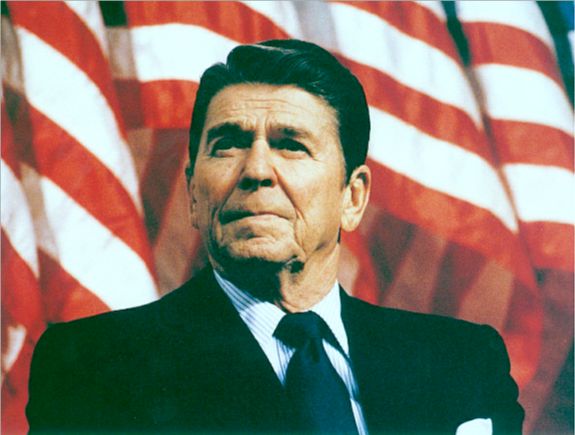
Ronald Reagan

Pravda.Ru interviewed Paul Craig Roberts, an American economist, who served as an Assistant Secretary of the Treasury in the Reagan Administration and became a co-founder of Reaganomics – the economic policies promoted by the U.S. President Ronald Reagan during the 1980s. We asked Mr. Roberts to share his views about the current state of affairs inside and outside the United States. 

Pravda.Ru: Mr. Roberts, you are known in Russia as the creator of Reaganomics, which helped the country overcome stagflation. What were the key aspects of that policy and how would you estimate its results today? Do you think your faith in free market has shattered?

Paul Craig Roberts: Free market means the freedom of price to adjust to supply and demand. It does not mean the absence of regulation of human behavior. 

Reaganomics was a political word for supply-side economics, a new development in economic theory. In the post World War 2 western world, governments used Keynesian demand management economic policy to control inflation and to boost employment. John Maynard Keynes was the British economist who explained the Great Depression in the West as a consequence of insufficient aggregate demand to maintain full employment and stable prices.

Keynesian demand management relied on government budget deficits and easy monetary policy (money creation) to stimulate demand for goods and services.  To control inflation from too much demand for goods and services, high tax rates were used to reduce disposable income. 

The problem that developed is that the high tax rates on income made leisure inexpensive in terms of lost current earnings from not working, and made current consumption inexpensive in terms of lost future income from not saving and investing.  In other words, high tax rates on income made leisure and current consumption cheap in terms of foregone present and future income. Thus, high tax rates on income depressed the supply of labor and capital.

Using the UK’s 98% tax rate on investment income (pre-Thatcher), the Nobel economist Milton Friedman illustrated the problem with this example. You are an Englishman with $100,000. Shall you invest it for future income, or shall you purchase a Rolls Royce and enjoy life?  The true price of the Rolls Royce (or Bentley, or Ferrari or Maserati) is not the purchase price.  The price of the exotic car is the foregone future income from not investing the $100,000. 

Suppose you could earn 10% on the $100,000.  That would be $10,000 per year as the cost of purchasing the luxury car. But after tax (98%) the car would only cost $200 per year, a very cheap price.

The same example works for labor and salary income. Because of the high marginal tax rates, many professionals such as medical doctors closed their practices on Fridays and went to the golf course.

By changing the policy mix, that is by tightening monetary policy and reducing marginal tax rates (the tax rate on increases in income), the supply-side economic policy of the Reagan administration caused aggregate supply to increase. Thus output expanded relative to demand, and inflation declined.

This supply-side policy was instrumental as Reagan’s first step toward ending the cold war with the Soviet Union. As long as the US economy was afflicted with stagflation–the simultaneous rise in both inflation and unemployment, the Soviet government saw capitalism failing along with communism. But when Reagan corrected the economic problem, it made the Soviet government unsure that it could withstand an arms race.

Reagan’s next step was to bring the Soviet government to the negotiating table to end the cold war. The cold war was an economic drain on both societies and always had the risk of a miscalculation that would result in nuclear war, wiping out life on earth. Gorbachev, an intelligent person aware of the risk, came to agreement with Reagan.

This was a great accomplishment for the Americans and for the Russians.  Friendship and cooperation was now possible. 

But it was not to last. Reagan’s successors took advantage of the good will between the countries that Reagan and Gorbachev had created to achieve American hegemony over the world. 

Q: During the 80s, relying on the revived economic power of the United States, Ronald Reagan managed to convince the Soviet government to end the Cold War. All those agreements, as you believe, were destroyed by Reagan’s successors. Russia shares a completely different opinion about Reagan. The Russians think of him as the man, who resumed the arms race, designed the space shield and “cut out the cancer of communism” having won (or maybe bribed) Gorbachev over to his side for cooperation. Maybe one shouldn’t strike him out of the list of the authors of today’s American “idiotism?”

A: Reagan was not a member of the Republican Establishment. He defeated the Establishment’s candidate, George H. W. Bush (father of George W. Bush) for the Republican presidential nomination.  By appealing to Democratic as well as Republican voters, Reagan had a great electoral victory. Reagan had two goals: one was to end stagflation, the other was to end the cold war. Hewas not much interested in anything else. The “arms race” and the “anti-ballistic missile defense–star wars” were never real. They were threats used to bring Gorbachev to negotiate the end of the cold war. Unlike the present Republican Party, Reagan wanted peace, not war.

I know this because when I succeeded in establishing the new economic policy that cured stagflation, President Reagan appointed me to a super-secret presidential committee that had subpoena power over the CIA. 

The CIA opposed Reagan’s effort to end the cold war, as did the powerful military-security complex, about which President Dwight Eisenhower warned the American people in his last address to the American nation. The end of the cold war threatened the profits of the powerful military industries and the power of the CIA.

The CIA said that the Soviet Union would win an arms race, because the Soviet Union could control investment, unlike the US, and could allocate the entire Gross Domestic Product of the Soviet Empire to the military. Reagan’s secret committee over-ruled the CIA.

I had been a member of the US-USSR student exchange program to the Soviet Union in 1961 and had observed the situation. My first book (1971) said that the Soviet economy had failed.  When decades later I addressed the Soviet Academy of Sciences in Moscow in 1989 and 1990, members of the Economic Institute brought me copies of my book to be autographed. And I had thought that censorship existed in the Soviet Union.

The Soviet Union collapsed three years after Reagan left office. It came as a surprise to those of us who had helped Reagan to end the cold war and dispose of the nuclear war threat.

Myself and many other Reagan supporters opposed the extension of NATO to Russia’s reduced borders. What the world seems to be unaware of is that the Soviet collapse unleashed a new, highly dangerous ideology in the US known as neoconservatism.

Q: You wrote that the insane and criminal government in Washington, no matter Democratic of Republicans, no matter the outcome of the next elections, is the biggest threat to life on Earth ever. How would you describe this threat, what is it made of and who represents it in the US?

A: The threat is the neoconservative ideology, unleashed by the Soviet collapse. It is a form of Marxism in which American “democratic capitalism” instead of the proletariat has won history’s verdict–“the end of history.”  Americans are the “indispensable people,” and the US is the “indispensable nation” with the right and responsibility to establish its hegemony over the world.  Adolf Hitler called the same thing “Aryan Superiority.” Now Washington asserts the superiority. The neoconservative ideology threatens the world with nuclear war.

Q: What would you say about the Russian law, according to which political parties funded from abroad should be registered as foreign agents?

A:  The US has laws that require foreign interests to register as foreign agents. This law does not always apply to all Israeli lobby groups, such as AIPAC.

There are no political parties in the US that are funded by foreign interests. No such thing would be permitted. It would be regarded as high treason.  What is surprising is that the Russian government permitted for 20 years its political opposition to be funded by Washington and still permits that today as long as the opposition registers as an American agent. The ability of Washington to fund the Russian government’s political opposition and also protest groups, perhaps including Pussy Riot, allows Washington free access to destabilize Russia.

[ad 1]

Q: What role do so-called non-governmental organizations play in the US? The National Endowment for Democracy, for example?

A: NGOs play no role inside the US.  NGOs are Washington’s means of interfering in the internal affairs of other countries, such as funding and organizing “color revolutions” in Georgia and Ukraine. The National Endowment for Democracy is a principle funder of political opposition and protest groups in countries with governments to which Washington is opposed. Despite its original purpose, the National Endowment for Democracy has been converted into an agent for US hegemony.

Q: You wrote a lot about the fate of Pussy Riot. As you said, “they were brutally deceived and used by the Washington-financed NGOs that have infiltrated Russia.” What is the goal of such stunts?

A: It might be the case that Pussy Riot’s assaults on Russian probity are independent protests. On the other hand, the offending stunts could be provoked and funded by NGOs that are funded from Washington. Regardless, it is the result that is important. The result is that the controversy over Pussy Riot has shifted criticism from Washington’s destruction of Syria to Putin, “the suppressor of free speech.”  It is folly for Russians to ally with Washington’s propaganda against their own government. If this folly continues, Russia will end up as another American puppet state.

Q: If an act like that of Pussy Riot took place in America, in a location of national significance, how would the general public and the government react? What do common people say about the Pussy Riot scandal in Russia?

A: Ordinary Americans know nothing about Pussy Riot. Despite the propaganda from Washington, most Americans have never heard of the incident. The importance of Washington’s propaganda about Pussy Riot is to send the signal to Washington’s European puppet states that Russia is to be demonized for opposing Washington’s destruction of Syria and Iran. It was the Russian and Chinese governments that blocked Washington’s UN resolution that would have allowed an opening for NATO to bomb Syria as it did Libya. Instead of being praised for its concern with life, human rights, and international law, Russia has been damned.

The consequence in the US of an act like those performed by Pussy Riot would vary depending on state and local laws. Also, depending on where the act takes place–a Jewish synagog for instance–the US Department of Justice could declare the act a hate crime or a form of discrimination against a “preferred minority” and bring a federal case.

Q: You wrote that the US government was full of determination to have the war on three fronts: Syria, Lebanon and Iran – in the Middle East, China – in the Far East and Russia – in Europe. Does the country have financial possibilities for that?

A: The US is bankrupt. However, the US dollar remains the world reserve currency. This means that the US can print money to pay its bills. As long as the world accepts the dollar as world reserve currency, the US will be able to continue its wars.

Q: Being in the insular situation, the USA experiments on other countries hoping that war will never come to the US territory. The US spends a lot more on defense of its forward-based forces in Europe and in the Middle East than it does on defense of its own borders. Maybe Russia should be more active and put the threat closer to the US borders by deploying a sea-based missile defense system near the shores of a friendly Latin American country?

A: Like President Reagan, I am in favor of peace.  I believe that Americans, Russians, Chinese, Iranians, and everyone else should spend their resources in getting along with one another, not in trying to dominate one another. I believe that Washington is forcing Russia and China to spend resources on military preparedness that the countries could better use in economic development and in protecting the environment. It is my belief that Washington’s drive for world hegemony is driving the world toward nuclear war. I have no way of knowing how the Russian and Chinese governments might respond to Washington’s drive for hegemony.

Q: What stops Russia and China from uniting to oppose the USA?

A: This question is outside my knowledge. Perhaps suspicion of one another, like the suspicion between Sunni and Shia that allows the US to dominate the Middle East.

Q: You said that the US is a police state, which was set up in the name of mystification of the “war on terror.” Can you give a clear explanation as to what the American Big Brother is doing?

A: The Bush/Cheney regime rammed through the PATRIOT Act, which assaulted the US Constitution and took away US civil liberties. The Bush regime established that the president did not have to obey either statutory US law, such as the Foreign Intelligence Surveillance Act which requires a court warrant for spying on US citizens. President Bush violated the law, a felony, and was not held accountable.

Bush asserted and established by assertion, the power to negate Constitutional protections, such as habeas corpus, and confined US citizens to indefinite detainment (life in prison) without any evidence or court proceedings. Nothing was done about this violation of constitutional order. President Obama has declared that he has the power to execute US citizens on suspicion alone without evidence or due process of law. These are the most extreme police state measures of modern times.

The Department of Homeland Security has announced that it has shifted its focus from Muslim terrorism to “domestic extremists,” an undefined term. Recently the Department of Homeland Security has purchased more than one billion rounds of deadly ammunition, such as hollow point bullets, enough to shoot the entire US population several times. There are also reports that detainment camps have been constructed, allegedly for such events as hurricane evacuation. Congress and the media are not asking questions about these developments.

Q:  President Barack Obama said that one of the principles to resume peace talks between Israel and Palestine was about the retrieval of 1967 borders. How could the Jewish lobby let him say that?

A: President Obama has been declared by Israeli prime minister Netanyahu and the Israel Lobby to be a lackluster friend of Israel, because Obama has not yet launched a military attack on Iran. Obama, perhaps believing himself to be the president of the world’s only superpower, and not a puppet of the Israeli prime minister, has taken offense at the public bullying to which he has been subjected by the far right-wing Israeli government. Obama’s statement referring to the 1967 borders was Obama’s way of letting the Israeli government know that it was going too far and pushing too hard.

Q: You see the basic problems of the US economy in moving production to China. If you were invited to serve as an advisor to the president, what would be your plan for taking America out of the crisis?

A: I will never again be permitted to serve as an advisor to the president of the US. Since the Clinton presidency, the only permitted advisors are those who lie for the government.  I will not do that. 

I an unsure that America can be taken out of economic crisis. Much of the most productive part of the US economy has been moved offshore in order to increase corporate profits, the performance-based bonuses for executive compensation and capital gains to equity owners. The US has lost critical supply chains, industrial infrastructure, and the knowledge of skilled workers. 

Theoretically, the US could bring its corporations back to America by taxing their profits according to the geographical location in which value is added to their product. If value is added abroad, in China or India, for example, the tax rate would be high. If value was added domestically in the US, the tax rate would be low. 

The US could also resort to the protective tariffs that were responsible for its rise as an economic power.

These changes would be difficult to enact as the changes are contrary to the material interests of the one percent. 

The US today is ruled by an oligarchy of private interests. The US government is not very independent of the powerful interest groups that fund political campaigns. The US ceased being a democracy during the Clinton administration.

Reflections on the Richard Millet case

Bernard-Henri Lévy flanked by his wife, Arielle Dombasle (in pink), tennis players André Agassi and Steffi Graf

by Bernard-Henri Lévy, French philosopher and writer

Strangely enough, what I find most shocking in this Richard Millet affair (this editor at Editions Gallimard who caused a scandal in Paris by publishing “Eloge litteraire de Anders Breivik”) is not the white trash racism he recycles, from one book to the next, in his story of the RER, where one feels surrounded by hordes of dark-skinned people.

 It is not the tone, no doubt intended to be very Montherlant, of his reflections about “the” women (in one of the two other opuscules he published at the same time, one learns, among other elegant observations, that, once past 40, their skin has “the consistency of a ripe pear”).

 It is not even the enormous provocation of this long-time editor who, envious of others’ success, as sometimes happens, has apparently just decided not, as Gide said, to “take himself for a great writer, as one may consider oneself a great hairdresser” (in the past 30 years, he has published a great number of texts, which met with general indifference), but to pull out all the stops, for his own benefit (a pathetic parody of ad man Jacques Séguela’s quip, addressed to Sarkozy at the time of his election, “If you don’t have a Rolex at 50, your life has been a failure”). In an earlier book, he had ventured to support Bin Laden (“there comes a moment when one can only prove Bin Laden right, provided he is not an American or Islamist fiction” — L’opprobre, published by Gallimard) — but no one was interested. Last May, he played the in-defense-of-Bachar-al-Assad card (a charge, meant to be “disturbing,” against the media in utter “rapture” before the “insurgents” of Homs and Aleppo — Printemps syrien, published by a smaller publishing house) — that also fell flat. But now, he’s outdone himself, shifted into high speed by actually offering “praise” for Anders Breivik, the serial killer of Utoya who is, he writes, “what Norway deserved” and whose act seems to him characterized by «absolute beauty» and “literary grandeur.” Miracle! It works! The little bureaucrat of letters finally has his grand affair! This Warholian “15 minutes of fame” which, he explains, his hero, “a writer by default,” didn’t really want but that he, Millet, madly desired, and he’s got it!

No. The real surprise, for me, has been the reaction of an entire part of the French literary milieu at the publication of these three libels fairly dripping with small-minded thoughts and spite.

 There was the Pavlovian reflex of those who, as the first critics became aware of the existence of a book in which a psychopathic killer was thus presented as a “Malthusian hero,” disciple of Baudrillard, started bandying about terms like thought police, organized censure, the triumph of the politically correct.

 As always, I mean as in most of the great debates of today, there appeared this strange, new technique which consists of, above all, not taking sides, the better to dismiss the protagonists, back to back — insulters and insulted, same fight; racists and anti-racists, the same lamentable antics; Breivik’s victims and victims, “like Breivik,” of the Norwegian social-democratic horror, a point for all sides, be on your way, there’s nothing to see.

[ad 1]

No less Pavlovian was the convening of the great Elders who were supposed to remind the stupefied reader than one can be a great-writer-and-a-perfect-bastard — poor Céline! Poor Aragon!

 As the affair wouldn’t go away and there remained evil minds that found an editor recommending “the song of the Kalashnikov” and the “singular jubilation the fact of killing can inspire” bizarre, naturally there appeared this blogger or that one, speed versions of the editorialist, to compare this obscure actor of the literary scene, seeking a role and disgrace, with Marguerite Duras going off the deep end during a human interest story that made headlines in the 1980s, the Villemin affair (or the essayist Philippe Muray, no longer here to defend himself, whose thousands of pages of Exorcismes spirituels and Après l’Histoire, one should recall, quite apart from the fact that they never gave way to abjectness, were considerably more weighty than these three mediocre brochures).

 They pulled the Literature and Evil number on us.

To “contextualise” the affair, they dared to cite Artaud, Sade or Bataille — which seems to me scarcely less serious than not having leapt out of one’s chair at the description of the “ethnic cloaca” that France, according to Millet, has become.

 This entire story would be laughable, there would be something pathetic in this desire to be a pariah that one senses on each page of these three books were the author’s destiny not linked, precisely, to this House.

It is difficult to understand how the successors of Sartre and Malraux could continue to be published by a man for whom “what one calls literature” is no longer anything but “the hedonistic face of a nihilism of which anti-racism is the terrorist branch” and who perceives most writers who are his contemporaries as “henchmen” as well as “sycophants.”

This is an edited, synoptic version of a piece by Bernard-Henri Lévy previously published by Huffington Post.

Read also:

French author Richard Millet forced to resign from publishing committee over Breivik pamphlet

Anders Breivik the white Mandela

Apartheid better than nightmare of ANC rule

by S.J. Oosthuizen, Helderkruin

IT WAS expected there would be a rash of anti-apartheid, anti-Dan Roodt replies to his letter (Apartheid evil is hype, Business Day Letters, September 10).

Saying a few positive words about apartheid is tantamount to eschewing Mom and apple pie: the politically correct righteously rush to judgment against anyone who dares to compare what we had with what we have now.

Clearly there were defects and aberrations in a policy that was designed to separate the races. And at a time and in a world where many were unshackling themselves from the yoke of western imperialism, apartheid was an affront.

But then what was to be done? The situation was unique. Taking the United Party’s policy to its end-goal would have simply brought the African National Congress or its surrogates to power 40 years earlier.

The “qualified franchise” so beloved of the political fence-sitters would have been swept away in a wave similar to that which brought Kwame Nkrumah and Julius Nyerere to power, and look what happened to their countries. They still have not recovered.

Apartheid was abhorrent to some and brought hardship. But it gave the government of the day the breathing space to create a functioning country that eventually brought benefits to the broader population.

It’s no wonder so many prominent blacks say “it was better under apartheid”. To your correspondents who say SA is now a better place, I ask which planet are they on? Under the African National Congress (ANC) the country is a travesty. There is not one facet of life that has not been corroded by this government and its hangers-on.

Former ANC member Dave Dalling said “everything the ANC touches turns to dust”. The wholesale plundering of our country continues unabated, and there is no shame, no accountability. Narcissism permeates the ANC’s DNA — nothing is its fault.

A small taxpayer base is bled to support a big welfare state.

Farmers must repair roads to get to market, our hospitals are death traps, our parks and our cities are filthy.

Millions of aliens pay our border police to enter our country at will, our education now ranks with the lowest in the world, and schoolbooks are trashed with nary an apology.

Sewage runs down our municipalities’ main streets while councilors buy yet another big car for themselves.

Over 1-million of our citizens have fled. They didn’t believe the hogwash that it’s better now. There are scores of new crimes, there are only 200 dairy farmers left, while other farmers are regularly murdered.

We are now a net food importer. We can buy a passport, a matric certificate and even a PhD from a government employee for a bribe, and we let animals starve to death on our so-called experimental farms.

Better? They have got to be joking, these people who trash Dan Roodt. A state president with 283 charges of fraud quashed by a tame prosecutor, a mining industry being destroyed before our very eyes, our nurses and doctors raped in hospitals, our so-called leaders stealing from their own children’s feeding schemes.

No, dear correspondents, it’s not better now. It’s a real nightmare and the “international community” who told us apartheid was evil does not have to live under this calamitous ANC regime.

Afrikaners are a lost cause, Dan Roodt

By English-speaking Patriot

Dear Dan Roodt, congratulations on your letter about apartheid in Business Day and here on praag.org. And did you see the knee jerk reaction from the liberals, the Afrikaans jingoes and the “others” in Business Day? Always guaranteed to defend the shambles, as you put it. I’ll never understand these people. They go against nature!

As far as Woolworths is concerned, I have boycotted them entirely. But others haven’t. The wording of their advertised “explanation” was ambiguous, so their actual racist advertisements need to be circulated so that everyone can see just what they are doing.

 MultiChoice did the same thing – gave shares only to blacks. Yet most of MultiChoice customers are white. Nobody said a word.

 I can tell you that all universities, all government departments, all municipalities and most private job advertising refer to “Employment Equity” and the other euphemisms they use to discriminate. People whine about this to the newspapers, but that’s as far as it goes. There will always be whites who will do the catering for these morons when they gorge themselves at their “conferences”, there will always be whites who will set up the sound system for their ridiculous rallies, there will always be whites who will provide the flowers for their funerals, and there will always be whites who, as you say, keep the whole show on the road. And look at the farmers! Do you think they will ever stand together and hold back the food for just one week? Not on your life!

 It is difficult to get the whites to do anything. Especially Afrikaners, they simply sit back and suffer so very politely. They don’t want to be  omstrede. They will die from ordentlikheid! They watch the department stores remove Afrikaans signs from within their stores, and they do nothing. Frankly, my feeling is they deserve what they get. Fancy buying the Beeld every day, the biggest piece of twisted and traitorous journalism I’ve ever seen in my life! And they’ve been doing this for as long as I can remember.  They are giving soup to squatters and illegals, and their churches have made them so “lam” that it is a world phenomenon!

 These third-world cretins are laughing all the way to the bank. There is no unity  within Afrikanerdom, and if there are three together, one is a traitor. You’ve only got to look at the Boeremag trial. Without the Afrikaans informers, there would never have been a Boeremag. Yet these traitors walk around without a care in the world, getting their traitorous salaries from the ANC who are destroying their own Afrikaans people!

 In Ireland they would have had their knees capped. And what do the Palestinians do with their traitors?

 No Dan Roodt, they are a lost cause. There is no spirit, no sense of an eye for an eye, and they are awash with “it’s God’s will” and other such nonsense. They are living martyrs, no different from those who were thrust into the Colosseum in ancient Rome, ready to die for their “faith” and ending up as bones in the catacombs.

 It makes me sick to my stomach!

Act now… or say goodbye to the Britain we know

By Frank Field and Nicholas Soames, Daily Mail (London), September 7, 2012

The public are fed up with mass immigration. That was the message of the public petition on the Downing Street website launched last autumn.

Only 11 of the 36,000 petitions on that site have reached the 100,000 signatures required to trigger a House of Commons debate.

This petition reached that 100,000 within a week, with the resulting debate in the House of Commons today taking place.  We will at last be giving voice to the widespread public concern.

The fact is that the public do not believe the claims of the immigration lobby and they are right. Nor do they think that enough attention has been paid to the impact of such huge numbers on the lives of ordinary people – particularly not by the BBC.

The reality is that we are experiencing by far the largest wave of immigration for nearly 1,000 years.

Certainly, there has been some limited immigration over the centuries and many immigrants and their children have made a positive contribution to this country. But mass immigration is entirely new.

This really is the last chance saloon. If the Government were to lose its nerve and fail to press on with reform we would be saying goodbye to the country we inherited.

The Office for National Statistics recently published the immigration figures back to 1964. It is very interesting to see that, until the early 1980s, more people left Britain than came here. From then until the mid 1990s net migration was never more than about 50,000 a year, and often much less. It took off in 1998 and by 2010 had risen to 250,000 a year – five times higher than in 1997.

There has never been a declared government policy. Nor any planning. And certainly no public support – quite the opposite. By 2008, about three quarters of us wanted to see immigration reduced; half the public wanted it reduced ‘by a lot’.

Their wishes are yet to be met.

The impact of these numbers is already being felt throughout the country and the big cuts to public expenditure are still to come.

Maternity units are struggling. Primary schools are running out  of places. And pressure on housing is getting worse, especially given that housing construction has plummeted.

This pressure on services is nothing when compared to what we will face if the government does  not succeed in reducing future net immigration.

For the last ten years net immigration has averaged about 200,000 a year.

If that is allowed to continue our population will climb from 62.3 million to 70 million in just 15 years time. About 2.5 million of that will be natural increase – more births than deaths. The other five million will be down to new immigrants and their children.

What that means in practice is that we will have to build the equivalent of our eight major cities outside the capital – that is to say a Birmingham plus a Leeds, a Glasgow, a Sheffield, a Bradford, a Manchester, a Liverpool and a Bristol.

All this in just 15 years! Where will the money come from when the Government is already borrowing £1 for every £4 that it spends?

This is obviously unsustainable. That is why the petition, launched by MigrationWatch UK, an independent think-tank, called for the Government to take all necessary measures to stabilise our population, below 70million.

Can they do it? They have promised to get the net immigration figure down to the tens of thousands by 2015. In later years they will need to get it down further to about 50,000 to stabilise our population.

It is proving slow going.

The latest figures, published last week, show a reduction from 252,000 in 2010 to 216,000 in 2011.

These numbers are not precise but they do show the scale of the challenge to the Government.

They will have to hold their nerve in the face of pressure from the immigration lobby.

Foreign students will be a test case. Of course they are valuable if they are genuine in the first place and don’t overstay their visas. But we are currently admitting a quarter of a million every year with no checks on their departure.

The Government must press on with face-to-face interviews before they come and creating some means of recording their departure. Otherwise the student route will remain a back door to Britain and the reputation of our colleges and universities will be dragged through the mud.

To be fair to the Government, they have taken up the proposals by the Cross Party Group on  Balanced Migration, and these are now policy.

With a new Immigration Minister, these policies must be vigorously implemented. We intend to see that they are.

The (white) elephant in the room

By Libratwin

Today I ask a question, because I do not know the answer.

I was born 10 years and 3 months before the end of Apartheid in the province we now call Limpopo. I was born one of twins to loving and caring parents.  I grew up in the midst of a changing landscape, albeit political, and saw a country grasp at the tenuous reins of a new future for all.  Unfortunately, the ANC lost the reins a while ago and the over-fed, under-qualified, over-paid and under-educated horses are running all over the show.

What should have been the start of a better, brighter and stronger South Africa has become the exact opposite. As a country, we live in fear of the dark, we are weaker than ever and even more divided. Apartheid might have visibly and purposely divided the masses, but nowadays, it is a feeling of discord and disharmony that divides us. It might not be as visible but it is much, much more obvious.

I believe I am a good person. Religion aside, I have never purposely hurt another living entity (my twin brother doesn’t count since he had it coming a few times), nor have I been purposely cruel towards someone else.

Crime in SA is a very big and very real problem which we all face on a daily basis. But it does seem that the crimes against whites are extremely brutal and overtly violent. Why was a 13-year old shot, and subsequently died, along with her sister and father for a few cell phones?

Why was a young woman raped, her foot cut off and used to sodomize her and then killed with boiling oil? Why was a man beaten to death with his own garden shovel? Why was a 92-year old woman raped and beaten for a few hundred rand?

This could have happened to anyone but it happened to white people and their attackers were reportedly black.

I know crime happens everywhere and not just to white people. But as I am constantly told, I am the minority, that I am one of the evil white devils, that I am responsible for the plight of every poor, unemployed and homeless person in this country.

Still waiting to hear how the hell I’m responsible for that. Why not blame the homos (I’m pro-gay btw), hippies and hoodlums on us while you’re at it?

The ANC Youth League Facebook page is riddled with hate speech (once you decipher the horrible spelling and grammar) against the whites. Lamola, Malema and their cadres have all said publicly that they will kill whites and have urged others to do so.  We’re told we should be “grateful” we’ve been “allowed” to stay in the land of our birth, we’ve been warned that there will be mass murder when Nelson Mandela dies.

Although the last statement may or may not be true, and with that in mind, is it any wonder that we feel persecuted?

So my question is, why are there so many (note that I used many and not all) people in my home country who want to kill me or are willing to kill me? Well, I have a theory but no answers. I think it is because I am white and I am still being blamed for the past.

Racist, Racist South Africa

Jane Duncan

In this article Jane Duncan of Rhodes University argues that South Africa remains the most racist society in the world and that racism will only end once whites hand over their remaining assets to blacks.

In the wake of the Marikana massacre, information is trickling into the public domain, which suggests that the police killing of workers was more premeditated than initially thought. Workers who were released from police custody have confirmed accounts of unjustified police violence against protestors, and these accounts have challenged the dominant narrative of the police having acted purely in self-defence.

Public opinion remains sharply divided about whether the police were justified in shooting the miners, and much opinion has divided along racial lines, which is hardly surprising given the experiential and perception gaps between so many black and white people. More disturbingly, though, many responses have taken a decidedly racist turn.

Media reports of miners having engaged in rituals, ostensibly to protect themselves against police bullets, have unleashed a torrent of racist remarks on online news sites and social networks. Commentators have referred to black people as primitive, superstitious, retarded, chimpanzees, lazy unproductive parasites, “…moronic Neanderthals that would rape a baby to cure themselves of HIV,” (in the words of one commentator) undeserving of the vote and incapable of running a country.

In the wake of Marikana, social networks are seething with racial hatred. Delighted by the fact that the black government was doing something right for a change, racists rushed to the defence of the police and ignored or rubbished evidence suggesting that the police acted inappropriately.

In gloating over the miners’ deaths and what they consider to be black stupidity generally, racists seem blithely unconcerned about possibility that they may be straining black patience to the limit.

Racist utterances have become much more visible in the past few years, suggesting a fracturing of the country’s social fabric. Institutions that track social cohesion in South Africa have sounded alarm bells too. The government’s National Planning Commission (NPC) and the Institute for Justice and Reconciliation (IJR) have both warned that the South African nation is not cohering as it should.

According to the IJR, South Africans are experiencing a low sense of national belonging and continue to associate strongly with identity groups based on language, ethnicity and race. While day-to-day interactions across racial lines are gradually becoming more frequent – although mainly in the middle class – a staggeringly high 42 per cent of the people surveyed said they still never socialised across racial lines.

The South African nation is clearly very, very ill. Why are more South Africans retreating into racial laagers, quicker to recognise their apparent differences than their commonalities, and why do public displays of racism seem to be on the rise?

Racism is not just as a set of attitudes, but a systemic phenomenon. Racism serves a particular ideological function in capitalist societies – including South Africa’s – namely to justify the subjugation of blacks to extract surplus value out of them more easily. Under apartheid, the South African state used racism to portray inequality as an inevitable outcome of the inherent superiority of whites and inferiority of blacks.

What needs to be more fully understood is why racism did not simply wither away after apartheid. Appropriate anti-racist strategies cannot be developed without a correct diagnosis of the problem.

It could be argued that racism continues to exist because of the residual racist consciousness left over from the apartheid era, and that racists merely need to be educated out of their attitudes. This approach ignores the social function of racism in post-apartheid South Africa.

Racism allows whites to portray the country’s continuing inequality as natural and inevitable, that exists because of the inherent weaknesses of black people (and therefore which cannot be changed), rather than as a result of how society is organised (and which therefore can be changed).  It allows them to argue that black people remain at the bottom of society – with substandard housing, crumbling education and chronic unemployment – because they are naturally inclined towards this social status.

In the case of Marikana, racism played a particular ideological role, namely to justify violent repression of workers’ wage demands. It is in the interest of whites – who still largely remain at the apex of the economic power structure – to keep race thinking alive as a mainstay for black exploitation, and to demonise resistance to that exploitation.

Many white people simply do not appreciate that the transition to democracy did not have to unfold in the way that it did. The transition created a democracy while leaving the commanding heights of the economy still in white hands, and the government’s Broad Based Black Economic Empowerment strategy has largely failed to change this racialised economic structure.

The ANC could have insisted on widespread expropriation of property without compensation: an entirely justifiable position given the historic dispossession of black people. Instead of recognising and appreciating black magnanimity, racists are rebuffing the hand of reconciliation that has been extended to them.

The rise of racism is not driven by local factors only. Globally, racism becomes more pronounced during recessionary periods, as competition for jobs amongst workers increases, which may quickly become racialised. This is why the 2008 global recession saw a sharp rise in racist and xenophobic sentiments globally, especially against migrant workers.

How can South Africa develop a community of shared values? According to the recently deceased activist and scholar, Neville Alexander, the nation must be built on all levels of the social formation, including the cultural, the social and the economic.

The ANC’s cardinal error – informed by errors in its theory of national unity – was to assume that they could legislate the nation into being, without creating the material conditions for South Africans to experience a common identity. Deepening inequality has made national unity even more elusive, and created fertile ground for racists. The ANC’s top down, idealist approach to nation building was naïve, dangerously misguided and ultimately unsustainable.

The danger is that, in this recessionary period, organised responses to intensifying racism may not be guided by anti-racist principles: that is, principles that seek to make race thinking disappear entirely by creating the basis for a truly non-racial society, rather than the cosmetic one South Africa has now.

The rise of Julius Malema has shown that South Africa is still capable of a rightward shift towards re-racialised, even proto-fascist politics, and a racial backlash along these lines is entirely possible. If this shift happens then South Africa’s dream of a non-racial society will be shattered, and the country could descend into a spiral of strife that it may not be able to emerge from very easily.

This is why racists need to think very, very deeply before speaking; blog by blog, tweet by tweet, they are courting disaster for themselves, and for the country as a whole.

It is important to note, though, that white people are not the only racists in South Africa, and many whites are decidedly anti-racist. But whites remain the most vocal culprits because they command inordinate amounts of social, cultural and economic capital.

Racism must be fought at every turn, and racists must be named and shamed. It is tempting simply to ban public displays of racism, but this will not make racist attitudes go away. It is better for South Africa to realise just how sick it is.

Whites need to start accepting some harsh realities. Most importantly, whites need to realise that the country’s social inequalities – expressed most starkly in the massive wage gap between the Lonmin managers and workers – are unsustainable. Whites will need to start sharing their wealth, if they are to continue to have a future in this country. Admittedly, they are unlikely to do so without a fight, but as the unfolding events at Lonmin and other mines suggest, that fight has already begun.

Professor Duncan is Highway Africa Chair of Media and Information Society, School of Journalism and Media Studies at Rhodes University, Grahamstown, South Africa.

With acknowledgements to The South African Civil Society Information Service.

‘Apartheid made maths difficult for blacks’ and other myths – historian Hermann Giliomee defends Bantu Education

By Hermann Giliomee

Bantu Education: Destructive intervention or part reform?

As the crisis of education in black schools has worsened, or rather become more evident, so the tendency to “Blame Verwoerd” has intensified.

Senzo Mchunu, MEC for Education in Kwazulu-Natal, declared in late July: “One of the points we found was a problem in Maths and Science. It was Verwoerd who made the subjects difficult because he thought blacks would be a threat to him’.[1]

Addressing the Limpopo textbook crisis on Talk Radio 702, President Jacob Zuma said: “What is happening today is what Verwoerd did, where the black majority were historically not given education. We are dealing with a system that had put black people back for centuries.” According to Zuma, Verwoerd created the textbook crisis in Limpopo. [2]

Redi Tlhabi, who interviewed Zuma on Talk Radio 702, expressed outrage over the president’s remark that he did not know who was to blame for the textbook scandal, but agreed with him about Verwoerd. “The president was right in that Verwoerd worked to create a system that was intent on stifling the black child and making sure that she or he did not thrive.” She added: ‘Today, in 2012, I did not expect that the ‘liberation party [the ANC] would want to further Verwoerd’s goals: to keep the black child poor, uneducated and deprived.” [3]

President Zuma’s comments attracted a retort from Mamphela Ramphele, a product of Bantu education and a previous UCT Vice-Chancellor. Speaking at an education conference she commented on the current state of black education: “The monumental failure in South Africa was not Hendrik Verwoerd’s fault but that of the current government”. She continued: “Children under apartheid’s ‘gutter education’ were better educated than children are today.”[4]

Hendrik Verwoerd, National Party Minister of Native Affairs from 1950 to 1958 and Prime Minister from 1958 to his assassination in 1966, remains one of the most complex figures in South African history. In the contemporary debate, he is, however, little more than a demonic figure, denounced and excoriated as the architect of all our misfortunes.

Equally, while his policy of Bantu Education looms large in the popular imagination it is very poorly understood. Despite the significant work that has recently been done by historians in this area, many opinion-formers’ knowledge of this policy does not stretch much beyond a notorious single quote by Verwoerd in a 1953 speech.

Although the Bantustans and Bantu education were inextricably linked, Bantu education could, to a considerable degree, also be considered on its own merits. This article attempts to focus only on some of the aspects of this system, such as funding and the relative value of mother tongue education, and not on the more ideological aspects like the attempt to use the schools to foster distinctive ethnic identities.

Verwoerd’s Bantu education signalled the introduction of mass education in South Africa. After 1994 a new regime has removed all forms of racial privilege, but black public schools remained in a state of crisis. It is important to go back to the founding years of the system to establish to what extent the roots of the crisis could be traced back to these years.

The indictment

The indictment of the education system Hendrik Verwoerd, Minister of Native Affairs, introduced in 1954 consists of several charges. The most important are:

  • He closed down a functioning system of black education that included some good mission schools like Lovedale and Healdtown
  • His policy based on ‘the assumption of an inferior potential of African minds’ was ‘explicitly designed to prepare blacks for a subordinate place in society.’[5]
  • He discouraged the teaching of Mathematics and Science
  • The policy deliberately starved black education of funds

Closing down a functioning system?

Missionary societies dominated the provision of black and coloured education before the accession of the National Party to power in 1948. In 1939 the Minister of Education in the United Party government admitted that two-thirds of black children were without any school experience whatsoever.[6] During the war years the government improved the provision of education to blacks considerably, but by 1950 less than half of black children between the ages of 7 and 16 were attending school, and only 2.6% of black pupils were enrolled in post-primary standards. The average black child spent only four years in school.

Among the mission schools there were a few excellent high schools, but, as a historian commented, the renowned reputation of these schools ‘should not obscure the fact that most mission schools were poor primary schools with large dropout rates’ and that the ‘mission system was breaking down at all levels.’[7] With the demand for education growing rapidly, schools had to take in far more children than they could teach effectively.

The state helped by providing salaries for approved teaching posts, but overall state aid was insufficient in a modernising economy. School buildings were dilapidated and classes overcrowded. Most schools were understaffed and there was a severe shortage of competent teachers.

In the mid-1940s both the United Party government and the Natives Representative Council, the main body for articulating black opinion, sensed that the system of black education was in need of drastic overhaul. The main sticking points lay elsewhere. There was firstly the question of funding.

ZK Matthews, the leading black authority on education and a prominent member of the ANC, demanded the modernisation in terms that, implicitly at least, meant apportioning resources for equal educational opportunities. But whites baulked at the expense. RFA Hoernlé, a leading liberal, observed that while a large number of the white voters do not mind  ‘native education’ as such, it would be suicide in most constituencies for a Member of Parliament ‘to advocate, let alone vote for, the proposal that whites should be taxed in order that natives could be educated.’[8]

Another major point of conflict was over the extent to which traditional black culture had to be made part of the school syllabus. Matthews argued for the ‘preservation of the African heritage and for using the powers of the vernacular languages to effect social rejuvenation.[9] Some ANC leaders, however, rejected any ‘Bantuization of native education’. Blacks had to be educated ‘to live side by side with Europeans’.[10] Developing proficiency in English was generally regarded as much more desirable than using the Bantu languages as media for instruction.

In 1954 the government took over the coloured and black schools that the state partly funded and moved control of black and coloured education from the provinces to central government. As part of his ambitious plan to overhaul black education Verwoerd insisted that black education had to be rooted in the ‘native community’. ‘It is in the interest of the Bantu that he be educated in his own circle. He must not become a black Englishman in order to be used against the Afrikaner.’[11]

To the extent that the policy tried to foster different ethnic identities in the black community it was a dismal failure, but that was not the sole rationale of the policy.[12] In , the decades that followed, however, the issues of promoting the Bantustan policy through the education policy and mother tongue education became hopelessly confused.

Both Werner Eiselen who headed the commission that laid the groundwork for Verwoerd’s policy, and Verwoerd himself, firmly believed in mother tongue education as the best form of education  A Professor of Anthropology before he became a chief inspector of native education in the Transavaal, Eiselen had a great respect for the particularity of blacks and genuine concern for the preservation of Bantu language and culture.[13] To him there was little doubt that blacks would learn better through their own languages.

Verwoerd received his secondary school education in the medium of English in Milton Boys School in Bulawayo before enrolling at the University of Stellenbosch. He became the first student in the country to write his doctoral dissertation in Afrikaans. In 1924 he received his doctoral degree, a year before Afrikaans was proclaimed an official language. Afrikaans quickly developed from a low-status language to one that could be used in all walks of life. Afrikaans-speakers, along with English speakers, now began to experience the benefits of what language expert Neville Alexander called “mother-tongue education from cradle to university.”[14]

Bantu education, as introduced by Verwoerd in 1954, entailed the provision of eight years of mother tongue medium education (MTE). In addition well-trained teachers and competent speakers of English and Afrikaans taught these languages as second languages. In the ninth year of school, students were expected to switch to learning through the two second languages, Afrikaans and English.

The department laid down the principle that it would not use African languages as media of instruction in secondary school until the black community requested it. An education advisory council, which was established in terms of the policy, polled the boards of control of black school all over the country to asses their support for different options: It provided the following result[15]:

1 Afrikaans and English 64%
2 Only Afrikaans 5%
3 Only English 31%
4 Mother tongue 1%

The scant support for mother tongue as medium of instruction in the two highest school standards is an important indication the black population – unlike the Afrikaans one – were not convinced of the merits of mother tongue instruction.

Yet Bantu education was not out of line with what many Western scholars regard the best educational practice. Developed countries teach their children in the mother tongue because they are convinced that such a policy is pedagogically much sounder. They also believe that it improves people’s ability to make a contribution to the economy than those taught in a second or third language. Many developing countries, by contrast, tend to use the colonial language of instruction because they believe, incorrectly as it happens, that it is a short cut to a good education and job opportunities.

In South Africa the results of Bantu education between the mid-1950s and mid-1970s was positive, measured by pass rates. Kathleen Heugh, an acknowledged authority on language use in education, writes: “Between 1955 and 1975, there was a steady improvement in the achievement in literacy and numeracy… Eight years of MTE resourced with terminological development, text-book production, competent teacher education and competent teaching of English, resulted in a school-leaving pass rate of 83.7% for African students in 1976. This is the highest pass rate to date.”[16]

One of the reasons for the disastrous downturn in black education after 1976 is the introduction of a policy that limited mother tongue education to the first three years, which is generally accepted as quite inadequate. Heugh concludes: apartheid’s education policy consisted of two phases. The first part, up to 1976, worked to the educational advantage of black students; the second part, from 1976 on, to their disadvantage, with mother tongue education limited to three or four years.[17]

Based on racist assumptions?

Those who charge Verwoerd with implementing a policy with racist assumptions usually base it on a reading of his speech in parliament in 1953 when he introduced the policy. Here Verwoerd attacked the existing policy, which, in his words, showed the black man ‘the green pastures of the European but still did not allow him to graze there’. By that he meant pupils were provided with skills that employers did not want from black workers.

He criticised the existing policy as uneconomic, because money was spent on education with no clear aim. This frustrated educated blacks, who were unable to find the jobs they wanted. He said: ‘Education should have its roots entirely in the Native areas and in the Native environment and the Native community … The Bantu must be guided to serve his own community in all respects. There is no place for him in the European community above the level of certain forms of labour. Within his own community, however, all doors are open.’

This comment is quoted in virtually every article on the subject. It is often distorted by quoting only the first part – ‘There is no place for him in the European community above certain forms of labour’ – and by omitting the qualifier that Verwoerd added: ‘Within his own community, however, all doors are open.’ [18]

Today the first part of the quote sounds very harsh, but it was not out of line with existing policy. A study states: ‘The overwhelming demand among urban employers was for workers with basic literacy, who could be employed as unskilled labour. In most cases “tribal labour” was preferred.’[19] There was little demand for blacks who had completed the more advanced standards.

The previous United Party government had also seen little need for the training of large numbers of black artisans for employment in the common area. The policy emphasised the training of whites for skilled labour in the so-called “white areas”. Blacks could only expect to do skilled work in the reserves. In terms very similar to those Verwoerd would use later, the secretary of the Department of Native Affairs told the De Villiers Commission on Technical and Vocational Training in 1947 that ‘the unfolding of extensive government development schemes’ in the reserves would produce a large number of skilled posts.[20]

White supremacy was clearly incompatible with a steadily rising, better educated, urbanized black population moving up to strategic levels of the economy. Recognizing this, J.G. Strijdom, Transvaal NP leader, warned D.F Malan in 1946 that it would be impossible to maintain racial discrimination if the quality of education of the subordinate people was steadily improved. ‘Our church ministers,’ he added, ‘were far too eager to compete with other missionary societies in trying to provide the most education to blacks.’ If the state in the future tried to withhold equal rights from educated people it would lead to ‘bloody clashes and revolutions.’[21]

To put it in non-racist terms, by modernizing the provision of education to the subordinates, however incompletely, the apartheid state ran the risk of sowing the seeds of its own destruction. An opinion survey conducted in 1981 showed that black children’s rejection of segregation steadily increased with higher education levels. About half of the children with only 4 years of schooling said whites could keep their own housing areas and schools, against only a third of those in Standards 7 to 9, and only one tenth of those in Std 10 and higher. See Table 1.[22]

Table 1: Black political responses (%) according to level of education – 1981

Whites can have their own… Std 2 or below Std 3-6 Std 7-9 Std 10 and above
Laws against mixed marriages

70

65

45

18

Own housing areas

62

52

32

15

Own schools

53

34

26

13

Farmlands

47

38

29

11

Recreation facilities

41

27

13

9

Transport and Buses

36

26

18

2

Note: Only percentages accepting segregation are given

Source: Hermann Giliomee and Lawrence Schlemmer, From Apartheid to Nation-building, p.119

Read the whole article here.

Three reasons South Africa will fail

by Claudia Meades

Ex British Prime Minister Margaret Thatcher once said anybody who thought the ANC could govern country was living in cloud-cuckoo-land. Could anybody, at the time she said it, have imagined that nobody would deliver a more vivid demonstration of her claim, than the ANC itself.

In fact, delivering an account of the ANC’s failures, in as little as seventeen years, will likely take as many years – for not a day passes that South Africans are not bombarded with reams of inanities, clearly depicting the state-of-disaster South Africa has become, under the ANC’s governance.

Indeed, I herewith challenge anybody to name anything-, even if it is just one item of success that can be directly contributed to the ANC government – for if you can actually find something, you will be presented with thousands of failures in return. Where else, in the known universe, would such an entity remain in government..? Oops, I forgot.., Zimbabwe…

In passing: let me remind you, the ANC had little to do with the 2010 Soccer World Cup – it was managed from Europe; Sepp Blatter (a Swiss national) simply seized South Africa for a month. The Gautrain was conceived and designed in Europe. The SKA is simply foreign technology in a remote place and so on.

Sport in South Africa survives, not because of the ANC, but despite the ANC. Since 1994, South Africa has only performed in a sustainable manner, in water-sports, golf and rugby.

The ANC stuck its middle-finger down the throat of South African Soccer and demanded the 2010 SWC present an almost exclusively non-white team – the result was the greatest embarrassment in the history of the sport: i.e. the host being eliminated in the first round. In a bender of divine justice, similar to Jesse Owen’s achievements at the 1936 Summer Olympics in Berlin, was delivered the clearest signal conceivable to the fascism of South Africa’s current black-nationalist regime – this time, a crushing defeat at the “hands” of a near lily-white team…

Kindly do not quote, as a ‘post ‘94 ANC achievement’, anything to do with SARS and/or tax. The ANC does NOT generate tax money – it consumes it, seemingly in a glutinous destructive rage.

While there are places elsewhere in Africa nearing double percentage-point growth-rates, the South African economy is staggering along at less than 2% growth – a figure vehemently disputed by some, saying that in real terms, the South African economy is currently shrinking; e.g. all the signs point at it, citing time-on-time unemployment figures and -other key economic determinants.

The post-Polokwane-‘07 regime has managed to chase away 70% of the Foreign Direct Investment in less than two-and-a-half years (the effects now catching up with the economy). The crippling effects of near insane increases in energy costs – while the country is tiptoeing on the edge of the abyss of rolling black-outs (likely a struggling economy’s death knell), Escom is partying up a (lightning)-storm and giving its executives record salaries and increases.

In summary – the ANC’s modus operandi is simple: take from the white minority and pay the black majority to keep them in power. I am not the first one to raise this actuality, great minds like Moeletsi Mbeki, have done it before. While the aforementioned mores is justified by a near demonic entitlement – viz, as Adolf Hitler presented a “biblical promise” of a thousand-year rule, the ANC delivered the same psychotic delusions, with their “we will rule till Jesus comes” lunacy – a folly that has crippled South Africa at every level of functionality, yet in a rage of overwhelming delusion the ANC continues to celebrate “victory” (even presenting a fictional “battle” that never even happened).

A delusional rage that is slurped up by the largely illiterate- and/or unemployed masses who firmly believe it is their birthright to “take from white people” – spurred on by their spear-dangling DIC-tator, who earlier this year pledged to [verbatim quote] “aggressively” [unquote] remove white South African’s share of the economy, a share that is current less than 20% (of the economy). But as history will attest, the parasitic rage of the communist-vampire will not stop, until its host is sucked bone dry – that is before the monster turns on itself…

As one of the most obese governments on earth, the relevant ANC officials live in a TAX-(funded) HEAVEN, consisting of high-speed convoys-of-destruction featuring Europe’s finest vehicles, private airliners flying in fuel-gulping dual formations to convey a single person to the other side of the earth, seven-course-meals on demand, even an entire private town to be built in honour of the functionally Illiterate Spear-of-the-Nation and his King-Solomon-like bevy of “traditional” wives (one can only image, in horrid trepidation, what the gate-pillars will resemble) and so on.

All of this, while the vast majority of the people who keep the ANC in government, live on less than what one of them splurge out on a suit (often while on a tax-sponsored frenzy in 5th Avenue New York; also known as the land of the “evil imperialist”) – paid for by tax-payers who largely do not even vote for them. A situation so desperate, the USA (in turn) has to rush over to the country (e.g. led by Hillary Clinton’s current visit), to rescue South Africa’s education system and to deliver the critical commonsense (currently lacking) to create real jobs in South Africa, while “The Spear” is frolicking around exotic islands.

Kindly note: the USA has a GDP/capita that is nearly five times (5 x) greater than that of South Africa. Yet the despotic nationalist (ANC) regime, keeps ululating to the whims of the little yellow-and-red flagged critters (i.e. China) – with a GDP/capita that is (more than) 30% LESS than even that of South Africa. Frightening is it not..?

Very few people in South Africa understand the fundamental concept of “TAX”. Tax is not simply an unconditional payment. The only “unconditional” payments are THEFT.

Tax money is handed to a government in good faith – by-and-large, if not exclusively, to deliver collective services that cannot-, or cannot efficiently be achieved by individual entities.

A simple example is street light – one person cannot put up street lights, as everybody uses the street, so money is placed in a ‘pool’ and it is used for collective services. Anything else is THEFT – tax money belongs to the PUBLIC, notably the de facto tax-paying public (e.g. NOT those “tax-payers” who work for the state, the government, municipalities, state-owned-, or semi-state-owned companies, BEE-companies surviving on state-tenders, etc – they simply regurgitate tax-money). The tax-regime conceptually functions/exists in exactly the same manner as that of the body-corporate of a sectional title community/building.

The inconvenient reality is: should the tax-paying community of a country decide to stop paying tax, there is fundamentally nothing the government can do – largely as the ‘government’ needs the very same income to acquire its wherewithal. I.o.w. basically a self-perpetuating incongruity.

Governments will naturally NEVER admit this absolute vulnerability and will use a plethora of methods to intimidate-, indoctrinate (etc) people to continue to pay tax. Imagine a government jailing all its tax-payers – it can NEVER happen.

The South African case must be a tax-base that is one of the most unique in the world. I do not have the exact figures, but South Africa must be the only place on earth, where MORE THAN 80% of the bona fide tax-paying public (refer to the exclusions in brackets in the relevant paragraph above) do not vote for the ruling party. While the vast majority, who vote for the ruling party, contribute little (if not essentially nothing) to the tax-income of the country – viz. one relevant figure I do have: around 70% of the people who vote for the ANC are unemployed.

Shall I remind you that the most prolific country that the world has ever seen – the USA (a place that is younger than South Africa and one that has travelled further than any known being), was built on the ethos – ‘NO TAXATION WITHOUT REPRESENTATION’.

The ANC has left in its wake a plethora of ventures that could only be messed-up by the absolute hopeless – e.g. Telkom (how do you mess up an unmitigated monopoly that is near unconditionally guaranteed? Telkom is now such a desperate mess it wants to withdraw from the stock exchange), SAA (once the greatest airline in the world), Universities (once amongst the most revered academic institutions in the world – now manage little more than ILLITERATE GRADUATES, just ask the Law Society of South Africa), Hospitals (epic institutions that saw some the world’s greatest medical achievements – e.g. the first heart-transplant in history, now little more than macabre medieval slaughterhouses, crawling with Cuban hand-me-downs), etcetera, etcetera, etcetera…

THIS IS THE FIRST REASON SOUTH AFRICA WILL FAIL – the ANC takes money from hard-working people and have nothing to show for it.

It is however the latest governmental inanity, of grand proportions, that now warrants ‘special’ mention.

The South African Local Government Association (Salga) is an idiosyncratic oddity that is probably unique to South Africa. Few hard-working South Africans who make a bona fide contribution to the country’s economy have ever heard of this peculiar public entity. An entity created under Section 21 of the Companies Act (1973) – it is the Minister of Cooperative Governance and Traditional Affairs’s [GOVSA] “Court Jester” and was formed in terms of the Organised Local Government Act 52 of 1997.

Salga represents local government on numerous intergovernmental forums such as the President’s Coordinating Council, Minister and MEC’s forum, the Budget Forum, the National Council of Provinces and the Financial and Fiscal Commission. However, nobody really understands why Salga is necessary or what its value-adding mandate is – this however has not stopped its tax-leeching existence (either directly from a national government grant or indirectly from e.g. membership fees). It appears to be, in some ways, the ANC government’s own union – as bizarre as it sounds (not that peculiarities has ever stopped the ANC regime).

It is worth noting here that the Department of GOVSA is comfortably one of the greatest disasters in an already disastrous ANC government. It presides over rampant non-compliance, corruption of endemic proportions, collapsing- to non-existent infrastructure (including structures that collapsed almost upon completion, by virtue of entities like SGL Engineering, On-Point Engineers and such – distinguished by a certain “director” who took twenty-one years to fail Woodwork), absenteeism so vast it is impossible to quantify, incompetence beyond even the worst nightmare – often openly admitted with flagrant “so what” entitlement, fiscal losses of epic proportions, etc, etc, etc.

E.g. GOVSA (in March 2011) regarded 8 out of 32 unqualified audits as “…an improvement…” – i.e. one quarter – where else in the world would a three-quarters failure-rate be regarded as good enough..? Except naturally a place starting with “Z”…

GOVSA’s rampant disconnection from reality is eagerly led by another one of the ANC regime’s big spender – Richard Baloyi. He who spent R360 000 on car rentals, on 21 occasions, for “unavoidable” reasons – obviously a good enough reason, certainly at more than R17000 a shot. Following his impeccable example, his deputy Ayanda Dlodlo did the same on 18 occasions, at a cost of R205 000 – at more than R11000 a shot, she made sure she did not threaten her bosses score per ‘shot’…

Another (rare in this case) oddity in the ANC is auditor-general Terence Nombembe. Recently Nombembe delivered a report to parliament that estimated 70% of municipal officials were not qualified to perform their duties.

At this point, it worth pointing at Act no 12 of 2004 – The Prevention and Combating of Corrupt Actions – believe it or not, assented to, by a president of an ANC government, in April 2004 (not on the 1st, smart-****).

In CHAPTER 2 – named “OFFENCES IN RESPECT OF CORRUPT ACTIVITIES”, Part 2: “Offences in respect of corrupt activities relating to specific persons”, under the heading “Offences in respect of corrupt activities relating to public officers”, it states,
[verbatim – from line no 50] – “4. (1) Any – (a) public officer, who directly or indirectly, accepts or agrees or offers to accept any gratification from any other person, whether for the benefit of himself or herself or for the benefit of ANOTHER PERSON…”

Then,
“…in order to act, personally or by influencing another person so to act, in a manner…
(ii) that amounts to
(aa) the abuse of a position of authority;
(bb) a breach of trust; or
(cc) the violation of … a set of rules;
(iii) designed to achieve an unjustified result…
is guilty of the offence of corrupt activities relating to public officers.
(2) … “to act” in subsection (1) Includes –
(b) performing or not adequately performing any official functions…”

Not only is 70% incompetence an overwhelmingly unbelievable figure – in any ‘book’, anywhere on earth (bar perhaps Z…) – appointing- and/or allowing such a person to continue- and/or aiding- and/or assisting such a person, is by definition a corrupt activity (i.o.w. corruption).
Act no 12, 2004, gives the prosecuting authority the power to imprison somebody for life (take note Woodwork students – start practicing your ‘Boeremag’ anthems, you could be sharing a close proximity with some unlikely friends – till Jesus comes…).

Following Terence Nombembe revelation, the cabinet instructed COVSA’s Minister (Richard Baloyi) to ensure municipalities employ suitably qualified financial officers – a somewhat impotent response to what is potentially a very serious matter, nevertheless..,

Into the fray steps Salga’s CEO Xolile George, to quickly expose cabinet’s ‘response’ for what it really is – viz ineffectual lip-service.

Nobody (that matters) really knows who Xolile George is, but he quickly poured ice cold water (midst country-wide snowfalls for the first time in recorded history) on the instruction from cabinet, by saying that the inefficient workers were contractual obligations for the municipalities and cannot be let go. He then proceeded to say: “…Our appetite is not to fire people but to capacitate them…”

STAGGERING..!

I trust Xolile George can grasp that he is potentially an accessory to corruption. But I guess he does not grasp this verity and nor do the ANC. In fact the entire ANC regime is not only impervious to the extent- and de facto meaning of corruption, it is wholly oblivious. The examples are overwhelming – I have merely elaborated on one ‘interesting’ example.

THE SECOND REASON SOUTH AFRICA WILL FAIL under the ANC – it has “incapacitated” itself to address incompetence, corruption and alike.

The thrid reason is courtesy of one the greatest literary minds of our time – Ilana Mercer (a citizen of the USA, notably so, as the ANC’s destruction of South Africa is increasingly being recognised on the global stage).

As a classical liberal writer she has written one of the greatest- and probably most complete dissertations on post-Apartheid South Africa – in many ways, of Apartheid South Africa. Her book “Into the Cannibal’s Pot: Lessons For America From Post-Apartheid South Africa.” is a script that is a minimum requirement for ANYBODY who values a future in South Africa (and for that matter the USA) – notably for their children- and theirs. Read it – I urge you.

She has written a number of essays on South Africa (particularly post-1994 South Africa), but for the purposes here, I will refer to her article titled “Clueless in South Africa with Mrs. Obama”

It touches on the ANC’s obligatory sophism – viz “BLAME WHITES FOR EVERYTHING”, from sun-spots to old-age homes…

Ilana cites Jim Peron, a US expat, as she notes,  “…idealism drove him to decamp to post-apartheid South Africa…”. Peron says: “Every time something goes wrong (and that happens constantly), the same litany of excuses is recited. ‘We inherited this problem from the corrupt apartheid regime.’…”

She follows by stating “…There’s one pesky problem with this particular blame-game: South Africa’s flourishing criminal class consists mainly of youngsters who’ve come of age and blossomed under black rule…”

Then she states another inconvenient verity: “…minority-ruled South Africa, with all its problems, offered Africans more than any other country on the Dark Continent…”.

As such she further notes another uncomfortable fact “…While black Africa and East Europe circled the drain due to communism, South Africa was experiencing an economic explosion, courtesy of the National Party’s relatively conservative economics. An oasis in the African desert, South Africa’s… …economy grew at an annual rate of six percent during the 1960s…”.

Presenting more substance not fitting well into the ANC’s “sheep-suit” that blames everything on WHITE APARTHEID, Ilana notes:
“…In his submission to the Truth and Reconciliation Commission, F. W. de Klerk, who received a Nobel Peace prize for surrendering South Africa to the ANC, corrected the record.

Apartheid was not only about white privilege but also about development and redistribution of income from whites to blacks. The economy had grown by an average of 3.5 percent per year under apartheid, the black school population grew by 250 percent in the first twenty-five years of apartheid, and the black share of total personal income had nearly doubled from twenty percent in the mid-1970s to thirty seven percent in 1995, while that of whites declined from seventy one to forty nine percent.” As bad as the Bantu Education system was, it vastly improved black literacy.

Twelve years into the Nationalist government’s rule, the rate of literacy among the Bantu of South Africa was already higher than that of any other state in Africa, or that of India…”

It is worth noting that the gains in the literacy of black South Africans during almost five decades of apartheid, has been all but eradicated by the ANC regime, in as little as one-and-a-half decades.

Then she gives a brief overview of the vast improvements in health-care and life-expectancy of black South Africans under apartheid. A day will come when history will show that the apartheid government took better care of black people than the regime elected under (so-called) “democracy”.
She concludes by saying “…By staving off crime and communism, the apartheid regime, a vast repressive apparatus though it was, saved black South Africans from an even worse moral and material fate…”

THIS IS THE THIRD REASON SOUTH WILL FAIL under the ANC regime – viz the convenient proxy apartheid offers for reality…

Verwoerd pumped millions into black education

by H.S. Brink

Firstly, blaming HF Verwoerd for the textbook mess is nonsensical at best and for your newspaper to portray Verwoerd as the “architect of apartheid” is a false representation.

Those who perpetuate this lie may well be referred to a book by David Walsh called The Roots of Segregation – Native Policy in Natal (1845-1910), published in 1971.

The foreword says: “(Lord) Shepstone’s policy was the precursor of the later policy of segregation, which in turn has been called apartheid, separate development and separate freedoms.”

Walsh in his conclusion writes: “It is a myth that apartheid is the exclusive product of Afrikaner nationalism: it’s antecedents are to be found in Natal.”

When the National Party came to power in 1948 it inherited a disorderly schooling system for blacks that was run mainly by Anglican and Catholic churches.

The 1951 Eiselen report on black education revealed shocking facts. Admission to school was subject to baptism. Parental participation was non-existent. Most black children had never been to school. Illiteracy was rife.

No indigenous language was tolerated and  English was the sole medium of instruction for education.

Part of subsidised teachers’ salaries landed in church coffers. Some priests and nuns got a pittance.

In Taung, as was the practice elsewhere, the community built the church which doubled up as one massive classroom for 500 scholars.

In and around Mafeking 25 000 scholars had 56 classrooms between them.

Verwoerd changed all this with an orderly system, pumping millions of pounds into black education, plus the £2 million representing the total tax contribution by blacks.

Additionally, a special levy was placed on urban property taxes to build schools and alleviate the backlog in black education, and so on and so forth.

Yet President Jacob Zuma, who believed in liberation before education, accuses Verwoerd of putting black people “back for centuries”.

One cannot but wonder who put the rest of Africa back for centuries?

As for the pretext of Afrikaans being the cause of the 1976 school uprising, think again.

The two schools that were in the forefront of the Soweto riots did not receive tutoring in Afrikaans in any subject.

Also, an  advisory board’s polling of all black schools’ governing bodies revealed that 64% approved of Afrikaans and English as mediums of education.

Zuma’s promotion of the “second revolution”, where scholars such as Hector Pieterson will undoubtedly be used again as pawns in a communist game, will indeed put South Africa back for centuries.