Former Polish president talks Anschluss

Lech Walesa
Lech Walesa

The Nobel Peace Prize winner and former Polish president, whose Solidarity trade union played a key role in bringing an end to the Cold War, said the world had changed and needed new ways of organising itself.

“We need to expand economic and defence co-operation and other structures to create one state from Poland and Germany in Europe,” he said.

Speaking to Russia’s Itar-Tass news agency, Lech Walesa, 69, said national boundaries were not as relevant as they once were.

“We have travelled so far in our technical advancements that we are no longer located in our own countries,” he said, adding that this required changes to geographical structures, the economy and democracy.

Although few Poles have forgotten Germany’s invasion and brutal occupation of Poland in 1939, history should not be an obstacle to unity, Walesa said. “After the war, Germany fully confessed to all its dirty tricks,” he said. “It’s necessary to is draw a line under the past, even if people did something evil. Until we do, wounds won’t heal.”

Walesa’s calls for Polish-German unity exceed his previous support for closer European solidarity.

“At the moment different ways of doing things and different systems hold us back but gradually everything will align and states will become like Lego blocks,” he said in the Itar-Tass interview.

He suggested that current international systems were now defunct, saying the United Nations and NATO were the “ideas of an old era” and “badly organised”.

The comments on German-Polish unification will further enhance the former Polish president’s reputation for making frank and sometimes unorthodox remarks.

While Walesa said Poland could bury the hatchet with Germany, the situation was different with Russia, the other great historical foe of the Poles. He urged Moscow to follow the German example and atone for its sins committed against Poland in order to lay the foundations of a good relationship.

“We are too slow in solving our problems and reaching an understanding,” he said. “We must aim to make our relations as smooth as possible, since we are fated to be neighbours.” – The Telegraph

Russia believes chemical attack was provocation

Vladimir Putin
Vladimir Putin

Russia has every reason to believe that the use of chemical weapons in a Damascus suburb in August was an adroit and smart provocation, President Vladimir Putin has said.

“We have every grounds to believe that it was a provocation. Of course, it was adroit and smart, but, at the same time, primitive in terms of technical performance. They took an old Soviet-made missile, which was taken out of service in the Syrian army long ago. It was most important to have ‘made in the USSR’ written [on the missile],” Putin said at the Valday discussion forum on Thursday.

The Russian president pointed out that the August 21st attack in Damascus was not the first time chemical weapons had been used in Syria.

“But why haven’t other cases been investigated?” he asked.

The chemical weapon attack must be thoroughly investigated and those behind it must be identified, Putin told the Valday Club meeting in Russia’s Novgorod Region.

“No matter how difficult it might be, but if in the end we manage to answer the question… as to who committed that crime – and that was certainly a crime – the next step will follow. Then, together with our colleagues from the United Nations Security Council we will have to define the level of responsibility of those who committed the crime,” Putin said.

He stressed that measures like military strikes cannot solve every international issue, while they should also be brought to the UNSC rather than discussed in the US Congress.

“This would be a strike on the world order, not Syria,” the Russian leader said.

Earlier this month, Russia and the United States reached a deal on a framework that will see the destruction or removal of Syria’s chemical weapons by mid- 2014. That came after Moscow suggested that Damascus should put its chemical weapons arsenal under international control and the Syrian government accepted the proposal. The republic also agreed to join the Chemical Weapons Convention which bans the production and the use of such arms.

Speaking at the Valday gathering, Putin noted that Syria not only agreed to sign the international convention, but announced it already considers itself a party to the treaty.

“These are practical steps that the Syrian government has already made,” Putin said.

The United Nations confirmed last Saturday that it had received all the necessary documents from Syria for joining the chemical weapons convention and that Syria would become a member from October 14.

Russia’s proposal for Syria was voiced as the Congress was readying itself to vote on President Barack Obama’s plan to launch a limited military strike against Syria in response to the chemical weapons attack in August. The US blamed the country’s government for the incident. The decision was put on hold after a suggestion from Moscow, which was discussed in detail by Secretary of State John Kerry and Foreign Minister Sergey Lavrov in Geneva.

Putin said that any attempt to interfere in the conflict by supporting one of the sides would bring imbalance. When the crisis began over two years ago, it immediately started getting support from abroad, he said.

“How did terrorist groups like Al-Nusra appear there? Even the State Department admits that Al-Qaeda’s branches are fighting [in Syria],” Putin observed.

The Russian leader is frustrated that Western states have no idea what they would do if, after their interference in the ongoing war, extremists came to power in Syria.

“Would they drive them away with a newspaper?” Putin said.  – RT

Russia reopens Arctic military base

arctic2Russia is reopening a Soviet-era military base in the Arctic, President Vladimir Putin said on Monday, part of a drive to make the northern coast a global shipping route and secure the region’s vast energy resources.

Two decades after abandoning it, Russia has sent 10 warships behind four nuclear-powered ice breakers to the base on the Novosibirsk Islands, a show of force as it resumes a permanent naval presence in the thawing region.

The flotilla was led by Russia’s flagship nuclear-powered cruiser, Peter the Great, along the Northern Sea Route, which connects Europe to Asia across Russian waters from the Kara Gate to the Bering Strait.

“Our troops left there in 1993, and yet it is a very important location in the Arctic Ocean, a new stage in the development of the Northern Sea Route,” Putin told a meeting of Russian defense officials.

“We will not only reopen the military base but restore the airfield to working order and make it possible for the emergency services, hydrologists and climate specialists to work together to ensure the security and effective work of the Northern Sea Route.”

Russia has staked future growth on mining the Arctic’s vast energy resources, and reviving the Soviet-era shipping route is an integral part of that plan.

Warmer summers have thawed more of the frozen waterways, rendering it navigable for longer periods and raising hopes the maritime passage could become a shorter alternative to southern routes.

But industry analysts and mariners say poor infrastructure, ice floes, narrow straits, shallow waters, and stormy winters remain as obstacles to safe and profitable shipping. – Reuters

Off-teleprompter blunder buys Syria time

A very big pumpkin
A very big pumpkin with John Kerry

In what looks like blunder, Secretary of State John Kerry might have accidentally given Russian President Vladmir Putin the opportunity to muddy the international diplomatic waters and buy his friends in Syria some time.

During a press briefing on Monday, Kerry said that Assad could avoid American air strikes by giving up all his chemical weapons within a week. Within hours, the State Department was forced to walk Kerry’s new red line back with the claim that he was making a “rhetorical argument about the impossibility and unlikelihood of Assad turning over chemical weapons he has denied he used.”

It seems, then, reasonable to conclude that Kerry spoke out of turn. Kerry was not authorized to offer Syria an “out” or a new ultimatum. But Kerry’s hypothetical hyperbole appears to have already backfired.

In an obvious desire to make Kerry pay for his flub and throw a wrench in Obama’s determination to go to war with Syria, Putin has seized upon Kerry’s hypothetical and called on Syria to accept Kerry’s offer and turn over all of its chemical weapons. No one believes Assad would ever willingly give up his chemical weapons, but should he agree to an offer the Obama administration did not mean to make, it could stall American action for weeks and even months.

Syria is already warming to the idea.

This complication could be a major blow to all of the Obama administration’s prepared plans to punish Assad for using the weapons and to change the balance of power in the ongoing Syrian civil war.  Public opposition to Obama’s war is already surging. Weeks or months from now, after the torturous international diplomatic process that no one believes would end with Assad giving up the chemical weapons that keep him in power winds down, it is doubtful Congress or the American public would be ready to stomach a renewed push for war.

But now that Putin has suggested Syria say “yes” to an offer Kerry was sure no one would accept, the Associated Press is reporting that the State Department will take a “hard look” at Russia’s proposal.

Just like Obama’s unscripted “red line” comment that started this debacle, it looks as though another off-teleprompter administration blunder has shoved America’s foreign policy into a corner. – breitbart.com

Russia gives UN 100-page report showing Syrian rebels used sarin

russianreportRussia says a deadly March sarin attack in an Aleppo suburb was carried out by Syrian rebels, not forces loyal to President Bashar Assad, and it has delivered a 100-page report laying out its evidence to the United Nations.

A statement posted on the Russian Foreign Ministry website late Wednesday said the report included detailed scientific analysis of samples that Russian technicians collected at the site of the alleged attack, Khan al Asal in northern Syria. The attack killed 26 people.

Probes from Khan al-Assal show chemicals used in the March 19 attack did not belong to standard Syrian army ammunition, and that the shell carrying the substance was similar to those made by a rebel fighter group, the Russian Foreign Ministry stated.

A statement released by the ministry on Wednesday particularly drew attention to the “massive stove-piping of various information aimed at placing the responsibility for the alleged chemical weapons use in Syria on Damascus, even though the results of the UN investigation have not yet been revealed.”

By such means “the way is being paved for military action” against Damascus, the ministry pointed out.

But the samples taken at the site of the March 19 attack and analyzed by Russian experts indicate that a projectile carrying the deadly nerve agent sarin was most likely fired at Khan al-Assal by the rebels, the ministry statement suggests, outlining the 100-page report handed over to the UN by Russia.

The key points of the report have been given as follows:

• the shell used in the incident “does not belong to the standard ammunition of the Syrian army and was crudely according to type and parameters of the rocket-propelled unguided missiles manufactured in the north of Syria by the so-called Bashair al-Nasr brigade”;

• RDX, which is also known as hexogen or cyclonite, was used as the bursting charge for the shell, and it is “not used in standard chemical munitions”;

• soil and shell samples contain “the non-industrially synthesized nerve agent sarin and diisopropylfluorophosphate,” which was “used by Western states for producing chemical weapons during World War II.”

The findings of the report are “extremely specific,” as they mostly consist of scientific and technical data from probes’ analysis, the ministry stressed, adding that this data can “substantially aid” the UN investigation of the incident.

While focusing on the Khan al-Assal attack on March 19, in which at least 26 civilians and Syrian army soldiers were killed, and 86 more were injured, the Russian Foreign Ministry also criticized the “flawed selective approach” of certain states in reporting the recent incidents of alleged chemical weapons use in August.

The hype around the alleged attack on the eastern Damascus suburb of Ghouta showed “apparent attempts to cast a veil over the incidents of gas poisoning of Syrian army soldiers on August 22, 24 and 25,” the ministry said, adding that all the respective evidence was handed to the UN by Syria.

The condition of the soldiers who, according to Damascus, suffered poisoning after discovering tanks with traces of sarin, has been examined and documented by the UN inspectors, the ministry pointed out, adding that “any objective investigation of the August 21 incident in eastern Ghouta is impossible without the consideration of all these facts.”

UN Secretary General Ban Ki-moon on Tuesday said the UN investigators are set to return to Syria to investigate several other cases of alleged chemical weapons use, including the March 19 incident in Khan al-Assal.

White House spokeswoman Caitlin Hayden said U.S. officials were unmoved by the Russian report and held the Assad government responsible for both the Khan al Asal attack in March and the Aug. 21 attack outside Damascus.

“We have studied the Russian report but have found no reason to change our assessment,” she said.

Richard Guthrie, formerly project leader of the Chemical and Biological Warfare Project of the Stockholm International Peace Research Institute, said the Russian statement on the makeup of the sarin found at Khan al Asal, which the Russians indicated was not military grade, might reflect only that “there are a lot of different ways to make sarin.”

He added: “The messy mix described by the Russians might also be the result of an old sarin stock being used. Sarin degrades (the molecules break up) over time and this would explain a dirty mix.”

Jean Pascal Zanders, a senior research fellow at the European Union’s Institute for Security Studies, said the mix might not have been World War II vintage.

“The Western Allies were not aware of the nerve agents until after the occupation of Germany,” he wrote in an email. “The USA, for example, struggled with the sarin (despite having some of the German scientists) until the 1950s, when the CW program expanded considerably.” – RT/McClatchy

Read more here: http://www.mcclatchydc.com/2013/09/05/201269/russia-says-it-has-compiled-a.html#storylink=cpy

World powers fail to heal Syria rift at G20 dinner

The G20 dinner in St. Petersburg

World powers on Thursday discussed the Syria crisis over dinner at the G20 summit but failed to bridge their deeply entrenched divisions over a US push for military action against President Bashar al-Assad’s regime.

As tensions over the Syrian conflict threatened to torpedo the working schedule of the G20 summit outside Saint Petersburg, host Vladimir Putin made a last-minute announcement for participants to air their views over dinner.

But rather than seeking a genuine breakthrough, the leaders took turns over three hours to reiterate their own positions on the issue in 10-minute speeches, a diplomatic source close to the talks told AFP.

“The G20 has just now finished the dinner session at which the divisions about Syria were confirmed,” Italian Prime Minister Enrico Letta, who attended the dinner, said in a comment on his official Twitter feed.

Russia has led the opposition to US-led military action against the Syrian President Bashar al-Assad over a chemical attack on August 21 outside Damascus, which Washington says was perpetrated by the regime.

In New York, the US envoy to the United Nations accused Russia of holding the UN Security Council hostage, while British Prime Minister David Cameron said London had fresh evidence of chemical weapons use.

In a new bid for a peaceful solution for Syria, the UN announced that its special envoy Lakhdar Brahimi would attend meetings at the two-day summit to push for peace talks.

“Providing more arms to either side is not the answer. There is no military solution,” the UN quoted Ban as telling the G20 leaders at the dinner hosted by Putin.

Russia meanwhile said Syria’s Foreign Minister Walid Muallem would travel to Moscow on Monday as Obama seeks to convince US lawmakers to approve military action.

A French diplomatic source said the closed-door dinner, hosted by Putin at the luxurious imperial palace of Peterhof outside Saint Petersburg, was not meant to secure a deal.

“The objective was an exchange between the top world leaders and not to come to an agreement” on the crisis, said the source.

Following the dinner, which ended at around 1:00 am (2100 GMT), the leaders of the world’s top emerging and developed nations were treated to a rendition of a abridged version of the opera “La Traviata”.

Putin and Obama put on a show of smiles for the cameras as they shook hands just before the summit got under way on the shores of the Gulf of Finland.

— ‘War cannot solve the problem’ —

Syria’s allies remained unmoved by Obama’s push.

Iran’s supreme leader Ayatollah Ali Khamenei called allegations of an August 21 chemical weapons attack by the regime a “pretext” to launch strikes against the country, and pledged to support Damascus “until the end”.

According to US intelligence, more than 1,400 people living in rebel-held suburbs of Damascus were killed in the strike, which involved the use of sarin nerve gas.

“We have just been looking at some samples taken from Damascus in the Porton Down laboratory in Britain which further shows the use of chemical weapons in that Damascus suburb,” Cameron told BBC TV from the G20 summit.

A British source told AFP that a soil and cloth sample taken from the site of the alleged chemical attack in the Syrian capital “has tested positive for sarin”.

Beyond convincing Russia, Obama has a tough sell ahead elsewhere. China — another veto-wielding Security Council member — has already expressed its “grave concerns” over unilateral military strikes.

A political solution is the only way to end the Syria crisis, a senior Chinese official said on Thursday, warning world powers to be “highly prudent” over the issue.

“War cannot solve the problem in Syria,” Chinese delegation spokesman Qin Gang told reporters at the G20.

Pope Francis added his voice to the calls for a peaceful solution to the Syria crisis, warning against the “futile pursuit of a military solution”.

German Chancellor Angela Merkel has repeatedly ruled out her country’s participation in any US-led military strike against Assad’s regime, while the British parliament has also rejected the idea.

EU president Herman van Rompuy said while the Damascus chemical attack was “a crime against humanity” there was “no military solution to the Syrian conflict”.

While no formal bilateral sit-down meeting is planned between Obama and Putin, a White House official suggested there would likely be some kind of more informal conversation.

With Russia expected to use its UN Security Council veto to block any military action, US ambassador to the United Nations Samantha Power on Thursday accused Russia of holding the UN Security Council “hostage” over the Syria crisis.

Western military action against Syria had looked imminent last week, but Obama deferred the move and is seeking backing from Congress when it resumes sitting next week.

Since British lawmakers voted down a bid for strikes against the regime, Washington has found a firm partner in France.

Now in its third year, the popular uprising against the Assad regime has cost more than 100,000 lives. – AFP

Zuma attends G20 in St Petersburg

G20russiaPresident Jacob Zuma has arrived in St Petersburg, Russian Federation for the G20 Leaders’ Summit.

A meeting of BRICS Leaders was scheduled, giving leaders an opportunity to reflect on the progress made with regards to the implementation of the eThekwini Declaration, notably receiving progress reports in respect of the New Development Bank and the Contingent Reserve Arrangement.

President Zuma is accompanied by the Minister of Finance, Mr. Pravin Gordhan, and the Minister of International Relations and Cooperation, Ms. Maite Nkoana-Mashabane.

The primary objectives of the G20 are to facilitate policy coordination in order to achieve global economic stability and promote long-term sustainable growth.

South Africa’s participation in the G20 is guided by national interests and the primacy of the African Agenda. South Africa therefore seeks to use its participation in multilateral fora such as the G20 to promote and strengthen the interests of the African continent and those of the Southern hemisphere. In this regard, the G20 presents meaningful opportunities for advancing much-needed global governance reforms and orienting the international development agenda.

G20 countries account for 85 percent of global economic output, 80 percent of global trade, and two-thirds of the world’s population.

It is envisaged that the G20 Summit will focus on a set of measures aimed at boosting sustainable, inclusive and balanced global growth, including the creation of decent jobs. During its tenure as G20 President, Russia has focused its work on the interconnected issues on the G20 agenda around three priorities, which are intended to promote:

* Growth through quality jobs and investment;

* Growth through trust and transparency; and

* Growth through effective regulation.

Unemployment and ongoing problems and vulnerabilities in the global economy were discussed by Brics leaders on the margins of the G20 summit in Russia on Thursday, the presidency said.

“[We] believe that major economies, including the G20, could do more to boost global demand and market confidence,” said President Jacob Zuma, who chairs Brics — which consists of the Brazil, Russia, India, China, and South Africa group of emerging economies.

The leaders reiterated the concerns they expressed at the Durban Brics summit in March about the unintended negative spill-overs of the unconventional monetary policies of certain developed economies.

“[We] recalled the urgent need to implement the 2010 International Monetary Fund quota and governance reform, as well as to complete the next general quota review by January 2014, as agreed at the G20 Seoul summit in order to ensure the fund’s credibility, legitimacy, and effectiveness,” said Zuma.

Brics looked forward to the ninth World Trade Organisation ministerial conference, to be held in December.

“[We] expect that it will be a stepping stone to the successful and balanced conclusion of the Doha Development Round,” Zuma said.

The leaders also congratulated Russia on successfully hosting the G20 summit, which started on Thursday and runs until Friday. – Sapa

Arabs will pay for full Syrian invasion

Kerry and Hagel, laughing
Kerry and Hagel, enjoying the moment

Secretary of State John Kerry said at Wednesday’s hearing that Arab counties have offered to pay for the entirety of unseating President Bashar al-Assad if the United States took the lead militarily.

“With respect to Arab countries offering to bear costs and to assess, the answer is profoundly yes,” Kerry said. “They have. That offer is on the table.”

Asked by Rep. Ileana Ros-Lehtinen (R-Fla.) about how much those countries would contribute, Kerry said they have offered to pay for all of a full invasion.

“In fact, some of them have said that if the United States is prepared to go do the whole thing the way we’ve done it previously in other places, they’ll carry that cost,” Kerry said. “That’s how dedicated they are at this. That’s not in the cards, and nobody’s talking about it, but they’re talking in serious ways about getting this done.

A possible US military operation in Syria would not result in a war with Russia, Kerry said at a meeting of the foreign affairs committee of the US House of Representatives.

“Foreign Minister [Sergei] Lavrov of Russia has made it clear – pretty much to paraphrase – Russia does not intend to fight a war over Syria,” Kerry said at the meeting on Wednesday when asked whether there was a potential danger of a military conflict with Russia.

“And I’ve had personal conversations with President [Vladimir] Putin and with the foreign minister that have indicated Syria doesn’t rise to that level of potential conflict. Their ships are kind of staying out of the way. They are not threatening that. And I don’t think that would be what would happen here,” he said.

General Martin Dempsey, chairman of the US Joint Chiefs of Staff, said the assessment of Russia’s possible response would be presented to Congress at closed hearings. – Washington Post, RIA Novosti

Syrian rebels caught with sarin gas

Sergei Lavrov
Sergei Lavrov

Russia called on Turkey in June to share its findings in the case of Syrian rebels who were seized on the Turkish-Syrian border with a 2kg cylinder full of nerve gas sarin.

Russia’s top foreign official Sergei Lavrov said the Kremlin wanted to get clear on the issue of chemical weapons used in Syria, since the allegation had taken on the role of a trading card in the conflict, becoming a focus of constant provocations.

“I do not rule out that some force may want to use it [the rumour] to say that the “red line” has been crossed and a foreign intervention is needed,” the minister said.

“We are still waiting on a comprehensive report from our Turkish colleagues,” he added, citing the incident when a gang of terrorists carrying a canister with nerve gas sarin was arrested inside the Turkish territory about two weeks ago. – turkishweekly.net

BRICS agree on structure of bank

bricsbankThe BRICS bloc of large emerging economies have agreed on the capital structure for a proposed development bank that aims to reduce their reliance on Western financial institutions, the Wall Street Journal reported.

Officials from Brazil, China, India, Russia and South Africa agreed to set up the bank with a total capital of $50 billion, shared equally among them, it quoted an unnamed senior Indian government official as saying.

The decision was made at a meeting in New Delhi in the first week of August, the newspaper said. The move would likely end disagreements over the funding and management of the bank as China had earlier proposed total bank capital of $100 billion and sought a bigger share, it said.

The bank would support the financing needs in emerging and developing nations for roads, modern-day port facilities, and reliable power and rail services.

Officials have previously said the BRICS aimed to inject an initial $50 billion into the bank, but there was disagreement over whether each state should contribute $10 billion or if contributions should vary by the size of their economies.

China’s economy is about 20 times the size of South Africa’s and four times as big as Russia’s or India’s. Other key issues, such as proposals within the group to offer a stake to developed nations, needed further discussion, the Indian official said. The group is considering offering a stake of 40-45% to non-BRICS nations, the official added.

That would help the bank get a higher credit rating and enable it to raise cheaper funds from the market, the newspaper said. The bloc has yet to make a decision on where the bank would be located, the official added.

Those issues are likely to be discussed when finance ministers from the group meet on the side-lines of the annual meetings of the World Bank and International Monetary Fund in Washington in October, the official added.

The five countries represent a fifth of global GDP but have struggled to find common ground that would convert their economic weight into joint political clout. – Reuters

Syria: Another Western war crime in the making

Dr Paul Craig Roberts

by Paul Craig Roberts

Update:

The war criminals in Washington and other Western capitals are determined to maintain their lie that the Syrian government used chemical weapons. Having failed in efforts to intimidate the UN chemical inspectors in Syria, Washington has demanded that UN Secretary General Ban Ki-moon withdraw the chemical weapons inspectors before they can assess the evidence and make their report. The UN Secretary General stood up to the Washington war criminals and rejected their demand. However, as with Iraq, Washington’s decision to commit aggression against Syria is not based on any facts.

The US and UK governments have revealed none of the “conclusive evidence” they claim to have that the Syrian government used chemical weapons. Listening to their voices, observing their body language, and looking into their eyes, it is completely obvious that John Kerry and his British and German puppets are lying through their teeth. This is a far more shameful situation than the massive lies that former Secretary of State Colin Powell told the UN about Iraqi weapons of mass destruction. Colin Powell claims that he was deceived by the White House and did not know that he was lying. Kerry and the British, French, and German puppets know full well that they are lying.

The face that the West presents to the world is the brazen face of a liar.

Washington and its British and French puppet governments are poised to yet again reveal their criminality. The image of the West as War Criminal is not a propaganda image created by the West’s enemies, but the portrait that the West has painted of itself.

The UK Independent reports that over this past week-end Obama, Cameron, and Hollande agreed to launch cruise missile attacks against the Syrian government within two weeks despite the lack of any authorization from the UN and despite the absence of any evidence in behalf of Washington’s claim that the Syrian government has used chemical weapons against the Washington-backed “rebels”, largely US supported external forces, seeking to overthrow the Syrian government.

Indeed, one reason for the rush to war is to prevent the UN inspection that Washington knows would disprove its claim and possibly implicate Washington in the false flag attack by the “rebels,” who assembled a large number of children into one area to be chemically murdered with the blame pinned by Washington on the Syrian government.

Another reason for the rush to war is that Cameron, the UK prime minister, wants to get the war going before the British parliament can block him for providing cover for Obama’s war crimes the way that Tony Blair provided cover for George W. Bush, for which Blair was duly rewarded. What does Cameron care about Syrian lives when he can leave office into the waiting arms of a $50 million fortune.

The Syrian government, knowing that it is not responsible for the chemical weapons incident, has agreed for the UN to send in chemical inspectors to determine the substance used and the method of delivery. However, Washington has declared that it is “too late” for UN inspectors and that Washington accepts the self-serving claim of the al Qaeda affiliated “rebels” that the Syrian government attacked civilians with chemical weapons.  See also Syria Accepts UN Inspectors, US Spurns Call as ‘Too Late’.

In an attempt to prevent the UN chemical inspectors who arrived on the scene from doing their work, the inspectors were fired upon by snipers in “rebel” held territory and forced off site, although a later report from RT says the inspectors have returned to the site to conduct their inspection.

The corrupt British government has declared that Syria can be attacked without UN authorization, just as Serbia and Libya were militarily attacked without UN authorization. In other words, the Western democracies have already established precedents for violating international law. “International law? We don’t need no stinking international law!” The West knows only one rule: Might is Right. As long as the West has the Might, the West has the Right.

In a response to the news report that the US, UK, and France are preparing to attack Syria, the Russian Foreign Minister, Lavrov, said that such unilateral action is a “severe violation of international law,” and that the violation was not only a legal one but also an ethical and moral violation. Lavrov referred to the lies and deception used by the West to justify its grave violations of international law in military attacks on Serbia, Iraq, and Libya and how the US government used preemptive moves to undermine every hope for peaceful settlements in Iraq, Libya, and Syria.

Once again Washington has preempted any hope of peaceful settlement. By announcing the forthcoming attack, the US destroyed any incentive for the “rebels” to participate in the peace talks with the Syrian government. On the verge of these talks taking place, the “rebels” now have no incentive to participate as the West’s military is coming to their aid.

In his press conference Lavrov spoke of how the ruling parties in the US, UK, and France stir up emotions among poorly informed people that, once aroused, have to be satisfied by war. This, of course, is the way the US manipulated the public in order to attack Afghanistan and Iraq. But the American public is tired of the wars, the goal of which is never made clear, and has grown suspicious of the government’s justifications for more wars.

A Reuters/Ipsos poll finds that “Americans strongly oppose U.S. intervention in Syria’s civil war and believe Washington should stay out of the conflict even if reports that Syria’s government used deadly chemicals to attack civilians are confirmed.”  However, Obama could not care less that only 9 percent of the public supports his warmongering. As former president Jimmy Carter recently stated, “America has no functioning democracy.” It has a police state in which the executive branch has placed itself above all law and the Constitution.

This police state is now going to commit yet another Nazi-style war crime of unprovoked aggression. At Nuremberg the Nazis were sentenced to death for precisely the identical actions being committed by Obama, Cameron, and Hollande. The West is banking on might, not right, to keep it out of the criminal dock.

The US, UK, and French governments have not explained why it matters whether people in the wars initiated by the West are killed by explosives made of depleted uranium or with chemical agents or any other weapon. It was obvious from the beginning that Obama was setting up the Syrian government for attack. Obama demonized chemical weapons–but not nuclear “bunker busters” that the US might use on Iran. Then Obama drew a red line, saying that the use of chemical weapons by the Syrians was such a great crime that the West would be obliged to attack Syria. Washington’s UK puppets, William Hague and Cameron, have just repeated this nonsensical claim. The final step in the frame-up was to orchestrate a chemical incident and blame the Syrian government.

What is the West’s real agenda? This is the unasked and unanswered question. Clearly, the US, UK, and French governments, which have displayed continuously their support for dictatorial regimes that serve their purposes, are not the least disturbed by dictatorships. They brand Assad a dictator as a means of demonizing him for the ill-informed Western masses. But Washington, UK, and France support any number of dictatorial regimes, such as the ones in Bahrain, Saudi Arabia, and now the military dictatorship in Egypt that is ruthlessly killing Egyptians without any Western government speaking of invading Egypt for “killing its own people.”

Clearly also, the forthcoming Western attack on Syria has nothing whatsoever to do with bringing “freedom and democracy” to Syria any more than freedom and democracy were reasons for the attacks on Iraq and Libya, neither of which gained any “freedom and democracy.”

The Western attack on Syria is unrelated to human rights, justice or any of the high sounding causes with which the West cloaks its criminality.

The Western media, and least of all the American presstitutes, never ask Obama, Cameron, or Hollande what the real agenda is. It is difficult to believe than any reporter is sufficiently stupid or gullible to believe that the agenda is bringing “freedom and democracy” to Syria or punishing Assad for allegedly using chemical weapons against murderous thugs trying to overthrow the Syrian government.

Of course, the question wouldn’t be answered if asked. But the act of asking it would help make the public aware that more is afoot than meets the eye. Originally, the excuse for Washington’s wars was to keep Americans safe from terrorists. Now Washington is endeavoring to turn Syria over to jihad terrorists by helping them to overthrow the secular, non-terrorist Assad government. What is the agenda behind Washington’s support of terrorism?

Perhaps the purpose of the wars is to radicalize Muslims and, thereby, destabilize Russia and even China. Russia has large populations of Muslims and is bordered by Muslim countries. Even China has some Muslim population. As radicalization spreads strife into the only two countries capable of being an obstacle to Washington’s world hegemony, Western media propaganda and the large number of US financed NGOs, posing as “human rights” organizations, can be counted on by Washington to demonize the Russian and Chinese governments for harsh measures against “rebels.”

Another advantage of the radicalization of Muslims is that it leaves former Muslim countries in long-term turmoil or civil wars, as is currently the case in Iraq and Libya, thus removing any organized state power from obstructing Israeli purposes.

Secretary of State John Kerry is working the phones using bribes and threats to build acceptance, if not support, for Washington’s war crime-in-the-making against Syria.

Washington is driving the world closer to nuclear war than it ever was even in the most dangerous periods of the Cold War. When Washington finishes with Syria, the next target is Iran. Russia and China will no longer be able to fool themselves that there is any system of international law or restraint on Western criminality. Western aggression is already forcing both countries to develop their strategic nuclear forces and to curtail the Western-financed NGOs that pose as “human rights organizations,” but in reality comprise a fifth column that Washington can use to destroy the legitimacy of the Russian and Chinese governments.

Russia and China have been extremely careless in their dealings with the United States. Essentially, the Russian political opposition is financed by Washington. Even the Chinese government is being undermined. When a US corporation opens a company in China, it creates a Chinese board on which are put relatives of the local political authorities. These boards create a conduit for payments that influence the decisions and loyalties of local and regional party members. The US has penetrated Chinese universities and intellectual attitudes. The Rockefeller University is active in China as is Rockefeller philanthropy. Dissenting voices are being created that are arrayed against the Chinese government. Demands for “liberalization” can resurrect regional and ethnic differences and undermine the cohesiveness of the national government.

Once Russia and China realize that they are riven with American fifth columns, isolated diplomatically, and outgunned militarily, nuclear weapons become the only guarantor of their sovereignty. This suggests that nuclear war is likely to terminate humanity well before humanity succumbs to global warming or rising national debts.

Dr. Paul Craig Roberts was Assistant Secretary of the Treasury for Economic Policy and associate editor of the Wall Street Journal. He was columnist for Business Week, Scripps Howard News Service, and Creators Syndicate. He has had many university appointments. His internet columns have attracted a worldwide following. His latest book, The Failure of Laissez Faire Capitalism and Economic Dissolution of the West is now available.

Copyright © Paul Craig Roberts 2013.

Originally published on Paul Craig Roberts – Institute for Political Economy. Reproduced with the author’s permission. Contact information for syndication rights.

West acting ‘like a monkey with a grenade’

Dmitri Rogozin
Dmitry Rogozin

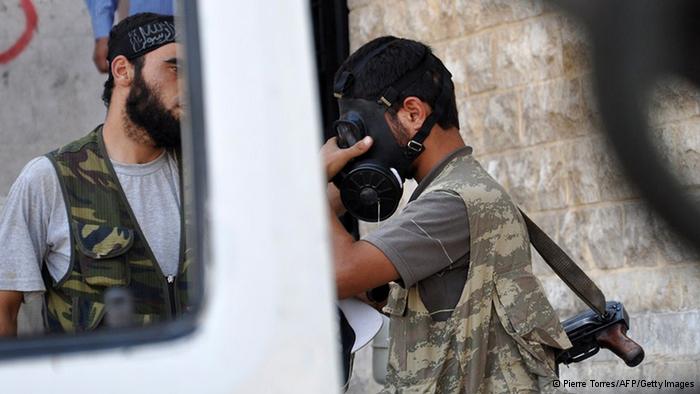
Russia has begun to evacuate its citizens from Syria and its deputy prime minister, Dmitry Rogozin, has said the West is acting in the Islamic world like “a monkey with a grenade”.

Envoys from the US and its allies have told rebels fighting President Bashar al-Assad that Western powers might attack Syria within days.

US forces in the region are “ready to go”, US Defence Secretary Chuck Hagel said, as Washington and its European and Middle East partners honed their plans for punishing Assad for a major poison-gas attack last week that killed hundreds of civilians.

Several sources who attended a meeting in Istanbul on Monday between Syrian opposition leaders and diplomats said that the rebels were told to expect military action and get ready to negotiate a peace.

“The opposition was told in clear terms that action to deter further use of chemical weapons by the Assad regime could come as early as the next few days, and that they should prepare for peace talks in Geneva,” one of the sources said.

Ahmad Jarba, president of the Syrian National Coalition, met envoys from 11 states in the Friends of Syria group, including Robert Ford, the US ambassador to Syria, at an Istanbul hotel.

UN chemical weapons investigators, who finally crossed the frontline to take samples on Monday, put off a second trip to rebel-held suburbs of Damascus.

But Washington said it already held Assad responsible for a “moral obscenity”.

However, with Russian and Chinese opposition complicating efforts to satisfy international law – and Western voters wary of new, far-off wars – world leaders might not pull the trigger just yet. British Prime Minister David Cameron called parliament back from its summer recess for an emergency session on Syria tomorrow.

He and US President Barack Obama, as well as French President Francois Hollande, face tough questions about how an intervention, likely to be limited to air strikes, will end – and whether they risk handing power to anti-Western democracy Islamists if Assad is overthrown.

In an indication of support from Arab states that might help the Western powers argue the case for war against UN vetoes by Moscow and Beijing, the Arab League issued a statement holding Assad’s government fully responsible for the chemical-weapons attack.

Asked if US forces were ready to strike Syria just “like that”, Hagel told the BBC: “We are ready to go, like that. We have moved assets in place to be able to fulfil and comply with whatever option the president wants to take.”

Hagel said the US would have intelligence to present “very shortly” about last week’s mass poisoning. But he noted, after speaking to his British and French counterparts, that there was little doubt among US allies that “the most basic … international humanitarian standard was violated”.

Turkey, Syria’s neighbour and part of the US-led Nato military pact, called the Damascus deaths a “crime against humanity”.

The Syrian government, which denies using gas or obstructing the UN inspectors, said it would press on with its offensive against the rebels. Foreign Minister Walid al-Moualem said: “We have means of defending ourselves; we will surprise them.”

Russia has criticised Washington for cancelling bilateral talks on Syria that were set for today. A Russian aircraft is about to evacuate Russians and citizens of former Soviet states from Syria. The jet landed at the Latakia airport with 20t of humanitarian aid .

About 180 people who “have expressed a desire to leave Syria”, 100 of them Russian, are to be flown out. Russia evacuated its defence personnel from Syria in June.

Gays try to claim friendly Russian kiss

kissrussiaA Russian gold medalist from the Moscow World Athletics Championships on Tuesday said she was insulted by Anglo-Saxon media claims that she had kissed a fellow female athlete on the lips in defiance of Russia’s new law against gay “propaganda”.

The incident highlighted certain Anglo-Saxon cultural attitudes. In Russia it is common for friends to kiss each other on the lips. In France even heterosexual male family members or friends may kiss.

Ksenia Ryzhova and Yulia Gushchina, members of Russia’s victorious 4×400 women’s relay team that provided one of the great moments of the championships, kissed each other on the podium after receiving their gold medals.

Some activists saw the kiss as a brazen show of defiance in support of gays and lesbians and against President Vladimir Putin after the championships were shadowed throughout by controversy over the law.

But Ryzhova on Tuesday insisted that she was married and made clear she was none too happy that people suspected that she and Gushchina might be more than just good friends.

“Yesterday, I was telephoned 20 times by various publications and instead of congratulating me they decided to insult me with these questions,” she fumed, quoted by the ITAR-TASS news agency.

“Myself and Yulia are both married and we are not having any kind of relationship,” she added, saying the two were very good friends after having trained together for eight years.

“It was a storm of emotions (after winning). And if at that moment we touched lips… I don’t know in whose fantasy this all gets thought up.

“This insults not just us but our trainers,” she added. – France24

BRICS makes its presence felt

bricsTotal trade within the BRICS (Brazil, Russia, India, China, and South Africa) grouping amounted to $6.1 billion last year, President Jacob Zuma said on Tuesday.

“This represents 16.8 percent of global trade,” he told delegates at the BRICS business council meeting in Johannesburg.

“The presence and influence of the BRICS grouping continues to be felt.”

Zuma said the strength of BRICS was amplified by the fact that these countries accounted for 43 percent of the world’s population.

“Indeed, we are all gathered here because we see value in the BRICS partnership in many respects.”

In 2012, South Africa’s total trade with BRICS countries stood at R294bn, up from R264bn in 2011.

Total trade with Brazil grew from R18bn in 2011 to R20bn in 2012, and with Russia from R3bn in 2011 to R5bn in 2012.

Zuma said total trade with India, South Africa’s sixth largest trading partner, grew substantially from R53bn to R67bn.

Trade with China grew from R188bn in 2011 to R201bn in 2012.

“All these impressive statistics… should provide you with the determination and confidence to deliver on the imperatives…” he told delegates.

Trade and Industry Minister Rob Davies said the council meeting was intended to deepen the partnerships to enhance co-operation and development on the African continent.

BRICS council South African chairman Patrice Motsepe said it was crucial that the commitment to increase trade and investment was seen, and “quantifiable”.

“There’s a new sense of urgency,” Motsepe said.

He emphasised “value-added trade” and common objectives being sought.

“BRICS is not about excluding other countries,” said Motsepe.

“We want to see investments quantify… It is important to build on the BRICS partnership.” – Sapa