Do South African whites really ‘have it so good’?

by Dan Roodt

In today’s City Press newspaper, Frans Cronjé of the South African Institute of Race Relations claim that whites live in some kind of paradise.

He cites statistics claiming the following:

“Between 1994 and 2012, the rate of unemployment among white people increased from 3% to 5.7%…

The white unemployment rate was low, even when compared to a host of international benchmarks. In the US, for example, the rate in 2012 was 7.6%, in Britain 7.9% and in Canada 7.2%.”

Apparently praising South African white entrepreneurship, he goes on to say that “while a black university graduate is more likely than a white graduate to find a job within 12 months of graduation (due to strict affirmative-action laws-DR), white graduates are four times more likely to start and operate businesses”.

I would treat these statistics about low white unemployment with a great deal of caution. Many whites are not on the unemployment statistics as they do not claim benefits from the government. Driving around many white areas, you notice their old, decrepit cars, lack of maintenance to their properties and other signs of economic distress.

Go to any five-star hotel now and you will find blacks sitting around in designer clothes. The only whites there are foreign tourists. Most cars costing R1 million (about $100 000) and more that I see every day in Johannesburg are owned by blacks, not whites. Blacks get all the lucrative corporate directorships and make easy money as “tenderpreneurs” to the state and municipalities.

I know of thousands of whites who literally had to leave the country to find jobs, in the Middle and Far East where they do dismal work as part-time English teachers or pack groceries in Australian supermarkets.

Many small businesses started by whites have failed, not least because of the racial laws and regulations imposed by government and the corporate sector. The corporate sector – banks and large companies – are now arguably more anti-white than government. They do not trade with white-owned businesses and generally sue or harass small businesses at the drop of a hat. Many whites have lost their homes which the banks require them to pledge as collateral for a simple overdraft for their small businesses.

More whites now live in so-called “informal housing” than at any time since the Great Depression. Solidarity estimates that up to 800 000 whites – educated, literate and previously taxpayers – now live in squatter camps and other “informal areas” such as this one:

Poor South African whites living in cabins normally used as garden sheds

We are witnessing the greatest social-engineering programme whereby one race is economically subjugated to another that this country and perhaps the world has ever seen.

The very notion that whites could be “liberated” by such an unfair and racist system is so fundamentally cynical that it has an Orwellian ring to it. But that is why the mainstream media no longer has any credibility among middle-class whites.

The South African media are loyal to foreign and corporate interests who see South African whites as an unwanted presence in the country, preventing them from bribing their way into looting most of the remaining assets in South Africa. That is why the SA mass media are constantly attacking whites, accusing them of racism, “apartheid privilege”, and the like. White males even get blamed for the intense crime and lawlessness in the country! Every white person knows that 99% of the violence is committed by other races, yet we are blamed for everything. If all else fails, there is always ever-increasing “the legacy of apartheid” to blame.

What I find amazing is that Frans Cronjé published two contradictory articles today, one in Rapport and this one in City Press. The one in Rapport, written in Afrikaans and therefore intended for a mainly white audience, shows how 500 000 middle-class taxpayers essentially contribute 50% of all personal taxes in South Africa. White readers of that article would be understandably outraged that, while still contributing a large share of the country’s taxes, they are treated as second-class citizens.

English in South Africa is increasingly the language of blacks and the internationalist whites who are hostile to Afrikaners and the white middle class, for reasons explained in the paragraph above, namely that their ownership of land and role in the judiciary and the accounting profession prevents the wholesale looting of our country. Even though looting is already taking place, there is still some semblance of legality left. Clearly, this has to go.

This article in English about whites is therefore intended for a black and foreign audience, to convince them that South African whites “have never had it so good”. Understandably the very real hostility felt for those dastardly Nazis and perpetrators of a “crime against humanity” will only rise upon reading this article. It will undermine any inchoate sympathy whites enjoy with their less brainwashed brethren in the West and Europe.

The most absurd sentence of all is the following: “(Whites) were liberated, first, from the guilt and pariah status that had been attached to their support and enforcement of apartheid.”

On the contrary, South African whites are now more hated and stigmatised than ever! Over the past twenty years the SABC and the mainstream media have played their quasi-communist propaganda about white evil and viciousness over and over in South Africa. Most of the time this propaganda is literally the work of unreconstructed communists who occupy powerful positions in South Africa, being the “white face” of the ANC government, the SABC and other state agencies. The British media, including the BBC, see us whites as free game now that we are utterly without any political power and lack any form of state support. More
unfair and one-sided news stories have been published and broadcast about us since 1994 than ever before, barring perhaps the 1890s when the Uitlander press and the London newspapers were publishing war propaganda about the Boer republics.

As for white guilt, there is a whole industry meant to inculcate it into us, almost from birth. At school our children are exposed to compulsory subjects such as “Life Orientation” containing political propaganda of the worst kind, meant to persuade them that their parents were all war criminals killing thousands, if not millions, of blacks. In reality, of course, only 500 blacks died at the hands of the SA police from 1948 to 1994, fewer than die every year as a result of police brutality under black rule! However, the foreign whites and media do not write about police brutality anymore because it is now committed by blacks and therefore of no interest.

More than 80 000 whites have been murdered since 1994 and up to a million white women have been raped. Four thousand farmers, their wives and children have been killed, many of them spending their last hours under dehumanising torture.

While all this is going on in the ghoulish present, not a week goes by without newspapers and radio programmes calling for whites to “repent about apartheid”, surrender the meagre assets that they still control or simply leave the country as they “have outstayed their welcome”. People are constantly telling me to “go back to Europe” or “get lost”, even though my forebears came here in the early 1700s.

Apart from racial quotas in education that prevent whites from obtaining a tertiary education, especially in medicine and other fields, an aging white population now endures a third-world system of medical care. Prior to 1994, whites had one of the best healthcare systems in the world, with both a private and a well-managed public hospital system.

Corruption and mismanagement have reduced the public system to a shambles while the costs of private healthcare have gone through the roof. Only the corporate elite can now afford private healthcare. Whites are almost banned from studying medicine by the universities so that their parents and grandparents may just die from neglect in the state hospital system.

Despite being well-educated and hard-working, affirmative action and so-called BEE (black-economic empowerment) have reduced most South African whites to poverty. Their mean income per capita is far less than the minimum wage in many European countries.The following table shows annual per capita income growth from 2001 to 2011 for all racial groups in South Africa:

Source: Moneyweb/SA census

If the R365 134 earned by the average SA white is translated into dollar terms at $40 970, this is way below minimum wage levels in most European countries. However, this very modest white income gets taxed at 40% to fund the megalomaniac dreams of this make-believe government whose only interest is in seeking international prestige while it cannot even mend our roads, nor deliver school books on time. In a real sense, white poverty is caused by government, either through its high taxes or its racially interventionist policies.

This is Frans Cronjé’s “white paradise”!

Russia sends advanced anti-ship missiles to Syrian government

Yakhont missile

Russia has sent advanced antiship cruise missiles to Syria, a move that illustrates the depth of its support for the Syrian government led by President Bashar al-Assad, American officials said Thursday.

Russia has previously provided a version of the missiles, called Yakhonts, to Syria. But those delivered recently are outfitted with an advanced radar that makes them more effective, according to American officials who are familiar with classified intelligence reports and would only discuss the shipment on the basis of anonymity.

Unlike Scud and other longer-range surface-to-surface missiles that the Assad government has used against opposition forces, the Yakhont antiship missile system provides the Syrian military a formidable weapon to counter any effort by international forces to reinforce Syrian opposition fighters by imposing a naval embargo, establishing a no-fly zone or carrying out limited airstrikes.

“It enables the regime to deter foreign forces looking to supply the opposition from the sea, or from undertaking a more active role if a no-fly zone or shipping embargo were to be declared at some point,” said Nick Brown, editor in chief of IHS Jane’s International Defense Review. “It’s a real ship killer.”

Jeffrey White, a fellow at the Washington Institute for Near East Policy and a former senior American intelligence official, said Syria’s strengthened arsenal would “tend to push Western or allied naval activity further off the coast” and was also “a signal of the Russian commitment to the Syrian government.”

The disclosure of the delivery comes as Russia and the United States are planning to convene an international conference that is aimed at ending the brutal conflict in Syria, which has killed more than 70,000. That conference is expected to be held in early June and to include representatives of the Assad government and the Syrian opposition.

Secretary of State John Kerry has repeatedly said that it is the United States’ hope to change Mr. Assad’s “calculations” about his ability to hold on to power so that he will allow negotiations for a political solution to the conflict. Mr. Kerry indicated that he had raised the issue of Russian arms deliveries to Syria during his recent visit to Moscow, but declined to provide details.

“I think we’ve made it crystal clear we would prefer that Russia was not supplying assistance,” he said. “That hasn’t changed.”

American officials have been concerned that the flow of Russian and Iranian arms to Syria will buttress Mr. Assad’s apparent belief that he can prevail militarily.

“This weapons transfer is obviously disappointing and will set back efforts to promote the political transition that is in the best interests of the Syrian people and the region,” Senator Bob Corker of Tennessee, the senior Republican on the Foreign Relations Committee, said in a statement on Thursday night. “There is now greater urgency for the U.S. to step up assistance to the moderate opposition forces who can lead Syria after Assad.”

Senator Robert Menendez, Democrat of New Jersey and the committee chairman, added in a statement, “Russia is offering cover to a despotic ruler and defending a bankrupt regime.”

Syria ordered the coastal defense version of the Yakhont system from Russia in 2007 and received the first batteries in early 2011, according to Jane’s. The initial order covered 72 missiles, 36 launcher vehicles, and support equipment, and the systems have been displayed in the country.

The batteries are mobile, which makes them more difficult to attack. Each consists of missiles, a three-missile launcher and a command-and-control vehicle.

The missiles are about 22 feet long, carry either a high-explosive or armor-piercing warhead, and have a range of about 180 miles, according to Jane’s.

They can be steered to a target’s general location by longer-range radars, but each missile has its own radar to help evade a ship’s defenses and home in as it approaches its target.

Two senior American officials said that the most recent shipment contained missiles with a more advanced guidance system than earlier shipments.

Russia has longstanding interests in Syria, including a naval base at the Mediterranean port of Tartus.

As the Syria crisis has escalated, Russia has gradually augmented its naval presence in the region. In January, more than two dozen Russian warships sailed to the Black and Mediterranean Seas to take part in what the Defense Ministry said was to be the country’s largest naval exercise in decades, testing the ships’ ability to deploy outside Russian waters.

A month later, after the Black Sea exercises ended, the Russian Defense Ministry news agency said that four large landing vessels were on their way to operations off the coast of Syria.

“Based on the results of the navy exercises in the Black and Mediterranean seas,” the ministry said at the time, “the ministry leadership has taken a decision to continue combat duty by Russian warships in the Mediterranean.”

– New York Times full story

No arrest in Anne-Marie Beukes rape case

An Indian anti-rape protester with hand covered in fake bloodNo arrests have been made for the murder of a Western Cape teenager who died in hospital a day after she found raped, The Cape Times reported on Friday.

Captain Frederick van Wyk told the newspaper Anne-Marie Beukes, 19, of Swellendam went to a shebeen last Friday and was found drunk and covered with a blanket the next morning.

“Due to her condition, she was not able to provide a statement to police,” he was quoted as saying.

She died on Sunday. A post-mortem reportedly showed that she had been raped.

In February, the nation was outraged when Anene Booysen, 17, was raped, disembowelled and left for dead in Bredasdorp.

She managed to identify her attackers before she died in hospital.

Two men have appeared in court in connection with the crimes. -Sapa

Too many whites are still advocates, attorneys, says Deputy Minister

Johannesburg High Court - too many white advocates there

by Andries Nel, Deputy Minister of Justice and Constitutional Development

It seems truly bizarre but in 1994, less than a generation ago, 160 of the 165 judges on the bench were white men. This is not a typographical error. White male judges were, to use biblical language, fourscore times two in number. The heavy onus of making the judiciary appear to resemble South Africa lay on the shoulders of three black men and two white women. As for black women, well….

Today, as “Mandela’s children” prepare to vote for the first time, 100 black men and 49 black women, 71 white men and 21 white women serve our nation as judges. They do so knowing that they are part of a judiciary that is coming closer to reflecting the racial and gender composition of South Africa, as is required by our Constitution.

Similar progress has been made in addressing race and gender imbalances in Magistrates Courts. Of the 1661 magistrates, 974 are black and 687 are white, 647 are women and 1014 are men.

Whilst this represents significant progress, there is still much to be done – especially regarding the gender imbalances in the upper echelons of the judiciary, the Constitutional Court, the Supreme Court of Appeal and the ranks of the Judges President.

Regrettably, some insist on propagating the untruth that it is constitutionally suspect to pursue the objective of a representative judiciary or, alternatively, that although legitimate, this objective is being advanced in a manner that is unconstitutional.

If some are to be believed, the Judicial Service Commission has simply transposed the “Non-Europeans Only” signs from the railway benches of yesteryear to the judicial benches of today.

A resigned combatant from what is often portrayed as the gladiatorial game of judicial selection punts the notion that, in the eyes of the JSC, white men have become as politically ineligible to judge as they have always been genetically incapable of jumping.

However, what tales do those inconveniently stubborn things known as facts tell?

Of the 71 white men currently on the bench, 61 were appointed after 1994 – and of them, 22 were appointed since 2009.

The “white men can’t judge” mythology being peddled is in fact anti-Constitution: It seeks to stymie the transformation required by the Constitution while attacking the integrity of the JSC and that of judges, black and white, appointed by it under the Constitution.

The Constitution is the supreme law of our land. It is also a supremely transformational constitution. It requires of us to follow a transformative course action in respect of access to justice and the transformation of the judiciary and legal system.

Let us be clear. Transformation, the big T-word, necessarily includes – but is not limited to – attaining demographic representivity.

Transformation in the South African context basically means making our society, look, work, think and be like the Constitution says it should. Anyone who thinks that it does, or is close to doing so, or will do so in a decade, simply doesn’t “get it.”

Firstly, the Constitution enjoins us to heal the divisions of the past and establish a society based on democratic values, social justice and fundamental human rights and to lay the foundations for a democratic and open society in which government is based on the will of the people and every citizen is equally protected by law.

Secondly, it guarantees everyone the right to have any dispute that can be resolved by the application of law decided in a fair public hearing before a court or, where appropriate, another independent and impartial tribunal or forum.

Thirdly, it provides that the need for the judiciary to reflect broadly the racial and gender composition of South Africa must be considered when judicial officers are appointed.

Fourthly, it says that all courts, including their structure, composition, functioning and jurisdiction, and all relevant legislation, must be rationalized with a view to establishing a judicial system suited to the requirements of the new constitution.

Government is committed to strengthening of the independence, the dignity, accessibility and effectiveness of the courts as part of this transformation process.

The Seventeenth Constitutional Amendment Act, the Superior Courts Bill, and the South African Judicial Education Institute Act, provide a strong legislative framework to realize this objective. Measures such as the establishment of the Office of the Chief Justice as a department advance the objective of greater administrative independence of the judiciary.

Access to justice is being promoted by, amongst others, the building of new courts the conversion of existing branch courts to full-service courts, the establishment of Small Claims Courts, the re-demarcation of magisterial districts, the Review of the Civil Justice System and the work of Legal Aid SA.

However, the untransformed state of the legal profession remains a stumbling block to the further transformation of the judiciary as well as to greater access to justice.

The legal profession is a key provider of services that promote access to justice and it also constitutes a pool from which the judiciary is appointed.

Of the 2384 advocates (as at April 2012) who fell under the umbrella of the General Council of the Bar, 1367 were white men, 366 white women, 295 African men, 89 African women, 47 coloured men, 37 coloured women, 114 Indian men and 69 Indian women.

The picture becomes even more skewed when one examines the profile of the 473 senior advocates (or “silks” as they are called – because of their right to wear silk robes): 382 white men, 20 white women, 29 African men, 4 African women, 9 coloured men, 1 coloured woman, 24 Indian men and 4 Indian women.

Traditionally, it is from the ranks of these “silks” that judges are appointed.

The attorneys’ profession is marginally more representative. As at June 2011 there were 20,077 practicing attorneys of whom 36% were black and 64% were white. Women constituted 34% and men 66%.

Interestingly, the profile of law students is much more reflective of South African society. In 2011 of all first year law students, 78% were black, 22% white, 54% were women and 46% men. In the same year, of the 3751 LLB graduates, 68% were black, 32% white, 59 % women and 41% men.

The question is to what extent these more reflective demographics will be carried through into the profession and what stumbling blocks exist in this regard.

One important intervention is the restructuring of state legal services announced by the Minister of Justice and Constitutional Development.

Another is the Legal Practice Bill currently before Parliament. The Bill proposes an institutional and statutory framework within which these challenges can be addressed in a systematic and inclusive manner.

The proposed South African Legal Practice Council will bring together advocates, attorneys and representatives of broader society to find solutions to the challenges of: entry to the legal profession, availability of quality legal training and education, quality workplace learnership opportunities, provision of pro bono services and community-based paralegal services, as well as the regulation of legal fees in order to promote access to affordable legal services for all, especially the poor.

The Council will be a mechanism through which the Legal Services Charter adopted in 2007 can be implemented.

The Bill does not prescribe solutions but mandates and facilitates their formulation. This will require the active participation of all sectors of the profession – and of broader society. Whether the solutions that emanate from the process take us forward will depend, amongst others, on the ability of those committed to the transformative vision of our Constitution to give leadership.

Andries Nel is the Deputy Minister of Justice and Constitutional Development.
This article is based on notes for an address to a meeting of the Black Lawyers Association (BLA) – Student Chapter held at the University of South Africa (Unisa) on 4 May 2013.

Obama has placed the US press under surveillance

Ilana Mercer

by Ilana Mercer

No wonder the language being deployed to describe the forlorn Associated Press reporters is something redolent of a jilted lover.

The AP has been violated by its beloved Barack Obama and his gang-bangers. The news agency has gone from sexting, so to speak, with the president, to being snooped on by him.

Politico offered readers an endearingly intimate glimpse, “Inside the AP,” where the flaccid folks were overcome by feelings of “fear” and “determination.” Nevertheless, they had not lost their resolve and were proceeding with “heads-down determination.”

What made The Beloved and his dream team turn to rough play?

According to the (idiomatic) mainstream, Obama’s Justice Department had been monitoring AP phone lines in D.C., in the Hartford and New York bureaus, and in Congress. Subpoenaed too were the phone logs, “credit card receipts, airplane records and other digital information” belonging to individual AP editors and reporters. All this in violation of Fourth Amendment protections; without presenting a judge with evidence of probable cause and absent a search warrant (all SOP, or standard operating procedure, at the Transportation Security Administration).

The Justice Department in the person of Attorney General Eric Holder has claimed, comically, to have been looking to plug a “very, very, very, serious leak.” Perhaps “the most serious” since the AG started his prosecutorial career in 1976.

A pesky detail has eluded all those invincibly stupid special interests who’re piping up for the privacy of the press, as opposed to fighting for the privacy of all Americans.

Have the various tele-lawyers, the director of the Reporters Committee for Freedom of the Press and protesting members of the House Judiciary Committee forgotten the Foreign Intelligence Surveillance Act (FISA) and the FISA Amendments Act of 2008, whose provisions were extended until Dec. 31, 2017, by the people’s representatives?

There is nothing new about warrantless wiretapping – other than that the American people haven’t been particularly exercised about them. They’ve trusted Uncle Sam to go about this activity judiciously.

Order lIana Mercer’s brilliant polemical work, “Into the Cannibal’s Pot: Lessons for America from Post-Apartheid South Africa”

Peeping Sam had promised, after all, that covert surveillance would never be executed against “United States persons.” Were a “United States person” to fall under suspicion, he or she would not be subjected to surveillance without “judicial and congressional oversight,” puled the same perverts.

It’s not as if the National Security Agency (NSA) under George W. Bush was not accused of bypassing the courts to spy on the 43rd president’s many critics. It was! Sideshow “O,” however, has done Bush one better. Obama is using the FISA provisions against “friendlies.”

George Bush, you’ll recall (or maybe not), also authorized the President’s Surveillance Program (PSP). Subsumed within the PSP are activities whose scope has yet to be disclosed. Attorney General Holder – at the behest of President Obama, no doubt – is expanding the remits of the Surveillance State, as did “W” before him.

The incontinent coverage of the AP outrage has a delusional quality. Contra those whose job it is to feign indignation on TV – America is not a free country. Media convulsions notwithstanding, the government is reading over your shoulder – has been doing so for some time. It can spy on Americans without breaking the law.

It is perfectly permissible for the state to monitor you, me or The Other Guy, without a “perfunctory nod to due process and legal restraint.” In other words, without a court order.

National Journal is agreed, writing that “the Obama administration technically broke no rules.” Companies that give up this information to the government have “immunity,” which has been “built into a 2008 revision of the Foreign Intelligence Surveillance Act.”

Here’s the other rub: FISA permits surveillance sans court order, explains Wikipedia, for “the period of one year provided it is only for foreign intelligence.”

And provided the president has authorized the fishing expedition.

In my understanding of the impossibly complex and cancerous Foreign Intelligence Surveillance Act, Obama has to have authorized the dragnet that was cast at the Associated Press.

FW de Klerk accepts apology for ‘kill whites’ tweet

FW de Klerk, former President of South Africa

The FW de Klerk Foundation on Thursday formally accepted the apology of a man who allegedly posted a racist tweet.

The foundation said spiritual leader Kemo Waters had apologised for the tweet.

In January last year, the foundation laid a complaint with the SA Human Rights Commission (SAHRC) about the Twitter post.

Waters allegedly tweeted on January 7, 2012: “The only way to end racism is to kill a material number of whites @hellenzille your indifferent and patrionizing stance in a double dare”.

Waters recently released an apology statement: “I… hereby tender my summary and unequivocal apology to the public, the Commission, the FW de Klerk Foundation.”

He undertook to refrain from “conducting myself in a manner associated with hate speech or racism in the form complained about”.

On Thursday, the FW de Klerk Foundation said that while the Bill of Rights provided for freedom of expression, it prohibited advocacy of hatred based on race, ethnicity, gender or religion, and incitement to cause harm.

“It is imperative that all South Africans should bear in mind the constitutional prohibition against hate speech when they are participating in the national debate.”

It was also important for the public to complain about language that incited hatred or violence.

The foundation thanked the SAHRC for its work on the matter and the way it was handled.

In a statement last week SAHRC spokesman Isaac Mangena said that during mediation the commission was satisfied that the comments could be interpreted as hate speech.

However, it felt that this needed to be seen in the context of Waters’s experiences and perceptions.

During the mediation, Waters said he had experienced racial prejudice himself since moving to the Western Cape.

The SAHRC also took into consideration that Waters already apologised publicly, on a radio show and on Twitter, for his comment before the commission received the complaint.

The commission advised him to release a formal written apology to all South Africans.

“The FW de Klerk Foundation accepted Mr Waters’ apology and a mediation agreement was signed between Mr Waters and the complainant in April 2013,” Mangena said. – Sapa

Israel to declare four West Bank settler outposts legal


Settlements being built on the West Bank

Israel plans to declare legal four unauthorized West Bank settler outposts, a court document showed on Thursday, days before U.S. Secretary of State John Kerry returns to the region to try to restart peace talks.

Israel has been sending mixed signals on its internationally condemned settlement policy as Kerry pursues efforts to revive negotiations Palestinians quit in 2010 in anger over Israeli settlement building on occupied land they seek for a state.

In a reply to a Supreme Court petition by the Israeli anti-settlement group Peace Now, the government said it had taken steps in recent weeks to authorize retroactively four West Bank outposts built without official permission.

“The intention to legalize outposts as new settlements is no less than a slap in the face of Secretary Kerry’s new process and is blatant reassurance to settler interests,” Peace Now said in a statement.

A spokesman for Prime Minister Benjamin Netanyahu declined to comment on the government’s response to the court.

Most the world deems all Israeli settlements in the West Bank, which Israel captured in the 1967 Middle East war, as illegal. Israel disputes this and distinguishes between about 120 government-authorized settlements and dozens of outposts built by settlers without permission.

Last week, Peace Now and Israeli media reports said Netanyahu has been quietly curbing some settlement activity by freezing tenders for new housing projects, in an apparent effort to help the U.S. drive to renew peace talks.

But Peace Now said at the time construction already under way was continuing, and Israel announced last week that it had given preliminary approval for 300 new homes in Beit El settlement as part of a plan Netanyahu announced a year ago.

Kerry, due to meet Netanyahu and Palestinian President Mahmoud Abbas separately next week, has said he believes “the parties are serious” about finding a way back into talks.

The main issues that would have to be resolved in a peace agreement include the borders between Israel and a Palestinian state, the future of Jewish settlements, the fate of Palestinian refugees and the status of Jerusalem.

Some 500,000 Israelis have settled in the West Bank and East Jerusalem, which was also captured from Jordan in 1967. About 2.7 million Palestinians live in those areas. – Reuters

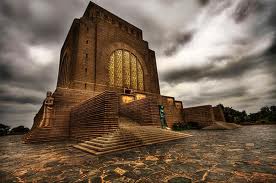
Voortrekker Monument gets gold award from China – 50% of all Chinese tourists go there

The Voortrekker Monument

The Voortrekker Monument won a prestigious gold award for overall performance at the China Outbound Travel and Tourism Market, the Pretoria municipality said on Wednesday.

Strategic Executive Director, Nomasonto Ndlovu said in a statement the City of Pretoria were concluding its exhibition at Indaba 2013.

“What a fantastic way to end our participation at Indaba 2013. This is such good news and will give our tourism industry a tremendous boost.”

According to the statement Sonja Lombard, Managing Director of the Voortrekker Monument, said the main reason for winning the award was the 45% increase in Chinese visitors to this landmark.

“More significant is that 50% of all Chinese visiting South Africa visited the Voortrekker Monument,” Lombard was quoted as saying.

Ndlovu said in keeping with government’s decision to promote South Africa as a heritage and cultural hotspot, the City of Pretoria exhibited its wide array of attractions at Indaba 2013.

“The Voortrekker Monument, which receives more than 200 000 visitors per year, was built to commemorate the centenary of the Great Trek. It received its new status as a Grade 1 National Heritage Site last year.”

The building was designed to commemorate the bravery and persistence of the Afrikaner pioneers who left the British-controlled Cape Colony during the Great Trek between 1835 and 1854 in search of freedom further north.

“The monument also serves as an ideal venue for classical music and choral performances. The Hall of Heroes can accommodate up to 600 people, and its fantastic acoustics enhance the music coming from its digital Allen organ,”  Ndlovu said.

She added that this is the ninth consecutive year that the city has showcased Pretoria’s tourism offerings at Indaba.

The downside of diversity

It seems increasingly popular to speak of racial and ethnic diversity as a civic strength. From multicultural festivals to pronouncements from political leaders, the message is the same: our differences make us stronger.

But a massive new study, based on detailed interviews of nearly 30,000 people across America, has concluded just the opposite. Harvard political scientist Robert Putnam — famous for “Bowling Alone,” his 2000 book on declining civic engagement — has found that the greater the diversity in a community, the fewer people vote and the less they volunteer, the less they give to charity and work on community projects. In the most diverse communities, neighbors trust one another about half as much as they do in the most homogenous settings. The study, the largest ever on civic engagement in America, found that virtually all measures of civic health are lower in more diverse settings.

“The extent of the effect is shocking,” says Scott Page, a University of Michigan political scientist.

The study comes at a time when the future of the American melting pot is the focus of intense political debate, from immigration to race-based admissions to schools, and it poses challenges to advocates on all sides of the issues. The study is already being cited by some conservatives as proof of the harm large-scale immigration causes to the nation’s social fabric. But with demographic trends already pushing the nation inexorably toward greater diversity, the real question may yet lie ahead: how to handle the unsettling social changes that Putnam’s research predicts.

“We can’t ignore the findings,” says Ali Noorani, executive director of the Massachusetts Immigrant and Refugee Advocacy Coalition. “The big question we have to ask ourselves is, what do we do about it; what are the next steps?”

The study is part of a fascinating new portrait of diversity emerging from recent scholarship. Diversity, it shows, makes us uncomfortable — but discomfort, it turns out, isn’t always a bad thing. Unease with differences helps explain why teams of engineers from different cultures may be ideally suited to solve a vexing problem. Culture clashes can produce a dynamic give-and-take, generating a solution that may have eluded a group of people with more similar backgrounds and approaches. At the same time, though, Putnam’s work adds to a growing body of research indicating that more diverse populations seem to extend themselves less on behalf of collective needs and goals.

His findings on the downsides of diversity have also posed a challenge for Putnam, a liberal academic whose own values put him squarely in the pro-diversity camp. Suddenly finding himself the bearer of bad news, Putnam has struggled with how to present his work. He gathered the initial raw data in 2000 and issued a press release the following year outlining the results. He then spent several years testing other possible explanations.

When he finally published a detailed scholarly analysis in June in the journal Scandinavian Political Studies, he faced criticism for straying from data into advocacy. His paper argues strongly that the negative effects of diversity can be remedied, and says history suggests that ethnic diversity may eventually fade as a sharp line of social demarcation.

“Having aligned himself with the central planners intent on sustaining such social engineering, Putnam concludes the facts with a stern pep talk,” wrote conservative commentator Ilana Mercer, in a recent Orange County Register op-ed titled “Greater diversity equals more misery.”

Putnam has long staked out ground as both a researcher and a civic player, someone willing to describe social problems and then have a hand in addressing them. He says social science should be “simultaneously rigorous and relevant,” meeting high research standards while also “speaking to concerns of our fellow citizens.” But on a topic as charged as ethnicity and race, Putnam worries that many people hear only what they want to.

“It would be unfortunate if a politically correct progressivism were to deny the reality of the challenge to social solidarity posed by diversity,” he writes in the new report. “It would be equally unfortunate if an ahistorical and ethnocentric conservatism were to deny that addressing that challenge is both feasible and desirable.”

. . .

Putnam is the nation’s premier guru of civic engagement. After studying civic life in Italy in the 1970s and 1980s, Putnam turned his attention to the US, publishing an influential journal article on civic engagement in 1995 that he expanded five years later into the best-selling “Bowling Alone.” The book sounded a national wake-up call on what Putnam called a sharp drop in civic connections among Americans. It won him audiences with presidents Bill Clinton and George W. Bush, and made him one of the country’s best known social scientists.

Putnam claims the US has experienced a pronounced decline in “social capital,” a term he helped popularize. Social capital refers to the social networks — whether friendships or religious congregations or neighborhood associations — that he says are key indicators of civic well-being. When social capital is high, says Putnam, communities are better places to live. Neighborhoods are safer; people are healthier; and more citizens vote.

The results of his new study come from a survey Putnam directed among residents in 41 US communities, including Boston. Residents were sorted into the four principal categories used by the US Census: black, white, Hispanic, and Asian. They were asked how much they trusted their neighbors and those of each racial category, and questioned about a long list of civic attitudes and practices, including their views on local government, their involvement in community projects, and their friendships. What emerged in more diverse communities was a bleak picture of civic desolation, affecting everything from political engagement to the state of social ties.

Putnam knew he had provocative findings on his hands. He worried about coming under some of the same liberal attacks that greeted Daniel Patrick Moynihan’s landmark 1965 report on the social costs associated with the breakdown of the black family. There is always the risk of being pilloried as the bearer of “an inconvenient truth,” says Putnam.

After releasing the initial results in 2001, Putnam says he spent time “kicking the tires really hard” to be sure the study had it right. Putnam realized, for instance, that more diverse communities tended to be larger, have greater income ranges, higher crime rates, and more mobility among their residents — all factors that could depress social capital independent of any impact ethnic diversity might have.

“People would say, ‘I bet you forgot about X,'” Putnam says of the string of suggestions from colleagues. “There were 20 or 30 X’s.”

But even after statistically taking them all into account, the connection remained strong: Higher diversity meant lower social capital. In his findings, Putnam writes that those in more diverse communities tend to “distrust their neighbors, regardless of the color of their skin, to withdraw even from close friends, to expect the worst from their community and its leaders, to volunteer less, give less to charity and work on community projects less often, to register to vote less, to agitate for social reform more but have less faith that they can actually make a difference, and to huddle unhappily in front of the television.”

“People living in ethnically diverse settings appear to ‘hunker down’ — that is, to pull in like a turtle,” Putnam writes.

In documenting that hunkering down, Putnam challenged the two dominant schools of thought on ethnic and racial diversity, the “contact” theory and the “conflict” theory. Under the contact theory, more time spent with those of other backgrounds leads to greater understanding and harmony between groups. Under the conflict theory, that proximity produces tension and discord.

Putnam’s findings reject both theories. In more diverse communities, he says, there were neither great bonds formed across group lines nor heightened ethnic tensions, but a general civic malaise. And in perhaps the most surprising result of all, levels of trust were not only lower between groups in more diverse settings, but even among members of the same group.

“Diversity, at least in the short run,” he writes, “seems to bring out the turtle in all of us.”

The overall findings may be jarring during a time when it’s become commonplace to sing the praises of diverse communities, but researchers in the field say they shouldn’t be.

“It’s an important addition to a growing body of evidence on the challenges created by diversity,” says Harvard economist Edward Glaeser.

In a recent study, Glaeser and colleague Alberto Alesina demonstrated that roughly half the difference in social welfare spending between the US and Europe — Europe spends far more — can be attributed to the greater ethnic diversity of the US population. Glaeser says lower national social welfare spending in the US is a “macro” version of the decreased civic engagement Putnam found in more diverse communities within the country.

Economists Matthew Kahn of UCLA and Dora Costa of MIT reviewed 15 recent studies in a 2003 paper, all of which linked diversity with lower levels of social capital. Greater ethnic diversity was linked, for example, to lower school funding, census response rates, and trust in others. Kahn and Costa’s own research documented higher desertion rates in the Civil War among Union Army soldiers serving in companies whose soldiers varied more by age, occupation, and birthplace.

Birds of different feathers may sometimes flock together, but they are also less likely to look out for one another. “Everyone is a little self-conscious that this is not politically correct stuff,” says Kahn.

. . .

So how to explain New York, London, Rio de Janiero, Los Angeles — the great melting-pot cities that drive the world’s creative and financial economies?

The image of civic lassitude dragging down more diverse communities is at odds with the vigor often associated with urban centers, where ethnic diversity is greatest. It turns out there is a flip side to the discomfort diversity can cause. If ethnic diversity, at least in the short run, is a liability for social connectedness, a parallel line of emerging research suggests it can be a big asset when it comes to driving productivity and innovation. In high-skill workplace settings, says Scott Page, the University of Michigan political scientist, the different ways of thinking among people from different cultures can be a boon.

“Because they see the world and think about the world differently than you, that’s challenging,” says Page, author of “The Difference: How the Power of Diversity Creates Better Groups, Firms, Schools, and Societies.” “But by hanging out with people different than you, you’re likely to get more insights. Diverse teams tend to be more productive.”

In other words, those in more diverse communities may do more bowling alone, but the creative tensions unleashed by those differences in the workplace may vault those same places to the cutting edge of the economy and of creative culture.

Page calls it the “diversity paradox.” He thinks the contrasting positive and negative effects of diversity can coexist in communities, but “there’s got to be a limit.” If civic engagement falls off too far, he says, it’s easy to imagine the positive effects of diversity beginning to wane as well. “That’s what’s unsettling about his findings,” Page says of Putnam’s new work.

Meanwhile, by drawing a portrait of civic engagement in which more homogeneous communities seem much healthier, some of Putnam’s worst fears about how his results could be used have been realized. A stream of conservative commentary has begun — from places like the Manhattan Institute and “The American Conservative” — highlighting the harm the study suggests will come from large-scale immigration. But Putnam says he’s also received hundreds of complimentary emails laced with bigoted language. “It certainly is not pleasant when David Duke’s website hails me as the guy who found out racism is good,” he says.

In the final quarter of his paper, Putnam puts the diversity challenge in a broader context by describing how social identity can change over time. Experience shows that social divisions can eventually give way to “more encompassing identities” that create a “new, more capacious sense of ‘we,'” he writes.

Growing up in the 1950s in a small Midwestern town, Putnam knew the religion of virtually every member of his high school graduating class because, he says, such information was crucial to the question of “who was a possible mate or date.” The importance of marrying within one’s faith, he says, has largely faded since then, at least among many mainline Protestants, Catholics, and Jews.

While acknowledging that racial and ethnic divisions may prove more stubborn, Putnam argues that such examples bode well for the long-term prospects for social capital in a multiethnic America.

In his paper, Putnam cites the work done by Page and others, and uses it to help frame his conclusion that increasing diversity in America is not only inevitable, but ultimately valuable and enriching. As for smoothing over the divisions that hinder civic engagement, Putnam argues that Americans can help that process along through targeted efforts. He suggests expanding support for English-language instruction and investing in community centers and other places that allow for “meaningful interaction across ethnic lines.”

Some critics have found his prescriptions underwhelming. And in offering ideas for mitigating his findings, Putnam has drawn scorn for stepping out of the role of dispassionate researcher. “You’re just supposed to tell your peers what you found,” says John Leo, senior fellow at the Manhattan Institute, a conservative think tank. “I don’t expect academics to fret about these matters.”

But fretting about the state of American civic health is exactly what Putnam has spent more than a decade doing. While continuing to research questions involving social capital, he has directed the Saguaro Seminar, a project he started at Harvard’s Kennedy School of Government that promotes efforts throughout the country to increase civic connections in communities.

“Social scientists are both scientists and citizens,” says Alan Wolfe, director of the Boisi Center for Religion and American Public Life at Boston College, who sees nothing wrong in Putnam’s efforts to affect some of the phenomena he studies.

Wolfe says what is unusual is that Putnam has published findings as a social scientist that are not the ones he would have wished for as a civic leader. There are plenty of social scientists, says Wolfe, who never produce research results at odds with their own worldview.

“The problem too often,” says Wolfe, “is people are never uncomfortable about their findings.”

Michael Jonas is acting editor of CommonWealth magazine, published by MassINC, a nonpartisan public-policy think tank in Boston.

© Copyright 2007 Globe Newspaper Company.

New Orleans mass murderer is 19-year old black man

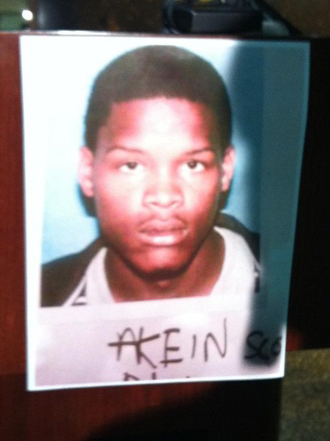
Akein Scott

During a press conference Monday night investigators said they had secured an arrest warrant for Akein Scott, 19, and pleaded with the public to help bring the alleged shooter to justice.

City law enforcement officials publicized a mug shot of the young man, who they say was released from jail on a bond on April 29, according to WWL-TV in New Orleans.

Police also advised that a New Orleans SWAT team will patrol the streets until Scott is found. They urged him to turn himself in multiple times, and admitted they’re still investigating whether he acted alone. Three search warrants were executed to no avail in the hours before the press conference.

“The important thing for Akein Scott now is to turn himself in,” said Police Superintendent Ronal Serpas.

He added that multiple tips have identified Scott as the perpetrator who opened fire on a crowd and injured 19 people during a Mother’s Day parade. Most of the victims have since been released from the hospital. Police have also offered a $10,000 reward and posted blurry surveillance camera images earlier in the day Monday.

“The people chose to be on the side of the young innocent children shot instead of on the side of a coward who shot into the crowd,” Sepas said.

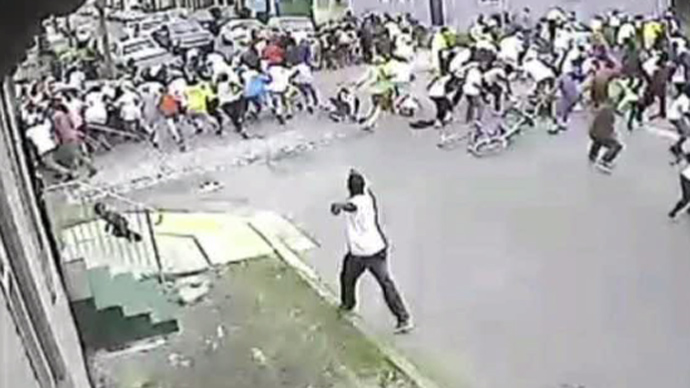
Gunfire erupted in the Seventh Ward neighborhood at around 2:00pm local time (1900 GMT) during an annual Mother’s Day parade attended by up to 400 people. Based on a preliminary investigation, the FBI confirmed that the shooting was likely related to street violence, not terrorism.

Cellphone video obtained by police and released in the aftermath shows the parade crowd suddenly scattering, and some falling to the ground, in front of a man wearing a white T-shirt and dark pants. He is seen running away from the crowd while shooting at people.

Scott was previously arrested for illegal possession of a stolen firearm, illegal carrying of a weapon, resisting an officer, contraband to jail, illegal carrying of a weapon while in possession of a controlled dangerous substance and possession of heroin, according to a police statement as quoted by CBS News.

Sepas praised law enforcement’s handling of the case so far and told reporters three gunshot victims are still in critical condition but are expected to survive. He would not speculate as to whether Scott was the only person to fire a weapon at the parade Sunday.

In a Monday afternoon press conference, police said they were making headway in the investigation.  Police and local media had called for anyone who recognizes or may know the possible suspect to contact crime stoppers in the hope of tracing the gunman, or gunmen. Up to three gunmen are believed to be at large.

“There were hundreds of people there, and somebody saw something,” New Orleans Mayor Mitch Landrieu said in a public appeal.

Screenshot from video of New Orleans shooter/ courtesy of YouTube user NOPD8th

A $2,500 cash reward was initially offered, which was later raised to $10,000 amid a massive manhunt. The reward is being offered to anyone who can provide information that leads to an arrest.

Former CIA agent Glenn Carle told RT that the violence did not resemble a terror attack: “It doesn’t have any of the hallmarks or modus operandi of terrorist groups that I ever worked against, that we know about in the intelligence community in the United States. It seems – knowing nothing more than the media reports – to have been either astoundingly amateurish by a terrorist, and I don’t think that’s the case, or more likely a gang-related kind of violent act.”

The shooting victims – 10 men, seven women, a boy and a girl, both 10 years old – were taken to hospitals for non-life-threatening wounds; three remain in critical condition. – RT.COM

51 projects worth $68bn for Africa

THE World Economic Forum on Africa is one fabulous talk shop. Recurring themes are the need for investment, transparency, regulatory reform and infrastructure development.

Much is being made of the fact that on average African country growth is among the fastest in the world. Africa’s time, it is said, has arrived.

Yet one wonders, why after fifteen years, are African governments still marvelling at the possibilities for tele-medicine and tele- education? Meanwhile in Kenya, where young IT entrepreneurs are not waiting for government, functional tools are being developed. One group developed a mobile application that was used to monitor the recent election.

The tool was so successful it was immediately exported to Pakistan, which held its own election this past weekend.

Mobile you see, is not dependant on fixed-line, government-installed networks.

The lack of cheap access to broadband is one reason tele- medicine and tele-schooling have yet to reach their potential across the continent. Africa’s development, it appears, is destined to move at African speed.

Infrastructure, or rather the lack of it, is cited as one of the biggest constraints to African trade, economic growth and job creation.

“Why is it that we are importing from China, when our friends across the border are making the same product; or why are we driving four hours to reach an airport to fly to a town that is a mere 100km away,” said Donald Kaberuka, president of the African Development Bank.

Tired of talk, a group of business leaders and non-governmental organisations decided to actively intervene. At last year’s WEF on Africa, 27 African and global companies, including Sasol, Old Mutual, African Rainbow Minerals, the IDC and Transnet partnered with the WEF and the African Development Bank to form a business working group that aimed to unblock the bottlenecks constraining infrastructure development.

After a year of work ,the project team has identified 51 projects which span sectors from power generation and transportation to water and telecommunications with an overall capital cost of $68bn between now and 2020.

Power generation alone accounts for 15 projects and transportation for 24 projects. One of the problems bedevilling these type of ‘transformational’ projects which typically cross country borders, and are typically beyond the scope of private finance, is the inability of governments to agree on common priorities.

Work in the past year by the Business Working Group and supported by the Boston Consulting Group presents a framework for governments to assess a project based on clear economic, technical, social and regional criteria.

The development of a common framework is designed to accelerate project development and implementation.

“The classic PPP model has not worked well,” said South African finance minister Pravin Gordhan, at the launch of the framework. “On average it takes seven years to get a project off the ground. This effort aims to reduce the amount of time it takes to bring a project to the bankability stage.

This provides African governments with a better basis for co-operation within regions and between regions.”

At this point none of the 51 projects – which extend from building an 8 000km power line from Egypt to South Africa to supplying water to Gauteng via a water transfer programme – have been given the go-ahead.

However, several are on the table. “We have moved beyond the discussion of what is bankable to a discussion on what is to be implemented first,” Gordhan said.

The projects will be financed in different ways, but Kaberuka, made it clear that all forms of finance would be considered.

“There is a role for PPP’s as well as the private sector. But this is also about those projects where business finance will not be enough. We are working to see these initiatives through as well. The time for talking has passed.” – sasha@moneyweb.co.za

SA’s chess queen

Charlize van Zyl

A 13-year-old girl has become the youngest South African to win the world chess federation title of Woman International Master, it was reported on Monday.

Charlize van Zyl, of Collegiate Girls High School in Port Elizabeth, won the women’s division of the FIDE (Fédération Internationale des Échecs) Africa zone’s 4.3 championships in Gaborone, Botswana, last week, Beeld reported.

The title of FIDE Master was won by South Africans Dr Deon Solomons and Calvin Klaasen, according to Chess SA’s website.

Players from Angola, Botswana, Mozambique, Namibia, Malawi, Madagascar, Mauritius, Zimbabwe, Lesotho, Swaziland, the Democratic Republic of Congo and the Comores competed.

6 injured in Cape Town shopping centre shoot-out

Gugulethu Square shopping centre

Six people were wounded when a gang tried to rob a Cape Town shop at the weekend, it was reported on Monday.

The Daily Voice reported that a group of armed men entered a clothing shop in Gugulethu Square on Sunday and demanded cash. Gugulethu is a mainly black area.

A shoot-out ensued between the gang and security guards.

Two guards and two of the armed men were wounded. The armed men fled.

Two people inside the shop were treated for bullet wounds.

Lieutenant Colonel Thembinkosi Kinana told the newspaper no arrests had been made. – Sapa

British Intelligence wastes $140m on failed data project

Secret Service Headquarters in London, along the Thames
British Secret Service Headquarters in London, along the Thames

UK intelligence agency MI5 reportedly terminated a failed multimillion-dollar IT project to centralize the agency’s data stores. The system was supposed to be ready ahead of last year’s London Olympics, but the consultants hired by MI5 failed to deliver.

The new digital records management (RM) system was supposed to allow for search queries and returns of various MI5 data and records, from intelligence reports to older paper archives. The RM was intended to replace the existing system, which the agency has deemed outdated and unfit in light of the threats the country currently faces.

The new RM was supposed to go online by time the Summer Olympics began in London last year, in order to help the UK’s intelligence agencies identify possible terrorist threats to the games. But in July 2012, only weeks before the event, MI5 fired the IT consulting firm responsible for the system’s development, as it had failed to meet deadlines.

Then-director of MI5 Sir Jonathan Evans said the system would be implemented at a later date, and the agency hired new IT consultants to finish the job.

But according to the Independent, the project failed to play out, and earlier this year Evans decided to scrap it altogether and restart from scratch with a new generation of IT specialists. The newspaper reported that the abandonment of years of progress means the loss of about £90 million pounds (about $140 million). The UK’s Home Office would not comment on either the fate of the project or the reported loss figure.

In 2012, when the RM’s troubles were first revealed, some British media estimated the cost of the project to be considerably lower; the Daily Mail believed the program’s cost to be about £1 million (over $1.5 million). – RT.COM